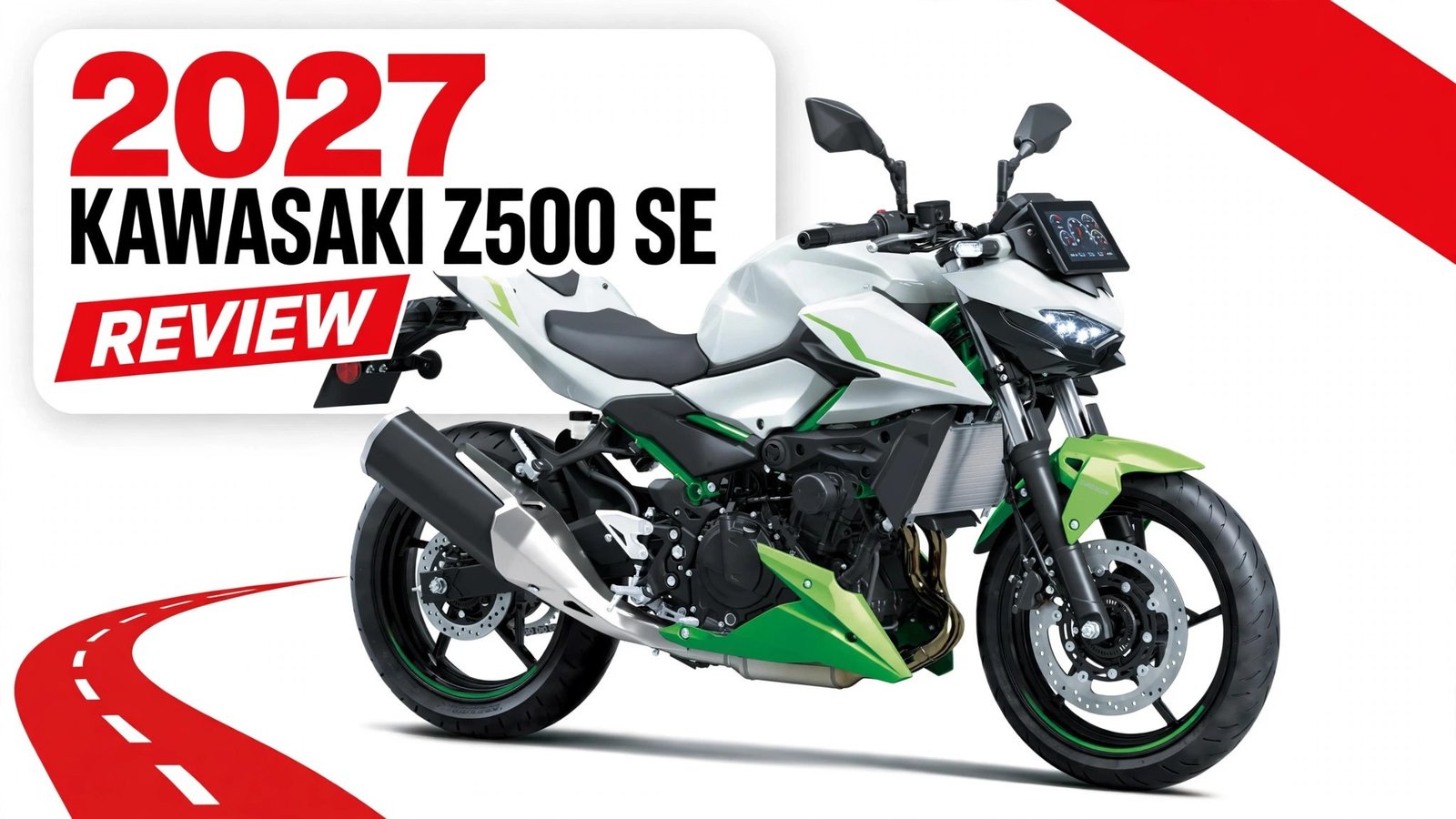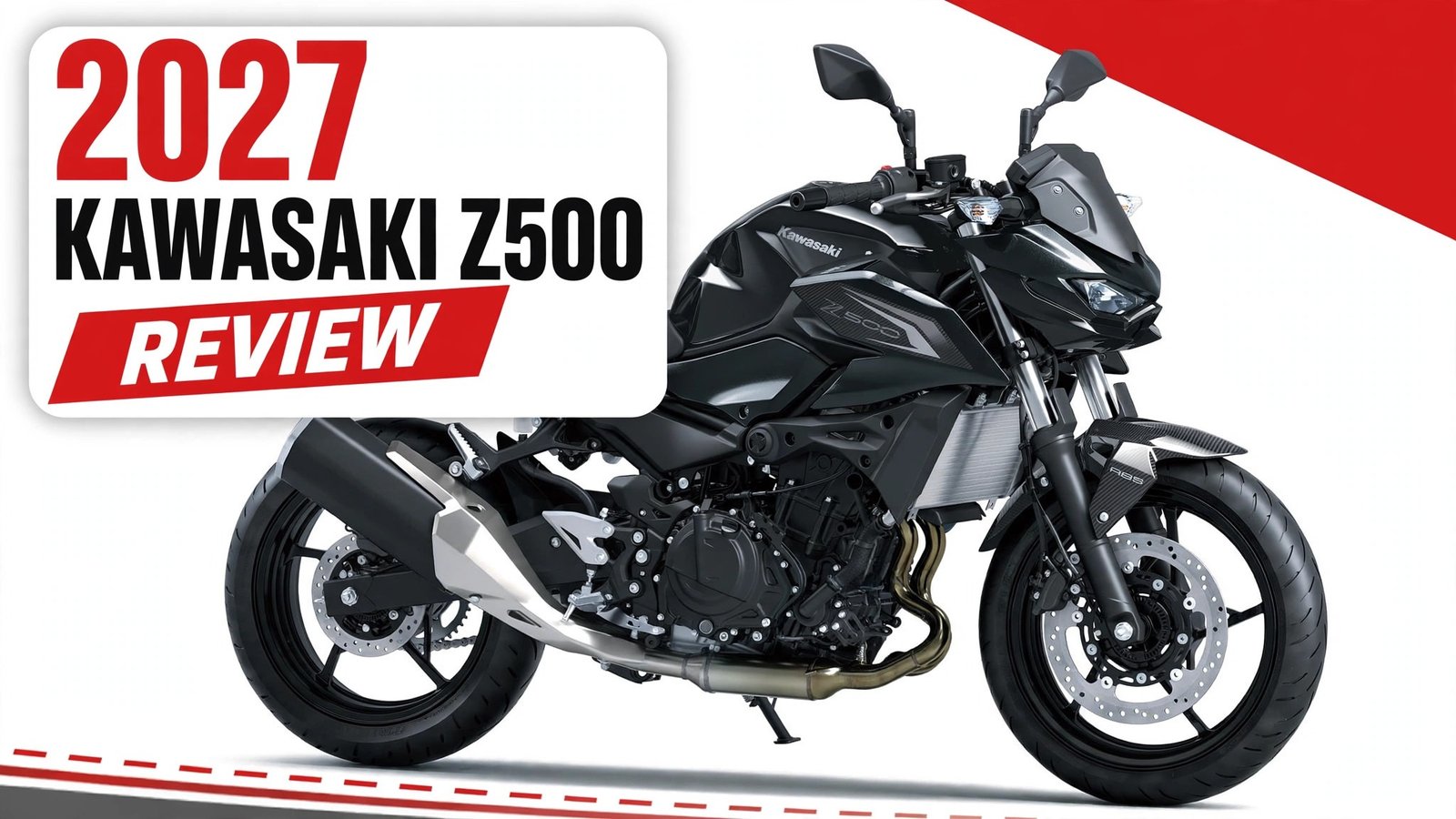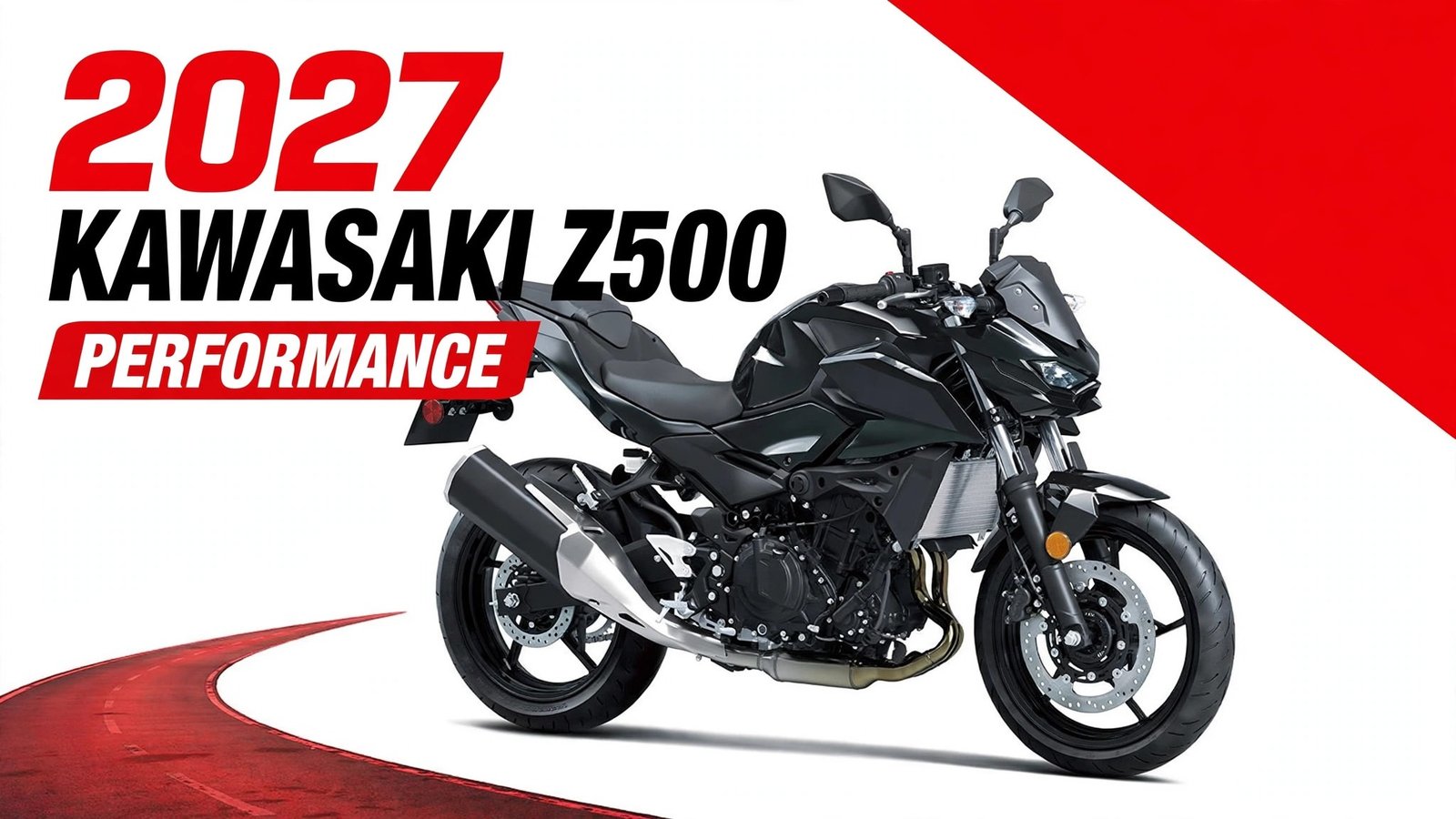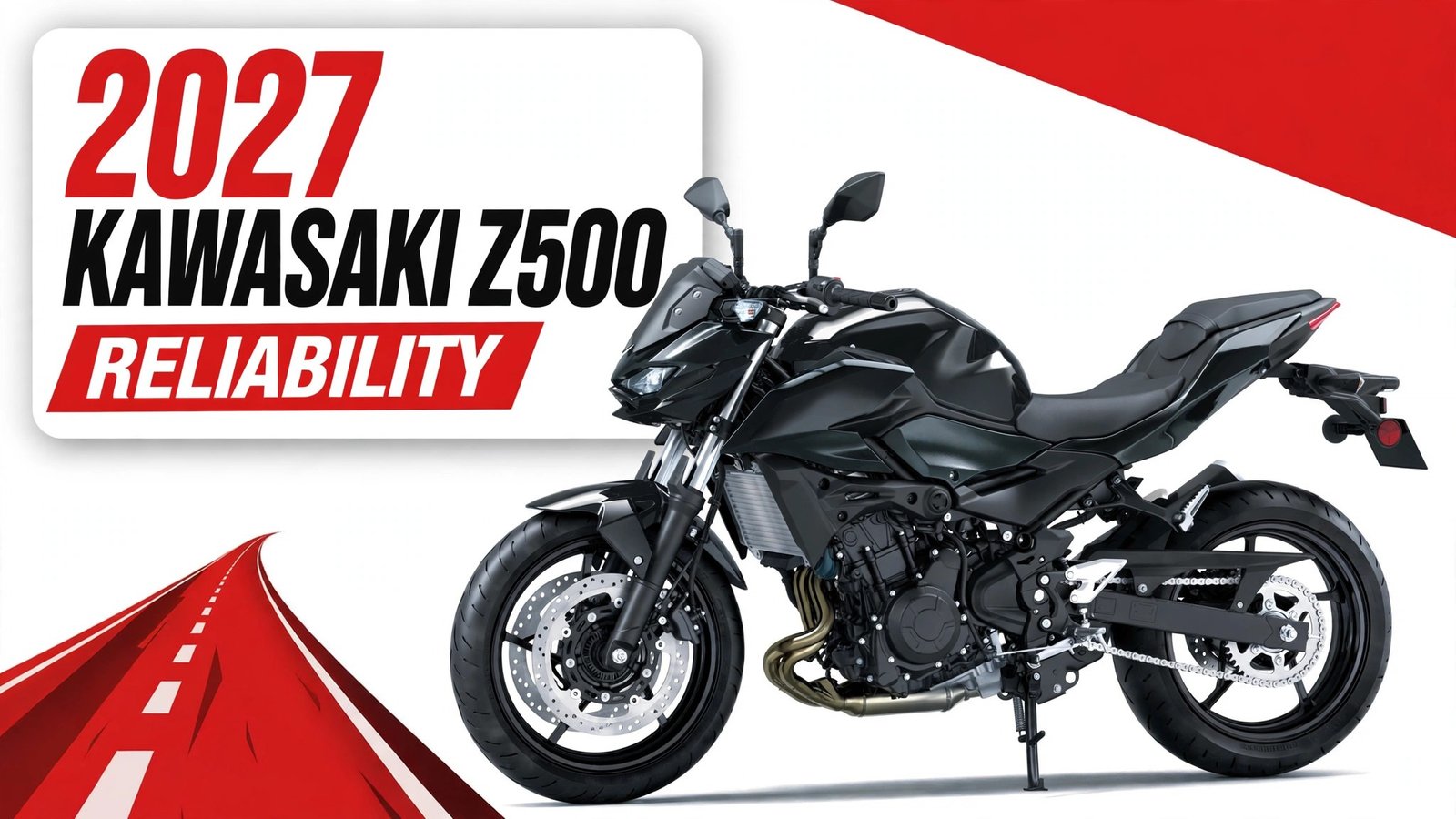
The short answer in this Kawasaki Z500 comparison is that the Z500 does not win on sticker price — it wins on torque, weight and seat height. The 2027 Z500 ABS is $5,799 plus $650 destination, $6,449 delivered: $50 under the 2026 Honda CB500 Hornet ($6,499) and $25 under the KTM 390 Duke ($6,474), but $850 over the Yamaha MT-03 (about $5,599) and $400 over the CFMOTO 450NK’s $5,399 sticker price.
Kawasaki Z500 Overview and Its Closest Rivals
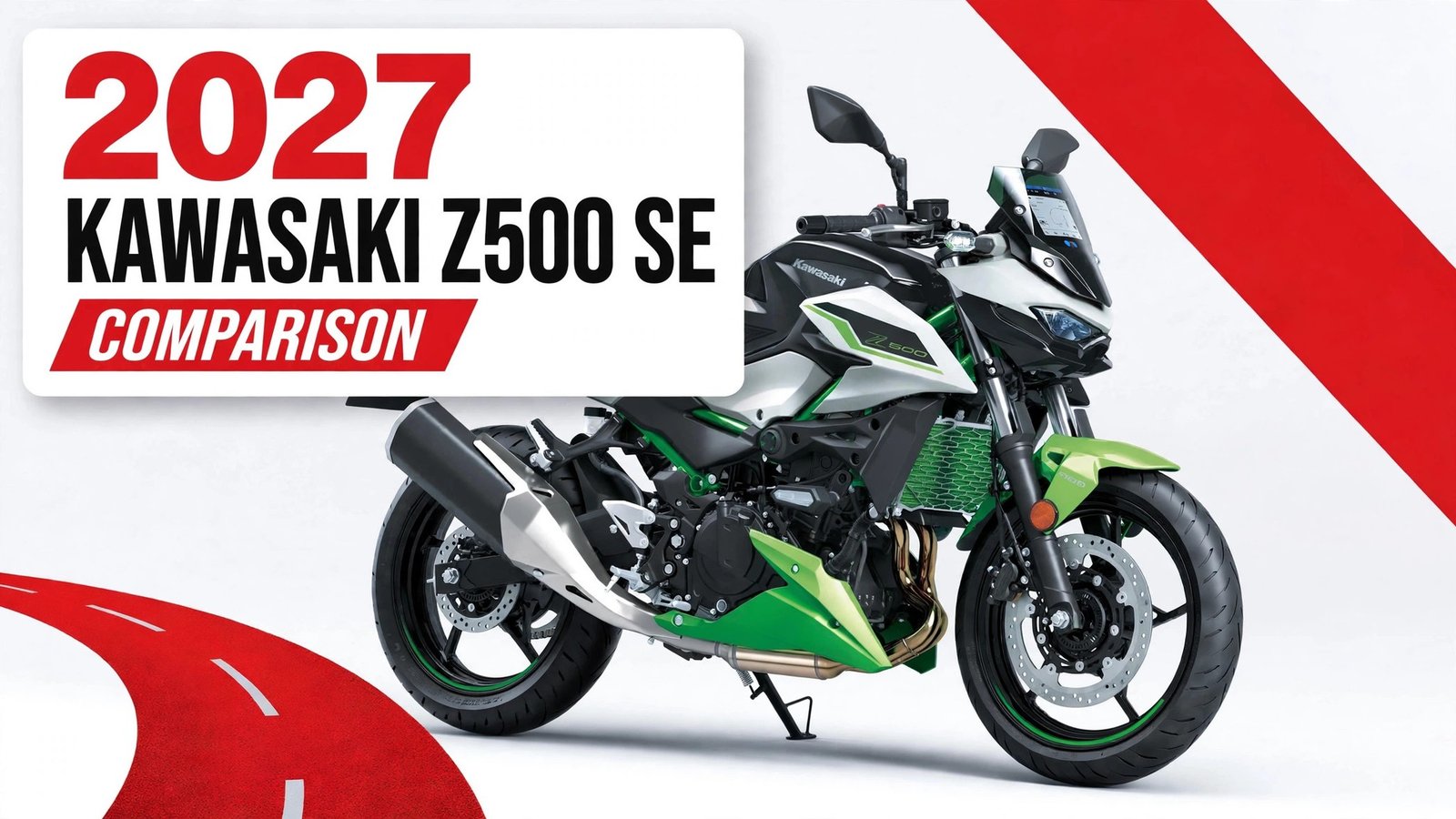
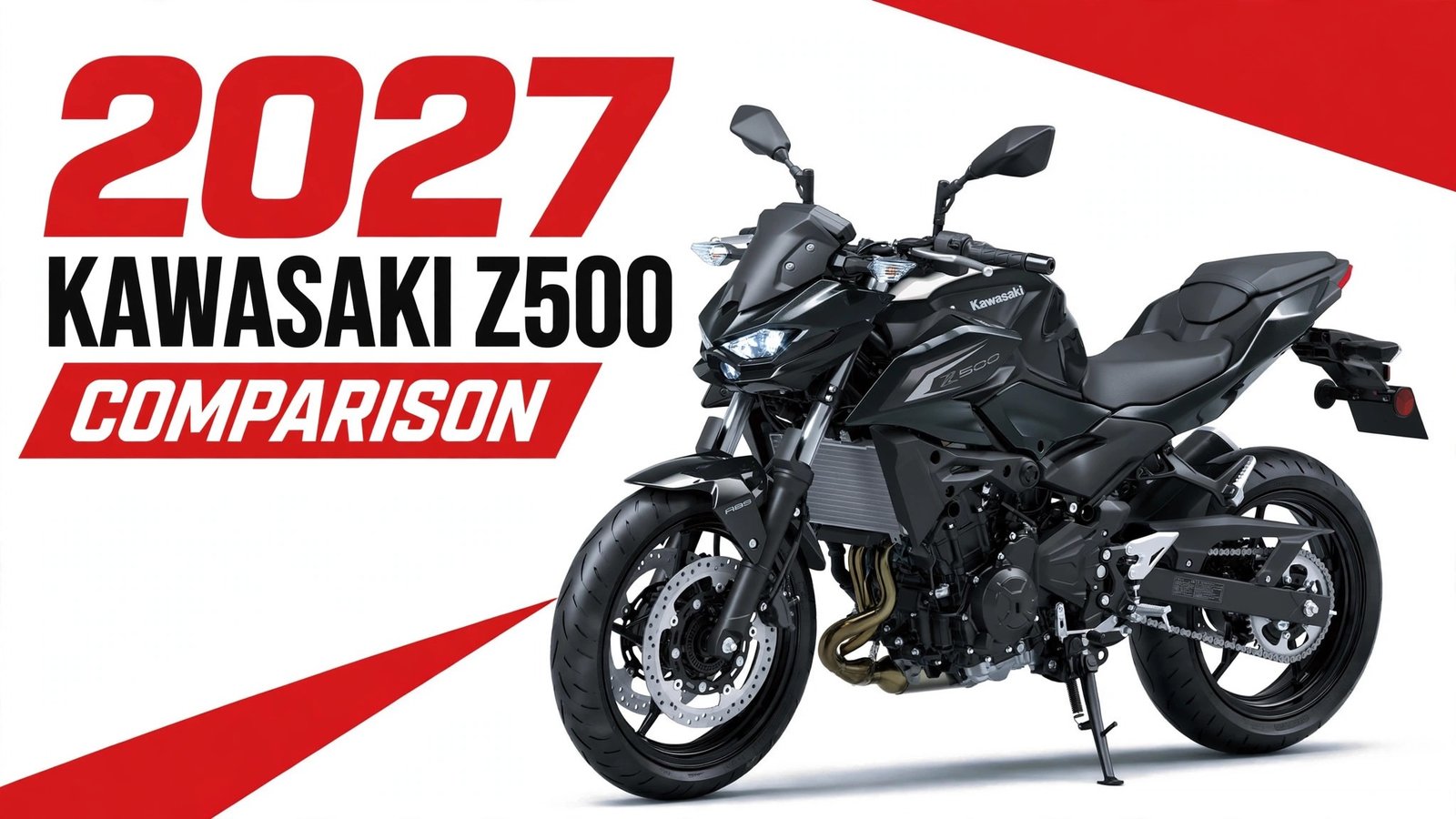
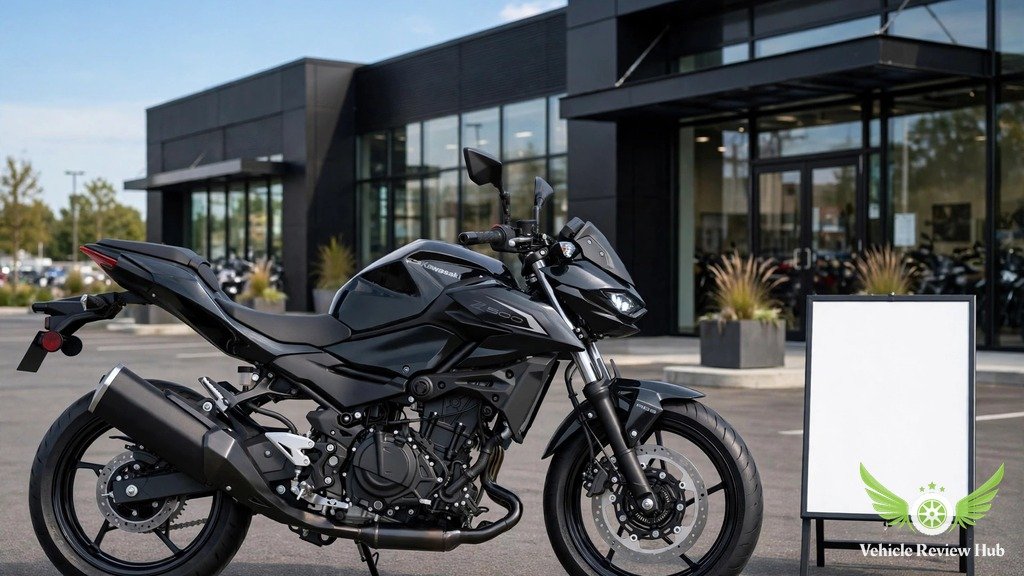
This Kawasaki Z500 comparison starts with the bike itself. The Z500 is the naked twin of the Ninja 500: the same 451cc parallel-twin engine, the same trellis frame and the same chassis, with upright wide bars and no fairing. Every US Z500 has ABS as standard — there has never been a non-ABS trim — and there has never been a KRT Edition; the only US trims are the Z500 ABS and the Z500 SE ABS. The SE kit adds a full-colour TFT display, a USB-C outlet, LED turn signals, frame sliders and a rear-seat cowl for $700. There is no keyless ignition on any Z500 trim: the SE has no KIPASS.
Case Is Torque, Not Price
The Z500’s case in this Kawasaki Z500 comparison is torque, not price. Its 451cc twin claims 51.0 hp at 10,000 rpm and 31.7 lb-ft at 7,500 rpm to ISO 4106 — effectively equal to the Hornet’s 32 lb-ft, 10 lb-ft more than the MT-03’s 21.7 lb-ft, and nearly 3 lb-ft more than the Duke’s and the 450NK’s 28.8 lb-ft.
How the Four Bikes Differ at a Glance
The glance table below is the whole Kawasaki Z500 comparison in one place, for US buyers in the 2027 market. Every price carries its model year and destination status, because an MSRP alone is never a delivered price.
| Bike | Engine | Claimed power | Claimed torque | Seat | Weight | Fuel | Delivered |
|---|---|---|---|---|---|---|---|
| Kawasaki Z500 ABS (2027) | 451cc twin | 51.0 hp @ 10,000 | 31.7 lb-ft @ 7,500 | 30.9 in | 366.0 lb curb | 3.7 gal | $6,449 |
| Honda CB500 Hornet (2026) | 471cc twin | 47 hp (EU rating) | 32 lb-ft @ 6,500 (EU) | 31.1 in | 414 lb curb | 4.5 gal | $6,499 |
| Yamaha MT-03 (2025/2026) | 321cc twin | ~41 hp (press figure) | 21.7 lb-ft | 30.7 in | 373 lb wet | 3.7 gal | ~$5,599 |
| KTM 390 Duke (2024/2025) | 399cc single | 44.25 hp (33 kW) | 28.8 lb-ft (39 Nm) | 32.3 / 31.5 in | 363.8 lb w/o fuel | 4.0 gal | $6,474 |
| CFMOTO 450NK (2025/2026) | 449cc twin | 50 hp @ 9,500 | 28.8 lb-ft @ 7,600 | 31.3 in | 364 lb curb | 3.7 gal | $5,399 + ? |
Note: This Kawasaki Z500 comparison table uses delivered prices — MSRP plus destination charge, both named — for the 2027 market. The 450NK’s destination charge is unverified, so no delivered price is computed for it; its $5,399 is MSRP only. The Hornet’s 47 hp and the MT-03’s 41 hp are not US manufacturer claims: Honda USA and Yamaha USA publish no horsepower figure for those bikes.
Kawasaki Z500 vs Honda CB500 Hornet
The Hornet is the Z500’s closest rival in this Kawasaki Z500 comparison, because the two bikes are nearly the same price and nearly the same idea. The 2026 Hornet is $5,899 plus $600 destination, $6,499 delivered — $50 more than the 2027 Z500’s $6,449. Honda cut $1,000 from the price when it renamed the CB500F as the Hornet for 2026: the 2025 CB500F listed at $6,899, and the mechanically identical 2026 Hornet lists at $5,899.
Engine, Specs and Performance Side by Side
The Hornet’s 471cc twin runs a 67.0 × 66.8 mm bore and stroke at 10.7:1, with PGM-FI through a 34 mm throttle body and a six-speed gearbox with a slipper clutch that Honda says cuts lever pull by 45%. Honda USA publishes no horsepower figure for the Hornet — the 47 hp and 32 lb-ft figures are the EU rating, and this Kawasaki Z500 comparison prints them labelled as such. Neither bike has a published dyno figure of its own — the only platform dyno nearby is Cycle World’s 47.22 hp run on the Eliminator SE, and that figure is the Eliminator’s, not the Z500’s.
| Item | Kawasaki Z500 ABS (2027) | Honda CB500 Hornet (2026) |
|---|---|---|
| Engine | 451cc parallel twin, DOHC, 8 valves | 471cc parallel twin, DOHC, 4 valves/cylinder |
| Bore × stroke | 70.0 × 58.6 mm | 67.0 × 66.8 mm |
| Claimed power | 51.0 hp @ 10,000 rpm (ISO 4106) | 47 hp @ 8,600 rpm (EU rating) |
| Claimed torque | 31.7 lb-ft @ 7,500 rpm | 32 lb-ft @ 6,500 rpm (EU rating) |
| Front suspension | 41 mm telescopic fork, 4.7 in travel | 41 mm inverted Showa SFF-BP fork |
| Front brakes | Single 310 mm disc, 2-piston Nissin, ABS | Dual 296 mm discs, radial 4-piston calipers, ABS |
| Rake / trail | 24.5° / 3.6 in | 25.5° / 4.0 in |
| Wheelbase | 54.1 in | 55.5 in |
| Seat height | 30.9 in | 31.1 in |
| Curb weight | 366.0 lb | 414 lb |
| Fuel capacity | 3.7 gal | 4.5 gal |
| Dash | Full LCD (base); 4.3-in TFT (SE) | Digital LCD cluster (not TFT) |
| Warranty | 12-month limited | 12-month limited |
Note: This Kawasaki Z500 comparison table uses Kawasaki’s own 2027 Z500 spec sheet and Honda’s 2026 Hornet figures as printed by Motorcycle.com’s Hornet spec page and Ultimate Motorcycling’s first look. The Hornet’s power and torque are the EU rating — Honda USA publishes no horsepower figure. Ultimate Motorcycling’s first-look prose prints “45.5 degrees of rake” — a typo; rake is 25.5 degrees.
Where the Hornet clearly wins is the front end, and this Kawasaki Z500 comparison says so plainly: its 41 mm inverted Showa SFF-BP fork and dual 296 mm front discs with radial-mount four-piston calipers are a class above the Z500’s non-adjustable 41 mm telescopic fork and single 310 mm disc. MCN’s Z500 review says the Kawasaki’s braking feels “streets ahead of Honda’s CB500 Hornet” on initial bite and feedback — a ride impression, not a measurement.
Price, Equipment and Which Suits Which Rider
On price, the two bikes are a dead heat in this Kawasaki Z500 comparison: $6,449 delivered for the 2027 Z500 ABS against $6,499 for the 2026 Hornet, a $50 gap no buyer should use to decide. The Hornet’s real price story is the $1,000 cut, and Ultimate Motorcycling’s first look confirms the two bikes are mechanically identical other than the name. The Z500 suits the rider who wants the lightest twin and the strongest torque curve; the Hornet suits the rider who wants the better front end and will carry 48 extra pounds for it.
Kawasaki Z500 vs Yamaha MT-03
The MT-03 is the cheapest way into this Kawasaki Z500 comparison and the only rival that undercuts the Z500 on seat height. The 2025 and 2026 MT-03 lists at $4,999 MSRP, and SlashGear reports $5,599 including the $600 destination fee at release — about $850 less delivered than the 2027 Z500’s $6,449. But the MT-03 is the smallest bike here: a 321cc twin against the Z500’s 451cc, giving up about 10 hp and 10 lb-ft, and 7 lb heavier wet despite being 130cc smaller.

Engine, Specs and Performance Side by Side
Yamaha USA publishes no horsepower figure — press figures put the twin at about 41 hp (41.4 hp per SlashGear) and 21.7 lb-ft, and this Kawasaki Z500 comparison prints those as press figures, never as a Yamaha claim. The MT-03’s one hardware win is its seat — 30.7 inches against the Z500’s 30.9 inches, 0.2 inches lower, the lowest seat in this whole Kawasaki Z500 comparison. That is why the doc’s “Lowest Seat in Class” claim for the Z500 only holds among the 450–500cc bikes.
| Item | Kawasaki Z500 ABS (2027) | Yamaha MT-03 (2025/2026) |
|---|---|---|
| Engine | 451cc parallel twin, DOHC, 8 valves | 321cc parallel twin, DOHC, 4 valves/cylinder |
| Bore × stroke | 70.0 × 58.6 mm | 68.0 × 44.1 mm |
| Claimed power | 51.0 hp @ 10,000 rpm (ISO 4106) | ~41 hp (press figure, no Yamaha US claim) |
| Claimed torque | 31.7 lb-ft @ 7,500 rpm | 21.7 lb-ft |
| Front suspension | 41 mm telescopic fork, 4.7 in travel | 37 mm telescopic fork |
| Front brake | Single 310 mm disc, 2-piston Nissin, ABS | 298 mm floating disc, ABS |
| Wheelbase | 54.1 in | 54.3 in |
| Seat height | 30.9 in | 30.7 in |
| Weight | 366.0 lb curb | 373 lb wet |
| Fuel capacity | 3.7 gal | 3.7 gal |
| Dash | Full LCD (base); 4.3-in TFT (SE) | LCD panel with Y-Connect, USB-A socket |
Note: This Kawasaki Z500 comparison table uses Kawasaki’s own 2027 Z500 spec sheet and Yamaha’s MT-03 figures as reported by SlashGear. The MT-03’s 41 hp is a press figure — Yamaha USA publishes no horsepower figure for the bike. The MT-03’s 373 lb is a wet weight; the Z500’s 366 lb is a curb weight, so the two figures are close but not measured on the same basis.
On the road, the difference is torque, and this Kawasaki Z500 comparison puts it first: the Z500’s 31.7 lb-ft pulls cleanly from low revs and holds highway speed in sixth gear with power in reserve — Cycle News says the Z500 “hums along comfortably at 70 mph in sixth gear, and you can still accelerate from there.” The MT-03’s 21.7 lb-ft needs more revs and more gear changes for the same work.
Price, Equipment and Which Suits Which Rider
On price, the MT-03 wins outright in this Kawasaki Z500 comparison: about $5,599 delivered against the Z500’s $6,449, a gap of roughly $850 that buys a helmet, a jacket and the first service. The Z500 suits the rider who wants the stronger engine and will pay $850 for 10 hp and 10 lb-ft that still matter in year two; the MT-03 suits the rider on the tightest budget and the shortest rider in the group.
Kawasaki Z500 vs KTM 390 Duke
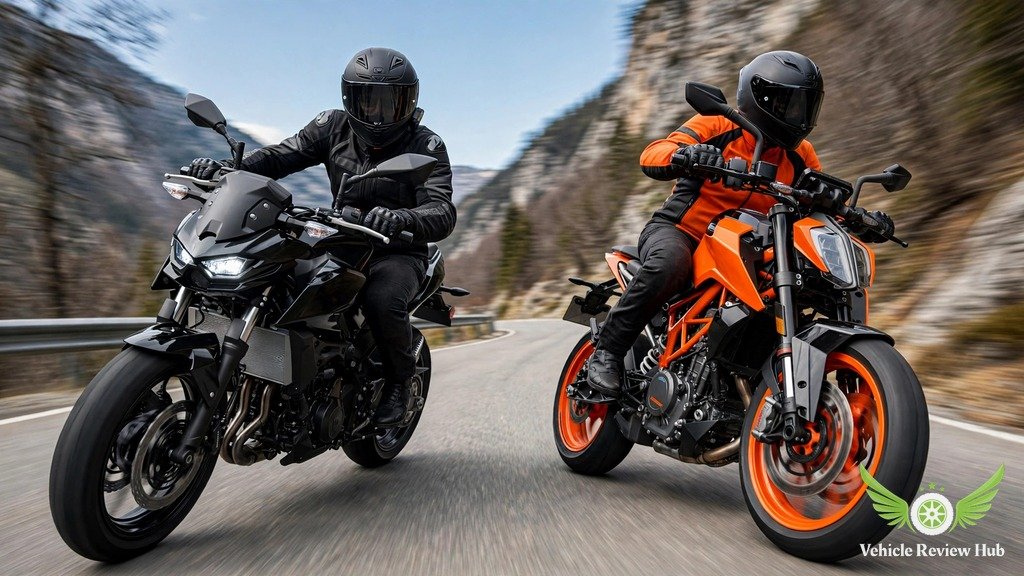
The 390 Duke is the tech pick of this Kawasaki Z500 comparison, and the only single-cylinder bike in the group. The 2024 and 2025 Duke lists at $5,899 MSRP plus $575 destination, $6,474 delivered — $25 more than the 2027 Z500’s $6,449, a dead heat on price. Some low-quality sites claim $6,299 for the Duke; that figure is wrong, and this Kawasaki Z500 comparison does not use it. What the Duke offers for the same money is the most equipment in the class: ride-by-wire throttle, a 43 mm WP APEX inverted fork, a 5-inch TFT dash with Bluetooth, and Bosch 9.1MP two-channel ABS with a Supermoto mode.
Engine, Specs and Performance Side by Side
The engine comparison is the Z500’s clearest win in this Kawasaki Z500 comparison. The Duke’s 399cc LC4c single runs an 89.0 × 64.0 mm bore and stroke, makes 44.25 hp (33 kW) and 28.76 lb-ft (39 Nm), and drives through a six-speed gearbox with a PASC antihopping clutch and ride-by-wire throttle. The Duke’s chassis is the better-equipped of the two: a 43 mm WP APEX inverted fork with 5.9 inches of travel against the Z500’s non-adjustable 41 mm fork, and a 320 mm front disc with a radial four-piston caliper against the Z500’s single 310 mm disc.
| Item | Kawasaki Z500 ABS (2027) | KTM 390 Duke (2024/2025) |
|---|---|---|
| Engine | 451cc parallel twin, DOHC, 8 valves | 399cc single, LC4c, DOHC |
| Bore × stroke | 70.0 × 58.6 mm | 89.0 × 64.0 mm |
| Claimed power | 51.0 hp @ 10,000 rpm (ISO 4106) | 44.25 hp (33 kW) |
| Claimed torque | 31.7 lb-ft @ 7,500 rpm | 28.76 lb-ft (39 Nm) |
| Throttle | Cable | Ride-by-wire |
| Front suspension | 41 mm telescopic fork, 4.7 in travel | 43 mm WP APEX inverted fork, 5.9 in travel |
| Front brake | Single 310 mm disc, 2-piston Nissin, ABS | 320 mm disc, radial 4-piston caliper, Bosch 9.1MP ABS |
| Seat height | 30.9 in | 32.28 / 31.49 in (two positions) |
| Weight | 366.0 lb curb | 363.8 lb without fuel |
| Fuel capacity | 3.7 gal | 4.0 gal |
| Dash | Full LCD (base); 4.3-in TFT (SE) | 5-inch TFT with Bluetooth |
| Warranty | 12-month limited | 24-month limited |
Note: This Kawasaki Z500 comparison table uses Kawasaki’s own 2027 Z500 spec sheet and KTM’s 390 Duke figures as printed by Cycle World and Ultimate Motorcycling’s buyer’s guide. The Duke’s $5,899 MSRP is verified by four independent sources; $6,299 claims on low-quality sites are wrong. The Duke’s 363.8 lb is measured without fuel, so it is not directly comparable to the Z500’s 366 lb curb weight.
The Duke’s warranty is the longest in this Kawasaki Z500 comparison at 24 months limited, against the Z500’s 12 months. One line of caution belongs here too: the 2025 Duke carries NHTSA recall 25V598000, for an engine that may stall when rolling to a stop or pulling the clutch at low speed. The Z500’s only recall is the 25V-146 clutch-shaft weld campaign, covering 1,057 US Z500s built from January to February 2024, with a free fix — and 3,742 is the Ninja 500 and Z500 campaign total, never the Z500 count.
Price, Equipment and Which Suits Which Rider
On price, the two bikes are effectively identical in this Kawasaki Z500 comparison: $6,449 delivered for the 2027 Z500 ABS against $6,474 for the 2024/2025 Duke, a $25 gap that means nothing. On equipment, the Duke wins clearly — ride-by-wire, a 5-inch TFT with Bluetooth, Supermoto ABS and a proper inverted fork are all standard, while the Z500’s base bike has an LCD dash and a cable throttle, and its TFT costs $700 more as the SE kit. The Duke suits the rider who wants the most electronics and is tall enough for a 32.3-inch seat; the Z500 suits the rider who wants the stronger twin and the simpler bike.
Kawasaki Z500 Price and Value Compared
Price is where this Kawasaki Z500 comparison gets honest about what the Z500 is and is not. The Z500 sits in the middle: $50 under the Hornet, $25 under the Duke, $850 over the MT-03 and $400 over the 450NK’s sticker price. The Z500’s own price ladder runs from $5,599 in 2024 and 2025 to $5,699 in 2026 and $5,799 in 2027, with the SE premium holding at $700 every year. The 2025 destination charge is disputed — Motorcycle.com’s database says $600 and SlashGear says $650 — so this Kawasaki Z500 comparison prints both figures labelled and never settles a single 2025 delivered price.
| Bike | MSRP | Destination | Delivered |
|---|---|---|---|
| Kawasaki Z500 ABS (2027) | $5,799 | $650 | $6,449 |
| Kawasaki Z500 SE ABS (2027) | $6,499 | $650 | $7,149 |
| Honda CB500 Hornet (2026) | $5,899 | $600 | $6,499 |
| Yamaha MT-03 (2025/2026) | $4,999 | ~$600 | ~$5,599 |
| KTM 390 Duke (2024/2025) | $5,899 | $575 | $6,474 |
| CFMOTO 450NK (2025/2026) | $5,399 | Unverified | Not computed |
Note: This Kawasaki Z500 comparison price table is verified at writing, November 2026. The Hornet’s $5,899 and $600 destination are from Motorcycle.com’s spec page; the $1,000 cut against the 2025 CB500F is from Ultimate Motorcycling’s first look. The Duke’s $5,899 is verified by Cycle World and three other sources. The 450NK’s destination charge is unverified, so no delivered price is computed.
Used 2024s From $4,495
The doc’s snapshot figure for a used 2024 Z500 was “from $4,495” — but live Cycle Trader listings in November 2026 run lower, from $3,299 to $4,599, so this Kawasaki Z500 comparison prints the live range with its check date rather than the stale single figure. A used 2024 Z500 ABS listed at $3,999 in St. Charles, Missouri; $3,399 with 3,133 miles in Paducah, Kentucky; and $3,299 in Lexington, Kentucky; while SE ABS bikes listed at $4,599 with 2,159 miles in Hendersonville, North Carolina, and $4,695 in Olathe, Kansas.
| Used 2024 listing (Nov 2026) | Price | Detail |
|---|---|---|
| 2024 Z500 ABS, St. Charles, MO | $3,999 | Big St Charles Motorsports |
| 2024 Z500 ABS, Paducah, KY | $3,399 | Chase Motorsports, 3,133 miles |
| 2024 Z500 ABS, Lexington, KY | $3,299 | Central Kentucky Motorsports |
| 2024 Z500 SE ABS, Hendersonville, NC | $4,599 | Schroader’s Honda, 2,159 miles |
| 2024 Z500 SE ABS, Olathe, KS | $4,695 | Live listing, November 2026 |
Note: This Kawasaki Z500 comparison used-price table is from live Cycle Trader listings checked in November 2026. The doc’s “from $4,495” figure was its snapshot at writing; live listings now run $3,299 to $4,599. Print the range with the check date, never a single stale figure. Check the frame number against recall 25V-146 before buying.
Running Costs and Resale Value Compared
Running costs favour the Z500 in this Kawasaki Z500 comparison, with one honest gap: no verified resale percentage exists for any bike in the group, so none is printed. The Z500’s 3.7-gallon tank and the platform’s WMTC lab figure of 62.0 mpg give a 229-mile range — lab data from the Ninja 500 platform, not a measured Z500 figure, since Kawasaki publishes no MPG figure for the Z itself. Servicing is the shared-platform rhythm: a first service at 600 miles, then every 7,600 miles or every year, with oil and filter changed at every service.
Kawasaki Z500 Comparison Verdict and US Alternatives
The verdict of this Kawasaki Z500 comparison is that the Z500 is the best all-round middleweight naked in its group for most US buyers — not because it is the cheapest, and not because it is the most equipped, but because it puts the strongest torque, the lightest twin and the lowest seat short of the MT-03 into one $6,449 package. The Z500’s only real weakness here is its equipment list: a basic LCD dash, a cable throttle, no ride modes and no traction control, and a 12-month warranty that is the shortest in the group bar the Hornet’s.
Verdict: Seat and Torque
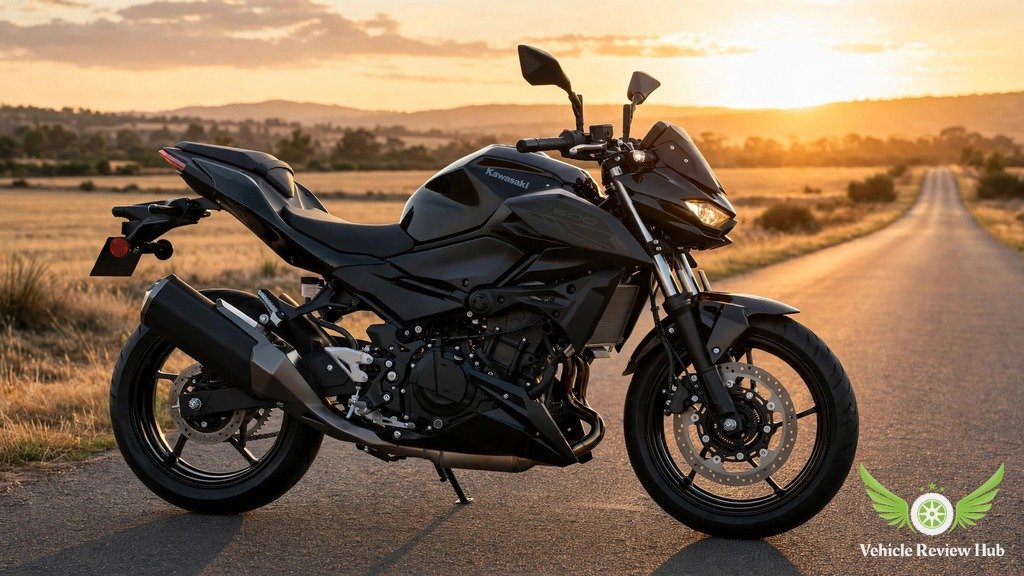
Seat and torque are the two words this Kawasaki Z500 comparison ends on, because they are the two figures that decide the bike for most buyers. The 31.7 lb-ft of torque is effectively equal to the Hornet’s 32 lb-ft and more than the Duke’s 28.76 lb-ft, the 450NK’s 28.8 lb-ft and the MT-03’s 21.7 lb-ft. The review covers the Z500’s price, specs and riding experience in full; the performance guide covers its power delivery, mileage and handling; and the reliability guide covers the one recall, the service schedule and what to check on a used bike.
450NK Undercuts Them All
The CFMOTO 450NK undercuts the Z500, the Hornet and the Duke on sticker price, and this Kawasaki Z500 comparison says so plainly: $5,399 MSRP against the Z500’s $5,799 and the Hornet’s and Duke’s $5,899 — $400, $500 and $500 less. Its hardware backs up its price: a 449cc parallel twin with a 270-degree crank, 50 hp at 9,500 rpm and 28.8 lb-ft at 7,600 rpm, a 364 lb curb weight, a 31.3-inch seat, a 53.8-inch wheelbase and a 5-inch TFT with Bluetooth. What it cannot yet match is the dealer network: its destination charge is unverified, so no delivered price is computed here, and its 2027 figures — 51 hp, 29.5 lb-ft, 379 lb curb — appear on one dealer page only and are unverified, so they are not printed.
Kawasaki Z500 Comparison: Frequently Asked Questions
These are the questions buyers ask most in this Kawasaki Z500 comparison — which bike is cheaper, which is lighter, whether the Duke is faster, what the cheapest rival costs, what a used Z500 sells for, and whether to buy the Z or the Ninja 500 instead.
Which is cheaper, the Kawasaki Z500 or the Honda CB500 Hornet?
Almost identical: the 2027 Z500 is $5,799 plus $650 destination ($6,449 delivered) and the 2026 Hornet is $5,899 plus $600 ($6,499 delivered) — $50 apart, and this Kawasaki Z500 comparison calls the gap too small to decide on.
Which is lighter, the Kawasaki Z500 or the Yamaha MT-03?
The Z500, at 366 lb against the MT-03’s 373 lb wet — but the MT-03’s seat is lower, 30.7 inches against 30.9, and this Kawasaki Z500 comparison notes the Z500’s seat claim only holds among the 450–500cc bikes.
Is the KTM 390 Duke faster than the Kawasaki Z500?
On paper, no: the Duke makes 44 hp against the Z500’s 51 hp, though the Duke counters with more tech — a TFT dash, ride-by-wire and Supermoto ABS — and this Kawasaki Z500 comparison calls the Duke the tech pick at the same money.
What is the cheapest rival to the Kawasaki Z500?
The CFMOTO 450NK at $5,399 MSRP undercuts them all on sticker price, though its destination charge is unverified — and this Kawasaki Z500 comparison notes the MT-03 at $4,999 is cheaper still, as a smaller 321cc bike.
How much is a used 2024 Kawasaki Z500?
Live Cycle Trader listings in November 2026 run $3,299 to $4,599; the $4,495 figure in the doc was its snapshot at writing, and this Kawasaki Z500 comparison prints the live range with its check date.
Should I buy the Kawasaki Z500 or the Ninja 500?
Same engine and chassis — the Z is the naked with upright bars at $5,799, the Ninja is the faired sportbike. Choose by riding position, not by power, and this Kawasaki Z500 comparison recommends sitting on both before deciding.