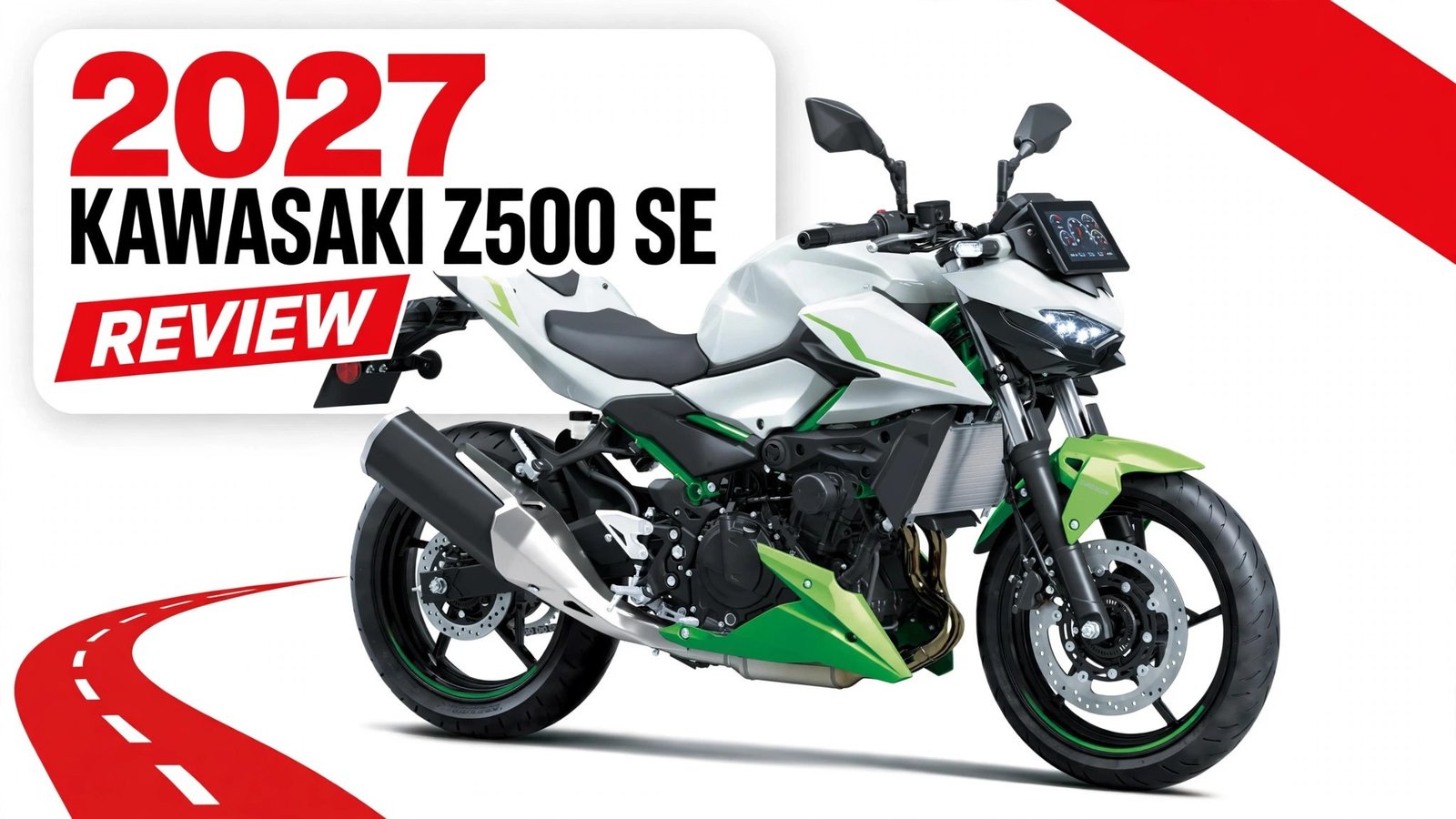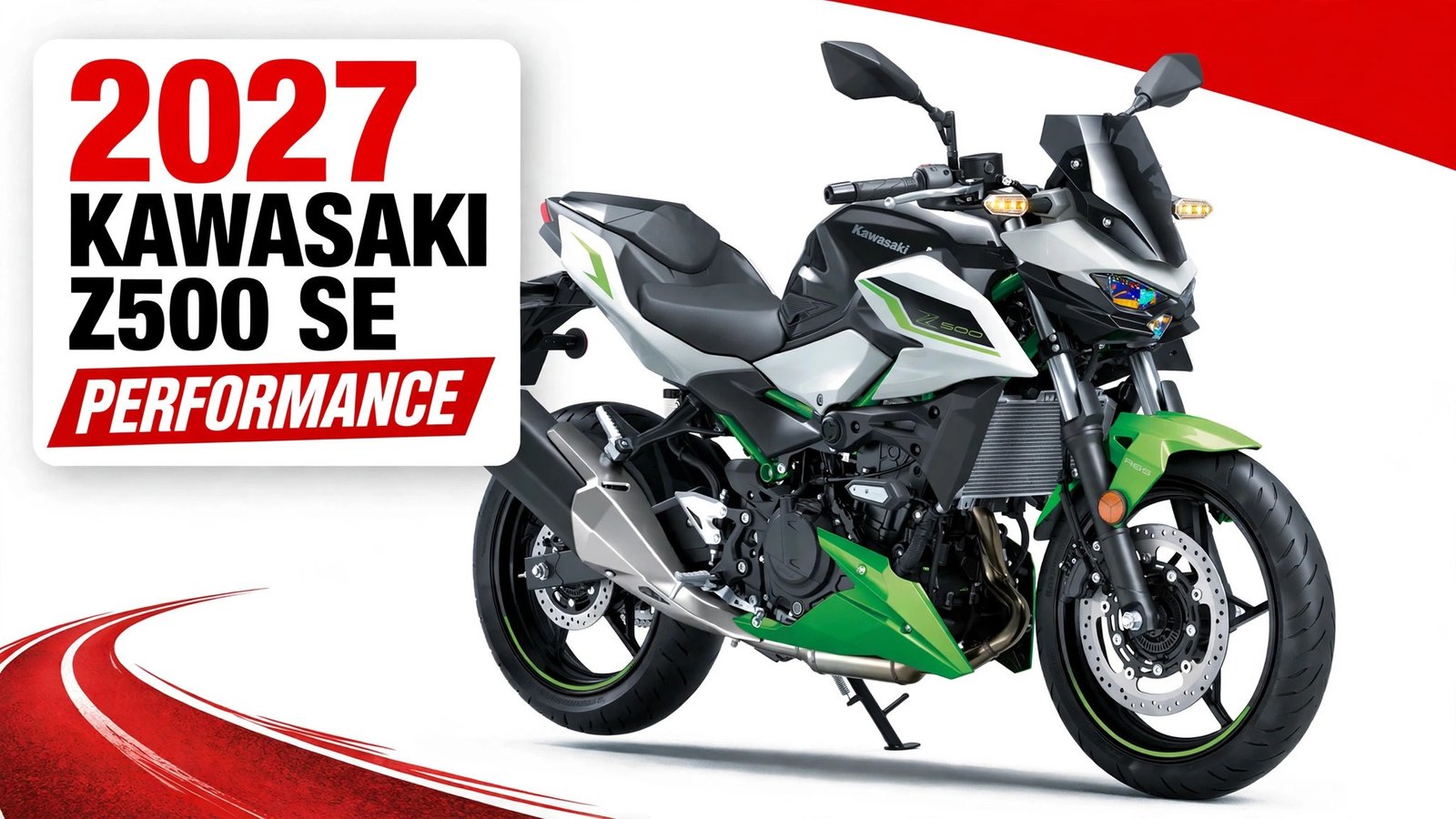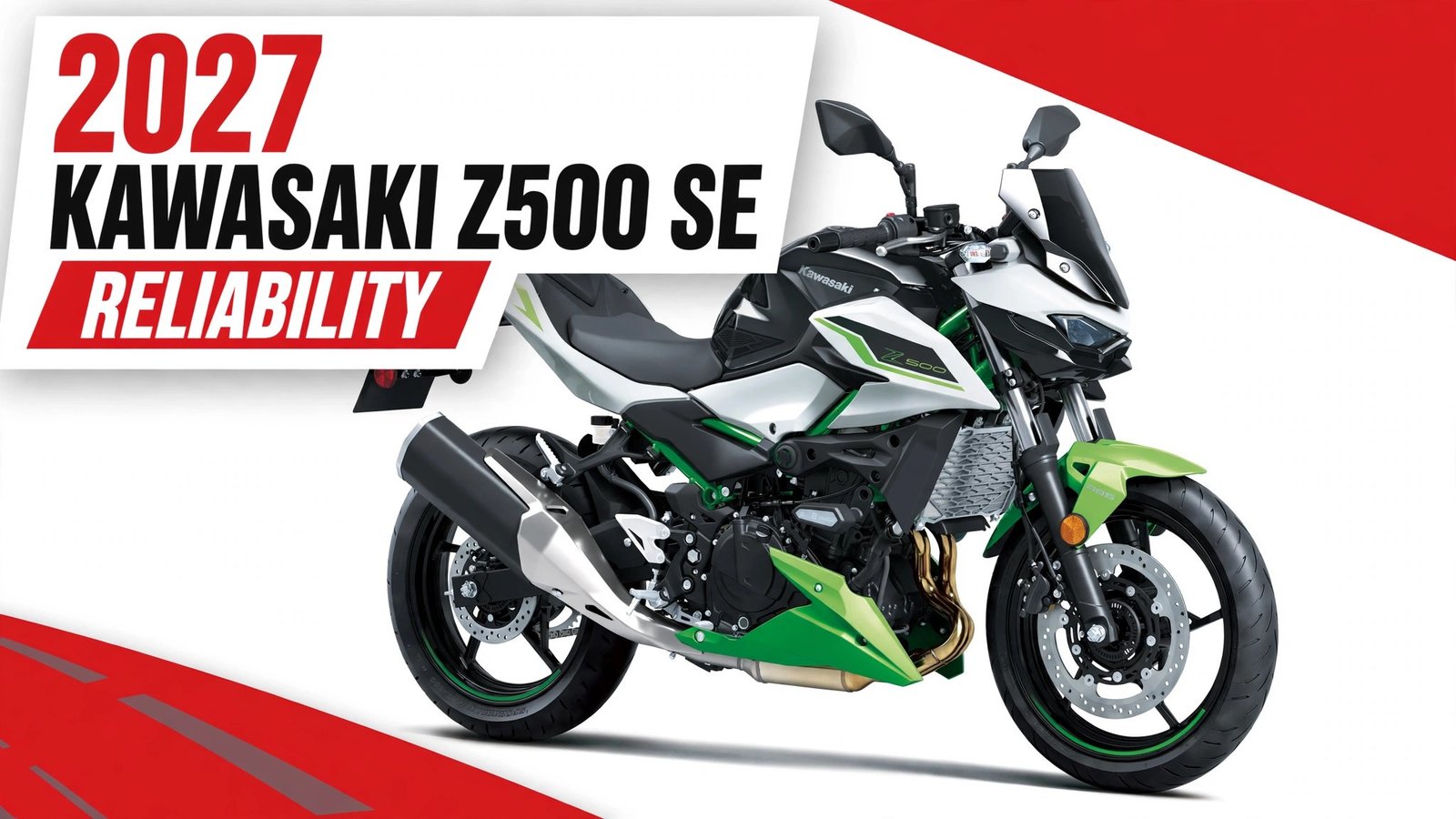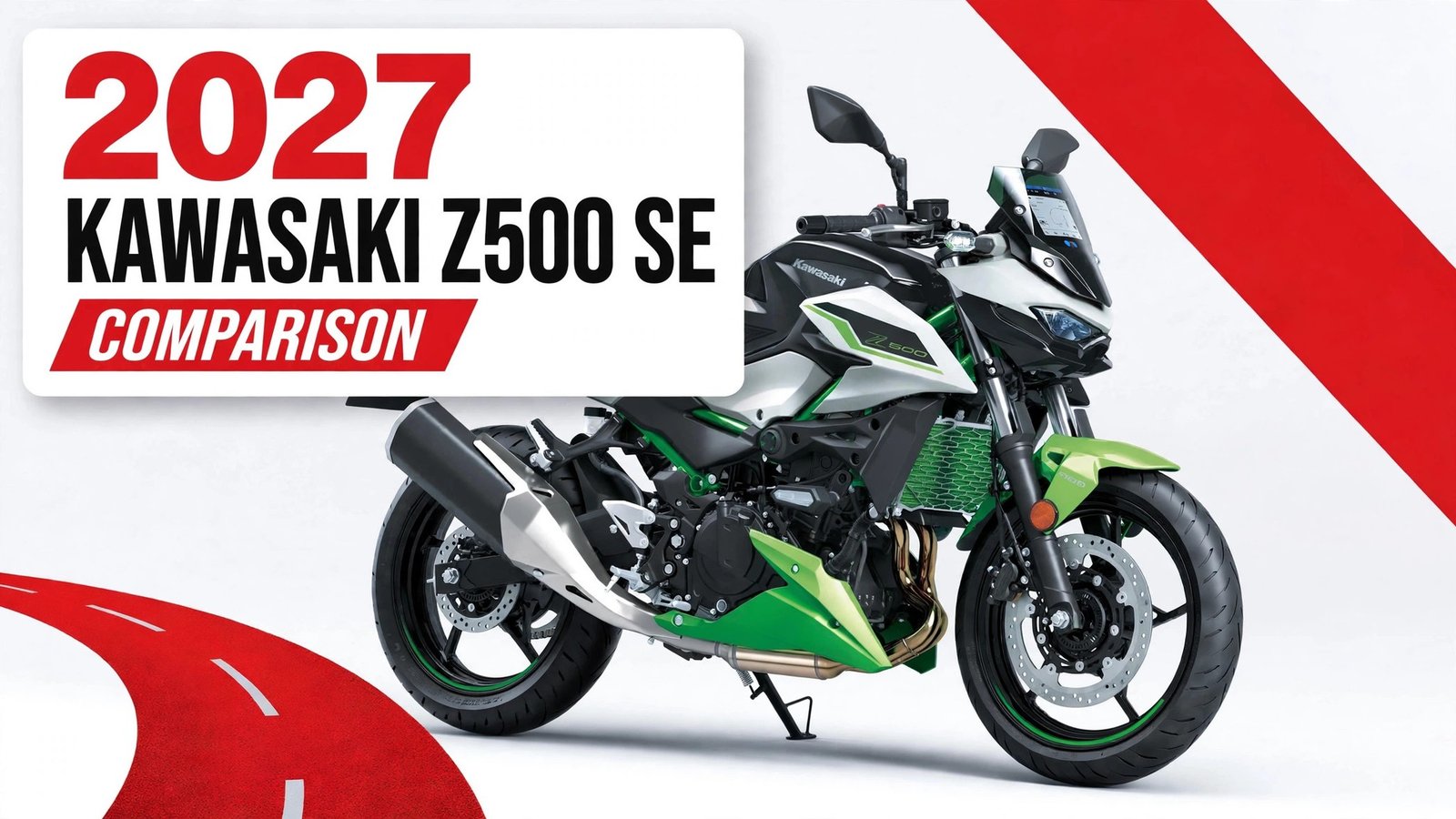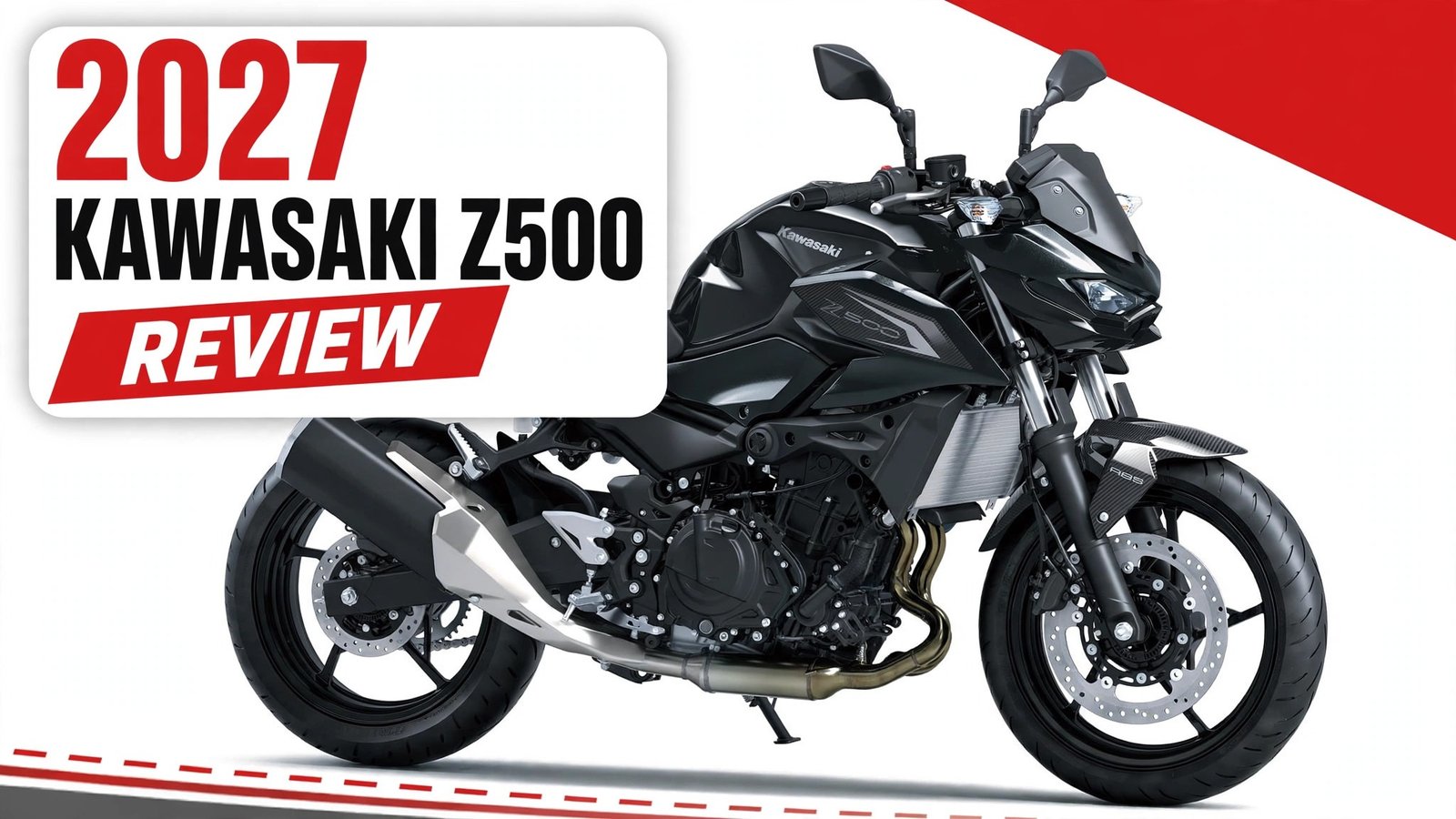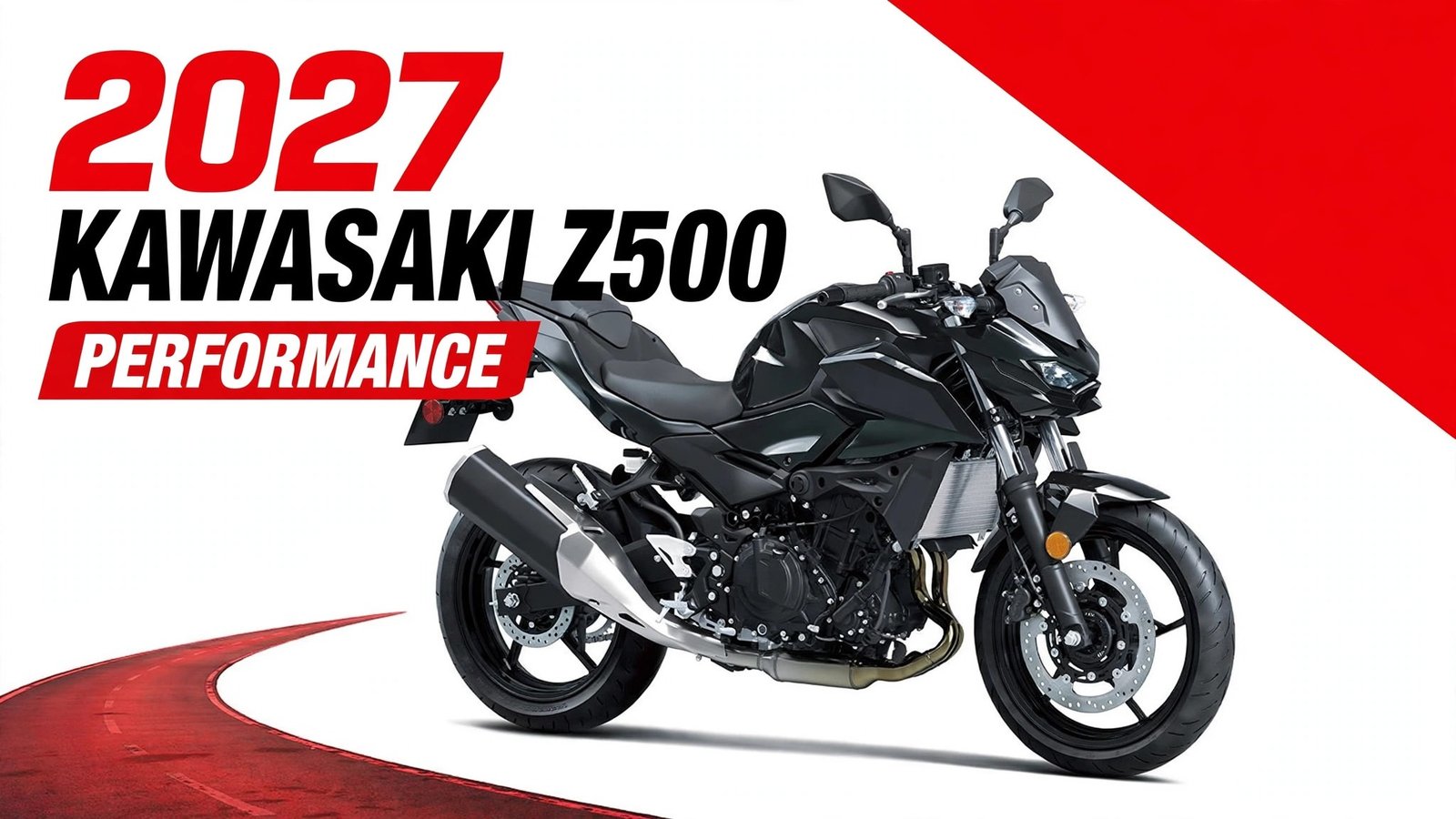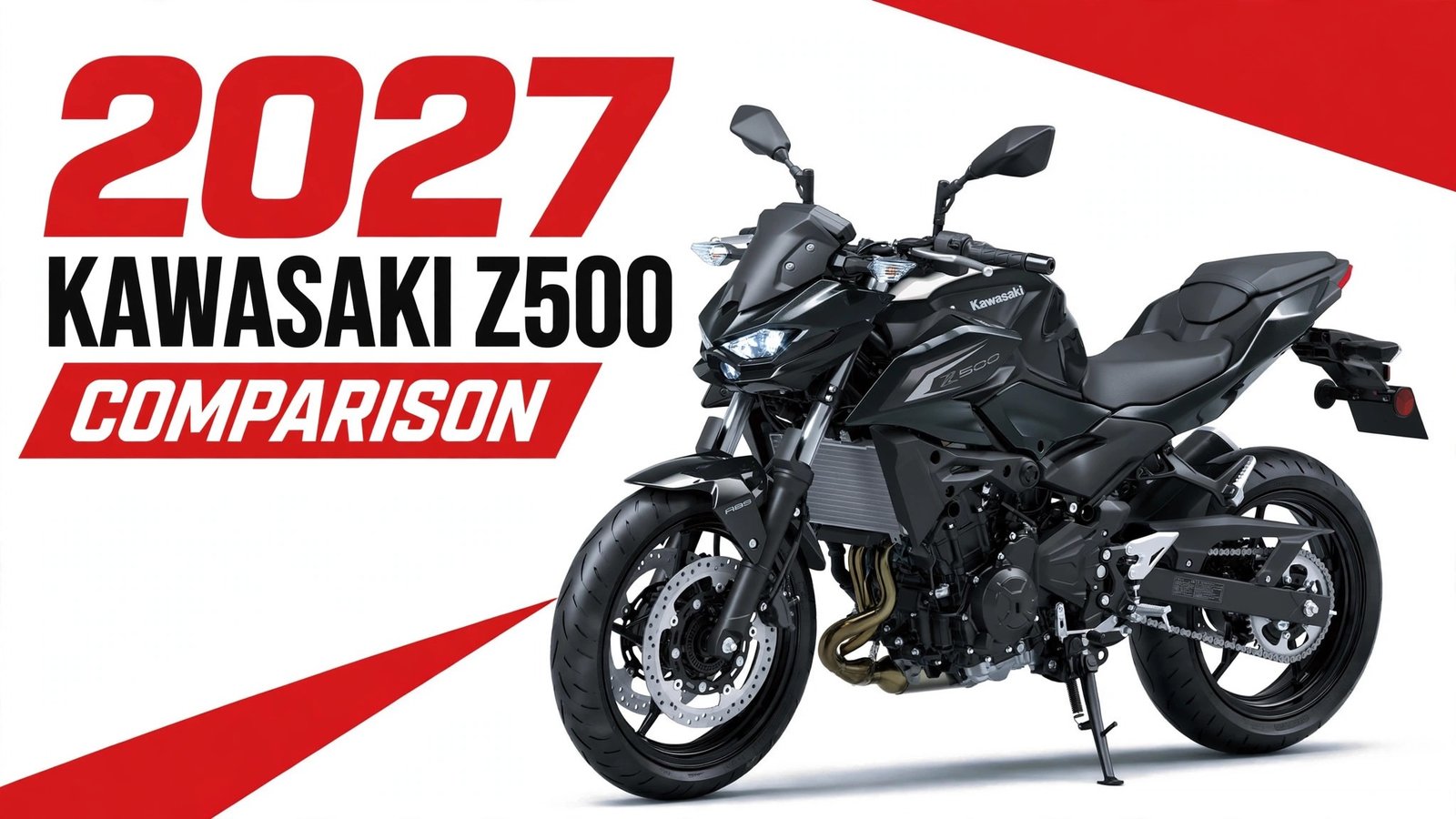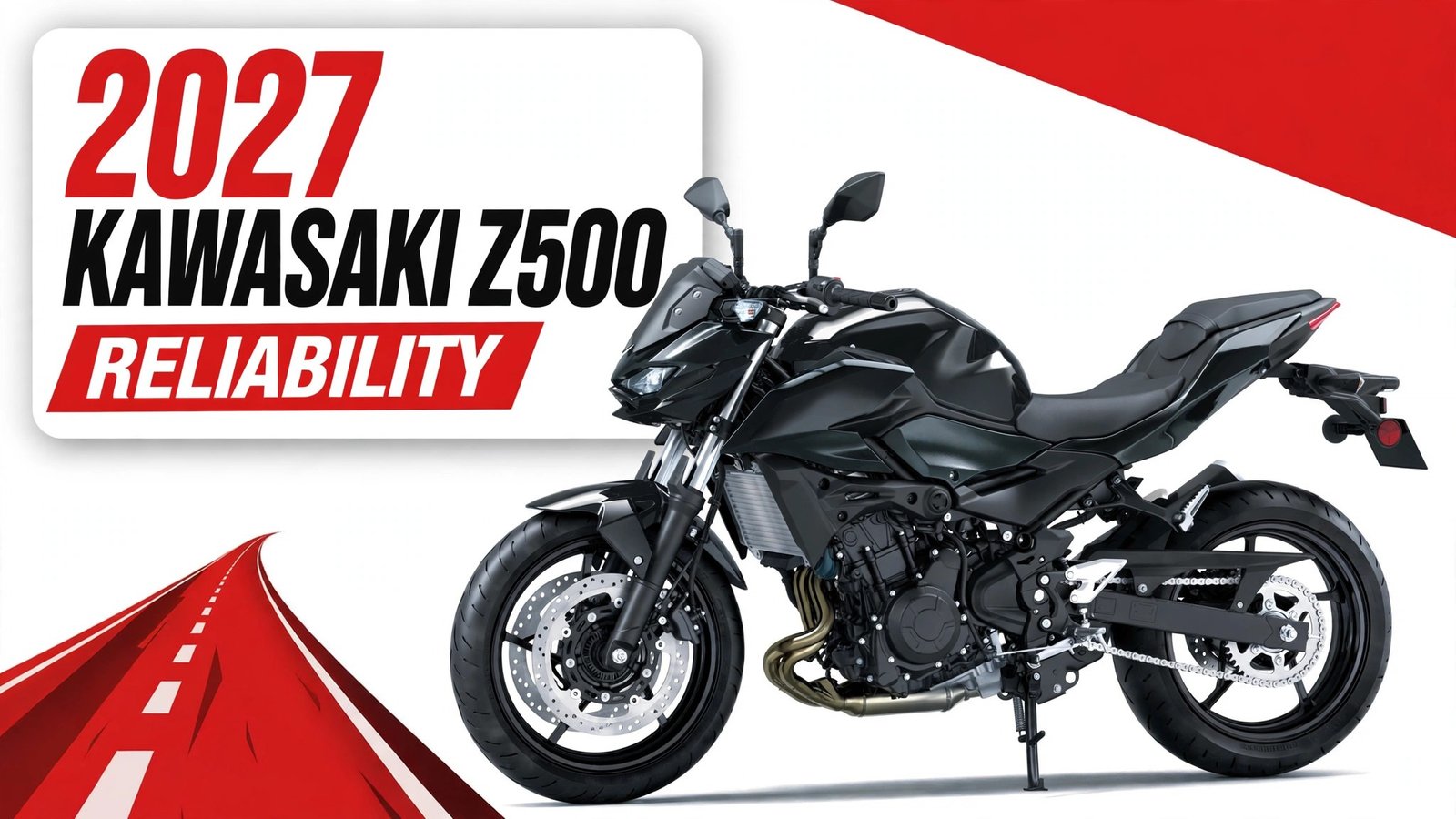
The short answer on Kawasaki Z500 reliability is good news with one homework item. Only one NHTSA campaign names the Z500 — recall 25V-146, a clutch release shaft that was not properly welded on 1,057 US bikes built from January to February 2024 — and the fix is free. Everything else about this Kawasaki Z500 reliability guide is a simple, proven 451cc twin on a shared-platform service schedule: first service at 600 miles, then every 7,600 miles, oil and filter at every service, and a valve-clearance inspection at 15,200 miles. No other widespread defect pattern is documented.
Kawasaki Z500 Reliability Overview
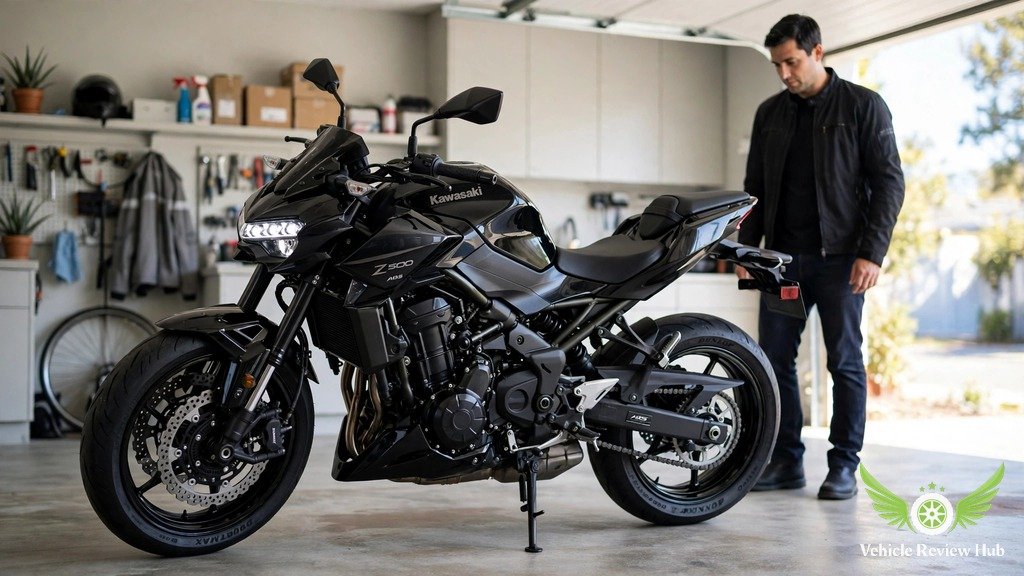
This Kawasaki Z500 reliability overview starts with the only number that counts against the bike: one recall, 1,057 US bikes. Against that, the rest of the record is clean — a 451cc parallel twin shared with the Ninja 500 and the Eliminator, and a service schedule that asks for little more than oil, filters and plugs. The Z500 is simple by 2027 standards: no traction control, no ride modes, no IMU, no quickshifter, and no keyless ignition on any trim. Fewer systems means fewer things to fail, and that simplicity is the foundation of this Kawasaki Z500 reliability picture.
One Campaign Names the Z500
Only one NHTSA campaign names the Z500. Campaign 25V-146 (MC25-04) covers 1,057 US Z500s — the 2024 Z500 ABS and Z500 SE ABS — for a clutch release shaft that was not properly welded between the lever and the shaft. The Part 573 report, submitted on 17 March 2025, names the total campaign population as 3,742 units across the Ninja 500 and the Z500 together, so the 1,057 figure is the Z500 slice and 3,742 is never the Z500 count. The cause was an improper weld: trial parts from a welding machine, supplied by New Somthai Motor Work, may have been used by mistake. Kawasaki corrected the setting in February 2024, which is why only bikes built from 22 January to 6 February 2024 are affected. NHTSA’s own database agrees: the 2024 Z500 returns one campaign, and 2025 through 2027 return none. The NHTSA Part 573 report is the source for every figure in this paragraph, and this Kawasaki Z500 reliability guide prints nothing beyond what it says.
The remedy is free and it is a replacement, not a patch. Kawasaki replaces the clutch release shafts on every eligible bike — component part 13102-0087, repair kit 99999-0975 — and owner notification letters were mailed on 24 March 2025, after a dealer stop-sale notice on 6 March 2025. A buyer looking at a used 2024 Z500 should treat the recall as a check, not a reason to walk away: the fix is free, and a remedied bike carries a white paint mark next to its frame number. The Eliminator uses the same part but is not in the recall population.
How Mileage, Storage and Previous Care Affect Reliability
With only two model years of owners at writing, mileage and care matter more than model year. A Z500 serviced on schedule is a different used buy from one that sat for a year with old fuel and a dry chain — and the schedule below gives a buyer the exact intervals to check against a service book. Storage matters too: a bike kept indoors ages far better than one left outside, and brake fluid is on a two-year clock whether the bike is ridden or not. This Kawasaki Z500 reliability guide treats a full service history as the single best reliability signal on a used Z500.
Kawasaki Z500 Common Problems and Wear Items
This Kawasaki Z500 reliability section states the common-problems picture plainly: one documented defect, and nothing else. The clutch shaft weld is the only widespread issue ever recorded for the Z500, and it is a recall with a free fix, not a wear item. Beyond it, there is no documented engine, transmission, electrical or suspension failure pattern, and no service-bulletin pattern beyond campaign MC25-04. The wear items to budget for are the ordinary ones — tires, brake pads, chain and sprockets — and this Kawasaki Z500 reliability guide separates those from defects, because a worn tire is maintenance and a failed weld is not.
Clutch Shaft Weld Defect
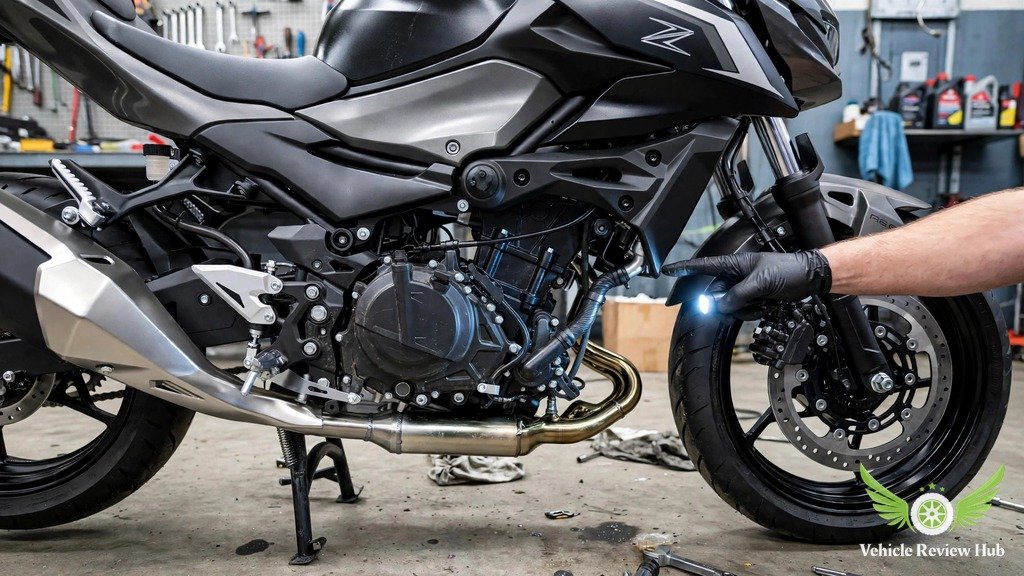
The defect is narrow and specific. On the affected bikes, the clutch release shaft was not properly welded between the lever and the shaft, so the clutch could stop working properly. The population is 1,057 US Z500s built between 22 January and 6 February 2024 — early 2024 bikes only — and the fix is a free replacement of the clutch release shafts under manufacturer campaign MC25-04. The component part is 13102-0087 and the repair kit is 99999-0975, and dealers were told to stop selling affected bikes on 6 March 2025, with owner letters mailed on 24 March 2025. The 2025, 2026 and 2027 model years are not affected at all.
What makes this defect easy to live with is how checkable it is. A remedied bike carries a white paint mark, “[M]”, left of the first digit of the frame number — visible with a torch, and a dealer can confirm it in seconds. This Kawasaki Z500 reliability guide recommends both checks on any used 2024 bike — the mark is the proof the free fix was done. The Eliminator shares the same part but is not in the recall population — the recall names the Z500 and the Ninja 500, and nothing else.
Owner Evidence Is Thin
Owner evidence on the Z500 is thin, and this Kawasaki Z500 reliability guide says so rather than guessing. The bike has been on sale since 2024, so only two model years of owners exist, and no long-term pattern has had time to form. There is no documented engine, transmission, electrical or suspension failure pattern. The things reviewers do mention — a high-frequency buzz in the grips, pegs and seat above 6,500 rpm, a stock suspension that feels soft for heavier riders, an exhaust heat shield that crowds the right footpeg, mirrors that vibrate at speed, and a basic base LCD dash — are comfort and ergonomic notes, not failures. Ultimate Motorcycling’s 12 Fast Facts review records the buzz at around 60 mph, and Cycle News notes the bike hums along comfortably at 70 mph in sixth gear — both are ride impressions, not reliability findings.
Kawasaki Z500 Maintenance Schedule and Servicing
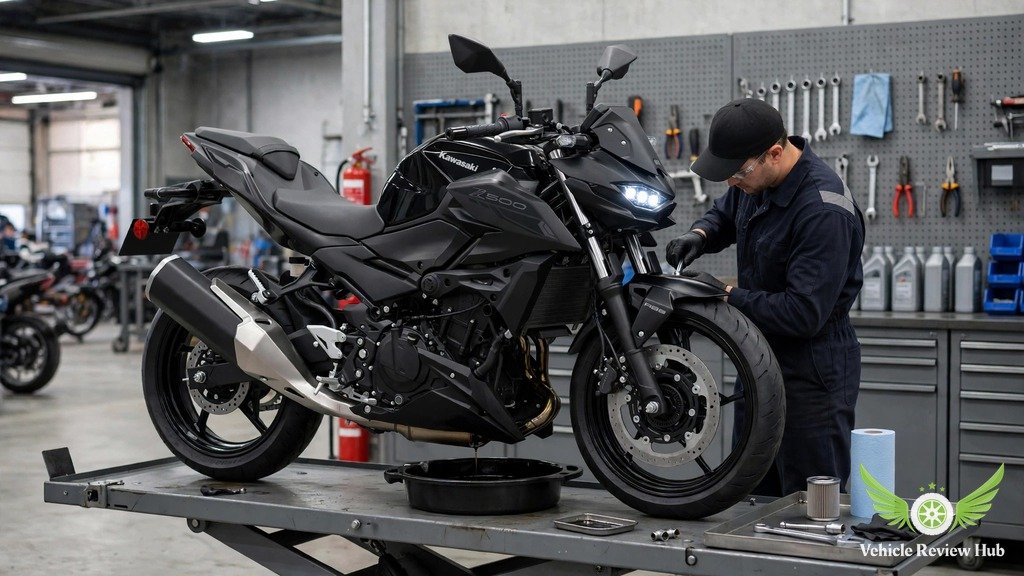
This Kawasaki Z500 reliability guide prints the maintenance schedule as shared-platform data. The Z500 shares its service chart with the Ninja 500, and the Z500’s own manual was not separately re-read for this brief, so nothing here is presented as “from the Z500’s manual alone”. The rhythm is simple: a first service at 600 miles, then every 7,600 miles or every year. Oil and the oil filter change at every service, and so do the spark plugs. The valve-clearance inspection falls every 24,000 km, which is 15,200 miles. The table below puts the intervals in one place.
| Service item | Interval | Detail |
|---|---|---|
| First service | 600 miles | Oil and oil filter changed |
| Regular service | Every 7,600 miles (12,000 km) or yearly | Oil and oil filter at every service |
| Spark plugs | Replaced at every service | NGK LMAR9G, gap 0.7–0.8 mm |
| Valve clearance inspection | Every 24,000 km (15,200 miles) | Interval only; clearance values not verified |
| Air cleaner and fuel filter | Every 24,000 km | With the valve inspection |
| Coolant, hoses and O-rings | 36,000 km / 3 years | Coolant and water hoses changed |
| Brake fluid | Every 24,000 km (15,200 miles), every 2 years | DOT-4 fluid |
| Brake hoses | Every 4 years | Replace regardless of mileage |
| Fuel hoses | Every 5 years | Replace regardless of mileage |
| Idle speed | 1,300 rpm ± 50 | Checked at service |
Note: This Kawasaki Z500 reliability table is the shared Ninja 500 and Z500 platform schedule — the chart, not the site’s prose, which prints wrong figures elsewhere. The valve interval is 15,200 miles; the clearance values themselves were not verified and are never printed here.
1,057 Bikes, Jan to Feb 2024
The recall’s numbers are the most misread figures in this Kawasaki Z500 reliability story. The Z500 slice is 1,057 US bikes — the 2024 Z500 ABS and Z500 SE ABS, model codes ER500E/F — built from 22 January to 6 February 2024. The 3,742 figure that sometimes appears next to this recall is the total campaign population across the Ninja 500 and the Z500 together, and it is never the Z500 count. The schedule source is the Ninja 500 and Z500 maintenance chart, and the recall source is the NHTSA Part 573 report.
White Mark Means Remedied
The white mark is the simplest recall check in motorcycling. Per service bulletin MC25-04, a remedied Z500 carries a white paint mark, “[M]”, to the left of the first digit of the frame number. Find the frame number and look immediately to its left. This Kawasaki Z500 reliability guide recommends the check on every used 2024 Z500, confirmed with a Kawasaki dealer at the same time — the dealer can verify the frame number against the campaign record in seconds. The mark is paint, not a sticker, and it survives washing — a missing mark on a 2024 bike means the fix has not been done.
Kawasaki Z500 Tires, Brakes and Suspension Maintenance
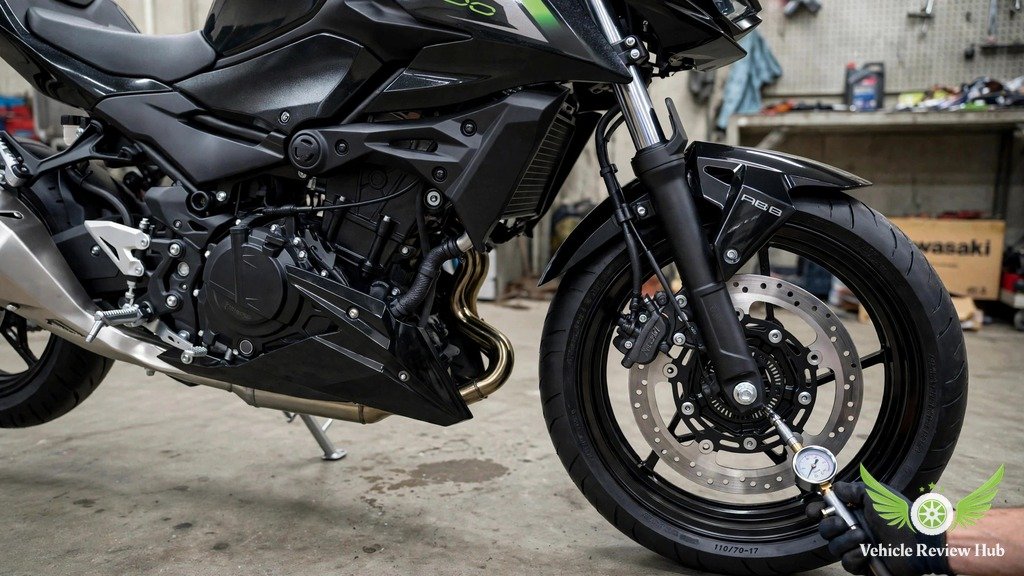
This Kawasaki Z500 reliability section covers the parts that wear by use rather than by time: tires, brakes and suspension. The numbers are small and exact, from the shared-platform schedule — front tire 110/70-17 at 200 kPa (28 psi); rear tire 150/60-17 at 225 kPa (32 psi); chain slack 20–30 mm; brake-pad wear limits 1.0 mm front and 1.5 mm rear. The suspension is simple too: a 41 mm telescopic fork with no adjustment and 4.7 inches of travel, and a horizontal back-link rear shock with adjustable preload and 5.1 inches of travel. None of it is exotic — Kawasaki Z500 reliability ownership is checking small numbers on time, not nursing fragile hardware.
| Item | Specification | Interval or limit |
|---|---|---|
| Engine oil | 2.3 L SAE 10W-40 (JASO MA/MA1/MA2) | Changed at every service |
| Oil drain bolt | 30 Nm / 22 lb-ft | Torqued at every oil change |
| Oil filter | Hiflofiltro HF303RC (Kawasaki 16097-0008) | Changed at every service; 17.5 Nm |
| Chain | Sealed O-ring chain; slack 20–30 mm (0.8–1.2 in) | Lube every 400 mi / 600 km; slack check every 600 mi / 1,000 km |
| Rear axle | 98 Nm / 72 lb-ft | Torqued at wheel removal |
| Clutch free play | 2–3 mm | Checked at service |
| Front tire | 110/70-17 Dunlop Sportmax GPR300, 200 kPa / 28 psi | Pressure checked regularly |
| Rear tire | 150/60-17 Dunlop Sportmax GPR300, 225 kPa / 32 psi | Pressure checked regularly |
| Front brake | Single 310 mm disc, 2-piston Nissin, ABS | Pad wear limit 1.0 mm |
| Rear brake | Single 220 mm disc, single-piston caliper, ABS | Pad wear limit 1.5 mm |
Note: This Kawasaki Z500 reliability table is shared-platform data from the Ninja 500 and Z500 schedule. The front brake is a single 310 mm disc — never a dual-disc setup — and the tire pressures are 28 psi front and 32 psi rear.
Valves at 15,200 Miles
The valve-clearance inspection is the longest interval in this Kawasaki Z500 reliability guide. The shared-platform schedule calls for a valve-clearance inspection every 24,000 km, which is 15,200 miles. Print 15,200 — the site’s prose rounds it to 15,000 miles, and the rounding is wrong. No clearance figure in millimetres is printed here, because the valve-clearance values were not verified. The inspection is a check, not a rebuild: clearances are measured at 15,200 miles and adjusted only if out of specification.
Tire, Brake and Suspension Checks That Matter
The checks that matter most are the ones a rider can do without tools. Tire pressures drift with temperature and time, and a soft rear tire changes the bike’s handling long before it looks flat. Chain slack should sit at 20–30 mm, checked every 600 miles and lubed every 400 miles; a dry chain wears its sprockets, and a chain run too tight loads the output-shaft bearing. Brake pads wear to a 1.0 mm limit at the front and 1.5 mm at the rear. This Kawasaki Z500 reliability guide counts these three checks — pressures, chain, pads — as the weekly habit that does more than any single service visit.
The suspension checks are simpler still. The fork has no adjustment — the check is for leaking fork seals and a front end that dives too easily, which usually means the stock springs are soft for a heavier rider. The rear shock has preload adjustment only, so the check is for a rear end that bottoms over bumps. Reviewers call the stock suspension soft for heavier riders — a setup note, not a failure, fixed with preload or aftermarket parts. One honest note on the brakes: MCN praises the initial bite and feedback as streets ahead of the Honda CB500 Hornet, while Bennetts lists braking performance as a con and notes the rear brake can trigger the ABS early with a pillion aboard. Neither is a defect report — both are ride impressions.
Kawasaki Z500 Maintenance and Ownership Costs
This Kawasaki Z500 reliability guide puts ownership costs in the same frame as the maintenance schedule, because the two are the same story: a simple bike with cheap consumables and a short warranty. The 2027 Z500 ABS lists at $5,799 plus $650 destination ($6,449 delivered), and the SE ABS at $6,499 plus $650 ($7,149 delivered). The warranty is 12 months limited on every model year from 2024 to 2027 — the shortest in its group, the KTM 390 Duke carries 24 months. Verified running costs are few: a 3.7-gallon tank, a platform WMTC lab figure of 62.0 mpg for a 229-mile range, and consumables shared with the Ninja 500. No verified service, tire or insurance dollar figures exist with a named source, so this Kawasaki Z500 reliability guide prints none.
| Cost item | Figure | Source and status |
|---|---|---|
| 2027 Z500 ABS delivered | $6,449 ($5,799 + $650) | Kawasaki USA spec sheet; Motorcycle.com database |
| 2027 Z500 SE ABS delivered | $7,149 ($6,499 + $650) | Kawasaki USA spec sheet; Motorcycle.com database |
| 2025 destination | $600 or $650 — disputed | Motorcycle.com says $600; SlashGear says $650; print both labelled |
| Used 2024 Z500 (Nov 2026) | $3,299–$4,599 | Live Cycle Trader listings, November 2026 |
| Warranty | 12-month limited | Every model year 2024–2027 |
| Fuel range (platform) | 229 miles (62.0 mpg × 3.7 gal) | WMTC lab figure, Ninja 500 platform data |
| Recall remedy | Free | NHTSA 25V-146; dealer replaces clutch release shafts |
| Resale value percentage | Not verified | No verified resale percentage exists — never printed |
Note: This Kawasaki Z500 reliability table prints the 2025 destination as disputed — $600 per Motorcycle.com and $650 per SlashGear — because no single settled 2025 delivered price exists. The used range is from live Cycle Trader listings in November 2026, not a single stale figure.
Fuel, Routine Servicing, Tires and Replacement Parts
Fuel is the cheapest part of Z500 ownership. The platform’s WMTC lab figure is 62.0 mpg, which on a 3.7-gallon tank gives a 229-mile range, and TotalMotorcycle’s fuel-economy guide is the source for that figure. It is platform lab data from the Ninja 500, not a measured Z500 figure — Kawasaki publishes no MPG figure for the Z500 — but the lab number sets the shape of the running cost: a small tank and a frugal twin. Routine servicing is the 7,600-mile cycle of oil, filter and plugs, with ordinary parts: an NGK LMAR9G plug, a Hiflofiltro HF303RC filter (Kawasaki 16097-0008), and 2.3 liters of SAE 10W-40. Tires are the factory Dunlop Sportmax GPR300, and the parts a buyer is most likely to need are brake pads, a chain and sprockets.
Not the Ninja 400’s Clutch
The Ninja 400’s clutch-slip story does not apply to this bike, and this Kawasaki Z500 reliability guide says so because the confusion is common. The 400 had a clutch-slip pattern that was fixed by a 2020 running change, and the 500 and Z500 do not carry it. The 500 and Z500 clutch story is the recall — a different defect, a different part, and a different fix. A buyer who reads a 400 clutch-slip report and applies it to a Z500 is reading the wrong bike’s history. The Z500’s clutch, once the recall is remedied, is the assist-and-slipper unit the reviews praise for its very light lever — Motorcycle.com’s Ninja 500 first ride jokes that it suits forearms of a six-year-old — and there is no documented slip pattern on the 500 or Z500 platform.
The same rule applies to the old EX500, the carburetted 1987–2009 Ninja 500R. Its 60 hp, its 118 mph top speed and its service history belong to a different motorcycle, and none of its figures carries onto the Z500. The Z500’s reliability record starts in 2024. This Kawasaki Z500 reliability guide keeps the three bikes separate in every figure it prints.
How to Keep a Kawasaki Z500 Reliable
This Kawasaki Z500 reliability guide ends where ownership starts: with a short list of habits that cost little and buy a lot. Follow the 7,600-mile service cycle: oil and filter at every service, plugs at every service, chain lubed and at 20–30 mm of slack, tires at 28 psi front and 32 psi rear, brake fluid every two years. Check the frame number and the white mark on any used 2024 bike before buying. Keep the service book, because on a bike with only two years of owner history, the book is the reliability record. None of it is difficult, and none of it is expensive — the verdict on Kawasaki Z500 reliability is a simple bike, kept simple, stays reliable.
Preventive Maintenance, Records and Regular Inspections
Preventive maintenance on the Z500 is the schedule, followed on time. The first service at 600 miles sets the pattern: oil and filter changed and the book stamped. Every 7,600 miles or every year after that, the same work repeats, and at 15,200 miles the valve inspection, brake-fluid change and air-cleaner and fuel-filter change all fall together. Records matter as much as the work: a stamped book with dates and mileages is what a future buyer will ask for. This Kawasaki Z500 reliability guide recommends keeping every receipt — the bike’s own owner record is still too short to speak for itself.
Check the Frame Number
The frame-number check is the single most important action in this Kawasaki Z500 reliability guide. Find the frame number on any used Z500 — a 2024 bike in particular — and look immediately to its left for the white paint mark, “[M]”. The mark means the clutch release shaft recall was remedied. No mark on a 2024 bike means the fix is still owed, and the buyer should call a Kawasaki dealer with the frame number before agreeing a price. The dealer can confirm the campaign record in seconds, and the fix is free. A 2025, 2026 or 2027 bike cannot be in the recall population, but the check is still worth doing.
Kawasaki Z500 Reliability: Frequently Asked Questions
These are the questions buyers ask most about Kawasaki Z500 reliability — the recall, the frame-number check, the valve interval, the service rhythm, the oil and the known problems. For prices and specs, see the review; for the riding experience, see the performance guide; for prices against its rivals, see the comparison.
Was the Kawasaki Z500 recalled?
Yes, once: NHTSA campaign 25V-146 covers 1,057 US Z500s built from January to February 2024, for a clutch release shaft that was not properly welded, and this Kawasaki Z500 reliability guide notes the fix is free.
How do I know if a used Z500 has had the recall fixed?
Check the frame number with a Kawasaki dealer and look for the white paint mark “[M]” to the left of the first digit of the frame number, which means the bike was remedied — and this Kawasaki Z500 reliability guide recommends both checks on any used 2024 bike.
When are the Kawasaki Z500’s valves checked?
Every 24,000 km, or 15,200 miles, on the shared-platform schedule. The clearance values themselves were not verified — only the interval is printed in this Kawasaki Z500 reliability guide.
How often does the Kawasaki Z500 need servicing?
First service at 600 miles, then every 7,600 miles or every year, with oil and filter changed at every service and spark plugs replaced at every service — the rhythm this Kawasaki Z500 reliability guide calls the whole skeleton of ownership.
What oil does the Kawasaki Z500 take?
2.3 liters of SAE 10W-40, and the drain bolt torques to 30 Nm (22 lb-ft) — the oil figure this Kawasaki Z500 reliability guide prints from the shared-platform schedule.
What are the Kawasaki Z500’s known problems?
Only the recall is documented. The Ninja 400’s clutch-slip story does not apply to this bike, and no other widespread failure pattern is documented — the honest summary of Kawasaki Z500 reliability at this age.