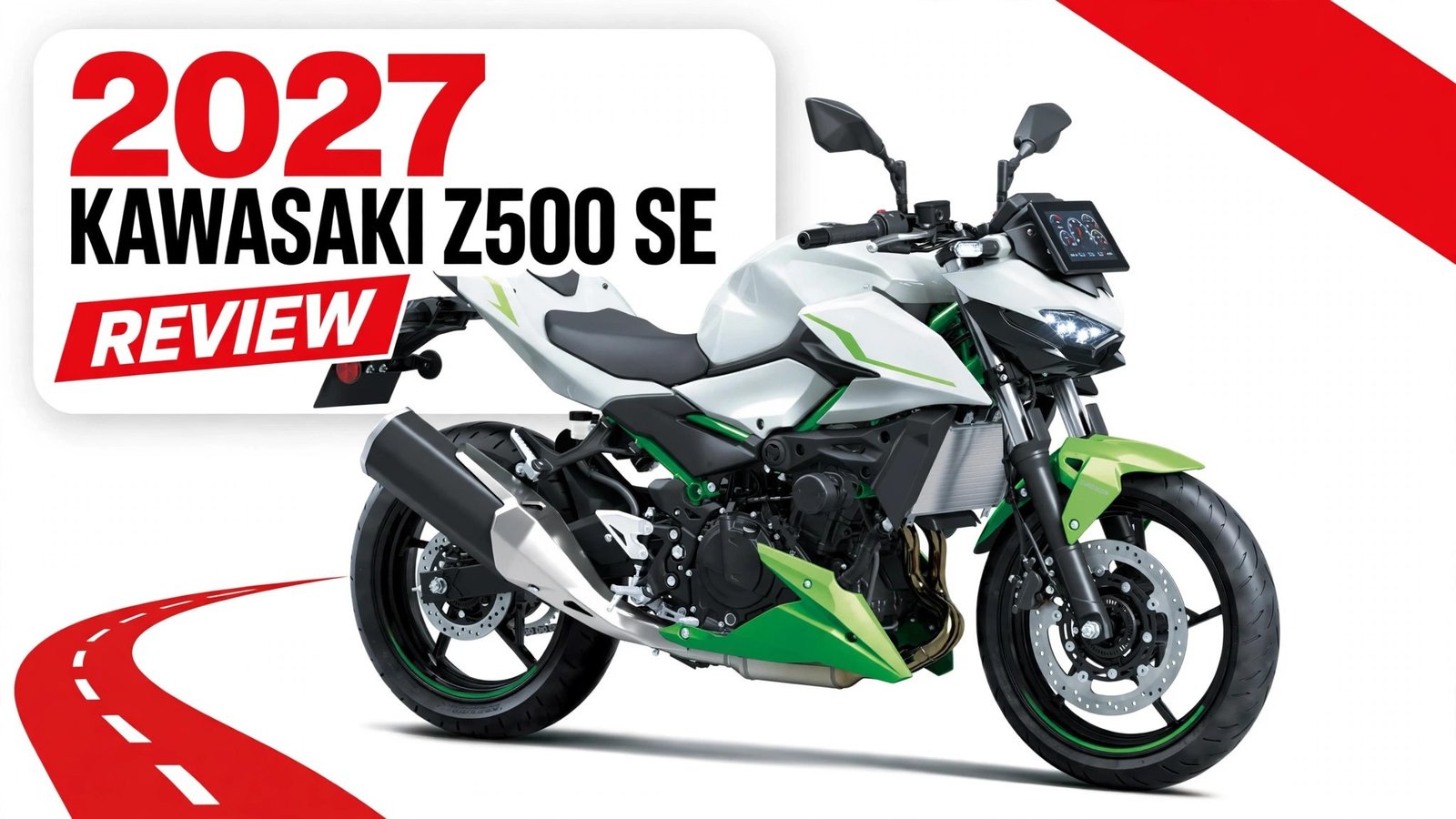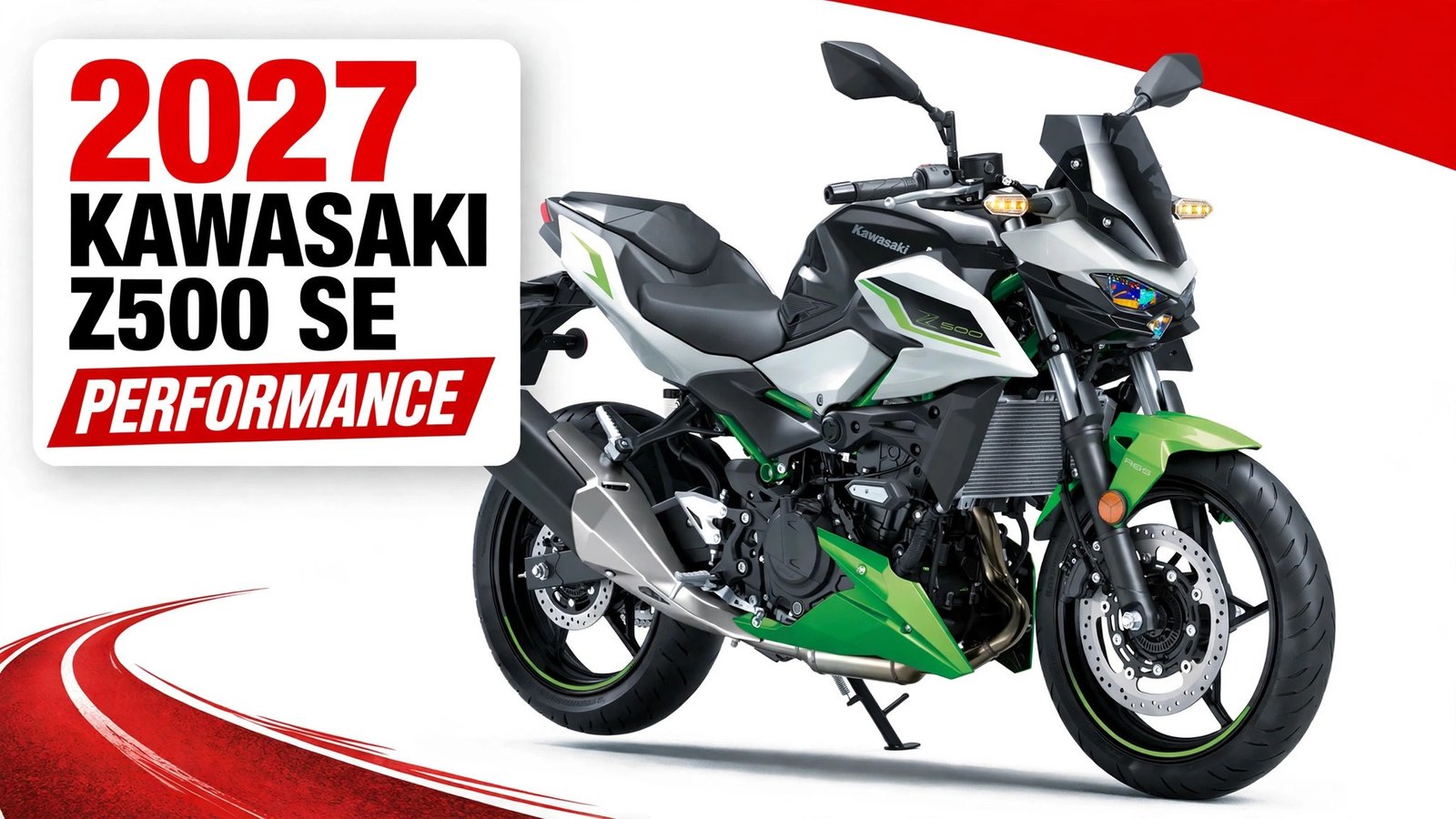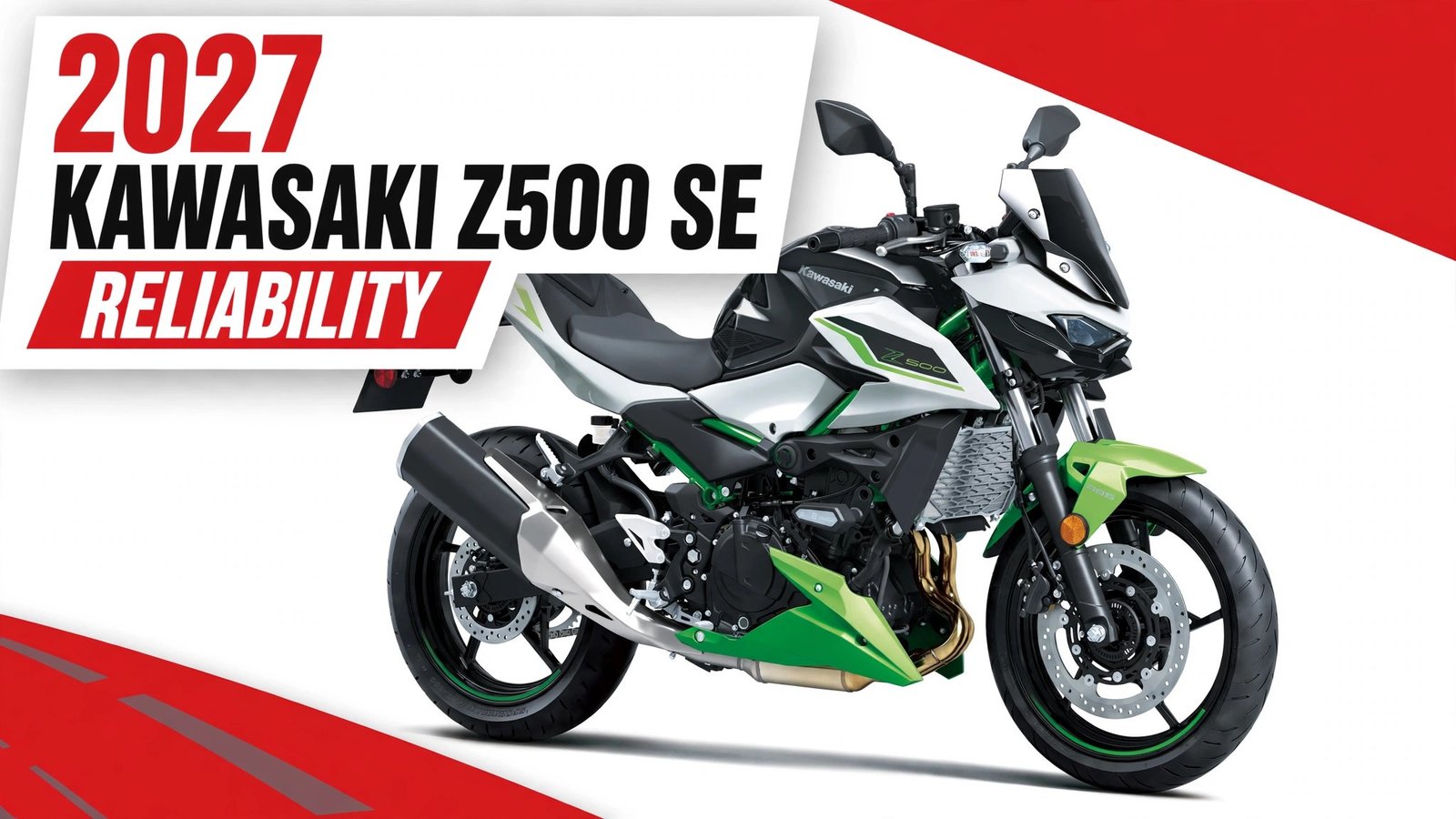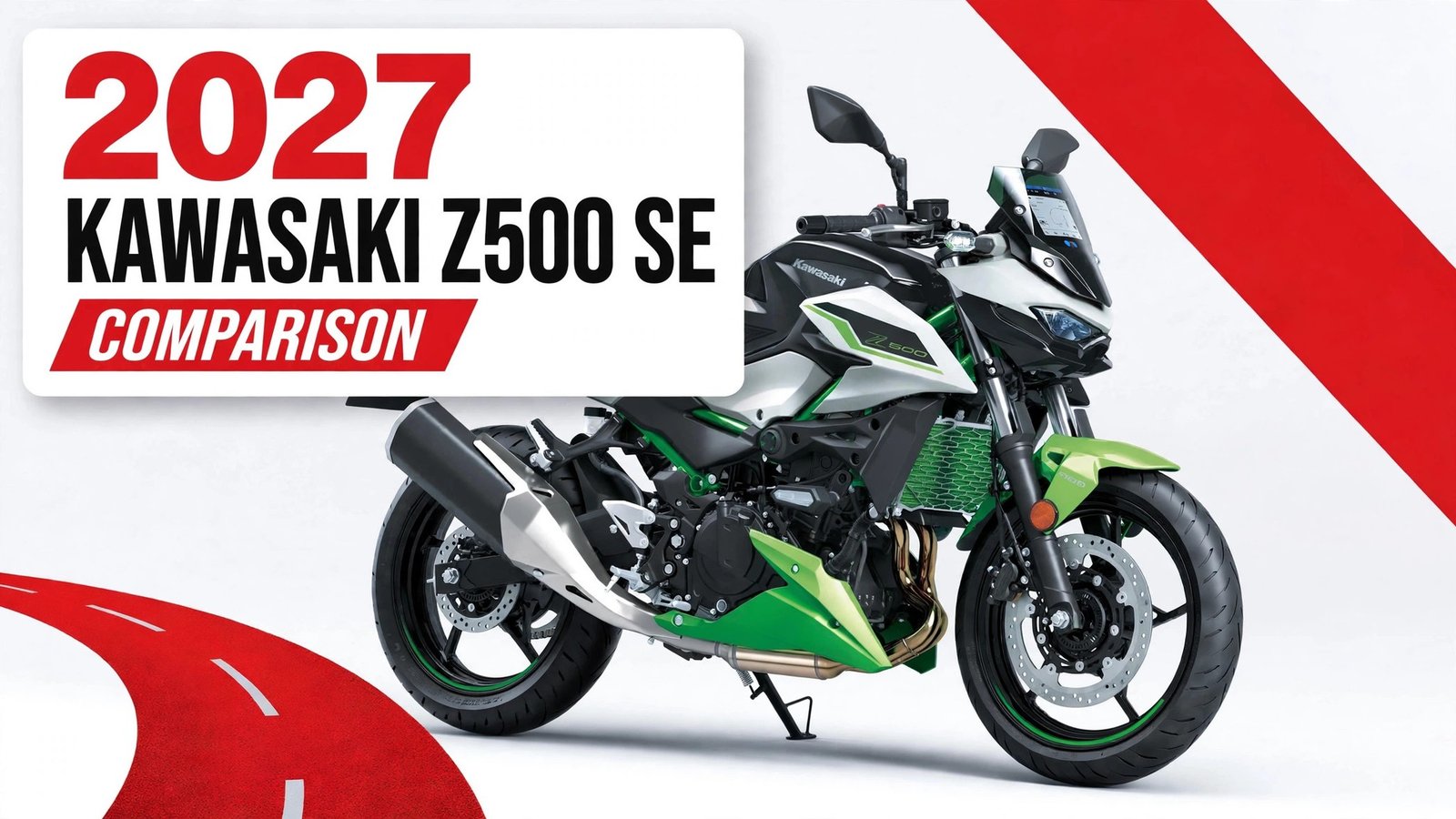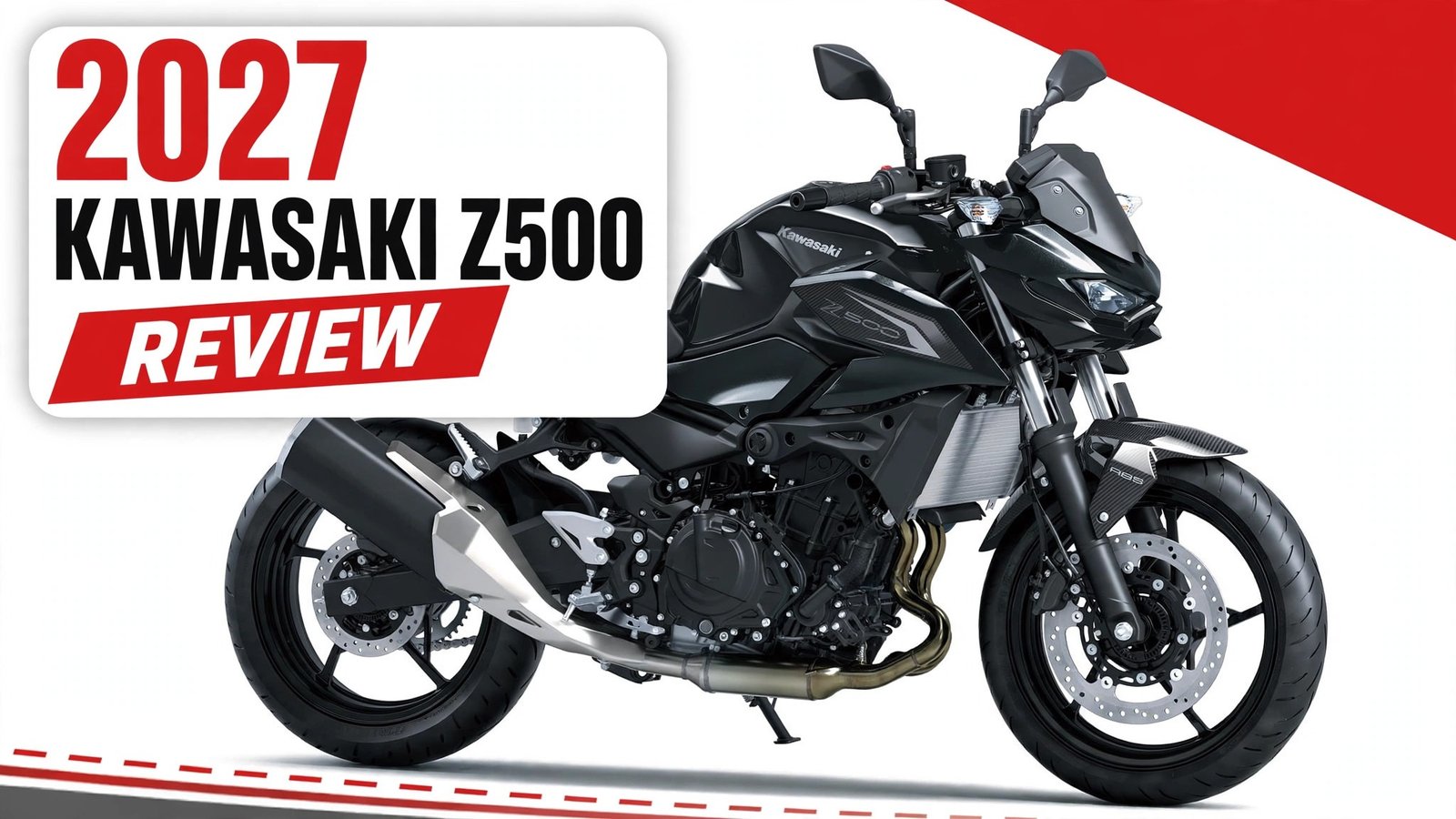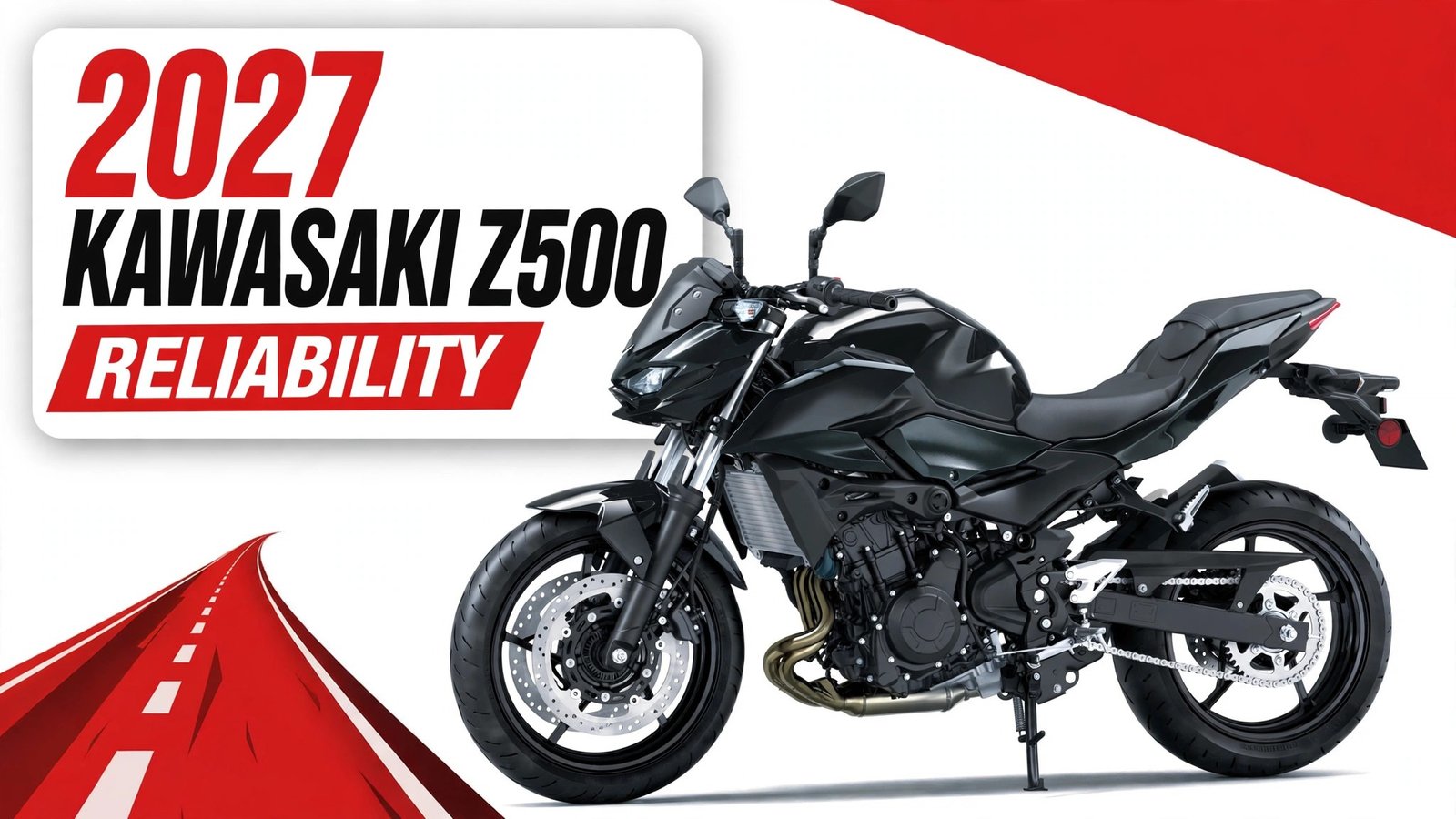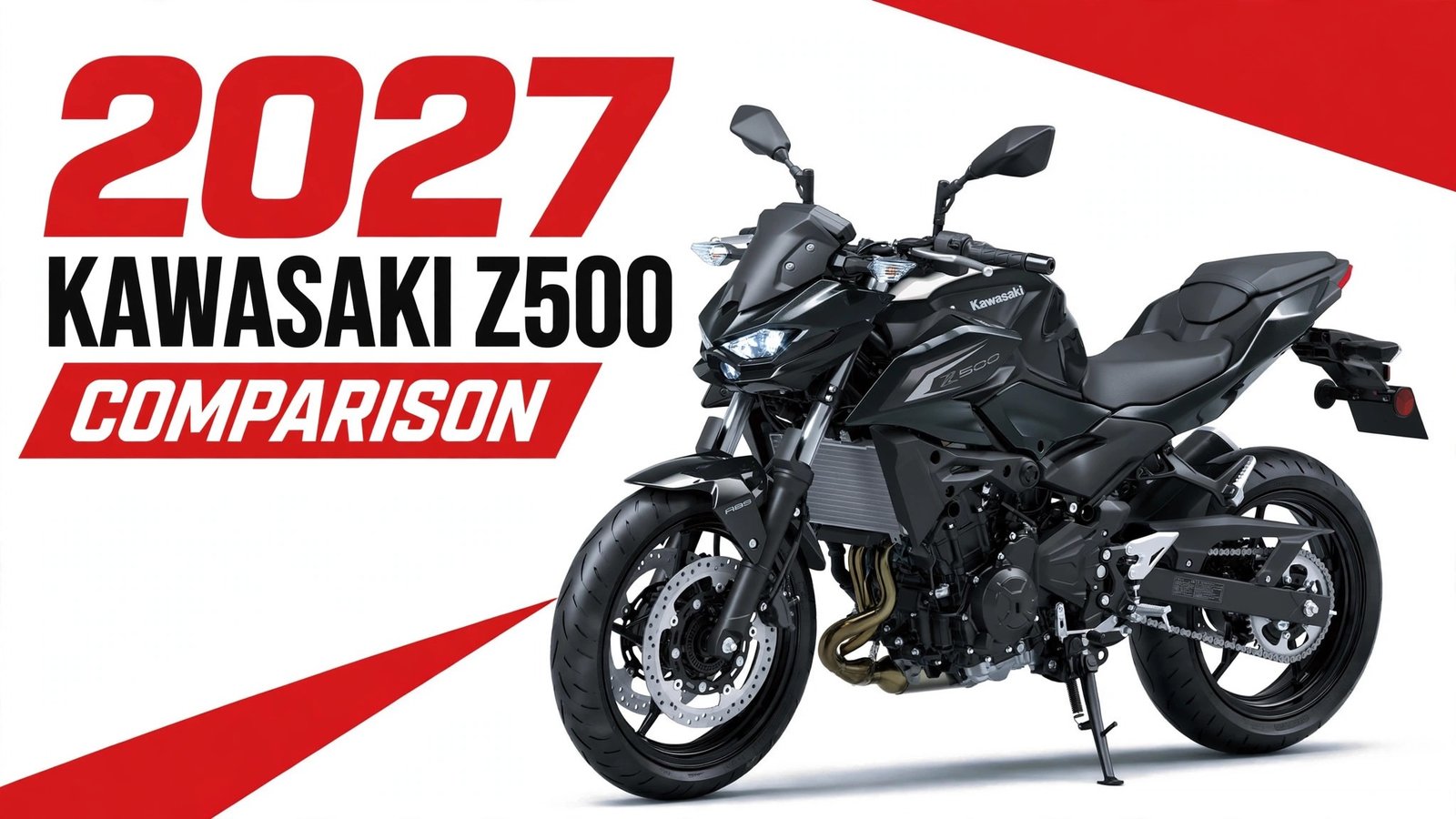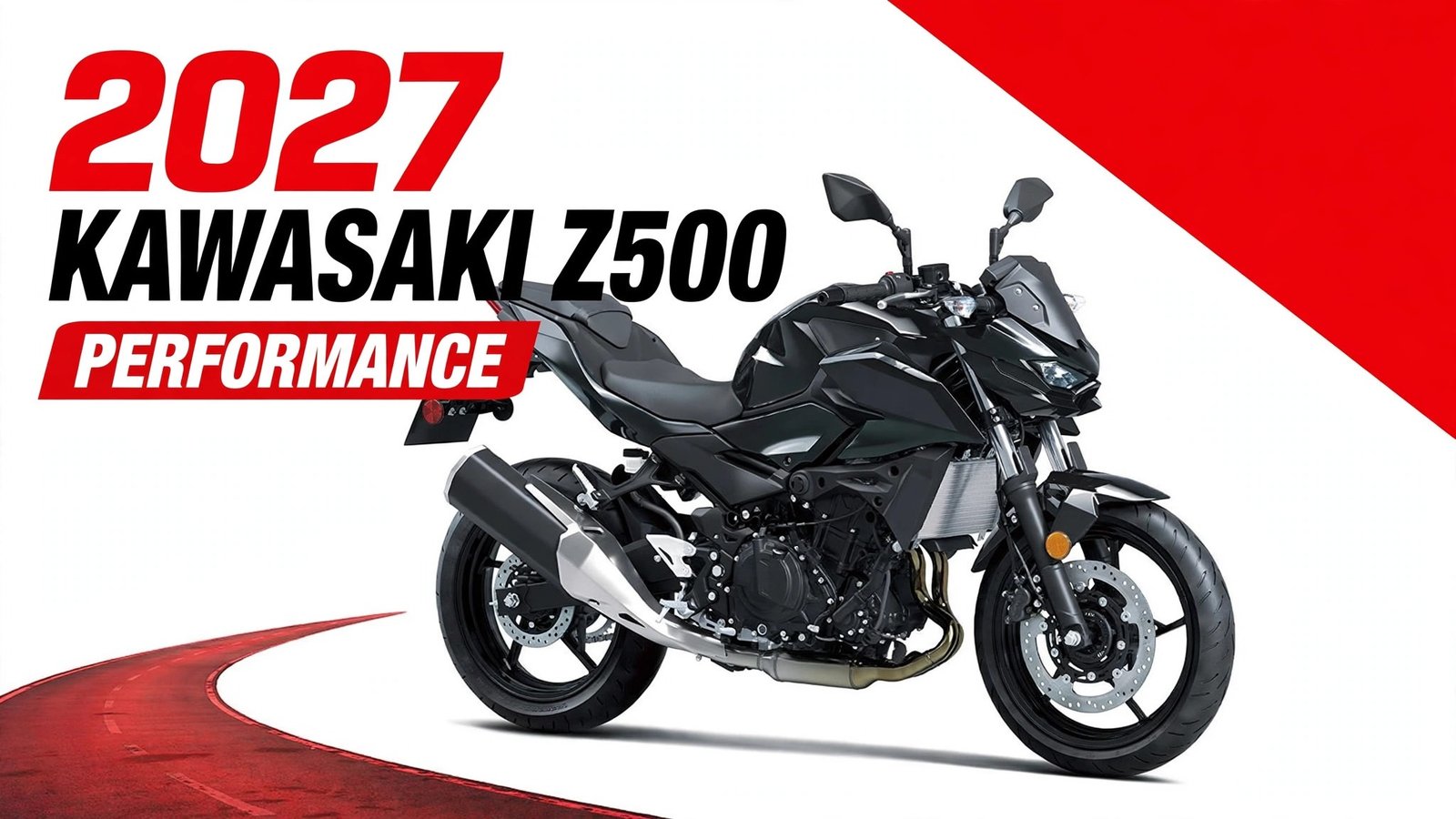
The short answer in this Kawasaki Z500 performance guide is that the bike is quick enough for its class and honest about what it cannot prove: Kawasaki claims 51.0 hp from the 451cc twin, no dyno run of the Z500 itself exists anywhere, no timed 0–60 run exists, and no measured US top speed or MPG exists for the bike itself. The sections below separate claimed figures from estimates, platform data from the Z500’s own data, and ride reports from guesses, so a buyer knows what the bike does and what nobody has measured.
Kawasaki Z500 Engine Performance and Power Delivery
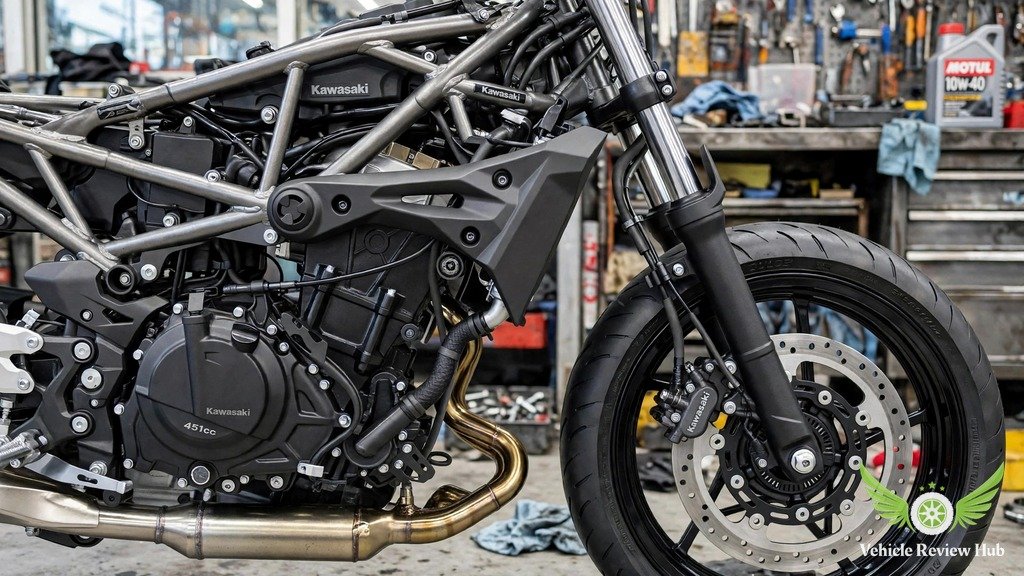
The engine is a 451cc parallel twin that Kawasaki claims makes 51.0 hp at 10,000 rpm and 31.7 lb-ft at 7,500 rpm to ISO 4106, and this Kawasaki Z500 performance guide treats those claimed figures as the starting point rather than the verdict. The twin is the 400’s 399cc engine stroked by 6.8 mm on the same 70.0 mm bore, with a new crankshaft, rods and piston, and it debuted on the Eliminator cruiser before the Z500 and Ninja 500. Claimed power is up from the Z400’s 45 hp, and the torque peak arrives at 7,500 rpm, so the bike feels strong in normal riding, not only at the top of the rev range. The full specification table is in the review.
No Z500 Dyno Exists
No dyno run of the Z500 itself has been published anywhere, and this Kawasaki Z500 performance guide says so plainly because the gap matters: without a rear-wheel measurement, every horsepower number for this bike is either Kawasaki’s claimed crank figure or a figure borrowed from a sibling bike. The claimed 51.0 hp at 10,000 rpm comes from Kawasaki USA’s 2027 spec sheet — a crank figure measured to ISO 4106, not a rear-wheel result. A buyer who sees a rear-wheel horsepower figure next to the Z500’s name should ask where the run happened, because no such run has been published.
The absence is not unusual for a bike in this price band, and it is not a mark against the engine. Small nakeds rarely get independent dyno time, and the Z500 has only been on sale since 2024. What the absence does mean is that the only hard numbers for this Kawasaki Z500 performance story are the claimed figures and the one platform dyno below, and the two must never be blended into a single number.
Platform Dyno: 47.2 hp
The only dyno figure anywhere near this bike is Cycle World’s run on the 2024 Eliminator SE, which shares the same 451cc twin: on Cycle World’s in-house Dynojet 250i, the Eliminator SE produced 47.22 hp at 10,430 rpm and 29.03 lb-ft at 7,510 rpm. That is the Eliminator’s dyno, not the Z500’s, and this Kawasaki Z500 performance guide names it as the Eliminator’s in the same breath because the Eliminator is a cruiser with different gearing, a different exhaust and 395 lb on Cycle World’s scales against the Z500’s 366 lb. The figure shows what the 451cc twin makes at the wheel, and it is the closest measurement the platform has, but it is not a Z500 result and must never be printed as one.
For scale, the 400 the Z500 replaces put down 43.4 hp on Cycle World’s dyno and 43.7 hp in Motorcycle.com’s shootout, so the 451cc twin should read higher at the wheel — but that is reasoning, not a measurement, and this Kawasaki Z500 performance guide frames it as such.
| Item | Figure | Source and status |
|---|---|---|
| Claimed power | 51.0 hp @ 10,000 rpm, ISO 4106 | Kawasaki USA 2027 spec sheet |
| Claimed torque | 31.7 lb-ft @ 7,500 rpm | Kawasaki USA 2027 spec sheet |
| Platform dyno power | 47.22 hp @ 10,430 rpm | Cycle World Eliminator SE dyno, NOT a Z500 run |
| Platform dyno torque | 29.03 lb-ft @ 7,510 rpm | Cycle World Eliminator SE dyno, NOT a Z500 run |
| Z500 dyno | None published | No Z500 dyno exists anywhere |
| Redline | 11,700 rpm | RevZilla and Cycle News |
Note: The claimed figures in this Kawasaki Z500 performance table come from Kawasaki USA’s 2027 Z500 ABS spec sheet, and the dyno figures are Cycle World’s Eliminator SE run, labelled as the Eliminator’s wherever they appear. No rear-wheel figure in this table is a Z500 measurement.
Kawasaki Z500 Top Speed and Acceleration
Top speed and acceleration are where this Kawasaki Z500 performance guide has the least to report and the most to warn about: no timed run exists, no measured top speed exists, and the numbers that circulate are estimates from one outlet or figures borrowed from other bikes. A buyer who wants a tested 0–60 time or a verified top speed will not find one, and the honest answer is to say so.
No Timed Run Anywhere
No timed 0–60 mph run exists anywhere for the Z500, and no quarter-mile time exists either, which means every acceleration number for this bike is an estimate, a roll-on from a sibling bike, or an aggregator’s guess. The only measured acceleration figure on the platform is Chase on Two Wheels’ 40–80 mph roll-on in third gear, 5.43 seconds — on the Ninja 500, not the Z500, and a roll-on is not a 0–60. A buyer comparing 0–60 times across the class will find nothing to compare for the Z500, and this Kawasaki Z500 performance guide will not invent a time to fill the gap.
TopSpeed’s 4.5s Is a Guess
TopSpeed’s newer article says the Z500 does 0 to 60 mph in approximately 4.5 seconds, while TopSpeed’s own 2024 ride review says 4.8 seconds (est.) — the two estimates from the same outlet disagree by three tenths of a second. Neither is a timed run, and this Kawasaki Z500 performance guide names both as TopSpeed estimates, because printing either as a measured time would mislead a buyer. An estimate that disagrees with itself is not a measurement. The 4.5-second figure comes from TopSpeed’s tailor-made everyday riding article, which labels it “approximately” — the hedging is in the source, and this guide keeps it.
The same caution applies to top speed. TopSpeed estimates 98 mph for the Z500, the only top-speed estimate aimed at the US bike; MCN’s spec table lists 110 mph, but that is the UK A2 bike’s table figure for a restricted bike, not a measured US run. No measured US top speed exists, and the higher figures on aggregator sites come from outlets this guide does not cite — one repeats the top speed of the old carburetted EX500 from 1987–2009, a different motorcycle entirely — and this Kawasaki Z500 performance guide asks buyers to treat any top-speed figure as an estimate or a table figure, never as a tested result.
| Figure | Value | Status |
|---|---|---|
| 0–60 mph, TopSpeed newer article | Approximately 4.5 s | Estimate, not measured |
| 0–60 mph, TopSpeed 2024 ride review | 4.8 s (est.) | Estimate, not measured |
| Top speed, TopSpeed | 98 mph (est.) | Estimate, not measured |
| Top speed, MCN spec table | 110 mph | UK A2 table figure, not a US measurement |
| 40–80 mph roll-on, 3rd gear, Ninja 500 | 5.43 s | Measured on the Ninja 500; a roll-on is not a 0–60 |
| Timed 0–60 run, Z500 | None exists | No timed run anywhere |
| Quarter-mile, Z500 | None exists | No quarter-mile time exists |
Note: Every figure in this Kawasaki Z500 performance table is labelled with its status, and the only measured number in it belongs to the Ninja 500, not the Z500 — no figure here is a timed Z500 run.
Kawasaki Z500 Mileage and Fuel Economy
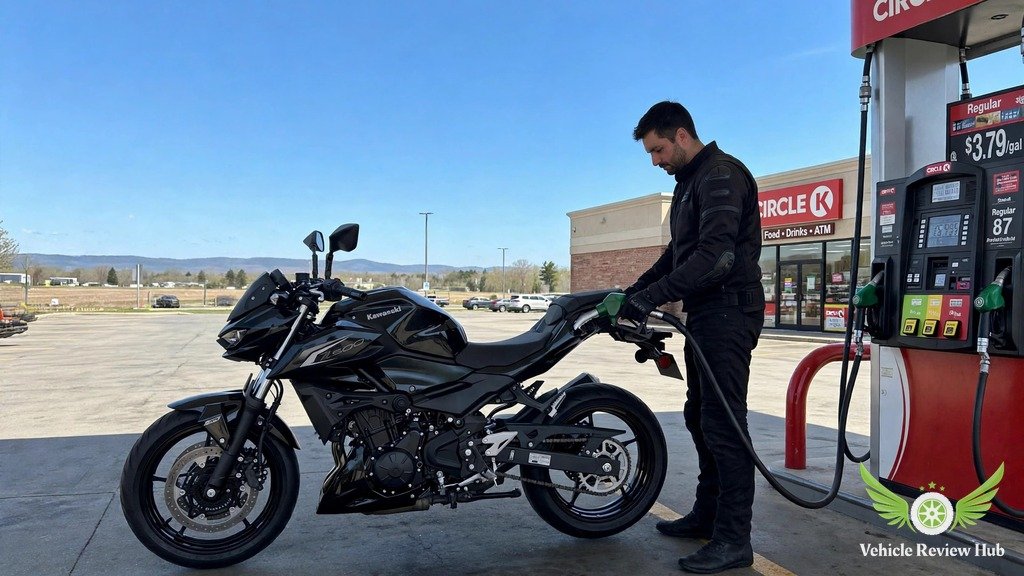
Fuel economy is the third gap in the record, and this Kawasaki Z500 performance guide is straight about it: Kawasaki publishes no MPG figure for the Z500, and no measured US MPG exists for the bike itself. What exists is platform data from the Ninja 500 — a lab figure and one measured day — labelled as platform data wherever it appears, because the Z500 shares the Ninja’s 3.7-gallon tank but has never been measured itself.
No Measured US MPG
No measured US MPG exists for the Z500 itself, and no owner-forum average should be printed as tested. The bike has been on sale since 2024, but no magazine has published a measured economy run, and the numbers in aggregator tables are either the platform lab figure repeated without attribution or estimates with no test behind them. This Kawasaki Z500 performance guide prints no MPG number for the Z500 itself, because there is no measured number to print.
Kawasaki Publishes No Figure
Kawasaki publishes no MPG figure for the Z500 on any spec sheet, and that silence matters because buyers expect a number on the sheet. The spec sheets print the 3.7-gallon tank, the 51.0 hp claim and the 366 lb curb weight, but no fuel-economy figure appears on any model year, base or SE. A buyer who finds an MPG figure on a spec aggregator’s Z500 page should check the source, because the number did not come from Kawasaki. This Kawasaki Z500 performance guide treats the missing figure as a gap in the record, not as a figure to fill with a guess.
The platform data that does exist is the Ninja 500’s WMTC lab figure of 62.0 mpg, a 229-mile range from the 3.7-gallon tank, and Chase on Two Wheels’ measured 54 mpg on a 222-mile mountain day on the Ninja 500 — one rider, one day, not an average. Both figures are labelled as Ninja 500 data in this Kawasaki Z500 performance guide, because the Z500 shares the Ninja’s engine and tank but has never been measured itself. One outlet’s claimed economy figure is arithmetically wrong — its own range figure does not match its own MPG claim — and this guide does not print it. The lab figure comes from TotalMotorcycle’s fuel-economy guide, and the platform context from Motorcycle.com’s Ninja 500 first ride.
| Item | Figure | Status |
|---|---|---|
| WMTC lab economy, Ninja 500 | 62.0 mpg | Platform lab figure, TotalMotorcycle guide |
| Range from 3.7 gal at 62.0 mpg | 229 miles | Calculated from the lab figure |
| Measured economy, Ninja 500 | 54 mpg | Chase on Two Wheels, one 222-mile day |
| Measured US MPG, Z500 itself | None exists | No measured run for the Z itself |
| Kawasaki-published MPG, Z500 | None | No figure on any spec sheet |
| Fuel capacity | 3.7 gal | Kawasaki USA spec sheet |
Note: All economy figures in this Kawasaki Z500 performance table except the tank size are platform data from the Ninja 500, labelled as such, and the Z500 itself has no measured MPG — the 229-mile range is arithmetic from the lab figure, not a tested range.
Kawasaki Z500 Real-World Riding Experience
The ride reports are where this Kawasaki Z500 performance guide finally has tested material to work with, because the first-ride reviews all rode the same bike and agreed on the same points. The Z500 is easy at town speeds, comfortable at 70 mph in sixth gear, light on the clutch and the bars, and buzzy past 6,500 rpm — and those four observations come from four separate first-ride reviews.

The Riding Experience Buyers Actually Talk About
Cycle News says the bike hums along comfortably at 70 mph in sixth gear and can still accelerate from there, while Motorcycle.com found keeping up with San Diego’s freeway system a non-issue, with extra punch left in sixth gear. The riding position is upright, with wide bars and a 30.9-inch seat, and the assist and slipper clutch makes the lever one of the lightest in the class — Motorcycle.com jokes it suits forearms of a six-year-old; RevZilla calls it one of the lightest levers tested. The six-speed gearbox is slick and simple, and at 366 lb the bike is easy to move at parking speeds and easy to place in traffic. That lightness is the first thing a buyer feels, and this Kawasaki Z500 performance guide puts it ahead of the horsepower figure.
Buzz Past 6,500 rpm
The one reservation every reviewer shares is a high-frequency buzz in the grips, pegs and seat above 6,500 rpm, around 60 mph, and this Kawasaki Z500 performance guide reports it as a verified reviewer observation rather than a defect. Motorcycle.com puts it plainly — the bike gets buzzy above the 6,500 rpm mark, particularly in the seat — and Ultimate Motorcycling describes a high-frequency buzz in the grips, pegs and seat when cruising at 60 mph or so. Rider Magazine and MCN note vibrations above roughly 7,000 rpm but add that it is not bad enough to be a problem.
Kawasaki Z500 Handling, Braking and Stability
Handling is where this Kawasaki Z500 performance guide sees the bike’s light weight doing the most work: 366 lb, a 54.1-inch wheelbase, a 24.5-degree rake and a 3.6-inch trail add up to a naked that tips into corners predictably and holds a line without fuss. The brakes are a single 310 mm front disc with a two-piston Nissin caliper and ABS, and the reviewers praise the initial bite and the feedback — with the limits a single disc brings on a hard-worked descent.

Brake Fade on Hairpins
This section carries the doc heading’s claim, and this Kawasaki Z500 performance guide is clear about its status: no brake-fade report on the Z500 was found in MCN, TopSpeed, Ultimate Motorcycling, Bennetts or Rider Magazine, so there is no tested fade figure or fade incident to describe. The heading is a caution, not a finding — a single 310 mm front disc worked hard on a long descent will get hot. A rider planning mountain descents should know the hardware’s limits, but the guide will not present a caution as a test result.
What the reviews do say about the brakes is praise with a limit attached. MCN says the initial bite and feedback feel streets ahead of the Honda CB500 Hornet, and Ultimate Motorcycling calls the braking capable and friendly, with a soft initial bite and a slightly progressive feel. Bennetts calls the single disc adequate for a bike this light but lists braking performance as a con, and notes the rear brake can trigger the ABS early with a pillion aboard. None of those reports is a fade test, and this Kawasaki Z500 performance guide prints them as ride impressions rather than measurements.
Handling, Braking and Stability on Real Roads
On real roads the Z500’s handling is predictable in the way MCN describes — an approachable bike that tips into corners predictably and works well for newer riders — and the numbers behind that are a 41 mm telescopic fork with 4.7 inches of travel, a horizontal back-link rear shock with adjustable preload and 5.1 inches of travel, and Dunlop Sportmax GPR300 tyres, 110/70-17 front and 150/60-17 rear. The fork has no adjustment and the rear has preload only, so a heavier rider will find the stock suspension soft — Chase on Two Wheels fitted aftermarket suspension to the platform for that reason. This Kawasaki Z500 performance guide counts the soft suspension as a note for heavier riders, not a defect — the bike is set up for the lighter riders it is pitched at.
Kawasaki Z500 Performance Compared With Other Sport Bikes
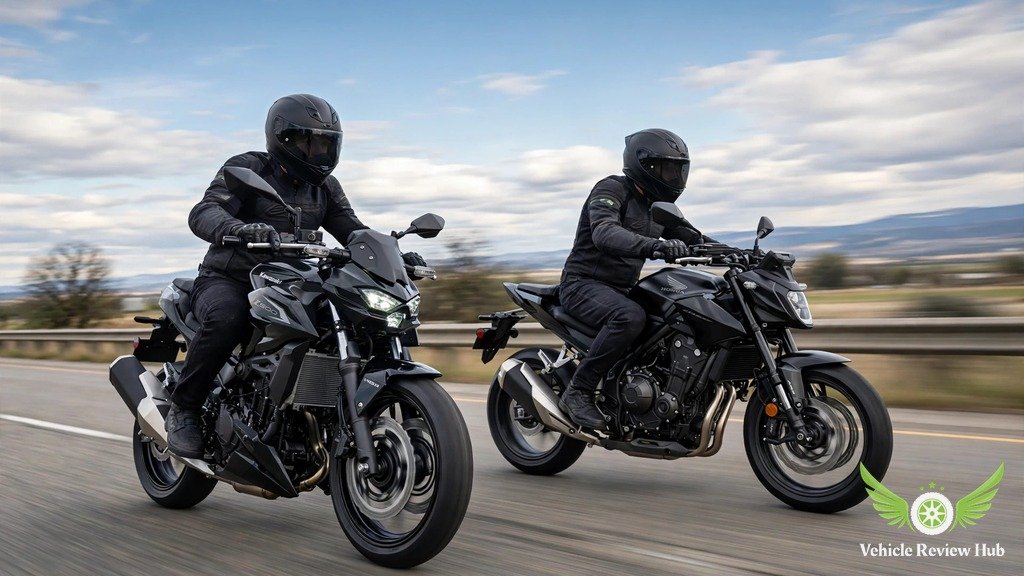
Against its rivals, this Kawasaki Z500 performance guide puts the Z500’s case in one line: the lightest bike with the strongest engine in its price band, let down by the spec sheet around the engine rather than the engine itself. The Honda CB500 Hornet has dual front discs and an inverted fork, the Yamaha MT-03 is cheaper and lower, and the KTM 390 Duke has the tech — but none matches the Z500’s 51.0 hp at 366 lb. The full comparison covers prices and running costs in detail.
Kawasaki Z500 vs Honda CB500 Hornet
The Hornet is the Z500’s closest rival and the hardest comparison, because the two bikes are near-identical on price and different everywhere else. The 2026 Hornet lists at $5,899 plus $600 destination, $6,499 delivered, against the 2027 Z500’s $5,799 plus $650, $6,449 delivered — $50 apart. The Hornet is a 471cc twin with dual 296 mm front discs, four-piston radial-mount calipers and a 41 mm inverted Showa SFF-BP fork, where the Z500 has a single 310 mm disc and a non-adjustable telescopic fork. What the Z500 has is weight and power: 366 lb against the Hornet’s 414 lb, and 51.0 hp against the Hornet’s EU-rated 47 hp, since Honda USA publishes no horsepower figure for the Hornet. Motorcycle.com’s Hornet spec page confirms the $5,899 price and $600 destination, and MCN’s verdict — that the Z500 slows down streets ahead of the Hornet — is the surprise here, and this Kawasaki Z500 performance guide prints it as MCN’s verdict, not a measured test.
Is the Kawasaki Z500 Suitable for Beginner Riders?
Yes, and the case is the same one Kawasaki’s own survey makes: 60 percent of Z400 buyers had a year or less of riding experience, and the Z500 is pitched at exactly that rider, with a 30.9-inch seat, 366 lb, a very light assist-and-slipper clutch and predictable handling. MCN calls it approachable for newer riders, tipping into corners predictably, and the absence of riding modes and traction control is a feature for a beginner — less to learn, less to go wrong. The bike’s limits are honest ones: a buzzy top end, a basic base dash and a 12-month warranty, and a new rider should know all three before buying. This Kawasaki Z500 performance guide recommends a test ride at highway speed for any buyer who plans to commute, because the buzz past 6,500 rpm is the one thing a showroom sit cannot reveal.
| Item | Kawasaki Z500 ABS (2027) | Honda CB500 Hornet (2026) |
|---|---|---|
| Claimed power | 51.0 hp @ 10,000 rpm (Kawasaki USA) | 47 hp @ 8,600 rpm (EU rating; Honda USA publishes none) |
| Claimed torque | 31.7 lb-ft @ 7,500 rpm | 32 lb-ft @ 6,500 rpm (EU rating) |
| Curb weight | 366.0 lb | 414 lb |
| Front brake | Single 310 mm disc, 2-piston Nissin, ABS | Dual 296 mm discs, radial 4-piston calipers, ABS |
| Front fork | 41 mm telescopic, no adjustment | 41 mm inverted Showa SFF-BP |
| Seat height | 30.9 in | 31.1 in |
| Fuel capacity | 3.7 gal | 4.5 gal |
| Delivered price | $6,449 ($5,799 + $650) | $6,499 ($5,899 + $600) |
Note: The Hornet’s power and torque figures in this Kawasaki Z500 performance table are the EU/global rating, because Honda USA publishes no horsepower figure for the Hornet, and the delivered prices are MSRP plus destination for each bike’s model year — the Z500 is 48 lb lighter and $50 cheaper delivered.
Kawasaki Z500 Performance: Frequently Asked Questions
These are the questions buyers ask most about Kawasaki Z500 performance — the dyno, the 0–60 time, the top speed, the MPG, the highway buzz and beginners. For price and specs, see the review; for the recall and servicing, see the reliability guide.
Has anyone dyno-tested the Kawasaki Z500?
No. No Z500 dyno exists; the only platform dyno is Cycle World’s 47.22 hp run on the Eliminator SE, which shares the same 451cc engine — and this Kawasaki Z500 performance guide names it as the Eliminator’s run, never as a Z500 figure.
What is the Kawasaki Z500’s 0–60 mph time?
No timed run exists anywhere. TopSpeed’s 4.5 seconds is an estimate, not a measurement — its own earlier article estimated 4.8 seconds — and this Kawasaki Z500 performance guide prints neither as measured.
What is the Kawasaki Z500’s top speed?
No measured US figure exists. TopSpeed estimates 98 mph, and MCN’s 110 mph is the UK A2 bike’s table figure — and this Kawasaki Z500 performance guide prints neither as measured.
What MPG does the Kawasaki Z500 get?
No measured US MPG exists for the Z itself. The platform’s WMTC lab figure is 62.0 mpg, a 229-mile range from the 3.7-gallon tank, and this Kawasaki Z500 performance guide labels it as platform data.
Does the Z500 engine buzz at highway speed?
Yes — reviewers report a high-frequency buzz in the grips, pegs and seat above 6,500 rpm, around 60 mph, though not bad enough to spoil the ride, and this Kawasaki Z500 performance guide counts it as a comfort note rather than a defect.
Is the Kawasaki Z500 good for beginners?
Yes — a 30.9-inch seat, 366 pounds, a very light assist-and-slipper clutch and predictable handling. Kawasaki’s survey found 60% of Z400 buyers had a year or less of riding experience, which is why this Kawasaki Z500 performance guide calls the Z500 a first or second bike.