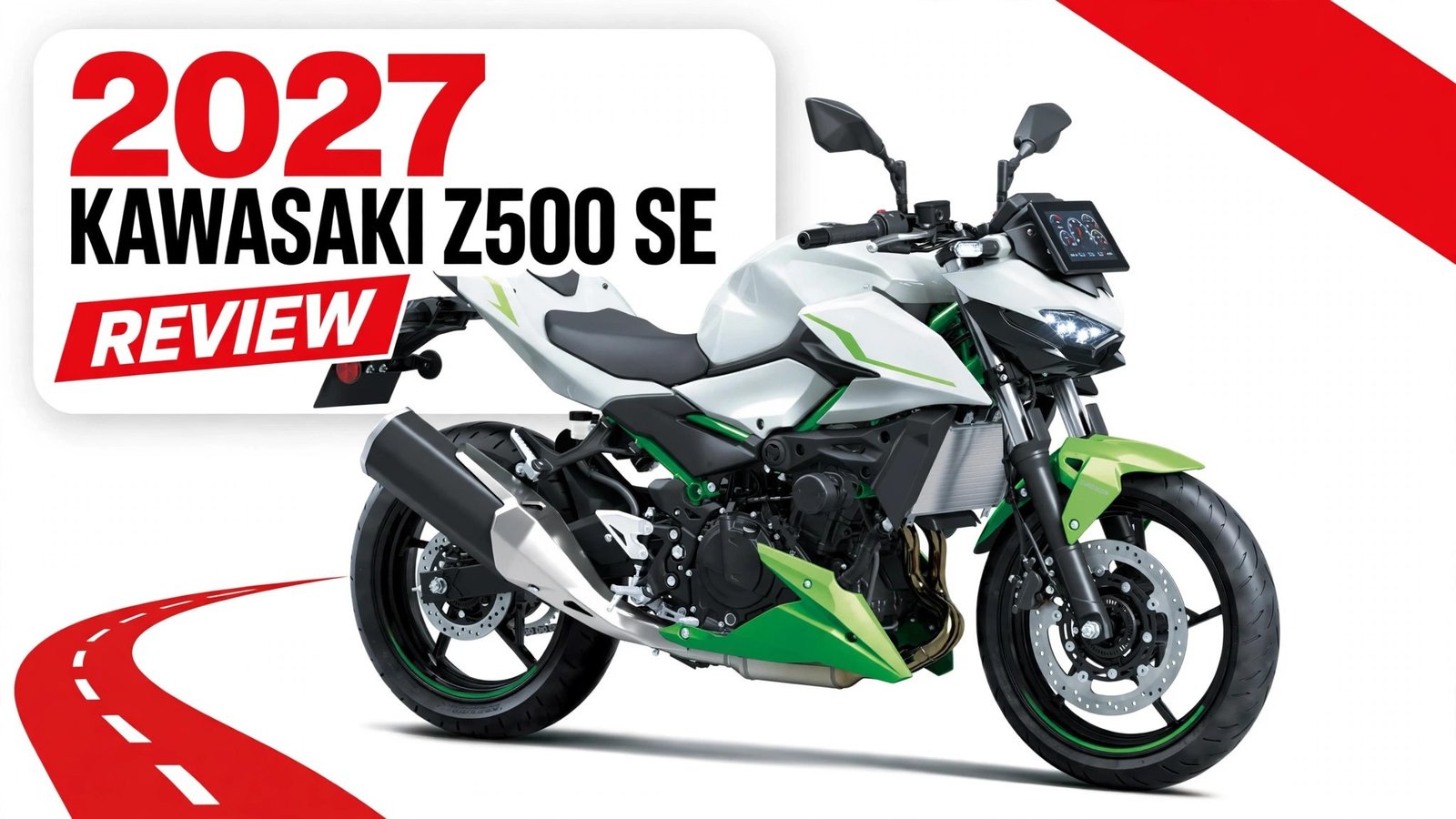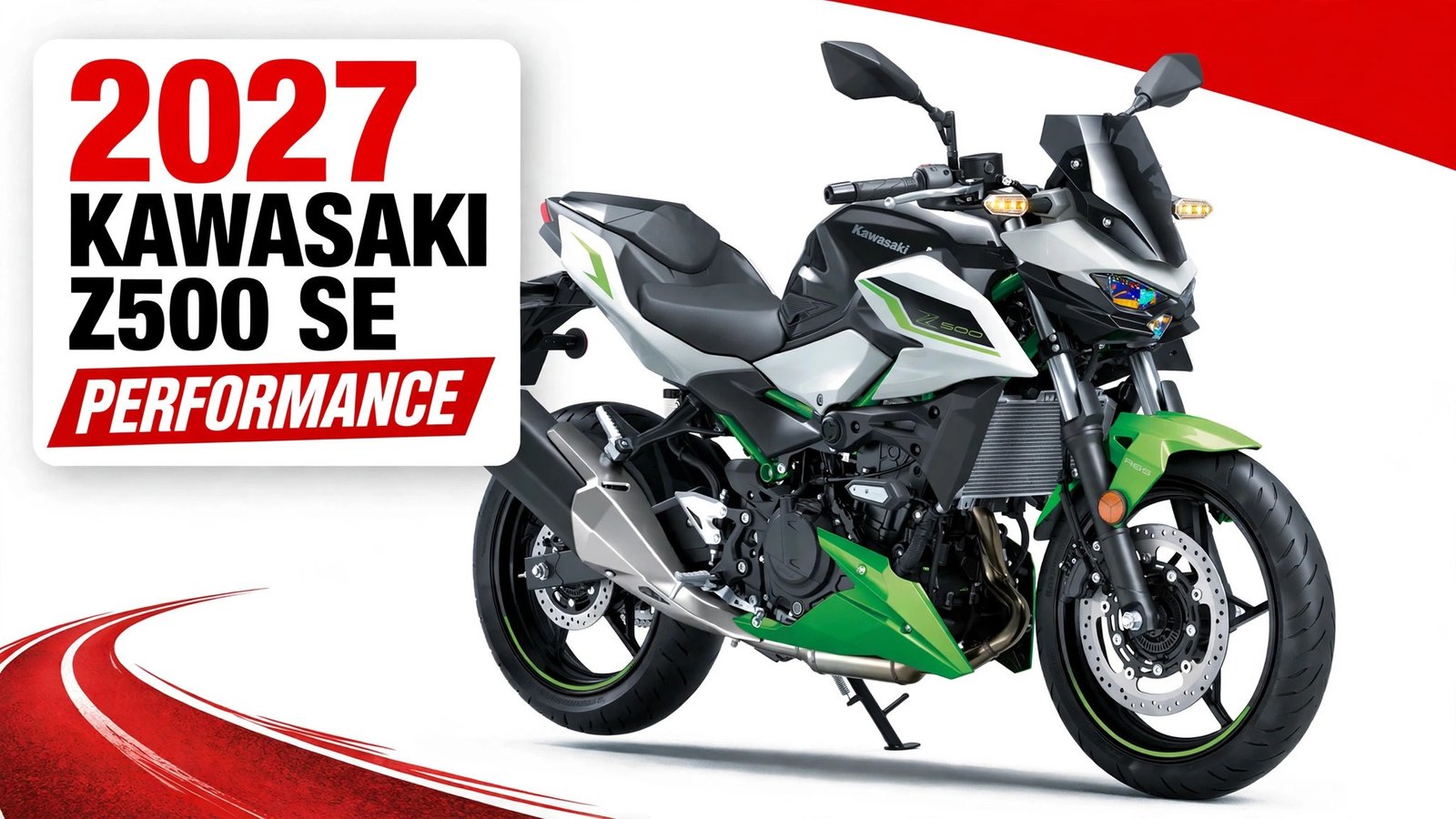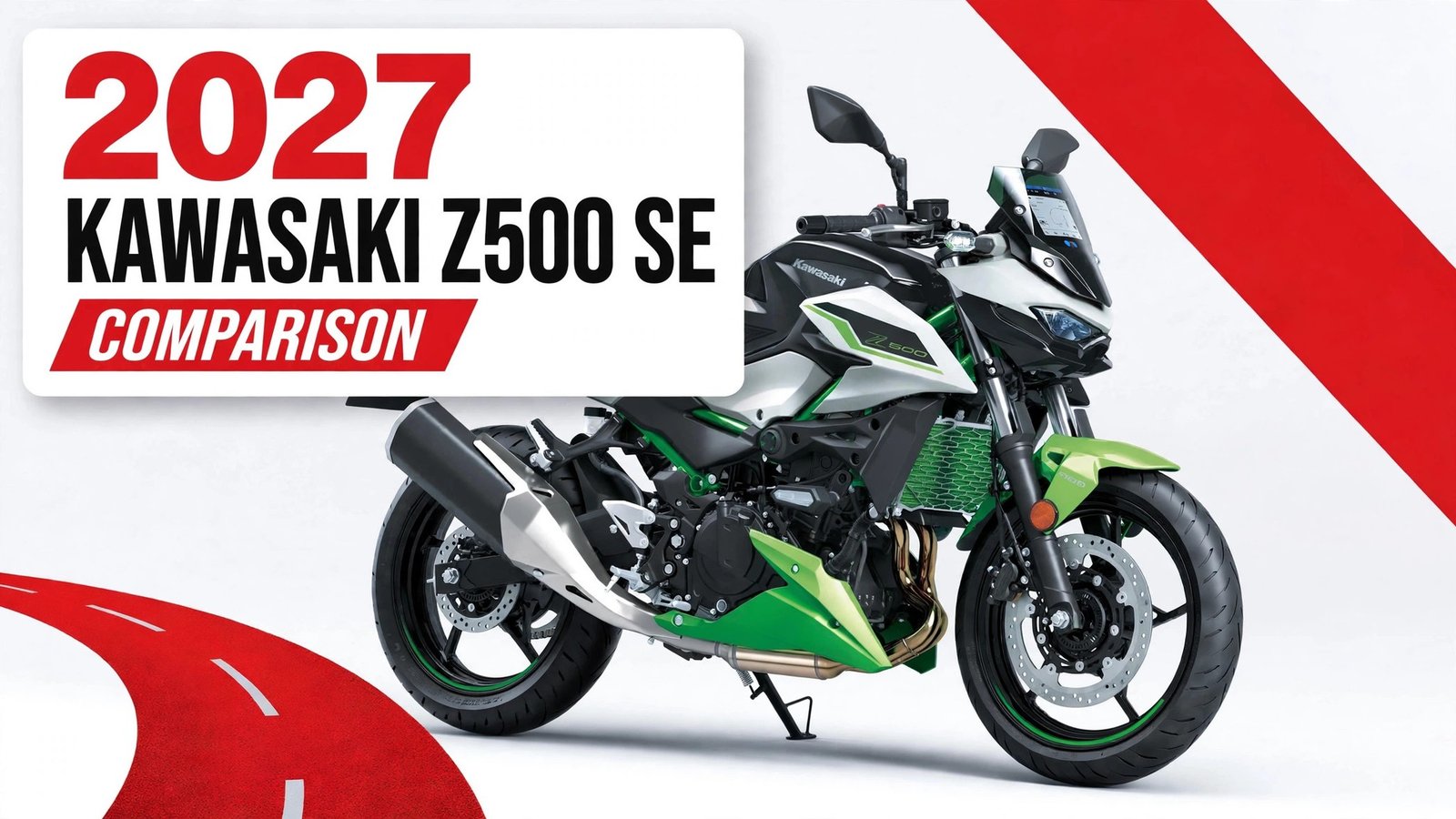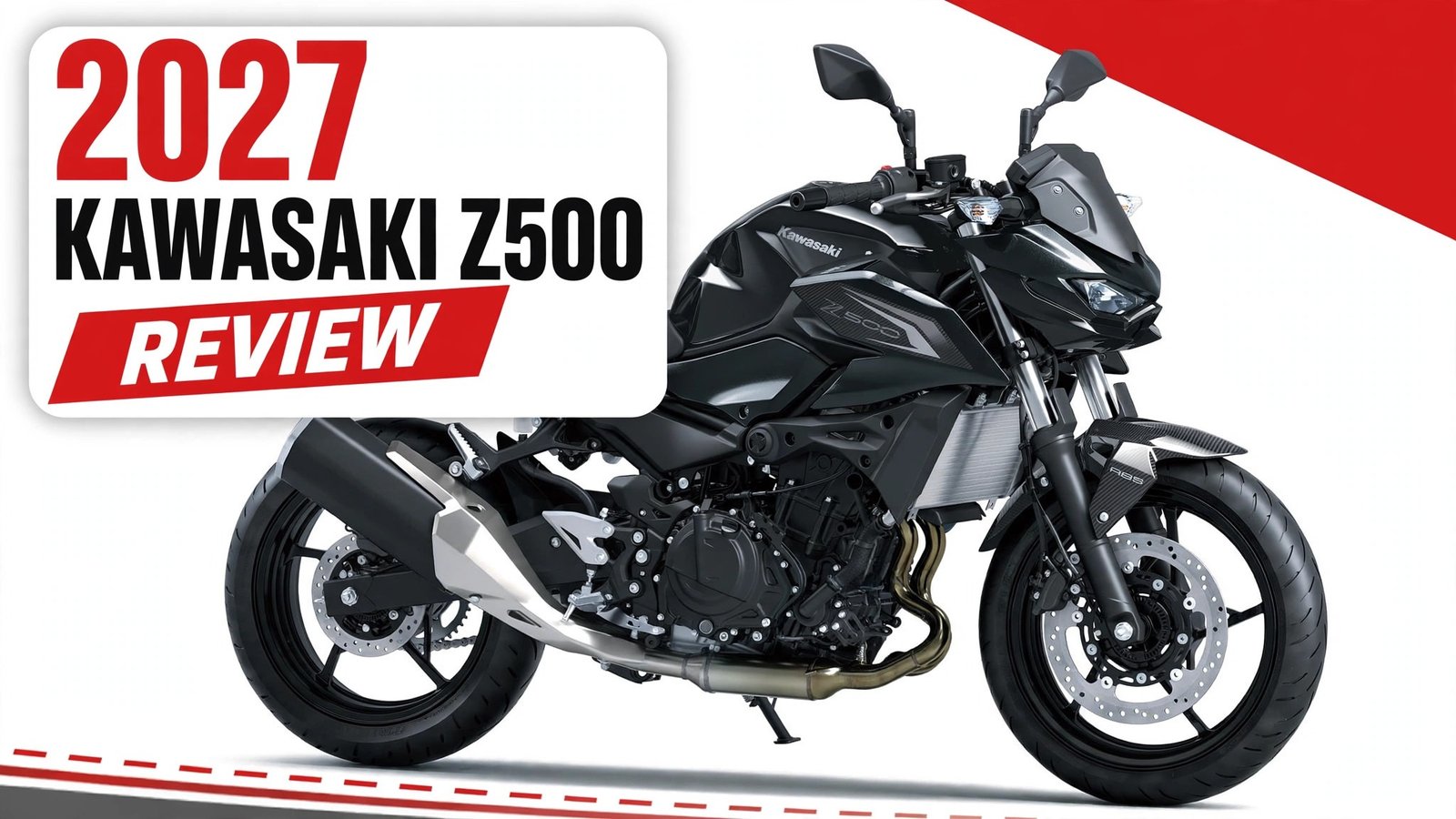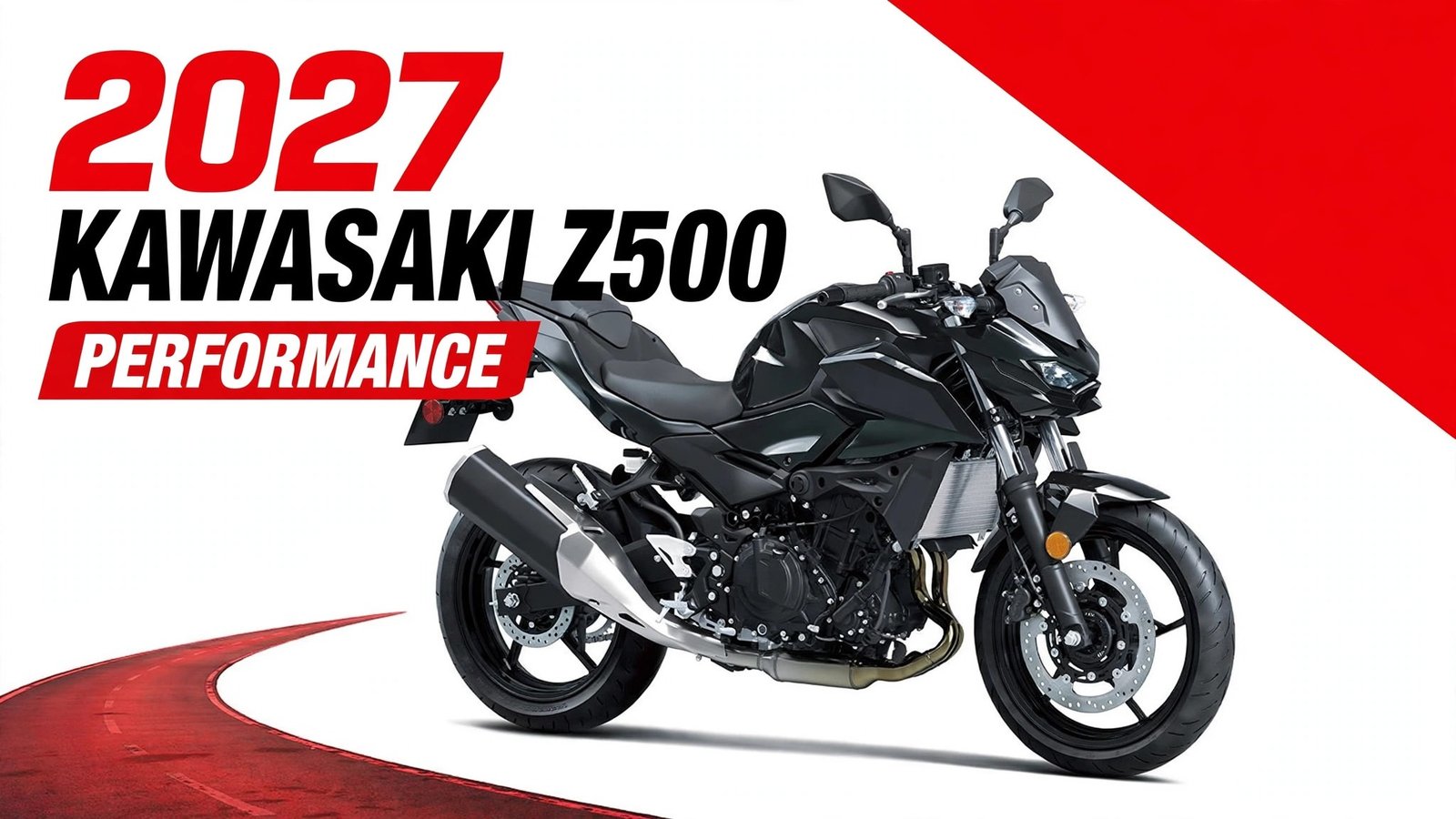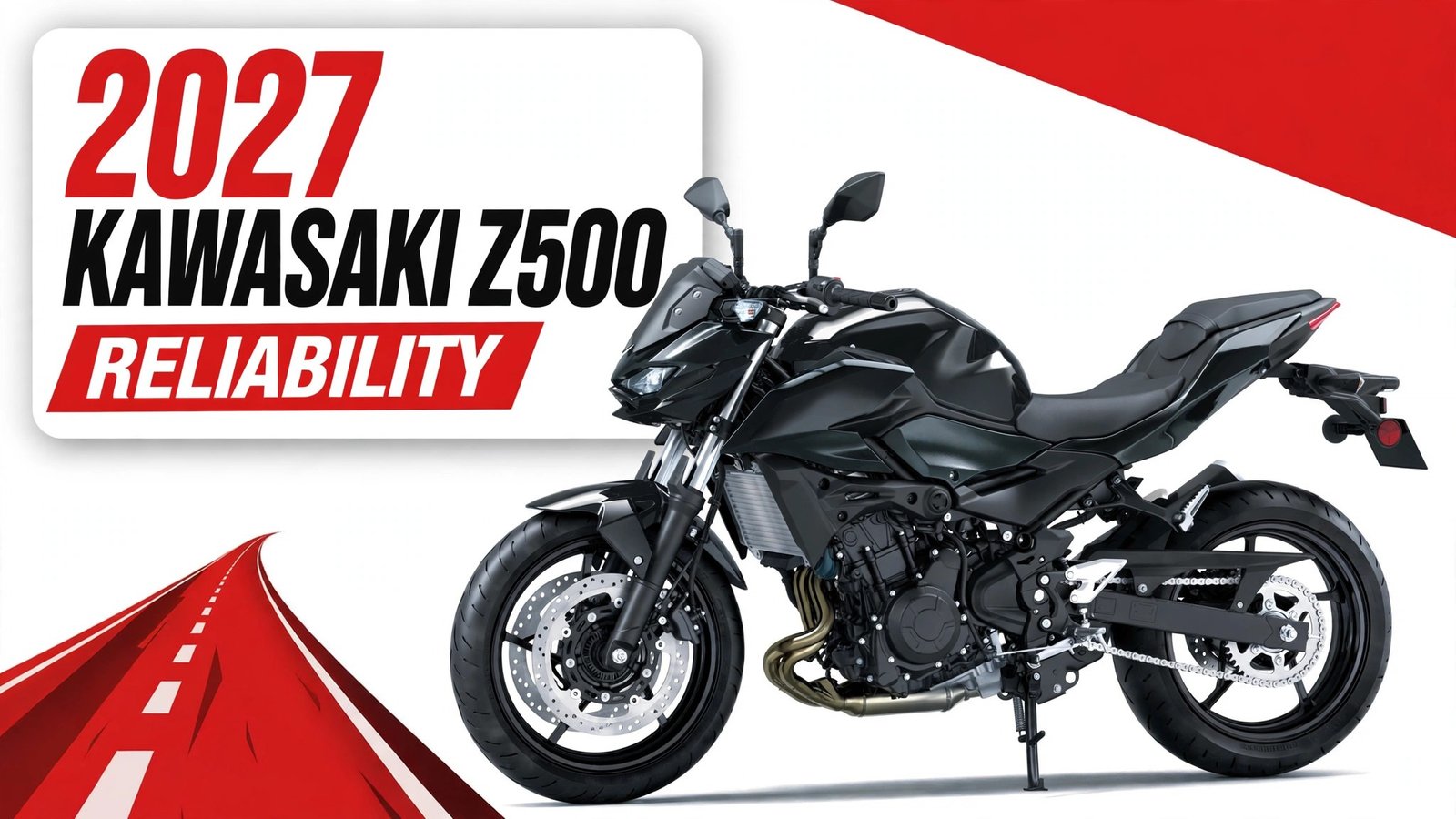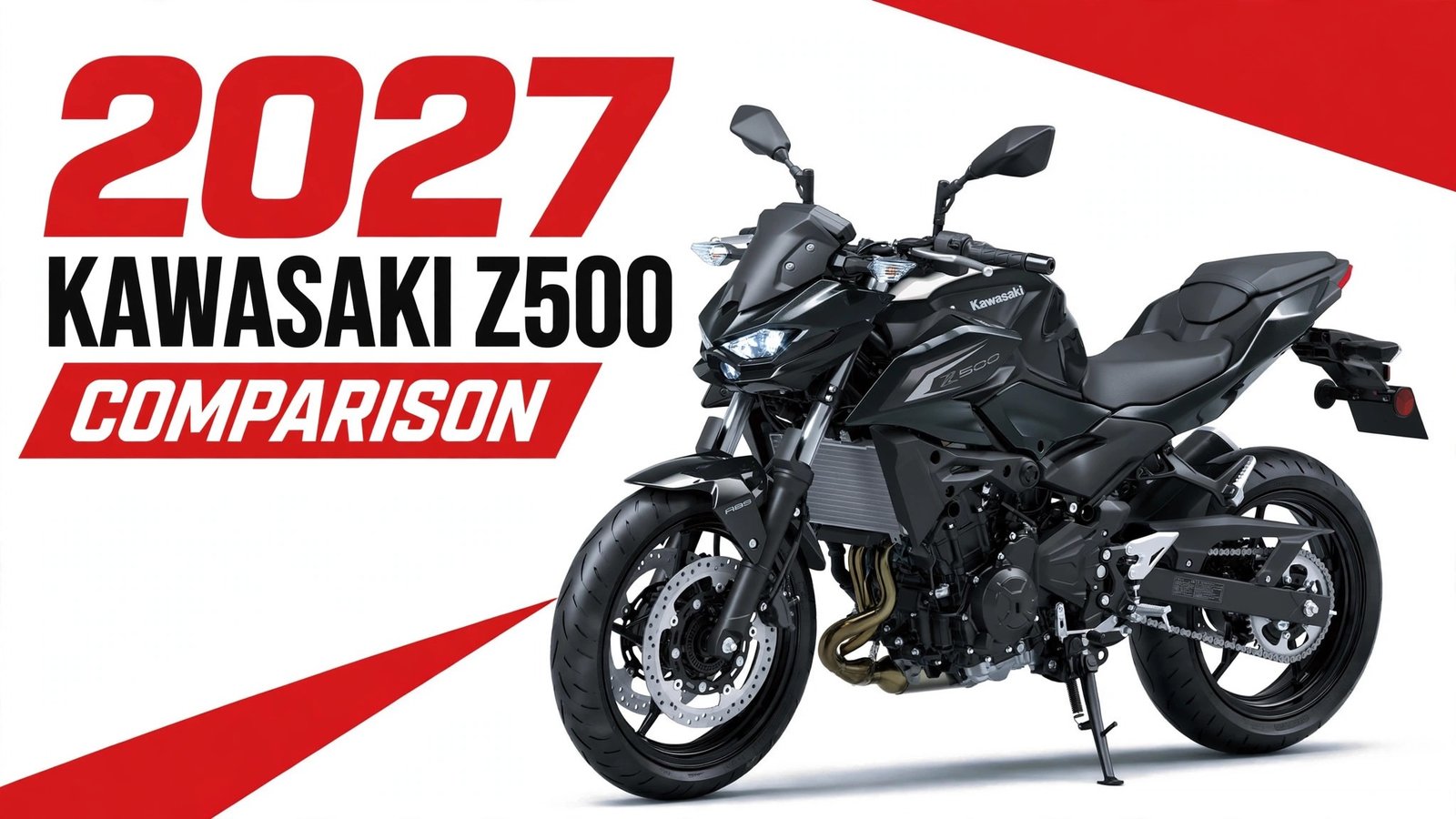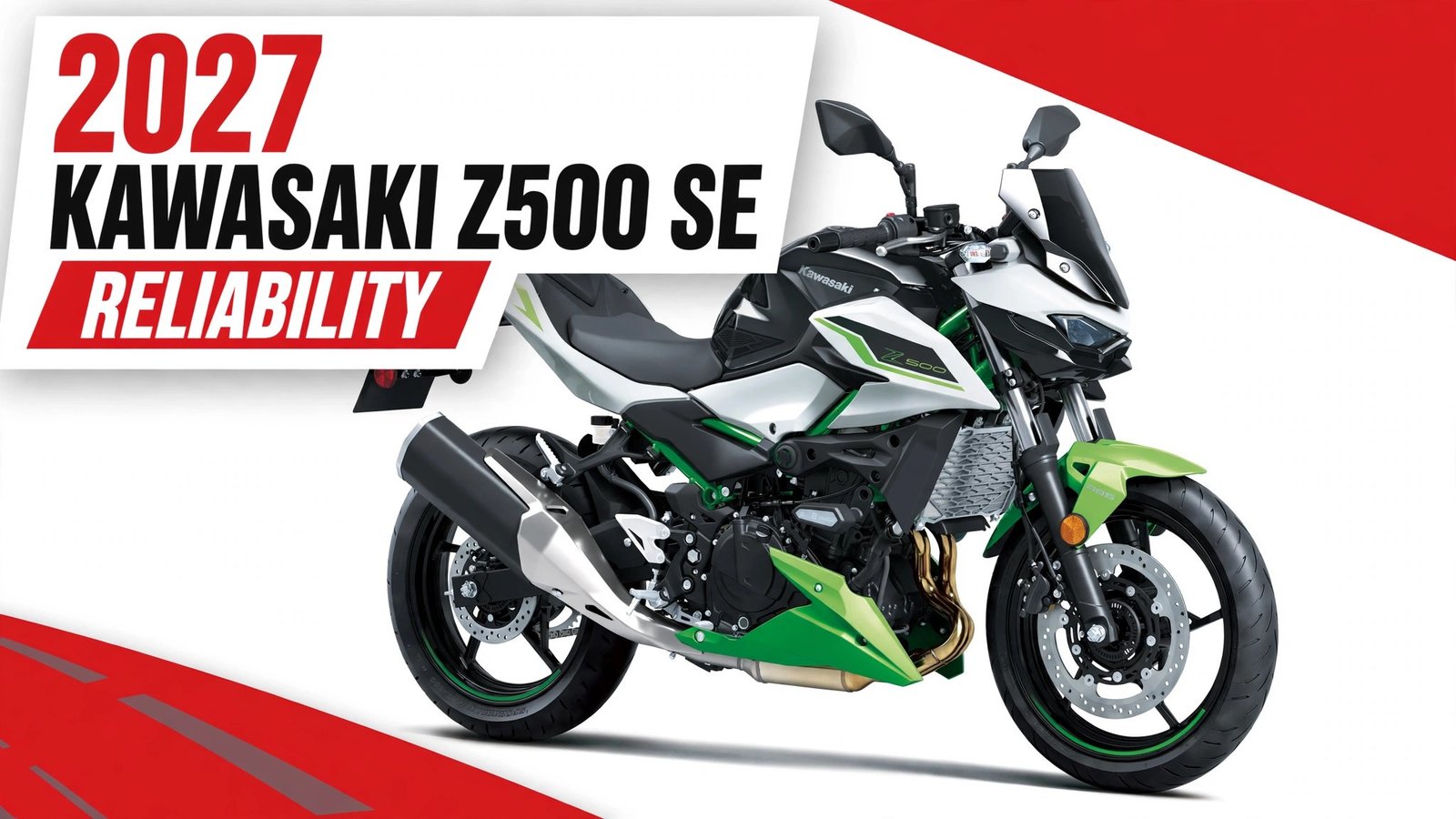
The short answer on Kawasaki Z500 SE reliability is reassuring: one documented recall, a shared-platform service schedule any Kawasaki dealer knows by heart, and no known pattern of engine, transmission or electrical failure after two model years on sale. The bike’s one real problem is a clutch release shaft weld on early 2024 machines, and Kawasaki fixes it free. The rest is routine for Kawasaki Z500 SE reliability: oil and filter at every service, plugs at every service, valves at 15,200 miles.
Kawasaki Z500 SE Reliability Overview
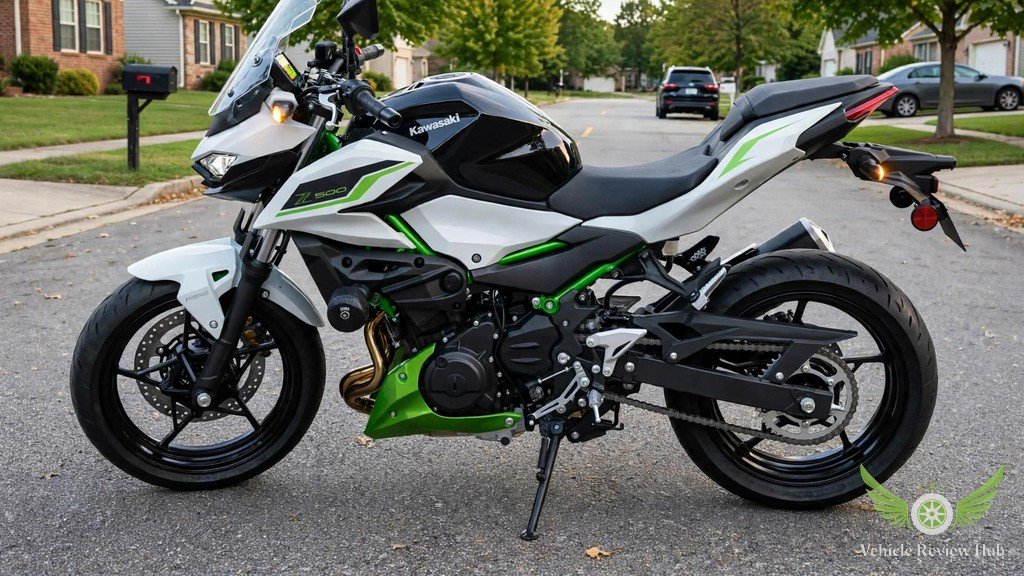
Kawasaki Z500 SE reliability starts from a simple fact: the SE is the same motorcycle as the base Z500 ABS, with a trim kit on top. Engine, frame, fork, brakes, tyres, seat, wheelbase and warranty are identical between the trims — only the TFT dash, USB-C outlet, LED signals and frame sliders differ, and none is a known failure item. The 451cc twin is shared with the Ninja 500 and the Eliminator, the service schedule is the shared 500-platform schedule, and the one recall covers base and SE together.
SE Units Not Separable
The SE’s recall units cannot be separated from the base bike’s, and this Kawasaki Z500 SE reliability guide says so plainly because the distinction matters to a used buyer. NHTSA campaign 25V-146 names the population as “ER500E/F (Z500 ABS, SE ABS — 1,057)” — the base and the SE together, 1,057 US bikes built in a two-week window in early 2024. There is no SE-only recall count — any seller quoting one is inventing it. The campaign total of 3,742 is the Ninja 500 plus the Z500 combined, and must never be quoted as the Z500 count. An SE buyer checks the same frame number, the same white mark and the same dealer record as a base-bike buyer, because the recall does not distinguish between the trims.
How Mileage, Storage and Previous Care Affect Reliability
Mileage, storage and previous care shape Kawasaki Z500 SE reliability more than any design weakness does, because there is no documented weak point to blame instead. On sale since 2024, the bike has only two model years of owners and no long-term pattern yet — no known engine, transmission or electrical failure and no service-bulletin pattern beyond the single recall. A bike that lived outside, missed services or sat with old fuel will show it in the chain, the brakes and the service book before it shows it anywhere else — and Kawasaki Z500 SE reliability is decided by that history, not by the badge. Buy the service history first and the colour second.
| Item | Figure | Status |
|---|---|---|
| Engine | 451cc parallel twin, 51.0 hp @ 10,000 rpm | Claimed by Kawasaki, ISO 4106 |
| NHTSA recalls | One campaign, 25V-146 | Z500 slice 1,057 bikes, base + SE combined |
| First service | 600 miles | Then every 7,600 miles or yearly |
| Valve check | Every 15,200 miles | Interval only — clearance values not verified |
| Warranty | 12-month limited | Every model year, 2024–2027 |
Note: This Kawasaki Z500 SE reliability overview table uses the 2027 spec sheet and the NHTSA Part 573 report; the recall figure is the combined base-plus-SE slice and the intervals are the shared platform schedule.
Kawasaki Z500 SE Common Problems and Wear Items
The honest list of Kawasaki Z500 SE reliability problems is short: one recall, and a set of ordinary wear items that every light naked shares. There is no documented pattern of engine, transmission, electrical or TFT failure after two years on sale. The buzz past 6,500 rpm, the soft suspension and the vibrating mirrors are comfort observations, not failures. The parts that actually wear are the chain, the brake pads, the tyres and the brake fluid — cheap, standard items on a 370.4 lb bike.
Clutch Shaft Weld, Shared Count
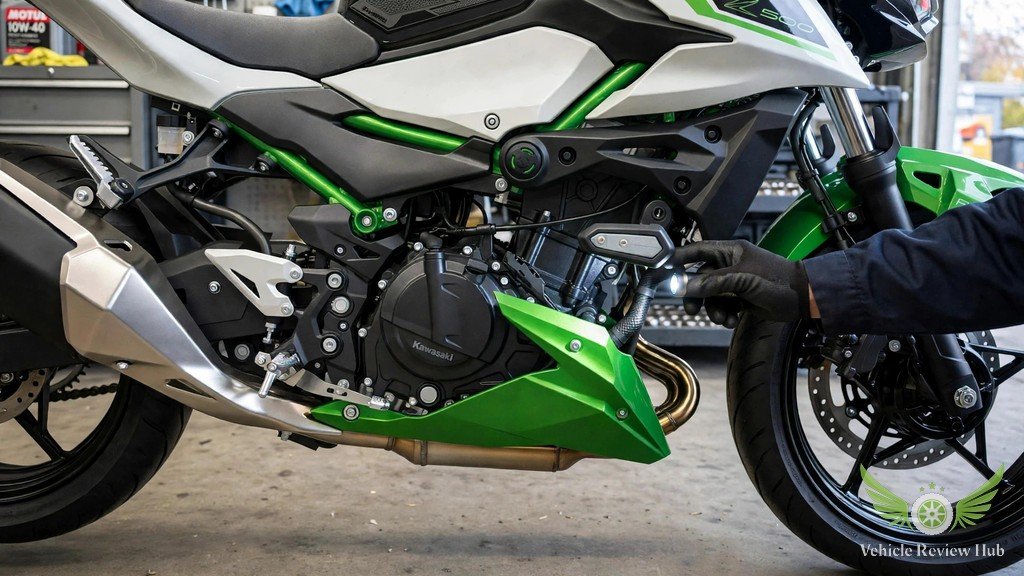
The clutch shaft weld is the one real defect on this bike, and this Kawasaki Z500 SE reliability guide gives it the full detail because it is the only recall a buyer needs to check. NHTSA campaign 25V-146, manufacturer campaign MC25-04, covers 1,057 US Z500s — base and SE together — built between 22 January and 6 February 2024. The clutch release shaft was not properly welded between the lever and the shaft, because a welding machine setting was wrong and trial parts may have been used by mistake. The fix is free: Kawasaki replaces the clutch release shafts on every eligible bike, part number 13102-0087, with repair kit 99999-0975. Owner letters went out on 24 March 2025, and dealers were told to stop selling affected bikes on 6 March 2025. Only early 2024 bikes are affected — the 2025, 2026 and 2027 model years have no recall against them, and the NHTSA database returns no campaigns for those years. Read the NHTSA Part 573 report for campaign 25V-146 before buying a used early 2024 bike.
No TFT Failure Evidence
No TFT failure pattern is documented anywhere for this bike, and this Kawasaki Z500 SE reliability guide states the absence plainly rather than filling the gap with a guess. The SE’s 4.3-inch full-colour TFT dash is a display, not a known failure item: no owner pattern, no service bulletin and no recall touches it. The dash’s only documented weakness is the Rideology phone app behind it, which is a phone-app issue rather than a dash failure — Motorcycle.com’s tester needed Kawasaki reps’ help to pair it by Bluetooth, and the app logged only 28 minutes of the ride, while SlashGear’s 2024 Z500 piece reports a 1.8-star average on Google Play. Motorcycle.com scored the instruments 5 out of 5. The base bike’s full-LCD dash connects to the same app, so the app’s flaws are not something the SE’s premium buys you into or out of.
| Recall detail | Figure | Source |
|---|---|---|
| NHTSA campaign | 25V-146, manufacturer MC25-04 | NHTSA Part 573 report |
| Z500 population | 1,057 US bikes, base + SE combined | Part 573: ER500E/F, 1,057 |
| Production window | 22 January – 6 February 2024 | Part 573 report |
| Defect | Clutch release shaft not properly welded | Part 573 report |
| Remedy | Free shaft replacement, part 13102-0087, kit 99999-0975 | Kawasaki campaign MC25-04 |
| Remedied mark | White paint mark “[M]” left of the first frame-number digit | Service bulletin MC25-04 |
Note: This Kawasaki Z500 SE reliability recall table prints the Z500 slice only — base and SE combined — and no SE-only recall count exists.
Kawasaki Z500 SE Maintenance Schedule and Servicing
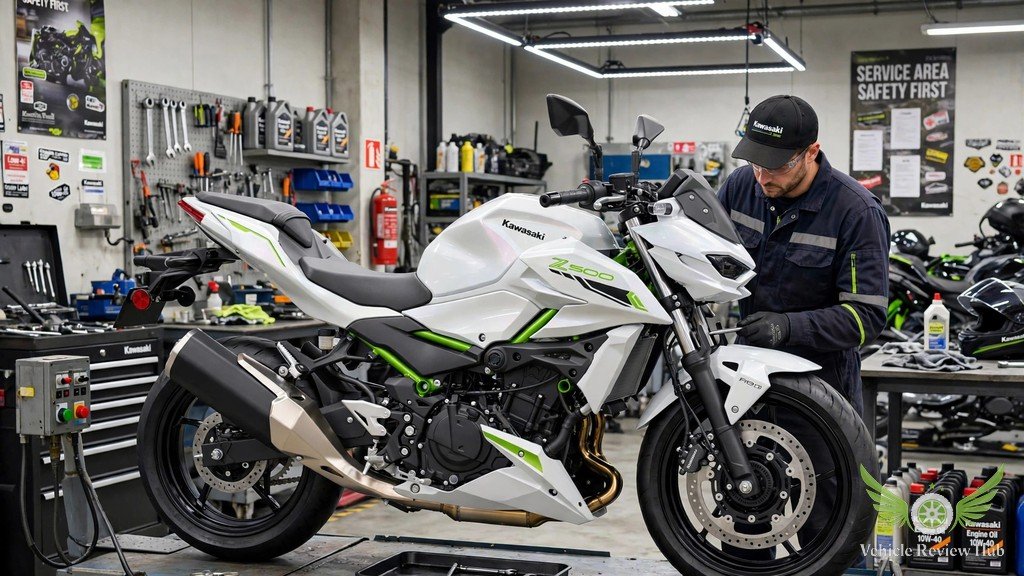
The service schedule is the most owner-friendly part of Kawasaki Z500 SE reliability, because it is short, regular and shared with the Ninja 500, so every Kawasaki dealer already knows it. The first service lands at 600 miles, then the bike comes back every 7,600 miles or every year, whichever comes first. Oil and filter change at every service, and the plugs are replaced at every service too — Kawasaki Z500 SE reliability depends on following that rhythm exactly, because the engine is forgiving when the oil is fresh and unforgiving only when it is not. The schedule below is the shared Ninja 500 and Z500 platform chart, labelled as platform data.
Combined 1,057-Bike Slice
The combined 1,057-bike slice is the number that decides whether a used SE needs the recall fix, and this Kawasaki Z500 SE reliability guide keeps it in the servicing section because the check belongs in the pre-purchase inspection, not in a trivia box. A bike built between 22 January and 6 February 2024 is in the window; later bikes, and the 2025–2027 model years, carry no recall.
White Mark Means Remedied
The white mark means remedied, and it is the fastest check a buyer can do on a used SE. Per service bulletin MC25-04, a remedied bike carries a white paint mark “[M]” to the left of the first digit of the frame number. Look at the frame number, find the mark, and the recall question is answered without a phone call. Still do the dealer check as well — a mark can be missed in poor light, and the dealer record is the authoritative answer. A bike in the window with no mark and no dealer record needs the free fix first — a shaft replacement, part 13102-0087 with kit 99999-0975. Do not let a seller wave the question away with a verbal promise; the mark or the dealer record is the evidence.
| Service item | Interval | Detail |
|---|---|---|
| First service | 600 miles | Oil + filter, full inspection |
| Routine service | Every 7,600 miles or yearly | Oil + filter at every service |
| Spark plugs | Replaced at every service | NGK LMAR9G, gap 0.7–0.8 mm |
| Valve clearance inspection | Every 15,200 miles | Interval only — clearance values not verified |
| Air cleaner + fuel filter | Every 24,000 km | Shared-platform schedule |
| Brake fluid | DOT-4 every 2 years | Also at 24,000 km / 15,200 miles |
| Chain lube | Every 400 miles | Slack check every 600 miles, 20–30 mm |
| Coolant + hoses | 36,000 km / 3 years | Water hoses + O-rings at the same time |
Note: This Kawasaki Z500 SE reliability maintenance table is the shared Ninja 500 and Z500 platform schedule, labelled as platform data. Oil is 2.3 L of SAE 10W-40, the drain bolt is 30 Nm, the filter is Kawasaki 16097-0008.
Kawasaki Z500 SE Tires, Brakes and Suspension Maintenance
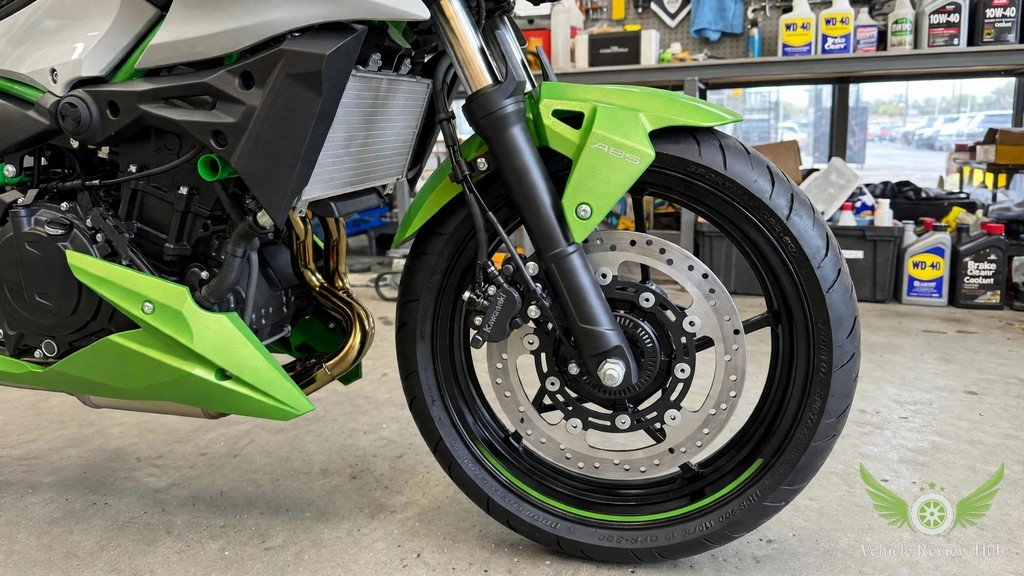
Tyres, brakes and suspension are where this bike’s maintenance stays cheap and simple, and that simplicity is a real part of Kawasaki Z500 SE reliability. The factory fitment is a Dunlop Sportmax GPR300 set — 110/70-17 front and 150/60-17 rear — at 28 psi front and 32 psi rear, and those pressures are worth checking monthly — a soft tyre changes the handling before it changes the wear, and Kawasaki Z500 SE reliability starts with the tyres. The brakes are a single 310 mm front disc with a 2-piston caliper and a single 220 mm rear disc, both with ABS, and the pad wear limits are 1.0 mm front and 1.5 mm rear. The suspension is a 41 mm non-adjustable fork with 4.7 inches of travel and a horizontal back-link rear shock with five-way spring preload and 5.1 inches of travel — nothing to adjust except the preload, and nothing exotic to fail. All three are routine checks in this Kawasaki Z500 SE reliability guide, not worries.
Slider Swap Costs $262.87
The slider swap is the one place in this Kawasaki Z500 SE reliability guide where the price cannot be verified, and the guide says so instead of printing a number as a fact. The doc heading carries the figure $262.87 for a replacement frame slider, but three separate searches — a Partzilla query for part 99994-2006, an exact search for the $262.87 figure, and a search for the part number’s price — returned no retailer or OEM price page for the genuine kit at all. The figure appears nowhere in search results, so this guide does not print it as a confirmed price. What is verified is the genuine kit itself: part 99994-2006, the Kawasaki accessory slider kit for the Ninja 500 and Z500 from the 2024 model year on, with a flat-rate install time of 0.2 hours on the Z500 per Kawasaki’s own assembly instructions. For context only, aftermarket slider kits for other Kawasakis list around $110–115 (Shogun) and $178.99 (Vortex V3 2.0) — not Z500 SE prices. Ask a Kawasaki dealer for the current price of kit 99994-2006, and remember the sliders are standard on the SE — a used SE missing them is a bargaining point.
Tire, Brake and Suspension Checks That Matter
The checks that matter are the small ones, done often, and this Kawasaki Z500 SE reliability guide lists them in the order a used buyer should run them. Check the chain slack first — 20–30 mm, lubed every 400 miles and checked every 600 — because a dry, tight chain turns a cheap service into an expensive one. Check the tyre pressures next, 28 psi front and 32 psi rear, and look at the wear bars while the gauge is out. Check the brake pads against the 1.0 mm front and 1.5 mm rear limits, and check the brake fluid age — DOT-4 is a two-year change. Check the rear axle torque, 98 Nm, if the wheel has been off, and the clutch free play, 2–3 mm, if the lever feels wrong. The shared Ninja 500 and Z500 maintenance chart carries the full interval list for the platform. That is the whole of Kawasaki Z500 SE reliability on the wear side: small checks, done often. Set the rear preload for the rider’s weight — the fork has no adjustment at all.
Kawasaki Z500 SE Maintenance and Ownership Costs
Ownership costs are where the SE’s simplicity pays off, and this Kawasaki Z500 SE reliability guide prices the running of the bike in the only terms that can be verified: the service intervals, the consumables and the new and used prices. The new 2027 SE is $6,499 plus $650 destination, $7,149 delivered — $700 more than the base Z500’s $6,449 — and the $700 buys the TFT dash, USB-C outlet, LED signals and the rest of the kit, not a different engine or service bill. Running costs are the platform’s: oil and filter at every 7,600-mile service, plugs at every service, a valve inspection at 15,200 miles, brake fluid every two years and a chain lubed every 400 miles. No verified dollar figures exist for a dealer service, a tyre set or insurance, so this guide prints none.
Fuel, Routine Servicing, Tires and Replacement Parts
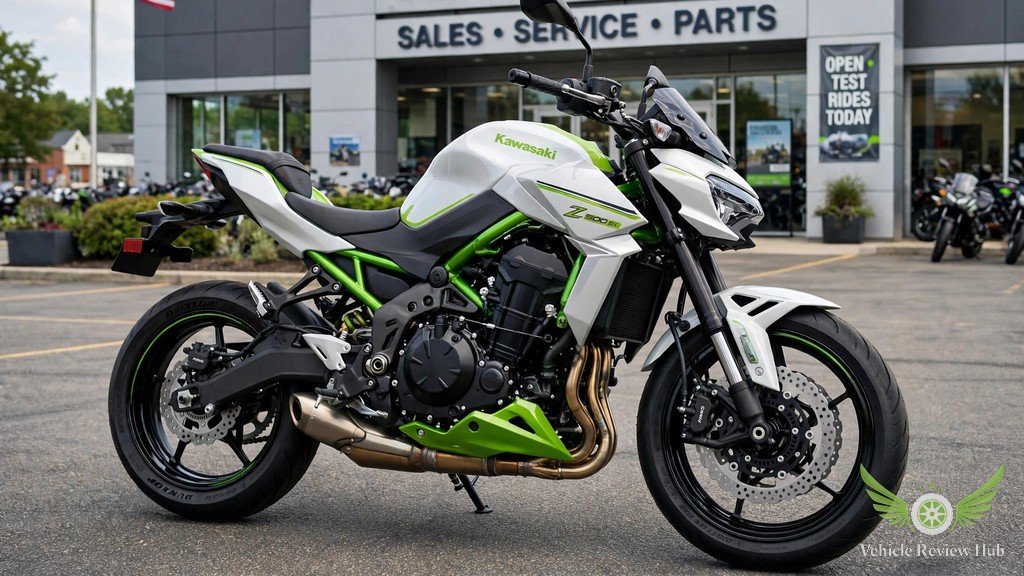
Fuel, routine servicing, tyres and replacement parts are all light on this bike, because the bike itself is light and the engine is small. The 3.7-gallon tank and the platform’s 62.0 mpg WMTC lab figure give a 229-mile range on paper, and one measured Ninja 500 day returned 54 mpg — both are labelled platform figures, because no measured US MPG exists for the Z itself. Routine servicing is the 7,600-mile rhythm with oil and filter at every visit and plugs replaced at every visit. Tyres are the factory Dunlop Sportmax GPR300 pair in standard 17-inch sizes, and the brake pads are single-disc parts with generous service limits. Replacement parts carry one caution: the frame-slider kit is genuine part 99994-2006, but no retailer or OEM price page could be found to verify a price for it, so the guide’s advice is to get a dealer quote rather than trust an unverified number. Motorcycle.com, RevZilla and Rider Magazine all agree the SE kit parts cost more than the $700 premium, and none assembled an itemized list — that is the cost picture for Kawasaki Z500 SE reliability: small consumables, short intervals, no surprises.
Valves at 15,200 Miles
The valves are checked at 15,200 miles, and that interval is the only valve figure this Kawasaki Z500 SE reliability guide prints. The shared-platform schedule calls for a valve clearance inspection every 24,000 km, which is 15,200 miles, and the clearance values themselves were not verified — only the interval is printed, never a millimetre figure. The 12-month warranty runs out long before the first valve check, so it is an owner cost — but it is a check, not a rebuild.
| Cost item | Figure | Status |
|---|---|---|
| 2027 SE delivered | $6,499 + $650 = $7,149 | Kawasaki USA spec sheet |
| 2027 base delivered | $5,799 + $650 = $6,449 | Kawasaki USA spec sheet |
| SE premium | $700 every year, 2024–2027 | All four spec sheets |
| Used 2024 SE | $3,412–$5,699, typically $4,499–$4,699 | Cycle Trader, Nov 2026 |
| Oil + filter | 2.3 L SAE 10W-40, every service | Shared-platform schedule |
| Frame-slider kit | Part 99994-2006, price unverified | Kawasaki assembly PDF; no price page found |
| Warranty | 12-month limited | Every model year, 2024–2027 |
Note: This Kawasaki Z500 SE reliability costs table prints only verified figures; the 2025 destination is disputed ($600 Motorcycle.com vs $650 SlashGear), so no settled 2025 delivered price is printed.
How to Keep a Kawasaki Z500 SE Reliable
Keeping a Z500 SE reliable is mostly a matter of not skipping the easy jobs, and this Kawasaki Z500 SE reliability guide closes with the routine that does it. For Kawasaki Z500 SE reliability, the engine asks for fresh oil and a new filter every 7,600 miles and new plugs at the same visit; the chain asks for lube every 400 miles and a slack check every 600; the brake fluid asks for a change every two years; and the valves ask for a look at 15,200 miles. None of that is hard, none of it is expensive, and all of it is in the shared-platform schedule that the dealer already works from. The full Kawasaki Z500 SE review covers what the $700 premium buys, and the Kawasaki Z500 SE performance guide covers what the bike does on the road.
Preventive Maintenance, Records and Regular Inspections
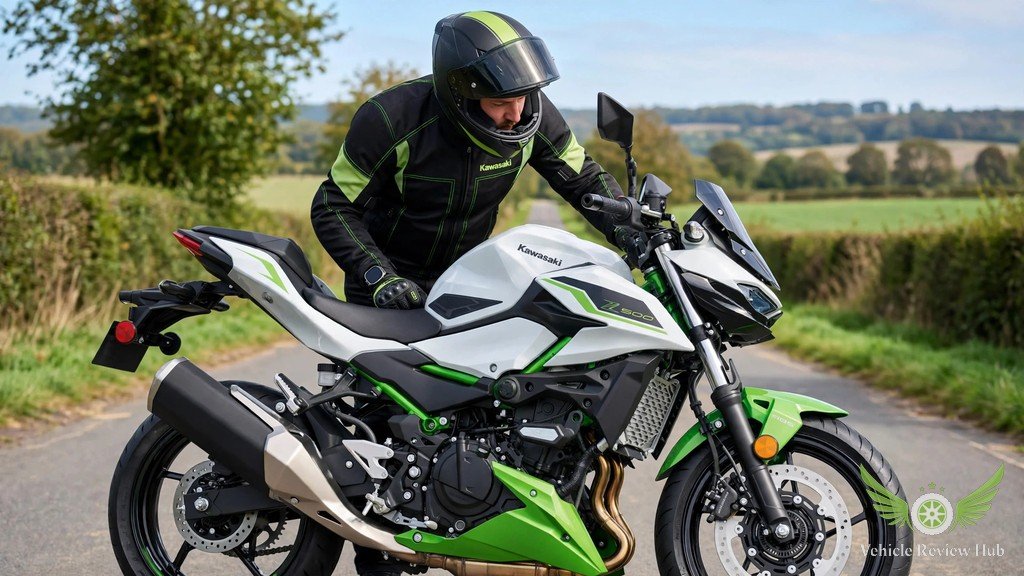
Preventive maintenance, records and regular inspections are the three habits that keep this bike reliable, and this Kawasaki Z500 SE reliability guide puts the records first because they are the proof. Keep the service book stamped at every 7,600-mile visit, keep the receipts for oil, filter and plugs, and keep the dealer record of the recall check — a used buyer pays for that paper. Inspect the chain, tyres and brake pads between services — the checks are quick. Watch the brake fluid age and the tyre pressures monthly — 28 psi front and 32 psi rear are easy to lose. The base bike follows the identical schedule — see the Kawasaki Z500 reliability guide for the standard trim.
Clone Check: Code ER500F
The clone check is the code ER500F, and it is the last check before money changes hands. The SE is model code ER500F; the base bike is ER500E, and a bike badged as an SE with an ER500E frame number is a base bike with SE accessories fitted, not a factory SE — check the frame number, not the bodywork. The factory SE carries the TFT dash, USB-C outlet, LED signals, frame sliders, rear-seat cowl, radiator screen and under cowl as standard, and the Kawasaki Z500 SE comparison sets the SE against the base bike, the Hornet and the Duke for buyers still deciding. Check the code, the white recall mark and the service book — and this Kawasaki Z500 SE reliability guide’s verdict is that a bike passing all three is a straightforward, low-drama machine to own.
Kawasaki Z500 SE Reliability: Frequently Asked Questions
These are the questions buyers ask most about Kawasaki Z500 SE reliability — and the answers stay honest about what is documented and what is not.
Was the Kawasaki Z500 SE recalled?
Yes, once: NHTSA campaign 25V-146 covers 1,057 US Z500s — base and SE combined, built January–February 2024 — for a clutch release shaft that was not properly welded, and this Kawasaki Z500 SE reliability guide confirms the fix is free. No SE-only recall count exists, and no other recall names this bike.
How do I know if a used Z500 SE has had the recall fixed?
Check the frame number with a Kawasaki dealer and look for the white paint mark “[M]” to the left of the first digit of the frame number — the mark is the fast field check and the dealer record is the authoritative answer, per this Kawasaki Z500 SE reliability guide.
What does a replacement frame slider cost for the Z500 SE?
The genuine kit is part 99994-2006, but no retailer or OEM price page could be found to verify the $262.87 figure in the doc — ask a Kawasaki dealer for the current price, and this Kawasaki Z500 SE reliability guide does not print the figure as a confirmed price.
When are the Kawasaki Z500 SE’s valves checked?
Every 24,000 km, or 15,200 miles, per the manual, and this Kawasaki Z500 SE reliability guide prints the interval only — the clearance values themselves were not verified, so no millimetre figure appears anywhere in this guide.
How often does the Kawasaki Z500 SE need servicing?
First service at 600 miles, then every 7,600 miles or every year, with oil and filter changed at every service and spark plugs replaced at every service — the shared Ninja 500 and Z500 platform schedule, per this Kawasaki Z500 SE reliability guide.
Has the Z500 SE’s TFT dash failed anywhere?
No TFT failure pattern is documented, and this Kawasaki Z500 SE reliability guide states it plainly: the dash itself is not a known failure item, and the only documented weakness is the Rideology phone app’s pairing and ride-logging behaviour, which is a phone-app issue, not a dash failure.