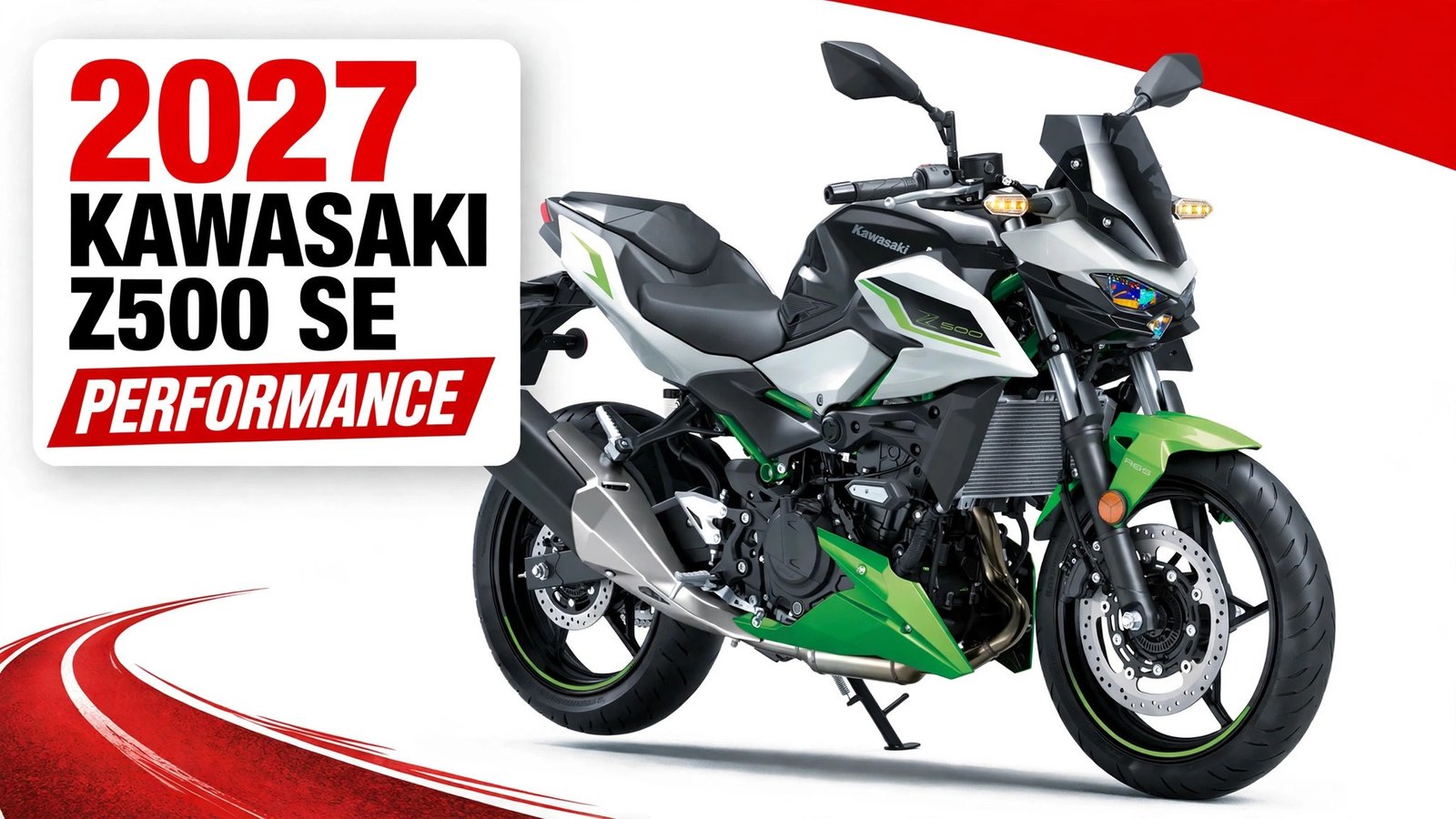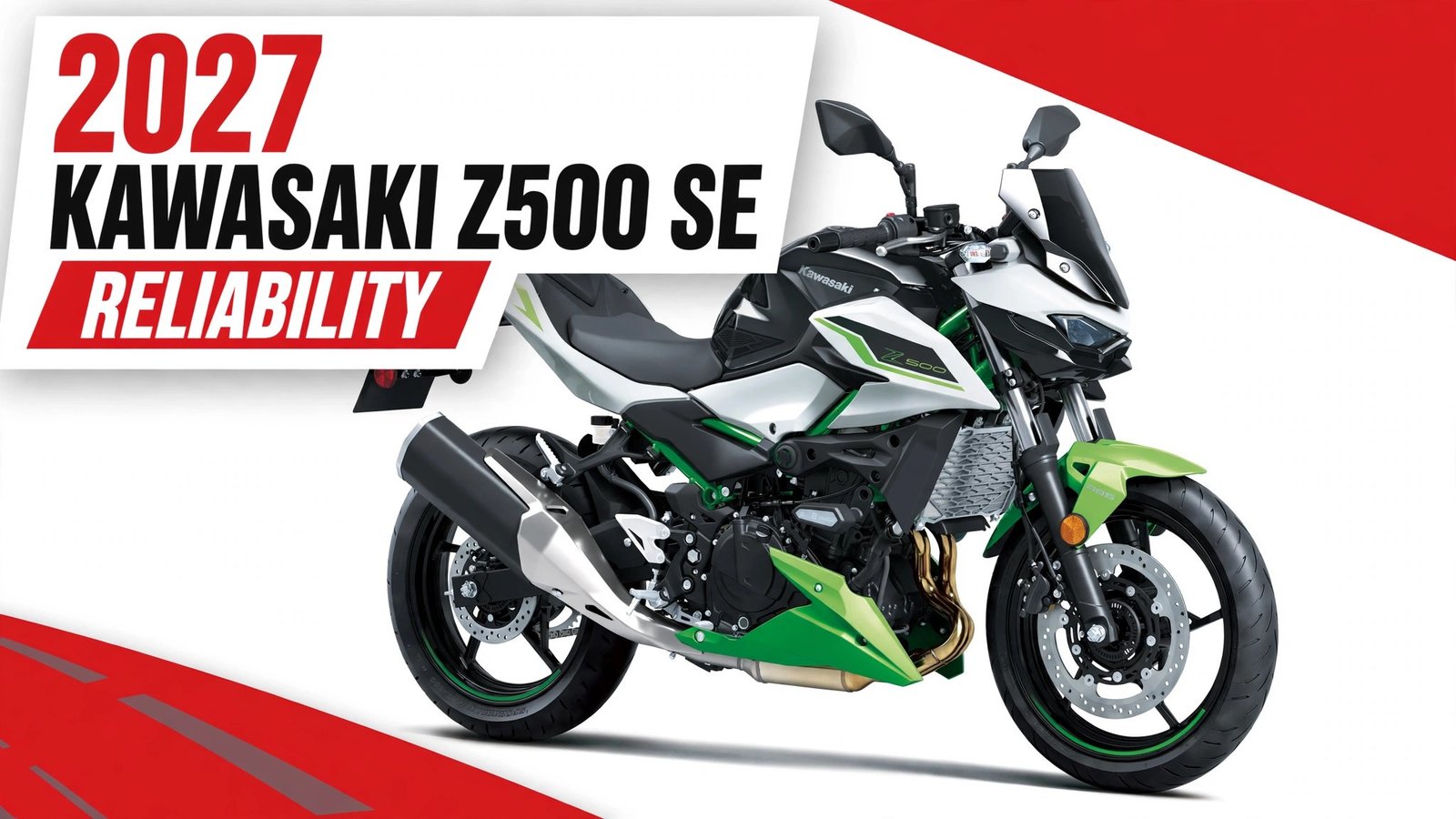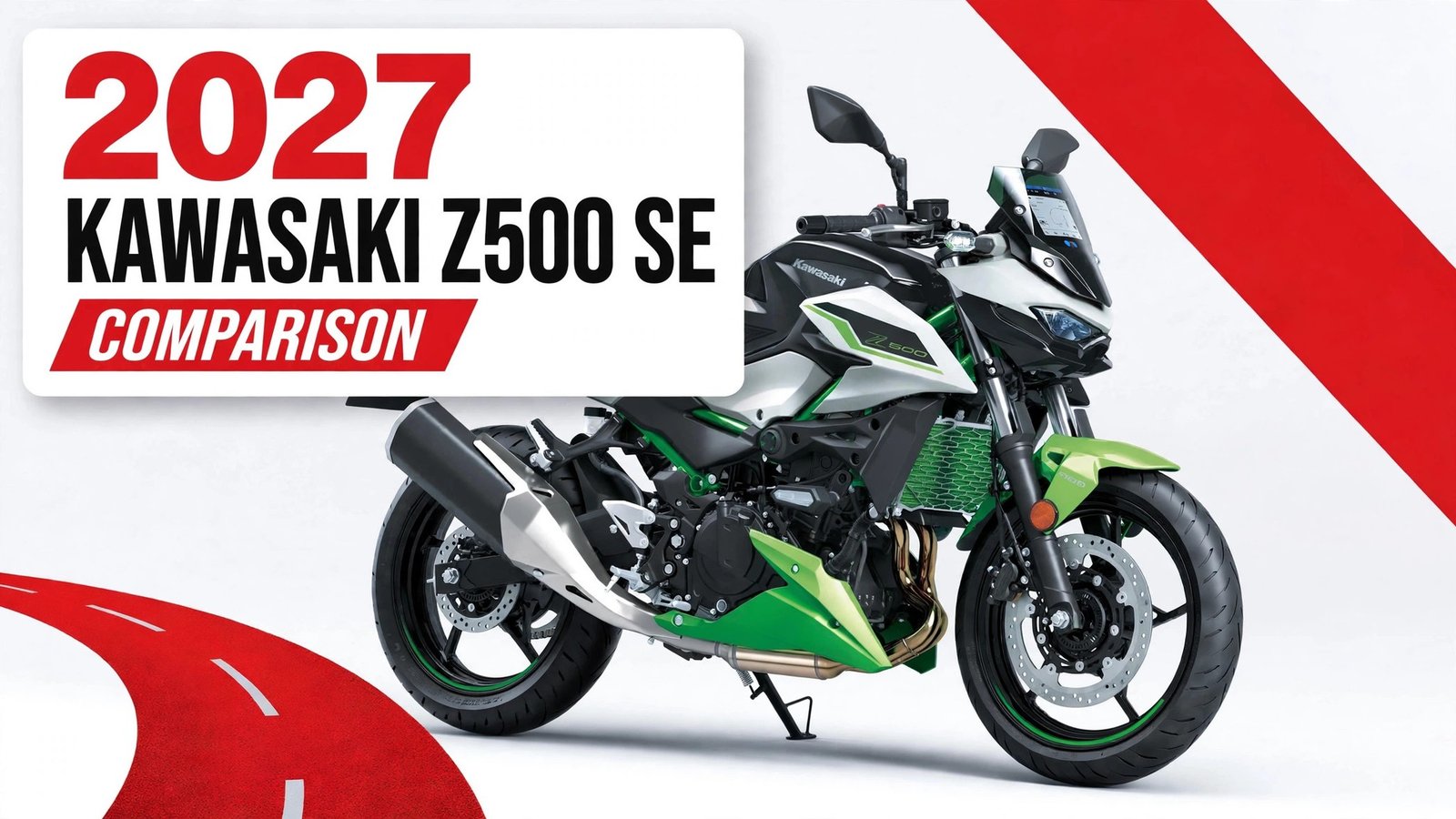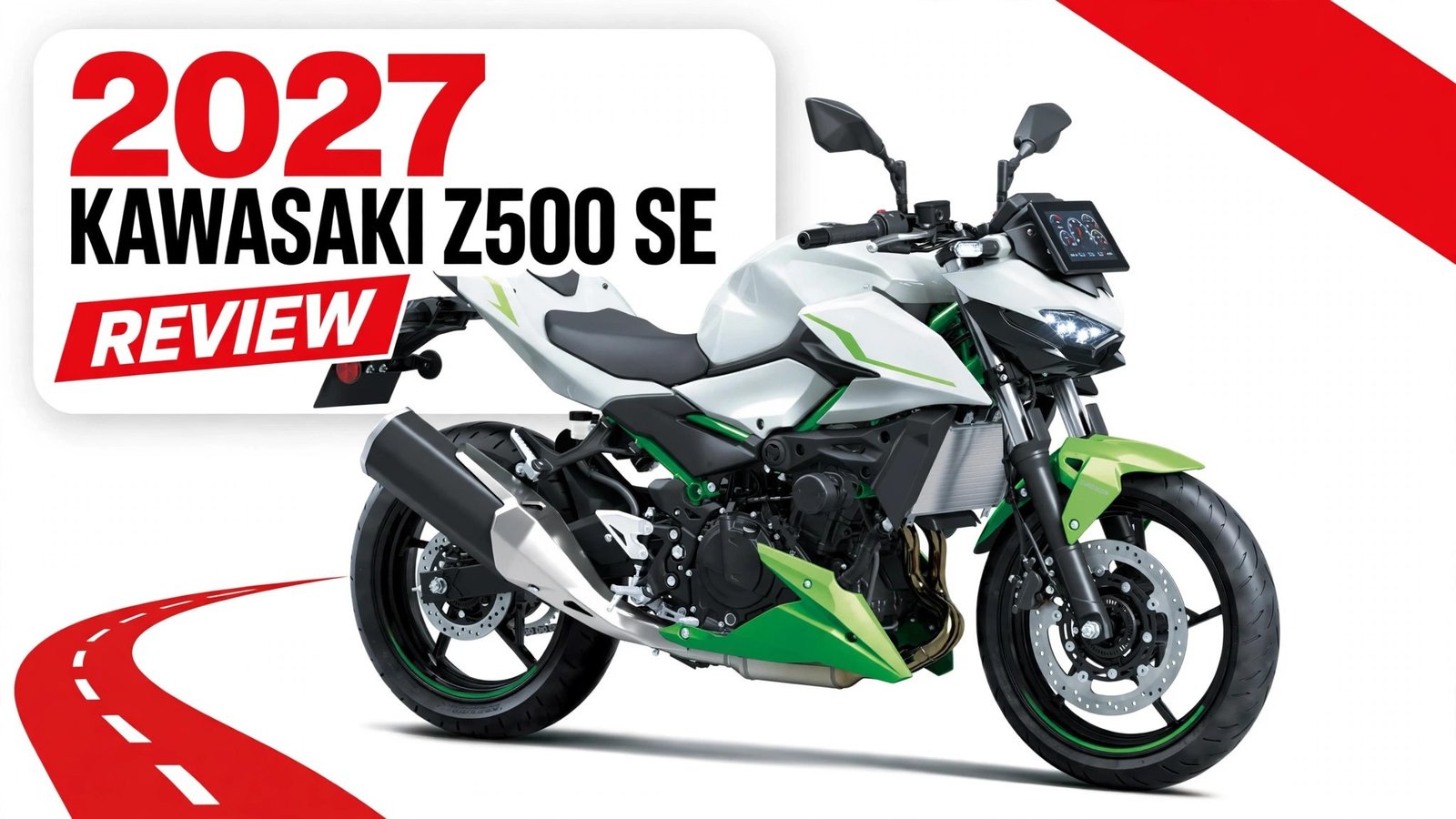
The short answer in this Kawasaki Z500 SE review is that the SE is the same 451cc naked twin as the base Z500, with a $700 trim kit on top: a full-colour TFT dash, a USB-C outlet, LED turn signals and a set of bodywork extras. It costs $6,499 plus $650 destination in 2027, $7,149 delivered, and the kit is worth the money if you want the TFT — the parts cost more than $700 bought separately. What the SE does not add is keyless ignition, more power or better suspension.
Kawasaki Z500 SE Overview and Model-Year Updates
This Kawasaki Z500 SE review starts with what the SE actually is: the up-spec trim of the Z500 naked twin, model code ER500F, built in Thailand alongside the base Z500 ABS. It shares the base bike’s 451cc parallel-twin engine, trellis frame and chassis. The SE adds a trim kit, not a different motorcycle, and nothing mechanical changed between 2024 and 2027 — only colours and prices moved. Kawasaki revealed the Z500 alongside the Ninja 500 at EICMA in November 2023, and US sales have run continuously since 2024, replacing the 399cc Z400 that ran from 2019 to 2023.
Premium Is $700, Every Year
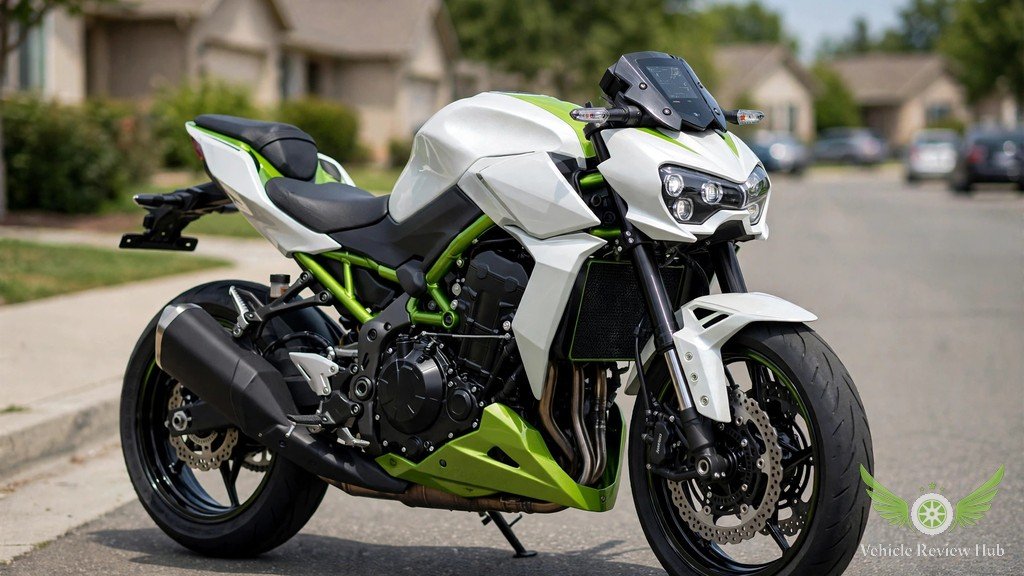
In this Kawasaki Z500 SE review, the SE premium is $700 in every model year, verified on all four SE spec sheets against the base sheets: $6,299 against $5,599 in 2024; both held in 2025; $6,399 against $5,699 in 2026; $6,499 against $5,799 in 2027. The $700 gap never moved, which makes the buying question simple: the SE is worth it if you want the TFT dash and the trim kit, and it is not if you do not. Ultimate Motorcycling puts it plainly — if the accessories and the colour work for you, $700 is worth it. There has also never been a KRT Edition Z500.
SE Colours Shared Early, Unique After 2025
The doc heading for this section said the SE colours were never shared with the base bike. That is wrong, and this Kawasaki Z500 SE review corrects it: the 2024 base and SE share Metallic Flat Spark Black, and the 2025 base and SE share Metallic Matte Graphenesteel Gray. What is true is that Candy Persimmon Red was SE-only in 2024 and 2025, and Candy Lime Green is SE-only in 2027. By year, the SE came in Candy Persimmon Red, Metallic Flat Spark Black and Metallic Matte Graphenesteel Gray for 2024 and 2025; Pearl Blizzard White and Ebony for 2026; and Pearl Blizzard White and Candy Lime Green for 2027. The base bike came in Candy Lime Green, Metallic Flat Spark Black and Metallic Graphite Gray for 2024; Metallic Spark Black and Metallic Matte Graphenesteel Gray for 2025; Metallic Matte Graphenesteel Gray and Metallic Flat Spark Black for 2026; and Ebony and Metallic Carbon Gray for 2027.
| Model year | Z500 ABS MSRP | Z500 SE ABS MSRP | Destination | Delivered ABS | Delivered SE ABS |
|---|---|---|---|---|---|
| 2024 | $5,599 | $6,299 | $450 | $6,049 | $6,749 |
| 2025 | $5,599 | $6,299 | Disputed — $600 or $650 | $6,199 or $6,249 | $6,899 or $6,949 |
| 2026 | $5,699 | $6,399 | $650 | $6,349 | $7,049 |
| 2027 | $5,799 | $6,499 | $650 | $6,449 | $7,149 |
Note: This Kawasaki Z500 SE review price table uses Kawasaki USA’s own spec sheets for every MSRP and Motorcycle.com’s database plus dealer listings for destination charges. The 2025 destination charge is disputed — Motorcycle.com’s database says $600 and SlashGear says $650 — so this table prints both figures labelled and never settles a single 2025 delivered price.
Kawasaki Z500 SE Engine and Specifications
The engine in this Kawasaki Z500 SE review is the same 451cc parallel twin as the base bike, and the SE adds nothing to it: a claimed 51.0 hp at 10,000 rpm and 31.7 lb-ft at 7,500 rpm to ISO 4106, from a 70.0 mm bore and a 58.6 mm stroke at 11.3:1 compression, through a six-speed gearbox with an assist and slipper clutch and a sealed chain, revving to an 11,700 rpm redline. There is no dyno run of the Z500 itself, so this Kawasaki Z500 SE review prints no rear-wheel horsepower figure as a Z500 result. The only platform dyno nearby is Cycle World’s 47.22 hp at 10,430 rpm on the Eliminator SE, which shares the same 451cc twin — and that figure is the Eliminator’s, not the Z500 SE’s.
Same Fork, Same Single Disc
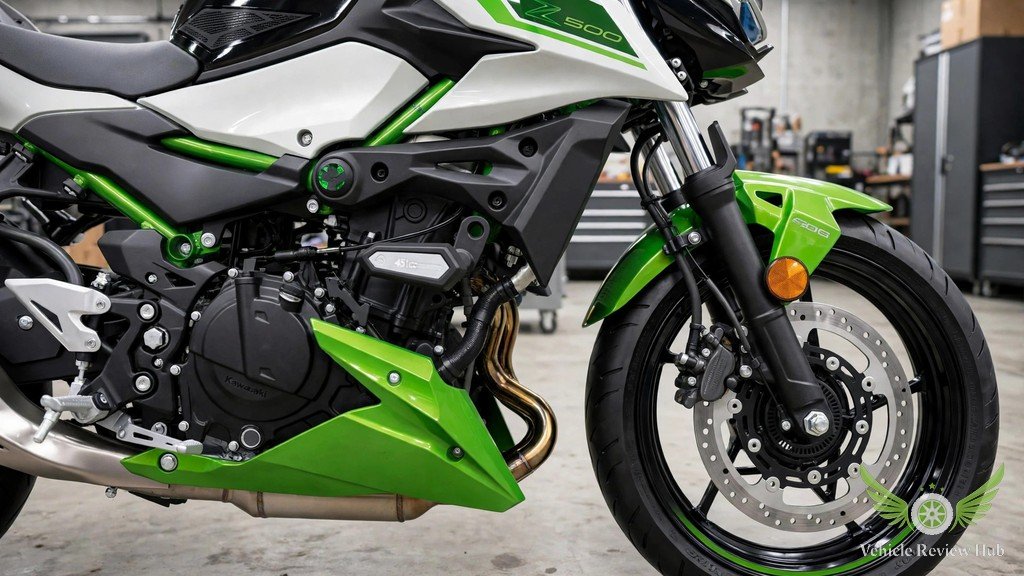
In this Kawasaki Z500 SE review the $700 premium buys trim, not hardware. The SE keeps the base bike’s 41 mm hydraulic telescopic fork — not upside-down — with 4.7 inches of travel, and a horizontal back-link rear shock with adjustable preload. The front brake is a single 310 mm semi-floating disc with a two-piston caliper and ABS; the rear is a single 220 mm disc with a single-piston caliper. TopSpeed’s “10 Things To Know” wrongly claims a dual-disc setup; that is not true of either trim. The tires are Dunlop Sportmax GPR300s, 110/70-17 front and 150/60-17 rear. Rake and trail are 24.5 degrees and 3.6 inches on every Z500 sheet, base and SE, all four years, and this Kawasaki Z500 SE review does not carry the Ninja 500 SE’s 24.7-degree figure across. The SE kit’s only dimensional change is height: 43.3 inches against the base bike’s 41.5 inches.
No KIPASS on This SE
The Z500 SE has no KIPASS, and this Kawasaki Z500 SE review says so plainly because the confusion is everywhere. A grep across all eight Z500 spec sheets — base and SE, 2024 through 2027 — returns zero mentions of KIPASS; the SE’s Special Features list only the TFT, the USB-C outlet, all-LED lighting and ERGO-FIT. The trap is the Ninja 500 SE, the faired sibling, which does have KIPASS keyless ignition as standard. Some listings carry the Ninja’s keyless system across to the Z500. If a source lists keyless ignition for the Z500 SE, that source is carrying Ninja 500 data. European A2 figures are not US figures: Europe rates this engine at 45 PS at 9,000 rpm, and TopSpeed’s “44.38 hp” is that Euro figure mislabelled. The US bike is 51.0 hp at 10,000 rpm and 31.7 lb-ft at 7,500 rpm.
| Item | 2027 Kawasaki Z500 SE ABS |
|---|---|
| Engine | 451cc 4-stroke parallel twin, DOHC, liquid-cooled, 8 valves |
| Bore × stroke | 70.0 × 58.6 mm |
| Compression | 11.3:1 |
| Claimed power | 51.0 hp @ 10,000 rpm (ISO 4106) |
| Claimed torque | 31.7 lb-ft @ 7,500 rpm |
| Fuel system | DFI, dual 32 mm throttle bodies |
| Transmission | 6-speed, assist & slipper clutch, sealed chain |
| Front suspension | 41 mm telescopic fork, 4.7 in travel |
| Rear suspension | Horizontal back-link, adjustable preload, 5.1 in travel |
| Front brake | Single 310 mm disc, 2-piston caliper, ABS |
| Rear brake | Single 220 mm disc, single-piston caliper, ABS |
| Tires | 110/70-17 / 150/60-17 Dunlop Sportmax GPR300 |
| Rake / trail | 24.5° / 3.6 in |
| Length / width / height | 78.5 / 31.5 / 43.3 in |
| Wheelbase | 54.1 in |
| Ground clearance | 5.7 in |
| Seat height | 30.9 in |
| Curb weight | 370.4 lb (49-state) / 372.6 lb (50-state) |
| Fuel capacity | 3.7 gal |
| Warranty | 12-month limited |
Note: This Kawasaki Z500 SE review specification table is taken from Kawasaki USA’s own 2027 Z500 SE ABS spec sheet, read in full. Cycle News’s spec table lists the rear brake as a two-piston caliper and its article text says the tank holds 3.6 gallons — both are Cycle News errors; the sheet says a single-piston rear caliper and a 3.7-gallon tank, and the sheet governs.
Kawasaki Z500 SE Price and Market Availability
Price is the whole point of this Kawasaki Z500 SE review, because the SE is a value question, not a performance one. The 2027 SE lists at $6,499 MSRP, and with the $650 destination charge it is $7,149 delivered — $700 more than the base Z500’s $6,449 delivered, in every year since 2024. The SE has been on sale in the USA continuously since 2024 with no mechanical change. The 2025 delivered price is the one figure this Kawasaki Z500 SE review will not settle: Motorcycle.com’s database says the 2025 destination charge was $600, SlashGear says $650, so a 2025 SE cost $6,899 or $6,949 delivered, both printed labelled.
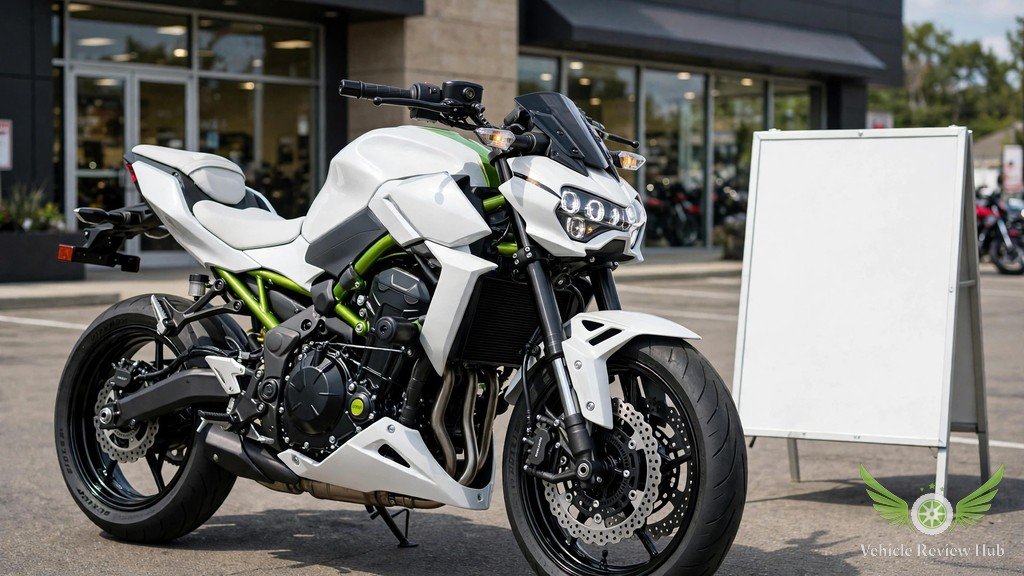
Kawasaki Z500 SE Price in the USA: $6,499 (2027)
The 2027 SE’s $6,499 MSRP comes from Kawasaki USA’s own 2027 Z500 SE ABS spec sheet, and the $650 destination charge comes from Motorcycle.com’s database. That makes $7,149 delivered the honest number to shop against, not the $6,499 sticker alone. For comparison, the base Z500 review covers the $5,799 ABS at $6,449 delivered, and in this Kawasaki Z500 SE review the $700 between them is the entire SE story. The SE is not a faster bike or a better-suspended bike — it is the same bike with a TFT dash and trim. One more price note: the 2024 SE sheet’s “BASE MSRP NON-ABS $6,299” header is a template artifact — every US Z500 has had ABS since launch.
Parts Sum Beats the Premium
Three outlets agree that buying the SE kit piece by piece costs more than the $700 premium, and this Kawasaki Z500 SE review cites their claims rather than inventing an itemized total. Motorcycle.com’s SE first ride says the SE “tacks on over $1,000 worth of accessories.” RevZilla’s SE first ride says outfitting the base Z500 with SE accessories “would cost more than the $700 difference between the two models.” Rider Magazine and MCN say buying the SE instead of accessorizing the standard bike “will save you a few hundred dollars.” The frame sliders are the genuine Kawasaki accessory kit, part number 99994-2006 — but no retailer or OEM price page could be found for that kit, so no slider price is printed here as a verified fact.
| Item | Z500 ABS (base) | Z500 SE ABS |
|---|---|---|
| Dash | Full-LCD | 4.3-in full-colour TFT |
| USB-C outlet | No | Yes |
| Turn signals | Standard | LED turn signals |
| Meter cover | Standard | Smoke-tinted |
| Radiator screen | No | Yes |
| Frame sliders | No | Yes (genuine kit 99994-2006) |
| Rear-seat cowl | No | Yes |
| Tank pad / knee pads | No | Yes |
| Under cowl | No | Yes |
| Fly screen | Standard | Taller |
| Height | 41.5 in | 43.3 in |
| Curb weight | 366.0 / 368.2 lb | 370.4 / 372.6 lb (+4.4 lb) |
| MSRP (2027) | $5,799 | $6,499 (+$700) |
| Everything else | — | Identical: engine, fork, brakes, tires, seat, wheelbase, rake/trail, fuel, warranty |
Note: This Kawasaki Z500 SE review delta table is built from Kawasaki USA’s own spec sheets for the base and SE bikes, all four model years. The $700 premium, the 4.4 lb weight gain and the 1.8-inch height gain are identical on the 49-state and 50-state weights. The SE kit adds trim only — no engine, fork, brake or warranty change.
Kawasaki Z500 SE Design, Features and Technology
Design is where the SE earns its $700, and this Kawasaki Z500 SE review is honest about what that means: the SE looks like a dressed-up Z500. The Sugomi styling is shared with the base bike — the aggressive Z face and the triple LED headlight array. What the SE adds is the TFT dash, the LED turn signals, the frame sliders, the rear-seat cowl, the radiator screen, the under cowl and the taller fly screen. The 2024–2025 Persimmon Red SE had red wheels — the only SE wheel colour any source confirms. Rider aids are the same as the base bike: ABS and the Economical Riding Indicator only — no traction control, no ride mode, no IMU and no quickshifter.
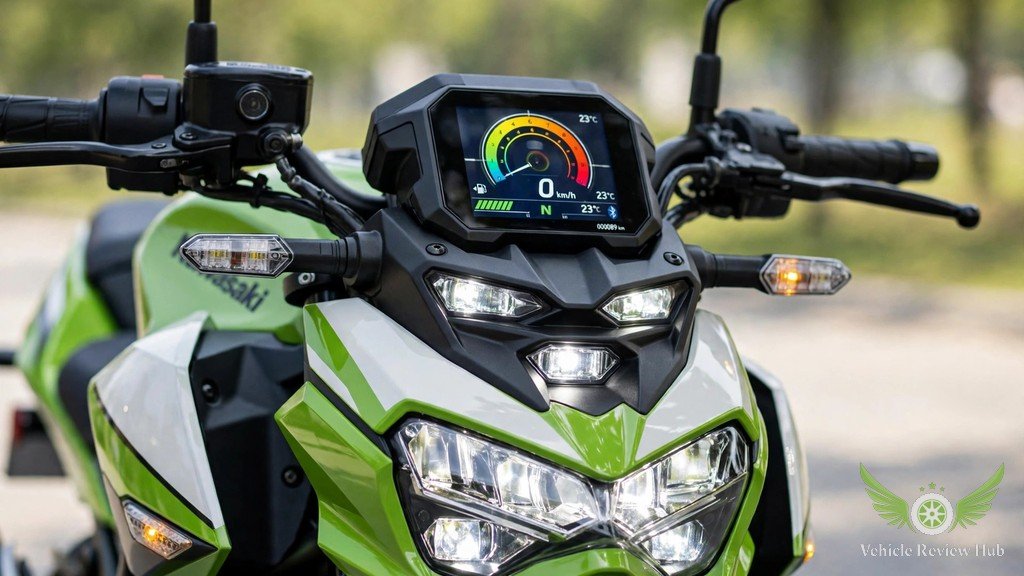
TFT Is the Real Gain
The 4.3-inch full-colour TFT is the one SE item that changes the riding experience. Motorcycle.com’s SE first ride scored the instruments 5 out of 5 and called the TFT the kind of dash found on premier models. RevZilla called its intuitive layout and light-adaptive background “a clear standout”. MCN notes the TFT automatically adjusts brightness, and Ultimate Motorcycling calls it “the SE’s proven TFT dash compared to the standard LCD, which is actually not bad”. The one nit comes from RevZilla: the TFT “is only undermined by its lack of switchgear controls, as reaching the display-mounted buttons proves challenging while on the go.” The TFT also brings the USB-C outlet, which the base bike does not have. In this Kawasaki Z500 SE review the TFT is the answer to the value question: if a colour dash, a charging port and the trim matter to you, the SE is worth $700; if they do not, the base bike’s LCD does the same job.
Rideology Is on Both Dashes
Rideology is on both dashes, so the SE does not buy you the app — the base bike’s full-LCD instrumentation already connects to a smartphone through RIDEOLOGY THE APP over Bluetooth. What it does not do reliably is pair and log, and this Kawasaki Z500 SE review reports the flaws with both sources named. Motorcycle.com’s tester wrote that “it took some help from a few Kawasaki reps to get it paired via Bluetooth, and though I tried to track and log my ride the app only caught 28 minutes of the excursion.” SlashGear’s 2024 Z500 piece reports that “the app suffers from reliability issues, and has a 1.8 star average on Google’s Play Store”. The app’s problems are a phone-app issue, not a dash failure. Buy the SE for the TFT screen itself, not for the app behind it.
Kawasaki Z500 SE Riding Experience and Comfort
The riding experience in this Kawasaki Z500 SE review is the SE’s own story: every major outlet tested the SE at the San Diego launch — RevZilla notes that Kawasaki “assigned every attendee to an SE unit” — so the impressions below are SE impressions, not base-bike carryovers. The short version: an upright, light, approachable naked with a willing twin, a very light clutch and a high-frequency buzz past 6,500 rpm that reviewers notice but do not hate. The seat is 30.9 inches, the curb weight is 370.4 lb, the riding position is upright with wide bars, and Cycle News’s 6-foot-1 tester found it comfortable despite his height, with no cramped knees.
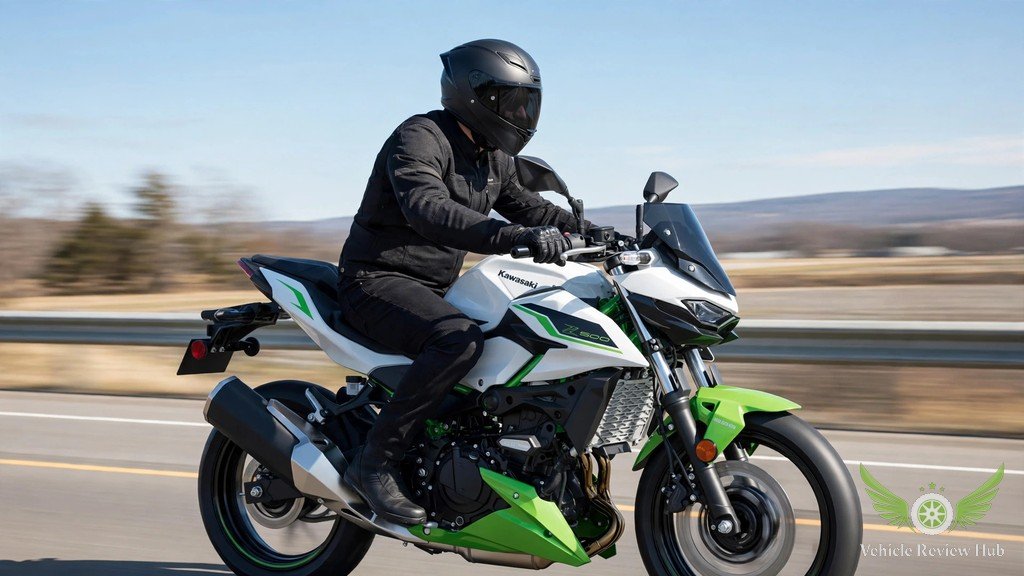
Testers All Rode the SE
Motorcycle.com, RevZilla, Cycle News, Ultimate Motorcycling, TopSpeed and Rider Magazine all rode the SE at launch, and this Kawasaki Z500 SE review draws its ride impressions from their SE tests. The 451cc twin pulls cleanly from low revs and holds highway speed in sixth — Cycle News says the SE “hums along comfortably at 70 mph in sixth gear, and you can still accelerate from there.” The buzz arrives above 6,500 rpm: Motorcycle.com reports it “particularly in the seat,” Ultimate Motorcycling describes a high-frequency buzz in the grips, pegs and seat at 60 mph or so. The six-speed gearbox is slick and the assist and slipper clutch is very light. Two nits recur: RevZilla found the throttle “laggy and snatchy under 3,000 rpm,” and the exhaust heat shield crowds the right footpeg while the mirrors vibrate at speed. The brakes earn praise with limits — MCN says the bike slows down “streets ahead of Honda’s CB500 Hornet,” and Bennetts lists braking as a con. The full Z500 SE performance guide covers the missing dyno, the estimated top speed and the mileage in detail.
12 Month Warranty, Both Trims
Both trims carry the same 12-month limited warranty on every model year from 2024 to 2027, and the SE buys no extra cover — the shortest warranty in the class, and this Kawasaki Z500 SE review flags it for that reason. The recall picture is the same for both trims too: NHTSA campaign 25V-146 covers 1,057 US Z500s, base and SE combined, built from January to February 2024, for a clutch release shaft that was not properly welded. The fix is free — replace the clutch release shafts, component part 13102-0087, repair kit 99999-0975 — and a remedied bike carries a white paint mark “[M]” by the frame number, so a used buyer should check for the mark. The 3,742 figure that sometimes appears next to this recall is the Ninja 500 and Z500 campaign total, never the Z500 count. This is the only NHTSA campaign naming the Z500. The full Z500 SE reliability guide covers the service schedule and what to check on a used bike.
Kawasaki Z500 SE Review: Pros, Cons and Verdict
The verdict of this Kawasaki Z500 SE review is that the SE is the right Z500 for the buyer who wants the TFT dash and the trim, and the wrong one for the buyer who only wants the bike. The two trims are mechanically identical, so the $700 buys a screen, a charging port, LED signals and bodywork, not a better motorcycle. Motorcycle.com’s SE first ride scored the bike 85 percent overall, with the instruments a perfect 5 out of 5 and value 9 out of 10. The Z500 SE comparison puts the $7,149 delivered SE against the base Z500, the Hornet and the Duke — its case there is the TFT and the kit, not price, as this Kawasaki Z500 SE review has shown.
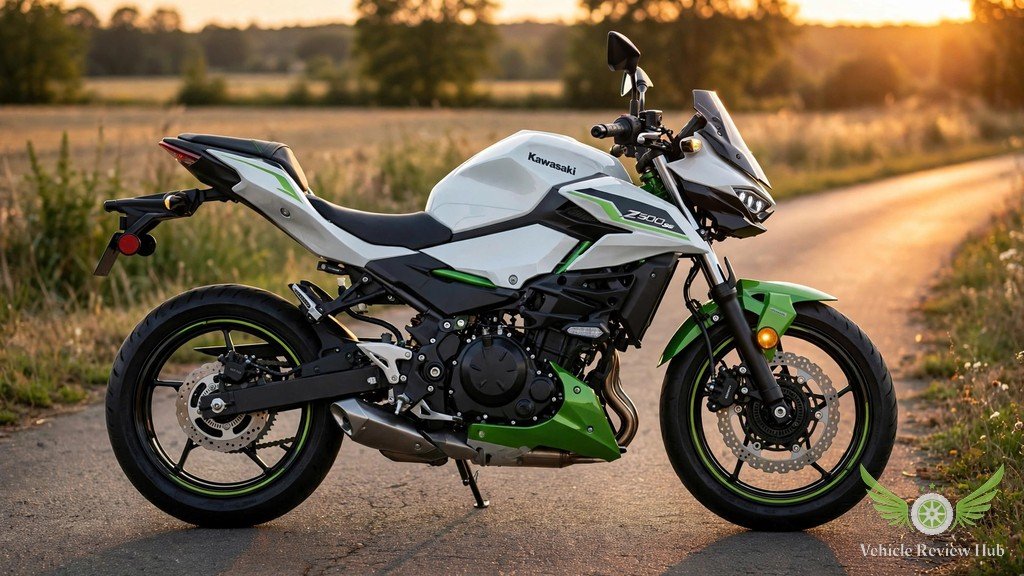
Main Advantages and Limitations of the Kawasaki Z500 SE
The advantages in this Kawasaki Z500 SE review start with the TFT dash, which every tester praised, and continue with the USB-C outlet, the LED signals, the sliders, the seat cowl, the radiator screen, the under cowl and the taller screen — eleven items that cost more than $700 bought separately. The SE also keeps everything good about the base bike: the 51.0 hp twin, the 30.9-inch seat, the 370.4 lb curb weight and the very light clutch. The limitations are the other side of the same coin: the SE has the base bike’s 41 mm non-adjustable fork and single 310 mm front disc while the Hornet and the Duke have inverted forks and dual discs. There is no traction control, no ride mode, no quickshifter and no keyless ignition, and the 12-month warranty is the shortest in the group. The engine buzzes past 6,500 rpm, the throttle is snatchy under 3,000 rpm, the Rideology app needed the reps’ help to pair, and the TFT’s buttons are hard to reach on the go. None of those is a defect — the only documented failure is the 25V-146 recall, fixed free — but together they define what the SE is: a well-dressed base bike, not a better one.
Only 4.4 lb Heavier
The SE is exactly 4.4 lb heavier than the base bike — 370.4 lb curb against 366.0 lb on the 49-state weights, and 372.6 lb against 368.2 lb on the 50-state weights — and this Kawasaki Z500 SE review calls that figure exact because it is: the heading “Only 4.4 lb Heavier” is true on both state weights. Four pounds makes no measurable performance difference. The weight goes on the trim kit, and the height gain is 1.8 inches, from 41.5 inches to 43.3 inches. So the SE carries its $700 in trim and 4.4 lb in hardware, and gives back nothing in performance — the honest final word of this Kawasaki Z500 SE review on the premium.
Kawasaki Z500 SE Review: Frequently Asked Questions
These are the questions buyers ask most in this Kawasaki Z500 SE review.
How much does the 2027 Kawasaki Z500 SE cost?
$6,499 MSRP plus $650 destination, $7,149 delivered — $700 more than the base Z500’s $6,449 delivered, and this Kawasaki Z500 SE review notes the $700 premium has held in every model year since 2024.
What does the SE add over the base Z500?
A 4.3-inch full-colour TFT dash, a USB-C outlet, LED turn signals, a smoke-tinted meter cover, a radiator screen, frame sliders, a rear-seat cowl, tank and knee pads, an under cowl and a taller fly screen — eleven items, and this Kawasaki Z500 SE review cites three outlets that say buying them separately costs more than the $700 premium.
Does the Kawasaki Z500 SE have keyless ignition (KIPASS)?
No. The Z500 SE has no KIPASS — the keyless system belongs to the Ninja 500 SE, and some listings wrongly carry it across to the Z500, and this Kawasaki Z500 SE review found zero mentions of KIPASS across all eight Z500 spec sheets.
How much heavier is the SE than the base Z500?
Exactly 4.4 lb: 370.4 lb curb against the base bike’s 366.0 lb (49-state; 372.6 vs 368.2 lb 50-state), and this Kawasaki Z500 SE review calls the figure exact because it holds on both state weights.
How much power does the Kawasaki Z500 SE make?
51.0 hp at 10,000 rpm and 31.7 lb-ft of torque at 7,500 rpm, claimed by Kawasaki to ISO 4106 — identical to the base bike, and this Kawasaki Z500 SE review prints no dyno figure because no Z500 dyno exists.
How long is the Kawasaki Z500 SE warranty?
12-month limited warranty on every model year from 2024 to 2027, the same as the base bike, and this Kawasaki Z500 SE review notes it is the shortest warranty in the group.