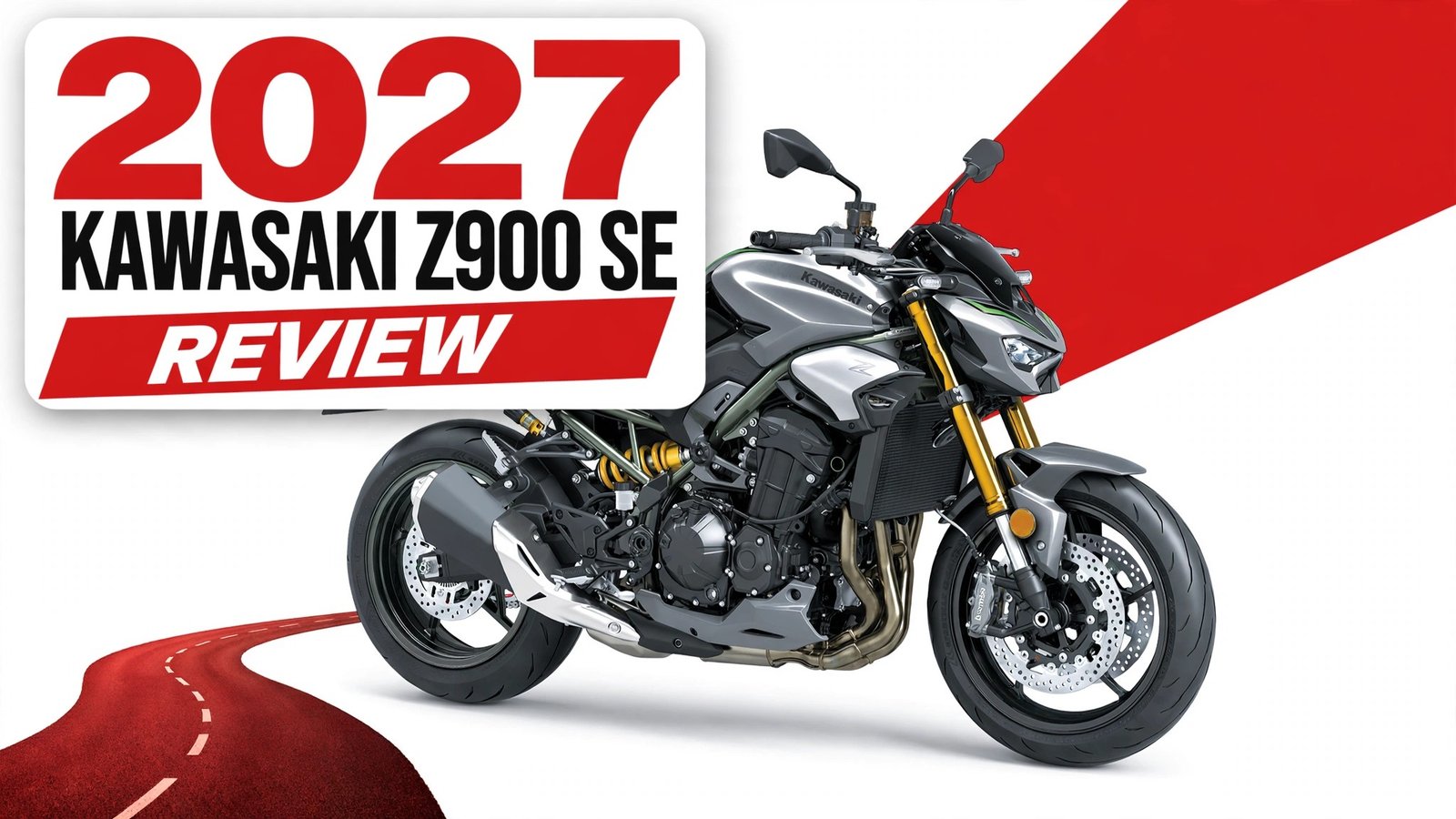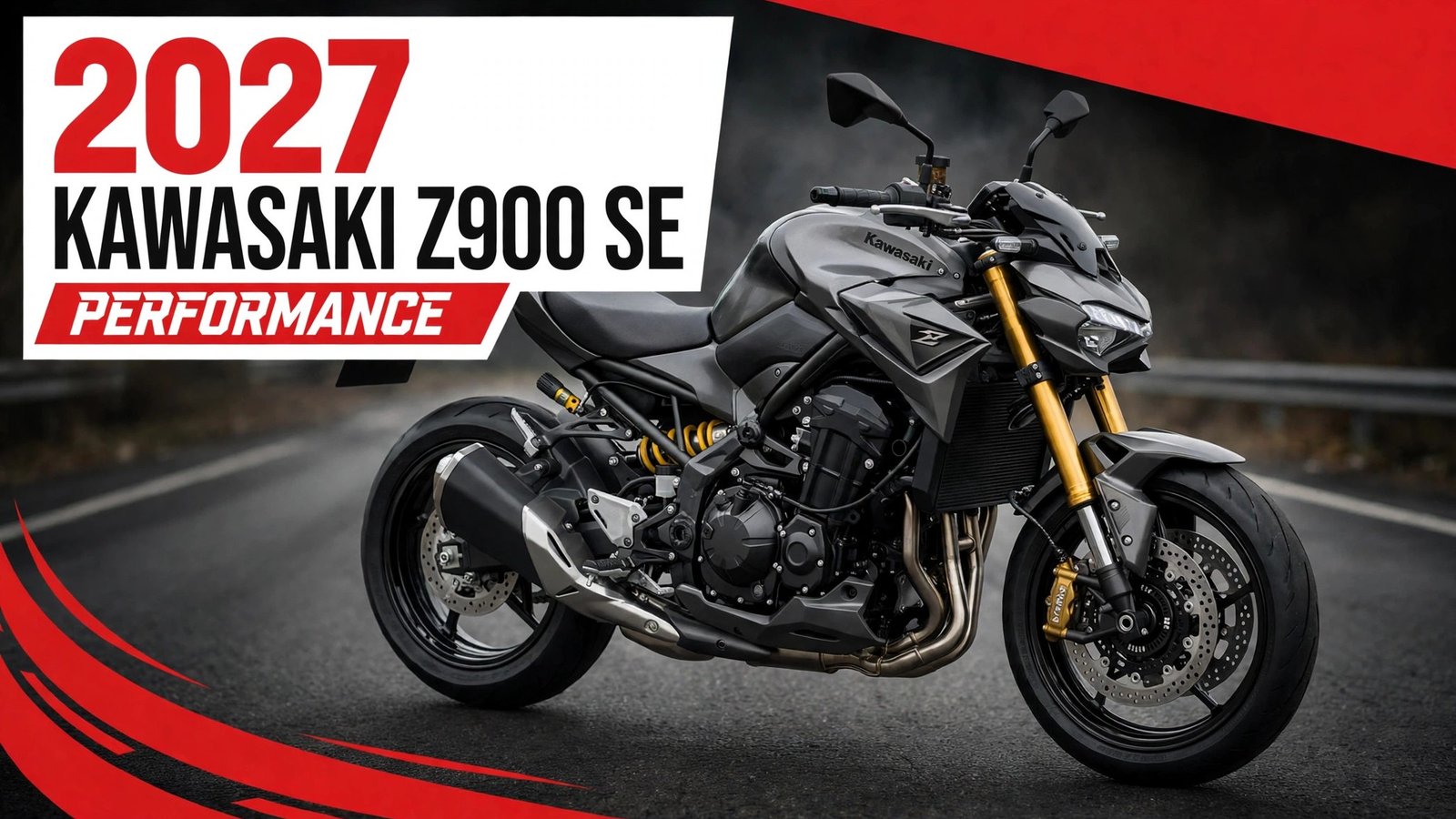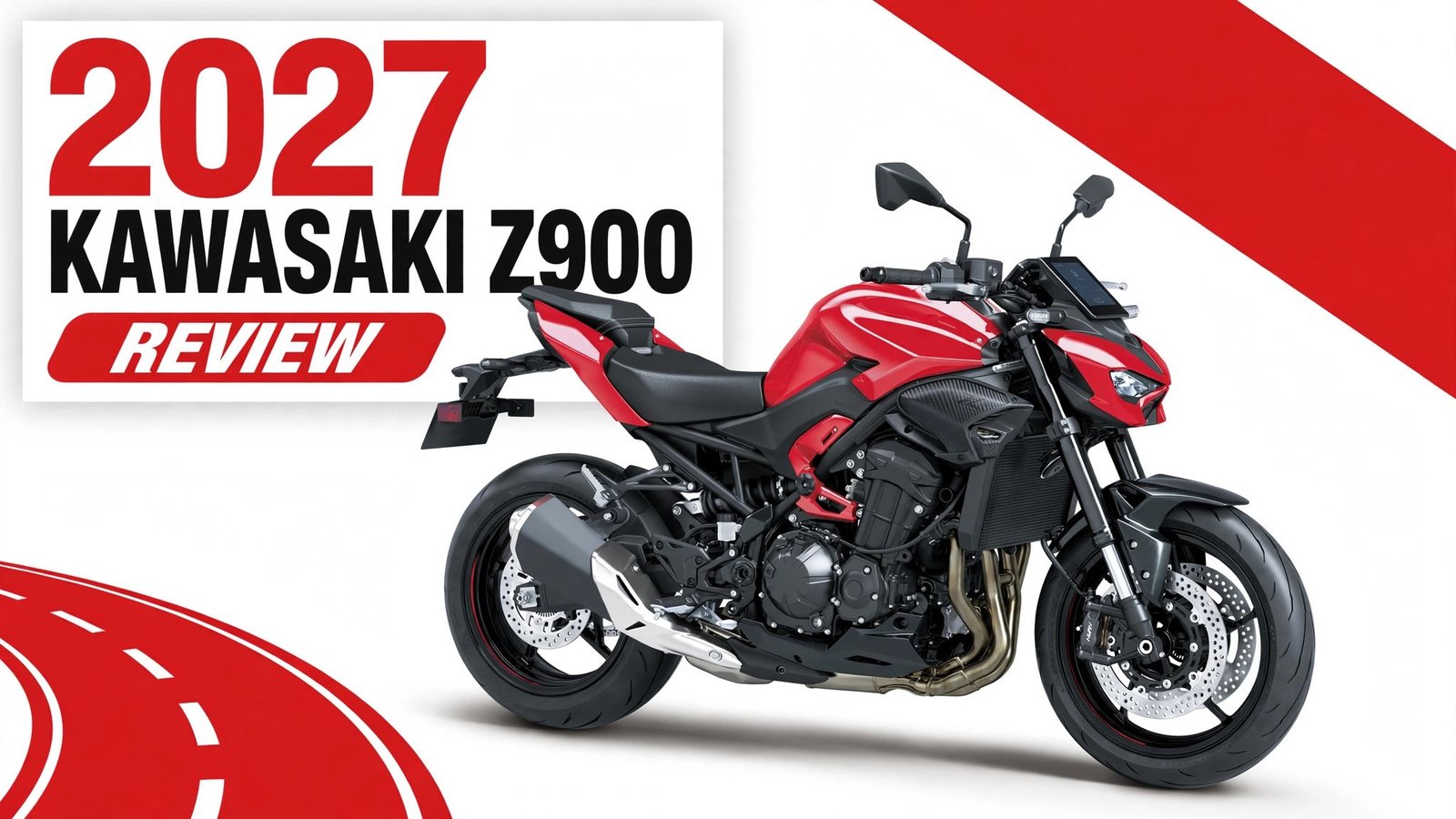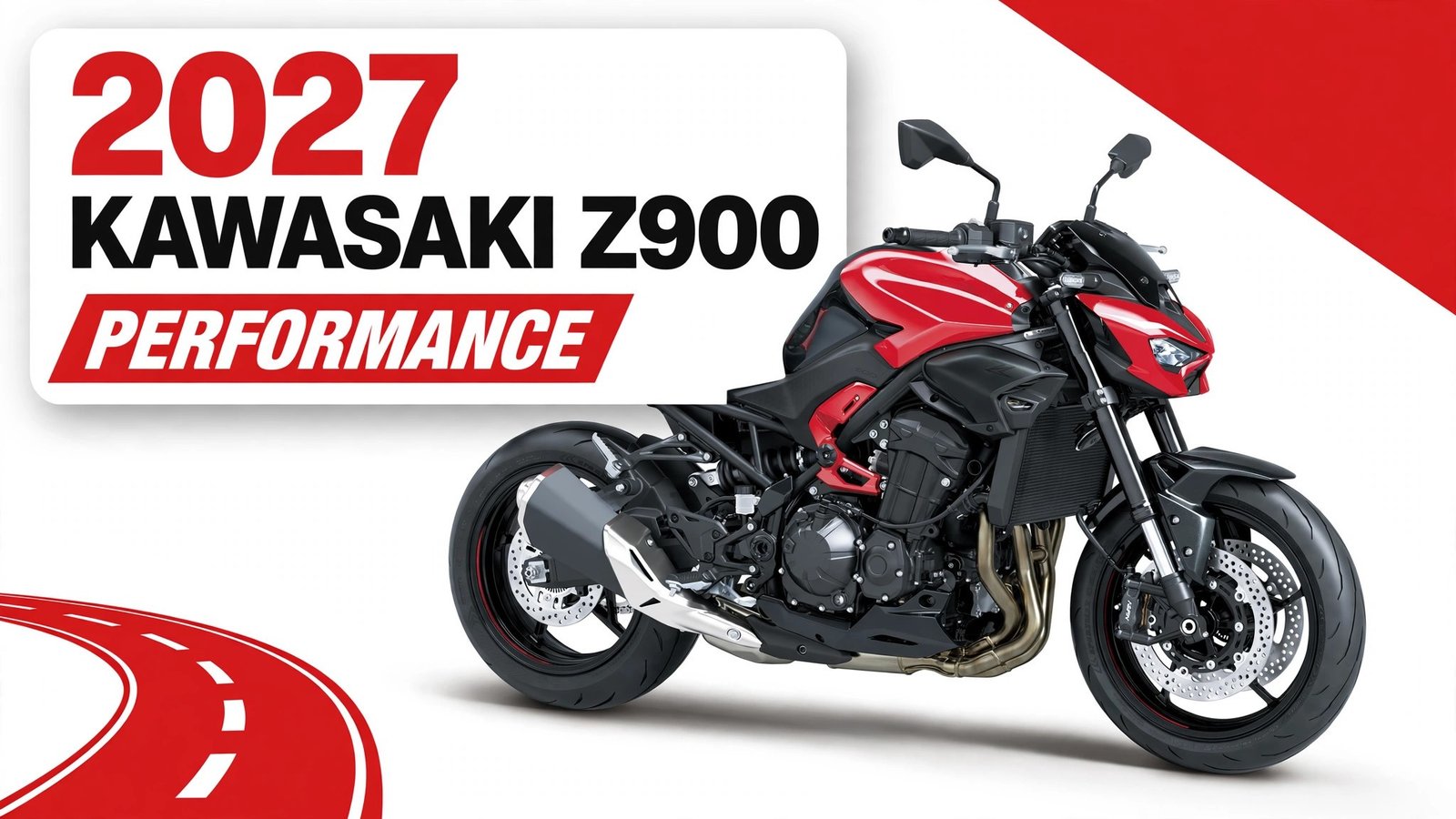
The Kawasaki Z900 has always sold on the same promise: a big four-cylinder engine in a middleweight naked, for less money than any rival four. This Kawasaki Z900 performance guide measures that promise — dyno figures from three independent tests, the honest answer on top speed, real-world mileage, and how the bike stacks up against the MT-09, the GSX-S1000 and the Hornet SP.
The short version: the 2020 bike put 113 to 115.5 hp to the rear wheel on three different dynos, Kawasaki publishes no top speed, no timed run exists for the 2025 bike, and the SE returned 41.6 mpg in Cycle News’ 2025 shootout. This Kawasaki Z900 performance guide uses only attributed, measured figures — no aggregator estimates, no guessed 0–60 times, no European figures dressed up as American ones.
Kawasaki Z900 Engine Performance and Power Delivery
The Z900’s engine never changed displacement across its three eras, but the 2025 update retuned it. This Kawasaki Z900 performance guide starts where the power is measured: on the dyno. Claimed and measured figures are kept apart throughout this Kawasaki Z900 performance guide, so a reader always knows which kind of number they are looking at.
Dyno: 113.96 hp in 2020
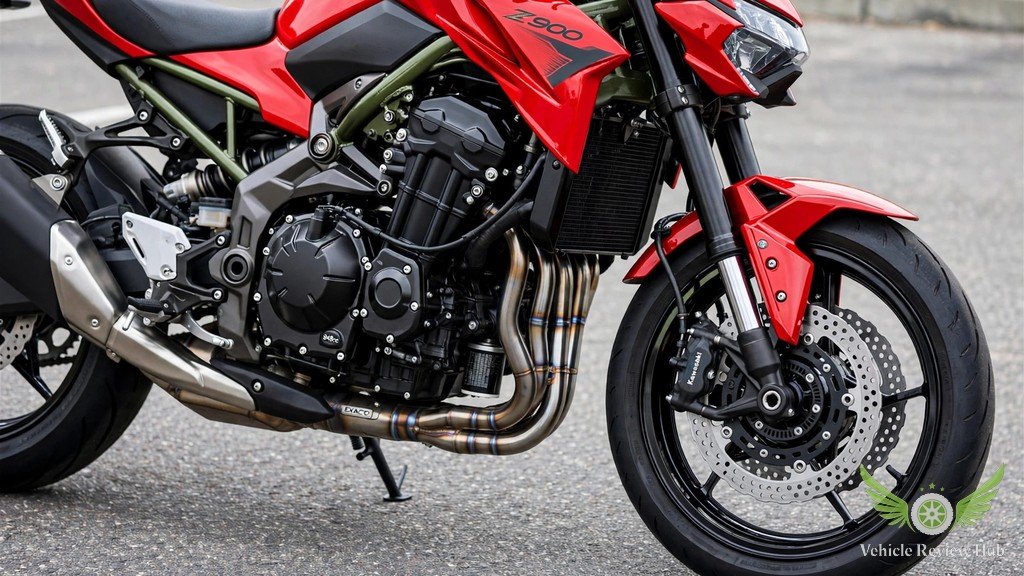
Three publications dyno-tested the 2020 Z900 independently, landing within two horsepower of each other. Cycle World’s 2020 dyno test measured 113.96 hp at 9,710 rpm and 67.30 lb-ft at 7,990 rpm on a Dynojet 250i. Rider’s 2020 road test measured 113.3 hp at 9,800 rpm and 66 lb-ft at 8,100 rpm on a Jett Tuning dyno. Motorcycle.com measured 115.5 hp at 9,700 rpm on a MotoGP Werks dyno. Three dynos, three shops, one answer: the 2020 bike makes about 114 hp at the rear wheel, roughly 11 hp less than Kawasaki’s 125 hp claimed figure for that year — the usual gap between a crank claim and a rear-wheel measurement.
That gap is normal, and it is why this Kawasaki Z900 performance guide keeps claimed and measured figures separate. The claimed peak is 125 hp at 9,500 rpm for 2017–2024 bikes and 123.0 hp at 9,500 rpm for 2025–2027 bikes, with torque at 73.1 lb-ft at 7,700 rpm every year. The 2025 retune — a new cam profile and revised ECU settings — lowered the claimed peak by 2 hp while aiming at mid-range torque and fuel economy, which Kawasaki claims is up to 16% better. No publication has dyno-tested a 2025-or-newer Z900, so there is no rear-wheel figure for the current bike anywhere in the record, and this guide prints none.
| Test | Bike | Dyno | Peak power | Peak torque |
|---|---|---|---|---|
| Cycle World, 2020 | 2020 Z900 | Dynojet 250i | 113.96 hp @ 9,710 rpm | 67.30 lb-ft @ 7,990 rpm |
| Rider, 2020 | 2020 Z900 ABS | Jett Tuning | 113.3 hp @ 9,800 rpm | 66 lb-ft @ 8,100 rpm |
| Motorcycle.com, 2020 | 2020 Z900 ABS | MotoGP Werks | 115.5 hp @ 9,700 rpm | Not separately published |
| Motorcycle.com, 2017 three-way | 2017 Z900 | MotoGP Werks | 115.6 hp @ 9,800 rpm | Not separately published |
Note: All four figures are rear-wheel measurements from named tests, not Kawasaki’s claimed figures. This Kawasaki Z900 performance guide prints no dyno figure for a 2025-or-newer bike because none has been published.
Long-Term Bike Made 115.6
The highest rear-wheel figure in the Z900’s record is 115.6 hp at 9,800 rpm, measured by Motorcycle.com on a MotoGP Werks dyno — and the source matters more than the number. That figure comes from Motorcycle.com’s 2017 three-bike comparison test, which put the Z900 against the Aprilia Shiver 900 and the Suzuki GSX-S750 on the same dyno on the same day. It was a comparison test, not a long-term test: no Motorcycle.com long-term Z900 test was found in the record, so this Kawasaki Z900 performance guide attributes the 115.6 hp figure to the 2017 three-way and never calls the bike a long-term test bike. In that three-way the Z900 was the strongest of the three on the dyno, consistent with the 2020 results — the engine’s output barely moved across the eras, and the 2025 retune traded peak power for mid-range.
US dyno shop 2 Wheel DynoWorks put the 2025 Z900 and the 2025 MT-09 on the dyno back to back — watch for the Z900’s rear-wheel numbers and how the two motors deliver their power differently. Note that 2WDW sells ECU flashes for both bikes.
Kawasaki Z900 Top Speed and Acceleration
Every buyer asks how fast the Z900 is, and the honest answer is that nobody has measured it properly. This Kawasaki Z900 performance guide says so plainly instead of printing a number borrowed from an aggregator. Where no test exists, this Kawasaki Z900 performance guide says so and moves on.
No Timed Run for 2025 Bike
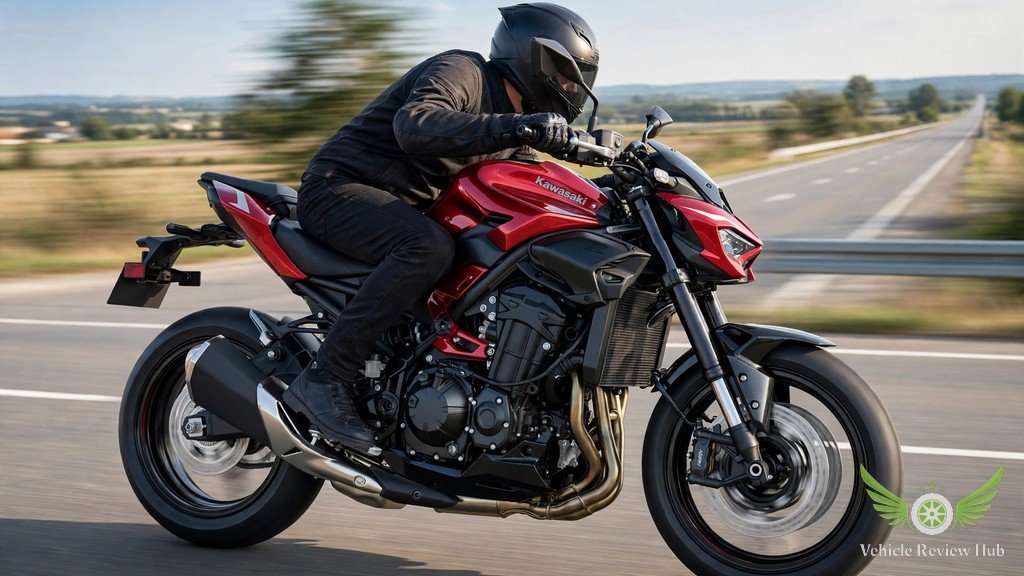
No timed 0–60 run, no quarter-mile pass and no instrumented acceleration test of a 2025-or-newer Z900 was found in the record. The 2025 bike’s new cam profile, revised ECU settings and shorter gear ratios were all aimed at mid-range response and smoother quickshifter transitions, not at a quicker launch — and with no test to quote, this Kawasaki Z900 performance guide prints no acceleration time for it. The same gap applies to the earlier bikes: the 2020 bike’s rear-wheel output is documented on three dynos, but no timed run of any Z900 year was found alongside them.
No Official Top Speed
Kawasaki publishes no top speed for the Z900 in any year, and no measured US top speed exists in the record. Aggregator sites quote top-speed and acceleration figures, but they are estimates with no instrumented test behind them, and this guide prints none of them as measured. What can be said honestly is that the Z900 is a 123 hp (2025+) naked with a 4.5-gallon tank and a 57.1-inch wheelbase, built for mid-range pull rather than top-end speed, and its measured rear-wheel output of 113 to 115.5 hp puts it in the middle of its class on power — behind the 150 hp GSX-S1000 on paper, ahead of the 117 hp MT-09. Top speed, for this bike, is a number nobody has verified, and this Kawasaki Z900 performance guide leaves it unverified rather than inventing one.
Kawasaki Z900 Mileage and Fuel Economy
Kawasaki publishes no US mileage figure for the Z900, so the only honest numbers are the ones testers measured. This Kawasaki Z900 performance guide uses two — Rider’s 2017 average and Cycle News’ 2025 shootout measurement — and labels every other figure with its source.
Rider Averaged 42.5 mpg
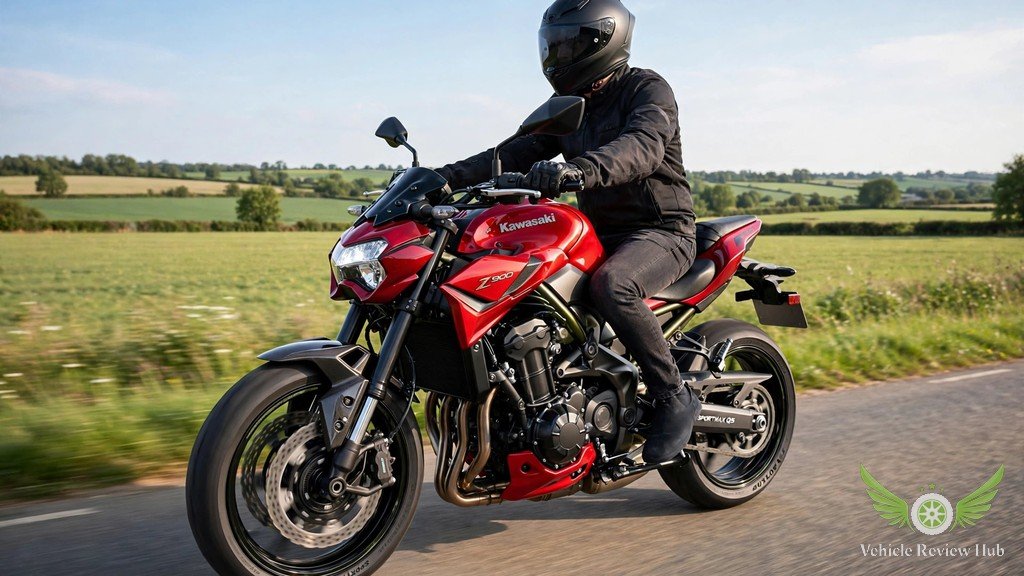
Rider’s 2017 Z900 versus FZ-09 comparison holds the best-documented mileage figure in the bike’s record: the test bike averaged 42.5 mpg from its 4.5-gallon tank, with a low of 39.0 mpg and a high of 49.1 mpg. At 42.5 mpg the 4.5-gallon tank gives about 191 miles between fill-ups. That is a 2017 bike — the first-era machine with no ride modes, no IMU and a cable throttle — but the engine and tank are the same as the current bike’s, so this Kawasaki Z900 performance guide treats the figure as the most useful real-world benchmark in the record. Rider’s 2020 road test prints an MPG box whose ordering is impossible as printed, so this Kawasaki Z900 performance guide treats the 2020 box as misprinted and leaves it out.
SE Tested at 41.6 mpg
Cycle News’ 2025 middleweight shootout measured the 2025 Z900 SE at 41.6 mpg, a figure from the shootout’s own spec table rather than a press claim. At 41.6 mpg the 4.5-gallon tank gives about 187 miles — four miles less than Rider’s 2017 average, on a bike that carries the IMU, ride-by-wire and a quickshifter the 2017 bike never had. Other observed figures sit in the same band: Bennetts recorded 39 mpg on an energetic loop in its 2025 SE group test, MCN saw 34–40 mpg riding the 2025 bike in a spirited manner, and Road Rider Australia measured 6.1 litres per 100 km, about 38.6 mpg. Kawasaki claims up to 16% better fuel economy for the 2025 engine, but no independent test has confirmed that claim, and this Kawasaki Z900 performance guide prints it as Kawasaki’s claim only. That is the discipline this Kawasaki Z900 performance guide applies to every fuel-economy claim in the record. The UK claimed figures — 58.9 mpg for 2025 and 49.6 mpg before that, both WMTC combined — are laboratory claims, not observed mileage.
| Test | Bike | MPG | Tank range (4.5 gal) |
|---|---|---|---|
| Rider, 2017 | 2017 Z900 | 42.5 mpg avg (39.0 low / 49.1 high) | ~191 miles |
| Cycle News, 2025 shootout | 2025 Z900 SE | 41.6 mpg measured | ~187 miles |
| Bennetts, 2025 | 2025 Z900 SE | 39 mpg (energetic loop) | ~176 miles |
| MCN, 2025 | 2025 Z900 | 34–40 mpg (spirited riding) | ~153–180 miles |
| Road Rider Australia, 2025 | 2025 Z900 | 6.1 L/100 km (about 38.6 mpg) | ~174 miles |
| UK claim (WMTC) | 2025 Z900 | 58.9 mpg claimed | Laboratory claim, not observed |
| UK claim (WMTC) | Pre-2025 Z900 | 49.6 mpg claimed | Laboratory claim, not observed |
Note: Tank ranges are calculated from the measured figure and the 4.5-gallon tank. Kawasaki publishes no US MPG figure, and this Kawasaki Z900 performance guide prints no rival MPG — none was verified.
Kawasaki Z900 Real-World Riding Experience
Dyno numbers and mileage figures only tell half the story. This Kawasaki Z900 performance guide looks at what testers actually said about riding the bike — and at the one comparison the Z900 won. Every verdict below comes from a named test, which is how this Kawasaki Z900 performance guide handles ride impressions.
The Riding Experience Buyers Actually Talk About
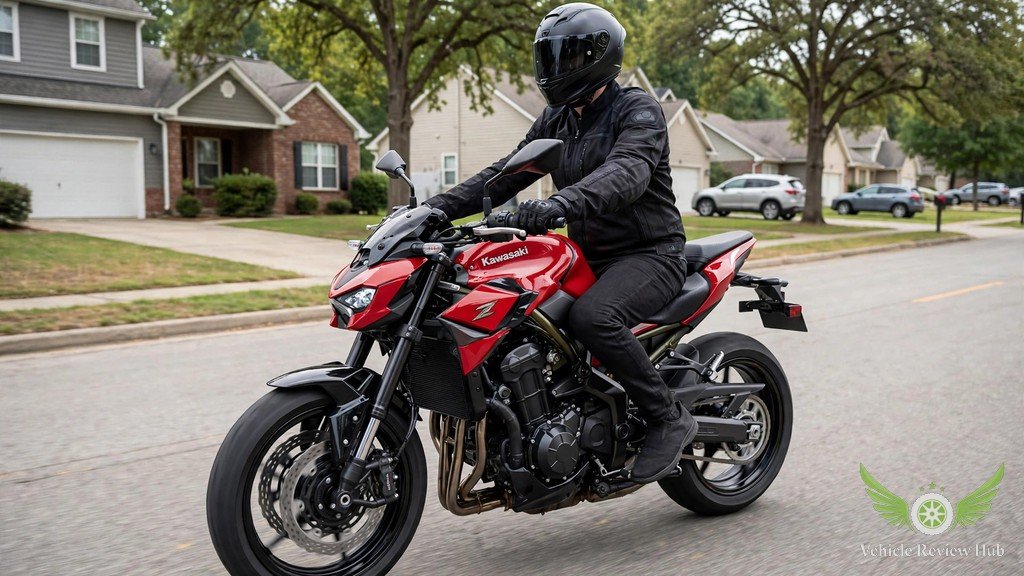
The consistent theme across every test is mid-range. The 948cc inline-four makes its 73.1 lb-ft of torque at 7,700 rpm, and the 2025 retune — a new cam profile, revised ECU settings and shorter gear ratios — was aimed squarely at making that mid-range stronger and the throttle delivery more linear, not at raising the peak. RevZilla’s 2025 SE first ride found upshifts best in the mid-range, and Cycle News’ 2025 shootout called the same quickshifter the slickest of the bunch on the street. The 2025 bike’s ride-by-wire throttle, cruise control and six-axis IMU changed how the bike feels more than the 2 hp drop in claimed peak power did: the current bike is easier to ride smoothly than any earlier Z900, with lean-sensitive traction control and ABS in the background. The seat is the tallest it has ever been at 31.9 inches, yet Cycle News still found it the lowest in its 2025 shootout group. The full ride review, including the three eras and the SE hardware, is in the companion Z900 review.
Won the 2020 Showdown
The Z900’s clearest competitive win came in the Bike-urious “$9,000/900cc Showdown” — the 2020 Z900 against the BMW F900R and the Yamaha MT-09. The verdict named the Z900 the winner — “the smoothest and most powerful of the three”. That win deserves its context: Motorcycle.com’s 2020 two-bike comparison of the F900R and the Z900 was effectively a draw, and the Z900 went on to be Motorcycle.com’s Standard Motorcycle Runner-Up of 2020 rather than its winner, while MCN’s February 2020 three-way gave all three bikes 4 stars with no clear winner stated. So the Z900 won the Bike-urious three-way and drew the Motorcycle.com two-way — a strong result, not a sweep, and this Kawasaki Z900 performance guide prints it exactly that way.
Kawasaki Z900 Handling, Braking and Stability
The Z900’s chassis changed less than its electronics did, but the 2025 update still moved it. This Kawasaki Z900 performance guide covers the shootout result that embarrassed the SE — and what the bike feels like on a real road.
SE Last in 2025 Shootout
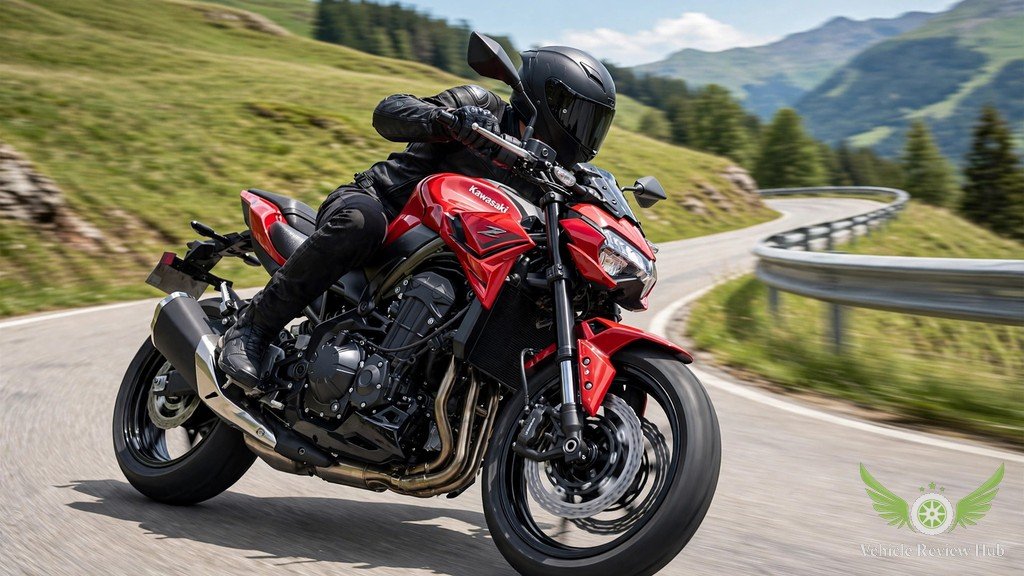
Cycle News’ middleweight naked-bike shootout of 25 June 2025 put the 2025 Z900 SE fourth of four — last, behind the Yamaha MT-09 SP in first, the KTM 990 Duke in second and the Triumph Street Triple 765 RS in third. The test was street riding only, with no track testing. This Kawasaki Z900 performance guide treats a street-only shootout as a street verdict, not a track one. The testers blamed cramped ergonomics for taller riders, soft base suspension settings and a chassis that felt dated next to the three rivals — while praising the engine, the slickest-in-test quickshifter and the Dunlop Q5A tyres. The SE as tested cost $11,849 and was the least expensive bike in the test, and at 471 lb wet it was the heaviest of the four, though its 31.9-inch seat was the lowest. The new 5-inch TFT dash also drew criticism for menus harder to navigate than the 2024 unit’s. The result stings, but it is a verdict on the SE’s ergonomics and suspension setup, not on the engine — and this Kawasaki Z900 performance guide reports the reasons the testers gave, not just the placing.
| Place | Bike | As tested | Notes |
|---|---|---|---|
| 1st | Yamaha MT-09 SP | — | Winner; beat the SE on chassis and ergonomics |
| 2nd | KTM 990 Duke | — | — |
| 3rd | Triumph Street Triple 765 RS | — | — |
| 4th | Kawasaki Z900 SE ABS | $11,849 | 471 lb wet (heaviest); 31.9-in seat (lowest); least expensive in the test |
Note: Street riding only — no track testing in this shootout. This Kawasaki Z900 performance guide prints the placing with the testers’ stated reasons, not as a verdict on the engine, which the testers praised.
Handling, Braking and Stability on Real Roads
On a real road the Z900 is a stable, predictable naked. The steel trellis frame carries the 948cc engine as a stressed member, the wheelbase is 57.1 inches, and the 2025 update pulled the forks through the yokes by 3 mm and added a frame plate. The 2025 brakes are dual 300 mm round semi-floating discs with radial-mount calipers, backed by lean-sensitive ABS fed by the six-axis IMU — a genuine step over the pre-2025 bike’s petal discs and standard ABS. The SE goes further with Brembo M4.32 calipers, steel-braided lines and an Öhlins S46 rear shock, though the shootout found the SE’s base suspension settings too soft. The 41 mm inverted fork adjusts preload and rebound on the base bike; the SE’s fully adjustable KYB fork adds compression adjustment and gold outer tubes. Tyres are Dunlop Sportmax Q5As from 2025 in 120/70 ZR17 front and 180/55 ZR17 rear. No instrumented braking test of any Z900 was found in the record, so this guide prints no stopping distance. That hardware list is what this Kawasaki Z900 performance guide can verify, and the testers’ verdicts supply the rest. The maintenance side of the brakes, tyres and suspension is covered in the companion Z900 reliability guide.
Kawasaki Z900 Performance Compared With Other Sport Bikes
The Z900’s performance only makes sense against its rivals. This Kawasaki Z900 performance guide lines it up against the Yamaha MT-09, the Suzuki GSX-S1000 and the Honda CB1000 Hornet SP on verified figures — and names which of those figures are global, not American. Every figure below is labelled with its market and source, which is how this Kawasaki Z900 performance guide handles rival numbers.
Kawasaki Z900 vs Yamaha MT-09
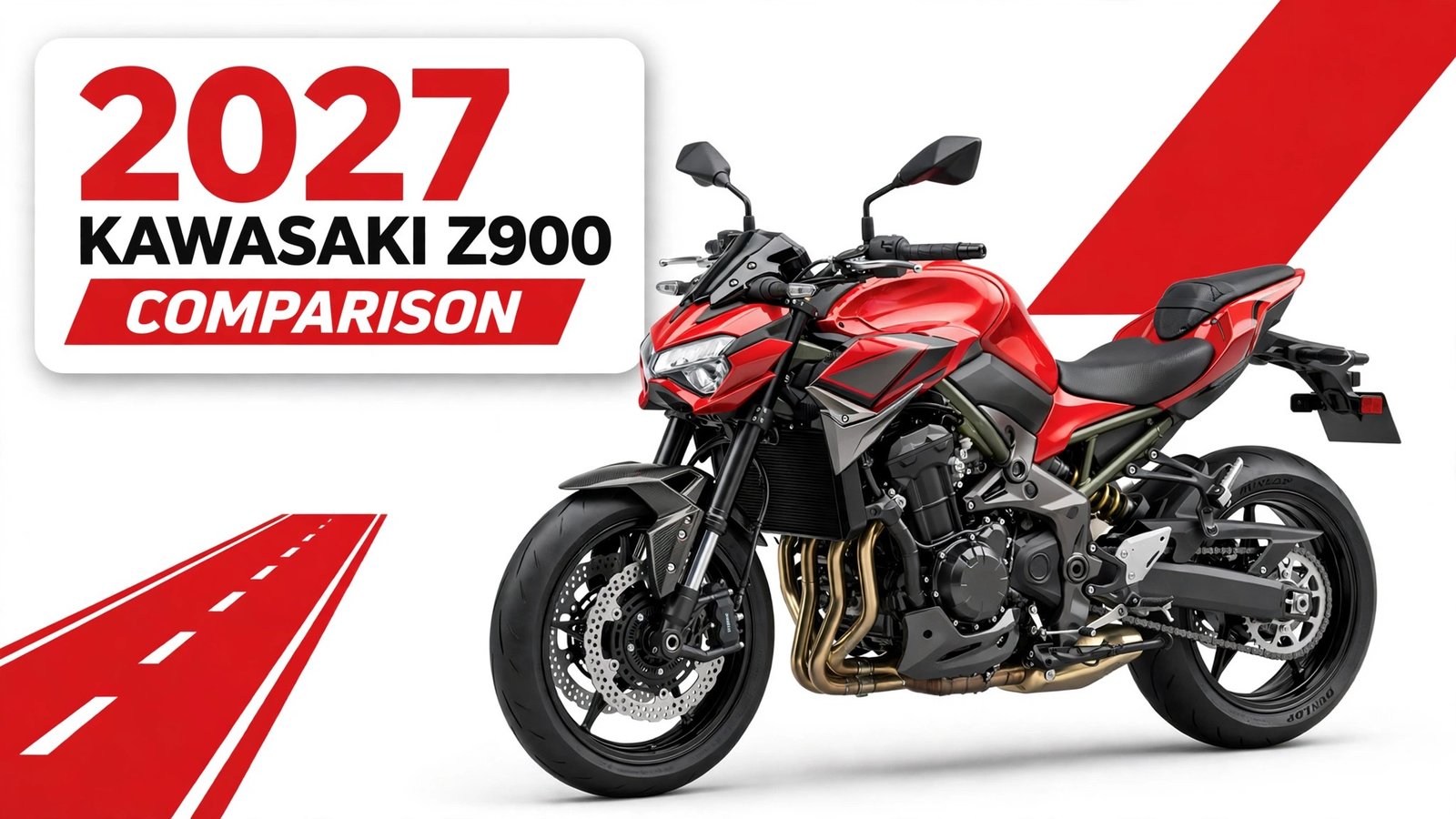
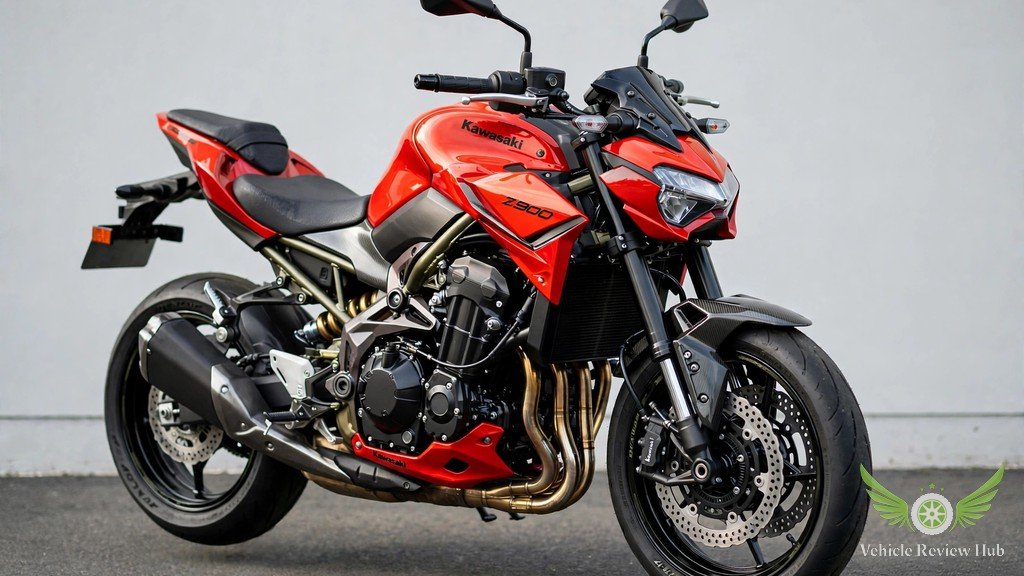
The MT-09 is the Z900’s closest rival, and the two bikes trade wins. The Z900’s 948cc inline-four claims 123.0 hp at 9,500 rpm and 73.1 lb-ft at 7,700 rpm; the MT-09’s 890cc CP3 triple claims 117 hp at 10,000 rpm and 68.6 lb-ft at 7,000 rpm — so the Kawasaki is the stronger motor on paper, by 6 hp and 4.5 lb-ft. The Yamaha answers with weight and electronics: at 425 lb wet it is 42.5 lb lighter than the Z900’s 467.5 lb curb weight, its wheelbase is a shorter 56.3 inches against the Z900’s 57.1, and its gen-4 electronics — six-axis IMU, lean-sensitive traction control and ABS, slide control, lift control and brake control — are the most advanced of the four rivals. The MT-09’s seat is taller at 32.5 inches against the Z900’s 31.9, and its 3.7-gallon tank is the smallest of the four against the Z900’s 4.5 gallons. On price the Z900 wins: $10,199 plus $840 is $11,039 delivered, $560 less than the MT-09’s $10,899 plus $700. The two bikes have already met twice: the Z900 beat the MT-09 in the 2020 Bike-urious showdown, and the MT-09 SP beat the Z900 SE in Cycle News’ 2025 shootout — one win each, five years apart. The full price-and-value comparison is in the companion Z900 comparison guide.
| Bike | Engine | Claimed power | Seat | Weight | Tank | Delivered (2027) |
|---|---|---|---|---|---|---|
| Kawasaki Z900 | 948cc inline-four | 123.0 hp @ 9,500 (US) | 31.9 in | 467.5 lb curb | 4.5 gal | $11,039 |
| Yamaha MT-09 | 890cc CP3 triple | 117 hp @ 10,000 | 32.5 in | 425 lb wet | 3.7 gal | $11,599 |
| Suzuki GSX-S1000 | 999cc inline-four | 150 hp @ 11,000 (global) | 31.9 in | 472 lb | 5.0 gal | $11,548 |
| Honda CB1000 Hornet SP | 999cc inline-four | 129 hp (US, TopSpeed) | 31.9 in | 465 lb curb | 4.5 gal | $11,774* |
Note: The GSX-S1000’s 150 hp is a global figure — Suzuki USA publishes no power for this bike — and the Hornet SP’s $11,774 is the latest published (2026) price, not a 2027 price. This Kawasaki Z900 performance guide labels both on every use. The MT-09 is a triple, not a four, and still costs $560 more delivered.
Is the Kawasaki Z900 Suitable for Beginner Riders?
No. A beginner bike is one a new rider can learn on without the machine getting ahead of them, and the Z900 is the opposite: 123 hp claimed on the 2025 bike (125 hp before that), about 114 hp at the rear wheel, a 467.5 lb curb weight, and a 948cc inline-four that makes its power high in the rev range. There is no beginner-friendly power restriction or low-power mode, and the 31.9-inch seat — low for the class — does not change the power-to-weight reality. The honest beginner alternatives in Kawasaki’s own line are the Z500 at 51 hp and the Z650 at 67 hp, both twins with far less power to manage. A rider coming from a smaller bike who wants the Z900’s four-cylinder character should test-ride it first and be honest about their experience — this Kawasaki Z900 performance guide points first-time buyers to the Z500, not here.
Kawasaki Z900 Performance: Frequently Asked Questions
The questions buyers ask most about how fast the Z900 is, how far it goes and how it compares — answered from the verified figures in this Kawasaki Z900 performance guide.
How much horsepower does the Z900 make on the dyno?
Three independent dyno runs: Cycle World measured 113.96 hp at 9,710 rpm on a Dynojet 250i, Rider measured 113.3 hp at 9,800 rpm on a Jett Tuning dyno, and Motorcycle.com measured 115.5 hp at 9,700 rpm on a MotoGP Werks dyno. A fourth figure, 115.6 hp at 9,800 rpm, comes from Motorcycle.com’s 2017 three-bike comparison on the same MotoGP Werks dyno. No 2025-bike dyno has been published, so this Kawasaki Z900 performance guide prints no rear-wheel figure for the current bike.
What is the Z900’s top speed?
Kawasaki publishes no top speed, and no measured US top speed exists in the record. Aggregator sites quote 149–153 mph, but those are estimates, not instrumented tests — this blog prints no top-speed figure as measured, and this Kawasaki Z900 performance guide leaves the question open rather than repeating an estimate as fact.
What MPG does the Z900 get?
Rider averaged 42.5 mpg on a 2017 Z900 (39.0 low / 49.1 high), and Cycle News measured 41.6 mpg on the 2025 Z900 SE. Kawasaki publishes no US MPG figure. On a 4.5-gallon tank that is roughly 187–191 miles per tank — and this Kawasaki Z900 performance guide uses only those two measured figures as its headline numbers.
Did the Z900 win the 2020 showdown?
Yes — the Bike-urious “$9,000/900cc Showdown” (BMW F900R vs Z900 vs Yamaha MT-09) named the Z900 the winner, “the smoothest and most powerful of the three”. Motorcycle.com’s F900R vs Z900 two-bike comparison was effectively a draw, and MCN’s three-way gave all three bikes 4 stars — so the Z900 won one showdown and drew another, which this Kawasaki Z900 performance guide reports with the caveats attached.
Why did the Z900 SE finish last in the 2025 shootout?
In Cycle News’ 25 June 2025 middleweight shootout the SE finished 4th of 4 (MT-09 SP 1st, KTM 990 Duke 2nd, Triumph Street Triple 765 RS 3rd). The testers blamed cramped ergos for taller riders, soft base suspension settings and a dated-feeling chassis — while praising its engine, its slickest-in-test quickshifter and its Dunlop Q5A tyres. The SE was the least expensive bike in the test and the heaviest at 471 lb wet, and this Kawasaki Z900 performance guide prints the placing with the reasons the testers gave.
Is the 2025 Z900 faster than the 2024?
There is no timed run of the 2025 bike, so nobody can say. The claimed peak power actually fell (125 hp to 123 hp); the 2025 cam and ECU changes target mid-range and fuel economy (Kawasaki claims up to 16% better), not peak power — and this Kawasaki Z900 performance guide prints no acceleration time for either year.