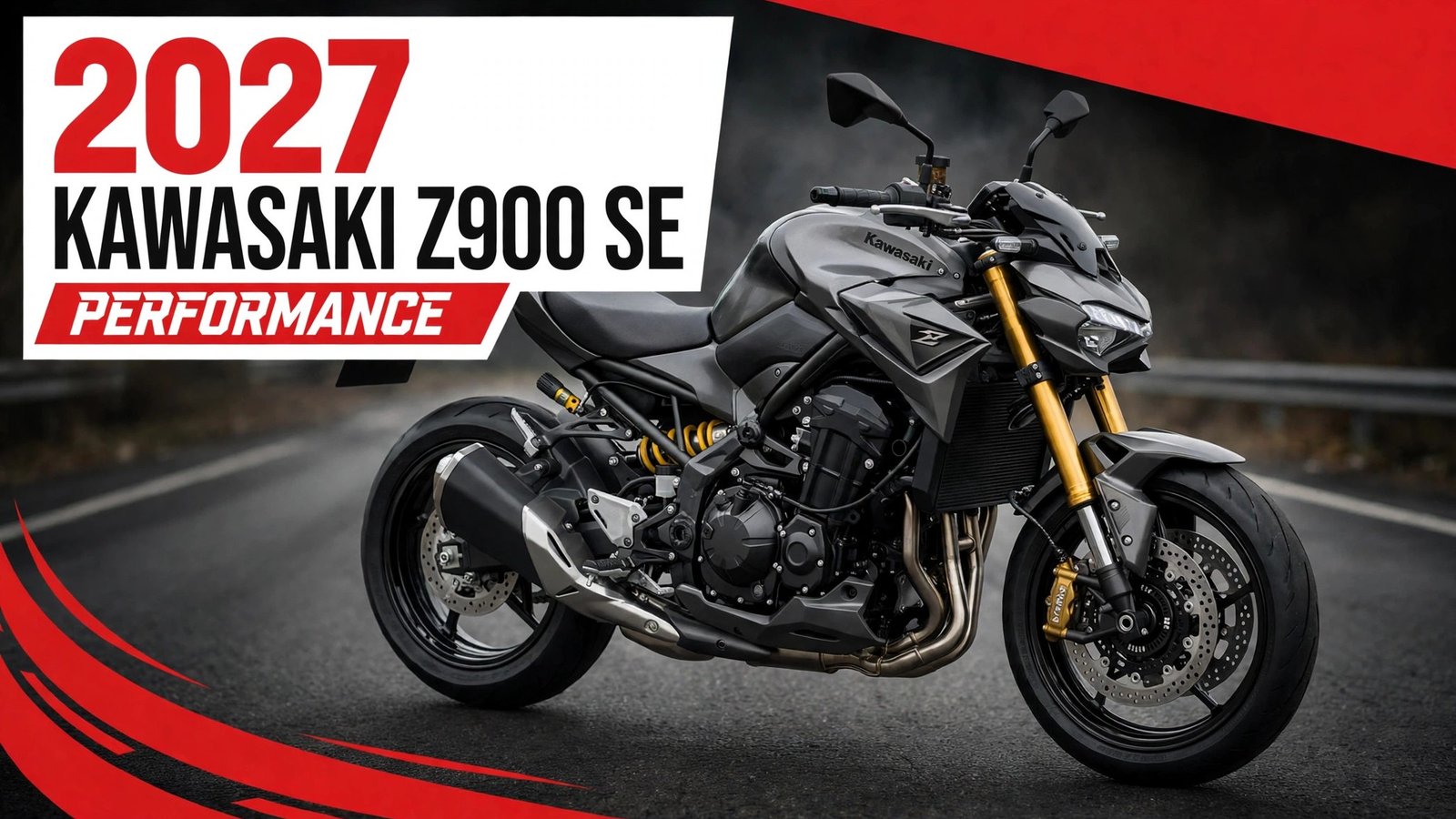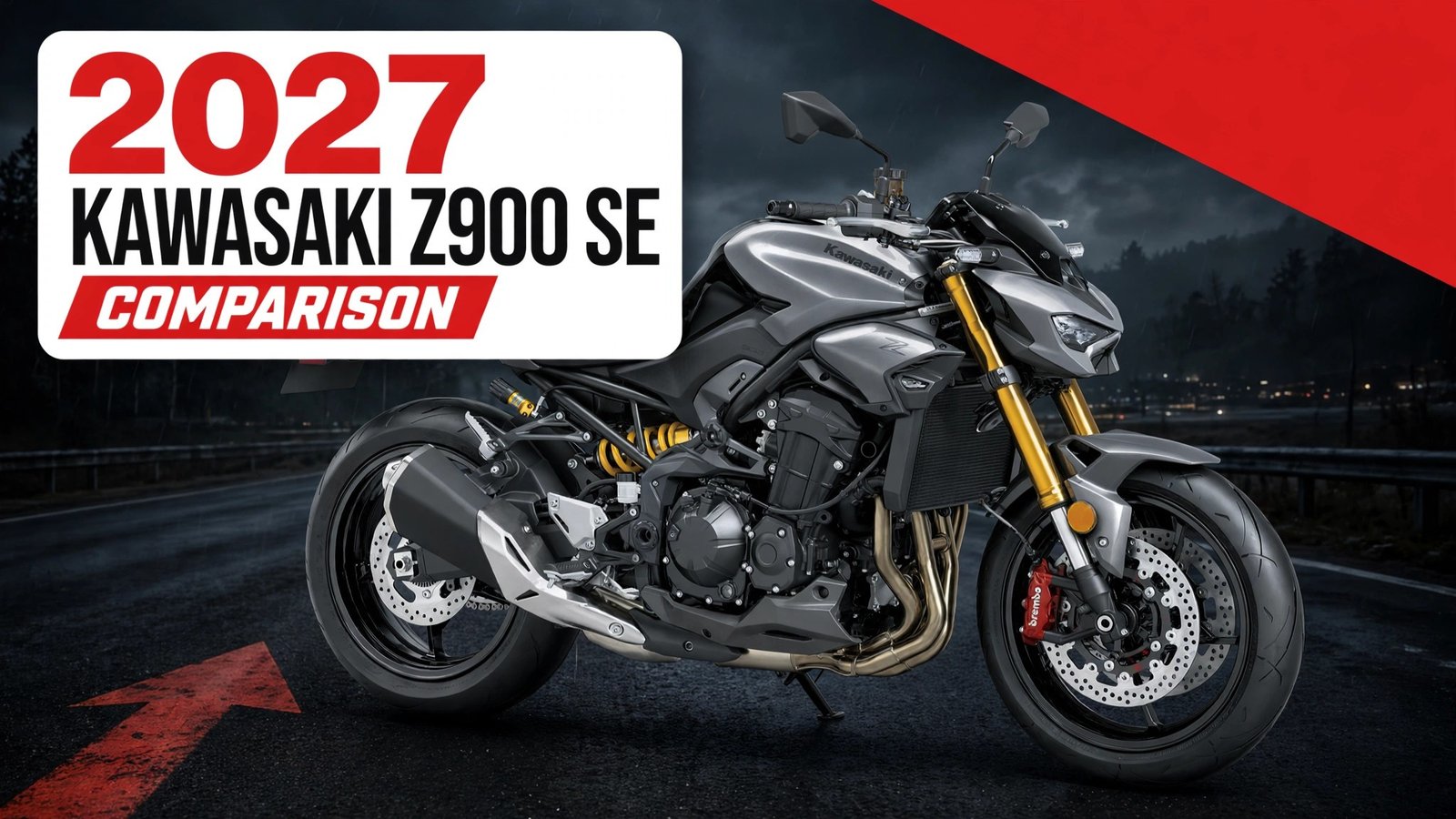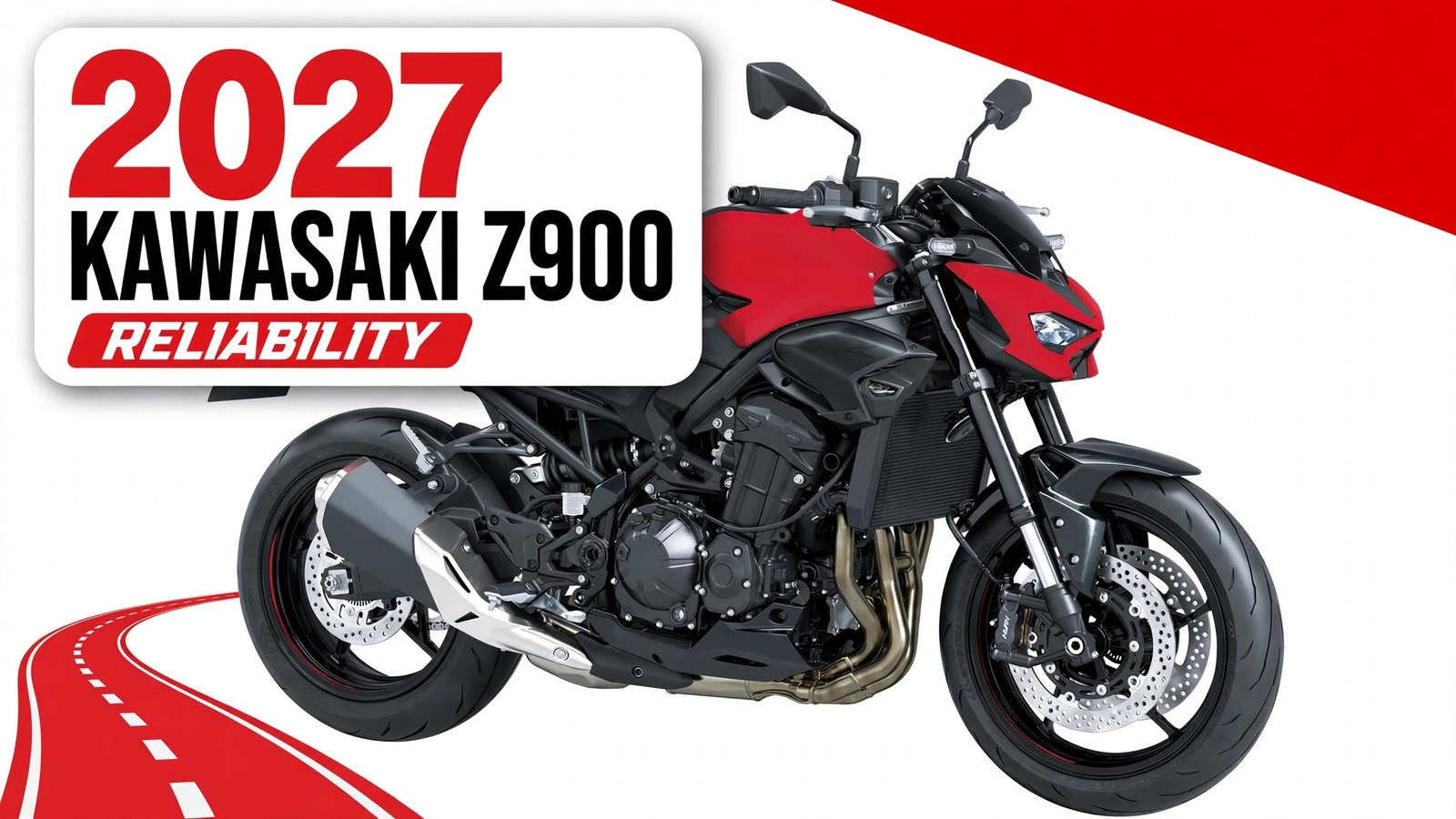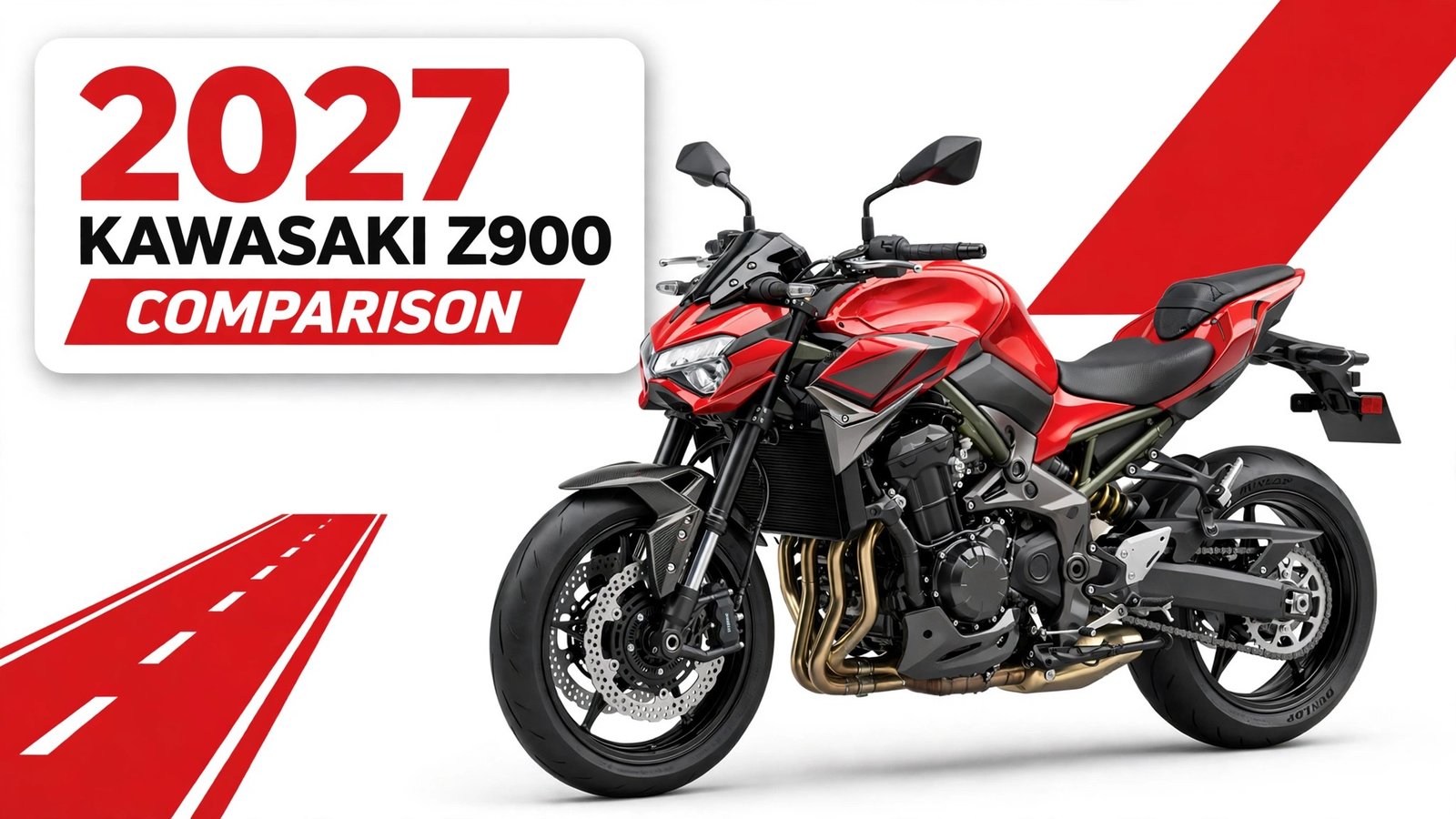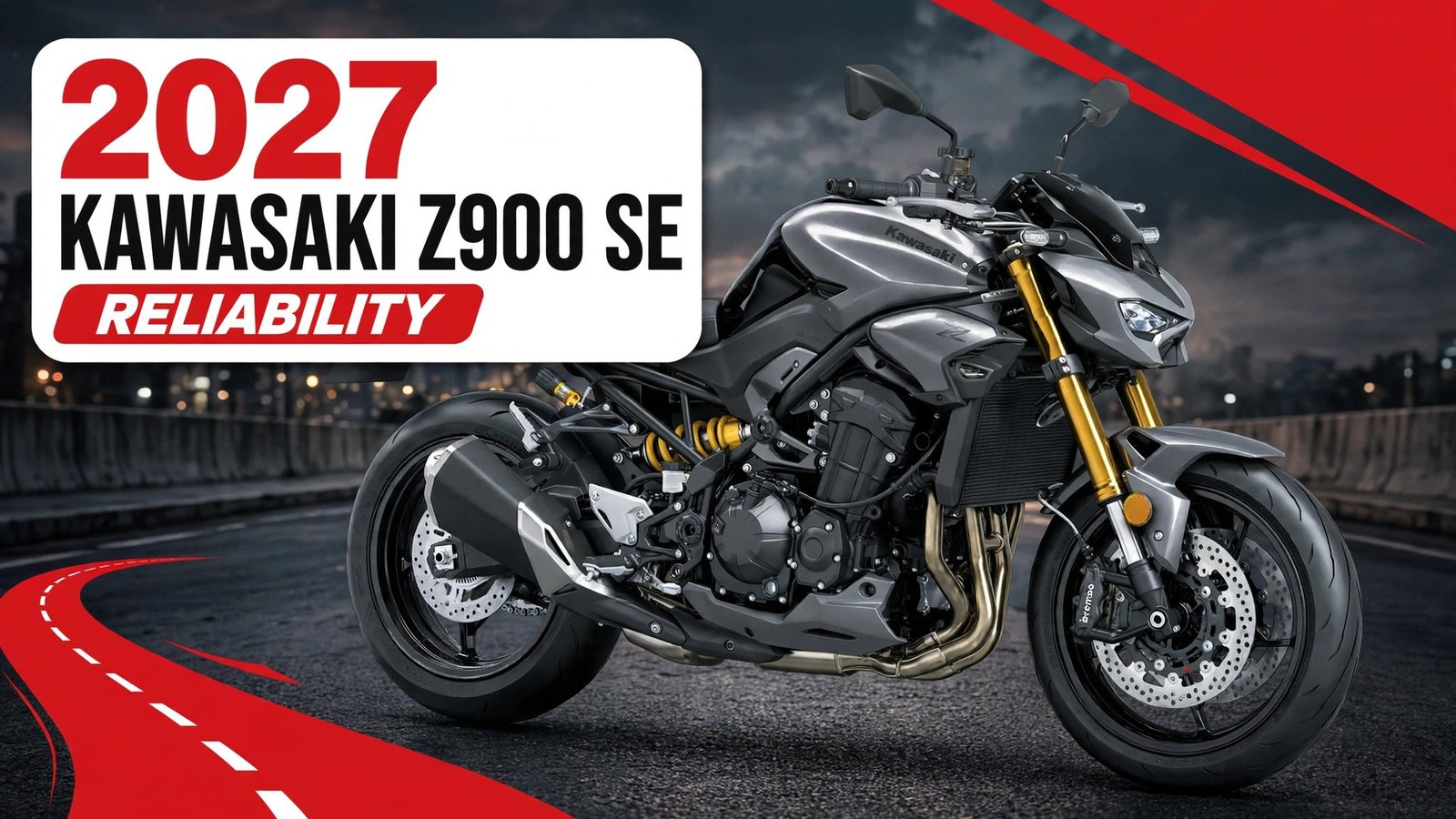
No recall names a 2022-on Kawasaki Z900 SE. That is the headline this Kawasaki Z900 SE reliability guide is built on, and it is verified: the NHTSA database returns zero recalls for the Z900 and ZR900 for every model year from 2022 through 2027. The SE is a hardware package on a proven platform — Brembo brakes, an Öhlins shock and a gold fork on the same 948cc four as the base bike — so its reliability story is mostly the base bike’s story, with two SE-specific watch items on top.
What follows is the service schedule as Kawasaki publishes it, the three recalls on the base bike’s record that pre-date the SE, the service items Kawasaki never published an interval for, and the checks that separate a real SE from a painted base bike. This Kawasaki Z900 SE reliability guide prints only verified figures; where a figure could not be verified — a parts price, a clearance value, an interval — it says so instead of printing it.
Kawasaki Z900 SE Reliability Overview
The SE’s reliability case starts with what it shares. The engine, frame, gearbox and electronics are the base Z900’s, so the platform’s service schedule applies unchanged, and the first section of this Kawasaki Z900 SE reliability guide treats the SE as a Z900 with better brakes and suspension, not as a different motorcycle.
No Campaign Names the SE
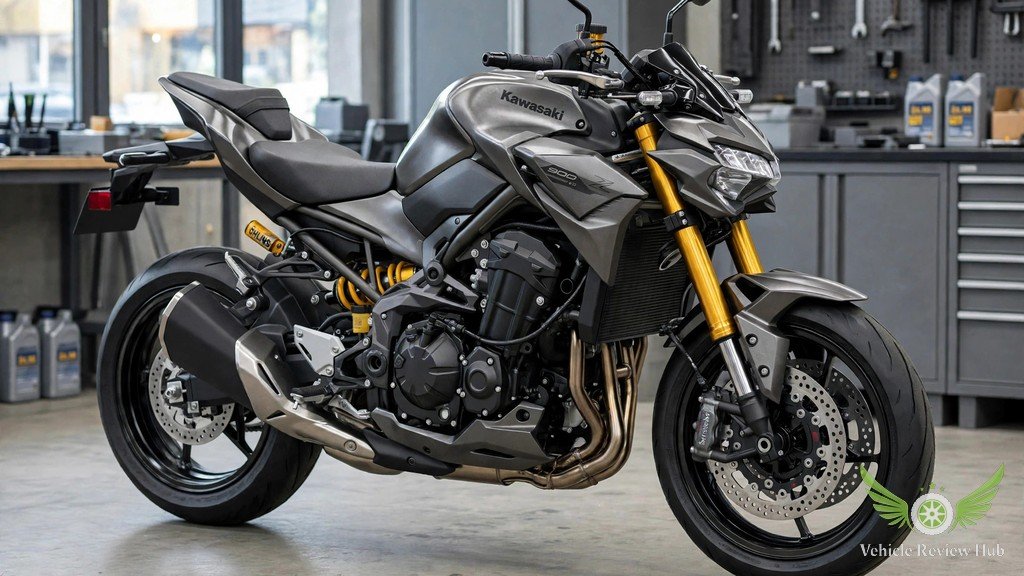
The NHTSA API returns zero recalls for the Z900 and ZR900 for every year from 2022 through 2027 — twelve queries, both model strings, all Count 0. The API answers with an HTTP 400 status carrying a Count:0 body, which is its zero-result response rather than an error, and retries returned the same result. No campaign names a 2022-on bike, and no SE owner action is required for any recall.
Zero recalls does not mean zero complaints, and this Kawasaki Z900 SE reliability guide does not claim it does. The verified claim is narrower: no recall campaign names a 2022-on bike. The three campaigns on the Z900’s record all belong to 2017–2019 base bikes, and the next section names them so a used buyer is not confused by a record that is not the SE’s.
How Mileage, Storage and Previous Care Affect Reliability
Nothing SE-specific is documented as a failure pattern, so mileage, storage and previous care do most of the work in deciding how reliable any used SE is. A low-mileage SE with a full service history is a different purchase from a high-mileage one with no records. This Kawasaki Z900 SE reliability guide treats the service record as the single most useful reliability document a buyer can ask for.
Storage matters because the SE’s premium parts punish neglect more than the base bike’s do. A bike stored dry, on a tender, with a chain that was lubed before it was parked will come back to life cheaply; a bike left outside through winters shows it first in the Brembo calipers and the Öhlins shock — the two parts that make the SE an SE. Previous care shows in the same places: weeping around the shock body, sticking caliper pistons and a preload adjuster that will not turn.
Kawasaki Z900 SE Common Problems and Wear Items
The SE has no documented failure pattern of its own. Its common problems are the platform’s — tyres, chain, brake pads and battery — plus two SE-specific watch items. This Kawasaki Z900 SE reliability guide lists the platform wear first, then the parts only the SE carries.
All Three Recalls Pre-Date It
Three campaigns sit on the Z900’s record, and all three pre-date the SE, which launched as a 2022 model. Campaign 17V703 (2017–2018) covers the rear shock mount holes; 18V866 (2018, 1,173 units) covers a hose-and-wire routing defect; 19V083 (2019, 497 units) covers service-brake and ABS contamination. None of them touches a 2022-on bike, and this Kawasaki Z900 SE reliability guide lists them so a buyer checking a used SE is not confused by a base-bike record.
The fourth campaign buyers sometimes attach to the SE is 24V270 — and it is not this bike’s recall. It covers the Z900RS only (525 units), and the link to its NHTSA page belongs only in a sentence that says so. An SE owner needs no action for any of these four campaigns; a buyer looking at a 2017–2019 base Z900 checks by VIN instead.
| Campaign | Years | Defect | SE relevance |
|---|---|---|---|
| 17V703 | 2017–2018 | Rear shock mount holes | Pre-dates the SE — not an SE recall |
| 18V866 | 2018 | Hose and wire routing | Pre-dates the SE — not an SE recall |
| 19V083 | 2019 | Service brakes / ABS contamination | Pre-dates the SE — not an SE recall |
Note: The 17V703 unit count was not verified from any source checked, so no count is printed for it. 24V270 covers the Z900RS only, and this Kawasaki Z900 SE reliability guide never prints it as this bike’s recall.
No Öhlins Interval Published
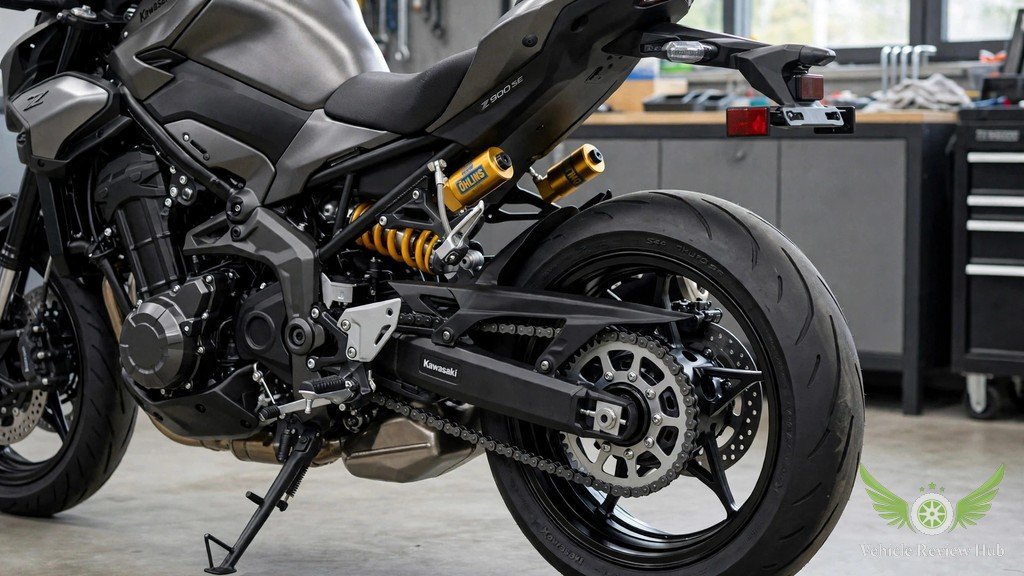
Kawasaki publishes no service interval for the Öhlins S46 shock — no rebuild interval, no oil-change interval — not in the owner’s manual, not in the service schedule, not on the spec sheets. The shock is a sealed gas-charged unit with rebound damping and a remote preload adjuster, and this Kawasaki Z900 SE reliability guide prints no interval for it because none exists to print.
If the shock leaks, weeps or loses damping, it is a dealer or Öhlins-service-centre job, not a scheduled owner service. The one owner-serviceable part is the remote preload adjuster: keep it clean and moving freely, and check it at every service. A shock that weeps oil around the body or a preload knob that has seized is a negotiating point on a used SE, not a routine service item.
Kawasaki Z900 SE Maintenance Schedule and Servicing
Kawasaki publishes one service schedule for the Z900 platform, and the SE follows it unchanged — the base Z900’s reliability guide covers the same schedule in full. There is no SE-specific schedule, no SE-specific interval and no SE-specific service item, and this Kawasaki Z900 SE reliability guide prints the platform schedule exactly as the manual states it.
Valves at 15,200 Miles
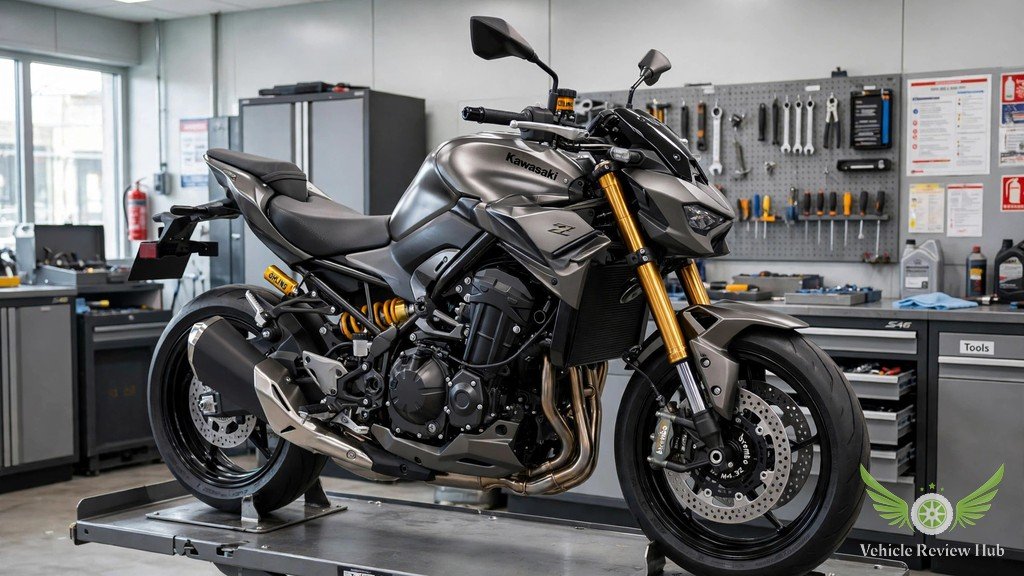
Valve clearance inspection falls due every 15,200 miles (24,000 km), per the US manual. The kilometre figure converts to 14,913 miles, but Kawasaki’s US miles column rounds the interval to 15,200 — and this Kawasaki Z900 SE reliability guide prints the manual’s figure, 15,200 miles, not the conversion. The clearance values themselves were not verified, so no millimetre figure appears anywhere in this guide.
The valve check is a workshop job, not an owner service: the tank and covers come off, clearances are measured across all sixteen valves, and shims are swapped where a valve has closed up. A used SE approaching 15,200 miles without a valve-check record is a bike with a service bill coming, and a buyer should price it that way.
Schedule Is Model-Level
The schedule is model-level, which is why the SE has no separate service book. Engine oil and filter change every 7,600 miles or yearly after the first 600-mile service; spark plugs are the NGK CR9EIA-9, four of them, at 12,000 km intervals; the oil filter is part 16097-0008 and the oil is SAE 10W-40. This Kawasaki Z900 SE reliability guide lists the schedule in the table below so the intervals are in one place.
One trap catches buyers: the early service chart has a 3,800-mile column, and some sellers read it as an oil-change interval. It is not — the first oil change after the 600-mile service falls at 7,600 miles. A buyer told the SE needs oil every 3,800 miles is being sold a service the manual does not require, and this Kawasaki Z900 SE reliability guide says so plainly.
| Item | Interval (US manual) |
|---|---|
| Engine oil + oil filter | Every 7,600 mi / 12,000 km or yearly (first service 600 mi) |
| Spark plugs (NGK CR9EIA-9 ×4) | At 12,000 km intervals |
| Valve clearance inspect | Every 15,200 mi (24,000 km) |
| Air filter | Per the service schedule |
| Drive chain | Lube every 400 mi |
Note: Brake-fluid interval, chain-slack value, tyre pressures and oil capacity were not verified from the SE’s own manual, so this Kawasaki Z900 SE reliability guide prints none of them here.
Kawasaki Z900 SE Tires, Brakes and Suspension Maintenance
Tyres, brakes and suspension are where the SE’s premium hardware meets its maintenance bill. The Dunlop Q5As, the Brembo calipers and the Öhlins shock are all wear items with SE-specific checks, and this Kawasaki Z900 SE reliability guide covers the checks that matter before the parts prices.
Shock Plus MC: $1,997 in Parts
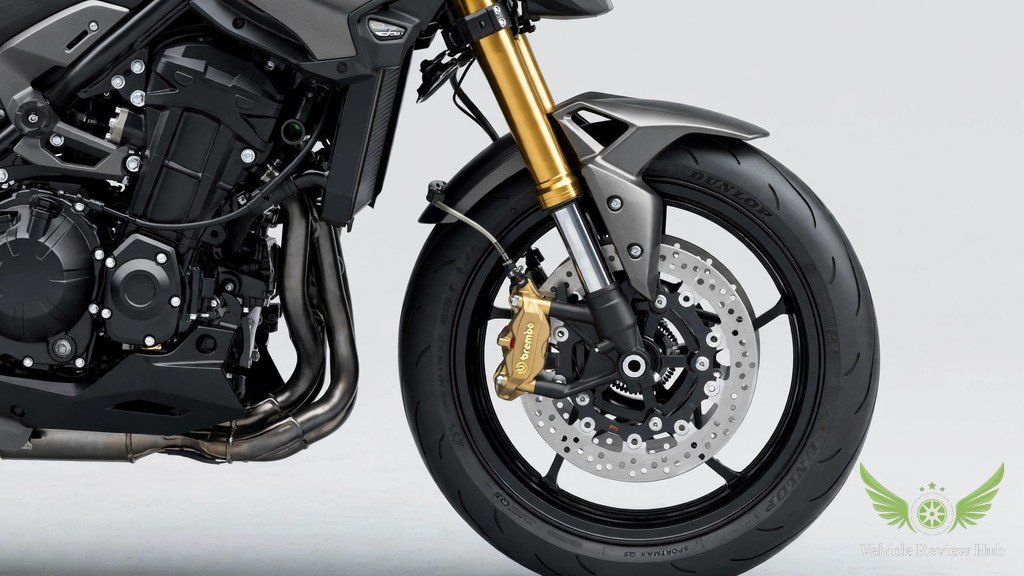
The heading puts the shock plus master cylinder at $1,997 in parts, and this Kawasaki Z900 SE reliability guide prints that figure only as the document’s figure — it was not verified from any primary source. The arithmetic behind it is an unverified $1,224 for the Öhlins shock plus $773 implied for the Nissin radial master cylinder, and neither component price was verified. What is verified are the shock part numbers: 45014-0733 for the 2022 SE and 45014-0843 for the 2025 SE.
The point survives without the price. The SE premium — $1,500 on Gen 1, $1,850 for 2025, $2,000 for 2026–2027 — buys a shock, brakes, fork, seat and colours package fitted by the factory under a 12-month warranty, and buying those parts separately would cost more than the premium. This Kawasaki Z900 SE reliability guide makes the parts-value argument from the verified premium ladder, not from the unverified $1,997.
Tire, Brake and Suspension Checks That Matter
The Gen 2 SE runs Dunlop Sportmax Q5A tyres, 120/70-17 front and 180/55-17 rear — the only Dunlops in Cycle News’s 2025 shootout, and the only tyres every tester praised. Check them for wear, age and squared-off centres, and remember the Gen 1 bike wore Roadsport 2 rubber in the same sizes. This Kawasaki Z900 SE reliability guide counts the tyres as the SE’s most praised wear item and its most frequent replacement.
Brakes and suspension get the SE-specific checks. The Brembo M4.32 calipers want their pistons checked for sticking and their seals for weeping at every service; the steel lines want a look for damage; the Öhlins shock wants a check for weeping and a preload adjuster that turns freely. RevZilla’s 2025 first ride confirms the Gen 2 fork adjusts for compression, rebound and preload — set it up rather than leaving the soft base settings, which the shootout called “exceptionally soft”.
| Check | What to look for | When |
|---|---|---|
| Tyres (Q5A 120/70-17, 180/55-17) | Wear, age, squared-off centres | Every ride + at service |
| Brembo calipers | Sticking pistons, weeping seals | Every service |
| Öhlins S46 shock | Weeping, lost damping, preload adjuster movement | Every service |
| Fork | Seal leaks, base settings | Every service |
| Chain | Lube, wear | Lube every 400 mi |
Note: No brake-fluid interval or chain-slack value is printed — neither was verified from the SE’s own manual.
Kawasaki Z900 SE Maintenance and Ownership Costs
Ownership costs for the SE are the base bike’s costs plus the premium hardware’s upkeep. Fuel, routine servicing and wear parts are platform costs; the Brembo and Öhlins parts are the SE-only exposure. The purchase price runs from $10,699 for a 2022 SE to $12,199 for a 2027 bike on Kawasaki’s 2027 SE spec sheet, and this Kawasaki Z900 SE reliability guide prices the purchase first, then the running costs.
Fuel, Routine Servicing, Tires and Replacement Parts
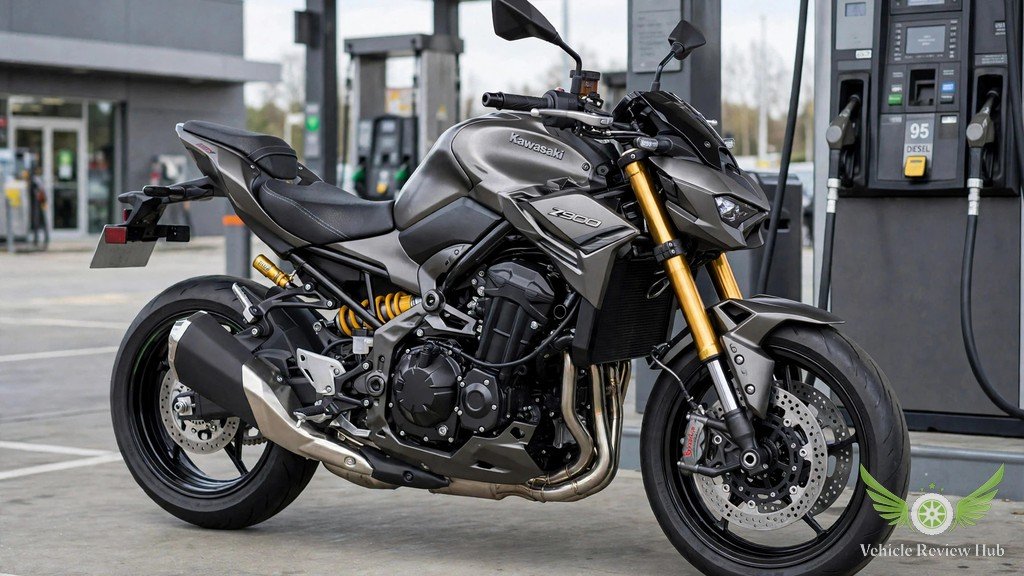
Fuel is the cheapest line in the SE’s running costs. Cycle News measured 41.6 mpg for the 2025 SE in its 2025 shootout — about 187 miles from the 4.5-gallon tank — and Kawasaki publishes no MPG figure of its own. The performance guide covers the same figure in its fuel-economy section, and this Kawasaki Z900 SE reliability guide uses the measured figure only, because it is the only SE fuel-economy figure that exists.
Routine servicing is the platform schedule: oil and filter every 7,600 miles, plugs at 12,000 km intervals, valves at 15,200 miles. Tyres, chain and brake pads are the recurring replacements, and the SE’s Dunlops, chain and pads wear at the platform’s rate — the premium hardware does not wear faster, but the Brembo pads and the Öhlins shock cost more to replace when their turn comes.
| Model year | SE MSRP | Destination | SE delivered |
|---|---|---|---|
| 2022 | $10,699 | Not found | Not computable |
| 2023 | $10,899* | $460* | $11,359* |
| 2024 | $11,399 | $475 | $11,874 |
| 2025 | $11,849 | $815† | $12,664 |
| 2026 | $11,999 | $840‡ | $12,839‡ |
| 2027 | $12,199 | $840 | $13,039 |
Note: *2023 figures are Motorcycle.com database only — no Kawasaki sheet exists for 2023. †2025 destination is the Motorcycle.com figure only. ‡2026 destination is inferred from the base bike. The 2022 SE destination was not found, so no 2022 delivered price is printed.
Calipers Listed Unavailable
The heading says the calipers are listed unavailable, and this Kawasaki Z900 SE reliability guide does not repeat that claim — no evidence was found that the Brembo M4.32 calipers are listed as unavailable anywhere. Kawasaki’s parts diagrams list part numbers but surfaced no availability status, and no retailer listing states “unavailable” for the SE calipers. The heading stays as written; the body does not claim what the research could not verify.
What is verified is what the calipers are: Brembo M4.32 radial-mount monobloc four-piston units on dual 300 mm discs, SE-exclusive in the Z900 line, with steel-braided lines and a Nissin radial master cylinder. A buyer needing one orders by the Kawasaki part number through a dealer, and a used buyer checks the pistons and seals at every service — this Kawasaki Z900 SE reliability guide treats availability as a dealer question, not a reason to walk away from the bike.
How to Keep a Kawasaki Z900 SE Reliable
Keeping an SE reliable is mostly keeping a Z900 reliable, with two extra checks. Follow the platform schedule, keep records, and inspect the premium hardware at every service. This Kawasaki Z900 SE reliability guide closes with the routine and the clone check.
Preventive Maintenance, Records and Regular Inspections
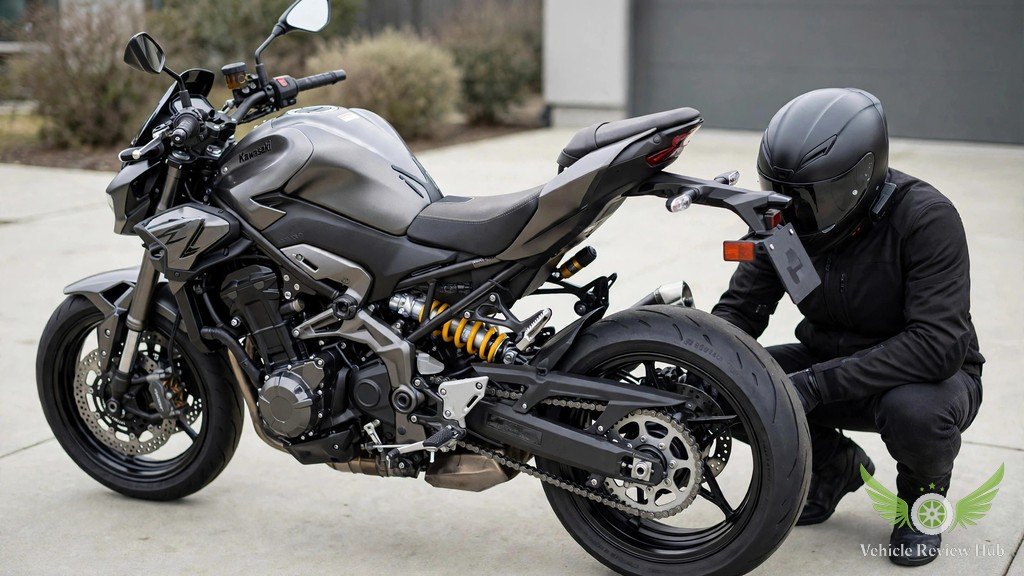
Preventive maintenance on the SE is the schedule, done on time: oil and filter every 7,600 miles, plugs at 12,000 km intervals, valves at 15,200 miles, chain lubed every 400 miles. Records matter as much as the work — a stamped book or a folder of invoices is what the next buyer pays for. This Kawasaki Z900 SE reliability guide treats a full service history as the best reliability evidence any used SE can carry.
Regular inspections catch the SE-specific problems while they are cheap. Look at the shock body for weeping, turn the preload adjuster, feel the caliper pistons for sticking, check the fork seals and the chain. The 12-month limited warranty covers the bike for its first year, but after that the owner’s inspections are the warranty — and the SE rewards the owner who does them.
Clone Check: Hardware, Not Paint
A base Z900 can be painted in SE colours and fitted with a gold fork, and it is still a base bike. The checks that settle it are hardware: Brembo M4.32 radial-mount calipers with steel lines and the Nissin radial master cylinder, an Öhlins S46 rear shock with its remote preload adjuster, and gold fork tubes. This Kawasaki Z900 SE reliability guide checks the hardware, not the paint — colours alone prove nothing.
When the hardware is ambiguous, the model code settles it: the 2022 SE is ZR900MNFNL and the 2025 SE is ZR900TSFNL. Colours corroborate — a “2022 SE” in 2025 grey is wrong, and a “2025 SE” in green and black is wrong — but no single check is sufficient alone. Hardware plus model code together is what makes a real SE, and this Kawasaki Z900 SE reliability guide would not buy one on paint alone. The full review carries the colour schemes by year and the price ladder behind the premium.
Kawasaki Z900 SE Reliability: Frequently Asked Questions
The questions buyers ask most about this Kawasaki Z900 SE reliability guide — answered from the verified figures.
Are there any recalls on the Kawasaki Z900 SE?
No recall names a 2022-on bike. The NHTSA API returns zero recalls for the Z900 and ZR900 for every year from 2022 through 2027. The three recalls on the Z900’s record — 17V703 (2017–2018), 18V866 (2018) and 19V083 (2019) — all pre-date the SE, which launched as a 2022 model, and this Kawasaki Z900 SE reliability guide lists them in the recalls section above.
How often does the Z900 SE need an oil change?
Engine oil and filter every 7,600 miles (12,000 km) or yearly, after the first 600-mile service. That is the Z900 platform’s schedule, shared with the base bike. A 3,800-mile oil interval is not in the manual — the 3,800-mile column in the early service chart is not an oil-change column, and this Kawasaki Z900 SE reliability guide prints the 7,600-mile interval.
When do the valves need checking?
Valve clearance inspection every 15,200 miles (24,000 km), per the US manual. The clearance values themselves were not verified, so this Kawasaki Z900 SE reliability guide never quotes a millimetre figure.
Does the Öhlins shock need servicing?
Kawasaki publishes no service interval for the Öhlins S46 shock — no rebuild interval, no oil-change interval. It is a sealed gas-charged unit; if it leaks, weeps or loses damping, it is a dealer or Öhlins-service-centre job, not a scheduled owner service. Keep the remote preload adjuster clean and moving freely, as this Kawasaki Z900 SE reliability guide recommends.
What goes wrong on the Z900 SE?
Nothing SE-specific is documented: no recall names the SE, and the common wear items are the platform’s — tyres (Dunlops, 120/70-17 front and 180/55-17 rear on Gen 2), chain, brake pads and battery. The SE-specific watch items are the Brembo calipers and the Öhlins shock: check for weeping, sticking pistons and a free-moving preload adjuster at every service.
How do I tell a real Z900 SE from a base Z900 painted like one?
Check the hardware, not the paint: Brembo M4.32 radial-mount calipers with steel lines and a Nissin radial master cylinder, an Öhlins S46 rear shock with a remote preload adjuster, and gold fork tubes. Then check the model code — the 2022 SE is ZR900MNFNL and the 2025 SE is ZR900TSFNL. Colours alone prove nothing, and this Kawasaki Z900 SE reliability guide would not buy an SE on paint alone.