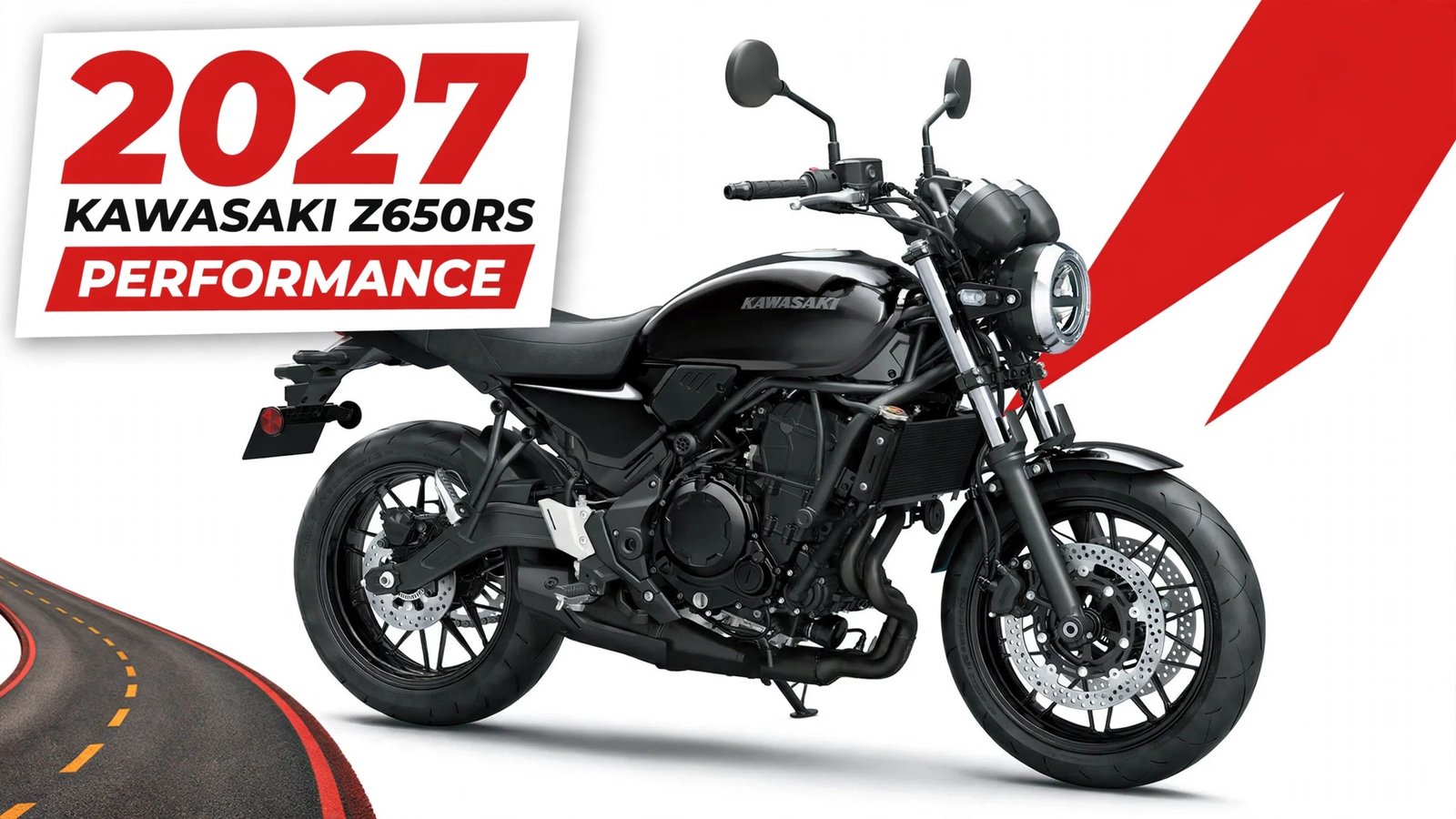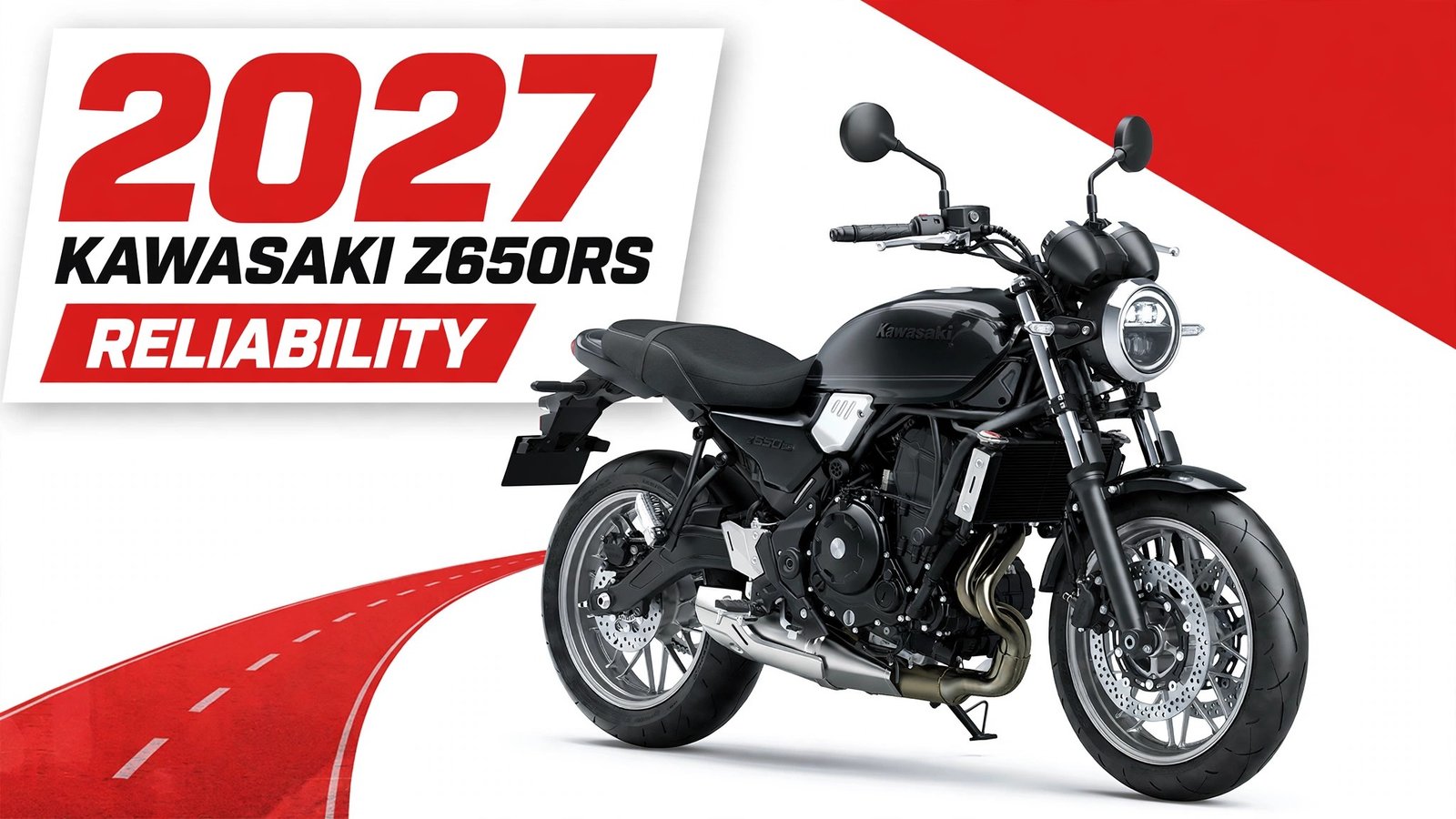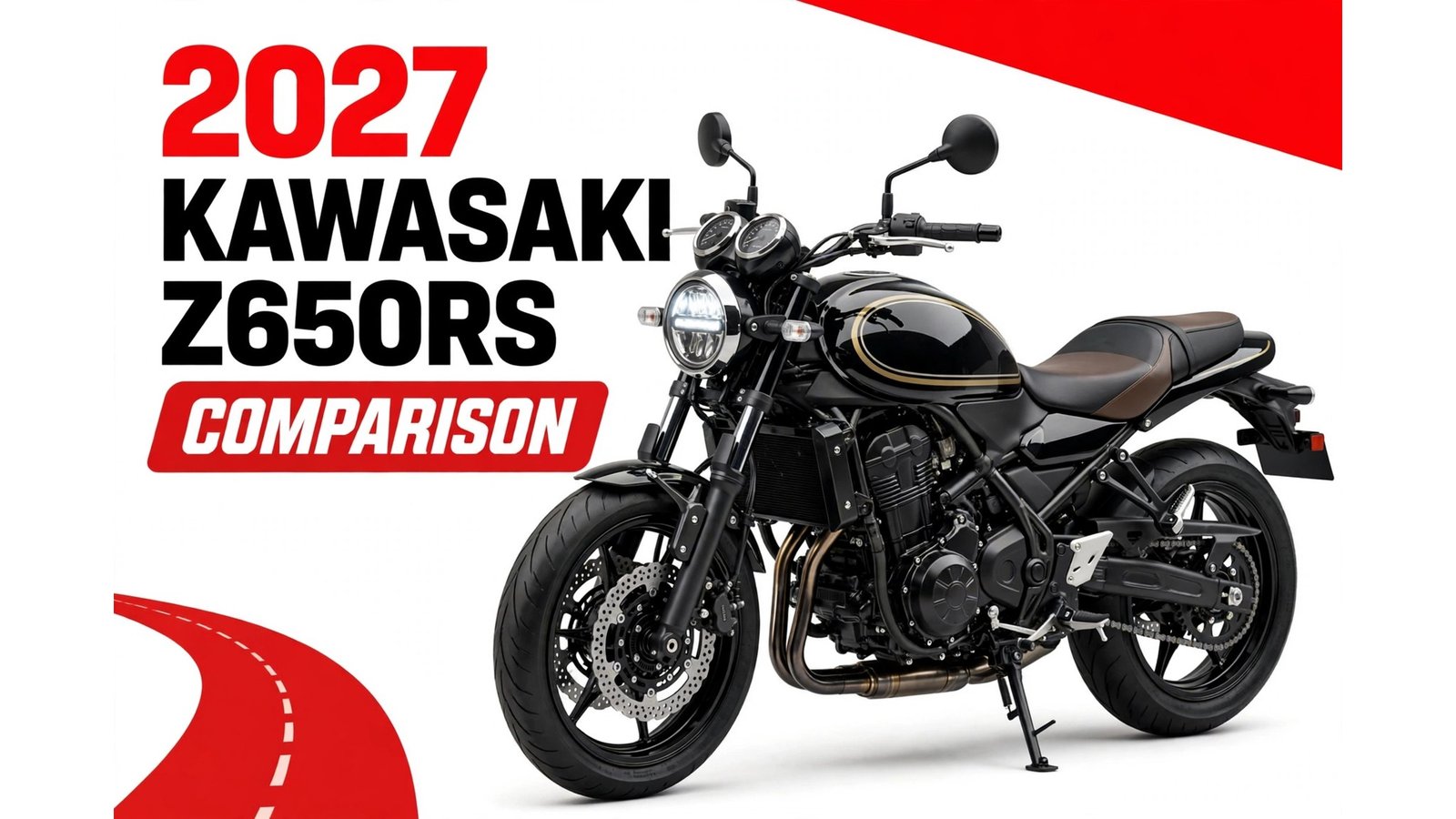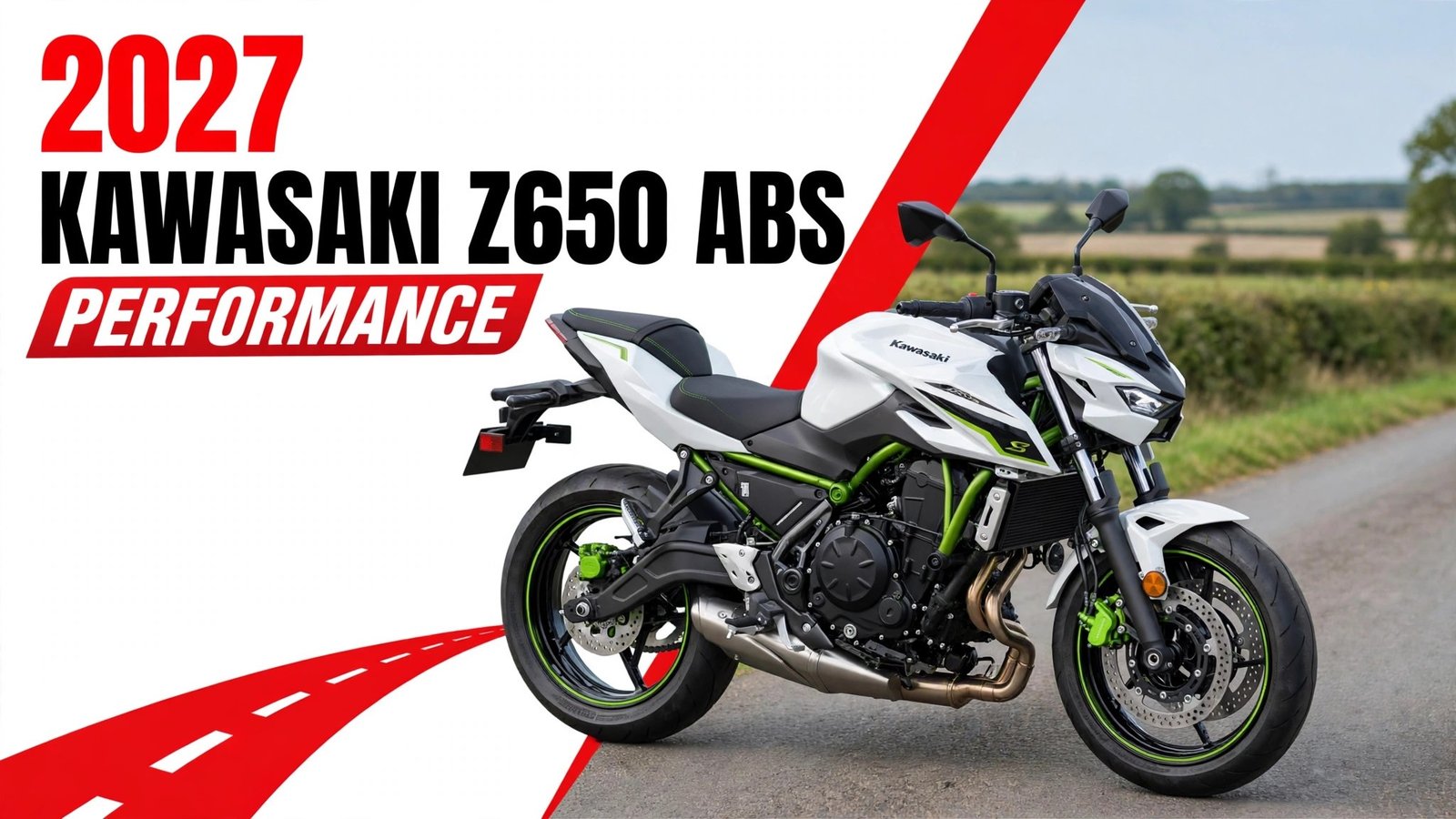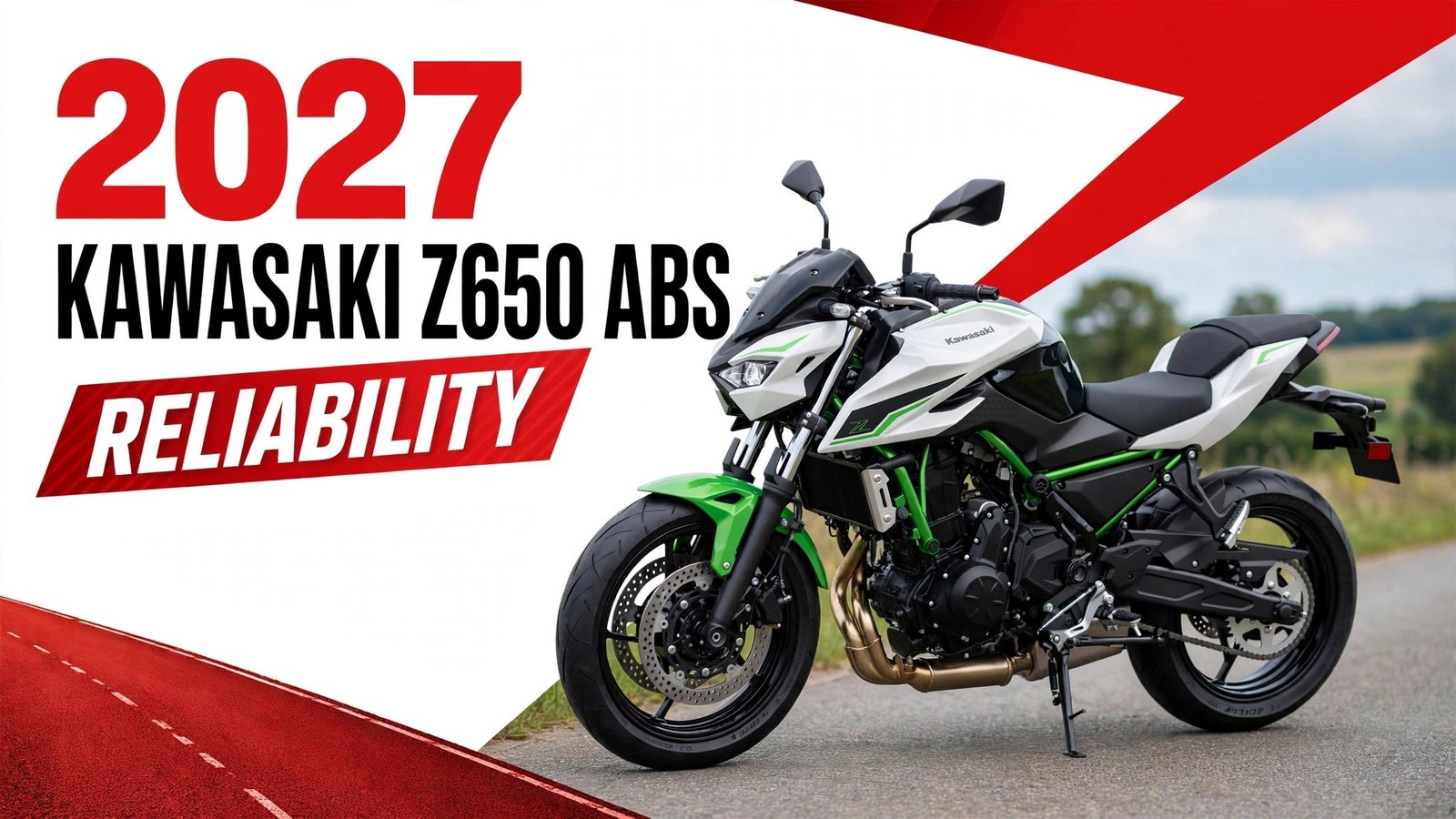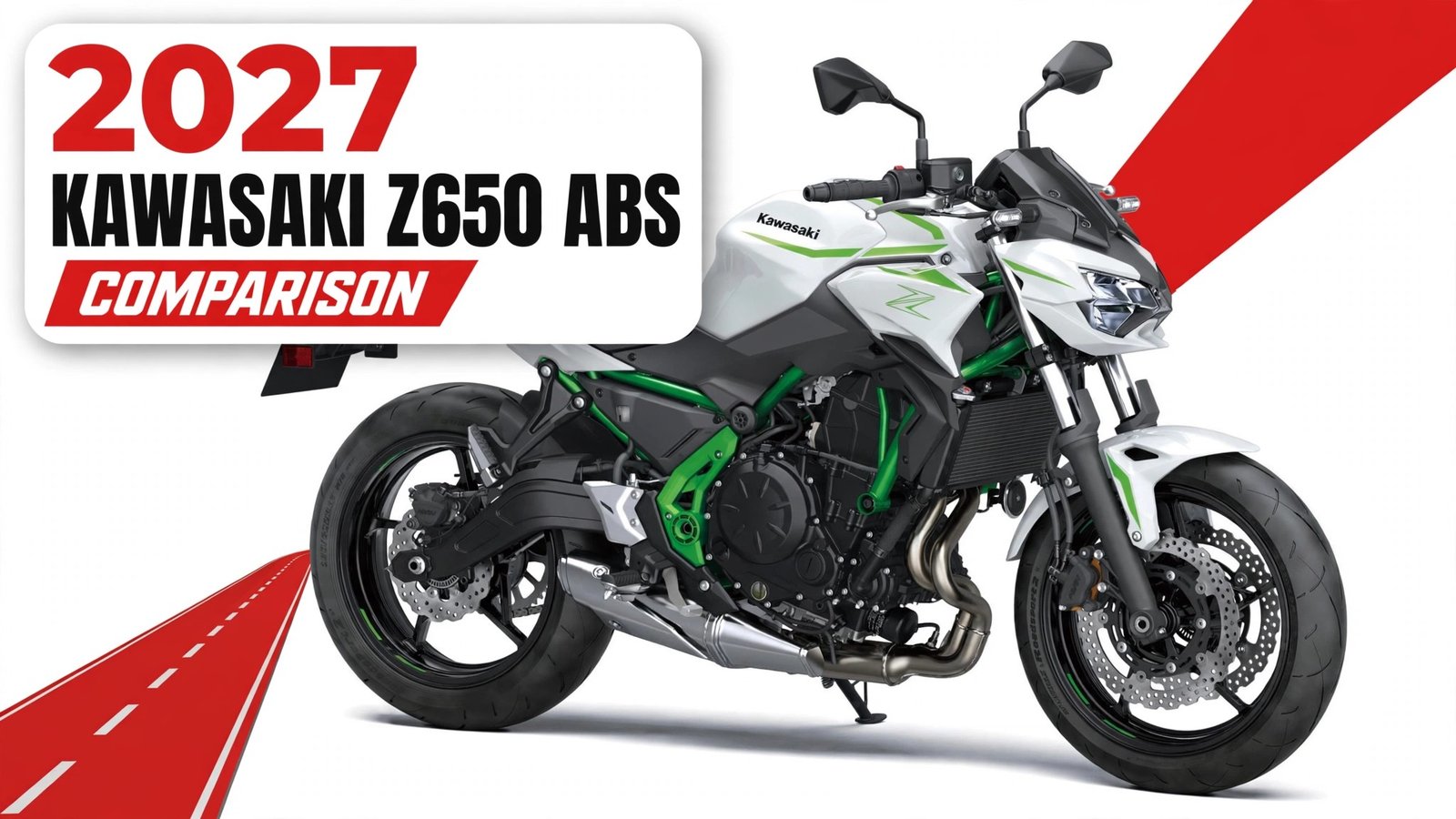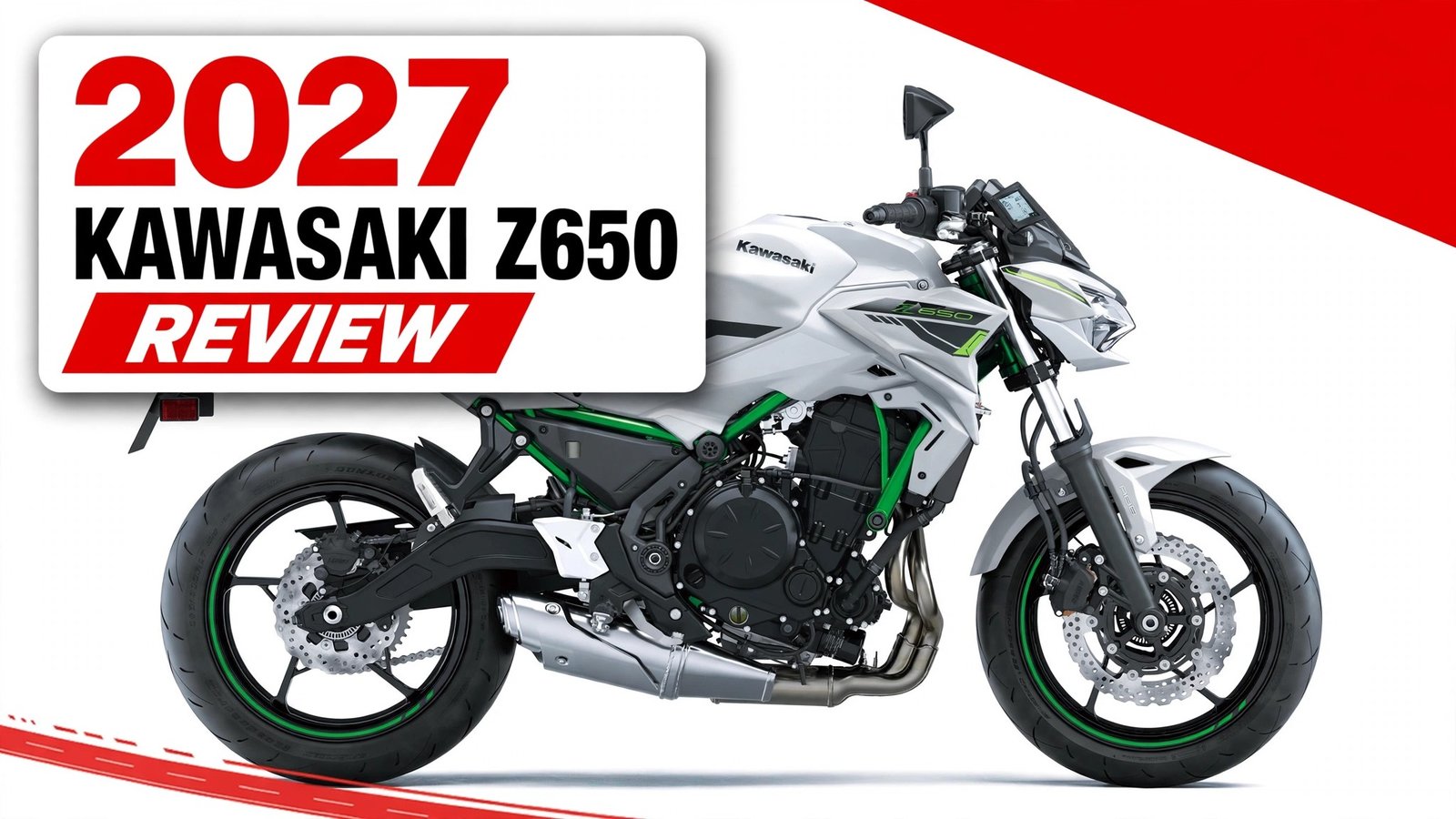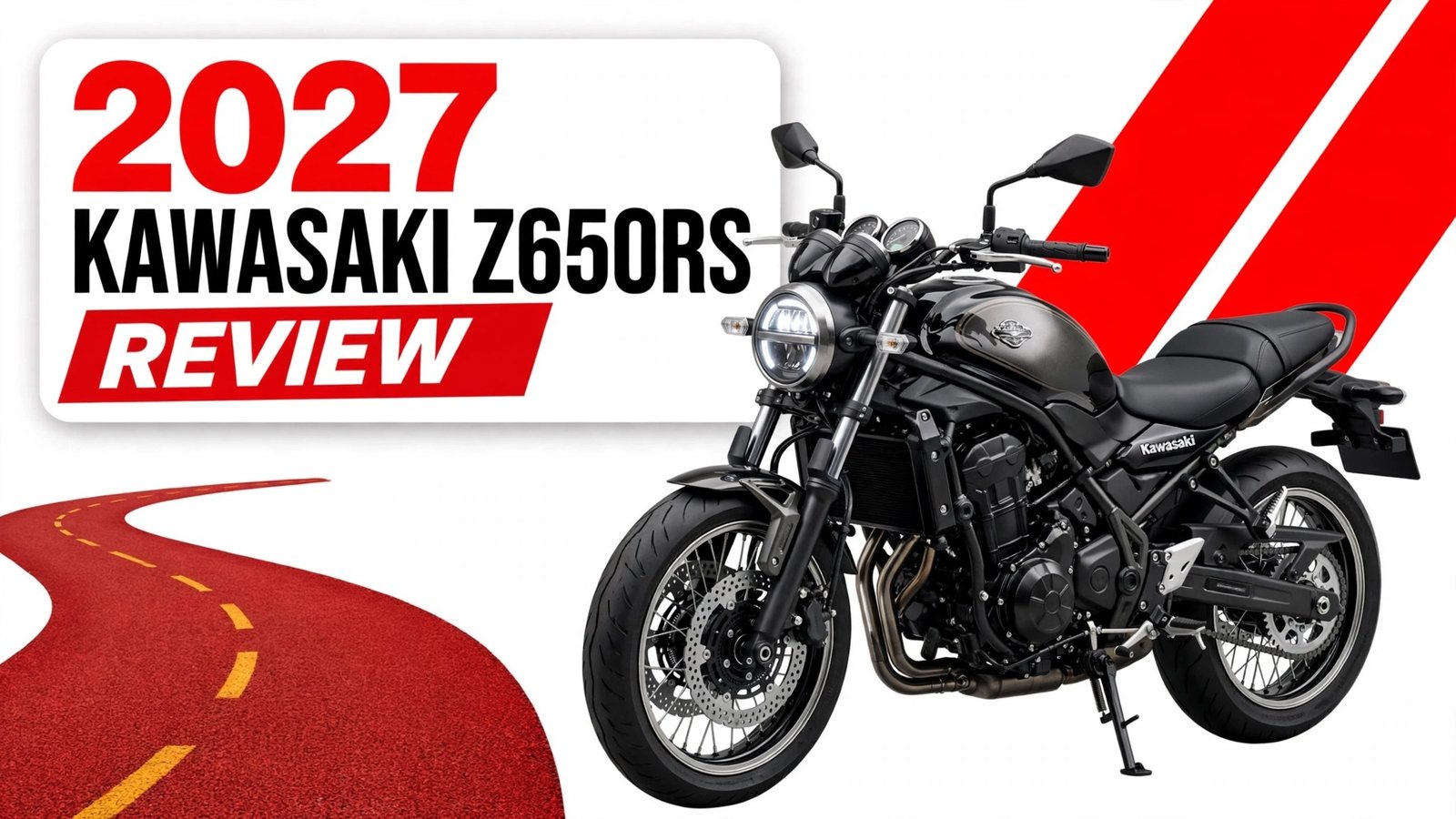
The Kawasaki Z650RS is the retro twin of the regular Z650, and it answers a simple question: what if you want the same 649cc parallel twin and trellis frame, but dressed like the 1970s Z650 that started the Z line? This Kawasaki Z650RS review tests that idea against the bike’s own record — its prices, its hardware, its comfort and its one documented flaw — so you can decide whether the retro look is worth the premium over the standard Z650.
Launched for 2022 as the little brother of the Z900RS, the RS has been ABS-only in the US from day one, and it has never been redesigned alongside the Z650. That makes this Kawasaki Z650RS review a story of a bike that stayed put while its sibling moved on: same 67.0 hp claim, same 31.5-inch seat, same analogue dials, while the 2026 Z650 became the S with a TFT dash and round discs.
Kawasaki Z650RS Overview and Model-Year Updates
The Z650RS is Kawasaki’s retro-styled middleweight naked, built on the Z650 platform with a different tank, tail, seat, bars, wheels, headlight and instruments. This Kawasaki Z650RS review starts with what has — and has not — changed since the 2022 launch, because the model-year story is the first thing a buyer needs to understand.
ABS-Only Since 2022
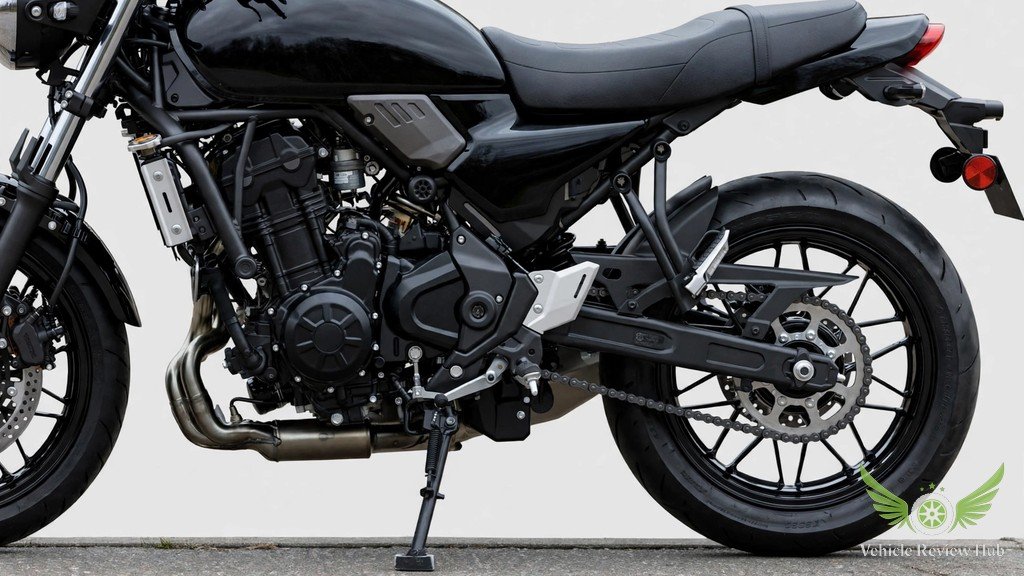
ABS has been standard on every US Z650RS since the 2022 launch — Kawasaki has never sold a non-ABS RS in the United States. That matters for this Kawasaki Z650RS review because there is no ABS premium to work out, unlike the Z650 itself, where ABS was a $400 option in 2017–2020 and $500 from 2021 through 2025. On the RS, the Bosch 9.1M system is simply part of the bike, on every year from 2022 to 2027, with Nissin two-piston front calipers and a single-piston rear caliper behind it.
The ABS itself is a plain dual-channel system with no IMU, no cornering function and no off switch — the same honest, simple setup as the Z650. The Z650 ABS review carries the full story of that hardware on the standard bike; on the RS it does the same job, and no recall or complaint has ever been filed against it.
Not Redesigned With the S
When the Z650 became the S for 2026 — TFT dash, round front discs, a 47.2 lb-ft tune, a 31.7-inch seat and wider, forward bars — the RS did not follow. It kept the 48.5 lb-ft tune, petal discs, dual analogue dials, the 3.2-gallon tank and the 31.5-inch seat. This Kawasaki Z650RS review treats that as a real selling point rather than a gap: the RS is the bike for buyers who want the old Z650 character in retro clothes, while the S is the modernised one.
The 2026 and 2027 RS are mechanically identical to the 2025 bike — same $8,999 MSRP, same three-mode KTRC, same Ebony colour family. If you are shopping used, that sameness is good news: a 2025, 2026 or 2027 bike is the same motorcycle with a different year on the title, and the only meaningful split in the range is the arrival of traction control in 2024 — and this Kawasaki Z650RS review treats the 2025–2027 sameness as a buying tip: pick the cheapest of the three years.
Kawasaki Z650RS Engine and Specifications
The RS shares the Z650’s 649cc liquid-cooled parallel twin, but the tune history is its own — and the torque peak moved during the bike’s life. This Kawasaki Z650RS review gives the year-by-year figures because a single torque number would be wrong for half the range.
Dials, Not a TFT
Every Z650RS, from the 2022 launch bike to the 2027 model, carries dual analogue dials — a speedometer and a tachometer — with a small multi-function LCD between them. No TFT was ever fitted, on any year. That is a deliberate retro choice, and this Kawasaki Z650RS review counts it as part of the bike’s character: the dials match the 1970s brief in a way a colour screen never would, even if the Z650 S’s TFT is the more modern instrument.
The LCD still covers the practical jobs — gear position indicator, fuel gauge, clock, trip meters and the Economical Riding Indicator — so nothing essential is missing. What is missing is connectivity and the configurable displays the S offers, and buyers who want those should look at the S rather than asking the RS to be something it is not. That gap is the one equipment compromise this Kawasaki Z650RS review flags most clearly.
Tank Is 3.2 Gallons
The teardrop tank holds 3.2 gallons on every Kawasaki US sheet, from 2022 through the 2027 model page. Cycle World’s first-ride text says “3.1-gallon teardrop tank”, but the sheets are consistent at 3.2 gallons, and this Kawasaki Z650RS review prints the sheet figure. The tank is smaller than the Z650’s 4.0-gallon unit and smaller than the XSR700’s 3.7 gallons, so range is the trade-off for the retro shape — at MCN’s observed 55 mpg average, 3.2 gallons works out to roughly 176 miles between fill-ups.
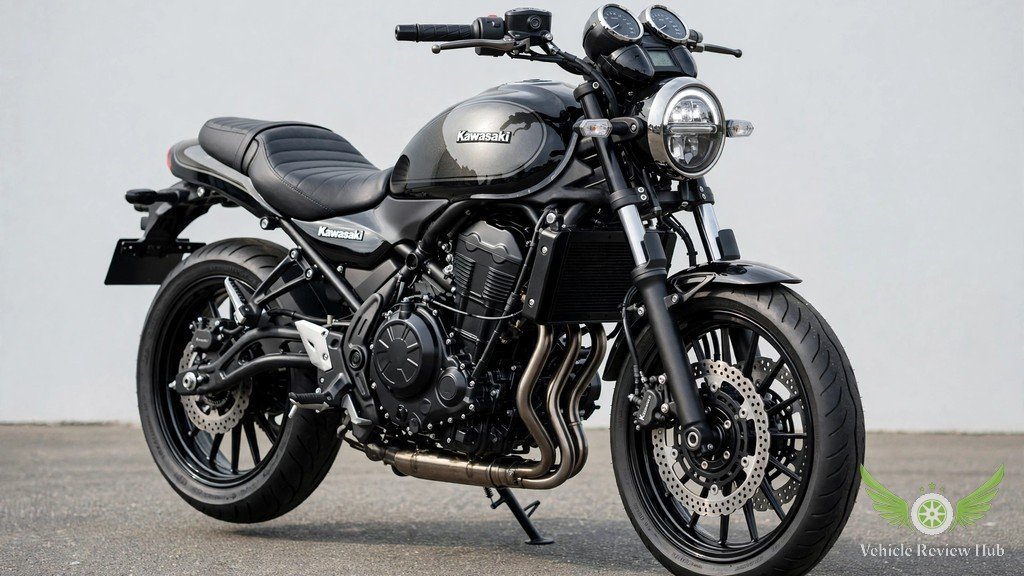
The tank’s shape is the heart of the homage: the teardrop profile, the sculpted side panels and the ducktail cowl echo the original Z650-B1, and the pinstripes on the 2022 Candy Emerald Green bike reproduce the green B1’s paint. It is a small tank that carries a lot of the bike’s identity, and this Kawasaki Z650RS review treats the 3.2-gallon capacity as the RS’s most practical compromise.
| Specification | 2027 Kawasaki Z650RS |
|---|---|
| Engine | 649cc liquid-cooled parallel twin, DOHC 8-valve |
| Bore x stroke | 83.0 x 60.0 mm |
| Compression | 10.8:1 |
| Claimed power | 67.0 hp @ 8,000 rpm (ISO 4106) |
| Claimed torque | 48.5 lb-ft @ 6,700 rpm (2025–2027); @ 6,500 rpm (2022–2023) |
| Transmission | 6-speed, assist & slipper clutch, sealed 520 chain |
| Frame | Trellis, high-tensile steel |
| Front suspension | 41 mm telescopic fork, non-adjustable, 4.9 in travel |
| Rear suspension | Horizontal back-link, preload-only, 5.1 in travel |
| Front brakes | Dual 300 mm petal-style discs, 2-piston Nissin calipers, Bosch 9.1M ABS |
| Rear brake | Single 220 mm petal-style disc, single-piston caliper, ABS |
| Tyres | 120/70 ZR17 front / 160/60 ZR17 rear, Dunlop Sportmax Roadsport 2 |
| Seat height | 31.5 in |
| Wheelbase | 55.3 in |
| Curb weight | 412.3 lb (dry 383.7 lb) |
| Fuel capacity | 3.2 gal |
| Warranty | 12-month limited |
Note: Torque is 48.5 lb-ft on every year, but the peak moved: 6,500 rpm on 2022–2023 bikes and 6,700 rpm from 2025. The 2024 figure is @ 6,700 rpm per the Motorcycle.com database only, as no 2024 spec sheet exists. This Kawasaki Z650RS review never prints the EU 47.2 lb-ft figure as the US torque — that is the 64 Nm European rating, not the American one.
Kawasaki Z650RS Price and Market Availability
The RS has never been the cheapest bike in its class, and its price history is more interesting than a single sticker: it climbed for three years, then dropped $700 in 2025. This Kawasaki Z650RS review lays out the full ladder so the 2027 price makes sense in context.
Kawasaki Z650RS Price in the USA: $8,999 (2027)
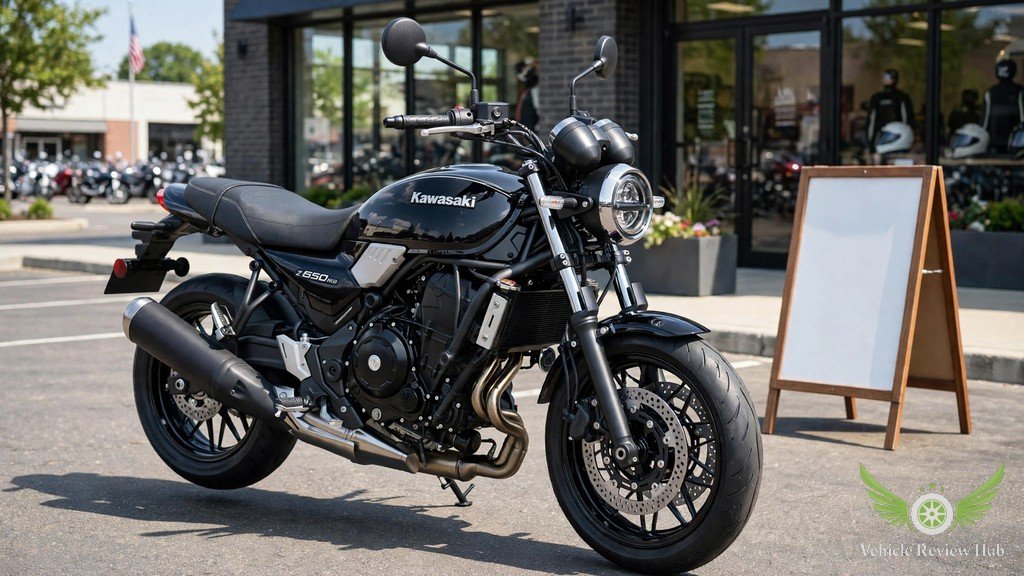
The 2027 Z650RS costs $8,999 MSRP plus $685 destination, or $9,684 delivered, per Kawasaki’s own 2027 page. That is the same MSRP as 2026 and $100 more than the 2025 price, after the $700 drop that made 2025 the cheapest year to buy a new RS. For a buyer cross-shopping the class, the delivered figure is the one that matters — and this Kawasaki Z650RS review uses delivered prices throughout, because that is the number a buyer actually pays.
The price history tells the story. The RS launched at $8,999 in 2022, with the 50th Anniversary edition at $9,249 — the price Cycle News quotes in its 2022 review — then rose to $9,099 in 2023 and $9,599 in 2024 before the 2025 cut to $8,899. A buyer who paid full price in 2024 bought the most expensive RS ever sold; a buyer who waited a year saved $700 on the same motorcycle. The table below carries the ladder year by year, and this Kawasaki Z650RS review uses the delivered column as the honest comparison figure.
| Year | MSRP | Destination | Delivered |
|---|---|---|---|
| 2022 | $8,999 | $430 | $9,429 |
| 2023 | $9,099 | $435 | $9,534 |
| 2024 | $9,599 | $450 | $10,049 |
| 2025 | $8,899 | $665 | $9,564 |
| 2026 | $8,999 | $685 | $9,684 |
| 2027 | $8,999 | $685 | $9,684 |
Note: The 50th Anniversary 2022 bike cost $9,249 plus $430 destination, or $9,679 delivered. The 2027 destination of $685 is Kawasaki-page-verified; the 2022–2026 destination figures are Motorcycle.com-database-only, so this Kawasaki Z650RS review treats them as single-source figures and never carries a destination charge across model years.
Premium: $1,100 Over the S
The $1,100 premium is the 2027 figure only: the 2027 RS at $8,999 against the 2027 Z650 S ABS at $7,899. The premium has moved every year — $950 in 2022, $850 in 2023, $950 in 2024 on the Cycle World side of the contested Z650 price, $1,150 in 2025 and $1,300 in 2026 — so this Kawasaki Z650RS review never prints $1,100 as the premium for any other year. The 2024 figure needs its caveat spelled out: if the lower $7,749 side of the Z650’s contested 2024 price is used, the premium would be $1,850, so no 2024 premium is meaningful without naming which Z650 price it rests on.
What the $1,100 buys in 2027 is retro styling, the 48.5 lb-ft tune, petal discs and analogue dials, against the S’s TFT dash, round discs and 47.2 lb-ft tune on the same platform. Whether that is worth it depends on what the buyer values: the RS is $1,100 of look and character, and the S is $1,100 of modern equipment. The Z650 comparison guide weighs the standard bike against its own rivals, and the RS sits above all of them on price — the rival-by-rival fight this Kawasaki Z650RS review leaves to the comparison blog.
Kawasaki Z650RS Design, Features and Technology
The RS is a styling exercise with real substance behind it: the retro look is a faithful reproduction of a specific motorcycle, and the technology is deliberately simple. This Kawasaki Z650RS review covers both, because the design is the reason most buyers choose the RS over the cheaper S.
1976 B1 Is the Brief
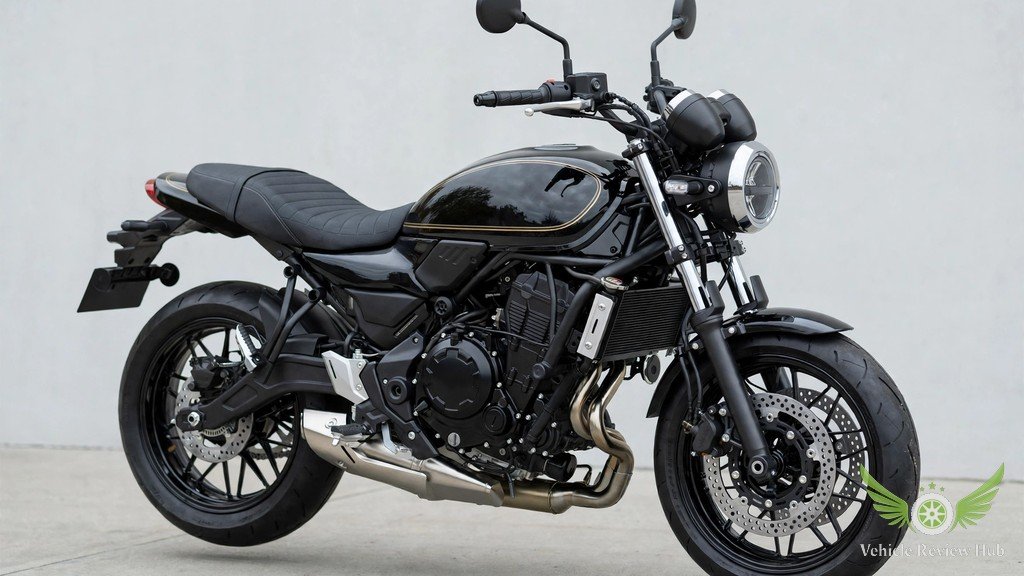
The RS is styled after the original Z650-B1, Kawasaki’s “son of Z1” — a 652cc air-cooled inline-four with 64 hp, presented in late 1976 as a 1977 model. Both labels are correct: the bike was shown at the end of 1976, and Kawasaki’s own press release calls it the 1977 machine. This Kawasaki Z650RS review uses both, because the heading’s “1976” is the presentation year and the model year is 1977.
The homage is specific rather than generic. The teardrop tank, sculpted side panels and ducktail — or duckbill — tail cowl echo the B1, the pinstripes reproduce the green B1’s paint, the round 130 mm LED headlight replaces the original’s round lamp, and the spoke-style cast wheels evoke wire spokes without their maintenance. The RS launched in 2022 for the 50th anniversary of the Z line, which began with the Z1 in 1972, and the 50th Anniversary edition wore Candy Diamond Brown — the root-beer brown of the earliest Z1s — with gold wheels and a special seat at $9,249. Ultimate Motorcycling’s 2024 guide adds a second homage reference, noting the side panels and fenders are inspired by the 1978 KZ650 — and this Kawasaki Z650RS review counts the faithful reproduction as the bike’s strongest card.
KTRC Came Only for 2024
KTRC traction control arrived with the 2024 model year, in two modes plus off — and the 2025 upgrade to three modes is the part the heading does not spell out. The 2024 bike got Mode 1 for sport riding and Mode 2 for low-traction surfaces, switchable off from the left handlebar; from 2025 the RS carries three-mode KTRC, and the 2026 and 2027 bikes keep it. So the heading means KTRC came in 2024, not that only the 2024 bike has it — every RS from 2024 onward has traction control, and this Kawasaki Z650RS review is explicit about that because the wording invites the wrong reading.
The 2022 and 2023 bikes have no KTRC at all: their rider aids are the Economical Riding Indicator and ABS only. That also means every published road test of the RS predates traction control — Motorcycle.com, RevZilla, Cycle World, Rider and Cycle News all rode the bike in April 2022 — so no tester has ever ridden a KTRC-equipped RS in a published test, and no KTRC behaviour in this Kawasaki Z650RS review is attributed to a test ride.
Kawasaki Z650RS Riding Experience and Comfort
On the road the RS is a friendly, punchy middleweight with one consistent complaint and a seat that divides opinion. This Kawasaki Z650RS review draws on the 2022 launch tests — the only published road tests of the bike — and presents both sides wherever the testers disagreed.
Seat Verdicts Conflict
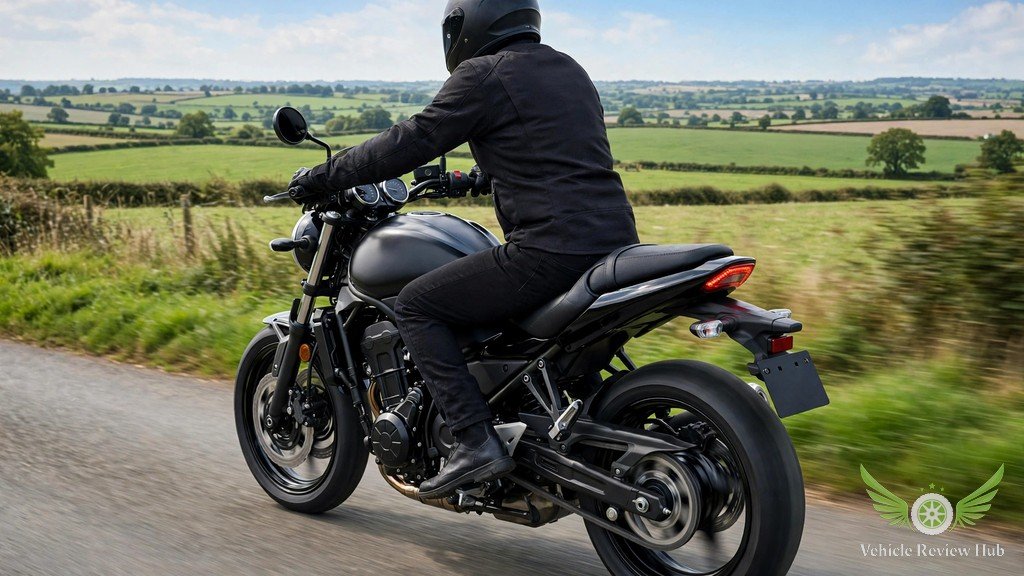
The seat is the one place the launch testers genuinely disagreed, and this Kawasaki Z650RS review presents both sides rather than settling it. On the comfort side, Motorcycle.com’s first ride lists “Super comfortable” among the bike’s highs and calls the seat wide; Ultimate Motorcycling calls it a “luxuriously plush 31.5-inch-high stepped seat” with plenty of squish, narrowed towards the front; and Cycle World notes a wider, flatter seat that accommodates passengers better. The riding position helps too: the bars sit 50 mm higher and 30 mm closer than the Z650’s, the top triple clamp is 20 mm higher, the seat is 10 mm taller but slimmer at the front, and the footpegs sit slightly lower.
On the critical side, the same Motorcycle.com test lists “The seat and tank aren’t designed for sporty riding” among its sighs, and a press synthesis calls out a soft seat and soft rear suspension. The fair reading is that the seat suits relaxed riding and two-up work, and suits it well, but riders who hang off the bike in corners will find the stepped shape and the soft suspension working against them. The 31.5-inch seat height itself is an easy reach for most riders — a point this Kawasaki Z650RS review keeps coming back to, because seat height decides more purchases than horsepower does — and the 412.3 lb curb weight keeps the bike light enough to manage at a standstill.
The video below is MOTOBOB’s 2022 first-ride review of the launch bike — a UK reviewer riding the Candy Emerald Green 2022 RS, filmed at the bike’s launch. It shows the riding position, the analogue dials and the green-and-gold launch colours better than any photograph, and it is the closest thing to a filmed verdict this Kawasaki Z650RS review could find.
12 Month Warranty
The US Z650RS carries a 12-month limited warranty on every model year. That is short by modern standards — the Royal Enfield Interceptor 650, the RS’s cheapest retro rival, carries a three-year unlimited-mile warranty — and buyers should know it before they buy. This Kawasaki Z650RS review flags the short warranty as the RS’s clearest ownership downside. The UK bike gets a two-year warranty with extended options, but that is the UK warranty and this Kawasaki Z650RS review does not carry it to the US bike.
Against the short warranty stands a clean record: zero recalls and zero complaints on the RS’s own NHTSA record across 2022–2026, checked under both “z650rs” and “z650”. A short warranty on a bike with nothing on its recall record is a different proposition from a short warranty on a troubled one, and the reliability record is covered in full in the Z650RS reliability guide.
Kawasaki Z650RS Review: Pros, Cons and Verdict
The RS is a bike bought with the eyes as much as the head, but the head still gets a say: the retro look costs $1,100 over the S in 2027, and the equipment list is deliberately old-fashioned. This Kawasaki Z650RS review weighs both sides before the verdict.
Main Advantages and Limitations of the Kawasaki Z650RS
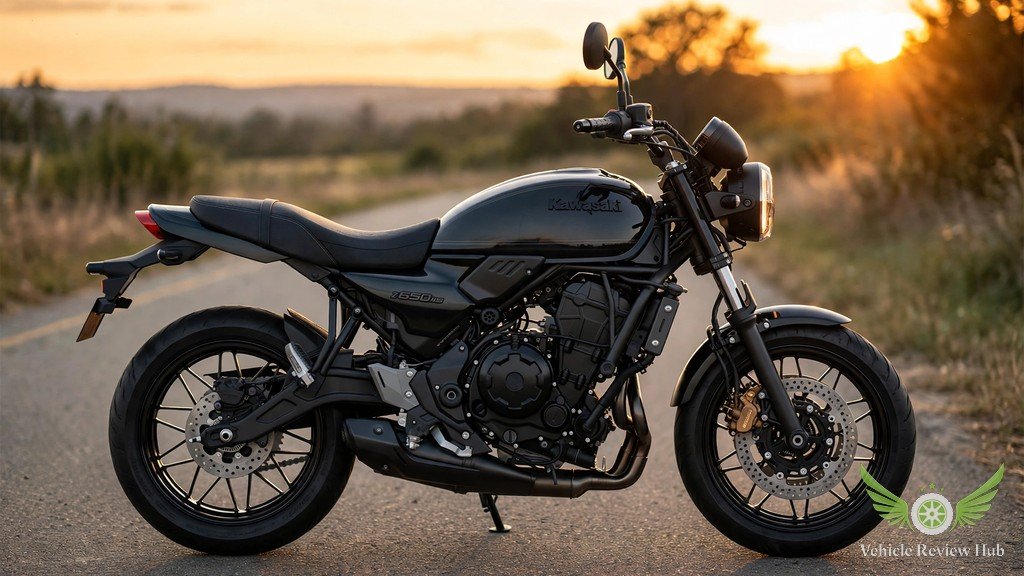
The advantages start with the engine: a punchy, torquey low- to mid-range twin that RevZilla’s first ride calls “a true workhorse” and “docile around town”, in a 412.3 lb bike with a 31.5-inch seat and neutral handling. The styling is the real draw — the teardrop tank, ducktail and pinstripes are a faithful reproduction of the 1976-presented B1, and the Candy Emerald Green launch bike with gold wheels is one of the best-looking middleweights of the decade. KTRC from 2024, Bosch ABS from launch, and a clean recall record round out the case this Kawasaki Z650RS review makes for the bike.
| Advantages | Limitations |
|---|---|
| Faithful 1976 B1 retro styling — teardrop tank, ducktail, pinstripes | $1,100 more than the Z650 S in 2027 for the same platform |
| Punchy 649cc twin — 67.0 hp, 48.5 lb-ft, docile around town | Snatchy fuelling just off idle, reported in all three 2022 launch reviews |
| Low 31.5-in seat and light 412.3 lb curb weight | Soft non-adjustable suspension when pushed hard |
| Bosch 9.1M ABS standard since 2022; KTRC from 2024 | Analogue dials only — no TFT, no connectivity |
| Zero recalls and zero complaints, 2022–2026 | 12-month warranty only; 3.2-gal tank limits range |
Note: The limitations are the price of the retro brief, not oversights — the dials, the soft suspension and the small tank are all choices the RS makes on purpose. This Kawasaki Z650RS review lists them plainly so the buyer chooses with open eyes.
Bosch 9.1M, RS-Verified
The RS’s ABS is the Bosch 9.1M unit, verified for this bike by Ultimate Motorcycling’s 2024 buyer’s guide and first look, which both state “Bosch 9.1M ABS is standard”. It works through dual 300 mm petal-style front discs with two-piston Nissin calipers and a single 220 mm petal-style rear disc, and the petal shape matters: the US RS has petal discs on every year, never round ones, whatever generic dealer copy says. The brakes earned praise in the launch tests — Rider’s first ride found the dual front discs provided “all the braking performance I needed” — and no instrumented 60–0 distance exists for the RS, so this Kawasaki Z650RS review prints none.
The verdict is straightforward. The RS is the right bike for the rider who wants a modern middleweight naked with ABS and traction control, dressed like a 1970s Z650, at $9,684 delivered — and who accepts analogue dials, a 3.2-gallon tank and a 12-month warranty as part of the deal. It is the wrong bike for the rider who wants the most equipment per dollar, because the Z650 S gives a TFT, round discs and the same platform for $1,100 less. Buy the RS for the look, and the look alone is worth the money — that is the honest verdict of this Kawasaki Z650RS review.
Kawasaki Z650RS Review: Frequently Asked Questions
These are the questions buyers ask most about the Z650RS — answered with the verified prices, specs and record from this Kawasaki Z650RS review.
Is the Kawasaki Z650RS ABS-only in the US?
Yes — ABS has been standard on every US model year since the 2022 launch; Kawasaki has never sold a non-ABS Z650RS in the US.
How much does the 2027 Kawasaki Z650RS cost?
$8,999 MSRP plus $685 destination, $9,684 delivered.
What engine does the Z650RS have?
A 649cc liquid-cooled parallel twin making a claimed 67.0 hp at 8,000 rpm and 48.5 lb-ft of torque — at 6,500 rpm on 2022–2023 bikes, at 6,700 rpm from 2025.
Does the Z650RS have a TFT display?
No — it has dual analogue dials with a small multi-function LCD on every model year, and no TFT was ever fitted.
Does the Z650RS have traction control?
Only from 2024: the 2024 bike got 2-mode KTRC, and 2025–2027 bikes have 3-mode KTRC. The 2022–2023 bikes have ABS only.
What is the Z650RS styled after?
The 1976-presented Z650-B1, a 1977 model and Kawasaki’s “son of Z1” — teardrop tank, ducktail cowl, side panels and pinstripes reproducing the green B1. It launched for the Z line’s 50th anniversary in 2022.