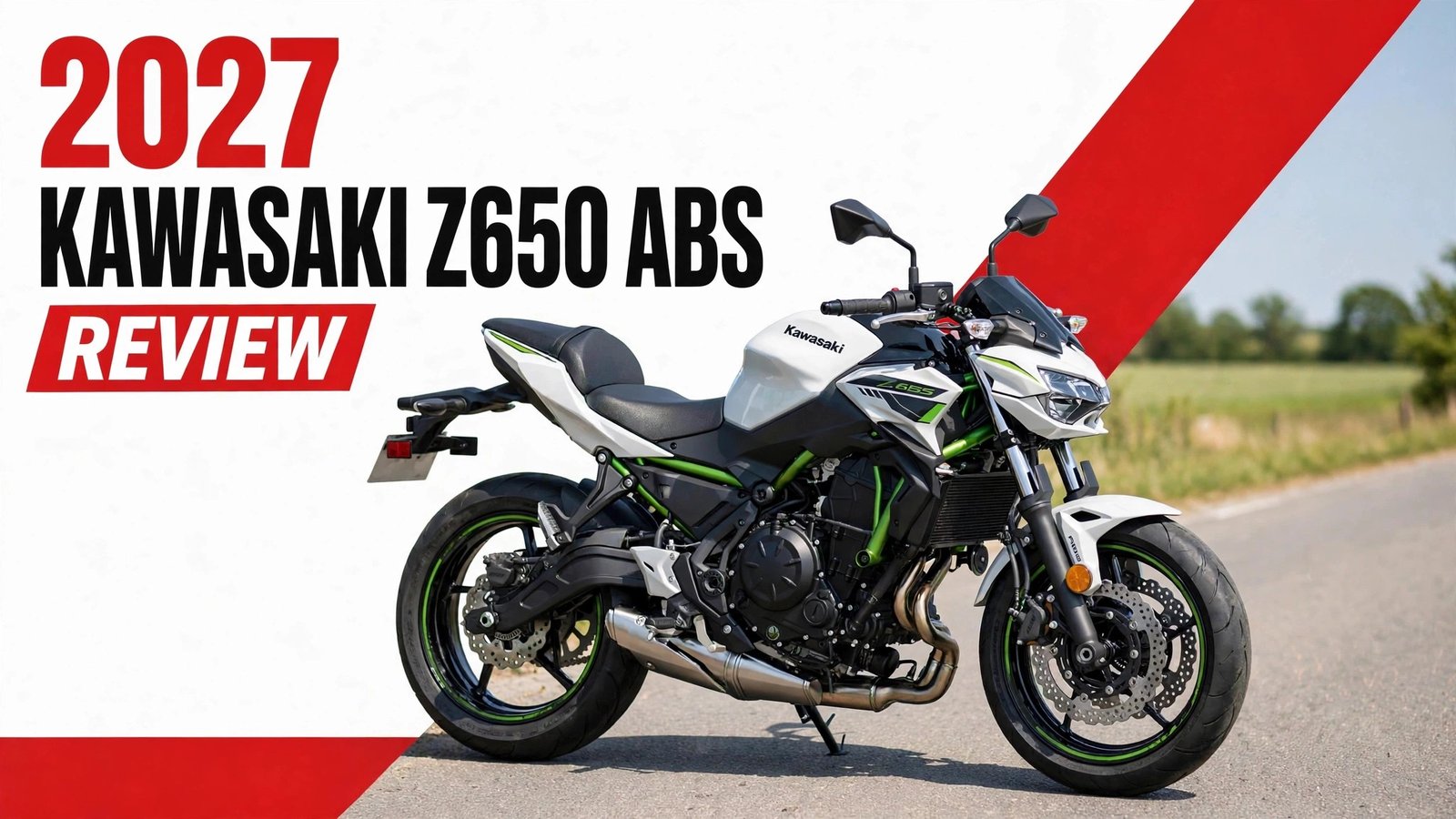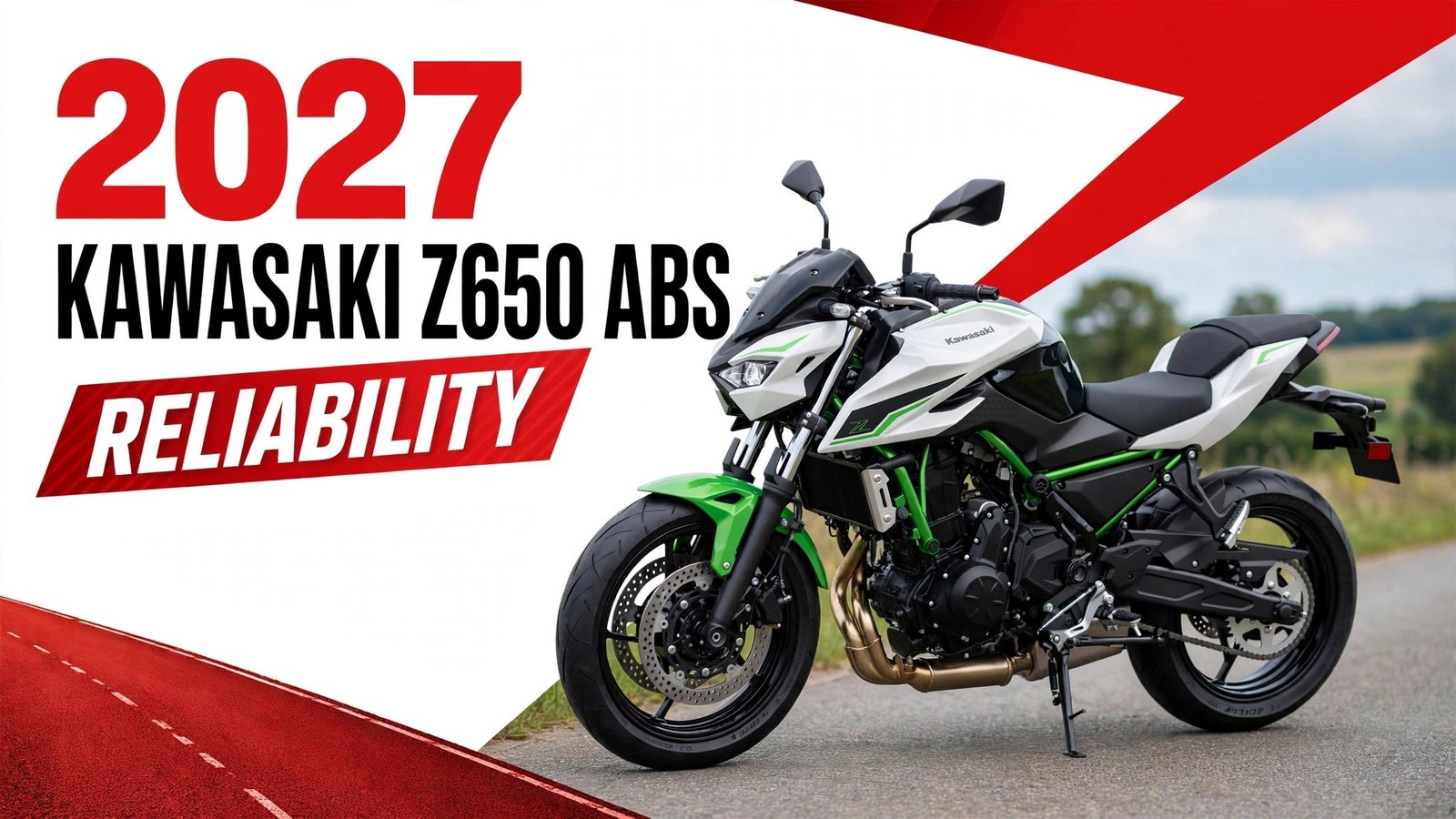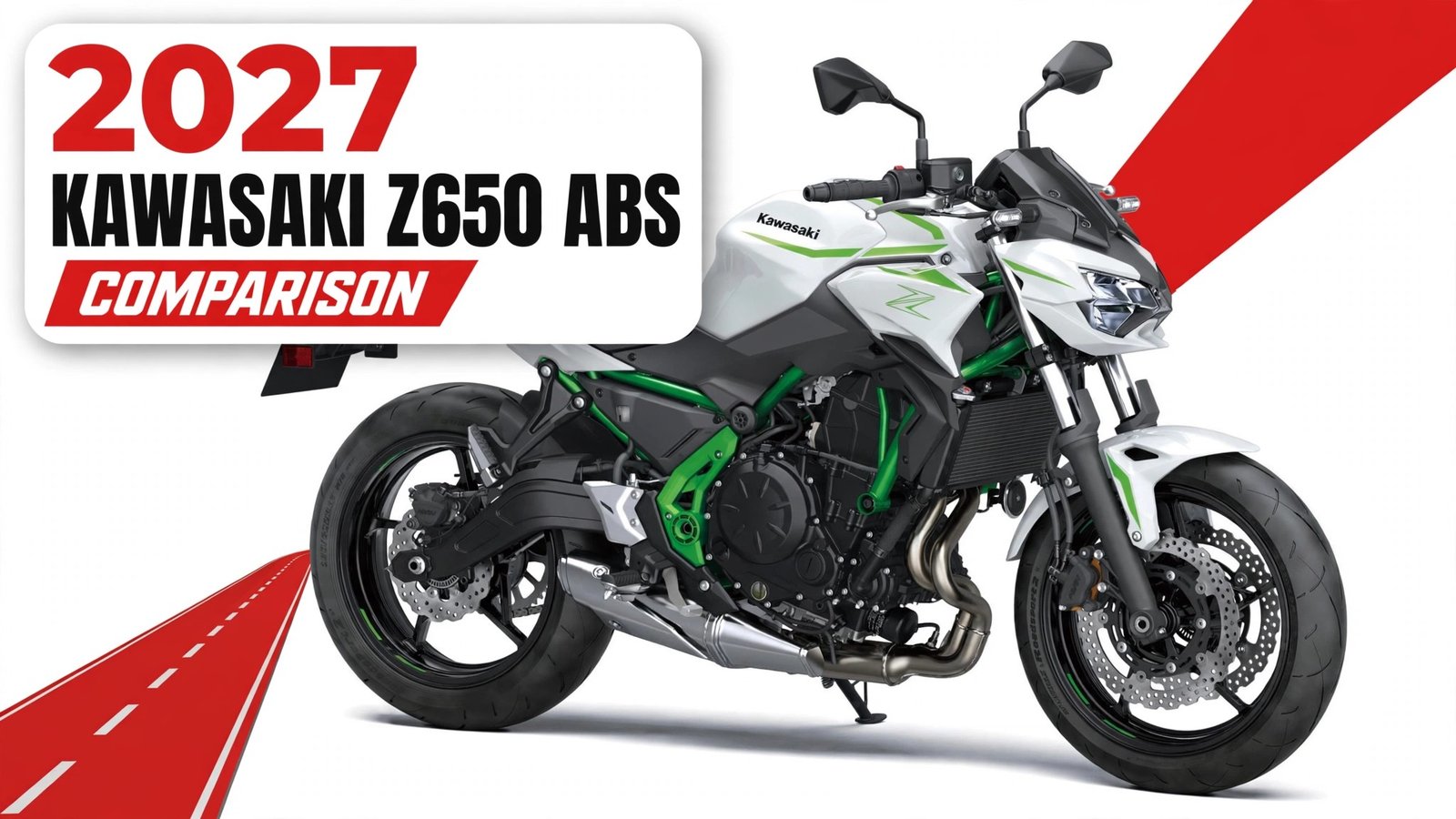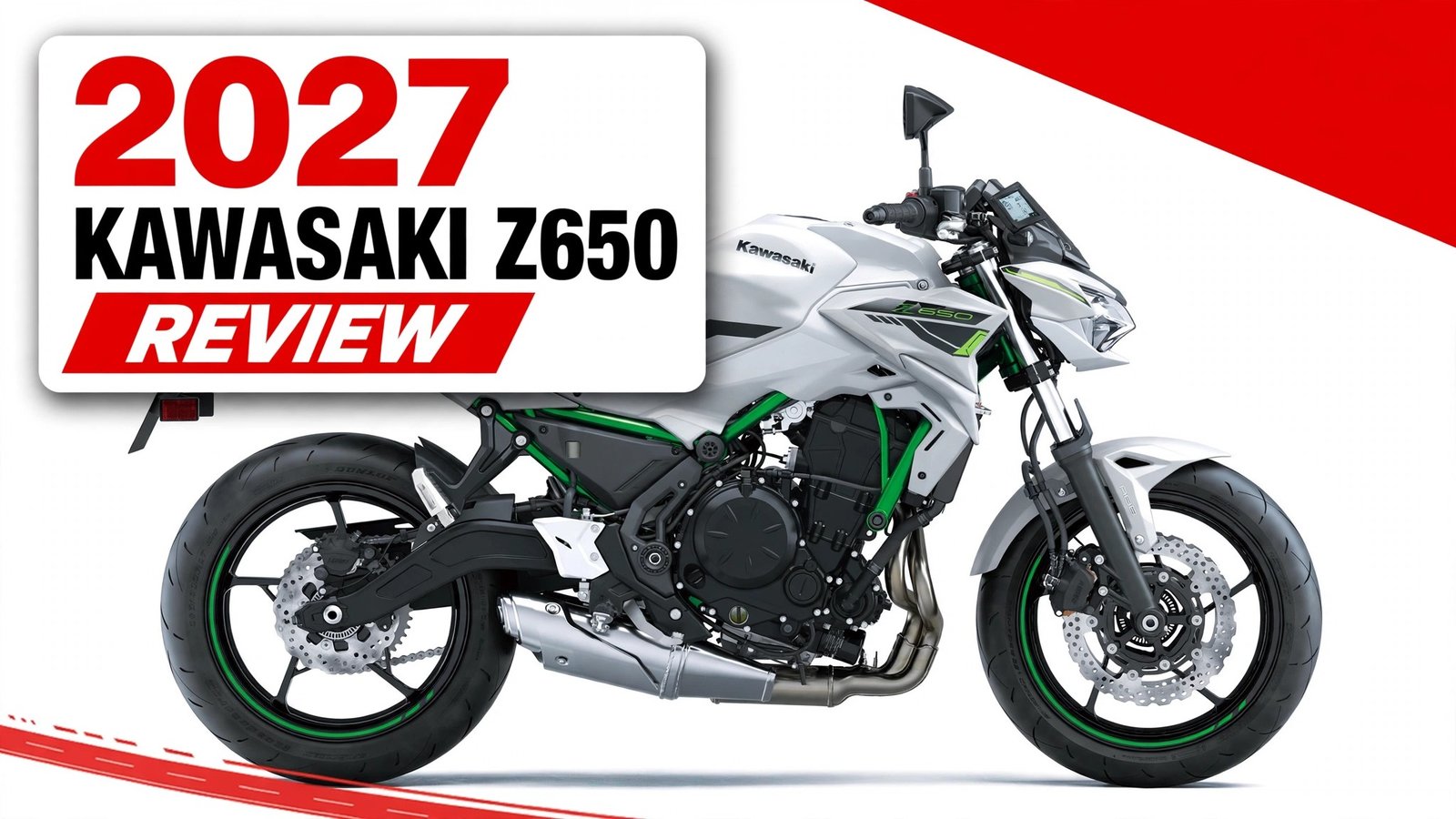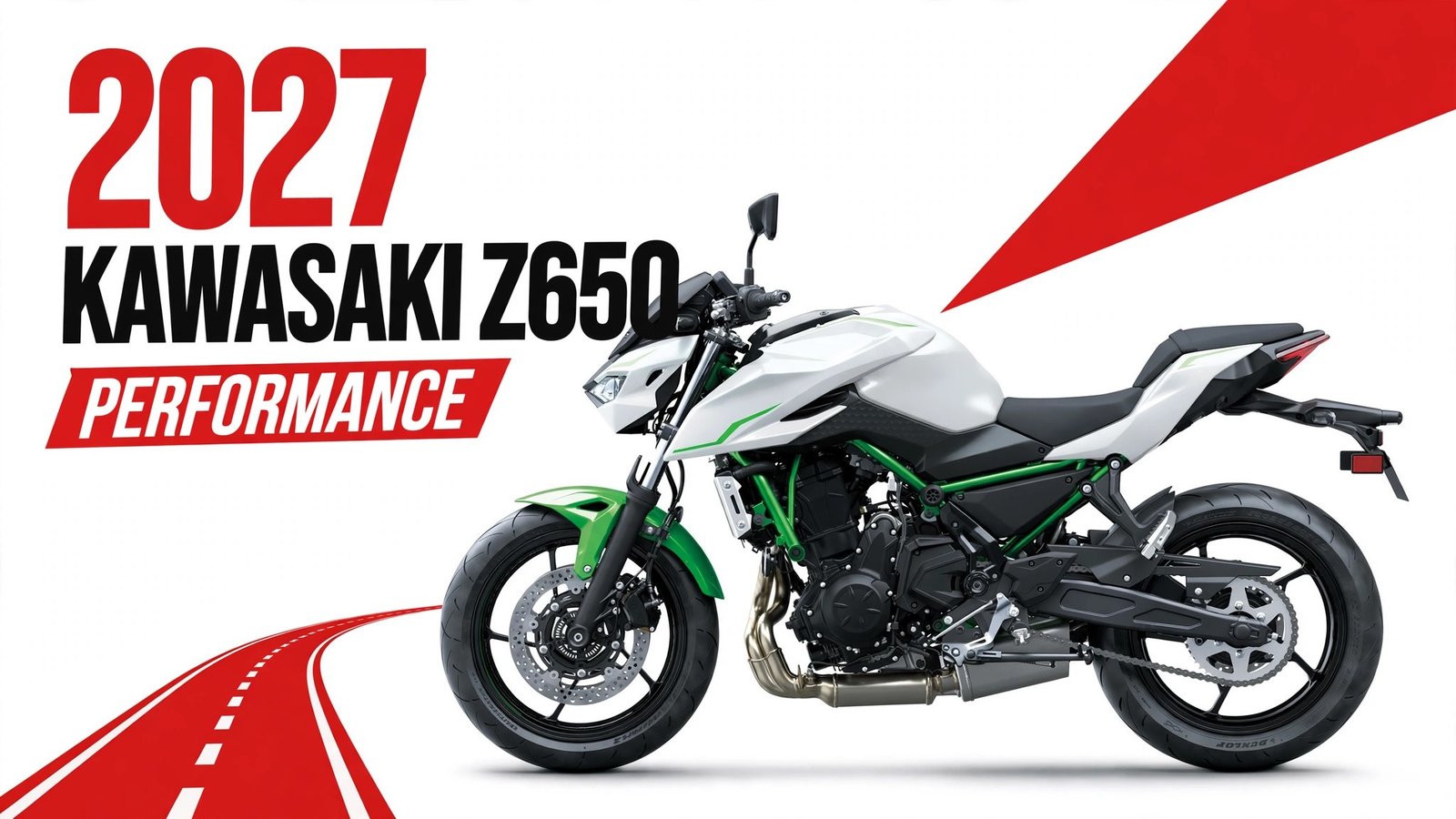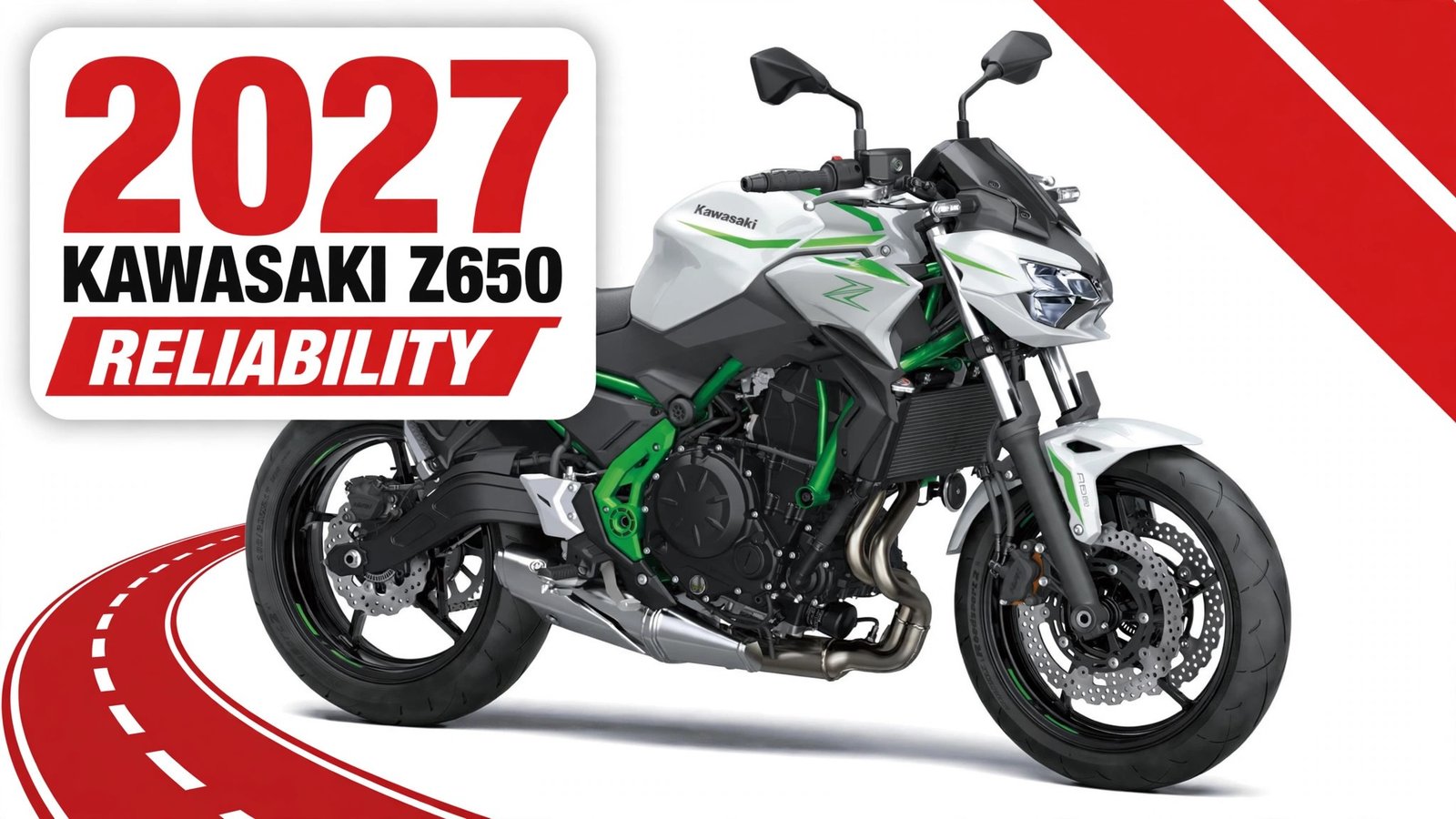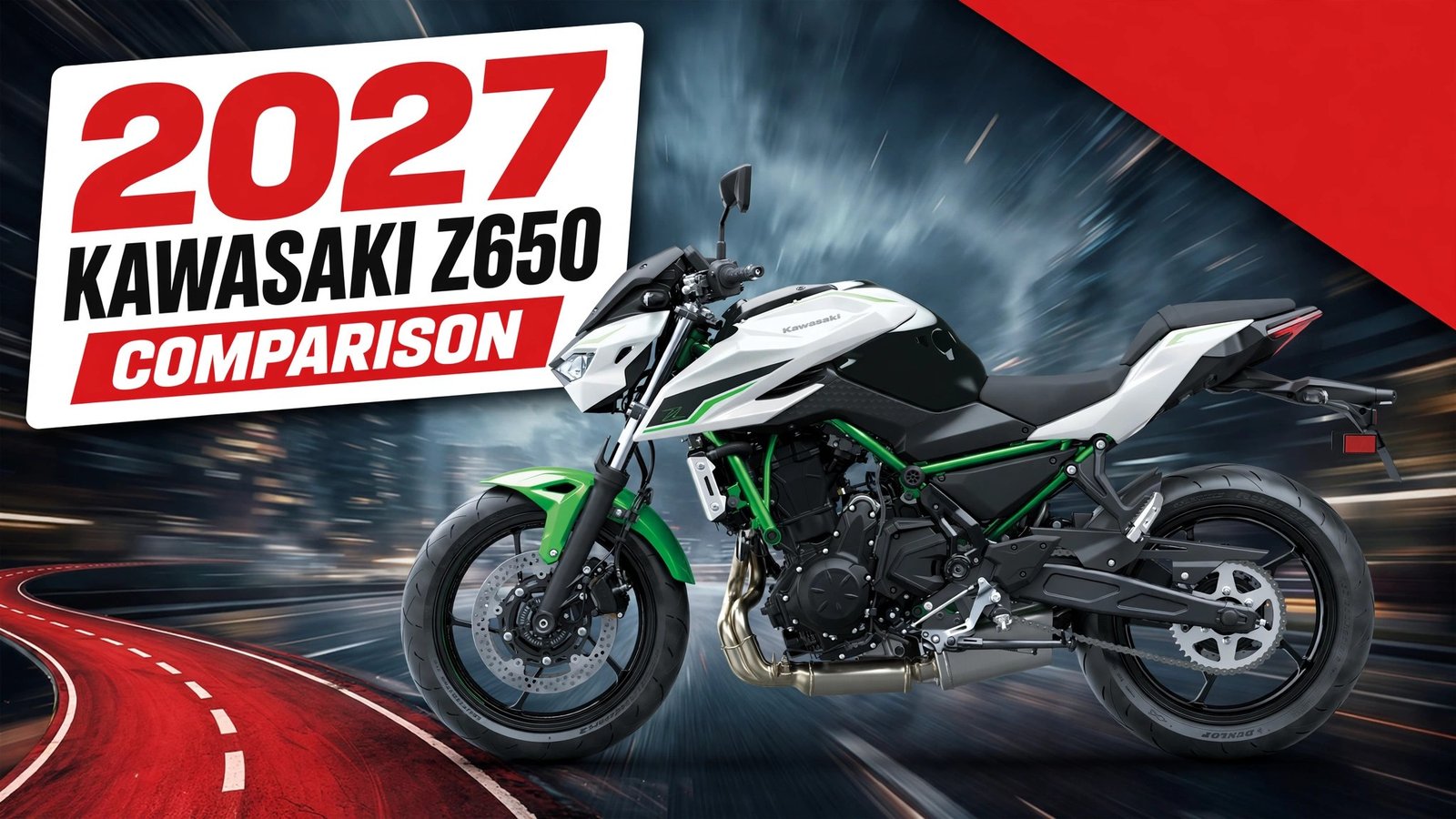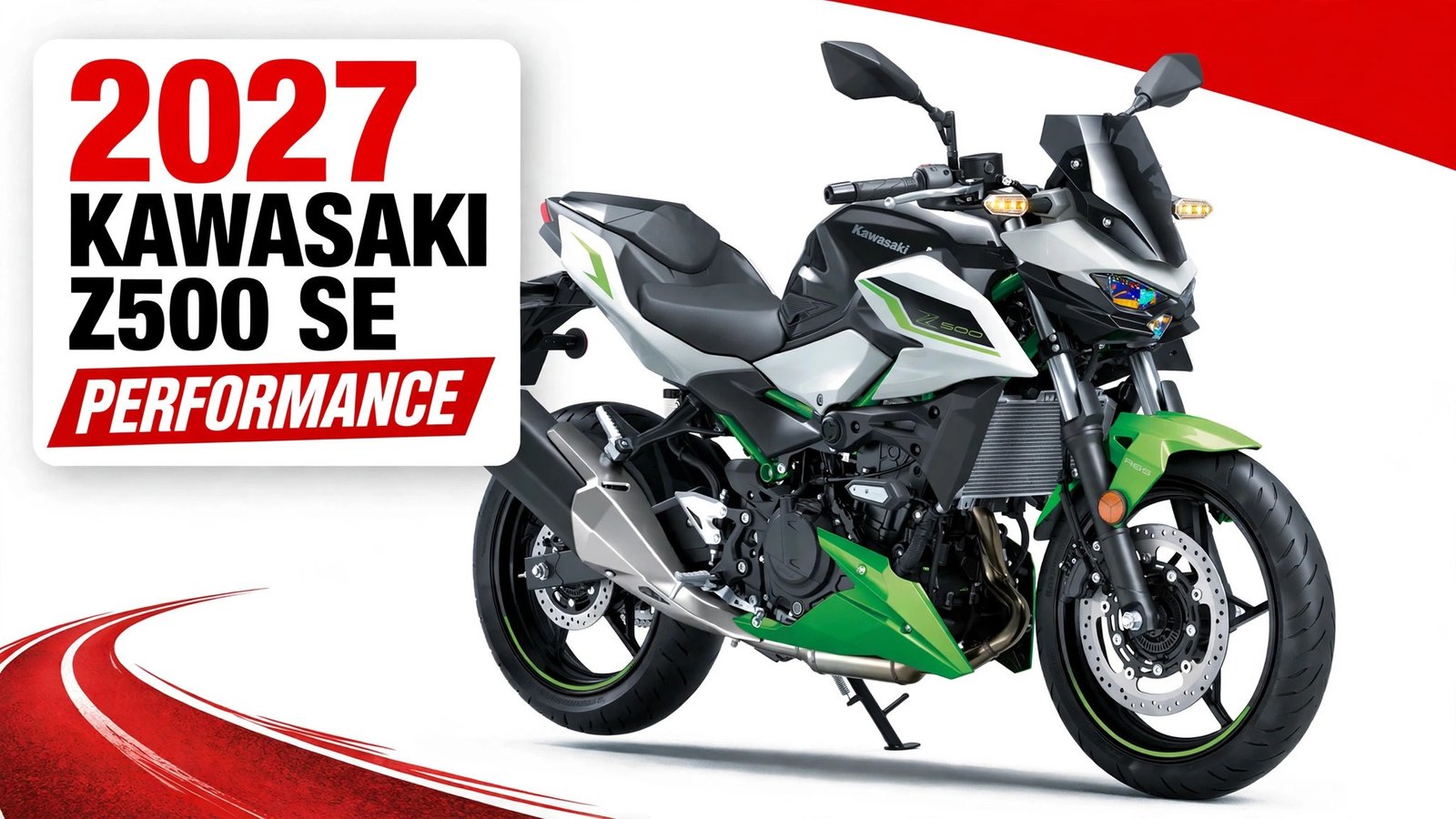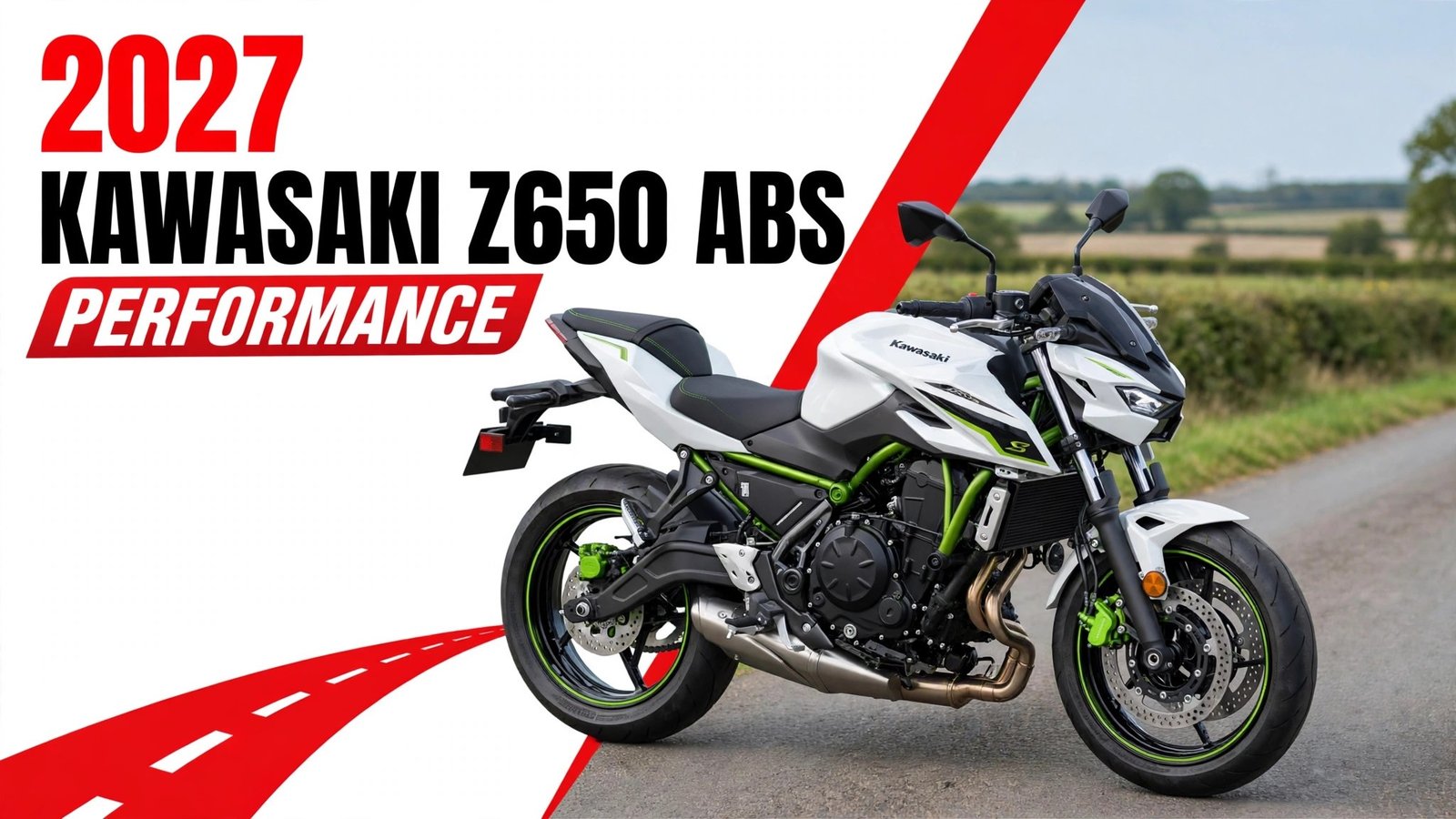
This Kawasaki Z650 ABS performance guide starts with the numbers that matter: a claimed 67.0 hp at 8,000 rpm, 60.95 hp on Motorcycle.com’s 2017 dyno, 132 feet from 60 mph in Cycle World’s 2017 test, and 44 mpg observed in the same Motorcycle.com shootout. Kawasaki publishes no official top speed and no MPG figure, so every number in this Kawasaki Z650 ABS performance guide carries its tester and its year — nothing is printed as a bare claim.
The ABS trim changes nothing about the engine. The same 649cc twin, the same claimed output, the same six-speed gearbox — the only difference is 2.2 to 4.4 lb of braking hardware. That is why this Kawasaki Z650 ABS performance guide treats every dyno figure as model-level, never trim-level, and why no test in the record ever separated the two trims.
Kawasaki Z650 ABS Engine Performance and Power Delivery
The engine does not know whether the bike has ABS. Both trims share the same 649cc liquid-cooled parallel twin — 83.0 by 60.0 mm, 10.8:1, dual 32 mm throttle bodies — with the same claimed 67.0 hp at 8,000 rpm and the same six-speed gearbox with an assist and slipper clutch. Torque needs a year label: 48.5 lb-ft at 6,500 rpm for 2019 through 2025, then 47.2 lb-ft at 6,700 rpm for the 2026 and 2027 S. This Kawasaki Z650 ABS performance guide measures the bike against those claimed figures, not against the brochure.
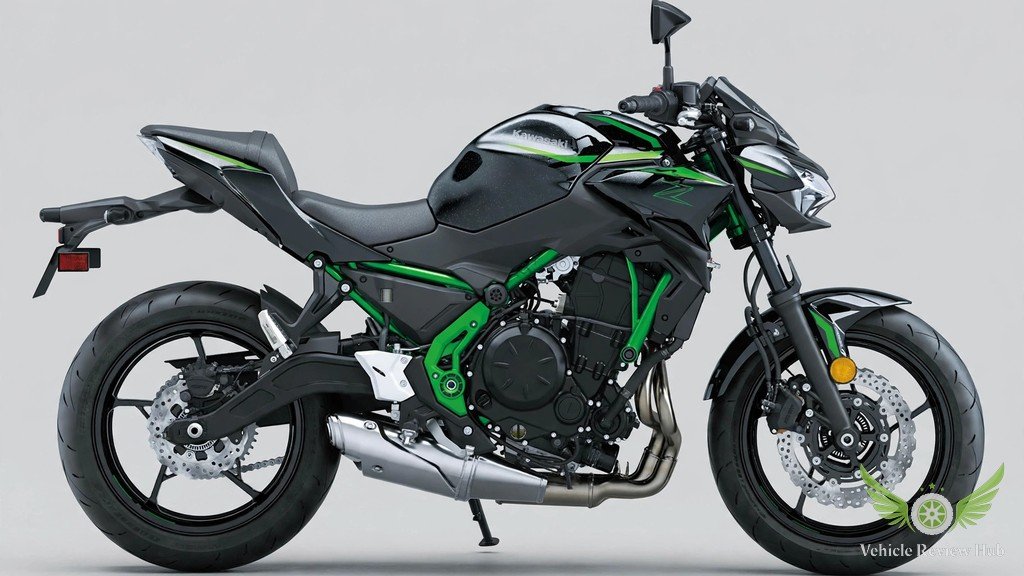
Launch Bikes Wore ABS
Every 2017 comparison test ran ABS bikes, which is why the launch figures in this Kawasaki Z650 ABS performance guide are ABS figures even when the testers never said so. Motorcycle.com’s 2017 five-way shootout lists the Z650 at “$7,399 w/ABS” in its spec table. Ultimate Motorcycling’s three-way tested all three bikes “all in ABS trim” and noted the Z650 undercut the other two by $100. Rider Magazine’s first ride weighed the ABS bike at 410 lb against 406 lb for the non-ABS bike. The launch bikes wore ABS; the tests just never made a point of it.
Dyno Figures Are Model-Level
Two dyno runs exist, both from Motorcycle.com, and both are model-level figures: Motorcycle.com’s 2017 five-way shootout measured 60.95 hp at 8,000 rpm and 43.71 lb-ft at 6,700 rpm, and the 2021 six-way measured 61.4 hp at 8,100 rpm — the lowest of the six bikes in that test. No ABS-specific dyno exists, so this Kawasaki Z650 ABS performance guide prints both runs with their testers and years and never blends them.
The gap between the claimed 67.0 hp and the measured 60.95 hp is about 6 hp — the normal difference between an ISO 4106 crank figure and a rear-wheel dyno figure. The 2021 six-way shows the same gap — the table below lists every bike. Two figures in the record are not verified at all: the “59.9 hp dyno” (59.9 bhp is the Vulcan S’s claimed power, not a Z650 dyno run) and the “12.41 at 102.96” quarter-mile (no source found after four targeted searches) — so neither appears as a fact anywhere in this Kawasaki Z650 ABS performance guide.
| Bike (2021 six-way) | Dyno hp @ rpm |
|---|---|
| Aprilia Tuono 660 | 84.6 hp @ 10,500 |
| Honda CB650R | 81.9 hp @ 10,800 |
| Triumph Trident 660 | 72.3 hp @ 10,300 |
| Suzuki SV650 | 70.7 hp @ 8,600 |
| Yamaha MT-07 | 70.0 hp @ 8,500 |
| Kawasaki Z650 | 61.4 hp @ 8,100 |
Note: This Kawasaki Z650 ABS performance guide’s dyno table uses Motorcycle.com’s 2021 six-way shootout, same dyno, same day — the Z650’s 61.4 hp was the lowest of the six, and the MT-07’s 48.7 lb-ft at 6,300 rpm was the most torque in the group.
The video below, the centrepiece of this Kawasaki Z650 ABS performance guide’s evidence, is Motorcycle.com’s 2017 five-bike shootout in 4K — the Yamaha FZ-07, the Kawasaki Z650, the Suzuki SV650, the Harley-Davidson Street Rod and the Benelli TnT600, all ridden back to back in July 2017. It is the test that produced the 60.95 hp dyno figure and the 44 mpg observed figure quoted above.
Kawasaki Z650 ABS Top Speed and Acceleration
There is no official top speed for this bike. Kawasaki publishes no top-speed figure on any year’s sheet, and no US 0–60 mph figure exists in the verified record either. What exists instead is a handful of attributed figures — a magazine listing, an owner reading, a VBox run in India — and this Kawasaki Z650 ABS performance guide prints each one with its tester and its year.
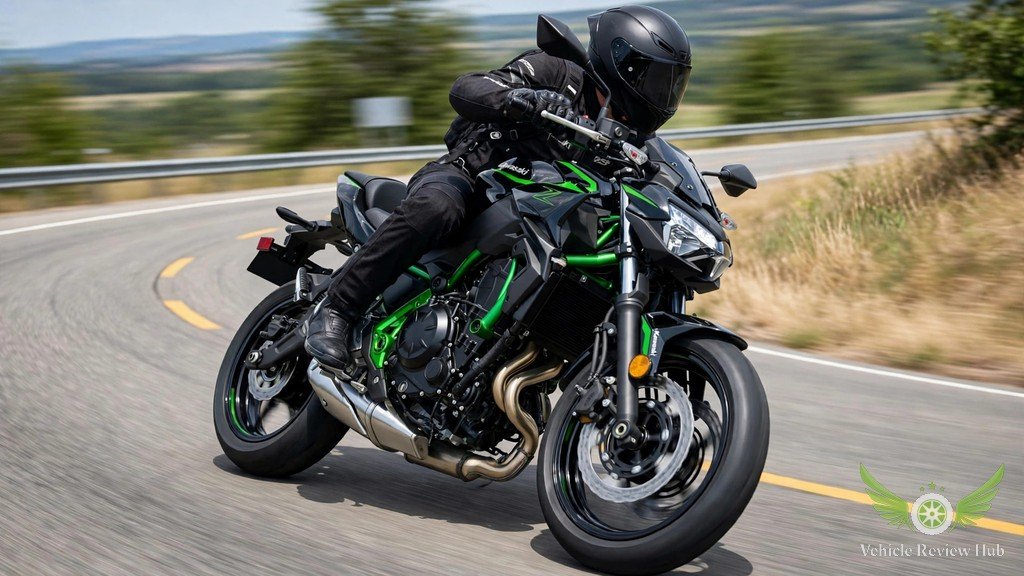
60 to 0 in 132 Feet
The best braking figure in the record comes from Cycle World’s 2017 three-bike comparison of the Z650, the SV650 and the FZ-07. From 60 mph to a stop, the Z650 needed 132 feet, the FZ-07 needed 136 feet and the SV650 needed 139 feet — the Z650 stopped shortest of the trio. MCN’s 2022 SV650 page and themotorbikeforum.co.uk both quote the Cycle World test. One caveat matters, and this Kawasaki Z650 ABS performance guide states it plainly: whether Cycle World’s test bike was the ABS trim or the non-ABS trim was not recorded. Ultimate Motorcycling’s same-trio three-way tested ABS trims, and Motorcycle.com’s 2017 shootout lists the Z650 at “$7,399 w/ABS” — but the 132-foot figure itself cannot be called an ABS-bike figure. It is a Cycle World 2017 figure, and that is how it is printed here.
ZigWheels’ Indian BS6 test adds a second data point for this Kawasaki Z650 ABS performance guide, labelled as such: 100–0 km/h in 50.91 m and 80–0 km/h in 32.91 m, against 31.38 m for 80–0 on the earlier BS4 bike.
No ABS vs Non-ABS Test
No publication has ever compared the two trims’ stopping distances. The record contains no ABS versus non-ABS braking test, no ABS braking-demo video, and no ABS-specific dyno — and this Kawasaki Z650 ABS performance guide says so plainly instead of inventing a comparison. The only measured difference between the trims is the weight: 2.2 to 4.4 lb of ABS hardware, depending on the year. The engine, the brakes, the tyres and the chassis are the same, so there is no mechanical reason to expect a meaningful gap.
Top speed, for the record, is the thinnest part of this Kawasaki Z650 ABS performance guide: MCN lists 125 mph on its 2017–2019 Z650 review page, the only published top-speed figure attached to the model, and a 2023 owner topped out at 123 mph on I-95 — a speedometer reading, not a GPS-verified test figure. Acceleration is thinner still: ZigWheels’ 2017 VBox run gave 0–100 km/h in 4.48 seconds on the Indian BS4 bike (4.81 seconds on the BS6 bike), and a 13.32-second quarter-mile whose trap speed is not printed here. There is no US 0–60 mph figure, and none is derived from the 0–100 km/h figure — a conversion is not a test.
| Figure | Value | Tester + year |
|---|---|---|
| 60–0 braking, Z650 | 132 ft | Cycle World, 2017 |
| 60–0 braking, FZ-07 | 136 ft | Cycle World, 2017 |
| 60–0 braking, SV650 | 139 ft | Cycle World, 2017 |
| Top speed (listed) | 125 mph | MCN, 2017–2019 review |
| Top speed (owner reading) | 123 mph | 2023 owner, I-95, speedometer |
| 0–100 km/h | 4.48 s | ZigWheels VBox, 2017, India |
| Quarter-mile | 13.32 s | ZigWheels VBox, 2017, India |
Note: This Kawasaki Z650 ABS performance guide’s braking and acceleration table prints every figure with its tester and year: the 132-foot figure’s test-bike trim was not recorded, the 123 mph figure is a speedometer reading rather than a GPS-verified test, and the 13.32-second quarter-mile’s trap speed is not printed because the recorded 119 km/h is too slow for the elapsed time.
Kawasaki Z650 ABS Mileage and Fuel Economy
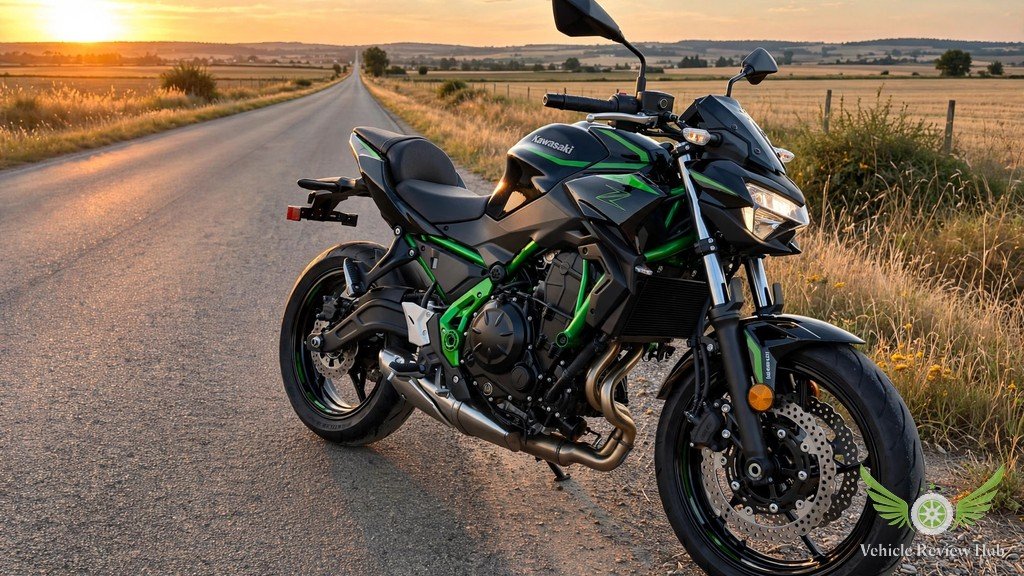
Fuel economy is the one area where this bike has no factory number at all. Kawasaki publishes no MPG figure for any year, on any US spec sheet, so every economy number in this Kawasaki Z650 ABS performance guide is an observed figure with a tester attached.
47 mpg on the ABS Bike
The “47 mpg in Cycle World Test” figure that some pages repeat could not be verified. No Cycle World test that printed 47 mpg for the Z650 could be found. The only 47 mpg in the record is the Yamaha FZ-07’s observed figure in Motorcycle.com’s 2017 shootout — the same test that observed 44 mpg for the Z650. The 47 belongs to the FZ-07, not to the Z650, and this Kawasaki Z650 ABS performance guide does not print it as the Z650’s mileage.
Kawasaki Publishes No MPG
With no factory figure, the observed numbers are the whole story in this Kawasaki Z650 ABS performance guide. Motorcycle.com observed 44 mpg in its 2017 shootout. Men’s Journal saw about 44 mpg over 474 spirited miles in two weeks on a 2017 Z650 ABS. Bennetts recorded about 53 mpg in normal riding and 50 mpg when ridden hard on a UK bike. The spread — 44 to 53 mpg — is the difference between spirited and gentle riding: the same 4.0-gallon tank gives roughly 175 to 210 miles, a calculation from the observed figures, labelled as such. None of these figures is ABS-specific: the ABS hardware adds weight, not fuel consumption, and no tester ever measured a mileage difference between the trims.
| Tester + year | Observed MPG | Notes |
|---|---|---|
| Motorcycle.com, 2017 shootout | 44 mpg | Z650 observed; FZ-07 observed 47 mpg in the same test |
| Men’s Journal, 2017 | ~44 mpg | 474 spirited miles over two weeks, 2017 Z650 ABS |
| Bennetts, 2017 | ~53 mpg normal / 50 mpg hard | UK bike; 211-mile range |
| MCN | — | Tank range 165 miles |
Note: This Kawasaki Z650 ABS performance guide’s mileage table prints observed figures only — Kawasaki publishes no MPG for any year. The 47 mpg figure belongs to the FZ-07 in Motorcycle.com’s 2017 shootout, and the “47 mpg in Cycle World Test” claim for the Z650 could not be verified.
Kawasaki Z650 ABS Real-World Riding Experience
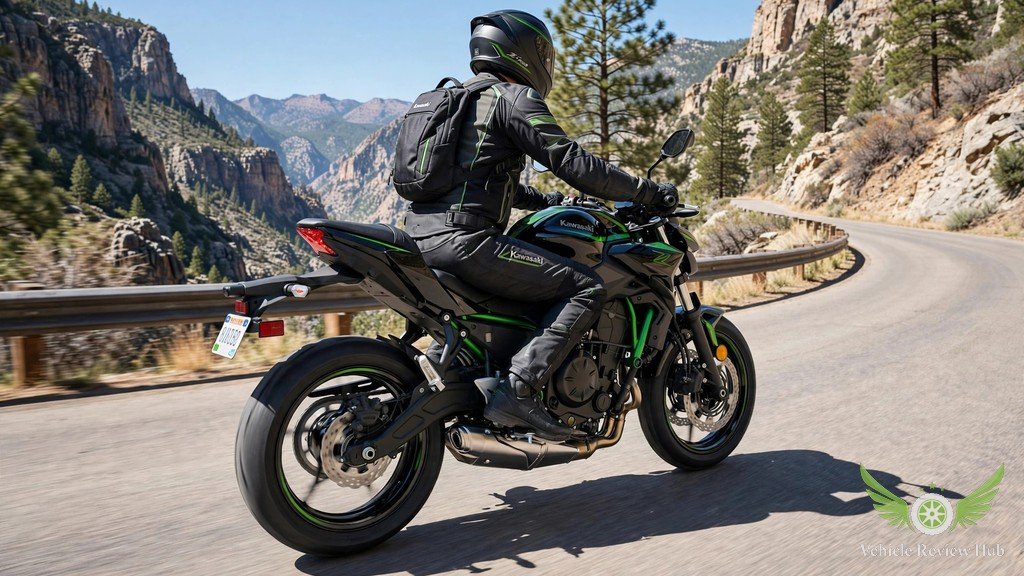
On the road, the Z650’s performance is defined less by its peak figures than by how easily it delivers them: the 649cc twin makes its claimed 67.0 hp at 8,000 rpm, but at 410 lb in ABS trim with a 30.9 to 31.1-inch seat, the power feels generous rather than intimidating. This Kawasaki Z650 ABS performance guide judges the riding experience on what the testers actually wrote, not on what the spec sheet promises.
The Riding Experience Buyers Actually Talk About
In Motorcycle.com’s 2017 five-way shootout, the Z650 finished runner-up at 83.0 percent, behind the FZ-07 at 84.4 percent and ahead of the SV650 at 82.2 percent, the Street Rod at 76.4 percent and the TnT600 at 69.3 percent. The Z650 won the Handling and Suspension categories outright, and its brake feel was called the “most confidence-inspiring of this group”. Ultimate Motorcycling’s three-way noted the Z650 “gets the steepest rake (by 0.8 degrees), and a short wheelbase”. What buyers actually talk about in this Kawasaki Z650 ABS performance guide is what the testers kept returning to: a light, narrow, friendly bike that steers quickly and never fights its rider. In the 2021 six-way, the Triumph Trident 660 won with 87.5, 90.4 and 86.3 percent across the three testers, and the SV650 finished sixth at 76.0, 77.9 and 79.2 percent — the Z650 sat in the middle of that group, the gentlest bike in the test.
Vibration is the one complaint that follows the bike through every test. Motorcycle.com’s Duke wrote that it “buzzes hard around 7-8000 rpm”, and Brasfield added “more high-rpm vibration than the other bikes, but it never becomes annoying”. ZigWheels found “a prominent buzz crops up between 4000 and 5000rpm”, and Bennetts’ 2017 first ride put the vibration “bang on 6000rpm in top at 120kph (74.5mph)”. The buzz is real, documented at three different rpm bands by three different testers, and no fix was ever claimed for it — this Kawasaki Z650 ABS performance guide prints all three reports, attributed.
Testers Barely Mentioned ABS
For a bike whose trim is defined by ABS, the testers had strikingly little to say about the system itself — and this Kawasaki Z650 ABS performance guide says so plainly. Ultimate Motorcycling gave it one line — “ABS is optional on all three, and we fully recommend it” — and moved on. Motorcycle.com discussed the brakes as feel. RevZilla’s first ride called the brakes “adequate”. Bennetts’ Marc Potter, from the Spain launch: “the brakes are adequate and the suspension is a little bit softly sprung for my weight, but then it is no sportsbike. It is fun. It’s nimble, it’s accurate and it’s light.”
One tester did criticise the ABS, and this Kawasaki Z650 ABS performance guide carries the criticism alongside the clean record. ZigWheels’ BS6 road test in India found the front ABS intervening too early — “when it does, brake pressure is released excessively and for far too long, resulting in a brake lever that’s seemingly frozen solid, and some rather long braking distances” — and the rear wheel locking “on many occasions… before ABS decided to take any action”. That is a calibration criticism, not a failure: no recall, no NHTSA complaint and no documented ABS-unit failure exists for this bike. The clean failure record and the documented calibration complaint sit side by side in this Kawasaki Z650 ABS performance guide.
Kawasaki Z650 ABS Handling, Braking and Stability
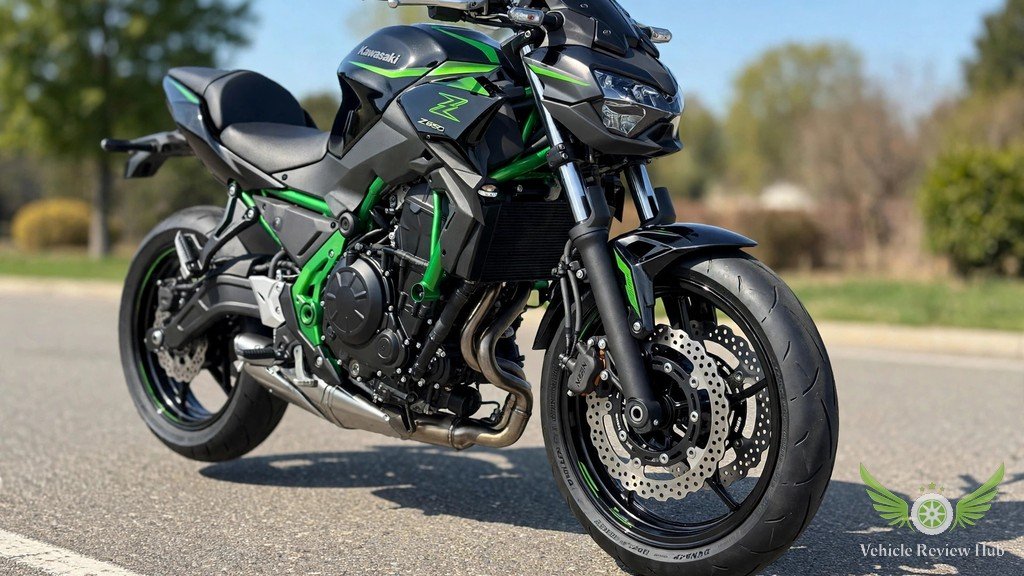
The chassis is why the Z650 won the Handling and Suspension categories in Motorcycle.com’s 2017 shootout, and the braking hardware is why this Kawasaki Z650 ABS performance guide spends a whole section on it: a light trellis frame that steers quickly, and dual front discs with a two-channel ABS unit that watches wheel speed and releases pressure when a wheel locks.
Handling, Braking and Stability on Real Roads
The frame is steel trellis, the fork is a 41 mm telescopic unit with 4.9 inches of travel, and the rear is a horizontal back-link shock with preload adjustment and 5.1 inches of travel. Rake and trail are 24.5 degrees and 3.9 inches, the wheelbase is 55.5 inches, and the seat sits at 30.9 inches on the 2017–2019 bikes, 31.1 inches from 2020, and 31.7 inches on the 2026–2027 S. Up front are dual 300 mm discs with two-piston Nissin calipers and ABS — petal discs from 2017 through 2025, round discs on the 2026–2027 S — and a single 220 mm disc at the rear. The tyres are a 120/70 ZR17 front and a 160/60 ZR17 rear, at 225 kPa front and 250 kPa rear cold; the manual prints 32 psi for the front, never 33 psi. On real roads, that combination is why this Kawasaki Z650 ABS performance guide calls the bike stable rather than sharp: it steers quickly, holds a line without fuss, and the ABS stays out of the way until a wheel actually locks. The curb weight in ABS trim is 410.1 lb on the 2017 and 2019 bikes, 412.3 lb from 2020 through 2023, 414.5 lb in 2025, and 416.7 lb — 419.0 lb for the 50-state bike — on the 2026–2027 S.
ABS Cannot Be Switched Off
There is no ABS off switch on any year of this bike. The owner’s manual describes ABS as automatic only, and a lit warning lamp is a malfunction, not a rider setting. The switchable system is KTRC traction control, not ABS: two modes in 2023 and 2024, three modes in 2025, two modes on the 2026 S, switched off from the left switch housing, and always on when the engine starts. There is no cornering ABS and no IMU on this platform in any year — the 2017 manual says it plainly, that ABS “cannot control wheel slip which may be caused by braking during cornering”. For this Kawasaki Z650 ABS performance guide, that is a plain fact: the system is always there, always on.
Kawasaki Z650 ABS Performance Compared With Other Sport Bikes
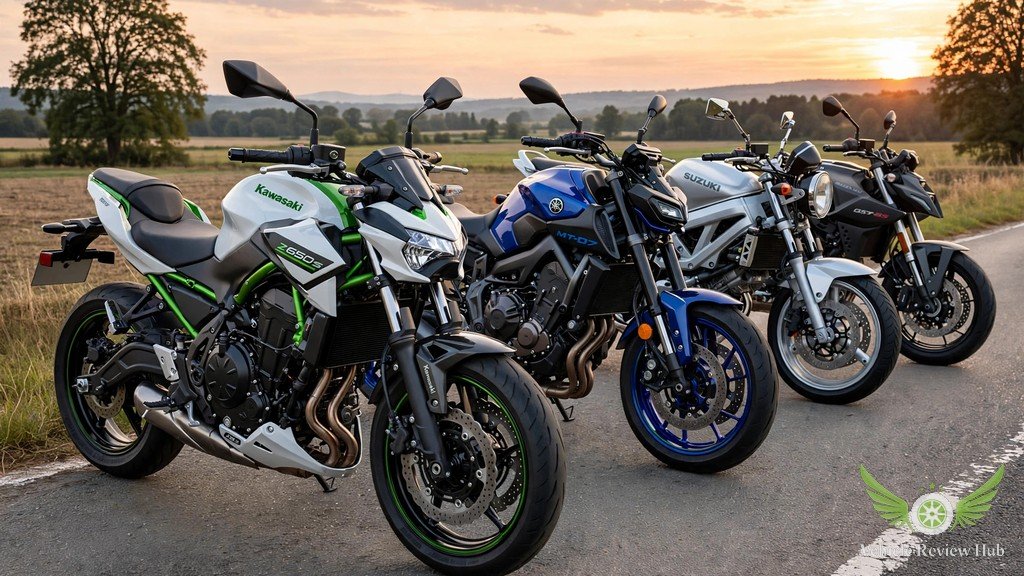
Against its rivals, the Z650 is the gentlest bike in the group and the cheapest to buy — and this Kawasaki Z650 ABS performance guide says both facts in the same breath, because the trade is the point. The 2021 six-way dyno table above tells the power story. The price story runs the other way: the 2027 Z650 S ABS is $8,584 delivered, the cheapest in its class.
Kawasaki Z650 ABS vs Yamaha MT-07
The MT-07 is the Z650’s closest rival and its clearest contrast in this Kawasaki Z650 ABS performance guide. The 2026 MT-07 costs $8,599 plus $675 destination, or $9,274 delivered — $690 more than the 2027 Z650 S ABS — and the Y-AMT automated-manual trim at $9,199 is a separate model, not the standard bike. Its 689cc CP2 twin makes about 73.4 hp on the global rating (Yamaha USA publishes no US hp figure), measured 70.0 hp at 8,500 rpm on Motorcycle.com’s 2021 dyno, and makes 48.7 lb-ft at 6,300 rpm. The MT-07 is lighter too, at 403 lb wet against the Z650’s 414.5 lb, and the 2025-and-later bike brings a 41 mm inverted fork, radial brakes, ride-by-wire and a 5-inch TFT. On braking, the old FZ-07 needed 136 feet from 60 mph in Cycle World’s 2017 test, four feet more than the Z650’s 132.
Is the Kawasaki Z650 ABS Suitable for Beginner Riders?
Mostly yes, with two honest reservations. The case for beginners, as this Kawasaki Z650 ABS performance guide reads it, is the bike itself: 410 lb in ABS trim, a 30.9 to 31.1-inch seat, an upright riding position, and a twin that makes its power low down. Sonny Brooks put it plainly in 2025: “The upright ergonomics, surprising comfort, sharp throttle response, and freeway-friendly power make this one of the best middleweight naked bikes on the market. But is it beginner-friendly? Not quite.” The reservations are the ones this Kawasaki Z650 ABS performance guide has already named: a claimed 67.0 hp is a lot for a first bike, the throttle is a cable rather than ride-by-wire, and there is no cornering ABS or IMU to catch a leaned-over mistake. ABS itself is a beginner’s friend — always on, never switchable — but it only watches wheel lock, not lean angle. That is the honest answer this Kawasaki Z650 ABS performance guide reaches: the gentlest middleweight in its class, and still a middleweight.
| Bike | Delivered (2026/2027) | Claimed power | 2021 dyno hp | Seat |
|---|---|---|---|---|
| Kawasaki Z650 S ABS (2027) | $8,584 | 67.0 hp @ 8,000 | 61.4 hp @ 8,100 | 31.7 in |
| Suzuki SV650 ABS (2026) | $8,749 | ~75 hp (global) | 70.7 hp @ 8,600 | 30.9 in |
| Yamaha MT-07 (2026) | $9,274 | ~73.4 hp (global) | 70.0 hp @ 8,500 | 31.7 in |
Note: This Kawasaki Z650 ABS performance guide’s rival table uses 2026/2027 delivered prices and Motorcycle.com’s 2021 six-way dyno figures, same dyno, same day. The SV650’s $8,749 is before Suzuki’s $250 freight surcharge (which takes it to $8,999), and the MT-07 Y-AMT at $9,199 is a separate trim.
Kawasaki Z650 ABS Performance: Frequently Asked Questions
These are the questions buyers ask most about this Kawasaki Z650 ABS performance guide — answered with the verified dyno figures, the braking test and the observed mileage above. Every answer in this Kawasaki Z650 ABS performance guide FAQ section uses the same figures as the body, so nothing here contradicts the tables.
What did the Z650 make on the dyno?
60.95 hp at 8,000 rpm and 43.71 lb-ft at 6,700 rpm in Motorcycle.com’s 2017 five-way shootout, and 61.4 hp at 8,100 rpm in their 2021 six-way (the lowest of the six). Both figures are model-level — the test bikes wore ABS, but no dyno ever separated ABS from non-ABS performance.
How far does the Z650 stop from 60 mph?
132 feet, in Cycle World’s 2017 three-bike comparison — the best of its trio (the FZ-07 stopped in 136 feet, the SV650 in 139 feet). Whether Cycle World’s test bike was the ABS or the non-ABS trim was not recorded.
Has anyone tested ABS vs non-ABS braking on the Z650?
No. No publication has ever compared the two trims’ stopping distances, and no ABS braking-demo video exists in the verified record.
What MPG does the Z650 ABS get?
Kawasaki publishes no MPG figure for any year. Observed figures, each with its tester: Motorcycle.com 44 mpg (2017 shootout), Men’s Journal about 44 mpg over 474 spirited miles, Bennetts about 53 mpg normal and 50 mpg hard riding (UK bike). The “47 mpg in Cycle World Test” claim could not be verified — the only 47 mpg in the record is the FZ-07’s observed figure in the same Motorcycle.com shootout.
Is the ABS bike slower than the non-ABS bike?
No measured difference exists. The dyno figures are model-level, no test ever separated the trims, and the ABS hardware adds only 2.2–4.4 lb. Same engine, same claimed 67.0 hp at 8,000 rpm.
Does ABS change the Z650’s power?
No. ABS changes the braking hardware only. The engine is the same 649cc twin in both trims, with the same claimed 67.0 hp at 8,000 rpm and 48.5 lb-ft at 6,500 rpm (2019–2025; 47.2 lb-ft at 6,700 rpm for 2026–2027).