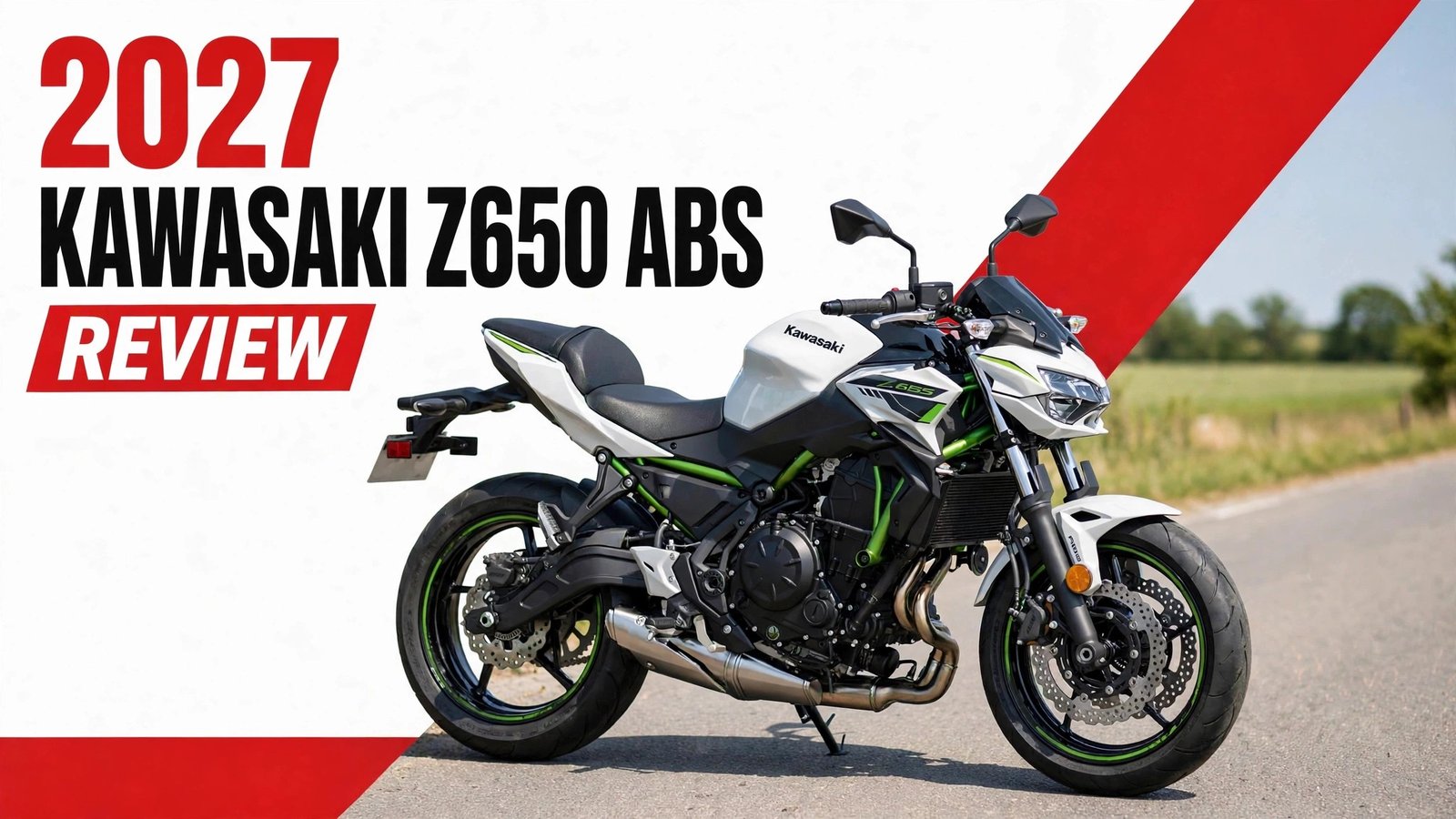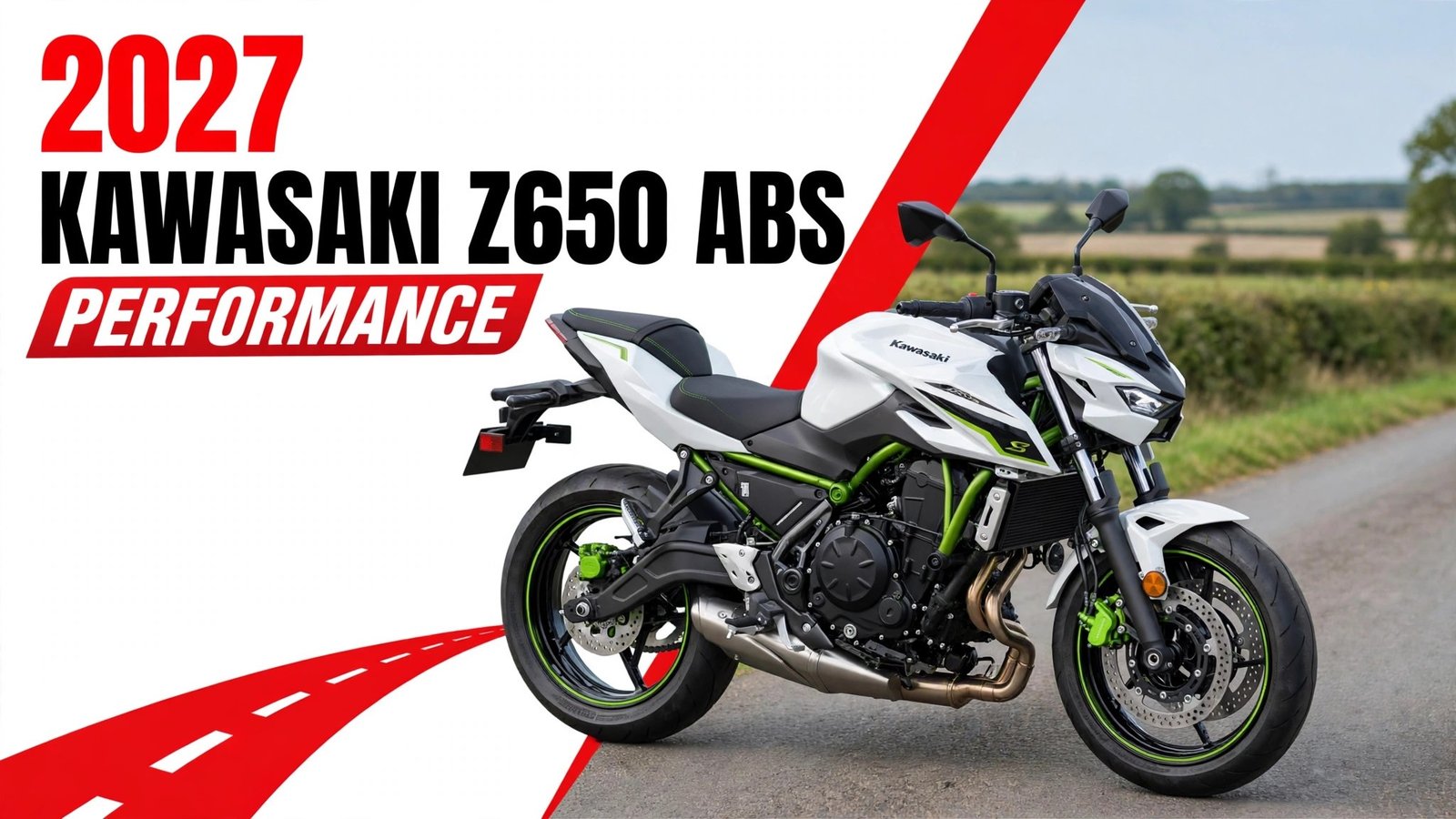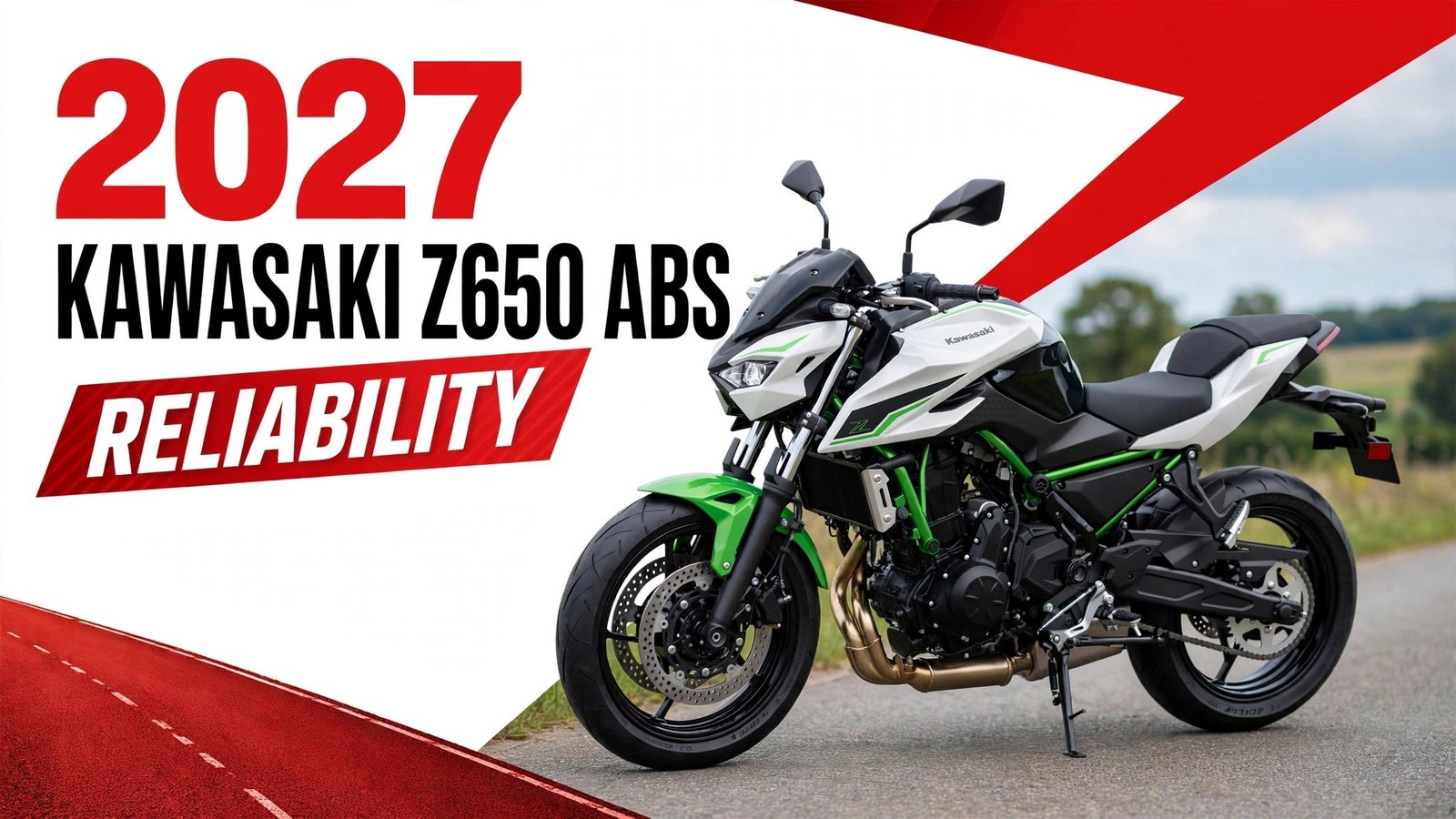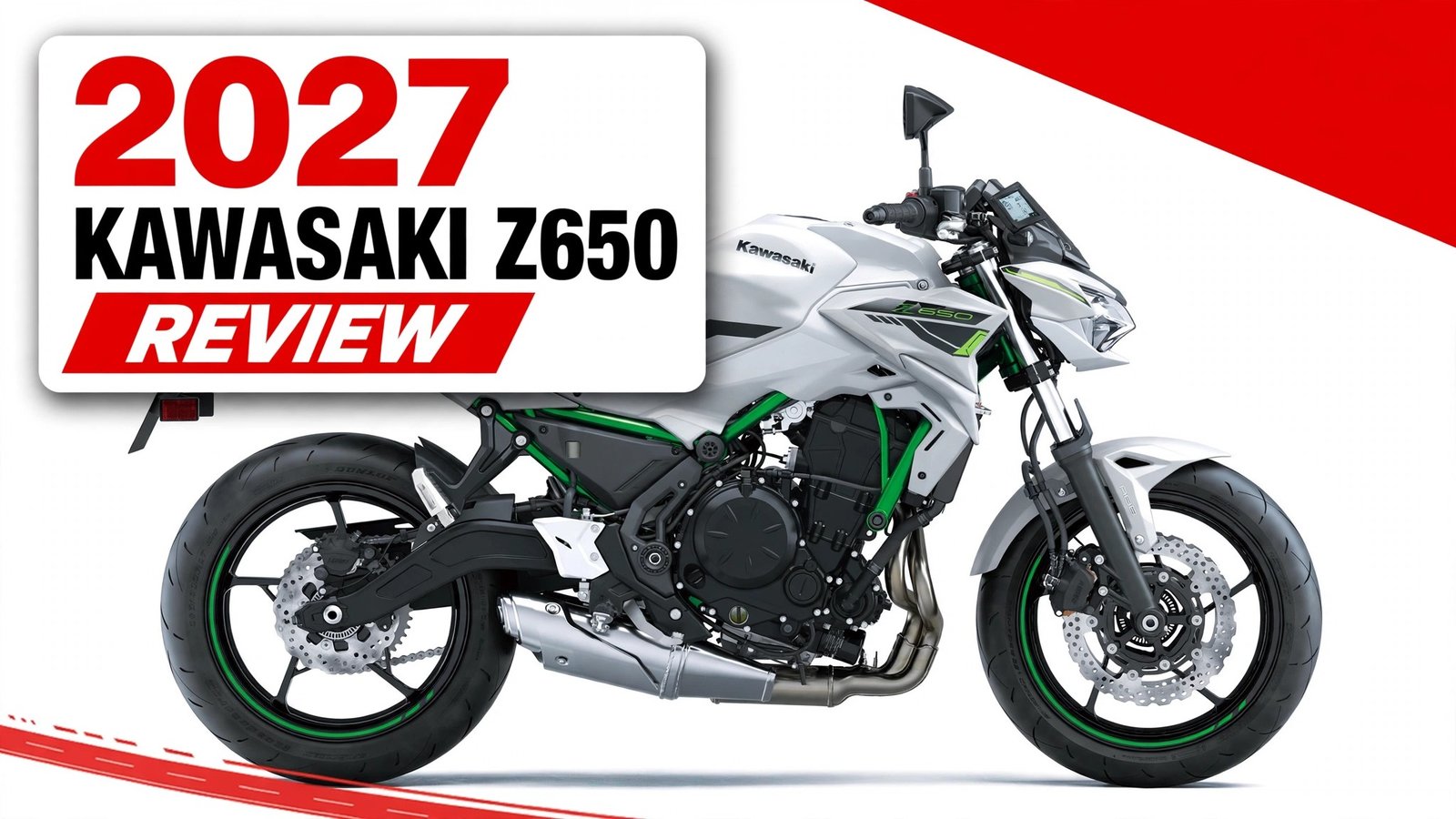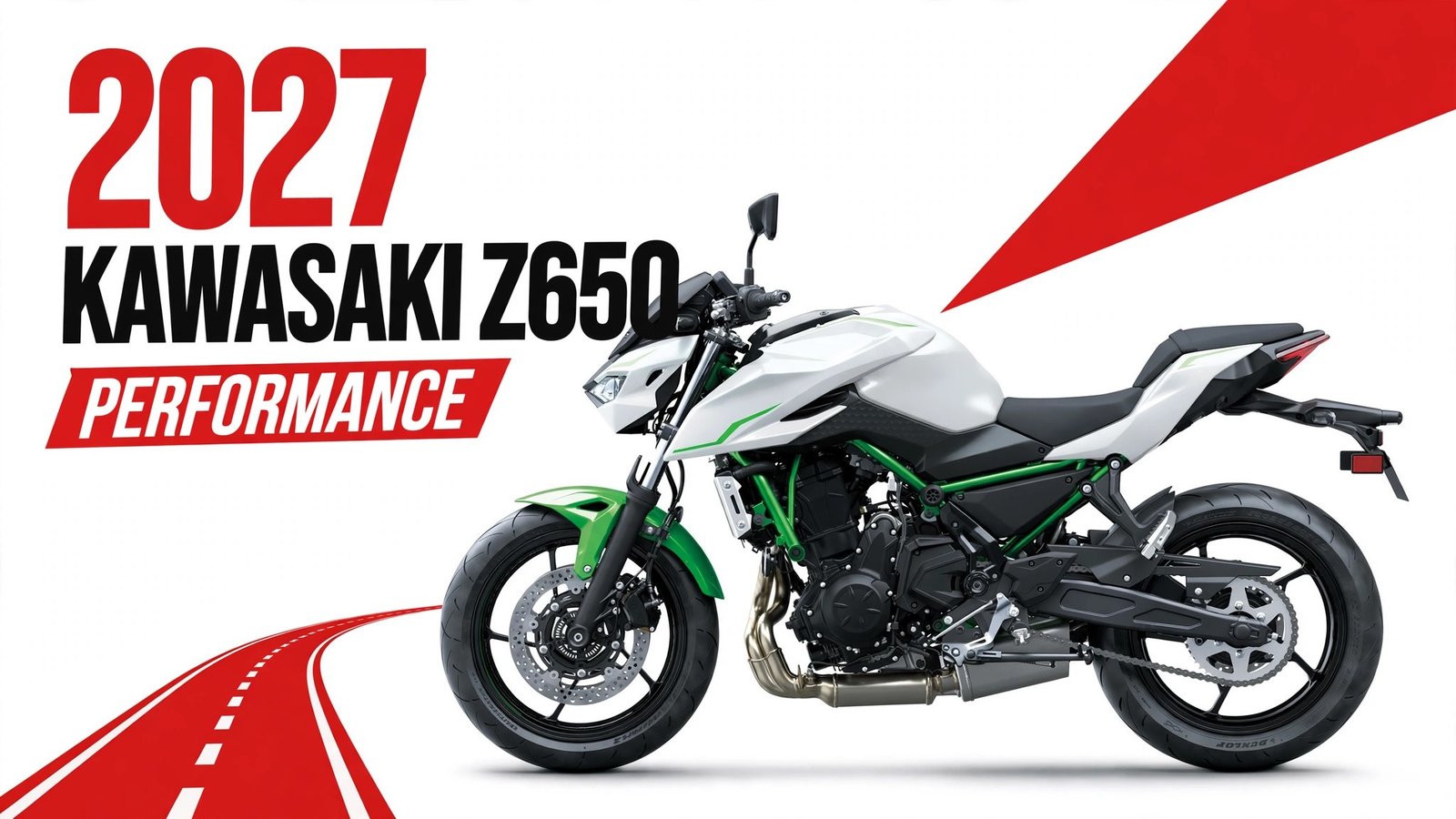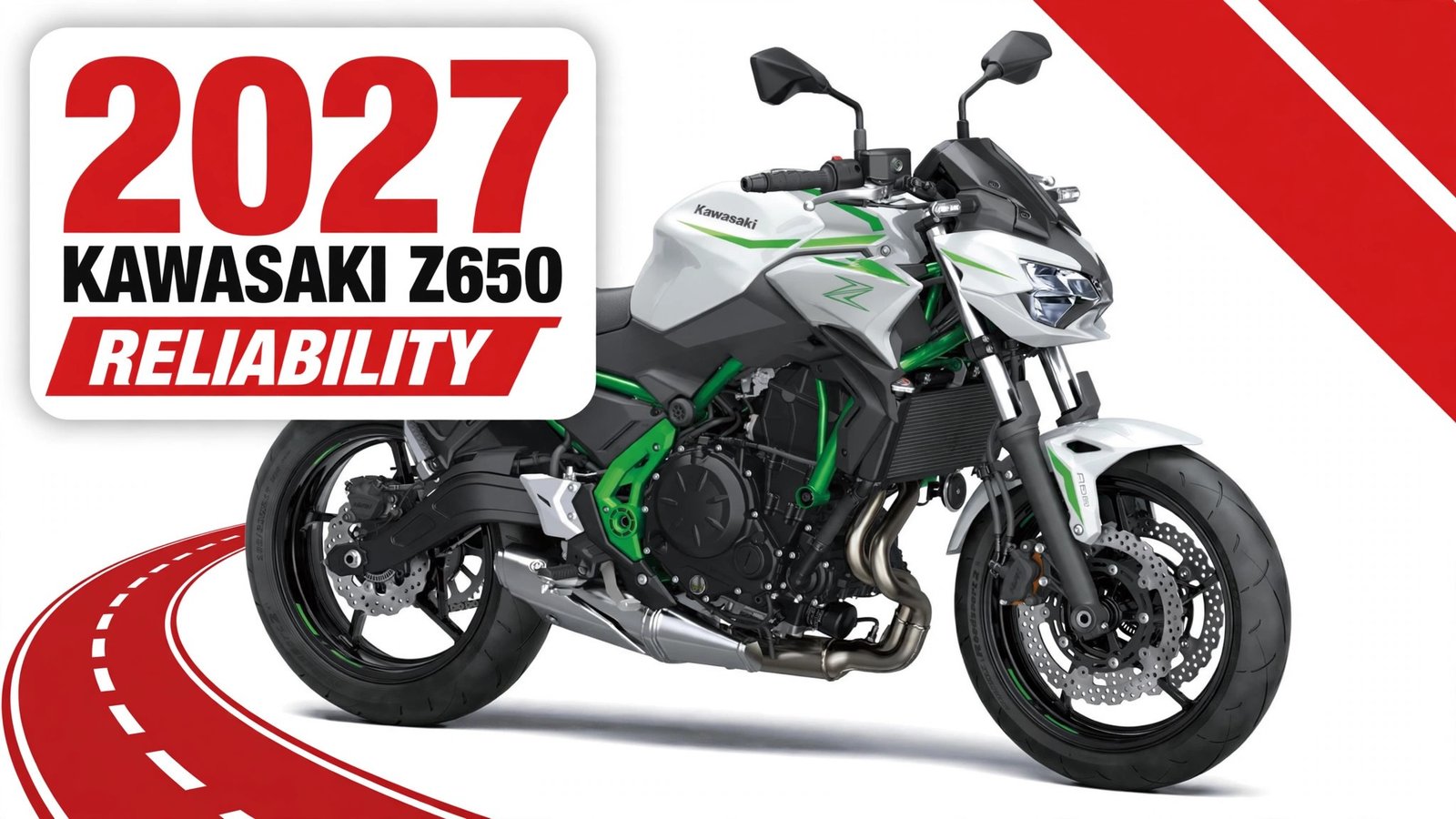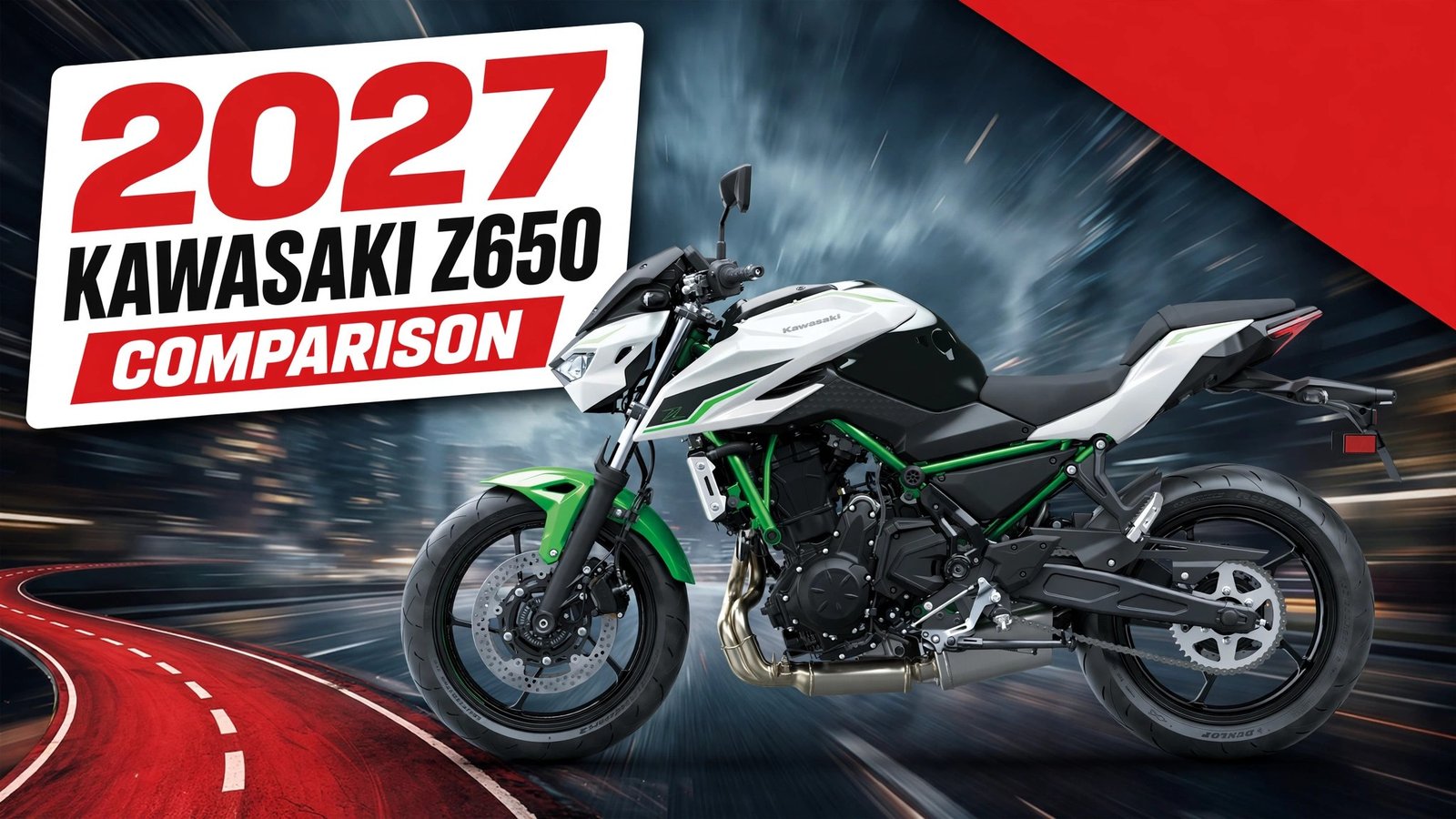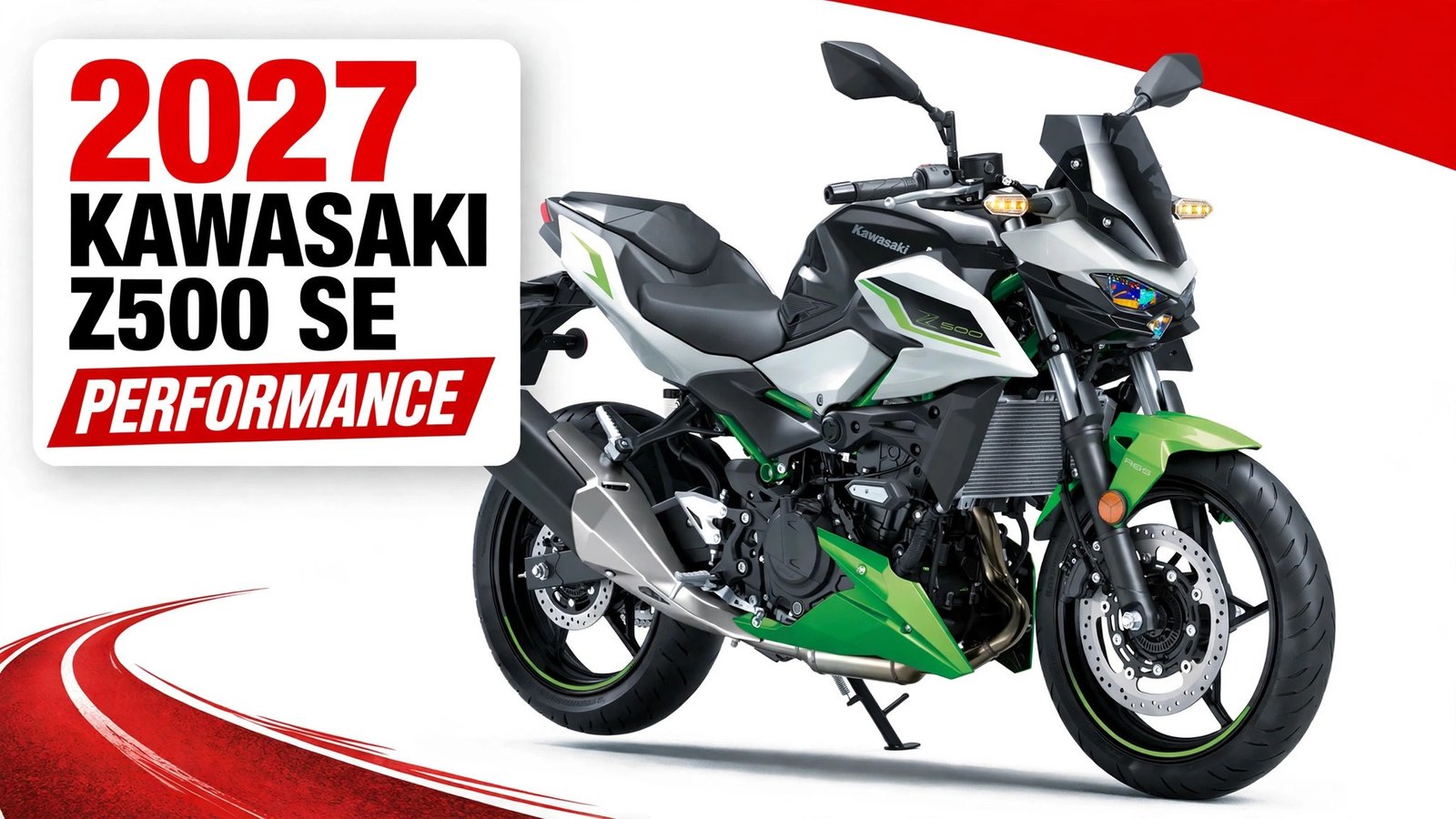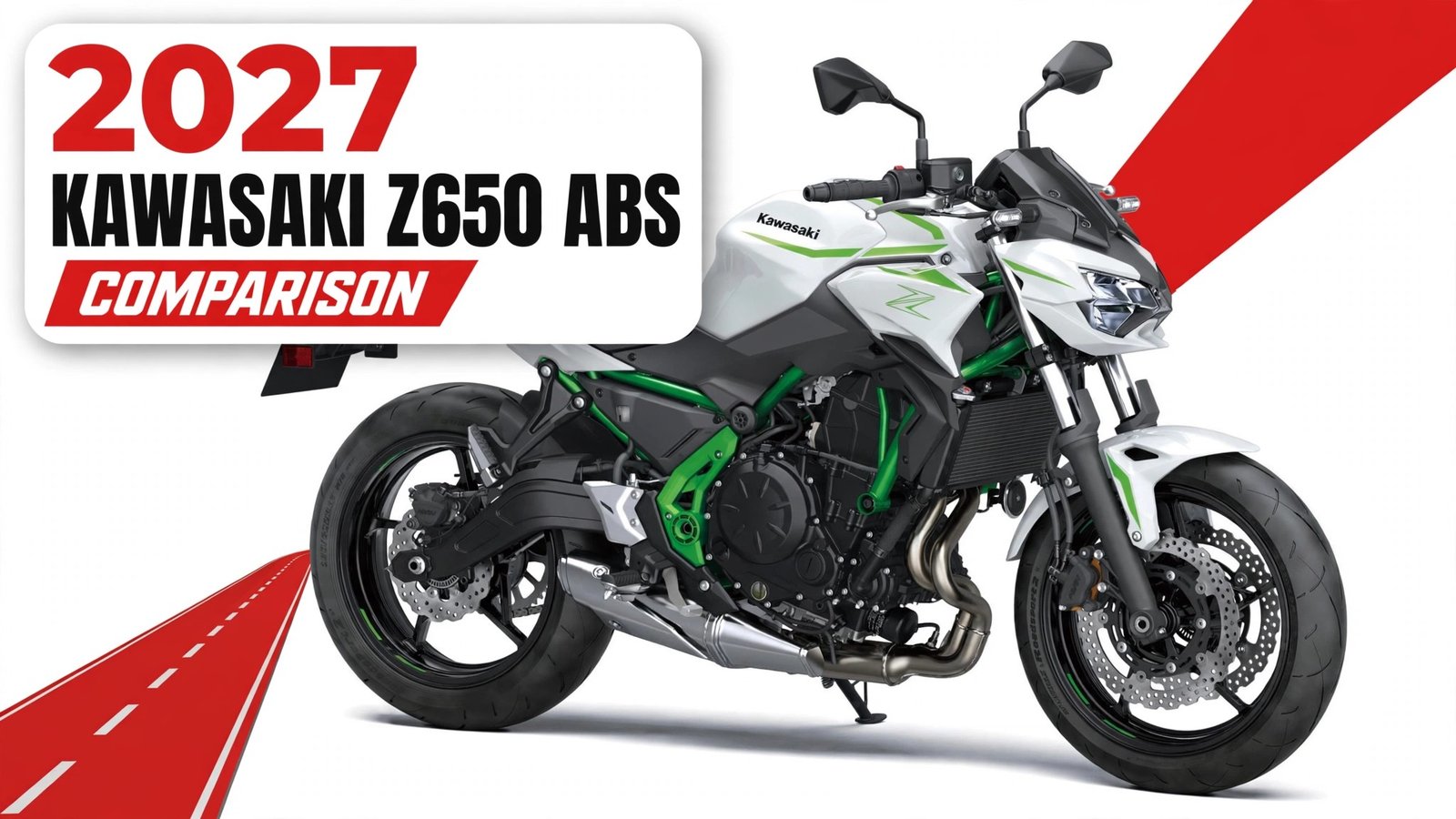
The Kawasaki Z650 ABS was never the fastest, lightest or most powerful middleweight naked. Its pitch was simpler: the cheapest way into a bike with ABS in its class — the claim this Kawasaki Z650 ABS comparison tests. This Kawasaki Z650 ABS comparison puts that pitch to the test against the bike it came from, the two rivals it undercut at launch, and the 2027 price ladder.
Four bikes frame this Kawasaki Z650 ABS comparison: the non-ABS Z650, the SV650 and the MT-07 it undercut by $100 in 2017, plus the GSX-8S and the CB650R in the price table. Every price below is a delivered price — MSRP plus destination — because that is the number a buyer pays.
Kawasaki Z650 ABS Overview and Its Closest Rivals
The Z650 ABS is the ABS-equipped trim of the Kawasaki Z650, the naked twin of the Ninja 650. The only mechanical difference from the non-ABS bike is the ABS system itself — modulator, tone rings and wiring — plus 2.2 to 4.4 lb of weight. Everything else is shared, which is why this Kawasaki Z650 ABS comparison starts with the trim before it reaches the rivals.
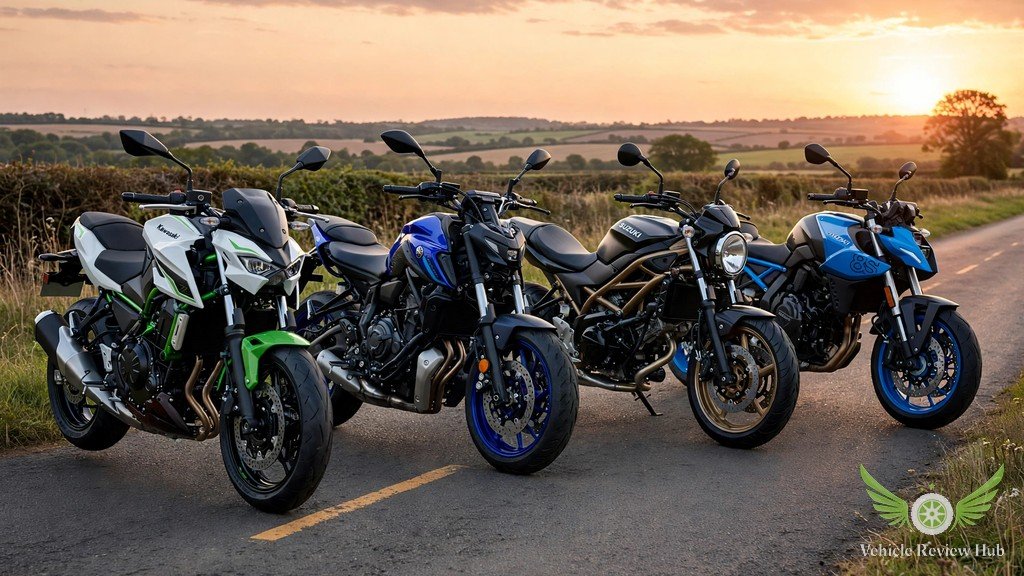
Pitch Was Cheap ABS
In 2017 the Z650 ABS cost $7,399 against $7,499 for both the SV650 ABS and the Yamaha FZ-07 ABS — a $100 undercut that Ultimate Motorcycling noted in its three-way test, where all three bikes were tested in ABS trim. That $100 gap is the whole pitch of this Kawasaki Z650 ABS comparison: ABS was a paid option on every bike in the class, and Kawasaki charged the least for it. The gap has only widened since — the 2027 Z650 S ABS is now the cheapest delivered bike in its class.
The hardware never changed its character: the Bosch 9.1M unit fitted from 2017 through 2025 gave way to a Continental unit on the 2026 S, and the front discs changed from petal to round, but the system stayed a plain dual-channel ABS with no IMU and no cornering function. The Z650 ABS review carries the full premium ladder and hardware story; this Kawasaki Z650 ABS comparison uses them only as the baseline for the verdicts.
How the Four Bikes Differ at a Glance
At a glance the four bikes are closer than their prices suggest: the Z650 ABS and the non-ABS Z650 are the same motorcycle with one option ticked, the SV650 is the V-twin alternative with the lowest seat in the group, and the MT-07 is the CP2 twin with the lightest wet weight and the most modern electronics. This Kawasaki Z650 ABS comparison lines them up below on the figures buyers actually compare.
| Bike | Engine | Claimed power | Seat height | 60–0 braking |
|---|---|---|---|---|
| 2027 Z650 S ABS | 649cc parallel twin | 67.0 hp @ 8,000 rpm | 31.7 in | 132 ft (Cycle World 2017) |
| Z650 (non-ABS) | 649cc parallel twin | 67.0 hp @ 8,000 rpm | 31.1 in (2020–2025) | Not tested separately |
| 2026 Suzuki SV650 ABS | 645cc V-twin | ~75 hp (global; Suzuki USA publishes no figure) | 30.9 in | 139 ft (Cycle World 2017) |
| 2026 Yamaha MT-07 | 689cc CP2 twin | ~73 hp (global; Yamaha USA publishes no figure) | 31.7 in | 136 ft (Cycle World 2017, as FZ-07) |
Note: The 2027 Z650 S ABS is the Kawasaki entry because the S is the only US trim from 2026. The braking figures in this Kawasaki Z650 ABS comparison are all from Cycle World’s 2017 three-bike test, and whether its Z650 test bike was the ABS or the non-ABS trim was not recorded.
Kawasaki Z650 ABS vs Kawasaki Z650
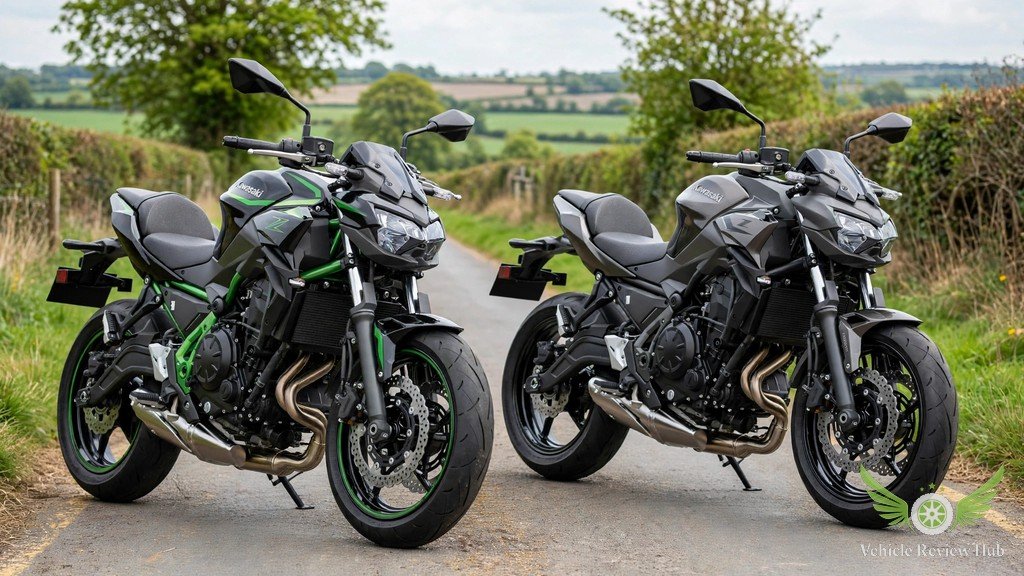
Comparing the Z650 ABS against the non-ABS Z650 is the shortest section in this Kawasaki Z650 ABS comparison, because the two bikes are the same motorcycle with one option ticked — no engine, chassis or styling difference, just a modulator, tone rings and wiring added on the production line. The only questions are what the option cost, what it weighed, and whether it is worth hunting down used.
Engine, Specs and Performance Side by Side
Both trims share the same 649cc liquid-cooled parallel twin, the same claimed 67.0 hp at 8,000 rpm (ISO 4106), and the same torque — 48.5 lb-ft at 6,500 rpm for 2019–2025 bikes, 47.2 lb-ft at 6,700 rpm for the 2026–2027 S. The dyno figures in this Kawasaki Z650 ABS comparison are model-level, not trim-level: Motorcycle.com measured 60.95 hp at 8,000 rpm and 43.71 lb-ft at 6,700 rpm in its 2017 five-way shootout, and 61.4 hp at 8,100 rpm in its 2021 six-way, the lowest of the six. No dyno has ever tested the two trims against each other.
The weight difference is the only performance-relevant figure, and it is small: the ABS hardware adds 2.2 to 4.4 lb — +4 lb in 2017, +4.4 lb in 2019, +2.2 lb in 2023 and 2025. No measured acceleration difference exists between the trims, and the braking comparison is empty: no publication has ever compared the two trims’ stopping distances. The 132-foot stop from 60 mph in Cycle World’s 2017 test is a model-level figure, and whether that test bike wore ABS was never recorded — a gap this Kawasaki Z650 ABS comparison leaves open.
Price, Equipment and Which Suits Which Rider
ABS was a paid option from launch until the 2026 S rename made it the only trim: $400 in 2017–2020, $500 from 2021 through 2025, with 2020 colour-priced at $7,249–$7,349 non-ABS and $7,649–$7,749 ABS. The table below carries the ladder year by year, including the one year where the record itself disagrees. The ladder is the spine of this Kawasaki Z650 ABS comparison.
| Year | Non-ABS MSRP | ABS MSRP | Premium |
|---|---|---|---|
| 2017 | $6,999 | $7,399 | $400 |
| 2018–2019 | $6,999 | $7,399 | $400 |
| 2020 | $7,249–$7,349 | $7,649–$7,749 | $400 |
| 2021 | $7,249 | $7,749 | $500 |
| 2022 | $7,549 | $8,049 | $500 |
| 2023 | $7,749 | $8,249 | $500 |
| 2024 | $7,249 or $8,149 | $7,749 or $8,649 | $500 either way |
| 2025 | $7,249 | $7,749 | $500 |
| 2026–2027 | — (S only) | $7,699 / $7,899 | $500 |
Note: The 2024 prices are contested: Cycle World’s 2024 model page plus the Motorcycle.com database print $8,149/$8,649, while five DX1 dealer brochures print $7,249/$7,749 for the same bike (ER650NRFAL) — delivered, either $8,199 or $9,099 at the $450 destination both sides agree on. The 2025 destination is a three-way conflict ($665/$685/$650 → $8,414/$8,434/$8,399), and this Kawasaki Z650 ABS comparison does not settle it either.
For a 2017–2025 buyer the ABS bike was the obvious pick at $400–$500 — the cheapest ABS in its class, on a bike whose only electronic system has no failure on the record. From 2026 there is no choice to make: the US bike is the Z650 S ABS only, at $7,699 for 2026 and $7,899 for 2027 on Kawasaki’s own 2027 sheet, delivered at $8,384 and $8,584. The non-ABS bike survives only on the used market, where no verified premium for ABS exists at all — a point this Kawasaki Z650 ABS comparison returns to in the price section below.
Kawasaki Z650 ABS vs Suzuki SV650
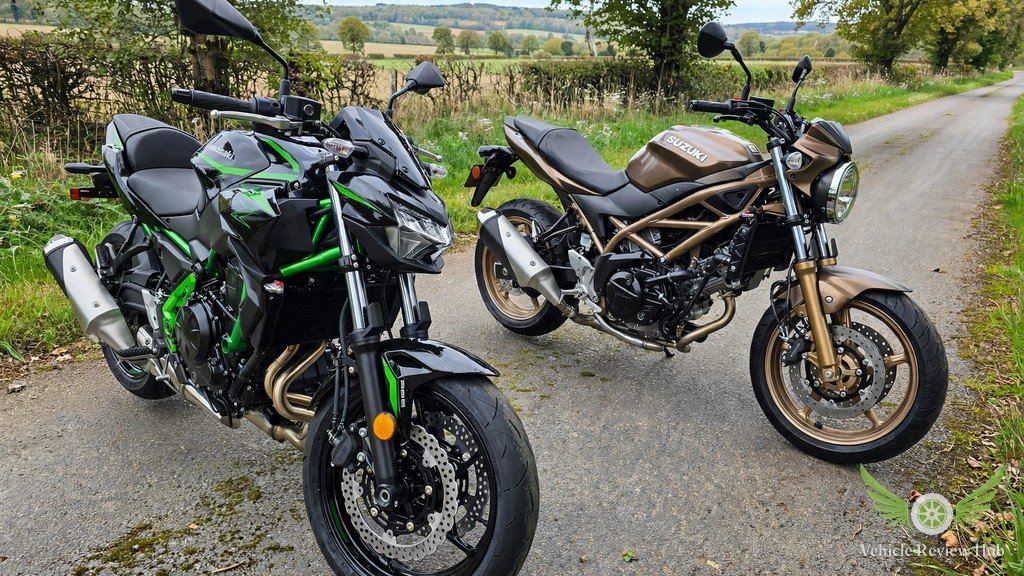
The SV650 is the Z650 ABS’s oldest rival and its closest one on price. Both are middleweight nakeds with ABS, both on sale in the US since 2017, both tested head-to-head at launch. The difference is character: the Kawasaki is a parallel twin with a trellis frame and a TFT dash on the S, while the Suzuki is a 645cc V-twin barely changed since its 2017 relaunch. This Kawasaki Z650 ABS comparison weighs the two on the figures buyers actually feel — braking, seat height and delivered price.
Engine, Specs and Performance Side by Side
The engines are the clearest split. The Z650’s 649cc parallel twin claims 67.0 hp at 8,000 rpm on Kawasaki’s US sheets, and Motorcycle.com measured 60.95 hp at the wheel in its 2017 shootout. The SV650’s 645cc V-twin has no published US horsepower figure, and the global rating sits around 75 hp. On the road the V-twin pulls harder from low revs, while the Kawasaki twin is smoother and revs more freely; the Z650 ABS performance guide carries the dyno figures and the braking test in full, both model-level figures, never trim-level ones. That split is the heart of this Kawasaki Z650 ABS comparison.
The braking test is the one place the two bikes were measured on the same day, and the Kawasaki won it: Cycle World’s 2017 three-bike comparison stopped the Z650 in 132 feet from 60 mph, the FZ-07 in 136 feet and the SV650 in 139 feet. The video below is Yammie Noob’s head-to-head of the Kawasaki Z650 against the Suzuki SV650X, the cafe-styled SV650 variant — the closest thing to a filmed verdict this Kawasaki Z650 ABS comparison could find. MCN’s Z650 review carries Cycle World’s braking figures verbatim.
| Bike | 60–0 braking | Tester and year |
|---|---|---|
| Kawasaki Z650 | 132 ft | Cycle World 2017 three-bike test |
| Yamaha FZ-07 (now MT-07) | 136 ft | Cycle World 2017 three-bike test |
| Suzuki SV650 | 139 ft | Cycle World 2017 three-bike test |
Note: The trim caveat stays attached in this Kawasaki Z650 ABS comparison: whether Cycle World’s Z650 test bike was the ABS or the non-ABS trim was not recorded, and no ABS vs non-ABS braking test has ever been published. The figures are the model’s, not the trim’s, and no ABS-specific braking-test video exists either.
Price, Equipment and Which Suits Which Rider
On delivered price the Kawasaki wins by $165: the 2027 Z650 S ABS is $7,899 plus $685 destination, or $8,584 delivered, against the 2026 SV650 ABS at $8,149 plus $600, or $8,749 — and some Suzuki listings add a $250 freight surcharge, which would put the SV650 at $8,999. Either way the Z650 is cheaper and brings more equipment: the S carries a full-colour TFT dash with connectivity and standard traction control, while the SV650 still runs an LCD gauge. That $165 gap is the margin this Kawasaki Z650 ABS comparison is built on.
The SV650’s one clear win is the seat: at 30.9 inches it undercuts the Z650 S’s 31.7 inches, and it is the lowest seat in this Kawasaki Z650 ABS comparison — the Z650 is the cheapest delivered bike, not the lowest-seated one.
Kawasaki Z650 ABS vs Yamaha MT-07
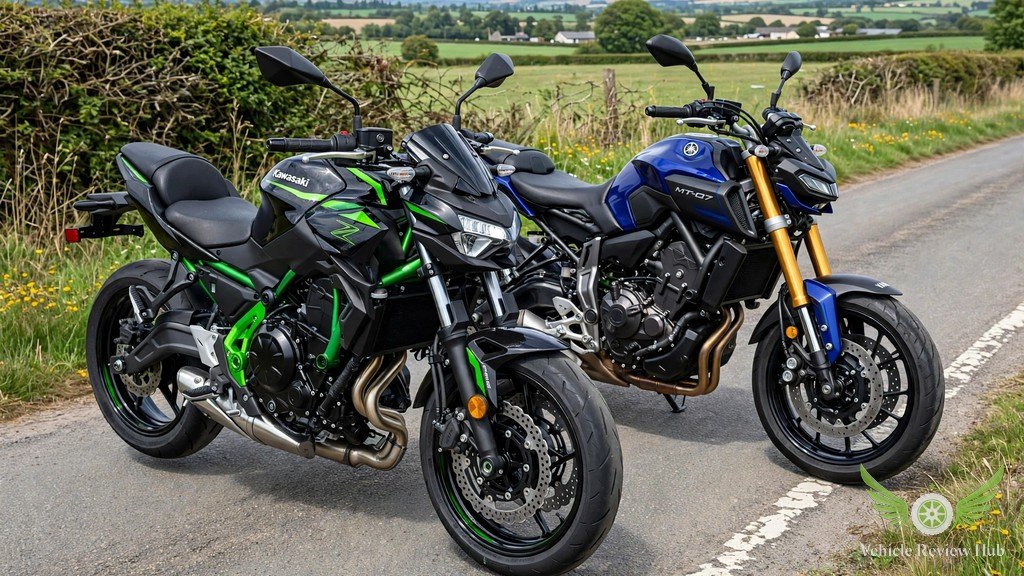
The MT-07 is the bike the Z650 ABS has chased since launch, and the one it has never caught on character. Yamaha’s CP2 twin is the benchmark of the class, and the 2026 MT-07 is the highest-specification version yet — ride-by-wire, traction control, ride modes, an inverted KYB fork and radial brakes. This Kawasaki Z650 ABS comparison does not pretend the Kawasaki matches it on hardware — it asks what the extra $690 buys.
Engine, Specs and Performance Side by Side
The MT-07’s 689cc CP2 twin is bigger than the Z650’s 649cc twin and, on the global rating, stronger — around 73 hp against the Kawasaki’s claimed 67.0 hp at 8,000 rpm. Yamaha USA publishes no US horsepower figure, so the global rating is the only one this Kawasaki Z650 ABS comparison can use. The Yamaha is also lighter — 403 lb wet against the Z650 S ABS’s 416.7 lb curb — with the low-down pull the Kawasaki twin cannot match. Its braking was measured too: 136 feet from 60 mph in Cycle World’s 2017 test, four feet longer than the Z650’s 132 feet, though that test ran the FZ-07, the MT-07’s predecessor.
The seat heights are identical at 31.7 inches, so neither bike wins the flat-foot test, and the tanks differ slightly — 3.7 gallons for the MT-07, 4.0 for the Z650. On observed fuel economy the Kawasaki’s figures are 44 mpg in Motorcycle.com’s 2017 shootout, about 44 mpg in Men’s Journal’s 474-mile test, and about 53 mpg in Bennetts’ normal riding. The 47 mpg figure sometimes attached to the Z650 could not be confirmed — the only 47 mpg in the record is the FZ-07’s observed figure in that same shootout, and this Kawasaki Z650 ABS comparison says so plainly.
Price, Equipment and Which Suits Which Rider
The price gap in this Kawasaki Z650 ABS comparison is $690 delivered: the 2026 MT-07 is $8,599 plus $675 destination, or $9,274, against the 2027 Z650 S ABS at $8,584. The MT-07 Y-AMT, at $9,199, is a separate trim with Yamaha’s automated manual transmission — not the standard MT-07. For the $690 the Yamaha buyer gets the stronger CP2 engine, the lighter chassis, the inverted fork, the radial brakes and the ride-by-wire electronics; the Kawasaki buyer gets $690 back, a TFT dash, traction control, and the cheapest delivered price.
Which suits which rider comes down to what the rider values most: the MT-07 suits the rider who wants the class benchmark and is willing to pay for it, while the Z650 ABS suits the rider who wants the cheapest way into a modern middleweight naked with ABS and a TFT dash. The Motorcycle.com 2017 shootout that this Kawasaki Z650 ABS comparison leans on put all five launch bikes on the same dyno and scorecard, and its verdict still holds.
Kawasaki Z650 ABS Price and Value Compared
New-bike prices are only half the value story; the other half is what the bike costs to own and what it is worth when sold. This Kawasaki Z650 ABS comparison lines up the delivered prices first, then the used market, then the running costs.
Used Premium Unproven
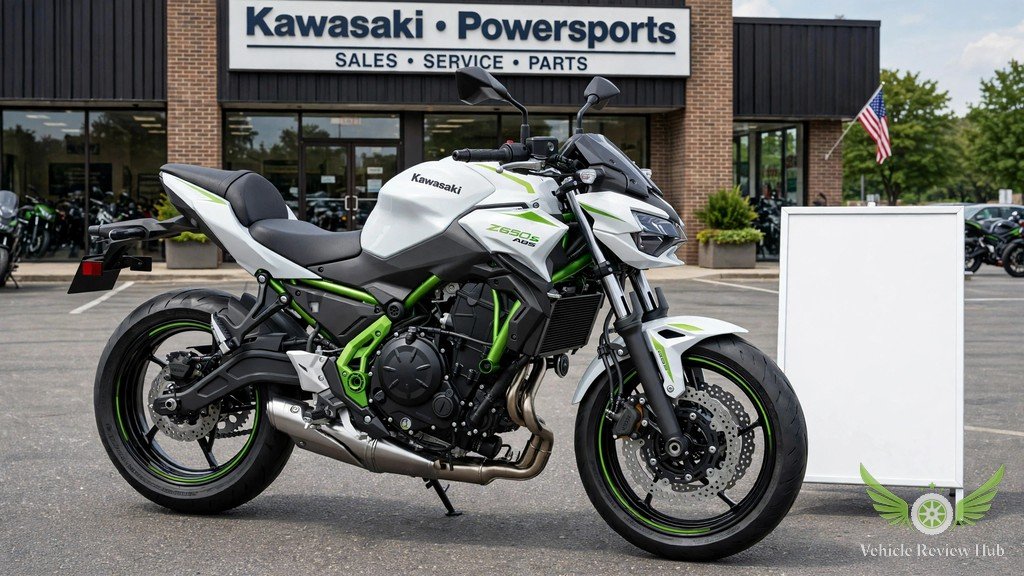
There is no verified used-price premium for ABS. In November 2026, used 2023 Z650 ABS bikes listed at $5,999 to $6,997 on Cycle Trader, and a used 2023 non-ABS Z650 at $6,499 sat inside that range — the ABS bike did not command more money simply for wearing the badge. The wider market tells the same story: 2023 Z650s of both trims listed from $3,990 to $6,997, and 2024s from $6,249 to $6,997, with condition and mileage doing the pricing. That is the used-market verdict of this Kawasaki Z650 ABS comparison. The Z650 ABS reliability guide carries the maintenance schedule behind the running costs, and its central fact matters most to a used buyer: zero recalls and zero complaints on the Z650’s own NHTSA record, on either trim.
Running Costs and Resale Value Compared
Running costs are where the Z650 ABS quietly beats its rivals in this Kawasaki Z650 ABS comparison. The maintenance schedule is the Z650’s own — oil and filter every 7,500 miles or yearly, valves inspected at 15,000 US miles, brake fluid every 15,000 miles or two years — and it is shared across both trims, so the ABS bike costs no more to service than the non-ABS bike. Brake fluid is the one job the ABS hardware changes: the modulator holds fluid in passages a simple top-up never reaches, so a proper change is a full bleed, but the interval is the same. No dollar totals are invented here — the manuals give due dates and part numbers, not prices.
| Bike | MSRP | Destination | Delivered | Gap vs Z650 S ABS |
|---|---|---|---|---|
| 2027 Kawasaki Z650 S ABS | $7,899 | $685 | $8,584 | — |
| 2026 Suzuki SV650 ABS | $8,149 | $600 | $8,749 | +$165 |
| 2026 Yamaha MT-07 | $8,599 | $675 | $9,274 | +$690 |
| 2026 Honda CB650R E-Clutch | $8,699 | $600 | $9,299 | +$715 |
| 2026 Suzuki GSX-8S | $9,249 | $700 | $9,949 | +$1,365 |
Note: This Kawasaki Z650 ABS comparison prints the SV650 at $8,749 delivered, but some Suzuki listings add a $250 freight surcharge that would put it at $8,999 — both figures, labelled. The GSX-8S destination is $700, never the $795 some dealers print. The CB650R is $8,699 plus $600, or $9,299 delivered — the $9,199 figure belongs to the faired CBR650R. All figures are MSRP plus destination before tax, title and dealer fees.
Kawasaki Z650 ABS Comparison Verdict and US Alternatives
The verdict of this Kawasaki Z650 ABS comparison is the same one the launch tests reached in 2017, only wider: the Z650 ABS is the cheapest delivered middleweight naked with ABS in the US — $165 cheaper than the SV650 ABS, $690 cheaper than the MT-07, $715 cheaper than the CB650R E-Clutch and $1,365 cheaper than the GSX-8S. It stops the shortest of its 2017 trio, carries the cleanest reliability record, and costs the least to run. What it does not do is match its rivals on hardware.
Verdict: Plainest Hardware
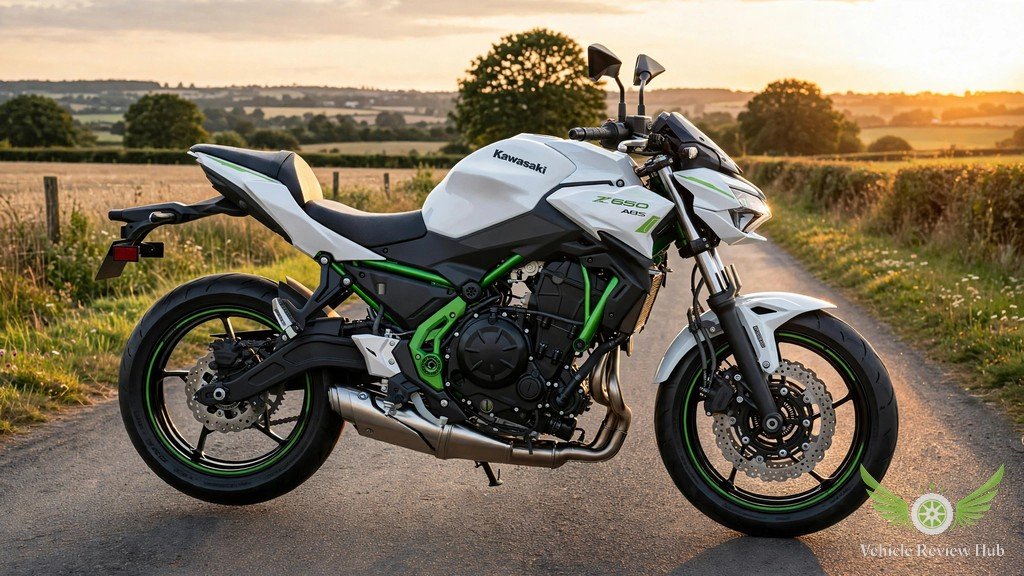
The Z650 ABS wins on price and loses on hardware in this Kawasaki Z650 ABS comparison, and the buyer should know both before choosing. Its ABS is the plainest in the class: a dual-channel Bosch 9.1M unit on 2017–2025 bikes and a Continental unit from the 2026 S, with no IMU, no cornering function and no off switch. The 2026 S adds traction control and a TFT dash, but the throttle is still a cable, the fork is still a conventional 41 mm telescopic unit, and the brakes are still two-piston Nissin calipers on 300 mm discs. The MT-07 brings ride-by-wire, an inverted fork and radial brakes for $690 more; the GSX-8S brings a 776cc engine, a quickshifter and four-mode traction control for $1,365 more; the CB650R brings a four-cylinder engine and E-Clutch for $715 more.
That is the trade this Kawasaki Z650 ABS comparison comes down to, stated plainly. The Z650 ABS is the right bike for the rider who wants a modern middleweight naked with ABS, a TFT dash and traction control at the lowest delivered price in the class. It is the wrong bike for the rider who wants the most advanced electronics or the strongest engine and is willing to pay for them. The Ultimate Motorcycling three-way said it in one line in 2017 — “ABS is optional on all three, and we fully recommend it” — and the recommendation still holds.
Trident Has Cornering ABS
The one alternative that changes the hardware argument is the Triumph Trident 660 — but only from 2025. The 2025 Trident gained a six-axis IMU that unlocks Optimized Cornering ABS and cornering traction control, plus Shift Assist and cruise control, at a 2025 MSRP of $8,595 — $696 more than the 2027 Z650 S ABS’s $7,899 MSRP, before either bike’s destination charge. That makes the Trident the only bike in this class with lean-sensitive braking. It is the one hardware gap this Kawasaki Z650 ABS comparison cannot close for the Kawasaki.
The year label matters: the 2021–2024 Trident 660 had plain ABS with no IMU — the same plain dual-channel ABS as the Z650 — so a used Trident from those years buys no braking advantage at all. A buyer who wants cornering ABS must buy a 2025 or newer Trident, and must check the model year, not the badge. For the rider who does not lean on the brakes, the Z650’s plain ABS is enough, and the $696 saving stays in their pocket. For the rider who does, the 2025 Trident is the alternative this Kawasaki Z650 ABS comparison recommends — the only one that moves the braking hardware forward.
Kawasaki Z650 ABS Comparison: Frequently Asked Questions
These are the questions buyers ask most about this Kawasaki Z650 ABS comparison — answered with the delivered prices and the verified record. Every answer below comes from the same prices and record as the rest of this Kawasaki Z650 ABS comparison.
Is the Z650 ABS worth the premium over the non-ABS Z650?
When ABS was optional it cost $400 (2017–2020) then $500 (2021–2025), and in 2017 it was the cheapest ABS in its class — $7,399 against $7,499 for the SV650 ABS and FZ-07 ABS. On the used market there is no verified premium for ABS, so buy on condition and mileage, not on the badge.
Z650 ABS vs SV650 ABS — which is cheaper?
The 2027 Z650 S ABS is $8,584 delivered ($7,899 + $685). The 2026 SV650 ABS is $8,749 delivered ($8,149 + $600), or $8,999 with the $250 freight surcharge. The Z650 is the cheaper bike either way, but the SV650’s 30.9-inch seat undercuts the S’s 31.7 inches.
Z650 ABS vs MT-07 — what is the price gap?
The 2026 MT-07 is $9,274 delivered ($8,599 + $675), which is $690 more than the 2027 Z650 S ABS at $8,584. (The MT-07 Y-AMT at $9,199 is a separate trim — do not confuse it with the standard MT-07.)
Does the Trident 660 have cornering ABS?
Only from 2025. The 2025+ Trident 660 has Optimized Cornering ABS and traction control via a six-axis IMU; the 2021–2024 Trident had plain ABS with no IMU — the same plain dual-channel ABS as the Z650.
Should I buy a used ABS or non-ABS Z650?
Buy on condition and mileage. There is no verified used-price premium for ABS: in November 2026, used 2023 Z650 ABS bikes listed at $5,999–$6,997, and a used 2023 non-ABS bike at $6,499 sits inside that range. Check the VIN and spec, not the paint — colour alone cannot prove ABS.
Which rival has the lowest seat?
The Suzuki SV650, at 30.9 inches, undercuts the Z650 S’s 31.7 inches. The Z650 is the cheapest delivered bike in the comparison, not the lowest-seated one.