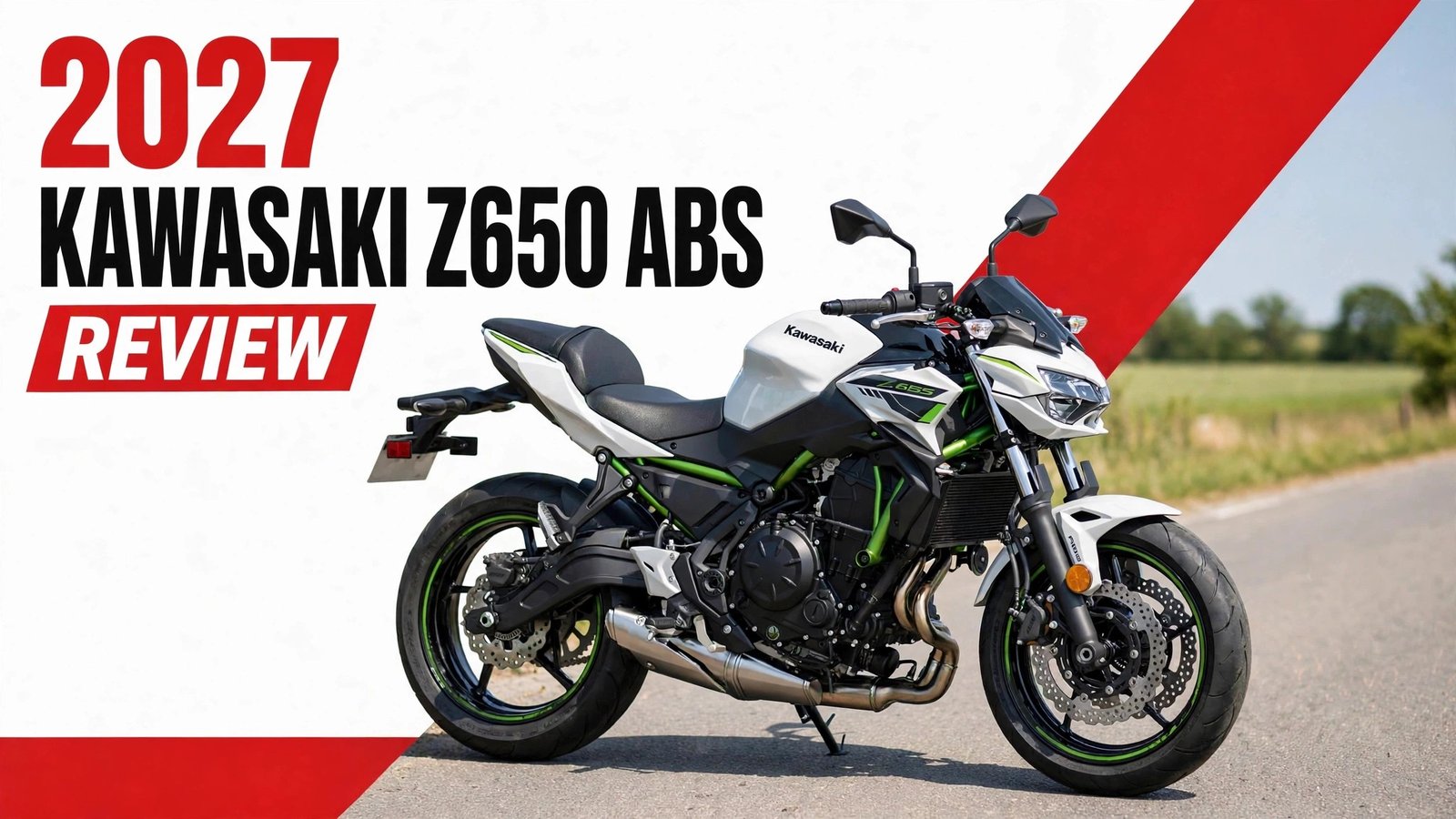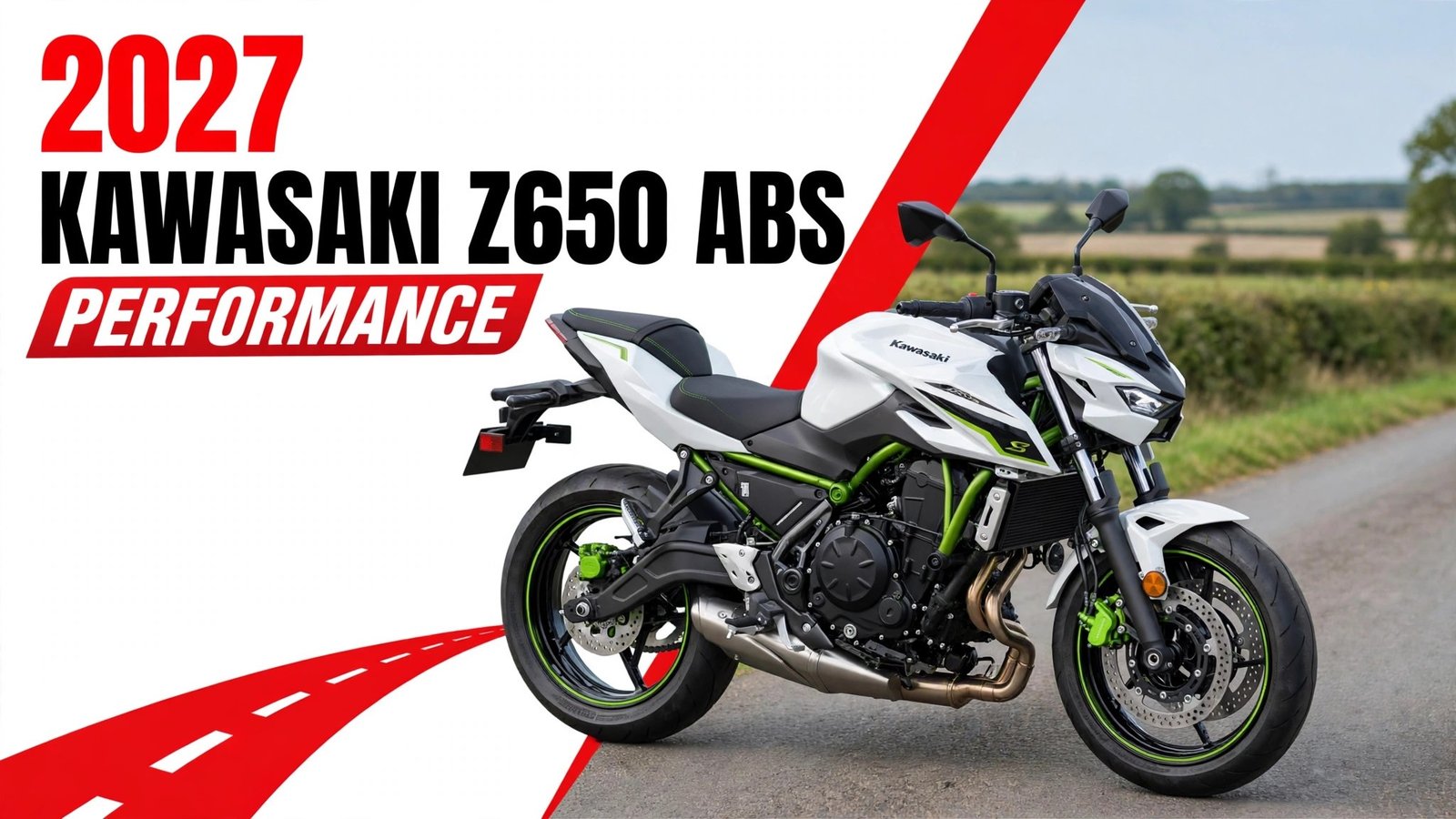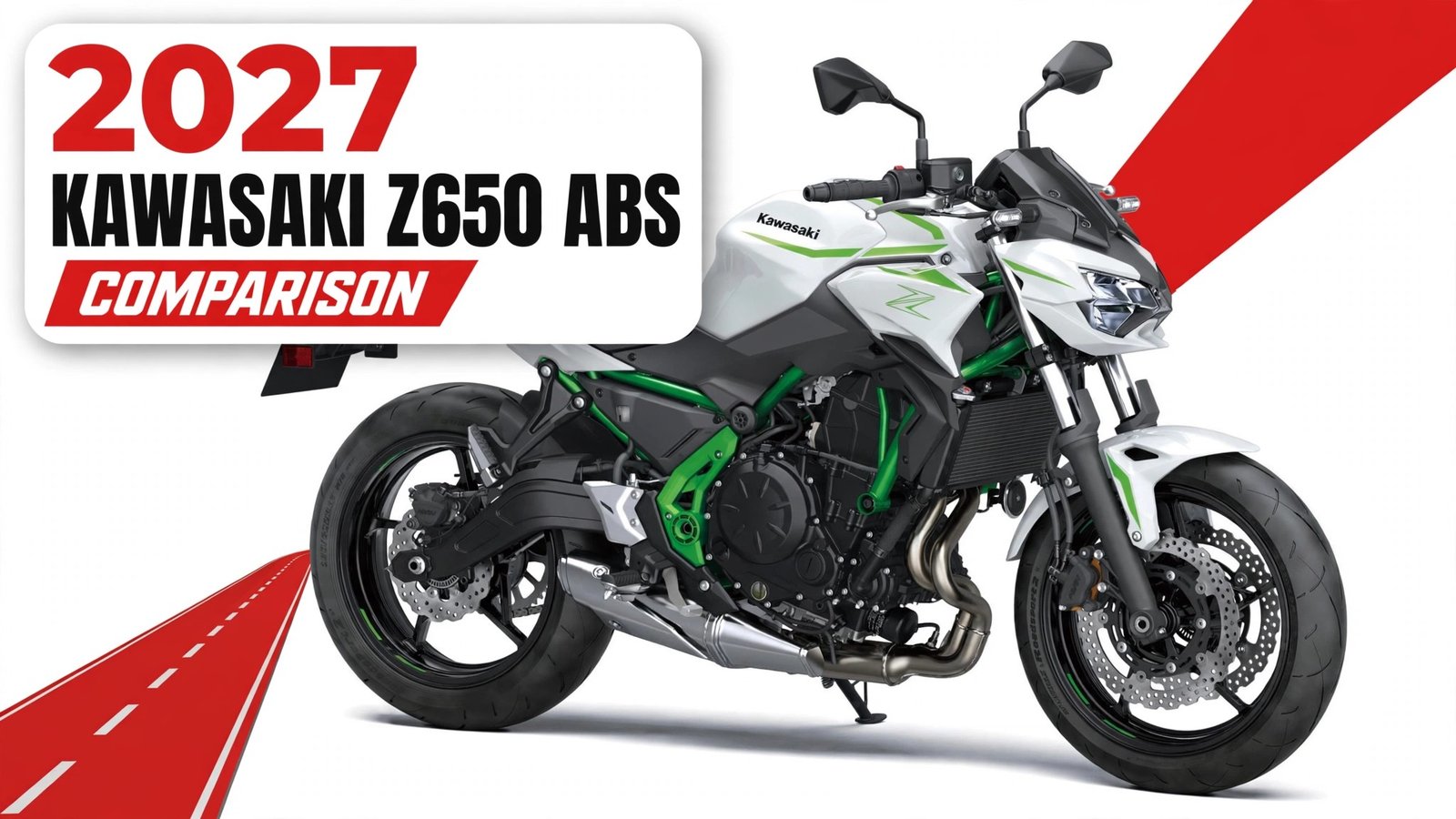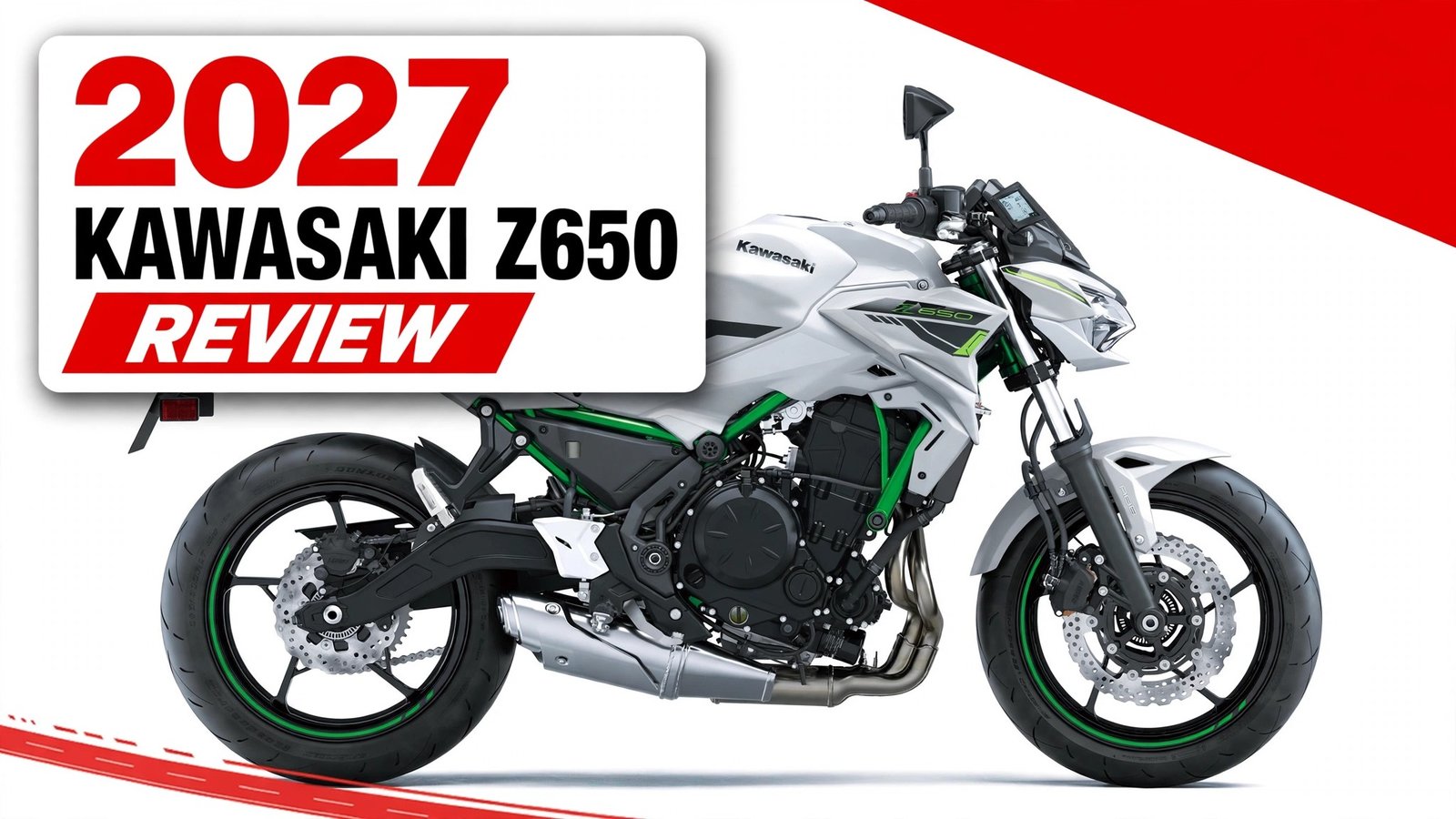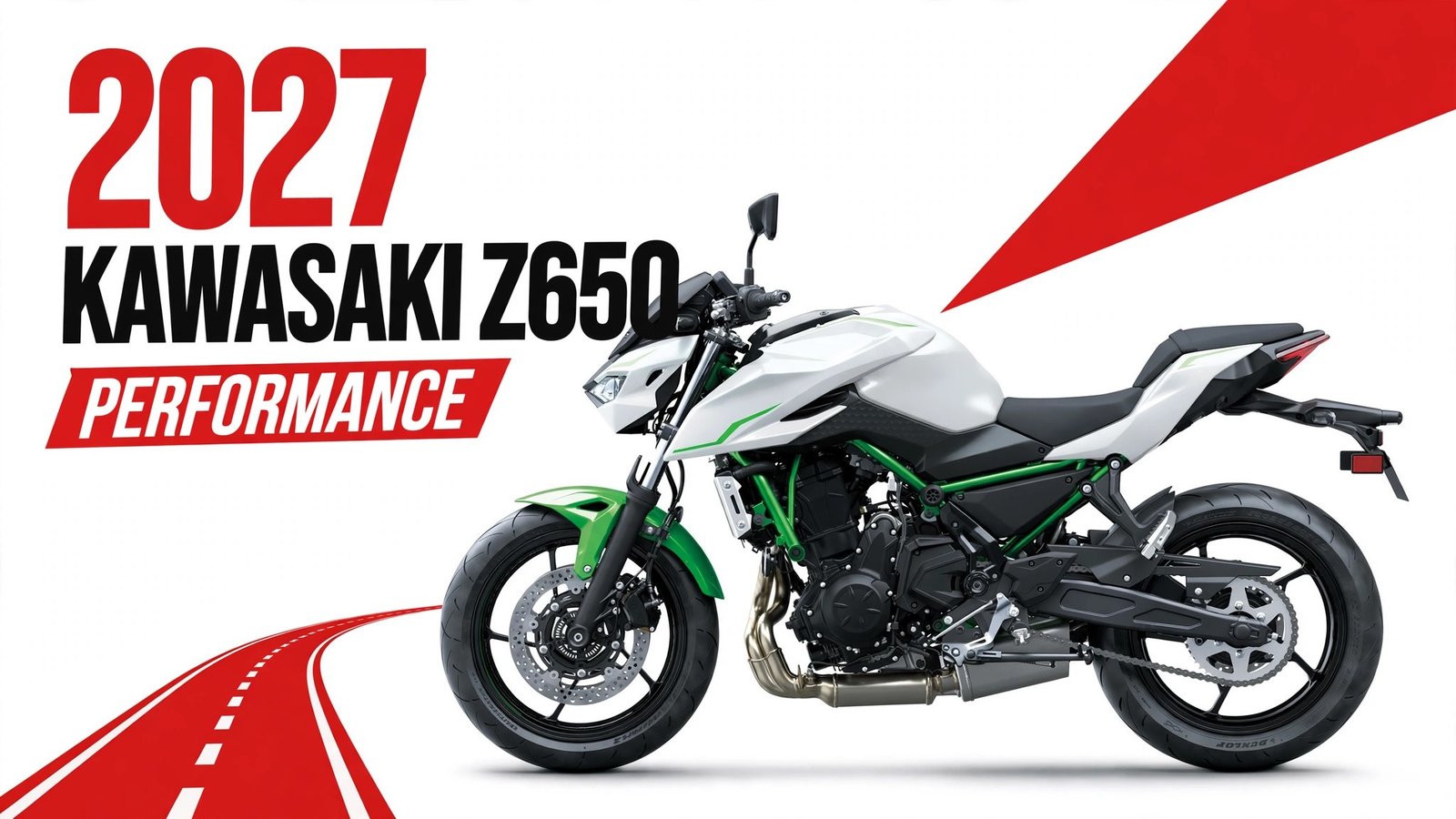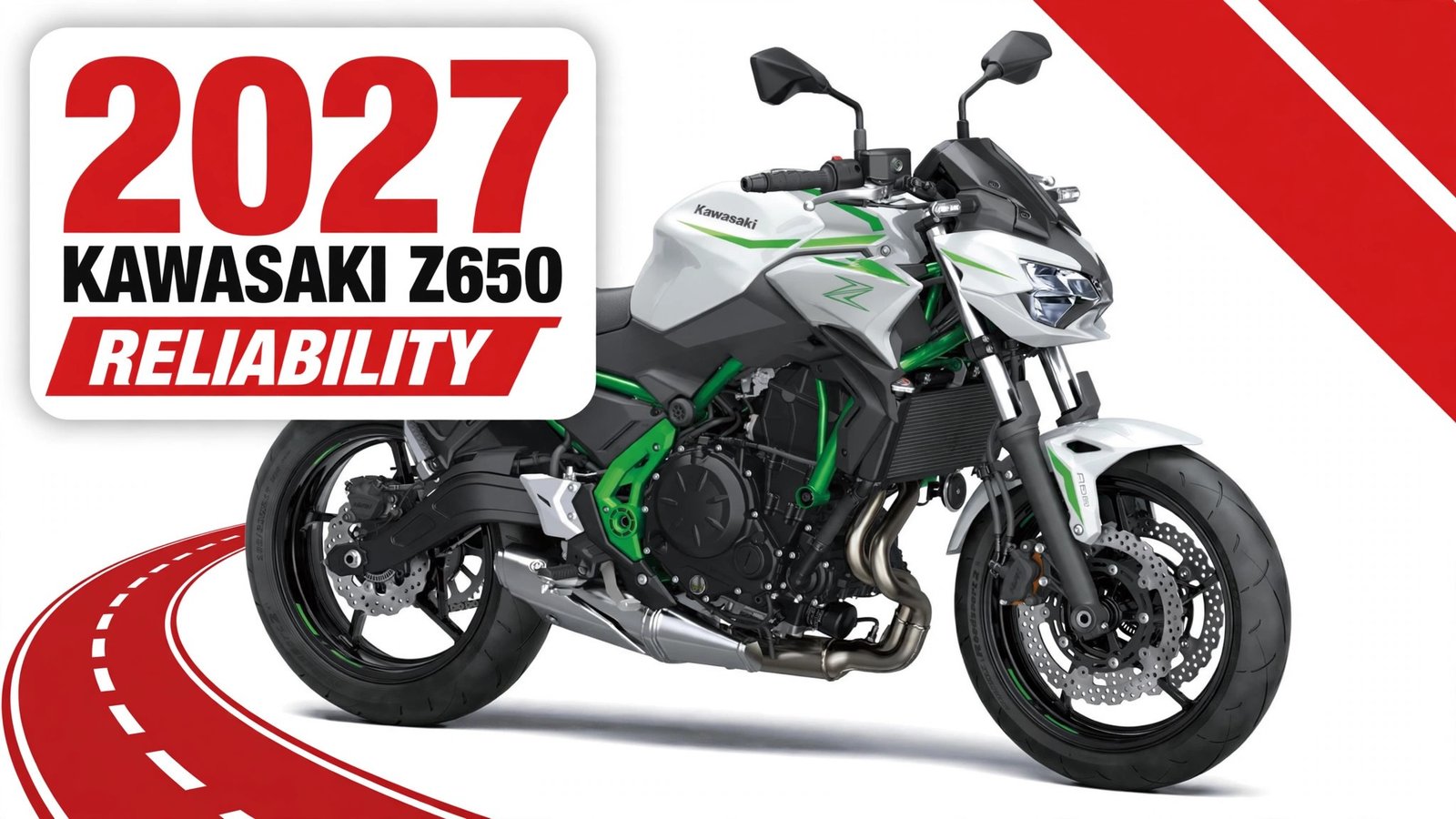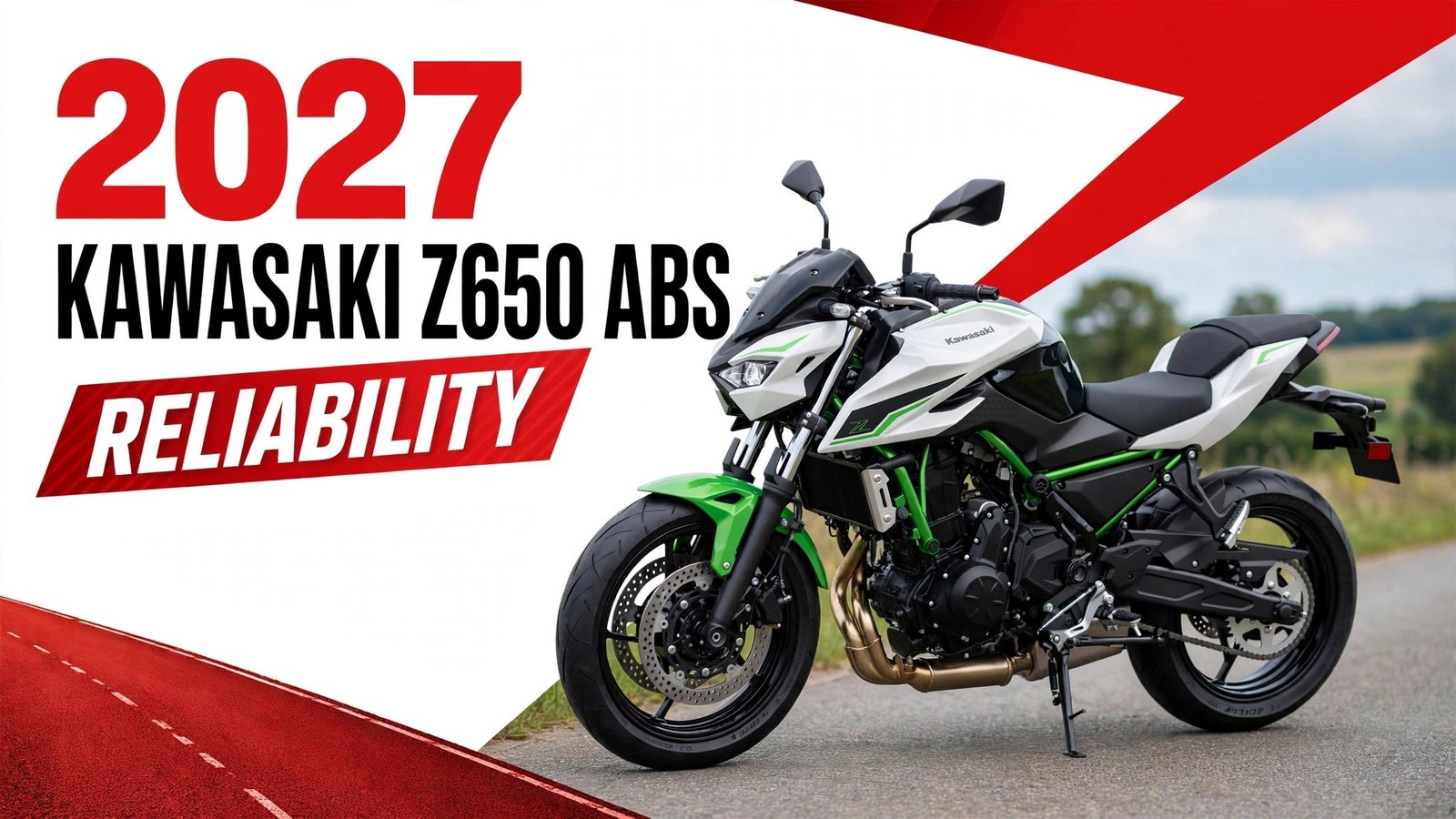
A middleweight naked bike earns its reputation over years of ownership, not on a showroom floor, and the Z650 ABS has earned a quiet one. Its official record is empty — no recalls, no complaints, no documented ABS-unit failures. This Kawasaki Z650 ABS reliability guide starts from that record: the NHTSA numbers, the ABS hardware and the service schedule from the bike’s own manuals.
The Z650 ABS is the ABS-equipped trim of the Kawasaki Z650, the naked twin of the Ninja 650, and the only mechanical difference from the non-ABS bike is the ABS system itself — modulator, tone rings and wiring — plus 2.2 to 4.4 lb of weight. Everything else is shared: the same 649cc parallel twin, the same steel trellis frame and the same running gear — which is why this Kawasaki Z650 ABS reliability guide treats the schedule as the Z650’s own.
Kawasaki Z650 ABS Reliability Overview
Reliability, for a used-bike buyer, is three questions: recalls, regulator complaints, and things that actually break. This Kawasaki Z650 ABS reliability guide answers all three from the record: no recalls, no complaints and no documented ABS-unit failures. A short record is not a maintenance-free bike, and the rest of this Kawasaki Z650 ABS reliability guide covers the servicing that keeps it that way.
Zero Recalls, Zero Complaints
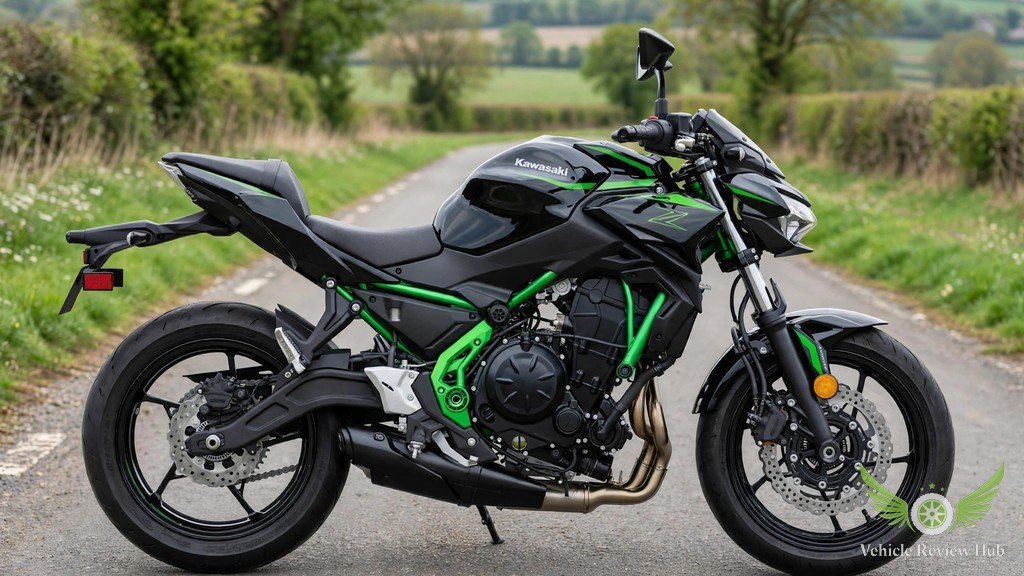
The Z650 ABS has zero recalls on its own NHTSA record. The recalls API returns Count 0 for every year from 2017 through 2027 under both the “z650” and “er650” model-name searches, and the complaints API returns count 0 with zero results for every year in the same range. The NHTSA API has a known quirk — it returns HTTP 400 with a body that still carries the count — but the body is authoritative, and this Kawasaki Z650 ABS reliability guide prints the finding as verified: re-queried live on 2026-11-24, both searches came back zero.
Zero complaints does not mean zero unhappy owners — it means no owner took a defect to the regulator. Testers did criticise the ABS calibration on the Indian BS6 test bike, and that criticism is carried in full later in this Kawasaki Z650 ABS reliability guide.
| NHTSA record | Result | Years checked |
|---|---|---|
| Recalls | Count 0 | 2017–2027 (“z650” and “er650”) |
| Complaints | Count 0, results 0 | 2017–2027 (“z650”); 2017, 2020, 2023, 2025 (“er650”) |
| Documented ABS-unit failures | None on file | All years |
Note: This Kawasaki Z650 ABS reliability guide’s NHTSA table uses the recalls and complaints APIs as queried live on 2026-11-24 under both “z650” and “er650”. The Ninja 650 campaigns sometimes attached to this bike are not its recalls — they predate the Z650 by five years.
How Mileage, Storage and Previous Care Affect Reliability
Mileage matters less than care on this bike, because there is no known mileage-related failure waiting at a particular odometer reading. A 30,000-mile Z650 ABS with a stamped service book is a better buy than a 6,000-mile bike that sat for three years. This Kawasaki Z650 ABS reliability guide judges every used example on its records first and its odometer second.
Ask for the service book and look for the 7,500-mile stamps. Check the chain, the fork seals, the brake fluid colour and the tyres for cracking. That is the pre-purchase check this Kawasaki Z650 ABS reliability guide recommends first.
Kawasaki Z650 ABS Common Problems and Wear Items
Every bike has a list of things that wear out and a list of things that break. On the Z650 ABS the first list is short and ordinary — tyres, chain, brake pads, battery — and the second list is, on the verified record, empty. This Kawasaki Z650 ABS reliability guide separates the two: a worn chain is not a common problem, and a recall on a different bike is not this bike’s defect.
Ninja Campaigns Aren’t Its
Two NHTSA campaigns are sometimes attached to the Z650 by parts websites and aggregators, and both are wrong. Campaign 10V-323 (2010, front brake master cylinder, Ninja 650) and campaign 12V-081 (2012, ABS front brake hose, Ninja 650 ABS) both predate the Z650, which did not exist until the 2017 model year. A buyer who finds them in a vehicle history report should read the model year on the campaign, not the headline. That is the check this Kawasaki Z650 ABS reliability guide asks buyers to make first.
No ABS Failures on File
There are no documented ABS failures on file for the Z650 ABS — no recall, no NHTSA complaint and no documented ABS-unit failure in the verified record. The Bosch 9.1M unit fitted from 2017 through 2025 and the Continental unit fitted from the 2026 S have both run without a failure on the record. There is no IMU and no cornering ABS on any year of this bike, and the ABS warning lamp behaves exactly as the manual describes. That is the clean side of the record, and this Kawasaki Z650 ABS reliability guide prints it without softening.
ZigWheels’ BS6 road test in India, on a bike from the same Bosch ABS era, found the front ABS intervening too early: “when it does, brake pressure is released excessively and for far too long, resulting in a brake lever that’s seemingly frozen solid, and some rather long braking distances”. At the rear, the same test found the opposite problem — the wheel locking “on many occasions… before ABS decided to take any action”. ZigWheels attributed part of the behaviour to the Dunlop Sportmax Roadsport 2 tyres fitted to the test bike. This is a calibration criticism, not a failure. That is the fullest criticism of the ABS system this Kawasaki Z650 ABS reliability guide carries.
Kawasaki Z650 ABS Maintenance Schedule and Servicing
The maintenance schedule is the Z650’s own schedule, taken from the bike’s own manuals — Service Manual 99924-1516-01 and the owner’s-manual chart — and it is shared across the ABS and non-ABS trims. There is no ABS-specific service interval: the ABS hardware changes how one job is done, not how often it is done. This Kawasaki Z650 ABS reliability guide prints the schedule exactly as the manuals give it.
Brake Fluid: 15,000 or 2 Years
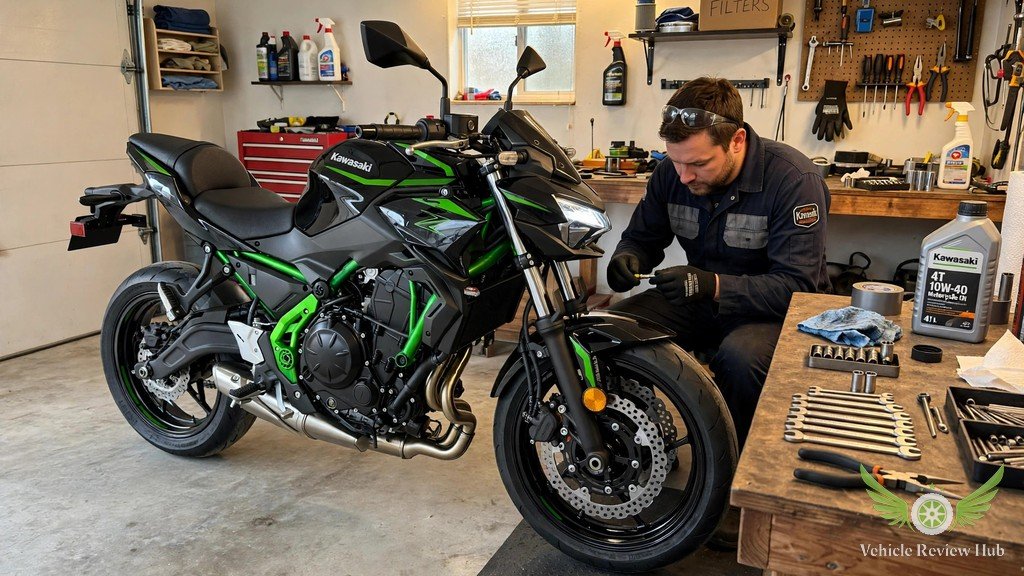
Brake fluid is changed every 15,000 miles or every two years, whichever comes first, using DOT 4 fluid. It is the one service item where the ABS hardware changes the job: the ABS modulator holds fluid in passages that a simple reservoir top-up never reaches, so a proper change on the ABS bike is a full bleed through the modulator, and the reason this Kawasaki Z650 ABS reliability guide calls brake fluid the ABS bike’s only extra service item.
The rest of the fluid schedule is straightforward. Engine oil is SAE 10W-40 — 1.8 litres with a filter change, 1.6 litres drain-only, 2.3 litres dry — and the oil and filter are changed together every 7,500 miles or 12,000 km, or yearly. The filter is part 16097-0008 at 17.5 Nm, the drain bolt at 30 Nm, and coolant is changed at 22,500 miles and then every three years. That is the fluid schedule this Kawasaki Z650 ABS reliability guide prints from the manuals.
Valves at 15,000 US Miles
Valve clearances are inspected at 15,000 US miles — 24,000 km, the 15,200-mile column on the owner’s-manual chart — and then every 15,000 miles after that. The clearances are 0.22–0.31 mm on the exhaust valves and 0.15–0.21 mm on the intake valves. The 42,000 km figure in some sources is the non-US interval only. This Kawasaki Z650 ABS reliability guide prints the US interval because this is a US-market guide.
The same service that checks the valves also replaces the parts the manuals schedule together. The air filter and the spark plugs — NGK CR9EIA-9, two of them, gapped at 0.8–0.9 mm and torqued to 13 Nm — are replaced at every 7,500-mile service, not at some longer interval. Chain slack is held at 20–30 mm, with lubrication every 400 miles — the full 7,500-mile service this Kawasaki Z650 ABS reliability guide prints in the table below.
| Service item | Interval | Specification |
|---|---|---|
| Engine oil + filter | Every 7,500 mi / 12,000 km or yearly | SAE 10W-40; 1.8 L with filter, 1.6 L drain-only, 2.3 L dry; filter 16097-0008 (17.5 Nm); drain bolt 30 Nm |
| Air filter | Replaced at every 7,500-mi service | — |
| Spark plugs | Replaced at every 7,500-mi service | NGK CR9EIA-9 ×2; gap 0.8–0.9 mm; 13 Nm |
| Valve clearance inspection | 15,000 US mi (24,000 km), then every 15,000 mi | Exhaust 0.22–0.31 mm; intake 0.15–0.21 mm |
| Brake fluid | 15,000 mi + every 2 years | DOT 4; full bleed through the ABS modulator |
| Coolant | 22,500 mi + every 3 years | — |
| Chain | Slack 20–30 mm; lube every 400 mi | — |
Note: This Kawasaki Z650 ABS reliability guide’s maintenance table comes from the bike’s own manuals. The 42,000 km valve figure in some sources is the non-US interval only, and the 6,000-mile oil interval printed by aggregators is wrong for this bike.
The video below is an owner DIY showing how to reach the spark plugs and the air filter on a Z650: the fuel tank comes off, the airbox comes off, and the plugs and filter are right there. It is the practical side of the 7,500-mile service in this Kawasaki Z650 ABS reliability guide — the service where the air filter and the plugs are replaced.
Kawasaki Z650 ABS Tires, Brakes and Suspension Maintenance
Tyres, brakes and suspension are where a used Z650 ABS shows its history first — the parts a rider touches, wears and neglects in plain sight. The hardware is simple: a 41 mm telescopic fork, a preload-adjustable rear shock, dual front discs with a two-channel ABS unit. This Kawasaki Z650 ABS reliability guide works through them in order: the warning lamp first, then the rubber, then the brakes, then the suspension.
Lamp On, Then Off: Normal
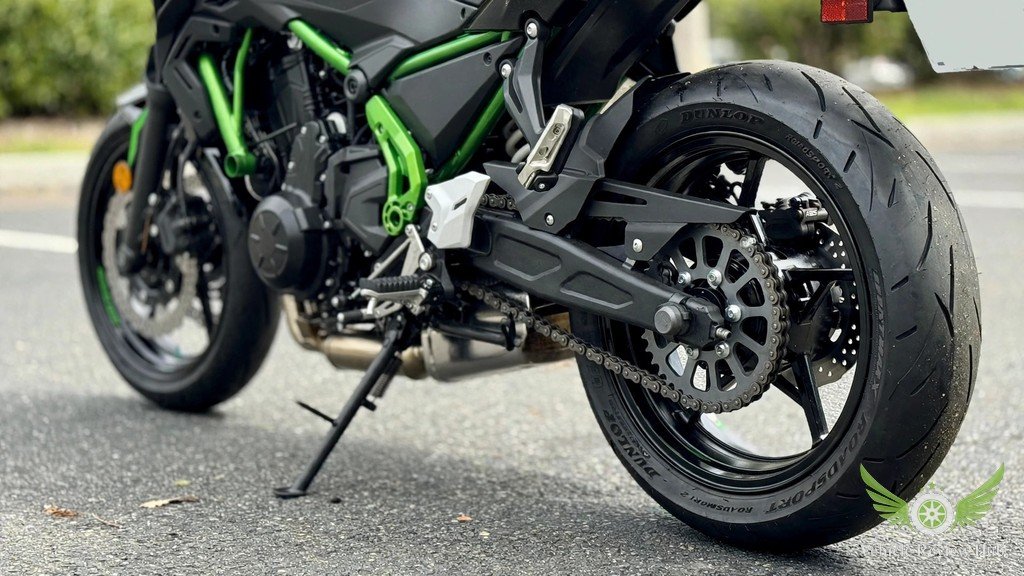
The ABS warning lamp lights when the bike is switched on and goes off once the bike moves — that is the self-check, and it is normal. A lamp that stays on after the bike is moving means the ABS is not working, and the owner’s manual says so plainly: “ABS will not work but conventional brakes function”. There is no ABS off switch on any year of this bike. That is the lamp behaviour this Kawasaki Z650 ABS reliability guide asks every buyer to watch for.
The lamp check belongs at the top of every pre-purchase inspection, because it is the only ABS check a buyer can do without tools. Switch the bike on, watch the lamp come on, ride it a few yards and watch it go off. If it stays on, ask the seller what was done about it. That is the check this Kawasaki Z650 ABS reliability guide puts first.
Tire, Brake and Suspension Checks That Matter
Tyres are 120/70 ZR17 at the front and 160/60 ZR17 at the rear, and the manual’s cold pressures are 225 kPa at the front and 250 kPa at the rear — the manual prints 32 psi for the front, never 33 psi. Check the pressures cold and the sidewalls for cracking. The Dunlop Sportmax Roadsport 2 was the tyre on the BS6 test bike — a reminder this Kawasaki Z650 ABS reliability guide repeats: the tyre and the ABS system work as a pair.
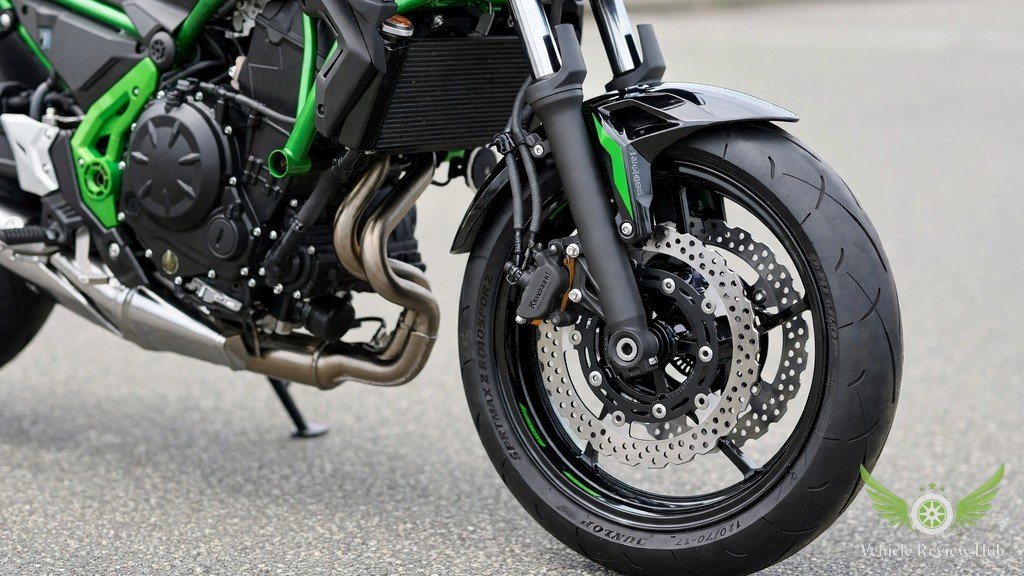
Brakes are dual 300 mm discs at the front with two-piston Nissin calipers — petal discs from 2017 through 2025, round discs on the 2026–2027 S — and a single 220 mm disc at the rear. Check the discs for scoring, the pads for thickness, and the fluid colour. Suspension is a 41 mm telescopic fork (4.9 in travel) and a horizontal back-link rear shock with preload adjustment (5.1 in). Check the fork seals for weeping and set the rear preload to the rider’s weight — worn damping upsets braking stability. That is the brake and suspension check this Kawasaki Z650 ABS reliability guide recommends at every purchase.
| Check | What to look for | Why it matters |
|---|---|---|
| ABS warning lamp | On at start-up, off once moving | A lamp that stays on means ABS is not working |
| Tyre pressures (cold) | 225 kPa front / 250 kPa rear (32 psi front) | Wrong pressures change how the ABS behaves |
| Tyre condition | Tread depth, sidewall cracking, age | Hard or cracked tyres grip less, so ABS works harder |
| Brake discs + pads | Scoring, lip, pad thickness, fluid colour | Worn brakes + old fluid = longer stops |
| Chain slack | 20–30 mm; lube every 400 mi | A tight or rusted chain wears the sprockets |
| Fork seals + rear shock | Weeping seals, smooth return, preload set | Worn damping upsets braking stability |
Note: This Kawasaki Z650 ABS reliability guide’s checks table covers the parts a buyer can inspect without tools. A lamp that stays on after the bike moves means the ABS is not working — the manual says “ABS will not work but conventional brakes function”.
Kawasaki Z650 ABS Maintenance and Ownership Costs
Owning a Z650 ABS is cheap in the ways that matter and ordinary in the ways that do not. The bike sips fuel, its service parts are shared with the high-volume Ninja 650 family, and its only electronic system has no failure on the record. This Kawasaki Z650 ABS reliability guide puts no invented dollar total on any of it — the manuals give due dates and part numbers, not prices. For the price story in full, the Z650 ABS review carries the year-by-year ladder.
Fuel, Routine Servicing, Tires and Replacement Parts
Fuel is the smallest bill. Kawasaki publishes no MPG figure for any year, so the observed figures are the whole story: Motorcycle.com observed 44 mpg in its 2017 shootout, Men’s Journal saw about 44 mpg, and Bennetts recorded about 53 mpg in normal riding on a UK bike. On the 4.0-gallon tank that is roughly 175 to 210 miles between fills. Routine servicing is one oil-and-filter change a year at most, plus brake fluid every two years and coolant every three; the filter is part 16097-0008 and the plugs are NGK CR9EIA-9. That is the fuel picture this Kawasaki Z650 ABS reliability guide prints from the observed figures.
The used market, checked in November 2026, tells a buyer what the bike is actually worth. Used 2023 Z650 ABS bikes listed at $5,999 to $6,997, and a used 2023 non-ABS Z650 at $6,499 sits inside that range — which is why this Kawasaki Z650 ABS reliability guide says plainly that no used-price premium for ABS has been verified. A new 2027 Z650 S ABS is $7,899 plus $685 destination on Kawasaki’s own 2027 sheet, or $8,584 delivered.
| Cost area | What it costs in practice | Verified figure |
|---|---|---|
| Fuel | 44–53 mpg observed; ~175–210 miles per tank | 4.0-gallon tank; no factory MPG published |
| Routine servicing | Oil + filter + plugs yearly at most | Every 7,500 mi / 12,000 km or yearly |
| Brake fluid | Full bleed through the ABS modulator | Every 15,000 mi + every 2 years (DOT 4) |
| Tyres | 120/70 ZR17 front, 160/60 ZR17 rear | 225 kPa front / 250 kPa rear cold |
| Used 2023 ABS (Nov 2026) | $5,999–$6,997; no verified ABS premium | Non-ABS 2023 at $6,499 sits inside the range |
Note: This Kawasaki Z650 ABS reliability guide’s costs table lists verified figures, not invented totals. The used prices are a November 2026 snapshot of Cycle Trader listings; the new price is the 2027 Z650 S ABS only.
No Factory Retrofit Exists
ABS was a factory option only — Kawasaki never sold an ABS retrofit kit for the Z650, and there is no factory way to add ABS to a non-ABS bike. The system is a modulator, tone rings and wiring, fitted on the production line; it cannot be bolted on afterwards. A buyer who wants ABS must buy a bike that left the factory with it, and the way to confirm that is the VIN and the spec, not the paint — covered in the final section of this Kawasaki Z650 ABS reliability guide. BikesRepublic’s 2017 test against the ER6N makes the point: the ER6N had no ABS at all, and the Z650 ABS’s addition of the system was what made the new bike “much more superior” to its predecessor.
How to Keep a Kawasaki Z650 ABS Reliable
Keeping a Z650 ABS reliable is mostly a matter of doing the ordinary things on time: oil yearly, brake fluid every two years, chain lubed every 400 miles, and the valve check at 15,000 miles. This Kawasaki Z650 ABS reliability guide ends with the habits that keep the record clean, and the check that stops a buyer from paying ABS money for a non-ABS bike.
Preventive Maintenance, Records and Regular Inspections
Keep the records. A service book with 7,500-mile stamps is worth more than a seller’s word. Inspect the bike on the manual’s schedule: oil and filter yearly, brake fluid every two years, coolant every three, valves at 15,000 miles, chain slack at 20–30 mm. The 132-foot stop from 60 mph that MCN’s Z650 review carries from Cycle World’s 2017 test — trim not established — was measured on a bike with fresh brakes and correct pressures. That is the record-keeping habit this Kawasaki Z650 ABS reliability guide recommends.
Ride it regularly, too. A Z650 ABS ridden weekly stays healthier than one that sits for months. Bennetts’ middleweight group test ran the class through city traffic and B-roads, and the Z650’s easy steering kept coming up. For what the bike does on the road when it is healthy, the Z650 ABS performance guide carries the dyno figures and the braking test in full.
Colour Cannot Prove ABS
Colour cannot prove ABS, in any year. In 2025 the colours were segregated — ABS bikes in Metallic Spark Black/Green, non-ABS bikes in Metallic Matte Dark Gray/Metallic Spark Black — but in 2020, 2022 and 2023 the colourways were shared across both trims, and in the other years the split is unverified. A buyer who pays ABS money for a green bike without checking the spec is buying a colour, not a system. This Kawasaki Z650 ABS reliability guide says it plainly: check the VIN and the spec, not the paint.
The checks are simple. On 2023 dealer listings, ABS VINs begin ML5EREN and non-ABS VINs begin ML5EREP — a buyer check from observed listings, not a published rule. The model code tells the same story: ABS bikes carry the “L” suffix family, such as ER650NPSAL for the 2023 ABS and ER650NRFAL for the 2024 ABS. Ask the seller for the VIN and confirm the ABS hardware is actually fitted. That is the final check this Kawasaki Z650 ABS reliability guide asks every buyer to make.
Kawasaki Z650 ABS Reliability: Frequently Asked Questions
These are the questions buyers ask most about this Kawasaki Z650 ABS reliability guide — answered with the NHTSA record and the bike’s own maintenance schedule.
Does the Z650 ABS have any recalls?
Zero on its own NHTSA record — the recalls API returns Count 0 for every year 2017–2027 under both “z650” and “er650”. The Ninja 650 campaigns 10V-323 and 12V-081 predate the Z650 entirely and are not this bike’s recalls.
Are there any NHTSA complaints about the Z650 ABS?
None on file. The NHTSA complaints API returns count=0, results=0 for every year 2017–2027 under “z650”, and count=0 for “er650” in the years checked (2017, 2020, 2023, 2025).
Have there been any documented ABS failures?
None on file — no recall, no complaint, no documented ABS-unit failure. Testers did criticise the Bosch calibration (ZigWheels’ BS6 test found the front ABS intervening too early and the rear wheel locking before the ABS acted), but that is a calibration criticism, not a failure.
How often does the Z650 ABS need an oil change?
Oil and filter every 7,500 miles or 12,000 km, or yearly, per the bike’s own manuals. Aggregators that print a 6,000-mile interval are wrong.
When do the valves need checking?
Inspect at 15,000 US miles (24,000 km) and every 15,000 miles after. The 42,000 km figure in some sources is the non-US interval only.
What does the ABS warning lamp mean?
The lamp lights at start-up for the self-check and goes off once the bike moves — that is normal. A lamp that stays on means ABS is not working (the manual says “ABS will not work but conventional brakes function”) — get it checked; the conventional brakes still work.