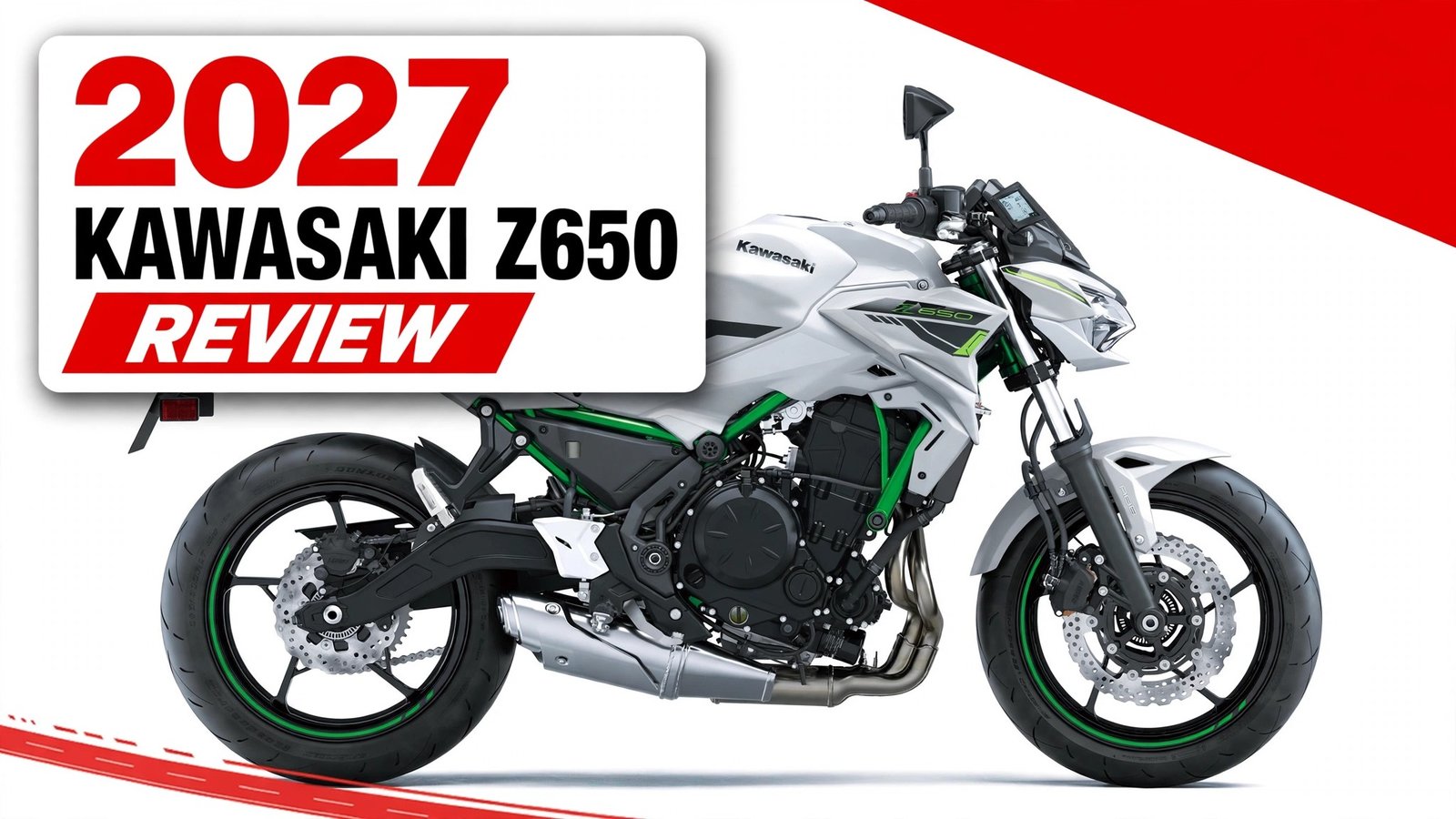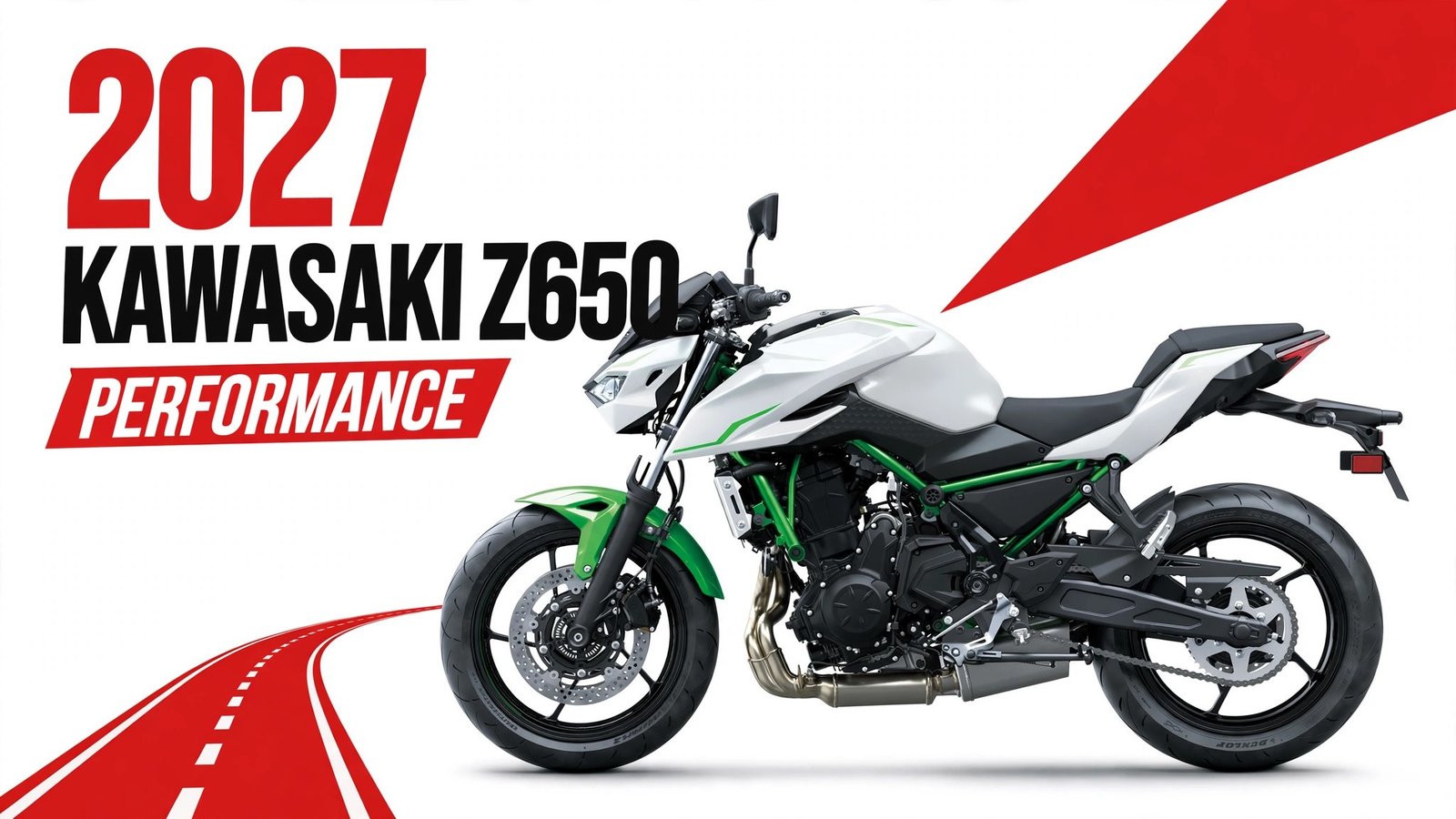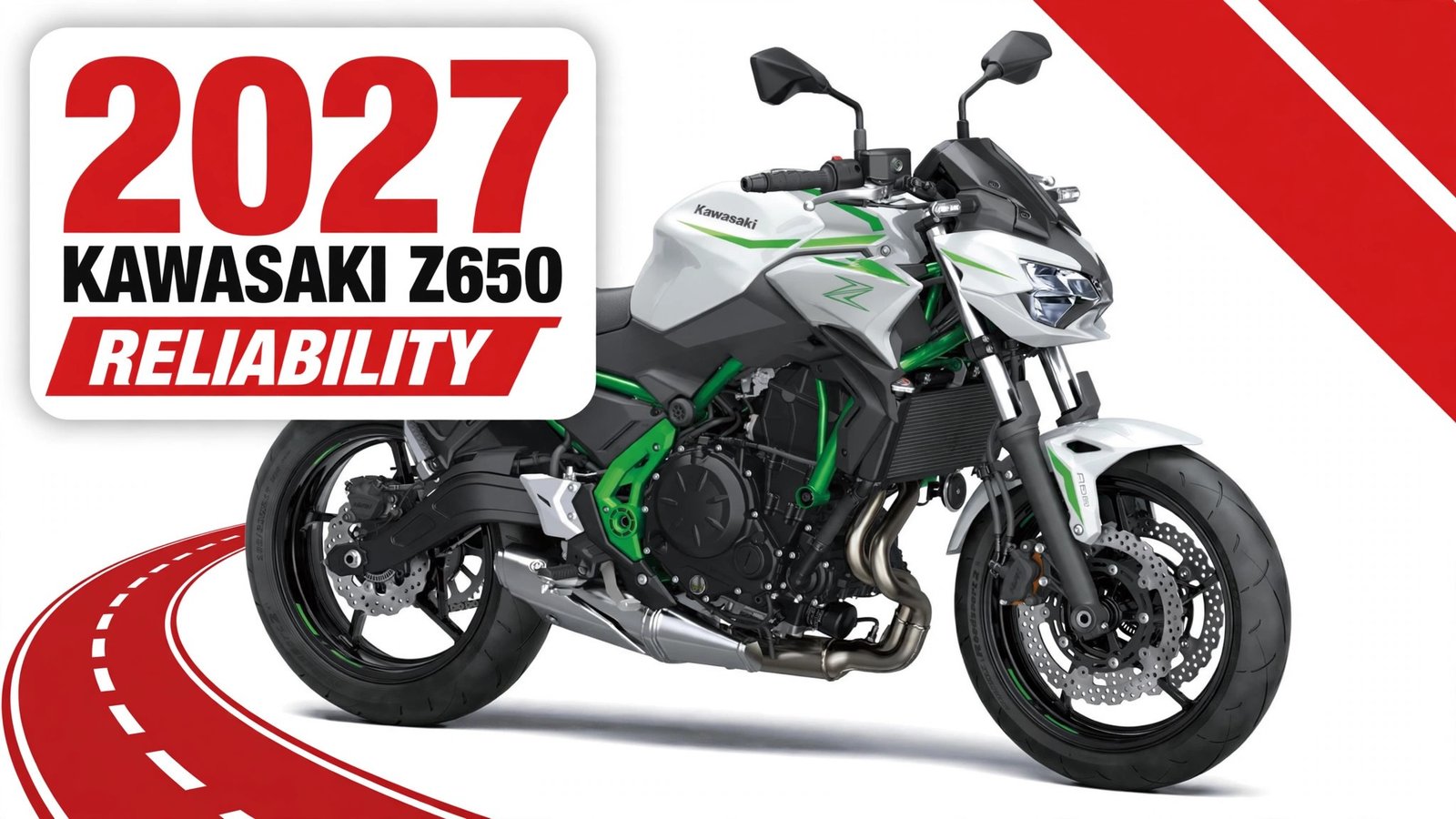
Four middleweight naked bikes, four different answers — and the cheapest one is the Kawasaki. This Kawasaki Z650 comparison lines the 2027 Z650 S up against the Yamaha MT-07, the Suzuki SV650 and the Suzuki GSX-8S on delivered price, claimed and measured power, seat height, weight and electronics. The Z650 S costs $8,584 delivered in this Kawasaki Z650 comparison, and every rival costs more — the closest by $165, the priciest by $1,365.
Price is not the whole story in this Kawasaki Z650 comparison, though. The MT-07 has the best engine, the SV650 the lowest seat and the purest V-twin character, and the GSX-8S the most power and the fullest electronics. This Kawasaki Z650 comparison weighs each bike on its own terms, with every price re-checked live and every dyno figure attributed to its test.
Kawasaki Z650 Overview and Its Closest Rivals
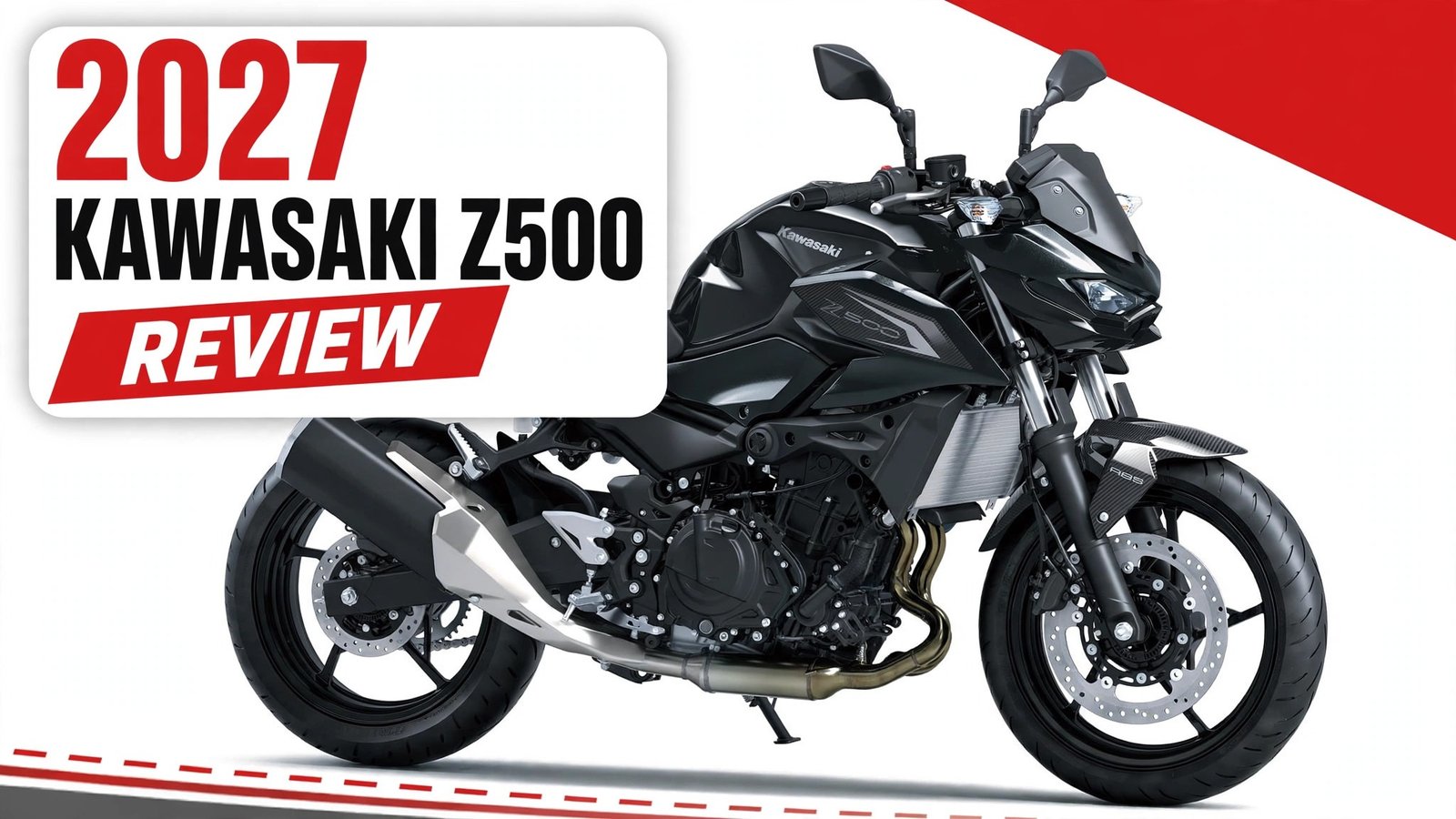
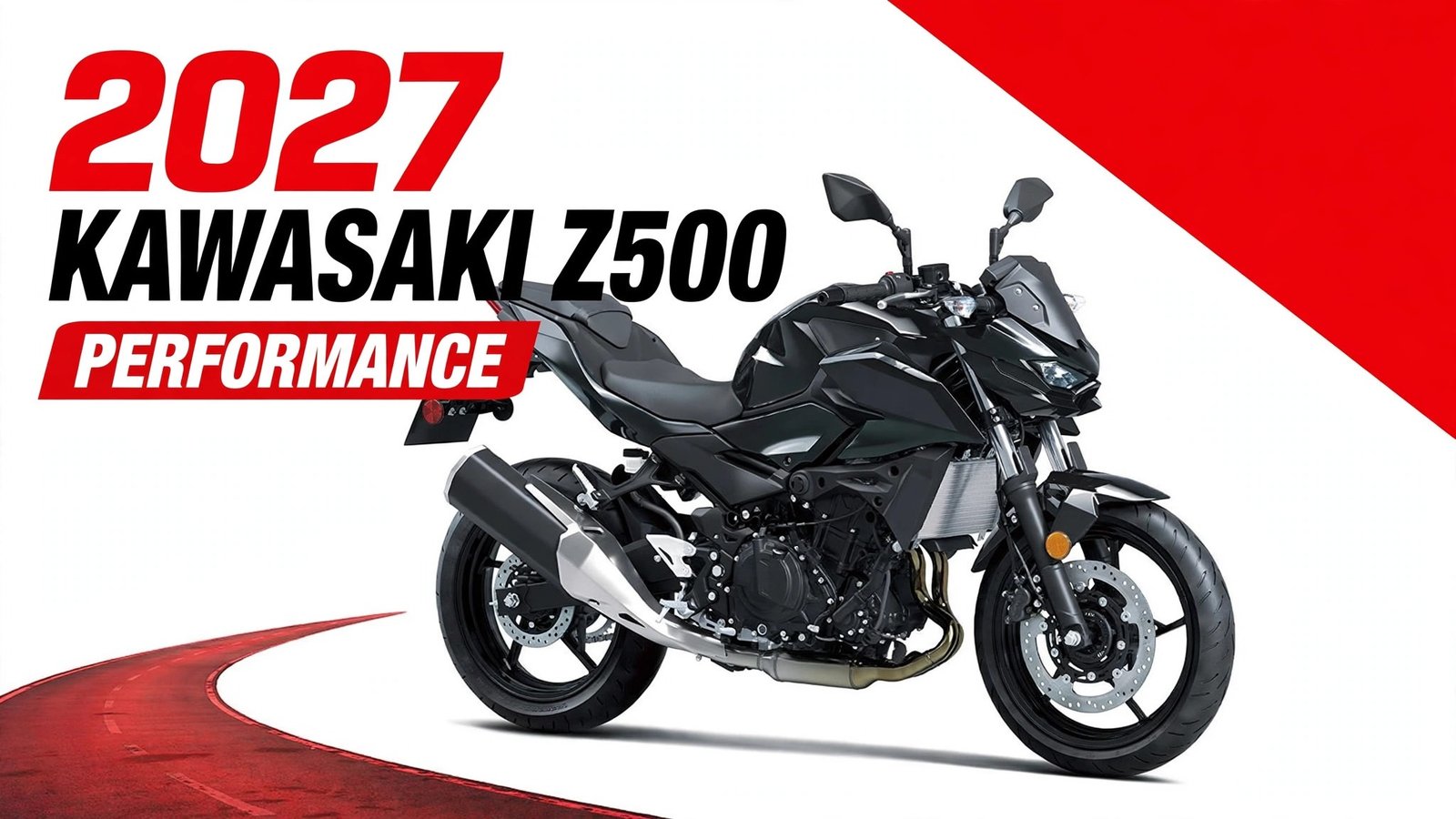
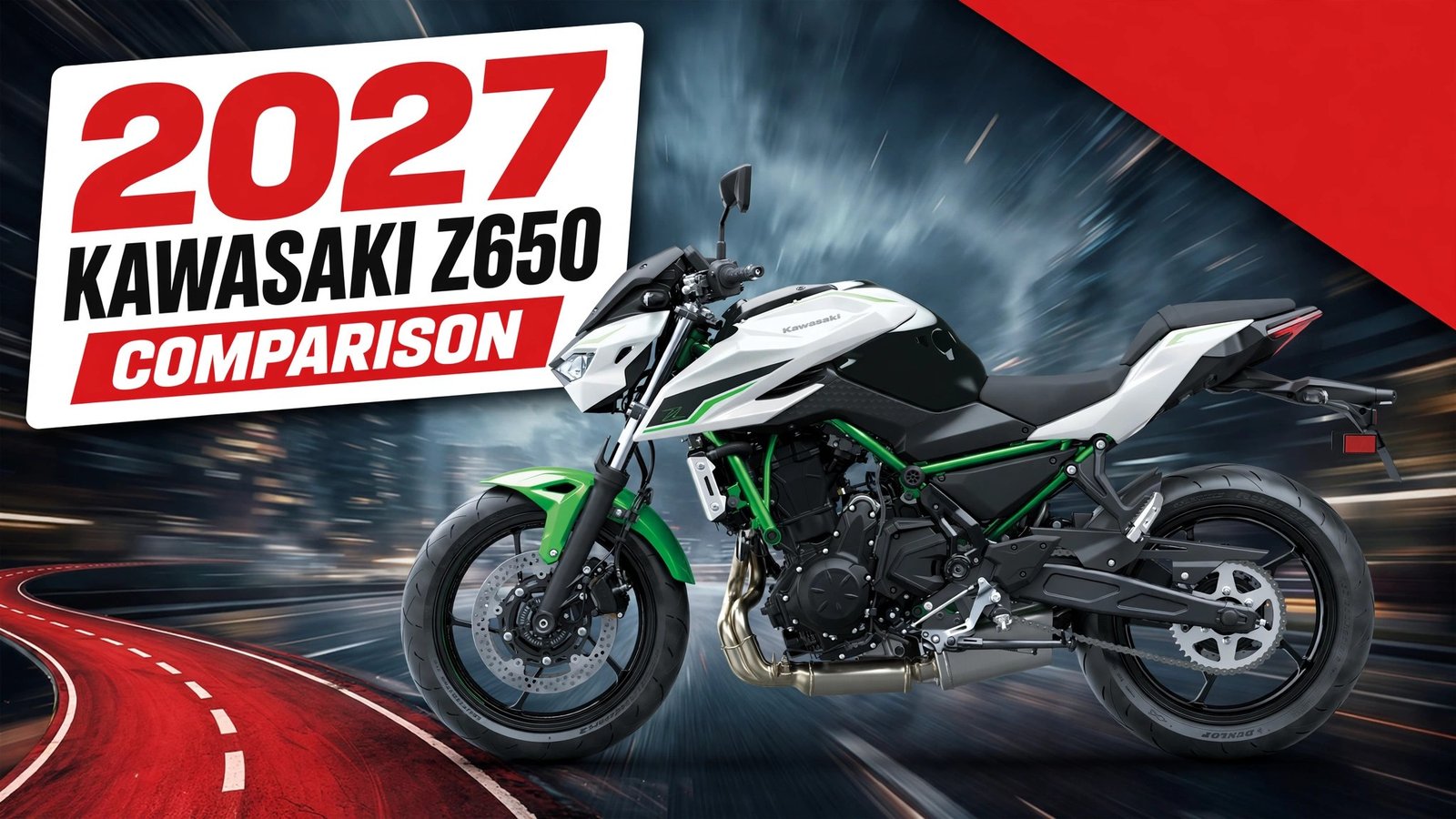
This Kawasaki Z650 comparison starts with the bike itself. The 2027 Z650 S is the only US trim — a 649cc parallel twin in a steel trellis frame, with a TFT dash, KTRC and dual 300 mm front discs. It claims 67.0 hp at 8,000 rpm and 47.2 lb-ft at 6,700 rpm on the 2027 Z650 S ABS spec sheet, weighs 416.7 lb at the curb, and carries a 31.7-inch seat. It is the simplest bike in this Kawasaki Z650 comparison, and the cheapest.
Cheapest, Not Lowest Now
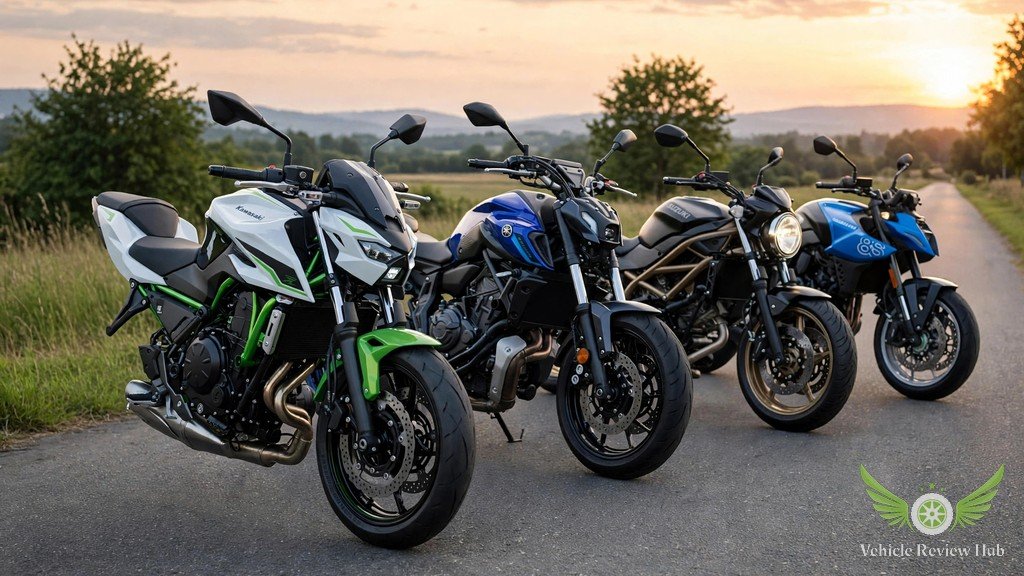
The Z650 is no longer the low-seat bike in its class: the 2026 Z650 S raised the seat to 31.7 inches, and the SV650’s 30.9-inch seat undercuts it by nearly an inch — the MT-07 ties at 31.7 inches and the GSX-8S is tallest at 31.9 inches. What the Z650 still owns outright is the price: at $8,584 delivered, the 2027 Z650 S is the cheapest delivered bike in this Kawasaki Z650 comparison, undercutting the SV650 by $165, the MT-07 by $690 and the GSX-8S by $1,365.
How the Four Bikes Differ at a Glance
The four bikes split into two pairs: the Z650 and the SV650 are the simple, light, affordable twins — trellis frames, telescopic forks, no ride-by-wire, no TFT on the Suzuki — while the MT-07 and the GSX-8S are the modernised pair, with inverted forks, radial brakes, ride-by-wire and TFT dashes. The table below gives the headline numbers for this Kawasaki Z650 comparison.
| Bike | Delivered price | Claimed power | Seat | Curb / wet weight |
|---|---|---|---|---|
| 2027 Kawasaki Z650 S ABS | $8,584 | 67.0 hp @ 8,000 rpm | 31.7 in | 416.7 lb curb |
| 2026 Suzuki SV650 ABS | $8,749 | ~75 hp (global rating) | 30.9 in | ~437 lb curb |
| 2026 Yamaha MT-07 | $9,274 | ~73 hp (global rating) | 31.7 in | 403 lb wet |
| 2026 Suzuki GSX-8S | $9,949 | 82 hp @ 8,500 rpm | 31.9 in | 445 lb curb |
Note: This Kawasaki Z650 comparison table uses delivered prices — MSRP plus destination — re-checked in November 2026. The SV650’s $8,749 excludes Suzuki’s $250 freight surcharge on models shipped on or after September 17, 2025; with it, the SV650 is $8,999 delivered. The MT-07 and SV650 power figures are global ratings — neither maker publishes a US hp figure.
The video below is Motorcycle.com’s 2021 six-way middleweight naked shootout, with all six bikes on screen — the Aprilia Tuono 660, Honda CB650R, Kawasaki Z650 ABS, Suzuki SV650, Triumph Trident 660 and Yamaha MT-07. It is the test this Kawasaki Z650 comparison leans on most.
In that 2021 six-way, the Z650 finished fourth with all three testers — Ryan Adams 81.9%, John Burns 82.1% and Troy Siahaan 80.0%. The Trident 660 won, the Tuono 660 was second and the MT-07 third; the CB650R was fifth and the SV650 sixth. The dyno told the same story: the Z650 made the least power of the six.
| Bike (2021 six-way) | Dyno power (rear wheel) | Scorecard placing |
|---|---|---|
| Aprilia Tuono 660 | 84.6 hp @ 10,500 rpm | 2nd |
| Honda CB650R | 81.9 hp @ 10,800 rpm | 5th |
| Triumph Trident 660 | 72.3 hp @ 10,300 rpm | 1st (winner) |
| Suzuki SV650 | 70.7 hp @ 8,600 rpm | 6th |
| Yamaha MT-07 | 70.0 hp @ 8,500 rpm | 3rd |
| Kawasaki Z650 ABS | 61.4 hp @ 8,100 rpm | 4th |
Note: This Kawasaki Z650 comparison dyno table is Motorcycle.com’s 2021 six-way test — one dyno, one day, rear-wheel measurements, not crank claims, never blended with another dyno run. The Z650’s 61.4 hp was the lowest of the six, and its 2017 shootout dyno was 60.95 hp at 8,000 rpm. The MT-07’s torque, 48.7 lb-ft at 6,300 rpm, was the most of the group.
Kawasaki Z650 vs Yamaha MT-07
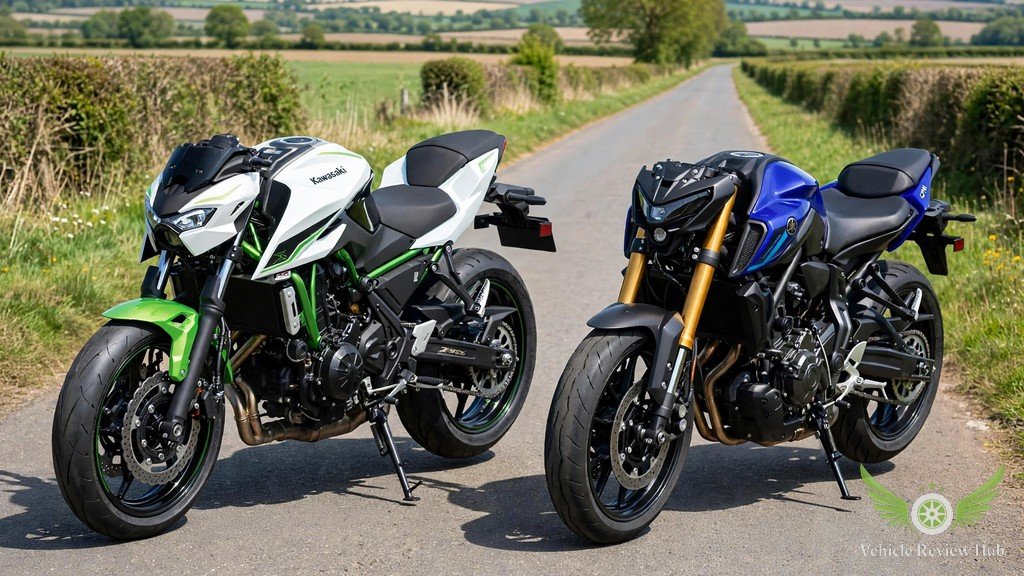
The MT-07 is the bike the Z650 has chased since 2017: in Motorcycle.com’s 2017 five-way shootout the then FZ-07 won with 84.4% against the Z650’s 83.0%, and in the 2021 six-way the MT-07 finished third while the Z650 finished fourth. The gap has always been the engine — and in this Kawasaki Z650 comparison, it still is.
Engine, Specs and Performance Side by Side
The MT-07’s 689cc CP2 parallel twin makes about 73 hp on the global rating — Yamaha USA publishes no US hp figure — against the Z650’s claimed 67.0 hp. On Motorcycle.com’s 2021 dyno the MT-07 made 70.0 hp at 8,500 rpm and the Z650 made 61.4 hp at 8,100 rpm. Torque is even clearer: the MT-07’s 48.7 lb-ft at 6,300 rpm was the most of the 2021 six-way group, and its torque curve towers over the other five from idle. The Z650’s torque is 48.5 lb-ft at 6,500 rpm on the 2019–2025 sheets and 47.2 lb-ft at 6,700 rpm on the 2026–2027 sheets — always year-labelled.
On the road the difference is not top speed — neither bike has an official figure, and the Z650’s best-sourced figure is MCN’s 125 mph — it is how the power arrives. The MT-07 pulls hard from idle and never feels slow, while the Z650 needs revs to keep up on a long straight. Motorcycle.com’s testers said it plainly in 2021: on a short straight the Z650 can keep up with anything, but on a long one it needs the draft of the other bikes. The full power and speed record for this Kawasaki Z650 comparison is in the Kawasaki Z650 performance blog.
Price, Equipment and Which Suits Which Rider
The 2026 MT-07 costs $8,599 plus $675 destination, or $9,274 delivered — $690 more than the 2027 Z650 S at $8,584 in this Kawasaki Z650 comparison. That $690 buys ride-by-wire, riding modes, traction control, a 5-inch TFT dash, a 41 mm inverted fork and radial brakes — the 2025 redesign modernised the MT-07 in every area where the Z650 is still simple. The Z650 answers with its own 4.3-inch TFT and KTRC, but it has no ride-by-wire, no riding modes and a conventional 41 mm telescopic fork. The MT-07 also offers the Y-AMT automated manual at $9,199, which the Z650 has no answer for.
Which rider suits which bike is straightforward. The MT-07 suits the rider who wants the best engine in the class and the most modern equipment, and who is willing to pay $690 for it — and to live without a slipper clutch, which the MT-07 still lacks. The Z650 suits the rider who wants the cheapest delivered middleweight and a bike that is easier to ride slowly — Motorcycle.com called it the best bike in the 2021 group for smaller riders. The Z650’s seat is 31.7 inches, the same as the MT-07’s, so neither bike wins on reach; the Z650 wins on price and manners, the MT-07 on engine. See the Yamaha MT-07 model page for the current Yamaha lineup.
Kawasaki Z650 vs Suzuki SV650
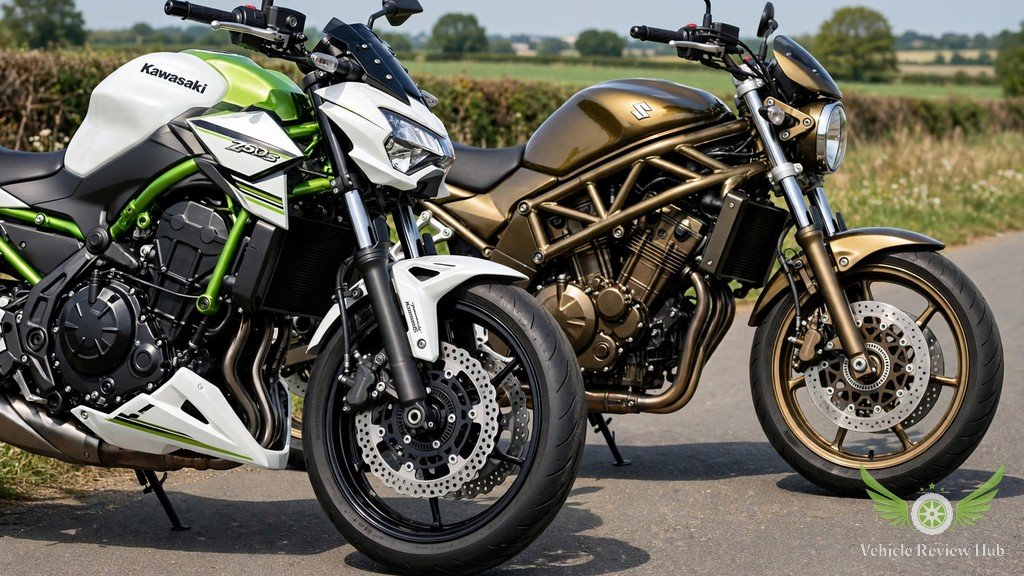
The SV650 is the oldest bike in this Kawasaki Z650 comparison and the least changed. Suzuki has sold the same basic SV650 since 2017, and in Motorcycle.com’s 2021 six-way it finished sixth with all three testers — Ryan Adams 76.0%, John Burns 77.9%, Troy Siahaan 79.2%. Yet the SV650 keeps selling, because its 90-degree V-twin is the most characterful engine in the group and its seat is the lowest. This is the closest price fight in this Kawasaki Z650 comparison: $165 separates the two bikes before Suzuki’s freight surcharge, $415 after it.
Engine, Specs and Performance Side by Side
The SV650’s 645cc 90-degree V-twin makes about 75 hp on the global rating — Suzuki USA publishes no US hp figure — against the Z650’s claimed 67.0 hp. On Motorcycle.com’s 2021 dyno the SV650 made 70.7 hp at 8,600 rpm and the Z650 made 61.4 hp at 8,100 rpm, and in the 2017 shootout the SV650 made 71.6 hp at 8,700 rpm against the Z650’s 60.95 hp at 8,000 rpm. The V-twin’s advantage in this Kawasaki Z650 comparison is the same on both dynos: roughly 9 to 11 hp at the rear wheel. The SV650’s torque is about 47 lb-ft, and its 2017 dyno read 45.4 lb-ft at 8,000 rpm — close to the Z650’s 43.71 lb-ft at 6,700 rpm. Ultimate Motorcycling’s 2017 three-way comparison of the Z650, SV650 and FZ-07 noted the Z650’s steepest rake and short wheelbase.
What the numbers miss is the feel. The SV650’s V-twin is the only V in this Kawasaki Z650 comparison, and Motorcycle.com’s testers kept coming back to it: the engine still makes all the right sounds, it revs to 10,000 rpm without the power falling off badly, and it grabbed third in the Engine category on the 2021 scorecard. The Z650’s parallel twin is smoother and quieter, with an intake howl one tester called intoxicating. On the road, the SV650 is the heavier bike at about 437 lb curb against the Z650’s 416.7 lb, with a smaller 3.8-gallon tank against the Z650’s 4.0 gallons.
The brakes and chassis split the two bikes cleanly. The SV650 has dual 290 mm front discs with 4-piston calipers and a 41 mm telescopic fork, with suspension called somewhat firm with less-than-refined damping in 2021. The Z650 has dual 300 mm petal discs with 2-piston calipers, and it won the Handling and Suspension categories in the 2017 shootout. The SV650’s LCD dash was called embarrassing in 2021, while the Z650’s 4.3-inch TFT is bright and easy to read. The SV650 has no ride-by-wire, no TFT and no traction control; it is the least electronic bike in this Kawasaki Z650 comparison, and for some riders that is the point.
Price, Equipment and Which Suits Which Rider
The 2026 SV650 ABS costs $8,149 plus $600 destination, or $8,749 delivered — $165 more than the 2027 Z650 S at $8,584. Suzuki adds a $250 freight surcharge on model-year 2025 and 2026 bikes shipped on or after September 17, 2025, taking the SV650 to $8,999 delivered — $415 more than the Z650. Both figures are printed here, labelled, because the surcharge is Suzuki’s own footnote. The Motorcycle.com database comparison lists the same $8,149 MSRP and $600 destination.
Which rider suits which bike comes down to seat height and character. The SV650’s 30.9-inch seat is the lowest in this Kawasaki Z650 comparison, nearly an inch lower than the Z650 S’s 31.7 inches — and Motorcycle.com noted the SV650’s larger dimensions suit taller riders, while the Z650 is the best bike in the group for smaller riders. The SV650 suits the rider who wants the V-twin sound and feel, the lowest seat, and a bike with no electronics to get in the way. The Z650 suits the rider who wants the lower delivered price, the TFT dash and KTRC. The full service and ownership record is in the Kawasaki Z650 reliability blog.
Kawasaki Z650 vs Suzuki GSX-8S
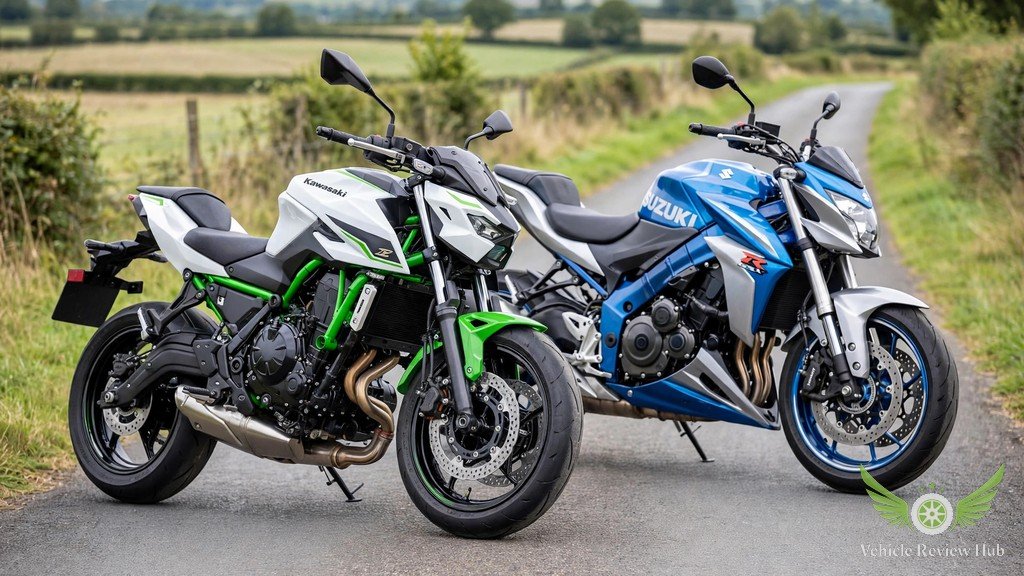
The GSX-8S is the biggest step up in this Kawasaki Z650 comparison — the most powerful, the most electronic and the most expensive bike here, by $1,365 delivered. Its 776cc parallel twin makes 82 claimed hp, and it is the only rival in this Kawasaki Z650 comparison that out-powers the Z650 by a margin no rider can miss. The question is whether that margin is worth the money.
Engine, Specs and Performance Side by Side
The GSX-8S’s 776cc parallel twin makes 82 hp at 8,500 rpm on Suzuki USA’s claim, with 57.5 lb-ft at 6,800 rpm — 15 more claimed horsepower than the Z650’s 67.0 hp, and nearly 10 lb-ft more torque than the Z650’s 47.2 lb-ft on the 2026–2027 sheets. The GSX-8S was not in Motorcycle.com’s 2021 six-way, so there is no same-dyno figure to compare directly — but the claimed gap is the largest in this Kawasaki Z650 comparison, and it shows on the road.
The chassis gap is just as clear: the GSX-8S has a 43 mm KYB inverted fork, dual 310 mm front discs with 4-piston radial calipers, and a bi-directional quickshifter as standard — hardware the Z650 does not offer at any price. The Z650 answers with a 41 mm telescopic fork and dual 300 mm petal discs with 2-piston calipers, good brakes but a rung below the Suzuki’s. The GSX-8S is also the heaviest bike in this Kawasaki Z650 comparison at 445 lb curb against the Z650’s 416.7 lb, and the tallest at 31.9 inches against the Z650’s 31.7 inches.
Electronics are where the two bikes are furthest apart: the GSX-8S has ride-by-wire, a three-mode Suzuki Drive Mode Selector, traction control, a TFT dash and the standard quickshifter. The Z650 has KTRC and a 4.3-inch TFT, but no ride-by-wire, no riding modes and no quickshifter — available only as an accessory. For a rider who wants the full modern package, the GSX-8S is the only bike in this Kawasaki Z650 comparison that delivers it; for a rider who wants simple controls, the Z650’s smaller electronics list is a feature.
Price, Equipment and Which Suits Which Rider
The 2026 GSX-8S costs $9,249 plus $700 destination, or $9,949 delivered — $1,365 more than the 2027 Z650 S at $8,584. Suzuki’s destination is $700; higher dealer fees are dealer-level figures, not Suzuki’s. The $1,365 premium buys 15 more claimed horsepower, an inverted fork, radial brakes, a quickshifter and a full electronics suite — the most complete package in this Kawasaki Z650 comparison.
Which rider suits which bike is a question of budget and ambition. The GSX-8S suits the rider who wants the fastest, best-equipped middleweight naked and is willing to pay $1,365 for it, and who does not mind the tallest seat and the heaviest weight in the group. The Z650 suits the rider who wants the cheapest delivered bike and friendly manners over outright performance. The Motorcycle.com 2017 shootout is still the best single read on what the Z650 does well: runner-up overall, and winner of the Handling and Suspension categories.
Kawasaki Z650 Price and Value Compared
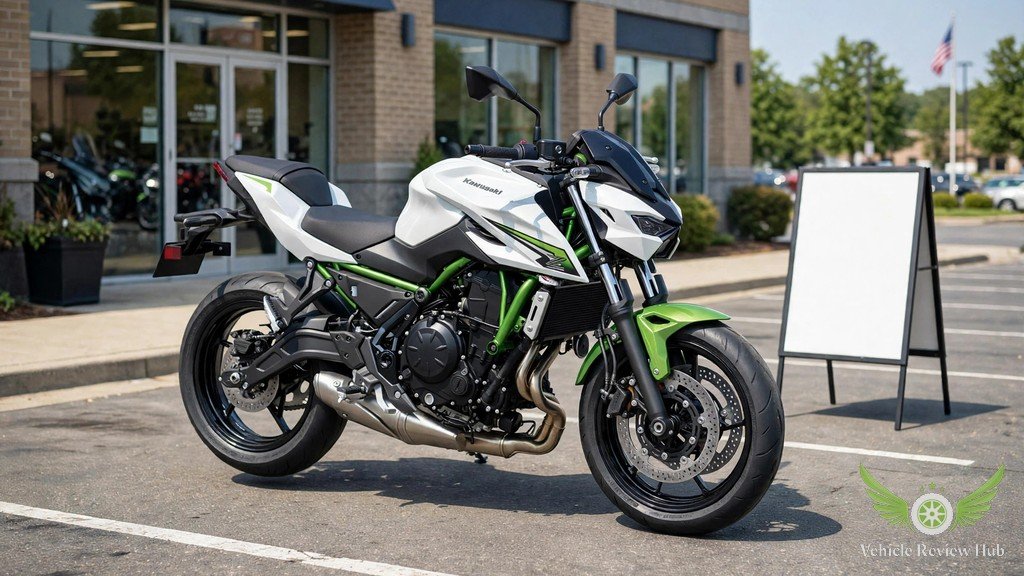
Delivered price is the number that matters, and this Kawasaki Z650 comparison has used it throughout — MSRP plus destination, re-checked in November 2026. The table below puts all four bikes and the Honda alternative on the same footing for this Kawasaki Z650 comparison, with the gap to the Z650 spelled out.
| Bike | MSRP | Destination | Delivered | Gap vs Z650 S |
|---|---|---|---|---|
| 2027 Kawasaki Z650 S ABS | $7,899 | $685 | $8,584 | — |
| 2026 Suzuki SV650 ABS | $8,149 | $600 | $8,749 | +$165 |
| 2026 Yamaha MT-07 | $8,599 | $675 | $9,274 | +$690 |
| 2026 Suzuki GSX-8S | $9,249 | $700 | $9,949 | +$1,365 |
| 2026 Honda CB650R E-Clutch | $8,699 | $600 | $9,299 | +$715 |
Note: This Kawasaki Z650 comparison price table uses MSRP plus destination, re-checked in November 2026 — the MT-07 and CB650R figures from Yamaha and Honda dealer listings and Honda USA’s own page, the Suzuki figures from Motorcycle.com’s database. The SV650’s $8,749 excludes Suzuki’s $250 freight surcharge; with it the SV650 is $8,999 delivered, or $415 more than the Z650 S. The CB650R is $8,699 plus $600 destination on Honda USA’s own page — an earlier aggregator figure of $9,199 was wrong, and belongs to the faired CBR650R instead.
Used TFT Bikes: $6,000 Plus
The doc heading says used TFT bikes start at $6,000 plus — but that is not the floor. Live Cycle Trader listings checked in November 2026 show 2023 Z650s from $3,990 to $6,997 and 2024s from $6,249 to $6,997, and the 2020-onward bikes all carry the TFT dash — so budget from around $4,000, not $6,000. With zero recalls on its own NHTSA record, a used Z650 is a condition buy, and the checks are service records, chain and sprockets, tyre age and brake-fluid age.
Running Costs and Resale Value Compared
Running costs favour the Z650 in this Kawasaki Z650 comparison. Its service rhythm is oil and filter, air filter and plugs every 7,500 miles, with the valve inspection at 15,000 miles — and its 4.0-gallon tank and observed 44–53 mpg give it roughly 175–210 miles between fill-ups. The MT-07 and GSX-8S both carry 3.7-gallon tanks and the SV650 3.8 gallons, so the Z650 stops for fuel least often. Tyres are the biggest single consumable here — the Z650 runs a 120/70-17 front and 160/60-17 rear, and the MT-07 and GSX-8S run wider 180-section rears that cost more to replace.
Kawasaki Z650 Comparison Verdict and US Alternatives
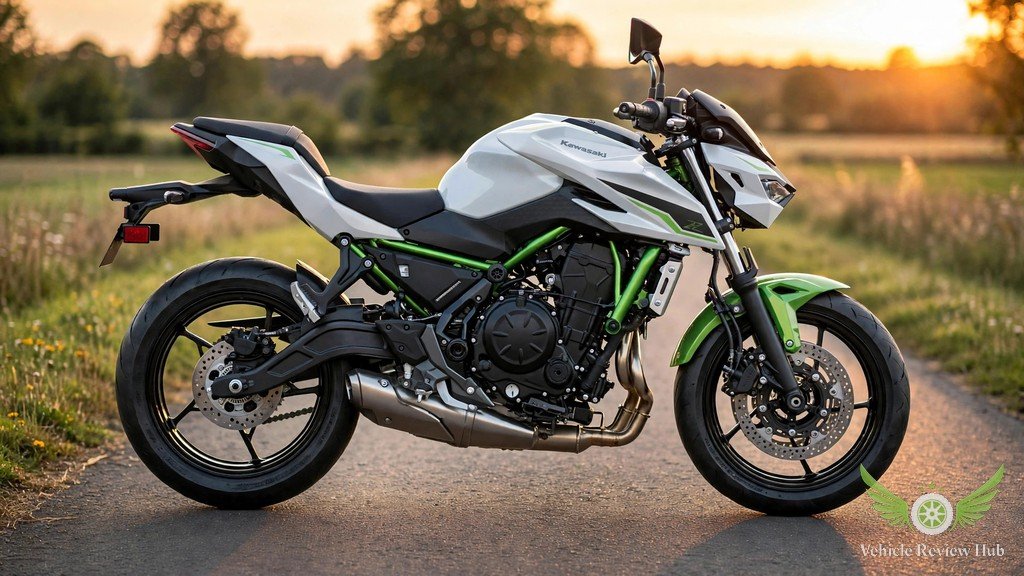
Four bikes, four honest answers — and this Kawasaki Z650 comparison ends where it started, with the price. The Z650 S is the cheapest delivered bike in its class at $8,584, and the friendliest: the lightest-feeling chassis, the easiest manners, the cleanest recall record and the simplest ownership. It is not the fastest, not the best equipped and no longer the lowest-seated — and this Kawasaki Z650 comparison has said so.
Verdict: Price and Manners
The verdict is price and manners. The Z650 S wins this Kawasaki Z650 comparison on value: $8,584 delivered, $165 less than the SV650, $690 less than the MT-07 and $1,365 less than the GSX-8S, with the cleanest recall record and the simplest service rhythm. It loses on outright power — 61.4 hp on Motorcycle.com’s 2021 dyno was the lowest of six — and on equipment, where the MT-07 and GSX-8S have ride-by-wire and inverted forks. But for a US buyer shopping in 2027 who wants a middleweight naked that is cheap to buy, cheap to run and easy to ride, the Z650 S is the pick. The MT-07 is the pick for the best engine in this Kawasaki Z650 comparison, the SV650 for the V-twin and the lowest seat, the GSX-8S for the most power and the fullest electronics.
CB650R Is the Four-Cylinder
The Honda CB650R is the only inline-four in the class. Its 649cc four claims 94 hp — Honda USA’s figure for the E-Clutch model — and it made 81.9 hp at 10,800 rpm on Motorcycle.com’s 2021 dyno, the second-highest of the six. But that power only arrives near the rev limit, and the testers called its engine the weakest in the mid-range. The CB650R finished fifth in the 2021 six-way, and its Grin Factor was dead last.
The price is now verified against Honda USA’s own page: the 2026 CB650R E-Clutch is $8,699 plus $600 destination, or $9,299 delivered — $715 more than the Z650 S. An earlier aggregator figure of $9,199 for the CB650R was wrong; that figure belongs to the faired CBR650R E-Clutch. The CB650R is the alternative for riders who want four-cylinder character and a slipper clutch as light as the Honda’s — not the value pick in this Kawasaki Z650 comparison. The full review of the Z650 itself is in the Kawasaki Z650 review blog.
Kawasaki Z650 Comparison: Frequently Asked Questions
These are the questions buyers ask most about this Kawasaki Z650 comparison — answered with the delivered prices and the test figures above.
Which is cheapest: the Z650, MT-07, SV650 or GSX-8S?
The 2027 Z650 S at $8,584 delivered. The 2026 SV650 ABS is $8,749 (plus a $250 Suzuki freight surcharge), the 2026 MT-07 is $9,274, and the 2026 GSX-8S is $9,949.
Which is the most powerful?
The GSX-8S, with 82 claimed hp. The MT-07 is around 73 hp and the SV650 around 75 hp (both global ratings — neither maker publishes a US hp figure), while the Z650 claims 67 hp and made the least power on Motorcycle.com’s 2021 dyno.
Which has the lowest seat?
The SV650 at 30.9 inches. The Z650 S and the MT-07 both sit at 31.7 inches, and the GSX-8S is tallest at 31.9 inches.
Which has the best electronics?
The GSX-8S: ride-by-wire, three-mode SDMS, traction control, a quickshifter and a TFT dash. The Z650 has KTRC and a TFT; the 2025+ MT-07 has ride-by-wire and a TFT; the SV650 has ABS and little else.
Is the GSX-8S worth $1,365 more than the Z650?
It buys 15 more claimed horsepower, an inverted fork, radial brakes and a full electronics suite. For a rider who wants the extra performance and tech, yes; for a rider who wants the cheapest delivered middleweight with friendly manners, the Z650 keeps the money.
What about the Honda CB650R?
It is the only inline-four in the class, with 94 claimed hp — but it costs more than the Z650 and its power only arrives near the rev limit (81.9 hp on Motorcycle.com’s 2021 dyno). It is the alternative for riders who want four-cylinder character, not the value pick.