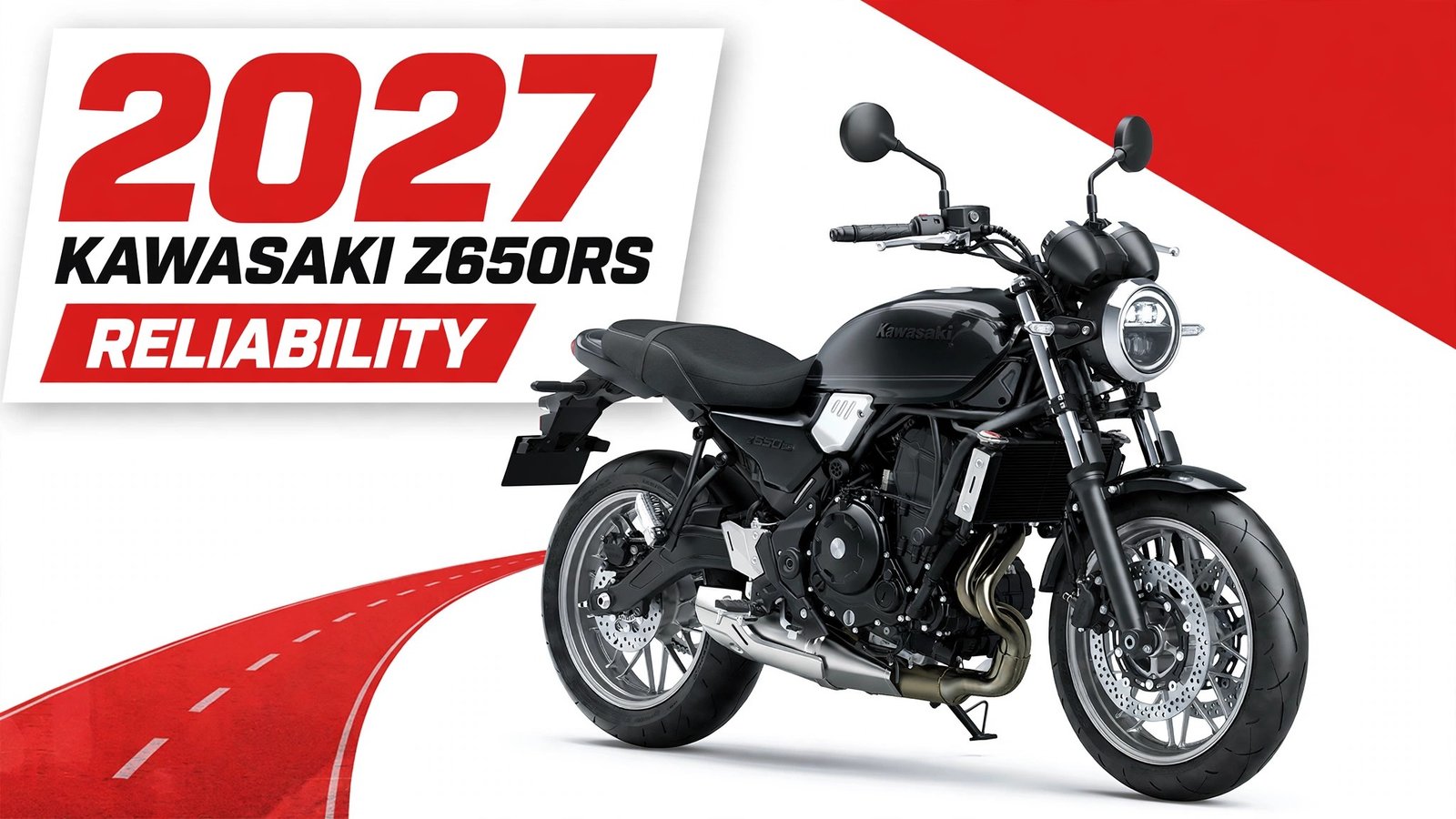
The Kawasaki Z650RS is a simple bike, and simple bikes tend to be reliable ones — the first lesson of Kawasaki Z650RS reliability. Five model years into its US run, the RS has zero recalls and zero complaints on its own NHTSA record, a 649cc twin shared with the long-running Z650, and a maintenance schedule any home mechanic can follow. This Kawasaki Z650RS reliability guide gives the full picture: the clean recall record, the one running fault owners actually talk about, and the service intervals that keep the bike honest.
The short version of this Kawasaki Z650RS reliability guide is good news: no campaign names the RS, no stop-sale has ever touched it, and the service schedule is short — oil and filter, air filter and spark plugs every 7,500 miles, a valve check at 15,000 miles, and brake fluid every two years.
Kawasaki Z650RS Reliability Overview
The RS has been on sale in the US since the 2022 model year, and the Kawasaki Z650RS reliability story is mostly the absence of bad news. Kawasaki built it from the Z650’s proven running gear — the same 649cc liquid-cooled parallel twin, the same steel trellis frame, the same Bosch 9.1M ABS listed on Kawasaki’s 2027 model page — then dressed it in retro bodywork. Nothing about the RS is new technology, and that is exactly why this Kawasaki Z650RS reliability guide starts from a position of confidence rather than caution.
Zero Across Five Years
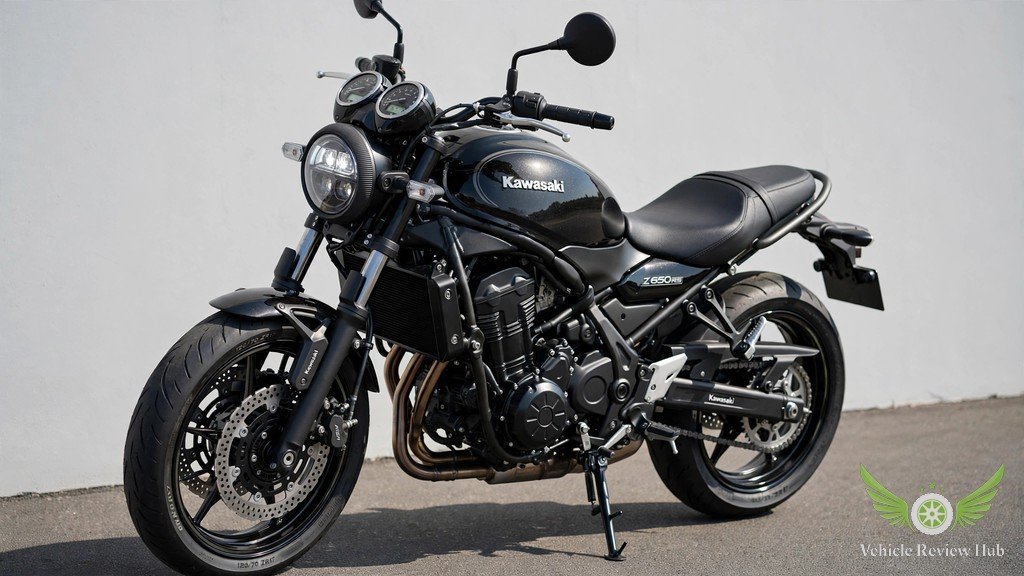
The headline number is zero. Across the five model years the NHTSA database covers — 2022 through 2026 — the Z650RS has zero recalls and zero complaints on its own record, checked under both model names the bike carries, “z650rs” and “z650”. The complaints database returns zero as well, for all five years.
Five years is the honest scope of that Kawasaki Z650RS reliability claim. The 2027 model year was not in the database’s scope when the record was checked, so this Kawasaki Z650RS reliability guide claims five checked years, never six. A 2027 bike has no recall on file either, but the checked record runs 2022 through 2026, and this Kawasaki Z650RS reliability guide says so plainly rather than stretching the claim.
| Model year | NHTSA recalls | NHTSA complaints |
|---|---|---|
| 2022 | 0 | 0 |
| 2023 | 0 | 0 |
| 2024 | 0 | 0 |
| 2025 | 0 | 0 |
| 2026 | 0 | 0 |
Note: Recalls and complaints checked on the RS’s own NHTSA record under both “z650rs” and “z650” for 2022–2026; the 2027 model year was outside the database’s scope at check time.
Owner ratings back up the clean record. In MCN’s owner survey of ten UK riders, the RS scores 4.4 out of 5 for reliability and 4.5 out of 5 overall, with the engine at 4.6 and value for money at 4.8. The lowest owner score is equipment at 3.6 — a comment on the dials-and-no-TFT specification. A bike with no recalls, no complaints and a 4.4 owner reliability score is a bike a buyer can approach with confidence — and the Kawasaki Z650RS reliability record backs that up.
How Mileage, Storage and Previous Care Affect Reliability
The RS is a simple, proven machine, so the biggest reliability variable is not the model year — it is how the individual bike was treated. A 2022 launch bike with 20,000 miles and a full service history is a safer buy than a 2024 bike with 3,000 miles — mileage matters less than maintenance where Kawasaki Z650RS reliability is concerned.
Storage is the quiet killer of retro bikes. The RS’s value sits in its finish — green paint and pinstripes on the 2022 bike, gold wheels, polished details — and a bike left outside fades faster than it wears out mechanically. Check the tank paint, the engine paint and the fork legs first: MCN owners flag the engine paint as a weak point, and paint is the first thing a buyer sees.
Previous care shows up in the records. Ask for service receipts at every 7,500-mile interval, and check that the 15,000-mile valve inspection was actually done — it is the service an owner is most tempted to skip. There is no bad year to avoid: the 2022–2023 bikes have no traction control, the 2024 bike added two-mode KTRC and the 2025–2027 bikes have three-mode KTRC, but the RS was never redesigned, so no year is more or less reliable than another — Kawasaki Z650RS reliability does not vary by model year.
Kawasaki Z650RS Common Problems and Wear Items
Five years in, Kawasaki Z650RS reliability shows no pattern of failures — no weak engine part, no electrical gremlin, no recall to work around. What the bike does have is one documented running fault, a handful of owner niggles, and the ordinary wear items every middleweight asks for. This Kawasaki Z650RS reliability guide covers each one honestly, starting with what the campaigns do not say.
No Campaigns Name the RS
No recall, no service campaign, no stop-sale and no do-not-ride order names the Z650RS. Two campaigns from neighbouring models are easy to mistake for this bike’s: the Ninja 650’s 10V-323 and 12V-081 both predate the RS entirely — the RS did not reach the US market until 2022 — and neither touches it. The Z500 and Ninja 500 clutch campaign, 25V-146, covers the 451cc bikes only and does not touch the RS either.
The distinction matters when a buyer searches a VIN or reads a forum thread. A campaign that names the Ninja 650 or the Z500 is not an RS problem. Judge Kawasaki Z650RS reliability by its own record — zero recalls, zero complaints across 2022–2026 — and treat any campaign number that does not name the Z650RS as somebody else’s problem.
Snatchy Fuelling Off Idle
The RS’s one documented running fault is snatchy fuelling just off idle. All three 2022 launch reviews report it: RevZilla calls the fuelling “snatchy just above idle” with occasional chuffing and popping that suggested an overly lean mixture. Cycle World describes it as “somewhat snatchy, slightly on/off throttle, especially when leaving from a stop in first gear”, and could not say whether it was a mapping issue or the substantially shortened first gear. Ultimate Motorcycling reports “low-rpm on-off throttle snatchiness most prominent in first gear that quickly clears as you click through the gears”. Cycle News adds a slight hesitation directly off idle.
It is a fuelling trait, not a defect with a campaign behind it. There is no recall, no technical service bulletin and no complaint on file for it, and it clears as soon as the bike is rolling — the throttle pickup is abrupt from a standstill in town and in slow traffic, then the bike is docile. The Z650RS performance guide covers the same behaviour on the road. No verified fuel-pump failure is on file for the RS. Riders who find it annoying have two honest options: learn the clutch and throttle around it, which most owners do within a week, or ask a dealer about a fuelling adjustment — but there is no factory fix to wait for, because Kawasaki has never treated it as a fault.
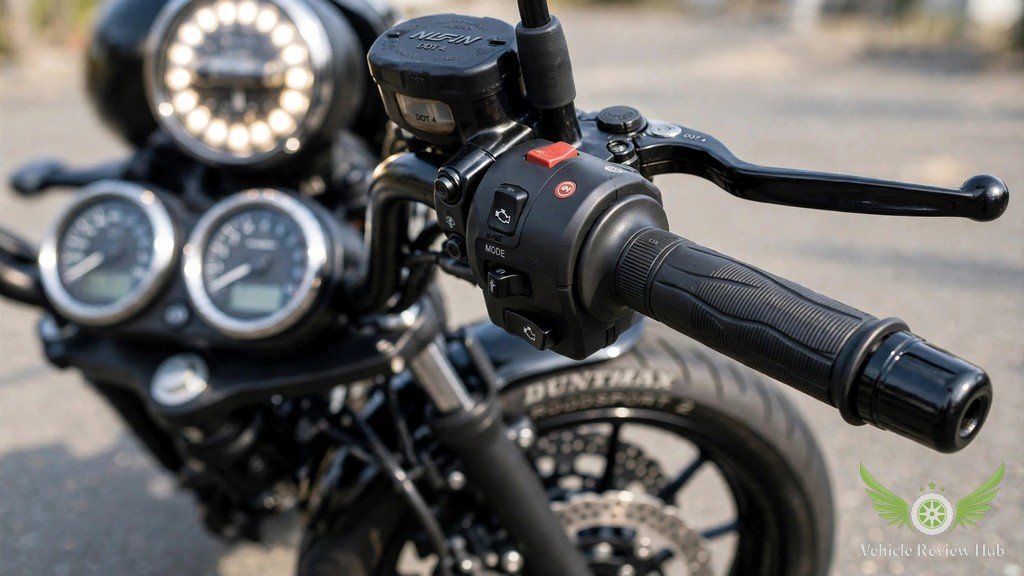
Beyond the fuelling, the owner niggles are small: the engine paint finish, occasional switchgear trouble on older Zeds, and standard tyre valves that are awkward to reach because of the cast-spoke wheel design — an L-shaped adaptor fixes that one for a few dollars. The wear items are the ordinary ones: tyres, brake pads, chain and sprockets, and the battery on a bike that sits. None is expensive, none is unusual, and none has produced a pattern of premature failure — ordinary Kawasaki Z650RS reliability wear.
Kawasaki Z650RS Maintenance Schedule and Servicing
The RS has no separately published service schedule of its own, so this section uses the shared-platform schedule — the Z650’s schedule, which the RS follows because it shares the same engine and running gear. The RS chart states its figures came from the Z650’s manual, and the intervals below are verified from the Z650’s own US manuals, from MCN, and from the RS chart itself. This Kawasaki Z650RS reliability guide labels the schedule as shared-platform throughout.
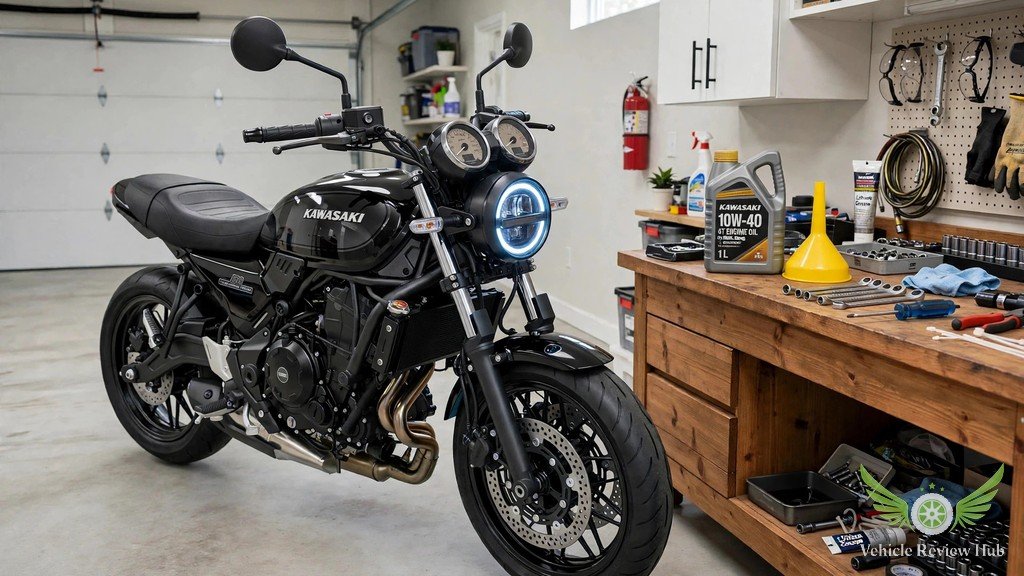
Valves at 15,000 US Miles
Service comes every 7,500 miles or 12,000 km, or yearly, whichever comes first — the rhythm this Kawasaki Z650RS reliability guide is built on — and the first service is at 600 miles or 1,000 km. At every 7,500-mile service the bike asks for engine oil and filter, air cleaner element and spark plugs: all three, every time. The valve clearance inspection falls at 15,000 US miles, which is 24,000 km, and then every two services after that. MCN confirms the same intervals.
The valve check is the service that matters most, and the one owners are most tempted to skip. The clearances are tight — exhaust 0.22–0.31 mm, intake 0.15–0.21 mm — and a valve that closes up quietly costs power before it costs an engine. The consumables are cheap and standard: SAE 10W-40 oil, 1.8 liters with a filter change, filter part 16097-0008, and two NGK CR9EIA-9 spark plugs gapped at 0.8–0.9 mm.
| Service | Interval | What gets done |
|---|---|---|
| First service | 600 miles / 1,000 km | Oil and filter, general inspection |
| Routine service | Every 7,500 miles / 12,000 km, or yearly | Oil and filter, air cleaner element, spark plugs |
| Valve clearance inspection | 15,000 US miles (24,000 km), then every two services | Inspect clearances; exhaust 0.22–0.31 mm, intake 0.15–0.21 mm |
| Brake fluid replacement | 15,000 miles and every 2 years | Replace with DOT 4 fluid |
| Coolant replacement | 22,500 miles and every 3 years | Drain and refill coolant |
Note: This is the shared-platform (Z650) schedule, labelled as such — the RS’s own owner’s-manual PDF was not directly located. Oil and filter, air filter and spark plugs are replaced at every 7,500-mile service, and the valve inspection falls at 15,000 US miles. This Kawasaki Z650RS reliability guide prints the US intervals throughout.
42,000 km Is Not the US Figure
One number causes more confusion than any other in RS maintenance. Some sources print 42,000 km as the valve-check interval for this bike. That figure is the non-US interval — the Z650 service manual’s “Other than US and CA Models” column — and it is not the US figure. The US interval is 24,000 km, which is 15,000 miles. The Z650 ABS reliability guide uses the same US figure.
The confusion comes from aggregator pages that mix US and non-US figures on a single line. MotoSpecDB’s RS page prints 42,000 km for the same reason, and it should not be used as the US figure — its valve interval is the non-US one. When in doubt, the US figure is 15,000 miles, and the manual column that matters is the one headed for US models.
Kawasaki Z650RS Tires, Brakes and Suspension Maintenance
The running gear on the RS is conventional, and its maintenance is too — which is good news for Kawasaki Z650RS reliability. Dual 300 mm petal-style front discs with two-piston Nissin calipers, a single 220 mm petal-style rear disc, a 41 mm non-adjustable telescopic fork and a preload-only rear shock — nothing here needs a specialist, and nothing here hides a surprise. This Kawasaki Z650RS reliability guide covers the checks that matter, in the order a buyer or owner should make them.
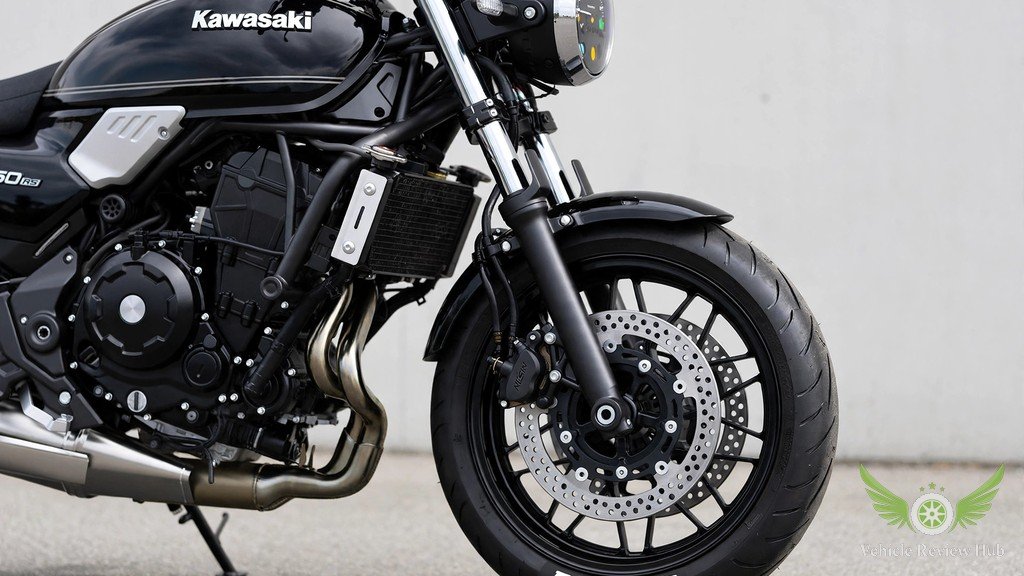
Brake Fluid: 15,000 or 2 Years
Brake fluid is the most commonly skipped item on this bike, and the schedule is unambiguous: replace the fluid at the 15,000-mile service and every two years after that, using DOT 4 fluid. Brake fluid absorbs moisture from the air, and old fluid gives a soft lever long before it gives a warning light. The Bosch 9.1M ABS unit on every US RS is a sealed, reliable piece of hardware with no service interval of its own — but it cannot compensate for fluid that has gone soft.
Check the pads at every service and the discs for scoring or warping. The petal shape is a styling detail, not a wear item: the US RS has petal discs on every model year, never round ones. The front calipers are two-piston Nissin units and the rear is a single-piston caliper, all standard, inexpensive parts.
Tire, Brake and Suspension Checks That Matter
Tyres are the first thing to check on any used RS. The bike ships on Dunlop Sportmax Roadsport 2 tyres — 120/70 ZR17 front, 160/60 ZR17 rear — and the cold pressures are 225 kPa front and 250 kPa rear. Check the date codes as well as the tread: a five-year-old tyre with good tread is still a five-year-old tyre. The standard tyre valves are awkward to reach because of the cast-spoke wheel design, so carry an L-shaped adaptor and check pressures cold, before the ride.
The chain needs regular attention and honest labelling. The RS runs a sealed 520 chain, and the published sources disagree on its slack figure, so this Kawasaki Z650RS reliability guide prints neither number as the RS’s own figure — check the slack against the manual for your own bike and keep the chain cleaned and lubricated. Check the chain often, lubricate it regularly, and replace chain and sprockets together when they wear. The suspension needs almost nothing: the fork is non-adjustable, the rear shock offers preload only, and the only service is to check for leaks and replace worn seals — simple Kawasaki Z650RS reliability care.
| Item | Specification | Notes |
|---|---|---|
| Engine oil | SAE 10W-40, 1.8 L with filter | 1.6 L drain-only, 2.3 L dry |
| Oil filter | 16097-0008, 17.5 Nm | Replaced at every service |
| Spark plugs | NGK CR9EIA-9 ×2, gap 0.8–0.9 mm, 13 Nm | Replaced at every service |
| Drain bolt | 30 Nm | Check the washer at every oil change |
| Tyres | 120/70 ZR17 front, 160/60 ZR17 rear | Dunlop Sportmax Roadsport 2 |
| Tyre pressures (cold) | 225 kPa front / 250 kPa rear | Check cold, before riding |
| Brakes | Dual 300 mm petal front, single 220 mm petal rear | Bosch 9.1M ABS, Nissin calipers |
| Chain | Sealed 520 chain | Slack figures disagree across sources — no number printed here |
Note: Consumables are shared-platform (Z650) figures, verified from the Z650’s own manuals. Tyre pressures agree across sources at 225 kPa front and 250 kPa rear. The chain row carries no slack number because the published sources disagree, and this Kawasaki Z650RS reliability guide will not present a disputed number as the RS’s own.
Kawasaki Z650RS Maintenance and Ownership Costs
Running an RS is cheap by middleweight standards, and the costs are predictable because the schedule is short and the parts are shared with the Z650. There is no expensive service, no rare part, and no dealer-only procedure in the bike’s life. This Kawasaki Z650RS reliability guide puts the real numbers in one place, and labels the one cost area where no verified US figure exists. The Z650RS comparison guide puts the RS’s running costs against its rivals.
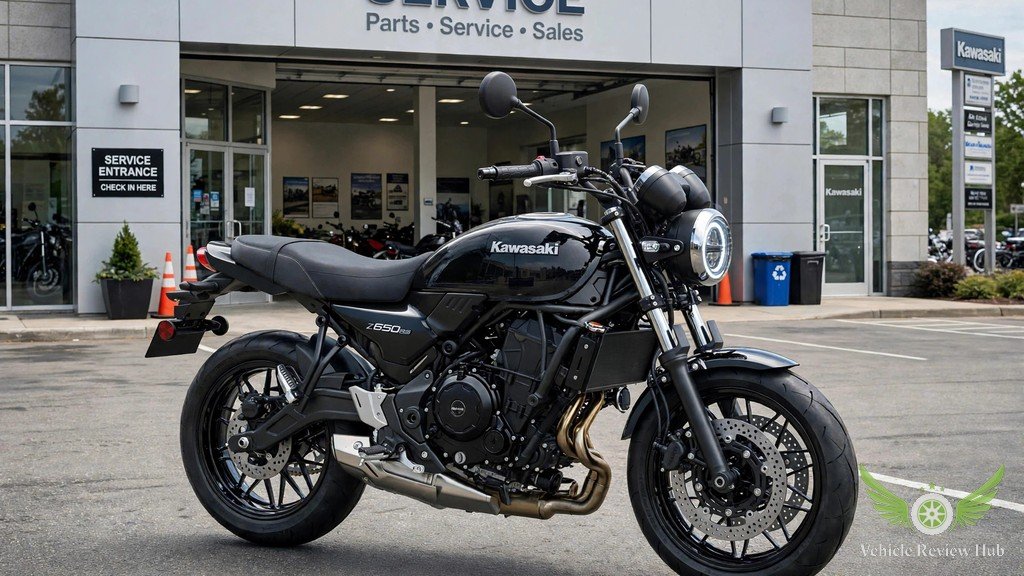
Fuel, Routine Servicing, Tires and Replacement Parts
Fuel is the biggest running cost, and the RS is easy on it. Kawasaki publishes no MPG figure, but road tests and owners report roughly 50 to 60 mpg — MCN’s average is 55 mpg — and the 3.2-gallon tank gives roughly 176 miles between fill-ups at that average. The teardrop tank is the only real range compromise: the bike asks for fuel stops more often than a rival with a bigger tank.
Routine servicing is a 7,500-mile rhythm, and parts are cheap: oil and filter, air filter and spark plugs at every service, a valve inspection at 15,000 miles, brake fluid every two years and coolant every three. Tyres are the one wear item with a real price tag — a set every 6,000 to 10,000 miles — and brake pads, chain and sprockets follow the same honest wear pattern. No verified US service-cost figure exists, so this Kawasaki Z650RS reliability guide prints none. In the UK, MCN quotes about £250 a year, roughly £300 for a 7,500-mile service and about £580 for the 15,000-mile valve service, but those are UK prices and this Kawasaki Z650RS reliability guide does not convert them into dollars. The Z650RS review carries the full price story.
Replacement parts are shared with the Z650, which keeps prices down and availability up — and keeps Kawasaki Z650RS reliability affordable to maintain. The oil filter, spark plugs, brake pads, chain and sprockets are all common parts, and the RS’s twelve-month limited warranty covers the first year. After that the owner is on their own — but the Kawasaki Z650RS reliability record says that is a comfortable place to be.
Thailand-Built, Per vPIC
The RS is built in Thailand, verified from the bike’s own VIN. A 2025 bike’s VIN — ML5ERER17SDAF9748, from a Powerhouse Motorsports listing — decodes through the NHTSA vPIC system to the Pluakdaeng plant in Rayong, Thailand, with the model recorded as Z650, the year as 2025, ABS standard, and the 649cc twin. The RS VIN prefix is ML5ERER, distinct from the Z650 ABS prefix ML5EREN and the non-ABS prefix ML5EREP.
Thai assembly is not a Kawasaki Z650RS reliability concern. Kawasaki builds the Z650 family in Thailand for the world market, and the RS’s clean recall record and strong owner ratings speak for the build quality. What the origin does affect is parts: the RS shares its running gear with the Z650, so spares are common and cheap, and the retro-specific parts — tank, tail cowl, headlight, dials — are the ones to protect.
How to Keep a Kawasaki Z650RS Reliable
The RS asks for very little, and rewards it. Keep the service schedule, keep the records, keep the bike dry and keep the paint in good order, and the bike will return the favour — that is Kawasaki Z650RS reliability in practice. This Kawasaki Z650RS reliability guide closes with the habits that separate a bike that holds its value from one that quietly loses it.
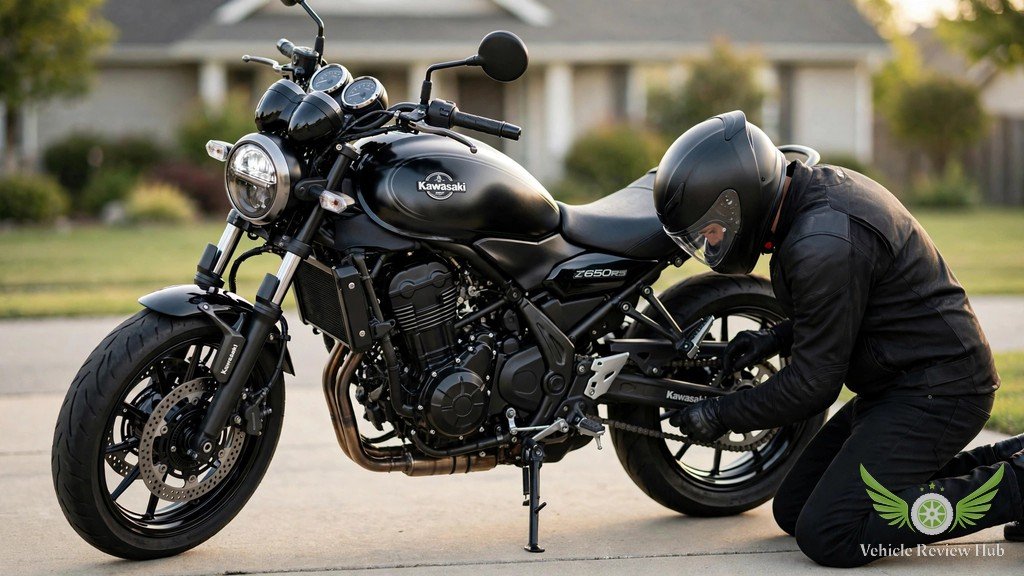
Preventive Maintenance, Records and Regular Inspections
Preventive maintenance on the RS is the schedule itself: oil and filter, air filter and spark plugs every 7,500 miles, a valve inspection at 15,000 miles, brake fluid every two years and coolant every three. Do the work on time, or have a dealer do it, and keep every receipt — the paper trail of Kawasaki Z650RS reliability. Records are the single most valuable thing an owner can keep, because they are the proof a buyer asks for when judging Kawasaki Z650RS reliability.
Inspect the bike regularly between services: tyre pressures cold before a ride, chain condition and lubrication, brake pad thickness and fluid colour, fork seals and coolant leaks. Check the battery if the bike sits, and use a trickle charger over winter. None of this is specialist work, and all of it is cheaper than the repair it prevents — the cheapest Kawasaki Z650RS reliability insurance there is.
Paint Condition Carries Value
On the RS, paint condition carries value in a way it does not on a plain naked bike. The bike’s whole appeal is its finish — the green paint and pinstripes reproducing the 1976 B1 on the 2022 bike, the gold wheels, the ducktail cowl and sculpted side panels — and a bike with original, unmarked paint is worth more than the same bike with faded or touched-up panels. MCN owners already flag the engine paint as a weak point, so protect it: store the bike indoors, wash it properly, and touch up stone chips before they spread.
Original paint matters at resale because the RS is bought with the eyes as much as with the spec sheet. A buyer choosing between two RS bikes will pay more for the one with clean tank paint, straight pinstripes and unmarked cases. Keep the bike dry, keep it clean, and keep the records — that is the whole Kawasaki Z650RS reliability recipe.
Kawasaki Z650RS Reliability: Frequently Asked Questions
These are the questions buyers ask most about how reliable the Z650RS is — answered with the verified figures and the honest gaps from this Kawasaki Z650RS reliability guide.
Has the Kawasaki Z650RS been recalled?
No — zero recalls and zero complaints on its own NHTSA record across 2022–2026, checked under both “z650rs” and “z650”.
How often does the Z650RS need servicing?
Every 7,500 miles or 12,000 km, or yearly — oil and filter, air filter and spark plugs at every service.
When are the valves checked on a Z650RS?
At 15,000 US miles (24,000 km). The 42,000 km figure is the non-US interval, not the US one.
What are the Z650RS’s common problems?
Snatchy fuelling just off idle, reported in all three 2022 launch reviews. There is no recall, complaint or campaign behind it, and no verified fuel-pump failure on file.
Where is the Z650RS built?
Thailand — a 2025 bike’s VIN decodes via NHTSA vPIC to the Pluakdaeng plant in Rayong, Thailand.
How much does servicing a Z650RS cost?
No verified US figure exists. In the UK, MCN quotes about £250 a year, roughly £300 for a 7,500-mile service and about £580 for the 15,000-mile valve service; US dealer prices vary.