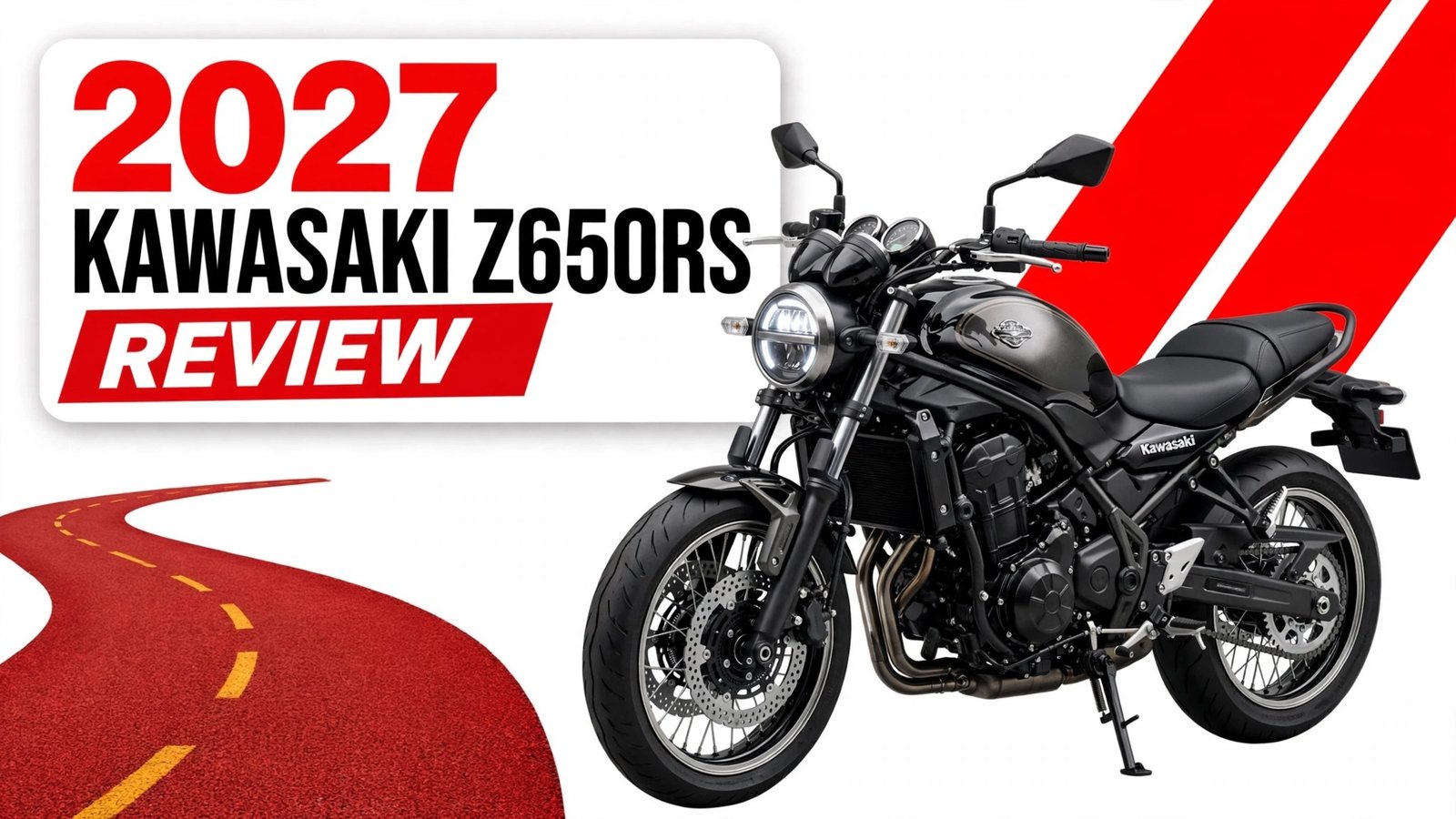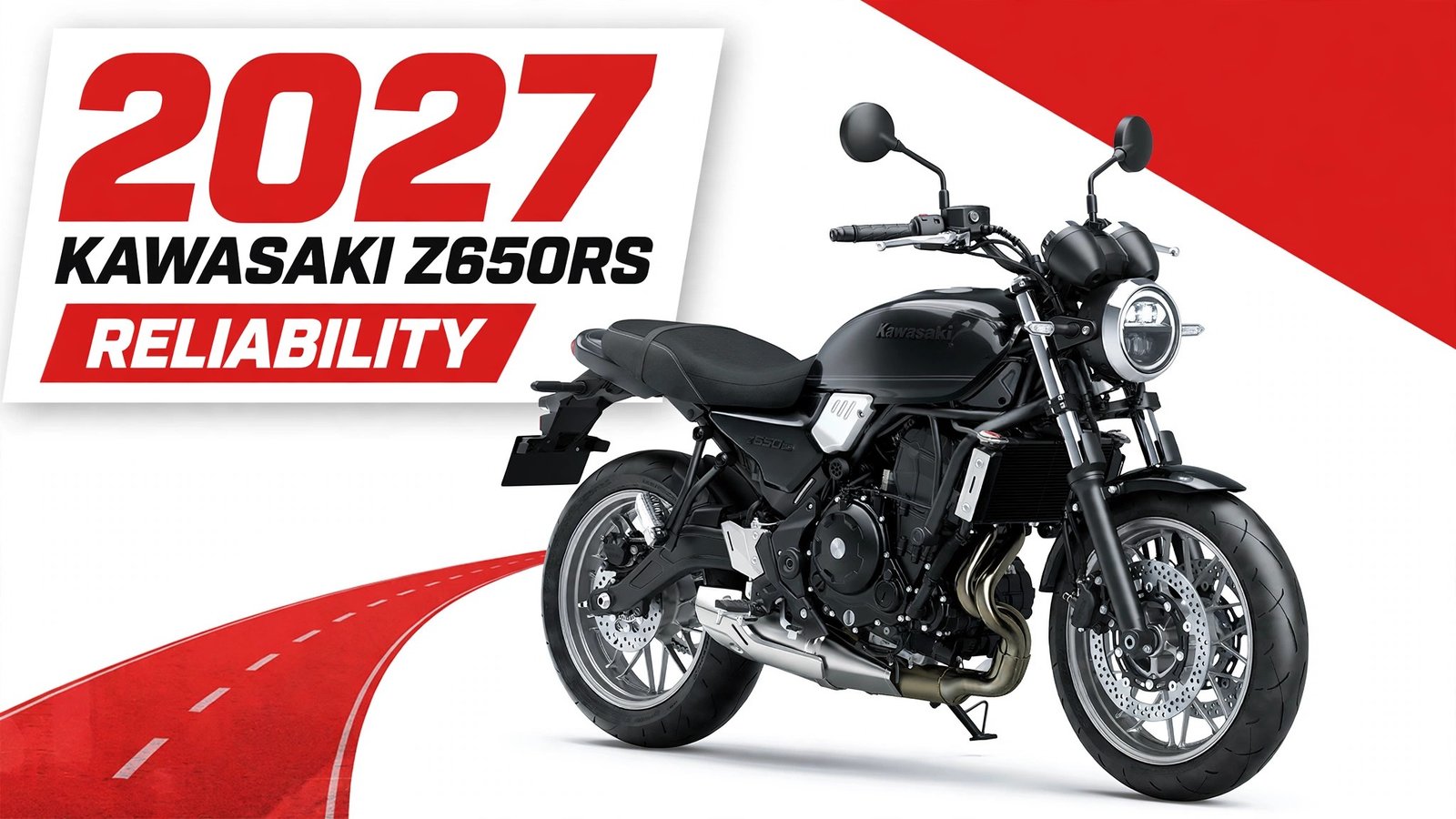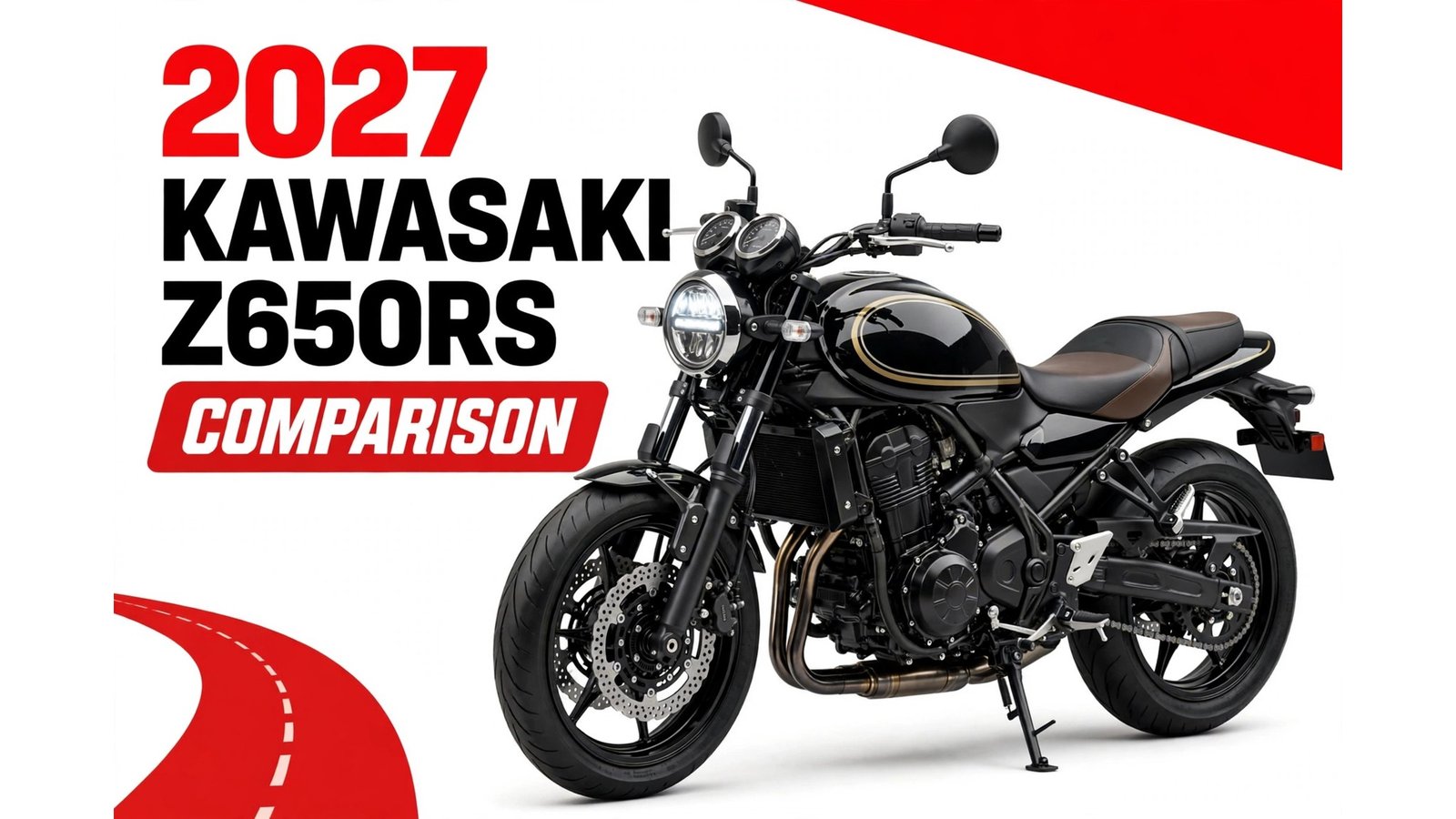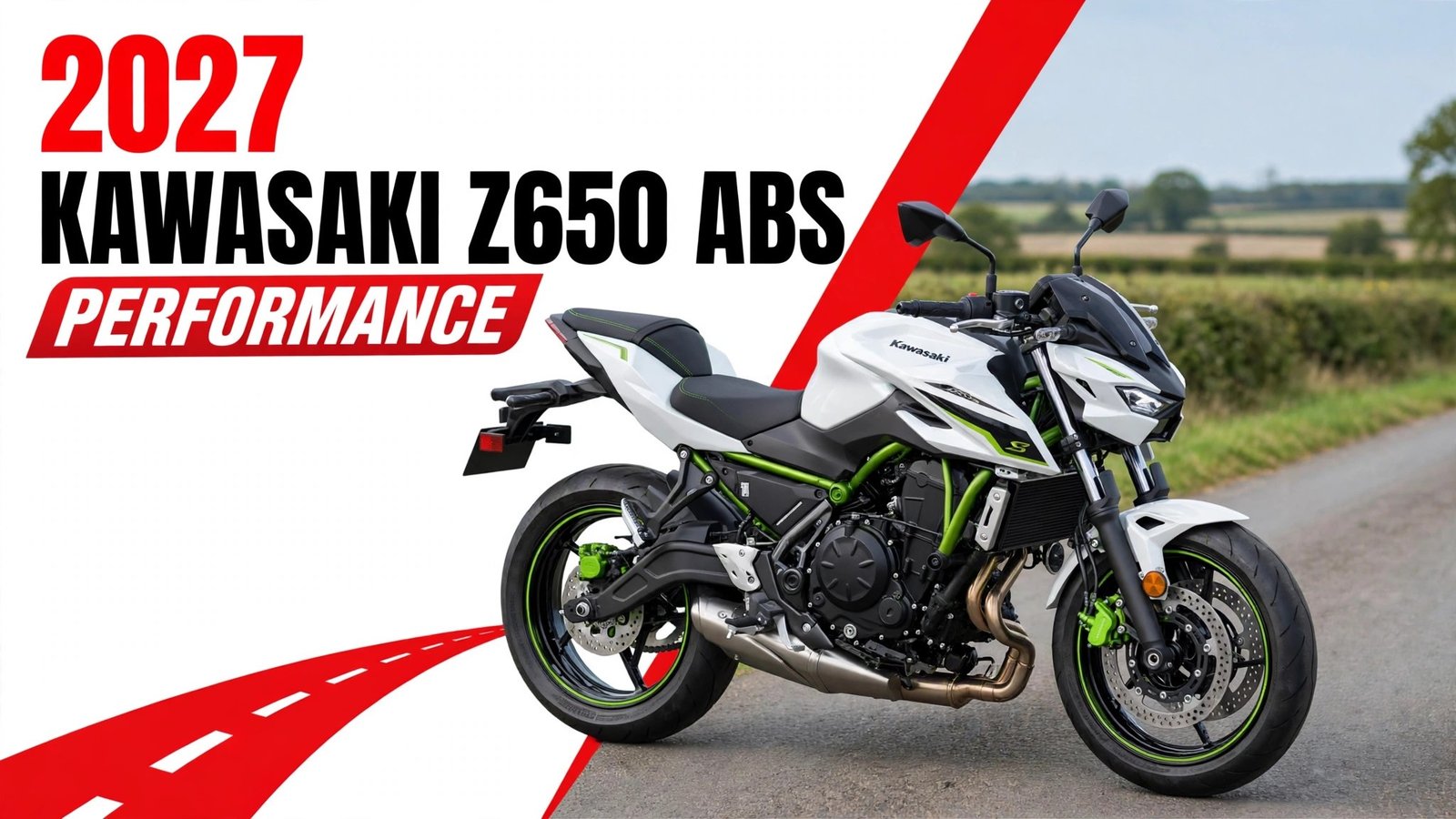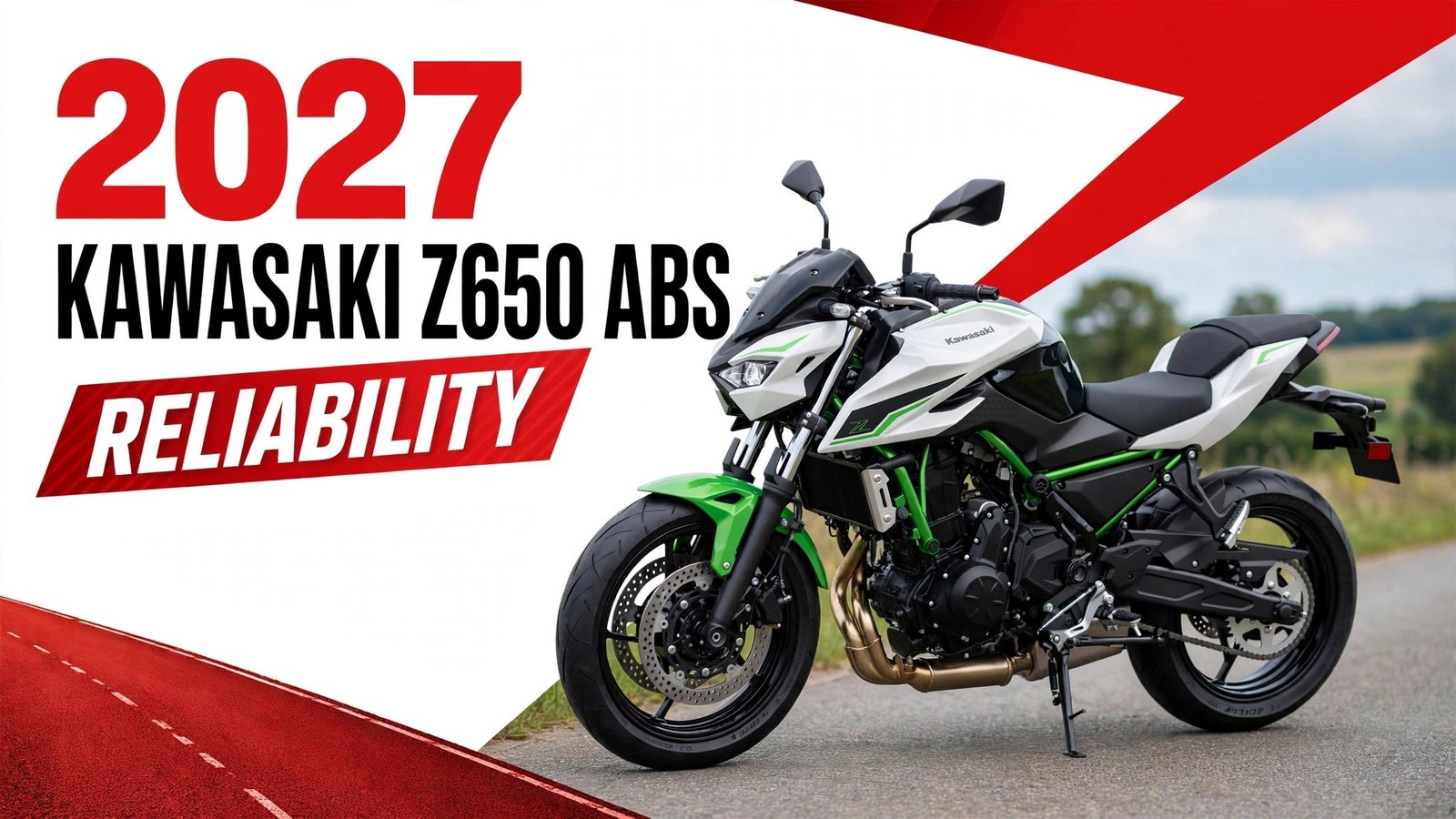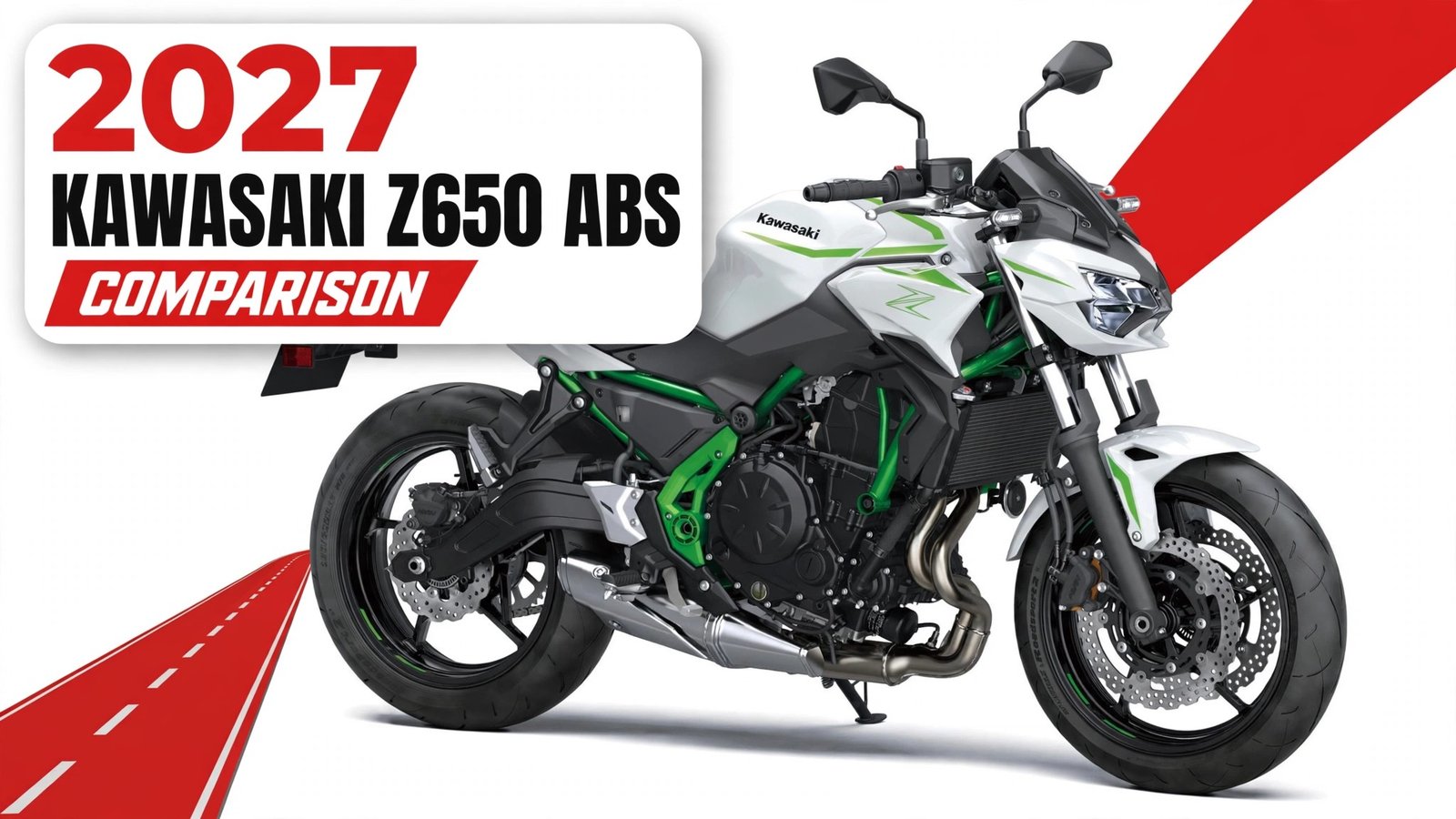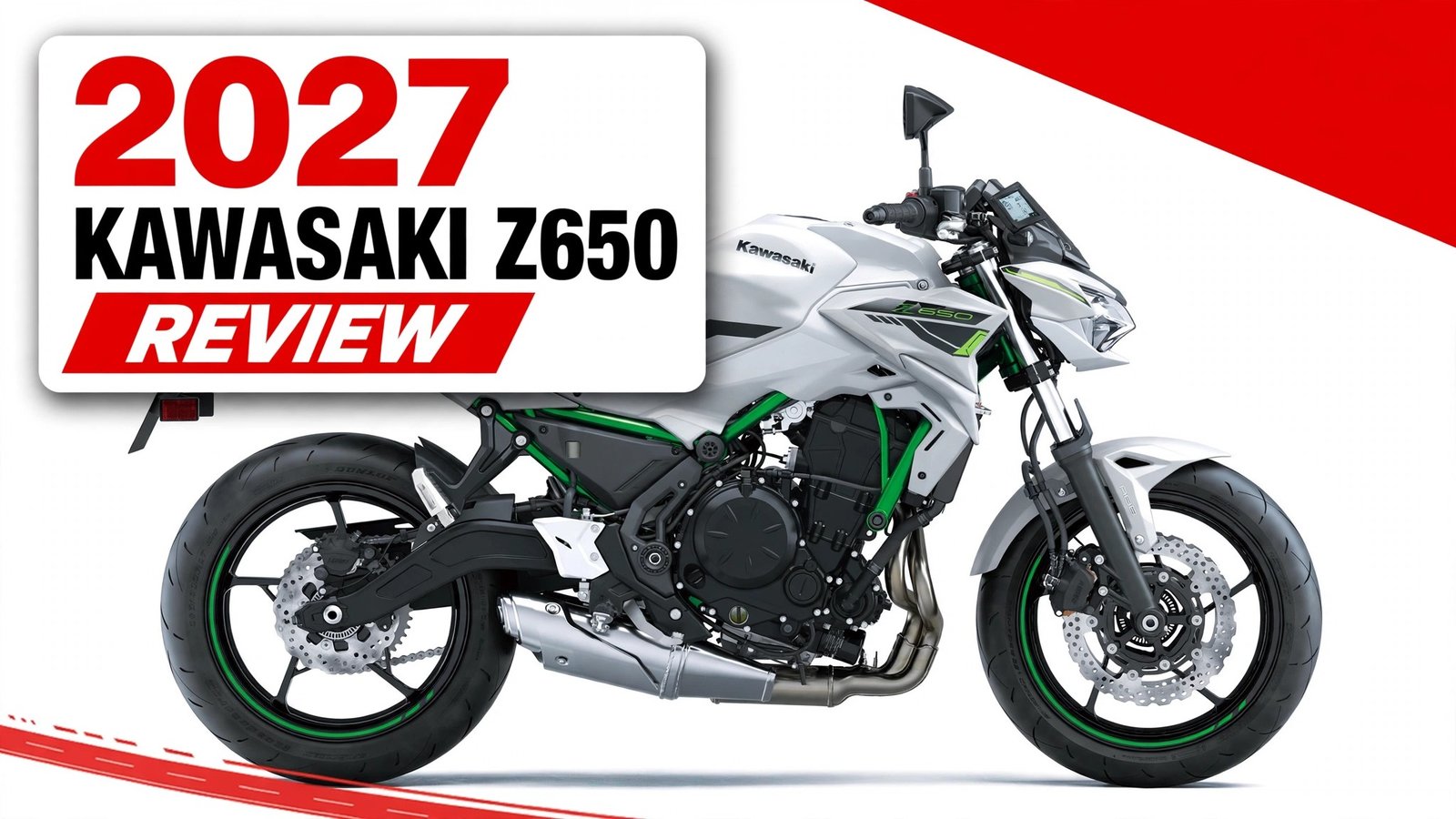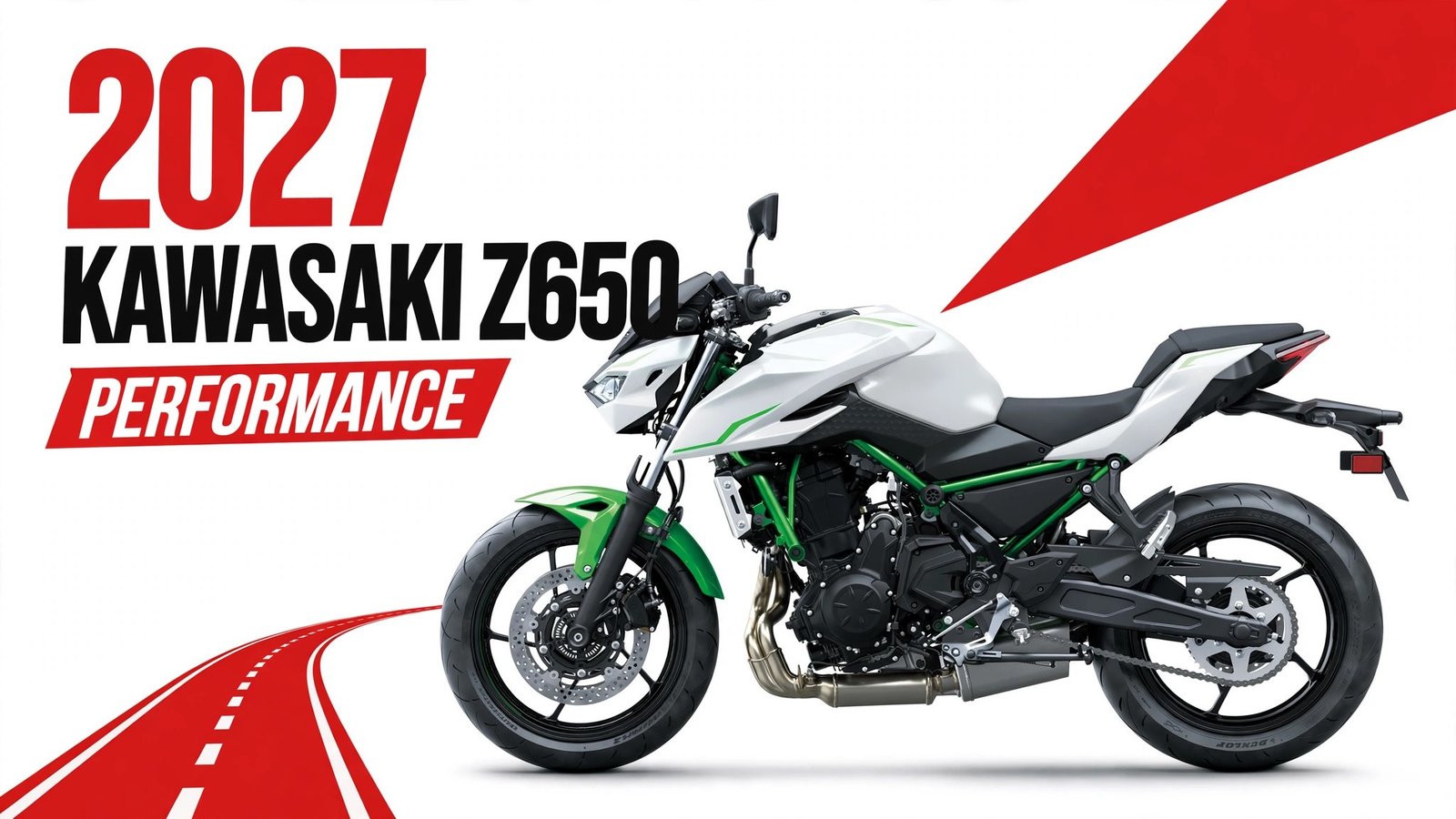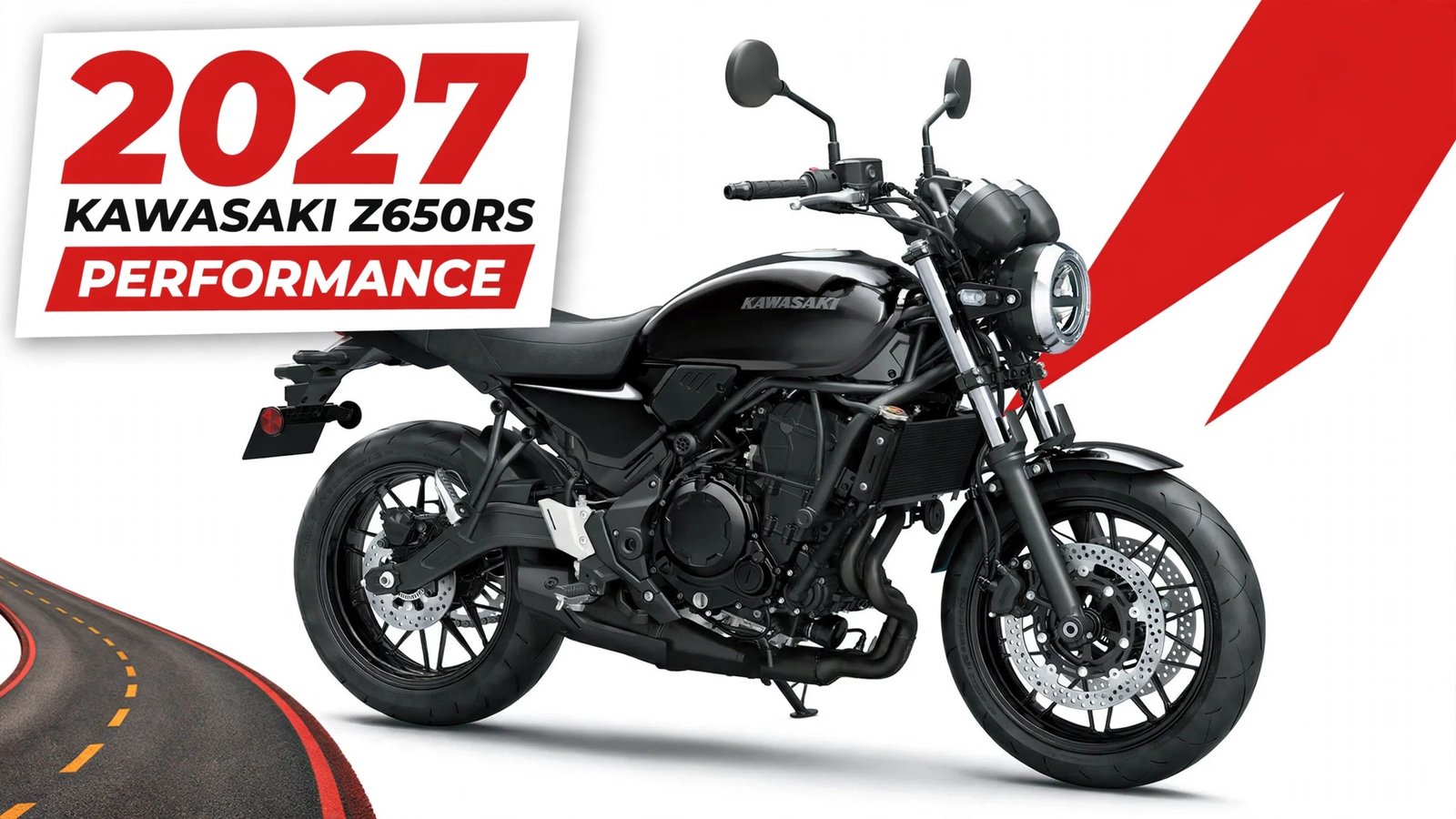
The Kawasaki Z650RS looks fast standing still, and the 649cc twin underneath it has the numbers to back up the retro pose — 67.0 hp claimed, 48.5 lb-ft of torque, 412.3 lb curb weight. But this Kawasaki Z650RS performance guide starts with an honest warning: almost none of that performance has ever been measured on the RS itself. No magazine has dyno-tested it, no one has timed it to 60 mph, and no one has run a measured top-speed test.
That matters because buyers cross-shop the RS on performance: the Yamaha XSR700 it was built to fight publishes a 58 mpg combined estimate and a 50 ft-lb torque figure. The price and model-year story behind the numbers in this Kawasaki Z650RS performance guide is covered in the full Z650RS review, and this guide gives the RS a fair hearing on the numbers that exist, and says plainly where the numbers stop.
Kawasaki Z650RS Engine Performance and Power Delivery
The RS shares the Z650’s 649cc liquid-cooled parallel twin — DOHC, eight valves, Keihin 36 mm throttle bodies — but the tune history is its own. This Kawasaki Z650RS performance guide gives the year-by-year figures, because a single torque number would be wrong for half the range.
No Dyno of the RS Itself
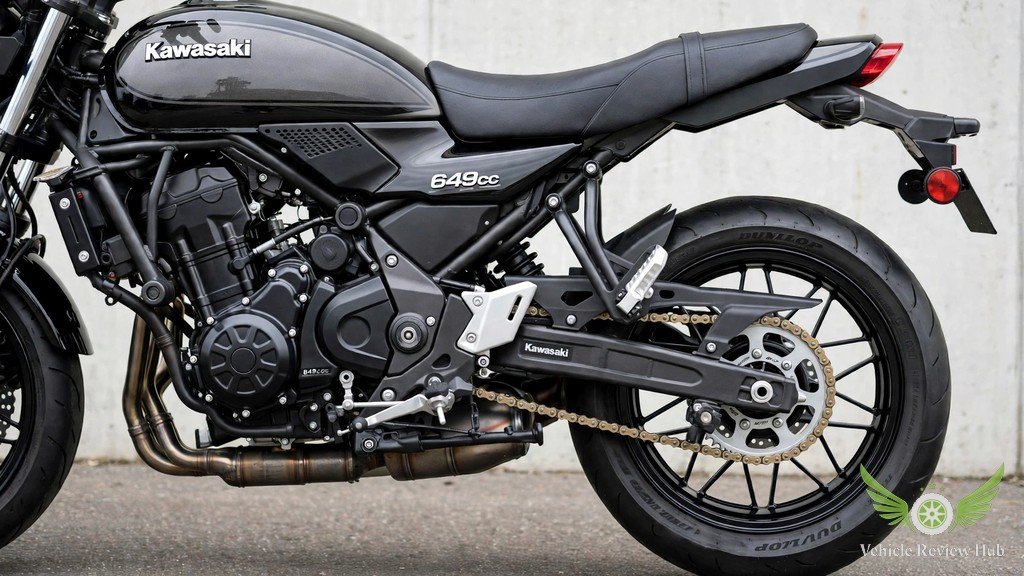
No magazine has ever dyno-tested the Z650RS itself. No dyno figure appears in any Motorcycle.com, Cycle World, RevZilla, Rider, MCN or Ultimate Motorcycling test of the RS — the launch tests were all seat-of-the-pants first rides. That is the first fact any honest Kawasaki Z650RS performance guide has to state: the RS is sold on its engine, yet its rear-wheel output has never been published.
The closest measurement comes from the shared platform: Motorcycle.com’s 2017 shootout put the Z650 — the same 649cc twin in its original tune — on the dyno at 60.95 hp at 8,000 rpm and 43.71 lb-ft at 6,700 rpm, and its 2021 six-way test recorded the Z650 again at 61.4 hp at 8,100 rpm. Those are the Z650’s numbers, not the RS’s — the RS shares the engine but the torque peak moved from 6,500 rpm on 2022–2023 bikes to 6,700 rpm from 2025, so even the platform figures are a guide, not the RS’s own numbers, and this Kawasaki Z650RS performance guide labels them that way in the table below. The Z650’s own test numbers are covered in the Z650 ABS performance guide.
| Figure | Value |
|---|---|
| Claimed power (every year) | 67.0 hp @ 8,000 rpm (ISO 4106) |
| Claimed torque (2022–2023) | 48.5 lb-ft @ 6,500 rpm |
| Claimed torque (2025–2027) | 48.5 lb-ft @ 6,700 rpm |
| Claimed torque (2024) | 48.5 lb-ft @ 6,700 rpm (Motorcycle.com database only — no 2024 spec sheet exists) |
| Platform dyno — Z650 (Motorcycle.com 2017) | 60.95 hp @ 8,000 rpm / 43.71 lb-ft @ 6,700 rpm |
| Platform dyno — Z650 (Motorcycle.com 2021) | 61.4 hp @ 8,100 rpm (lowest of six bikes) |
| RS dyno | None published |
Note: The claimed figures are Kawasaki’s own, from the US spec sheets. The dyno rows are the Z650’s, never the RS’s — no dyno of the RS itself has been published, and this Kawasaki Z650RS performance guide prints no RS rear-wheel figure of its own.
Shop Dyno: 65.11 hp, Thin
A rear-wheel figure for the RS circulates online, and it is the number in the heading above. It could not be traced to any citable source: four targeted searches found no magazine, shop or video publishing a dyno run of the RS, and the only exact-figure hit is an aggregator site with no such run either. This Kawasaki Z650RS performance guide does not print the circulating figure as a measured fact — no dyno of the RS itself has been published, and the figure in circulation could not be traced to a source.
What the launch tests agree on is the character of the engine, and this Kawasaki Z650RS performance guide starts there. RevZilla’s first ride calls it “a true workhorse” and “docile around town”, Motorcycle.com calls it a “fun little engine”, and every tester describes the same delivery: punchy, torquey low- to mid-range pull. The 67.0 hp claim sits at 8,000 rpm, but the riding the testers describe happens below that. One caution carries across all three 2022 launch reviews: first-gear fuelling is snatchy just off idle.
The torque figure needs its own year label. The US sheets print 48.5 lb-ft at 6,500 rpm for 2022–2023 bikes and at 6,700 rpm from 2025, with the 2024 figure at 6,700 rpm per the Motorcycle.com database only. One widely quoted first ride prints a lower torque number at 6,700 rpm — the European 64 Nm rating, not the American one — and this Kawasaki Z650RS performance guide never prints the EU figure as the US torque.
Kawasaki Z650RS Top Speed and Acceleration
Top speed and acceleration are where the RS’s record is thinnest, and this Kawasaki Z650RS performance guide says so up front. No GPS run, no datalogger pass and no timed acceleration test of the RS exists in the US record, so this Kawasaki Z650RS performance guide cannot give a measured top speed or a 0–60 time — and it will not invent one.
Nothing Instrumented in US
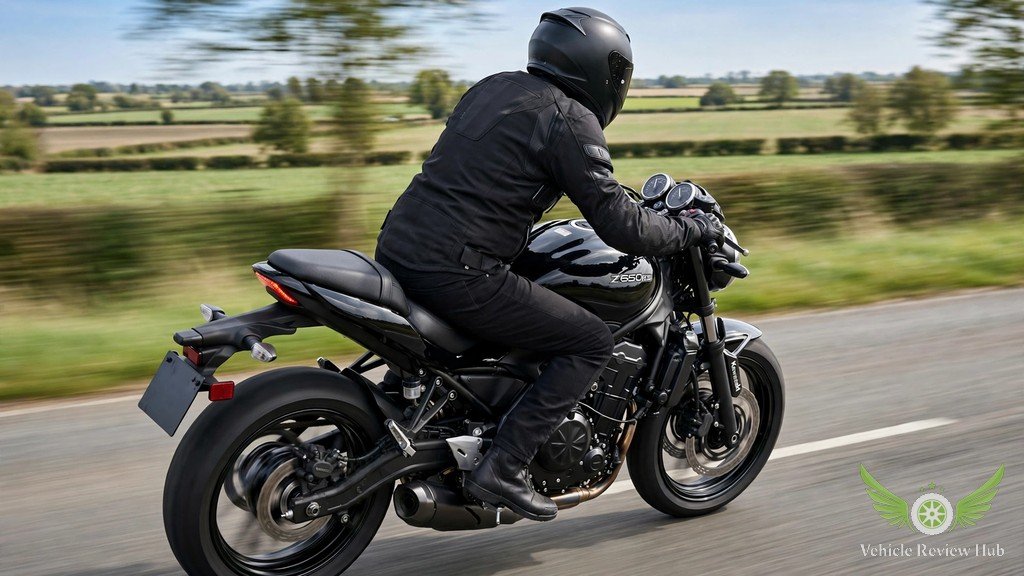
Every US test of the RS is a seat-of-the-pants first ride — Motorcycle.com’s first ride, RevZilla, Cycle World, Rider and Cycle News, all from the April 2022 launch, all before traction control arrived. There is no instrumented braking test, no instrumented acceleration test and no measured top-speed run for the RS — and no 0–60 time, no quarter-mile time and no timed acceleration figure of any kind has ever been published. Aggregator sites print acceleration figures for the RS, but they are estimates with no test behind them, and this Kawasaki Z650RS performance guide does not cite them.
The video below is Visordown’s launch-day road test of the RS in Marseille, France — filmed on the 2022 launch bike. It is a road test, not an instrumented test: no timed runs, no GPS figures, just a first ride on the bike the launch press rode. It shows the riding position, the analogue dials and the way the twin pulls out of corners — the closest filmed performance verdict this Kawasaki Z650RS performance guide could find.
120 mph Claim Uninstrumented
The top-speed figure in circulation is about 120 mph, and it comes from three uninstrumented sources. Cycle World’s leak article cites EU type-approval documents rating it at 119 mph; MCN’s data table lists 120 mph; SlashGear puts it at “just a smidge under 120 mph”. None of these is a measured test — the type-approval figure is rated, and MCN’s is a listing. This Kawasaki Z650RS performance guide presents 119–120 mph as the claimed, rated figure and says plainly that no one has measured it.
A rated top speed is a paperwork number; a measured top speed is a GPS or datalogger run, and the RS has never had one published. Higher figures that circulate online are aggregator estimates with no test behind them. For a buyer, the practical reading is simpler: the RS is a 67 hp middleweight, and its top speed is not the number that decides the purchase — the torque, the seat height and the fuel range are.
Kawasaki Z650RS Mileage and Fuel Economy
Fuel economy is the one area where the RS has real observed numbers. Kawasaki publishes no MPG figure for the RS, so every number in this Kawasaki Z650RS performance guide comes from a road test or an owner, labelled as such.
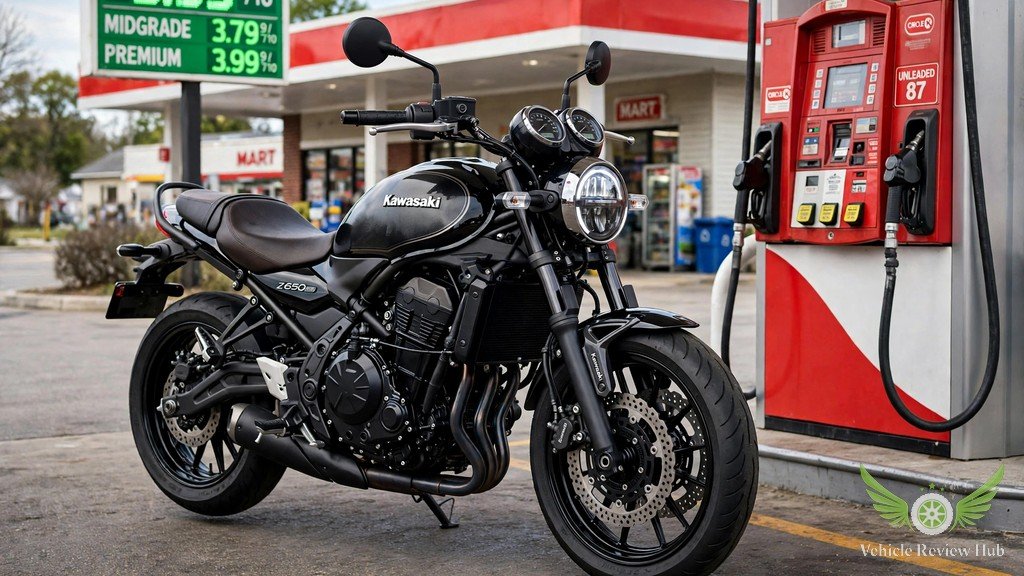
50 to 60 mpg Observed
The “50 to 60 mpg” range is approximately right, with attribution. MCN’s average for the RS is 55 mpg on the full-power bike, and an MCN owner review reports high-60s mpg after the first 500 running-in miles. An Indian road test returned 19–21 kmpl, which works out to 45–49 mpg — below the 50–60 range, and this Kawasaki Z650RS performance guide says so plainly rather than hiding the lower figure.
At MCN’s 55 mpg average, the 3.2-gallon teardrop tank works out to roughly 176 miles between fill-ups — computed, not measured. The RS asks for fuel stops more often than its rivals: the XSR700 carries 3.7 gallons and Yamaha publishes a 58 mpg combined estimate for it. The RS trades range for the retro tank shape — the trade this Kawasaki Z650RS performance guide flags for buyers who tour.
| Source | Figure |
|---|---|
| MCN average (full-power bike) | 55 mpg |
| MCN owner review (after 500 running-in miles) | High-60s mpg |
| Indian road test (19–21 kmpl) | 45–49 mpg |
| Kawasaki published MPG | None — no US sheet lists one |
| Computed range (55 mpg × 3.2 gal) | ≈ 176 miles (computed, not measured) |
| Yamaha XSR700 (published, for contrast) | 58 mpg combined estimate |
Note: Every RS figure above is observed, not published — Kawasaki lists no MPG for the bike. The Indian test’s 45–49 mpg sits below the 50–60 mpg range, and this Kawasaki Z650RS performance guide prints it alongside MCN’s 55 mpg.
Kawasaki Publishes No MPG
No US spec sheet for the RS lists a fuel-economy figure — not the 2022, 2023 or 2025 sheets, not the 2026 brochure and not the 2027 model page. The RS carries none, so a buyer shopping on economy has only the observed figures in the table above — and the spread between them is the honest answer: a gentle owner after running-in sees high-60s mpg, a magazine average lands at 55 mpg, and a hard-ridden test lands at 45–49 mpg.
Kawasaki Z650RS Real-World Riding Experience
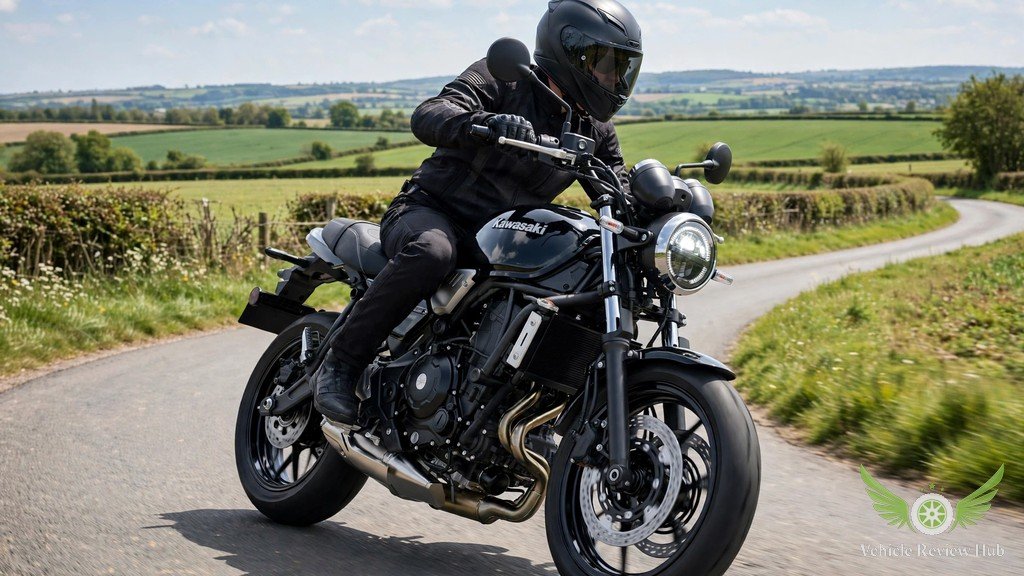
On the road, the RS is a friendly, punchy middleweight — and the launch tests agree on that more than on anything else. This Kawasaki Z650RS performance guide draws on the 2022 launch rides, the only published road tests of the bike.
The Riding Experience Buyers Actually Talk About
The engine is the part buyers talk about most, and the talk is good. RevZilla calls the twin “a true workhorse” and “docile around town”, Motorcycle.com calls it a “fun little engine”, and every tester describes the same low- to mid-range pull that makes the bike feel quicker than its 67 hp claim suggests. That is the engine character this Kawasaki Z650RS performance guide keeps coming back to.
The one complaint buyers actually talk about is the fuelling. First-gear fuelling is snatchy just off idle — reported in all three 2022 launch reviews. It is a low-speed issue: the bike is docile once rolling, but the throttle pickup from a standstill is abrupt, and riders notice it most in town and in slow traffic. There is no recall, complaint or campaign behind it, and no verified fuel-pump failure on file — it is a fuelling trait, not a defect, the one this Kawasaki Z650RS performance guide flags most clearly, and the Z650RS reliability guide covers it in full.
The seat divides opinion where the engine does not. Motorcycle.com’s first ride lists “Super comfortable” among the bike’s highs and calls the seat wide; Ultimate Motorcycling calls it a “luxuriously plush” stepped seat; Cycle World notes a wider, flatter seat that accommodates passengers better. On the other side, the same Motorcycle.com test lists “The seat and tank aren’t designed for sporty riding” among its sighs. The fair reading, as this Kawasaki Z650RS performance guide notes, is that the seat suits relaxed riding and two-up work — but not hanging off in corners.
All Tests Are Pre-KTRC
Every named test of the RS predates traction control. Motorcycle.com, RevZilla, Cycle World, Rider and Cycle News all rode the bike in April 2022, and KTRC did not arrive until the 2024 model year — two modes plus off on the 2024 bike, three modes from 2025. No post-KTRC road test of the RS was found, so no tester has ever ridden a KTRC-equipped RS, and no KTRC behaviour in this Kawasaki Z650RS performance guide is attributed to a test ride.
That matters for how a buyer reads the launch reviews. The praise for the engine, the seat and the handling all comes from bikes with no traction control — their rider aids were the Economical Riding Indicator and ABS only. A 2024 or later buyer gets KTRC, and no published test says how it behaves. The 2022–2023 bikes have no KTRC at all, so a buyer choosing between an early bike and a later one is choosing between a tested bike without traction control and an untested bike with it. That is the pre-KTRC record this Kawasaki Z650RS performance guide works from.
Kawasaki Z650RS Handling, Braking and Stability
Handling is where the RS’s retro brief meets its modern chassis — a trellis frame, a 55.3-inch wheelbase and a 24.0-degree rake, carrying a soft non-adjustable fork and a preload-only rear shock. This Kawasaki Z650RS performance guide weighs what the launch testers found on real roads.
Soft Suspension When Pushed
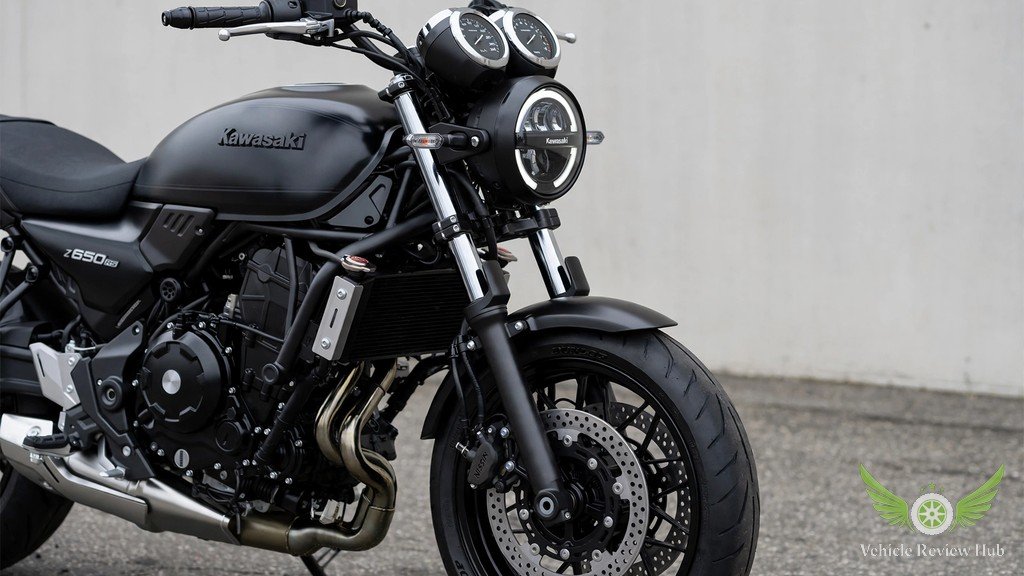
The suspension is the RS’s clearest compromise. Cycle World describes the non-adjustable 41 mm fork and preload-only shock as “softened up slightly” for comfort, and says they “can get overwhelmed” with rider weight. RevZilla calls the “softish suspension” just right for everyday city and highway riding, and Cycle News finds the bike “a bit bouncy and busy when speeds pick up on rougher roads”. The consensus is simple: fine for everyday riding, soft when pushed hard.
There is no adjustment to fix it beyond rear preload — no fork adjustment of any kind exists on any year, and the rear shock offers preload only. A heavier or more aggressive rider will feel the fork dive and the rear wallow sooner — a deliberate choice: the RS is set up for comfort, not for track days. Buyers who want firmer suspension should know the only fix is aftermarket, and this Kawasaki Z650RS performance guide flags the soft setup as the bike’s main handling limit.
Handling, Braking and Stability on Real Roads
On real roads the RS is light, neutral and agile: the 412.3 lb curb weight, the 31.5-inch seat and the 55.3-inch wheelbase make a bike that turns easily and holds a line without fuss, and the launch testers found nothing nervous about it at everyday speeds — the handling verdict this Kawasaki Z650RS performance guide gives for everyday riding.
The brakes earned praise too. Rider’s first ride found the dual 300 mm petal-style front discs with two-piston Nissin calipers provided “all the braking performance I needed”, working through the Bosch 9.1M ABS that has been standard on every US RS since launch. The rear is a single 220 mm petal-style disc with a single-piston caliper. The petal shape matters: the US RS has petal discs on every year, never round ones, whatever generic dealer copy says. No instrumented 60–0 distance exists for the RS — the braking figure sometimes quoted for the platform belongs to the 2017 Z650, not this bike — so this Kawasaki Z650RS performance guide prints no braking distance.
Kawasaki Z650RS Performance Compared With Other Sport Bikes
The RS does not race its rivals on a stopwatch — no one has timed it — so the comparison that matters is on paper and on the road: engine character, weight, seat height, fuel range, price. This Kawasaki Z650RS performance guide puts the RS against the Yamaha XSR700, the bike it was built to fight.
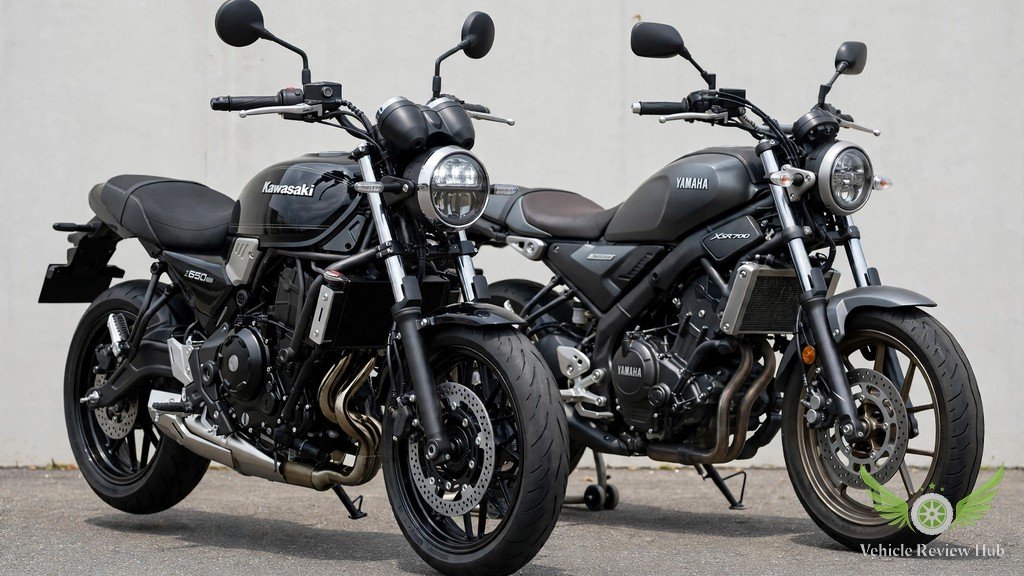
Kawasaki Z650RS vs Yamaha XSR700
The XSR700 is the RS’s natural rival: a retro-styled middleweight twin with a round headlight and a heritage story of its own. On delivered price the Yamaha undercuts the RS by $410 in 2027 — $9,274 against the RS’s $9,684. The Yamaha is 2.3 lb lighter, torquier at 50 ft-lb against the RS’s 48.5 lb-ft, and carries a bigger 3.7-gallon tank. The RS counters with the lower 31.5-inch seat, the 1976-B1 heritage styling, and KTRC from 2024 — the XSR700 has no traction control at all. Both bikes share the same 55.3-inch wheelbase — the starting point for the comparison in this Kawasaki Z650RS performance guide.
The electronics story is a wash. Both bikes are retro-dial machines with ABS: the RS has dual analogue dials with a small LCD, and the 2027 XSR700 has a traditional round LCD panel — no TFT, no ride modes and no traction control, despite claims elsewhere that it has all three. The RS adds KTRC from 2024, its one electronic advantage. On power, Yamaha publishes no US horsepower figure for the XSR700, so this Kawasaki Z650RS performance guide prints the torque instead.
| Item | 2027 Kawasaki Z650RS | 2027 Yamaha XSR700 |
|---|---|---|
| Delivered price | $9,684 ($8,999 + $685) | $9,274 ($8,599 + $675) |
| Engine | 649cc parallel twin | 689cc CP2 parallel twin |
| Claimed power | 67.0 hp @ 8,000 rpm (ISO 4106) | No US figure published |
| Torque | 48.5 lb-ft @ 6,700 rpm | 50 ft-lb @ 6,500 rpm |
| Weight | 412.3 lb curb | 410 lb wet |
| Fuel capacity | 3.2 gal | 3.7 gal |
| Seat height | 31.5 in | 32.9 in |
| Wheelbase | 55.3 in | 55.3 in |
| Published MPG | None | 58 mpg combined estimate |
| Traction control | KTRC from 2024 (3-mode from 2025) | None |
| Instruments | Dual analogue dials + LCD | Round LCD panel |
Note: The $410 gap is on a delivered basis — $9,684 against $9,274; on MSRP alone the gap is $400. Yamaha publishes no US horsepower figure for the XSR700, so this Kawasaki Z650RS performance guide prints its torque instead.
The Z900RS costs $4,155 more delivered — $13,839 against the RS’s $9,684 — for a 948cc inline-four with 115 hp and 73 lb-ft, but it is 64 lb heavier at 476.3 lb curb. The RS is the lighter, cheaper retro; the Z900RS is the authentic four-cylinder one. The cheapest retro in the class, the Royal Enfield Interceptor 650, starts at $6,149 MSRP with 47 hp and a 480 lb wet weight — $2,850 less than the RS on MSRP, with a three-year warranty against the RS’s one year, but no traction control and no published destination charge, so no delivered-price comparison is possible. The rival-by-rival fight is covered in the Z650RS comparison guide.
Is the Kawasaki Z650RS Suitable for Beginner Riders?
Opinions split, and this Kawasaki Z650RS performance guide presents both sides rather than settling it. The approachable case is strong: a 31.5-inch seat, a 412.3 lb curb weight, neutral handling and a docile low end make a bike that is easy to reach, easy to manage and easy to ride slowly. Road Runner’s 2023 review calls it “well-suited for new and returning riders, serving as a good first or second bike”, and the RS’s light weight and low seat decide more first-bike purchases than horsepower.
The cautious case is just as real. Sixty-seven horsepower in a 412 lb bike with a snatchy throttle off idle is a lot for a first bike — TopSpeed says Kawasaki’s “beginner-friendly” claim “doesn’t sit particularly well with us… a bit much for less experienced riders”. The snatchy first-gear fuelling is the specific worry: a new rider’s first lesson is throttle control, and the RS’s abruptest moment comes exactly where a beginner is most careful. The verdict this Kawasaki Z650RS performance guide gives is the split one: a good second bike, a possible first bike for a careful, coached beginner — but not the easiest first bike in the class.
Kawasaki Z650RS Performance: Frequently Asked Questions
These are the questions buyers ask most about how the Z650RS performs — answered with the verified figures and the honest gaps from this Kawasaki Z650RS performance guide.
What is the Kawasaki Z650RS’s top speed?
No instrumented test exists. The figure in circulation is about 120 mph — 119 mph per EU type-approval documents, 120 mph in MCN’s listing — a rated claim, not a measured run.
Has the Z650RS ever been dyno-tested?
No magazine has dyno-tested the RS itself, and the 65.11 hp shop-dyno figure in circulation could not be traced to any citable source. The shared-platform Z650 dyno’d 60.95 hp at 8,000 rpm in Motorcycle.com’s 2017 test.
What MPG does the Z650RS get?
Kawasaki publishes no MPG. Road tests and owners report roughly 50 to 60 mpg — MCN’s average is 55 mpg, while an Indian road test returned 45 to 49 mpg.
Does the Z650RS have a 0–60 or quarter-mile time?
No — no timed acceleration test of the RS has ever been published, so the blogs print no 0–60 or quarter-mile figure.
How does the Z650RS handle?
Light, neutral and agile for everyday riding, but the soft non-adjustable 41 mm fork and preload-only rear shock can get overwhelmed when pushed hard, according to Cycle World and RevZilla.
Is the Kawasaki Z650RS good for beginners?
Opinions split: its 31.5-inch seat, 412-pound weight and neutral handling suit new and returning riders, but 67 hp with a snatchy throttle off idle is a lot for a first bike — Road Runner calls it well-suited to newer riders, TopSpeed says not quite beginner-friendly.