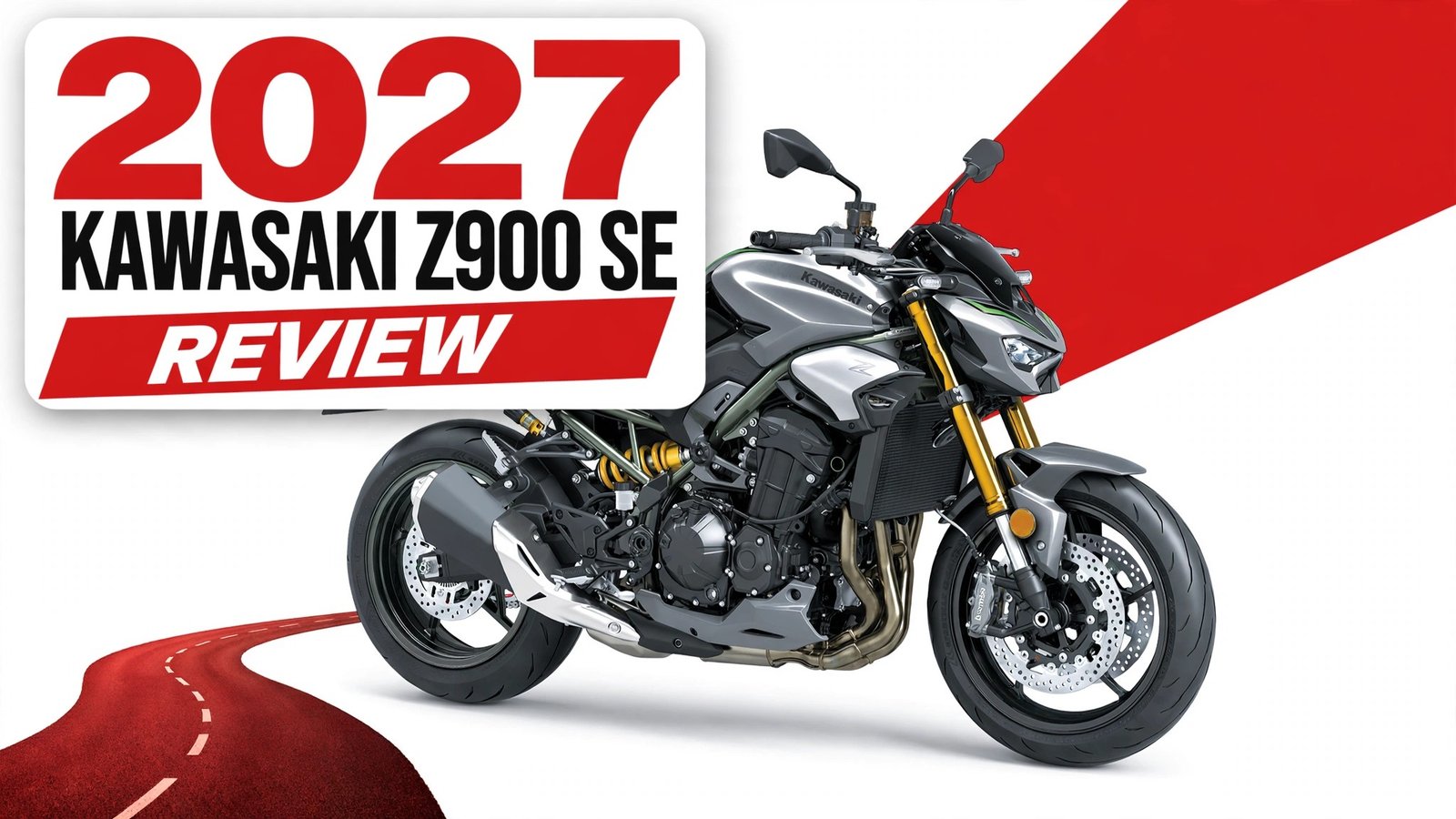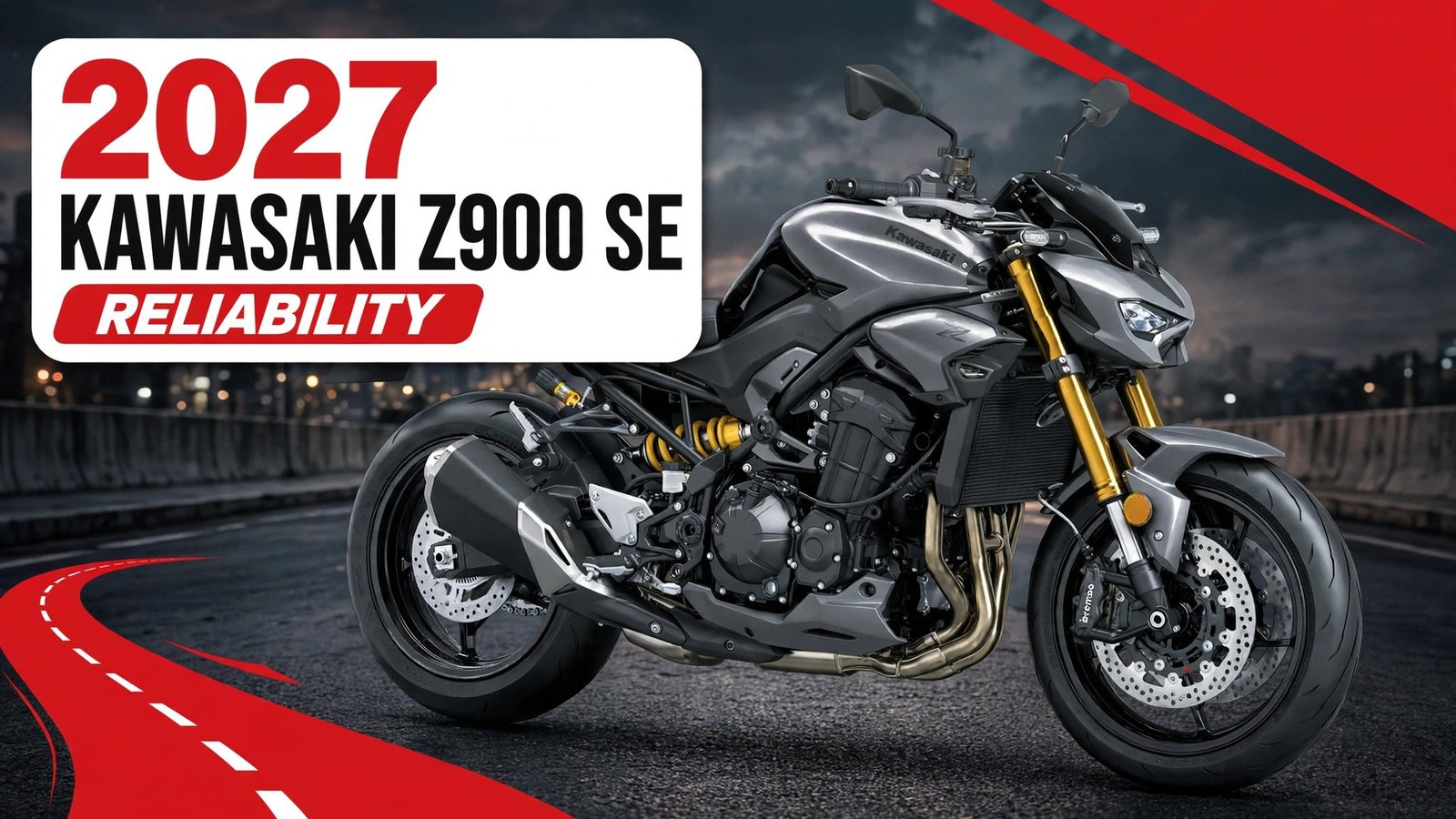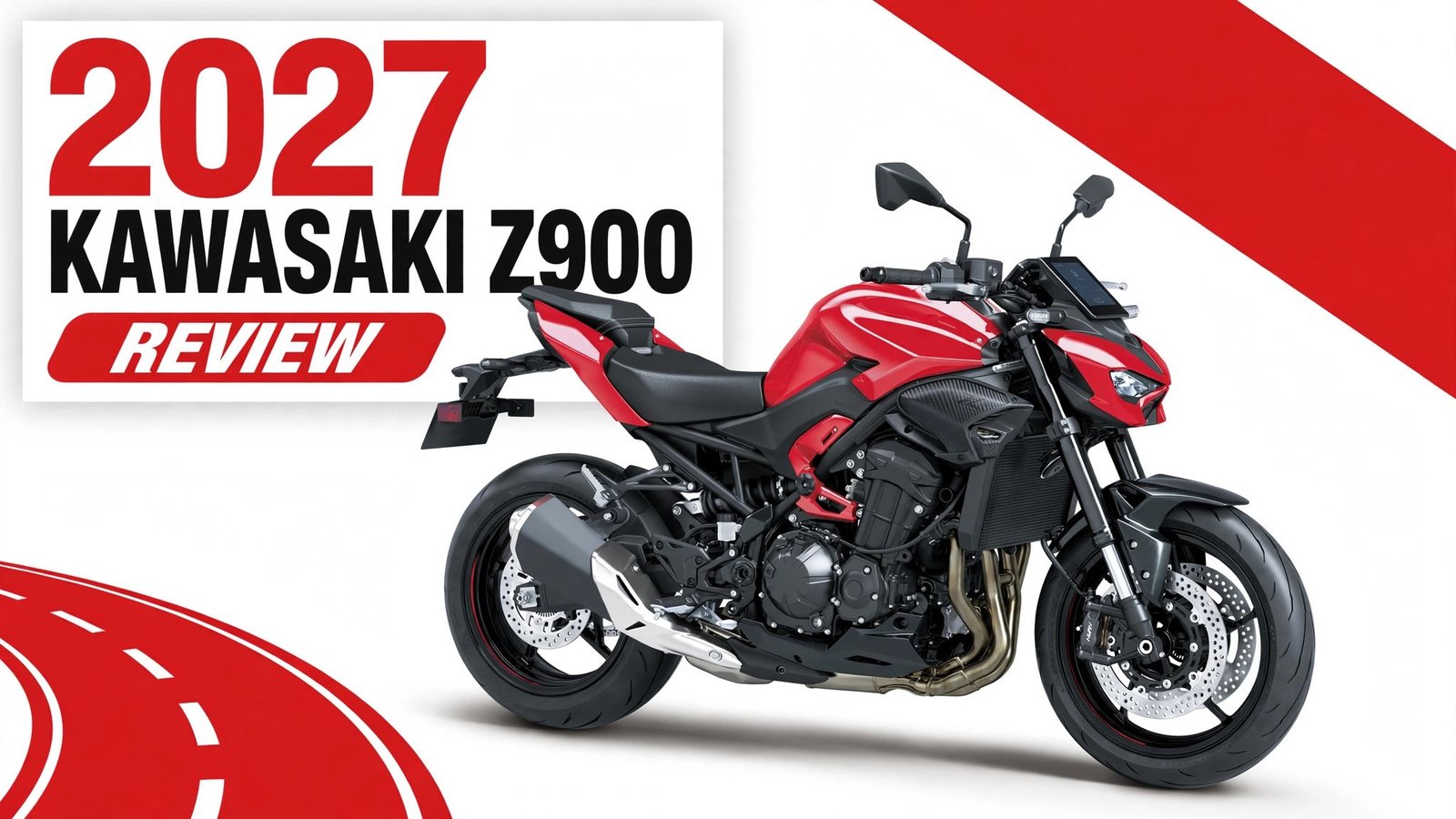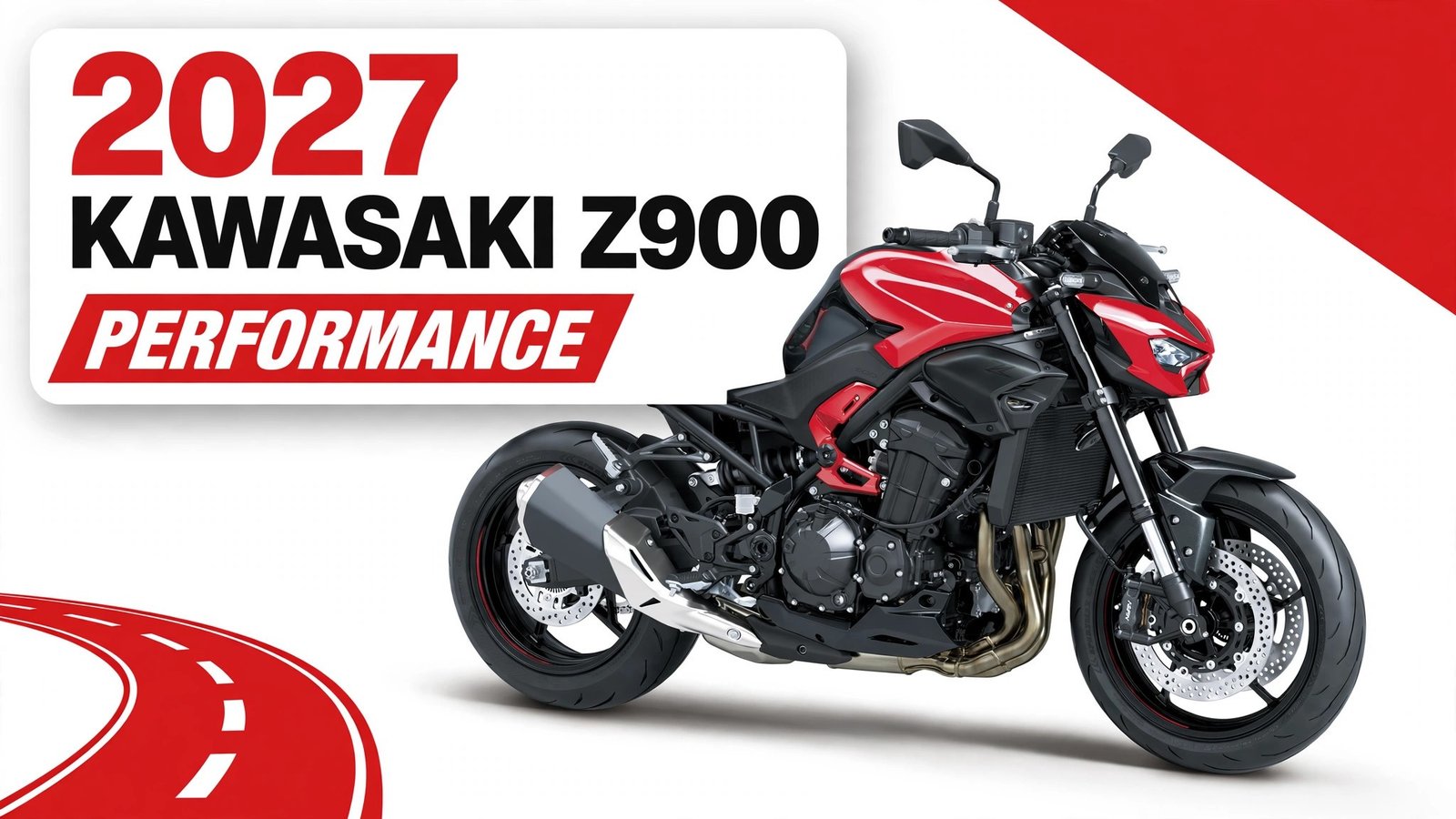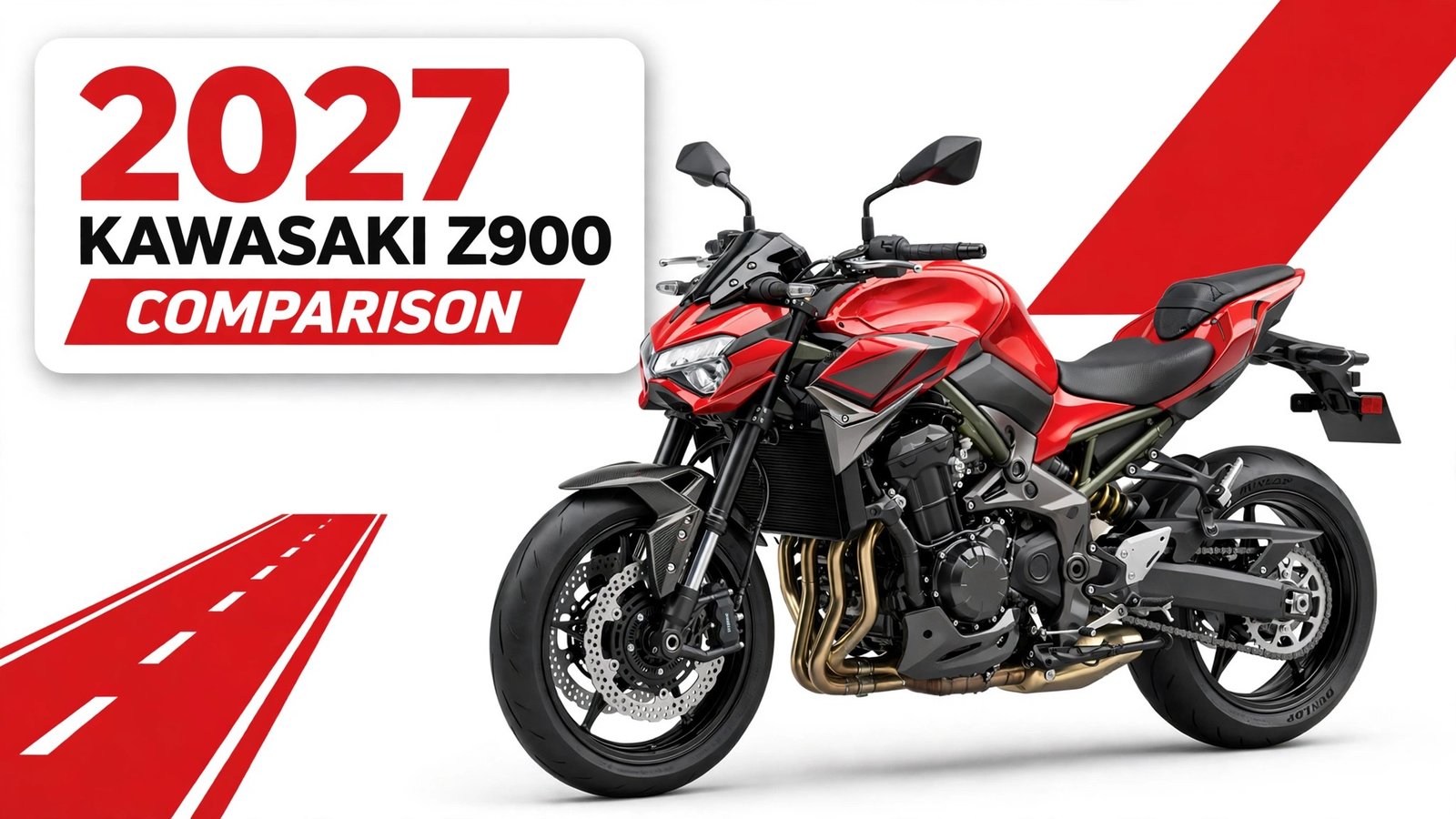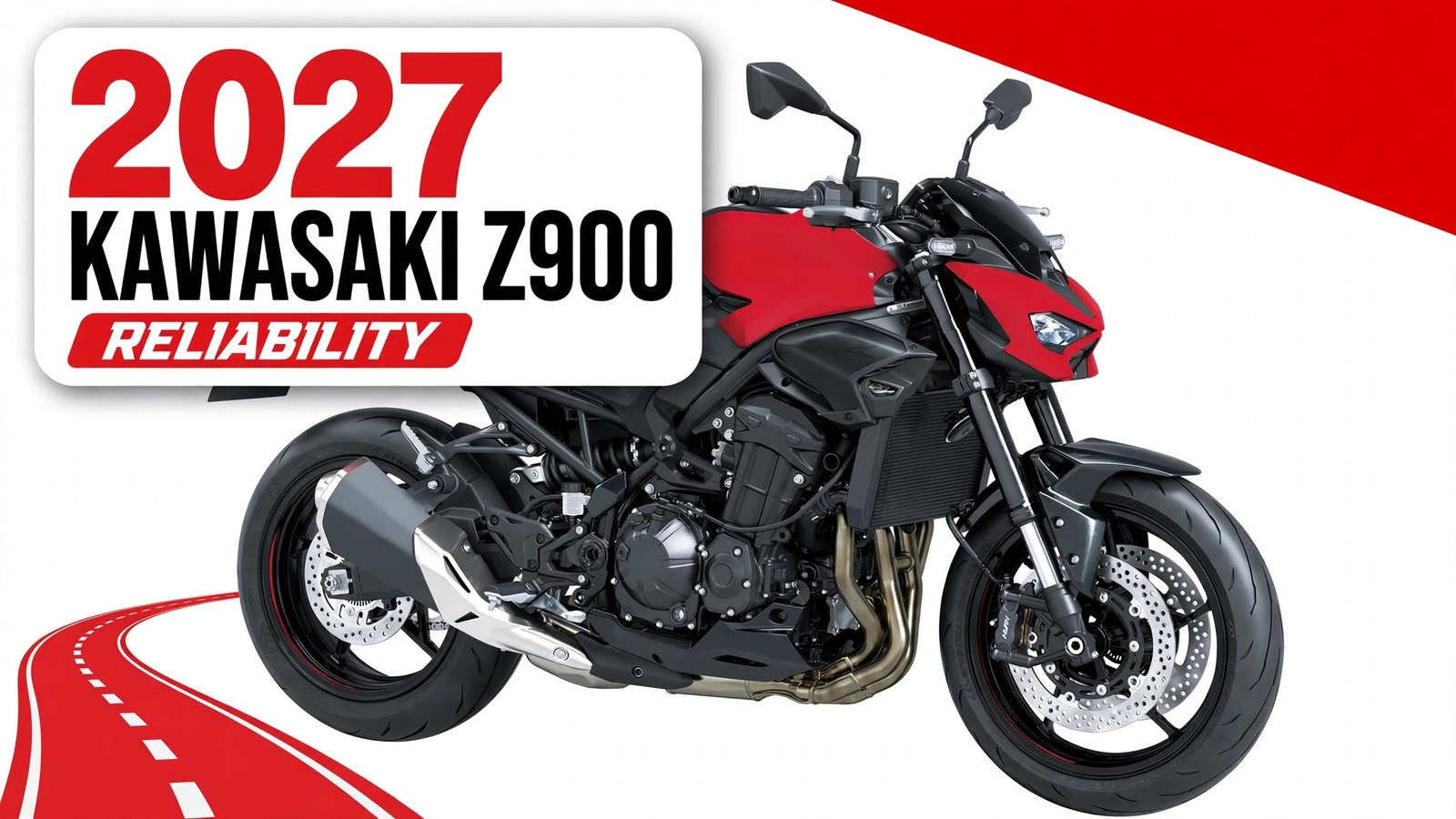
The Kawasaki Z900 has been on sale in the United States since 2017, and in that time the 948cc inline-four naked has built a reputation as a straightforward, hard-working motorcycle. This Kawasaki Z900 reliability guide looks at what can actually go wrong with one — the three recalls on the early bikes, the maintenance the owner’s manual requires, and what to check before buying used — using only verified figures from Kawasaki, NHTSA and named tests.
The short version is reassuring: three recalls, all on 2017–2019 bikes, and no recall at all on any Z900 from 2020 onwards. The NHTSA complaint count is zero for every year from 2017 to 2026. This Kawasaki Z900 reliability guide still treats the early bikes with care, because a 2017–2019 bike must have all three campaigns checked by VIN before purchase.
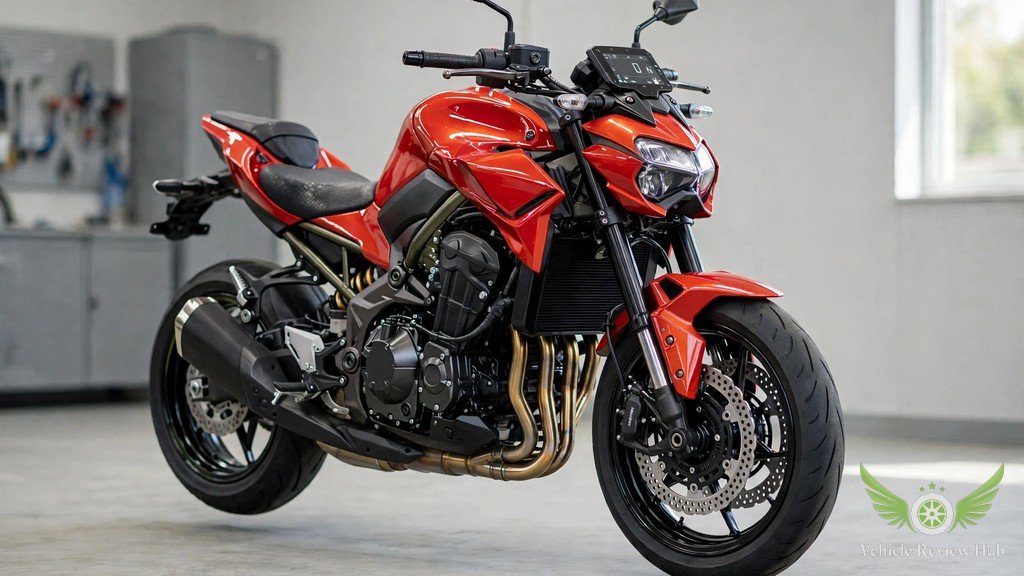
Kawasaki Z900 Reliability Overview
The Z900’s reliability story splits cleanly by era. The first-era bikes (2017–2019) carry all three of the model’s recalls, while the second-era bikes (2020–2024) and the current third-era bikes (2025–2027) have no recall history at all. This Kawasaki Z900 reliability guide starts with that split, because it decides what a buyer needs to check.
Three Recalls, All Era 1
Three NHTSA campaigns touch the Z900, and all three are on 2017–2019 bikes. The first, 17V703, covers 2017–2018 Z900 and Z900 ABS models: the rear shock absorber tie-rod frame mount holes can elongate if the shock bottoms out, and the remedy is to inspect the mount holes and replace the bracket or the frame as needed. The second, 18V866, covers 2018 bikes: the rear brake hose and the rear wheel rotation sensor wire were routed incorrectly and can contact the rear tyre, and it covers 1,173 units. The third, 19V083, covers 2019 Z900 ABS bikes: the ABS hydraulic unit was contaminated with debris during manufacture, and a wheel can lock up when braking; it covers 497 units. No recall touches a 2020-or-newer Z900, and this Kawasaki Z900 reliability guide prints that as the headline fact for anyone buying a recent bike.
| Campaign | Years | Defect | Units | Remedy |
|---|---|---|---|---|
| 17V703 | 2017–2018 | Rear shock tie-rod frame mount holes can elongate if the shock bottoms out | Not found in NHTSA record | Inspect mount holes; replace bracket or frame as needed |
| 18V866 | 2018 | Rear brake hose and wheel sensor wire misrouted; can contact rear tyre | 1,173 | Inspect routing; replace any damaged parts |
| 19V083 | 2019 | ABS hydraulic unit contaminated during manufacture; a wheel can lock up | 497 | Inspect ABS unit; replace as necessary |
Note: The unit count for 17V703 was not found in the NHTSA record, so this Kawasaki Z900 reliability guide prints no number for it. All three campaigns are Era 1 only — no recall touches a 2020-or-newer Z900.
How Mileage, Storage and Previous Care Affect Reliability
Mileage alone tells a buyer very little about a used Z900, and this Kawasaki Z900 reliability guide weighs care above the odometer. No verified pattern of engine, gearbox or electronics failures exists in the record for this bike, and the NHTSA complaint count is zero for every year from 2017 to 2026 — so a high-mileage bike with a full service record is a better bet than a low-mileage bike with no history at all. What matters is what the previous owner did: the oil and filter changed every 7,600 miles, the valve clearances inspected every 15,200 miles, and the three recalls checked by VIN on a 2017–2019 bike. Storage matters in the same way — a bike kept indoors with its service done on time ages better than one left outside through winters, whatever the mileage reads. Before buying, this Kawasaki Z900 reliability guide recommends checking the chain and sprockets, the tyres, the brake pads and the fork seals, because those are the wear items that show how a bike was actually treated.
Kawasaki Z900 Common Problems and Wear Items
Outside the three recalls, the Z900 has no documented pattern of failures — no engine fault, no gearbox fault and no electronics fault appears in the verified record. This Kawasaki Z900 reliability guide therefore covers the two recall defects that need the most explanation, then the wear items every used bike needs checked.
17V703: Shock Mount Holes
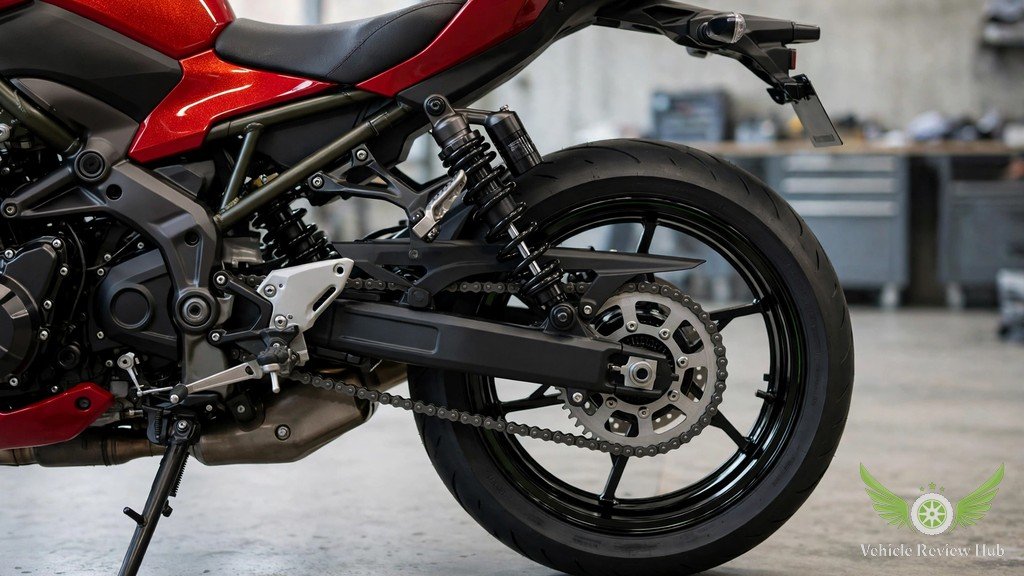
The earliest Z900 recall is also the one a buyer is most likely to misunderstand. NHTSA campaign 17V703 covers 2017–2018 Z900 and Z900 ABS models, and the defect is in the frame, not the shock itself: the rear shock absorber tie-rod frame mount holes can elongate if the shock bottoms out. The remedy is to inspect the mount holes and replace the bracket or the frame as needed, and the recall began on 4 December 2017. The unit count for this campaign was not found in the NHTSA record, so this Kawasaki Z900 reliability guide prints no number for it — any figure a seller quotes for 17V703 is unverified. What a buyer should do is simple: check the VIN with a Kawasaki dealer before buying any 2017 or 2018 bike, and ask for proof the inspection was done. A bike that passed the inspection is no worse for it; a bike that was never checked is a risk that costs nothing to rule out.
19V083: ABS Contamination
The third recall is the most serious of the three, because it touches the brakes. NHTSA campaign 19V083 covers 2019 Z900 ABS bikes: the ABS hydraulic unit was contaminated with debris during manufacture, and a wheel can lock up when braking. It covers 497 units, and the remedy is to inspect the ABS unit and replace it as necessary; the recall began on 15 February 2019. A 2019 bike that had the work done is safe — the fix is a replacement unit, not a patch. A 2019 bike that never went in is the one to avoid until a dealer confirms the inspection. This Kawasaki Z900 reliability guide treats the VIN check as non-negotiable on any 2019 bike, because the defect is invisible from the outside and the consequence is a locked wheel under braking. The same ABS system on 2020-and-later bikes is unaffected, and no campaign touches those years.
Kawasaki Z900 Maintenance Schedule and Servicing
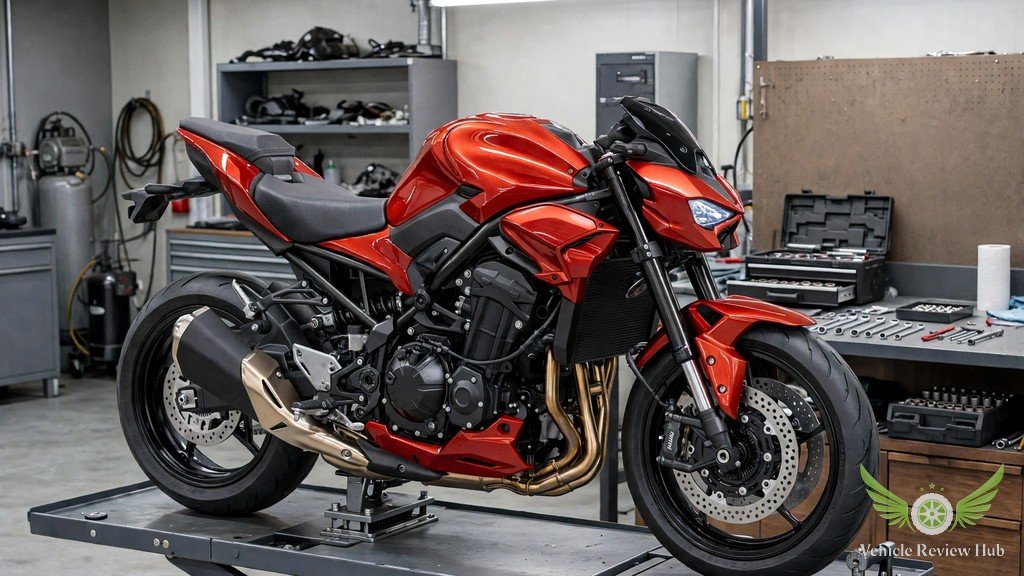
The Z900’s service schedule comes from the owner’s manual, and it is shorter than many buyers expect — oil every 7,600 miles, valves every 15,200. This Kawasaki Z900 reliability guide prints the manual’s intervals exactly as written, and says plainly where the manual’s schedule was not separately verified for the newest bikes.
| Item | Interval |
|---|---|
| First service | 600 mi (1,000 km) |
| Engine oil + oil filter | Every 7,600 mi / 12,000 km or yearly |
| Spark plugs (NGK CR9EIA-9, 4) | At 12,000 km |
| Valve clearance inspect | Every 15,200 mi (24,000 km) |
| Air cleaner element | At 18,000 km |
| Coolant | Every 36,000 km (22,500 mi) |
| Drive chain lube | Every 600 km (400 mi) |
| Brake fluid | DOT 4 — follow the manual for the interval |
Note: These intervals are the 2017–2024 owner’s manual schedule. The 2025-and-newer service schedule was not separately verified, so this Kawasaki Z900 reliability guide does not assume it carries over unchanged — owners of 2025-and-newer bikes should follow the manual supplied with the bike.
Valves Every 15,200 Miles
The valve check is the biggest scheduled job on the Z900, and it comes around every 15,200 miles (24,000 km) — that is the US owner’s manual interval, printed exactly as the manual states it. The check is an inspection: the clearances are measured, and adjustment is done only if a measurement is out of range. This Kawasaki Z900 reliability guide prints no clearance values in millimetres, because none were verified for any year — the manual gives the interval, and the manual is where the values live. The first valve check falls due at 15,200 miles, which means many used Z900s on the market have never had one, and a bike approaching that mileage without a record of the check should have it priced into the purchase. The plugs are NGK CR9EIA-9, four of them, and the oil filter is part number 16097-0008, the same filter used across the Z650 and Z900RS family.
18V866: Hose and Wire
The second recall is a routing fault, and it is the easiest of the three to picture. NHTSA campaign 18V866 covers 2018 Z900, Z900 ABS and Z900RS models: the rear brake hose and the rear wheel rotation sensor wire were routed incorrectly, and they can contact the rear tyre. It covers 1,173 units, and the remedy is to inspect the routing and replace any damaged parts; the recall began on 17 December 2018. A hose rubbing a tyre is the kind of fault that gets worse quietly — the damage is hidden behind the wheel, and the first symptom can be a brake problem rather than a visible scuff. This Kawasaki Z900 reliability guide treats the 2018 VIN check the same way as the other two campaigns: a dealer confirms in minutes whether the routing was corrected, and a 2018 bike without that confirmation should not be bought on trust.
Kawasaki Z900 Tires, Brakes and Suspension Maintenance
Tyres, brakes and suspension are where a used Z900 shows its history, and they are also where the 2025 update changed the hardware. This Kawasaki Z900 reliability guide covers the oil interval first — the single most misunderstood number in the manual — then the checks that matter on the road.
Oil Is 7,600, Not 3,800
The most common over-servicing mistake on this bike is also the easiest to avoid. The owner’s manual changes the engine oil and the oil filter together every 7,600 miles (12,000 km) or yearly — and the first change after the 600-mile service is at 7,600 miles. The service chart does have a 3,800-mile (6,000 km) column, but no oil change is due there, and a buyer told that oil is due every 3,800 miles is being sold a service the manual does not require. The oil is SAE 10W-40, JASO MA, and the filter is part number 16097-0008. This Kawasaki Z900 reliability guide states the interval plainly because the 3,800-mile figure keeps appearing in dealer quotes and forum advice, and it is wrong. What the manual does require at short intervals is chain lubrication — every 600 km (400 mi) — which is the item most owners actually neglect.
Tire, Brake and Suspension Checks That Matter
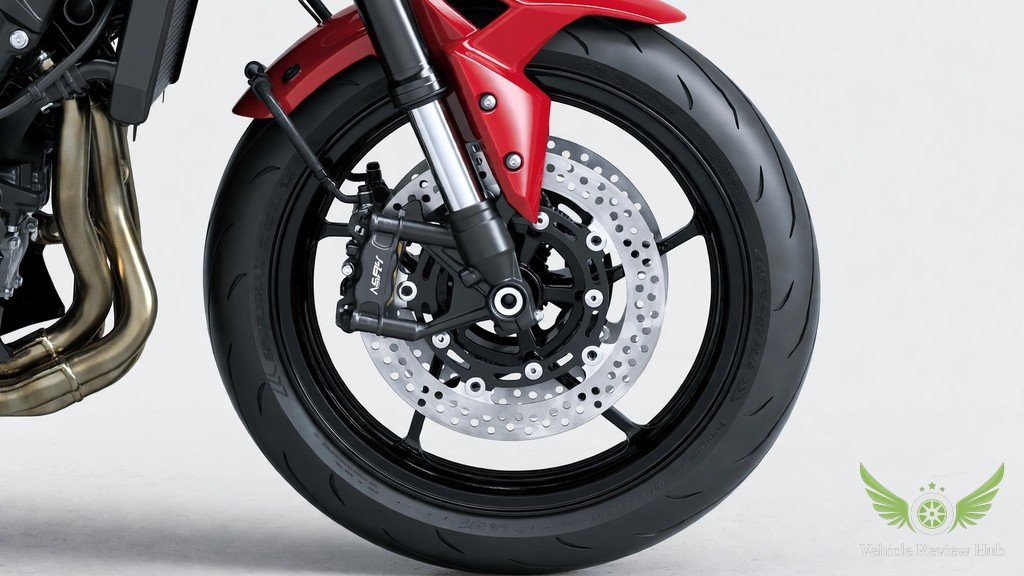
Start with the tyres: 120/70 ZR17 front and 180/55 ZR17 rear, Dunlop D214 on 2017–2024 bikes and Dunlop Sportmax Q5A from 2025. Then the brakes: dual 300 mm front discs — petal discs on 2017–2024 bikes, round semi-floating discs from 2025 — with a single 250 mm rear disc, and ABS standard from 2021 (lean-sensitive from 2025). Check the pads, the disc surfaces and the fork seals, because a weeping seal or a scored disc says more about a bike’s care than its mileage does. The suspension is a 41 mm inverted fork and a horizontal back-link rear shock, with the SE adding a fully adjustable KYB fork and an Öhlins S46 rear shock. One behaviour is worth knowing rather than worrying about: the 2025 bike’s quickshifter can feel notchy at low revs, which RevZilla noted in its first ride — that is a characteristic of the quickshifter, not a failure, and this Kawasaki Z900 reliability guide does not list it as a fault.
| Era | Years | Dash | Electronics | Front brakes | Claimed power | Recalls |
|---|---|---|---|---|---|---|
| Era 1 | 2017–2019 | LCD, gear indicator | None — no TC, no ride modes, no IMU | Dual 300 mm petal discs | 125 hp | 3 |
| Era 2 | 2020–2024 | 4.3-in TFT + Bluetooth | KTRC, 4 ride modes | Dual 300 mm petal discs | 125 hp | 0 |
| Era 3 | 2025–2027 | 5-in TFT + voice command | 6-axis IMU, lean-sensitive ABS/TC, cruise, quickshifter | Dual 300 mm round discs | 123.0 hp | 0 |
Note: The disc change is the quickest way to tell the eras apart at a glance: petal discs mean a 2017–2024 bike, round discs mean a 2025-or-newer bike. This Kawasaki Z900 reliability guide uses the same split for the recall history — three campaigns on Era 1, none after.
Kawasaki Z900 Maintenance and Ownership Costs
Running a Z900 is not expensive by middleweight-naked standards, and the costs that exist are easy to predict: fuel, tyres, and the scheduled services. This Kawasaki Z900 reliability guide puts the verified numbers together and leaves out the ones nobody has verified — no resale value, no service bill and no insurance figure appears here, because none was verified for this bike.
Fuel, Routine Servicing, Tires and Replacement Parts
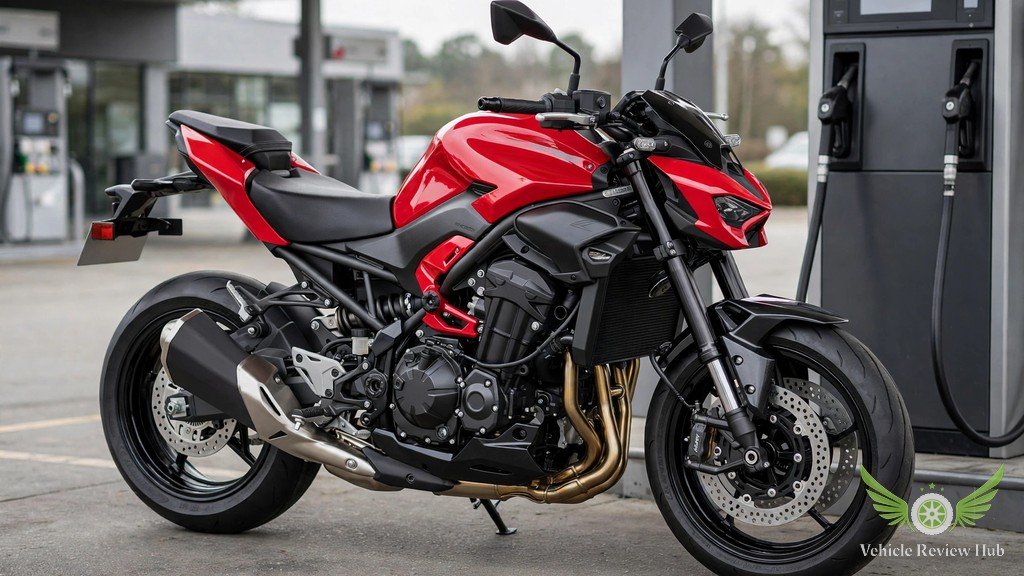
Fuel is the biggest running cost, and the measured figures are honest ones: Rider averaged 42.5 mpg on a 2017 Z900, and Cycle News measured 41.6 mpg on the 2025 Z900 SE, so a 4.5-gallon tank gives roughly 187–191 miles between fill-ups. Kawasaki publishes no US MPG figure, and this Kawasaki Z900 reliability guide uses only those two measured figures. Routine servicing follows the manual: oil and filter every 7,600 miles or yearly, valve clearances inspected every 15,200 miles, and the chain lubricated every 400 miles. Tyres are 120/70 ZR17 front and 180/55 ZR17 rear, and the wear items to budget for are the chain and sprockets, the tyres, the brake pads and the fork seals. The warranty is a 12-month limited warranty on every year, with Kawasaki’s extended coverage available only as a paid add-on. The purchase prices for context come from Kawasaki’s 2027 Z900 page: $10,199 for the standard colours plus an $840 destination charge — $11,039 delivered — and $12,199 plus $840 for the SE, or $13,039 delivered.
24V270 Is RS-Only
One recall is easy to misattribute to this bike, so it gets its own heading. NHTSA campaign 24V270 covers 2024 Z900RS models only — the Z900RS ABS, the Z900RS Cafe ABS and the Z900RS SE ABS — for a front tyre improperly manufactured, with 525 units affected and the remedy a free front tyre replacement. It does not touch the Z900 at all, and it must never be listed as this bike’s recall. The confusion is understandable, because the RS shares the Z900’s 948cc engine and its name, but it is a separate model with its own recall record. This Kawasaki Z900 reliability guide lists the Z900’s recalls as three — 17V703, 18V866 and 19V083 — and 24V270 is not one of them.
| Item | Figure |
|---|---|
| Fuel capacity | 4.5 gal |
| Observed fuel economy | 42.5 mpg (Rider, 2017) / 41.6 mpg (Cycle News, 2025 SE) |
| Tank range | Roughly 187–191 miles |
| Oil + filter interval | Every 7,600 mi or yearly |
| Valve check interval | Every 15,200 mi (24,000 km) |
| Front tyre / rear tyre | 120/70 ZR17 / 180/55 ZR17 |
| Warranty | 12-month limited |
| 2027 base delivered price | $11,039 ($10,199 + $840 destination) |
Note: No verified US resale values, service bills or insurance figures exist for this bike, so this Kawasaki Z900 reliability guide prints none of them. The costs above are the verified running-cost figures only.
How to Keep a Kawasaki Z900 Reliable
Keeping a Z900 reliable is mostly a matter of doing what the manual says, when it says it, and keeping the proof. This Kawasaki Z900 reliability guide closes with the routine that works — and with the fact that makes the newest bikes the easiest ones to own.
Preventive Maintenance, Records and Regular Inspections
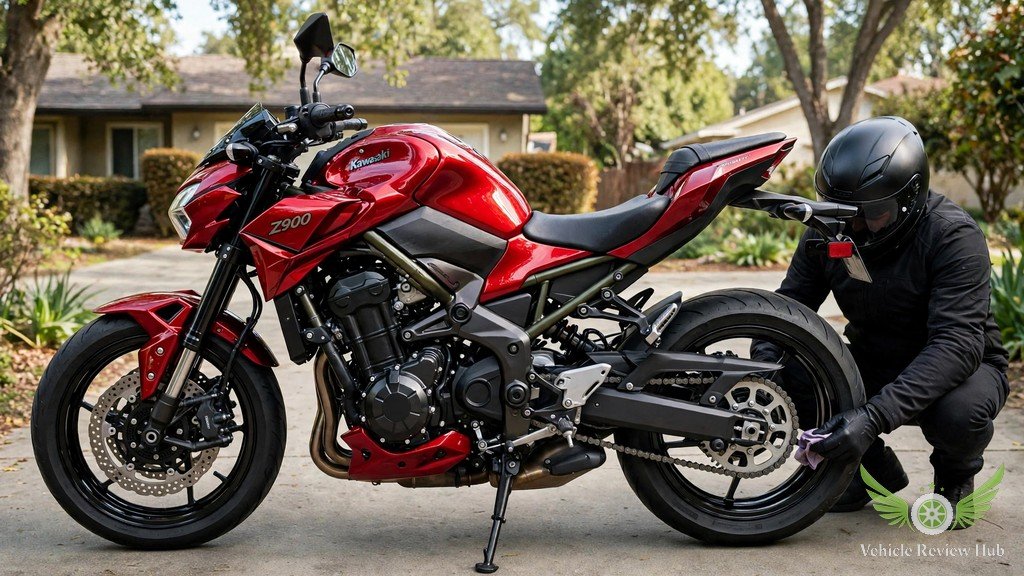
The routine is short: change the oil and filter every 7,600 miles or yearly, lubricate the chain every 400 miles, inspect the valve clearances every 15,200 miles, and check the tyres, brake pads, fork seals and chain at every service. This Kawasaki Z900 reliability guide treats the service record as the single most valuable document a used bike can carry. Keep the records, because a stamped book or a folder of receipts is what turns a used bike’s claims into facts — and on a 2017–2019 bike, keep the recall paperwork too, so the next buyer can see the VIN checks were done. Regular inspections catch the small things before they become expensive ones: a weeping fork seal, a worn sprocket, a tyre near its limit. The full picture of what the bike offers beyond reliability — its price, its specs and how it rides — is in the companion Z900 review, and the performance figures behind the riding experience are in the companion Z900 performance guide.
2020-On: No Campaigns Found
The cleanest fact in this bike’s record is also the simplest: NHTSA returns a count of zero for every year from 2020 to 2027, under both the “z900” and the “zr900” model strings, and the complaint count is zero for every year from 2017 to 2026. A 2020-or-newer Z900 has no recall history at all — no campaign to check, no remedy to chase, nothing outstanding on the VIN — and this Kawasaki Z900 reliability guide counts that as the strongest single fact in the bike’s favour. That does not make the bike maintenance-free; the oil, the valves and the chain still need their intervals. But it does mean a buyer of a 2020-or-newer bike can skip the recall hunt entirely and spend the inspection on the things that actually wear. This Kawasaki Z900 reliability guide ends where it began: three recalls on the early bikes, none after 2019, and a manual schedule that is short enough to follow without excuses.
Kawasaki Z900 Reliability: Frequently Asked Questions
The questions buyers ask most about recalls, service intervals and what can go wrong — answered from the verified figures in this Kawasaki Z900 reliability guide.
Does the Kawasaki Z900 have any recalls?
Three, all on 2017–2019 bikes: 17V703 (shock mount holes, 2017–2018), 18V866 (hose and wire routing, 2018) and 19V083 (ABS contamination, 2019). No recall touches a 2020-or-newer Z900, and the NHTSA complaint count is zero for every year 2017–2026, which is why this Kawasaki Z900 reliability guide calls the bike’s record clean outside the early recalls.
What is recall 17V703?
On 2017–2018 Z900s, the rear shock absorber tie-rod frame mount holes can elongate if the shock bottoms out. The remedy is to inspect the mount holes and replace the bracket or the frame as needed. No unit count was found in the NHTSA record, so this Kawasaki Z900 reliability guide prints none for this campaign.
What is recall 19V083?
On 2019 Z900 ABS bikes, the ABS hydraulic unit was contaminated with debris during manufacture, and a wheel can lock up when braking. It covers 497 units, and this Kawasaki Z900 reliability guide notes the remedy is to inspect the ABS unit and replace it as necessary.
How often do the Z900’s valves need checking?
Inspect the valve clearances every 15,200 miles (24,000 km) — that is the US owner’s manual interval. Clearance values are not published in this brief; follow the manual. This Kawasaki Z900 reliability guide prints no clearance values in millimetres, because none were verified.
How often is the Z900’s oil changed?
Every 7,600 miles (12,000 km) or yearly, oil and filter together — NOT every 3,800 miles. The service chart has a 3,800-mile column, but no oil change is due there. The oil is SAE 10W-40, and this Kawasaki Z900 reliability guide states the interval plainly because the 3,800-mile figure keeps appearing in dealer quotes.
Is the 24V270 recall on the Z900?
No. 24V270 covers 2024 Z900RS models only (front tyre, 525 units). It does not touch the Z900, and it must never be listed as this bike’s recall. This Kawasaki Z900 reliability guide lists the Z900’s recalls as three, and 24V270 is not one of them.