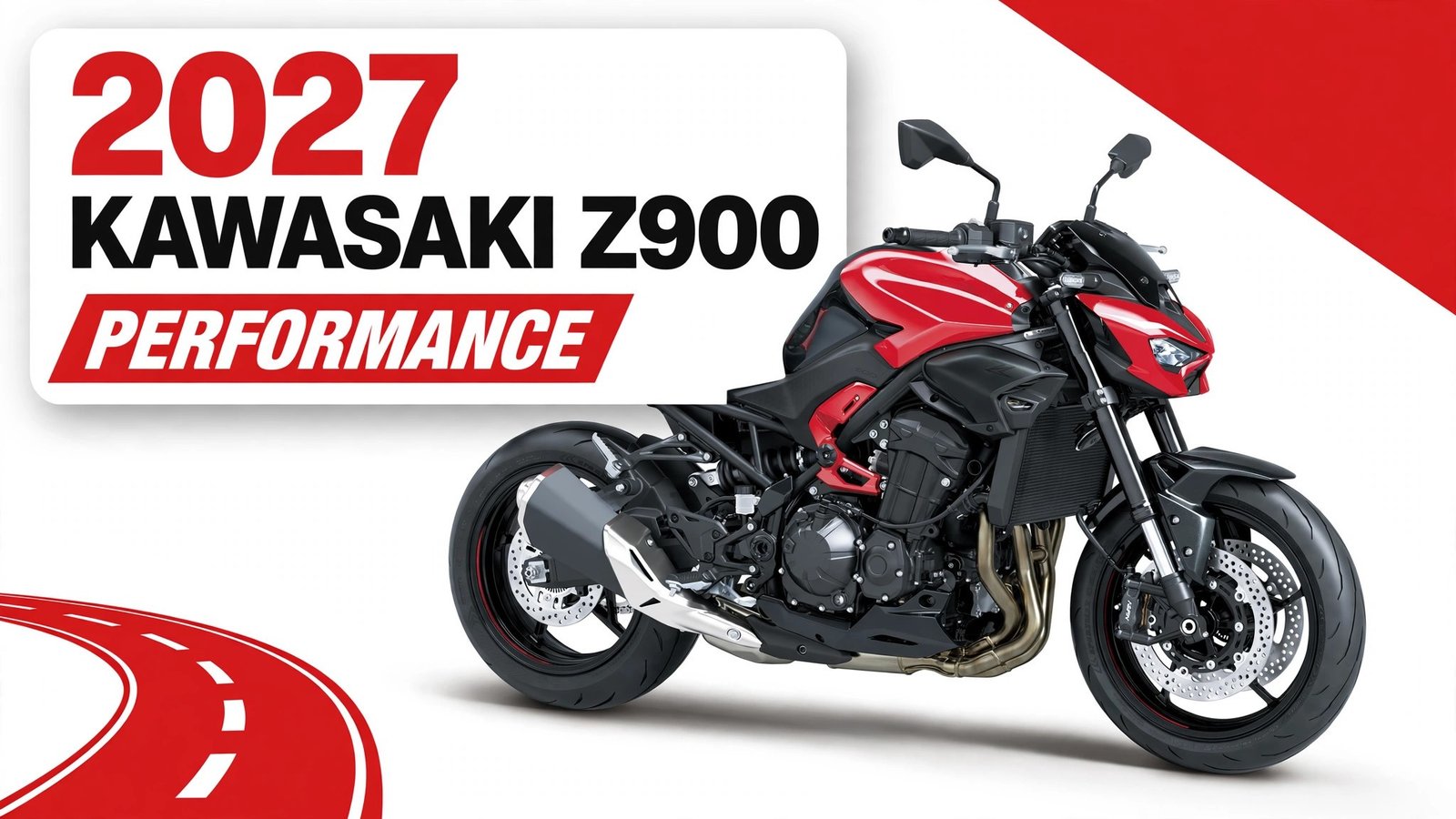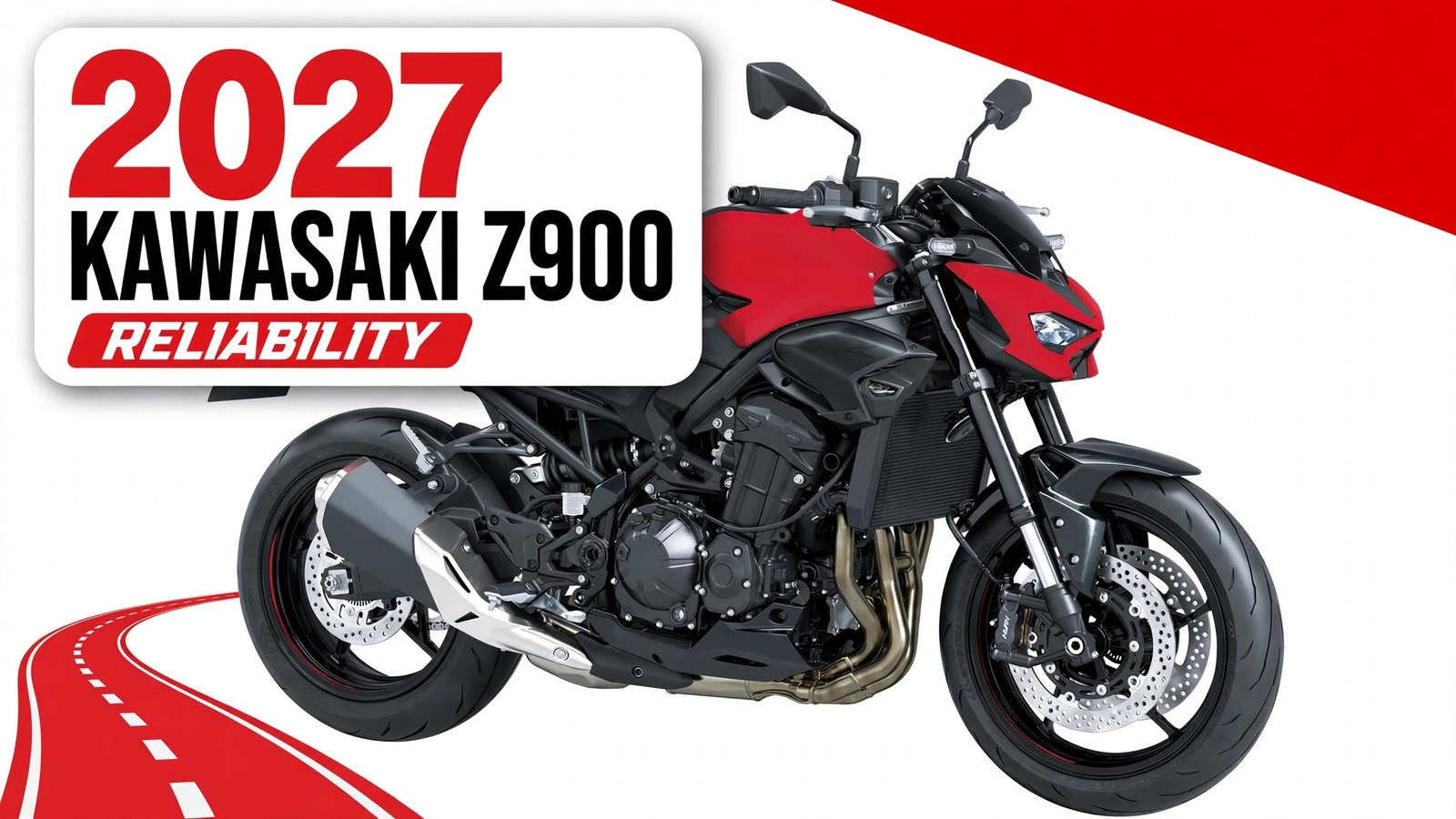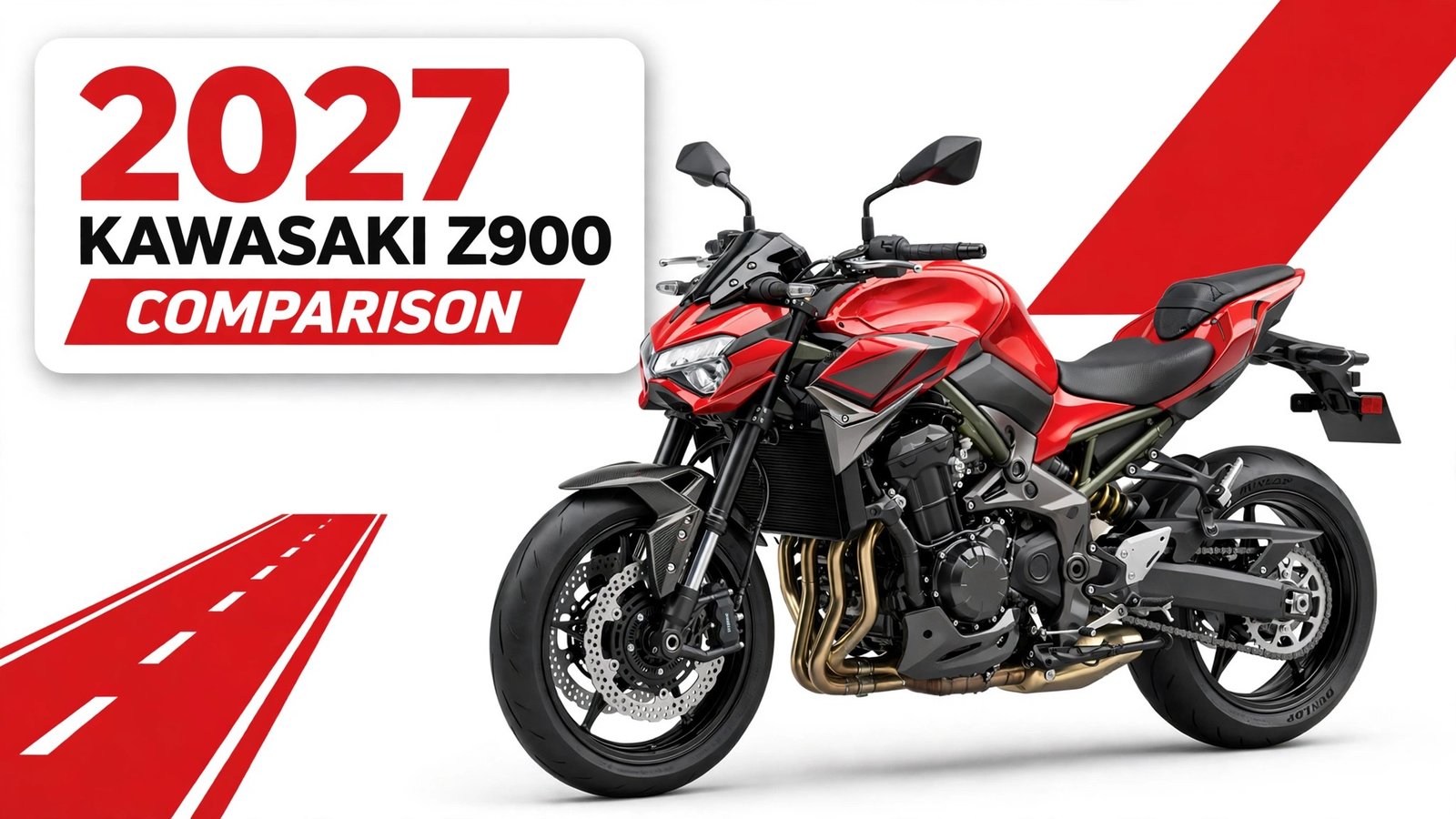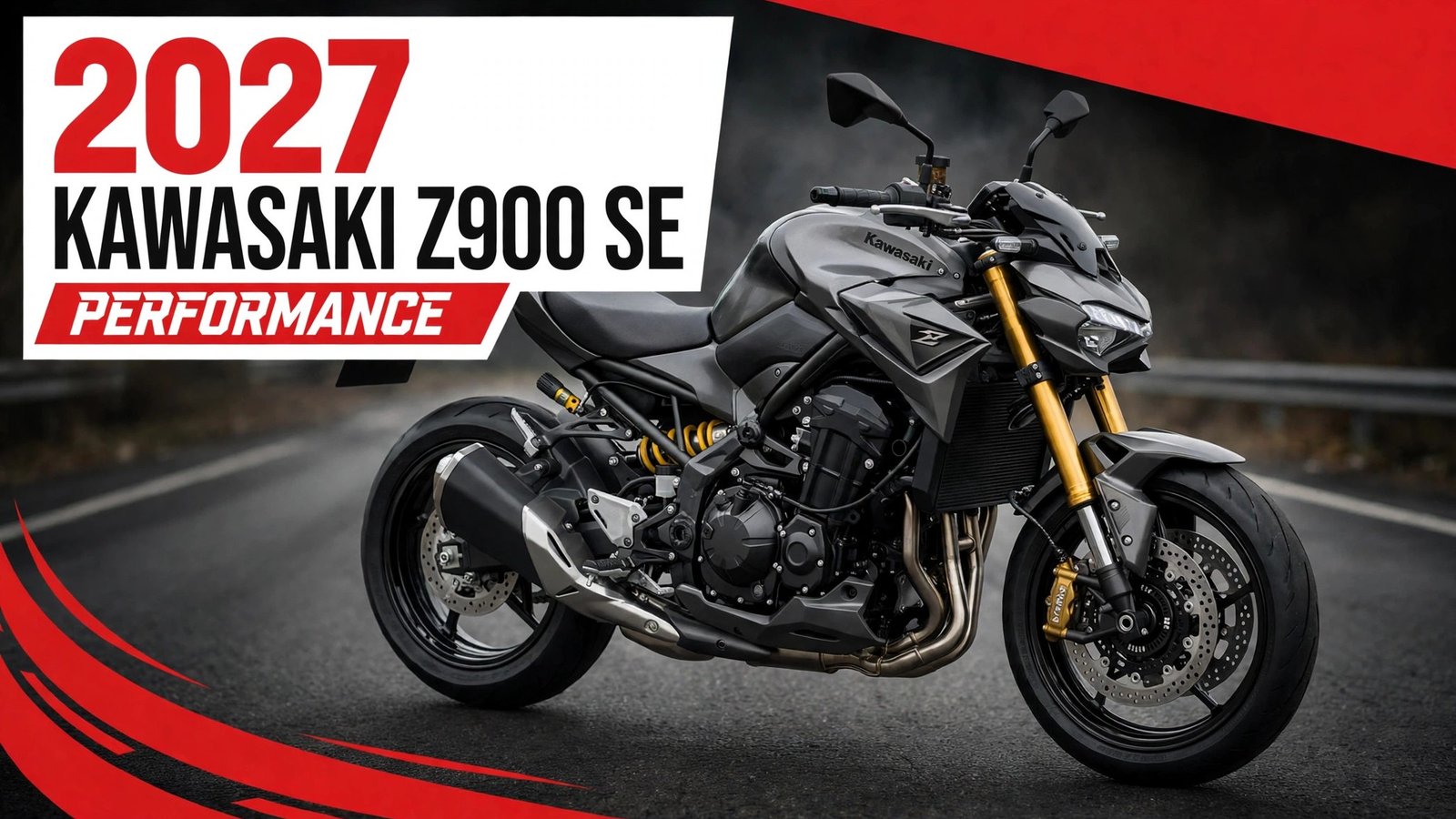
The 2027 Kawasaki Z900 SE makes the same claimed 123.0 hp as the base Z900, weighs 2.2 lb more, and has never been dyno’d as an SE. That absence is the first thing this Kawasaki Z900 SE performance guide has to say plainly, because every performance number that follows comes with a label — measured on the base bike, measured in a group test, or not measured at all.
The figures show an honest rather than heroic story: the base bike’s 948cc inline-four, unchanged; a measured 41.6 mpg in the only group test that weighed it; and verdicts that split by era — “worth the money alone” in 2022, last of four in 2025. This Kawasaki Z900 SE performance guide works through each claim with the numbers that support it.
Kawasaki Z900 SE Engine Performance and Power Delivery
Power delivery is where this Kawasaki Z900 SE performance guide starts: the premium buys no power at all. The engine, the claim and the torque are the base bike’s in every year, and the only rear-wheel figures that exist belong to the base bike.
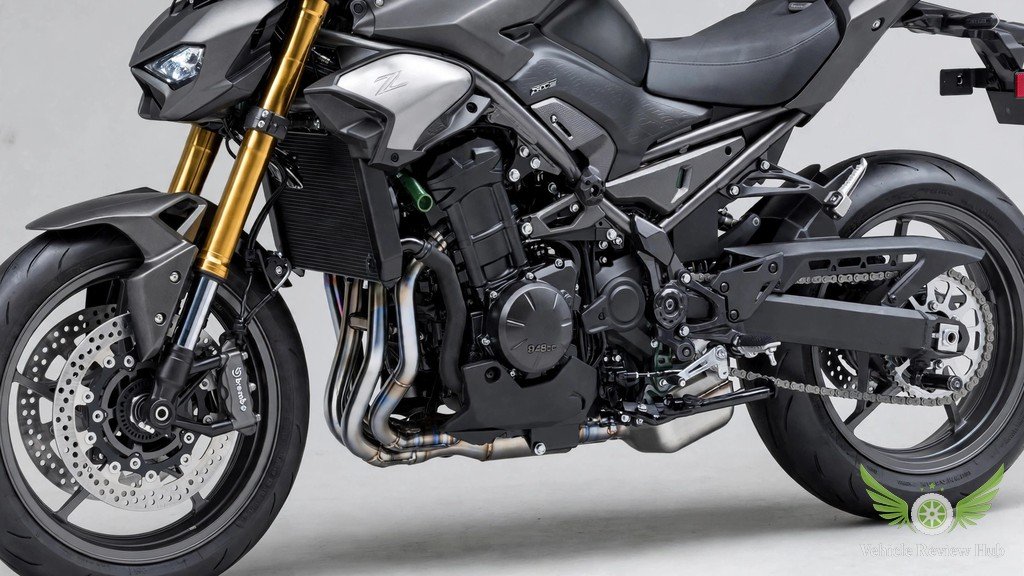
No SE Dyno Exists
As of November 2026, no published dyno figure for the SE itself exists in either generation — and that absence is the first fact this Kawasaki Z900 SE performance guide records. Cycle World dyno’d the 2020 base bike and the 2022 Z900RS SE, a different motorcycle, but never an SE. Motorcycle.com ran the 2020 base and the 2017 base in a three-bike comparison, but never an SE. Rider dyno’d the 2020 base. Neither Cycle News’s 2022 review nor its 2025 shootout ran an SE dyno, and neither did RevZilla’s or Ultimate Motorcycling’s 2025 first rides. No source checked has published an SE dyno figure, and this Kawasaki Z900 SE performance guide prints none.
2 Wheel DynoWorks’ first impressions of their brand-new 2025 SE — an initial stock-performance overview, not a dyno run; the shop’s full dyno and tuning results were still to come when the video was published. The video itself contains no dyno figure, and this Kawasaki Z900 SE performance guide quotes none from it. Note that 2 Wheel DynoWorks sells ECU flashes for the Z900.
113.96 hp Is the Standard’s
The only rear-wheel figures this Kawasaki Z900 SE performance guide can print are the base bike’s, labelled as the base bike’s in the same sentence. Cycle World measured 113.96 hp at 9,710 rpm and 67.30 lb-ft at 7,990 rpm on a 2020 Z900. Rider measured 113.3 hp at 9,800 rpm and 66 lb-ft at 8,100 rpm on a 2020 Z900 ABS. Motorcycle.com measured 115.5 hp at 9,700 rpm on a 2020 Z900 ABS, and 115.6 hp at 9,800 rpm on a 2017 Z900 in a three-bike comparison. Those are base-bike runs, not SE runs — the best guide to what an SE makes at the wheel, but not SE measurements.
The claimed figures frame the same picture for this Kawasaki Z900 SE performance guide. Before 2025 the US claim is 125 hp at 9,500 rpm; from 2025 it is 123.0 hp at 9,500 rpm (ISO 4106), with torque at 73.1 lb-ft at 7,700 rpm in every year. The engine is a liquid-cooled, DOHC, 16-valve inline-four displacing 948cc, with a 73.4 × 56.0 mm bore and stroke and 11.8:1 compression, fed by DFI with 36 mm throttle bodies and shifted through a six-speed gearbox with an assist-and-slipper clutch. The Gen 2 bike adds updated cam profiles and a revised ECU for low-rpm torque, and Kawasaki claims a 16% fuel-consumption reduction for 2025 — a claim, not a measurement. The standard Z900 performance guide covers the base bike’s figures in full.
| Source | Bike dyno’d | Rear-wheel hp | Rear-wheel torque |
|---|---|---|---|
| Cycle World, 2020 | 2020 Z900 (base) | 113.96 hp @ 9,710 rpm | 67.30 lb-ft @ 7,990 rpm |
| Rider, 2020 | 2020 Z900 ABS (base) | 113.3 hp @ 9,800 rpm | 66 lb-ft @ 8,100 rpm |
| Motorcycle.com, 2020 | 2020 Z900 ABS (base) | 115.5 hp @ 9,700 rpm | Not separately published |
| Motorcycle.com, 2017 | 2017 Z900 (base), three-bike comparison | 115.6 hp @ 9,800 rpm | Not separately published |
Note: Every figure in this table is a base-bike dyno run, labelled as such — no SE dyno exists, so this Kawasaki Z900 SE performance guide prints no rear-wheel figure for the SE itself.
Kawasaki Z900 SE Top Speed and Acceleration
Top speed and acceleration are the shortest section in this Kawasaki Z900 SE performance guide: the measurements do not exist. No timed run, no official top speed, no measured figure of any kind for the SE itself — and the base bike has no verified US timed run either.
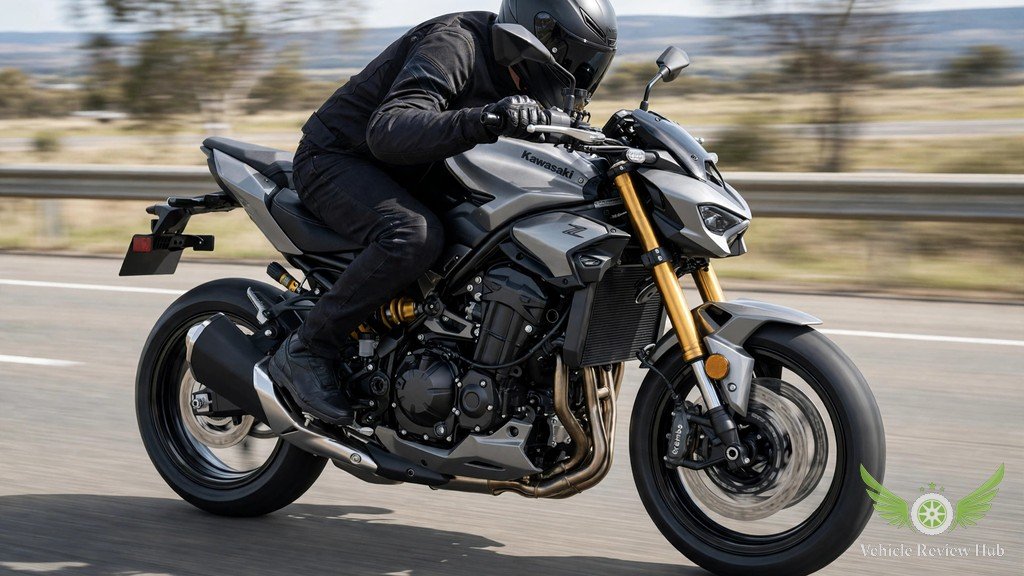
No Timed SE Run in US
No timed SE run in the US exists in any publication checked — no 0–60 mph time, no quarter-mile time, no measured acceleration figure for the SE itself. The figures that circulate online for the Z900 — 3.10 seconds to 60 mph, a 10.89-second quarter-mile at 129 mph — come from estimate sites, not from a test, and this guide prints none of them as measurements. Any 0–60 or quarter-mile number you see attached to the SE is an estimate, and this Kawasaki Z900 SE performance guide reads it as one.
What can be said is arithmetic, not measurement. The SE carries the base bike’s engine and gearing, adds 2.2 lb, and makes around 114 hp at the rear wheel on the base bike’s dynos. Two pounds on a bike making around 114 hp at the wheel is immeasurable — the SE is no faster than the base bike, and no slower in any way a rider could feel. This Kawasaki Z900 SE performance guide reports the arithmetic, not a measurement. Kawasaki did optimise the gear ratios for 2025, per RevZilla’s 2025 first ride — shared with the base bike, and it produced no published timed run either.
No Official Top Speed
Kawasaki publishes no official top speed for the SE or the base bike, and no measured SE top speed exists in any publication checked. This Kawasaki Z900 SE performance guide prints no top-speed number for the SE — not 153 mph, not 149 mph, not 130 mph, not any other figure. A top speed quoted for the SE is either an estimate or a figure borrowed from another bike — and this Kawasaki Z900 SE performance guide prints neither.
Kawasaki Z900 SE Mileage and Fuel Economy
Fuel economy is the one area where this Kawasaki Z900 SE performance guide can print a measured SE figure — exactly one, from the 2025 shootout. Kawasaki publishes no MPG figure for the SE or the base bike, so the measured numbers below are the whole story.
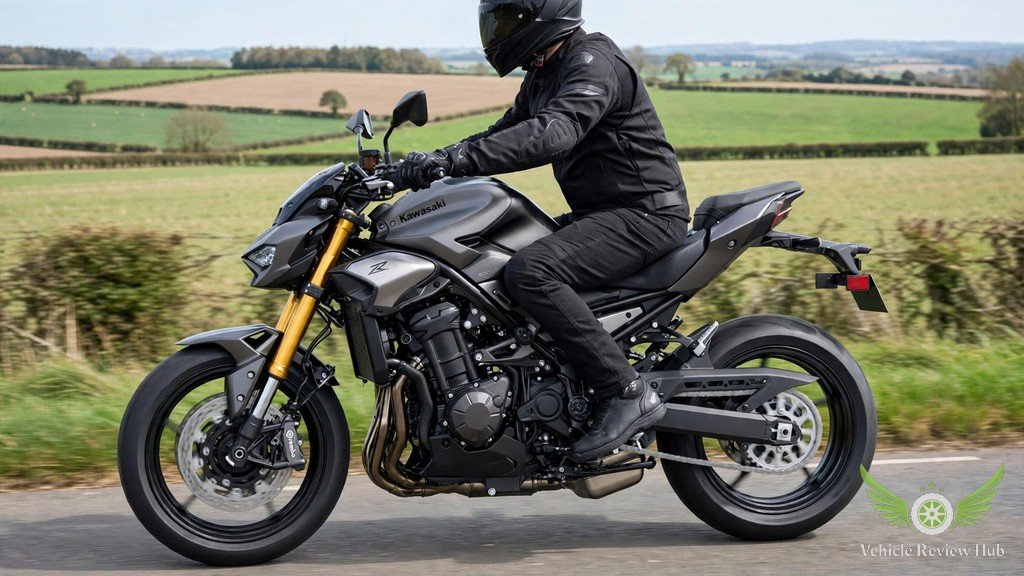
41.6 mpg in the Shootout
Cycle News measured 41.6 mpg for the 2025 Z900 SE ABS in its 2025 middleweight shootout — the only measured SE fuel-economy figure that exists. At 41.6 mpg, the 4.5-gallon tank carries the SE about 187 miles before reserve. The figure comes from the shootout’s spec table, “Fuel Consumption (measured) 41.6 mpg” — the number this Kawasaki Z900 SE performance guide uses for the SE’s range.
Rider averaged 42.5 mpg on a 2017 base Z900 in its comparison with the Yamaha FZ-09 — about 191 miles from the same 4.5-gallon tank, with a 39.0 / 42.5 / 49.1 mpg spread across the test. The SE’s 41.6 mpg against the base’s 42.5 mpg is a difference of less than one mile per gallon across eight model years — in practice, the same thirst, as this Kawasaki Z900 SE performance guide reads the two measurements.
Kawasaki Publishes No MPG
No Kawasaki USA spec sheet — 2024, 2025, 2026 or 2027 — and no Kawasaki brochure lists an MPG or EPA figure for the SE or the base bike. Kawasaki publishes no fuel-economy figure at all, so every MPG number in this Kawasaki Z900 SE performance guide is a measured figure from a publication, labelled with its source.
The Gen 2 efficiency story deserves the same discipline. Kawasaki updated the cam profiles and revised the ECU for 2025, and Ultimate Motorcycling reports Kawasaki claims a 16% fuel-consumption reduction for the 2025 bike. That is Kawasaki’s claim, not a measured result: the 2025 SE’s 41.6 mpg is no better than the 2017 base bike’s measured 42.5 mpg. The claim may hold in Kawasaki’s test cycle; on the road, it does not show.
| Source | Bike | Measured MPG | Range per tank |
|---|---|---|---|
| Cycle News 2025 shootout | 2025 Z900 SE ABS | 41.6 mpg | ~187 miles (4.5 gal) |
| Rider 2017 comparison | 2017 Z900 (base) | 42.5 mpg avg (39.0–49.1) | ~191 miles (4.5 gal) |
Note: Kawasaki publishes no MPG figure for the SE or the base bike — every number above is a publication’s measurement, and this Kawasaki Z900 SE performance guide prints no other fuel-economy figure.
Kawasaki Z900 SE Real-World Riding Experience
The numbers say the SE is no faster than the base bike and no more economical. The riding experience is where the SE earns its premium — or fails to, depending on the year. This Kawasaki Z900 SE performance guide leans on the people who rode both generations, because the two verdicts disagree, and the disagreement is the honest riding story.
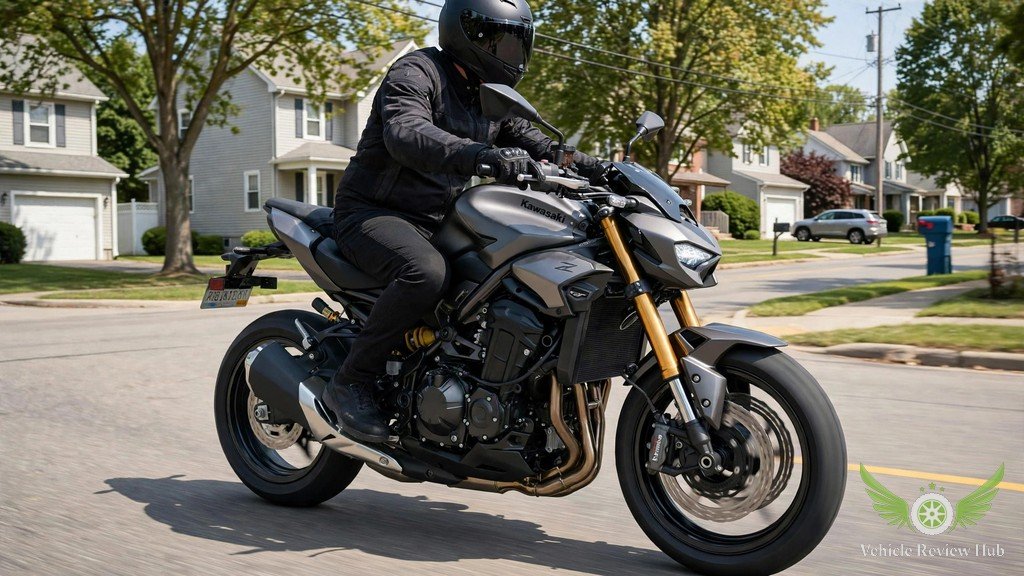
The Riding Experience Buyers Actually Talk About
What riders talk about first is the engine. Cycle News’s 2025 shootout praised “a very usable spread of low-end torque for point-to-point street cruising, combined with the trademark Kawasaki top-end, and an induction roar to boot” — the same 948cc four, now with the Gen 2 cam and ECU work. The testers also praised the Dunlop Sportmax Q5A tyres, the only Dunlops in the shootout. The engine and the tyres are the two things nobody in the shootout criticised, and the two things this Kawasaki Z900 SE performance guide keeps coming back to.
What riders talk about second is the riding position — and here the tone changes. The shootout’s testers, from 5’10” to 6’2″, all felt cramped on the SE, which had the lowest seat in the test at 31.9 inches. One tester said that for short rides around town the Kawasaki would be his first choice, but long rides would be “a tiresome experience”. The base suspension settings drew the same complaint: “exceptionally soft”. The Gen 1 bike drew the opposite complaint in 2022 — Cycle News noted the new Öhlins shock “brings much needed stability to the platform but it is not fully adjustable, which is a shame”. Two generations, two complaints: Gen 1 wanted more adjustment, Gen 2 wants firmer settings.
The hardware behind the experience is the SE package: Brembo M4.32 calipers with steel lines and a Nissin radial master cylinder, the Öhlins S46 shock with its remote preload adjuster, and the gold 41 mm fork — KYB on the Gen 2 bike, per the 2025 first rides. The Gen 2 bike adds the shared 2025 electronics — IMU, ride-by-wire, quickshifter and cruise control. None of that is SE-exclusive on the Gen 2 bike, but the brakes and the shock are, and they are what a rider feels first — this Kawasaki Z900 SE performance guide counts them as the SE’s real riding difference.
‘Worth the Money Alone’ (2022)
Cycle News’s 2022 verdict on the Gen 1 bike is the sentence this Kawasaki Z900 SE performance guide quotes verbatim, because it is the verdict the whole SE case rests on. Rennie Scaysbrook wrote: “For the money, the Z900 SE is indeed a good buy,” and closed with the line that the braking and suspension improvement makes “the new Zee worth the money alone.” The review asked whether the extra cash was worth the cash paid, and its answer was yes — at the $1,500 premium, on the Gen 1 bike.
The context matters as much as the quote. The same review noted the SE was “only $500 cheaper than the Yamaha MT-09 SP that does come with an IMU and cruise control and Ohlins” — $11,199 against the SE’s $10,699. The verdict is a value verdict, not a claim the SE out-handles the MT-09 SP, and it holds in both eras: SlashGear’s 2025 review calls the SE “worth the upgrade” at the $1,850 premium, and TopSpeed says the $2,000 premium “is worth it”. The full review carries the price ladder behind the verdict.
Kawasaki Z900 SE Handling, Braking and Stability
Handling is where this Kawasaki Z900 SE performance guide has to report a loss: the SE finished last in the only group test it ever entered, for handling reasons — cramped ergonomics, soft base settings, a dated-feeling chassis — not engine reasons. The hardware is premium; the setup, as delivered, is not.
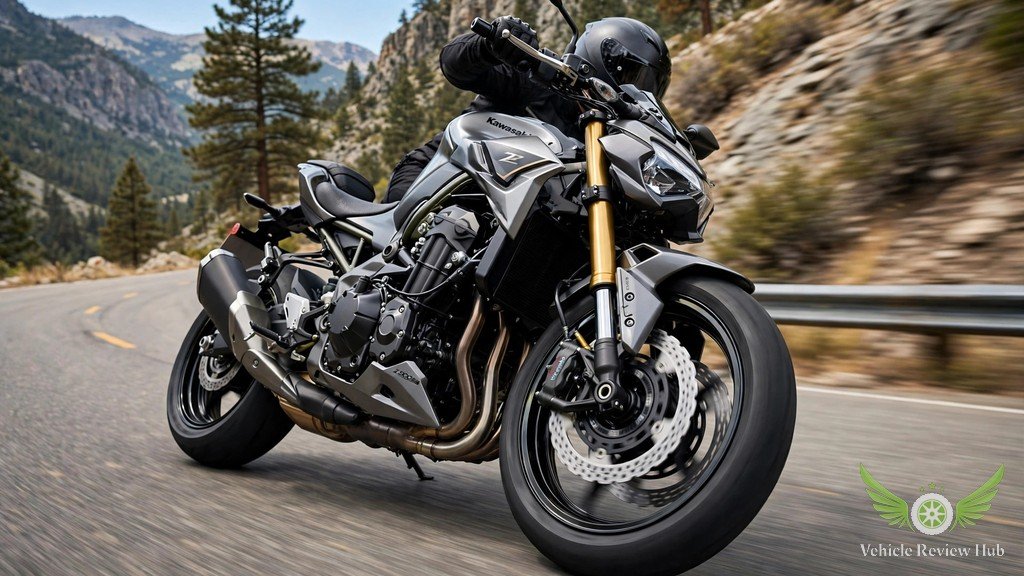
Last in the 2025 Shootout
Cycle News’s 2025 middleweight shootout ranked the SE fourth of four — behind the Yamaha MT-09 SP, the KTM 990 Duke and the Triumph Street Triple 765 RS. The test was street riding only, and the SE was the least expensive bike in the test at $11,849 as tested, the heaviest at 471 lb with a full tank, and the lowest-seated at 31.9 inches. This Kawasaki Z900 SE performance guide reports the result exactly as Cycle News printed it. The engine and tyres were praised, the ergonomics and base settings marked down, and the chassis called “a little dated” for a bike new for 2025.
| Item | Kawasaki Z900 SE | Yamaha MT-09 SP (winner) |
|---|---|---|
| Shootout position | 4th (last) | 1st |
| As-tested price | $11,849 (cheapest in test) | $13,399 delivered |
| Weight | 471 lb wet (full 4.5 gal tank) | 427.9 lb |
| Seat height | 31.9 in (lowest in test) | 32.5 in |
| Fuel tank | 4.5 gal | 3.7 gal |
Note: The shootout was street riding only — no track testing — and this Kawasaki Z900 SE performance guide reports the SE fourth of four, the KTM 990 Duke second and the Triumph Street Triple 765 RS third.
Handling, Braking and Stability on Real Roads
On real roads the story splits the same way: the hardware is right, the setup is soft. The KYB fork and Öhlins S46 shock — “adequate” in the shootout’s words — arrive with base settings called “exceptionally soft”, and the chassis — a trellis frame with the fork tucked 0.2 degrees for 2025 (24.7° rake, 4.3 in trail, 57.1 in wheelbase) — “feels a little dated” next to the rivals. The fix is adjustment, not parts: the Gen 2 fork adjusts for compression, rebound and preload, and the Öhlins shock for rebound damping plus remote preload. A rider who sets the suspension up will find a different bike.
The braking is the one area with no caveat. Dual 300 mm Brembo discs with M4.32 calipers, steel lines and a Nissin radial master cylinder give the SE the strongest brakes in the Z900 line, and the Gen 2 bike adds cornering ABS through its five-axis IMU, with KTRC and KCMF shared with the base bike. Stability comes from the same package: a 57.1-inch wheelbase, 5.7 inches of clearance, and the Dunlop Q5As every tester praised. This Kawasaki Z900 SE performance guide counts the brakes as the SE’s most defensible upgrade — the one part of the premium no tester questioned.
Kawasaki Z900 SE Performance Compared With Other Sport Bikes
The comparison section of this Kawasaki Z900 SE performance guide is deliberately narrow: one head-to-head, against the bike that beat the SE in the shootout, plus the beginner question every 123 hp naked gets asked. The full three-rival comparison belongs to the comparison blog; here the question is performance only.
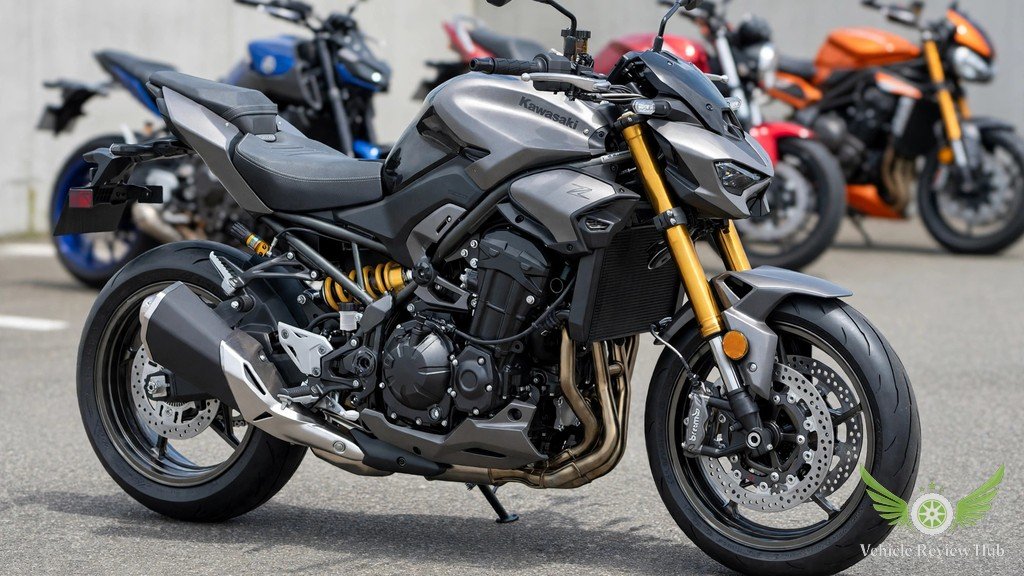
Kawasaki Z900 SE vs Yamaha MT-09 SP
The MT-09 SP is the bike the SE lost to, and the figures explain both the loss and the price. The SP’s 890cc CP3 triple claims 117 hp at 10,000 rpm and 68.6 lb-ft at 7,000 rpm — 6 hp and 4.5 lb-ft less than the SE — but the SP weighs 427.9 lb against the SE’s 469.7 lb, a gap of about 42 lb that no torque advantage closes. The SP is the lighter, sharper bike; the SE is the smoother, torquier four, with the bigger tank and the lower seat. Both carry fully-adjustable KYB forks and Öhlins rear shocks, IMUs with cornering ABS, quickshifters and cruise control. The hardware is a draw; the weight is not, and this Kawasaki Z900 SE performance guide does not pretend otherwise.
On price the SE wins the narrow contest: $13,039 delivered ($12,199 + $840) against the SP’s $13,399 delivered ($12,699 + $700) — $360 cheaper delivered, $500 cheaper on MSRP. The shootout’s verdict still stands — the SP won on handling and ergonomics, the SE on price and engine character — and this Kawasaki Z900 SE performance guide does not invert it. The SE suits the rider who wants the four’s smoothness, the bigger tank, the lower seat and the $360 saving; the SP suits the rider who wants the lightest bike, the triple’s character and the shootout win. Neither is a wrong choice.
| Item | Kawasaki Z900 SE | Yamaha MT-09 SP |
|---|---|---|
| Engine | 948cc inline-four | 890cc CP3 triple |
| Power (US claim) | 123.0 hp @ 9,500 rpm | 117 hp @ 10,000 rpm |
| Torque (US) | 73.1 lb-ft @ 7,700 rpm | 68.6 lb-ft @ 7,000 rpm |
| Curb weight | 469.7 lb (49-state) / 471.9 lb (50-state) | 427.9 lb |
| Seat height | 31.9 in | 32.5 in |
| Fuel tank | 4.5 gal | 3.7 gal |
| Delivered price (2027) | $13,039 | $13,399 |
Note: The SE claims 6 hp and 4.5 lb-ft more but carries about 42 lb more weight — and this Kawasaki Z900 SE performance guide prices the gap at $360 delivered in the SE’s favour.
Is the Kawasaki Z900 SE Suitable for Beginner Riders?
No — and the answer is figures. The SE claims 123 hp (125 hp before 2025), makes around 114 hp at the rear wheel on the base bike’s dynos, weighs 469.7 lb, and has no beginner-friendly power restriction. Its 948cc inline-four makes its power high in the rev range. The low seat — 31.5 inches on the Gen 1 bike, 31.9 inches on the Gen 2 — is the SE’s only beginner-friendly trait, and it does not offset the power and the weight.
The honest beginner alternatives sit in Kawasaki’s own line: the Z500, at 51 hp, and the Z650, at 67 hp. Both are nakeds a new rider can learn on, and both cost far less than the SE’s $13,039 delivered. A rider who buys the SE as a first bike is buying 123 hp to learn on — and this Kawasaki Z900 SE performance guide says plainly not to.
Kawasaki Z900 SE Performance: Frequently Asked Questions
The questions buyers ask most about this Kawasaki Z900 SE performance guide — answered from the verified figures.
Has anyone dyno-tested the Kawasaki Z900 SE?
No — as of November 2026, no published dyno figure for the SE itself exists in either generation. The figures quoted for the platform are the base bike’s: Cycle World measured 113.96 hp at 9,710 rpm on a 2020 Z900, Rider measured 113.3 hp, and Motorcycle.com measured 115.5 hp — and this Kawasaki Z900 SE performance guide prints only those, labelled as such.
How fast is the Kawasaki Z900 SE?
Kawasaki publishes no official top speed, and no measured SE top speed exists in any US publication. No timed 0–60 or quarter-mile run for the SE exists either. Any 0–60, quarter-mile or top-speed number you see for the SE online is an estimate, not a measurement — this Kawasaki Z900 SE performance guide prints none of them.
What fuel economy does the Z900 SE get?
Cycle News measured 41.6 mpg for the 2025 SE in its 2025 shootout — about 187 miles from the 4.5-gallon tank. Kawasaki publishes no MPG figure. Rider averaged 42.5 mpg on a 2017 base Z900, about 191 miles per tank.
Is the Z900 SE really worth the money?
That is Cycle News’s own 2022 verdict, verbatim: “For the money, the Z900 SE is indeed a good buy” and “that makes the new Zee worth the money alone.” The verdict was about the $1,500 premium on the Gen 1 bike; SlashGear (2025) and TopSpeed (2026) reach the same conclusion at $1,850 and $2,000 — and this Kawasaki Z900 SE performance guide agrees with all three.
Why did the Z900 SE finish last in the 2025 shootout?
Cycle News’s 2025 middleweight shootout ranked it 4th of 4 — MT-09 SP first, 990 Duke second, Street Triple 765 RS third. The testers praised the engine and the Q5A tyres but marked it down for cramped ergonomics, soft base settings, and a chassis that “feels a little dated” — while noting it was the cheapest bike in the test at $11,849.
Is the Kawasaki Z900 SE suitable for beginner riders?
No. It makes 123 hp claimed (about 114 hp at the rear wheel on the base bike’s dynos), weighs 469.7 lb, and has no beginner-friendly power restriction. The low 31.9-inch seat is its only beginner-friendly trait and does not offset the power and weight. Kawasaki’s beginner nakeds are the Z500 (51 hp) and the Z650 (67 hp).