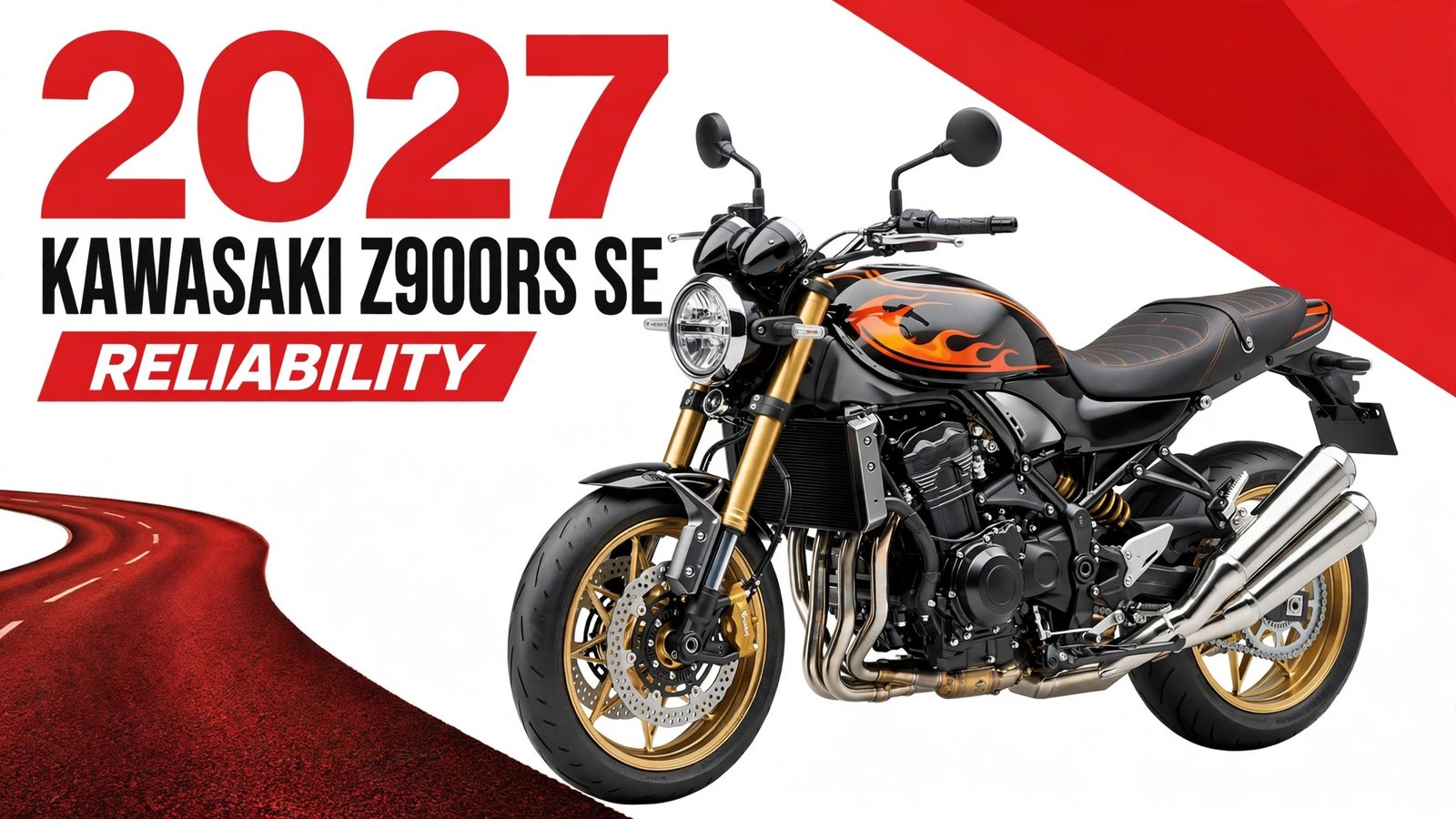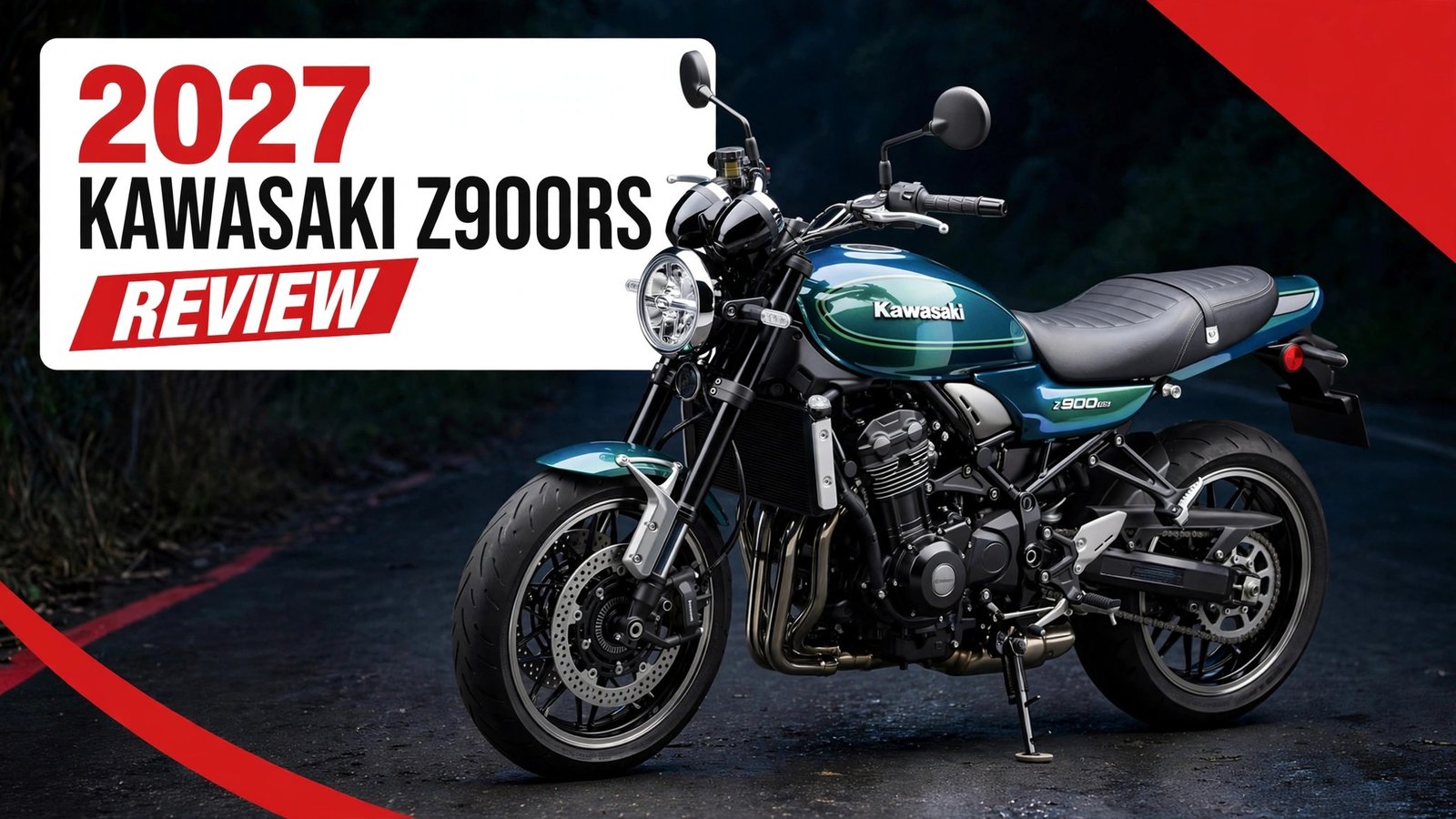
The Kawasaki Z900RS has been on sale in the United States since 2018, and in nine model years it has built a record most retro bikes would envy: three recalls, zero NHTSA complaints, and no verified pattern of mechanical failure. This Kawasaki Z900RS reliability guide looks at that record the way a buyer should — recall by recall, service item by service item — so you can judge the bike on evidence rather than on forum rumour.
The short version is reassuring: a Japan-built motorcycle with a 12-month limited warranty, standard ABS on every US bike in every year, and a schedule that asks for an oil change every 7,600 miles and a valve check every 15,200 miles. The longer version — the recall details, the service chart, the one famous throttle complaint — is what this Kawasaki Z900RS reliability guide covers below.
Kawasaki Z900RS Reliability Overview
Reliability is not a feeling; it is a paper trail. For the RS that trail is unusually short: three NHTSA recalls across nine model years, no complaints on file, and a maintenance schedule that has barely changed since the bike launched. This Kawasaki Z900RS reliability overview starts with the recalls.
Three Recalls, All Primary
Three recalls in nine years, and all three are primary safety recalls — not service campaigns, not quiet fixes. The first two belong to the wider Z900 family as much as to the RS, and the third is the RS’s own. The unit counts matter here, so this Kawasaki Z900RS reliability guide prints them exactly as NHTSA’s Part 573 reports do: the 2018 and 2019 campaigns count every bike in the family, while the 2024 tyre campaign counts only the RS family.
The record is easy to misread. NHTSA’s own recalls API returns zero results when you search it for “z900rs” in any year from 2018 to 2027 — the API files the recalls under the sibling model codes “z900” and “zr900”, not under the RS’s own name. The recalls are real all the same, proven by the Part 573 reports and by the cross-string queries that do return them. Never trust the API’s zero; trust the PDFs. TopSpeed’s recall report on the 2024 campaign is a good second source for the tyre story.
| Campaign | Year | Defect | Units | Remedy |
|---|---|---|---|---|
| 18V-866 | 2018 | Rear brake hose + sensor wire routing | 1,173 total* | Inspect routing, correct it, replace damaged parts |
| 19V-083 | 2019 | ABS hydraulic unit debris | 497 total* | Inspect ABS unit, replace as necessary |
| 24V-270 | 2024 | Front tyre blister (GPR-300F) | 525 | Replace front tyre free |
Note: * The 18V-866 count of 1,173 covers the 2018 Z900, Z900 ABS and Z900RS together, and the 19V-083 count of 497 covers the 2019 Z900 ABS, Z900 RS ABS and Z900 RS Cafe ABS — neither Part 573 report breaks out the RS slice. The 24V-270 count of 525 is the RS family alone (2024 RS, Cafe and SE). All three remedies are free at a Kawasaki dealer, and the VIN check is the first job this Kawasaki Z900RS reliability guide gives any used-RS buyer.
How Mileage, Storage and Previous Care Affect Reliability
No RS-specific data exists on how mileage, storage or previous care changes the bike’s reliability — no study, no survey, no verified dataset. What follows is the general buying advice that applies to any nine-year-old motorcycle, labelled as exactly that: general advice, not RS-specific findings.
The advice itself is straightforward. Ask for the service records first: a bike with every oil change and valve check stamped is a better bet than a low-mileage bike with no paper at all. Check the tyres by their DOT date, not just by tread depth — rubber ages even when it is not worn. A bike that sat for years needs fresh fluids and a tyre-age check before it needs anything else. None of that is RS-specific, and this Kawasaki Z900RS reliability guide says so rather than dressing general advice up as a model finding.
Kawasaki Z900RS Common Problems and Wear Items
Ask owners what goes wrong on the RS and the answer is short: almost nothing, mechanically. SlashGear’s owner-problems roundup lists the throttle and the three recalls and nothing else mechanical, and no verified reports exist of electrical failures, oil consumption, clutch failures or suspension failures on the bike. This Kawasaki Z900RS reliability section covers the two items that do exist — the tyre campaign and the throttle.
24V-270: Tyre Blister, 525
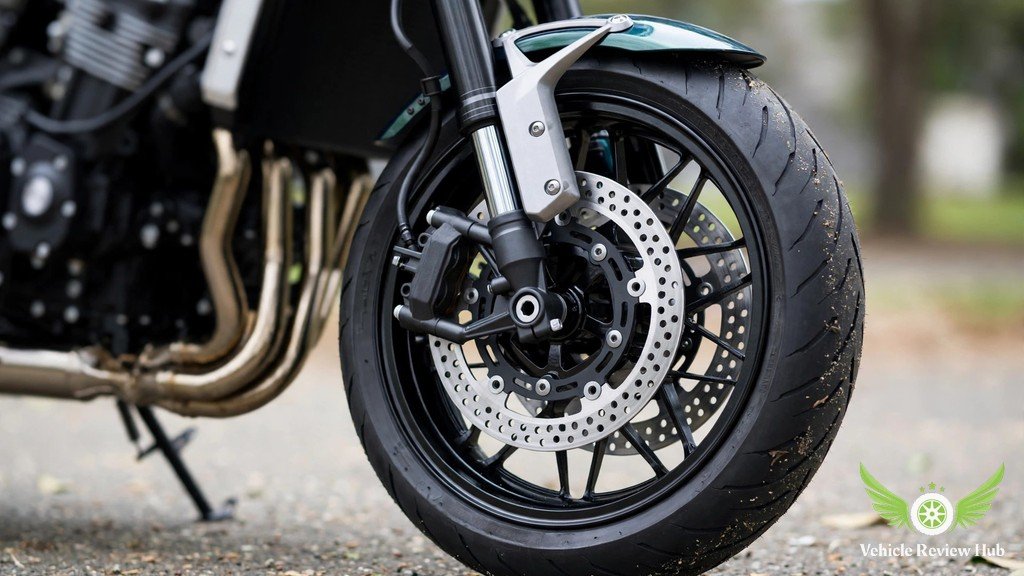
The 2024 tyre campaign is the only recall that belongs to the RS alone, and it is the most important single fact in this Kawasaki Z900RS reliability guide. NHTSA campaign 24V-270 covers 525 model-year 2024 RS, Cafe and SE bikes whose front Dunlop SPORTMAX GPR-300F tyre may blister on the inner surface and fail the FMVSS 119 standard, because of a sidewall-rubber installation error at the supplier, Sumitomo Rubber Industries. The defect estimate in NHTSA’s Part 573 report is 40% — high enough that no 2024 bike should be ridden hard on its original front tyre.
The tyre is a 120/70ZR17 (58W) GPR-300F, part numbers 41009-0753 and 41009-0921, fitted to bikes built between 20 July 2023 and 26 January 2024. Kawasaki’s recall is DAL491A, submitted on 16 April 2024, with owner notification on 16 May 2024 under letter MC24-09. Dealers replace the front tyre free of charge, and owners who already paid get reimbursed.
Check any 2024 bike by VIN — the campaign covers the ZR900C (RS ABS), ZR900E (Cafe) and ZR900N (SE). The VIN range in the Part 573 report is not sequential, so a VIN inside the range does not by itself prove the bike is affected. The NHTSA lookup is the check, and it is the first check this Kawasaki Z900RS reliability guide recommends for any used RS.
Throttle Is a Finding, Not a Fault
The snatchy low-speed throttle is the single most-reported rideability finding on pre-2026 RS bikes, and this Kawasaki Z900RS reliability guide is blunt about what it is: a fuel-map characteristic, not a defect, not a recall, and not a reliability failure. The factory tune was set lean to cut emissions, and the off-to-on throttle transition turned abrupt. Cycle News called the 2018 bike’s throttle response wretched.
Mapping improved it in 2022 and ride-by-wire cured it in 2026 — the three-act story this Kawasaki Z900RS reliability guide tells from the reliability angle. Cycle News wrote that the 2022 bike’s throttle no longer felt like firing a tommy gun and that the abruptness was largely eradicated. For 2026, the electronic throttle valves finished the job: MCN writes that the new engine and electronic throttle valves deliver the end of that initial snatchiness, and Ultimate Motorcycling writes that ride-by-wire cures the abrupt low-speed throttle response of earlier Z900RS models.
It was never a defect and never a recall, and it never left anyone stranded. A buyer test-riding a 2018–2021 bike should expect the abruptness at parking-lot speeds and judge the bike on it; a buyer of a 2026 bike will not find it. The performance figures behind the story are in the Kawasaki Z900RS performance guide.
Kawasaki Z900RS Maintenance Schedule and Servicing
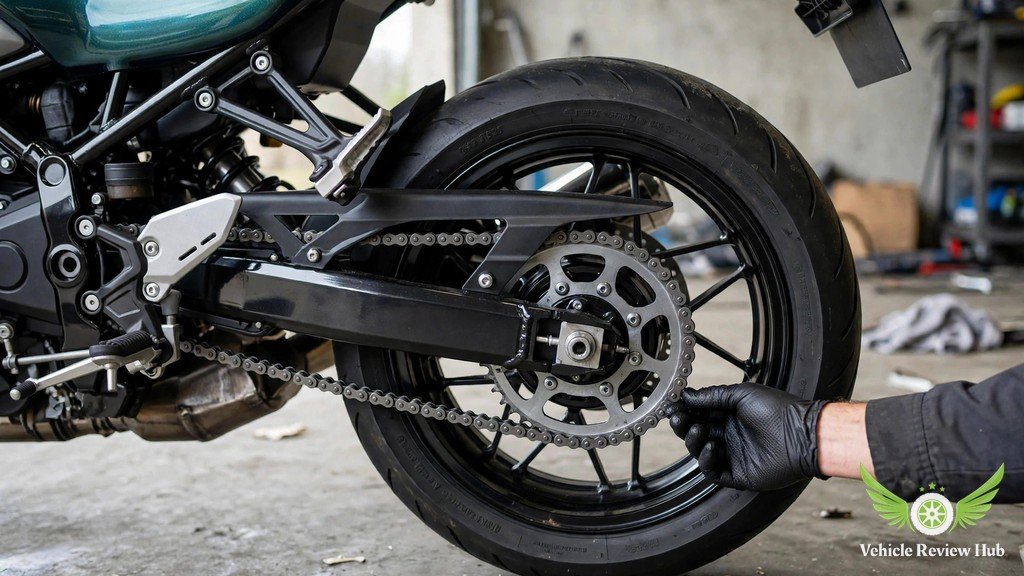
The RS asks for little and asks for it on a long leash. The owner’s-manual schedule is the authority for every interval in this Kawasaki Z900RS reliability section — not a database, not a forum post. Two databases disagree with the manual on chain slack and valve intervals; the manual wins.
The rhythm is simple: engine oil and filter every 12,000 km (7,600 miles) or annually, and a valve clearance check every 24,000 km (15,200 miles). The chain gets checked every 600 miles and lubricated every 400. That is the whole routine.
Valves at 15,200, RS Chart
The valve clearance check falls every 24,000 km — 15,200 miles — on the RS’s own maintenance chart. This Kawasaki Z900RS reliability guide stresses the sourcing because the number also appears on the Z900’s chart: the figure is the RS manual’s, not a number carried across from the sibling.
What the manual does not give — and what no verified source gives — is the clearance value itself. Never quote a valve clearance in millimetres for the RS; no verified figure exists. A seller or a listing that prints one is printing a guess, and that is exactly the kind of invented figure this Kawasaki Z900RS reliability guide never prints. One database prints a 42,000 km valve interval while its own SE page prints 24,000 km — the database contradicts itself, and the manual’s 24,000 km is the figure.
| Item | Interval |
|---|---|
| Engine oil + filter | Every 12,000 km (7,600 mi) or annually |
| Valve clearance inspect / adjust | Every 24,000 km (15,200 mi) |
| Chain slack check | Every 600 mi (1,000 km) |
| Chain lubrication | Every 400 mi (600 km) |
Note: Intervals are from the owner’s-manual maintenance schedule. No valve clearance value in millimetres is printed anywhere in this Kawasaki Z900RS reliability guide, because no verified figure exists — a listing that prints one is printing a guess.
19V-083: ABS Unit Debris
The 2019 recall is the one that sounds worst and matters least to a buyer today. NHTSA campaign 19V-083 covers 497 bikes in total across the 2019 Z900 ABS, Z900 RS ABS and Z900 RS Cafe ABS: the ABS hydraulic unit may have been contaminated with debris — aluminium chips from the assembly jig, according to the Japanese report — and a contaminated unit can cause a front or rear wheel to lock up. It is the scariest-sounding of the three recalls in this Kawasaki Z900RS reliability guide, and the least likely to still be outstanding.
Kawasaki’s recall is MC19-01, reported on 8 February 2019; the recall began on 15 February 2019. The remedy is an inspection of the ABS unit, replaced as necessary. Japan recalled 1,063 units for the same defect — that is the Japanese figure, not the US one, and the two must never be mixed. Seven years on, the question is the same: was the inspection done? A 2019 bike with a dealer service record will have it; a bike without records needs a VIN check before money changes hands. The full model story, including the 2026 electronics update that added an IMU-fed ABS, is in the Kawasaki Z900RS review.
Kawasaki Z900RS Tires, Brakes and Suspension Maintenance
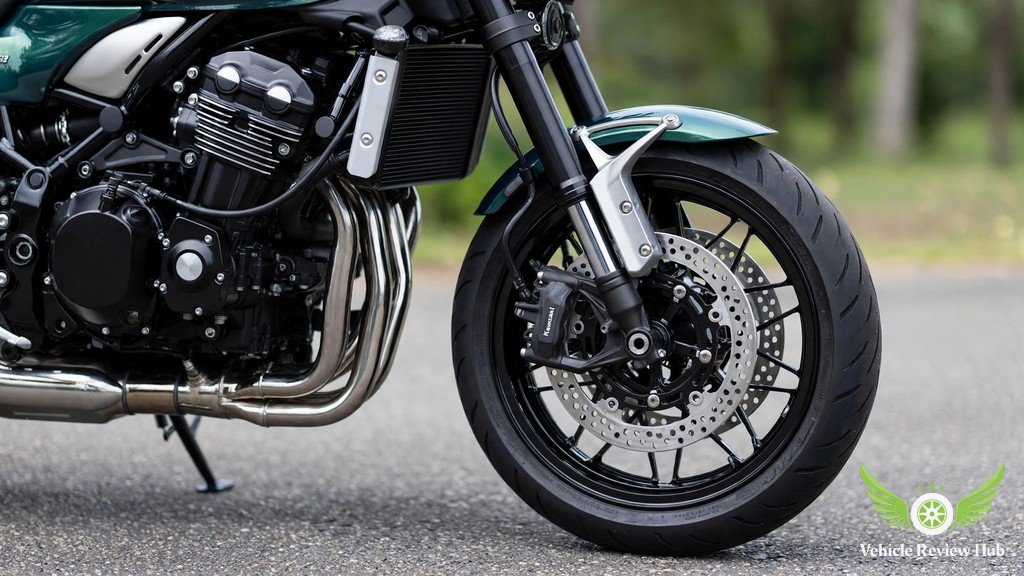
Nothing on the RS’s chassis is exotic, and that is the point: the fork, the brakes and the tyres are all standard hardware with standard intervals, and every figure in this Kawasaki Z900RS reliability section comes from the manual or the spec sheet. Cycle News calls the 2026 bike neutral and predictable in corners, and planted and confidence-inspiring — the chassis earns its keep on real roads, not on a spec sheet.
The fork is a 41 mm inverted unit with stepless preload in both eras: 13-way compression and 11-way rebound damping before 2026, 12-way compression and 10-way rebound from 2026. Front travel is 4.7 in and the rear horizontal back-link shock gives 5.5 in. The SE swaps in an Öhlins S46 rear shock with a remote preload adjuster and 30-position rebound damping — but no Öhlins service interval is published anywhere, so an SE’s shock is judged by feel and by records, not by a mileage figure — which is why no Öhlins interval appears in this Kawasaki Z900RS reliability guide.
18V-866: Hose and Wire
The oldest recall is also the most mechanical. NHTSA campaign 18V-866 covers 1,173 bikes in total across the 2018 Z900, Z900 ABS and Z900RS: the rear brake hose and the rear wheel rotation sensor wire may have been routed incorrectly and can come into contact with the rear tyre. A damaged hose can leak brake fluid; a damaged wire can disable the ABS and the speedometer. Built between 2 August and 10 November 2017, the bikes carry VINs JKAZR2A12JA000006 to JKAZR2B12JA004569 in the Part 573 report.
Kawasaki’s recall is MC18-06, submitted on 13 December 2018, with owner letters on 17 December 2018. The defect estimate is 1%. The remedy is an inspection of the routing, corrected where needed, with any damaged hose or wire replaced. The RS slice of that 1,173 is not broken out in the Part 573 report, so this Kawasaki Z900RS reliability guide never prints the figure as an RS count. Eight years on, any 2018 bike still on its original routing is a bike that was never taken in — the fix is free at a dealer, and the VIN check takes a minute.
Tire, Brake and Suspension Checks That Matter
Start with the tyres. The RS wears Dunlop SPORTMAX GPR-300s — 120/70ZR17 at the front, 180/55ZR17 at the rear — at 36 psi front and 42 psi rear (250 and 290 kPa). Check pressures before every ride, and tyre age on any used bike by the DOT date, not just tread depth. The 2024 front tyre is the recall item, not a wear item — and that distinction is one this Kawasaki Z900RS reliability guide keeps coming back to.
The brakes are honest hardware: dual 300 mm round front discs — round on every RS in every year, never petal — with opposed four-piston radial-mount monobloc calipers, a radial-pump master cylinder and sintered pads, plus a single 250 mm rear disc. Cycle World tested the 2020 Cafe stopping from 60 mph in 132.1 ft. The SE adds Brembo M4.32 calipers, a smaller-diameter Nissin radial-pump master cylinder and braided steel lines.
Check for leaking fork seals and a rear shock that still holds its damping; no Öhlins service interval is published, so an SE’s shock is judged by feel and by records, not by a mileage figure — which is why this Kawasaki Z900RS reliability guide never prints an Öhlins interval.
Kawasaki Z900RS Maintenance and Ownership Costs
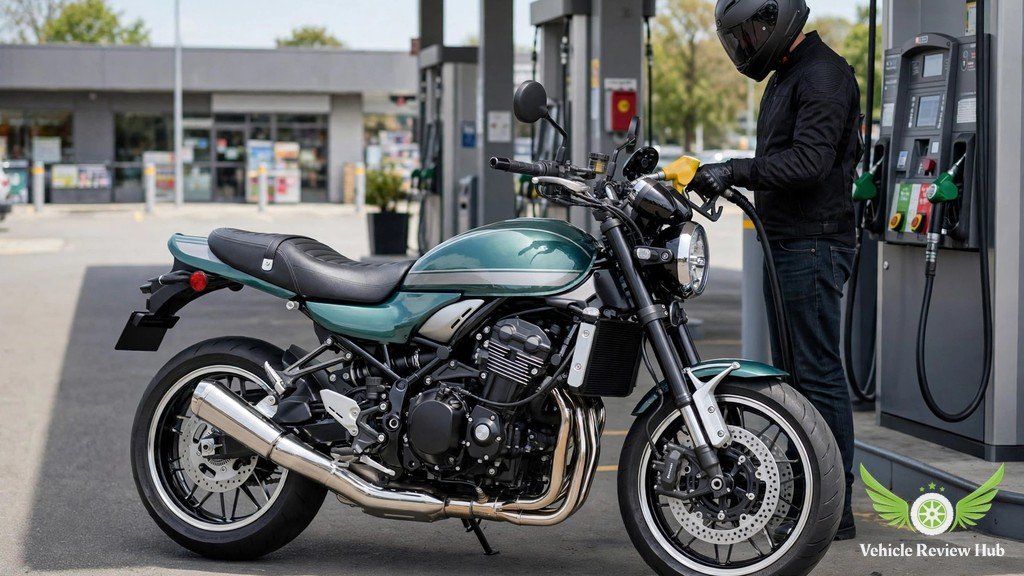
The RS is cheap to run for a 948cc four, and this Kawasaki Z900RS reliability section says so with the figures that exist — and says plainly where no figure exists. No US dealer service price, no US tyre price, no US insurance figure and no US parts price was verified for the RS, so none is printed here.
Fuel, Routine Servicing, Tires and Replacement Parts
Fuel is the one running cost with a tested figure. Motorcycle.com’s long-term test averaged 39 to 40 mpg over about 2,000 miles on its 2018 bike, and the 2026 SE returned 37 mpg under hard riding. The tank holds 4.5 gallons, and Cycle News calls the fuel range adequate for 170-mile rides — a figure this Kawasaki Z900RS reliability guide quotes as Cycle News’s, not as a tested range. Kawasaki publishes no MPG figure, so every mileage number is an observed average.
The 12-month limited warranty covers the first year; after that, the owner pays. MCN in the UK prints £200 for annual servicing on the SE — a UK figure, never a US one. The value comparison against the Yamaha XSR900 and the Triumphs, including the delivered prices, is in the Kawasaki Z900RS comparison guide.
| Item | Specification |
|---|---|
| Engine oil | SAE 10W-40, JASO MA2 — 3.8 L with filter, 3.3 L drain-only |
| Spark plugs | NGK CR9EIA-9 |
| Front tyre | Dunlop SPORTMAX GPR-300, 120/70ZR17 |
| Rear tyre | Dunlop SPORTMAX GPR-300, 180/55ZR17 |
| Tyre pressures | 36 psi front / 42 psi rear (250 / 290 kPa) |
| Chain slack | 30–40 mm (1.2–1.6 in) |
Note: All figures are from the manual or the spec sheet. No brake-fluid or coolant interval is printed in this Kawasaki Z900RS reliability guide — none is verified from the manual — and no Öhlins service interval is published for the SE’s shock.
Chain Slack: 30 to 40 mm
The chain slack figure is 30–40 mm (1.2–1.6 in), checked every 600 miles and lubricated every 400 miles. This Kawasaki Z900RS reliability guide prints the manual’s figure because two databases print different ones — one prints 20–30 mm, another prints 25–35 mm for the SE — and both are wrong. The manual says 30–40 mm, and the manual is the authority.
The final drive is a sealed chain with an assist and slipper clutch behind it, and the schedule is short for a reason: a dry chain wears the sprockets as well as itself. Lubricate every 400 miles, check the slack every 600, and the chain will outlast the tyres. Ignore it, and a neglected chain takes the sprockets with it — a small maintenance bill that this Kawasaki Z900RS reliability guide counts among the cheapest insurance on the bike.
How to Keep a Kawasaki Z900RS Reliable
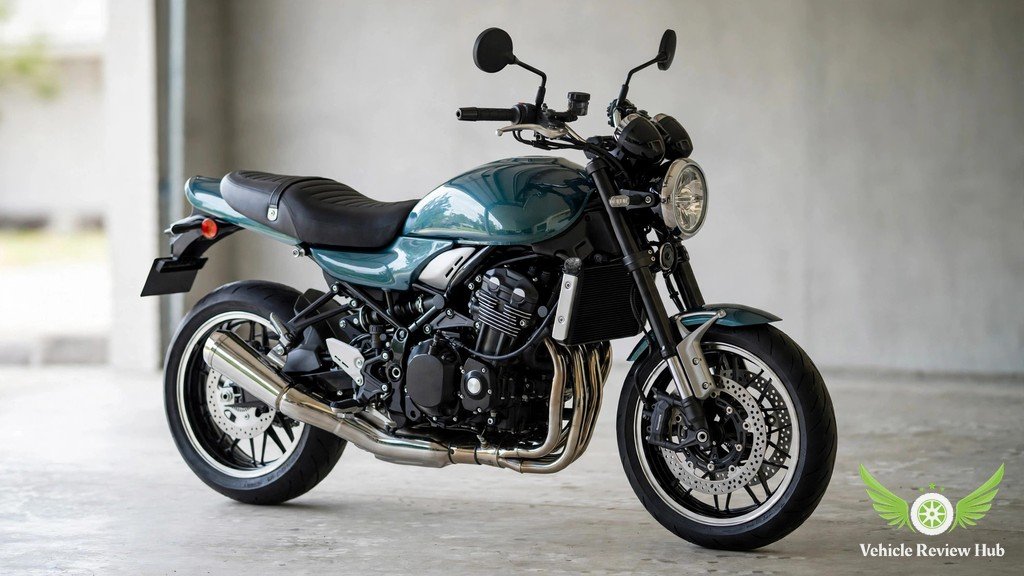
Nothing in this Kawasaki Z900RS reliability guide is complicated: the RS stays reliable when its owner does the small things on time. The schedule is the plan; the records are the proof.
Preventive Maintenance, Records and Regular Inspections
Follow the manual schedule — oil every 7,600 miles, valves every 15,200, chain every 600 miles for a check and 400 for a lube — and keep every receipt, because that is the whole of this Kawasaki Z900RS reliability guide’s preventive-maintenance advice. Inspect the tyres, the chain and the brake pads at every oil change, check the tyre pressures before every ride, and if the bike sits for months, store it with a full tank and a battery tender.
A bike with a full dealer history and all three recall remedies done is the safest used RS. The records matter more than the mileage: a 30,000-mile bike with every service stamped beats a 5,000-mile bike with no paper. That is general buying judgement, not an RS-specific finding — but on this bike, where the failure record is nearly empty, the paper trail is the reliability record, and this Kawasaki Z900RS reliability guide treats it as such.
Check the 2024 Tyre Campaign
If this Kawasaki Z900RS reliability guide had one action for every reader, it is this: check the 2024 tyre campaign. Campaign 24V-270 is the only recall that belongs to the RS alone, the only one with a 40% defect estimate, and the only one whose remedy is a part you ride on.
The check is the NHTSA recall lookup by VIN: confirm the front tyre was replaced free at a dealer, and if it was not, book it before riding the bike hard. The 2018 and 2019 checks belong in the same lookup — the hose and wire routing fix on a 2018, the ABS-unit inspection on a 2019.
| Year | Check before you buy |
|---|---|
| 2018 | Rear brake hose + sensor wire routing fix (18V-866) done |
| 2019 | ABS hydraulic unit inspected (19V-083) |
| 2024 | Front tyre replaced free under 24V-270 |
| Every year | NHTSA recall lookup by VIN; zero complaints on file 2018–2026 |
Note: The NHTSA lookup takes a minute and settles all three campaigns at once. A 2024 bike whose front tyre was never replaced still carries the original GPR-300F — the one check this Kawasaki Z900RS reliability guide never lets a buyer skip.
The RS earns its reputation the boring way: three recalls, all fixed free; zero complaints in nine years; oil every 7,600 miles and valves every 15,200. Buy the bike with its recalls cleared and its records in order, keep to the schedule, and this Kawasaki Z900RS reliability guide’s verdict is simple — the bike will look after you.
Kawasaki Z900RS Reliability FAQs
The six questions below are the ones buyers ask most about how the RS holds up, answered from the verified figures in this Kawasaki Z900RS reliability guide. Every recall figure names its campaign and its unit count.
Has the Kawasaki Z900RS been recalled?
Yes, three times: 2018 (rear brake hose and sensor wire routing, 1,173 bikes across the Z900 family), 2019 (ABS hydraulic unit debris, 497 bikes) and 2024 (front tyre blister, 525 bikes). All three are primary safety recalls with free dealer remedies — the headline finding of this Kawasaki Z900RS reliability guide.
Does the 2024 Z900RS have a tyre recall?
Yes — NHTSA campaign 24V-270 covers 525 model-year 2024 RS, Cafe and SE bikes whose front Dunlop GPR-300 tyre may blister on the inner surface. Dealers replace the front tyre free of charge. Check any 2024 bike by VIN. It is the one recall this Kawasaki Z900RS reliability guide asks every 2024 buyer to check first.
When do the valves need checking on a Z900RS?
Every 24,000 km (15,200 miles) per the owner’s-manual maintenance schedule. Never quote a valve clearance in millimetres — no verified figure exists.
What is the chain slack on a Z900RS?
30–40 mm (1.2–1.6 inches), checked every 600 miles and lubricated every 400 miles. Some databases print 20–30 mm — that is wrong; the manual says 30–40 mm.
What oil does the Z900RS take?
SAE 10W-40 (JASO MA2), 3.8 litres with a filter change or 3.3 litres for a drain only, changed every 12,000 km (7,600 miles) or annually. Spark plugs are NGK CR9EIA-9.
Are there any NHTSA complaints about the Z900RS?
None on file. NHTSA’s complaints database returns zero complaints for the RS for every model year 2018–2026 — a clean record across nine model years, and the strongest single line in this Kawasaki Z900RS reliability guide.