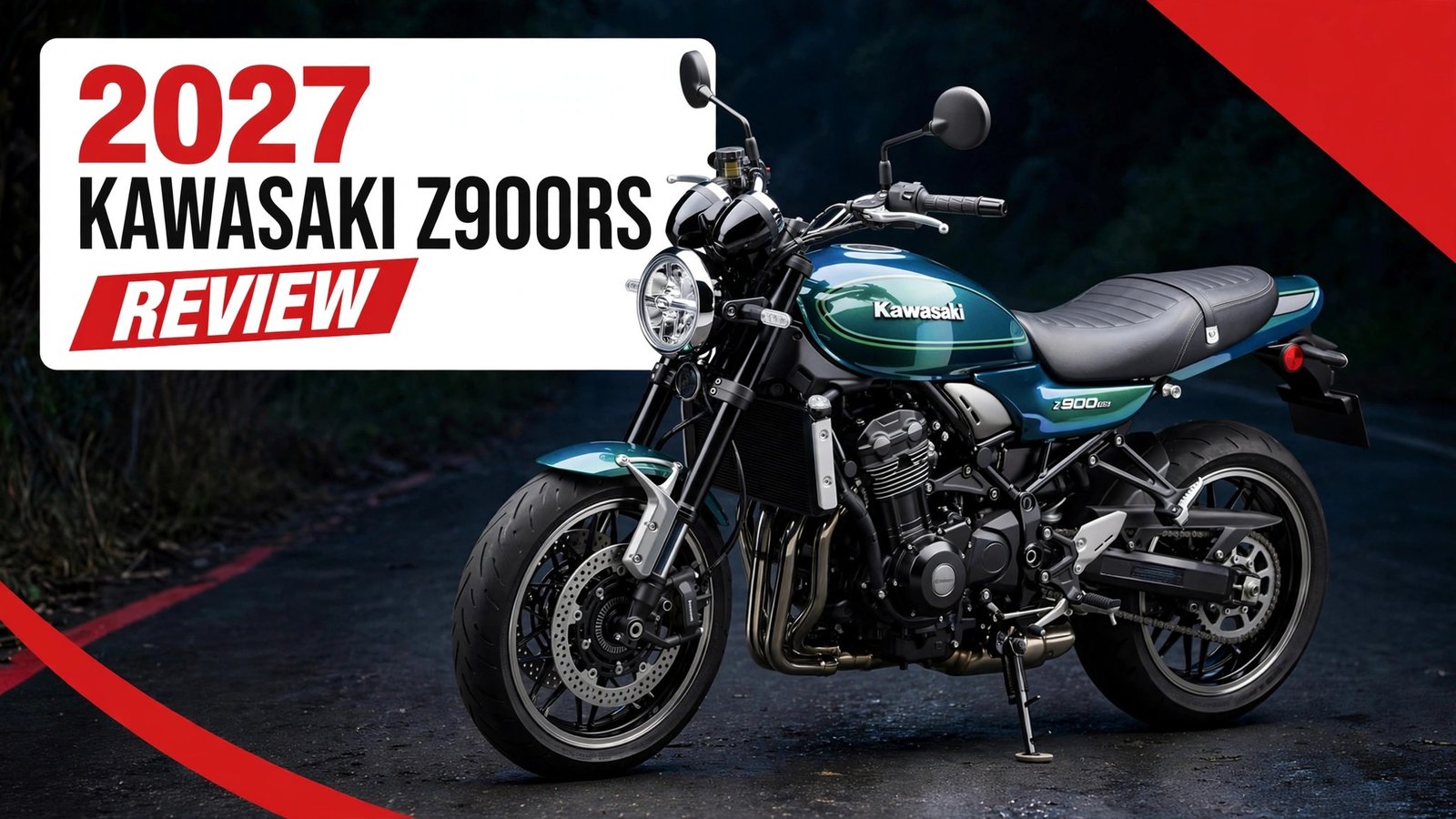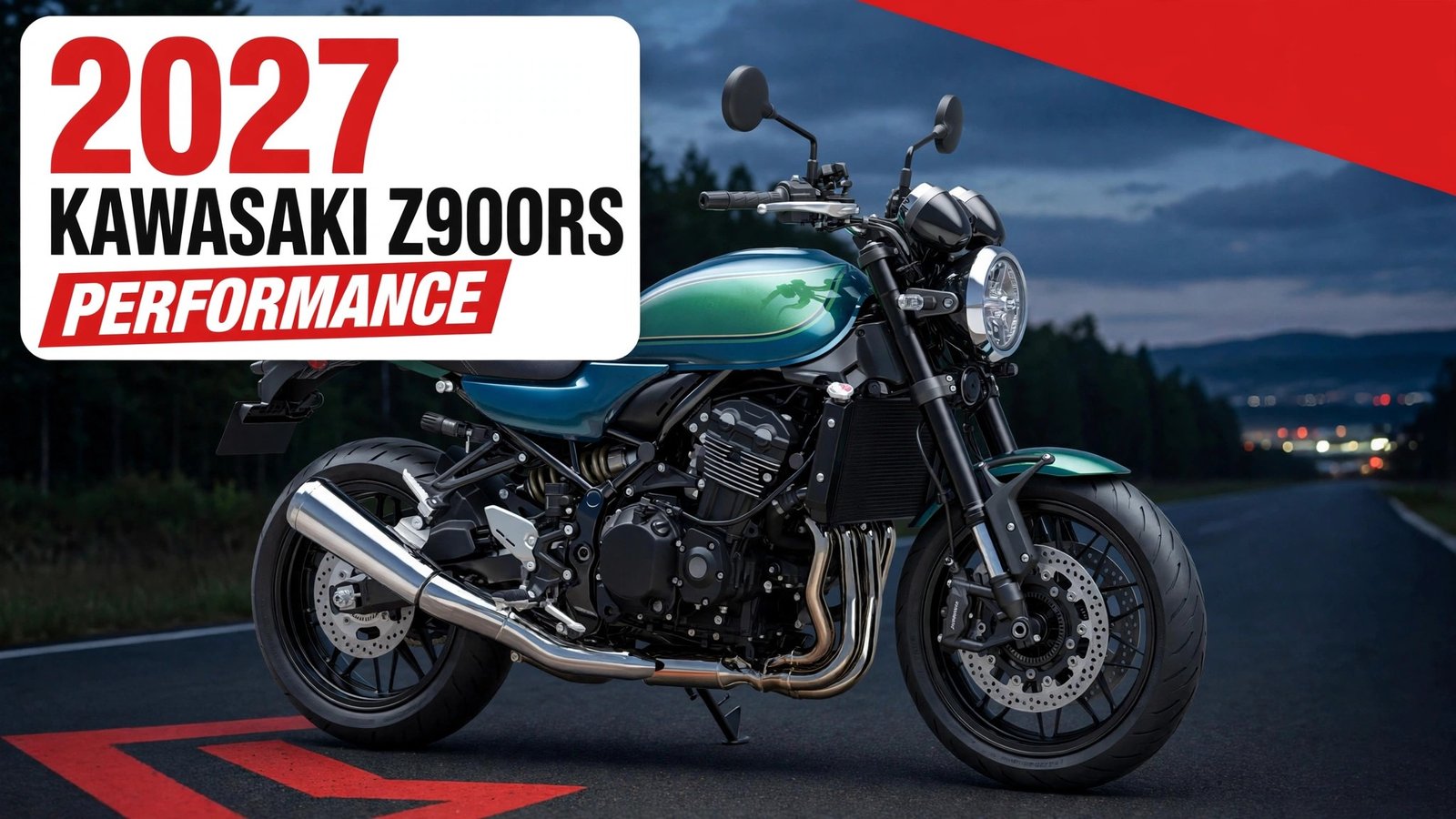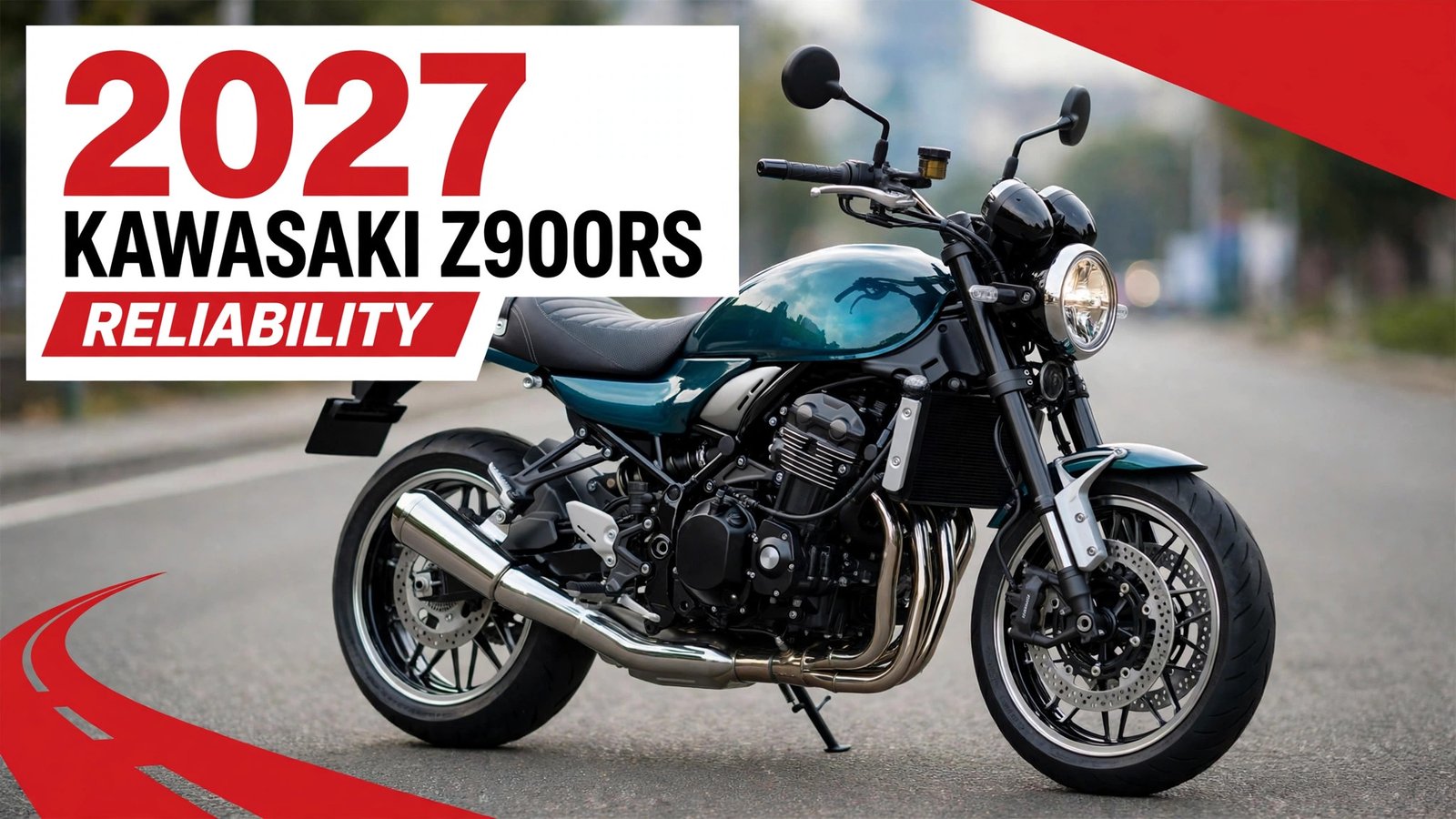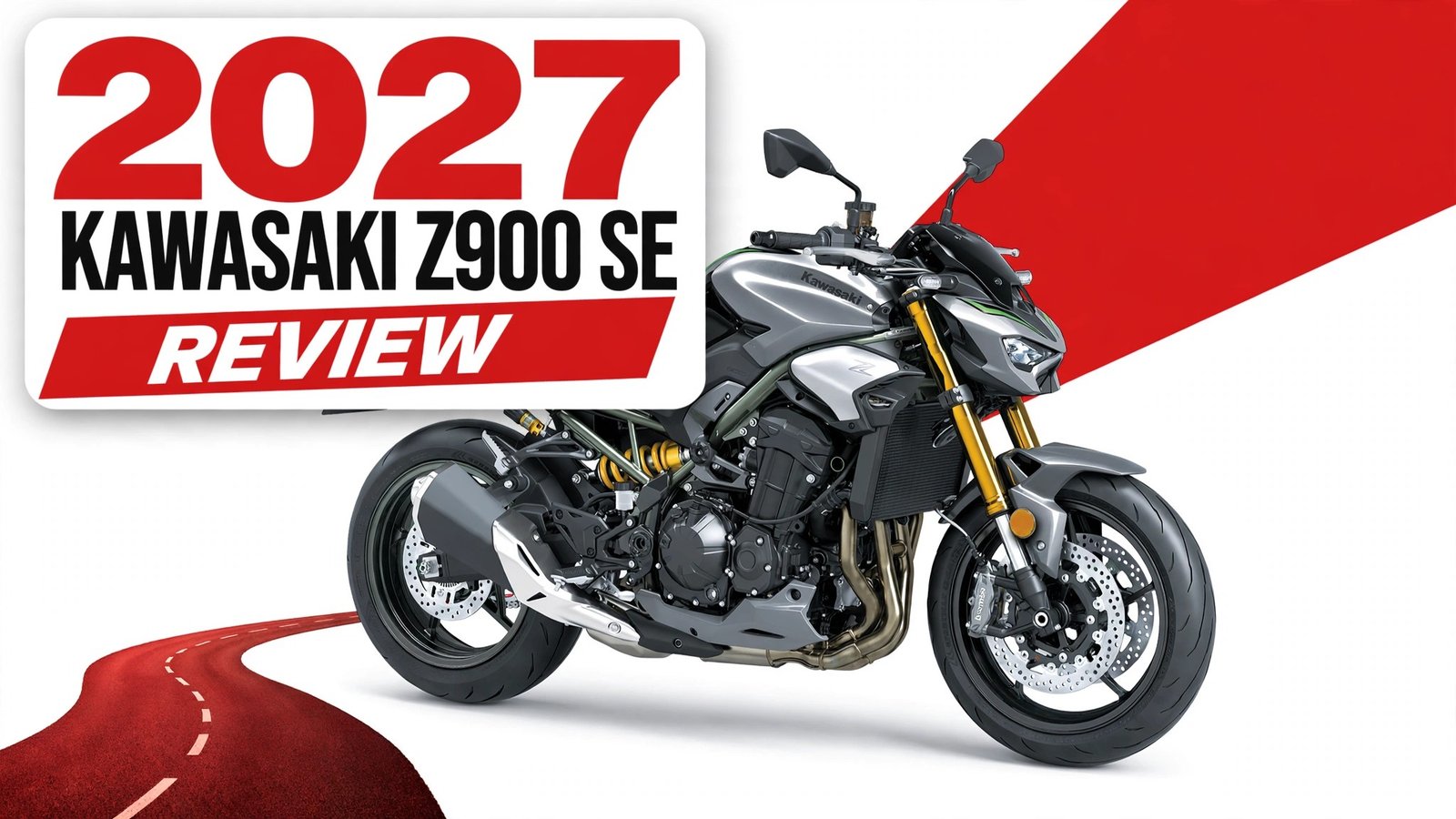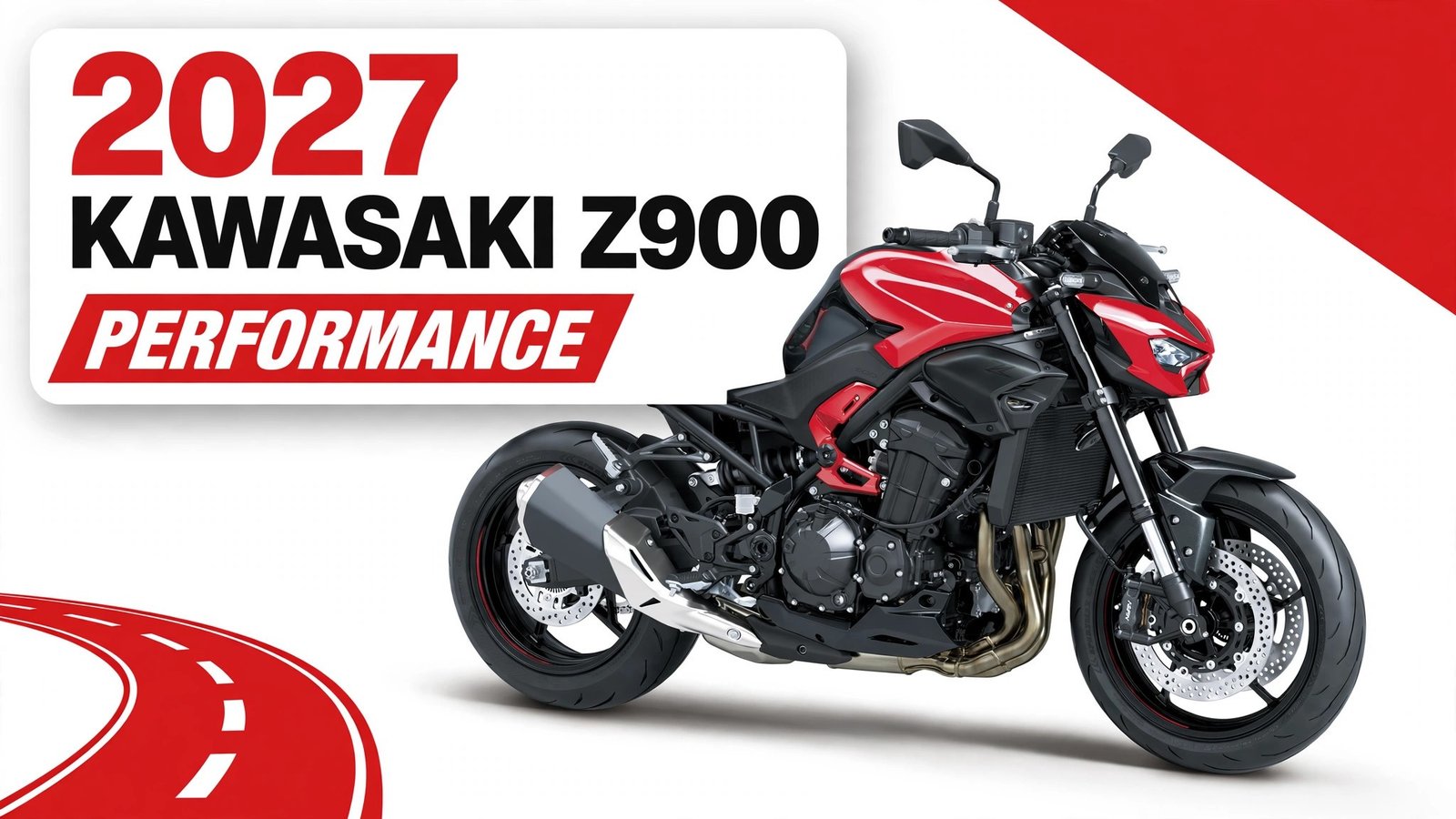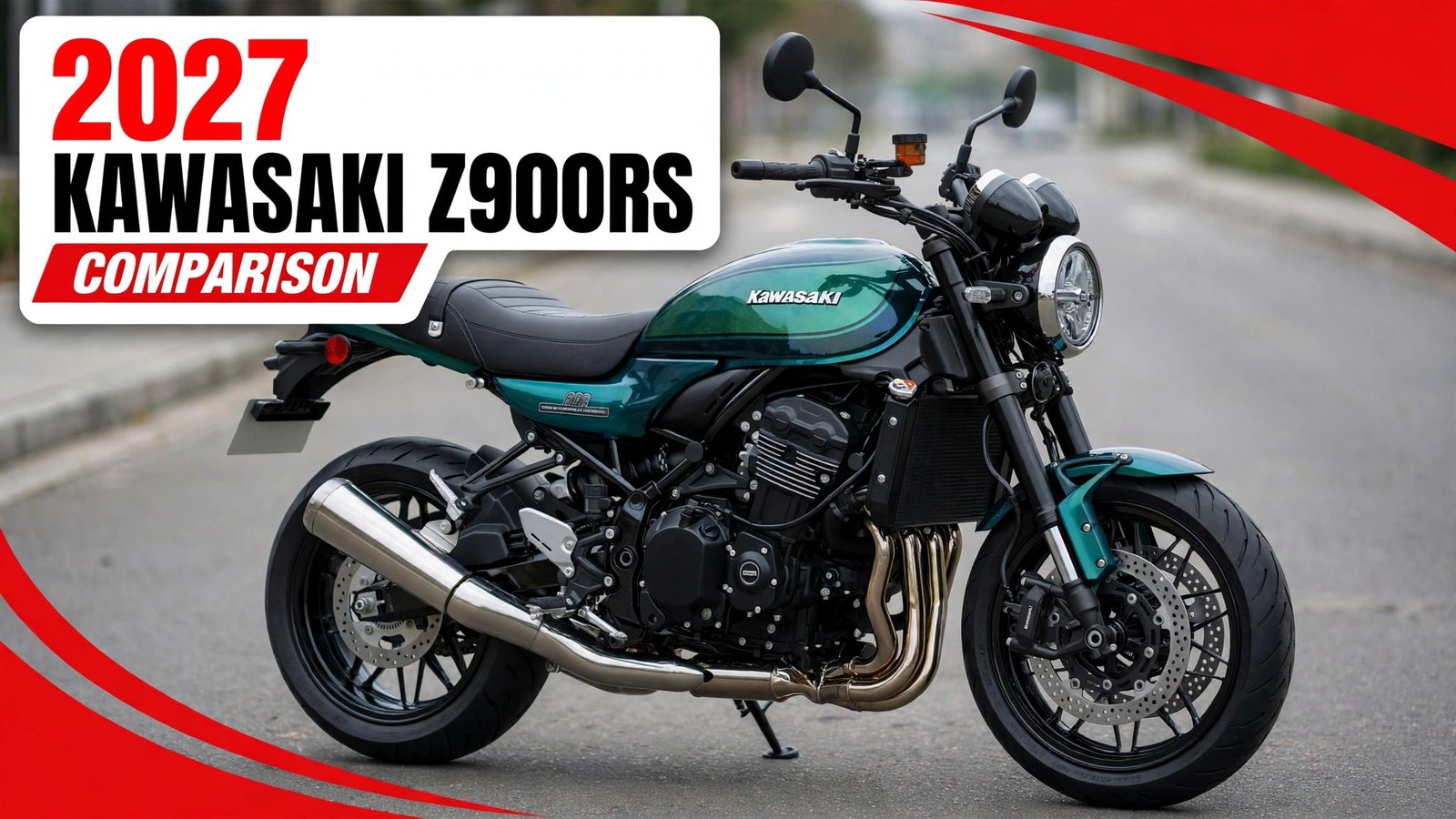
Four retro motorcycles, one question: which deserves $13,839 of your money? This Kawasaki Z900RS comparison puts the 2027 RS against the three rivals buyers actually cross-shop — the Yamaha XSR900, the Triumph Speed Twin 1200 and the Triumph Bonneville T120 — on 2027 US prices, power, torque, weight and equipment, with every delivered price shown as MSRP plus destination or freight.
The short answer is that the RS is the second-cheapest bike in this Kawasaki Z900RS comparison and the only one with a Z1 bloodline under $14,000 delivered — but it is also $2,540 dearer than the Yamaha, $931 cheaper than the twin that out-torques it, and nearly $6,000 cheaper than the only 2027 Speed Twin 1200 America can buy.
Kawasaki Z900RS Overview and Its Closest Rivals
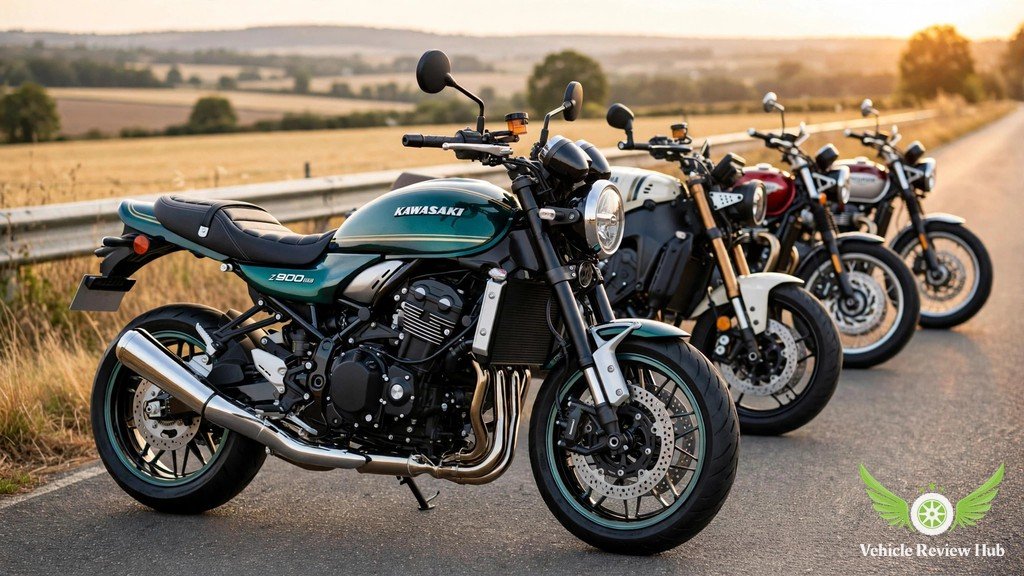
The RS does not win this Kawasaki Z900RS comparison on paper. It wins it — if it wins it — on the things a spec sheet cannot price: the Z1 heritage, the midrange-tuned four, the upright bench-seat ergonomics and a 2026 electronics update that closed the tech gap with its rivals.
MCN’s 2026 three-way retro test is the video version of this Kawasaki Z900RS comparison — Triumph Speed Twin vs Kawasaki Z900RS SE vs Yamaha XSR900 GP, filmed at The Bike Shed. Two honest flags before you watch: the Yamaha is the XSR900 GP, the faired bike with clip-on bars, not the standard XSR900 this guide compares; and the Kawasaki is the SE, not the base RS.
Watch it for feel and appeal, not for prices — this Kawasaki Z900RS comparison does the pricing in the chapters below.
Tech Gap Closed, Price Hasn’t
Before 2026 the RS trailed its rivals on electronics: a cable throttle, no IMU, no quickshifter and no cruise, while the XSR900 already carried a 6-axis IMU and a quickshifter and the Triumphs carried riding modes and cruise. The 2026 update closes that gap — ride-by-wire, a Bosch 6-axis IMU, cornering management, two-mode KTRC, an up/down quickshifter, cruise and RIDEOLOGY, with a revised engine making 115.0 hp at 9,300 rpm. One honest footnote belongs in this Kawasaki Z900RS comparison: the 2026 and 2027 sheets list “Power Modes”, while Kawasaki’s 2026 press release never mentions them and Ultimate Motorcycling, riding the US 2026 SE, writes “don’t go looking for power modes” — the sheet lists it, the press release is silent, the tester says it isn’t there. The only selectable electronic mode the testers confirm is KTRC Mode 1 / Mode 2.
What did not close is the price structure. The RS still costs $2,540 more delivered than the XSR900, $931 less than the T120, and $5,981 less than the cheapest 2027 Speed Twin 1200 — the same gaps as before, now with the electronics to match.
How the Four Bikes Differ at a Glance
The table below is the whole of this Kawasaki Z900RS comparison in one view.
| Bike (2027) | Engine | Power (US claim) | Torque | Weight | Delivered price |
|---|---|---|---|---|---|
| Kawasaki Z900RS | 948cc inline-four | 115.0 hp @ 9,300 rpm | 73.0 lb-ft @ 7,700 rpm | 476.3 lb curb | $13,839 |
| Yamaha XSR900 | 890cc CP3 triple | 117 hp @ 10,000 rpm | 68.6 lb-ft @ 7,000 rpm | 425 lb wet | $11,299 |
| Triumph Speed Twin 1200 (Cafe Racer Edition) | 1,200cc parallel-twin | 103.5 hp @ 7,750 rpm | 82.6 lb-ft @ 4,250 rpm | 478.4 lb wet | $19,820 |
| Triumph Bonneville T120 | 1,200cc parallel-twin | 78.9 hp @ 6,550 rpm | 77.4 lb-ft @ 3,500 rpm | 513.7 lb wet | $14,770 |
Note: All prices are 2027 US delivered prices (MSRP plus destination or freight). The Speed Twin 1200 row is the Cafe Racer Edition — the only 2027 US Speed Twin 1200. Weights are not like-for-like: the RS figure is a curb weight, the other three are wet weights. The RS’s 115.0 hp is the 2026+ claim, up from 111 hp on pre-2026 bikes.
Kawasaki Z900RS vs Yamaha XSR900
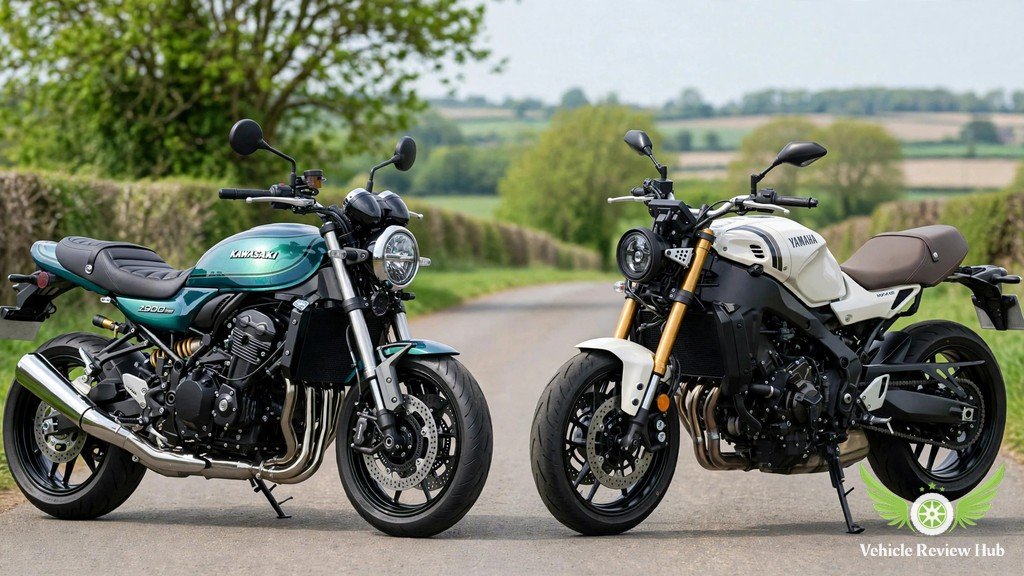
The Yamaha XSR900 is the RS’s natural rival and the hardest one to beat on value: an 890cc CP3 triple with a 6-axis IMU, a quickshifter and a $10,599 MSRP. In this Kawasaki Z900RS comparison it is the only rival that undercuts the RS on price and beats it on paper.
Engine, Specs and Performance Side by Side
On paper the Yamaha is sharper. Its 890cc triple claims 117 hp at 10,000 rpm against the RS’s 115.0 hp at 9,300 rpm, and at 425 lb wet it is 51 lb lighter than the RS’s 476.3 lb curb weight — a gap this Kawasaki Z900RS comparison flags honestly. The RS answers where it always has, in the midrange: 73.0 lb-ft at 7,700 rpm against the Yamaha’s 68.6 lb-ft at 7,000 rpm, from a larger 948cc four.
The measured figures tell the same story. Motorcycle.com’s long-term RS made 97.4 hp at the rear wheel, and the 2026 SE made 100.4 hp — both labelled by publication, bike and year. The RS’s long-term observed fuel economy is 39 to 40 mpg while Yamaha claims 49 mpg combined for the XSR900 — and this Kawasaki Z900RS comparison never presents one as the other. The full dyno and mileage record is in the Kawasaki Z900RS performance guide.
| Figure (2027) | Kawasaki Z900RS | Yamaha XSR900 |
|---|---|---|
| Engine | 948cc inline-four | 890cc CP3 triple |
| Power (US claim) | 115.0 hp @ 9,300 rpm | 117 hp @ 10,000 rpm |
| Torque | 73.0 lb-ft @ 7,700 rpm | 68.6 lb-ft @ 7,000 rpm |
| Weight | 476.3 lb curb | 425 lb wet |
| Seat height | 31.9 in | 31.9 in |
| Wheelbase / fuel | 57.7 in / 4.5 gal | 58.9 in / 3.7 gal |
| Fuel economy | 39–40 mpg observed | 49 mpg combined (Yamaha) |
| Delivered price | $13,839 | $11,299 |
Note: Weights are measured differently — curb weight for the RS, wet weight for the XSR900 — so the 51 lb gap is not like-for-like. Fuel figures differ too: observed averages for the RS against Yamaha’s combined claim. Seat heights are identical at 31.9 in.
Price, Equipment and Which Suits Which Rider
The price gap is $2,540 delivered: $10,599 plus a $700 destination charge for the Yamaha against $12,999 plus $840 for the RS. For that money the Yamaha gives a 6-axis IMU, lean-sensitive traction and brake control, slide and lift control, a third-generation up/down quickshifter and a fully adjustable 41 mm KYB inverted fork. The RS answers with its own hardware: dual 300 mm round front discs with opposed four-piston radial-mount monobloc calipers, a 41 mm inverted fork, and the analogue dials with a multi-function LCD that no TFT replaces. The Yamaha is the sharper, lighter, cheaper bike; the RS is the roomier, torquier, one, and this Kawasaki Z900RS comparison calls the rider split plainly: a bigger rider, or one who rides two-up, fits the RS better; a rider who wants the lightest, cheapest way into a fast retro buys the XSR900. The Yamaha’s own 2027 XSR900 figures confirm the 117 hp and 68.6 lb-ft claims, and its database page confirms the $10,599 MSRP and the $700 destination.
Kawasaki Z900RS vs Triumph Speed Twin 1200
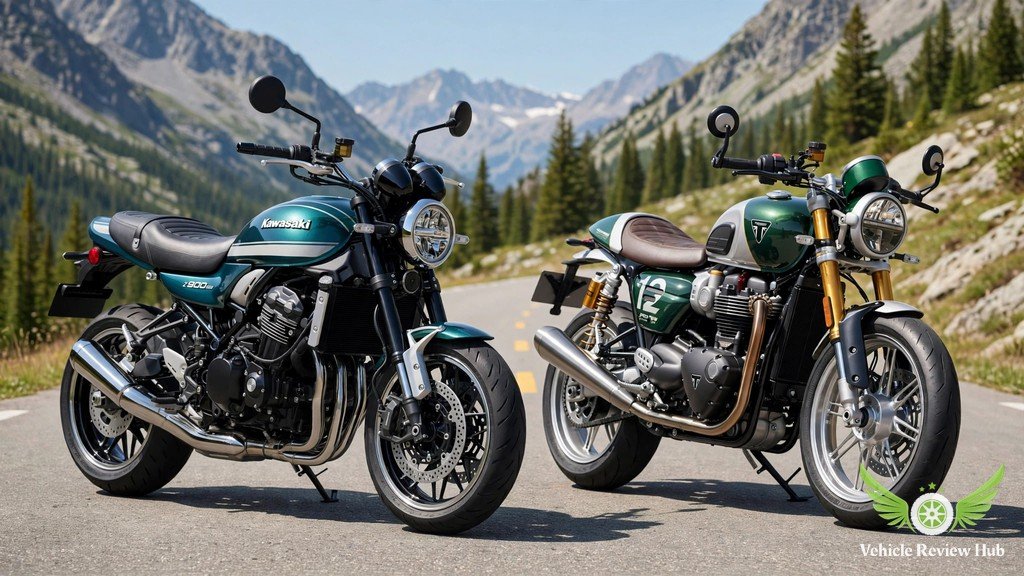
The Speed Twin 1200 is the most powerful-feeling rival in this Kawasaki Z900RS comparison and the most awkward to price — there is no base 2027 Speed Twin 1200 for sale in the USA, only the Cafe Racer Edition at $18,895 and the TFC at $21,995. So this is RS versus limited-edition Triumphs, not RS versus a base bike.
Engine, Specs and Performance Side by Side
The Triumph’s 1,200cc High Power twin makes 103.5 hp at 7,750 rpm — 105 PS, never “105 hp” — and 82.6 lb-ft at 4,250 rpm, the most torque in this Kawasaki Z900RS comparison. Against the RS’s 115.0 hp and 73.0 lb-ft, the Triumph gives up 11.5 hp and gains 9.6 lb-ft. The Speed Twin pulls hardest from idle to midrange.
Weight is a dead heat: the Speed Twin is 478.4 lb wet against the RS’s 476.3 lb curb — again, different measures. No measured top speed, dyno figure or timed run is printed for the Speed Twin here, because none was verified for the 2027 bike, and this Kawasaki Z900RS comparison prints no unlabelled performance figure.
| Figure (2027) | Kawasaki Z900RS | Triumph Speed Twin 1200 (Cafe Racer Edition) |
|---|---|---|
| Engine | 948cc inline-four | 1,200cc parallel-twin, 270° crank |
| Power (US claim) | 115.0 hp @ 9,300 rpm | 103.5 hp @ 7,750 rpm (105 PS) |
| Torque | 73.0 lb-ft @ 7,700 rpm | 82.6 lb-ft @ 4,250 rpm |
| Weight | 476.3 lb curb | 478.4 lb wet |
| Wheelbase / fuel | 57.7 in / 4.5 gal | 55.1 in / 3.8 gal |
| 2027 US offering | Base ABS $12,999 | Cafe Racer Edition only, $18,895 |
| Delivered price | $13,839 | $19,820 |
Note: The Speed Twin 1200 column is the Cafe Racer Edition — the only 2027 US Speed Twin 1200. Its 103.5 hp is 105 PS converted, never “105 hp”. The last standard-trim price found is the 2024 Stealth Edition at $13,695, year-labelled.
Price, Equipment and Which Suits Which Rider
The price gap is $5,981 delivered: $18,895 plus $925 freight for the Cafe Racer Edition against $12,999 plus $840 for the RS. The Cafe Racer Edition is one of 800 built worldwide with a certificate of authenticity, and the TFC lists at $21,995. Against the 2024 Stealth Edition’s $13,695 — the last base price, year-labelled — the RS is only $144 more delivered.
The Cafe Racer Edition brings the High Power twin and limited-edition trim; the RS brings its 2026 electronics suite and analogue dials. A rider who wants the most torque in this group and a numbered, limited-edition Triumph pays the $5,981; a rider who wants the retro four at a working price buys the RS. The TFC’s $21,995 price and 750-unit run are confirmed on Motorcycle.com’s TFC page.
Kawasaki Z900RS vs Triumph Bonneville T120
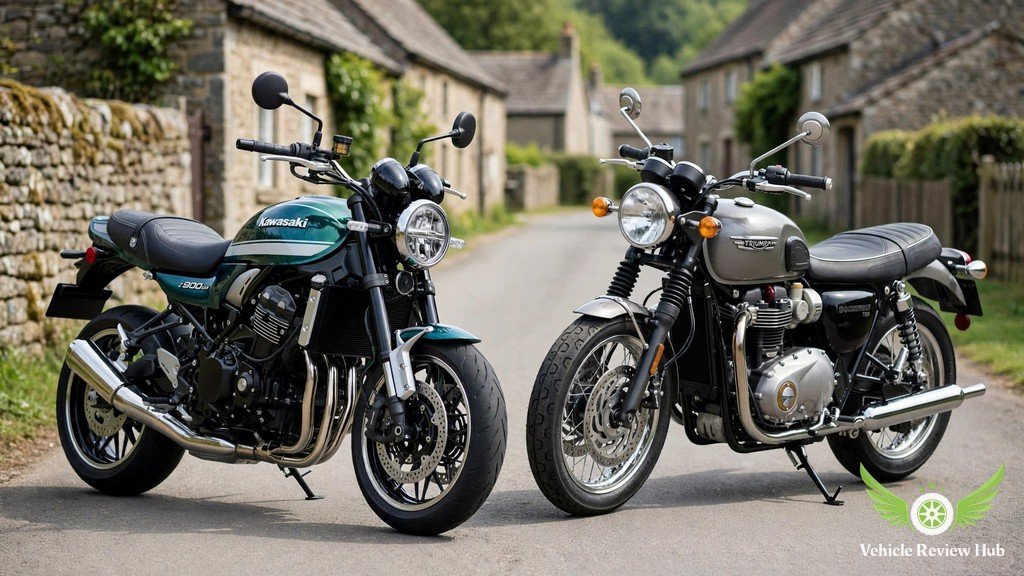
The Bonneville T120 is the most traditional bike in this Kawasaki Z900RS comparison: a 1,200cc High-Torque twin with the lowest seat in the group, a 24-month unlimited-mileage warranty that doubles the RS’s 12-month limited cover. It is $931 more delivered than the RS for 36 fewer horsepower and 37 more pounds.
Engine, Specs and Performance Side by Side
The T120’s 1,200cc twin claims 78.9 hp at 6,550 rpm — 80 PS, never “80 hp” — and 77.4 lb-ft at 3,500 rpm. Against the RS’s 115.0 hp and 73.0 lb-ft, the Triumph gives up 36.1 hp and gains 4.4 lb-ft. The RS is the faster bike by a wide margin; the T120 is the lazier one.
The T120 is 513.7 lb wet — 37 lb more than the RS’s 476.3 lb curb, again measured differently — with a 57.1 in wheelbase (1,450 mm) and a 3.8 gal tank. Its 31.1 in seat is the lowest in this Kawasaki Z900RS comparison. The T120 also carries the longest warranty here: 24 months with unlimited mileage. No verified mpg figure exists for the T120, so none is printed — this guide invents no fuel figure for any bike it cannot source.
| Figure (2027) | Kawasaki Z900RS | Triumph Bonneville T120 |
|---|---|---|
| Engine | 948cc inline-four | 1,200cc High-Torque twin |
| Power (US claim) | 115.0 hp @ 9,300 rpm | 78.9 hp @ 6,550 rpm (80 PS) |
| Torque | 73.0 lb-ft @ 7,700 rpm | 77.4 lb-ft @ 3,500 rpm |
| Weight | 476.3 lb curb | 513.7 lb wet |
| Seat height | 31.9 in | 31.1 in |
| Wheelbase / fuel | 57.7 in / 4.5 gal | 57.1 in (1,450 mm) / 3.8 gal |
| Warranty | 12-month limited | 24-month, unlimited mileage |
| Delivered price | $13,839 | $14,770 |
Note: The T120’s 78.9 hp is 80 PS converted, never “80 hp”, and its wheelbase is 57.1 in (1,450 mm) — one database prints 56.6 in, which is wrong in inches. Weights are measured differently (curb vs wet).
Price, Equipment and Which Suits Which Rider
The T120 costs $13,995 plus $775 freight, or $14,770 delivered, against the RS’s $12,999 plus $840, or $13,839. For the $931 the buyer gets the most traditional Bonneville in production, the lowest seat in this Kawasaki Z900RS comparison and torque that peaks at just 3,500 rpm — plus riding modes, traction control and cruise control as standard. The RS answers with 36 more horsepower, 37 fewer pounds and a larger tank. A shorter rider, or one who values the classic Bonneville look and the two-year warranty above outright speed, takes the T120; a rider who wants the faster, lighter, cheaper bike takes the RS. Triumph’s own T120 page confirms the 77.4 lb-ft peak torque figure, and the 2027 RS spec sheet confirms the RS’s $12,999 MSRP and 115.0 hp claim.
Kawasaki Z900RS Price and Value Compared
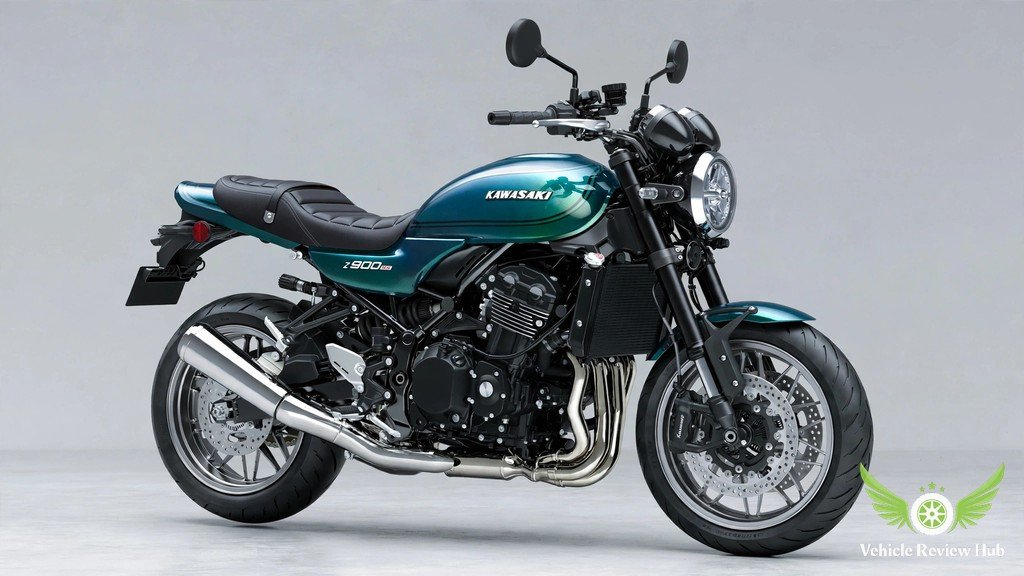
Price is where this Kawasaki Z900RS comparison stops being about motorcycles. Every delivered price below is MSRP plus destination or freight, year-labelled 2027, with the arithmetic shown.
No Fireball Premium Found
“Fireball” is the SE’s livery: Metallic Spark Black bodywork with orange graphics, inspired by the 1972 Z1. It is a paint scheme, not a priced option — and this Kawasaki Z900RS comparison found no US price list that shows a separate Fireball upcharge. Every SE spec sheet from 2022 to 2027 lists a single MSRP per year, and no review mentions a Fireball premium.
The SE’s $1,700 premium over the base pays for the Brembo M4.32 calipers, the Öhlins S46 rear shock, the gold fork tubes and wheels, and the USB-C outlet, not for the paint. The 2026 Black Ball Edition is the Ebony base bike at the base $12,899 MSRP with no separate US price. A buyer who wants the Fireball look pays the SE premium for the hardware; the paint itself costs nothing extra, and this Kawasaki Z900RS comparison states that plainly.
| Bike (2027) | MSRP | Destination / freight | Delivered price |
|---|---|---|---|
| Kawasaki Z900 | $10,199 | $840 | $11,039 |
| Yamaha XSR900 | $10,599 | $700 | $11,299 |
| Kawasaki Z900RS | $12,999 | $840 | $13,839 |
| Triumph Bonneville T120 | $13,995 | $775 | $14,770 |
| Triumph Speed Twin 1200 (Cafe Racer Edition) | $18,895 | $925 | $19,820 |
| Triumph Speed Twin 1200 TFC | $21,995 | Not verified | — |
Note: Delivered means MSRP plus destination or freight only; setup, documentation and tax are excluded. The TFC’s freight was not verified, so no delivered price is printed for it. The 2027 Cafe destination of $840 is the Motorcycle.com database figure, labelled as such — Kawasaki publishes the base bike’s $840, and the Cafe and SE figures are inferred from it. TopSpeed’s 2027 RS lineup page confirms the RS’s $12,999 MSRP and the Cafe’s $13,399 and SE’s $14,699, and Motorcycle.com’s 2027 RS database page confirms the base bike’s $840 destination.
Running Costs and Resale Value Compared
Fuel is the one running cost with a verified figure. The RS returns 39 to 40 mpg observed, and the 2026 SE returned 37 mpg under hard riding; the XSR900 claims 49 mpg combined on Yamaha’s own figure. No verified mpg figure exists for the T120 or the Speed Twin 1200, so this Kawasaki Z900RS comparison prints none for them.
Warranties are the other verified running-cost line: 12 months limited on the RS and the XSR900, 24 months with unlimited mileage on both Triumphs. Beyond fuel and warranty, no US servicing price, tyre price or insurance figure was verified — the full service schedule and the three recall remedies are set out in the Kawasaki Z900RS reliability guide — MCN in the UK prints £200 for annual servicing on the SE and a UK used range of £6,400 to £13,000, both UK-only figures. That honesty is part of this Kawasaki Z900RS comparison: the figures that exist are printed, and the ones that don’t are named as missing.
Kawasaki Z900RS Comparison Verdict and US Alternatives
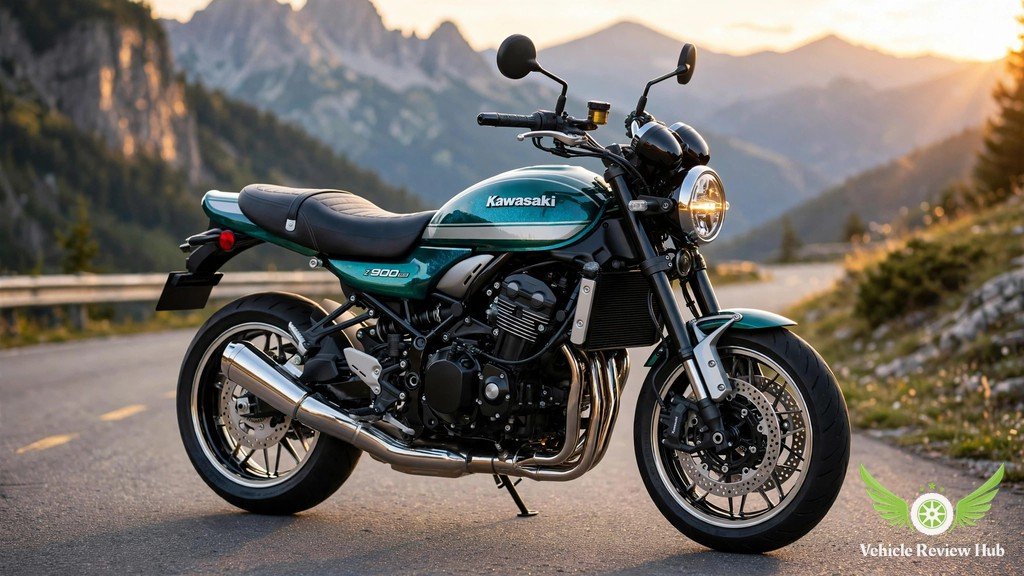
The verdict in this Kawasaki Z900RS comparison is not that the RS is the best bike. It is that the RS is the best-priced retro four with real heritage: $13,839 delivered puts it second-cheapest of the four, $2,540 above the Yamaha, $931 below the T120, and $5,981 below the cheapest 2027 Speed Twin 1200.
The four bikes do not compete on the same terms. The XSR900 competes on value and sharpness; the T120 competes on tradition and warranty; the Speed Twin competes on torque and exclusivity; the RS competes on the Z1 bloodline, the midrange four and the upright ergonomics. A buyer who ranks them differently will reach a different verdict — and this Kawasaki Z900RS comparison respects that.
The alternatives below are the two bikes outside this Kawasaki Z900RS comparison a buyer should also consider.
Verdict: Z1 Dream, Priced So
The RS is priced like a premium retro and delivers like one. Its $13,839 delivered price buys the 2026 electronics update, the 115.0 hp four with 73.0 lb-ft, the bench seat and upright bars, and the only 1972 Z1 bloodline under $14,000 delivered in this Kawasaki Z900RS comparison. The Yamaha is $2,540 cheaper; the T120 is $931 dearer; the Speed Twin is $5,981 dearer. None of the three carries the Z1 name, and for the buyer who cares about that, the RS’s premium is the price of the dream.
Buy the RS if the retro four, the midrange and the heritage matter most. Buy the XSR900 if value and sharpness matter most. Buy the T120 if tradition and the two-year warranty matter most. Buy the Speed Twin if torque and exclusivity matter most. That is the verdict of this Kawasaki Z900RS comparison, stated as a choice rather than a ranking.
Z900 Is $2,800 Less
The closest alternative to the RS is not one of the three rivals above — it is the Z900. The 2027 Z900 costs $10,199 plus $840 destination, or $11,039 delivered, against the RS’s $12,999 plus $840, or $13,839: $2,800 less on MSRP and delivered alike, because both bikes carry the same $840 destination. The $2,800 buys the retro styling, the midrange retune and the Z1 heritage — and that $2,800 gap is the cheapest alternative in this Kawasaki Z900RS comparison. The full head-to-head between the two Kawasakis is in the Kawasaki Z900 comparison guide.
A buyer who does not care about the retro look should buy the Z900 and keep the $2,800. A buyer who wants the smaller retro sibling should look at the Kawasaki Z650RS, the 689cc retro-styled twin at $8,999 plus $685 destination, or $9,684 delivered in 2027, in the Kawasaki Z650RS review. Between the three, the choice is simple: the Z650RS for the smallest retro budget, the Z900 for the sharpest naked value, the RS for the Z1 dream. That ladder is the last word of this Kawasaki Z900RS comparison — three Kawasakis, three prices, one engine family.
Kawasaki Z900RS Comparison FAQs
The six questions below are the ones buyers ask most when they cross-shop the RS against its rivals, answered from the verified figures in this Kawasaki Z900RS comparison.
Is the Kawasaki Z900RS worth $2,800 more than the Z900?
The 2027 RS is $12,999 against the Z900’s $10,199 — $2,800 on MSRP and delivered alike, because both bikes carry the same $840 destination. The premium buys the Z1 retro styling, the midrange-tuned engine, the upright ergonomics and the heritage, not horsepower — and whether it is worth it is the question this Kawasaki Z900RS comparison leaves to the buyer.
Z900RS or Yamaha XSR900 — which is the better buy?
The XSR900 is $2,540 cheaper delivered ($11,299 vs $13,839), 51 lb lighter and thriftier. The RS answers with more torque (73.0 vs 68.6 lb-ft) and the Z1 heritage. Value: XSR900. Heritage: RS — the verdict of this Kawasaki Z900RS comparison on this head-to-head.
How much is a 2027 Triumph Speed Twin 1200?
There is no base 2027 Speed Twin 1200 in the USA — only the Cafe Racer Edition at $18,895 ($19,820 delivered with $925 freight) and the TFC at $21,995. The cheapest 2027 Speed Twin costs $5,981 more delivered than the RS in this Kawasaki Z900RS comparison. The last base price is the 2024 Stealth Edition at $13,695, year-labelled.
Z900RS or Triumph Bonneville T120?
The T120 is $931 more delivered ($14,770 vs $13,839) for 36 fewer horsepower and 37 more pounds. It is the more traditional Bonneville, with the lowest seat in this group at 31.1 inches and torque peaking at just 3,500 rpm. The RS is the faster, lighter, cheaper bike.
Is there a premium for the Fireball paint?
No. No US price list shows a separate Fireball upcharge. Fireball is the SE’s livery (Metallic Spark Black with orange graphics); the SE’s $1,700 premium over the base pays for the Brembo brakes, Öhlins shock and gold hardware — not for the paint. This Kawasaki Z900RS comparison found no Fireball premium in any US price list.
What is the cheapest way into a new retro four in 2027?
The Yamaha XSR900 at $11,299 delivered undercuts the RS by $2,540. The RS itself is $13,839 delivered — the second-cheapest bike in this Kawasaki Z900RS comparison and the only one with a 1972 Z1 bloodline under $14,000 delivered. No cheaper way into a new retro four exists in this Kawasaki Z900RS comparison.