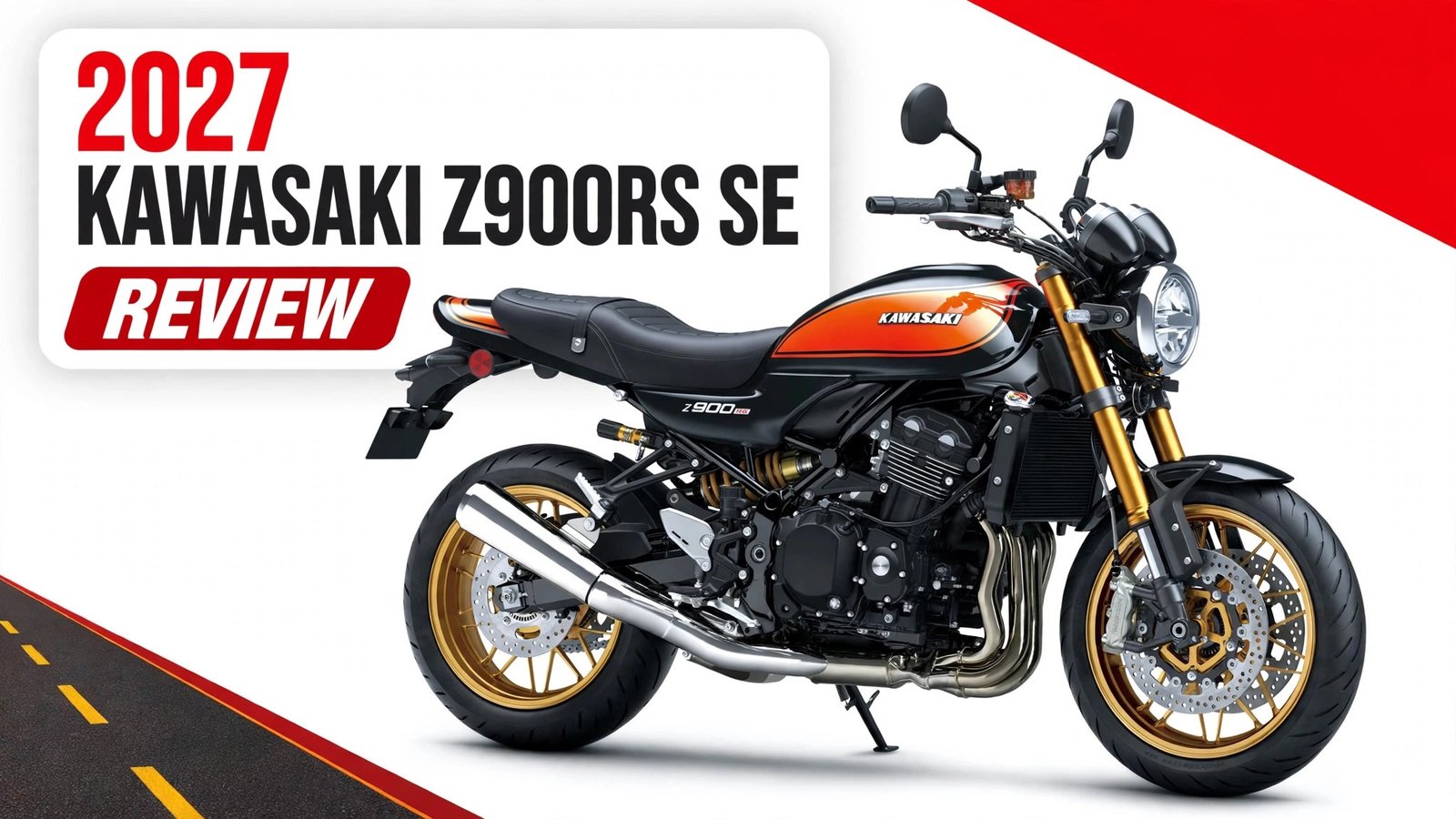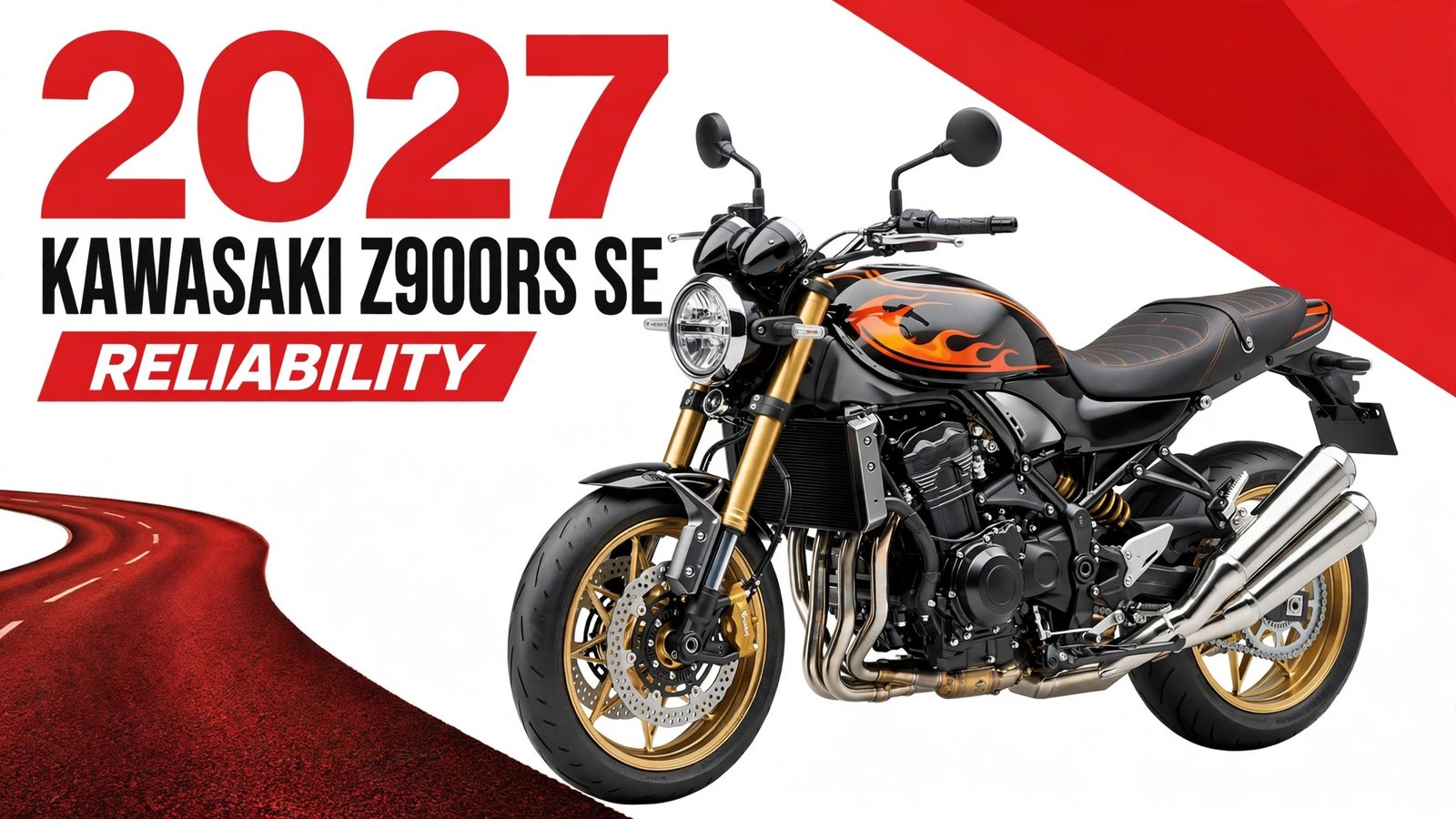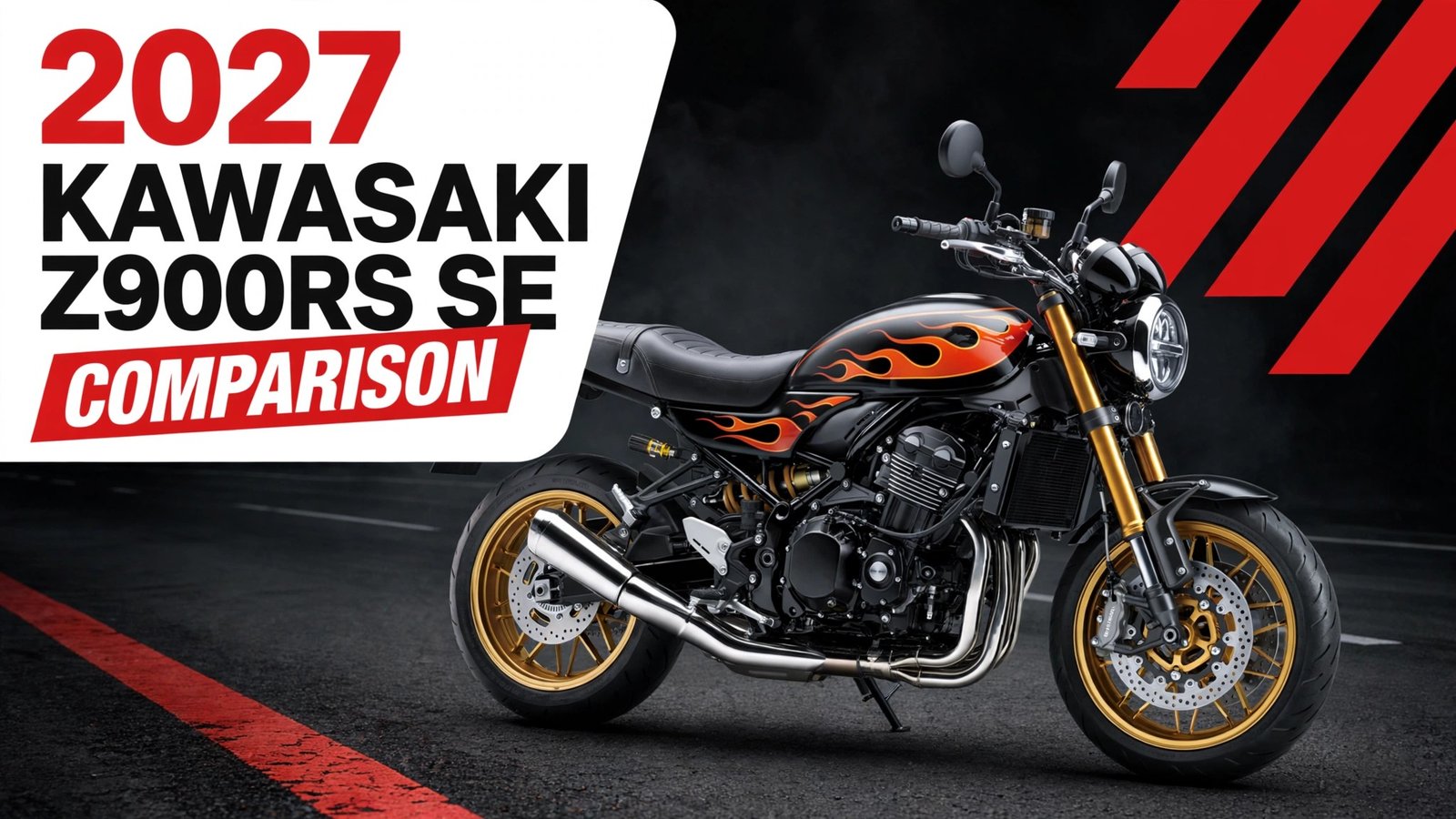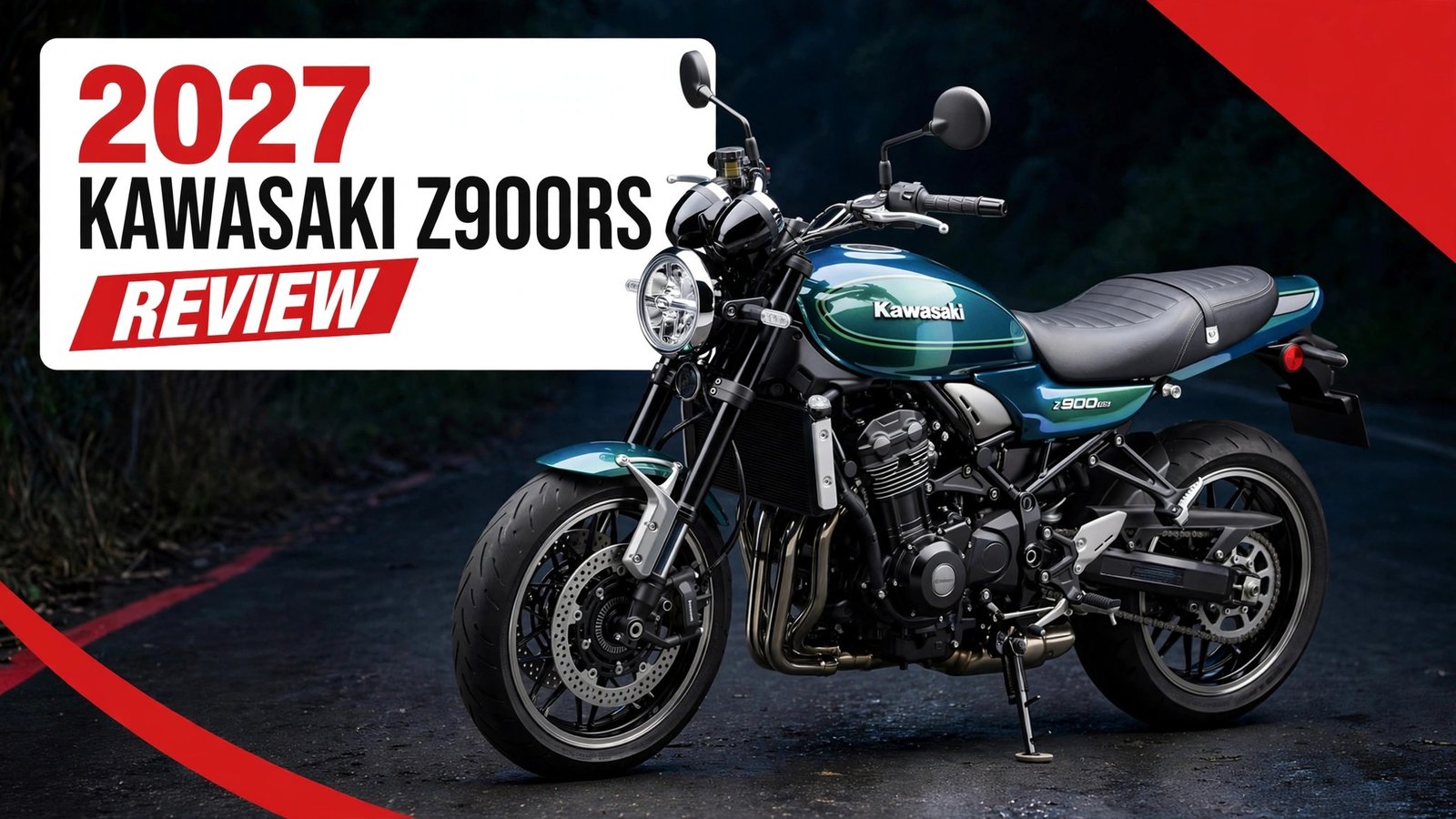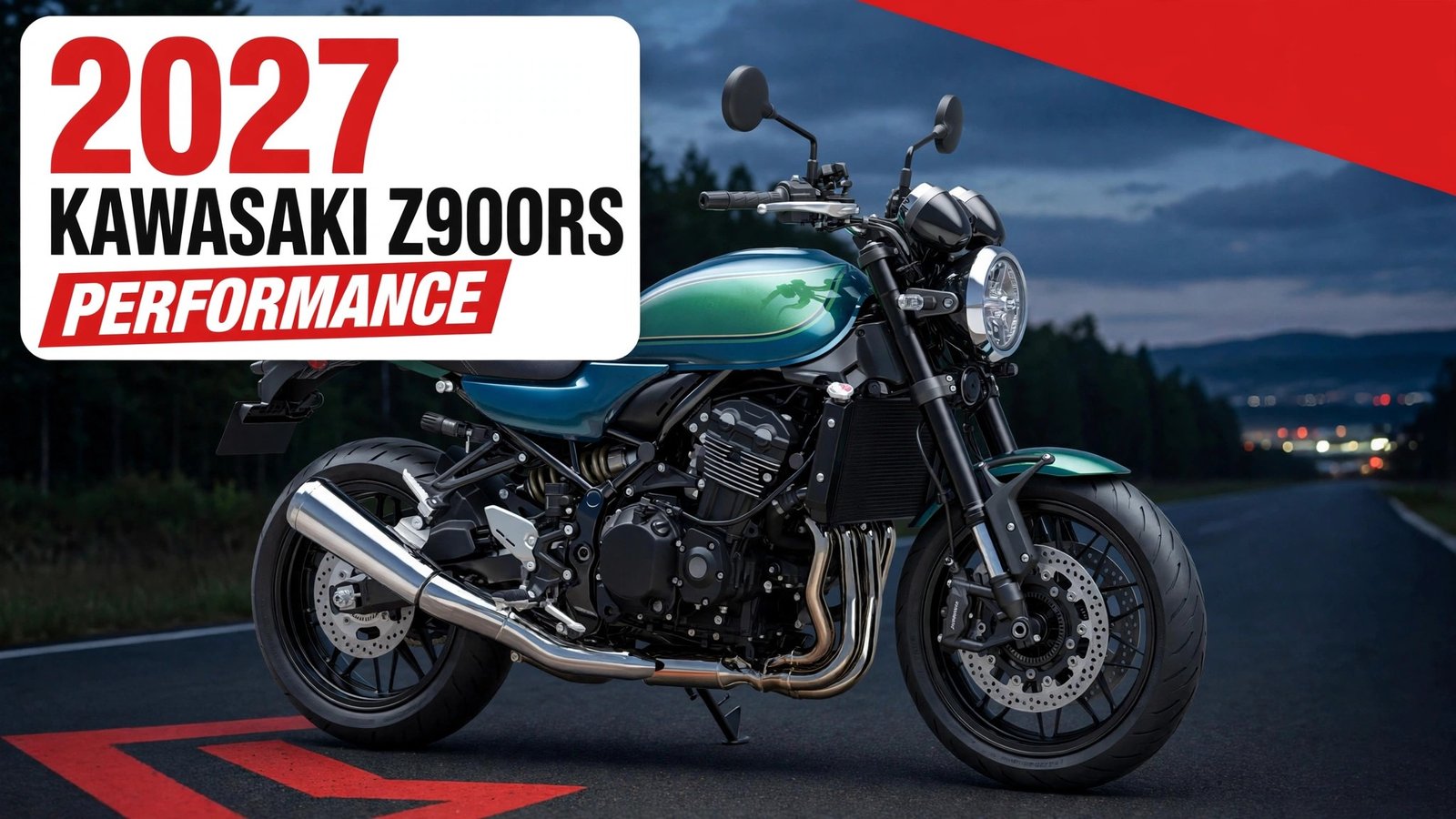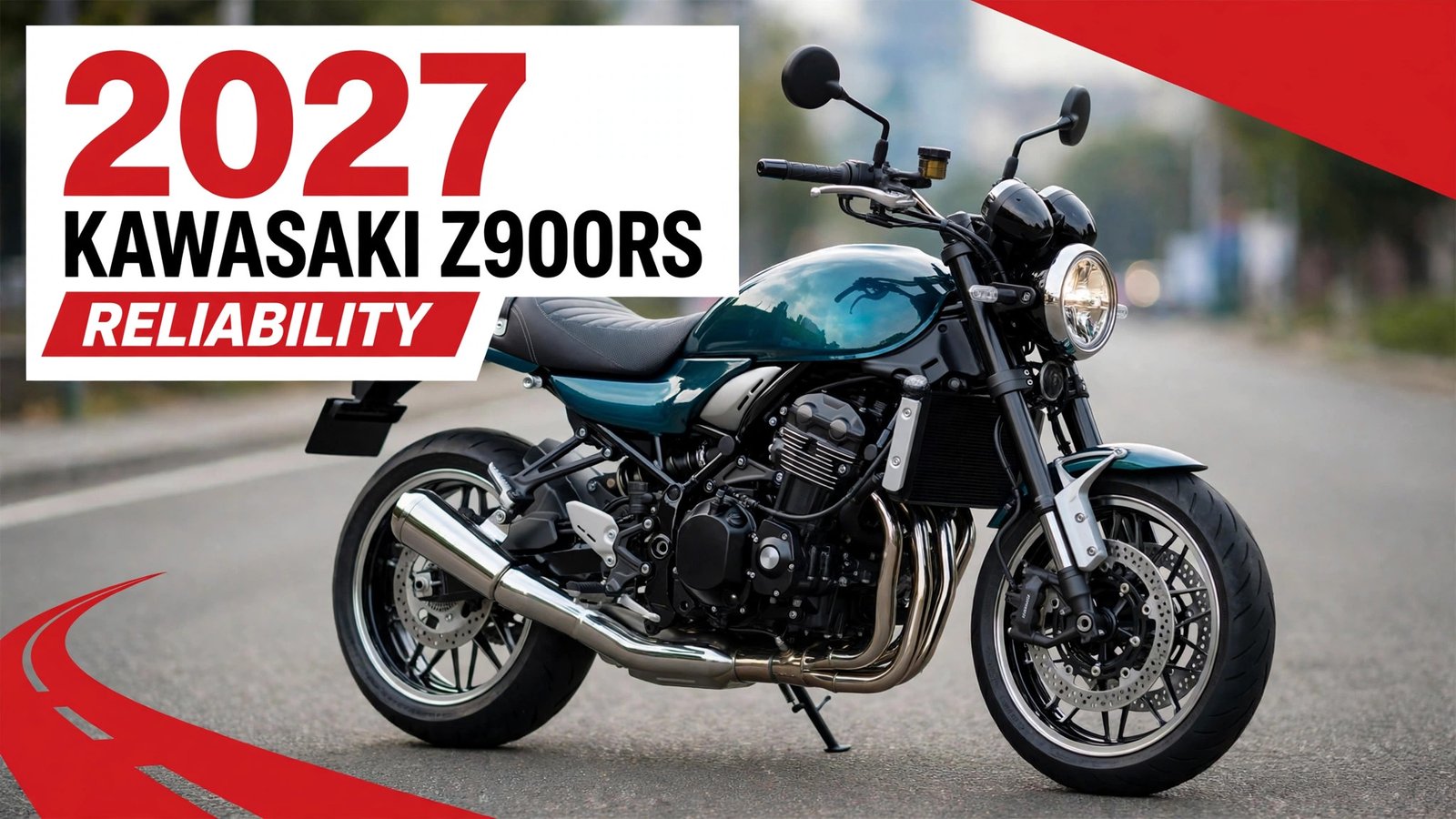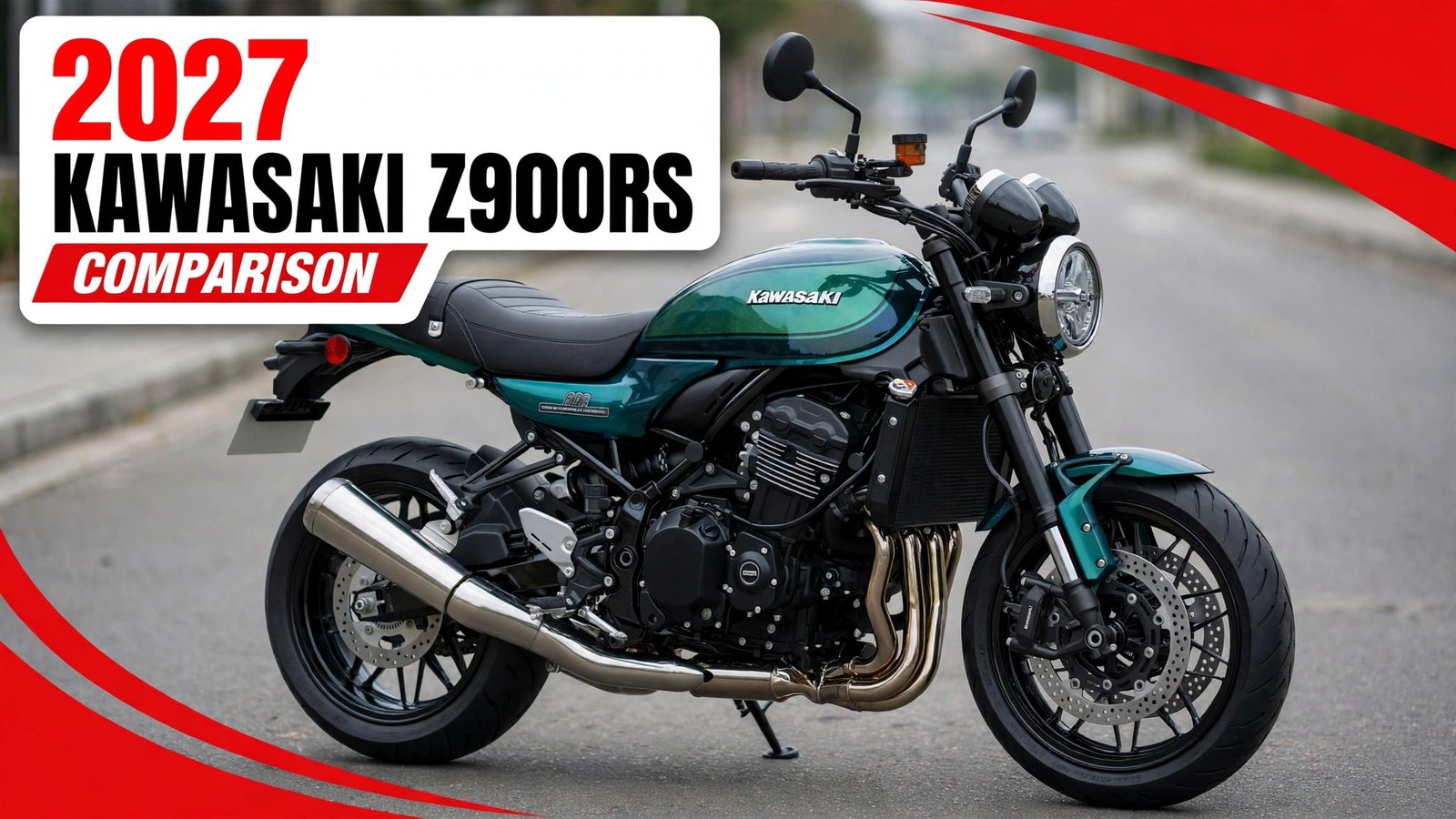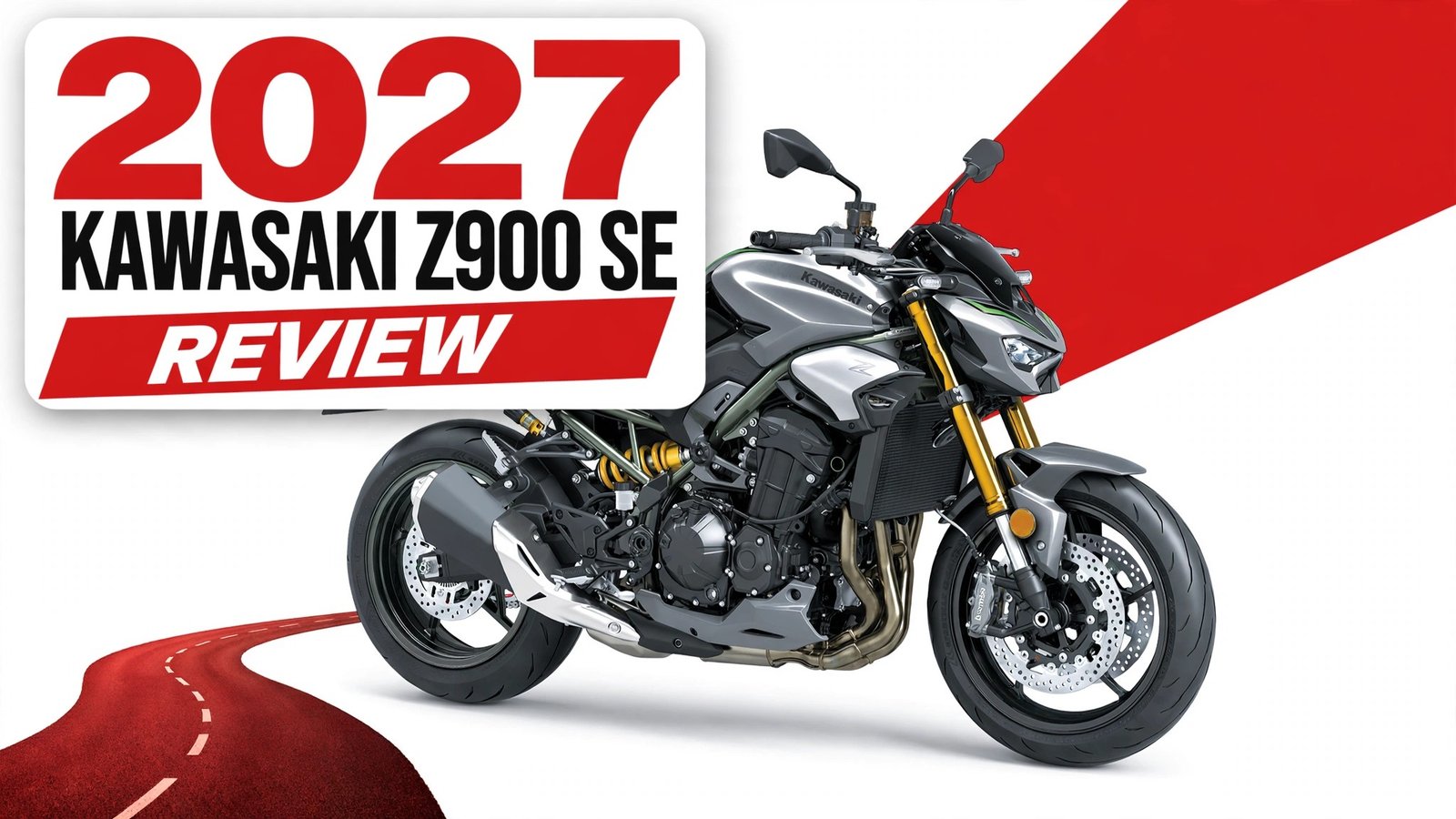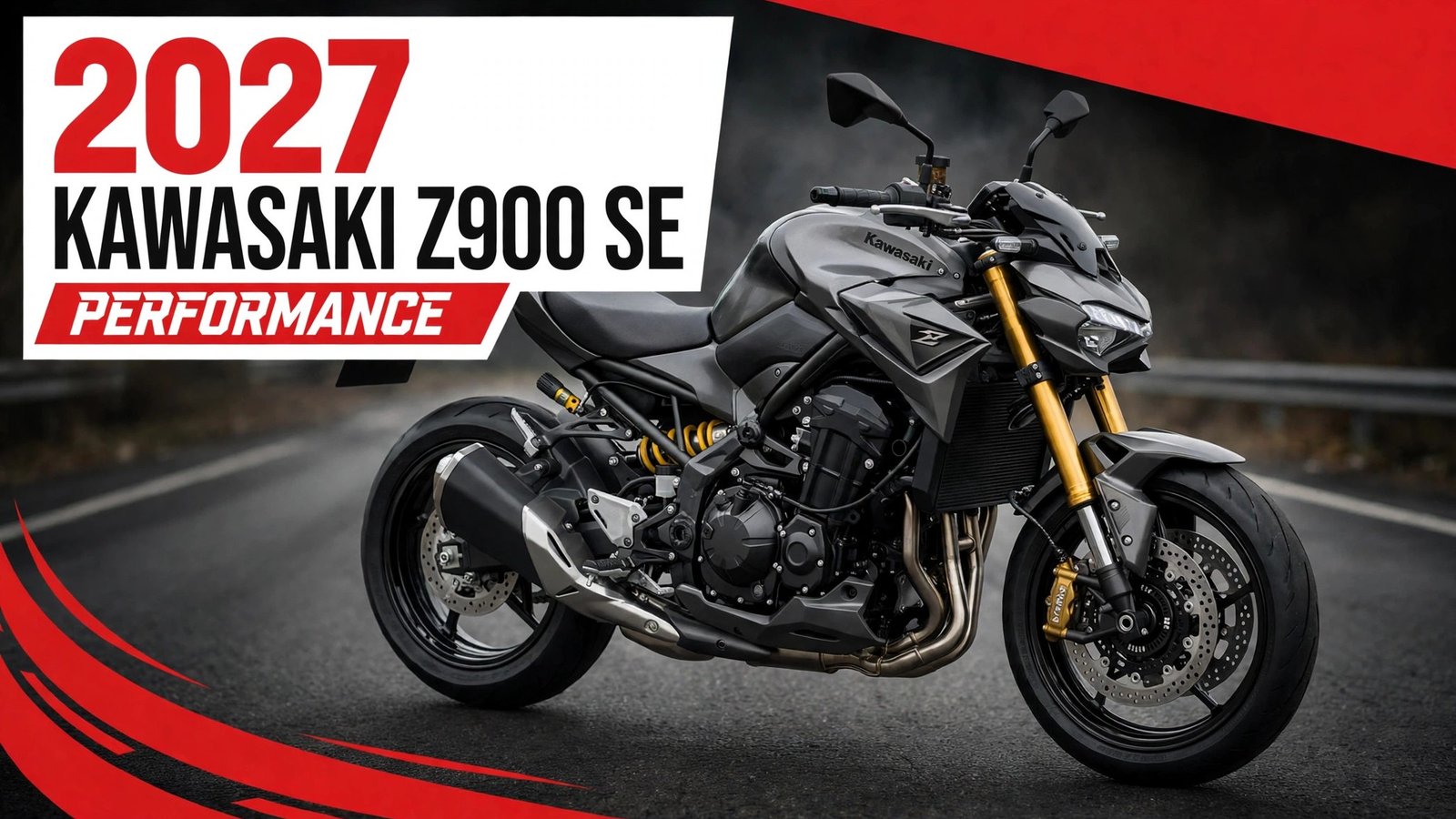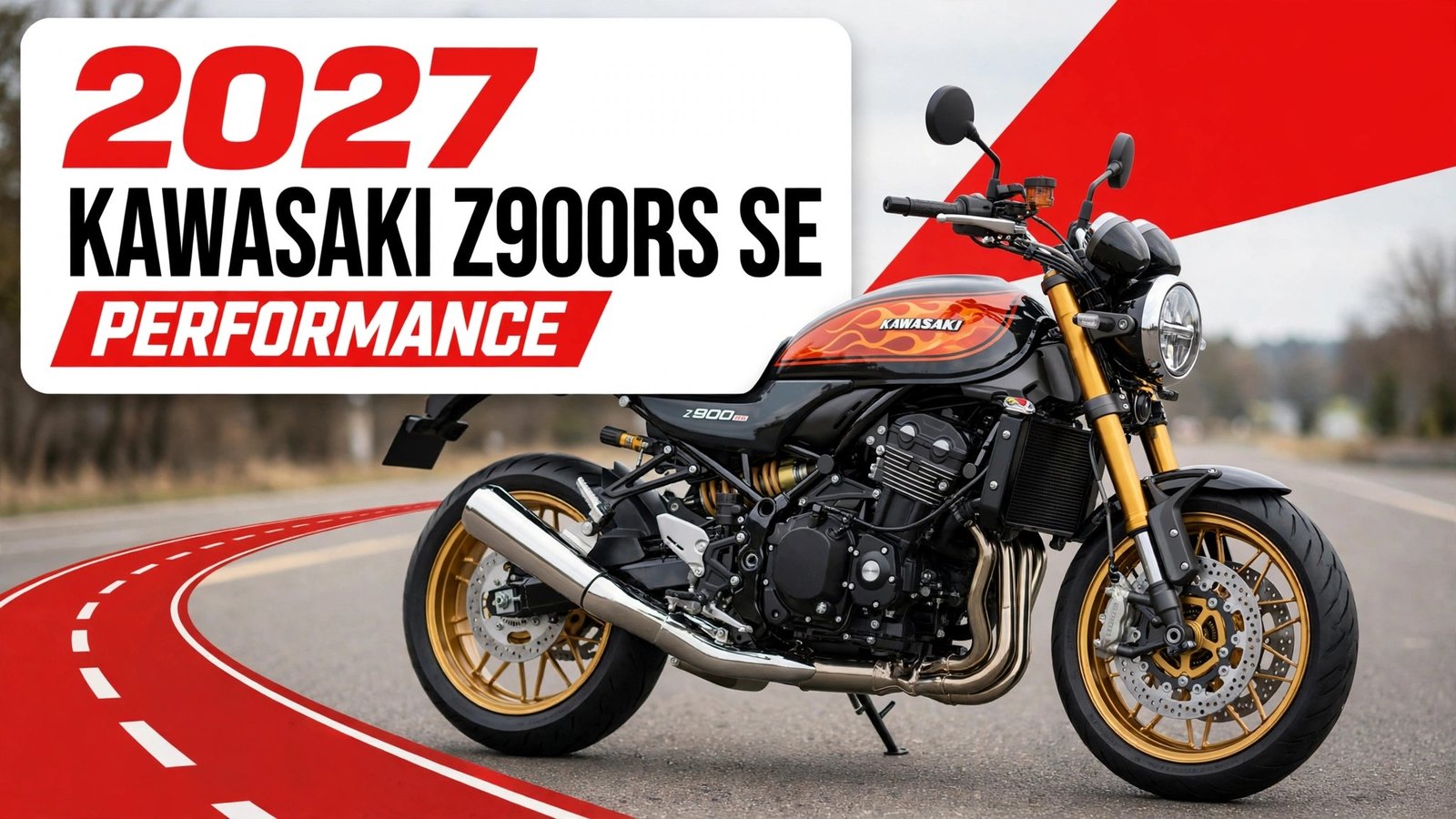
The 2027 SE claims 115.0 hp and 73.0 lb-ft, but the dyno tells the measured story: 100.4 hp at the rear wheel on Motorcycle.com’s 2026 bike, 95.24 hp on Cycle World’s 2022 bike. This Kawasaki Z900RS SE performance guide starts with the numbers that were actually measured: the SE’s story is not about more power, but about what the same power does with better brakes, better suspension and a cured throttle.
Two eras, one engine family, two dyno runs four years apart on two different dynos. The 2026 update added ride-by-wire, a six-axis IMU and a quickshifter, and it lifted the claim from 111 hp to 115 hp — but no publication has timed the SE to 60 mph, no one has GPS-verified its top speed, and the only tested mileage figure is 37 mpg from a hard-ridden 2026 bike. This Kawasaki Z900RS SE performance guide covers the dyno figures, the top-speed gap, the mileage, the throttle fix and the XSR900 comparison, with every figure labelled by who measured it.
Kawasaki Z900RS SE Engine Performance and Power Delivery
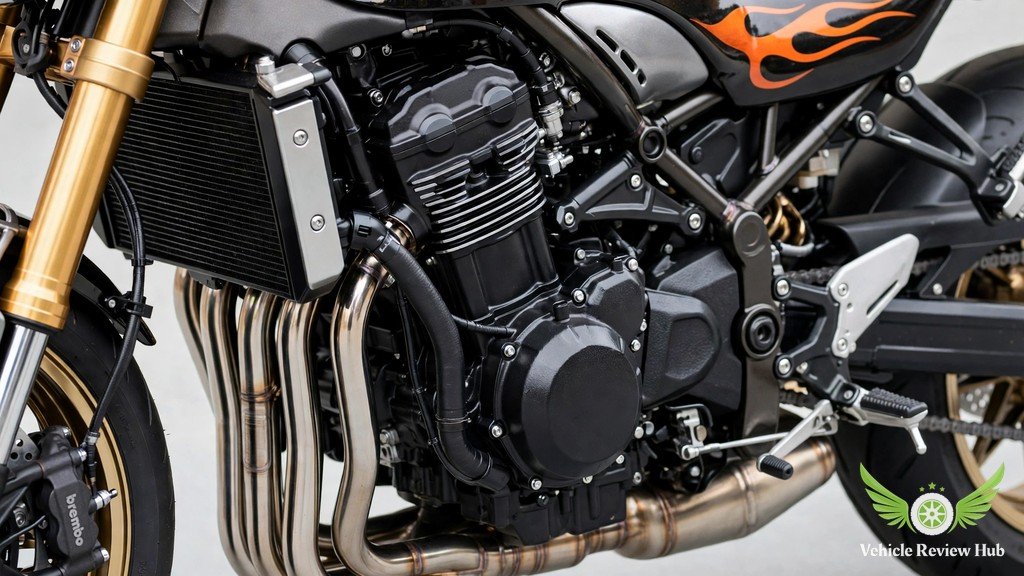
The SE’s engine is the base RS’s engine, unchanged in each era — a 948cc liquid-cooled inline-four, 73.4 × 56.0 mm bore and stroke, six-speed gearbox. The premium buys suspension, brakes and gold hardware, not horsepower — the fact buyers most often get wrong, and this Kawasaki Z900RS SE performance guide starts there: the SE makes the same power as the base RS in each era, on the same dyno, within dyno variance.
Dyno: 95.24 hp in 2022
Cycle World’s 2022 SE dyno test, run on a Dynojet 250i, put 95.24 hp at 8,620 rpm and 64.03 lb-ft at 6,150 rpm to the rear wheel. The same publication’s 2020 Cafe made 94.65 hp at 8,590 rpm on the same dyno — a 0.59 hp gap that is dyno variance, not a difference. The SE and the base make the same rear-wheel power — the baseline for this guide: the kit changes how the bike stops and turns, not how hard it pulls.
The claim behind the figure is 111 hp at 8,500 rpm with 72.3 lb-ft at 6,500 rpm on the pre-2026 US sheet — although the 2025 SE sheet itself prints 110.0 hp, a 1 hp difference this Kawasaki Z900RS SE performance guide prints with both figures labelled. The 2024 SE sheet prints no maximum-horsepower line at all. Driveline loss accounts for the gap between the 111 hp claim and the 95.24 hp rear-wheel number. No publication has dyno-tested a 2023, 2024 or 2025 SE.
2026 Bike Makes 100.4
Motorcycle.com’s 2026 SE made 100.4 hp at 9,200 rpm and 65.6 lb-ft at 7,600 rpm on its own dyno — the highest rear-wheel number published for a stock RS-family bike. Motorcycle.com’s own words, in substance: the dyno returned 100.4 horses at 9,200 rpm and 65.6 lb-ft at 7,600 rpm, “which makes sense when you account for driveline loss”. The 2026 claim is 115.0 hp at 9,300 rpm with 73.0 lb-ft at 7,700 rpm, up from 111 hp and 72.3 lb-ft — new cams, 11.8:1 compression, a lighter flywheel and a 43-tooth rear sprocket.
Motorcycle.com’s video review of the 2026 SE — the video version of the written review — covers the 100.4 hp dyno run, the 37 mpg hard-riding figure and the price verdict Motorcycle.com calls the bike’s fatal flaw: better than ever, but at what cost. The bike on screen is the 2026 SE in Metallic Spark Black with the Fireball graphics, and this Kawasaki Z900RS SE performance guide embeds it here because it is the only performance video of the SE from a major publication; Cycle World’s 2022 SE dyno article carries no video at all.
| Bike (year) | Publication | Dyno | Rear-wheel hp | Rear-wheel torque |
|---|---|---|---|---|
| 2022 Z900RS SE | Cycle World | Dynojet 250i | 95.24 hp @ 8,620 rpm | 64.03 lb-ft @ 6,150 rpm |
| 2026 Z900RS SE | Motorcycle.com | MO dyno | 100.4 hp @ 9,200 rpm | 65.6 lb-ft @ 7,600 rpm |
| 2020 Z900RS Cafe (platform) | Cycle World | Dynojet 250i | 94.65 hp @ 8,590 rpm | 63.51 lb-ft @ 6,040 rpm |
| 2020 Z900RS comparo (platform) | Rider Magazine | Jett Tuning | 100.1 hp @ 8,500 rpm | 67.5 lb-ft @ 8,500 rpm |
Note: The two SE rows are different bikes on different dynos, four years apart — never read 100.4 hp as a gain over 95.24 hp. The two platform rows are context only — they show the SE’s dyno band is the base’s dyno band, and this Kawasaki Z900RS SE performance guide never blends a platform figure into an SE claim.
Kawasaki Z900RS SE Top Speed and Acceleration
Top speed is the thinnest section of this Kawasaki Z900RS SE performance guide, and that is the honest point: Kawasaki publishes no top speed for the SE, and no publication has GPS-verified one. What follows is the gap itself, the misquoted indicated figure, and the platform’s timed figures — each labelled as the Cafe’s.
No Instrumented Top Speed
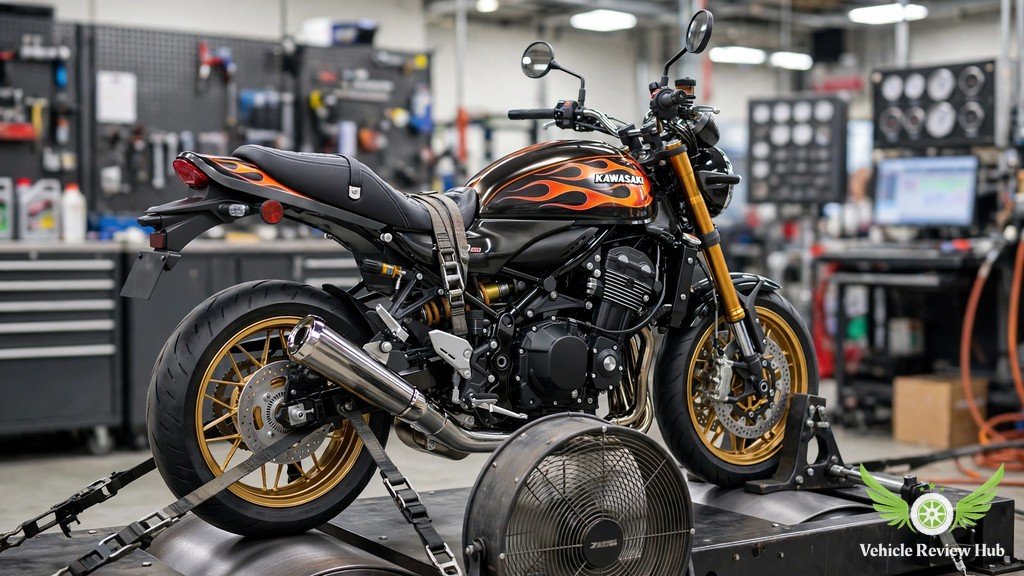
No publication has timed or GPS-verified the SE’s top speed in either era — the reviews cover the dyno, the ride and the price, and they stop there. This Kawasaki Z900RS SE performance guide prints no top-speed figure for the SE because none exists, and it does not fill the gap with an aggregator estimate: MotoStatz and FastestLaps figures are estimates, never measured.
The figure that circulates — 142 mph — belongs to the base RS, not the SE. Motorcycle.com’s long-term 2018 base RS tester saw “142 on the speedo… uphill, but I was running out of real estate”: a speedometer reading on an uphill stretch, not a GPS or timed measurement, and a base-bike figure. This Kawasaki Z900RS SE performance guide mentions it once, labelled exactly that way — never as the SE’s top speed.
No Official Top Speed
Kawasaki publishes no top speed for the SE — or for the RS, or for the Z900. The spec sheets list power, torque, seat height and weight, and they stop there. This Kawasaki Z900RS SE performance guide answers this heading the same way it answers the instrumented one: by saying so plainly, and by pointing at the figures that do exist — the dyno numbers above and the Cafe’s timed figures below.
| Figure | Result | Source and label |
|---|---|---|
| 0–60 mph | 3.5 s | Cycle World tested, 2020 Z900RS Cafe |
| Quarter-mile | 11.85 s @ 116.54 mph | Cycle World tested, 2020 Z900RS Cafe |
| Braking, 60–0 mph | 132.1 ft | Cycle World tested, 2020 Z900RS Cafe |
Note: Every figure in this table is the 2020 Cafe’s, tested by Cycle World — no timed figure exists for the SE in either era, and this Kawasaki Z900RS SE performance guide never carries the Cafe’s numbers onto the SE. The SE’s own braking story is hardware, not a measured distance.
Kawasaki Z900RS SE Mileage and Fuel Economy
Mileage is where this Kawasaki Z900RS SE performance guide has exactly one tested figure — 37 mpg from a hard-ridden 2026 bike — and a clearly labelled gap for every other year. Kawasaki publishes no MPG figure for the SE or the RS, and no publication has tested a 2022–2025 SE’s economy, so the honest answer is one number and one label.
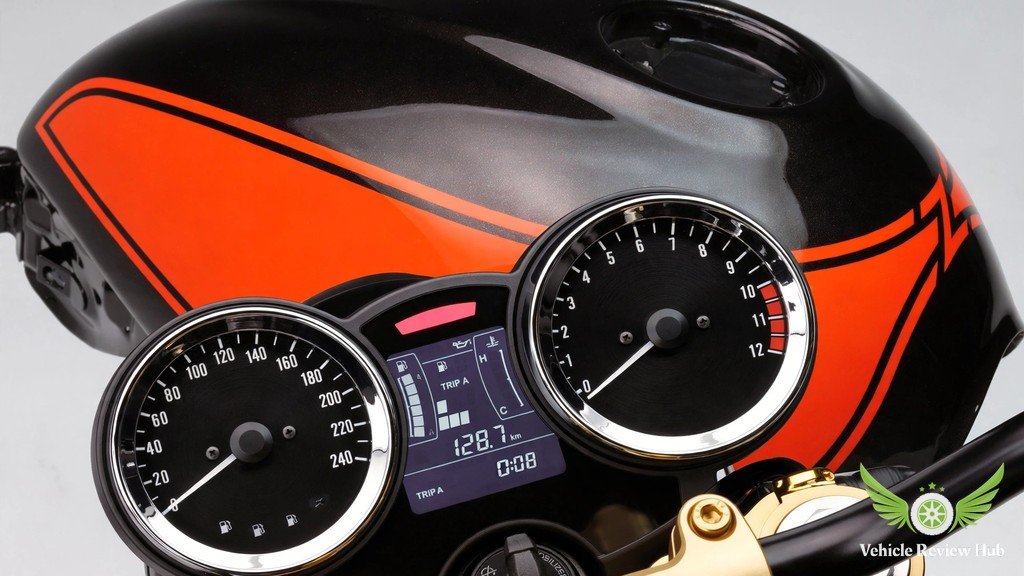
2026 Tested at 37 mpg
Motorcycle.com’s 2026 SE returned a consistent 37 mpg under hard riding — the publication’s own words, in substance: “despite the flogging we gave it, it still returned a consistent 37mpg.” That is the only tested MPG figure for the SE, and this Kawasaki Z900RS SE performance guide carries it as the headline figure because it is the only one with a test behind it.
The range follows the same source: Cycle News, riding the 2026 SE, says fuel range is adequate for 170-mile rides — roughly 38 mpg on a 4.5-gallon tank, consistent with Motorcycle.com’s 37 mpg — but this Kawasaki Z900RS SE performance guide computes no range from the tank and the mileage; it quotes Cycle News’s 170-mile observation as Cycle News’s.
Era A Economy Untested
No publication has published a tested MPG figure for a 2022–2025 SE. The 2022, 2024 and 2025 bikes were all reviewed, and none of the reviews put a measured economy number on them. This Kawasaki Z900RS SE performance guide says so plainly rather than borrowing the base bike’s number: Motorcycle.com’s long-term 2018 base RS returned 39–40 mpg over about 2,000 miles of enthusiastic riding — the base bike’s figure, not the SE’s.
Kawasaki publishes no MPG figure for the SE or the RS, and the 48.4 mpg EPA figure on MotorcycleDB for the 2025 RS is a database figure, not Kawasaki’s — this Kawasaki Z900RS SE performance guide does not print it.
| Bike / figure | MPG | Source and label |
|---|---|---|
| 2026 Z900RS SE, hard riding | 37 mpg | Motorcycle.com tested, 2026 SE review |
| 2018 Z900RS (base), long-term | 39–40 mpg | Motorcycle.com long-term, base bike — NOT the SE |
| 2027 Yamaha XSR900 | 49 mpg | Yamaha combined — a different bike |
Note: Kawasaki publishes no MPG figure for the SE or the RS. The only tested SE figure is the 2026 bike’s 37 mpg; the base bike’s 39–40 mpg is never printed as the SE’s mileage.
Kawasaki Z900RS SE Real-World Riding Experience
On the road, this Kawasaki Z900RS SE performance guide finds the SE is the base RS with better brakes and a better shock — and, from 2026, a throttle that finally behaves. The position is upright and relaxed, the midrange is where the bike lives, and the electronics update divides the two eras.
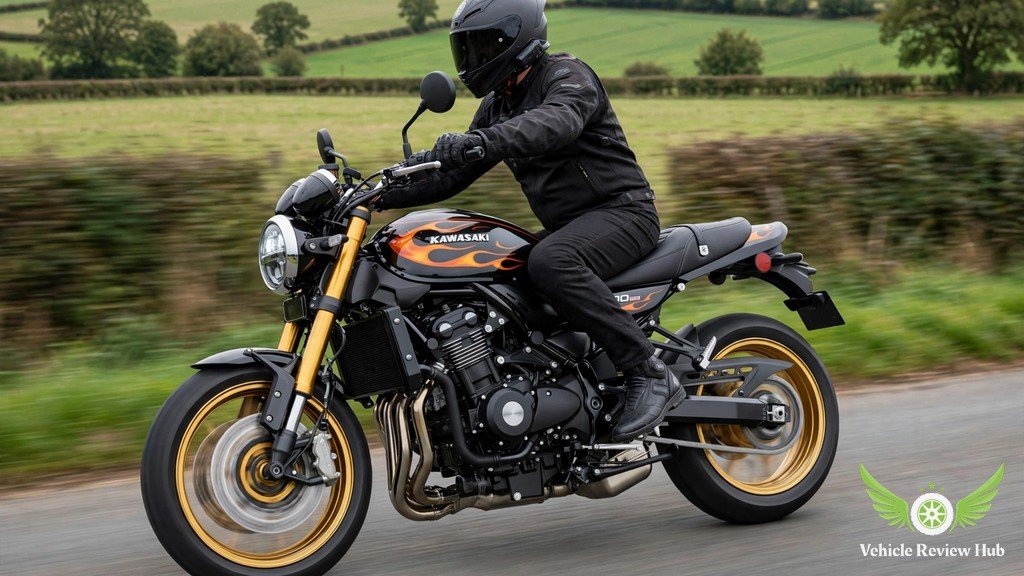
The Riding Experience Buyers Actually Talk About
The testers agree on the character: Cycle News calls the SE neutral and predictable in corners and planted and confidence-inspiring; MCN calls it the most fun and rewarding to ride in the midrange. The 948cc inline-four makes its peak torque low — 73.0 lb-ft at 7,700 rpm on the 2026 sheet, 72.3 lb-ft at 6,500 rpm before it — and the 5,500–8,500 rpm range is where it pulls hardest. This Kawasaki Z900RS SE performance guide treats the midrange as the SE’s real performance story: it is the bike that pulls hardest where street riding actually happens.
Rider Magazine’s comparison test puts it bluntly: in the midrange the RS “gives the Suzuki a run for its money and leaves the Honda in the dust”. The SE is not razor-sharp like a Z900 — Cycle News says so directly, “It’s not razor-sharp like a Z900 or 1100, but that’s not its mission” — and this Kawasaki Z900RS SE performance guide agrees: the mission is a retro naked that is quick where a road rider actually rides, not a track tool. The riding position itself is a wide, flat handlebar, a bench seat and mid-mounted footpegs, on a 32.3-inch seat (31.9 inches for the base) — the sheet figures, with the conflict labelled in the review.
Throttle Cured by Wire
The throttle story is a three-act story, and this Kawasaki Z900RS SE performance guide tells it in order. Act one, 2018–2021: what Cycle News called “wretched throttle response” — an abrupt off-to-on transition from an emissions-lean fuel map, the factory tune aimed at reducing emissions over performance. A rideability finding, never a defect or a recall.
Act two, 2022: revised mapping improved it — Cycle News said the throttle “no longer feels like you’re firing a tommy gun” and the abruptness was “largely eradicated”. Act three, 2026: ride-by-wire cures it. MCN says the new engine and electronic throttle deliver “eliminating that initial snatchiness”; Ultimate Motorcycling says “Ride-by-wire cures the abrupt low-speed throttle response of earlier Z900RS models”; Cycle News says the electronic throttle “reduces the abruptness that was present in earlier versions”. Bad in 2018, better in 2022, cured in 2026 — and this Kawasaki Z900RS SE performance guide notes the power-modes question separately, because it is a documented discrepancy, not a feature: the 2026 and 2027 sheets list “Power Modes”, Kawasaki’s press release never mentions them, and the testers say no selectable modes exist — the only tester-confirmed selectable electronic mode is KTRC Mode 1 and Mode 2.
Kawasaki Z900RS SE Handling, Braking and Stability
Handling and braking are where the SE earns its premium, and this Kawasaki Z900RS SE performance guide puts the hardware first — dual 300 mm round discs, Brembo M4.32 monobloc calipers, a smaller Nissin radial-pump master cylinder, braided lines, and an Öhlins S46 rear shock with a remote preload adjuster. No measured stopping distance exists for the SE — the story is the kit and what the testers say it does on real roads.
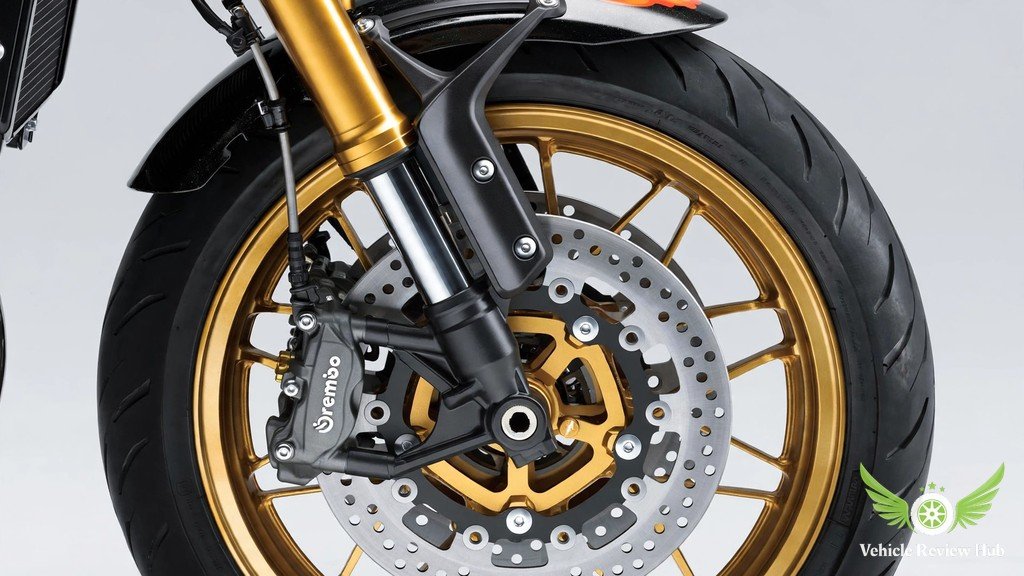
UM: Kit Earns the Premium
Ultimate Motorcycling’s October 2026 review of the 2026 SE puts the verdict in one sentence: “The Öhlins shock and Brembo brakes earn the SE’s price premium for riders who value ride quality and braking feel.” The same review adds that “The Öhlins S46 shock gives the SE a supple, perfectly damped ride” and that the Brembo M4.32 monobloc calipers “provide strong, easy-to-control stopping power” from dual 300 mm discs, a Nissin radial-pump master cylinder and stainless-steel braided lines. This Kawasaki Z900RS SE performance guide quotes it once, attributed, because it is the clearest single-sentence case for the $1,700 premium.
The same review adds the counter-note, and this Kawasaki Z900RS SE performance guide prints it too: “While the M4.32 is not Brembo’s newest caliper, it fits in fine with the SE’s mission, so you never feel cheated on the brakes.” The caliper is a proven monobloc, not the latest flagship — and on a retro naked that is the point. The rear brake is a single 250 mm disc with a single-piston caliper, and the Nissin ABS unit is standard on every US SE.
Handling, Braking and Stability on Real Roads
MCN, riding the 2026 SE, says the Öhlins-equipped rear end and the matched fully adjustable forks, with the lightweight steel trellis frame, “gives an overall sensation of confident compactness when rolling through the twisties”. Cycle News calls the bike neutral and predictable in corners and planted and confidence-inspiring, and this Kawasaki Z900RS SE performance guide finds the same verdict in every 2026 review: the SE is composed, not sharp, and the suspension does the pre-2026 bike’s work.
The 2026 electronics help: a Bosch six-axis IMU feeding Kawasaki Cornering Management, two-mode traction control, and an up/down quickshifter from 1,500 rpm. The discs are round on the 2026 and 2027 bikes, and petal on the Era A bike, per the parent ruling — and every image in this Kawasaki Z900RS SE performance guide shows the 2026/2027 round discs. The fork is a 41 mm inverted unit with gold outer tubes, fully adjustable in both eras, and stability is the trellis frame and the long wheelbase, with the SE’s damping keeping them honest over bad pavement.
| Item | SE (both eras) | Notes |
|---|---|---|
| Front discs | Dual 300 mm, round (2026/2027) | Petal on the Era A bike |
| Front calipers | Brembo M4.32 monobloc, radial-mount | Fed by a smaller Nissin radial-pump master |
| Rear brake | Single 250 mm disc, single-piston caliper | Nissin ABS standard on every US SE |
| Rear shock | Öhlins S46, remote preload adjuster, 30-position rebound | Spec identical across both eras |
| Front fork | 41 mm inverted, gold outer tubes | Fully adjustable, both eras |
Note: No measured stopping distance exists for the SE — the Cafe’s 132.1 ft from 60 mph is the platform’s tested figure, labelled as such above. What the SE’s kit buys is feel and control, and this Kawasaki Z900RS SE performance guide judges it on the testers’ words, not on an unmeasured number.
Kawasaki Z900RS SE Performance Compared With Other Sport Bikes
This Kawasaki Z900RS SE performance guide keeps the comparison section short on purpose: the full XSR900 comparison lives in the comparison blog, and this section covers the performance numbers only. On paper the Yamaha is lighter, more powerful and thriftier; on the road the SE answers with torque, kit and size.
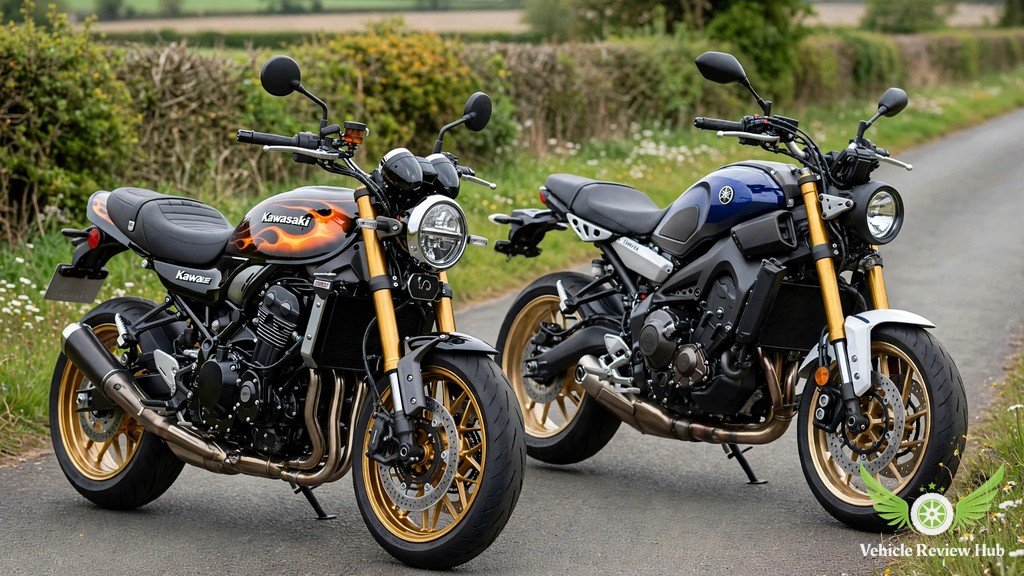
Kawasaki Z900RS SE vs Yamaha XSR900
The XSR900 is the SE’s closest performance rival: an 890cc CP3 triple with 117 hp at 10,000 rpm, 68.6 lb-ft at 7,000 rpm, a 425 lb wet weight and 49 mpg combined on Yamaha’s own figure. Against that, the SE claims 115.0 hp at 9,300 rpm and 73.0 lb-ft at 7,700 rpm, carries 476.3 lb, and returns a tested 37 mpg. The Yamaha is lighter, more powerful on paper and thriftier; the SE answers with more torque lower down, the Öhlins and Brembo kit, and a bigger, roomier chassis — and this Kawasaki Z900RS SE performance guide keeps the comparison on measured and claimed figures, not on a drag race that was never run.
The price gap is the performance story’s shadow: the XSR900 is $10,599 plus a $700 destination charge, or $11,299 delivered, against the SE’s $14,699 plus an $840 destination charge (Motorcycle.com database), or $15,539 delivered — $4,240 apart. Motorcycle.com’s verdict on the 2026 SE is blunt: better than ever, but at what cost — the price is the flaw it names. This Kawasaki Z900RS SE performance guide leaves the value verdict to the comparison blog: the SE is the slower bike on paper and the richer bike on the road.
| Figure | 2027 Z900RS SE | 2027 Yamaha XSR900 |
|---|---|---|
| Engine | 948cc inline-four | 890cc CP3 triple |
| Claimed power | 115.0 hp @ 9,300 rpm | 117 hp @ 10,000 rpm |
| Claimed torque | 73.0 lb-ft @ 7,700 rpm | 68.6 lb-ft @ 7,000 rpm |
| Weight | 476.3 lb curb | 425 lb wet |
| Mileage | 37 mpg tested (2026, hard riding) | 49 mpg combined (Yamaha) |
| Delivered price | $15,539 | $11,299 |
Note: All SE figures are the 2026/2027 bike’s; the XSR900’s 49 mpg is Yamaha’s combined figure and its 425 lb is Yamaha’s wet weight. The SE’s 37 mpg is a hard-riding test figure, not a combined figure — the two mileage numbers are not directly comparable, and they are not ranked here.
Is the Kawasaki Z900RS SE Suitable for Beginner Riders?
No. The SE is a 948cc, 115 hp, 476 lb motorcycle at $14,699, and no publication recommends it as a first bike. Its midrange is friendly and its throttle is cured, but its size, weight and price put it firmly in experienced-rider territory — and this Kawasaki Z900RS SE performance guide says so plainly: the retro styling invites exactly the wrong first purchase. The Kawasaki Z650RS review points to the smaller retro twin as the beginner-adjacent alternative — a judgement call, not a tested claim.
The performance verdict is the same as the review’s verdict: the SE is the best RS, priced like it. The 100.4 hp dyno run, the 37 mpg hard-riding figure and the cured throttle are the 2026 bike’s real gains; the top-speed gap, the untested Era A economy and the $4,240 XSR900 gap are its honest limits. Buy it for the kit and the midrange, not for a number it never claimed — and this Kawasaki Z900RS SE performance guide leaves the buyer with that and the comparison blog for the money question.
Kawasaki Z900RS SE Performance FAQs
The six questions below are the ones buyers ask most about how the SE actually performs, answered from this Kawasaki Z900RS SE performance guide’s verified figures.
How much power does the Kawasaki Z900RS SE make on a dyno?
Cycle World’s 2022 SE made 95.24 hp at the rear wheel on a Dynojet 250i; Motorcycle.com’s 2026 SE made 100.4 hp on its dyno. The two runs are on different dynos, four years apart — never compare them as a gain, and this Kawasaki Z900RS SE performance guide never does.
What is the top speed of the Kawasaki Z900RS SE?
Kawasaki publishes no top speed, and no publication has GPS-verified one for the SE. The 142 mph figure sometimes quoted is the base RS’s speedometer reading (uphill), not the SE’s and not a measured top speed.
What mileage does the Z900RS SE get?
Motorcycle.com’s 2026 SE returned a consistent 37 mpg under hard riding. No tested MPG figure exists for a 2022–2025 SE, and Kawasaki publishes no MPG figure. This Kawasaki Z900RS SE performance guide borrows none from the base bike.
Is the Z900RS SE throttle snatchy?
The 2018–2021 bikes were — an abrupt off-to-on throttle from the emissions-lean fuel map. Mapping improved it in 2022, and the 2026 ride-by-wire throttle cures it, according to MCN, Ultimate Motorcycling and Cycle News — the three-act story told in the riding section above.
How fast is the Z900RS SE to 60 mph?
No timed figure exists for the SE. The platform’s only timed figures are Cycle World’s 2020 Cafe test — 3.5 seconds to 60 mph and 11.85 seconds at 116.54 mph in the quarter-mile — the Cafe’s figures, not the SE’s, and this Kawasaki Z900RS SE performance guide labels them that way every time.
Is the Z900RS SE good for beginners?
No. It is a 948cc, 115 hp, 476 lb motorcycle at $14,699 — too much bike for a first rider. Its midrange is friendly, but its size, weight and price put it in experienced-rider territory, as set out above.