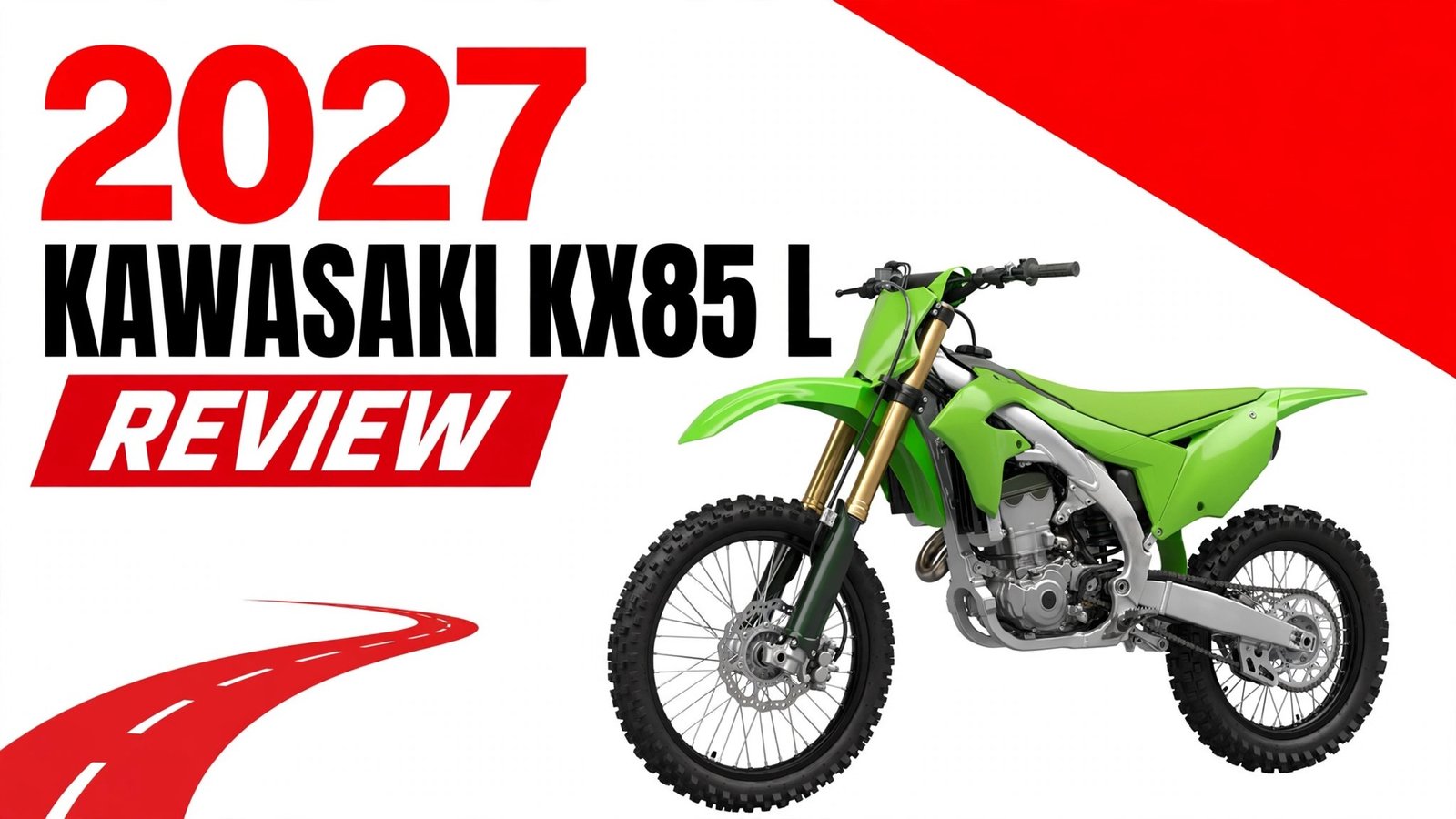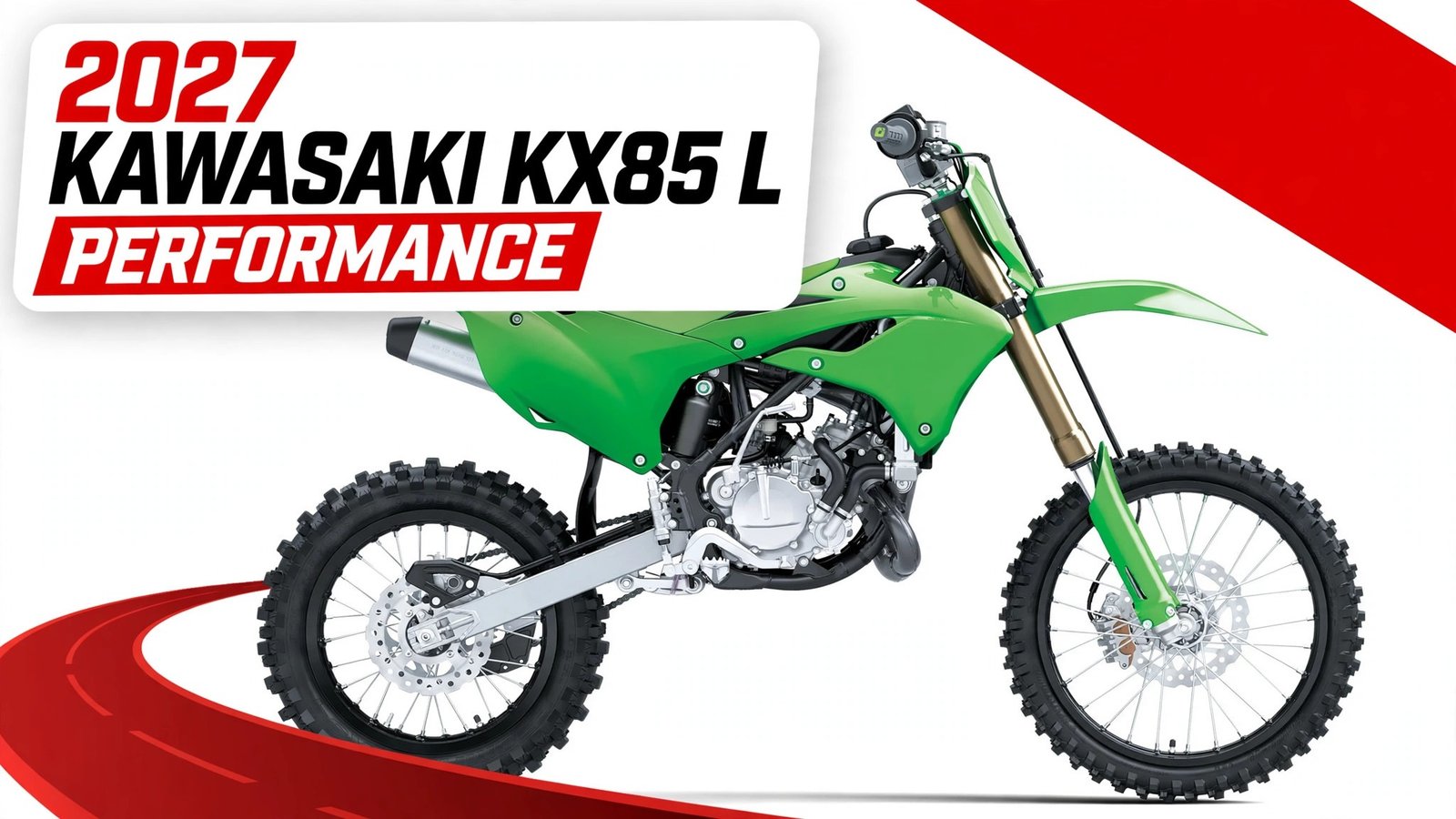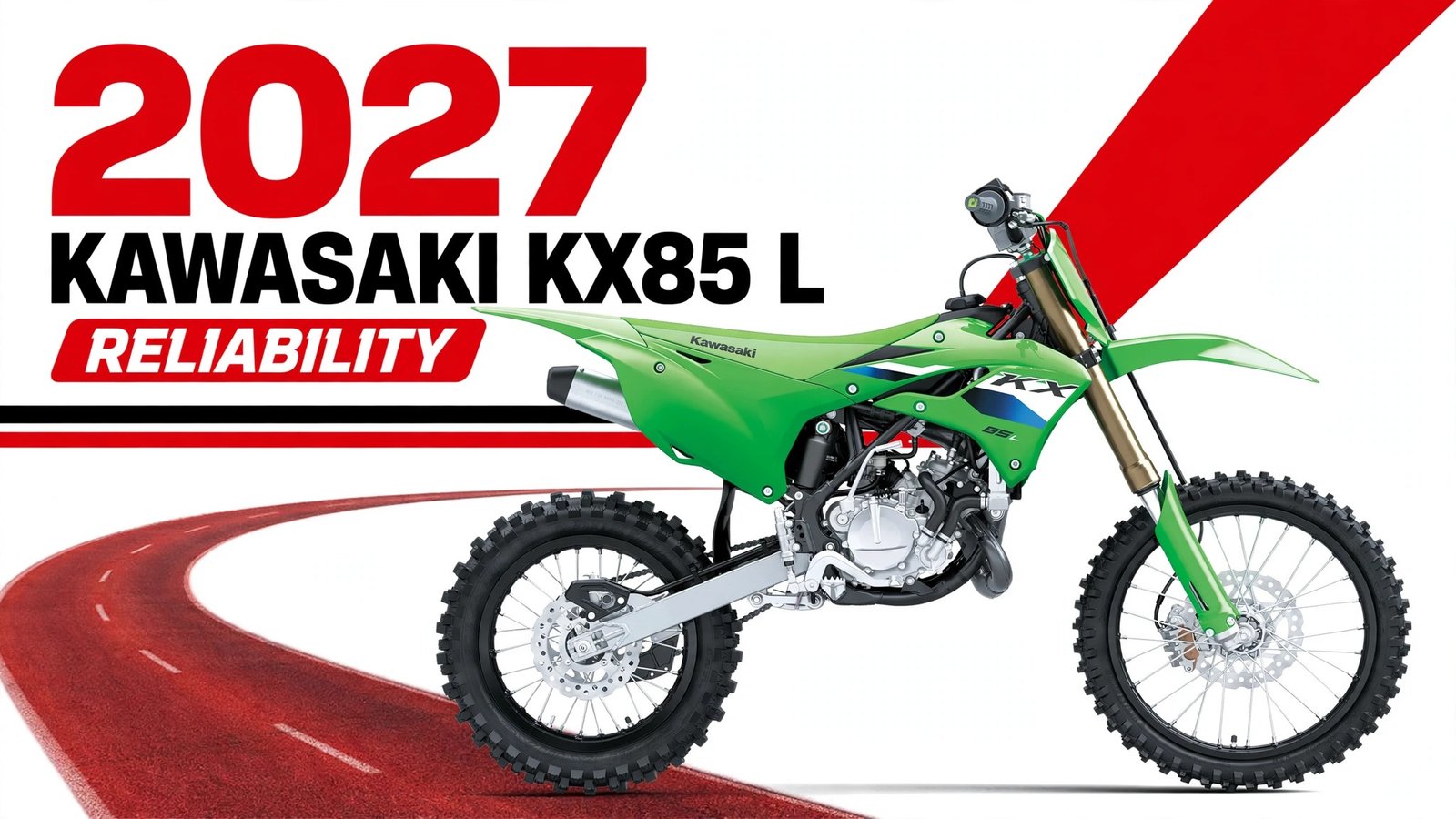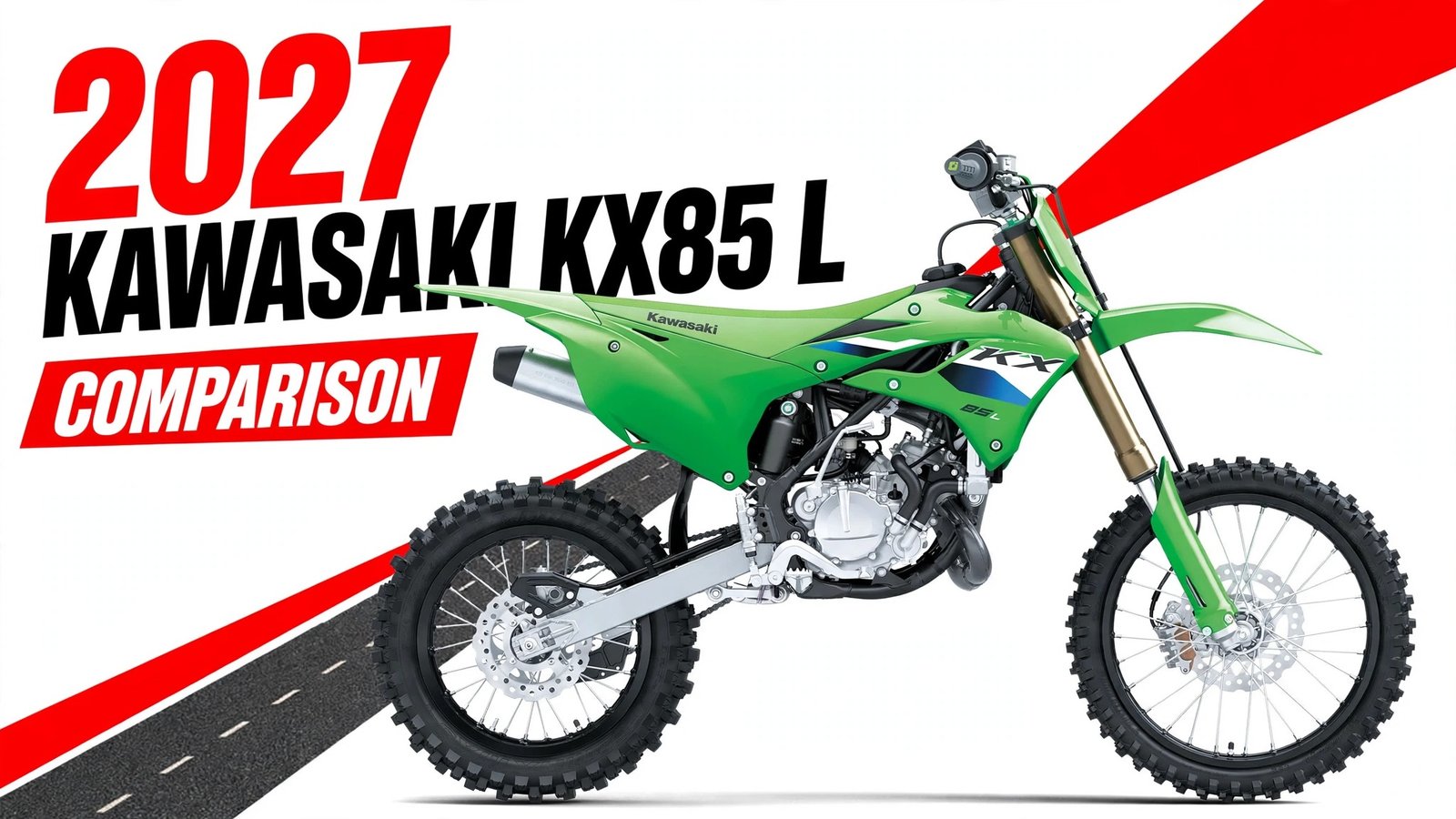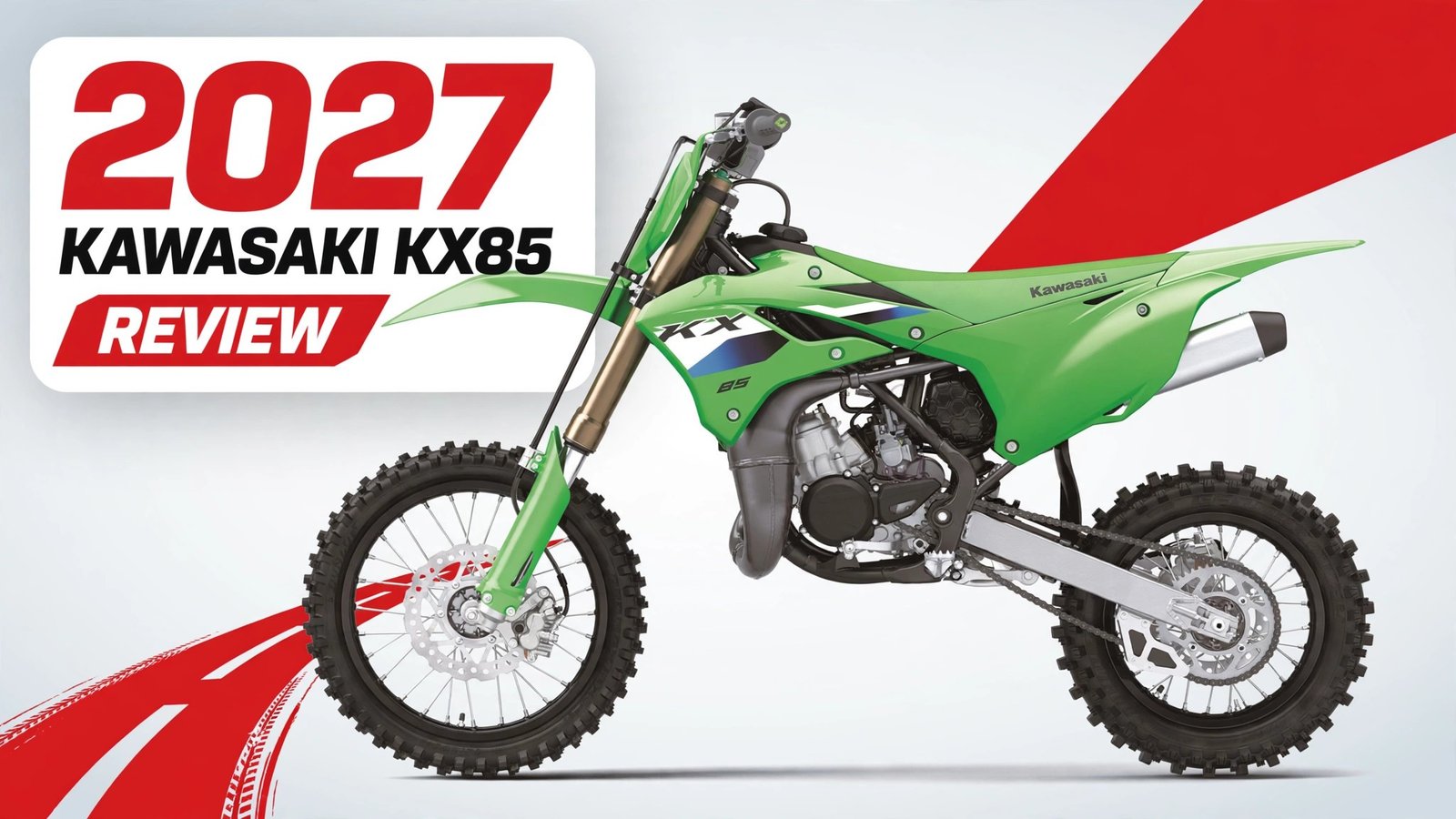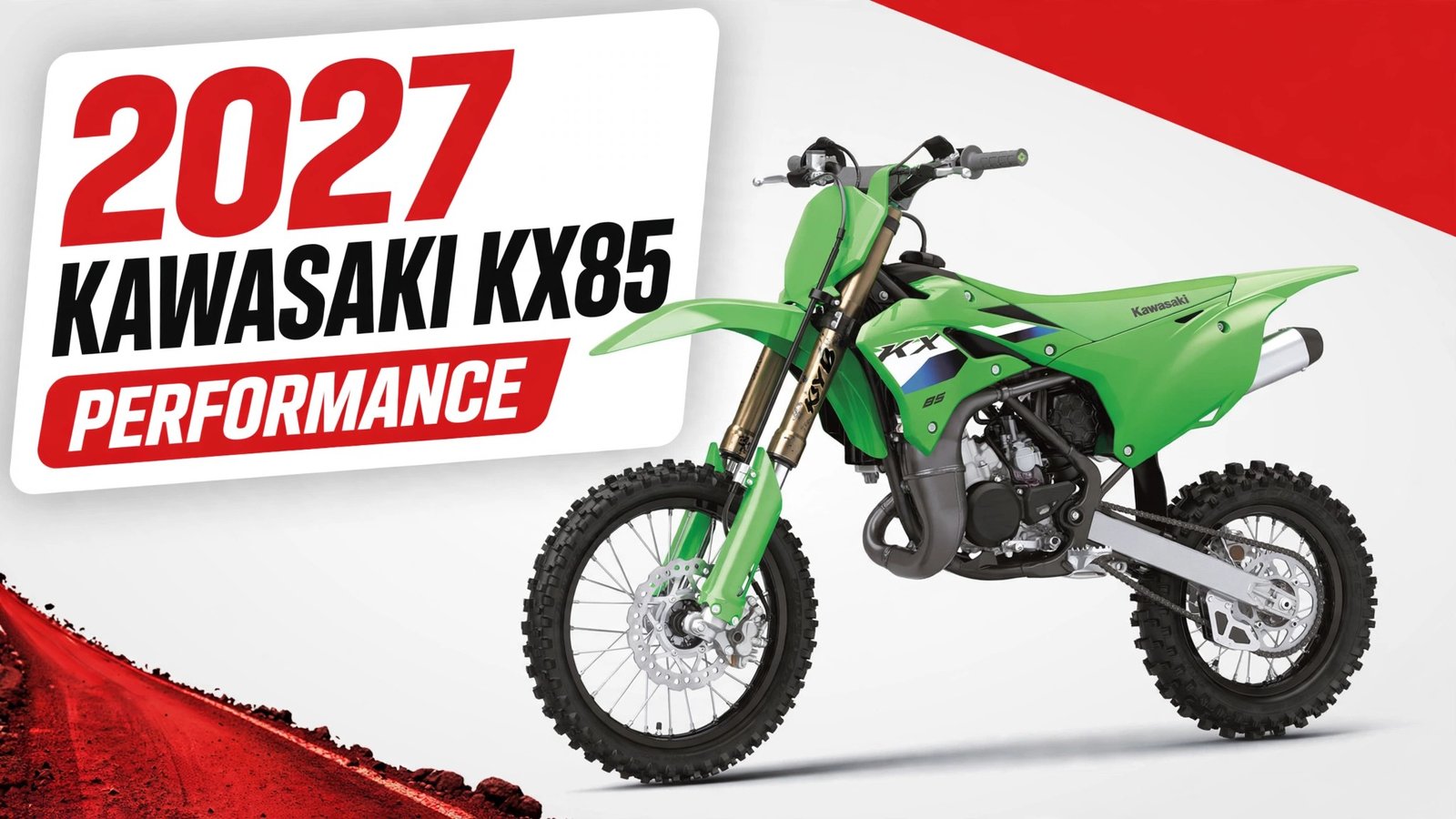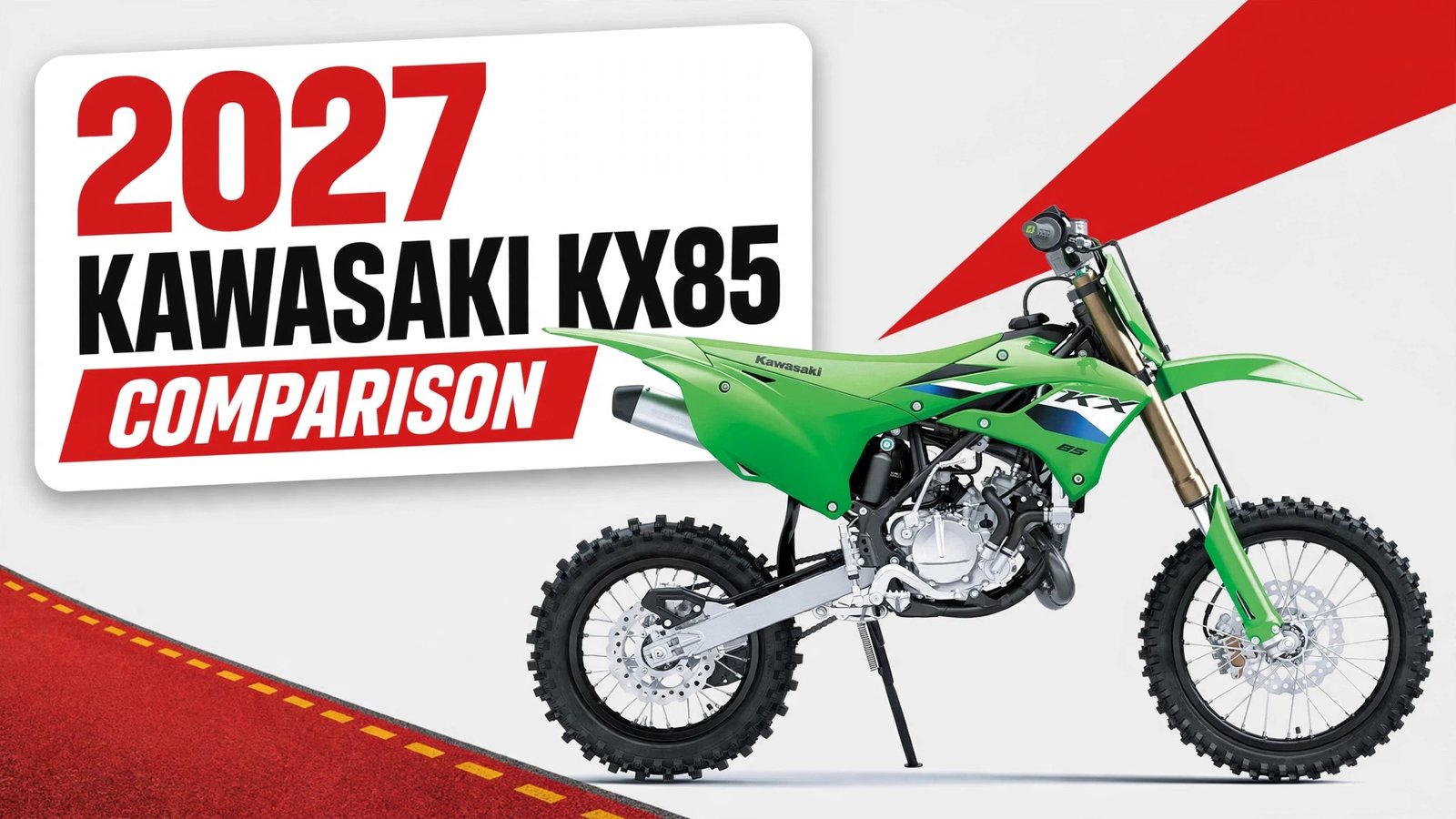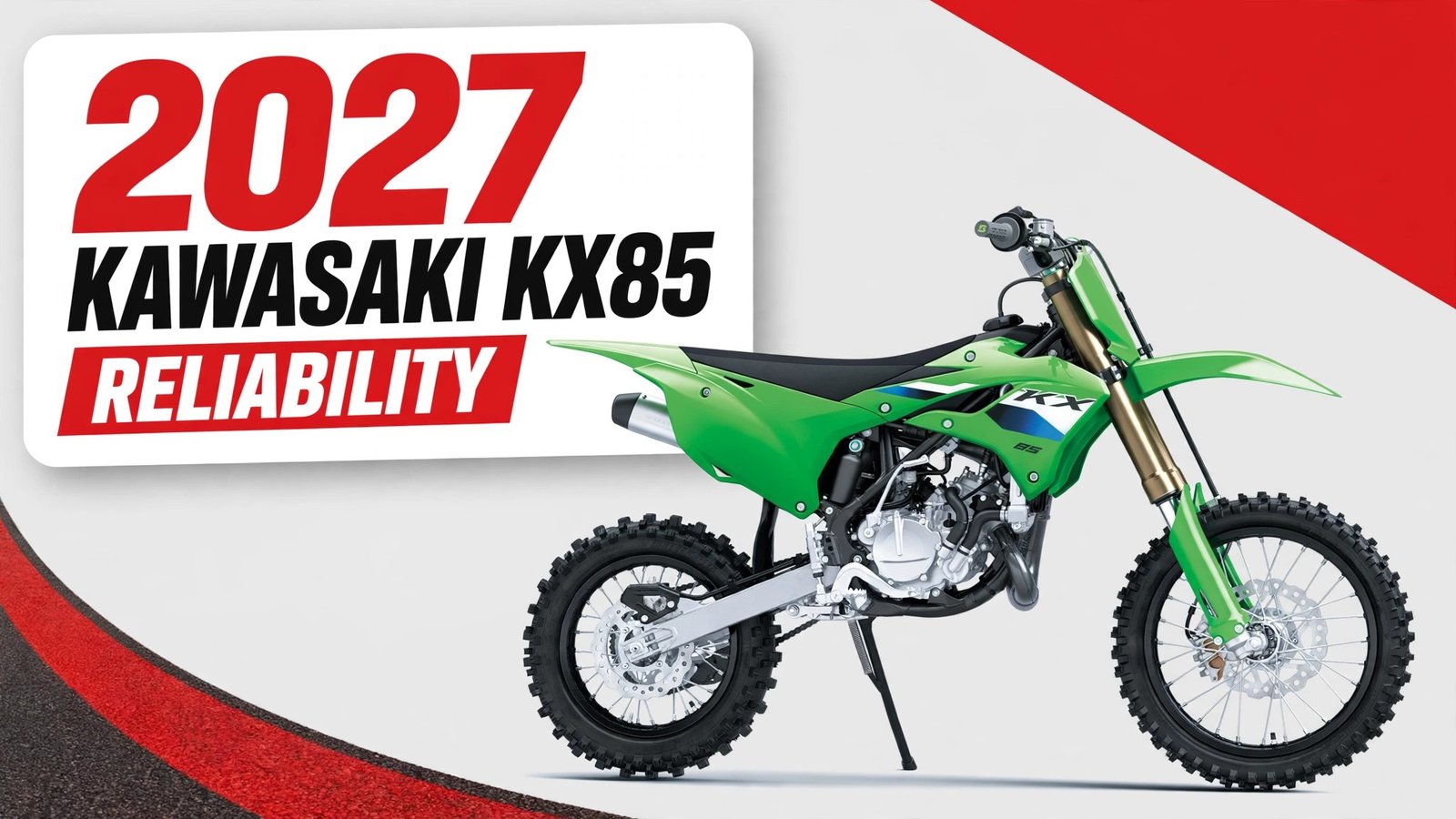
The Kawasaki KX85 has a reliability record that is easier to read than most mini motocrossers, because there is so little of it to argue about. One recall in a quarter of a century, a maintenance chart that fits on a single page, and an engine unchanged since 2014 — that is the whole story, and this Kawasaki KX85 reliability guide tells it from the verified records, not from forum lore.
What makes the record interesting is where the easy answers are wrong. The 12.5-hour piston figure is a replacement interval, not a check; the KIPS power valve is cleaned after every race, not at 25 hours; and the only recall was never a KX85-only recall. Get those three points right and Kawasaki KX85 reliability becomes a simple picture: a tough little two-stroke that rewards a rider who follows the manual.
Kawasaki KX85 Reliability Overview
Start with the headline numbers of Kawasaki KX85 reliability. One CPSC recall since the bike’s launch, zero injuries attached to it, no warranty of any kind, and a service chart that asks for attention after every race. Nothing here is hidden — the recall is a public CPSC record, the schedule is printed in Kawasaki’s own manuals, and the warranty position is stated there too.
One CPSC Recall Only
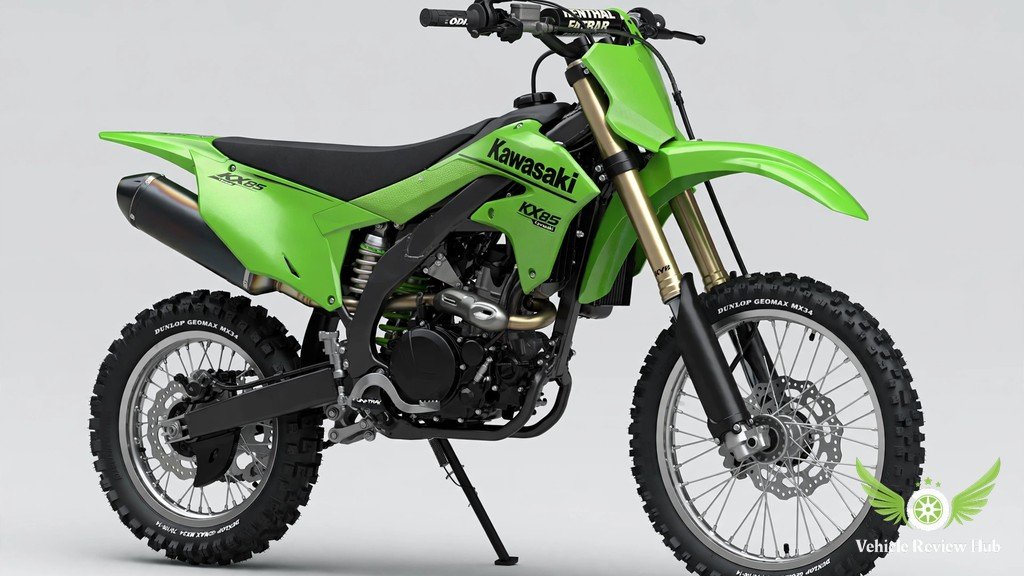
The recall record for the KX85 is exactly one entry: CPSC recall 01-065, announced on January 11, 2001. The rear brakes on the affected bikes can fail, which could cause a rider to lose control. The recall covered about 18,000 motorcycles across all 2001 KX models — KX65, KX85, KX100, KX125, KX250 and KX500 — and the KX85’s share was never broken out, so no honest source can say how many KX85s were involved. It was preventive: no injuries or failures had been reported, and the remedy was a free repair kit mailed to owners, fitted at home or free at a dealer.
That is the whole recall history. A search of the CPSC site for “KX85” returns nothing else, and the only later KX-series CPSC recall — 25-238, April 2025, a crankshaft primary-gear failure on about 3,400 bikes — covers only the 2025 KX450, KX450SR and KX450X, named only to make that exclusion clear. No KX85 recall has been issued since 2001 — the strongest single fact in this Kawasaki KX85 reliability guide.
The recall record is not an NHTSA record: NHTSA returns zero for every KX85 search, but competition bikes sit outside NHTSA’s system — the 2025 KX450, which has a real CPSC recall, also returns zero. Never read a zero from NHTSA as proof that a competition bike is recall-free; the Kawasaki KX85 reliability statement is one CPSC recall, from 2001, and none since.
How Mileage, Storage and Previous Care Affect Reliability
There is no odometer on a KX85, no hour meter as standard, and no service history in a database — so a used bike has to be judged by hand. Hours on a two-stroke race bike are what miles are on a road bike, and the chart is written in races: one race is about two and a half hours, and every wear item is scheduled against that clock. A bike that has done a season of racing without a piston change is overdue one, however clean it looks — the first Kawasaki KX85 reliability check for a buyer.
Storage matters more on this bike than on a four-stroke trail bike: premix fuel goes stale, the carburettor gums up, and a steel frame can hide corrosion under the plastics. A KX85 that sat for a year with fuel in the tank needs the carburettor cleaned and the fuel drained first. Previous care shows in the small things — a clean air filter, fresh oil, an adjusted chain, brake pads with more than a millimetre left — the manual’s after-every-race checks, and the cheapest Kawasaki KX85 reliability test a buyer can run.
Kawasaki KX85 Common Problems and Wear Items
The honest way to talk about KX85 problems is to separate the two things that actually wear out from the long list of things that merely annoy. The engine has one well-documented wear item — the KIPS power valve carboning up — and one recall from 2001. Everything else here is either a maintenance item wearing on schedule or a shootout complaint about feel, not failure — the Kawasaki KX85 reliability distinction.
2001: Rear Brakes, KX Line
The 2001 rear-brake recall is the only safety defect Kawasaki KX85 reliability has ever carried, and the numbers get misquoted so often. The rear brake can fail, and a failed rear brake can put the rider on the ground. The recall covered bikes sold between May and November 2000, priced from $2,800 to $5,800 across the six KX models, all green with white on the steering column and seat sides.
For a buyer today, the question is: was the repair done? The remedy was a free kit, so a 2001 bike with the repair in its history is settled, and one with no record should go to a Kawasaki dealer before it is ridden hard, for a Kawasaki KX85 reliability check. The dealer can confirm the repair, and any owner can call Kawasaki on (866) 802-9381. The model number is stamped on the frame sides, running from the rear tyre to the brake. No KX85 built after 2001 is touched by this recall at all.
KIPS Valves Carbon Up
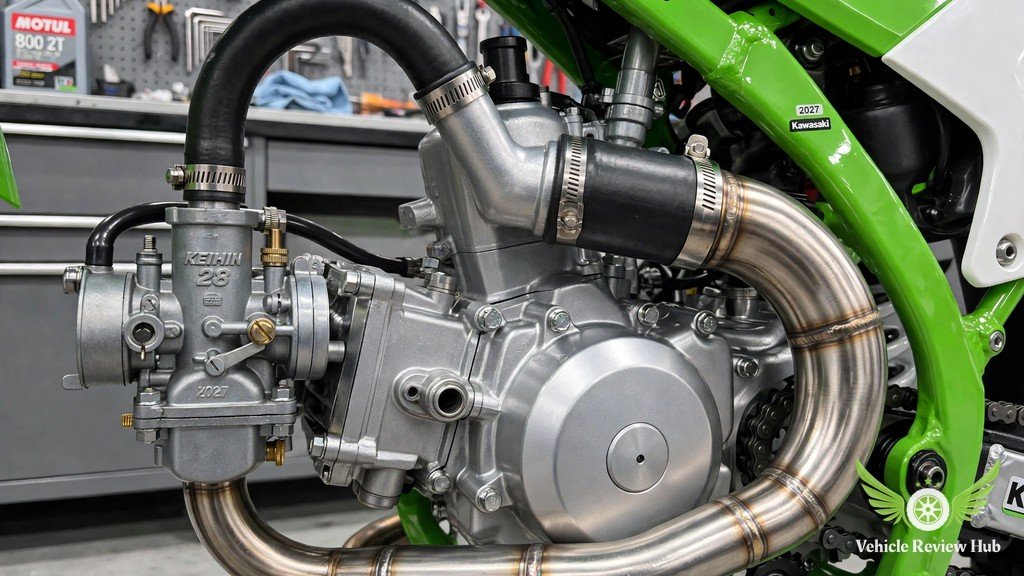
The KIPS power valve is the KX85’s best-documented wear item, documented in Kawasaki’s own manuals. The service manual tells the mechanic to scrape out carbon and clean the exhaust valves with a high flash-point solvent, and the owner’s manual traces poor low-speed performance to a valve stuck open by carbon deposits, and poor high-speed performance to valves stuck closed, clogged ports, or a seized operating rod. Carbon in the combustion chamber, a clogged exhaust port and a sticking piston ring all point at the same cause: a two-stroke ridden hard and cleaned rarely.
The fix is the schedule, not a part. KIPS valves are cleaned and checked after every race — about two and a half hours of running — which is why the “25-hour” figure online is so misleading: nothing KIPS-related is scheduled at 25 hours; the items there are the con-rod bearing replacement and the coolant change. An over-rich premix makes it worse — carbon on the power valve, clogged packing, a fouled plug — and worn rings add blow-by and smoke. None of this is a design failure — it is the known cost of a two-stroke power valve, and Kawasaki KX85 reliability depends on the after-every-race clean.
Kawasaki KX85 Maintenance Schedule and Servicing
If there is one page of this guide to keep, it is the chart. Kawasaki’s 2013 owner’s manual and 2014 service manual agree exactly, and it is written in races: one race is about two and a half hours. This Kawasaki KX85 reliability guide reproduces the chart as Kawasaki printed it — one summary page gets the piston interval wrong, which is why the correction matters.
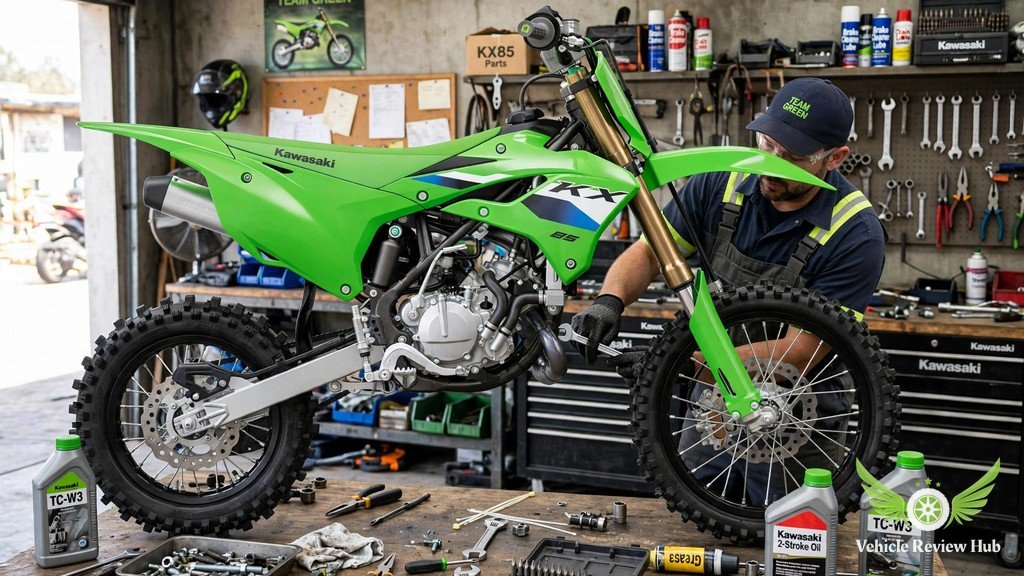
| Job | Interval |
|---|---|
| Piston + piston ring | Clean/check every 3 races (7.5 h); REPLACE every 5 races (12.5 h) |
| Exhaust valves (KIPS) | Clean/check after EACH race (2.5 h) |
| Transmission oil | Change every 3 races (7.5 h) |
| Spark plug | Clean/regap after each race; REPLACE every 3 races (7.5 h) |
| Brake pads | Wear check every 5 races (12.5 h); replace if any pad under 1 mm |
| Brake fluid | Level check every 3 races (7.5 h); change every 2 years |
| Front fork oil | First change after 2 races, then every 5 races (12.5 h) |
| Coolant | Check after each race; REPLACE every 10 races (25 h) |
| Con-rod small-end bearing | Check every 3 races (7.5 h); REPLACE every 10 races (25 h) |
Note: Intervals are from Kawasaki’s 2013 owner’s manual and 2014 service manual, which agree exactly; one race is about 2.5 hours. The 25-hour rows are the con-rod small-end bearing replacement and the coolant change — nothing KIPS-related is scheduled at 25 hours, and that is the fact this Kawasaki KX85 reliability guide wants every owner to know.
Piston Check Every 12.5 Hours
The heading above is the document’s wording; the manuals say something different. The piston and ring are cleaned and checked every 3 races — 7.5 hours — and REPLACED every 5 races, which is 12.5 hours. The 12.5-hour figure is the replacement interval, not the check, and a rider who waits 12.5 hours before even looking at the piston is running it half a service cycle past its inspection point. That is the single most important correction in this Kawasaki KX85 reliability guide.
Kawasaki KX85 reliability is judged by the service manual’s numbers: ring end gap should measure 0.30–0.50 mm, with 0.8 mm as the limit; piston-to-cylinder clearance runs 0.056–0.066 mm; and compression should read 826–1,278 kPa (120–185 psi) at five kicks. A ring at its limit, or compression at the bottom of that range, is a piston that has done its five races. The cylinder head and cylinder are inspected on the same cycle, and the silencer wool is changed every 3 races, so the top end is serviced as a set.
Oil and Plug Every 7.5
This heading, unlike the piston one, is exactly right: the transmission oil is changed every 3 races (7.5 hours), and the spark plug is replaced on the same cycle, cleaned and regapped after every race. The specifications are worth writing down. The plug is an NGK R6252K-105, solid-post, gapped 0.7–0.8 mm and torqued to 25.5 N·m (18.8 ft·lb); the hotter option is an NGK BR9EVX (gap 0.6–0.7 mm). The KX65’s plug does not belong here. The transmission oil is SAE 10W-40 (API SG/SH/SJ/SL/SM, JASO MA/MA1/MA2), 0.7 litres (0.74 US quarts) — not the KX65’s smaller fill — drain bolt torqued to 20 N·m (15 ft·lb). Premix is 32 parts gasoline to 1 part two-stroke oil, or 16:1 during break-in; the coolant is a 50/50 mix of soft water and permanent ethylene-glycol antifreeze, 0.57 litres in total. Those are the fluids that keep Kawasaki KX85 reliability on schedule.
Kawasaki KX85 Tires, Brakes and Suspension Maintenance
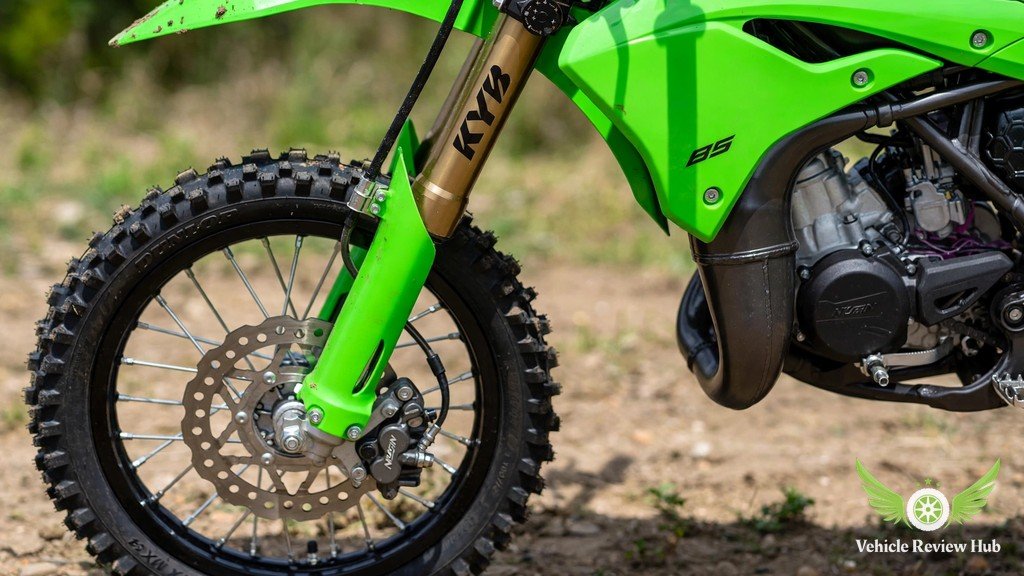
The 2026 revamp changed the parts this section is about — a 43 mm KYB fork in place of the old 36 mm unit, and 240/220 mm discs in place of 220/184 mm. The schedule itself did not change with the revamp: fork and shock oils, brake pads and chain all run on the same race-counted intervals as before — the Kawasaki KX85 reliability chassis schedule.
Piston $106.53, Rings $55.35
The figures in the heading above could not be verified against any checked source — that needs saying first for Kawasaki KX85 reliability. The document lists $106.53 for a piston and $55.35 for rings, but neither figure matches a current price: Partzilla, checked on November 25, 2026, lists the 2014-and-later piston (part 13001-0744) at $101.65 and the single top ring (part 13003-1441) at $16.56, both in stock. The $106.53 figure matches neither the 2014+ piston price nor the stale $97.63 figure for the 2001–2013 piston, and the $55.35 figure does not describe the 2014+ bike at all — its ring is a single top ring at $16.56, not a set.
The year split matters: Kawasaki changed the engine in 2014 — reshaped exhaust ports, a redesigned power valve, a new head, the PWK28 carburettor and an updated crank — and the parts changed with it. For a 2001–2013 bike, the piston (13001-0006) was last seen at $97.63 in a March 2025 crawl, indicative only, and the ring set (13008-1200) has no verified current US price at all: the Partzilla page returned an error and no other US retailer price surfaced. The table below gives the prices that could actually be checked, with their dates — the honest Kawasaki KX85 reliability list.
| Part | Part number | Current price | Status |
|---|---|---|---|
| Piston (2014+ bike) | 13001-0744 | $101.65 | In stock, Partzilla, checked Nov 25, 2026 |
| Single top ring (2014+ bike) | 13003-1441 | $16.56 | In stock, Partzilla, checked Nov 25, 2026 |
Note: Prices are Partzilla US prices as checked on November 25, 2026. The document’s $106.53 / $55.35 figures were not found in any checked source — the Kawasaki KX85 reliability price gap.
Tire, Brake and Suspension Checks That Matter
Two checks deserve emphasis. The first is the brake-pad measurement: the 2001 recall was a rear-brake failure, and a pad worn below a millimetre is a brake that will fade when a young rider needs it most. The second is the fork oil: the 2026 bike’s 43 mm KYB fork is fully adjustable, with Kashima-coated outer tubes, and it only stays that way if the oil is changed on schedule — 295–325 mL of Kawasaki KHL15-10 per leg. Tyres are the third leg: the Dunlop MX34s are a closed-course tyre, and one worn past its edge blocks is a handling problem, not a cosmetic one. Keep these three checks honest and the chassis side of Kawasaki KX85 reliability takes care of itself.
Kawasaki KX85 Maintenance and Ownership Costs
A KX85 is cheap to buy and steady to run: $4,999 plus $315 destination — $5,314 delivered — and running costs dominated by the service chart, not by repairs, because the bike so rarely breaks. That is the frame for Kawasaki KX85 reliability: the money goes on maintenance, and the maintenance is frequent, small and predictable.
Fuel, Routine Servicing, Tires and Replacement Parts
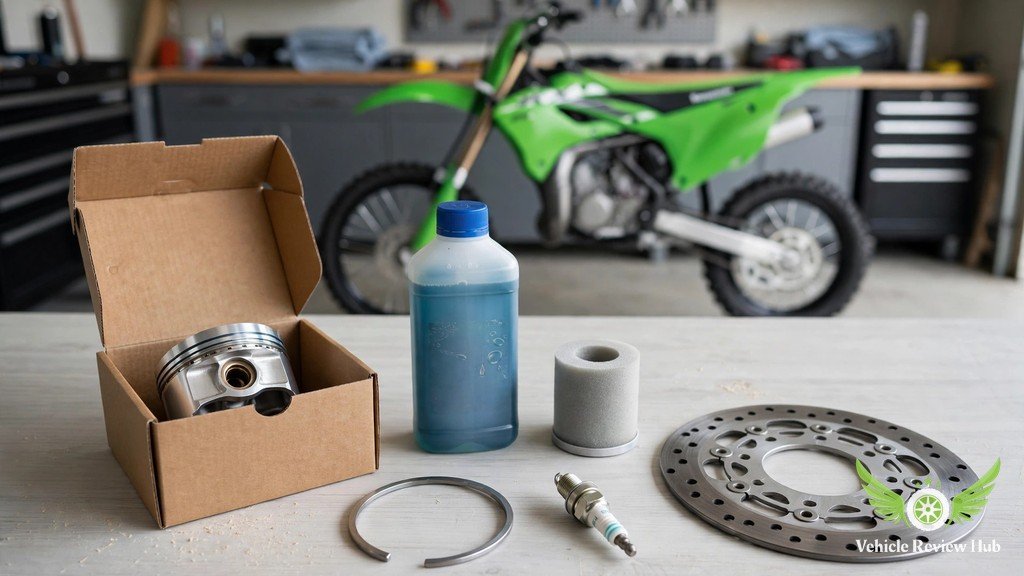
Fuel is the smallest line in the budget and the easiest to misstate. The bike carries 1.32 gallons of premix, mixed at 32 parts gasoline to 1 part two-stroke oil, and there is no miles-per-gallon figure to budget against — Kawasaki publishes none, and a closed-course racer with no odometer cannot produce one. What can be budgeted is the service cycle: oil and plug every 3 races, piston and rings every 5 races, fork and shock oil every 5 races, and a KIPS clean after every race. The piston and ring together cost about $118 at current Partzilla prices ($101.65 + $16.56) — the single largest routine parts bill in Kawasaki KX85 reliability, landing every five races.
Tyres and wear parts fill out the rest: Dunlop MX34 tyres are the only big consumable outside the engine, and the brake pads, chain, air filter and silencer wool are all small, regular purchases. There is no warranty to lean on — Kawasaki sells the KX85 as-is, with no warranty at all — so every repair is the owner’s, but the record says repairs are rare: no mechanical failures were reported in the 2025 MXA shootout test, only criticisms about feel — the Kawasaki KX85 reliability pattern, year after year. The 2026 revamp adds one cost to watch: the new fork and brakes cost more to replace after a crash. Our Kawasaki KX85 review covers the 2027 price and the revamp in full, and our Kawasaki KX85 performance guide explains why the engine never changed.
Rider-Weight Guidance Conflicts
The rider-weight question has three different answers, and they conflict. Kawasaki itself publishes no rider weight limit at all: the manual’s guidance is ability-based, saying the rider should be experienced, physically large and strong enough to straddle the bike, hold it up, and pick it up if it falls over. That is the only official position, and Kawasaki KX85 reliability names no weight number.
The numbers come from elsewhere, and they disagree. A third-party guide puts the window at about 90 to 120 pounds; Motocross Action’s 2025 shootout found the stock suspension “only good for lighter novice-level mini-cycle riders in the 60–80-pound range” — below that window entirely. Cycle News’s 2026 test is the counterpoint, which put a 15-year-old, 118-pound, 5-foot-5 rider on the bike and found it wanted revs and clutch work. The honest reading is that the weight question is really a suspension question: a heavier or faster young rider needs the suspension re-sprung, not necessarily a bigger bike, and the large-wheel KX85 L — $200 more, 34.1-inch seat, 19/16-inch wheels — exists for taller riders who have outgrown the standard bike’s size. None of this is a Kawasaki KX85 reliability defect; it is a fit question, and getting the fit wrong is what makes a reliable bike feel unreliable.
How to Keep a Kawasaki KX85 Reliable
Everything in this guide points at the same conclusion: the KX85 stays reliable when its owner follows the chart. There is no secret to Kawasaki KX85 reliability beyond that.
Preventive Maintenance, Records and Regular Inspections
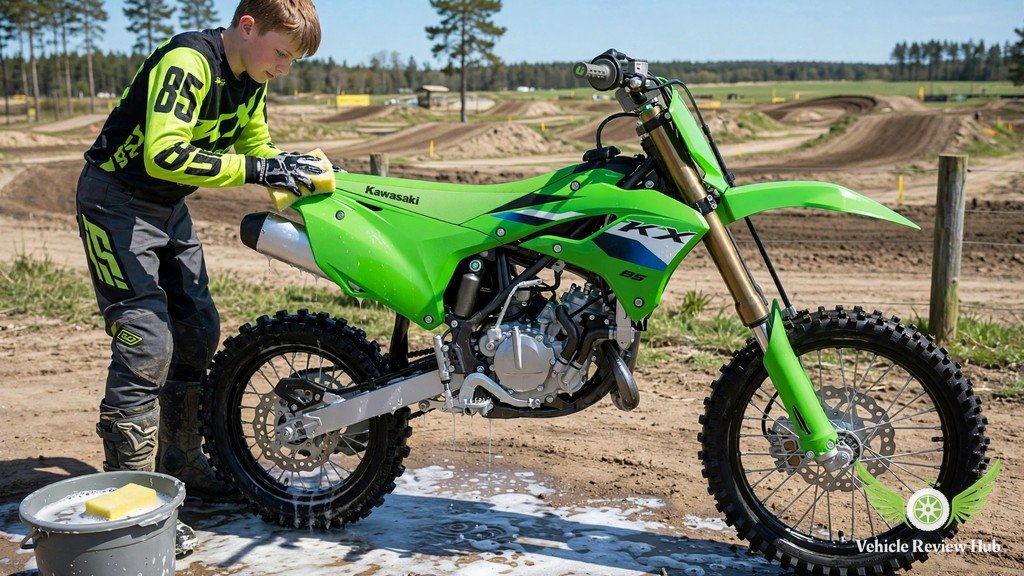
The preventive routine is the after-every-race list: clean the air filter, check the chain, look at the brake pads and fluid level, clean and check the KIPS valves, and adjust the clutch and throttle cable. Every third race adds oil, plug, piston check and cylinder-head inspection; every fifth race adds the piston replacement, the brake-pad wear check and the fork and shock oil. Write it down: a bike with no hour meter and no service history leaves its next owner guessing, and a simple log — date, races since the last piston, oil changes, KIPS cleans — turns a guess into a Kawasaki KX85 reliability record.
Regular inspections mean looking at the things that fail quietly. Check the expansion-chamber O-rings every 3 races, the silencer wool on the same cycle, and the steering-stem and wheel bearings on their 5- and 10-race cycles. Look for the signs the manual names: knocking from carbon in the chamber, poor low-speed running from a KIPS valve stuck open, poor high-speed running from valves stuck closed or clogged ports, and smoke from worn rings. Catching any of those early is a clean and a gasket; catching them late is a top-end rebuild — the Kawasaki KX85 reliability gap.
Check Any 2001 Bike’s Brakes
The last check is the oldest one. Any 2001 KX85 — or any 2001 KX model — should have its rear-brake recall repair confirmed before it is ridden hard. Look for the free repair kit or a dealer repair in its history; if there is no record, take it to a Kawasaki dealer, who can confirm the repair and fit the kit. The model number is stamped on the frame sides, running from the rear tyre to the brake — the Kawasaki KX85 reliability check for a 2001 bike.
It is a small check for a 25-year-old recall, and the only recall check this bike will ever need — the simplest summary of Kawasaki KX85 reliability: one recall, one repair, one chart unchanged in a decade. Follow the chart and confirm the repair on a 2001 bike.
Kawasaki KX85 Reliability FAQs
These are the questions US buyers ask about the 2027 KX85’s recall record, service intervals and running costs, answered from the verified facts in this Kawasaki KX85 reliability guide.
Has the Kawasaki KX85 been recalled?
Yes, once: CPSC recall 01-065 in 2001, because the rear brakes can fail. It covered about 18,000 motorcycles across all 2001 KX models, with the KX85’s share never broken out and zero injuries reported. No KX85 recall has been issued since.
How do I check if my 2001 KX85 had the recall repair?
Look for the free repair kit or dealer repair in its history. A 2001 bike with no record should go to a Kawasaki dealer, who can confirm the repair from the bike’s history, or call Kawasaki on (866) 802-9381 for a Kawasaki KX85 reliability check. The model number is stamped on the frame sides, running from the rear tyre to the brake.
How often does the piston need attention?
Clean and check the piston and rings every 3 races (7.5 hours) and replace them every 5 races (12.5 hours), per Kawasaki’s chart. The 12.5-hour figure is the replacement interval, not the check — the most common Kawasaki KX85 reliability mistake owners make.
What do a piston and rings cost?
Current Partzilla prices, checked November 25, 2026, for the 2014-and-later bike: piston (13001-0744) $101.65, single top ring (13003-1441) $16.56 — $118 together. The $106.53 and $55.35 figures in the document could not be verified against any checked source and should not be treated as current prices — the Kawasaki KX85 reliability price gap.
How often does the KIPS power valve need cleaning?
After every race — about 2.5 hours — per Kawasaki’s manuals, not 25 hours. The 25-hour items are the con-rod bearing replacement and the coolant change. Carboned-up KIPS valves are the KX85’s best-documented wear item, and the after-every-race clean is the habit that protects Kawasaki KX85 reliability most.
Does the KX85 have any NHTSA recalls or complaints?
NHTSA returns zero for every KX85 search, but that proves nothing: competition bikes sit outside NHTSA’s system, and the 2025 KX450 — which has a real CPSC recall — also returns zero. The KX85’s recall is a CPSC record — the Kawasaki KX85 reliability recall record: one recall, from 2001, and none since. Our Kawasaki KX85 comparison puts the four-bike class side by side.