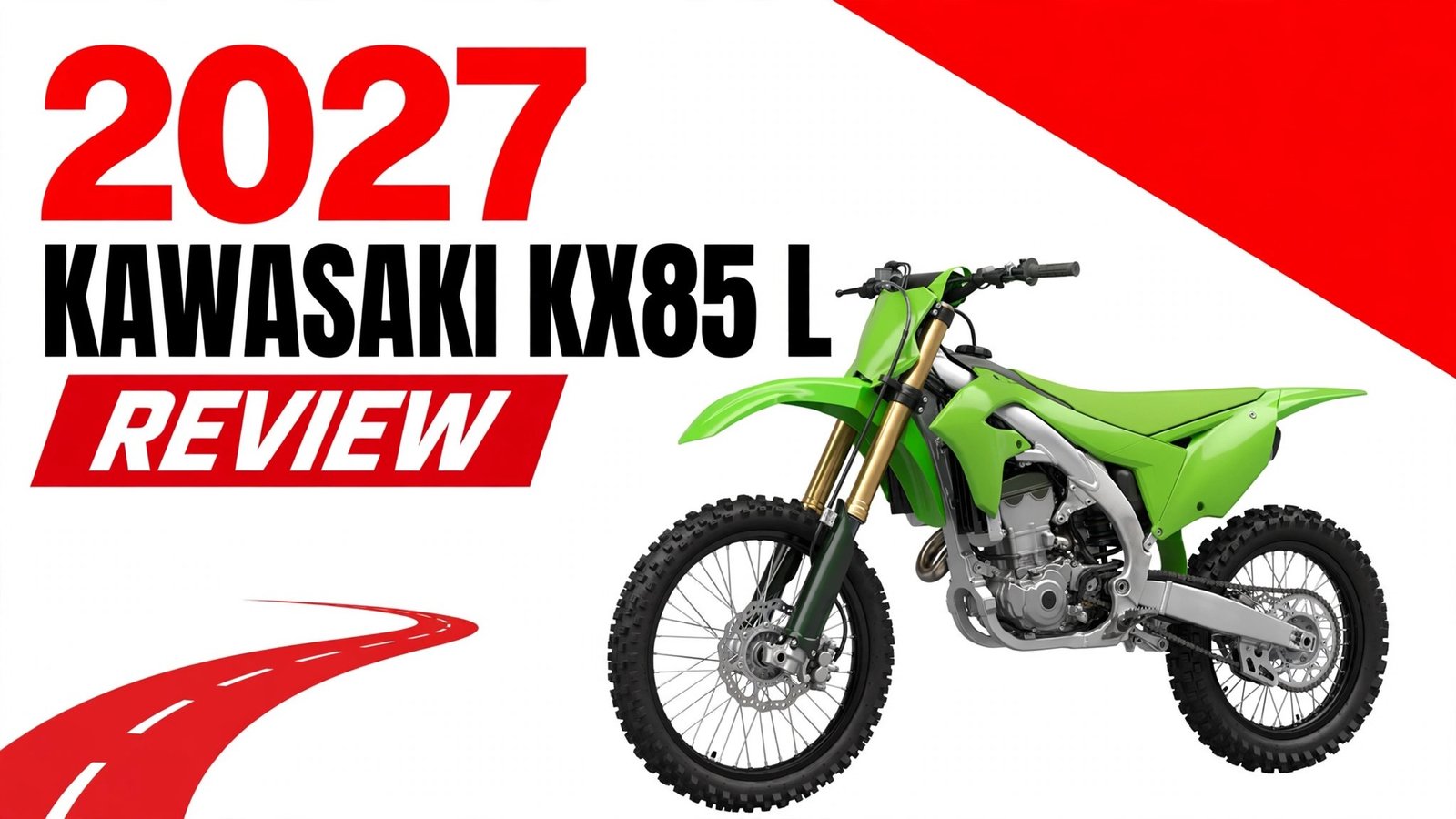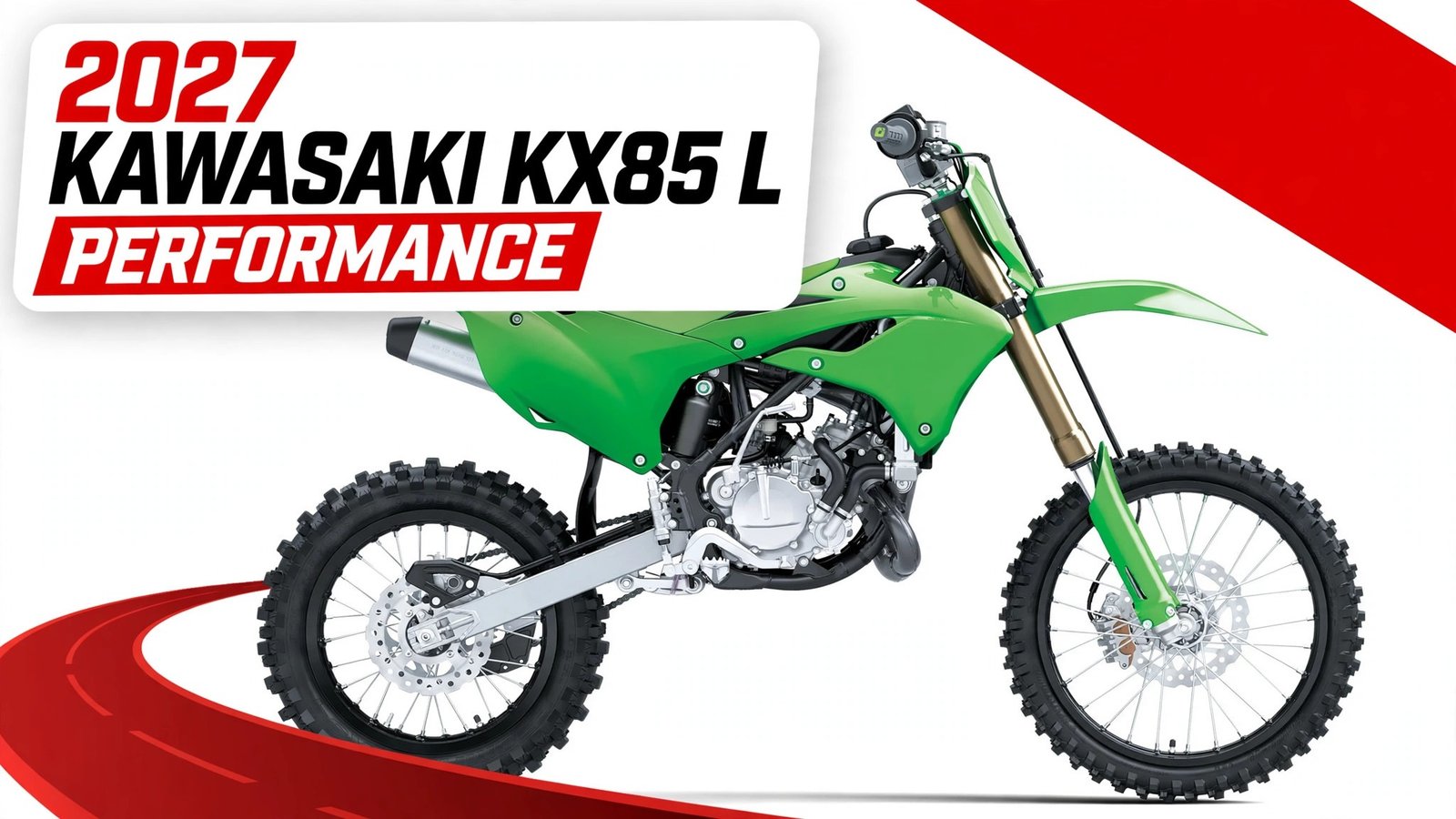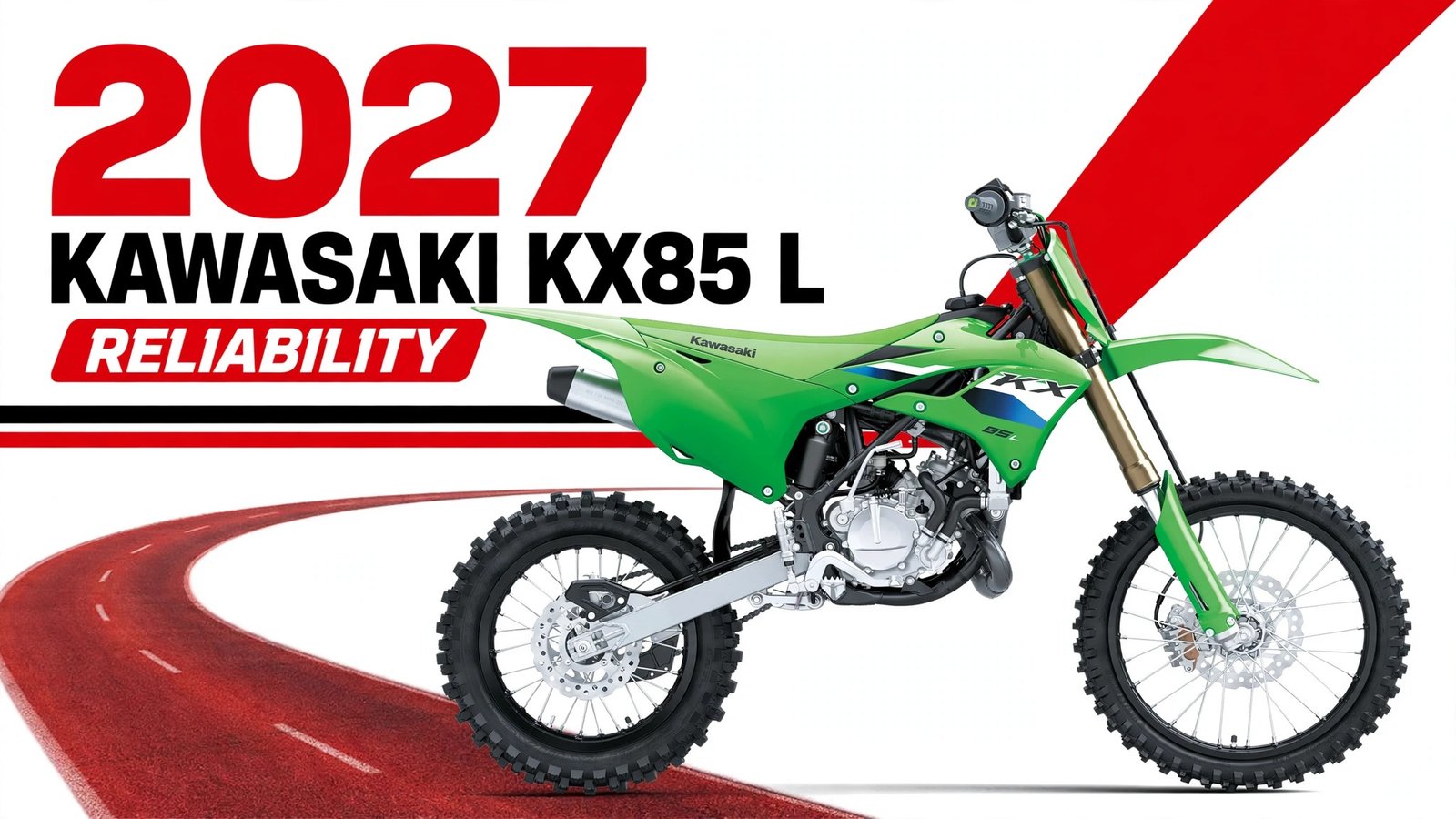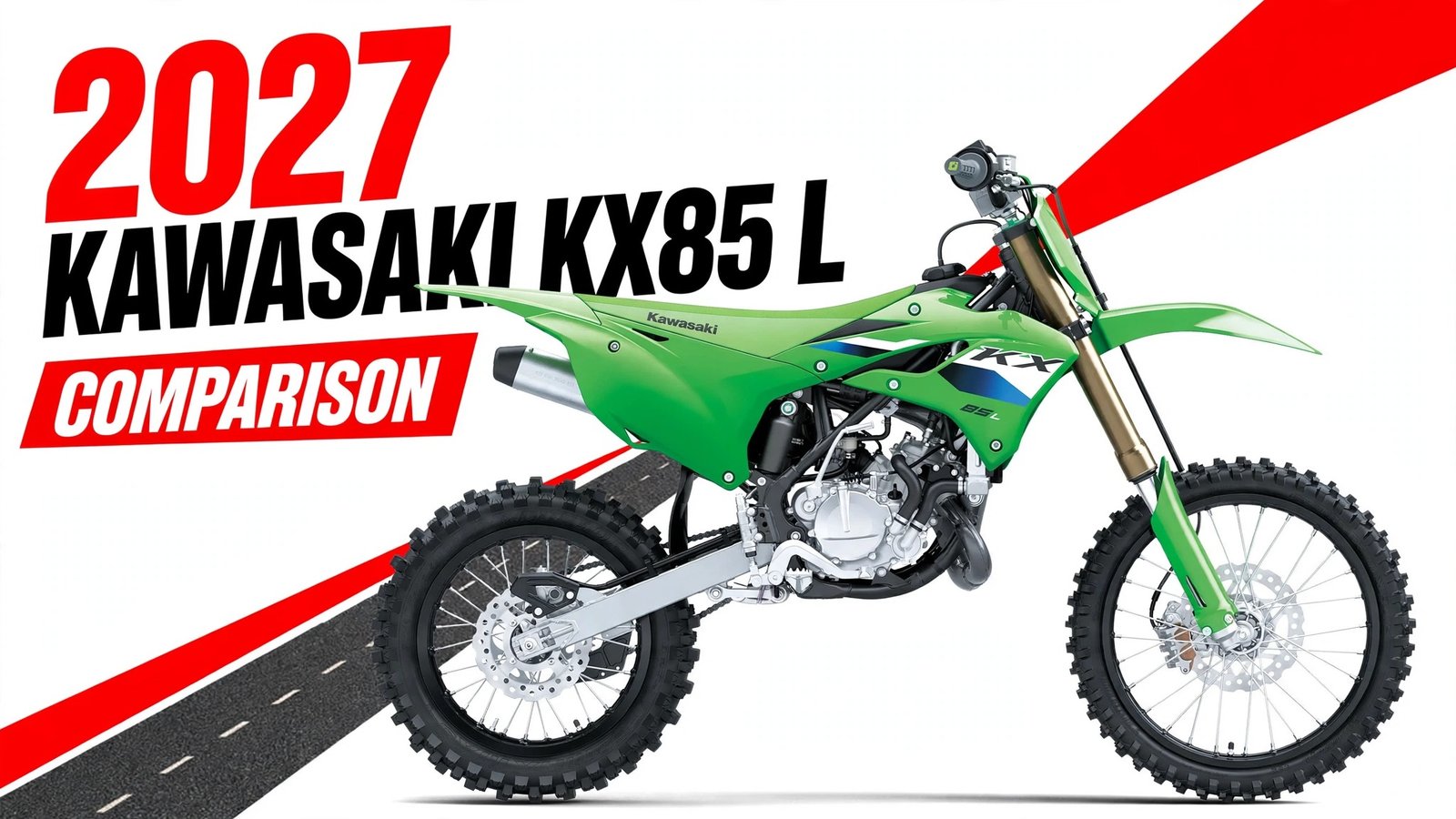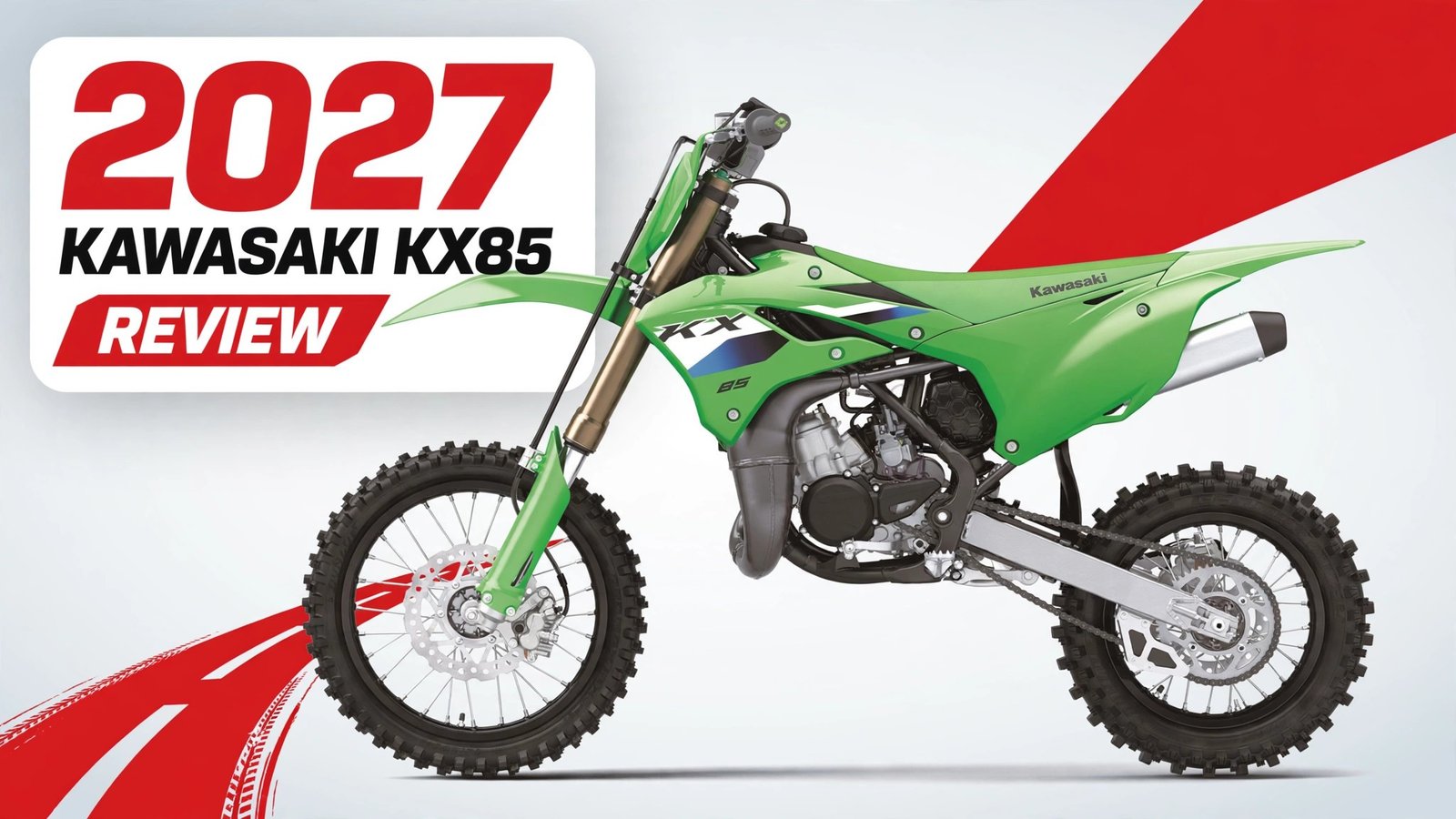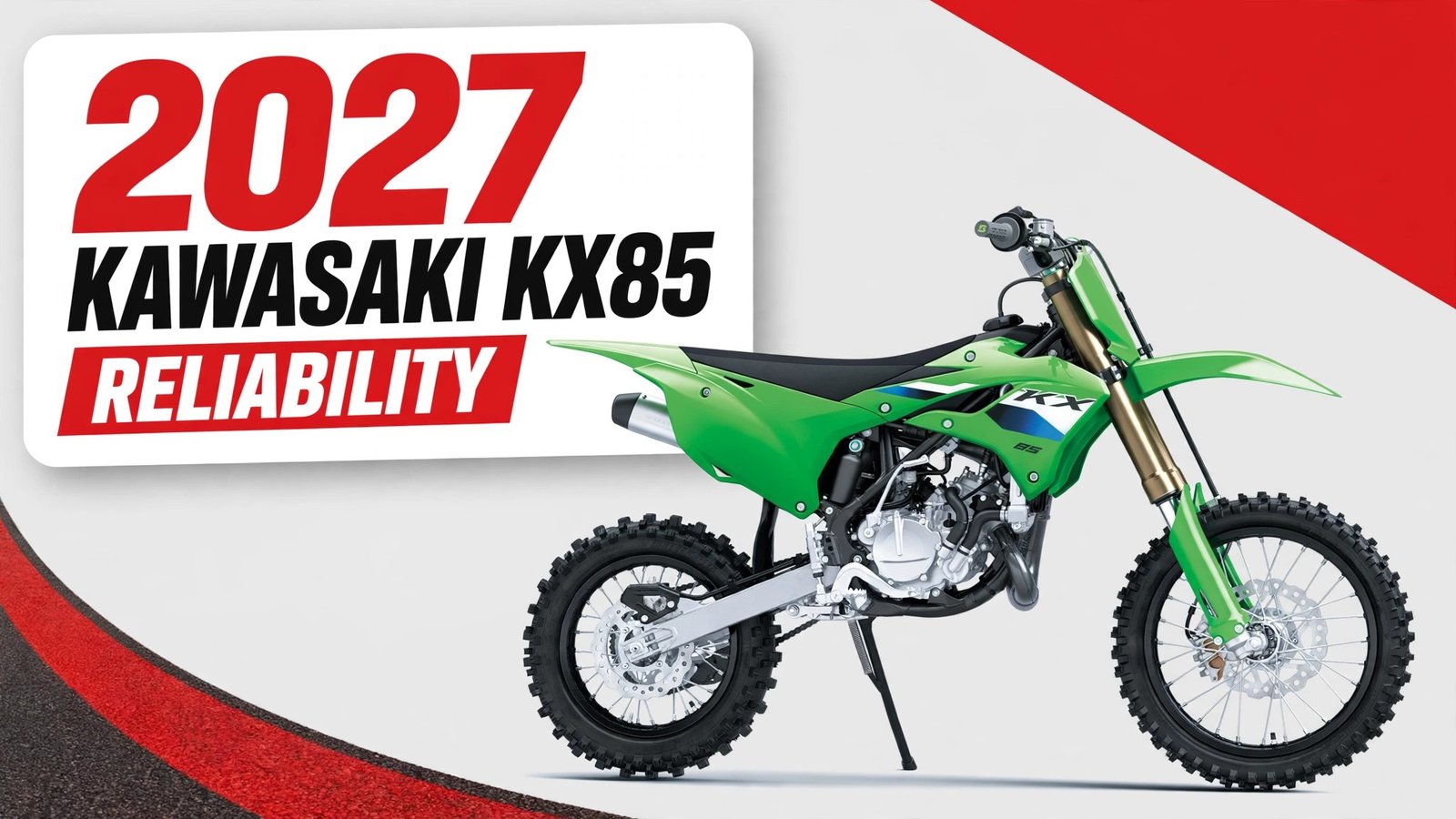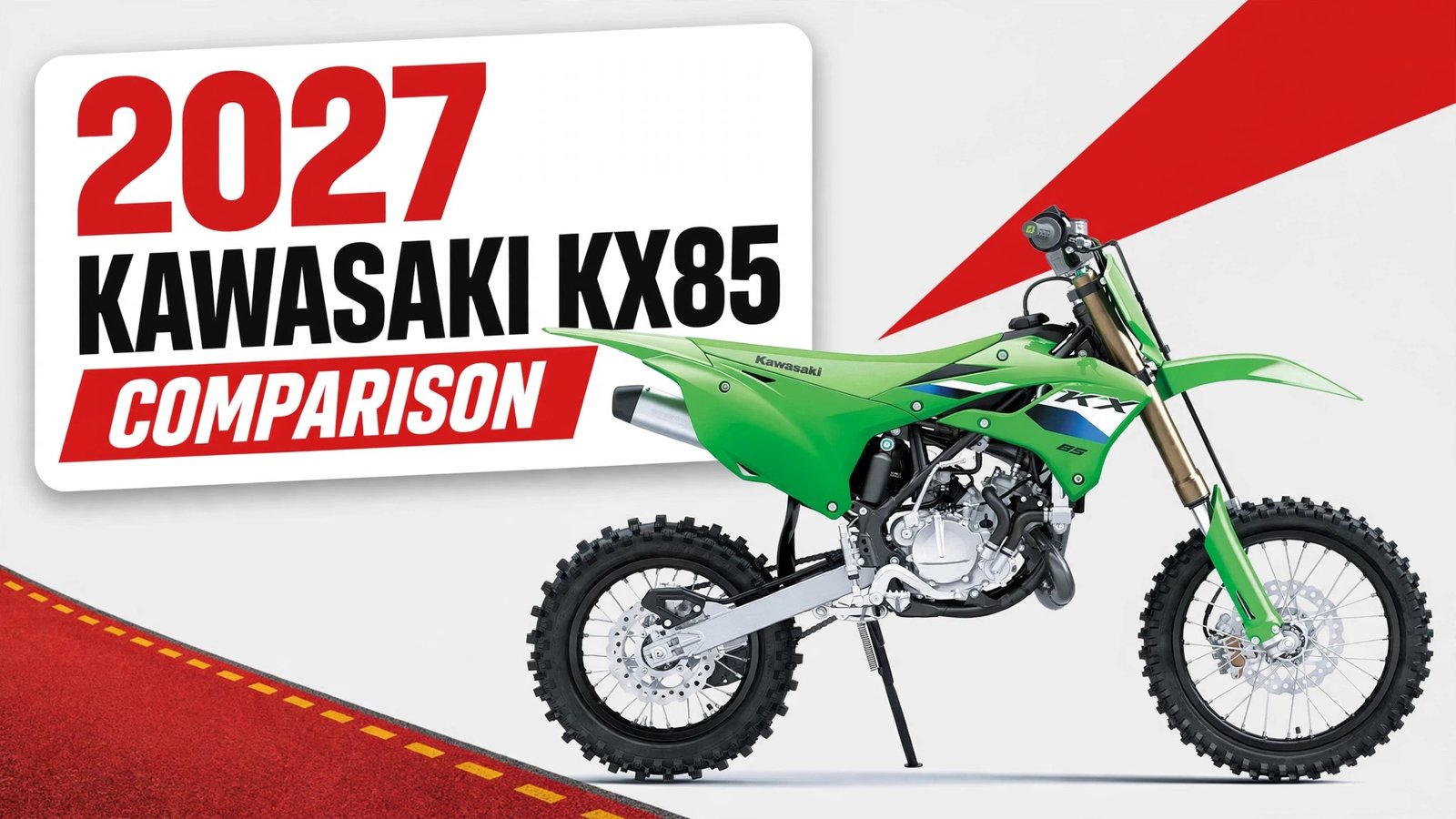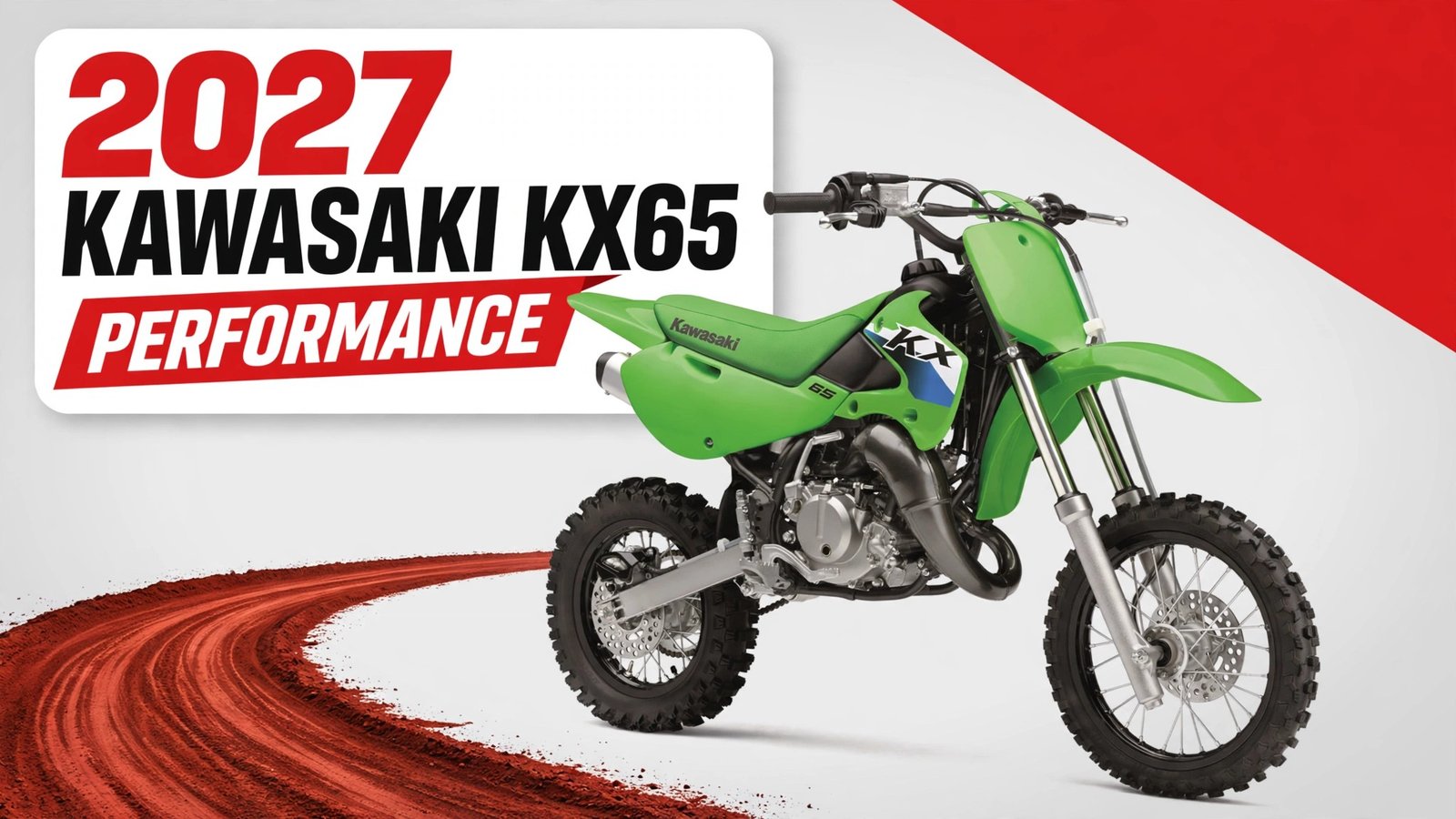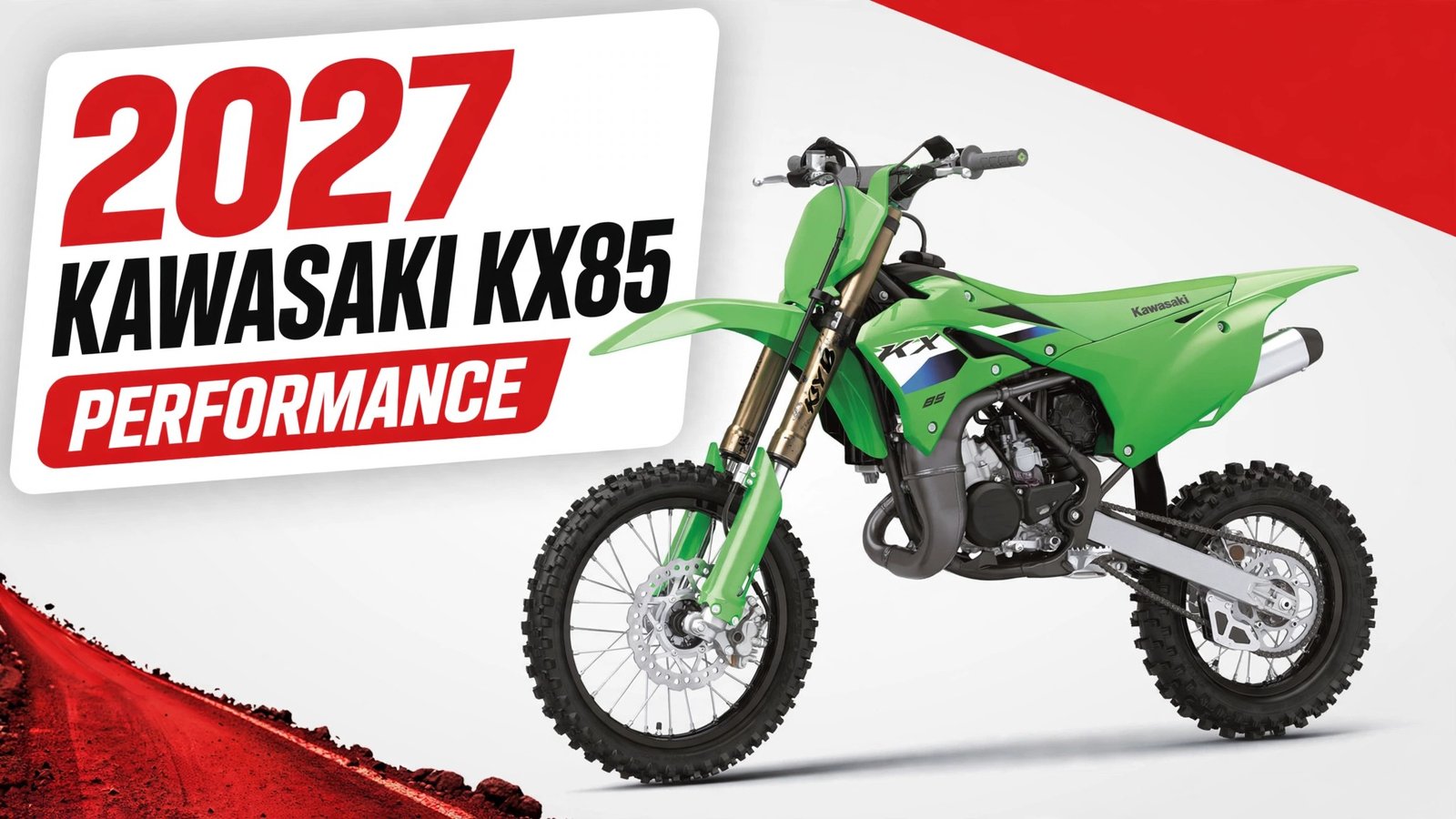
There is exactly one horsepower number you can trust for the Kawasaki KX85, and it is twelve years old. This Kawasaki KX85 performance guide starts there, because every other number you will find online — the 28.97 hp claim, the 78 mph top speed, the fuel-economy figures — falls apart the moment you ask who measured it. The honest picture is a bike whose engine has not changed since 2014, whose chassis was rebuilt for 2026, and whose performance story is told by three shootouts, two 2026 ride tests and a single dyno run.
Kawasaki KX85 Engine Performance and Power Delivery
The engine is the one part of the 2026 revamp Kawasaki left alone, and that fact shapes this whole Kawasaki KX85 performance guide. The 84cc two-stroke carried over unchanged from the 2014 bike, so the only American dyno figure ever published still applies
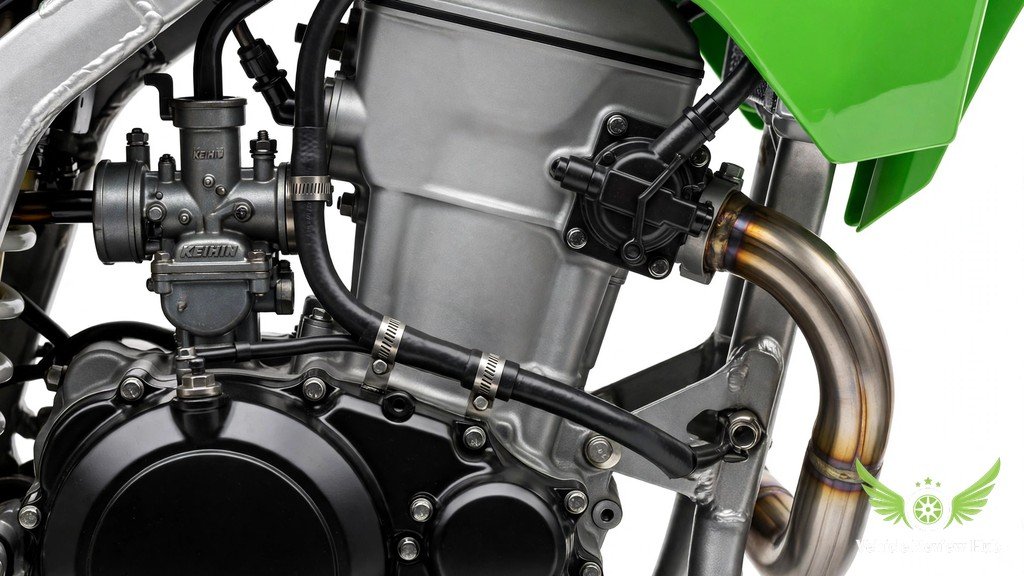
Only Dyno: 22.68 hp (2014)
Motocross Action’s 2014 test of the new-for-2014 KX85 is the only US dyno run the bike has ever had. On its dyno, the 2014 bike made 22.68 hp and 10.02 lb-ft of torque, up from 18.79 hp and 9.20 lb-ft on the 2013 bike — a 17 percent jump that came with the first big revamp, which reworked the cylinder, the KIPS power valve, the crank and the cooling. Kawasaki itself publishes no horsepower or torque figure for the KX85 on any spec sheet from 2024 to 2027, so the MXA number is the only citable figure there is for Kawasaki KX85 performance.
Two details in the MXA test matter for how far the number travels. First, the article never names the dyno brand and never gives a peak rpm for the KX85, so this Kawasaki KX85 performance guide prints neither — a dyno figure without its conditions is only half a fact. Second, the same test says the KTM 85 SX made about 2 hp more than the KX85, and the 2014 shootout printed 25.36 hp for the Husqvarna TC85 while calling the Yamaha YZ85 about two horsepower short of the Kawasaki. That is the whole of the measured power gap in Kawasaki KX85 performance.
| Test | Bike | Power | Torque |
|---|---|---|---|
| MXA 2014 test | 2014 Kawasaki KX85 | 22.68 hp | 10.02 lb-ft |
| MXA 2014 test | 2013 Kawasaki KX85 | 18.79 hp | 9.20 lb-ft |
| MXA 2014 shootout | 2014 Husqvarna TC85 | 25.36 hp | Not stated |
| MXA 2014 test | 2014 KTM 85 SX | About 2 hp more than the KX85 | Not stated |
Note: All figures are from Motocross Action’s 2014 KX85 test and 2014 85cc shootout. MXA never named the dyno brand or the KX85’s peak rpm, and no one has published a newer KX85 dyno figure since — the 2025 shootout contains no dyno numbers at all. The KTM figure is MXA’s wording (“2 horsepower more”), not a printed number, and this Kawasaki KX85 performance guide treats it as a derived estimate, not a test result.
28.97 hp Claim Is Unsourced
Search for the KX85’s horsepower and the first number you meet is often 28.97 hp, listed by CycleChaos as “28.97 HP (21.6 KW) @ 11500RPM” with 13.28 lb-ft of torque, and repeated by BikeTopSpeed as the bike’s power. The problem is that neither site gives a source, a test, a citation or a reference for the figure — it simply appears, and other aggregators copy it. Kawasaki publishes no power figure at all, and the MXA dyno measured 22.68 hp, so the 28.97 hp claim matches neither the manufacturer nor the only test — a gap this Kawasaki KX85 performance guide keeps in plain sight.
The nearest real origin is a Japanese-market listing, which gives 28.5 PS at 12,000 rpm and 17.2 Nm at 11,000 rpm — different rpm points from CycleChaos’s 11,500 and 10,500, and a different unit (PS, not hp). The 28.97 hp figure looks like a unit-conversion artefact — 21.6 kW converts to 28.97 hp — passed between aggregators until it reads like a fact. This Kawasaki KX85 performance guide treats it as what it is: an unsourced number with no test behind it, and it never prints it as a Kawasaki claim or a dyno result.
Kawasaki KX85 Top Speed and Acceleration
Top speed is where Kawasaki KX85 performance reporting goes thinnest. No reputable publication has ever published a tested top speed for the bike — no GPS run, no radar trap, no timed straight — and yet a single number, 78 mph, appears on page after page as though it were measured.

No Tested Top Speed Exists
The searches are unambiguous: Motocross Action, Dirt Bike Magazine, Cycle News, Cycle World and Motorcycle.com have never published a tested KX85 top speed, and neither has any other reputable outlet. A Facebook video from June 2026 shows a phone speedometer app reading 56.7 mph on a 2023 KX85 on a wet paved road — one amateur run on a phone GPS, not a test, and no honest account of Kawasaki KX85 performance presents it as one.
The same gap holds for acceleration. BikeTopSpeed lists a “0–60 mph 12–14 seconds (approx)” figure with no test, method or source behind it, and no magazine has ever published a timed 0–60 or quarter-mile run for the KX85. The honest statement of Kawasaki KX85 performance on speed is that the bike’s straight-line numbers were never measured in print — and any page that prints one is guessing.
78 mph Claim Is Unsourced
The 78 mph figure comes from BikeTopSpeed, which states that “the Kawasaki KX85 top speed is nearly 78 mph in fully stock condition” and repeats it in its spec table. The page names no test, no method, no rider and no source — and it betrays itself with its own price, listing $4,699, which was the 2023 MSRP, not the 2026 price of $4,999.
The aggregator spread proves the point: CycleChaos says 60 mph, PowerSportsGuide says 65 mph, Dirt Bike Empire says 55 mph stock or 75–80 mph with different gearing, TrailAndSummit says 80 mph, and BikeBD says about 70 km/h, roughly 43 mph. Until someone straps a GPS to a stock KX85 and publishes the run, Kawasaki KX85 performance has no top-speed number — and this guide will not invent one.
Kawasaki KX85 Mileage and Fuel Economy
Fuel economy is the one performance question the KX85 simply does not answer, and the reason is the bike itself. It is a premix two-stroke racer with a 1.32-gallon tank, no speedometer and no odometer, ridden only on closed courses — there is no road, no commute and no odometer reading from which a miles-per-gallon figure could even be calculated.
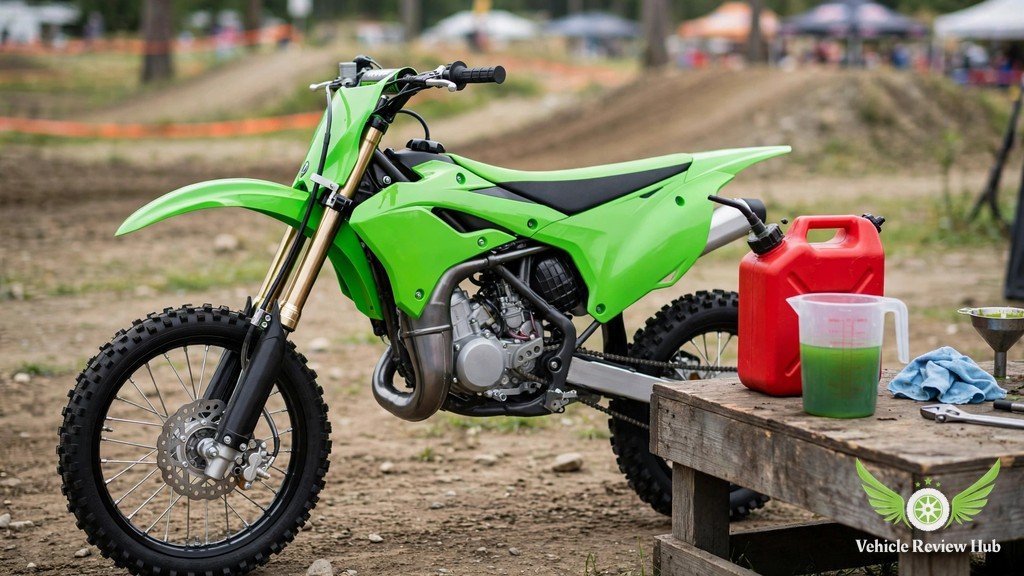
No MPG for a Premix Racer
Kawasaki publishes no MPG figure for the KX85 — there is no MPG field on the 2025 or 2026 spec sheets, and Cycle World’s claimed-specs table has no MPG row either. Without an odometer, a speedometer or a road, there is no honest way to state a miles-per-gallon number for this bike, and Kawasaki KX85 performance is better served by saying so than by guessing.
The figures that do circulate are inventions. Indian aggregators ZigWheels and BikeDekho claim “25 kmpl (ARAI claimed)” for the KX85, while BikeBD claims 30 kmpl — and neither can be true, because ARAI is Indian road-bike certification and the KX85 is an American competition-only motocrosser that was never ARAI-tested. Two aggregators, two different numbers, no test. Kawasaki KX85 performance has no fuel-economy figure, and this guide leaves that box empty rather than filling it with a made-up one.
Premix Is 32 to 1
What the bike does use is premix, and the ratio is verified in Kawasaki’s own owner’s manual: 32 parts gasoline to 1 part two-stroke oil, or about 4 fluid ounces of oil per gallon of gasoline. The manual specifies unleaded petrol with a minimum of 90 AKI in the US, and a richer 16:1 mix during break-in before switching to 32:1. The same 32:1 ratio appears in the 2010, 2011, 2014, 2016 and 2017 owner’s manuals, so it is a settled figure for Kawasaki KX85 performance, not a single-year quirk.
The practical consequence is that fuel range is a matter of tank size, not economy: 1.32 gallons of premix, and a rider who mixes in a can before the gate. Getting the mix right is the closest thing this bike has to a fuel-economy discipline, and Kawasaki KX85 performance depends on it more than on any MPG number.
Kawasaki KX85 Real-World Riding Experience
The riding record for the KX85 runs from the 2014 revamp through the 2025 shootout and into the two 2026-bike ride tests, and the verdicts split in a useful way: the engine has always been the friendly one, and the 2026 bike asks more of its rider than the old one did. This Kawasaki KX85 performance guide reads those tests in date order, because the date is what makes them honest.

The Riding Experience Buyers Actually Talk About
The thread running through a decade of tests is that the KX85’s engine is the most forgiving in the class. Motocross Action’s 2014 test called its power “metered” and “easy to ride for all ages and skill levels”, with “excellent throttle response off the bottom” and a linear pull through the powerband. Dirt Bike Magazine’s 2022 full test said the same in plainer language: “great for beginner or novice riders right off the showroom floor, because the power is smooth and usable throughout”, with good midrange pull, strong top-end revs, and a cable clutch with “a really easy and very smooth pull, making clutching out of corners a breeze” — the friendliness that defines Kawasaki KX85 performance for a young rider.
The shootouts sharpen the picture. In 2025 it finished third of three groups, with testers admitting “the KX85 was down on horsepower when compared to KTM and Yamaha”, that riders “had to use the clutch more to get it into the power”, and that once going it “petered out on top, while the YZ and KTM pulled much further”. The 2025 verdict was blunt: “this bike is not race-ready in stock form. The engine is too slow, and the suspension is too soft.” Every one of those verdicts predates the 2026 revamp — the 2014, 2016 and 2025 shootouts all tested the old bike, and no 2026 shootout exists — which is why Kawasaki KX85 performance has to be read with the date attached to every quote.
2026 Bike Wants Revs and Clutch
Two ride tests of the actual 2026 bike exist, and both say the revamped KX85 wants more from its rider than the old one did. Cycle News’s July 2026 review put 15-year-old Myles Abbott — 118 lb, 5 feet 5 inches, racing a 2025 Husqvarna TC85 and a KTM 105 Supermini — on the 2026 KX85 and KX112, and found that “the 85 favors aggressive riding and high rpm, requiring more clutch work, especially when exiting corners”, with a high-rev window that “felt narrower and required more effort near the redline” than his Husqvarna’s.
Dirt Bike Magazine’s June 2026 video test, with Austin Tilley aboard, reached a friendlier verdict — Tilley “felt immediately comfortable on the KX85” Together the two tests agree on the shape of 2026 Kawasaki KX85 performance: same engine, better chassis, and a bike that rewards a rider who keeps it on the pipe and works the clutch — a novice racer’s bike, not a novice rider’s bike.
Two Smokers’ Ty rides his 2012 KX85 through wooded trails, creek crossings and steep hill climbs, trying to keep up with Jake’s KTM 300 — a long, casual POV vlog rather than a test, with informal English narration throughout. Watch it below:
Kawasaki KX85 Handling, Braking and Stability
Handling is where the 2026 revamp shows up most, because the fork and brakes were the two things Kawasaki actually changed. This Kawasaki KX85 performance guide separates the old-bike verdicts from the new-bike hardware, because mixing them up is the easiest mistake in this whole subject.

Softest Suspension in Shootouts
The “softest suspension” line comes from Motocross Action’s 2025 shootout, and it needs its date: “the KX85 comes off the showroom with the softest suspension, only good for lighter novice-level mini-cycle riders in the 60–80-pound range”. The 2025 bike that earned that verdict had the old 36 mm fork, which adjusted compression only, and a rear shock with 24-way compression and 21-way rebound. It is a verdict on the pre-revamp bike, not on the 2026 machine — a distinction Kawasaki KX85 performance coverage too often skips.
The contrast with 2014 shows how much the class moved around the KX85 while the bike stood still. In the 2014 shootout the KX85 actually won the suspension category — “that’s because it’s up against stiff WP forks and archaic YZ85 units” — So “softest” is the 2025 verdict on a bike that had not changed in a decade, and Kawasaki KX85 performance in 2026 starts from a different fork entirely.
Handling, Braking and Stability on Real Roads
The 2026 hardware is a step change: a fully adjustable 43 mm KYB inverted fork — compression and rebound, Kashima-coated outer tubes, leaf-valve internals — replacing the 36 mm compression-only unit, and a Uni-Trak rear shock that gained a high-speed compression adjuster, a thicker 14 mm rod and a longer 390 mm cylinder, keeping 10.8 inches of travel at both ends. The brakes grew with them: a 240 mm front petal disc with a KX250-style Nissin master cylinder and dual 25 mm pistons, up from 220 mm, and a 220 mm rear disc, up from 184 mm.
What no one has measured is a stopping distance — no publication has ever published an instrumented braking test for the KX85, so this guide prints none. What exists is subjective, and it splits by era: the 2014 shootout ranked the KX85’s brakes the most usable in the class, “like baby bear’s porridge”, gentle enough for young riders where the KTM’s were “too touchy”; Cycle News’s 2026 test found that despite the upgraded package, the braking “was not quite as strong as” the tester’s Husqvarna and KTM. Real-road riding is not this bike’s job, though: it is a closed-course competition machine with no lights, no instruments and no mirrors, and Kawasaki KX85 performance is measured on a track, not on a road.
Kawasaki KX85 Performance Compared With Other Sport Bikes
The 85cc class is four bikes wide in 2027, and the performance comparison is really a price-versus-power argument: the KX85 is the cheapest by a wide margin and the slowest on the only dyno that ever tested it, while the Austrian pair cost roughly $2,000 more and make more power. This Kawasaki KX85 performance guide lays out the head-to-head against the KTM 85 SX, the class benchmark, and then answers the question every parent actually asks.
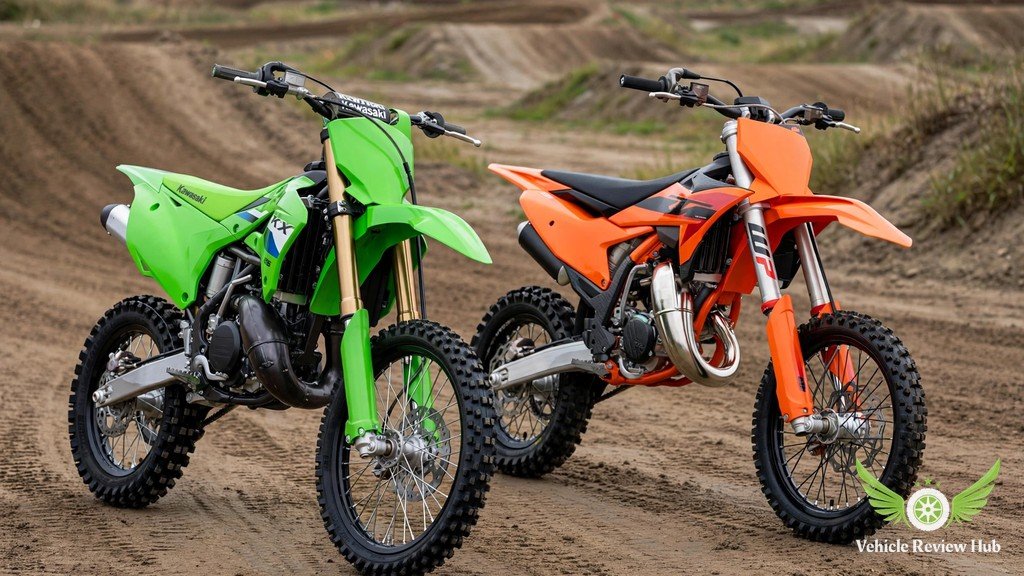
Kawasaki KX85 vs KTM 85 SX
The KTM’s advantage is not just power, though — it is the whole package around it. That is the whole of the measured power gap in Kawasaki KX85 performance.
The hardware tells the price story. The KTM costs $6,949 against the KX85’s $4,999 — $1,950 more on MSRP, $2,060 more delivered — and for that it brings a WP XACT 43 AER air fork, a linkage-less PDS rear shock, a Formula hydraulic clutch and a 149.9-pound weight without fuel, 10.4 lb lighter than the Kawasaki’s 160.3 lb. It is the value pick against the performance pick, and Kawasaki KX85 performance has to be judged on that trade, not on horsepower alone.
| Item | 2027 Kawasaki KX85 | 2027 KTM 85 SX 17/14 |
|---|---|---|
| MSRP | $4,999 | $6,949 |
| Delivered | $5,314 | $7,374 |
| Engine | 84cc 2-stroke single, KIPS | 84.9cc 2-stroke single, power valve |
| Carburettor | 28 mm Keihin PWK28 | Keihin PWK 28 |
| Front fork | 43 mm KYB inverted, compression + rebound | WP XACT 43 AER USD, 43 mm |
| Rear suspension | Uni-Trak linkage shock, 10.8 in | WP XACT PDS, linkage-less, 11.4 in |
| Brakes | 240 mm front / 220 mm rear | 240 mm front / 220 mm rear |
| Seat height | 32.7 in | 33.3 in |
| Weight without fuel | 160.3 lb | 149.9 lb |
| Clutch | Cable, wet multi-disc | Formula hydraulic, wet multi-disc |
| Warranty | Sold as-is, none | 1-year (from model year 2027) |
Note: Prices are 2027 MSRPs — Kawasaki’s own spec sheet for the KX85, KTM’s own model page for the 85 SX — with destination charges of $315 and $425 respectively. No maker publishes a claimed power figure for either bike; the KX85’s only US dyno figure is MXA 2014’s 22.68 hp, with the KTM about 2 hp stronger in the same test. Both weights are without fuel, like for like — and that is the honest frame for Kawasaki KX85 performance against the KTM.
Is the Kawasaki KX85 Suitable for Beginner Riders?
Kawasaki’s own manual answers first, and it does not hedge: the KX85 is “a high performance off-road motorcycle designed for experienced young riders. It is not suitable for beginners.” As a first-ever bike for a child who has never ridden, the answer is no — a trail bike is the right machine, and Dirt Rider’s shootout note says the same: none of the 85cc race bikes is a great first bike.
But “beginner” means two different things, and the testers mean the second one. Motocross Action called the KX85’s power “metered” and “easy to ride for all ages and skill levels”; Dirt Bike Magazine called it “great for beginner or novice riders right off the showroom floor”; and the 2025 shootout said it “feels like the Kawasaki KX85 was designed for beginner and novice-level riders”. Those testers mean a novice racer — a young rider graduating from a KX65 or a trail bike who already rides, shifts and clutches — not a novice rider. For that rider, with a 32.7-inch seat that is the lowest in the class and suspension that suits 60–80-pound riders stock, Kawasaki KX85 performance is forgiving where the Austrian bikes are demanding, and that is the honest answer to the question. Our Kawasaki KX85 review covers the price and the 2026 revamp in full, and our Kawasaki KX85 comparison puts the whole four-bike class side by side.
Kawasaki KX85 Performance FAQs
These are the questions US buyers ask about the 2027 KX85’s speed, power and fuel use, answered from the verified facts in this Kawasaki KX85 performance guide.
How much power does the KX85 make?
The only US dyno figure is Motocross Action’s 2014 test: 22.68 hp and 10.02 lb-ft from the 2014 bike. Kawasaki publishes no power figure, and no one has dyno’d a 2026 bike in print or on the web — the engine carried over unchanged in the 2026 revamp, so the 2014 number remains the reference for Kawasaki KX85 performance.
What about the 28.97 hp figure I see online?
It is unsourced. Aggregator sites list 28.97 hp with no test, source or citation behind it, and the numbers match neither the MXA dyno (22.68 hp) nor the Japanese-market 28.5 PS listing at different rpm points. This Kawasaki KX85 performance guide does not trust it — and neither should you.
What is the KX85’s top speed?
No tested top speed exists in any reputable publication. The 78 mph figure is an aggregator invention — five aggregators give five different numbers, from 55 to 80 mph, and none of them tested the bike — so Kawasaki KX85 performance has no top-speed number to quote.
What fuel and oil mix does the KX85 use?
Premix 32:1 — 32 parts gasoline to 1 part two-stroke oil — with unleaded petrol, minimum 90 AKI in the US. Use 16:1 during break-in, then 32:1 after. There is no MPG figure: it is a premix racer, and Kawasaki KX85 performance is measured on a track, not at a fuel pump.
Does the 2026 bike really want revs and clutch?
Yes, on the actual 2026 bike. Cycle News’s July 2026 test, with 15-year-old Myles Abbott aboard, found “the 85 favors aggressive riding and high rpm, requiring more clutch work, especially when exiting corners”, with a narrower high-rev window than his Husqvarna TC85. Motocross Action’s 2025 shootout said the same of the pre-revamp bike, and the 2026 tests confirm that Kawasaki KX85 performance still rewards a busy left hand.
Is the KX85 suitable for beginner riders?
Not as a first-ever bike — Kawasaki’s manual says it is “designed for experienced young riders” and “not suitable for beginners”, and it is a 6-speed manual-clutch two-stroke race bike. It is a good first race bike for a young rider graduating from a KX65 or a trail bike who already rides, shifts and clutches — that is the “beginner/novice” the testers mean when they call Kawasaki KX85 performance forgiving. Our Kawasaki KX85 reliability guide covers the maintenance schedule and the one CPSC recall in full.