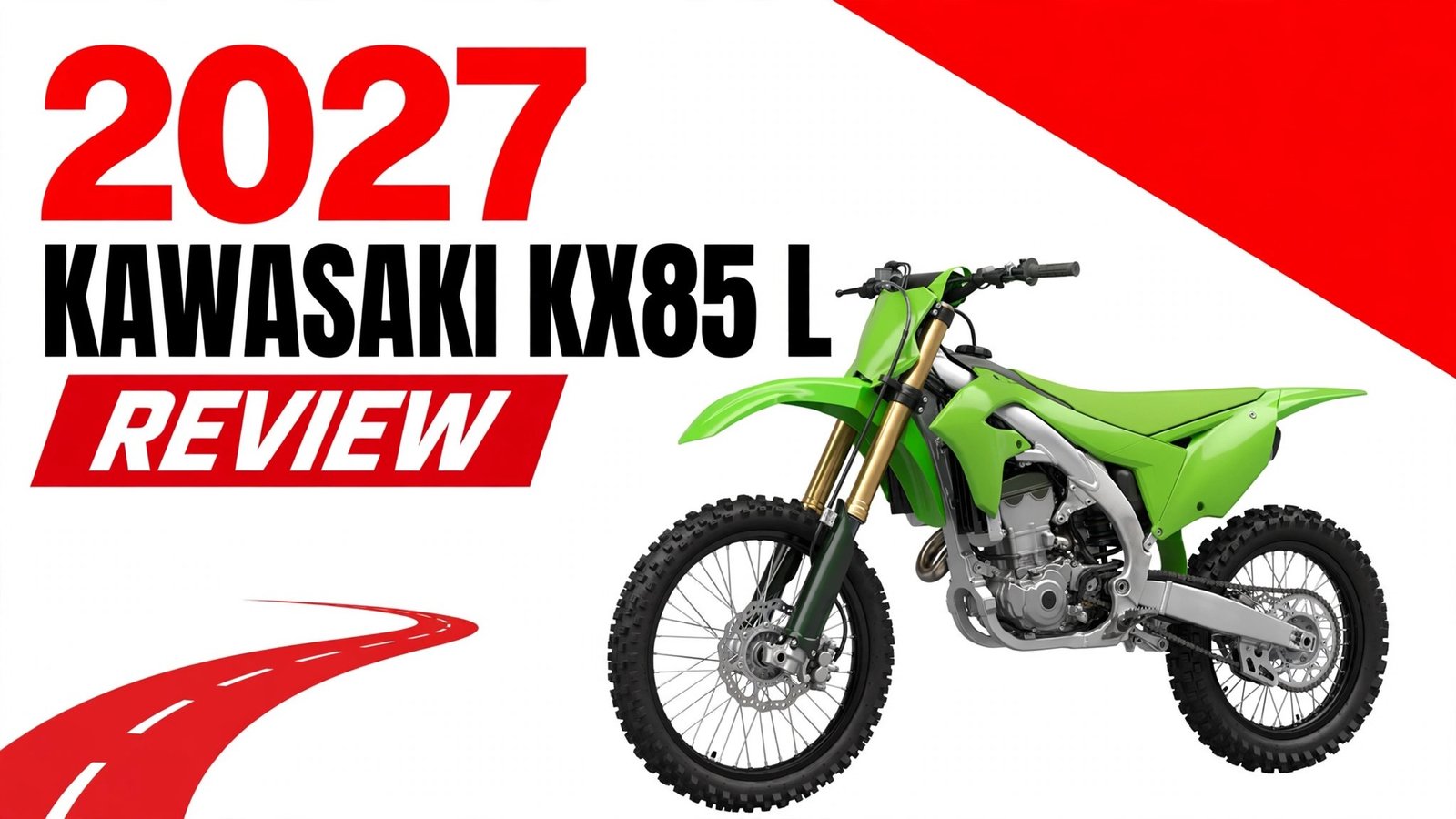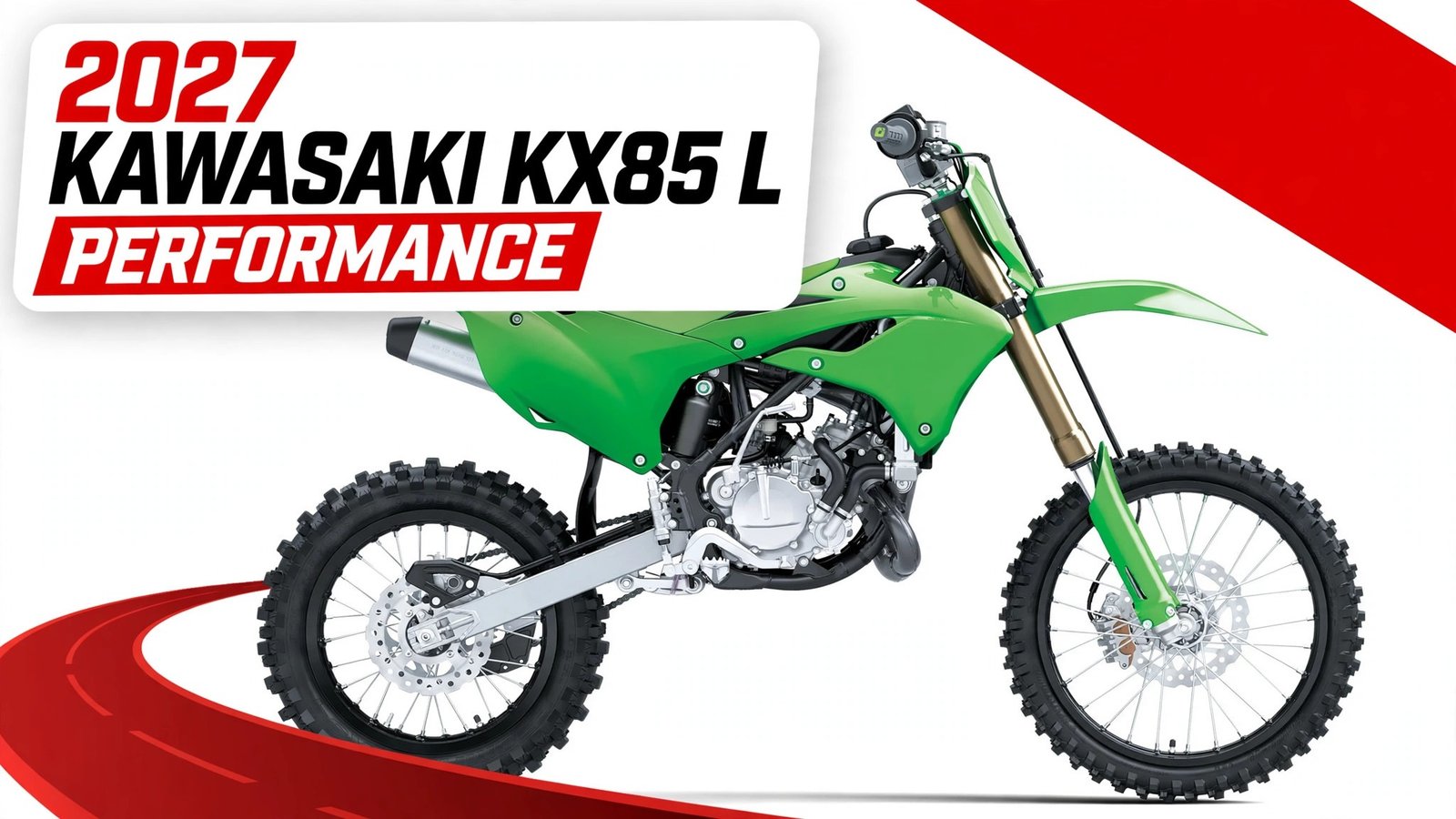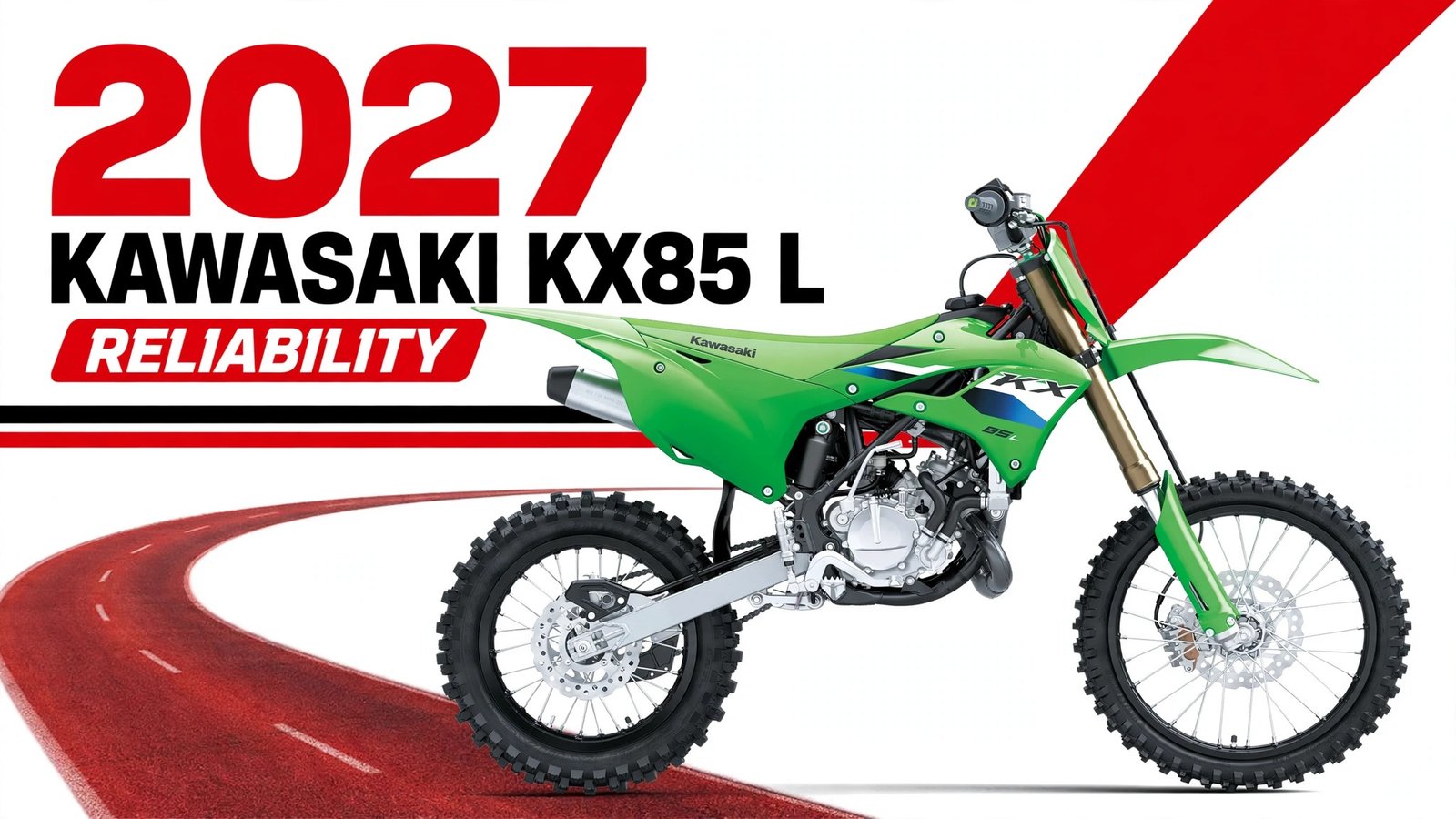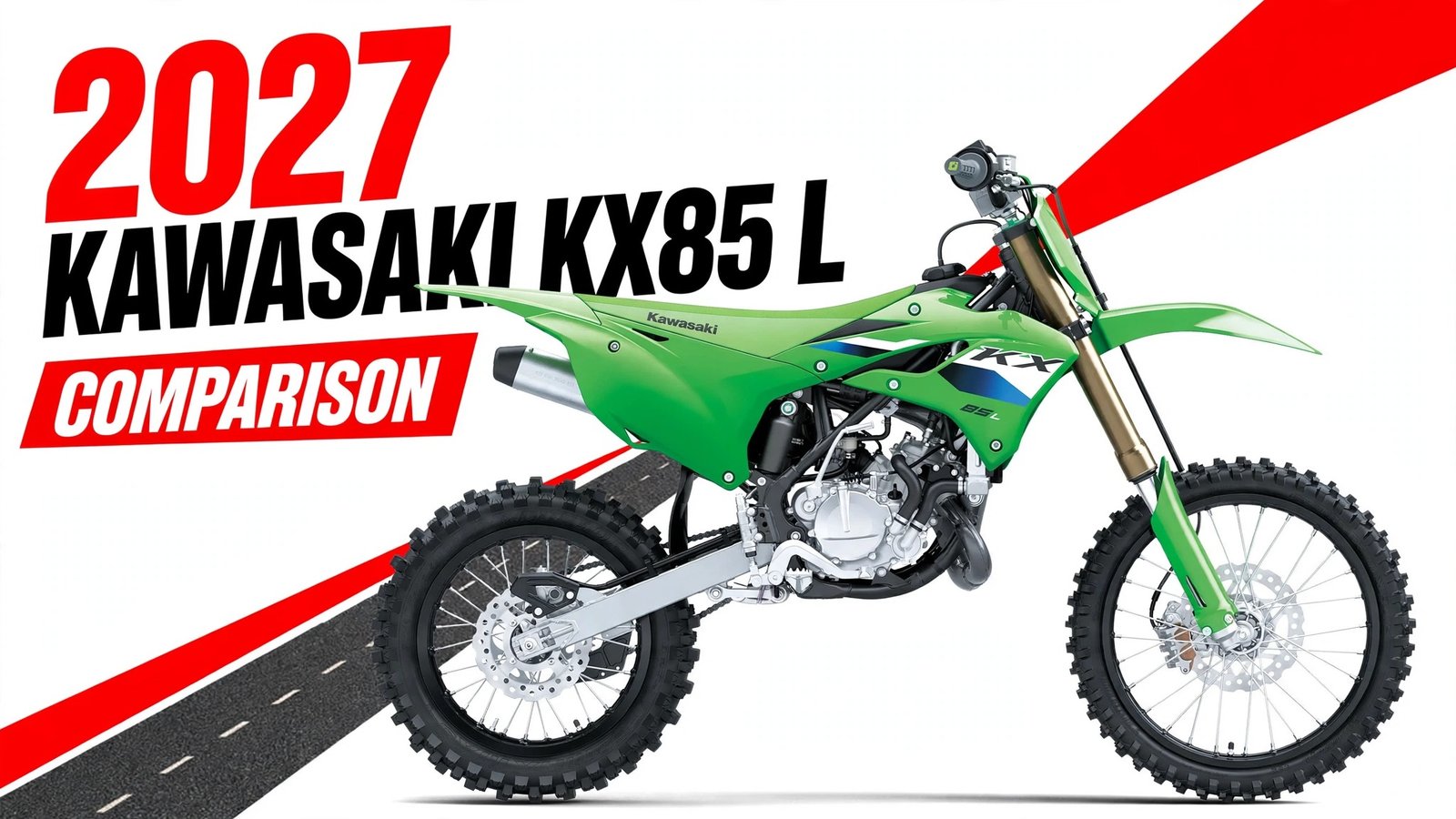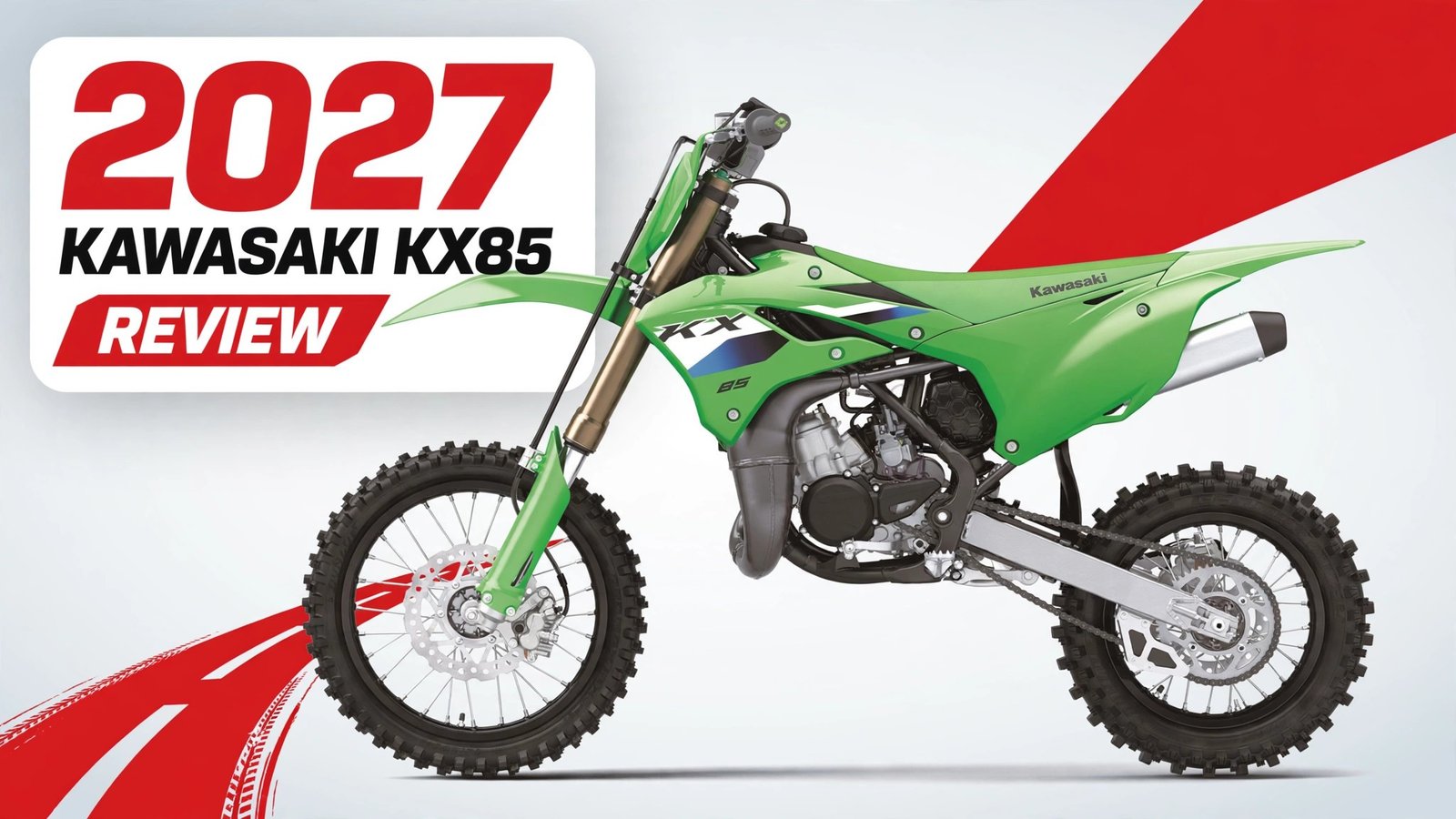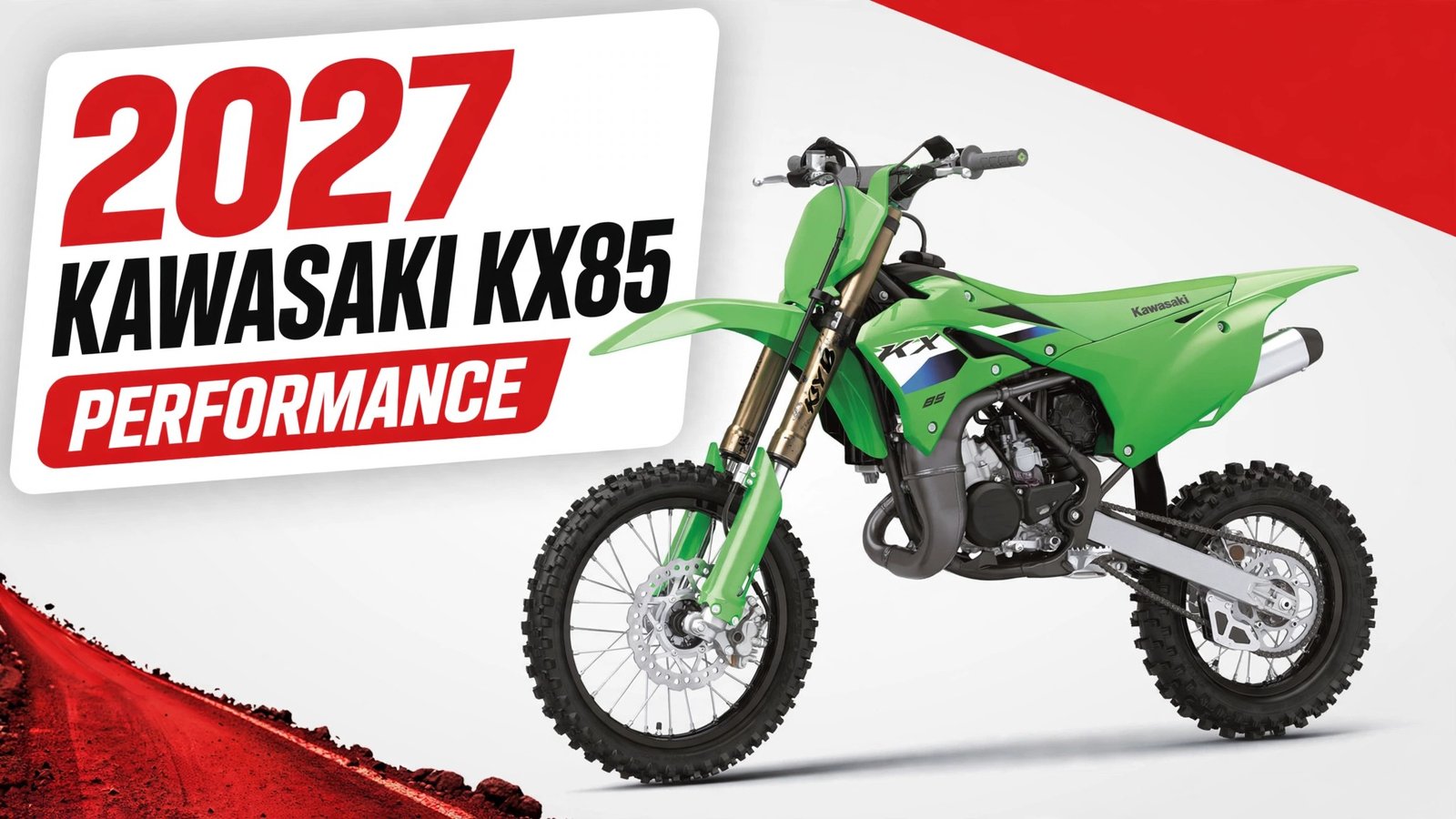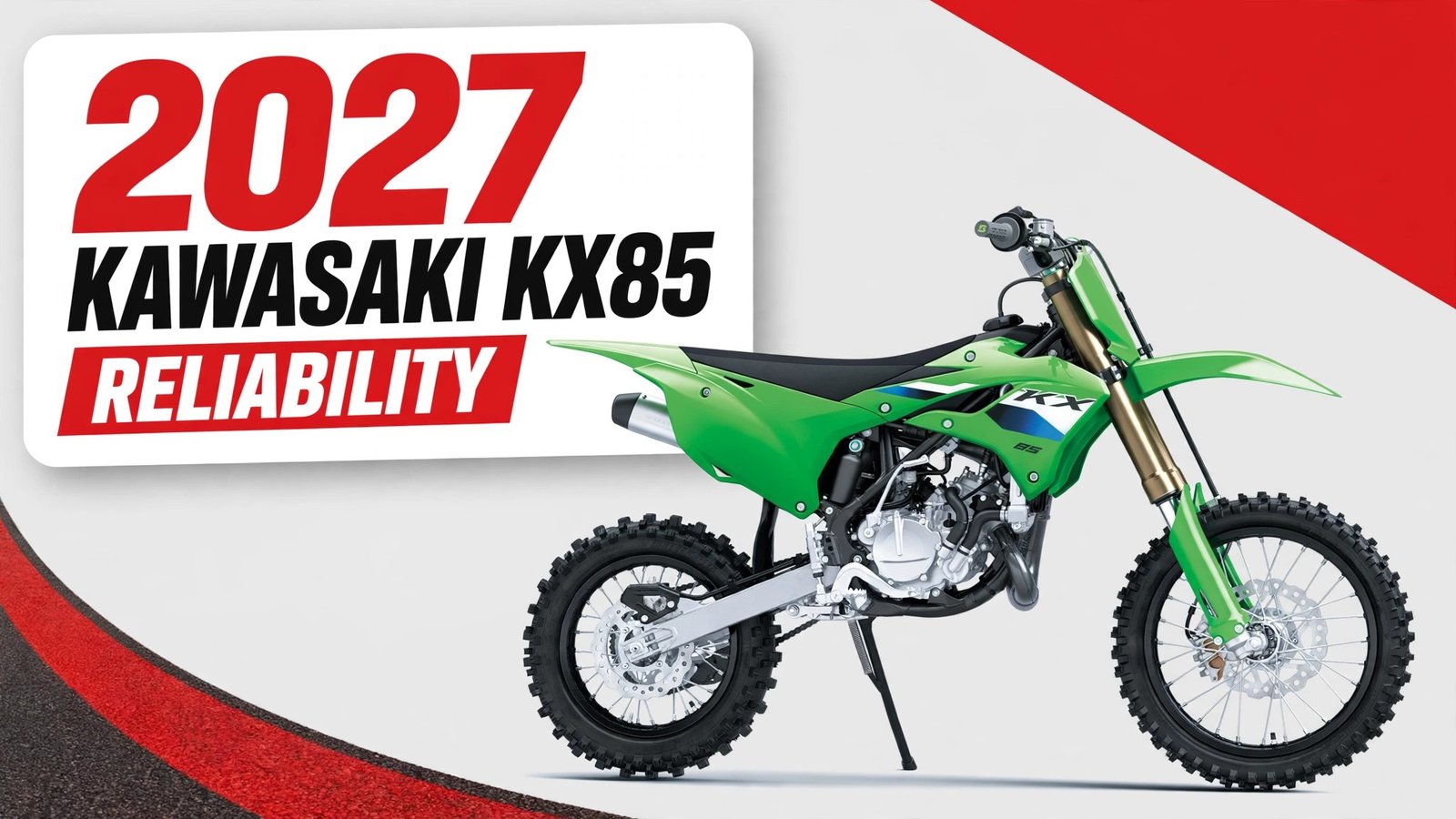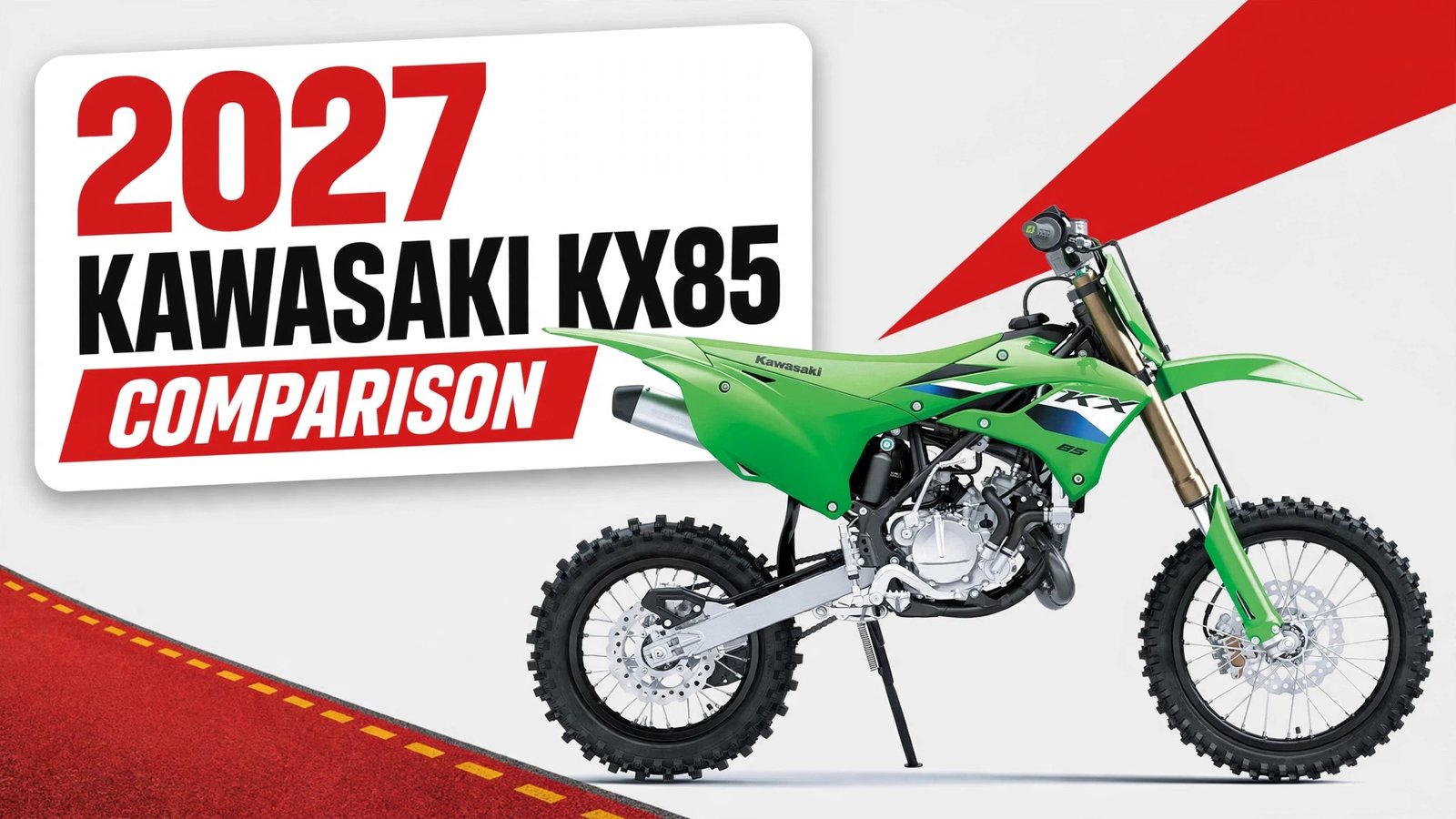
Four 85cc two-strokes, one class, and a $2,050 spread between the cheapest and the dearest. This Kawasaki KX85 comparison puts the 2027 KX85 against the Yamaha YZ85, the KTM 85 SX and the Husqvarna TC 85 — the three bikes a US youth racer actually cross-shops — on price, power and hardware.
The short answer: the KX85 is the cheapest bike here by a wide margin, the only one with no warranty, and the only one whose engine has not changed since 2014 — while the Austrians cost nearly $2,000 more and bring the most power and the best hardware. The rest of this Kawasaki KX85 comparison is about what that money buys, and what it does not.
Kawasaki KX85 Overview and Its Closest Rivals
Start with the field. The 85cc class is the last stop before big bikes, and all four are closed-course competition two-strokes with 6-speed gearboxes and manual clutches. What separates them is price, power delivery and hardware — and, since 2026, the fact that the KX85 is the only one revamped in the last decade. This Kawasaki KX85 comparison keeps every figure on its 2027 basis.
Verdicts Predate the Revamp
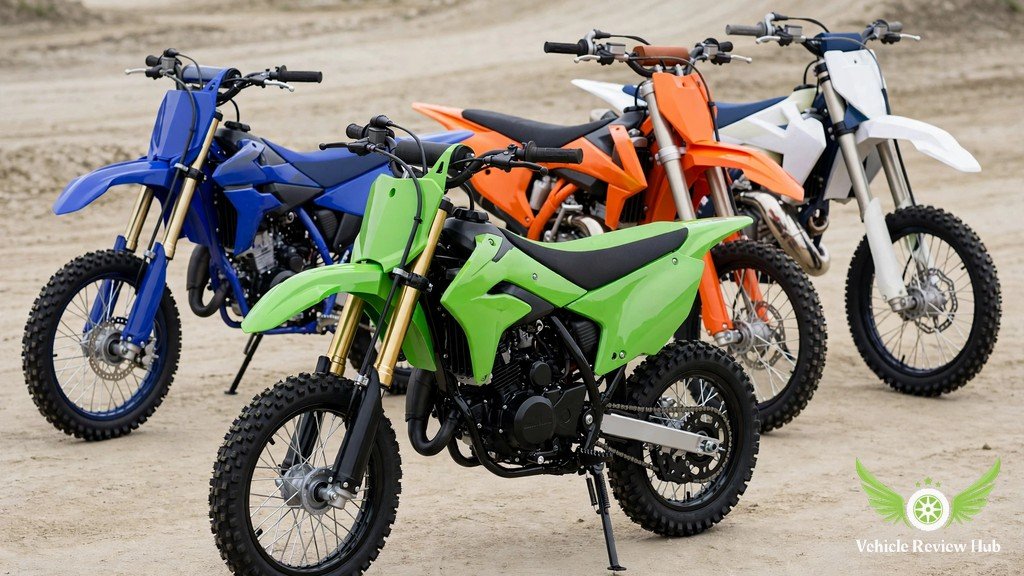
Every ranked shootout verdict in this Kawasaki KX85 comparison predates the revamp. Motocross Action ranked the KX85 third of four in its 2014 85cc shootout and third of three groups in its 2025 shootout — the Austrian trio of KTM, Husqvarna and GasGas counted as one, the Yamaha second, the Kawasaki third — and Dirt Rider’s 2016 shootout was won by the KTM 85SX. All three shootouts tested pre-revamp bikes, and no 2026 85cc shootout exists. Two 2026-bike ride tests do exist — Cycle News tested the 2026 KX85 and KX112 in July 2026, and Dirt Bike Magazine tested them in June 2026.
The dating matters because the 2026 revamp changed the very things the shootouts criticised in this Kawasaki KX85 comparison: the 2025 shootout called the KX85’s suspension the softest in the class and its engine “too slow” — but that was the pre-revamp bike with its 36 mm fork and 220/184 mm brakes. The 2026 bike carries a 43 mm KYB fork, 240/220 mm brakes and a reworked shock, and the old verdicts still describe the engine — it is unchanged — but they no longer describe the chassis.
Motocross Action’s 2025 MXA 85cc Mini-Cycle Shootout, on video: five 85cc bikes including the GasGas MC85, with the three Austrian bikes ranked as one platform — the KX85 finishes third. The ranking is test riders’ opinion, with no timed laps. English narration.
How the Four Bikes Differ at a Glance
At a glance, the class splits two ways in this Kawasaki KX85 comparison: Japanese versus Austrian, and linkage versus linkage-less. The KX85 and the YZ85 run linkage rear suspension and cable clutches; the KTM and the Husqvarna run linkage-less WP PDS rear suspension and hydraulic clutches. The KX85 is the cheapest and the heaviest without fuel; the Austrians are the dearest and the lightest; the Yamaha sits between them on price. The table below is the whole Kawasaki KX85 comparison on one page, on 2027 figures.
| Specification | Kawasaki KX85 | Yamaha YZ85 | KTM 85 SX | Husqvarna TC 85 |
|---|---|---|---|---|
| MSRP (2027) | $4,999 | $5,199 | $6,949 | $7,049 |
| Engine | 84cc 2-stroke single, KIPS power valve | 85cc 2-stroke single, YPVS power valve | 84.9cc 2-stroke single, power valve | 84.9cc 2-stroke single, power valve |
| Bore x stroke | 48.5 x 45.8 mm | 47.5 x 47.8 mm | 47 x 48.95 mm | 47 x 48.95 mm |
| Claimed power | None published | None published | None published | None published |
| Carburettor | 28 mm Keihin PWK28 | Keihin PWK28 (Astemo) | Keihin PWK 28 | Keihin PWK 28 |
| Seat height | 32.7 in | 33.1 in | 33.3 in | 33.3 in |
| Weight | 160.3 lb w/o fuel / 168.4 lb fueled | 161 lb wet | 149.9 lb w/o fuel | 149.9 lb w/o fuel |
| Front suspension | 43 mm KYB inverted, comp + rebound, 10.8 in | 36 mm KYB inverted cartridge, fully adj, 10.8 in | WP XACT 43 AER USD, 43 mm, 10.9 in | WP XACT 43 AER USD, 43 mm, 10.9 in |
| Rear suspension | Uni-Trak linkage, dual-range comp + rebound, 10.8 in | KYB linkage-type, fully adj, 11.1 in | WP XACT PDS, linkage-less, 11.4 in | WP XACT PDS, linkage-less, 11.4 in |
| Brakes | 240 mm front / 220 mm rear, petal discs | 220 mm front / 190 mm rear, wave discs | 240 mm front / 220 mm rear | 240 mm Galfer front / 220 mm Galfer rear |
| Warranty | Sold as-is, none | 30-day limited | 1-year (from MY2027) | 1-year (from MY2027) |
Note: All figures are 2027 USA figures from the makers’ own pages and spec sheets unless labelled. Weight bases differ: the KX85 is 160.3 lb without fuel (168.4 lb fueled), the YZ85 is 161 lb wet, the Austrians 149.9 lb without fuel — like-for-like without fuel, the KX85 is 10.4 lb heavier than the Austrians. The KTM’s 47 x 48.95 mm bore and stroke comes from KTM’s own model-page copy and Husqvarna’s published table — the 2027 KTM tech-specs page omits it. This Kawasaki KX85 comparison uses delivered prices computed on the destination figures in the price table.
Kawasaki KX85 vs Yamaha YZ85
The Yamaha is the KX85’s closest rival on price and the most direct alternative for a family shopping Japanese. It costs $200 more on MSRP, and the two bikes share a philosophy — linkage rear suspension, cable clutch, no electronic aids — while differing in the details that decide races.
Engine, Specs and Performance Side by Side
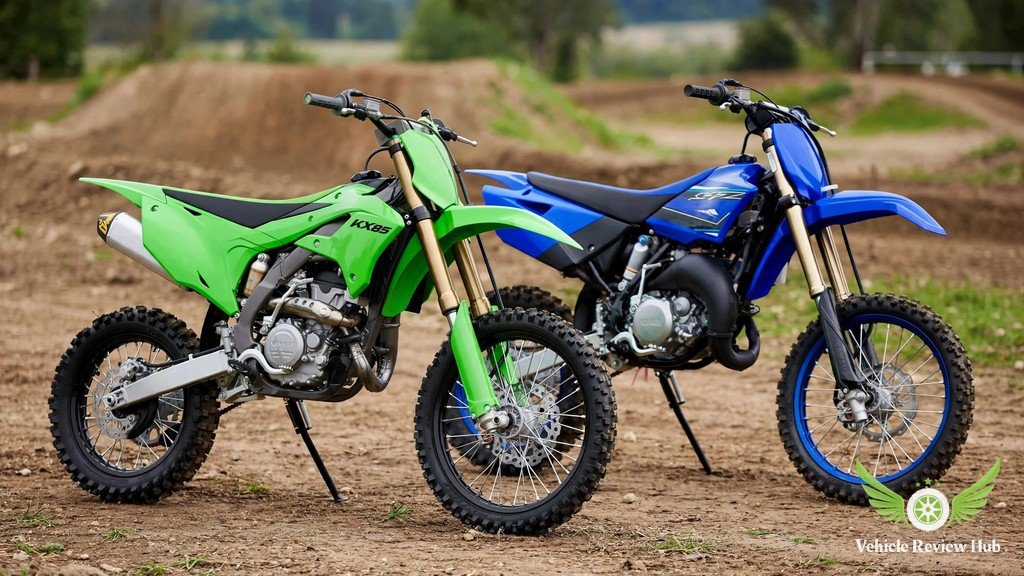
On paper the engines are near-identical in size — 84cc for the Kawasaki, 85cc for the Yamaha — and neither maker publishes a claimed power figure, so the only measured numbers in this Kawasaki KX85 comparison come from Motocross Action’s 2014 dyno test: the KX85 made 22.68 hp and 10.02 lb-ft, and the YZ85 in the same shootout was “two horsepower off the KX85”, or about 20.68 hp on a derived reading. No one has dyno’d a 2026 bike of either make, so those 2014 numbers remain the only measured comparison.
The hardware tells the rest of this Kawasaki KX85 comparison. The KX85’s 43 mm KYB fork is the bigger unit — the Yamaha runs a 36 mm KYB cartridge fork — but the Yamaha’s is fully adjustable; the 2026 KX85 closes that gap with compression and rebound adjustment of its own. The Yamaha’s rear shock is a fully adjustable KYB linkage-type unit with 11.1 in of travel against the KX85’s 10.8 in, and its YPVS power valve and new-for-2027 VForce4R reed valve are the Yamaha’s answer to the KX85’s KIPS. On brakes the Kawasaki wins the numbers: a 240 mm front disc against the Yamaha’s 220 mm, and 220 mm at the rear against the Yamaha’s 190 mm — the smallest brakes in the group.
Price, Equipment and Which Suits Which Rider
The money is simple: the YZ85 costs $5,199 against the KX85’s $4,999, a $200 gap on MSRP that becomes $205 delivered ($5,519 against $5,314), because the Yamaha’s modal dealer destination is $320 against the Kawasaki’s $315. The big-wheel YZ85LW is $5,399, or $400 more than the standard KX85. For that $200 the Yamaha buyer gets a 30-day limited warranty where the Kawasaki buyer gets none — the KX85 is sold as-is — plus a fully adjustable 36 mm fork and the VForce4R reed. The Kawasaki buyer gets the bigger fork and the bigger brakes. Our Kawasaki KX85 review covers the 2027 price and the revamp in full.
Which suits which rider in this Kawasaki KX85 comparison comes down to size and riding style. The KX85’s 32.7 in seat is the lowest in the class, and its metered, linear power — “excellent throttle response off the bottom” in MXA’s 2014 test — suits a lighter or younger rider moving up from a 65. The Yamaha’s taller 33.1 in seat and stronger top-end pull suit a rider who is already comfortable revving a two-stroke hard.
Kawasaki KX85 vs KTM 85 SX
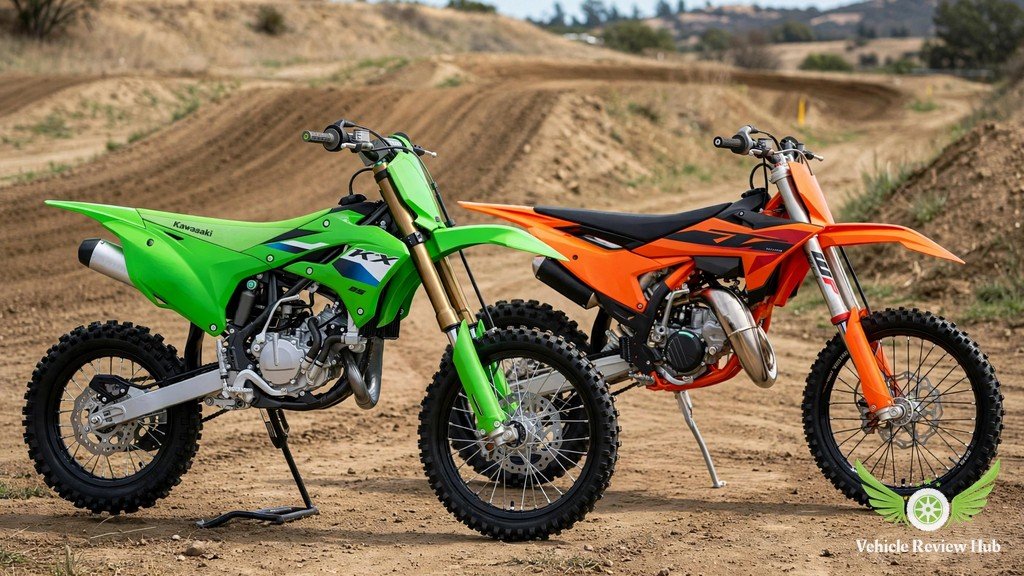
The KTM is the benchmark the KX85 has chased since 2014, and the most expensive bike in this class by a wide margin. It is also the lightest, the most powerful on the only dyno that tested both, and the one with the most modern hardware — hydraulic clutch, air fork, linkage-less rear.
Engine, Specs and Performance Side by Side
The engines are the same size in practice — 84cc against 84.9cc — but the dyno separates them. Motocross Action’s 2014 test put the KX85 at 22.68 hp and 10.02 lb-ft and said the KTM 85SX “makes 2 horsepower more than the KX85”, or about 24.68 hp on a derived reading. No maker publishes a claimed figure for either bike, and no one has dyno’d a 2026 bike, so the 2014 numbers are still the only measured ones in this Kawasaki KX85 comparison. Our Kawasaki KX85 performance guide explains why no newer dyno figure exists.
The hardware gap in this Kawasaki KX85 comparison is wider than the power gap. The KTM runs a WP XACT 43 AER air fork against the KX85’s 43 mm KYB coil-spring fork, a linkage-less WP XACT PDS rear shock against the Kawasaki’s Uni-Trak linkage unit, and a Formula hydraulic clutch against the Kawasaki’s cable clutch. The KTM is 10.4 lb lighter without fuel at 149.9 lb against 160.3 lb. The KTM is also the taller bike at 33.3 in against 32.7 in. Husqvarna’s own page confirms two engine maps for the shared platform, but KTM’s own 2027 page does not mention them, so this guide does not claim them for the KTM. On track, the 2014 shootout put the KTM second and the KX85 third, and the 2025 shootout grouped the KTM with the Husqvarna and GasGas as the winning Austrian trio. Motocross Action’s 2014 verdict still stands as the fairest summary: “The KTM 85SX has the potential to go faster than the KX85 in the right hands, but the Kawasaki KX85 isn’t sucking wind on the track. Its metered power makes it easy to ride for all ages and skill levels.”
Price, Equipment and Which Suits Which Rider
The KTM costs $6,949 against the KX85’s $4,999 in this Kawasaki KX85 comparison — $1,950 more on MSRP, $2,060 more delivered ($7,374 against $5,314), because KTM’s own page charges $425 freight against the Kawasaki’s $315. The 19/16 big-wheel KTM is $7,249. For that money the buyer gets the hydraulic clutch, the air fork, the PDS rear and a 1-year Premium Manufacturer’s Warranty from model year 2027 — against the Kawasaki’s as-is sale with no warranty at all. It is the biggest price jump in the class.
Which suits which rider in this Kawasaki KX85 comparison is a question of ambition and budget. A rider chasing podiums, with a family willing to pay for it, gets a faster, lighter, better-suspended bike in the KTM. A rider moving up from a 65, or a family buying a first race bike on a budget, gets a bike that is $1,950 cheaper, easier to ride, and cheaper to fix when it falls over.
Kawasaki KX85 vs Husqvarna TC 85
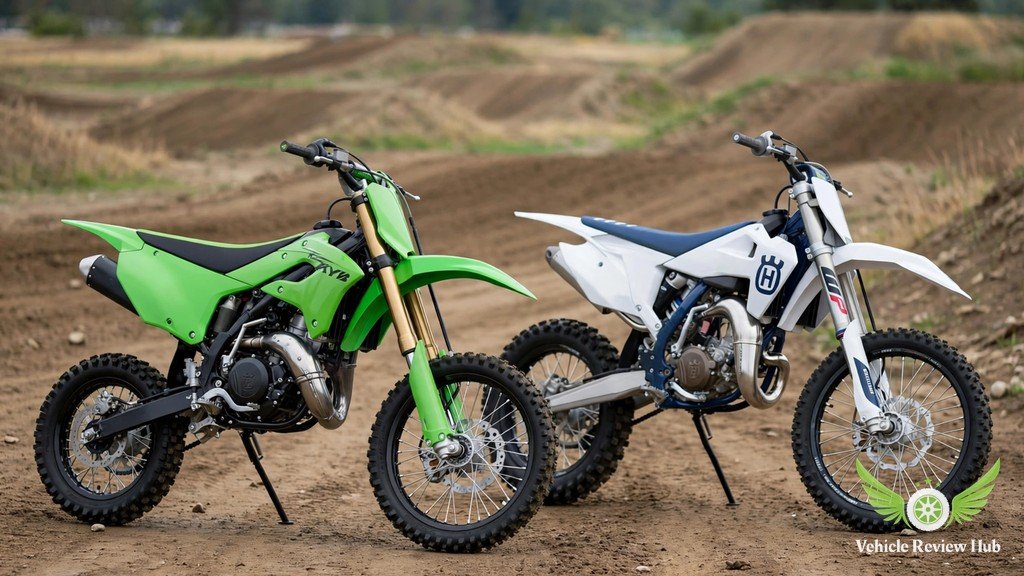
The Husqvarna is the KTM’s twin under different plastic — same engine, same chassis, same Austrian factory — and the most expensive bike in this Kawasaki KX85 comparison at $7,049. The differences between the two Austrians are trim and dealer, not engineering.
Engine, Specs and Performance Side by Side
The Husqvarna TC 85 shares the KTM’s 84.9cc engine, 47 x 48.95 mm bore and stroke, Keihin PWK 28 carburettor and 6-speed Formula hydraulic clutch — the same machine with different bodywork and branding. The only measured power figure for the Husqvarna in this Kawasaki KX85 comparison is the 2014 shootout’s 25.36 hp, the highest number printed for any bike in the class, against the KX85’s 22.68 hp. As with the KTM, no maker publishes a claimed figure and no 2026 bike has been dyno’d, so the 2014 numbers are the comparison — and they put the Husqvarna about 2.7 hp ahead of the Kawasaki on measured output.
The chassis is the same story as the KTM in this Kawasaki KX85 comparison: WP XACT 43 AER USD fork, linkage-less WP XACT PDS rear shock and Galfer 240 mm front and 220 mm rear discs. The Husqvarna is 149.9 lb without fuel — 10.4 lb lighter than the KX85 — with a 33.3 in seat. Where it differs from its twin is on the details Husqvarna actually publishes: two pre-set engine maps, confirmed on Husqvarna’s own page, and a 1-year warranty from model year 2027. The Kawasaki answers with its 43 mm KYB fork, its Uni-Trak linkage rear and its 240 mm front disc — the same disc size, for $2,050 less.
Price, Equipment and Which Suits Which Rider
The Husqvarna costs $7,049 against the KX85’s $4,999 — $2,050 more on MSRP, $2,160 more delivered ($7,474 against $5,314), with $425 freight on the dealer invoice. It is the dearest bike in this Kawasaki KX85 comparison, $100 more than the KTM on MSRP. Against the Kawasaki, the buyer is paying $2,050 for roughly 2.7 measured horsepower, 10.4 lb less weight, a hydraulic clutch and a one-year warranty.
Which suits which rider is the same answer as for the KTM in this Kawasaki KX85 comparison, with one difference: the Husqvarna is the choice for a family that wants the Austrian bike but prefers the Husqvarna dealer, the white-and-blue look, or the map switch. For a rider learning the class, the KX85’s $2,050 saving buys a season of tyres, pistons and entry fees.
Kawasaki KX85 Price and Value Compared
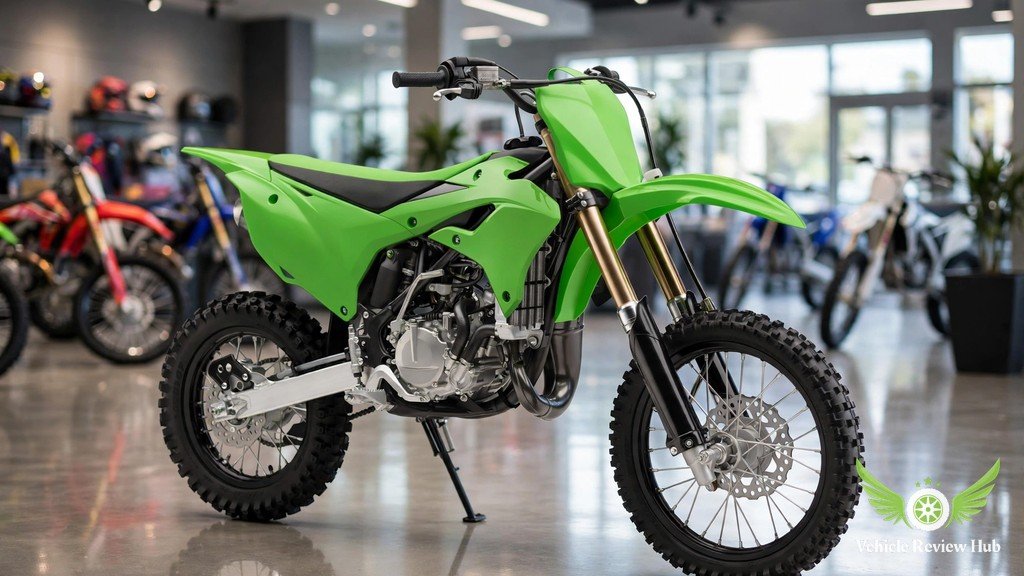
Price is where this Kawasaki KX85 comparison is decided, because the hardware gaps are real but the money gaps are bigger. The table below is the whole price story on 2027 figures.
Austrians Cost Far More
The Austrians cost far more in this Kawasaki KX85 comparison, and the numbers are not close. The KTM 85 SX costs $1,950 more than the KX85 on MSRP — $6,949 against $4,999 — and $2,060 more delivered, $7,374 against $5,314. The Husqvarna TC 85 costs $2,050 more on MSRP — $7,049 against $4,999 — and $2,160 more delivered, $7,474 against $5,314. The $1,750 figure that circulates for this class belongs to the 65cc class, not this one, and has no place in an 85cc price comparison.
| Bike (2027) | MSRP | Destination | Delivered | Gap vs KX85 MSRP |
|---|---|---|---|---|
| Kawasaki KX85 | $4,999 | $315 | $5,314 | — |
| Kawasaki KX85 L | $5,199 | $315 | $5,514 | +$200 |
| Yamaha YZ85 | $5,199 | $320 | $5,519 | +$200 |
| Yamaha YZ85LW | $5,399 | $320 | $5,719 | +$400 |
| KTM 85 SX 17/14 | $6,949 | $425 | $7,374 | +$1,950 |
| Husqvarna TC 85 17/14 | $7,049 | $425 | $7,474 | +$2,050 |
| Kawasaki KX112 (step-up) | $5,799 | $315 | $6,114 | +$800 |
Note: 2027 USA prices in this Kawasaki KX85 comparison. The KX85, KX85 L and KX112 destination of $315 is dealer and motorcycle.com sourced — Kawasaki publishes no destination figure — and the KX112’s $6,114 delivered price is computed on that standard. The YZ85 destination of $320 is the modal dealer figure; Yamaha publishes none. The KTM’s $425 freight is from KTM’s own model page. The KX85’s $4,949 2024 MSRP is from Kawasaki’s own sheet; motorcycle.com’s $4,899 is wrong.
Running Costs and Resale Value Compared
Running costs follow the same pattern as purchase prices in this Kawasaki KX85 comparison: the Kawasaki is the cheapest to keep going. The service chart asks for a piston and ring every five races, and the current Partzilla prices for the 2014-and-later bike are $101.65 for the piston and $16.56 for the single top ring — about $118 together, every five races — with transmission oil and a plug on the same three-race cycle and a KIPS clean after every race. Our Kawasaki KX85 reliability guide carries the full service chart. The Austrians’ parts cost more — WP suspension service and hydraulic clutch parts against KYB and cable parts — while tyres, chains and brake pads wear at the same rate, so the gap never closes.
Resale is the honest unknown in this Kawasaki KX85 comparison: no verified resale-value figures exist for any of these four bikes, and this guide will not invent them. The verified numbers do say the KX85 loses the least money on the way in — a $4,999 buy-in against $6,949 and $7,049 — and its engine, unchanged since 2014, means parts, knowledge and used-bike buyers are plentiful.
Kawasaki KX85 Comparison Verdict and US Alternatives
Four bikes, one class, and a verdict that depends on who is paying and who is riding. The KX85 wins this Kawasaki KX85 comparison on price, and the Austrians win it on performance — and both of those statements have been true since 2014. What changed in 2026 is the chassis; what has not changed is the engine.
Verdict: Value After the Revamp
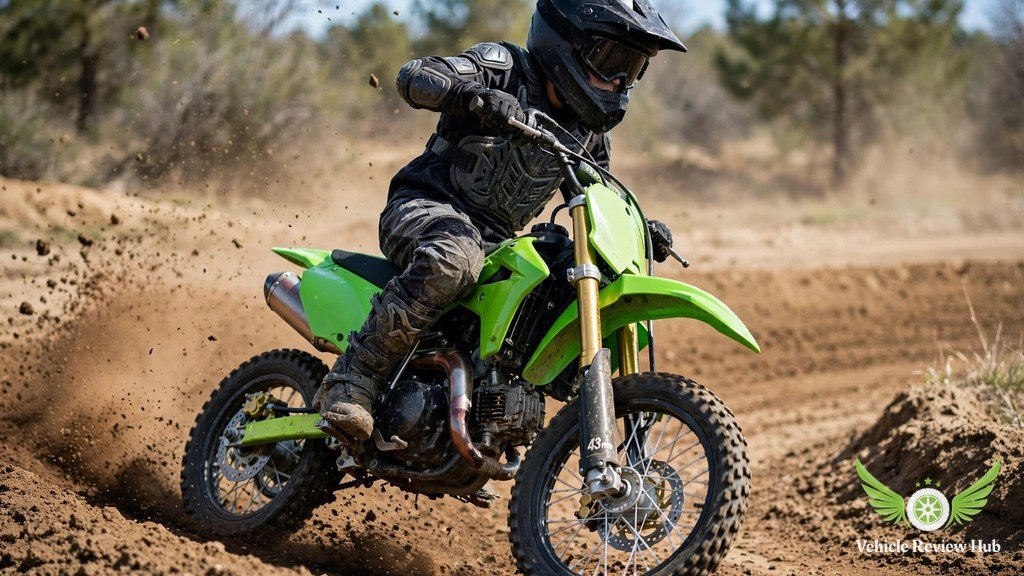
The verdict of this Kawasaki KX85 comparison is that the KX85 is the best value in the class and the third-fastest bike in it. At $4,999 it undercuts the Yamaha by $200 and the Austrians by $1,950 and $2,050, and the 2026 revamp gives it the biggest fork in the Japanese pair, the joint-largest front brake in the class and a fully adjustable rear shock. The shootouts still rank it third, but they rank a pre-revamp bike.
Buy the KX85 if the budget matters, if the rider is moving up from a 65, or if the family does its own maintenance — cheap to buy, cheap to run, and easy to ride. Buy the Yamaha if the rider wants a warranty and a fully adjustable fork for $200 more. Buy the KTM or the Husqvarna if the rider is chasing podiums and the family can pay $1,950 or $2,050 more for the power, the weight saving and the hardware. No bike here is a bad bike in this Kawasaki KX85 comparison; the KX85 is simply the one that asks the least money for the most racing.
KX112 Is the Step-Up
The step up in this Kawasaki KX85 comparison is the KX112. The 2027 KX112 costs $5,799 on MSRP — $800 more than the KX85 — and $6,114 delivered on the $315 KX-line destination standard, a computed figure, not a Kawasaki-published one. For that $800 the rider gets a 112cc engine with the same KIPS power valve and 28 mm Keihin carburettor, a 12.0 in rear shock, 19/16 in wheels and a 34.1 in seat.
The large-wheel KX85 L sits between the two at $5,199 — $200 more than the standard KX85 and $600 less than the KX112 — and the ladder is the point of this Kawasaki KX85 comparison: standard KX85, then the L for size, then the KX112 for displacement.
Kawasaki KX85 Comparison FAQs
These are the questions US buyers ask when they cross-shop the 2027 KX85 against the Yamaha YZ85, the KTM 85 SX and the Husqvarna TC 85, answered from the verified figures in this Kawasaki KX85 comparison.
Which bike is cheapest in this comparison?
The Kawasaki KX85, by a wide margin: $4,999 MSRP, or $5,314 delivered — the cheapest bike in this Kawasaki KX85 comparison. The Yamaha YZ85 is $5,199 ($5,519 delivered), the KTM 85 SX is $6,949 ($7,374 delivered) and the Husqvarna TC 85 is $7,049 ($7,474 delivered).
How much more do the Austrians cost?
The KTM 85 SX costs $1,950 more than the KX85 on MSRP ($2,060 more delivered), and the Husqvarna TC 85 costs $2,050 more on MSRP ($2,160 more delivered). The $1,750 figure from the 65cc class does not apply here.
Which bike is the most powerful?
No maker publishes a claimed power figure for any of the four in this Kawasaki KX85 comparison. On the only dyno that tested the KX85, Motocross Action’s 2014 test, it made 22.68 hp; the KTM 85SX in the same test made “2 horsepower more” and the Husqvarna TC85 made 25.36 hp in the 2014 shootout. No 2026-bike dyno exists.
KX85 or YZ85 — which suits which rider?
The YZ85 costs $200 more on MSRP, has a YPVS power valve and fully adjustable KYB suspension, but the smallest brakes in the group (220/190 mm) and only a 30-day warranty. The KX85 is cheaper, has the bigger 43 mm fork and 240 mm front brake, and is sold as-is with no warranty. Both have linkage rear suspension; only the Austrians run linkage-less PDS in this Kawasaki KX85 comparison.
Which bike is the lightest?
The KTM 85 SX and Husqvarna TC 85, at 149.9 lb without fuel. The KX85 is 160.3 lb without fuel (168.4 lb with fuel) and the YZ85 is 161 lb wet — like-for-like without fuel, the KX85 is 10.4 lb heavier than the Austrians in this Kawasaki KX85 comparison.
What is the step up from a KX85?
The step up from a KX85 in this Kawasaki KX85 comparison is the KX112: 2027 MSRP $5,799 plus $315 destination is $6,114 delivered, computed on the KX-line destination standard. That is $800 more than the KX85 and $600 more than the KX85 L. The large-wheel KX85 L ($5,199) is the intermediate step for taller riders.