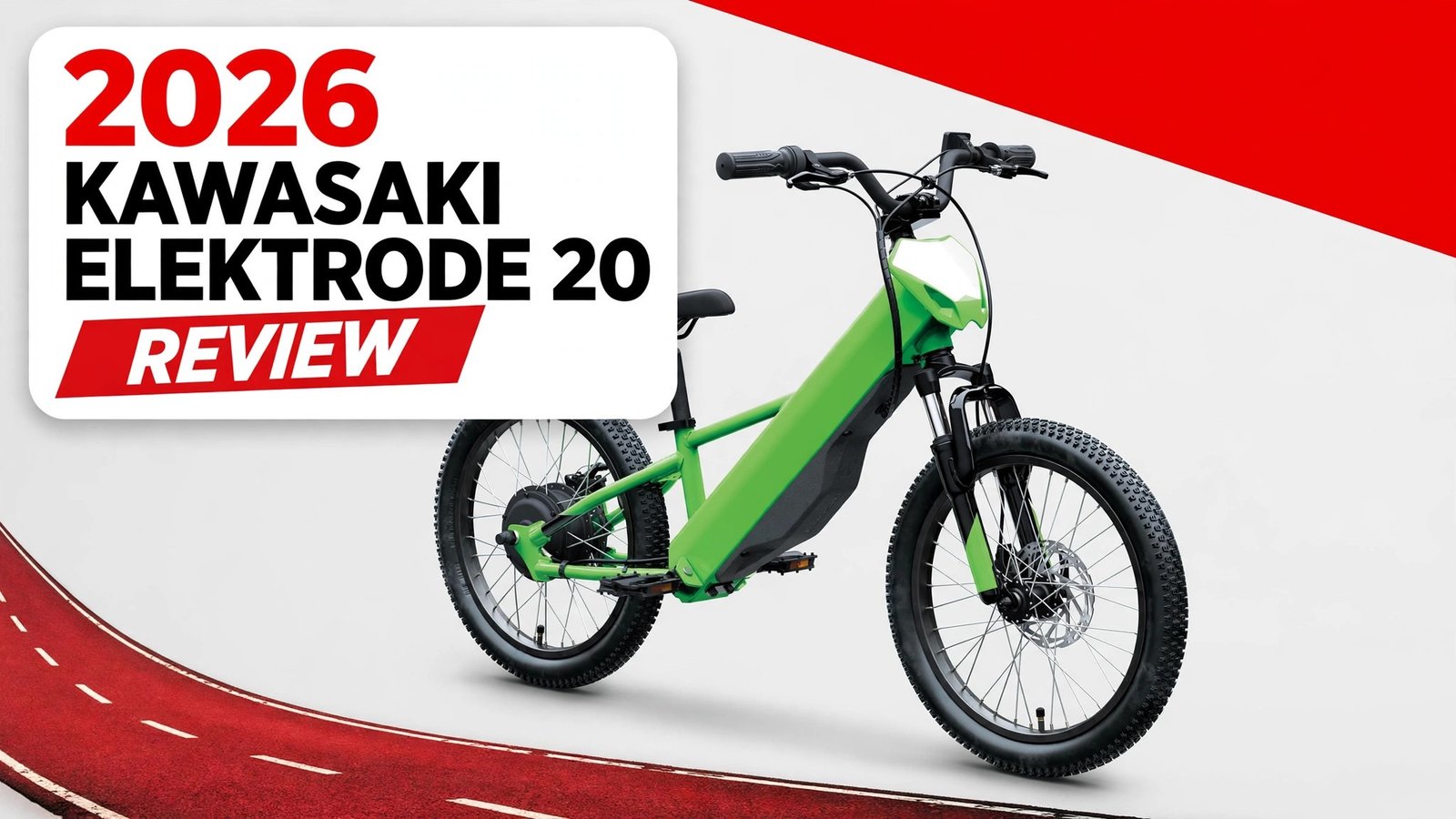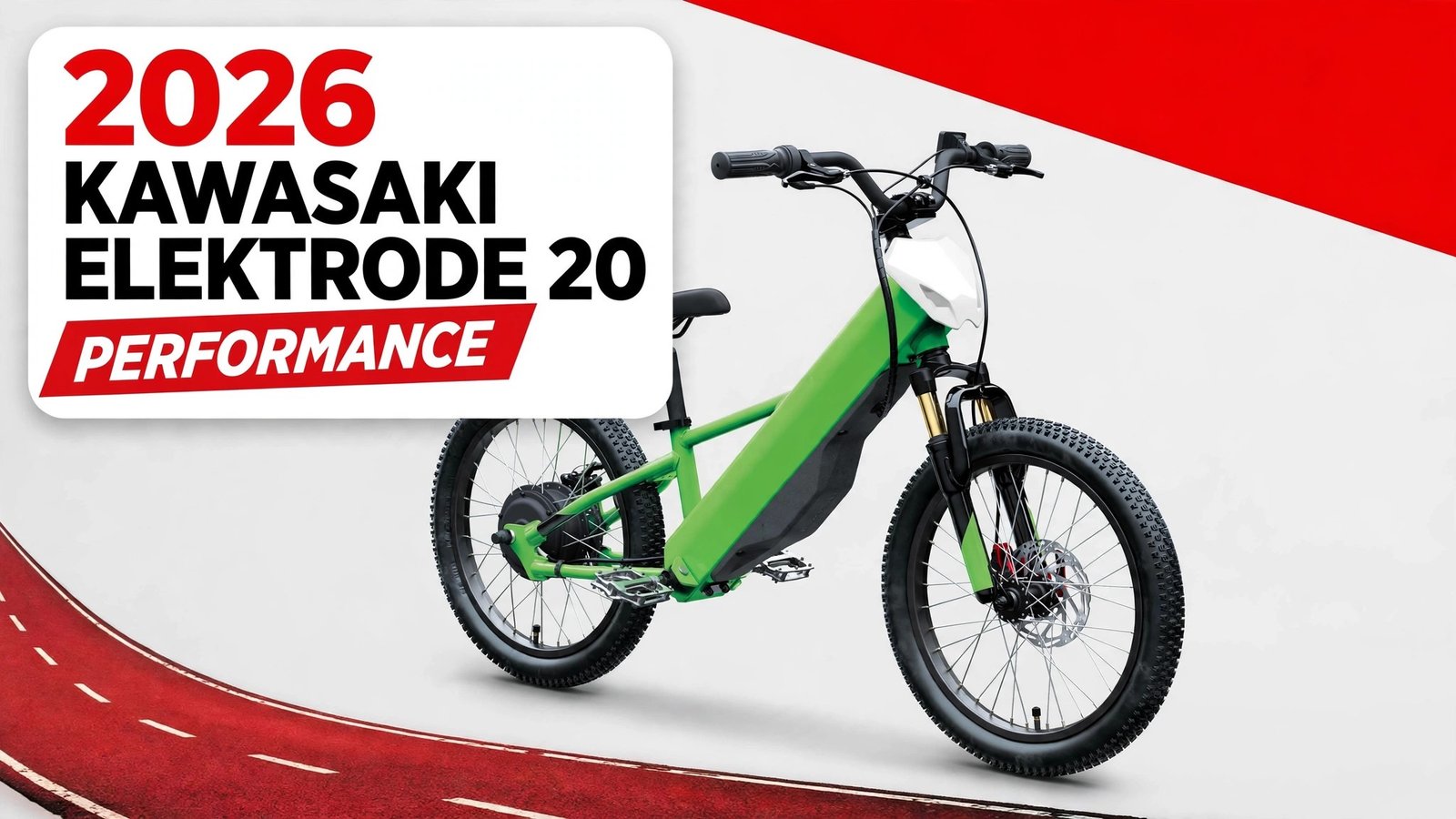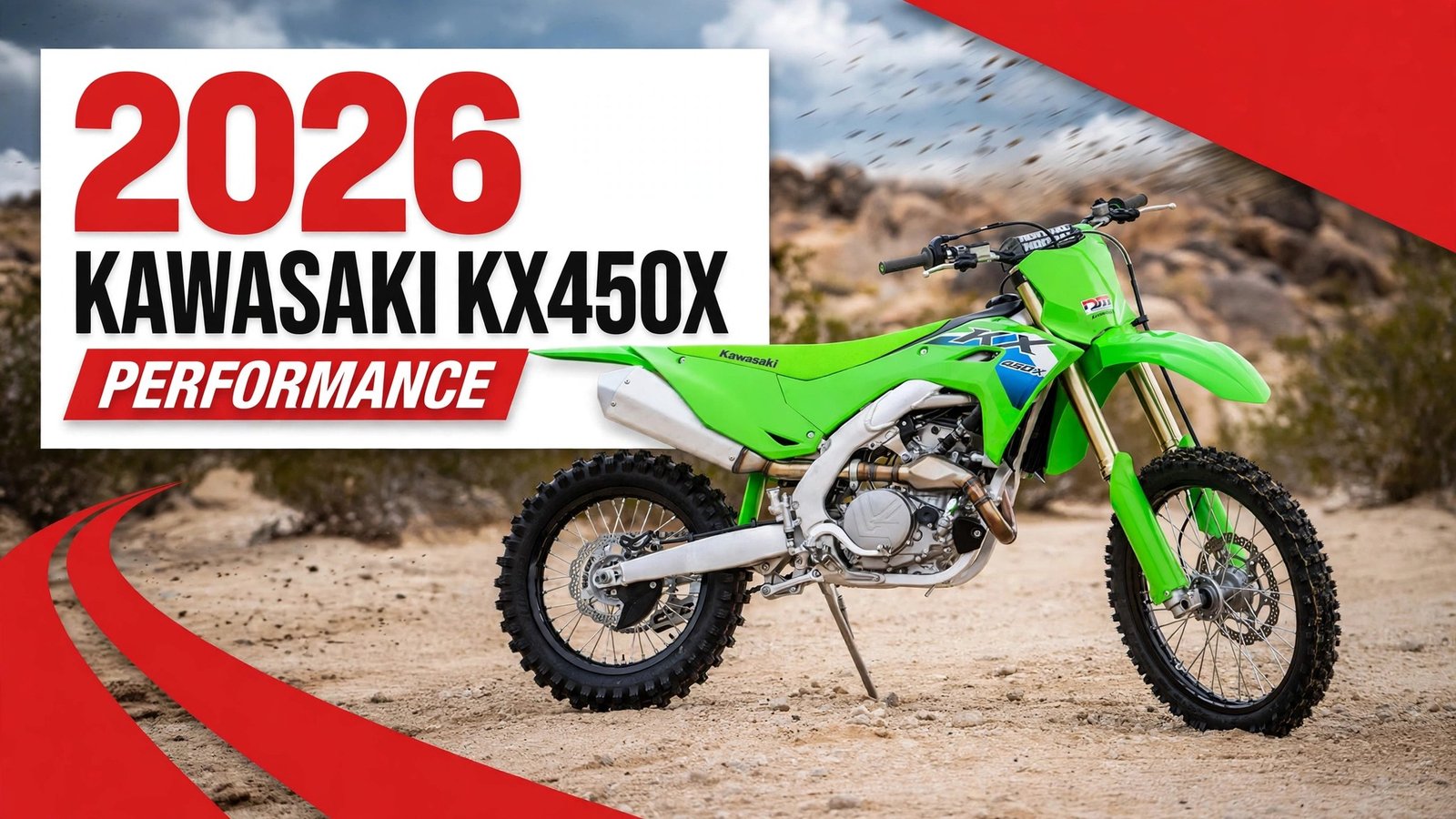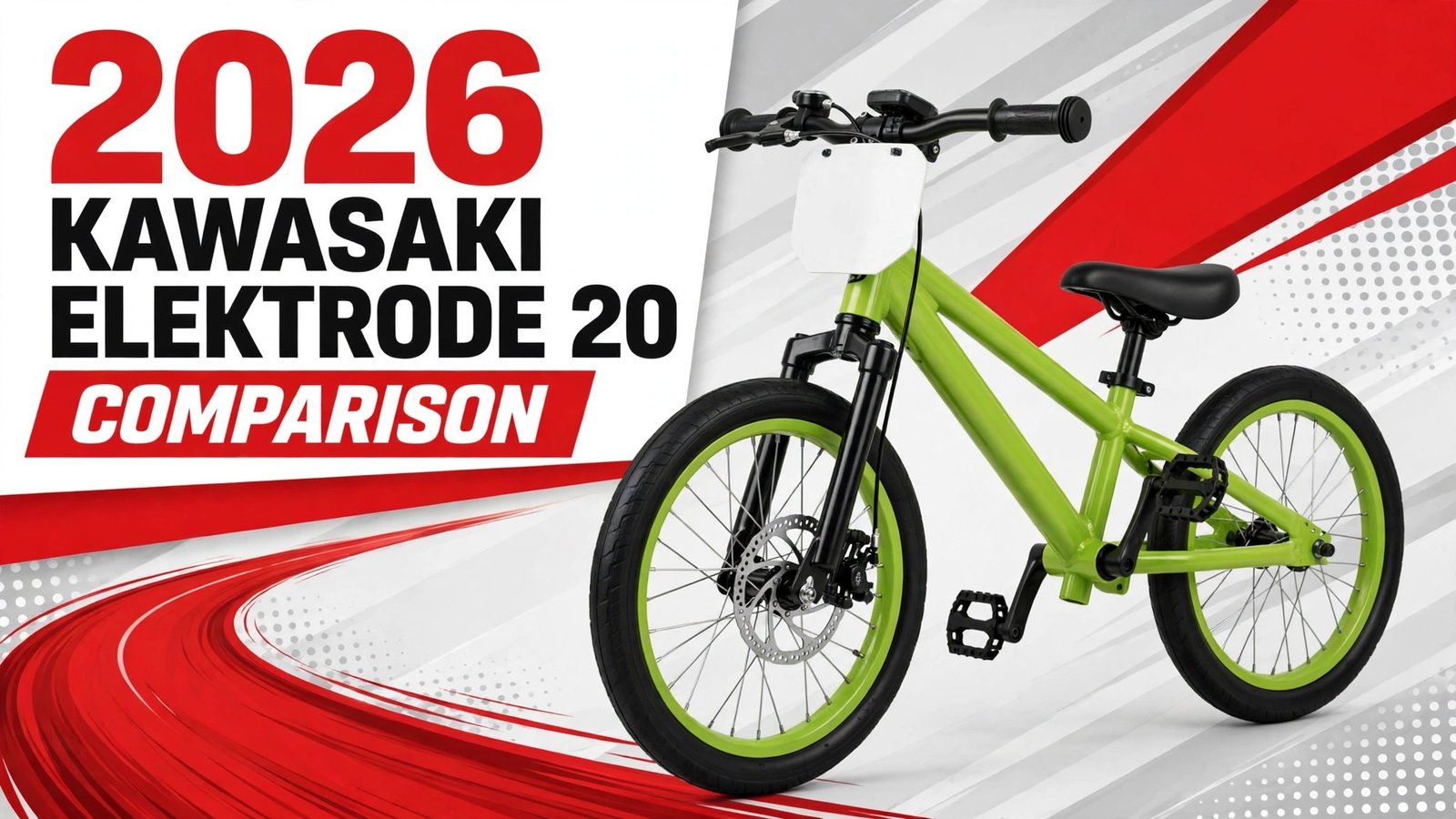
Four kids’ electric balance bikes fight over the same 20-inch class, and the Elektrode 20 sits in the middle on price at $2,199 at list, per Kawasaki’s model page — $650 more than the cheapest rival and $400 less than the dearest, though sale prices tell a different story. This Kawasaki Elektrode 20 comparison puts the green bike against the STACYC 20eDRIVE, the Orion e20x-FS and the KTM 20eDRIVE Factory Edition on price, battery, speed, weight and rider size, with list and street prices labelled.
The Elektrode 20 is the fastest bike here in normal modes at 24 mph, and it carries the biggest battery at 514Wh — but it is also the heaviest at 46.1 lb, and the only one whose battery cannot come out. This Kawasaki Elektrode 20 comparison uses verified figures only, and it prints no resale figures for any bike. Our Elektrode 20 review covers the bike itself.
Kawasaki Elektrode 20 Overview and Its Closest Rivals
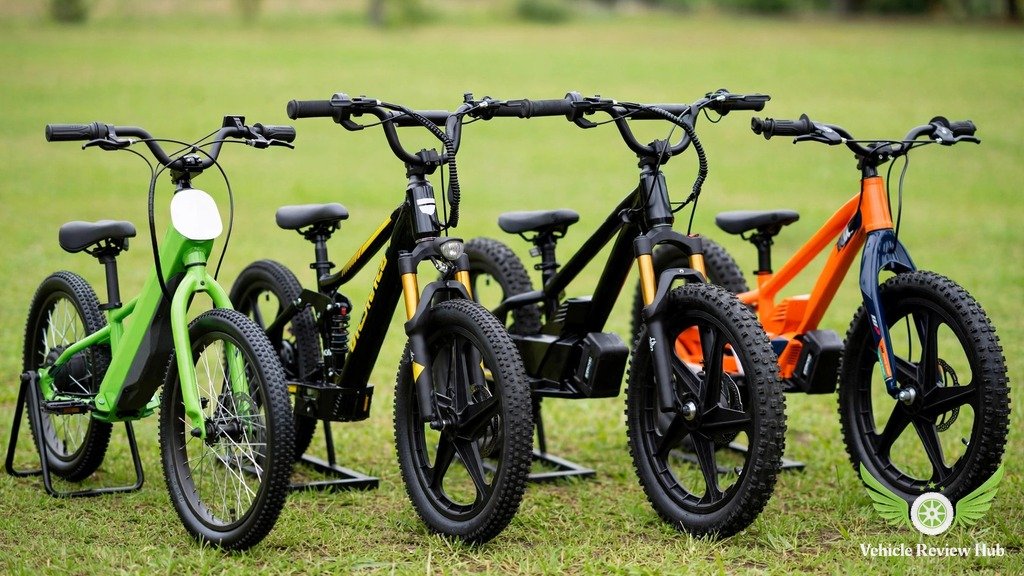
The Elektrode 20 is Kawasaki’s answer to the STACYC 20eDRIVE, the bike that defined this class. The other rivals are the Orion e20x-FS at $1,549 and the KTM 20eDRIVE Factory Edition, a rebadged STACYC in KTM livery. In this Kawasaki Elektrode 20 comparison, the differences that matter are speed, battery, weight and price.
Fastest, But Heaviest Here
The Elektrode 20 is the fastest bike in the class in normal modes: its 750W motor reaches 24 mph in Mid and High, while the STACYC, Orion and KTM all top out at about 20 mph in their normal modes. The Orion’s 28 mph Race Mode is adult-only, so it never counts in a fastest claim. For this Kawasaki Elektrode 20 comparison, 24 mph against about 20 mph is the Elektrode’s clearest win, from the biggest motor in the group at 750W. The price of that speed is weight: 46.1 lb, the heaviest of the four, against 33 lb for the STACYC and KTM and 45 lb for the Orion. The Elektrode is also the widest rider envelope, at 132 lb maximum against 115 lb for the STACYC and KTM, with a seat that adjusts from 21.6 to 27.3 inches.
How the Four Bikes Differ at a Glance
The table below lines the four bikes up on the numbers buyers compare first. List prices are the makers’ prices; street prices are what dealers and sale pages charge, labelled as such. At list, the Orion is cheapest and the KTM dearest; at street prices, the STACYC’s holiday sale moves it to second-cheapest. In this Kawasaki Elektrode 20 comparison, that flip is the most important price fact.
| Bike | List price | Current street / sale price | Top speed | Weight | Battery |
|---|---|---|---|---|---|
| Orion e20x-FS | $1,549 | $1,549 | 20 mph (28 mph Race Mode, adult-only) | 45 lb | 48V 8Ah removable LiFePO4 |
| STACYC 20eDRIVE | $2,599 | $1,599 (holiday sale, limited time) | About 20 mph | 33 lb | 40Vmax 6Ah swappable (216Wh) |
| Kawasaki Elektrode 20 | $2,199 | $1,099–$1,799 (dealers) | 24 mph | 46.1 lb | 50.4V 10.2Ah in-frame (514Wh) |
| KTM 20eDRIVE Factory Edition | $3,200 (launch MSRP) | $1,399–$2,583 (dealers) | About 20 mph | 33 lb | 40Vmax 6Ah swappable (216Wh) |
Note: The Orion’s 28 mph Race Mode is adult-only and does not count as a kids’ speed, so the Elektrode 20 at 24 mph is the fastest bike in this Kawasaki Elektrode 20 comparison in normal modes. No destination figure is published for the Elektrode 20 or for any rival, so none is printed here.
Kawasaki Elektrode 20 vs STACYC 20eDRIVE
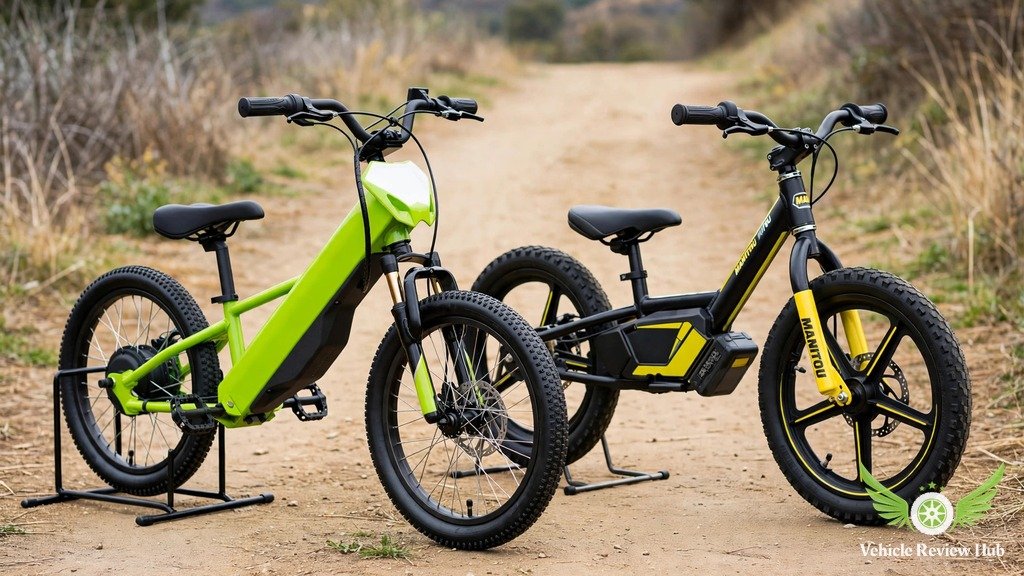
The STACYC 20eDRIVE is the market default and the bike the Elektrode 20 was built to answer. It has the biggest parts and upgrade ecosystem in the class. In this Kawasaki Elektrode 20 comparison, the STACYC is the closest rival.
Engine, Specs and Performance Side by Side
On performance, the Elektrode wins on speed and run time. Its 750W motor reaches 24 mph in Mid and High, against about 20 mph in the STACYC’s High, and its 514Wh battery is more than double the STACYC’s 216Wh. Cycle News testing measured about 45 hard minutes on the Elektrode and an hour and a half or more of cruisey riding. The STACYC wins on weight, brakes and battery flexibility: 33 lb against 46.1 lb, hydraulic discs against mechanical discs, an 80 mm Manitou J-Unit fork against 50 mm, and a swappable pack with a $325 spare, while the Elektrode’s battery is fixed in the frame. That trade — speed and run time against weight and flexibility — is the heart of this Kawasaki Elektrode 20 comparison.
| Spec | Kawasaki Elektrode 20 | STACYC 20eDRIVE |
|---|---|---|
| Motor | 750W brushless in-wheel | 36V brushless (no watt figure published) |
| Top speed | 24 mph (Mid and High) | About 20 mph (High) |
| Battery | 50.4V 10.2Ah, 514Wh, in-frame, not swappable | 40Vmax 6Ah, 216Wh, swappable ($325 spare) |
| Run time claimed | 60 min High / 180 min Low | 30–60 min |
| Charge time | About 4 hours | 3 hours |
| Weight | 46.1 lb | 33 lb |
| Brakes | Mechanical discs, 160 mm front and rear | Hydraulic discs |
| Fork | 28 mm telescopic, 50 mm travel | Manitou J-Unit, 80 mm travel |
| Max rider | 132 lb | Under 115 lb |
| Frame warranty | 12 months | 5 years |
Note: STACYC publishes no watt figure for the 20eDRIVE motor, so none is printed in this Kawasaki Elektrode 20 comparison. The STACYC’s electrics warranty matches Kawasaki’s at 90 days; only its frame warranty is longer.
Price, Equipment and Which Suits Which Rider
At list, the Elektrode is cheaper: $2,199 against the STACYC’s $2,599, a $400 gap. At sale prices the gap flips — the STACYC holiday sale cuts the 20eDRIVE to $1,599, a limited-time offer with no published end date, $600 less than the Elektrode’s list price. Both STACYC prices must be printed together, labelled, because either one alone misleads. The full speed and run-time figures are in our Elektrode 20 performance guide. In this Kawasaki Elektrode 20 comparison, the Elektrode wins at list and the STACYC wins while the sale lasts; a heavier rider who wants the fastest bike fits the Elektrode, while a lighter rider who picks the bike up often fits the STACYC.
Kawasaki Elektrode 20 vs Orion e20x
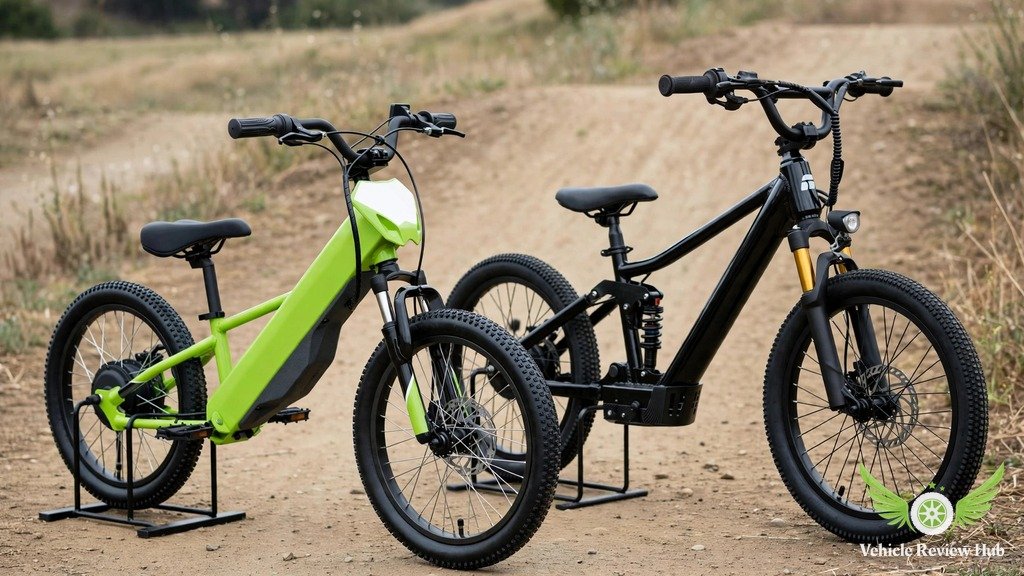
The Orion e20x-FS is the price leader of the four and the only rival with full suspension. At $1,549 it undercuts the Elektrode by $650 at list. In this Kawasaki Elektrode 20 comparison, the Orion is the value pick on paper.
Engine, Specs and Performance Side by Side
On speed, the Elektrode wins in every mode a child may use: 24 mph from its 750W motor, against the Orion’s 500W at 11, 16 and 20 mph in Low, Med and High. The Orion’s 28 mph Race Mode is adult-only, so it never counts as a kids’ speed. The Elektrode’s battery is bigger too — 514Wh against the Orion’s removable 48V 8Ah pack at about 410Wh — but the Orion claims 4 hours per charge. The Orion also wins on suspension, brakes and rider size: full suspension, Shimano hydraulics, and a 160 lb limit against 132 lb. Orion’s by-age guide puts the limit at 160 lb, though one dealer says 140 lb, and its ages are 8–12, with the guide saying roughly 7–10. That is the trade in this Kawasaki Elektrode 20 comparison: the Orion is better suspended and better braked, and the Elektrode is faster with the bigger battery.
| Spec | Kawasaki Elektrode 20 | Orion e20x-FS |
|---|---|---|
| Motor | 750W brushless in-wheel | 500W brushless hub motor |
| Top speed | 24 mph (Mid and High) | 20 mph (High); 28 mph Race Mode, adult-only |
| Battery | 50.4V 10.2Ah, 514Wh, in-frame, not swappable | 48V 8Ah LiFePO4, about 410Wh, removable |
| Run time claimed | 60 min High / 180 min Low | 4 hours claimed |
| Charge time | About 4 hours | 120+ minutes |
| Weight | 46.1 lb | 45 lb |
| Brakes | Mechanical discs, 160 mm front and rear | Shimano hydraulic discs, front and rear |
| Suspension | 28 mm telescopic fork, 50 mm travel; hardtail rear | Full suspension: air fork with lockout + rear |
| Max rider | 132 lb | 160 lb (by-age guide; one dealer says 140 lb) |
| Seat height | 21.6–27.3 in | 23–30 in |
| Battery warranty | 90 days | 6 months |
Note: The Orion’s 28 mph Race Mode is adult-only and never counts in this Kawasaki Elektrode 20 comparison as a kids’ speed. The Orion’s battery warranty is the longest of the four at 6 months, against 90 days for the Elektrode’s battery.
Price, Equipment and Which Suits Which Rider
On price the Orion wins outright at $1,549, $650 less than the Elektrode’s $2,199. Its battery warranty runs 6 months against the Elektrode’s 90 days, and its frame warranty runs 5 years against Kawasaki’s 12 months. The Orion product page lists it at $1,549, and nothing in this Kawasaki Elektrode 20 comparison beats that number. The catch is that the cheaper bike is slower in every mode a child can use. That is the value question at the heart of this Kawasaki Elektrode 20 comparison. A rider who needs full suspension, hydraulic brakes and the highest weight limit fits the Orion; a rider who wants the fastest bike, the biggest battery and the Kawasaki dealer network fits the Elektrode.
Kawasaki Elektrode 20 vs KTM Replica 20eDRIVE
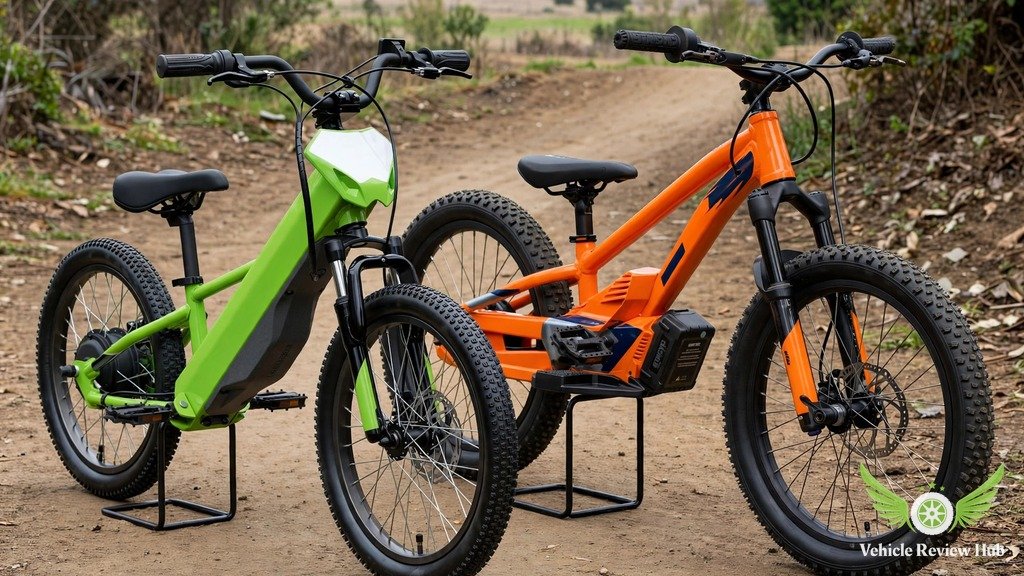
The KTM 20eDRIVE Factory Edition is a rebadged STACYC 20eDRIVE in KTM Factory Replica livery, built in collaboration with STACYC. Same platform, battery, speeds and weight as the STACYC, with KTM race-team colours. In this Kawasaki Elektrode 20 comparison, the KTM is the STACYC wearing orange.
Engine, Specs and Performance Side by Side
On performance the pair runs exactly like the STACYC: about 20 mph, 30–60 minutes and 33 lb. The Elektrode beats it the same way — 24 mph against about 20, 514Wh against 216Wh, and 60/180 minutes against 30–60. The KTM’s differences are equipment: Hayes Dominion brakes, a full aluminium frame, a Manitou J-Unit fork and STACYC custom grips. The weight and rider fit match the STACYC exactly — 33 lb, a 23-inch seat, ages 10–12 and up to 115 lb — against the Elektrode’s 46.1 lb, 21.6–27.3-inch seat, ages 8 and up and 132 lb. That is the KTM’s spec sheet in this Kawasaki Elektrode 20 comparison: the STACYC’s running gear with better brakes and a race-team paint job.
| Spec | Kawasaki Elektrode 20 | KTM 20eDRIVE Factory Edition |
|---|---|---|
| Motor | 750W brushless in-wheel | 36V brushless (STACYC platform) |
| Top speed | 24 mph (Mid and High) | About 20 mph (High) |
| Battery | 50.4V 10.2Ah, 514Wh, in-frame, not swappable | 40Vmax 6Ah, 216Wh, swappable |
| Run time claimed | 60 min High / 180 min Low | 30–60 min |
| Weight | 46.1 lb | 33 lb |
| Brakes | Mechanical discs, 160 mm front and rear | Hayes Dominion hydraulics, 160 mm front / 140 mm rear |
| Fork | 28 mm telescopic, 50 mm travel | Manitou J-Unit, 80 mm travel |
| Max rider | 132 lb | 115 lb |
| Launch MSRP | $2,199 (2025) | $3,200 (May 2022) |
Note: The KTM 20eDRIVE Factory Edition is a rebadged STACYC 20eDRIVE — KTM’s own press release says it was built in collaboration with STACYC. Its launch MSRP of $3,200 is the highest list price in this Kawasaki Elektrode 20 comparison, but current dealer prices run far below it.
Price, Equipment and Which Suits Which Rider
At launch MSRP the KTM is the dearest bike here: $3,200 against the Elektrode’s $2,199, a $1,001 gap. At current dealer prices the picture flips — dealers list the Factory Edition from $1,399 to $2,583, and one holiday sale lists it at $2,295, so at $1,399 it can be the cheapest bike here. Buyers should confirm which KTM they are pricing: a cheaper Replica variant lists at $1,499, while the Factory Edition is the full-spec bike. The KTM’s real rival is the STACYC it shares a platform with. A lighter rider who wants hydraulic brakes, a swappable battery and the lightest bike in the class fits the KTM; a heavier rider who wants the fastest bike and the biggest battery fits the Elektrode. That rider split is the point of this Kawasaki Elektrode 20 comparison.
Kawasaki Elektrode 20 Price and Value Compared
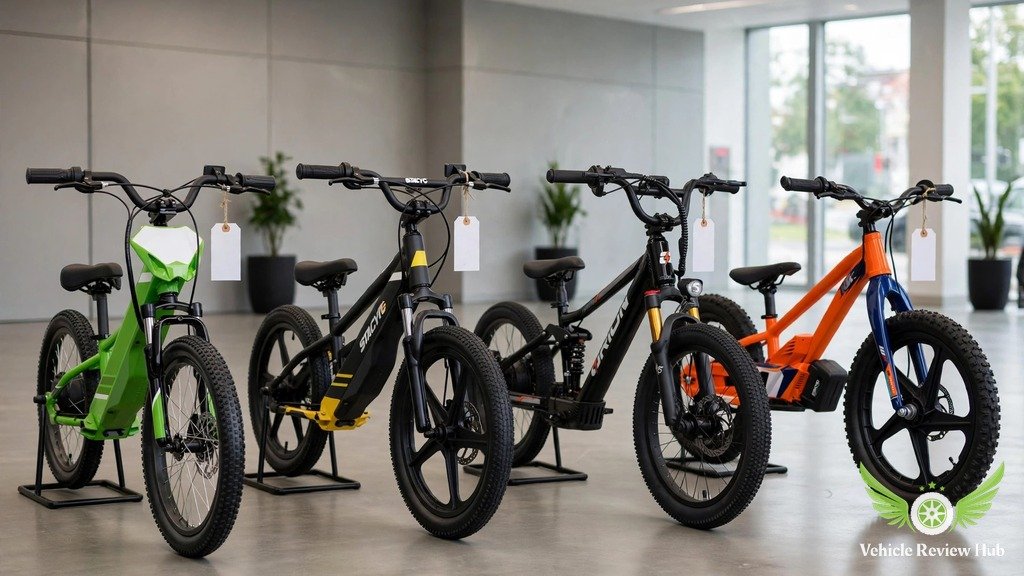
Price is where this class gets confusing: the list and street ladders order the same four bikes differently. At list, the Orion is cheapest at $1,549, the Elektrode second at $2,199, the STACYC third at $2,599 and the KTM dearest at $3,200. At street prices, the Orion stays cheapest and the STACYC’s sale moves it to second. In this Kawasaki Elektrode 20 comparison, every price below carries its label.
STACYC Is Cheaper, Swappable
The heading says the STACYC is cheaper, and that is true only at one price: the limited-time holiday-sale price of $1,599. At that price the STACYC costs $600 less than the Elektrode 20’s $2,199 list price. At list price the claim does not hold — the STACYC lists at $2,599, $400 MORE than the Elektrode’s $2,199. Both STACYC prices have to be printed together, labelled, or the heading misleads, and this Kawasaki Elektrode 20 comparison prints both. The swappable half is true at any price: the STACYC’s battery is a quick-change 40Vmax 6Ah pack, and a spare costs $325, while the Elektrode’s battery is fixed in the frame. The Elektrode’s answer is a bigger battery, 514Wh against 216Wh. In this Kawasaki Elektrode 20 comparison, the sale is the whole of the STACYC’s price case.
| Bike | List price | Current street / sale price | Spare battery |
|---|---|---|---|
| Orion e20x-FS | $1,549 | $1,549 | Removable pack (no spare price published) |
| Kawasaki Elektrode 20 | $2,199 | $1,099–$1,799 (dealers) | In-frame, not swappable; no price published |
| STACYC 20eDRIVE | $2,599 | $1,599 (holiday sale, limited time) | 36V 6Ah pack, $325 |
| KTM 20eDRIVE Factory Edition | $3,200 (launch MSRP) | $1,399–$2,583 (dealers) | 40Vmax 6Ah pack, swappable |
Note: The “STACYC is cheaper” claim in this Kawasaki Elektrode 20 comparison holds only at the $1,599 holiday-sale price. At list price the STACYC costs $400 more than the Elektrode 20. No destination figure is published for the Elektrode 20 or any rival.
Running Costs and Resale Value Compared
Running costs are small and nearly identical across the four: electricity and wear items only, no fuel and no oil on any of them. A full charge on the Elektrode takes about 0.5 kWh, and the wear items are the same bicycle parts on every bike. Resale is the one value question this guide cannot answer with numbers: no published resale figures exist for any of the four bikes. As judgement only, the Kawasaki and the STACYC, with the biggest dealer networks, are likeliest to hold value best. The Elektrode’s fixed battery is the resale risk to name: a used buyer has no published replacement price to check. That is the honest resale line in this Kawasaki Elektrode 20 comparison: no figures, only judgement.
Kawasaki Elektrode 20 Comparison Verdict and US Alternatives
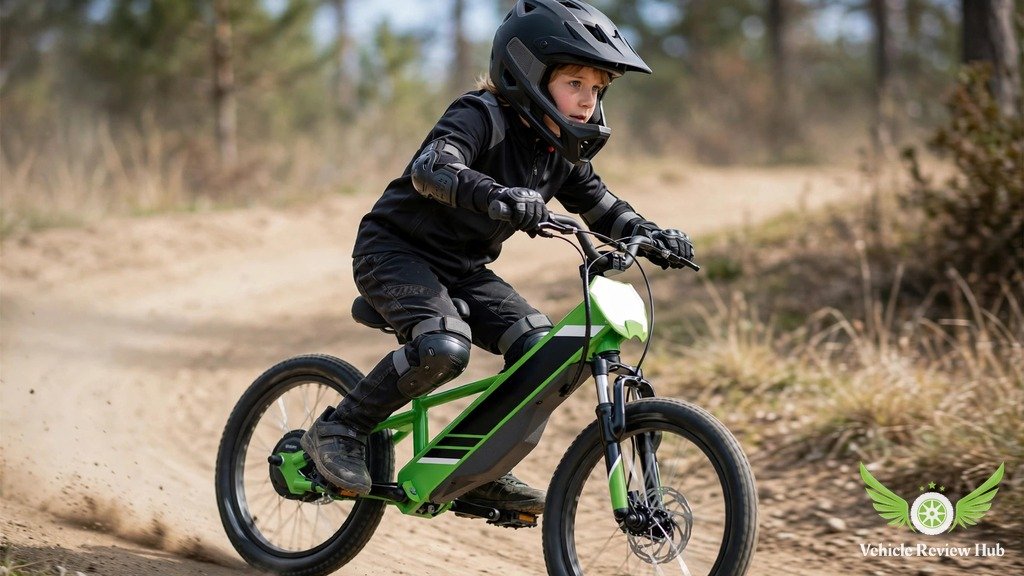
The verdict splits by what the buyer values. On speed and battery, the Elektrode 20 wins outright: 24 mph and a 514Wh battery no rival matches. On price, the Orion wins at $1,549. On weight and brakes, the STACYC and the KTM win at 33 lb with hydraulic discs. In this Kawasaki Elektrode 20 comparison, no bike wins everything.
Verdict: Speed and Size, Fixed Battery
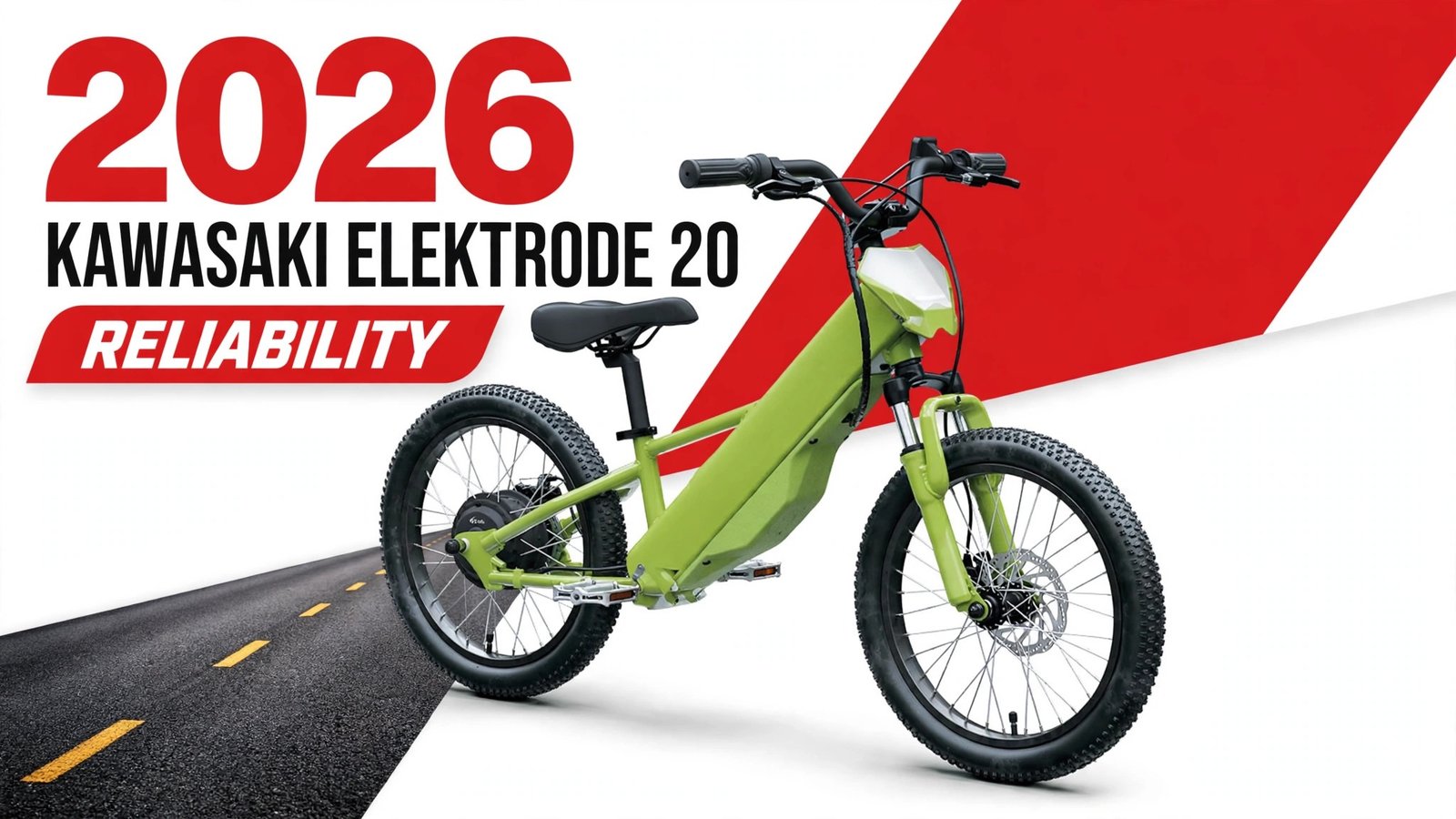
The Elektrode’s win is speed and size: 24 mph, the biggest battery at 514Wh, and the widest rider envelope at 132 lb. Its cost is the fixed battery — no spare-pack swap, no published replacement price, and a dealer-only replacement — plus 46.1 lb and the missing passcode lock. Unlike the 16, the 20 has no parental passcode lock, so a child changes modes with a button and parents have to trust the rider. That trade is the whole decision in this Kawasaki Elektrode 20 comparison: the fastest bike in the class asks the parent to give up the lock. At list the Elektrode at $2,199 is the best blend of speed, battery and dealer support; at sale prices the STACYC, Orion and KTM can all undercut it, so a buyer shopping today should price all four first. The rivals also win on warranty paper: STACYC and Orion cover frames for 5 years against 12 months, and Orion covers its battery for 6 months against 90 days. Our Elektrode 20 reliability guide covers the warranty tiers in full.
Elektrode 16 Is the Starter
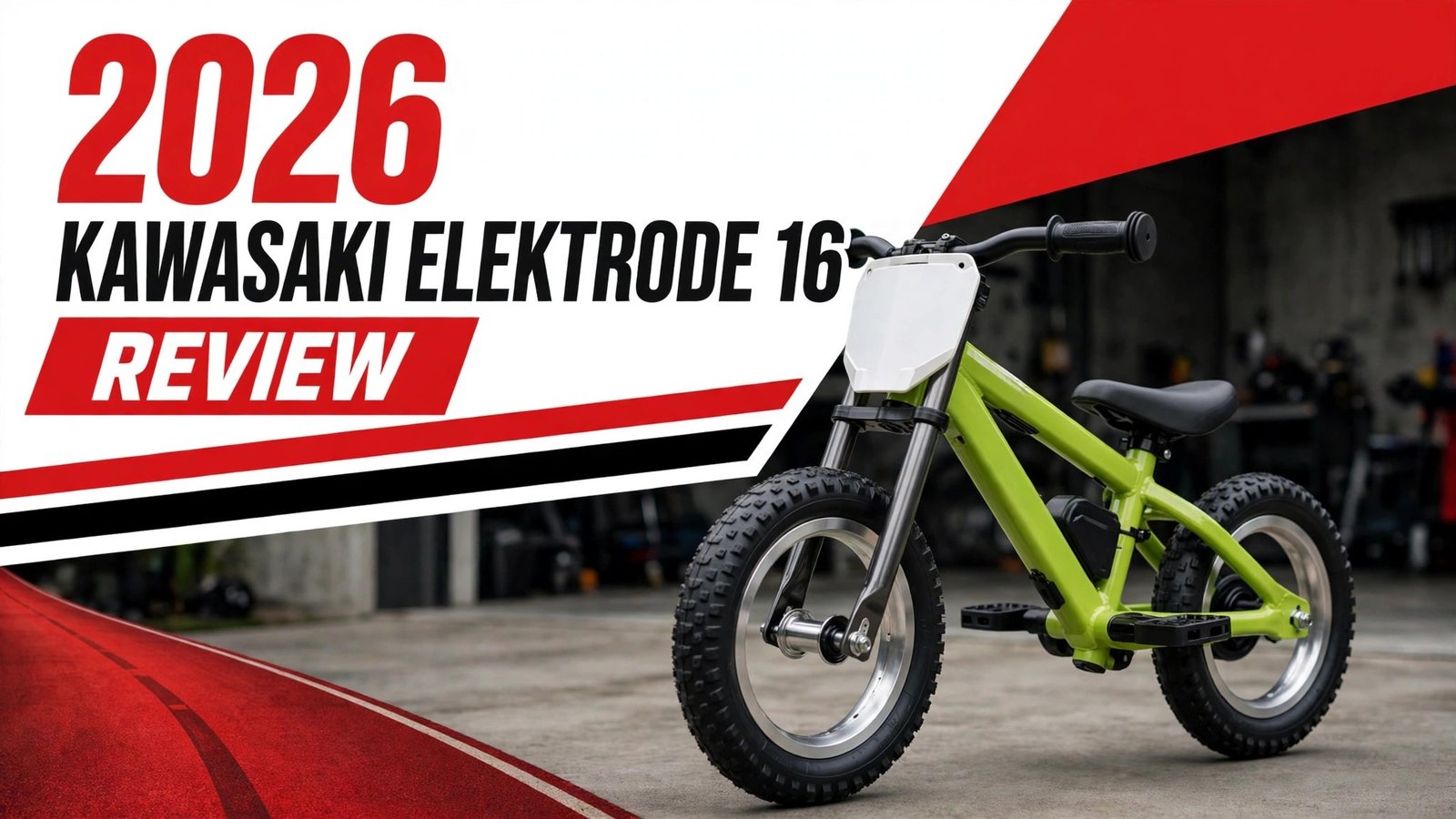
The real alternative is not a rival — it is the Elektrode 16, the starter bike a rider outgrows into the 20. The 16 costs $1,099, exactly half the 20’s price, with a 250W motor, a 13 mph top speed, 31.97 lb and a 36V 5.1Ah in-frame battery, for riders aged 3–8 with a 99.5 lb limit. It is smaller in every way. The 16’s one advantage is the passcode lock the 20 trades away. On the 16 a parent locks the modes with a passcode; on the 20 there is no lock at all. A family stepping a child up should know that trade before they buy, and a family buying a first powered bike should buy the 16. The 16 and 20 are different platforms and their parts are not interchangeable, as the HS Motorsports fit guide confirms. Our Elektrode 16 comparison covers its own rivals, and that step-up path is how this Kawasaki Elektrode 20 comparison closes: start on the 16, move to the 20 when the rider outgrows it.
Kawasaki Elektrode 20 Comparison: Frequently Asked Questions
The questions below cover the choices buyers face: which bike is better, which is cheaper, which is fastest, which runs longest, and whether to start on the 16 or the 20. The answers use the verified figures from this Kawasaki Elektrode 20 comparison, with list and street prices labelled separately.
Which is better: the Kawasaki Elektrode 20 or the STACYC 20eDRIVE?
On speed and battery the Elektrode wins: 24 mph against about 20 mph, and a 514Wh in-frame battery against the STACYC’s 216Wh pack. On weight, brakes and battery the STACYC wins: 33 lb against 46.1 lb, hydraulic discs, and a swappable battery with a $325 spare. At list the Elektrode is $400 cheaper at $2,199 against $2,599; at the holiday-sale price of $1,599, the STACYC is cheaper. For this Kawasaki Elektrode 20 comparison, neither bike is better outright.
Is the STACYC 20eDRIVE cheaper than the Elektrode 20?
Only at the holiday-sale price of $1,599, a limited-time offer with no published end date. At list the STACYC costs $2,599 — $400 more than the Elektrode’s $2,199. Check the current price before deciding, because the sale is what makes the STACYC cheaper in this Kawasaki Elektrode 20 comparison.
What is the cheapest 20-inch electric balance bike?
The Orion e20x-FS at $1,549 list, with full suspension, hydraulic brakes and a removable battery. It is the only rival cheaper than the Elektrode at list, and it stays cheapest at street prices. In this Kawasaki Elektrode 20 comparison, the Orion is the value pick on price.
Is the KTM 20eDRIVE the same bike as the STACYC 20eDRIVE?
Yes — the KTM 20eDRIVE Factory Edition is a rebadged STACYC 20eDRIVE built in collaboration with STACYC, in KTM Factory Replica livery. It shares the same 36V motor, swappable 6Ah battery, 20 mph top speed and 33 lb weight. Its launch price was $3,200; dealers now list $1,399–$2,583. For this Kawasaki Elektrode 20 comparison, the KTM and the STACYC are the same bike under different badges.
Which 20-inch electric balance bike is the fastest?
The Elektrode 20, at 24 mph in Mid and High modes. The STACYC, Orion and KTM all top out at about 20 mph in normal modes. The Orion’s 28 mph Race Mode is adult-only and does not count as a kids’ speed. In this Kawasaki Elektrode 20 comparison, the Elektrode is the fastest bike a child may ride at full speed.
Which 20-inch electric balance bike has the longest run time?
The Orion e20x-FS claims 4 hours per charge. The Elektrode 20 claims 60 minutes in High and 180 in Low; the STACYC and KTM claim 30–60 minutes. Cycle News measured about 45 hard minutes on the Elektrode, and an hour and a half or more cruising. For this Kawasaki Elektrode 20 comparison, the Orion wins on claimed run time; the Elektrode’s figures are the only tested ones.
Should I buy the Elektrode 16 or the Elektrode 20?
Buy the 16 first if the rider is under 8 or new to powered bikes: $1,099, 13 mph, and a parental passcode lock. Buy the 20 when the rider is 8 or older and has outgrown the 16 — but know that the 20 has no passcode lock. In this Kawasaki Elektrode 20 comparison, the 16 is the starter and the 20 is the step-up, and the step up trades the lock for 24 mph.