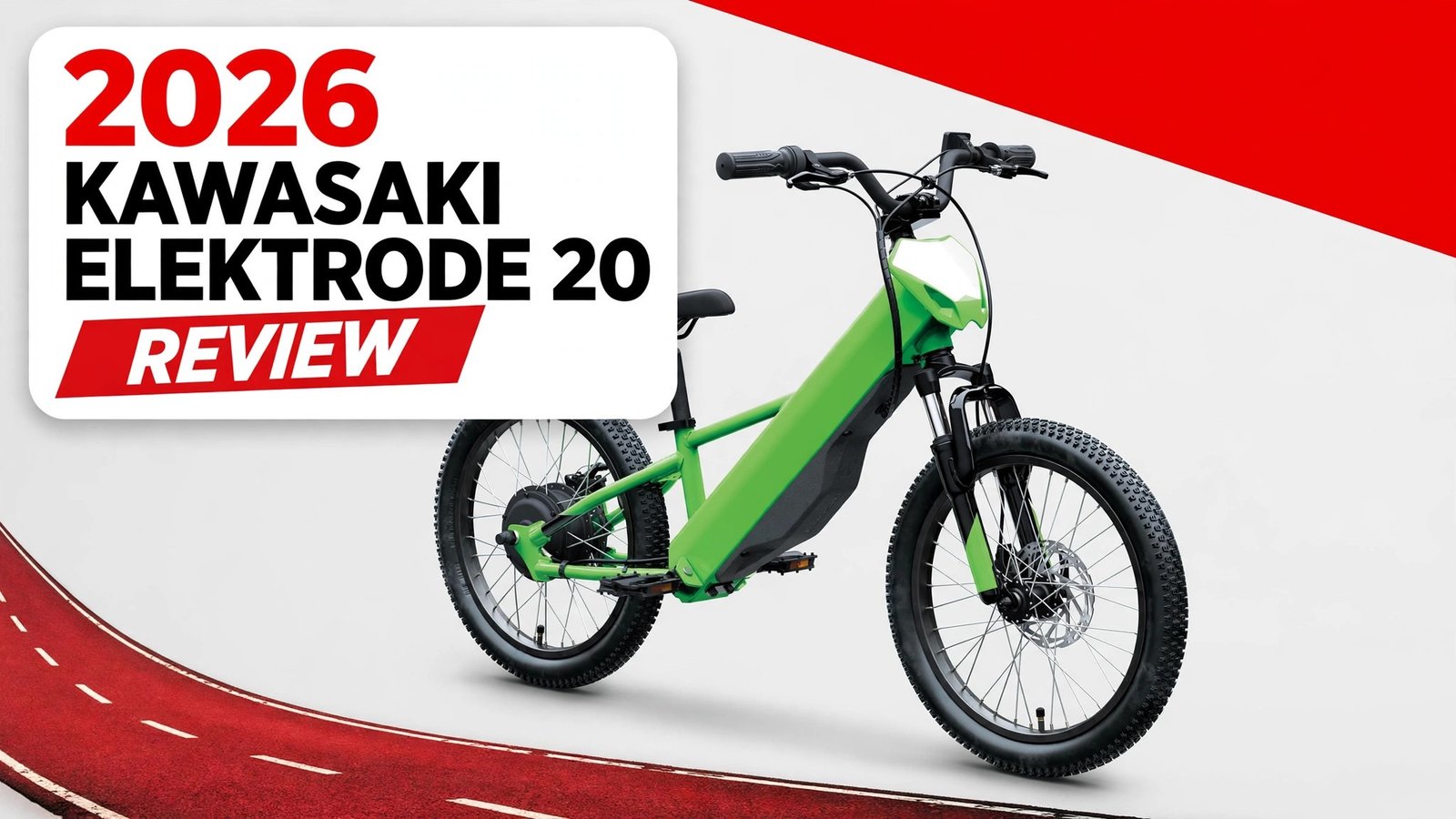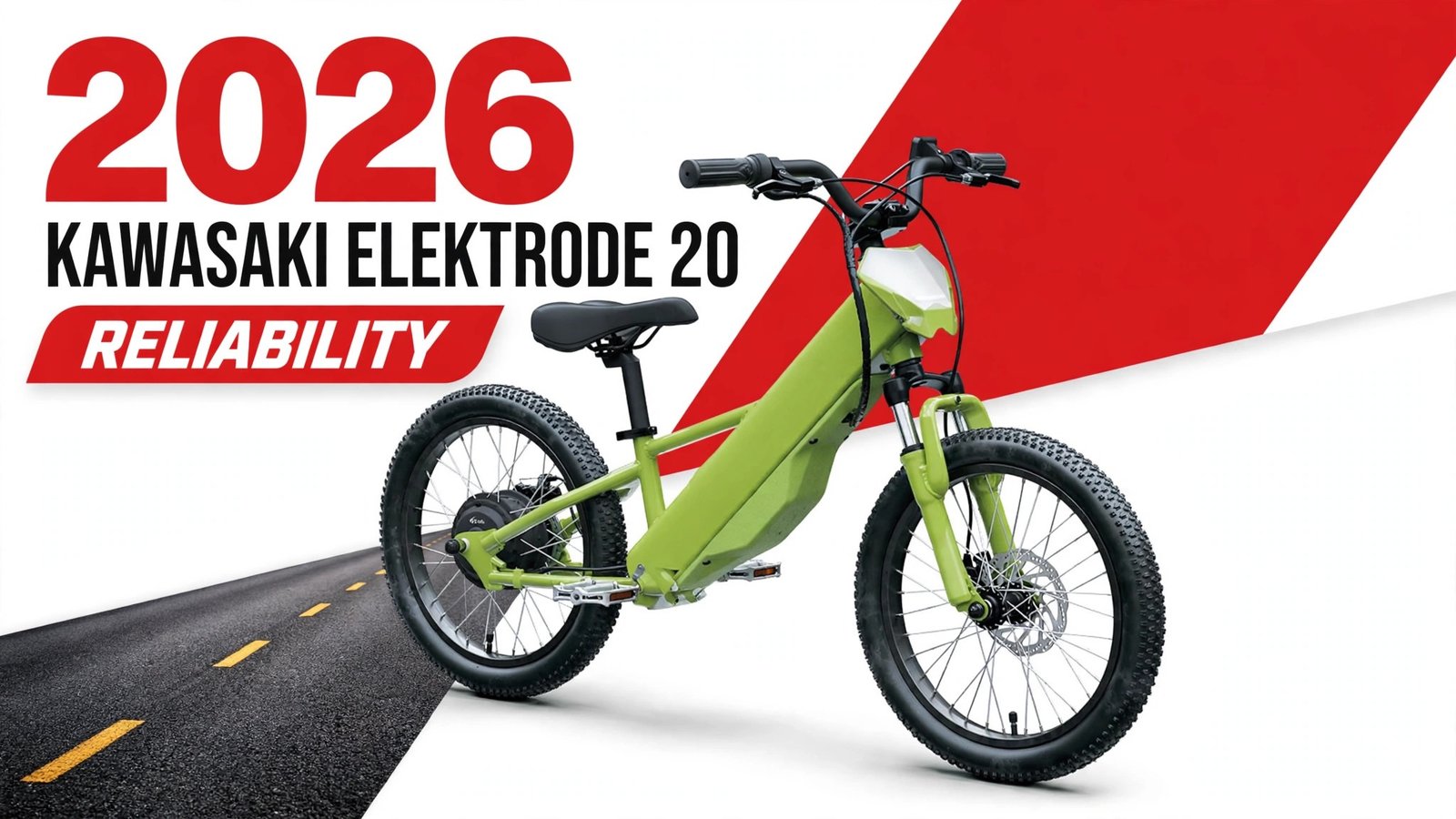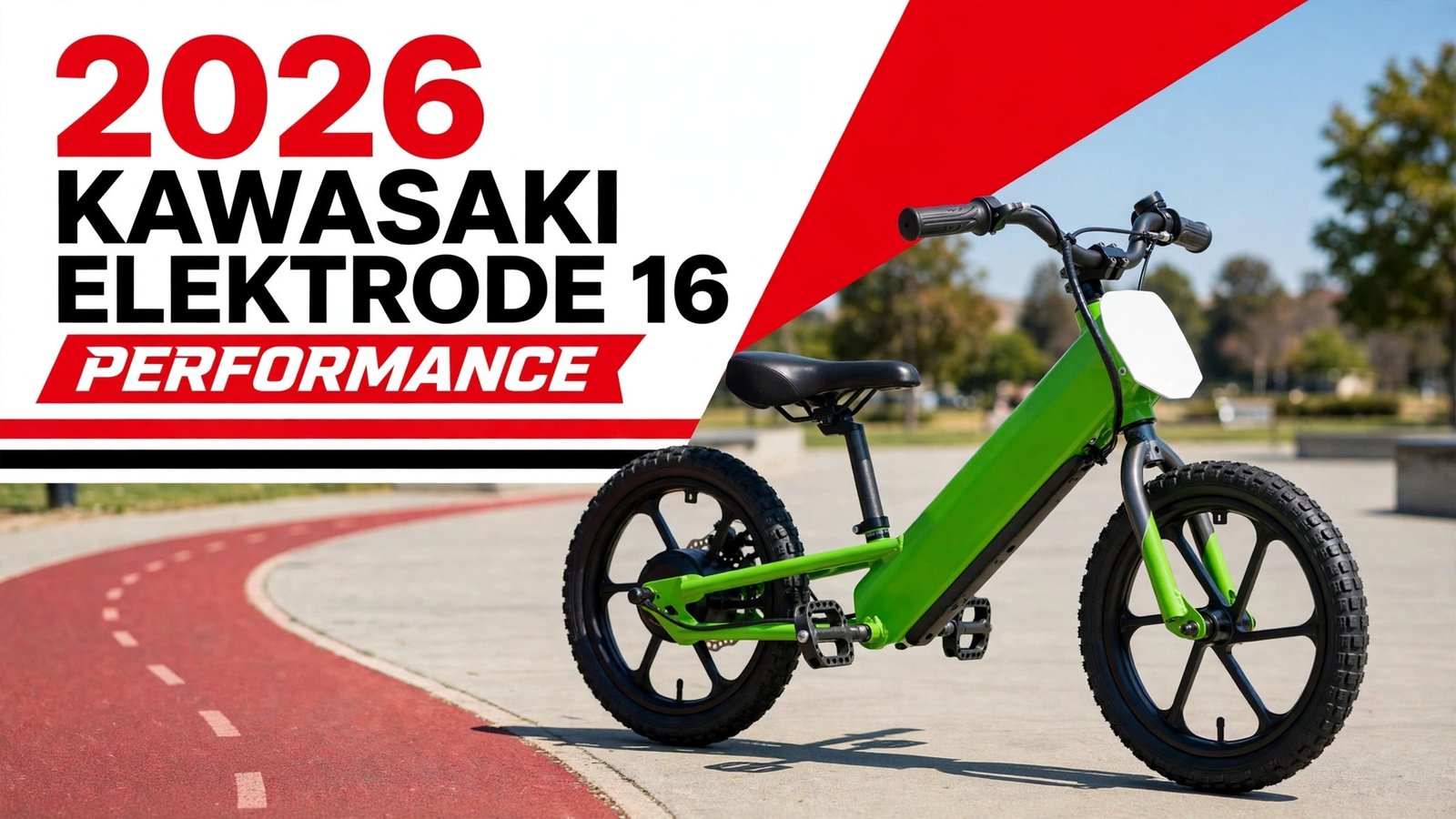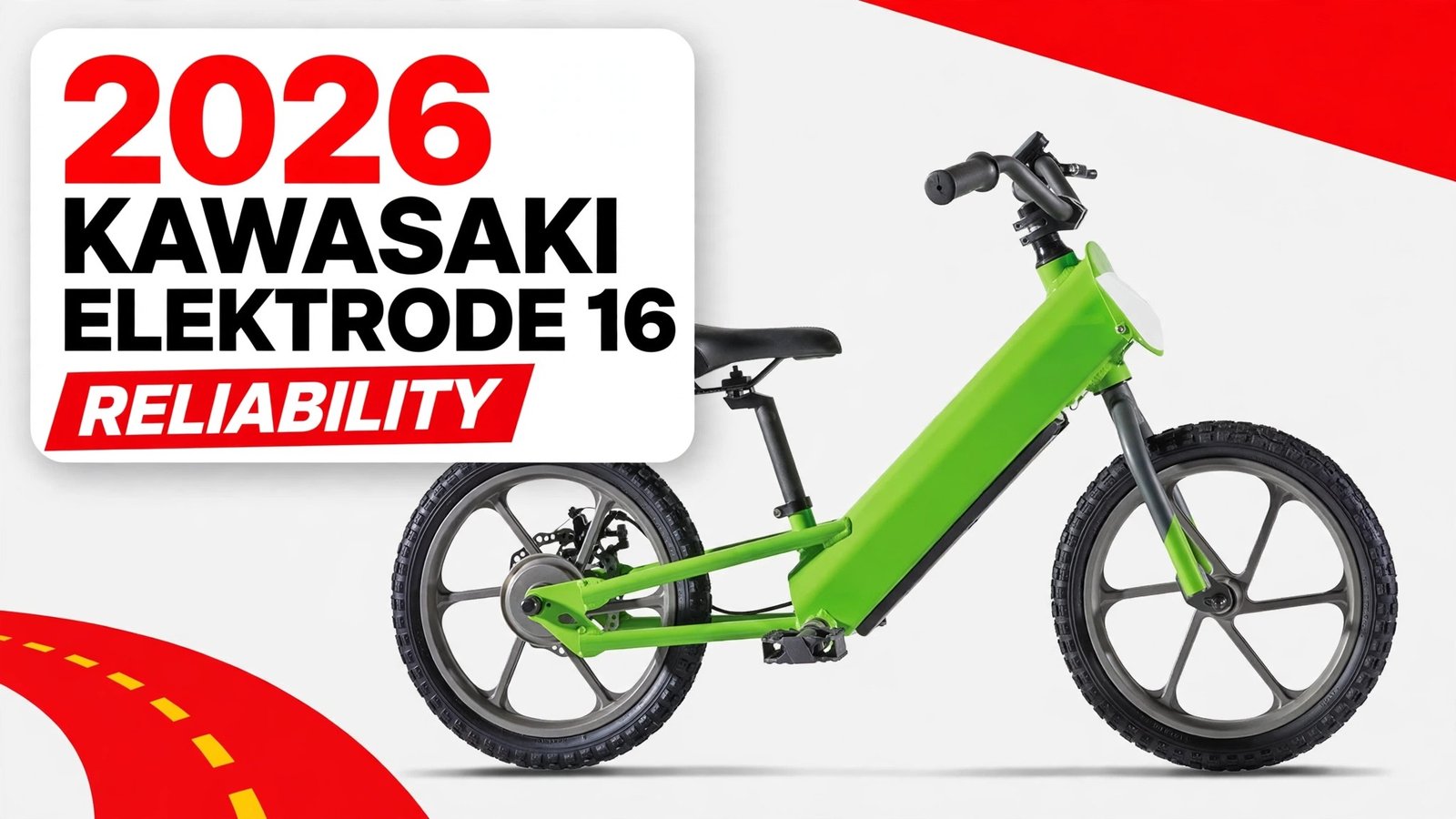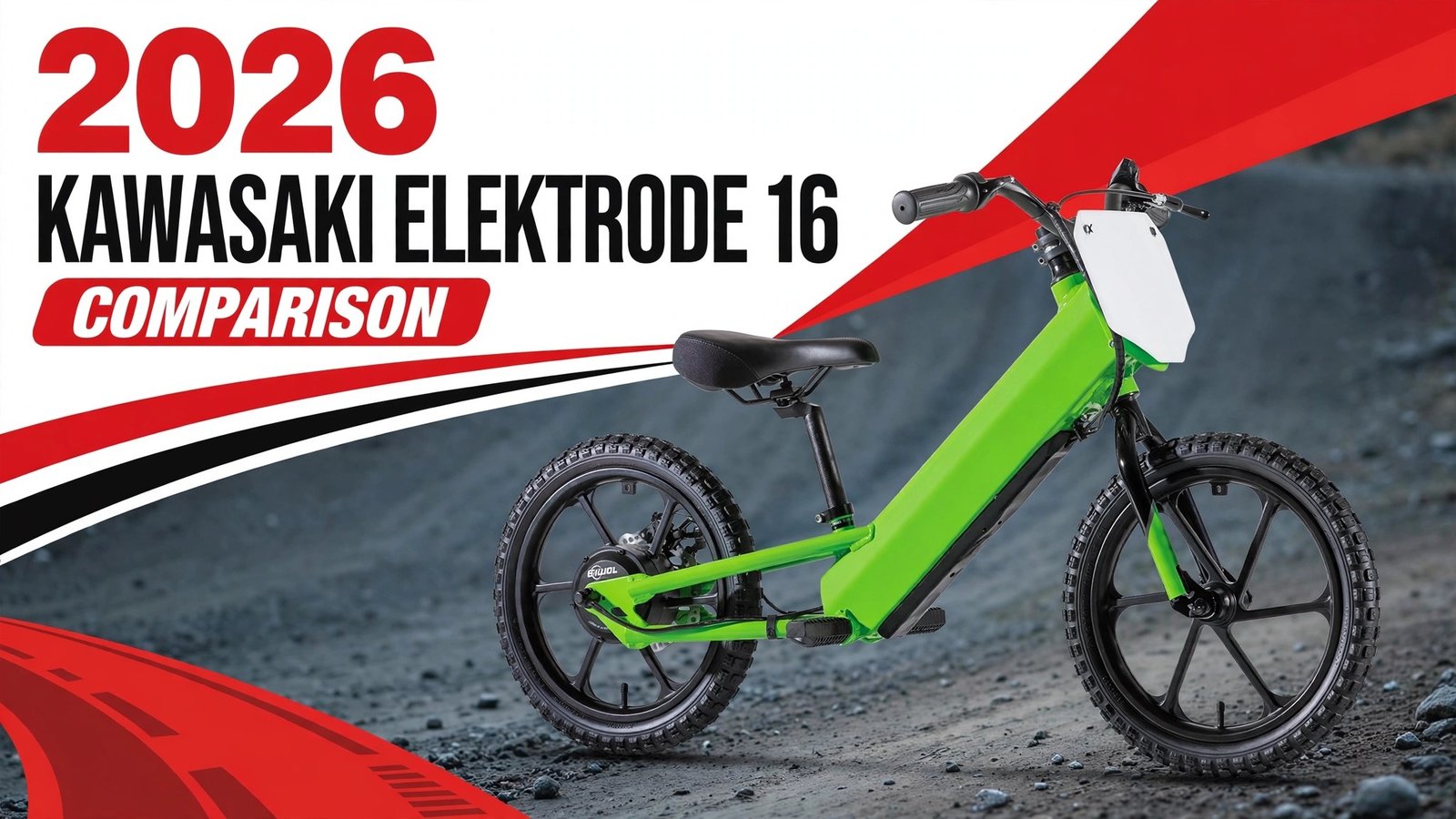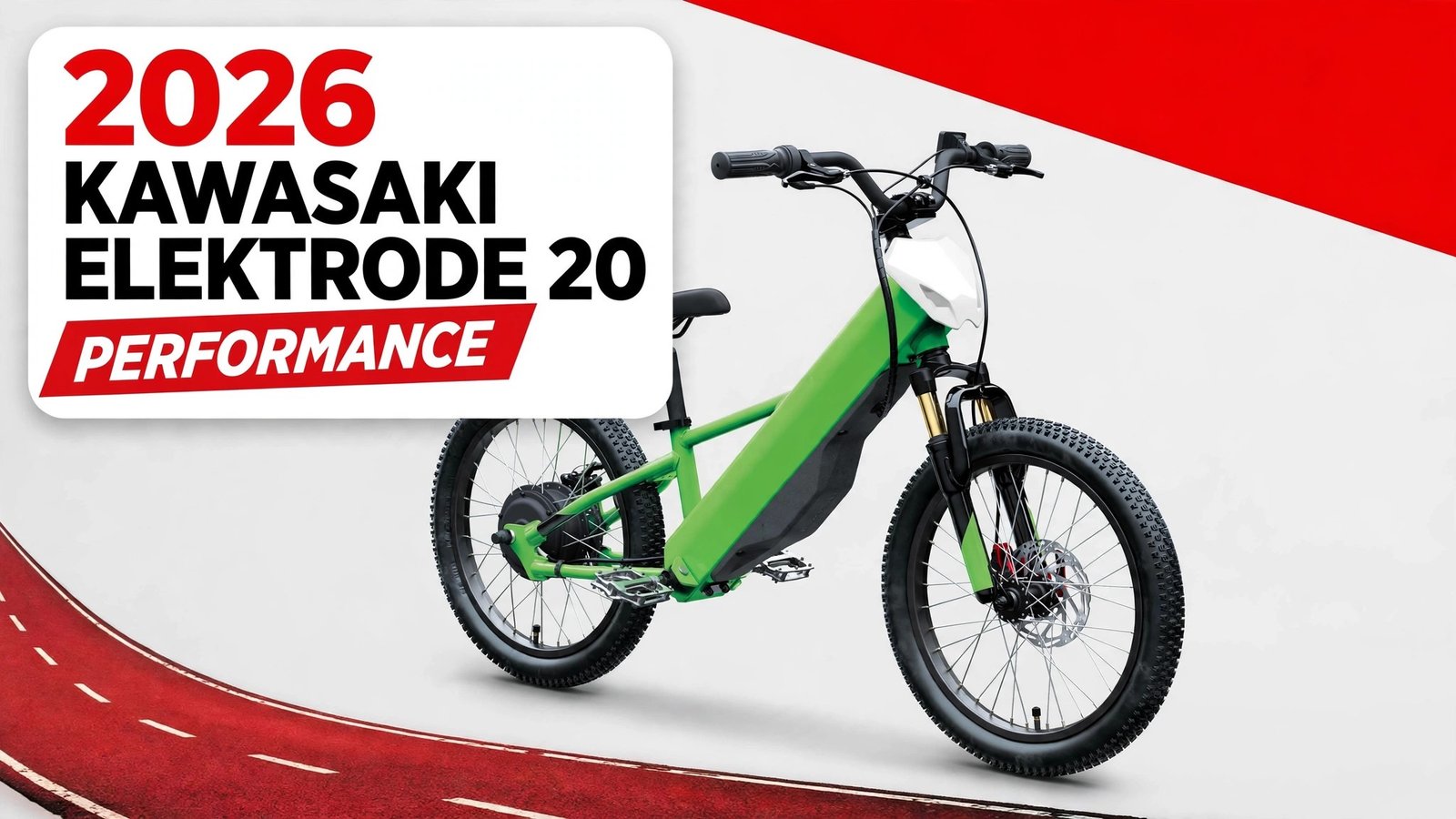
The number that defines this Kawasaki Elektrode 20 performance guide is 24 mph — the top speed in two of the three modes — and the number that qualifies it is 45 minutes, the hard-riding run time Cycle News measured in testing. The Elektrode 20 is the step-up from the Elektrode 16, and every figure here comes from Kawasaki’s own 2025 spec sheets or from the two testers who rode the bike: Cycle News’s Harvey Scaysbrook and Ultimate Motorcycling’s Avery Bart.
This Kawasaki Elektrode 20 performance guide covers the 750W motor, the three speed modes, the claimed and tested run times, and how the bike handles, brakes and compares with the STACYC 20eDRIVE. It is an electric balance bike for riders aged 8 and up — no engine, no petrol, no gearbox, only a hub motor, a battery and three modes a child can change with a button.
Kawasaki Elektrode 20 Engine Performance and Power Delivery
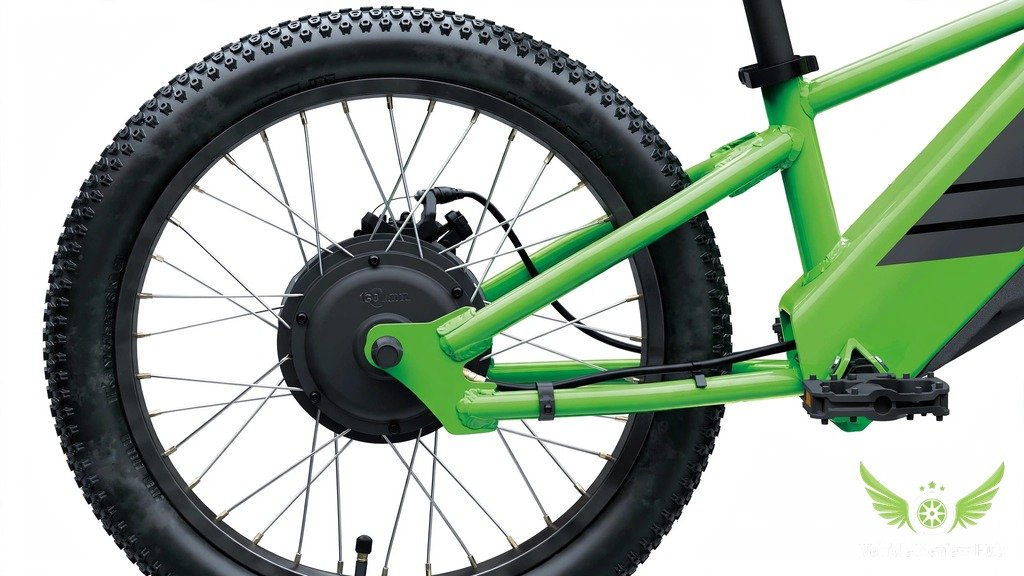
The electric drive is the heart of this Kawasaki Elektrode 20 performance story: a 750W motor, a 50.4V battery and three modes sharing two top speeds. The table below puts the modes side by side.
| Mode | Top speed | Throttle response | Run time claimed |
|---|---|---|---|
| Low | 13 mph | Gentle | 180 minutes |
| Mid | 24 mph | Mild | About 60 minutes (shared with High) |
| High | 24 mph | Direct and snappy | 60 minutes |
Note: Mid and High share the 24 mph cap and the roughly one-hour run-time claim in this Kawasaki Elektrode 20 performance guide — only the throttle response differs. Kawasaki publishes no separate Mid figure, so the table carries the High figure for both.
Mid Mode Is Also 24 mph
Mid mode is the surprise in this Kawasaki Elektrode 20 performance guide: it caps at the same 24 mph as High mode. The difference is not speed but throttle response — Kawasaki calls Mid “mild response”, while High is direct and snappy. A rider in Mid gets the full top speed with a gentler ramp to it.
For a rider new to the 20, Low mode at 13 mph is the starting point; Mid is the next step up. The Kawasaki Elektrode 20 model page lists the three modes plainly, and the practical advice in this Kawasaki Elektrode 20 performance guide is simple: let the rider earn High mode by proving they can handle Mid first, because High adds a sudden surge without adding a single mile per hour.
750 Watts in the Rear Hub
The motor is a 750W brushless unit built into the rear wheel — 1 horsepower, driving the wheel directly with no chain, no gears and no clutch. It is three times the power of the Elektrode 16’s 250W motor, and that tripling is the single biggest performance change in the step up from the 16, and the reason this Kawasaki Elektrode 20 performance guide starts with the motor. The 2025 Elektrode 20 spec sheet lists the 750W figure for both trims.
Being electric, the motor delivers its power the moment the throttle opens. Ultimate Motorcycling calls High mode “undeniably snappy”, and Cycle News notes the bike “will get there quickly” even with a small rider on board. Kawasaki publishes no torque figure for the 20, and this Kawasaki Elektrode 20 performance guide prints none — the only honest power facts are the 750W rating, the 1 hp equivalent and the testers’ descriptions of how the power feels.
Kawasaki Elektrode 20 Top Speed and Acceleration
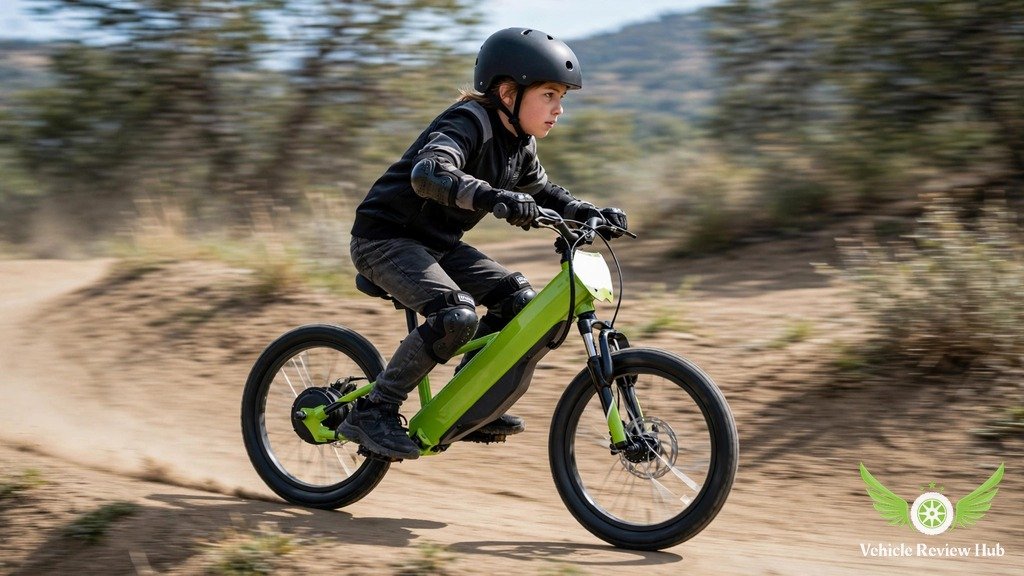
Top speed is where this Kawasaki Elektrode 20 performance guide starts with a claim and ends with a caution: 24 mph is the factory cap, and no independent tester has published a GPS-measured figure. What the testers did publish is how that speed feels to a child, and that feeling is what this Kawasaki Elektrode 20 performance guide measures the bike by.
Is the Kawasaki Elektrode 20 Fast?
On paper, 24 mph is bicycle speed on a flat road. On a bike built for an eight-year-old, it is a different story. Cycle News puts it plainly: “when you have a skinny 7-year-old on board, the Elektrode will get there quickly.” Ultimate Motorcycling agrees, calling High mode “undeniably snappy” and noting that tester Avery Bart, age 10, “can handle High mode, though not every young rider will be able to”. The way the bike reaches it, with an instant electric surge and no gears to soften it, is what makes 24 mph feel quick.
That feeling is why the testers kept the speed in check during their rides. Cycle News restricted Harvey, an experienced seven-year-old, to the middle range of the throttle, and advised parents to wait until at least eight or stick with the slowest mode, “because the high/full power mode is seriously quick for a kid’s bike”. This Kawasaki Elektrode 20 performance guide repeats that advice without softening it: the bike is fast for its class, and the speed deserves respect from the rider and the parent alike.
24 mph Is the Factory Cap
The 24 mph figure is Kawasaki’s factory cap, printed on both 2025 spec sheets and on the model page, applying to Mid and High alike — Low is capped at 13 mph. No independent GPS-measured top speed has been published for the 20, so this Kawasaki Elektrode 20 performance guide prints Kawasaki’s claimed figure only, labelled as claimed, and will not invent one.
There is also no timed acceleration test anywhere for this bike, so this guide prints no 0–24 mph time and no standing-start figure. The only acceleration facts are the press release’s “quick and aggressive acceleration” and the testers’ descriptions of the throttle response.
Kawasaki Elektrode 20 Mileage and Fuel Economy
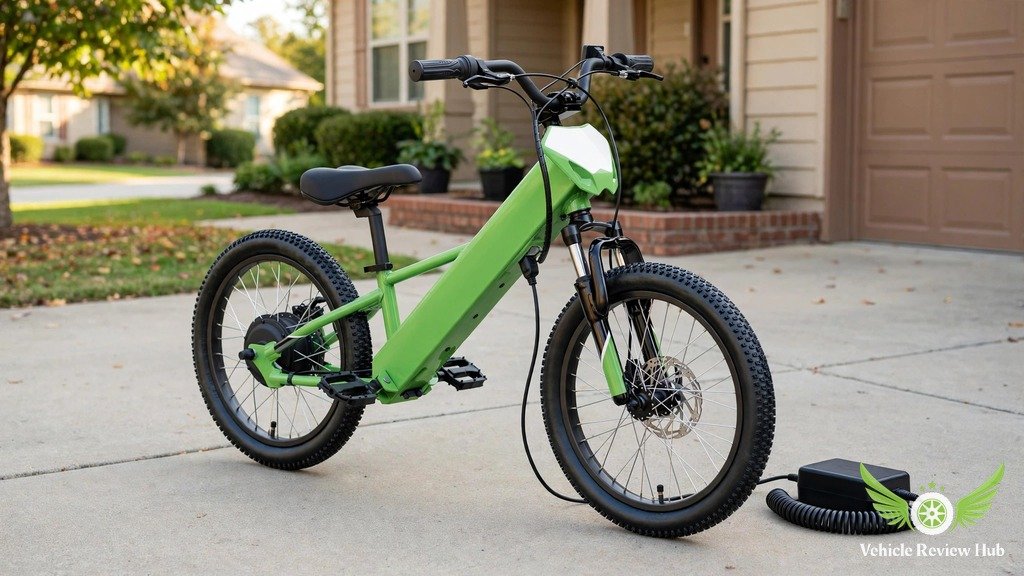
Mileage on an electric balance bike is measured in minutes, not miles, and this Kawasaki Elektrode 20 performance guide uses Kawasaki’s claimed figures and Cycle News’s measured ones side by side. There is no fuel-economy figure for an electric bike, and Kawasaki claims no miles-per-charge figure, so run time is the only honest measure.
60 Minutes Claimed in High
Kawasaki claims 60 minutes in High mode; Cycle News’s testing shows what that means in practice: Harvey got about 45 minutes flat-out in Medium mode, and “around 45 minutes to one hour if you’re really on it”. The full Cycle News review is clear that hard riding eats the battery faster than the claim suggests, and the 45-minute figure is a tester measurement, labelled as such every time it appears in this Kawasaki Elektrode 20 performance guide.
For cruisey trail riding, Harvey got “at least an hour and a half on full power”, and slow-speed trials riding yields “a lot more” still. A week of short school-run sessions, around ten minutes a day, passed between charges. The 60-minute claim is a fair guide to hard use and a cautious one for gentle use — plan around the harder number.
180 Minutes Claimed in Low
Low mode is where the long run time lives: Kawasaki claims 180 minutes — three hours — at the 13 mph cap. Ultimate Motorcycling’s verdict is measured: “Kawasaki claims an hour in High mode and three hours in Low mode. We found the range adequate for neighborhood or campsite use; it’s not meant for long adventures or commuting to school.” The Ultimate Motorcycling review treats three hours as plenty for the riding a balance bike actually does, and not enough for the riding it was never built to do.
When the battery does run flat, charging takes about four hours on a standard 110-V home outlet, using the included charger, with the connector at the front of the bike. Cycle News notes about twenty minutes from flat is enough for “a decent ride”, and Kawasaki rates the battery for 500 charge cycles before it drops to 80% of its original capacity. The battery is built into the frame and is not swappable, so a flat pack ends the riding until it charges. That trade — a long slow run or a short fast one — is the central choice in this Kawasaki Elektrode 20 performance guide.
| Riding | Run time | Source |
|---|---|---|
| Low mode | 180 minutes | Kawasaki claim |
| High mode | 60 minutes | Kawasaki claim |
| Medium mode, flat-out | About 45 minutes | Cycle News test |
| Hard riding | 45 minutes to 1 hour | Cycle News test |
| Cruisey trail riding | 1.5 hours or more | Cycle News test |
| School-run sessions, about 10 min a day | A week between charges | Cycle News test |
Note: Claimed figures in this Kawasaki Elektrode 20 performance table are Kawasaki’s; measured figures are Cycle News’s, from Harvey Scaysbrook’s testing. Hard riding always returns less than the claim, and gentle riding returns more.
Kawasaki Elektrode 20 Real-World Riding Experience
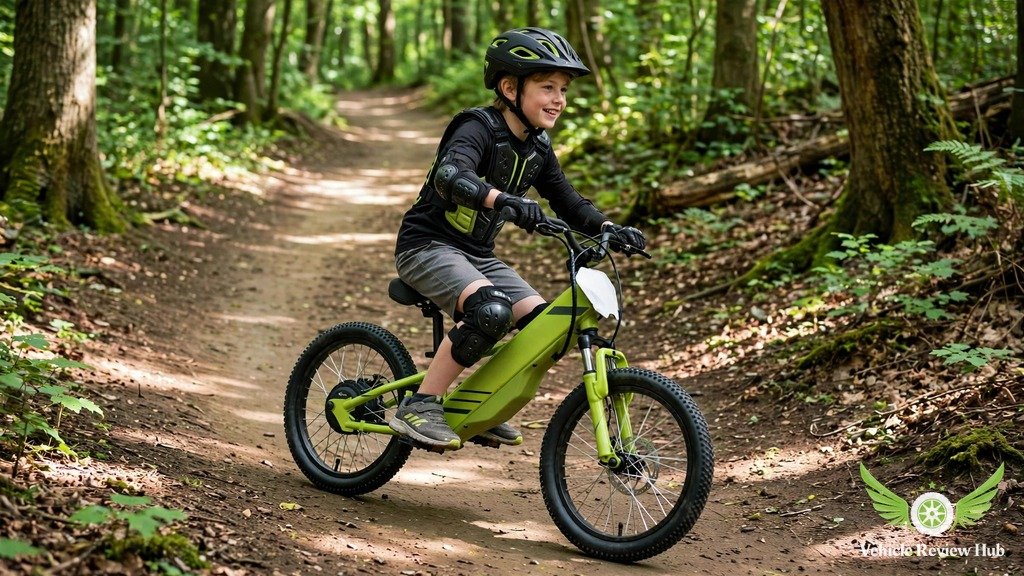
The spec sheet says what the bike can do; the testers say what it actually does. This Kawasaki Elektrode 20 performance guide uses only their words for the riding, because no writer here has ridden the bike — and the two testers agree: the 20 is fast for a kids’ bike, and it is big.
The Riding Experience Buyers Actually Talk About
The first thing both testers mention is the size jump from the 16. Cycle News frames it as “scale the difference between an 85cc and a 125cc dirt bike, and you’ll get the idea”. Harvey was 47 inches tall when he first got the bike and found it “a tad big”, then grew “a couple of inches” and fitted right into it; Avery, at four feet seven and 67 lb, “fits the 2025 Kawasaki Elektrode 20 perfectly”.
The second thing they mention is how little the bike asks of its rider. It is nearly silent, and the 28 mm fork, while “not sophisticated”, is “better than a rigid front end, especially when wheelies are aborted or when riding on washboard terrain”. The rear is a hardtail on both trims. Ultimate Motorcycling expects the next Elektrode model to be fully suspended. This Kawasaki Elektrode 20 performance guide records that verdict as the testers gave it, without dressing it up.
45 Hard Minutes in Testing
The 45-minute figure is the hardest number in this Kawasaki Elektrode 20 performance guide, and it needs its label every time — it is Cycle News’s measurement, not Kawasaki’s claim. Harvey rode flat-out in Medium mode and got about 45 minutes; riding hard in general returned “around 45 minutes to one hour”. That is the figure a parent should plan around in this Kawasaki Elektrode 20 performance guide, because a child riding at full effort will meet it, not the 60-minute claim.
The softer numbers belong in the same paragraph, because they are the same test. Cruisey trail riding returned an hour and a half or more on full power, slow-speed trials riding returned “a lot more”, and a week of ten-minute school-run sessions passed between charges. Run time is a range set by how hard the rider twists the throttle, and 45 minutes is the bottom of it.
Kawasaki Elektrode 20 Handling, Braking and Stability
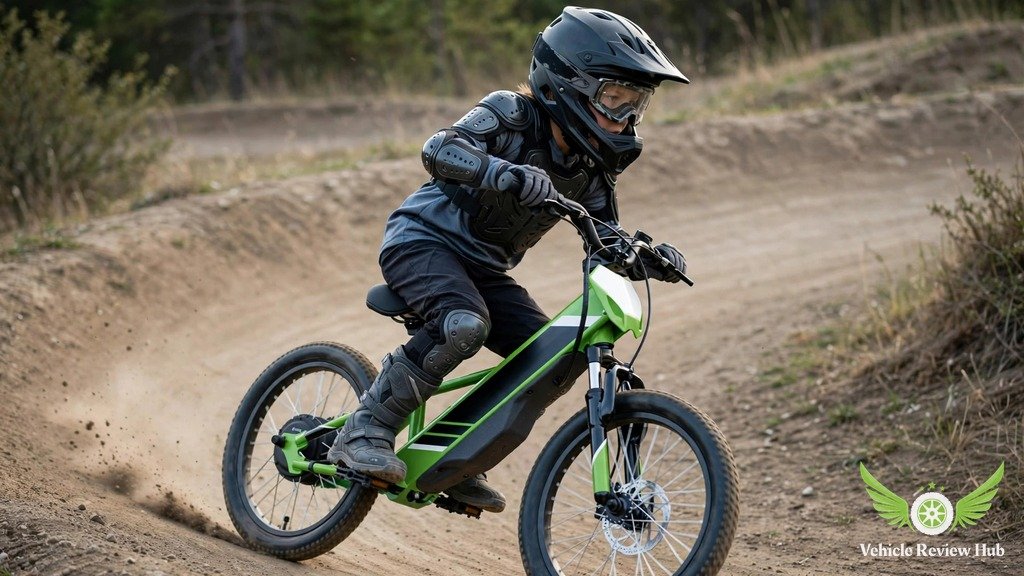
Handling on the Elektrode 20 is bicycle handling at motorcycle speed, and this Kawasaki Elektrode 20 performance guide treats the fork, the brakes and the fit as one subject.
A Tad Big at 47 Inches Tall
Harvey Scaysbrook was 47 inches tall when he first got the 20, and his verdict was plain — “a tad big”. He grew “a couple of inches” and fitted right into it. Avery Bart, at four feet seven and 67 lb, “fits the 2025 Kawasaki Elektrode 20 perfectly”. The seat spans 21.6–27.3 inches on the base 20 and 23.3–29.6 inches on the taller 20FS.
That anecdote is not a fit rule, and this Kawasaki Elektrode 20 performance guide does not present it as one. No rider-height range is published for the 20, so the honest advice is to sit the child on the bike before buying. The adjustable handlebar height helps, and Cycle News puts it well: change the bar height as the rider grows and “you won’t be (hopefully) buying a new bike every other year”. That is the fit story in full. This Kawasaki Elektrode 20 performance guide leaves it there: try the bike, then decide.
Handling, Braking and Stability on Real Roads
The 20-inch spoked wheels roll over obstacles the 16’s cannot, and the base 20’s 28 mm fork with 50 mm of travel takes the edge off washboard ground and aborted wheelies. The 20FS trades that fork for a rigid steel one, and both trims are hardtails at the rear. The tyres are IRC knobby bicycle tyres — 20×2.125 on the base 20, 20×1.95 on the 20FS — and Ultimate Motorcycling warns they “can easily break traction, particularly in High power-mode”. Cycle News puts the pressures at 35–40 psi possible, happiest around 30 psi for mixed loose dirt and hardpack.
Braking is the 20’s biggest handling upgrade over the 16: a 160 mm mechanical disc at the front and another at the rear, both cable-operated. Ultimate Motorcycling says “the two 160mm discs efficiently slow down the 46-pound Elektrode 20. Stoppies are definitely on the menu for the right rider”, and Cycle News agrees it “will pull a stoppie if the front lever is pulled hard enough”. The mechanical setup feels, in Cycle News’s words, “a little bargain basement” next to the hydraulic brakes on the STACYC — but there is no hydraulic fluid to spill in a crash. For a parent judging brakes, the trade in this Kawasaki Elektrode 20 performance guide is clear: simple and crash-proof against the STACYC’s stronger hydraulics.
Kawasaki Elektrode 20 Performance Compared With Other Sport Bikes
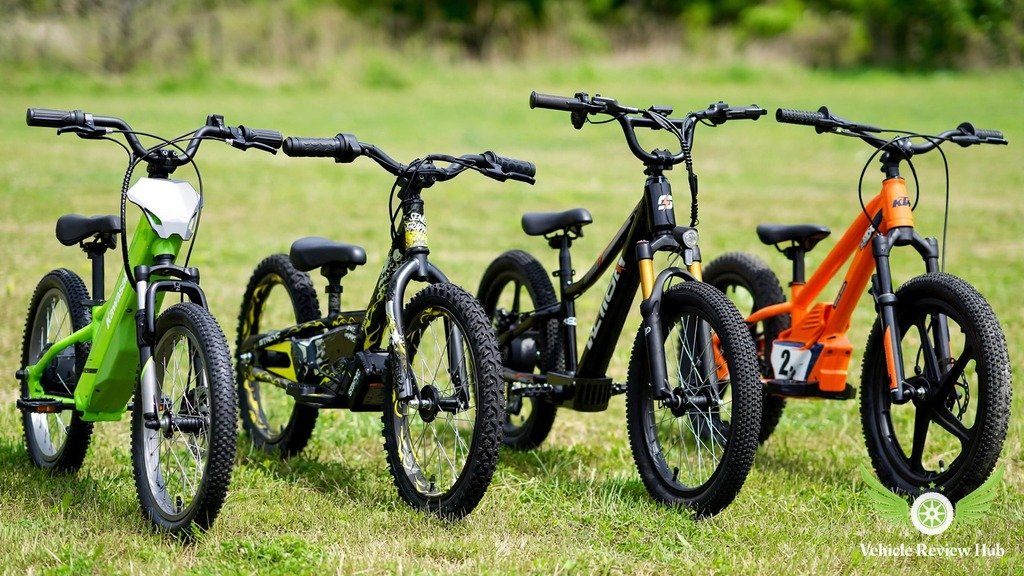
The Elektrode 20 is the fastest bike in the 20-inch class in normal modes, and this Kawasaki Elektrode 20 performance comparison puts that speed against the STACYC 20eDRIVE. The rivals here are electric balance bikes built for the same 8-and-up riders, and the table at the end of this section carries all four.
Kawasaki Elektrode 20 vs STACYC 20eDRIVE
On speed, the Elektrode wins clearly: 24 mph in Mid and High against about 20 mph in the STACYC’s High mode, and a longer claimed run time — 60 minutes in High and 180 in Low against 30–60. The Elektrode’s battery is also far bigger at 514Wh against the STACYC’s 216Wh, and at list price the Elektrode is $400 cheaper at $2,199 against $2,599. That list-price gap is the honest headline: STACYC’s limited-time holiday sale cuts the 20eDRIVE to $1,599, which makes the STACYC $600 cheaper while the sale lasts.
On weight and equipment, the STACYC wins just as clearly. It weighs 33 lb against the Elektrode’s 46.1 lb — 13 lb lighter — and it has hydraulic disc brakes against the Elektrode’s mechanical ones, plus a Manitou J-Unit fork with 80 mm of travel. The STACYC’s battery swaps out in seconds, with a spare 36V 6Ah pack at $325, while the Elektrode’s battery is fixed in the frame and a flat pack ends the riding for about four hours. The STACYC holiday sale page carries the $1,599 price, and the full price-and-value comparison, with the Orion and the KTM alongside, is in the Elektrode 20 comparison.
Is the Kawasaki Elektrode 20 Suitable for Beginner Riders?
The honest answer is a qualified no: the 20 is a step-up bike, not a first bike. It suits riders aged 8 and up with balance-bike or Elektrode 16 experience, starting in Low mode at 13 mph. A true beginner — a young child on their first powered bike — belongs on the Elektrode 16, with its 5 mph low mode, its 13 mph cap and its parental passcode lock. The Elektrode 16 performance guide covers that starter bike in full.
The reason for the qualification is the one safety fact this Kawasaki Elektrode 20 performance guide will not bury: the 20 has no passcode lock. A child changes modes with a push of a button on the left-handlebar dash — only while the bike is fully stopped, but with no parental safeguard at all. Cycle News states it without hedging: “unlike the 16-incher, there’s no safeguard that can stop the kid from changing it themselves, so you’ll have to trust that they will keep it in the mode you, as the parent, choose.” Cycle News advises waiting until at least eight or sticking with the slowest mode, “because the high/full power mode is seriously quick for a kid’s bike”. Parents who buy the 20 hand the speed decision to the child.
| Bike | Top speed (normal modes) | Run time | Weight | Battery |
|---|---|---|---|---|
| Kawasaki Elektrode 20 | 24 mph | 60 min High / 180 min Low | 46.1 lb | 514Wh, in-frame |
| STACYC 20eDRIVE | About 20 mph | 30–60 min | 33 lb | 216Wh, swappable |
| Orion e20x-FS | 20 mph | 4 hours claimed | 45 lb | 48V 8Ah, removable |
| KTM 20eDRIVE Factory Edition | About 20 mph | 30–60 min | 33 lb | 216Wh, swappable |
Note: The Orion’s 28 mph Race Mode is adult-only and is not counted in its top speed in this Kawasaki Elektrode 20 performance table. The STACYC’s $1,599 is a limited-time holiday-sale price; its list price is $2,599, which is $400 more than the Elektrode 20.
Kawasaki Elektrode 20 Performance: Frequently Asked Questions
The questions below cover the speed, the modes, the run time and the beginner question — the points parents ask about most in this Kawasaki Elektrode 20 performance guide.
How fast does the Kawasaki Elektrode 20 go?
24 mph is the factory cap, reached in both Mid and High modes; Low mode is capped at 13 mph. No independent GPS-measured top speed has been published for the 20, so this Kawasaki Elektrode 20 performance guide prints Kawasaki’s claimed figure only, labelled as claimed.
What is the difference between Mid and High mode on the Elektrode 20?
Speed: nothing — both cap at 24 mph. Throttle response: Mid is mild and gentle, High is direct and snappy. Mid and High share the cap, and this Kawasaki Elektrode 20 performance guide treats the choice between them as a throttle-feel choice, not a speed choice. Parents who want slower acceleration should leave the bike in Mid mode, and new riders should start in Low mode at 13 mph before moving up at all.
How long does the Elektrode 20 run per charge?
Kawasaki claims 180 minutes in Low mode and 60 minutes in High mode. In Cycle News testing, Harvey got about 45 minutes riding flat-out in Medium mode, and around 45 minutes to an hour of hard riding, but an hour and a half or more of cruisey trail riding. Charging takes about four hours from flat. That spread — 45 minutes hard, 90 minutes gentle — is why this Kawasaki Elektrode 20 performance guide prints the tested figure next to the claim.
Is the Elektrode 20 good for beginners?
Only with a qualification: it is a step-up bike, not a first bike. It suits riders aged 8 and up with balance-bike or Elektrode 16 experience, starting in Low mode at 13 mph. A true beginner should start on the Elektrode 16, which tops out at 13 mph and has a passcode lock — and Cycle News advises waiting until at least eight or sticking with the slowest mode, because High mode “is seriously quick for a kid’s bike”. The 20 itself has no passcode lock, so the rider controls the speed modes — the fact this Kawasaki Elektrode 20 performance guide keeps coming back to.
Does the Elektrode 20 have a suspension fork?
The base 20 does: a 28 mm telescopic fork with 50 mm of travel. The 20FS does not — it has a rigid steel fork. The rear is a hardtail on both trims, and the “FS” does not mean front suspension: the 20FS is the BMX-styled variant. That fork is the base 20’s only suspension, and this Kawasaki Elektrode 20 performance guide’s handling section covers what it does on washboard ground. The fork split is the one handling difference between the trims, and this Kawasaki Elektrode 20 performance guide treats it as the buyer’s first trim choice.
How does the Elektrode 20 compare with the STACYC 20eDRIVE on speed?
The Elektrode is faster: 24 mph in Mid and High against about 20 mph in the STACYC’s High mode. The Elektrode also claims a longer run time — 60 minutes in High and 180 minutes in Low against the STACYC’s 30–60 minutes. The STACYC is 13 lb lighter and its battery swaps out, which the Elektrode’s cannot. On speed alone, this Kawasaki Elektrode 20 performance guide’s verdict is clear: the Elektrode is the faster bike.
What does the Elektrode 20’s 750W motor mean?
It is a 750-watt (1 horsepower) brushless motor built into the rear wheel, driving it directly with no chain. It is three times the power of the Elektrode 16’s 250W motor. Kawasaki publishes no torque figure for the 20, and this Kawasaki Elektrode 20 performance guide prints none.