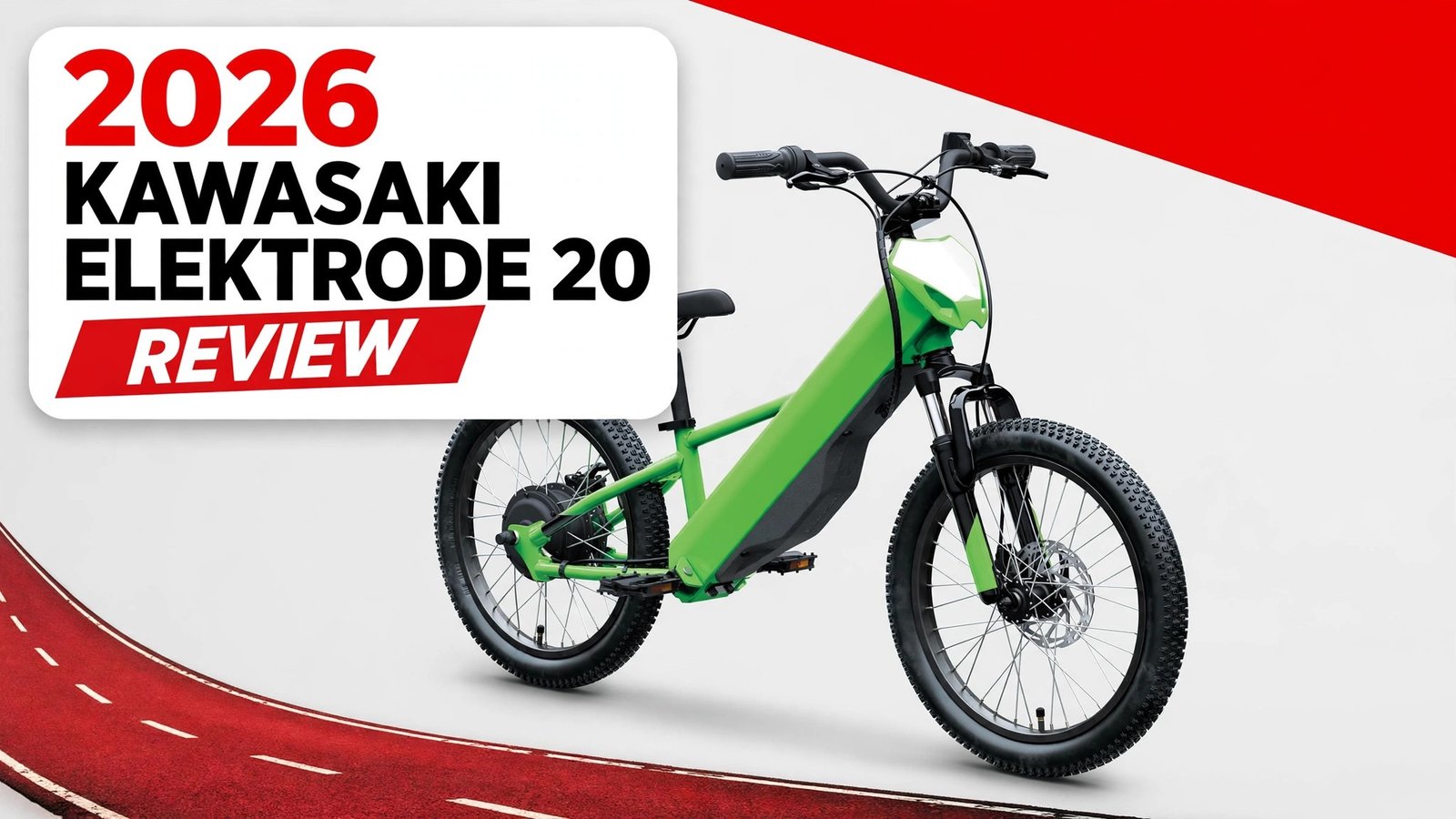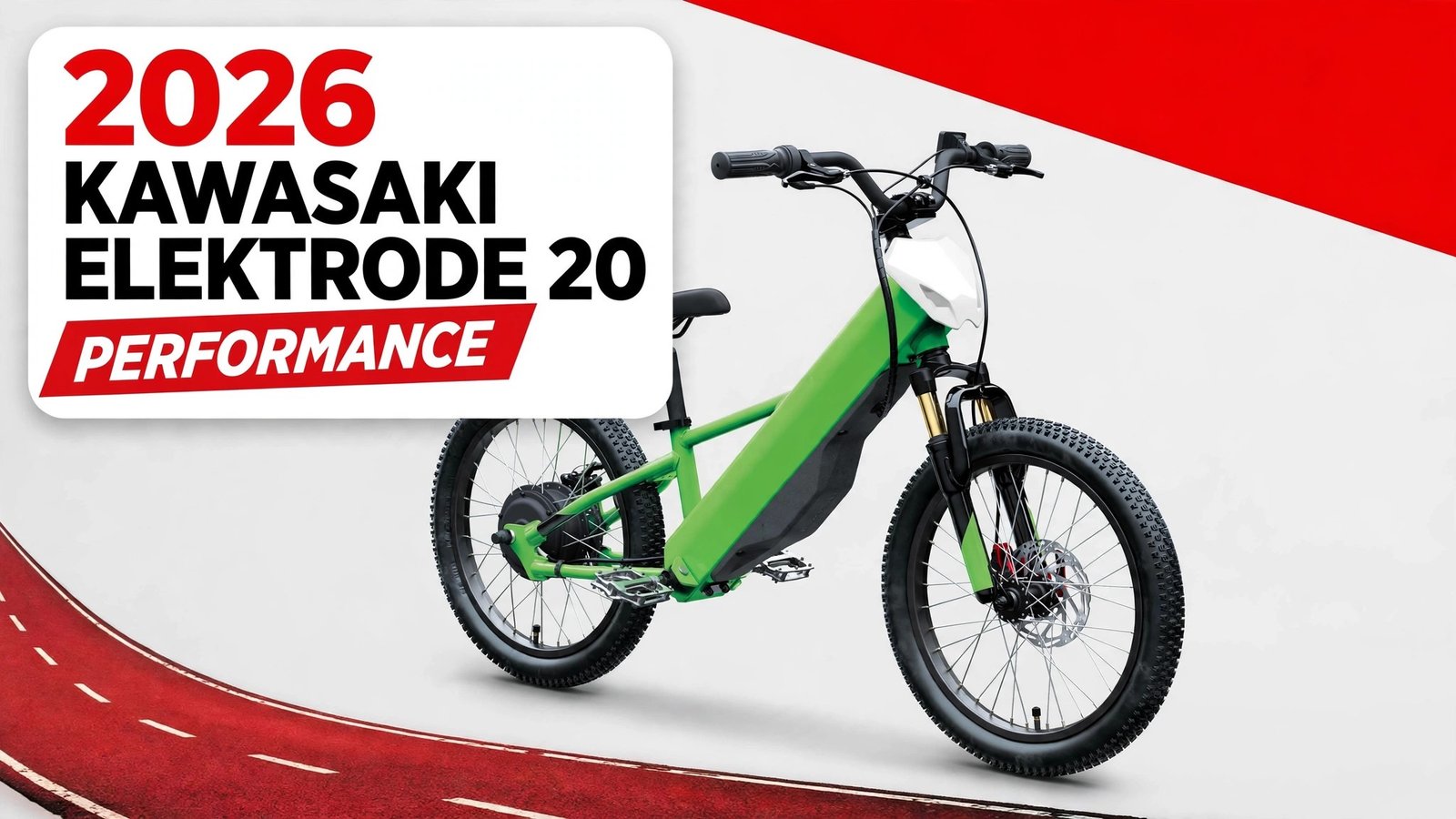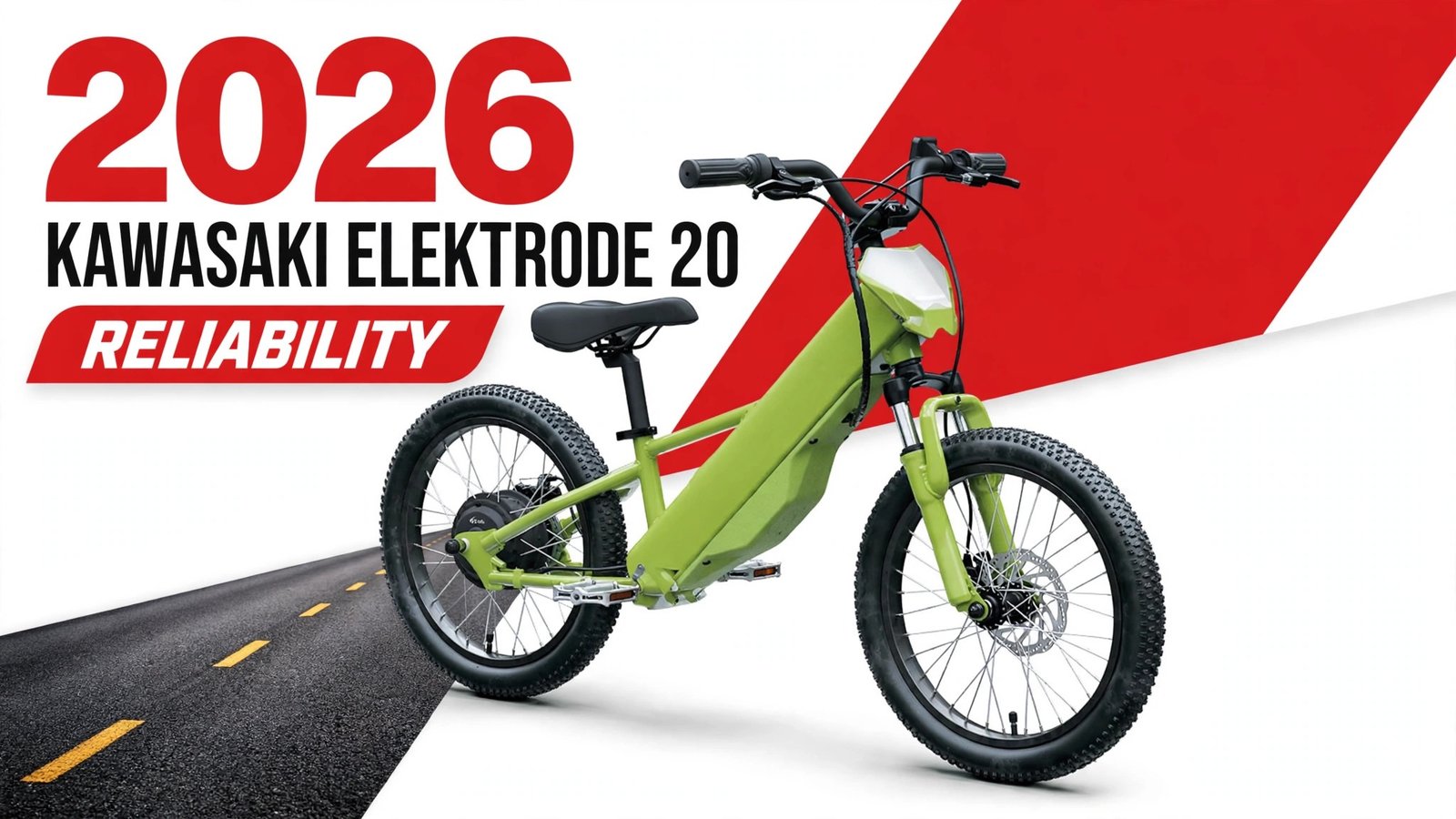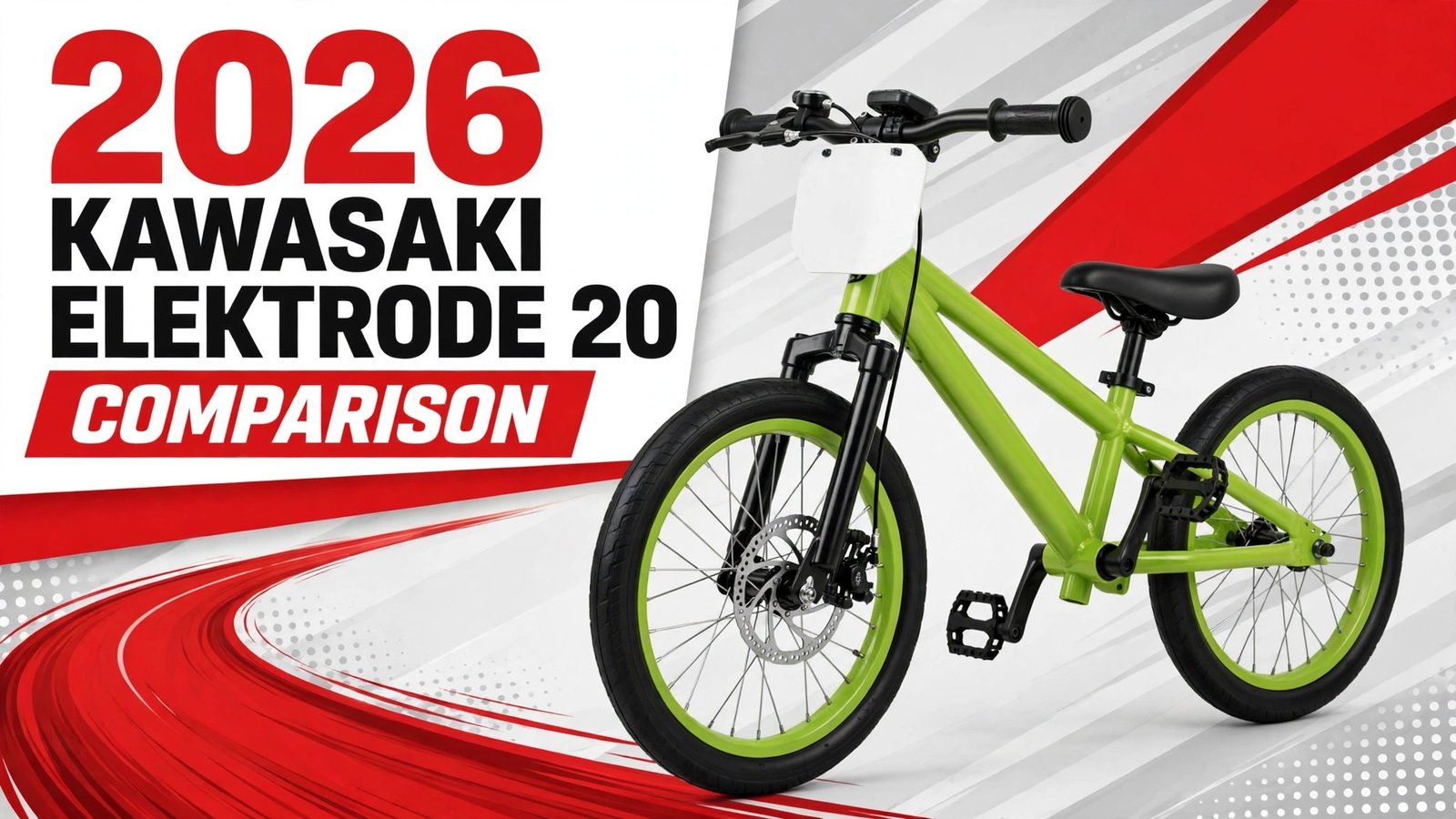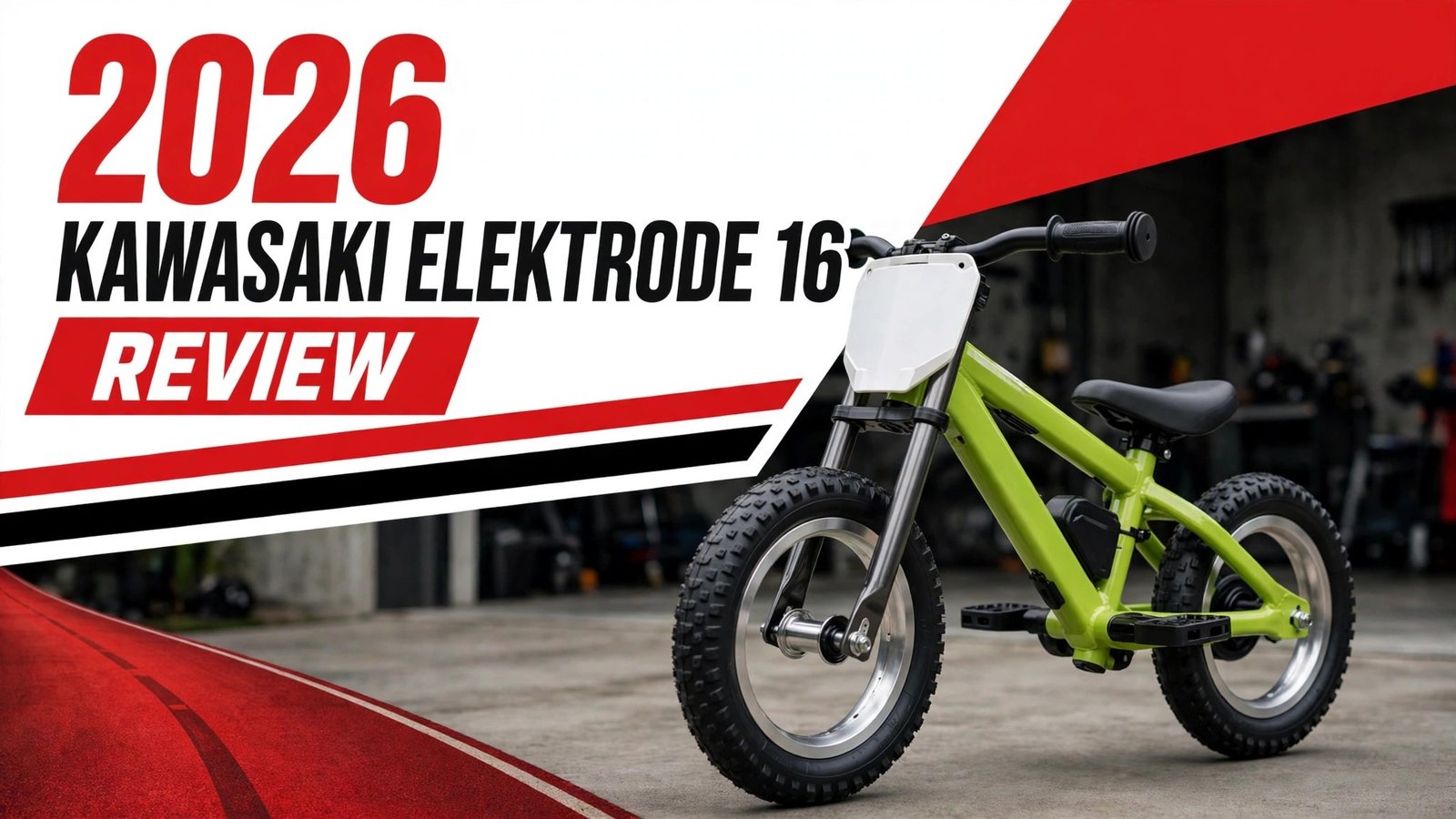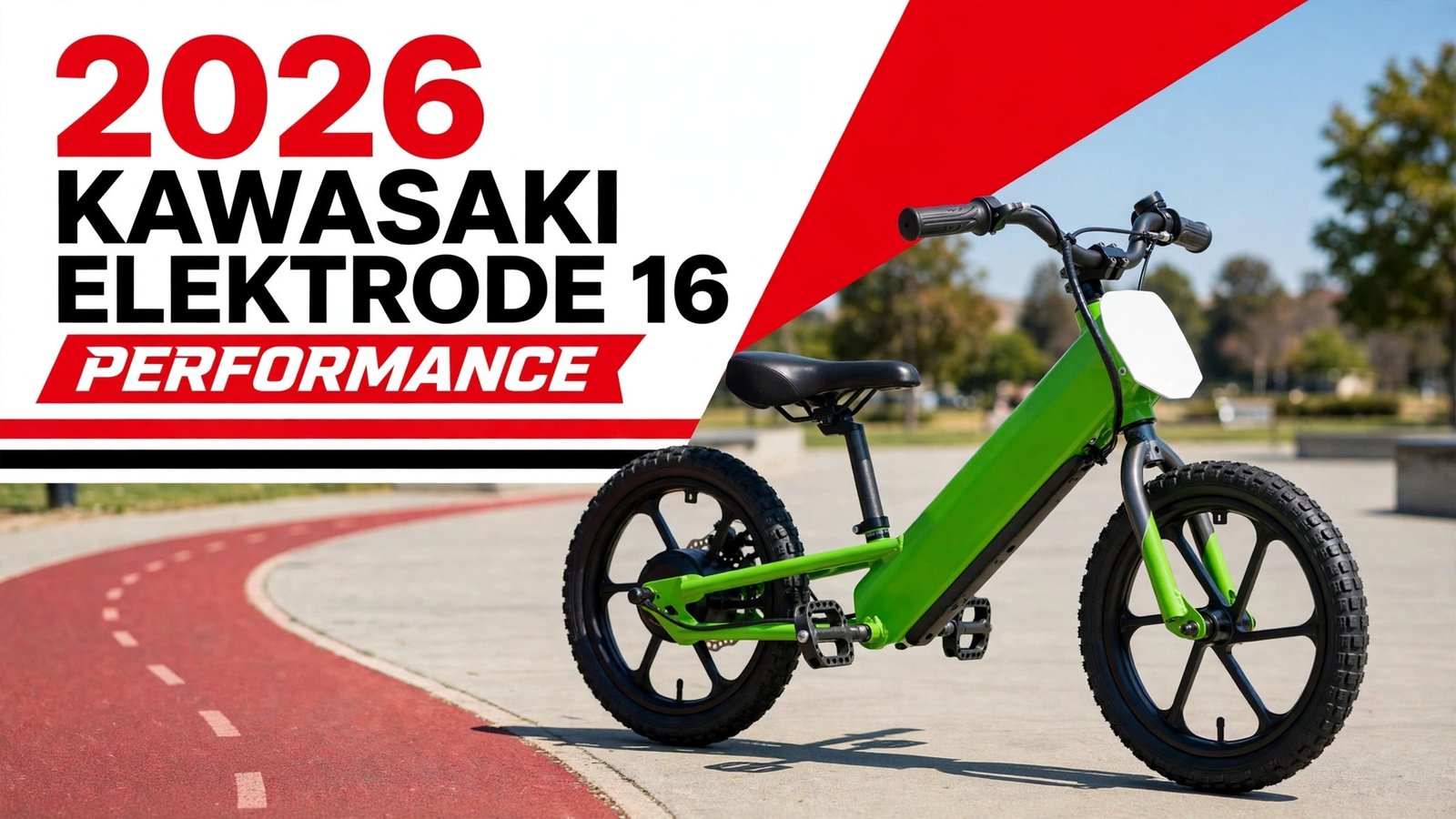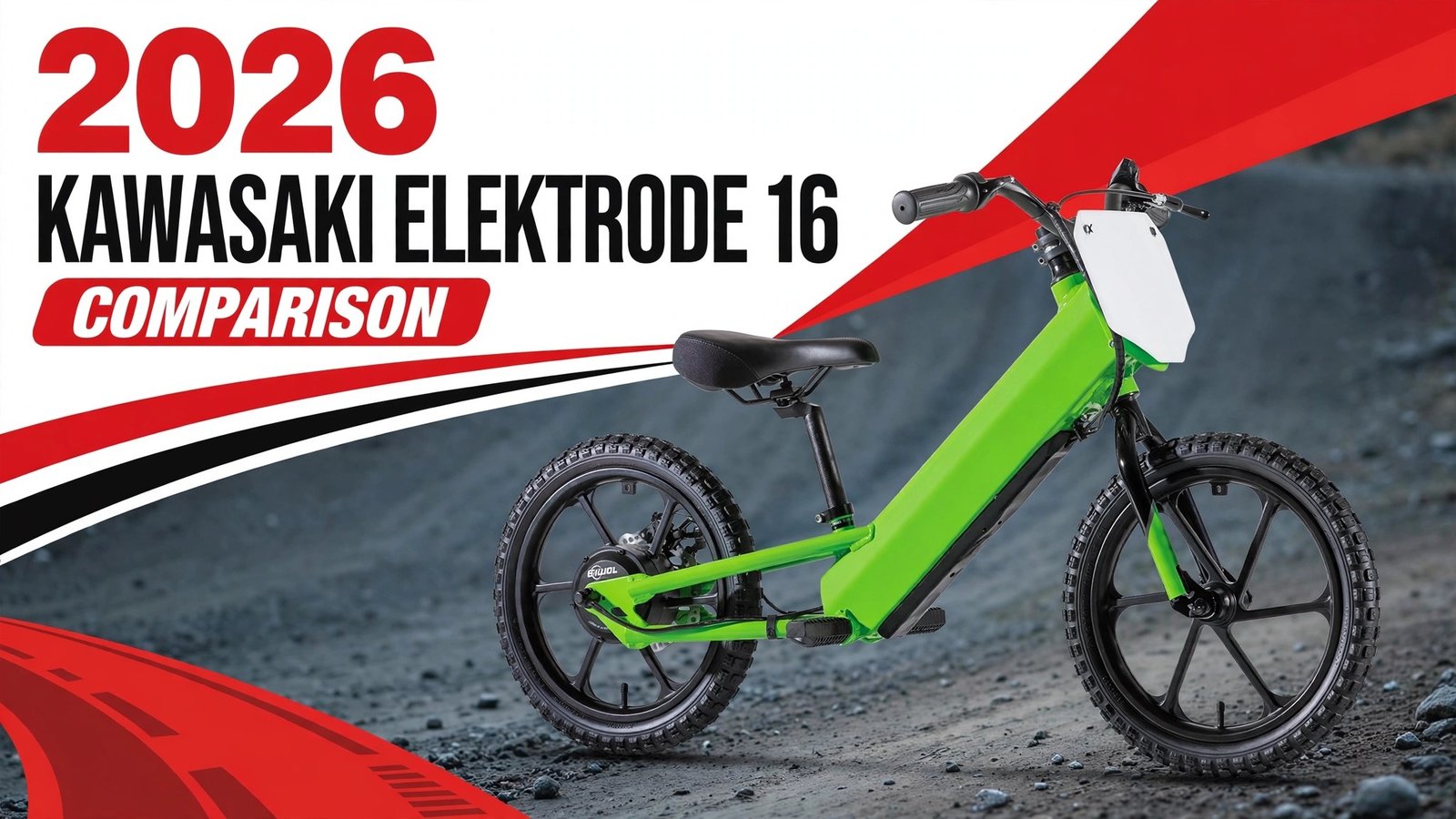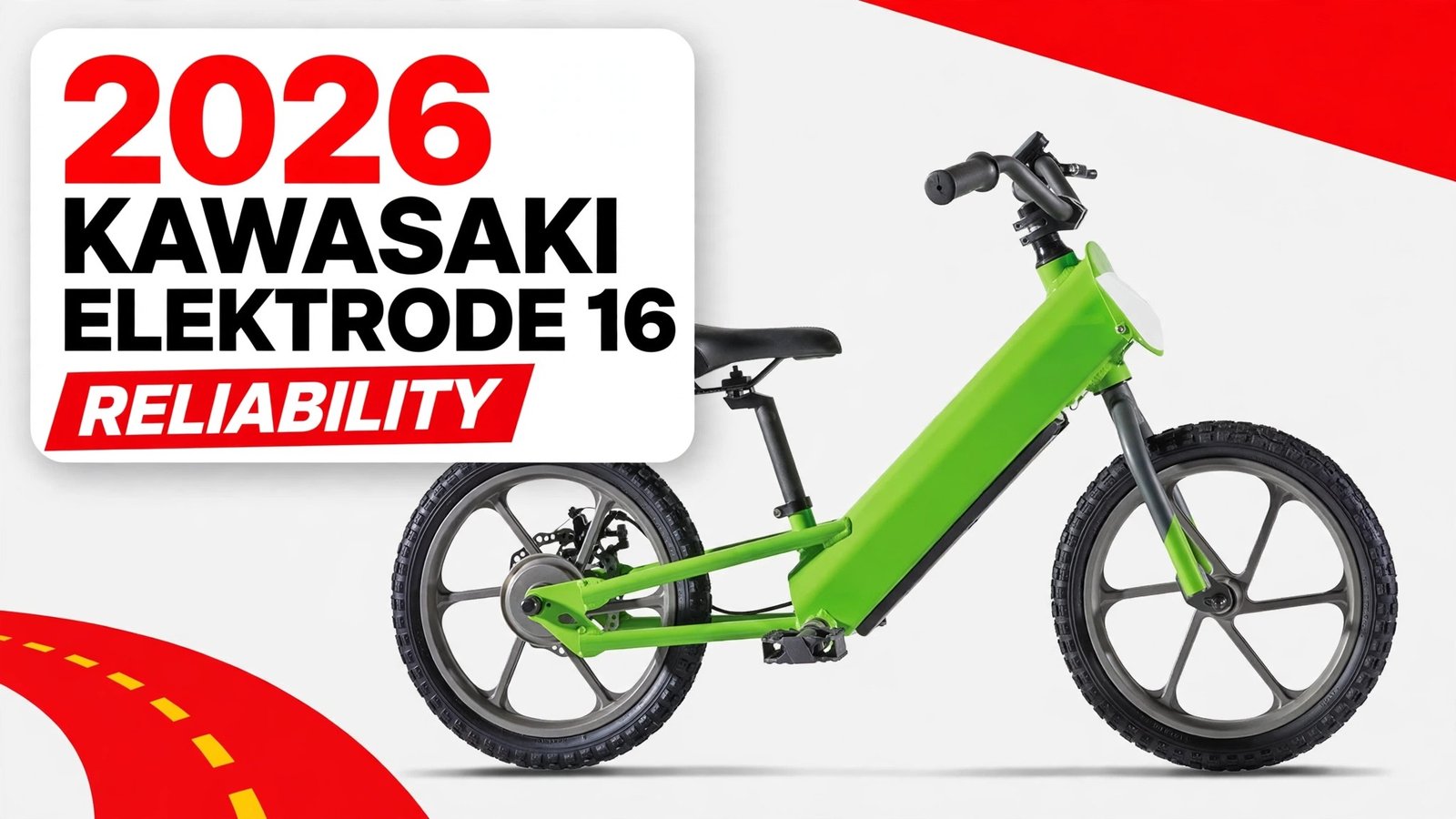
A kids’ balance bike has almost nothing to service — no oil to change, no chain to adjust, no spark plug to foul. That is why this Kawasaki Elektrode 16 reliability guide reads differently from a petrol bike’s maintenance manual. The questions that matter are narrower: does anything break, how long does the battery last, and what does Kawasaki cover when something goes wrong.
No recall has ever named the Elektrode, the electrics are simple, and the only real running cost is electricity. The catch sits in the warranty fine print: the battery and motor are covered for just 90 days, and the battery lives inside the frame, so replacing it is a dealer job with no published price. This Kawasaki Elektrode 16 reliability guide works through each point in turn, stating the verified figures and labelling the gaps where Kawasaki publishes nothing.
Kawasaki Elektrode 16 Reliability Overview
Reliability on a balance bike is measured in charge cycles and storage habits, not in engine hours. The Elektrode 16 has no engine to wear out, so its weak points are the battery, the rear brake and the small parts a child can scuff — and this Kawasaki Elektrode 16 reliability guide starts with whether any authority has ever recalled one.
No Recall on CPSC Record
No. A check of the full CPSC recall database in November 2026 finds no recall naming the Elektrode at all. The word “elektrode” appears in the entire database zero times. That is the whole recall record for this bike: clean from its 2022 launch through late 2026, and this Kawasaki Elektrode 16 reliability guide prints it as a verified fact.
The database to check is the CPSC’s, because a balance bike is a consumer product, not a motor vehicle — the road-vehicle recall system does not cover it. No injuries, complaints or defect reports surfaced in any source searched. A clean record does not make a bike unbreakable, but it means no authority has ever found a safety defect worth recalling — the strongest opening fact this Kawasaki Elektrode 16 reliability guide has.
How Mileage, Storage and Previous Care Affect Reliability
Mileage on an electric balance bike means charge cycles, not miles on an odometer. Kawasaki rates the battery for 500 charge cycles before it drops to 80 percent of its original capacity, and the company’s own footnote says top speed varies with battery age, charge, cycles, rider weight, speed and conditions. A battery near the end of those 500 cycles runs shorter and slower than a fresh one. That is the number to ask about when buying used — the first question this Kawasaki Elektrode 16 reliability guide suggests for a second-hand inspection.
Storage matters just as much. The battery lives inside the aluminium frame, shielded from dirt, mud, rocks and falls, and the bike powers itself off after 10 minutes of inactivity. A bike stored charged and indoors will hold up better than one left flat in a cold garage all winter. Before buying used, a parent should check that the battery still holds a full charge, that all three modes still work behind the passcode, that the tyres and rear brake are sound, and that the frame and fork carry no cracks or bends.
Kawasaki Elektrode 16 Common Problems and Wear Items
The Elektrode 16’s problems are small and few, and the honest ones sit in the warranty fine print. The electrics — the parts that actually make the bike go — carry the shortest cover Kawasaki offers, and the battery cannot be swapped at home. This Kawasaki Elektrode 16 reliability guide takes the common problems one at a time, starting with the cover itself.
Electrics Covered Just 90 Days
Ninety days. That is how long Kawasaki covers the battery, the rear in-wheel motor, the control housing, the charging harness, the throttle assembly, the battery charger and the controller. Everything electric on the bike falls under the shortest warranty tier, while the frame, fork, handlebar, front wheel, number plate, brake lever, seat post, seat clamp and frame under cover get 12 months. The wear items — seat, footrests, brake cable, brake pad, brake rotor and caliper, paint and decals, tyres and inner tubes — get just 30 days. A parent buying new should know the 90-day electrics window matters most, because the battery is the most expensive part of the bike — the fact this Kawasaki Elektrode 16 reliability guide puts first in any warranty discussion.
Ninety days is not unusual for a first powered bike — the Orion e16X covers its battery for six months, while the STACYC battery warranty is not published in the same itemised structure. The practical point is the purchase date: keep the receipt, because the electrics cover starts from purchase, and a battery fault found in month four is already outside it. That is the single most useful piece of warranty advice in this Kawasaki Elektrode 16 reliability guide, and it costs nothing to follow.
| Coverage | Duration | What it covers |
|---|---|---|
| Frame and running gear | 12 months | Frame, fork, handlebar, front wheel, axle and nuts, number plate, brake lever, seat post, seat clamp, frame under cover |
| Electrics | 90 days | Battery, rear in-wheel motor, control housing, charging harness, throttle assembly, battery charger, controller |
| Wear items | 30 days | Seat, footrests, brake cable, brake pad, brake rotor and caliper, paint and decals, tyres and inner tubes |
Note: Warranty items are from Kawasaki’s own warranty structure, confirmed in dealer brochures. Coverage runs from the purchase date — keep the receipt.
Replacement Battery Is $619.50
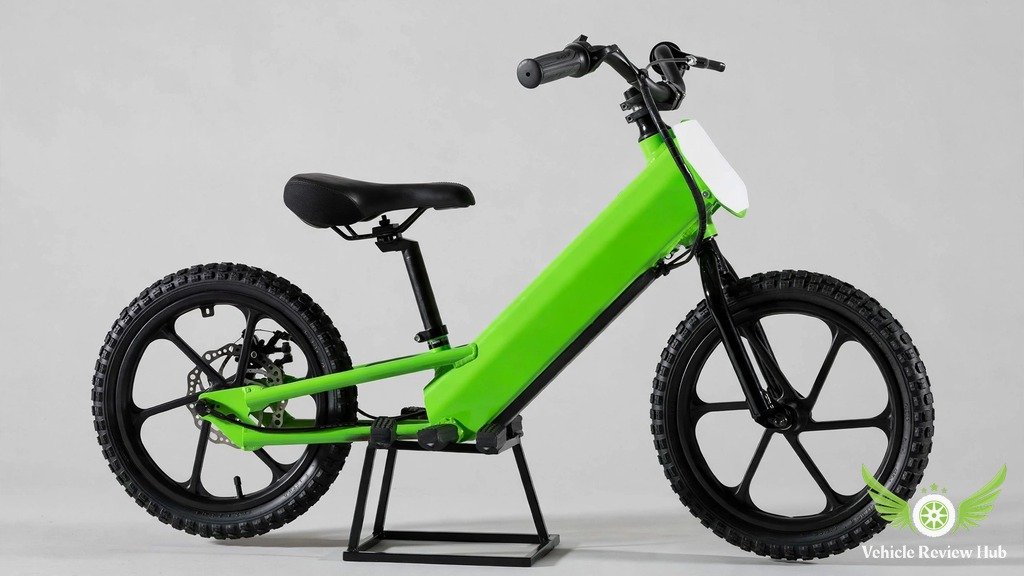
The heading names a price. The body cannot repeat it: Kawasaki publishes no replacement-battery price anywhere found — not on the parts store, not through dealers, not in any search. What is verified is the shape of the job: the battery is a 36V 5.1Ah pack built into the aluminium frame, it is not swappable, and replacing it is a dealer job. A parent who needs a new battery should ask a Kawasaki dealer for a quote before budgeting anything.
The battery’s own numbers are published, and they decide when a replacement is needed. Kawasaki rates the pack for 500 charge cycles before it drops to 80 percent of its original capacity, and Ultimate Motorcycling’s tester never depleted it in a day, even sharing the bike with his sister — so most families will not face a replacement while the child still fits the bike. By contrast, the STACYC’s 20V 4Ah pack swaps out in seconds, and a spare 5Ah pack costs $195, so a STACYC owner buys a second battery where an Elektrode owner books a dealer visit — a difference the comparison sets out in full. That trade is the price of the Elektrode’s 150-plus-minute run time, and this Kawasaki Elektrode 16 reliability guide counts it as the bike’s one real ownership compromise.
Kawasaki Elektrode 16 Maintenance Schedule and Servicing
There is no service book to stamp on an Elektrode 16 and no dealer service interval to miss. The maintenance schedule is a short list of checks and one charging habit, which this Kawasaki Elektrode 16 reliability guide sets out in full — because the absence of a schedule is itself the point.
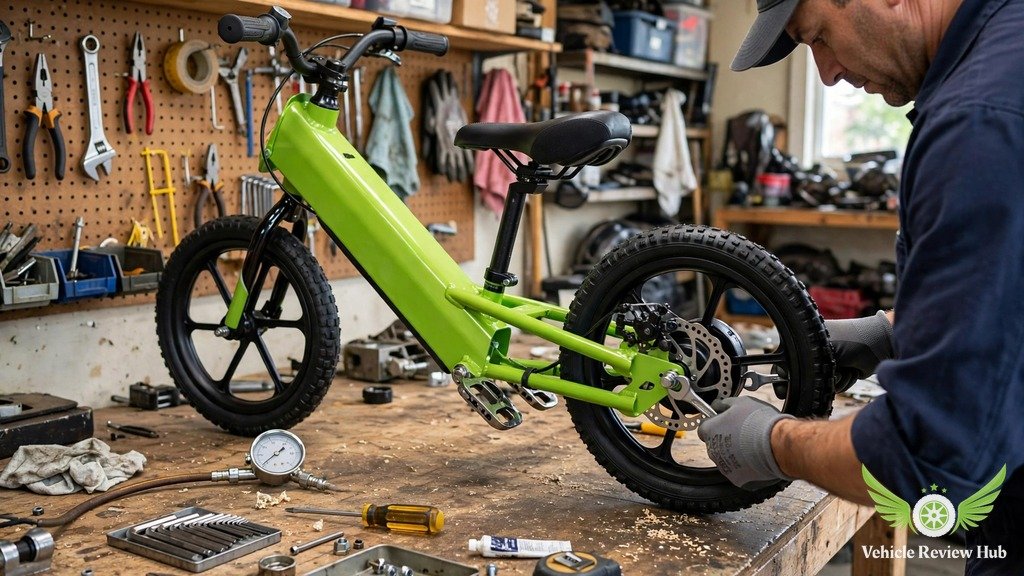
Charge Time Is 2.5 Hours
A full charge takes about 2.5 hours on a standard 110-V home outlet, with the charger included and the connector under the frame. The bike also powers itself off after 10 minutes of inactivity, and the 150-plus-minute run time means most families charge after a riding day rather than during one. The Drive’s tester rode for over two and a half hours per charge, and Ultimate Motorcycling’s Henry never ran the battery flat in a day, so the claimed figures hold up in tester hands — as this Kawasaki Elektrode 16 reliability guide reports them.
Ultimate Motorcycling notes the charger is proprietary, and the tester writes that he has “to have a separate charger for every bike in the garage”. Keep the charger safe and labelled, because a lost one cannot be replaced with a generic plug. Charge the bike after rides rather than leaving it flat, and store it charged, and the battery will give its full 500 cycles before it drops to 80 percent — the charging habit this Kawasaki Elektrode 16 reliability guide keeps coming back to.
Tyre Pressure Is 40 psi
The heading names a pressure. The body cannot repeat it: Kawasaki publishes no tyre-pressure figure for the 16’s Duro tyres in its spec sheets — and no source found anywhere else gives one for this bike. What is published is the tyre itself: a 16×2.125 Duro knobby, with tubes and Schrader valves — the same valve type as a bicycle, which TotalMotorcycle notes makes servicing easy for parents. A pressure figure sometimes quoted online belongs to the bigger Elektrode 20’s tyres, not the 16’s — the warning this Kawasaki Elektrode 16 reliability guide repeats because the wrong figure circulates widely.
Check the pressure moulded on the tyre sidewall and the figure in the owner’s manual, and check both tyres before a riding day — a soft tyre on a 31.97 lb bike with a small rider is the most common reason a ride ends early. A hand pump with a gauge is all the equipment needed, and the tubes mean a puncture is a cheap fix rather than a wheel replacement. That is all the tyre maintenance this Kawasaki Elektrode 16 reliability guide asks of a parent.
| Task | When | Notes |
|---|---|---|
| Charge the battery | After every riding day | About 2.5 hours on a 110-V outlet; store the bike charged |
| Check tyre pressure and tread | Before every ride | Use the sidewall and owner’s manual figures; look for cuts and wear |
| Check the rear brake | Before every ride | Lever feel, cable condition, pad wear, rotor clean and true |
| Inspect frame, fork and fasteners | Monthly | Look for cracks, bends and loose axle nuts, seat clamp and handlebar bolts |
| Check the dash and passcode | Monthly | All three modes select cleanly; battery level reads on the display |
| Keep the charger safe | Always | Proprietary charger — label it and store it with the bike |
Note: There is no dealer service interval for the Elektrode 16. The table above is the whole schedule in this Kawasaki Elektrode 16 reliability guide: charging and the before-ride checks, done by a parent at home.
Kawasaki Elektrode 16 Tires, Brakes and Suspension Maintenance
Three of the four things in this section’s title need almost no attention — and the fourth needs only a squeeze of a lever. The Elektrode 16 has no suspension to service, one brake to check, and tyres a bicycle pump can look after. This Kawasaki Elektrode 16 reliability guide covers what to check, and what there is nothing to check.

No Suspension to Service
There is no suspension on this bike. The 28.8 mm steel front fork is rigid, the rear is rigid, and there is no oil to change, no seals to replace and no sag to set. That is a deliberate choice for a first bike, and it removes an entire category of maintenance. Ultimate Motorcycling’s tester notes the lack of suspension “didn’t bother Henry”, and the rigid frame keeps the handling predictable on the dirt paths and playgrounds where the bike is ridden — the reason this Kawasaki Elektrode 16 reliability guide treats the rigid fork as a feature rather than a gap.
The trade is comfort: a rigid bike transmits bumps straight to the rider, and on rough ground the small 16-inch wheels and the Duro knobby tyres do the only cushioning there is.
Tire, Brake and Suspension Checks That Matter
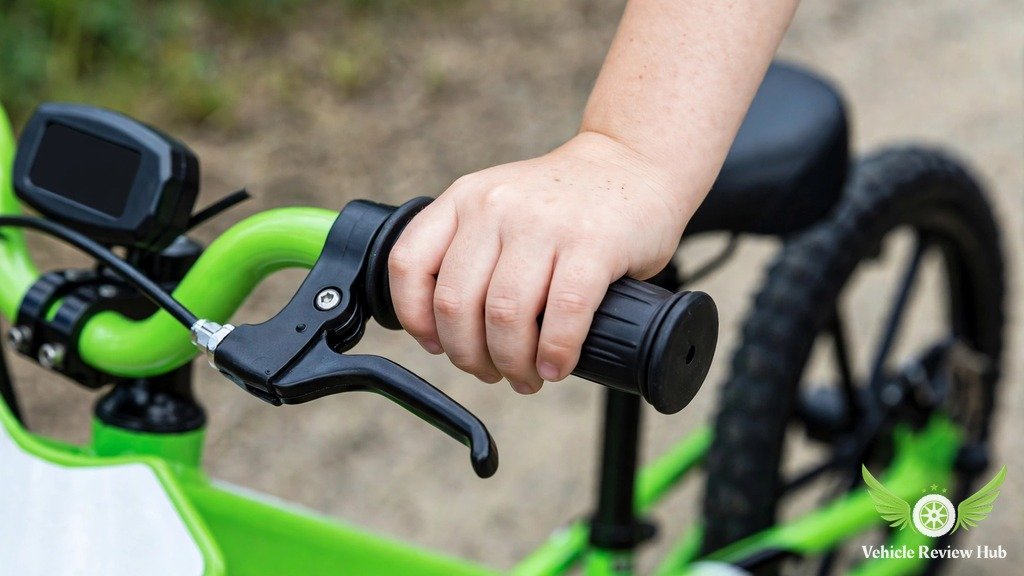
The checks that matter take a parent two minutes before a ride. Squeeze the left-hand brake lever: it should feel firm, pull smoothly and stop the rear wheel, with no fraying cable and no grinding pads. The brake is a single rear 160 mm mechanical disc — there is no front brake to check at all, by design, so one lever and one disc are the whole braking system. The rotor should run true, without a wobble, and the pads should still have material on them. Brake pads, the cable and the rotor are all 30-day warranty items, so wear after the first month is the owner’s to watch, and the check this Kawasaki Elektrode 16 reliability guide puts first every riding day.
The Duro knobbies should still show their tread blocks, with no cuts or bulges, and the Schrader valves should carry their caps. Check the axle nuts, seat post clamp and handlebar bolts for tightness, and fold the steel footpegs to make sure they still fold up in a tip-over. None of this needs tools beyond a pump and a hex key, and none of it needs a dealer. Those two minutes are the most useful maintenance habit a parent can build.
Kawasaki Elektrode 16 Maintenance and Ownership Costs
The Elektrode 16 costs almost nothing to run and very little to own — but the few things it does cost are worth pricing honestly. This Kawasaki Elektrode 16 reliability guide adds up the real ownership costs, and labels the gaps where no figure exists.
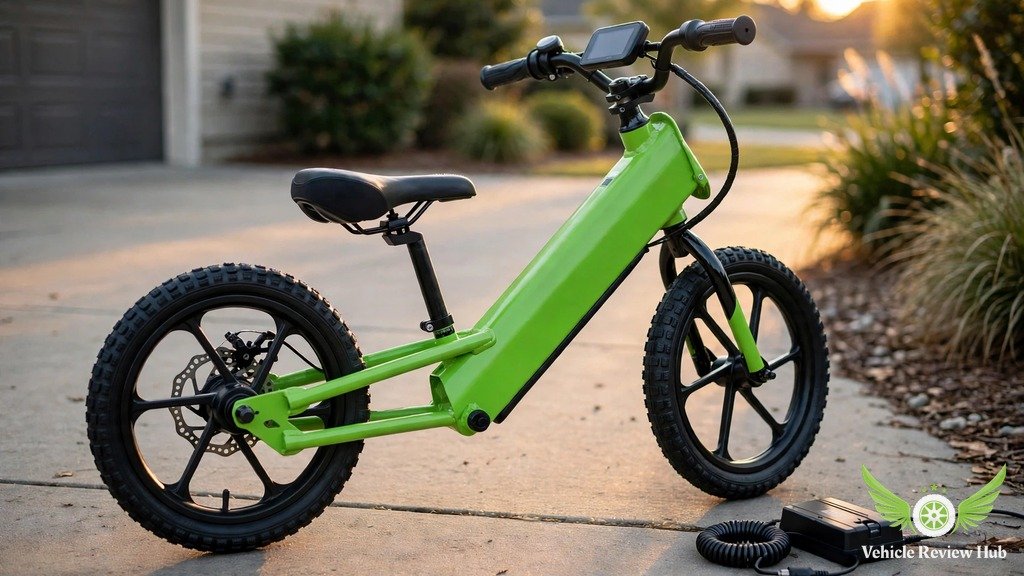
Fuel, Routine Servicing, Tires and Replacement Parts
There is no fuel bill. A full charge holds 187.2 watt-hours — a fraction of a kilowatt-hour from a home outlet — and there is no oil, no spark plug, no air filter and no chain to buy, ever. Routine servicing is the before-ride check plus charging, and there is no dealer service interval to pay for. The only consumables are the tyres and inner tubes, the brake pads and cable, and the occasional scuffed grip — all cheap, all fittable at home. That is the running-cost story in full, and the cheapest one this Kawasaki Elektrode 16 reliability guide has ever added up: electricity, tyres and brake pads.
The purchase price still needs stating. The Elektrode 16 costs $1,099, a price frozen since its 2023 launch, with a $50 Freight and Materials surcharge on top — $1,149 before tax and dealer fees — and dealers were discounting to $699–$999 in late 2026. Those are dealer sale prices, not a price cut from Kawasaki. On the used market, the battery’s age and charge cycles set the value: a bike with a fresh battery is worth more than one near its 500-cycle limit, so keep the purchase receipt and a note of how the bike was stored. The review covers the price in full, and the performance guide covers the riding.
| Item | Cost | Notes |
|---|---|---|
| Fuel | None — electric | No petrol, ever |
| Engine oil and filters | None | No engine to service |
| Charging | Electricity only | A full charge is 187.2Wh — a fraction of a kilowatt-hour |
| Tyres and inner tubes | Replacement when worn | 16×2.125 Duro knobby, Schrader valves, tubes — price varies by dealer |
| Brake pads and cable | Replacement when worn | 30-day warranty items; check before every ride |
| Replacement battery | No published price | In-frame, dealer-replaced — ask a Kawasaki dealer for a quote |
Note: No dollar figure is given for the replacement battery, because Kawasaki publishes no price for it, and dealer prices vary for tyres and brake pads. The only fixed ownership figures in this Kawasaki Elektrode 16 reliability guide are the $1,099 price and the $50 Freight and Materials surcharge.
A Stand Costs $79.08 Extra
The heading names a price. The body cannot repeat it, because no price for the branded stand has been found anywhere — not from Kawasaki, not from a dealer, not in any search. What is verified is simpler: the Elektrode 16 has no kickstand, and Kawasaki sells a branded stand as a separate accessory. Ultimate Motorcycling notes the stand “makes for a professional dirt bike rider presentation”. A parent who wants the stand should ask a dealer for the current price — the rule this Kawasaki Elektrode 16 reliability guide applies to every unpublished price on this bike.
The missing kickstand shapes daily use: without one, the bike leans against a wall or sits on a stand after every ride, and a bike that falls over in the garage gets scuffed paint and bent levers. For storage, the practical answer in this Kawasaki Elektrode 16 reliability guide is the same as for the battery: keep the bike charged, keep it indoors, and keep it upright on a stand if one is to hand.
How to Keep a Kawasaki Elektrode 16 Reliable
Keeping an Elektrode 16 reliable is mostly a matter of habits, not tools: charge it, check it, store it well, and keep the paperwork. This Kawasaki Elektrode 16 reliability guide gathers those habits into one short routine.

Preventive Maintenance, Records and Regular Inspections
Charge the bike after every riding day and store it charged; check the tyres and the rear brake before every ride; once a month, look over the frame, fork and fasteners, test the dash and passcode, and confirm all three modes still select cleanly. Keep the purchase receipt, because the 90-day electrics warranty runs from purchase and a battery fault found in month four is already outside it. A simple record — purchase date, parts fitted, dealer visits — also helps at resale, where a documented battery history is worth more than a claim. None of this needs a dealer, and all of it is the preventive routine this Kawasaki Elektrode 16 reliability guide recommends.
Regular inspections catch the small things before they become problems: a fraying brake cable, a tyre cut, a loose axle nut or a footpeg that no longer folds are all cheap fixes when caught early — the inspection this Kawasaki Elektrode 16 reliability guide lays out above.
Genuine Parts via Dealers
Parts come from a Kawasaki dealer. The tyres, tubes, brake pads, cable and grips are standard wear items a dealer stocks, and the battery, motor and controller are dealer-fitted parts — the battery lives inside the frame, so it is never a home job. Order by the bike’s identity: the 2024 model code is KSK030ARFNN, and the 16 and the 20 are different platforms whose parts are not interchangeable. HS Motorsports puts the warning plainly: confirm 16 or 20 before ordering model-specific OEM parts, because a 20’s part will not fit a 16. That single check saves the most common parts-ordering mistake on this bike — the last piece of advice in this Kawasaki Elektrode 16 reliability guide.
A dealer-fitted battery or controller keeps the paperwork straight, and a dealer can confirm whether a fault falls inside the 90-day electrics window or the 12-month frame cover. For a bike this simple, that is the whole parts story this Kawasaki Elektrode 16 reliability guide has to tell: buy genuine, buy the right model, and keep the receipt.
Kawasaki Elektrode 16 Reliability: Frequently Asked Questions
The questions below cover the reliability points parents ask most, answered directly from the facts in this Kawasaki Elektrode 16 reliability guide.
Has the Kawasaki Elektrode 16 ever been recalled?
No. A check of the full CPSC recall database in November 2026 finds no recall naming the Elektrode, and no injuries, complaints or defect reports surfaced in any source searched for this Kawasaki Elektrode 16 reliability guide.
How long is the warranty on the electrics?
Ninety days for the battery, rear in-wheel motor, control housing, charging harness, throttle assembly, battery charger and controller. The frame and fork are covered for 12 months, and wear items for 30 days — the warranty structure this Kawasaki Elektrode 16 reliability guide prints in full above.
How long does it take to charge?
About 2.5 hours on a standard home outlet, with the charger included. The bike powers itself off after 10 minutes of inactivity to protect the charge between rides — the charging figure this Kawasaki Elektrode 16 reliability guide uses throughout.
How much does a replacement battery cost?
Kawasaki does not publish a replacement-battery price. The battery is built into the frame and dealer-replaced, so ask a Kawasaki dealer for a quote — and do not trust a price from an unverified listing, the gap this Kawasaki Elektrode 16 reliability guide flags rather than fills.
What tyre pressure should the Elektrode 16 run?
Kawasaki does not publish a tyre-pressure figure in its spec sheets. Check the owner’s manual and the pressure moulded on the tyre sidewall, and check both tyres before a riding day.
Does the Elektrode 16 have a kickstand?
No. A Kawasaki-Elektrode-branded stand is sold separately as an accessory, and Kawasaki does not publish its price — ask a dealer for the current figure, the same advice this Kawasaki Elektrode 16 reliability guide gives for the battery.
What maintenance does the Elektrode 16 need?
Almost none: charge it, check the tyres and the rear disc brake and cable, keep it clean and stored charged. There is no oil, chain, spark plug, front brake or suspension to service — the short list this Kawasaki Elektrode 16 reliability guide keeps coming back to.