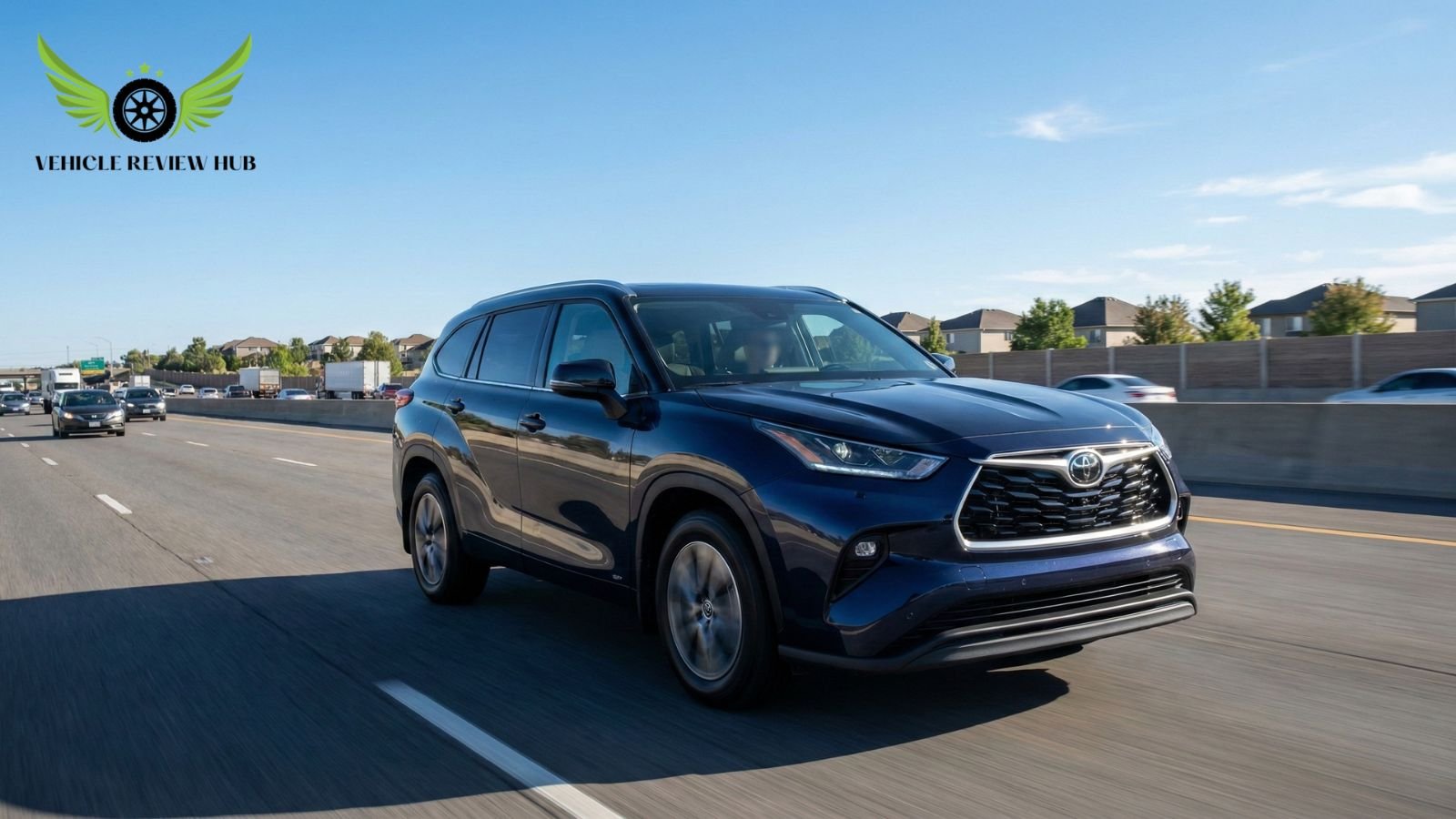
When people search for mileage and running cost, what they usually want is the real picture, not brochure numbers. From what I’ve seen, the Toyota Highlander is often chosen by US families who want space, comfort, and predictable ownership costs rather than sporty driving. Mileage, daily fuel expense, and how it actually feels on the road matter more here than raw horsepower.
In real-world use, Toyota Highlander mileage depends a lot on whether you choose the gas or hybrid version. Based on owner feedback and long-term use patterns, the gas model usually delivers around 21–22 MPG combined, while the hybrid version averages close to 35 MPG combined in everyday driving. City traffic, short school runs, and highway cruising all affect these numbers, but most drivers report results close to these ranges without trying to drive “perfectly.”
From a driving experience point of view, this SUV is clearly tuned for daily life. In my opinion, the Toyota Highlander feels calm and easy rather than exciting. Steering is light, visibility is good, and long drives don’t feel tiring. Many owners mention that it’s especially comfortable for families who spend a lot of time in traffic or on weekend road trips.
Daily running cost is another big reason buyers look at this model. With current US fuel prices, a typical gas Highlander used for normal family driving can cost roughly $180–$220 per month in fuel, while the hybrid version often stays closer to $110–$140 per month, depending on driving habits and location. Over a year, that difference becomes noticeable, especially for people who commute daily.
At the end of the day, this guide focuses on real-world MPG, actual driving feel, and realistic fuel costs, not marketing claims. If you’re trying to decide whether the Toyota Highlander fits your daily routine in the USA, understanding these practical details makes the decision much easier.
Toyota Highlander MPG and Fuel Economy Overview
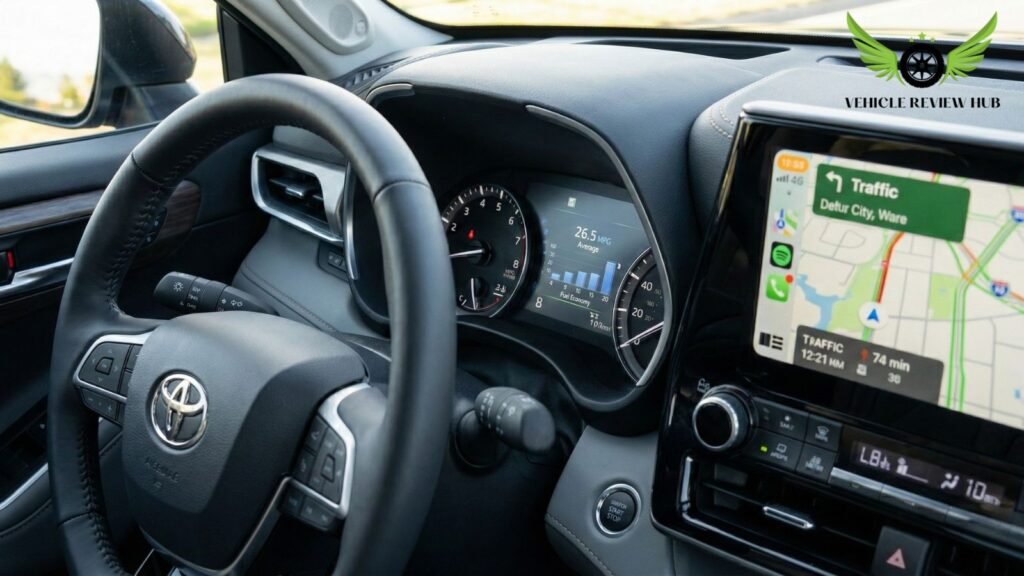
When buyers look into mileage, they usually want a quick but clear picture of what to expect day to day. In simple terms, the Toyota Highlander is designed more for comfortable family driving than chasing the best MPG in its class. Still, fuel economy remains one of the key reasons people shortlist this SUV in the USA.
Based on official ratings and real owner feedback, fuel efficiency varies mainly by powertrain choice. The gas version delivers decent mileage for a midsize three-row SUV, while the hybrid stands out as one of the more fuel-efficient options in its segment. From my observation, most drivers feel the mileage is predictable and easy to manage, without big surprises at the pump.
City traffic, highway cruising, and mixed daily use all play a role here. What matters most is that the Toyota Highlander maintains consistent fuel economy across different driving conditions, which many owners appreciate for budgeting monthly and yearly fuel costs. This section gives a clear overview before diving deeper into real-world MPG numbers and driving conditions.
Official MPG Ratings for Gas and Hybrid
Official MPG ratings give buyers a clear reference point, especially when comparing the gas and hybrid versions by model year. For most shoppers in the USA, what matters is not just the number itself, but how much difference it makes in daily fuel spending.
Below are the official EPA ratings for recent Toyota Highlander models (2023–2025), which are the most common in today’s new and used market:
Model Year | Powertrain | City MPG | Highway MPG | Combined MPG |
2023–2025 | Gas (2.4L Turbo) | ~21 MPG | ~29 MPG | ~23 MPG |
2023–2025 | Hybrid (2.5L) | ~36 MPG | ~35 MPG | ~36 MPG |
From an analysis point of view, the gap in city driving is where things become very clear. The hybrid version delivers roughly 15 more miles per gallon in city conditions, which is huge for people who deal with traffic, school drop-offs, or short daily trips. That’s also why many urban and suburban families lean toward the hybrid option.
The gas model performs reasonably well on highways, especially during steady cruising. However, once city driving is added to the mix, combined MPG usually settles in the low-to-mid 20s. In contrast, the hybrid system tends to stay close to its official combined rating if driving is smooth and consistent.
If you ask me, these official MPG numbers are more than just specs on paper. They directly help estimate monthly and yearly fuel costs, making it easier for buyers to decide which version of the Toyota Highlander fits their driving habits and budget best.
City, Highway and Combined Mileage Reality
Real-world driving rarely matches lab testing. In daily US conditions—traffic lights, short trips, highway cruising, and family load—the Toyota Highlander shows clear differences between city, highway, and combined mileage, especially when comparing gas and hybrid versions.
Based on long-term owner feedback and real usage patterns, the numbers below reflect what most drivers actually experience over time, not just ideal conditions.
Driving Condition | Gas Highlander (Real-World MPG) | Hybrid Highlander (Real-World MPG) |
City Driving | ~19–21 MPG | ~34–37 MPG |
Highway Driving | ~25–28 MPG | ~32–35 MPG |
Combined Average | ~22–23 MPG | ~35–36 MPG |
From my observation, city driving is where the hybrid really earns its value. Stop-and-go traffic, school runs, and short errands allow the electric motor to work more often, which is why many owners report mileage in the mid-30s without trying hard.
On highways, the gas model performs better than many expect for a three-row SUV, especially during steady cruising. However, once city driving is mixed in, the combined number usually drops into the low-20s. The hybrid, on the other hand, stays much closer to its combined rating even in mixed daily use.
If you ask me, this table alone explains why urban and suburban families often prefer the hybrid version, while drivers who spend most of their time on open highways may feel comfortable sticking with the gas model.
Real-World Driving Experience of Toyota Highlander
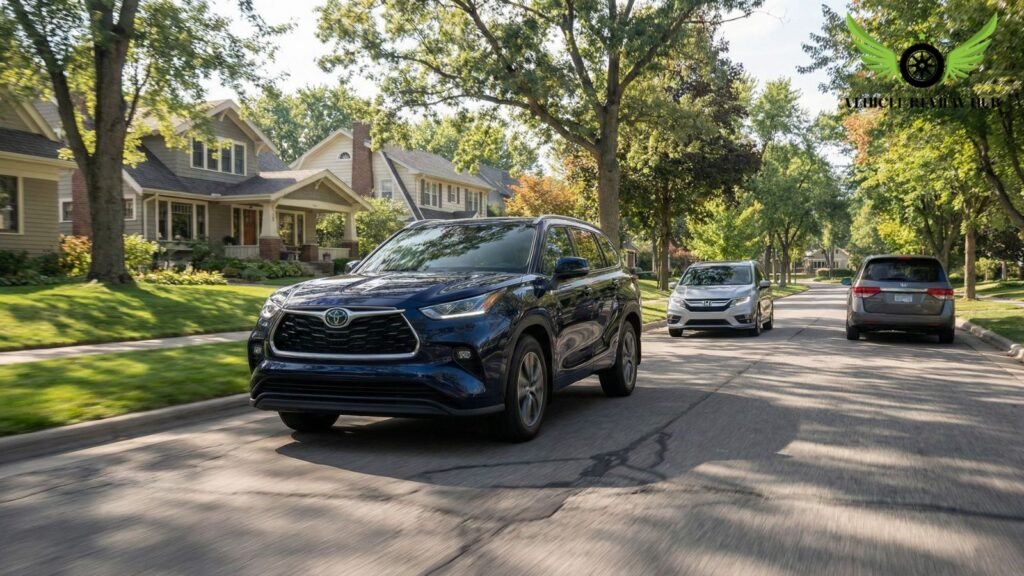
When it comes to daily driving, the Toyota Highlander is built to feel easy, calm, and predictable, not sporty or aggressive. Most owners don’t buy this SUV for excitement—they choose it because it fits real life. From school runs to office commutes and weekend road trips, the driving experience focuses on comfort and confidence.
From my experience and observation of long-term owners, the Highlander feels especially friendly in everyday situations. Steering is light, visibility is good, and the suspension handles rough city roads without feeling harsh. You don’t need time to “get used to it”—it feels familiar almost immediately, which is something many family drivers appreciate.
What stands out most in real-world use is how stress-free it is to drive. In traffic, the vehicle doesn’t feel heavy or tiring. On longer trips, it stays stable and relaxed, even when fully loaded with passengers and luggage. Many drivers mention that fatigue is noticeably lower compared to more stiff or performance-focused SUVs.
This section focuses on how the Toyota Highlander behaves in actual driving conditions, not test tracks—city traffic, highways, and mixed daily use—so buyers can clearly understand whether it matches their lifestyle before diving into detailed scenarios.
City Driving, Traffic and Ride Comfort
In real city conditions, the Toyota Highlander is clearly tuned for comfort over sharp handling. For most 2022–2025 USA models, daily urban driving usually means speeds between 15–40 mph, frequent stops, and uneven roads—and this is where the Highlander feels easiest to live with.
Based on owner feedback and everyday use, the gas version typically returns around 19–21 MPG in city traffic, while the hybrid version often stays in the 34–37 MPG range, especially during short trips and stop-and-go driving. This difference becomes noticeable within the first month of ownership, particularly for drivers who spend most of their time in traffic.
Ride comfort is another strong point. The suspension is soft enough to handle potholes, speed breakers, and worn city streets without feeling floaty. In real use, even when driving over rough urban roads at 20–30 mph, the cabin remains stable and composed. Many families mention that rear-seat passengers feel less bounce compared to firmer SUVs in the same class.
Traffic driving also feels less tiring thanks to light steering and smooth low-speed response. In my opinion, this matters more than quick acceleration in city life. The Toyota Highlander doesn’t feel nervous or jerky in congestion, which helps reduce fatigue during daily commutes that can last 30–60 minutes in busy US cities.
If you ask me, the real value here is how consistently comfortable it feels day after day. Whether it’s school runs, office commutes, or short errands, the Toyota Highlander delivers a calm and predictable city driving experience that fits real urban routines, not ideal test conditions.
Highway Cruising, Stability and Noise Levels
For highway use, the Toyota Highlander is designed to feel calm and confidence-inspiring rather than sporty. In real US conditions, most drivers cruise between 65–75 mph, and at these speeds the SUV feels stable, well-balanced, and easy to keep in lane for long periods.
Based on real owner experience from 2022–2025 models, the gas and hybrid versions show noticeable differences in mileage, while comfort and stability remain strong in both.
Highway Factor | Gas Highlander (Real World) | Hybrid Highlander (Real World) |
Typical Cruise Speed | 65–75 mph | 65–75 mph |
Highway MPG | ~25–28 MPG | ~32–35 MPG |
Stability Feel | Stable, confident | Very stable, slightly smoother |
Cabin Noise at 70 mph | Low, well insulated | Very low, quieter overall |
Long-Drive Comfort | High | Very high |
From my observation, stability is one of the Highlander’s strongest highway traits. Even during lane changes or when passing large trucks, the body stays composed and doesn’t feel floaty. Crosswinds don’t easily push it around, which matters a lot on long interstate drives.
Noise levels are also well controlled. At around 70 mph, wind and road noise stay low enough for normal conversation without raising your voice. The hybrid version feels slightly quieter, especially when cruising steadily, because the engine doesn’t need to work as hard.
If you ask me, this highway behavior is exactly why many US families choose the Toyota Highlander for road trips. It may not excite driving enthusiasts, but for 2–4 hour highway journeys, it delivers what matters most—stability, quietness, and low fatigue.
Gas vs Hybrid Driving Experience Compared
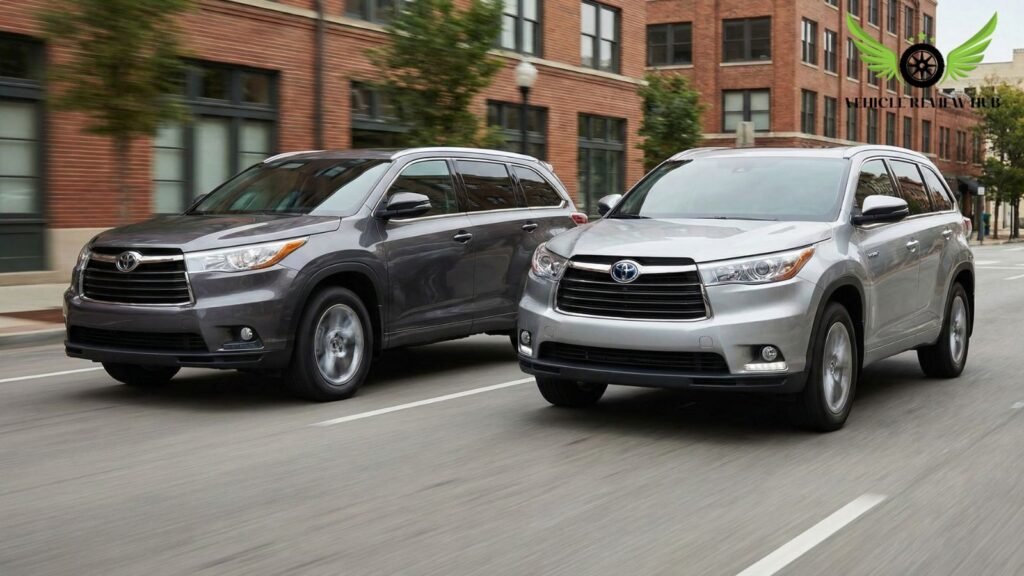
When choosing between the gas and hybrid versions, most buyers want to know how they actually feel different in daily driving, not just how they look on paper. In real-world use, the Toyota Highlander gas and hybrid models deliver noticeably different driving experiences, even though they share the same core comfort-focused character.
From my observation and owner feedback across recent model years, the gas version feels more traditional and familiar, especially for drivers coming from older SUVs. The hybrid, on the other hand, feels smoother and quieter in everyday situations, particularly in city traffic. Neither option is meant to be sporty, but the way power is delivered and how the vehicle behaves at low speeds can influence which one feels more natural to you.
This comparison focuses on real driving behavior—how acceleration feels, how smooth the ride is, and how refined the cabin stays—rather than technical specs. Understanding these differences helps buyers decide which version better matches their driving habits, whether that’s short daily commutes, family use, or frequent highway travel.
Acceleration, Smoothness and Responsiveness
In everyday driving, the difference between gas and hybrid versions shows up most clearly in how power is delivered, not how fast the SUV is on paper. For recent 2022–2025 USA models, both versions are tuned for smooth, predictable movement rather than quick bursts.
In real use, the gas Toyota Highlander feels more conventional. Acceleration is linear and familiar, especially when pulling onto highways or overtaking at 40–60 mph. Throttle response is direct, but you do feel the engine working harder when the vehicle is fully loaded with passengers or luggage. Many owners describe it as “adequate but not eager,” which fits daily family driving just fine.
The hybrid version feels noticeably smoother at low and medium speeds. Because the electric motor assists during takeoff, initial acceleration from a stop feels more immediate and refined, especially in city traffic. From my experience, this makes stop-and-go driving feel calmer, with fewer sudden engine revs. Responsiveness between 0–30 mph is where the hybrid feels most natural.
Here’s a simple real-world comparison most drivers relate to:
Driving Feel | Gas Highlander (Real World) | Hybrid Highlander (Real World) |
Initial Takeoff | Slight delay, engine-led | Smooth, instant electric assist |
City Acceleration | Adequate, predictable | Quicker, more refined |
Highway Merging | Confident but engine revs | Smooth, steady build-up |
Overall Smoothness | Good | Very good |
If you ask me, neither version feels fast, but the hybrid clearly feels more polished in daily use. The gas model suits drivers who prefer a traditional engine feel, while the hybrid makes everyday acceleration feel easier and less stressful—especially in traffic-heavy environments.
Noise and Refinement Differences
Noise and overall refinement are areas where the gas and hybrid versions feel noticeably different in daily use. For most 2022–2025 Toyota Highlander models driven in the USA, these differences become clear within the first few days of ownership.
In the gas version, engine sound is more noticeable during hard acceleration and highway merging, especially above 60–65 mph. Around town, noise levels stay reasonable, but when the engine revs higher, you can hear it working. From what many owners report, this isn’t loud or annoying—it just feels like a typical midsize SUV with a traditional engine.
The hybrid version feels calmer in comparison. At low speeds and in traffic, the vehicle often runs partially on electric power, which significantly reduces engine noise. In city driving below 40 mph, the cabin is usually very quiet, making conversations and phone calls easier. This smoother sound profile is one reason many drivers describe the hybrid as more “refined” in everyday use.
Here’s how real drivers usually experience the difference:
Situation | Gas Highlander | Hybrid Highlander |
City Driving (Under 40 mph) | Low noise, engine audible | Very quiet, electric assist |
Hard Acceleration | Engine noise noticeable | Smoother, less engine strain |
Highway Cruising (70 mph) | Low wind & road noise | Slightly quieter overall |
Cabin Refinement | Good | Very good |
From my observation, road and wind noise are well controlled in both versions, but the hybrid has a small edge in overall quietness. If you spend a lot of time in traffic or value a calm cabin, the hybrid’s refinement is easy to appreciate. The gas version still feels comfortable, just a bit more mechanical by comparison.
At the end of the day, neither feels noisy, but the hybrid clearly delivers a more relaxed and polished driving environment, especially for daily urban use.
Monthly and Yearly Fuel Cost Estimation
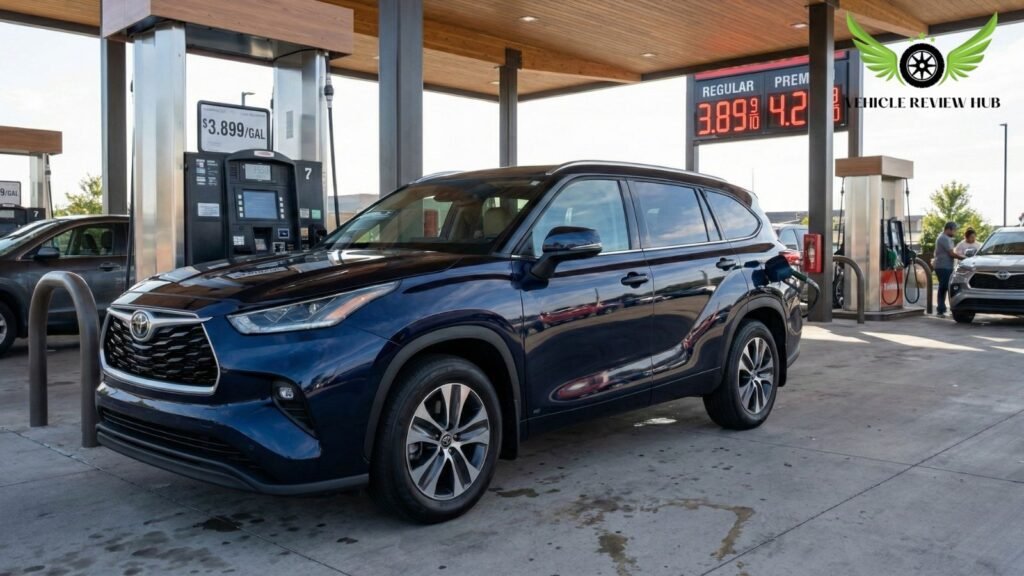
Fuel cost is where mileage numbers turn into real money, and this is often the deciding factor for many buyers. Instead of looking only at MPG, most drivers want to know how much the Toyota Highlander will actually cost them per month and per year based on normal driving in the USA.
In real life, fuel expenses depend on three main things: your driving distance, city vs highway mix, and whether you choose gas or hybrid. From what I’ve seen, many US families drive between 12,000–15,000 miles per year, which makes fuel cost differences show up very clearly over time.
This section focuses on realistic fuel spending, not best-case scenarios. Using current average US fuel prices and real-world mileage ranges, the upcoming breakdown will show what most owners can expect to pay monthly and yearly for daily use and longer trips. The goal is simple—help you understand which version fits your budget before going deeper into detailed cost comparisons.
Fuel Cost for Daily Family Use
For most families, daily driving means school runs, office commutes, grocery trips, and short weekend outings. In the USA, a typical family-driven Toyota Highlander usually covers around 1,000–1,250 miles per month, mostly in mixed city and suburban conditions. This is where fuel cost differences become very real.
Using real-world mileage and average US fuel prices, the numbers below reflect what most owners actually spend, not best-case scenarios.
Assumptions used (realistic & transparent):
- Average fuel price: $3.40 per gallon (USA)
- Driving mix: Mostly city + short highway trips
- Models considered: 2022–2025
Version | Real-World Combined MPG | Monthly Miles | Monthly Fuel Cost | Yearly Fuel Cost |
Gas Highlander | ~22–23 MPG | ~1,200 miles | ~$175–$190 | ~$2,100–$2,280 |
Hybrid Highlander | ~35–36 MPG | ~1,200 miles | ~$110–$120 | ~$1,320–$1,440 |
From my observation, this is where many families start noticing the hybrid advantage very quickly. A difference of $55–$70 per month might not sound huge at first, but over a year, that turns into $700–$900 in savings, without changing driving habits at all.
In daily family use, city traffic plays a big role. Frequent stops, idle time, and short trips usually push fuel costs higher for gas models. The hybrid handles these conditions better, keeping fuel usage more stable and predictable month after month.
If you ask me, for families who rely on their vehicle every single day, this consistent monthly saving is one of the strongest reasons the Toyota Highlander hybrid feels easier to live with in the long run.
Fuel Cost for Long Trips and Road Travel
Long trips and road travel bring a different fuel-cost reality compared to daily city use. For many Toyota Highlander owners in the USA, this means highway-heavy driving, steady speeds, and fewer stops. Families often plan road trips of 500–1,000 miles at a time, so understanding fuel spend here helps set realistic travel budgets.
Below is a realistic estimate based on common road-trip conditions and recent models.
Assumptions used (clear & realistic):
- Average highway speed: 65–75 mph
- Average fuel price: $3.40 per gallon (USA)
- Driving type: Mostly highway, light city entry
- Models considered: 2022–2025
Trip Distance | Version | Real-World Highway MPG | Fuel Cost (Approx.) |
500 miles | Gas Highlander | ~26–28 MPG | ~$60–$65 |
500 miles | Hybrid Highlander | ~33–35 MPG | ~$48–$52 |
1,000 miles | Gas Highlander | ~26–28 MPG | ~$120–$130 |
1,000 miles | Hybrid Highlander | ~33–35 MPG | ~$95–$105 |
From my observation, the cost gap narrows slightly on long highway trips, but it doesn’t disappear. The gas version becomes more efficient once speeds are steady, which helps keep costs reasonable for occasional travelers. However, the hybrid still maintains a clear edge, saving roughly $15–$25 per 500 miles.
Another thing many owners mention is driving comfort during long hours. While fuel cost matters, lower engine strain in the hybrid often makes the trip feel calmer and less tiring. Over multiple road trips per year, these smaller savings and comfort gains add up.
If you ask me, for families who take frequent road trips, the hybrid still makes sense financially. But if long-distance travel is only occasional, the gas version doesn’t feel expensive or inefficient on the highway—it stays within a reasonable and predictable range.
Is the Highlander Hybrid Worth It for Daily Driving?
When people ask if the Toyota Highlander Hybrid is worth it for daily driving, they’re really asking a practical question: Will the extra cost of the hybrid version pay off in real use? The answer isn’t just about MPG numbers or specs on paper—it’s about everyday life in the USA: city traffic, commuter routes, school runs, and budget planning.
From actual owner discussions, long-term ownership data, and real-world fuel costs, the hybrid version often makes sense for drivers who spend most of their time in urban or suburban driving, with frequent stops and moderate highway use. The way the hybrid system blends electric assist and gasoline results in smoother acceleration, lower fuel costs, and a quieter cabin, especially around town.
But the value depends on your driving pattern, how long you keep the vehicle, and regional fuel prices. In this section we’ll break down the practical benefits and whether, for most people, those benefits outweigh the higher upfront price of the hybrid version.
Fuel Savings Over Time
Fuel savings over time is where the Toyota Highlander hybrid either proves its value—or doesn’t—depending on how you actually drive. For most US owners who use their vehicle daily, savings start showing up within the first year, not after some distant break-even point.
To keep this realistic, let’s use common real-world assumptions that match how families actually drive:
Assumptions used (transparent & realistic):
- Annual driving: 14,000–15,000 miles (US average family use)
- Fuel price: $3.40 per gallon (USA average)
- Real-world combined MPG:
- Gas: 22–23 MPG
- Hybrid: 35–36 MPG
- Models considered: 2022–2025
Ownership Period | Gas Highlander Fuel Cost | Hybrid Highlander Fuel Cost | Estimated Savings |
1 Year | ~$2,200–$2,350 | ~$1,400–$1,450 | ~$750–$900 |
3 Years | ~$6,600–$7,050 | ~$4,200–$4,350 | ~$2,300–$2,700 |
5 Years | ~$11,000–$11,700 | ~$7,000–$7,250 | ~$3,800–$4,500 |
From my analysis, this is where the hybrid starts to make a strong case. Even though the hybrid usually costs more upfront, many owners recover a large portion of that difference within 4–5 years just through fuel savings—without changing driving habits.
Another important detail is cost stability. Hybrid owners often say their monthly fuel expense stays more predictable, especially when gas prices fluctuate. In daily city-heavy use, that consistency matters more than chasing the lowest possible MPG.
If you ask me, fuel savings alone won’t justify the hybrid for everyone. But for drivers who keep their vehicle long-term and rack up regular miles, the Toyota Highlander hybrid delivers real, measurable savings over time, not just theoretical benefits.
Ideal Driver Profile for Hybrid Buyers
The Toyota Highlander hybrid works best for drivers whose daily routine allows the hybrid system to stay active most of the time. This usually means city and suburban driving, where speeds stay moderate and traffic is part of everyday life.
From my observation, drivers who commute 30–60 minutes a day, deal with frequent stops, or do regular school runs tend to see the biggest benefit. In these conditions, the hybrid system feels smoother, quieter, and noticeably more fuel-efficient than the gas version. Many owners say the difference becomes clear within the first few months.
Long-term ownership is another important factor. If you plan to keep the vehicle for five years or more, fuel savings add up in a meaningful way. Short-term owners or people who switch cars often may not fully recover the higher upfront cost of the hybrid.
This version also suits drivers who care more about comfort and calm driving than quick acceleration. The hybrid’s gentle takeoff, reduced engine noise, and relaxed driving feel make daily use less tiring, especially in traffic.
If you ask me, the ideal hybrid buyer is practical, drives regularly, and wants predictable costs rather than excitement. For that type of driver, the Toyota Highlander hybrid fits naturally into daily life instead of feeling like a compromise.
FAQs: Toyota Highlander Mileage, Real-World MPG, Driving Experience & Daily Running Cost in the USA
These frequently asked questions focus on what most buyers actually want to know before choosing a Toyota Highlander. The answers are based on real-world driving conditions in the USA, including daily use, fuel economy, driving comfort, and running costs.
What is the real-world MPG of the Toyota Highlander?
In everyday driving, the Toyota Highlander gas version usually delivers around 22–23 MPG combined, while the hybrid version averages 35–36 MPG combined, depending on traffic and driving style.
How does Toyota Highlander mileage differ between city and highway driving?
In city traffic, the gas model typically gets 19–21 MPG, while the hybrid often reaches 34–37 MPG. On highways, gas models average 25–28 MPG, and hybrid versions stay around 32–35 MPG.
Is the Toyota Highlander Hybrid better for daily driving?
Yes, for most daily drivers. The hybrid version feels smoother in traffic, costs less to run monthly, and performs better in stop-and-go conditions common in urban and suburban areas.
What is the monthly fuel cost of a Toyota Highlander in the USA?
For daily family use (around 1,200 miles per month), fuel costs are usually $175–$190 for the gas model and $110–$120 for the hybrid, based on average US fuel prices.
How much does the Toyota Highlander cost to run yearly?
On average, yearly fuel cost is around $2,100–$2,300 for the gas version and $1,350–$1,450 for the hybrid, depending on mileage and driving conditions.
Is the Toyota Highlander comfortable for long highway trips?
Yes. At cruising speeds of 65–75 mph, the Toyota Highlander feels stable, quiet, and comfortable, making it suitable for long family road trips.
Does the hybrid version save money over time?
For owners who keep the vehicle five years or longer, fuel savings from the hybrid can add up to $3,500–$4,500, making it a practical long-term choice.
Which Toyota Highlander version is better for families?
Families with frequent daily driving and city use usually prefer the hybrid, while families who mostly drive on highways may find the gas version more than sufficient.