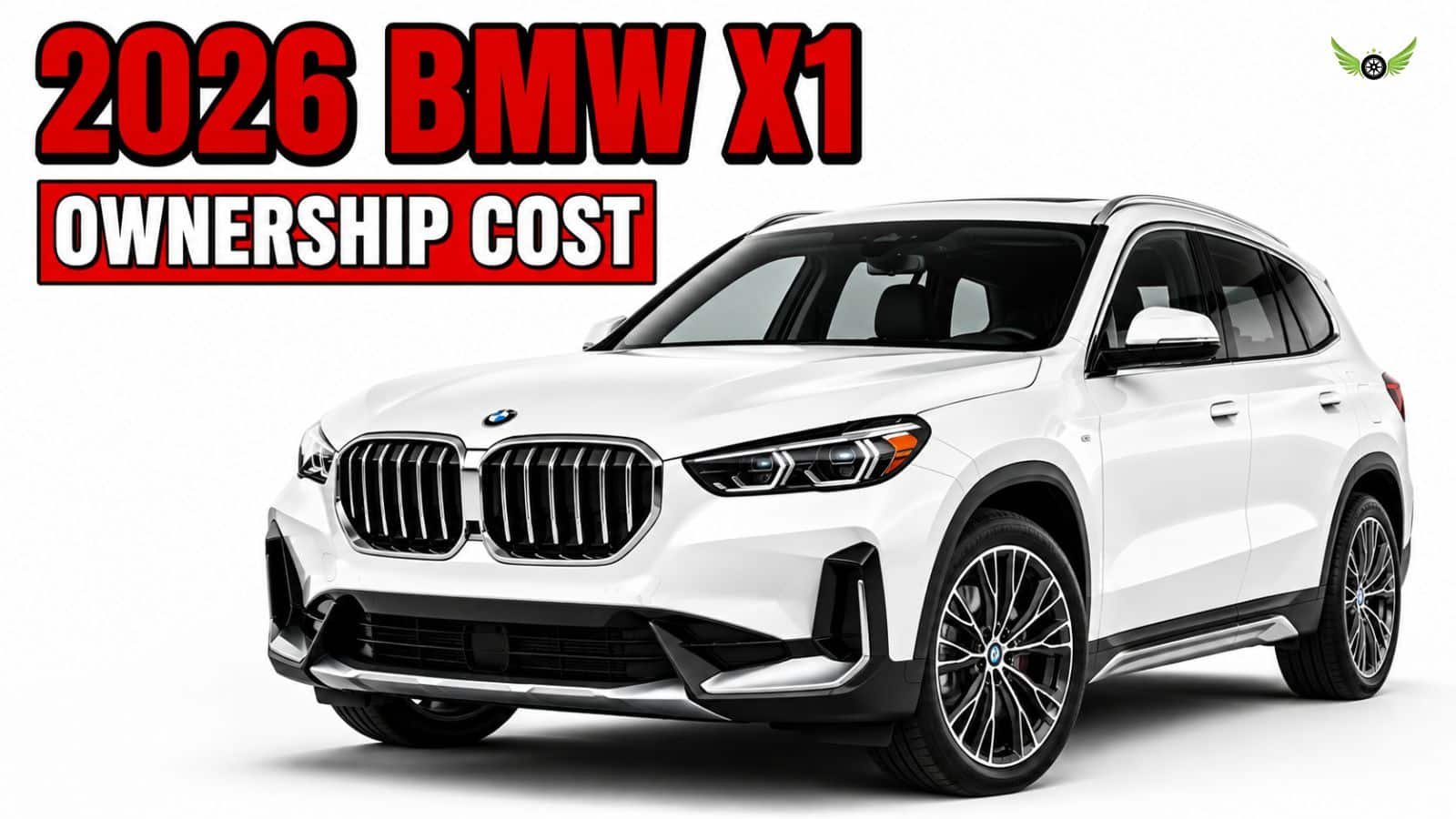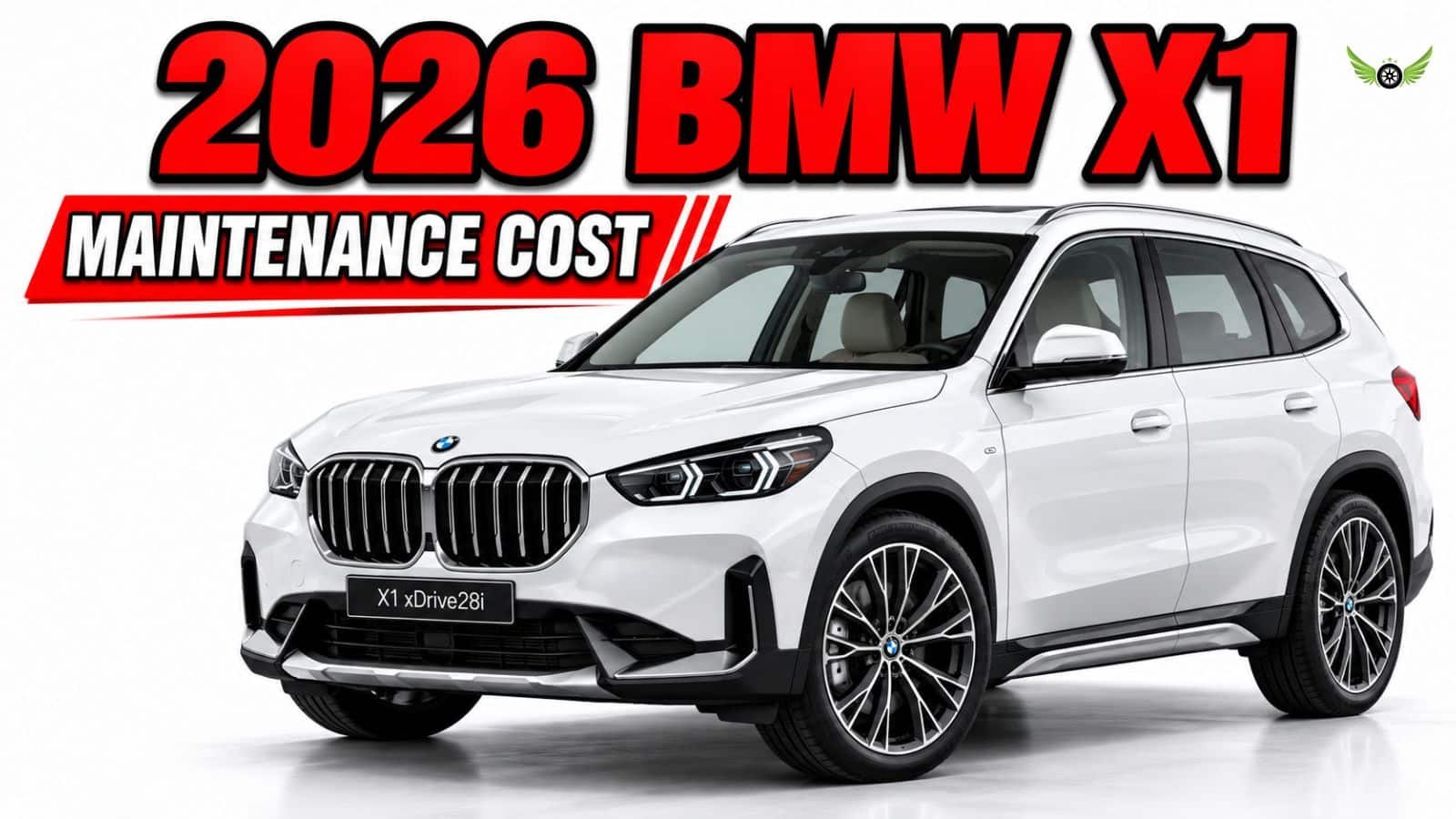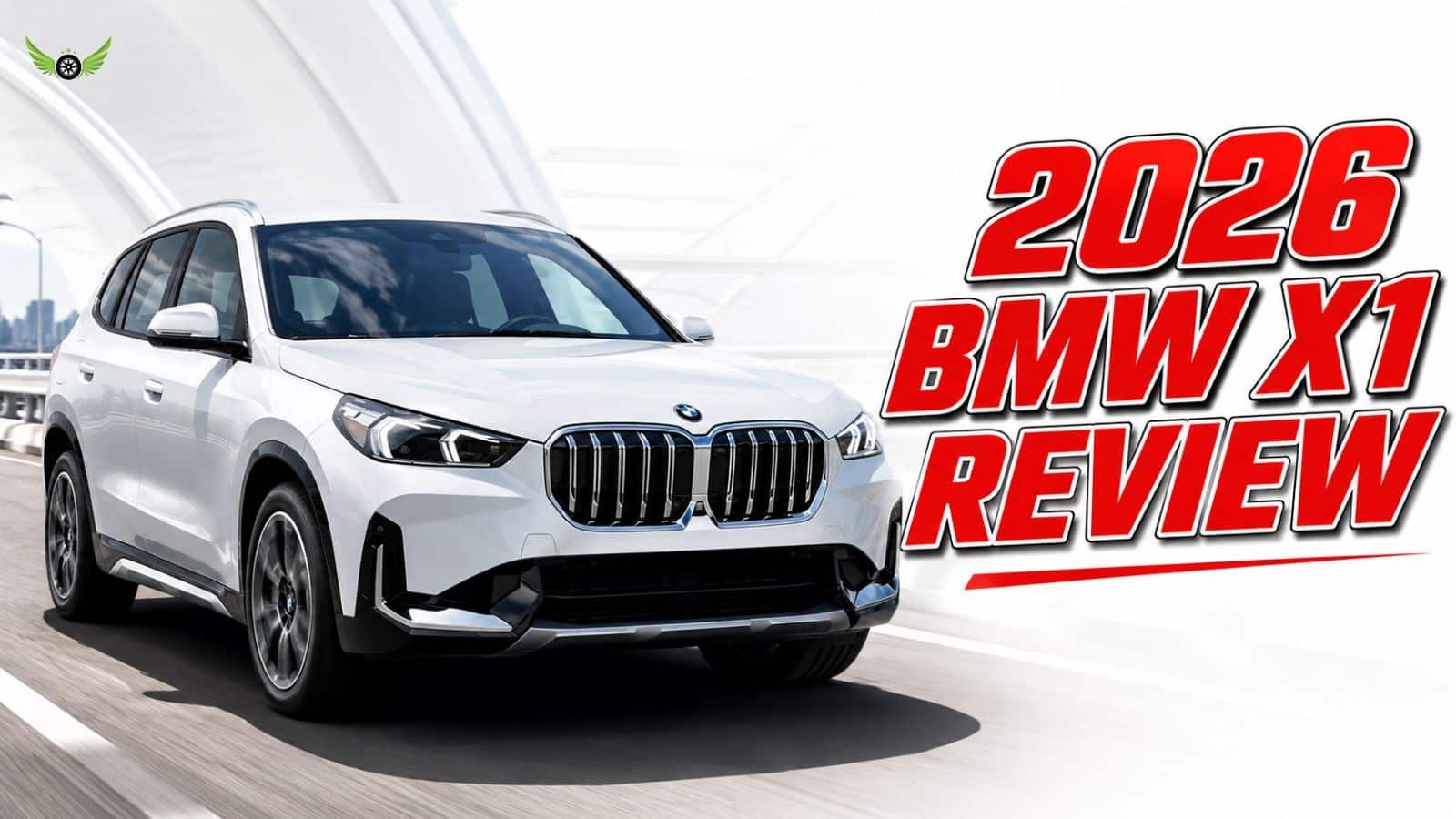
The 2026 BMW X1 combines strong fuel efficiency with confident everyday performance, making it one of the most well-rounded luxury compact SUVs in the U.S. market. The xDrive28i model delivers an EPA-estimated 25 MPG city, 34 MPG highway, and 28 MPG combined, while its 2.0-liter turbocharged engine produces 241 horsepower and 295 lb-ft of torque, reaching 0–60 mph in 6.2 seconds.
This guide focuses on the real numbers that matter to buyers, including official BMW X1 Mileage, EPA-tested BMW X1 MPG, real-world fuel economy, acceleration, ride quality, highway comfort, and daily driving performance. Instead of marketing claims, you’ll find verified specifications and practical insights to help determine whether the BMW X1 fits your driving needs and expectations.
BMW X1 MPG & Fuel Economy
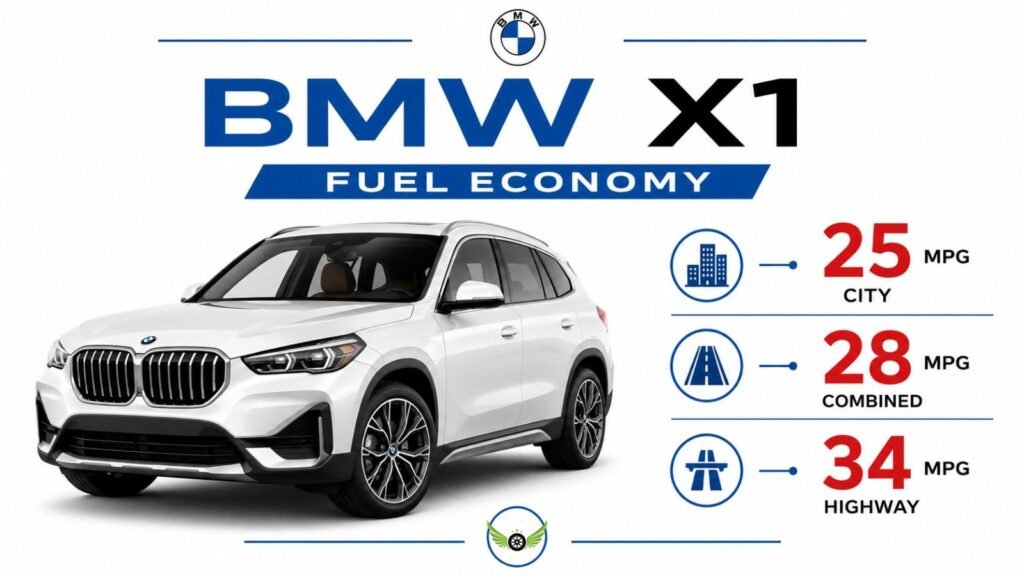
The BMW X1 delivers competitive fuel efficiency for a luxury compact SUV, combining a turbocharged 2.0-liter engine with a 7-speed dual-clutch transmission. The EPA ratings provide a reliable benchmark, while real-world BMW X1 Mileage depends on driving conditions, traffic, weather, and driving habits.
Official EPA Fuel Economy Ratings
The 2026 BMW X1 xDrive28i is EPA-rated at:
Driving Condition | Fuel Economy |
City | 25 MPG |
Highway | 34 MPG |
Combined | 28 MPG |
These figures apply to the xDrive28i equipped with the 2.0-liter turbocharged engine and standard all-wheel drive. They make the BMW X1 MPG one of the stronger offerings in the luxury compact SUV segment.
Real-World BMW X1 Fuel Economy
In everyday driving, BMW X1 Mileage is typically influenced by traffic, road conditions, outside temperature, and driving style. Most owners can expect fuel economy to remain close to the EPA estimates during mixed driving, while steady highway cruising generally delivers the best efficiency. Frequent stop-and-go traffic, aggressive acceleration, or extended idling will reduce overall BMW X1 MPG, whereas smooth acceleration and consistent speeds help maximize fuel economy.
BMW X1 Performance & Driving Experience
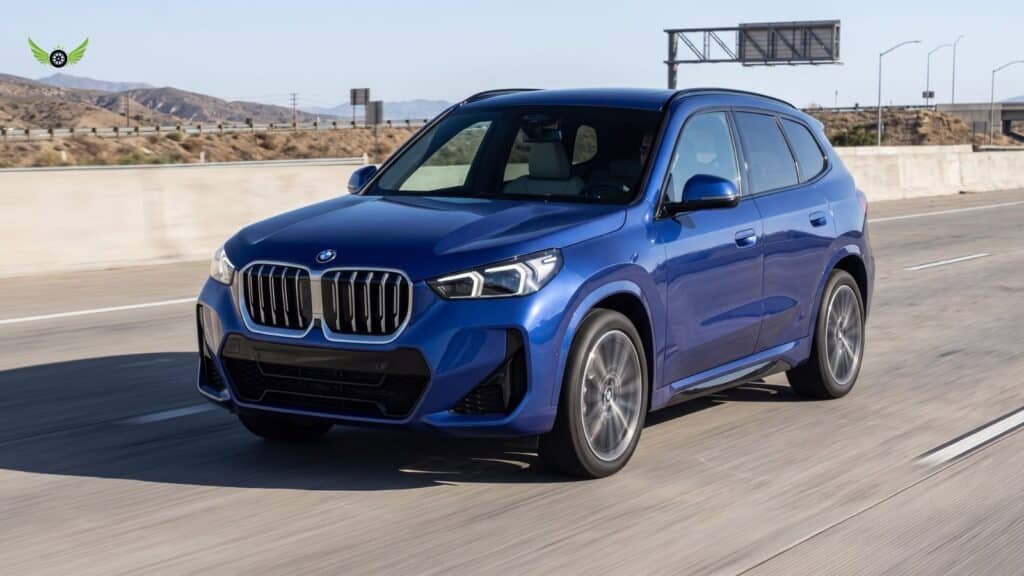
The BMW X1 Performance is built around a 2.0-liter turbocharged engine, a quick-shifting 7-speed dual-clutch transmission, and BMW’s standard xDrive all-wheel-drive system. Together, they deliver responsive acceleration, confident handling, and stable highway performance while maintaining everyday comfort.
Acceleration, Turbo Response & Transmission
The xDrive28i is powered by a 2.0-liter turbocharged inline-four producing 241 hp and 295 lb-ft of torque. BMW estimates a 0–60 mph time of 6.2 seconds, making it one of the quicker options in the luxury compact SUV segment.
Specification | Value |
Engine | 2.0L Turbocharged Inline-4 |
Horsepower | 241 hp |
Torque | 295 lb-ft |
Transmission | 7-speed Dual-Clutch Automatic |
Drivetrain | xDrive AWD |
0–60 mph | 6.2 seconds (BMW estimate) |
Peak torque is available from 1,500 rpm, providing strong pulling power during city driving and highway merging. The dual-clutch transmission shifts quickly under acceleration and helps the powertrain respond smoothly during normal driving.
Ride Comfort, Handling & Highway Performance
The suspension is tuned to balance comfort with control. Around town, it absorbs most road imperfections without feeling overly soft, while the steering remains precise and predictable through corners. This gives the luxury crossover a composed feel during daily commuting and winding-road driving.
At highway speeds, the vehicle tracks confidently with good directional stability and ample power for overtaking slower traffic. Standard xDrive all-wheel drive also improves traction on wet or slippery roads, adding confidence without compromising overall driving comfort.
BMW X1 Daily Driving Experience
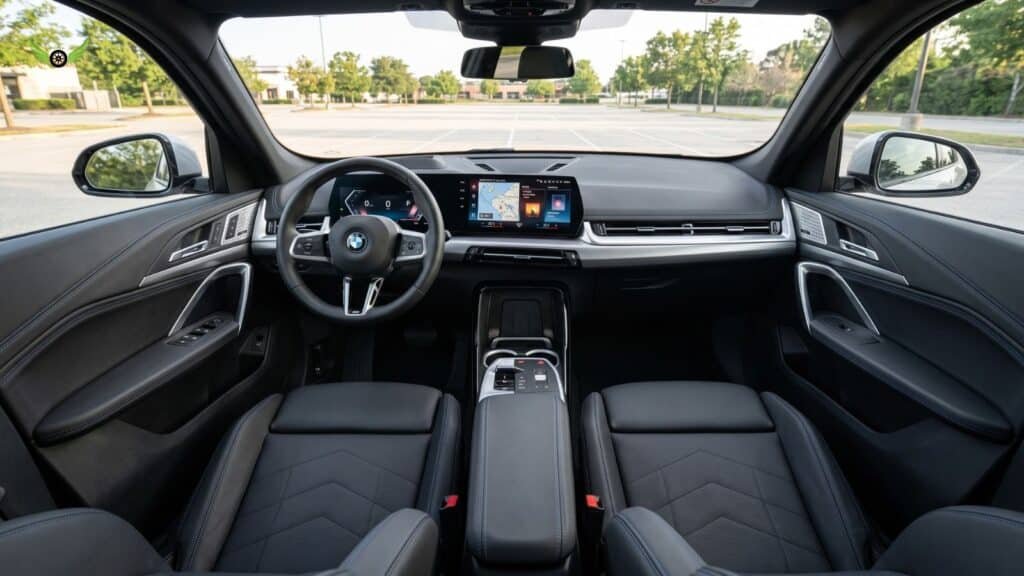
The BMW X1 is easy to live with as a daily driver thanks to its compact size, elevated seating position, and practical interior. It offers good outward visibility, responsive steering, and a spacious cabin, making it well suited for city commuting, family use, and long-distance travel.
City Driving, Parking & Visibility
Its compact footprint and light steering make the X1 easy to maneuver through busy city streets and tight parking spaces. The higher driving position provides a clear view of the road, while available front and rear parking sensors, a rear-view camera, and the optional Parking Assistant help simplify low-speed parking. Independent road tests also report good forward visibility with minimal blind-spot concerns.
Passenger Comfort & Cargo Practicality
The cabin provides generous headroom and legroom for both front and rear passengers, making it comfortable for everyday family use. A power liftgate is standard, and the cargo area offers 25.7 cubic feet of storage behind the second row, expanding to 57.2 cubic feet with the rear seats folded. This provides enough space for luggage, grocery runs, strollers, or weekend travel without compromising passenger comfort.
Cargo Configuration | Capacity |
Behind Rear Seats | 25.7 cu ft |
Rear Seats Folded | 57.2 cu ft |
BMW X1 Driving Modes & xDrive AWD Performance
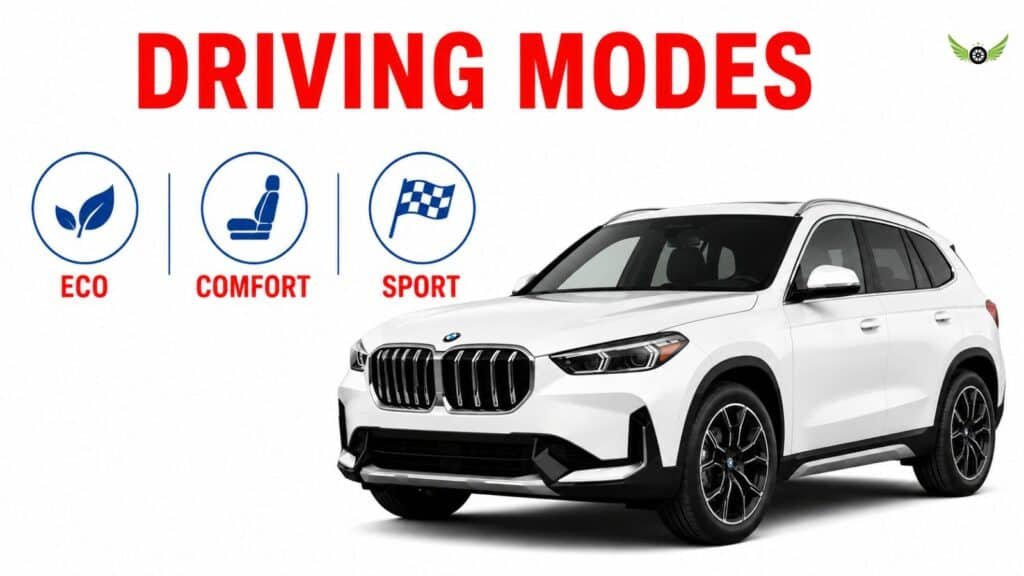
The BMW X1 comes standard with BMW xDrive intelligent all-wheel drive and selectable driving modes that adjust throttle response, steering, and transmission behavior. These features let drivers prioritize fuel efficiency, everyday comfort, or a more responsive driving experience depending on road conditions.
Eco, Comfort & Sport Modes
Each driving mode changes how the vehicle responds to driver inputs. Instead of increasing engine power, the modes optimize the way available power is delivered.
Driving Mode | Best Use | Key Changes |
Efficient (Eco) | Daily commuting & fuel savings | Softer throttle response, optimized energy management, and efficiency-focused vehicle settings. |
Comfort | Everyday driving | Balanced steering, throttle response, and transmission calibration for smooth driving. |
Sport | Spirited driving | Sharper throttle response, quicker gear changes, and heavier steering for a more engaging feel. |
Efficient mode is designed to reduce fuel consumption by optimizing accelerator response and selected comfort functions. Comfort mode offers the most balanced setup for everyday driving, while Sport mode makes the crossover feel more responsive during overtaking and cornering without changing the engine’s output.
Winter Driving & All-Weather Capability
The standard xDrive system continuously monitors wheel grip and automatically redistributes engine torque between the front and rear axles when traction changes. This improves stability on rain-soaked roads, light snow, and slippery pavement without requiring driver input.
For drivers in colder U.S. states, xDrive provides extra confidence during winter commuting, but it does not replace winter tires. Dedicated winter tires remain the most effective upgrade for braking, cornering, and traction on snow and ice.
BMW X1 vs Audi Q3 & Mercedes-Benz GLA
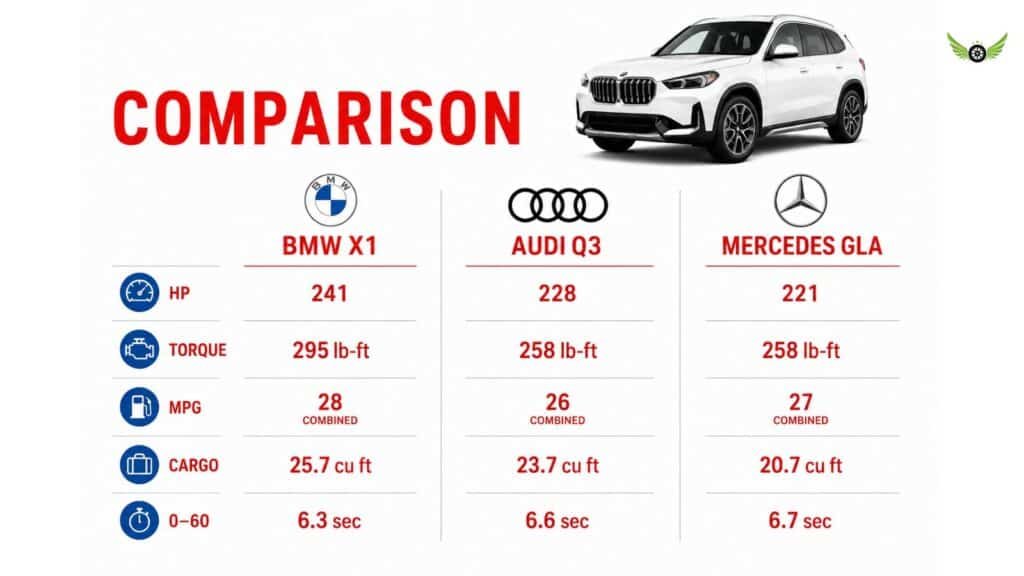
The BMW X1, Audi Q3, and Mercedes-Benz GLA are among the most popular luxury compact SUVs in the U.S., but they appeal to different buyers. The X1 focuses on balanced performance and everyday practicality, the redesigned 2026 Q3 emphasizes stronger acceleration and premium technology, while the GLA prioritizes comfort and efficiency. Comparing their powertrains, fuel economy, cargo space, and driving dynamics provides a clearer picture of which model offers the best overall value.
Performance & Driving Comparison
Specification | BMW X1 xDrive28i | Audi Q3 quattro (2026) | Mercedes-Benz GLA 250 4MATIC |
Engine | 2.0L Turbo I4 | 2.0L Turbo I4 | 2.0L Turbo I4 |
Horsepower | 241 hp | 255 hp | 221 hp |
Torque | 295 lb-ft | 273 lb-ft | 258 lb-ft |
Transmission | 7-speed DCT | 7-speed DCT | 8-speed DCT |
AWD System | xDrive | quattro | 4MATIC |
0–60 mph (tested) | 5.4 sec | 5.3 sec | ~6.3 sec |
EPA Combined Fuel Economy | 28 MPG | 25 MPG | 29 MPG |
Cargo Space (Behind Rear Seats) | 25.7 cu ft | 29.0 cu ft | 15.4 cu ft |
The Audi Q3 delivers the quickest acceleration by a narrow margin thanks to its 255-horsepower engine, while the BMW X1 produces the highest torque, giving it stronger low-speed response during city driving and highway passing. The GLA 250 returns the best EPA combined fuel economy but offers significantly less cargo space than its rivals. Overall, the X1 provides one of the best combinations of performance, efficiency, and practicality in this segment.
Which SUV Is More Fun to Drive?
For drivers who enjoy responsive handling, the BMW X1 stands out. Its precise steering, firm body control, and 295 lb-ft of torque make it feel eager in everyday driving, while the dual-clutch transmission delivers quick gear changes. Independent testing has also earned the X1 higher overall editorial ratings than many competitors because of its balanced driving dynamics.
The Audi Q3 is slightly quicker in a straight line and offers a refined cabin, but its suspension is tuned more toward comfort than driver engagement. The Mercedes-Benz GLA provides the smoothest ride of the three, making it a strong choice for buyers who prioritize comfort over sporty handling.
If your priority is an SUV that combines responsive performance, confident handling, strong fuel economy, and everyday usability, the BMW X1 remains the most well-rounded choice. Buyers looking for maximum straight-line performance may prefer the Audi Q3, while those who value ride comfort above all else may find the Mercedes-Benz GLA more appealing.
FAQs About BMW X1 Mileage, MPG & Driving Experience
The BMW X1 is a practical luxury compact SUV that combines strong fuel economy with responsive performance and everyday usability. Below are answers to the most common questions U.S. buyers ask before purchasing or comparing the X1. These FAQs focus on fuel efficiency, driving dynamics, ownership, and real-world performance to help you make an informed decision.
Is the BMW X1 fuel-efficient for daily driving?
Yes. The 2026 BMW X1 xDrive28i is EPA-rated at 25 MPG city, 34 MPG highway, and 28 MPG combined, making it one of the more fuel-efficient luxury compact SUVs with standard all-wheel drive. Actual fuel economy depends on traffic, weather, road conditions, and driving habits.
What engine does the BMW X1 use?
The U.S.-spec xDrive28i is powered by a 2.0-liter turbocharged four-cylinder engine producing 241 horsepower and 295 lb-ft of torque. It is paired with a 7-speed dual-clutch automatic transmission and standard xDrive all-wheel drive.
How fast is the BMW X1?
BMW estimates the 0–60 mph time at 6.2 seconds for the xDrive28i. The turbocharged engine delivers peak torque from 1,500 rpm, providing quick acceleration for city driving and highway merging.
Is the BMW X1 comfortable for long highway trips?
Yes. The X1 offers supportive front seats, a quiet cabin at cruising speeds, and a suspension that balances comfort with stability. These features make it well suited for long-distance travel as well as daily commuting.
Does xDrive improve winter driving?
Yes. BMW’s xDrive system automatically adjusts power distribution between the front and rear wheels to improve traction on wet, snowy, or slippery roads. However, dedicated winter tires are still recommended for the best grip in severe winter conditions.
How much cargo space does the BMW X1 offer?
The X1 provides 25.7 cubic feet of cargo space behind the rear seats and up to 46.8 cubic feet with the rear seats folded. This makes it practical for groceries, luggage, sports equipment, and weekend trips.
Is the BMW X1 better than the Audi Q3 and Mercedes-Benz GLA?
The best choice depends on your priorities. The X1 stands out for its balance of performance, fuel economy, interior space, and everyday practicality. The Audi Q3 emphasizes refinement and technology, while the Mercedes-Benz GLA focuses more on ride comfort. Buyers seeking an all-around luxury compact SUV often find the X1 to be the most balanced option.
Does the BMW X1 require premium gasoline?
Yes. BMW recommends premium unleaded gasoline (91 AKI or higher) to achieve the engine’s intended performance and efficiency. Using lower-octane fuel may reduce performance, although the engine management system can compensate when necessary.