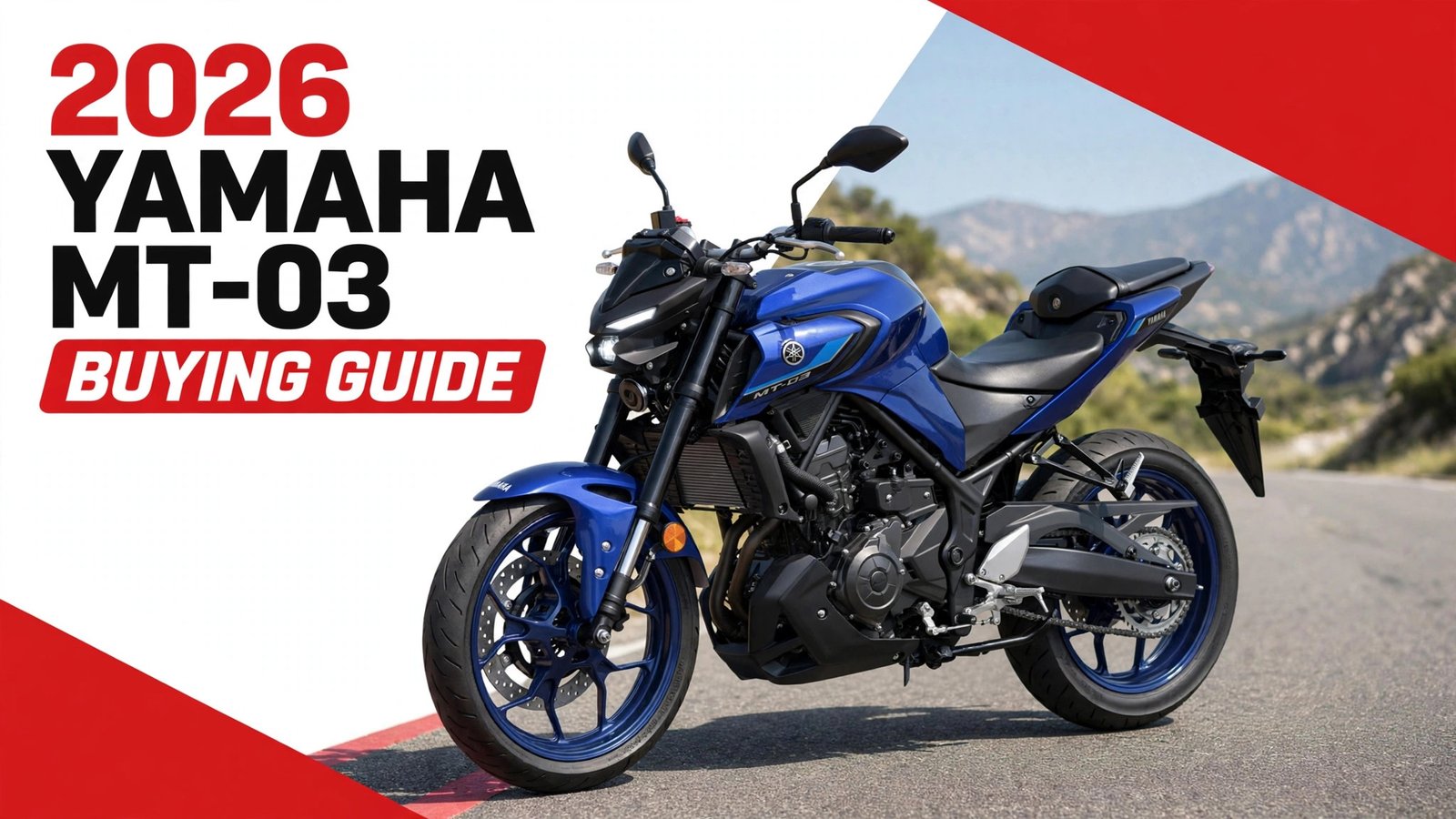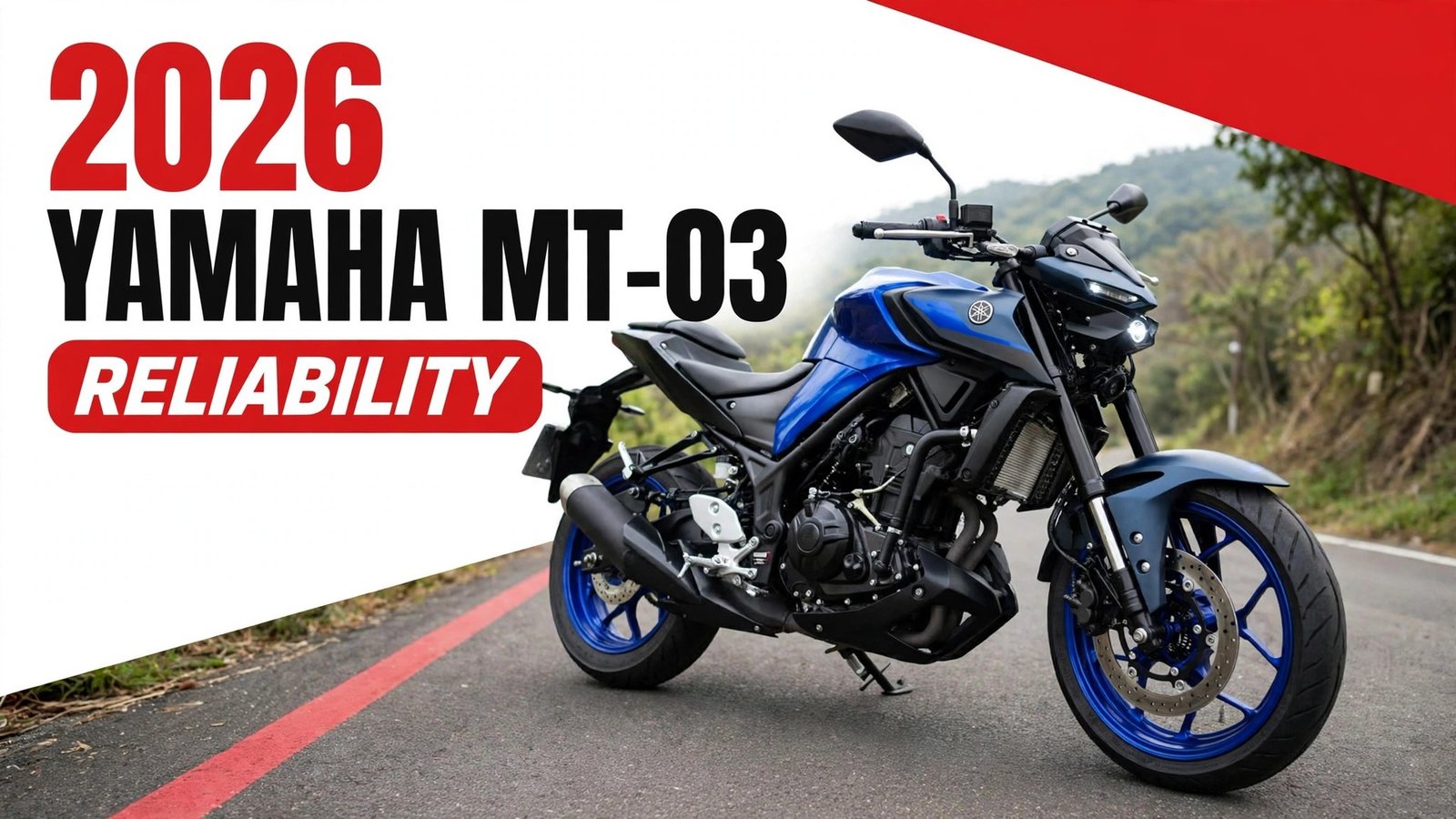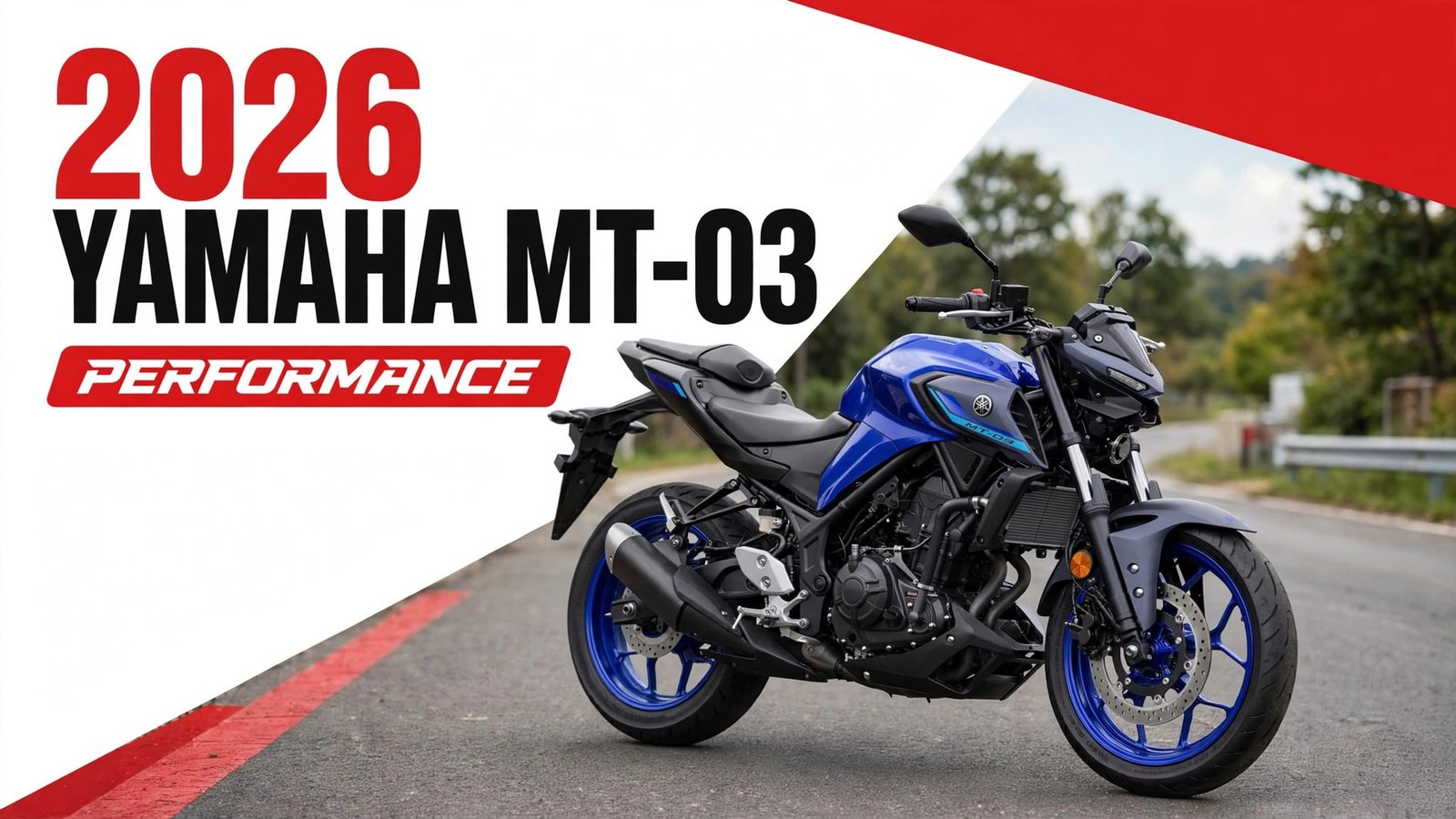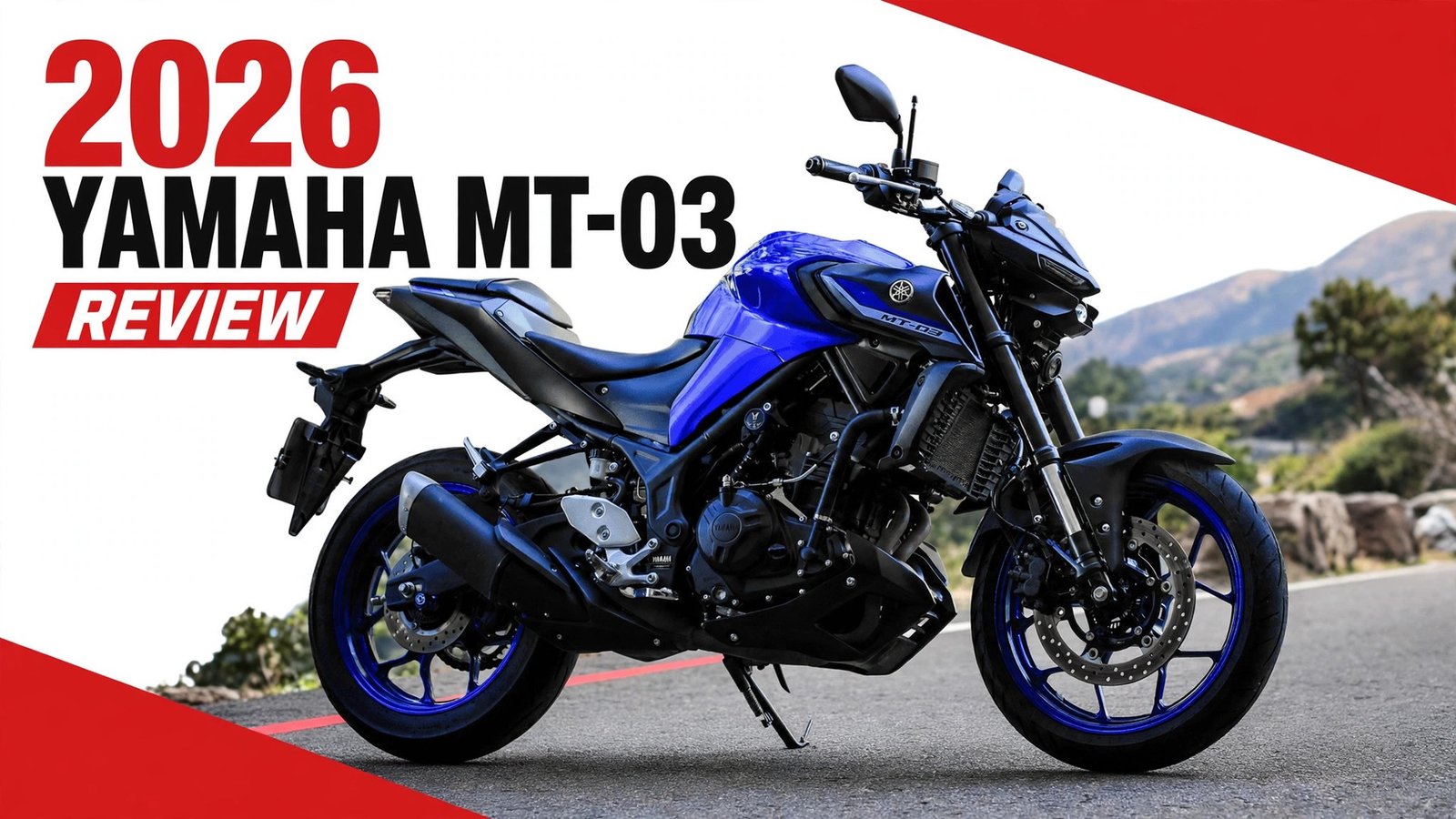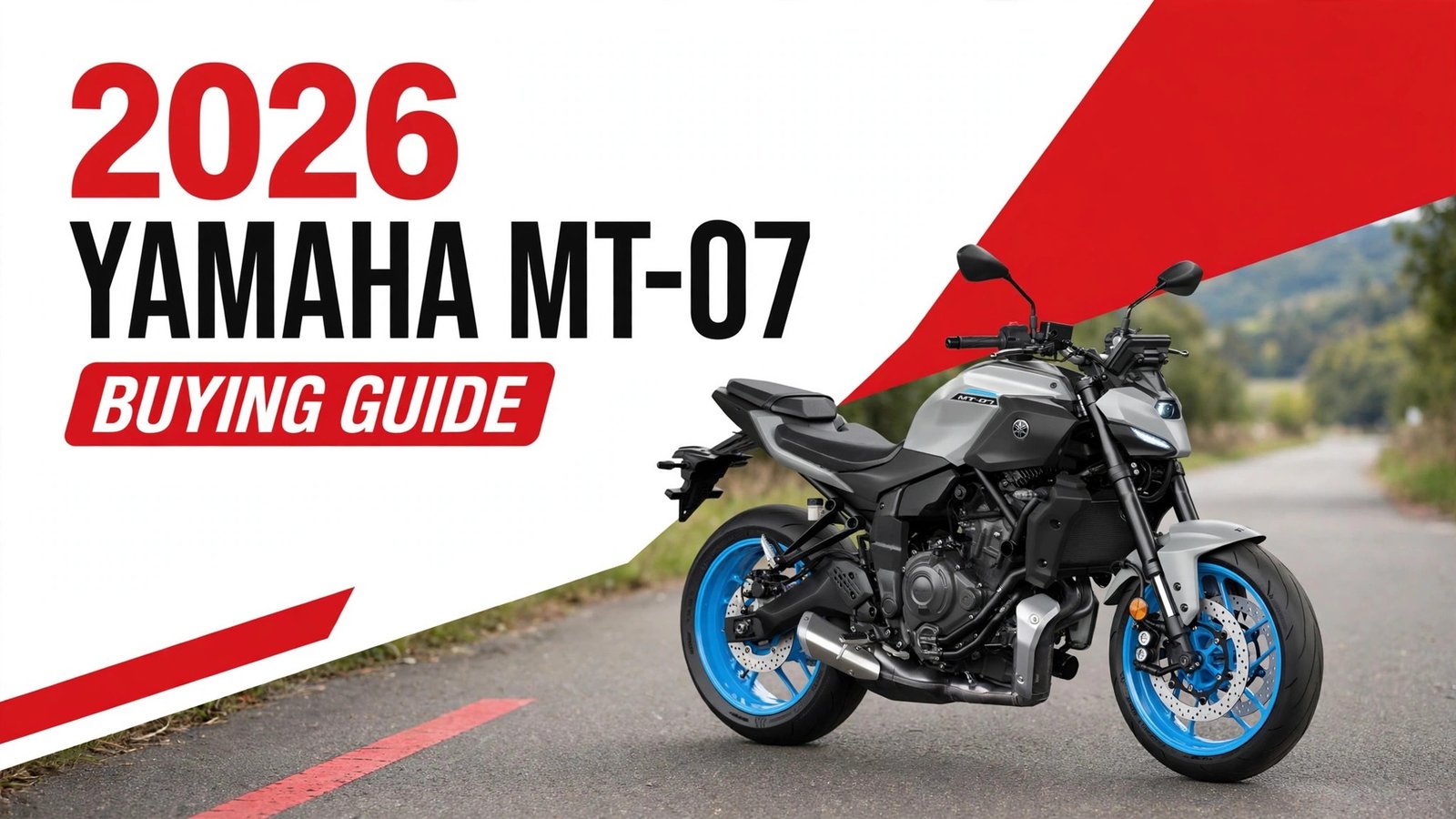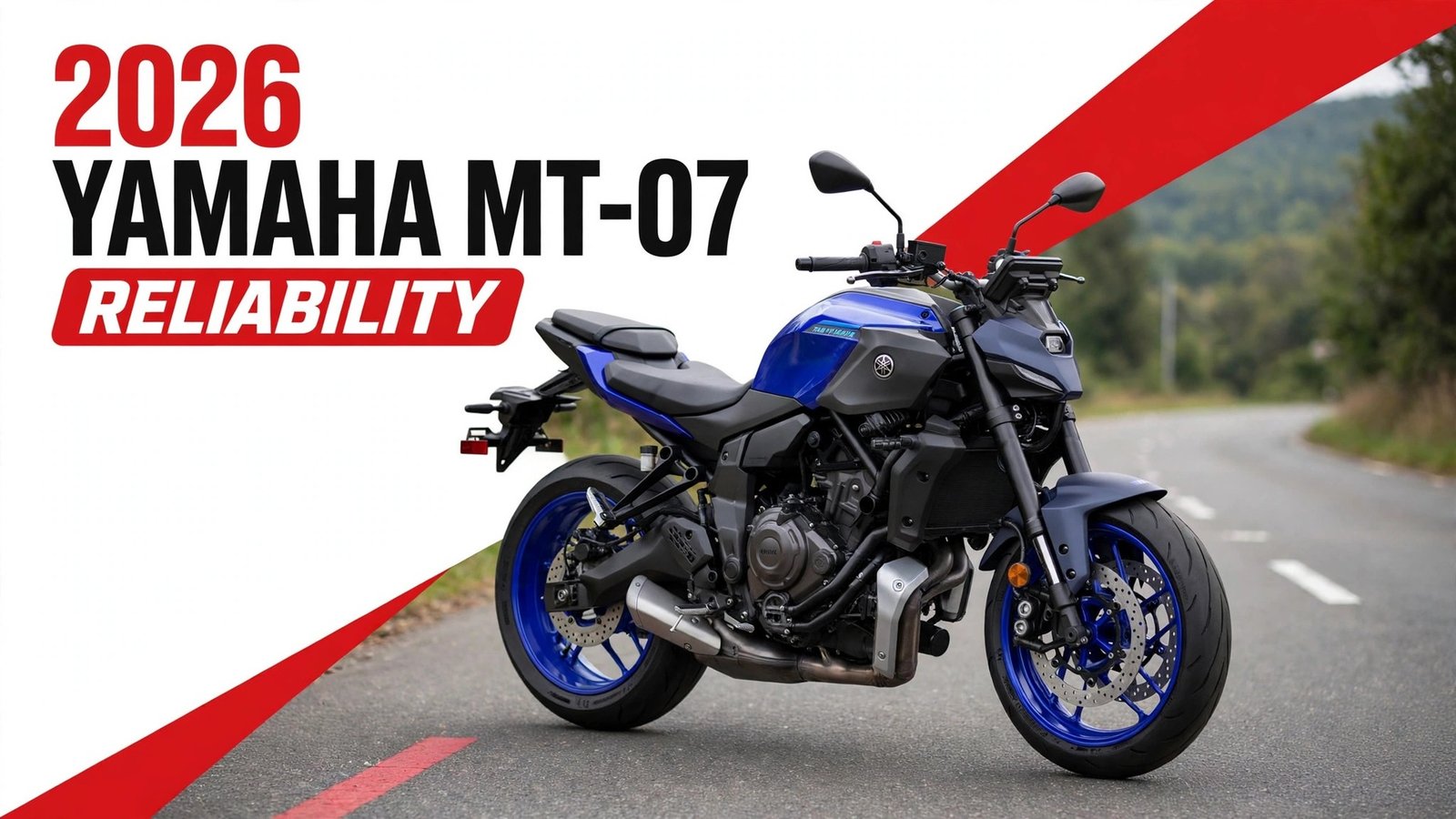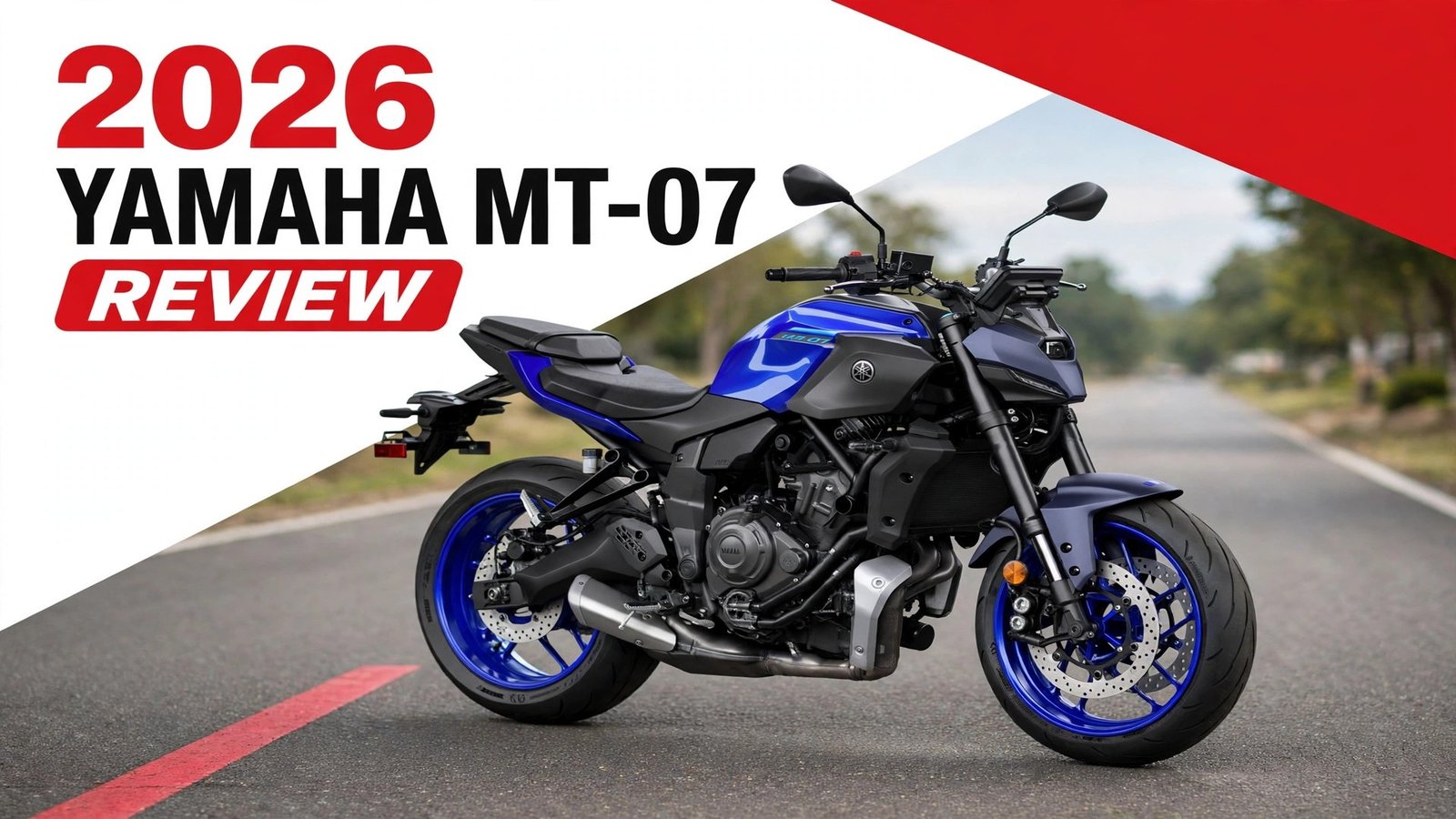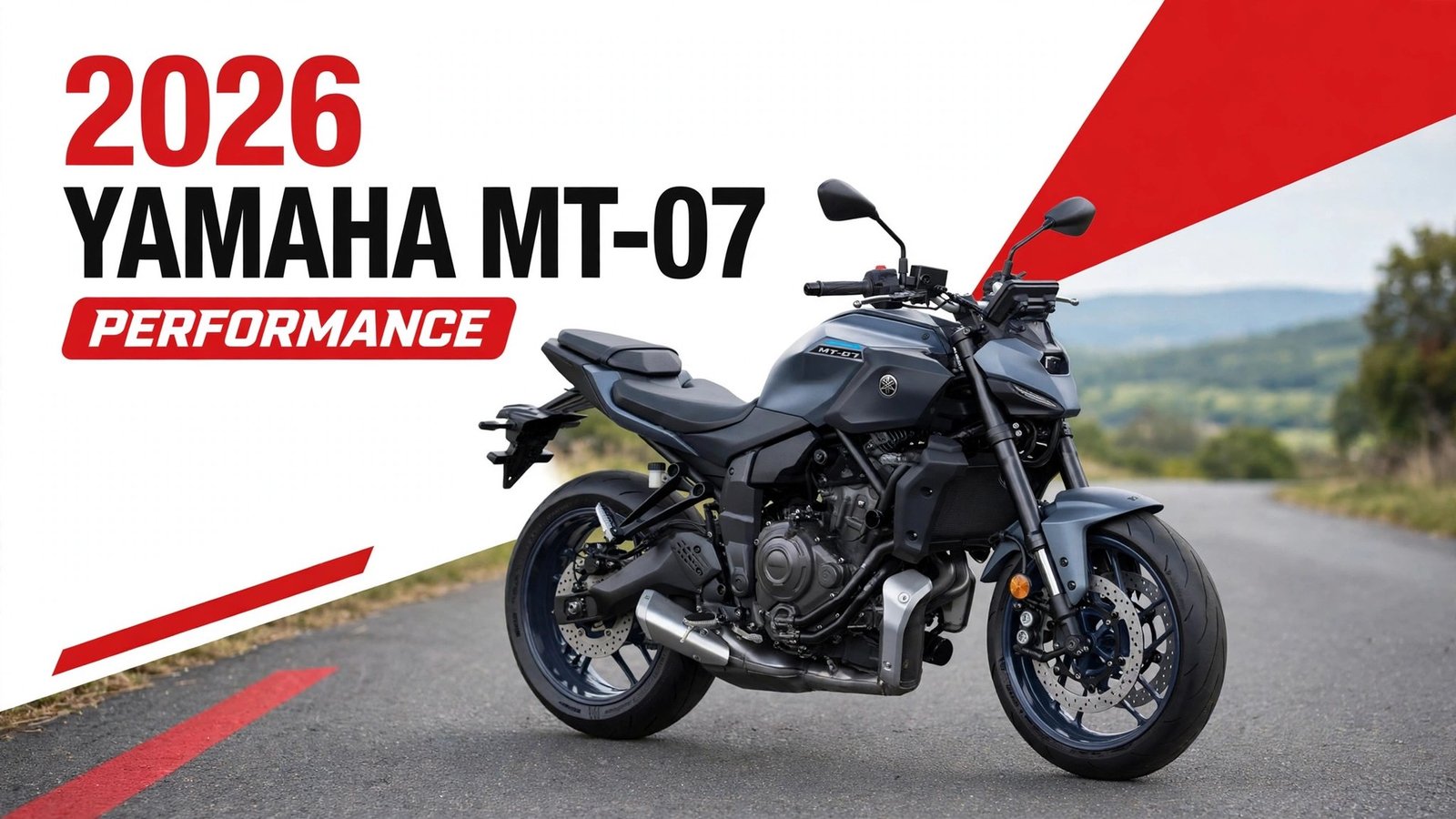
Yamaha MT-07 performance starts with a measured fact: on Motorcycle.com’s dyno, the 2025 standard bike made 65.1 rear-wheel horsepower at 8,500 rpm. That sits at the bottom of a narrow, honest range — independent tests across generations land between 65 and 68 rear-wheel horsepower — so Yamaha MT-07 performance is easy to describe without exaggeration: a light, torquey twin that feels faster than its headline numbers suggest.
The short version of Yamaha MT-07 performance is this: a 689cc CP2 twin with strong midrange, 403 lb wet on the 2025-on bike, real-world fuel economy of 45 to 47.7 mpg in US tests, and a top speed best described as an estimate of around 120 mph, because no verified US instrumented test of a stock bike was found. Below: the engine and dyno evidence, the top-speed question, real fuel economy, everyday riding, handling and brakes, and the rivals.
Yamaha MT-07 Engine Performance and Power Delivery
The engine is the reason Yamaha MT-07 performance has such a loyal following: the 689cc liquid-cooled CP2 parallel twin uses a 270-degree crankshaft, giving it an uneven firing interval and a V-twin-like pulse, with most usable thrust in the low-to-midrange, exactly where street riding happens.

Dyno Range 65 to 68 RWHP: Motorcycle.com 65.1 HP and Cycle World 67.02 HP
For judging Yamaha MT-07 performance, rear-wheel horsepower matters most, because it measures what actually reaches the road. Two named tests anchor the range, and they must not be merged into one figure, because they tested different model years on different dynos. Motorcycle.com’s 2025 MT-07 dyno test recorded 65.1 horsepower at 8,500 rpm and 46.3 lb-ft of torque at 6,300 rpm on the redesigned bike. Cycle World’s tested specifications for the 2021 bike recorded 67.02 horsepower at 8,720 rpm and 46.28 lb-ft of torque at 6,240 rpm, with a measured wet weight of 407 lb for that generation.
Other independent tests fall in the same band, which is why Yamaha MT-07 performance can be summarized as 65 to 68 rear-wheel horsepower: Rider Magazine’s 2021 road test recorded 67.9 horsepower at 8,600 rpm and 46.5 lb-ft at 6,400 rpm, and Jett Tuning’s 2021 test recorded 68 horsepower and 46.5 lb-ft. Against Yamaha’s factory claim of roughly 73 horsepower at the crankshaft, the gap of 6 to 8 horsepower is normal driveline loss, and peak torque arrives at just 6,300 to 6,400 rpm in these tests.
Keep the generations straight when comparing Yamaha MT-07 performance figures: the CP2 has stayed at 689cc since the FZ-07 arrived for 2015 — never an 847cc engine, and not the MT-09’s 890cc triple. Bore and stroke are 80.0 by 68.6 mm, compression is 11.5:1, and the 2025 bike’s new ECU and ride-by-wire replaced the old cable throttle. The MT-07 review covers the full model-year history.
| Dyno test | Bike tested | Rear-wheel power | Rear-wheel torque |
|---|---|---|---|
| Motorcycle.com | 2025 MT-07 | 65.1 hp at 8,500 rpm | 46.3 lb-ft at 6,300 rpm |
| Cycle World tested specs | 2021 MT-07 | 67.02 hp at 8,720 rpm | 46.28 lb-ft at 6,240 rpm |
| Rider Magazine road test | 2021 MT-07 | 67.9 hp at 8,600 rpm | 46.5 lb-ft at 6,400 rpm |
| Jett Tuning | 2021 MT-07 | 68 hp | 46.5 lb-ft |
| Yamaha factory claim | 2025 MT-07 (crankshaft) | About 73 hp at 8,750 rpm | About 49 lb-ft at 6,500 rpm |
Six-Speed Transmission, Assist and Slipper Clutch From 2025 and CP2 Delivery
Yamaha MT-07 performance depends as much on the gearbox as on the engine. The six-speed transmission drives the rear wheel by chain, and the 2025 redesign added an assist-and-slipper clutch, which lightens lever effort and helps prevent rear-wheel hop on hard downshifts. Earlier bikes used a conventional cable-actuated wet clutch, so the slipper function belongs strictly to the 2025-on generation in Yamaha MT-07 performance terms.
The 2025 bike also gained Yamaha Chip Controlled Throttle ride-by-wire, with Sport, Street and Custom modes and switchable traction control, operated through a 5-inch TFT display with Y-Connect and Garmin StreetCross navigation. There is no Rain mode, and the up-and-down quickshifter is an accessory, not standard equipment — neither should be presented as standard fitment in Yamaha MT-07 performance claims. The payoff is simple: short-shift at 6,000 rpm and the bike still pulls hard, thanks to a flat torque curve that peaks early.
Yamaha MT-07 Top Speed and Acceleration
Top speed and acceleration are the first questions about Yamaha MT-07 performance, and for the stock bike they are also the questions with the least reliable answers online. This section states what is verified, what is not, and why the most quoted figure should not be trusted as a stock number.

Top Speed Around 120 to 130 MPH: Bennetts 120 MPH Estimate Explained
Yamaha publishes no top speed for the MT-07. The most careful published figure for Yamaha MT-07 performance comes from Bennetts’ 2021 review, whose specification table lists top speed as 120 mph and labels it, in its own words, an estimate. That honesty matters: 120 mph is a reasoned estimate for a stock bike, not a GPS-verified test result, and this article presents it exactly that way.
The video below is CycleCruza’s highway test of his own MT-07, showing Yamaha MT-07 performance in strong wind rather than a timed top-speed run — watch it as a riding impression, not a measured test.
Why MotoStatz 133.6 MPH Came From a Modified Bike and No US Test Was Found
Here is where most online coverage of Yamaha MT-07 performance goes wrong. The figure of 133.6 mph comes from MotoStatz GPS testing, and secondary reporting of that test confirms the bike was fitted with a decat exhaust and an ECU flash. A decat exhaust and a remap change the bike’s output, so 133.6 mph is a modified-bike figure and must never be presented as the stock MT-07’s top speed. The MotoStatz MT-07 acceleration page itself reports the 133.6 mph figure, and this article keeps it labeled as a modified-bike result.
No verified US instrumented test of a stock MT-07’s top speed or 0-60 mph time was found, so this article quotes neither as a stock result. The honest summary is that Yamaha MT-07 performance at the top end is strong for the class, that 120 mph is the best labeled estimate available, and that anyone quoting 133.6 mph for a stock bike is quoting a modified machine.
Yamaha MT-07 Mileage and Fuel Economy
Fuel economy turns Yamaha MT-07 performance into a practical question: with a 3.7-gallon tank, every mpg counts toward real range, and the MT-07’s tank is 14 litres, which converts to 3.7 US gallons — verified from MT-07 sources directly, not borrowed from any other model.

Official Yamaha 57 MPG Estimate and Why It Is Optimistic
Yamaha’s official figure for the 2025 MT-07 is 57 mpg, and Yamaha’s own listing marks that figure as estimated. On the 3.7-gallon tank, 57 mpg would theoretically cover about 211 miles, but nobody runs a tank dry, and official estimates come from controlled conditions, so that theoretical range is not a planning number for Yamaha MT-07 performance. A UK test points the same way: Bennetts’ 2021 review recorded 57 mpg tested, but that is an imperial-gallon figure, which converts to roughly 47.5 US mpg — right in line with the US test results below, not above them.
Judge Yamaha MT-07 performance on tested economy, not the official estimate.
Real-World US Tests 45 to 47.7 MPG and 165 to 185 Mile Range
Motorcycle.com’s 2025 MT-07 test recorded an average of 47.7 mpg, the best real-world US reference for Yamaha MT-07 performance on the current bike. At that figure, the 3.7-gallon tank gives about 177 miles of range. Rider Magazine’s 2021 MT-07 road test recorded 45 mpg with an estimated range of 165 miles, the lower end of the real-world band for Yamaha MT-07 performance.
Riding style moves the number more than any other factor: gentle riding pushes economy toward the official figure, while aggressive riding pulls Yamaha MT-07 performance below 45 mpg. Plan a fuel stop every 165 to 180 miles. For servicing costs, see the service intervals in the reliability guide.
| Scenario | Fuel economy | Range on 3.7 gallons |
|---|---|---|
| Official Yamaha estimate (2025) | 57 mpg (estimated) | About 211 miles (theoretical) |
| Motorcycle.com test average (2025 bike) | 47.7 mpg | About 177 miles |
| Rider Magazine test (2021 bike) | 45 mpg | About 165 miles (as estimated by Rider) |
| Sensible planning number | 45 to 47.7 mpg | Fuel stop every 165 to 180 miles |
Yamaha MT-07 Real-World Riding Performance
Spec sheets tell half the Yamaha MT-07 performance story; in daily use it is about how the bike behaves in traffic and on the freeway, where the CP2’s character matters more than any single figure.

City Riding, Traffic Performance and Everyday Acceleration
Around town, Yamaha MT-07 performance is surprisingly easy to live with: the 2025 bike’s ride-by-wire throttle in Street mode is smooth rather than snappy, the 403 lb wet weight and 31.7-inch seat make it manageable at stoplights, and the upright handlebar gives good visibility over traffic. The CP2’s low-end torque means a gap in traffic is handled with a simple roll of the wrist in a higher gear.
Everyday acceleration is where the MT-07 earns its reputation: the twin pulls cleanly from low revs, so Yamaha MT-07 performance feels fast without being frantic. The city drawbacks for Yamaha MT-07 performance are heat in slow summer traffic and a small tank that means frequent fuel stops; vibration above 7,000 rpm is noticeable but not harsh.
Highway Riding, Overtaking Ability and Long-Distance Limitations
On the highway, Yamaha MT-07 performance shows both its strength and its limit: overtaking is effortless because the engine sits in the meat of its torque curve, so passing needs no downshift, and the bike is stable at speed. A fuller picture of prices and alternatives is in the used prices and buying guide.
The limitations are shared by every naked bike: no fairing means tiring wind above 75 mph, the 3.7-gallon tank caps highway range at roughly 165 miles, the 2025 bike has no cruise control as a US standard feature, and the firm seat gets tiring past about 90 minutes. None of that changes the core verdict: Yamaha MT-07 performance is strongest where most owners ride — back roads, city streets, and short highway hops.
Yamaha MT-07 Handling, Braking and Stability
If the engine is the reason people buy into Yamaha MT-07 performance, the chassis is the reason they keep it: a light steel frame, a 2025 inverted fork, SpinForged wheels, and tires updated for the current generation.

Inverted KYB Fork From 2025, SpinForged Wheels, Tires and Cornering
Yamaha MT-07 performance hardware starts with a 41mm KYB inverted fork on the 2025-on bike, with 5.1 inches of travel — note that the 2025 fork is non-adjustable, unlike the fully adjustable forks on larger nakeds — plus a KYB single rear shock adjustable for preload and rebound damping with 5.1 inches of travel. Pre-2025 bikes used a conventional right-side-up 41mm KYB fork, so the inverted fork belongs strictly to the 2025-on generation.
The 2025 bike also gained SpinForged wheels, which cut unsprung weight and sharpen steering, and Dunlop Sportmax Q5A tires in 120/70ZR17 front and 180/55ZR17 rear sizes. With a 54.9-inch wheelbase, 24.3-degree rake, and 3.7-inch trail, the MT-07 changes direction quickly without feeling nervous. Yamaha MT-07 performance in corners is among the best in the class, helped by the light weight: 403 lb wet on the 2025 bike against 406 lb claimed for 2021–2024.
Dual 298mm Discs, Radial Calipers and ABS: No IMU or Cornering ABS
Braking is a point where buyers often get confused about Yamaha MT-07 performance, so the facts deserve stating clearly: the 2025 standard bike uses dual 298mm front discs with four-piston radial-mount calipers, a single 245mm rear disc, and standard ABS. The ABS is conventional, non-switchable ABS — and this is the critical distinction: the MT-07 has no IMU and no cornering ABS, so its traction control and ABS are not lean-sensitive.
What the MT-07 does have from 2025 is switchable traction control plus Sport, Street and Custom riding modes through ride-by-wire. On track days, pad choice and brake fluid matter more than any electronics label. That honesty about hardware is part of what makes Yamaha MT-07 performance easy to trust: no lean-sensitive aids are claimed, because none are fitted.
| Chassis / brake item | 2025-on MT-07 | 2021–2024 MT-07 |
|---|---|---|
| Front fork | 41mm KYB inverted, non-adjustable, 5.1-in travel | 41mm KYB conventional, 5.1-in travel |
| Rear shock | KYB single shock, preload + rebound, 5.1-in travel | KYB single shock, preload + rebound, 5.1-in travel |
| Front brakes | Dual 298mm discs, radial 4-piston calipers, ABS | Dual 298mm discs, 4-piston calipers, ABS |
| Wheels | SpinForged wheels | Cast aluminum wheels |
| Tires | Dunlop Sportmax Q5A, 120/70ZR17 + 180/55ZR17 | 120/70ZR17 + 180/55ZR17 (Michelin Road 5 on 2021) |
| Electronics | YCC-T ride-by-wire, modes, switchable TCS, TFT — no IMU | Cable throttle, TFT from 2023, no modes or TCS — no IMU |
| Wet weight / seat / wheelbase | 403 lb / 31.7 in / 54.9 in | 406 lb claimed / 31.7 in / 55.1 in |
Yamaha MT-07 Performance Compared With Other Middleweight Naked Bikes
No bike exists in a vacuum, and Yamaha MT-07 performance only makes sense in context. The three most relevant rivals are the Kawasaki Z650, the Suzuki SV650, and the Triumph Trident 660, and the comparison below uses one consistent source for all four bikes.

Yamaha MT-07 vs Kawasaki Z650, Suzuki SV650 and Triumph Trident 660
Those Yamaha MT-07 performance comparison figures come from Motorcycle.com’s 2021 middleweight naked spec-sheet shootout, which lists all four bikes on the same basis: the Z650’s 649cc twin at 61.4 horsepower and 43.5 lb-ft, the SV650’s 645cc V-twin at 70.7 horsepower and 44.5 lb-ft, the Trident 660’s 660cc triple at 72.3 horsepower and 42.8 lb-ft, and the MT-07’s 689cc twin at 70.0 horsepower and 48.7 lb-ft. On that shared basis, Yamaha MT-07 performance wins where it matters most for street riding: torque, the CP2’s 48.7 lb-ft being the highest of the four and arriving at just 6,300 rpm.
Against the Z650, the MT-07 offers more torque and a lighter, more playful chassis, though the Kawasaki is often cheaper. Against the SV650, the MT-07 offers a more modern package and stronger midrange, while the Suzuki counters with V-twin character and a lower seat. Against the Trident 660, the MT-07 gives up peak horsepower but answers with more torque lower down and a lower price: $8,095 against $7,699 in the 2021 shootout, and $8,599 for the current bike. The MT-09 performance page covers the bigger triple for riders who want more power, but that bike costs $10,899 and weighs more — a different class of commitment.
Is the Yamaha MT-07 Suitable for Beginners and Daily Commuting?
The short answer is yes to both, with one qualification. For beginners stepping up from a small bike, Yamaha MT-07 performance is genuinely manageable: predictable delivery, low weight, a 31.7-inch seat, and the 2025 bike’s Street mode and switchable traction control as a safety net. A rider stepping up from a 300 or 400 will find it a big jump in torque and should respect it, especially in Sport mode.
For daily commuting, Yamaha MT-07 performance makes the MT-07 one of the easiest fast bikes to live with: light, narrow, comfortable for an hour or two, economical at 45 to 47.7 mpg in real US tests, and equipped from 2025 onward with a clear TFT display and switchable traction control. Its weaknesses are the small tank, the lack of wind protection, and no cruise control as a US standard feature. The full MT-07 review covers comfort and model-year differences in more depth.
Yamaha MT-07 Performance FAQs
Direct answers about Yamaha MT-07 performance: power, top speed, fuel economy, brakes, suspension, and rivals.
How much horsepower does the Yamaha MT-07 make?
For Yamaha MT-07 performance, Yamaha claims about 73 horsepower at the crankshaft, while independent dyno tests record 65 to 68 rear-wheel horsepower depending on the model year and dyno: 65.1 on Motorcycle.com’s 2025 bike, 67.02 in Cycle World’s 2021 test figures, and 67.9 in Rider Magazine’s 2021 road test.
What is the top speed of the Yamaha MT-07?
There is no verified top speed for a stock MT-07: Yamaha publishes none, and no verified US instrumented stock test was found. Bennetts’ 2021 review lists 120 mph and labels it an estimate, which is the best labeled figure available for Yamaha MT-07 performance.
Is the MotoStatz 133.6 mph figure the stock MT-07 top speed?
No. The 133.6 mph MotoStatz figure came from a bike fitted with a decat exhaust and an ECU flash, so it is a modified-bike result, not a stock figure, and it must never be quoted as Yamaha MT-07 performance for a showroom bike.
What is the real-world MPG of the Yamaha MT-07?
Motorcycle.com’s 2025 test averaged 47.7 mpg and Rider Magazine’s 2021 test recorded 45 mpg, against Yamaha’s official estimate of 57 mpg. Gentle riding moves economy toward the official figure, while aggressive riding pulls Yamaha MT-07 performance below 45 mpg.
Does the MT-07 have an inverted fork?
From 2025, yes: the MT-07 carries a 41mm KYB inverted fork, though it is non-adjustable. Earlier bikes used a conventional right-side-up 41mm KYB fork, so the inverted fork is a 2025-on feature in Yamaha MT-07 performance terms.
Does the MT-07 have cornering ABS or an IMU?
No. The MT-07 has conventional non-switchable ABS and, from 2025, switchable traction control and riding modes, but no IMU and no cornering ABS. Its rider aids are not lean-sensitive, and Yamaha MT-07 performance should never be described as if they were.
Does the MT-07 have cruise control?
No, not as a US standard feature. Cruise control is not listed for the US MT-07, and buyers should not pay for it as if it were standard Yamaha MT-07 performance equipment.
How does the MT-07 compare with the MT-09?
The MT-07 is a 689cc twin making 65 to 68 rear-wheel horsepower, while the MT-09 is an 890cc triple with far more power and lean-sensitive electronics. Yamaha MT-07 performance is about light, torquey fun at $8,599, while the MT-09 at $10,899 is the faster, heavier, more complex upgrade.