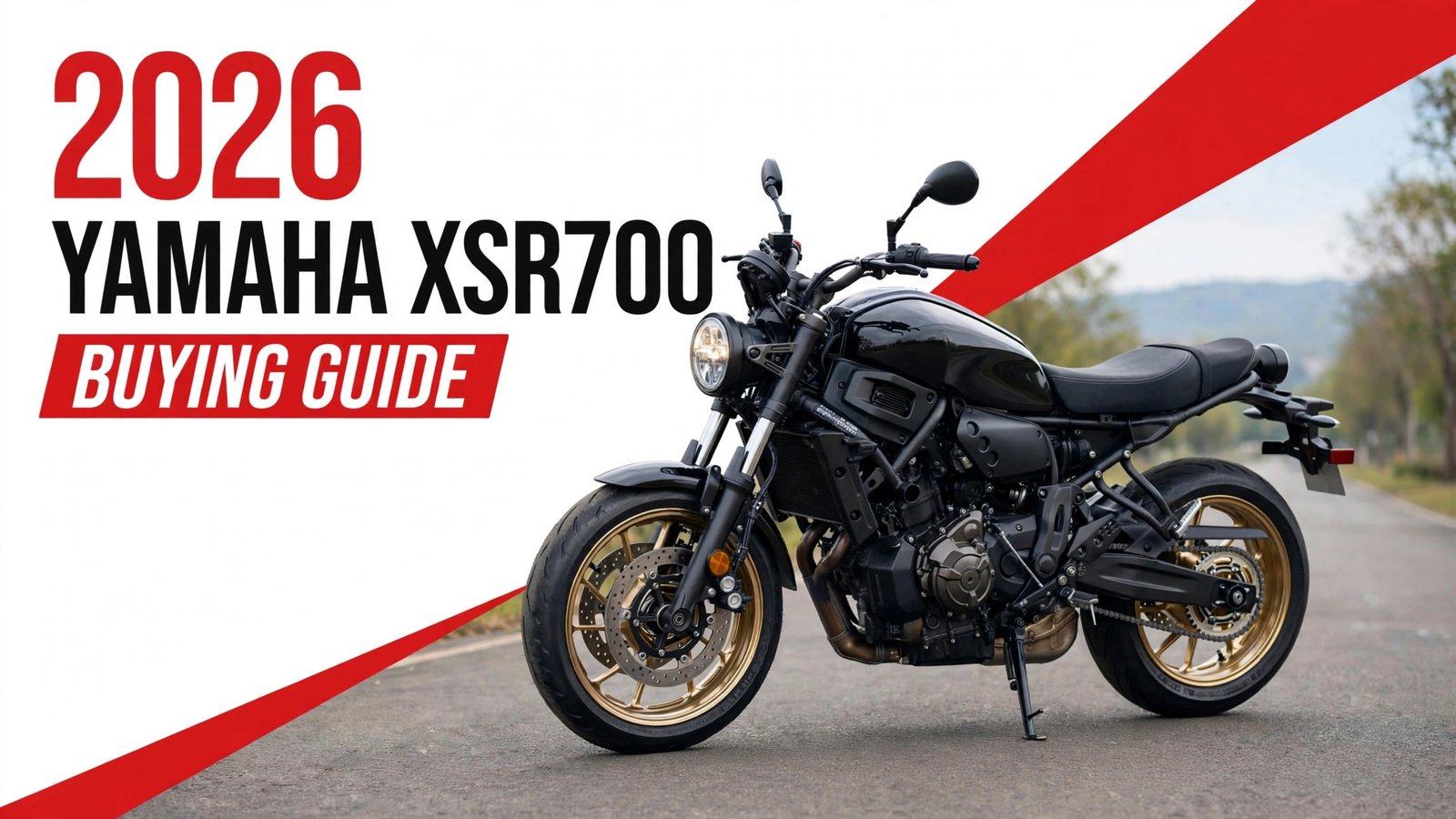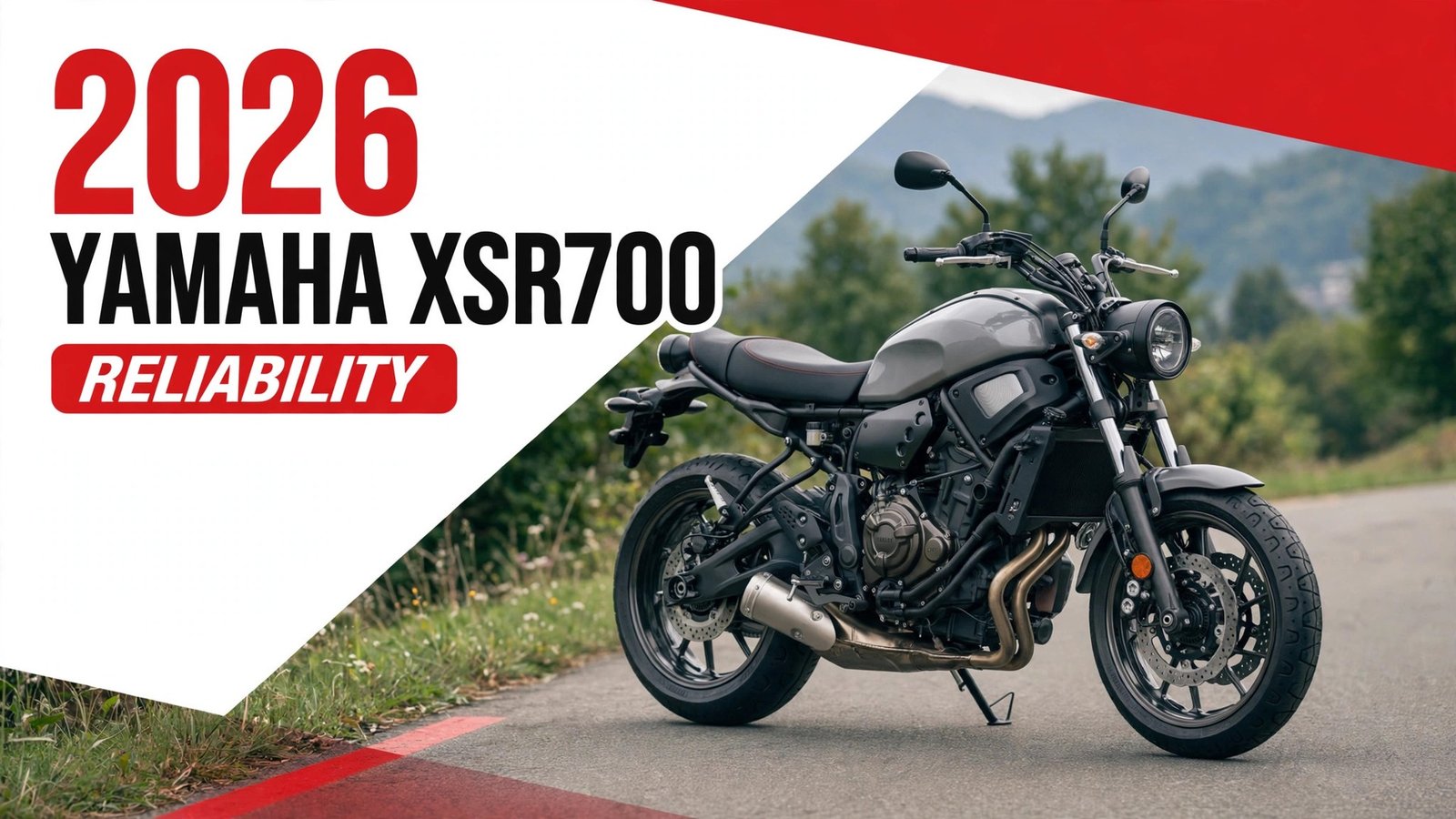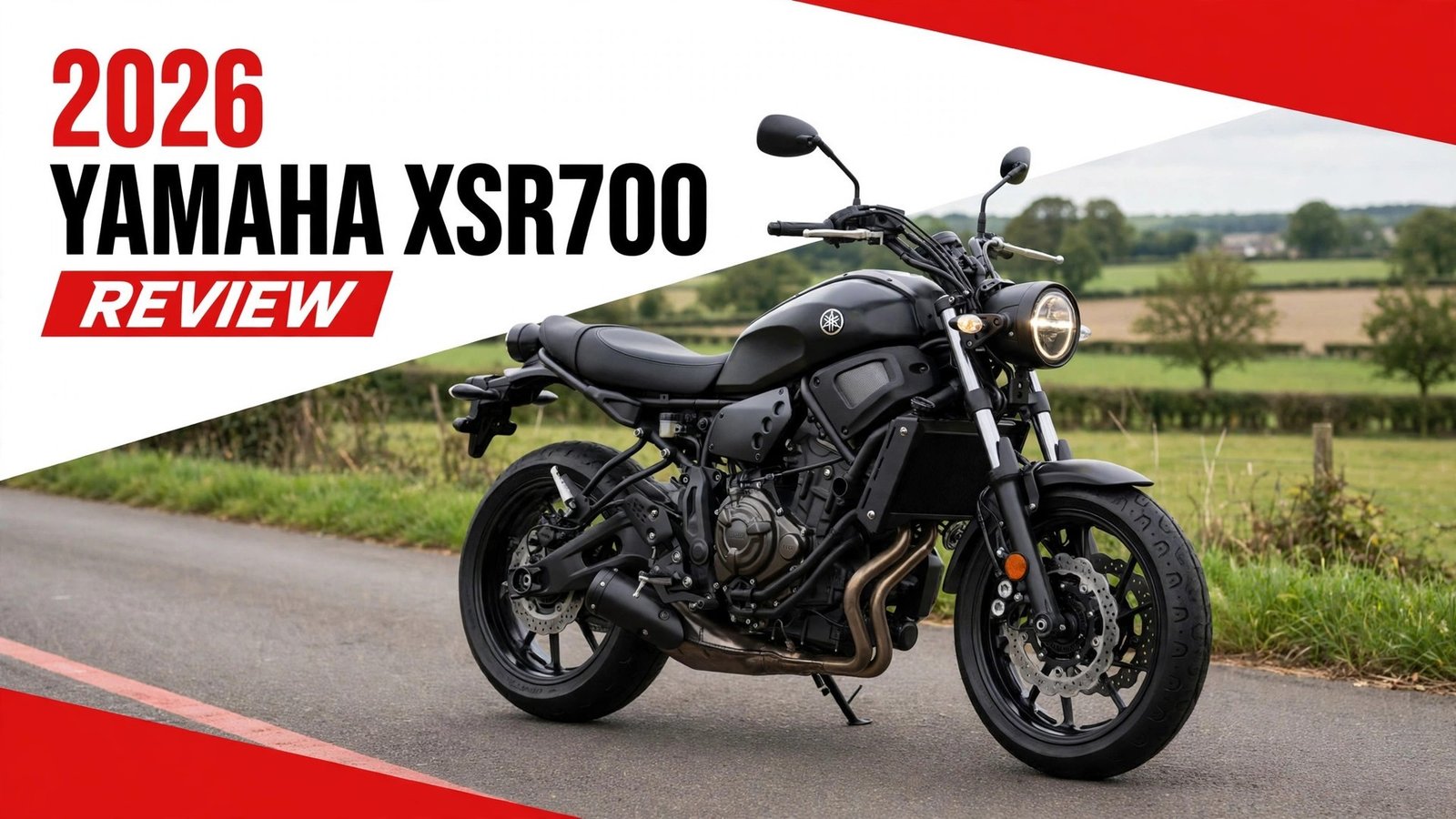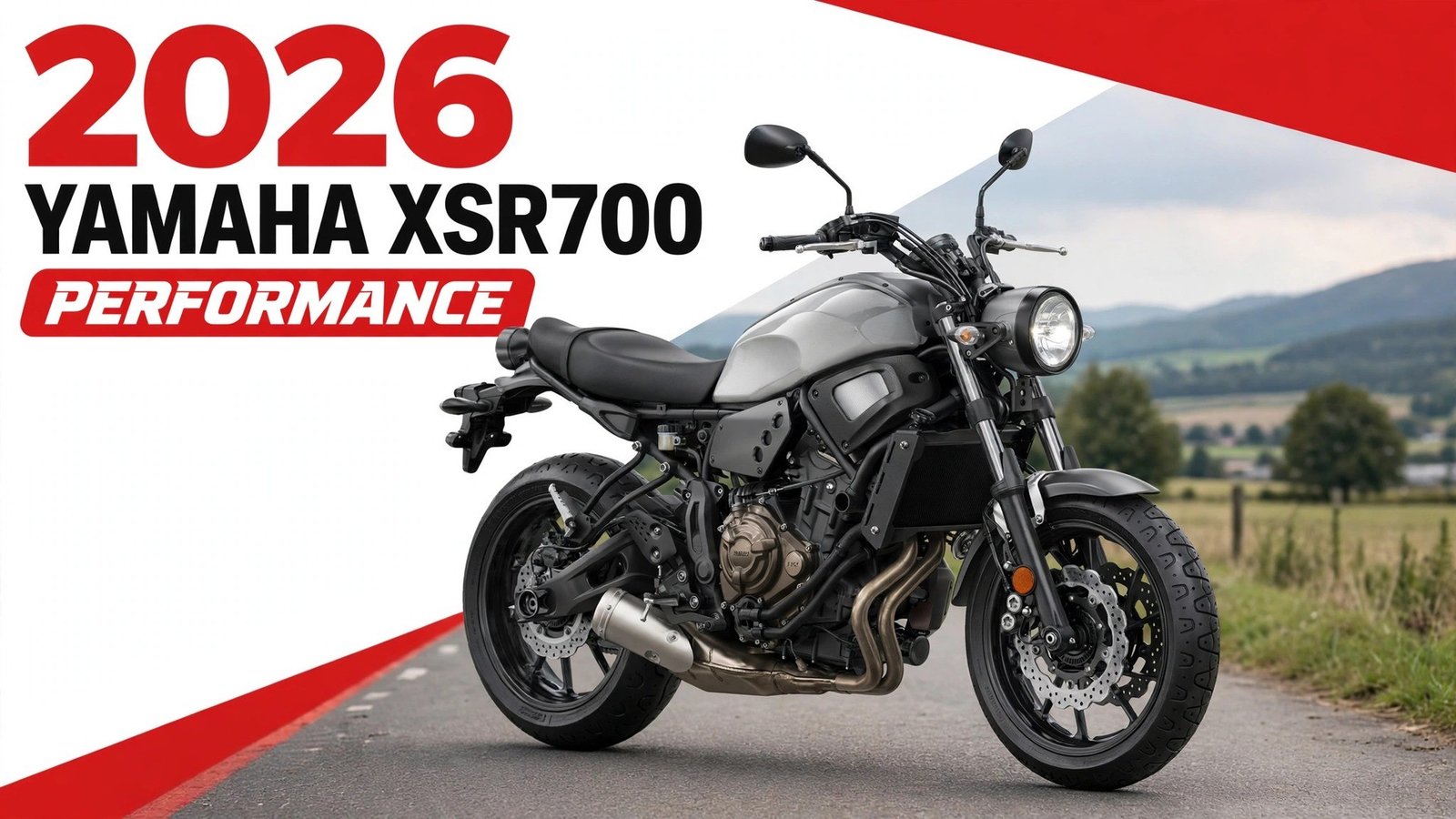
The Yamaha XSR700 performance story is simple: a 689cc twin with modest peak numbers that delivers its power exactly where road riding needs it. This Yamaha XSR700 performance guide separates tested figures from claimed ones — a Cycle World dyno reading of 67.91 rear-wheel horsepower, a MotoStatz GPS 0–60 mph run of 3.85 seconds, and a top speed that depends heavily on how far the rider tucks. Every Yamaha XSR700 performance figure below comes from XSR700 tests, never from the MT-07, with test conditions stated where they matter.
Yamaha XSR700 Engine Performance and Power Delivery
Yamaha XSR700 performance begins with the CP2 twin, the 689cc liquid-cooled, DOHC inline twin shared with the MT-07. The retro bike’s tuning and roomier position give Yamaha XSR700 performance its own feel.
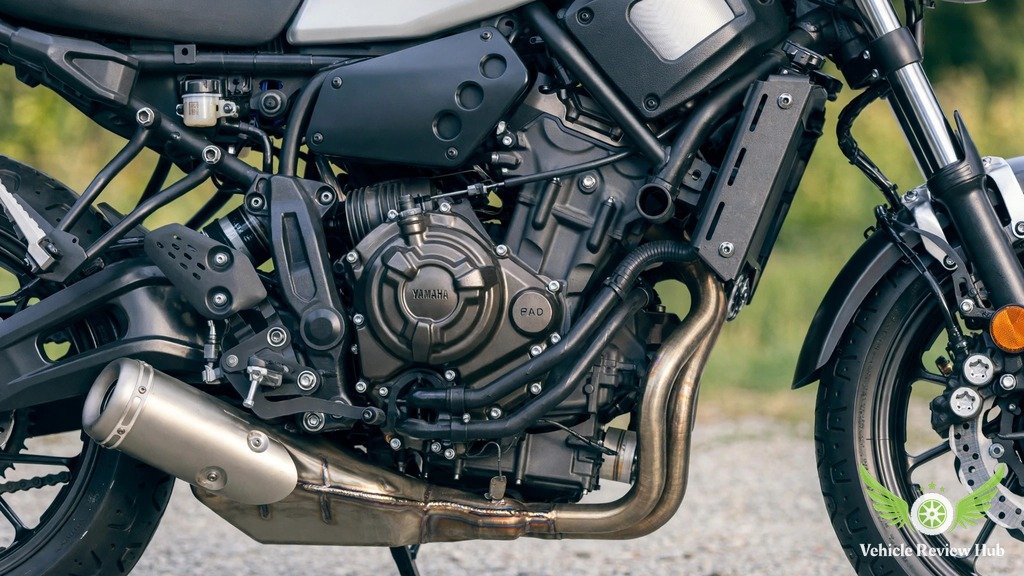
Cycle World Dyno 67.91 HP at 8,790 RPM for a Stock 2018 US Bike
The benchmark for Yamaha XSR700 performance power is Cycle World’s dyno test of a stock 2018 US bike. Running fourth-gear pulls, it recorded 67.91 horsepower at 8,790 rpm and 47.47 lb-ft at 6,490 rpm, documented in the Cycle World dyno test. Yamaha claims 73.8 horsepower at 9,000 rpm and 50.2 lb-ft at 6,500 rpm, but those are crankshaft claims. The roughly six-horsepower gap is normal driveline loss for Yamaha XSR700 performance, not a weak engine. A second dyno run tells the same story: MotoStatz recorded 67 horsepower at 8,500 rpm and 47 lb-ft at 6,500 rpm on a 2024 bike — but that bike wore a Mivv full exhaust with the baffle fitted and no tune, so its numbers are not a stock-bike result. Its 270-degree crankshaft gives the twin a torquey, V-twin-like pulse. Peak torque arrives at just 6,500 rpm and the engine pulls hardest between 3,500 and 8,500 rpm — why Yamaha XSR700 performance feels stronger in everyday riding than the peak figure suggests.
| Source | Power | Torque | Measures |
|---|---|---|---|
| Cycle World dyno, 2018 stock | 67.91 hp @ 8,790 rpm | 47.47 lb-ft @ 6,490 rpm | Rear wheel, 4th gear |
| MotoStatz dyno, 2024 Mivv exhaust | 67 hp @ 8,500 rpm | 47 lb-ft @ 6,500 rpm | Rear wheel, baffle in, no tune |
| Yamaha claimed (US) | 73.8 hp @ 9,000 rpm | 50.2 lb-ft @ 6,500 rpm | Crankshaft claim |
Six-Speed Transmission, Gear Shifting and CP2 Power Delivery
Yamaha XSR700 performance reaches the rear wheel through a constant-mesh six-speed gearbox with a multiplate wet clutch and chain final drive. Two things about this gearbox matter. First, no assist-and-slipper clutch on any XSR700 year — the MT-07 gained one in 2025, but the XSR700 never did, so downshifts demand care and the rear wheel can hop if the rider is clumsy. Second, no quickshifter — every shift is manual. Short shifting pays: MotoStatz found it quickest around 9,000–9,500 rpm, and revving past 10,000 rpm costs time. First gear is short and does not reach 60 mph, so a 0–60 run needs a gear change. At 5,000 rpm, Yamaha XSR700 performance gearing gives 25 mph in first, 33.6 in second, 43.7 in third, 54.8 in fourth, 65.4 in fifth, and 73.9 in sixth — a tall sixth gear that keeps cruising calm and makes most overtakes possible without a downshift. That gearing spread is central to Yamaha XSR700 performance on the road. The XSR700 review covers generations and equipment in full.
Yamaha XSR700 Top Speed and Acceleration
Top speed and acceleration are where Yamaha XSR700 performance claims get most confused online, because aggregator sites repeat unverified figures and MT-07 numbers get copied across to the retro bike. This section uses only XSR700 tests: one GPS acceleration and top-speed test, plus the Cycle World dyno numbers. No second instrumented American acceleration test exists — Cycle World’s tested table lists 0–60, quarter-mile, and braking as not available for the XSR700 — so the MotoStatz Yamaha XSR700 performance results below carry extra weight, and their conditions are stated plainly.
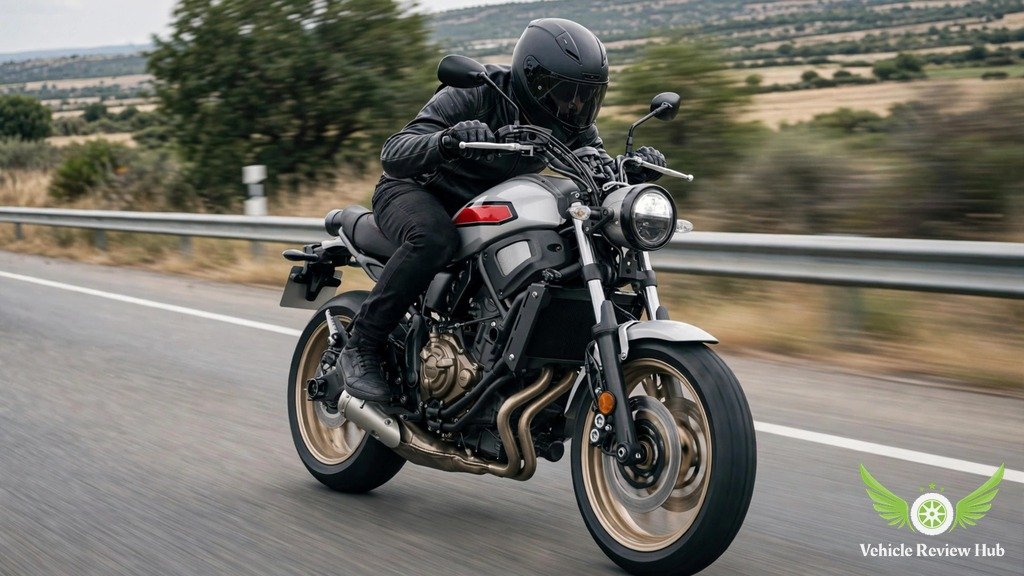
MotoStatz GPS 0-60 in 3.85 Seconds and Quarter Mile in 12.22 Seconds
MotoStatz GPS-tested a 2024 XSR700: best 0–60 mph 3.85 seconds, 0–100 km/h in 4 seconds flat, quarter mile 12.22 seconds at 107 mph, and 0–100 mph in 9.75 seconds, documented in the MotoStatz straight-line test. Those Yamaha XSR700 performance headline numbers need their context. Most runs landed around 4 seconds, not 3.85, because the test bike’s gearbox repeatedly refused second gear, and the same trouble spoiled quarter-mile runs between third and fourth and fourth and fifth. Launching is a balancing act: an aggressive clutch dump gets the best times but often lifts the front wheel. Launching in second gear took 4.44 seconds. The honest Yamaha XSR700 performance summary: a sub-4-second best on a good launch, typical runs just over 4 seconds, on a test bike whose gearbox fought the tester. The Yamaha XSR700 performance quarter-mile trap speed of 107 mph is the more repeatable figure.
| MotoStatz GPS result (2024 bike) | Time / speed | Notes |
|---|---|---|
| 0–60 mph (best) | 3.85 s | Best run; most runs around 4 s |
| 0–60 mph (2nd-gear launch) | 4.44 s | Less wheelie-prone, slower |
| Quarter mile | 12.22 s @ 107 mph | Shifting trouble on several runs |
| 0–100 mph | 9.75 s | Same test session |
Top Speed 127 MPH in Extreme Tuck and 115 to 120 MPH Realistic Range
MotoStatz’s top-speed finding is the most misquoted Yamaha XSR700 performance number, so here it is exactly. After multiple runs in both directions, holding the bike flat out for nearly 2 km, the tester reached 127 mph — achieved, in his own words, as flat as possible with one arm tucked behind his back. A realistic 115–120 mph is achievable without an exaggerated tuck, and the bike reaches top speed in fifth gear, with no need for sixth. The limits are aerodynamics and ergonomics: less wind protection than the MT-07, wide handlebars that catch the wind, and little room to tuck knees or elbows. Bennetts lists 130 mph, but that is a Yamaha XSR700 performance estimate, not a tested result. Do not confuse these with MT-07 test numbers online — the 127 mph tuck figure and 115–120 mph realistic range are the XSR700’s own GPS results. The video below shows Yamaha XSR700 performance acceleration in a real roll-on test against a much larger Speed Triple:
Note: this is a roll-on comparison, not a GPS-timed run — the timed Yamaha XSR700 performance figures here come from the MotoStatz and Cycle World tests above.
Yamaha XSR700 Mileage and Fuel Economy
Fuel economy is the quiet strength of Yamaha XSR700 performance: the small 3.7-gallon tank means every mpg figure translates directly into stops.
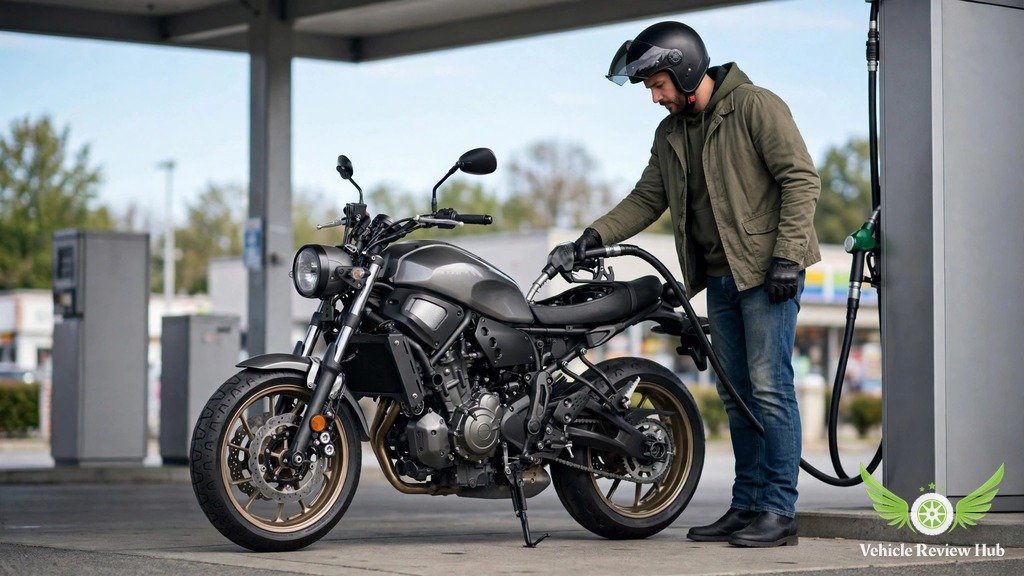
Official Yamaha 58 MPG Estimate and 3.7-Gallon Tank
Yamaha lists the 2026 XSR700 at 58 mpg estimated with a 3.7-gallon tank, according to Yamaha’s official specifications. At that Yamaha XSR700 performance figure, a full tank covers about 215 miles in theory. But that is an estimate, not a road-test measurement — and Yamaha XSR700 performance budgeting should start from tested figures. Plan stops around 160–190 miles rather than the 215-mile headline, since the low-fuel light arrives well before the tank is dry.
Rider Tested 51.7 MPG and Around 191 Mile Real-World Range
Rider Magazine’s first-ride test of the 2018 bike is the most useful Yamaha XSR700 performance economy test. Riding hard for about 400 miles — city, mountain roads, then interstate — the test bike averaged 51.7 mpg on its display, giving a Yamaha XSR700 performance range of about 191 miles from the 3.7-gallon tank, as reported in Rider’s 2018 first-ride review. Rider’s long-term bike averaged 57.2 mpg in gentler use; another test recorded 58.8 mpg with the light at 161 miles. Ride gently and Yamaha XSR700 performance nearly matches Yamaha’s claim; ride hard and it still returns low-50s mpg — strong for a 410 lb twin making nearly 68 rear-wheel horsepower. A UK test reported 47 mpg imperial — about 39 mpg US — labeled as such, not mixed with American numbers.
| Figure | MPG | Range from 3.7 gal | Notes |
|---|---|---|---|
| Yamaha claimed / estimated | 58 mpg (US, est.) | About 215 miles | Estimate, not a test |
| Rider first ride, hard use | 51.7 mpg (US) | About 191 miles | 400 miles, hard riding |
| Rider long-term average | 57.2 mpg (US) | About 212 miles | Gentler long-term use |
| UK test (imperial gallons) | 47 mpg imperial (≈39 US) | About 145 miles | UK test; gallon labeled |
Yamaha XSR700 Real-World Riding Performance
Dyno sheets and quarter-mile times tell only part of the Yamaha XSR700 performance story, built in traffic and on back roads, where midrange torque and light weight matter more than peak horsepower.
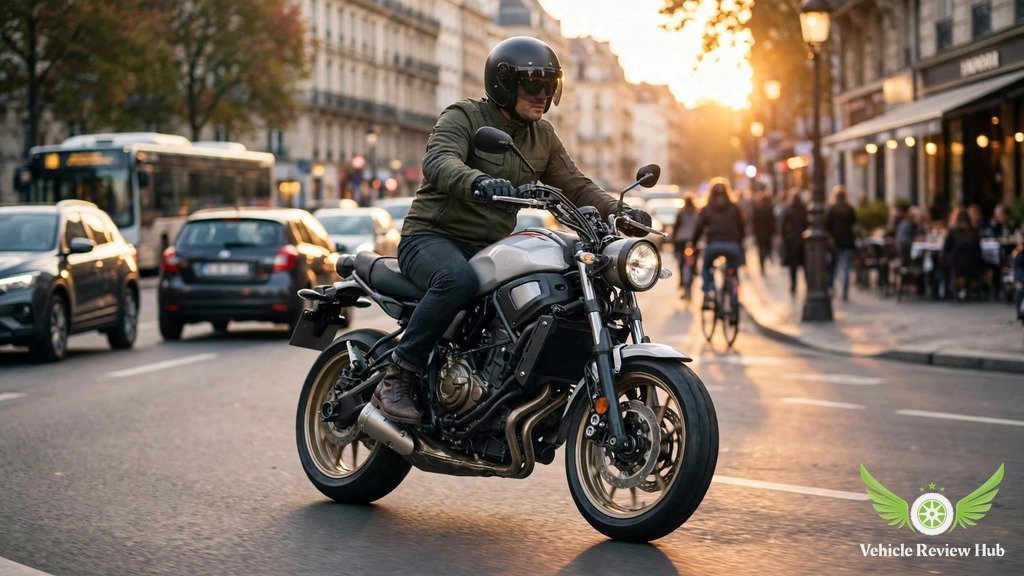
City Riding, Traffic Performance and Everyday Acceleration
In town, Yamaha XSR700 performance is about instant response rather than outright speed. Useful torque from low revs and upright, roomy ergonomics give a clear view over traffic. At 410 lb wet, filtering and stop-start riding are easy, and instant pull from 3,500 rpm means rarely dropping a gear to leave a light. For Yamaha XSR700 performance, the absence of traction control matters here: sharp initial response can spin or step out on wet paint, gravel, or manhole covers, with no safety net. New riders should budget their first weeks for throttle discipline. The XSR700 reliability and maintenance guide covers service intervals and inspection points.
Highway Riding, Overtaking Ability and Long-Distance Limitations
On the highway, Yamaha XSR700 performance is comfortable to about 75 mph and tiring beyond it — a limit set by wind, not power. The tall sixth gear keeps revs low at cruising speeds, and overtaking at 60–70 mph usually needs no downshift — rolling on in sixth gives a strong surge. Above 80 mph, with no fairing and a small round headlight, the rider takes the full wind blast, and wide handlebars make tucking hard. Rider’s long-term testers called it a stellar commuter — “just keep it under 75 mph for optimum comfort.” Long-distance riding is limited more by tank and wind than by the engine. That wind-limited character defines Yamaha XSR700 performance on long trips.
Yamaha XSR700 Handling, Braking and Stability
Handling is where Yamaha XSR700 performance most clearly differs from its MT-07 sibling: a conventional front fork, simpler chassis setup, and taller, roomier position trade a little outright agility for stability and comfort.
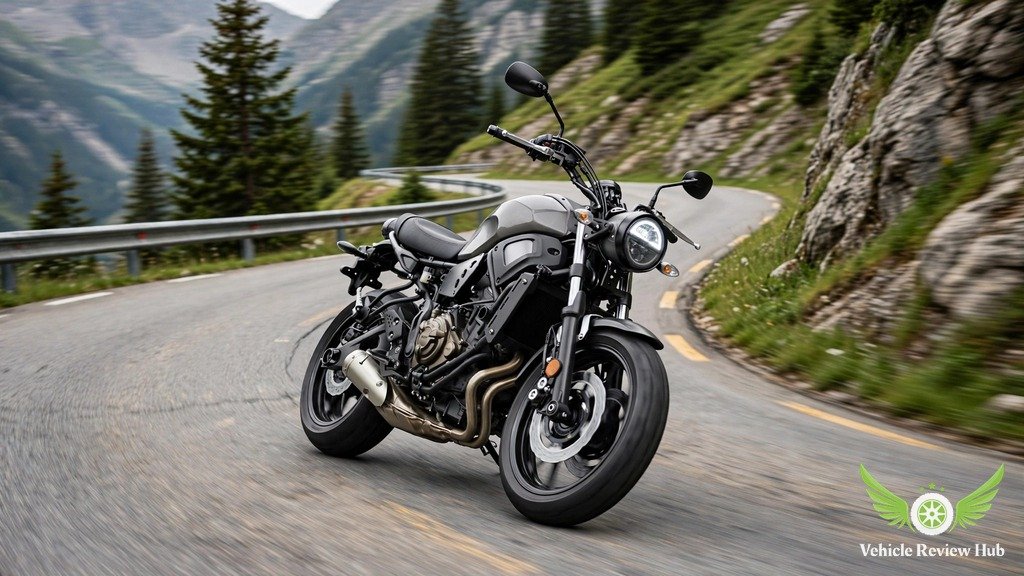
Conventional 41mm Fork, Chassis, Michelin Road 5 Tires and Cornering
Every US XSR700 uses a conventional, non-inverted 41mm fork and a preload-adjustable rear shock, each with 5.1 inches of travel. The MT-07’s 2025 inverted 41mm KYB fork never transferred here, and rear preload is the only suspension setting. Yamaha XSR700 performance handling starts with a diamond-type steel frame with the engine as a stressed member, a 55.3-inch wheelbase, and 25-degree rake with 3.5 inches of trail — neutral, stable steering. Tires changed with the 2022 update: Pirelli Phantom SportComp on 2018–2021 bikes, Michelin Road 5 on 2022-on bikes (120/70ZR17 front, 180/55ZR17 rear, 33/36 psi cold). At 410 lb wet with a 32.9-inch seat, cornering is predictable: it tips in steadily and holds a line without fuss. The MT-07 review explains the sibling’s more aggressive chassis setup.
Front Discs 282mm Then 298mm From 2022 and ABS Features
Braking is the one Yamaha XSR700 performance area where the factory’s own documentation disagrees with itself, and this guide states the discrepancy plainly. The 2018–2021 bikes used dual 282mm front discs with four-piston Advics calipers and a 245mm rear disc. For 2022, Yamaha’s announcement and Cycle World say the front discs grew to 298mm, alongside the LED headlight, revised fork, and Road 5 tires — yet Yamaha’s US tables, including the 2026 page, still print 282mm. This guide follows the 2022 announcement (282mm, then 298mm from 2022); buyers should measure the discs on the bike itself. Not in dispute: ABS is conventional only — no cornering ABS, no IMU, no traction control, no ride modes on any US year — and the Cycle World XSR700 overview confirms the 2022 equipment changes. Cycle World praised the brakes’ stopping power while noting lever feel could be better under hard braking.
Yamaha XSR700 Performance Compared With Other Retro Naked Bikes
Yamaha XSR700 performance only makes full sense against its rivals: the retro middleweight class is tightly bunched on price and power, and the two closest comparisons are the Kawasaki Z650RS and the Suzuki SV650, both sold in the USA.
Yamaha XSR700 vs Kawasaki Z650RS and Suzuki SV650
The XSR700 is the lightest at 410 lb wet, against 412.3 lb for the Z650RS and 437 lb for the SV650, and sits between them on price at $8,599 — cheaper than the Z650RS at $8,999, dearer than the SV650 at $8,149. On power, the Yamaha’s tested 67.9 rear-wheel horsepower roughly matches the Z650RS’s claimed 67 hp and sits just below the SV650’s claimed 73 hp, but earlier torque and less weight leave its power-to-weight ratio effectively level. Where Yamaha XSR700 performance loses is electronics: the Z650RS offers KTRC traction control and an assist-and-slipper clutch, both absent on the Yamaha, while the SV650 offers Low RPM Assist. Where Yamaha XSR700 performance wins is character and range: its 3.7-gallon tank beats the Z650RS’s 3.2 gallons (though not the SV650’s 3.8), and its 270-degree-crank twin delivers the liveliest midrange. Simplest bike: Yamaha; traction control: Kawasaki; lowest seat and price: Suzuki. The Bennetts XSR700 review offers a UK perspective, and the XSR700 buying guide covers prices and used values.
| Model (2026 US) | Engine | Power / torque | Weight | Seat | Tank | Price |
|---|---|---|---|---|---|---|
| Yamaha XSR700 | 689cc CP2 twin | 67.9 hp / 47.5 lb-ft (tested) | 410 lb | 32.9 in | 3.7 gal | $8,599 |
| Kawasaki Z650RS | 649cc parallel twin | 67 hp / 48.5 lb-ft (claimed) | 412.3 lb | 31.5 in | 3.2 gal | $8,999 |
| Suzuki SV650 | 645cc V-twin | ~73 hp / 47 lb-ft (claimed) | 437 lb | 30.9 in | 3.8 gal | $8,149 |
Is the Yamaha XSR700 Suitable for Experienced Riders and Daily Riding?
Yamaha XSR700 performance answers two questions: enough for an experienced rider, and sensible every day? For the experienced rider, yes with a caveat: 67.9 rear-wheel horsepower and a 12.22-second quarter mile will not embarrass any middleweight, and handling is honest at a fast road pace. What they will miss is not power but equipment: no traction control, no quickshifter, no ride modes, no adjustable fork. For daily riding, Yamaha XSR700 performance is among the strongest middleweights: 51.7 mpg even when ridden hard, a light 410 lb chassis, a proven engine. That is the core of Yamaha XSR700 performance: honest, usable numbers backed by independent tests.
Yamaha XSR700 Performance FAQs
These Yamaha XSR700 performance FAQs use the same tested figures as the rest of this guide — dyno results, GPS runs, and road-tested economy, not brochure claims.
How much horsepower does the Yamaha XSR700 make?
Yamaha XSR700 performance horsepower: a stock 2018 US bike made 67.91 rear-wheel horsepower at 8,790 rpm on a dyno. Yamaha claims 73.8 horsepower at 9,000 rpm at the crankshaft; the difference is normal driveline loss.
What is the Yamaha XSR700 0–60 mph time?
MotoStatz recorded a best GPS 0–60 mph of 3.85 seconds on a 2024 bike, with most runs around 4 seconds. The test bike’s gearbox repeatedly refused second gear, so read the best figure as a good-launch result.
What is the Yamaha XSR700 quarter-mile time?
The same test recorded 12.22 seconds at 107 mph; the trap speed is the more repeatable figure, since shifting trouble spoiled several runs. 0–100 mph took 9.75 seconds.
What is the Yamaha XSR700 top speed?
The only GPS-tested Yamaha XSR700 performance top speed is 127 mph, reached by MotoStatz in an extreme tuck — as flat as possible, one arm tucked behind his back, after multiple runs in both directions. A realistic 115–120 mph needs no exaggerated tuck. Bennetts’ 130 mph is an estimate, not a test.
What is the Yamaha XSR700 fuel economy in real riding?
Yamaha XSR700 performance fuel economy: Yamaha estimates 58 mpg. Rider Magazine averaged 51.7 mpg riding hard over 400 miles and 57.2 mpg in gentler long-term use.
How far can the Yamaha XSR700 go on a tank?
With a 3.7-gallon tank, hard riding gives about 191 miles (51.7 mpg) and gentle riding roughly 212 miles (57.2 mpg). The theoretical 215 miles at Yamaha’s 58 mpg assumes the tank is run dry — plan stops around 160–190 miles.
Does the Yamaha XSR700 have a slipper clutch?
No. No US XSR700 year has an assist-and-slipper clutch, and Yamaha XSR700 performance has no quickshifter either. Downshifts need care on wet or slippery surfaces, because the rear wheel can hop. The MT-07 gained one in 2025; the XSR700 never did.
Does the Yamaha XSR700 have traction control?
No. The XSR700 has conventional ABS only — no traction control, no ride modes, no IMU, no cornering ABS, no cruise control on any US year. The Z650RS does offer traction control.
Are the XSR700 front brakes 282mm or 298mm?
Both Yamaha XSR700 performance brake figures appear in Yamaha’s own material. The 2018–2021 bikes used 282mm front discs. Yamaha’s 2022 announcement and Cycle World say they grew to 298mm for 2022, but Yamaha’s US tables still print 282mm, including the 2026 page. Measure the discs on the bike itself.
What tires does the Yamaha XSR700 use, and what pressures?
Yamaha XSR700 performance tires: 2022-on bikes use Michelin Road 5 tires — 120/70ZR17 front, 180/55ZR17 rear — at 33 psi front and 36 psi rear cold. 2018–2021 bikes used Pirelli Phantom SportComp in the same sizes.