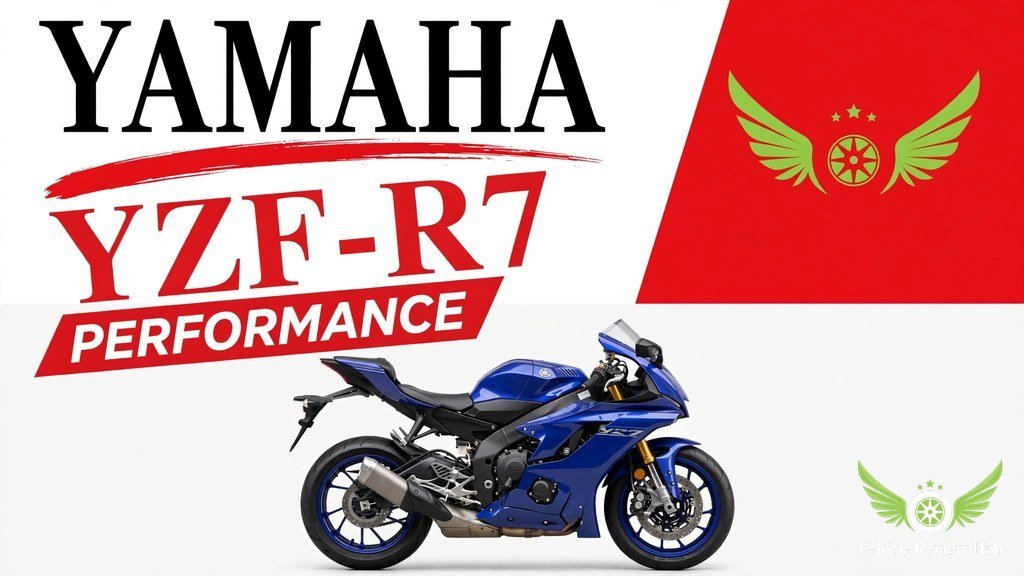
The 2026 Yamaha YZF-R7 performance package is built around a simple idea: a light, 689cc twin-cylinder sportbike that is fast where most riders actually ride. Yamaha lists about 73 horsepower, a 417-pound wet weight, and an estimated 59 mpg, and independent testing backs up the straight-line numbers with 0–60 mph in 3.27 seconds and a tested top speed of 139 mph. This Yamaha YZF-R7 performance guide looks at how that speed is made, what it costs in fuel, and how the chassis and brakes handle it — on the street and on the track.
How the Yamaha YZF-R7 Engine Performs
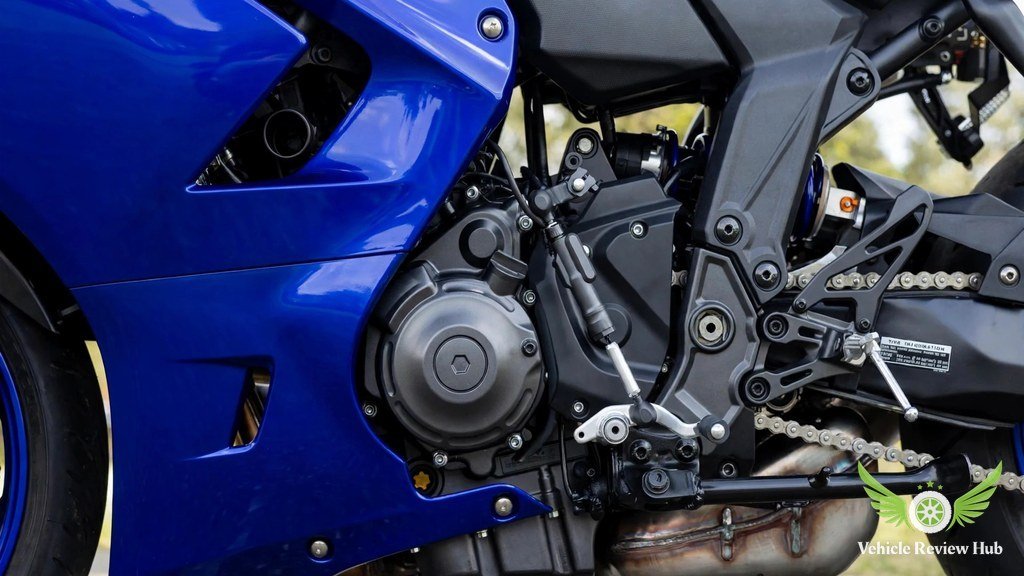
The heart of Yamaha YZF-R7 performance is the CP2 parallel twin, a 689cc liquid-cooled engine with a 270-degree crankshaft that gives it a punchy, V-twin-like feel. It shares its basic engine family with the MT-07, but the R7 pairs it with a sportier riding position, longer gearing, and a full fairing, so the power reaches the road differently. For 2026, the engine itself is largely unchanged, while the electronics around it are new, and those electronics shape Yamaha YZF-R7 performance more than any single horsepower figure.
689cc Engine Power Delivery and Torque
The CP2 twin’s claimed figures are about 73 horsepower at 8,750 rpm and about 50 lb-ft at 6,500 rpm, with an 11.5:1 compression ratio and a 270-degree crankshaft that spaces firing pulses unevenly for stronger midrange pull. In practice, the Yamaha YZF-R7 performance character is defined by its midrange rather than its top end: the engine pulls cleanly from low revs, builds strongly through the middle of the rev range, and flattens off near the top, as published road tests describe. Riders coming from a smaller bike notice the difference most between 4,000 and 8,000 rpm, where Yamaha YZF-R7 performance shines because the bike accelerates without needing constant downshifts. The six-speed gearbox uses a taller final gear than the MT-07, which helps top speed and keeps highway revs relaxed, and the assist-and-slipper clutch lightens the lever and reduces rear-wheel hop on aggressive downshifts.
| Specification | 2026 Yamaha YZF-R7 |
|---|---|
| Engine | 689cc liquid-cooled CP2 parallel twin, DOHC, 4 valves per cylinder |
| Peak power (claimed) | About 73 hp at 8,750 rpm |
| Peak torque (claimed) | About 50 lb-ft at 6,500 rpm |
| Compression ratio | 11.5:1 |
| Transmission | 6-speed, assist-and-slipper clutch, quickshifter |
| Wet weight | 417 lb |
| Seat height | 32.7 inches |
| Wheelbase | 54.9 inches |
The specification table above comes from Yamaha’s official 2026 YZF-R7 specifications page, which also lists the 3.7-gallon tank and estimated 59 mpg discussed later in this Yamaha YZF-R7 performance guide. One honest caveat: Yamaha’s own spec page does not publish horsepower, so the power and torque figures here are widely reported claimed outputs. What matters for Yamaha YZF-R7 performance on the road is the combination of that torque curve with a 417-pound wet weight, which makes the bike feel quicker than its horsepower number suggests.
Throttle Response and Quickshifter Performance
The biggest change to Yamaha YZF-R7 performance for 2026 is the throttle itself. The old cable-operated throttle is gone, replaced by Yamaha’s Chip Controlled Throttle (YCC-T) ride-by-wire system, which enables the new six-axis IMU and the full rider-aid suite: ride modes (Rain, Street, Sport, Custom, plus a Track theme), lean-sensitive traction, slide, lift and brake control, engine-brake management, launch control, cruise control, and a speed limiter. Road tests of the 2026 model report that the electronic throttle feels natural on the street, without the abruptness that early ride-by-wire systems sometimes showed, which is good news for Yamaha YZF-R7 performance in daily riding, and that the third-generation quickshifter works at slower speeds and improves as speed rises. The quickshifter is now standard equipment rather than an accessory, and the stock shift linkage even comes pre-drilled for an easy switch to a GP (reverse) shift pattern. For everyday Yamaha YZF-R7 performance, the practical result is smoother part-throttle fueling in traffic, cleaner full-throttle upshifts, and lean-sensitive aids that can be adjusted or switched off for track use. The electronics package is borrowed from the larger R9, whose triple makes considerably more power, and riders comparing the two will find the YZF-R9’s performance hardware familiar in concept.
Yamaha YZF-R7 Top Speed and Acceleration
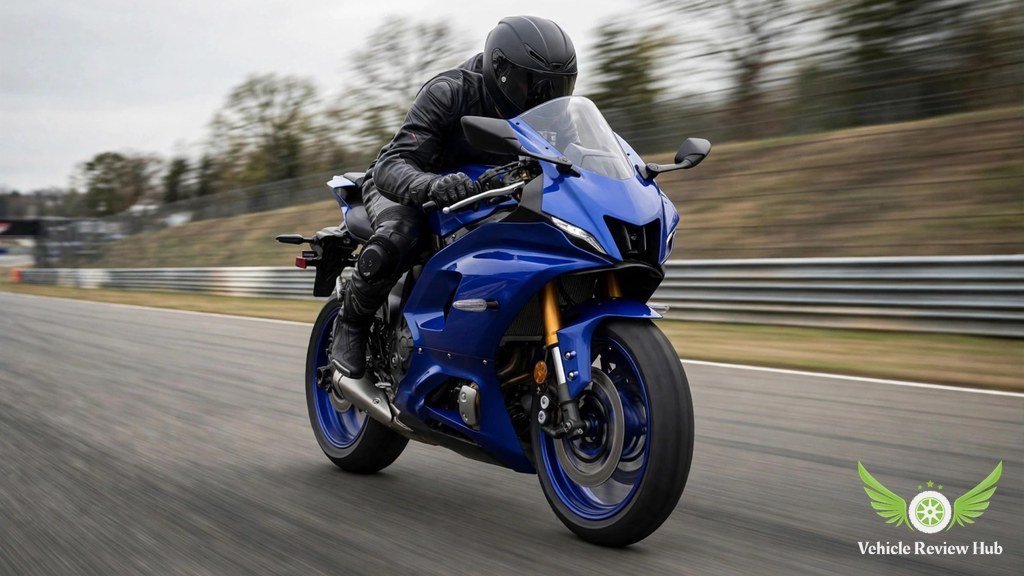
Straight-line speed is where Yamaha YZF-R7 performance is easiest to measure: a quick bike to 60 mph, a strong pull to 100 mph, and a top speed just under 140 mph. Those numbers come from instrumented testing of the first-generation bike, whose engine and gearing carry over to the 2026 model, so they remain the best available guide to Yamaha YZF-R7 performance — but they are test results, not a factory claim, and real results vary with rider weight, wind, and road.
What Independent Tests Reveal About Top Speed
The most detailed independent acceleration data for Yamaha YZF-R7 performance comes from MotoStatz’s instrumented Yamaha YZF-R7 top-speed and acceleration testing, which recorded 0–60 mph in 3.27 seconds, 0–100 mph in 7.88 seconds, a quarter mile in 11.64 seconds at 116 mph, and a top speed of 139 mph. The same test notes that reaching that top speed takes commitment: the bike pulls strongly to about 130 mph, and the last few mph need a full tuck, favorable conditions, and a long straight. Other compilations report slightly lower figures — one lists 134 mph — which is normal, since speedometer error, wind, and rider size all move the result by several mph. For context, the R7 is faster than the Kawasaki Ninja 650 (about 130 mph tested) but slower than the Aprilia RS 660 (about 147 mph), fitting its position as a mid-priced middleweight rather than a top-end weapon. The video below shows a 2026 R7 on track, giving a useful sense of how the bike accelerates out of corners and down a straight, even though it is onboard lap footage rather than a GPS top-speed run.
Watching the onboard footage, the important Yamaha YZF-R7 performance trait on display is not top speed alone but how quickly the bike recovers speed after a corner — the midrange torque and the quickshifter doing the work that matters on a real road or a track day. The bike is also easy to launch consistently, with a low first gear that tops out near 50 mph, so a clean launch and one quick upshift reach 60 mph in the low three-second range.
| Test measurement (MotoStatz) | Yamaha YZF-R7 |
|---|---|
| 0–60 mph | 3.27 seconds |
| 0–100 mph | 7.88 seconds |
| Quarter mile | 11.64 seconds at 116 mph |
| Standing kilometer | 22.15 seconds at 134 mph |
| Top speed (tested) | 139 mph |
What Affects Acceleration in Real Riding?
Several factors move real-world Yamaha YZF-R7 performance away from the test numbers. Rider weight matters more on a 417-pound bike than on a 500-pound one, and a taller rider sitting upright adds drag that can cost several mph at the top end — MotoStatz notes that a good tuck versus a poor one changed the 0–130 mph time by five seconds. Gearing matters too for Yamaha YZF-R7 performance: first gear runs out near 50 mph, so reaching 60 mph always requires an upshift, and the quickshifter’s speed on that shift is part of why the 0–60 time is as quick as it is. Tires, chain condition, and fuel load also play a role, and altitude and temperature affect any naturally aspirated engine. None of this changes the basic character of Yamaha YZF-R7 performance, but it explains why two owners can report different impressions from the same motorcycle.
Yamaha YZF-R7 Fuel Economy and Riding Range
Fuel economy is one of the quiet strengths of Yamaha YZF-R7 performance. Yamaha’s estimated figure is generous, real-world riding returns less, and the gap is worth understanding before planning a trip — because the 2026 bike’s larger tank changes the range math in the R7’s favor.
Yamaha’s Estimated 59 MPG and 3.7-Gallon Fuel Tank
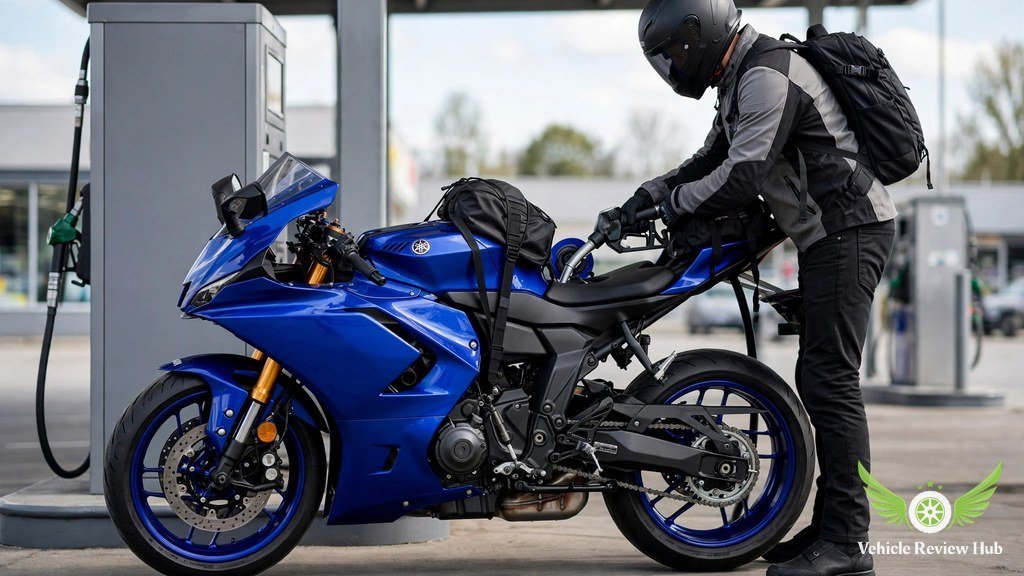
Yamaha lists the 2026 YZF-R7 at an estimated 59 mpg and 3.7 gallons of fuel capacity, both confirmed on Yamaha’s official specifications page, which notes the fuel-economy figure is an estimate. The 3.7-gallon tank is new for 2026, up from 3.4 gallons, and the wider tank adds roughly a quarter gallon, which road tests note also widens the area between the rider’s legs slightly. On paper, 59 mpg times 3.7 gallons gives about 218 miles, but that assumes steady, economical riding few owners actually do. As with most motorcycles, the low-fuel warning leaves a usable margin, so planning fuel stops at 170–180 miles is more realistic for Yamaha YZF-R7 performance touring than stretching for the theoretical maximum. For Yamaha YZF-R7 performance riding — hard acceleration, high revs, and highway speeds — the practical range will be shorter still, which is why the real-world figures below matter more than the brochure number.
Real-World MPG and Factors That Affect Fuel Consumption
Independent road-test reporting puts real-world Yamaha YZF-R7 performance fuel economy closer to 42–45 mpg in mixed riding, or roughly 155–165 miles from the 3.7-gallon tank before the warning light. Gentle commuting and steady highway cruising can reach the low 50s, while track days and aggressive back-road riding can drop it into the high 30s. Speed is the biggest factor, since aerodynamic drag rises sharply above 70 mph; short trips with a cold engine cost fuel; and the 2026 model’s ride modes can help, with Rain mode softening power delivery and Sport mode sharpening it. None of this makes Yamaha YZF-R7 performance expensive to run — even at 42 mpg, a 150-mile week costs only about three and a half gallons — but the bike rewards smooth riding with noticeably longer range, which owners feel at every fill-up.
Yamaha YZF-R7 Handling and Braking Performance
If the engine defines the R7’s speed, the chassis defines how much of it a rider can actually use. The 2026 model brings a revised frame, a new swingarm, lighter wheels, and updated suspension, with new lean-sensitive brake control on top. Together, those changes are why reviewers describe Yamaha YZF-R7 performance as confidence-inspiring rather than just quick.
Cornering Stability and Steering Response
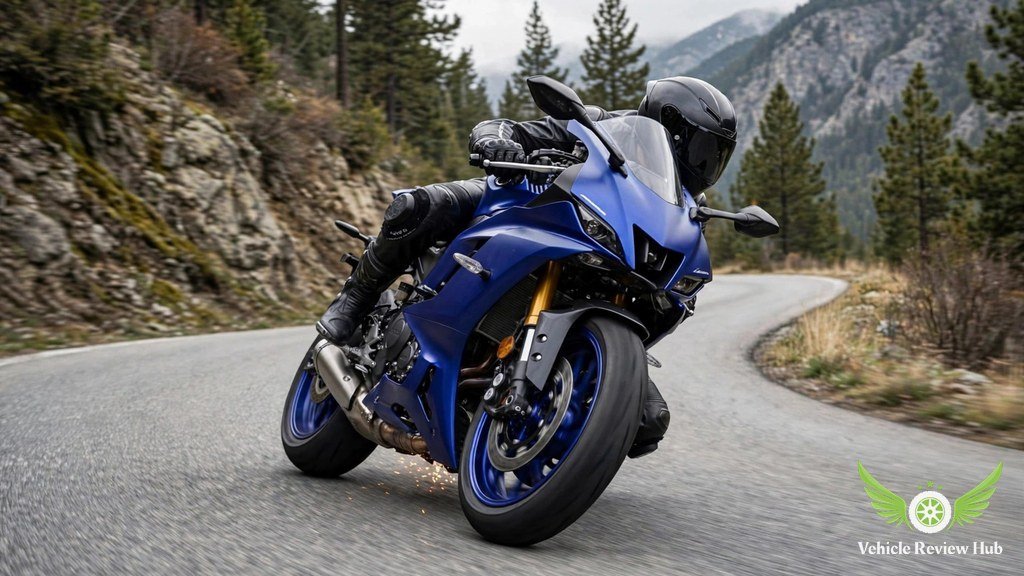
The R7’s steering geometry — 24.0-degree rake, 3.6 inches of trail, 54.9-inch wheelbase — is sporty without being nervous, and the 2026 frame is claimed to be 12 percent stiffer than the outgoing frame. Road tests report the chassis retains the old bike’s precise handling and may improve it, with the narrower front end and slippier aerodynamics helping direction changes, as described in Road Runner’s 2026 YZF-R7 review. The new spinforged wheels cut unsprung weight by about 4 percent, roughly a pound, which helps the suspension react faster over bumps, a detail also listed in Ultimate Motorcycling’s 2026 YZF-R7 fast facts. For Yamaha YZF-R7 performance in corners, the practical result is a bike that holds a line well at lean, steers quickly enough for tight switchbacks, and stays stable at highway speed — a balance that suits newer sportbike riders and experienced riders alike. The 32.7-inch seat height and 417-pound wet weight also help Yamaha YZF-R7 performance at low speed, since a lighter bike with a manageable seat is easier to control and less tiring to muscle around in a parking lot.
Suspension Feedback and Braking Control
Suspension is a fully adjustable 41mm KYB inverted fork with 4.7 inches of travel and a KYB Monocross rear shock with 4.8 inches of travel, adjustable for preload and rebound. Travel is slightly reduced from the previous bike’s 5.1 inches at both ends, and the rear shock still lacks compression adjustment — a fair criticism at this price. Yamaha YZF-R7 performance braking hardware is dual 298mm front discs with four-piston calipers and a Brembo radial master cylinder, plus a single 245mm rear disc, all with ABS. For 2026, lean-sensitive brake control joins the package, with progressive intervention that can be switched off in Track mode, as can rear ABS. Reviewers note that braking feel is good but not class-leading, with the front calipers described as a budget item compared with the R9’s setup. Keeping the chain adjusted, the brake fluid fresh, and tire pressures correct is part of routine maintenance that protects braking performance over time, since worn pads, glazed discs, or a neglected chain all dull the response that the chassis is capable of. Overall, Yamaha YZF-R7 performance under braking is strong for the class, with the electronics adding a safety margin that the pre-2026 bike did not have.
Yamaha YZF-R7 Road and Track Performance
The real appeal of Yamaha YZF-R7 performance is that the same bike works in traffic, on the highway, and on a track day without feeling compromised in any one place. That versatility comes from the torque curve, light weight, and 2026 electronics, which let the rider soften the bike for the street and sharpen it for the circuit.
City Traffic and Highway Riding
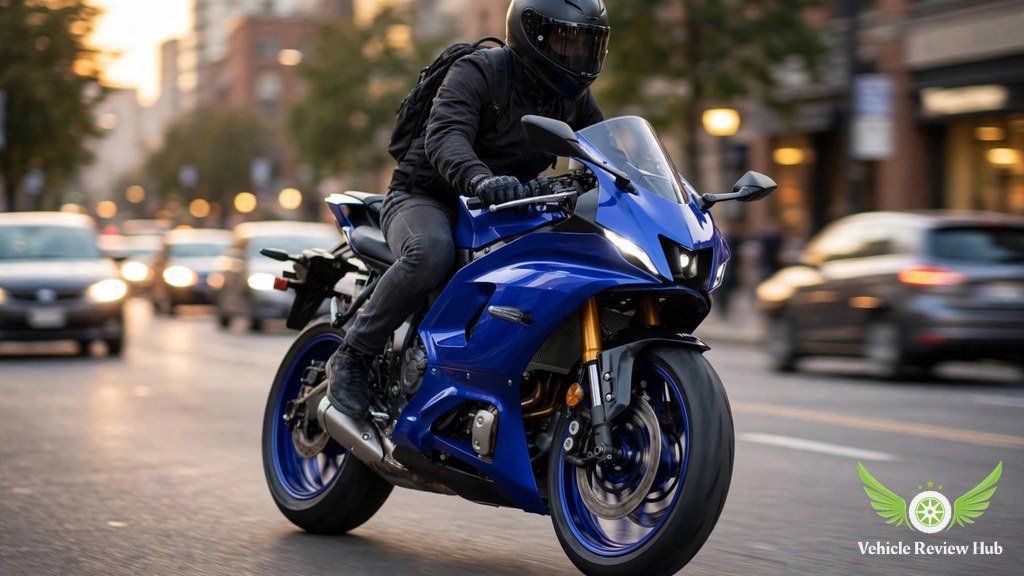
In city traffic, Yamaha YZF-R7 performance is friendly for a faired sportbike: the twin pulls cleanly from low revs, the assist clutch is light, and fueling is smooth enough for stop-and-go riding. The committed riding position demands more from wrists and back than a naked bike on longer commutes. On the highway, Yamaha YZF-R7 performance stays relaxed: the fairing takes the worst of the wind off the rider’s chest, the engine sits comfortably at cruising speed with power in reserve for passing, and the 3.7-gallon tank gives a realistic 150-plus miles between stops. Compared with the smaller R3, the R7’s extra torque makes highway merging and passing noticeably easier, which is why riders moving up often describe the smaller R3’s performance as a stepping stone rather than a destination. Cruise control, new for 2026, is welcome on longer highway stretches.
Handling on Twisties and Track Riding
On twisty roads and track days, Yamaha YZF-R7 performance is in its element. Light weight, a stiff 2026 frame, grippy Bridgestone Battlax Hypersport S23 tires, and the midrange torque curve let the bike carry speed through corners without needing big horsepower on the exits. The quickshifter and adjustable rider aids — traction control, slide control, lift control, and engine-brake management — let a rider tune the bike to the surface and their skill level, and the launch control and Track theme on the new TFT display show how seriously Yamaha takes the track-day audience. Reviewers who have ridden the 2026 bike on track describe it as easy to ride quickly, with the chassis rewarding smooth inputs and the electronics staying out of the way until needed. For buyers weighing the full cost of owning one, including track-day consumables like tires and brake pads, the used R7’s ownership costs are worth checking before committing, since a track-ridden example wears consumables faster than a commuter. The 2026 updates — frame, wheels, aerodynamics, and electronics — all point the same way: Yamaha YZF-R7 performance is now as much about the chassis and electronics as the engine, and that is what makes the bike competitive in 2026.
Yamaha YZF-R7 Performance FAQs
These are the questions riders ask most often about Yamaha YZF-R7 performance, answered directly with the figures used in this guide.
What is the Yamaha YZF-R7 performance top speed?
Instrumented independent testing recorded a Yamaha YZF-R7 performance top speed of 139 mph, with most riders seeing the low 130s in normal conditions. Yamaha publishes no official top speed, so 139 mph is a tested figure, not a factory claim.
How fast does the Yamaha YZF-R7 accelerate to 60 mph?
Independent testing recorded 0–60 mph in 3.27 seconds and 0–100 mph in 7.88 seconds for the Yamaha YZF-R7 performance package, with a quarter mile of 11.64 seconds at 116 mph. The quick 0–60 time is helped by the bike’s light weight and easy launches.
How much horsepower does the Yamaha YZF-R7 make?
The CP2 engine behind Yamaha YZF-R7 performance is rated at about 73 horsepower at 8,750 rpm and about 50 lb-ft of torque at 6,500 rpm. These are widely reported claimed figures; Yamaha’s own spec page does not publish horsepower.
What is the Yamaha YZF-R7 performance fuel economy?
Yamaha estimates 59 mpg, but real-world mixed riding typically returns 42–45 mpg, giving roughly 155–165 miles from the 3.7-gallon tank. Gentle highway cruising can reach the low 50s; track riding can drop it into the high 30s.
Does the 2026 Yamaha YZF-R7 have a quickshifter?
Yes. The 2026 R7 comes standard with Yamaha’s third-generation quickshifter, which works on upshifts and downshifts and improves as speed rises. The linkage is pre-drilled for an easy conversion to a GP reverse-shift pattern.
What is new for Yamaha YZF-R7 performance in 2026?
For Yamaha YZF-R7 performance, the 2026 model adds ride-by-wire throttle, a six-axis IMU, ride modes, lean-sensitive rider aids, a 5-inch TFT display, a stiffer frame, a new swingarm, lighter spinforged wheels, slippier aerodynamics, and a larger 3.7-gallon tank. The engine is largely unchanged.
Is the Yamaha YZF-R7 good for track days?
Yes. Yamaha YZF-R7 performance on track rests on light weight, midrange torque, adjustable suspension, and 2026 track-oriented electronics — including a Track display theme, launch control, and switchable rear ABS — which make it a popular and approachable track-day bike. Tires and brake pads are the main consumables to budget for.
How does Yamaha YZF-R7 performance compare with the Aprilia RS 660?
For outright Yamaha YZF-R7 performance comparisons, the RS 660 is faster, with about 100 horsepower and a tested top speed near 147 mph, against the R7’s 73 horsepower and 139 mph. The R7 counters with a lower price, a lighter feel, and stronger low- and mid-range accessibility for newer riders.
What is the Yamaha YZF-R7’s wet weight and seat height?
The 2026 R7 weighs 417 pounds wet, with a 32.7-inch seat height and 54.9-inch wheelbase. It is about three pounds heavier than the 2025 model, mostly because of the larger fuel tank.
Is Yamaha YZF-R7 performance suitable for beginners?
The R7 suits confident newer riders better than absolute beginners. Its power delivery is smooth and its weight is manageable, but 73 horsepower and a committed riding position demand respect. Riders moving up from a 300–400cc bike usually adapt quickly to Yamaha YZF-R7 performance; first-time riders are better served by a smaller machine.