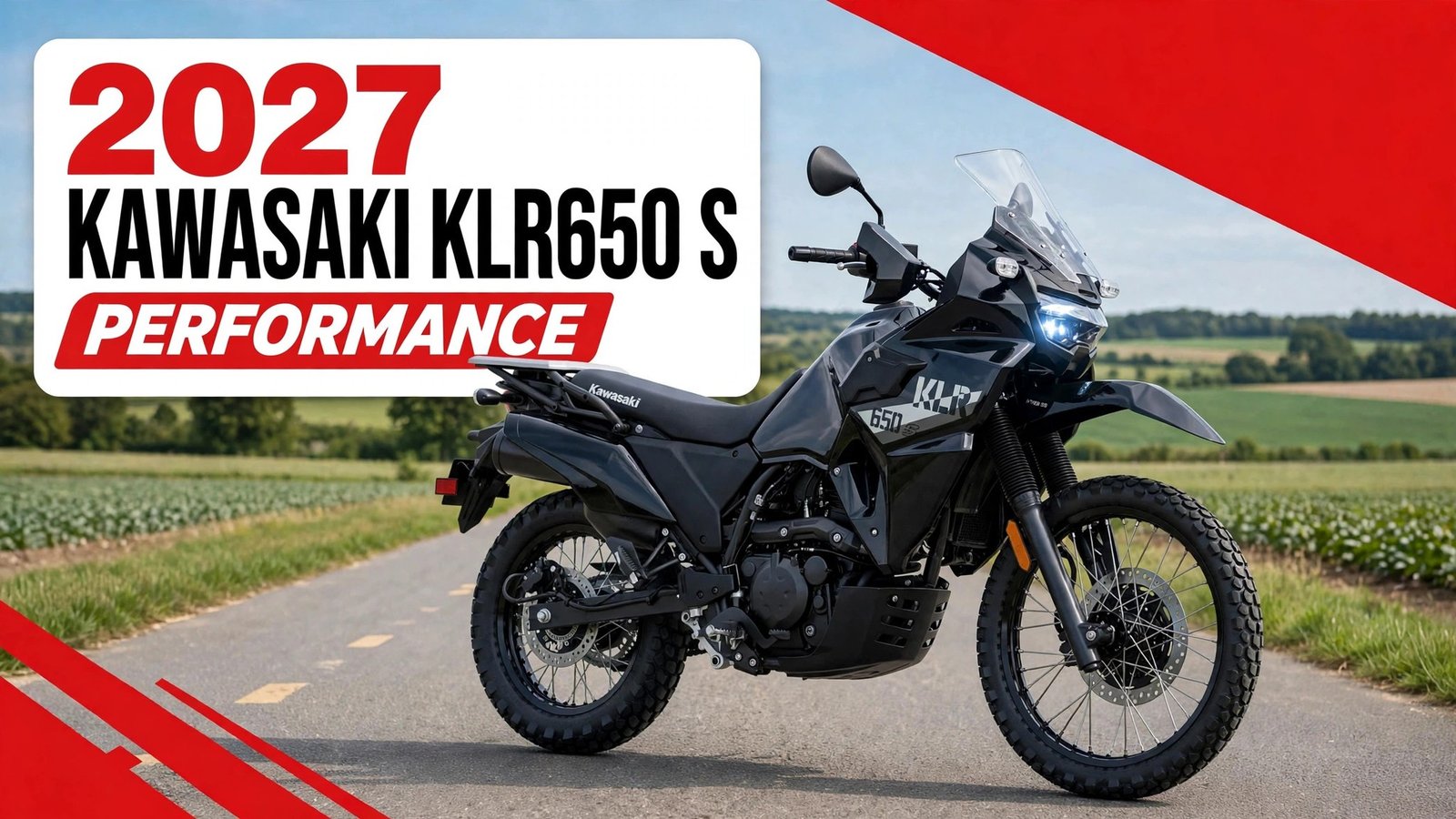
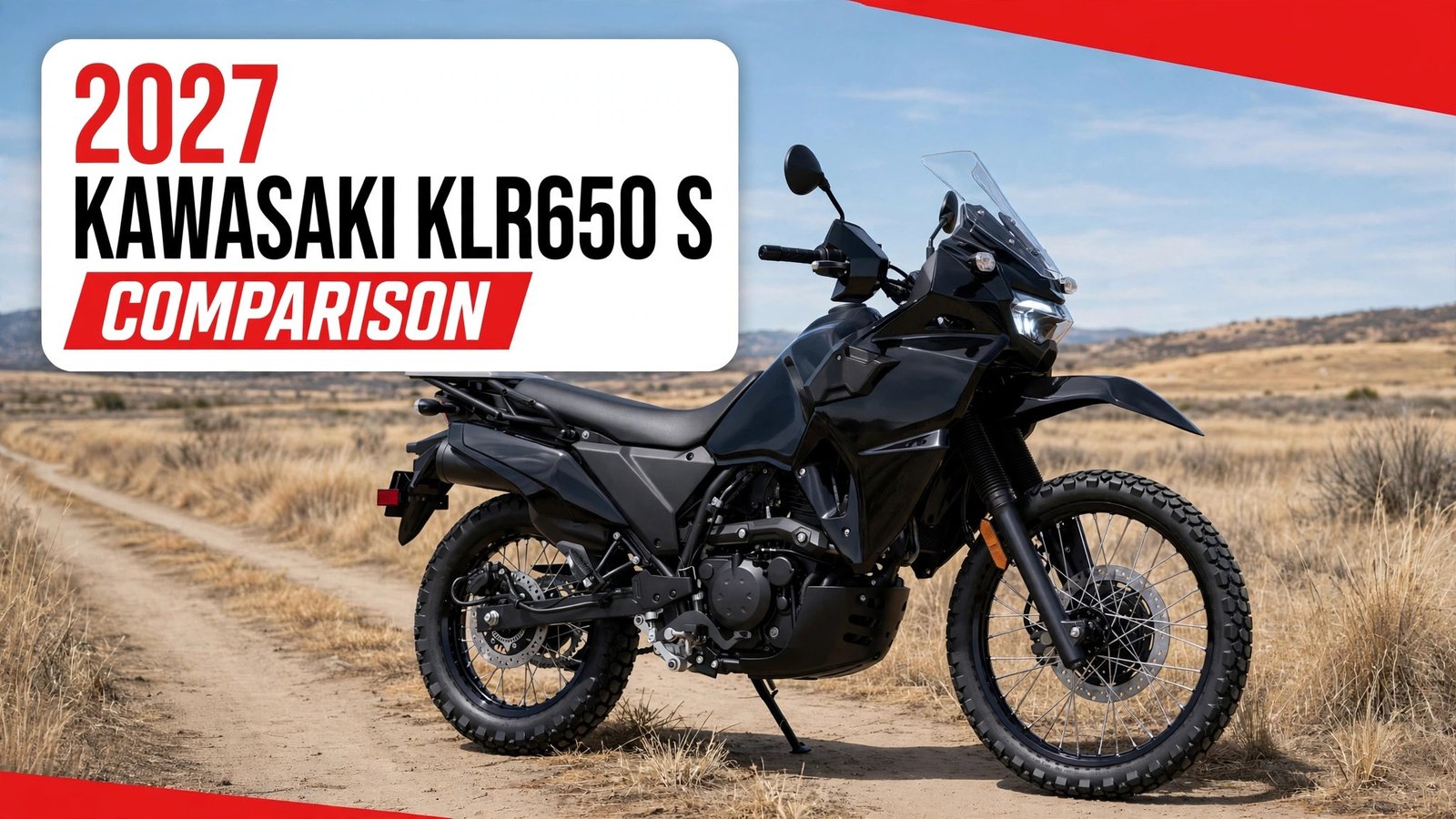
Kawasaki KLR650 is a simple, overbuilt single that earns its reliability reputation, with two famous faults that belong to the first two generations and a third generation whose record is short but clean. This Kawasaki KLR650 reliability guide separates history from what is still true, and labels every claim with its generation and source.
Three generations, one engine layout and a long paper trail sit behind this bike. The 652cc single has powered the KLR650 since 1987, and the 2022 redesign added fuel injection, a digital dash and LED lighting without changing the simple formula this Kawasaki KLR650 reliability guide is built on.
Kawasaki KLR650 Reliability Overview
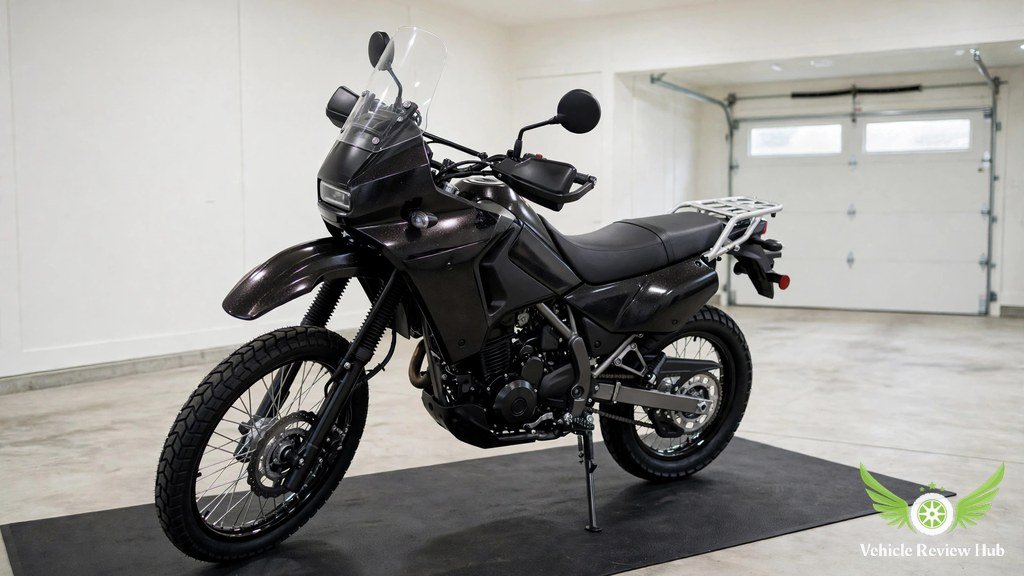
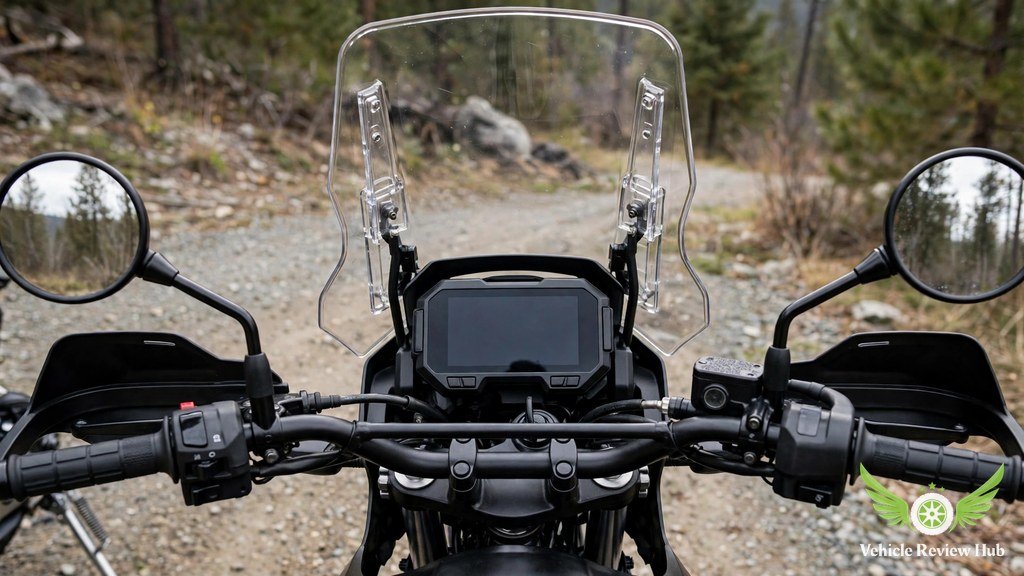
The KLR650 has been in production, with one three-year gap, since 1987, and that long run is the first fact in any Kawasaki KLR650 reliability discussion. The third-generation bike, sold in the US from 2022, adds fuel injection, a digital dash and LED lighting to the same 652cc single.
Valve Check Every 15,000 Miles
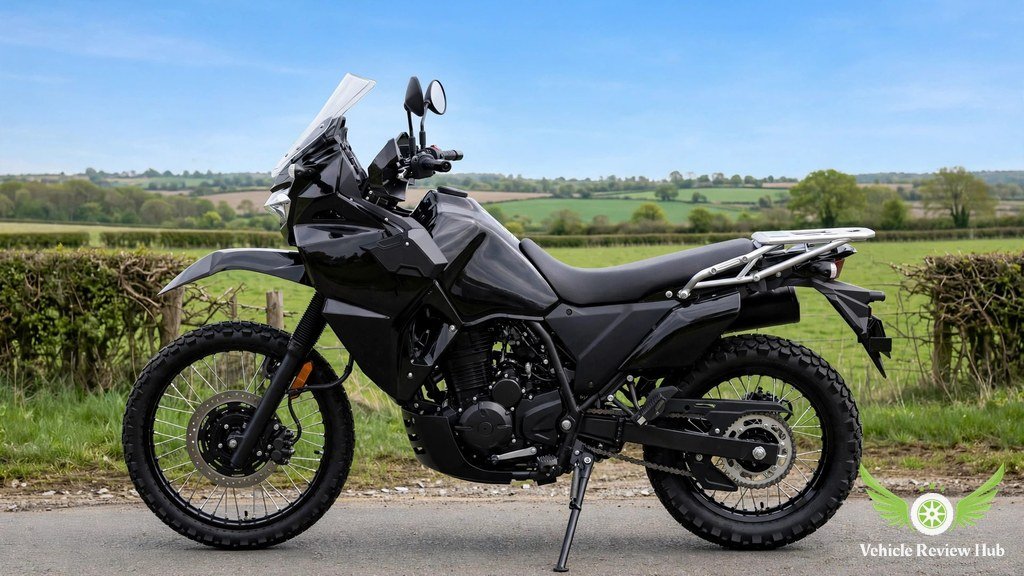
The valve clearance check is the biggest scheduled job on the KLR650, and the owner’s-manual chart sets it at every 24,000 km, which is 15,000 miles. That figure comes from the gen-2 owner’s manual; this Kawasaki KLR650 reliability guide is clear that the gen-3 (2022+) manual chart was not directly sighted at writing. Clearances are 0.10 to 0.20 mm intake and 0.20 to 0.30 mm exhaust, measured cold, and shim-under-bucket valves make adjustment a dealer job.
That 15,000-mile interval is short by modern standards, though the smaller Kawasaki twin in our Versys 650 reliability guide runs a 15,200-mile US valve check.
How Mileage, Storage and Previous Care Affect Reliability
Mileage matters less on a KLR650 than neglect does. The engine is a low-stress single making 40 hp from 652cc, and high-mileage examples with six-figure odometer readings are common in owner forums, including one 172,000-mile example cited by TopSpeed, which this Kawasaki KLR650 reliability guide treats as forum anecdote. What kills these bikes is sitting: a stored bike with old fuel, a dead battery and a dry chain needs more work than a daily rider with twice the miles.
Storage damage is the quiet risk on a used gen-3 bike. The fuel-injected bike does not suffer the carburetor varnish that killed stored gen-1 and gen-2 bikes, but stale fuel still gums the pump, and a bike parked outside shows rust on the spokes, chain and fasteners first. A 2022 bike with 3,000 miles and three winters outside can be a worse buy than one with 15,000 miles and a garage, which is why this Kawasaki KLR650 reliability guide rates storage above mileage.
The film below is an independent years-to-avoid guide from Lone Rider Tips (@NotThatEasyRider), not a service manual and not a Kawasaki or press source. This Kawasaki KLR650 reliability guide places it here because the year-by-year picture is the fastest way to see the pattern.
Kawasaki KLR650 Common Problems and Wear Items
The KLR650’s problem list is short, old and well documented, which is itself a reliability signal. This Kawasaki KLR650 reliability guide covers the two famous faults, the doohickey and the oil use, plus the first-year quirks owners report on the 2022 bike.
Doohickey: Gen 1 History, Not Gen 3
The doohickey is the balancer-chain tensioner lever, and its reputation is the KLR650’s most famous fault. On gen-1 bikes (1987–2007) the lever was a stamped part known to break, and its spring was weak; owner forums estimate the spring fails on about one in three gen-1 engines by 20,000 miles, a KLR650.net figure that this Kawasaki KLR650 reliability guide labels as a forum estimate. Gen-2 bikes (2008–2018) got a stronger lever, but the spring still loses tension early, and the 2008 and 2009 models take a different Eagle lever and spacer. The fix is the Eagle Mike kit, a 17-4PH stainless lever with a torsion spring.
Whether the gen-3 bike still has the problem is a genuine split, and this Kawasaki KLR650 reliability guide does not pick a side silently. ProCycle, a KLR specialist, says the gen-3 part was redesigned with a new part number, a stronger bolt and 115 in-lb of torque against about 70 on the earlier parts. ADV Pulse said the doohickey “did not receive updates for 2022”. TopSpeed wrote that the 2022 model “kept that same Gen2-era tensioner rather than starting over”. HotCars wrote that “an update back in 2022 finally resolved this long-standing issue”. Two sources say fixed, two say kept, and the manual still schedules balancer-chain tension adjustment.
Oil Use Was a 2008 Story, Counterpoint Exists
The oil-burning KLR650 is a 2008 and 2009 story. Those two model years got flawed piston rings, and the affected bikes burned oil chronically, some a quart per 1,000 miles or less. The 2010 to 2018 window is the safe period, and the gen-3 bike has no equivalent oil-use complaint in the records checked for this Kawasaki KLR650 reliability guide. The counterpoint comes from Cycle News, whose 2022 test bike still had a full oil sight window after more than 1,000 miles.
The gen-3 bike has its own first-year quirks, all owner-reported and labelled as such: rough low-rev fuel mapping, minor electrical gremlins and cold-start difficulty below about 25 degrees Fahrenheit on some 2022 units, linked to a decompression cam pin. The 2023 and later bikes are reported as refined, and this Kawasaki KLR650 reliability guide calls the 2022 quirks teething trouble.
Kawasaki KLR650 Maintenance Schedule and Servicing
The KLR650 service schedule is short, cheap and mostly owner-doable. This Kawasaki KLR650 reliability guide prints the schedule from the owner’s-manual chart and says where it comes from: the intervals below are from the gen-2 (2013) owner’s manual, because the gen-3 manual chart was not directly sighted at writing.
Oil Every 7,500 Miles, Generation Two Chart
The owner’s-manual chart sets engine oil and filter changes at every 12,000 km, which is 7,500 miles. The 2009 service manual says every 6,000 miles instead, so the two Kawasaki documents disagree, and this Kawasaki KLR650 reliability guide headlines the owner’s-manual figure with the split labelled. The oil is SAE 10W-40 (API SG to SM, JASO MA/MA1/MA2), capacity 1.9 litres with the filter left in, 2.0 litres with it replaced and 2.1 litres dry.
The drive chain is lubricated every 600 km (400 miles), its slack checked every 1,000 km (600 miles). The spark plug is an NGK DPR8EA-9 or ND X24EPR-U9, gapped to 0.8 to 0.9 mm and torqued to 14 N·m. Coolant is changed every three years with the radiator hoses and O-rings, fuel hoses every five years, brake fluid every two years, brake hoses every four. The Kawasaki KLR650 page carries the current specifications, and the 2013 owner’s manual is the source for the chart intervals.
| Service item | Interval | Notes |
|---|---|---|
| Initial service | 1,000 km (600 mi) | After break-in |
| Engine oil and filter | Every 12,000 km (7,500 mi) | Owner’s-manual chart; 2009 service manual says 6,000 mi |
| Valve clearance inspect | Every 24,000 km (15,000 mi) | Shim-under-bucket; dealer job |
| Spark plug replace | Every 12,000 km (7,500 mi) | NGK DPR8EA-9, gap 0.8 to 0.9 mm, 14 N·m |
| Drive chain lube | Every 600 km (400 mi) | More often in dust or mud |
| Drive chain slack check | Every 1,000 km (600 mi) | Also check wear |
| Coolant change | Every 3 years | With radiator hoses and O-rings; 1.5 L capacity |
| Brake fluid change | Every 2 years | Front and rear |
| Brake hoses replace | Every 4 years | With master cylinder and caliper rubber |
| Fuel hoses replace | Every 5 years | Inspect for leaks at every service |
Notes for this Kawasaki KLR650 reliability service table: the intervals are from the gen-2 (2013) owner’s-manual chart, because the gen-3 chart was not directly sighted at writing. The oil interval carries a split: the owner’s-manual chart says 7,500 miles and the 2009 service manual says 6,000 miles.
Fuel Pump Action Is Not a Recall
There is no NHTSA recall for the third-generation KLR650 fuel pump, and this Kawasaki KLR650 reliability guide states that plainly. The doc’s framing is that a fuel-pump action exists that a dealer can check and a VIN search will not show, presented as the doc’s instruction. No bulletin number is claimed as verified here, because the number in the doc returned zero search hits, no NHTSA recall for the gen-3 bike exists, and no Transport Canada KLR650 fuel recall was found. One early lead, Transport Canada recall 2024095, turned out to be a Volkswagen car recall.
The distinction matters for a buyer: a recall shows up in a VIN search and a dealer must fix it free, while a service action does not. The only way to know whether it applies is to ask a dealer with the VIN in hand, and this Kawasaki KLR650 reliability guide recommends the dealer check on every used gen-3 purchase.
Kawasaki KLR650 Tires, Brakes and Suspension Maintenance
Tires, brakes and suspension decide whether a used KLR650 is ready to ride or ready for a bill. This Kawasaki KLR650 reliability guide covers the NHTSA record first, because the numbers there are the cleanest evidence, and then the checks that matter on the bike itself.

Check the Fuel Pump Action at a Dealer, Not NHTSA
The NHTSA record for the third-generation KLR650 is clean on recalls and not clean on complaints, and this Kawasaki KLR650 reliability guide prints both halves. The counts below come from the NHTSA recalls results table at nhtsa.gov/recalls, checked in the browser on 2026-11-18 and cross-checked against the NHTSA API. Recalls are zero for every gen-3 year listed: 2022, 2023, 2025 and 2026. Complaints are one on the 2022 bike, an electrical no-start after an hour and a half of riding on a bike with under 600 miles (ODI 11481956, filed 08/30/2022), and sixteen on the plain 2023 model. Manufacturer communications run four on the 2022 bike, two on the plain 2023, two on the 2023 Adventure and one on the 2023 S, with investigations at zero.
That record is why the fuel-pump action belongs at a dealer, not in a VIN search. A VIN search covers only the last fifteen years and only shows recalls, so it would return a clean result even if a dealer action applied. The counts above can be checked on the NHTSA recalls page, and the Ninja 1100SX ABS reliability guide records the same kind of clean recall sheet on another Kawasaki.
| Model year | Recalls | Complaints | Manufacturer communications | Investigations |
|---|---|---|---|---|
| 2022 KLR650 | 0 | 1 | 4 | 0 |
| 2023 KLR650 (plain) | 0 | 16 | 2 | 0 |
| 2023 KLR650 Adventure | 0 | 0 | 2 | 0 |
| 2023 KLR650 S | 0 | 0 | 1 | 0 |
| 2025 KLR650 | 0 | 0 | 0 | 0 |
| 2026 KLR650 | 0 | 0 | 0 | 0 |
| 2027 KLR650 | No entry yet | No entry yet | No entry yet | No entry yet |
Notes for this Kawasaki KLR650 reliability NHTSA table: the counts are from the NHTSA recalls results table at nhtsa.gov/recalls, checked on 2026-11-18 and cross-checked against the NHTSA API. The gen-3 record is clean on recalls, but not on complaints: one in 2022 and sixteen on the plain 2023 model.
Tire, Brake and Suspension Checks That Matter
The tire sizes are 90/90-21 front and 130/80-17 rear, both Dunlop K750-style dual-sport tyres, and the manual schedules pressure, damage, tread wear and wheel bearing checks at every service. Spoke tightness and rim runout are dealer checks, which matters because the KLR650 runs wire-spoked wheels rather than cast ones. The DR650S reliability guide covers the same checks on the Suzuki rival.
The brakes are a single 300 mm front disc with a two-piston caliper and a single 240 mm rear disc with a single-piston caliper, both with ABS that cannot be switched off from the dash. The manual schedules pad wear, fluid level, leak and hose checks at every service, with fluid changed every two years and hoses every four. Kawasaki names no caliper brand, so no brand should be quoted for them. The suspension is a 41 mm telescopic fork with 7.9 inches of travel and a Uni-Trak single shock, listed at 8.0 inches on the current Kawasaki sheet while third-party listings still print the gen-2 7.3 inches.
Kawasaki KLR650 Maintenance and Ownership Costs
Owning a KLR650 is cheap in the ways that matter and expensive in exactly one place. This Kawasaki KLR650 reliability guide totals the running costs from the verified figures, and is honest about which costs have no published number.

Fuel, Routine Servicing, Tires and Replacement Parts
Fuel is the cheapest part of KLR650 ownership. Cycle News measured 49 mpg on a mostly paved ride and Rider Magazine recorded 47 mpg, so the 6.1-gallon tank carries the bike close to 300 miles on the road and about 240 miles in deep sand, where ADV Pulse ran one dry at 39.3 mpg. Routine servicing is an oil and filter change every 7,500 miles with 2.0 litres of 10W-40, a chain lube every 400 miles and a chain slack check every 600 miles. Tires are the regular consumable, and parts are cheap.
The one expensive item is the valve check at 15,000 miles, a shim-under-bucket job that most owners leave to a dealer. No published dealer labour rate is quoted here, because none was verified, and the same applies in our Versys 1100 SE LT ABS reliability guide. This Kawasaki KLR650 reliability guide rates the ownership cost as low for a 650, with the valve check as the single planned expense.
| Generation | Years | Engine | Reliability notes |
|---|---|---|---|
| Gen 1 | 1987–2007 | Carbureted single | Stamped doohickey lever breaks; weak spring fails on about 1 in 3 by 20,000 mi |
| Gen 2 | 2008–2018 | Carbureted single | 2008–2009 oil burning from flawed rings; three recalls; stronger doohickey lever, spring still weak |
| Gen 3 | 2022–present | Fuel-injected single, LED, digital dash | No recalls; 1 complaint (2022), 16 (2023 plain); doohickey split; 2022 cold-start quirks |
Notes for this Kawasaki KLR650 reliability generations table: the doohickey and oil-use faults belong to the first two generations, and the gen-3 record is short because the bike has only been on sale since 2022. The gen-1 spring figure is a forum estimate.
Three Recalls, All Muffler and Harness Era
All three KLR650 recalls are from 2008 and 2009, and the heading’s “muffler and harness era” is shorthand for those two years. The first is 08V-520, turn-signal stalks, under Kawasaki bulletin MC 08-14. The second is 09V-059, muffler mounting bolts, covering 16,167 units. The third is 09V-062, main wiring harness chafe, covering 16,168 units under bulletin MC09-03, on bikes built in Thailand. The Cycle World dyno test of the 2022 Adventure is the named source for the gen-3 bike’s measured output.
The Versys recall 09E-015 is sometimes quoted for the KLR650, and it does not belong here. That campaign covered Versys 650 accessory saddlebag reflectors, and this Kawasaki KLR650 reliability guide does not count it. The three campaigns above are the complete KLR650 list.
| Campaign | Year | Issue | Units / bulletin |
|---|---|---|---|
| 08V-520 | 2008 | Turn-signal stalks | Bulletin MC 08-14 |
| 09V-059 | 2009 | Muffler mounting bolts | 16,167 units |
| 09V-062 | 2009 | Main wiring harness chafe | 16,168 units, bulletin MC09-03 |
Notes for this Kawasaki KLR650 reliability recalls table: all three campaigns are gen-2, from 2008 and 2009, and none touches the third-generation bike. The Versys campaign 09E-015 is not a KLR650 recall.
How to Keep a Kawasaki KLR650 Reliable
Keeping a KLR650 reliable is mostly a matter of doing the cheap jobs on time and asking the right questions. This Kawasaki KLR650 reliability guide closes with the routine that works and the proof a buyer should ask for.

Preventive Maintenance, Records and Regular Inspections
The routine is the manual’s chart, followed without shortcuts: oil and filter every 7,500 miles, chain lubed every 400 miles and slack checked every 600, valve clearance checked every 15,000 miles, brake fluid every two years and coolant every three. Records matter: a stamped service book proves the valve check was done. The daily checks are tires, brakes, lights, fuel, oil and coolant levels, done cold before every ride. This Kawasaki KLR650 reliability guide rates the routine as the whole secret: there is no trick part and no hidden service, only the chart.
Storage is the other half of prevention. A bike parked for the winter wants a full tank with stabiliser, a charged battery, a clean and lubed chain and a dry garage, and a bike parked outside wants its spokes and chain checked in spring. The fuel-injected gen-3 bike forgives stale fuel better than the carbureted bikes did, but it does not forgive it entirely. The 12-month warranty covers the first year only, so the second owner’s reliability is the first owner’s maintenance.
Ask for Doohickey Proof on Early Bikes
On any gen-1 or gen-2 bike, ask for doohickey proof before money changes hands. The question is simple: was the Eagle Mike kit fitted, and is there a receipt or a photograph of the lever? A gen-1 bike without the kit is a bike with a known breaking part inside it, and a gen-2 bike without it still has a spring that loses tension early. The 2008 and 2009 models take a different Eagle lever with a spacer, so the proof should name the right part for the year. On a gen-3 bike the question is still worth asking.
Kawasaki KLR650 Reliability: Frequently Asked Questions
Direct answers to the Kawasaki KLR650 reliability questions buyers ask.
Is the Kawasaki KLR650 reliable?
Yes, with the generation labelled. This Kawasaki KLR650 reliability guide rates the gen-3 bike as reliable on the evidence available: no recalls, one complaint in 2022 and sixteen on the plain 2023 model. The gen-1 and gen-2 bikes have known faults a buyer must check.
How often does the KLR650 need a valve check?
Every 15,000 miles, or 24,000 km, per the owner’s-manual chart. This Kawasaki KLR650 reliability guide notes the gen-3 chart was not directly sighted.
What is the KLR650 doohickey problem?
The doohickey is the balancer-chain tensioner lever. This Kawasaki KLR650 reliability guide explains that the gen-1 stamped lever breaks and its spring fails on about one in three engines by 20,000 miles, a forum estimate, while the gen-2 lever is stronger but its spring still weakens. Whether the gen-3 part was redesigned is a split in the sources.
Does the KLR650 burn oil?
The 2008 and 2009 bikes do, from flawed piston rings, some a quart per 1,000 miles or less. This Kawasaki KLR650 reliability guide records that the 2010 to 2018 window is safe, and Cycle News found a full sight window after more than 1,000 miles on its 2022 test bike.
Are there any KLR650 recalls?
Three, all gen-2: 08V-520 stalks, 09V-059 muffler bolts and 09V-062 harness chafe, all from 2008 and 2009. This Kawasaki KLR650 reliability guide records zero recalls on the gen-3 bike.
How often should I change the oil on a KLR650?
Every 7,500 miles with the filter, per the owner’s-manual chart, using SAE 10W-40. This Kawasaki KLR650 reliability guide notes the 2009 service manual says 6,000 miles instead.
What is the fuel pump action on the KLR650?
It is a dealer service action, not a recall, and a VIN search will not show it. This Kawasaki KLR650 reliability guide recommends asking a dealer with the VIN in hand.
Is the KLR650 good for beginners?
It can be, with a warning about height and weight. This Kawasaki KLR650 reliability guide notes the 34.3-inch seat and 456 lb weight are the real challenges, while the gentle power delivery makes the bike forgiving once moving.
How long does a KLR650 last?
Six-figure mileages are common in owner forums, including a 172,000-mile example cited by TopSpeed. This Kawasaki KLR650 reliability guide treats that as forum anecdote, not proof.
Does the KLR650 have ABS problems?
No ABS-specific fault appears in the NHTSA record or the owner reports checked for this Kawasaki KLR650 reliability guide. The complaint about ABS is that it cannot be switched off from the dash, only by pulling the fuse.
What should I check before buying a used KLR650?
The doohickey proof on early bikes, the three 2008 and 2009 recall campaigns, the oil sight window on a 2008 or 2009 bike, the cold-start fix on a 2022 bike, and the dealer fuel-pump action check on any gen-3 bike. This Kawasaki KLR650 reliability guide adds the chain and service records to that list.
Is the 2022 KLR650 a good year to buy?
Yes, with the first-year quirks checked. This Kawasaki KLR650 reliability guide records owner-reported rough low-rev fuelling and cold-start difficulty below about 25 degrees Fahrenheit on some 2022 units.