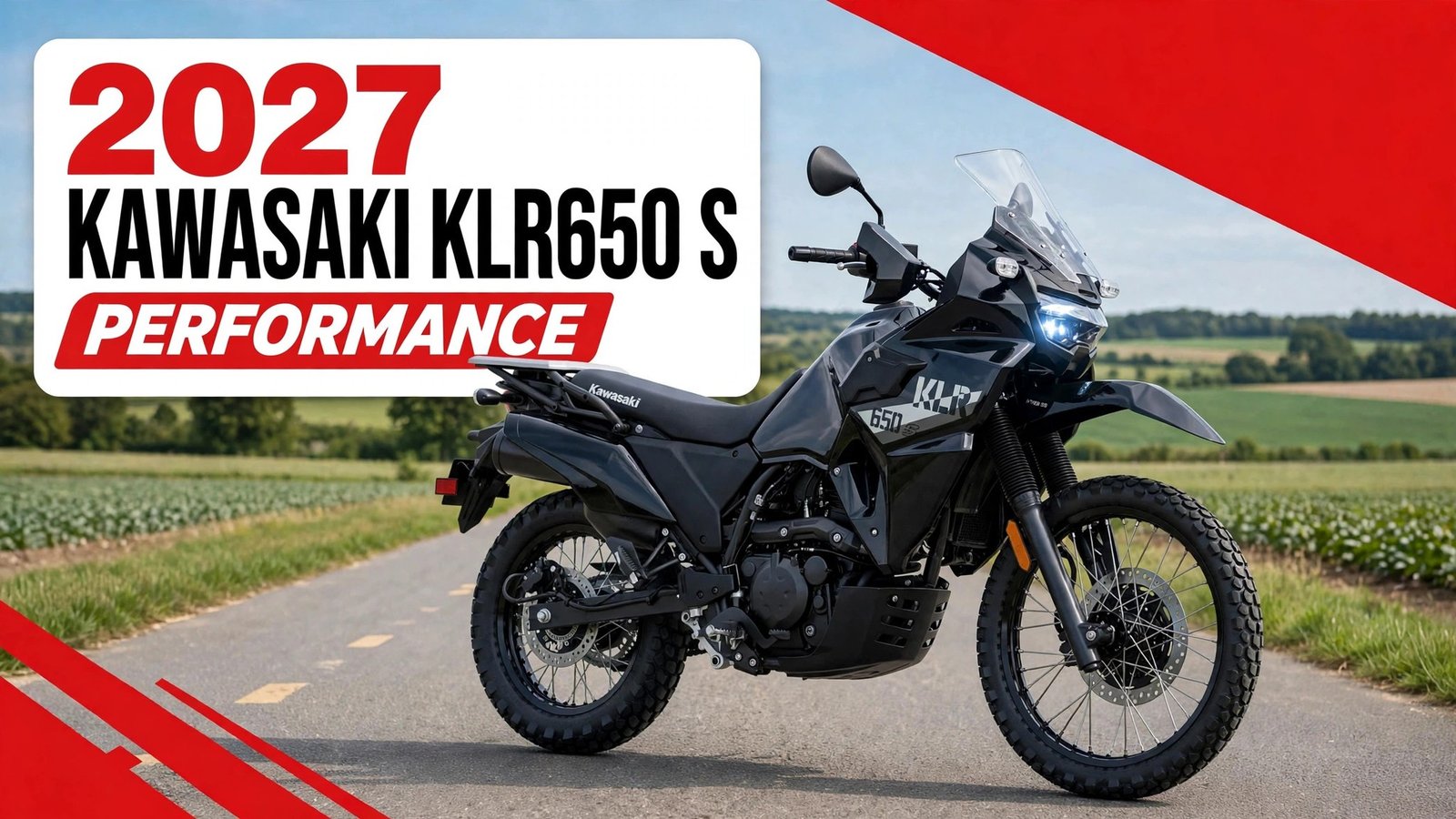
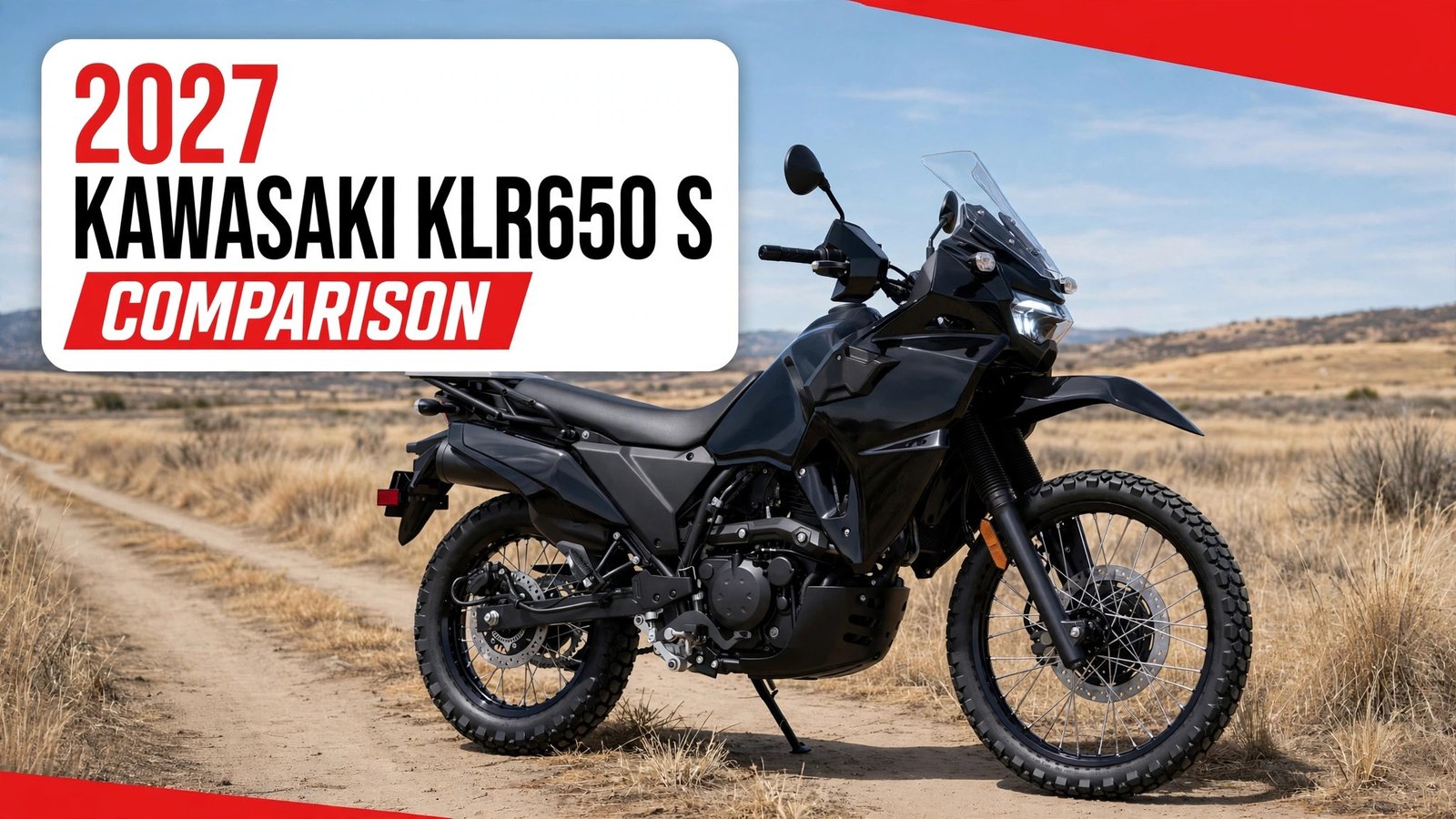
The short answer is yes: the Kawasaki KLR650 S is as reliable as the standard gen-3 KLR650, because it is the same bike with a lowering package. No failure pattern unique to the S has surfaced in any source, the US safety record is clean, and the S shares the standard bike’s service schedule. The lowering changes what a buyer should check — the linkage and the thin seat — not how often it breaks.
This Kawasaki KLR650 S reliability guide covers the S’s own safety record, the service intervals, the platform problems the S shares, the fuel-pump story, and how to tell a factory S from a lowered standard.
Kawasaki KLR650 S Reliability Overview
The S’s reliability story starts with the safety record. This Kawasaki KLR650 S reliability guide checked the NHTSA recalls results table on 18 November 2026: zero recalls in every gen-3 model year, and the complaints belong to the plain KLR650, not to the S.
| Year and trim | Recalls | Complaints | Manufacturer communications |
|---|---|---|---|
| 2022 KLR650 | 0 | 1 | 4 |
| 2023 KLR650 | 0 | 16 | 2 |
| 2023 KLR650 S | 0 | 0 | 1 |
| 2023 KLR650 Adventure | 0 | 0 | 2 |
| 2027 KLR650 S | No NHTSA entry yet | No NHTSA entry yet | No NHTSA entry yet |
Notes for this Kawasaki KLR650 S reliability NHTSA table: counts from the NHTSA recalls results table, checked on 18 November 2026. The 1 complaint in 2022 and the 16 in 2023 belong to the plain KLR650 entry, not to the S, which has its own entry with zero complaints, zero recalls, zero investigations and one manufacturer communication. The 2027 model has no NHTSA entry yet, and NHTSA lists the model as “KLR650” with no space.
The film below is a livestream discussion, not a long-term reliability study: ADVMoto’s Eagle Mike episode about the 2022 KLR650. Eagle Mike is the doohickey authority — his kit is the standard fix for the KLR650’s best-known wear item — but this is about the 2022 base bike, not a test of the S.
Valve Inspection at 15,000 Miles
The valve check is the biggest service job on the KLR650: 15,000 miles, from the owner’s-manual chart’s 24,000 km. A different number, 15,200 miles, circulates online, but that is the Versys family’s US conversion — the KLR650’s own chart says 15,000.
The check is a shim-under-bucket job with the engine cold: intake 0.10 to 0.20 mm, exhaust 0.20 to 0.30 mm. It is a workshop job for most owners. The gen-3 chart itself was not directly sighted — the figure comes from the owner’s-manual chart, as re-confirmed for the standard KLR650 and Adventure guides.
How Mileage, Storage and Previous Care Affect Reliability
Mileage alone tells a buyer very little about a used KLR650 S — the platform is known for six-figure mileages in owner forums. What matters is how the bike was kept: a low-mileage S that sat two years on old fuel is a worse buy than a 20,000-mile S with a stamped service book. Storage is the quiet killer.
Previous care shows in ten minutes: a clean sight glass, a free-moving chain, dry fork seals, a firm seat. Our KLR650 reliability guide covers the same checks on the standard bike, and they apply unchanged to the S — the first check in any Kawasaki KLR650 S reliability inspection.
Kawasaki KLR650 S Common Problems and Wear Items
The honest news in this Kawasaki KLR650 S reliability guide is that the S has no problem of its own: every common problem is a platform problem, shared with the standard KLR650 and the Adventure, and the lowering package adds wear checks rather than failure modes.

No S-Specific Failure Pattern Found
No source — no press review, no owner forum round-up, no NHTSA entry — shows a failure pattern that belongs to the S trim rather than to the gen-3 KLR650 as a whole, and the S’s own NHTSA entry has zero complaints. The lowered parts are the parts a buyer inspects.
The best-known wear item is the balancer-chain tensioner, the “doohickey”, and the gen-3 evidence is a genuine split. ProCycle says the gen-3 part was redesigned, with a new part number, a stronger bolt and a 115 in-lb torque figure. ADV Pulse said the bike “did not receive updates for 2022”, TopSpeed says the 2022 bike “kept that same Gen2-era tensioner”, and Motorcycle.com reported that Kawasaki told them “the tensioner remains the same from the gen two era”. HotCars, by contrast, says “an update back in 2022 finally resolved this long-standing issue”. The gen-1 problem was real — a stamped lever and a weak spring, with about one in three gen-1 engines affected by 20,000 miles (KLR650.net). The fix in every generation is the Eagle Mike kit.
Owner ratings are thin for the S itself, and this Kawasaki KLR650 S reliability guide prints only what exists: no MCN owners’ rating was found, so none is printed. BikeZ rates the 2023 KLR650 63.2 out of 100 overall from four owners, with reliability 73.1 and value 75.6. Review Centre gives 4.2 out of 5 overall from 26 owners, mostly on older bikes, with reliability 4.7 and value 4.7. Both samples are small and platform-wide, not S-specific.
Clearance Strikes Are General Practice, Labelled
The S sits 7.3 inches off the ground against the standard bike’s 8.3, and that inch means the underside meets the ground sooner. That is not a defect pattern in this Kawasaki KLR650 S reliability guide’s reading; it is the price of the lowering. A buyer on graded dirt roads will never notice the missing inch; a buyer on rutted two-track will hear the skid plate working, and should fit one if the bike does not already have it.
The pegs touch first when the bike leans hard, and the long feelers warn the rider before the hard parts do. The thin seat is the other wear item to watch: owner reports say the foam goes soft faster than the standard seat’s — the same complaint RevZilla made about the “undeniably less plush” low-profile seat. Treat a soft seat as normal wear, and price it as a replacement seat.
Kawasaki KLR650 S Maintenance Schedule and Servicing
The S follows the standard KLR650’s service schedule exactly — there is no separate S chart, and no S-specific interval exists. This Kawasaki KLR650 S reliability guide uses the owner’s-manual chart, and the one place where two manuals disagree is shown as one. The first service is at 600 miles.

| Service item | Interval | Detail |
|---|---|---|
| Initial service | 600 miles | First oil change and checks |
| Engine oil and filter | Every 7,500 miles | SAE 10W-40; 1.9 L with filter, 2.0 L replaced, 2.1 L dry |
| Valve clearance inspect | Every 15,000 miles | Cold engine; intake 0.10-0.20 mm, exhaust 0.20-0.30 mm |
| Spark plug | Every 7,500 miles | NGK DPR8EA-9; gap 0.8-0.9 mm; 14 N·m |
| Coolant | Every 3 years | 1.5 L |
| Air filter | Clean at inspection | Replace when damaged or contaminated |
| Chain lube / slack | Lube 400 miles / slack 600 miles | Clean and lube every 400 miles |
| Brake fluid / hoses | Fluid 2 years / hoses 4 years | Fuel hoses every 5 years |
Notes for this Kawasaki KLR650 S reliability service table: intervals from the owner’s-manual chart, as re-confirmed for the standard KLR650 and Adventure guides. The oil interval has a split — the chart says 7,500 miles, the 2009 service manual says 6,000 — and the valve interval is 15,000 miles, not 15,200, the Versys family’s conversion.
Oil and Filter Every 7,500 Miles
Oil and filter go together every 7,500 miles, on the owner’s-manual chart’s 12,000 km interval — the chart figure this Kawasaki KLR650 S reliability guide prints. But the 2009 service manual says every 6,000 miles. The two manuals disagree, and the honest treatment is to name both: a rider who changes oil at 6,000 miles spends a little more and hurts nothing, while a rider who follows the 7,500-mile chart figure follows the manual the bike was sold with. Either way, the oil is SAE 10W-40: 1.9 litres with a filter change, 2.0 litres replaced, 2.1 litres dry.
The oil check is a sight glass on the side of the engine. Cycle News noted in its 2022 test that the sight window was still full after more than 1,000 miles — a useful counterpoint to the gen-1 and early gen-2 reputation for oil burning from flawed 2008–2009 piston rings.
No S-Specific Schedule Exists
There is no separate service schedule for the S, and no dealer will hand a buyer a different chart for it. The lowering package changes no interval: the same oil, the same plug, the same valve check, the same chain care. What the S adds is a short inspection list at each service — the linkage, the shorter shock, the shorter side stand and the thin seat — and that list lives in the checks section of this Kawasaki KLR650 S reliability guide. A buyer who asks a dealer for the “S schedule” will be shown the KLR650 schedule.
Kawasaki KLR650 S Tires, Brakes and Suspension Maintenance
Tyres, brakes and suspension are where the S differs from the standard bike: the wheels and brakes are the same, but the suspension is shorter. This Kawasaki KLR650 S reliability guide spends its time on the lowered parts.

Linkage and Shorter Fork Checks
The linkage is the S-specific wear point: the tie-rod is 4 mm longer than the standard bike’s, and the rear shock is shorter, so the two parts that carry the lowering are the two parts to check after any drop — and at every service. Look for a bent tie-rod, play in the linkage bearings, and a shock that weeps oil or has lost its damping. A bent tie-rod is not cosmetic: it changes the ride height the lowering package depends on, and the bike no longer sits at the 32.1-inch seat height the buyer paid for.
The front fork is shortened by 1.2 inches against the standard bike’s 7.9 inches of travel, and the rear by 1.0 inch against the current sheet’s 8.0 inches, and the wheelbase is 59.6 inches against the standard bike’s 60.6. Check the fork seals for weeping at every service, as this Kawasaki KLR650 S reliability guide recommends — a leaking seal lets oil onto the brake disc — and check both fork legs sit at the same height in the triple clamps after any work. The Cycle World S first ride found the shorter suspension stiffer and sportier than the standard bike’s, so the S asks more of its seals and bushings on rough ground, not less.
Tire, Brake and Suspension Checks That Matter
The tyres are Dunlop K750-style dual-sport rubber on wire-spoked wheels — 90/90-21 at the front, 130/80-17 at the rear — and the rear wheel is 17 inches, not 18. Check the spokes for looseness at every service — this Kawasaki KLR650 S reliability guide puts it first on the wheel checklist — because a loose spoke goes out of true and then breaks its neighbours. Check tyre pressures before every ride, and replace a tyre squared off from highway miles.
The brakes are a single 300 mm front disc with a two-piston caliper and a single 240 mm rear disc, both with non-switchable ABS — the only rider aid on the bike, and it cannot be turned off. Kawasaki names no caliper brand, so no brand is printed here. Check pad thickness and disc condition at every service, and change the brake fluid every two years and the hoses every four. The fog lamp has no separate service procedure in the owner’s manual — none exists, so this Kawasaki KLR650 S reliability guide invents none. Check the mounts, the wiring and the switch, and treat the sealed LED unit as a dealer replacement.
Kawasaki KLR650 S Maintenance and Ownership Costs
The S is a cheap bike to own — the price is the same as the standard bike’s in every model year, and so are the running costs. This Kawasaki KLR650 S reliability guide puts the real numbers in the table below.
| Cost item | Figure | Source |
|---|---|---|
| 2027 S, non-ABS, delivered | $7,684 | $6,999 MSRP + $685 destination |
| 2027 S ABS, delivered | $7,984 | $7,299 MSRP + $685 destination |
| Fuel economy, tested | 43.94 mpg | Cycle World 2023 S first ride |
| Range on a tank | 268 miles | 43.94 mpg x 6.1 gal tank |
| Warranty | 12 months limited | Kawasaki USA |
| Valve check | Every 15,000 miles | Owner’s-manual chart |
Notes for this Kawasaki KLR650 S reliability costs table: the delivered prices are the 2027 S figures, identical to the standard KLR650’s in every model year. The fuel economy and range figures are Cycle World’s tested numbers on the S itself. No dealer labour rate or valve-service price is published. The warranty is 12 months limited in the US.
Fuel, Routine Servicing, Tires and Replacement Parts
Fuel is the S’s cheapest running cost: 43.94 mpg on Cycle World’s test of the 2023 S, and 268 miles from the 6.1-gallon tank. At that economy the bike costs less per mile in fuel than any twin. Routine servicing, as this Kawasaki KLR650 S reliability guide lists it, is oil, a filter and a plug every 7,500 miles, a chain lube every 400 miles, and a valve check every 15,000 miles. Tyres are the main consumable after fuel: the Dunlop K750-style rubber wears faster on pavement. Replacement parts are cheap and widely available: the S shares almost every part with the standard KLR650. Our Adventure reliability guide covers the same parts picture for the taller, heavier trim. Our S performance guide covers the 43.94 mpg test in full.
MC23-05 Skips This Trim Entirely
This heading is the doc’s framing, and this Kawasaki KLR650 S reliability guide presents it that way — not as a verified fact. What is verified is narrow: MC23-05 is a genuine Kawasaki part number for a fuel-pump kit, listed in one Volza export filing dated 26 February 2024 — two units at $517.23, shipped from Japan to Peru — and the filing names no model. No NHTSA recall exists for any gen-3 KLR650, and no Kawasaki bulletin or service action for MC23-05 was found in any search. What is not verified is everything beyond that: that MC23-05 names any trim, that any action “skips” the S, or that MC23-05 is a bulletin or a recall at all. It is a part number, not a recall.
The S launched in 2023, after the reported first-year fuel-pump complaints, which concern 2022 bikes. That timing makes it plausible the S was never part of whatever those complaints were about — but plausible is not verified, and no source ties the part number to a trim. A buyer who wants certainty should ask a dealer: a parts-kit code would not appear in a NHTSA VIN recall search, so a clean VIN check does not settle the question either way. The NHTSA recalls page shows no recall for any gen-3 KLR650.
One more honest note: this Kawasaki KLR650 S reliability guide does not claim zero fuel-pump cases on the S. One 2023 KLR S owner report, in a streetbikersworld round-up, describes a bike stalling mid-ride with a backordered pump. That is one owner, one report — not a pattern — but it is a real case.
How to Keep a Kawasaki KLR650 S Reliable
Keeping an S reliable is mostly doing the small things on time: oil, chain, and the S-specific checks. This Kawasaki KLR650 S reliability guide ends with the habits that keep the bike going past 100,000 miles, and the checks that stop a buyer paying S money for a lowered standard.

Preventive Maintenance, Records and Regular Inspections
Keep records — the first rule of this Kawasaki KLR650 S reliability guide. A stamped service book is worth more than any promise a seller makes: the service list is short and the intervals are long, so a gap is easy to spot. Inspect the bike the same way every time: oil level, chain, fork seals, linkage bolts, tyre pressures, and the thin seat still firm. Check the tie-rod and the shorter shock after any drop.
Tell a Real S From a Lowered Standard
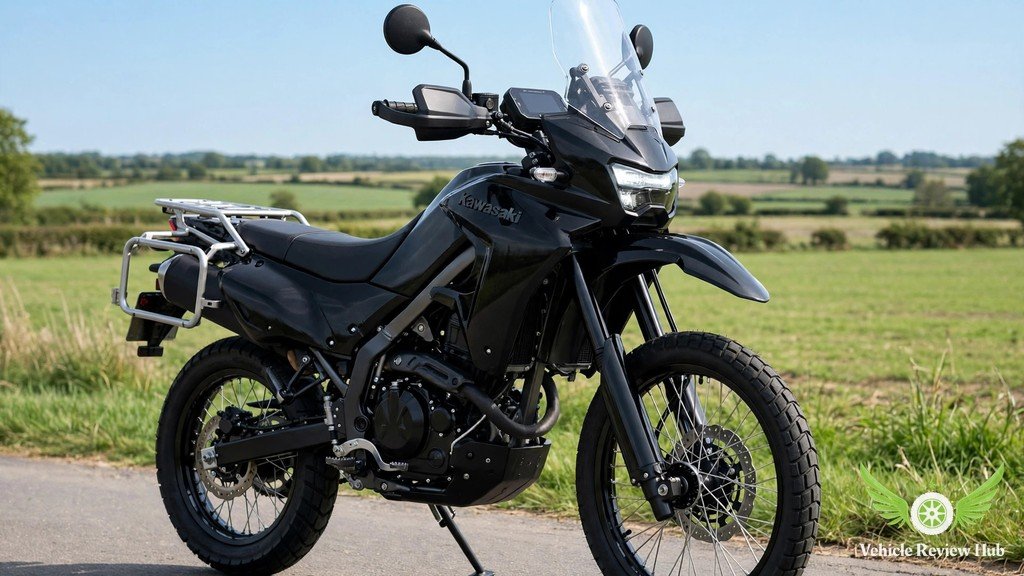
A factory S has four things a lowered standard does not, and this Kawasaki KLR650 S reliability guide says a buyer should check all four before paying S money. The seat is thin — 35 mm thinner than the standard seat — while a DIY-lowered standard keeps the thick seat. The fork and shock are shorter, factory parts with S-specific spring rates and valving, while a lowered standard keeps standard suspension and drops it with aftermarket links. The side stand is 30 mm shorter from the factory, while a lowered standard often has a standard stand cut down crudely. And the shifter-to-footpeg distance is increased on the factory bike, while a lowered standard keeps the standard distance.
The checks in this Kawasaki KLR650 S reliability guide are quick: feel the seat thickness, look at the side stand for a factory finish, and check the model code on the frame. The 2024 S is KL650MRFNL, or KL650KRFNL with ABS; the 2026 S is KL650MTFNL, or KL650KTFNL with ABS. Codes for the 2023, 2025 and 2027 S were not verified — but a seller who cannot show a factory code, a thin seat and a factory side stand is selling a lowered standard.
Kawasaki KLR650 S Reliability: Frequently Asked Questions
Short answers to the questions this Kawasaki KLR650 S reliability guide raises most.
Is the Kawasaki KLR650 S reliable?
Yes. The S is the standard gen-3 KLR650 with a lowering package, and no failure pattern unique to the S has surfaced in any source, in this Kawasaki KLR650 S reliability guide. The gen-3 bike has zero recalls, and the S’s own NHTSA entry shows zero complaints.
How often does the KLR650 S need a valve check?
Every 15,000 miles, on the owner’s-manual chart’s 24,000 km interval, in this Kawasaki KLR650 S reliability guide. The figure is 15,000 miles, not 15,200 — the Versys family’s conversion.
How often should I change the oil on a KLR650 S?
Every 7,500 miles with a new filter, on the owner’s-manual chart, in this Kawasaki KLR650 S reliability guide. The 2009 service manual says every 6,000 miles — both figures are named in the oil section above.
Does the KLR650 S have a fuel pump problem?
No pattern has been verified, in this Kawasaki KLR650 S reliability guide. MC23-05 is a fuel-pump kit part number, not a verified bulletin or recall, and no NHTSA recall exists for any gen-3 KLR650. One 2023 S owner reported a mid-ride stall — one case, not a pattern.
What is the doohickey issue on the KLR650 S?
The doohickey is the balancer-chain tensioner, and the gen-3 evidence is split, in this Kawasaki KLR650 S reliability guide. ProCycle says it was redesigned; ADV Pulse, TopSpeed and Motorcycle.com say it stayed the gen-2 part; HotCars says an update resolved it. The fix is the Eagle Mike kit.
Has the KLR650 S been recalled?
No. Zero recalls for any gen-3 KLR650 in any model year, in this Kawasaki KLR650 S reliability guide. The 2027 model has no NHTSA entry yet.
How do I tell a real KLR650 S from a lowered standard KLR650?
Check four things: the thin factory seat, the shortened fork and shock, the 30 mm shorter side stand with a factory finish, and the increased shifter-to-footpeg distance, in this Kawasaki KLR650 S reliability guide. A lowered standard keeps the thick seat and a cut stand.
What tyres does the KLR650 S use?
Dunlop K750-style dual-sport tyres on wire-spoked wheels — 90/90-21 at the front and 130/80-17 at the rear, in this Kawasaki KLR650 S reliability guide. The rear wheel is 17 inches, not 18.
How much does it cost to maintain a KLR650 S?
Very little: oil, a filter and a plug every 7,500 miles, a chain lube every 400 miles, and a valve check every 15,000 miles, in this Kawasaki KLR650 S reliability guide. No dealer labour rate or valve-service price is published.
Does the KLR650 S need a centre stand for maintenance?
No KLR650 trim has a centre stand as standard, in this Kawasaki KLR650 S reliability guide. Owners who want one fit an aftermarket stand or use a paddock stand.
How long will a KLR650 S last?
Six-figure mileages are common in owner forums, in this Kawasaki KLR650 S reliability guide. One 172,000-mile example is cited by TopSpeed, and one documented 100,000-mile bike needed only a fuel pump and water-pump seals outside normal wear.
How much does the 2027 KLR650 S cost?
The 2027 KLR650 S is $6,999 without ABS and $7,299 with ABS, plus $685 destination — $7,684 and $7,984 delivered, in this Kawasaki KLR650 S reliability guide. It costs the same as the standard KLR650 in every model year.