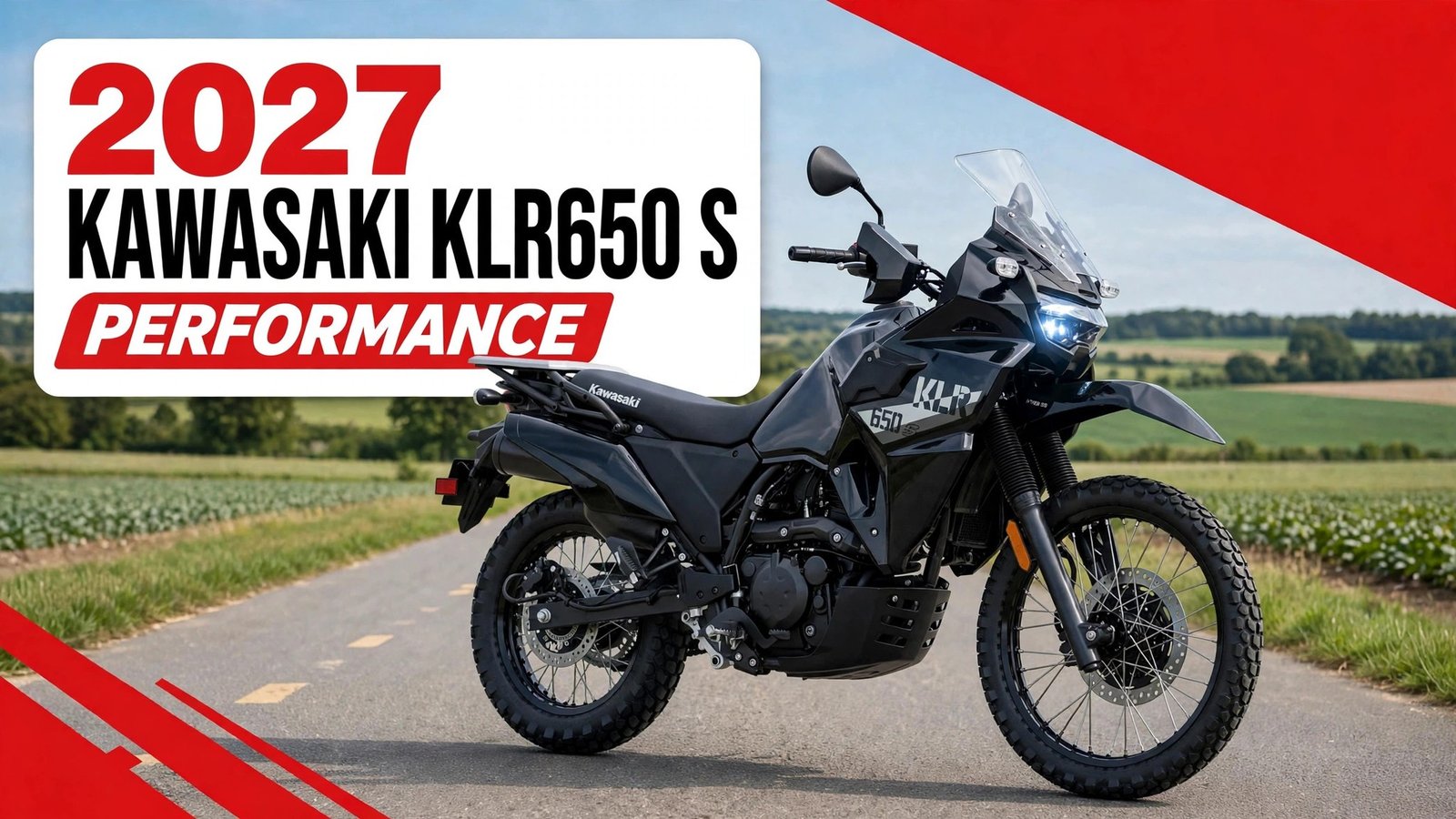
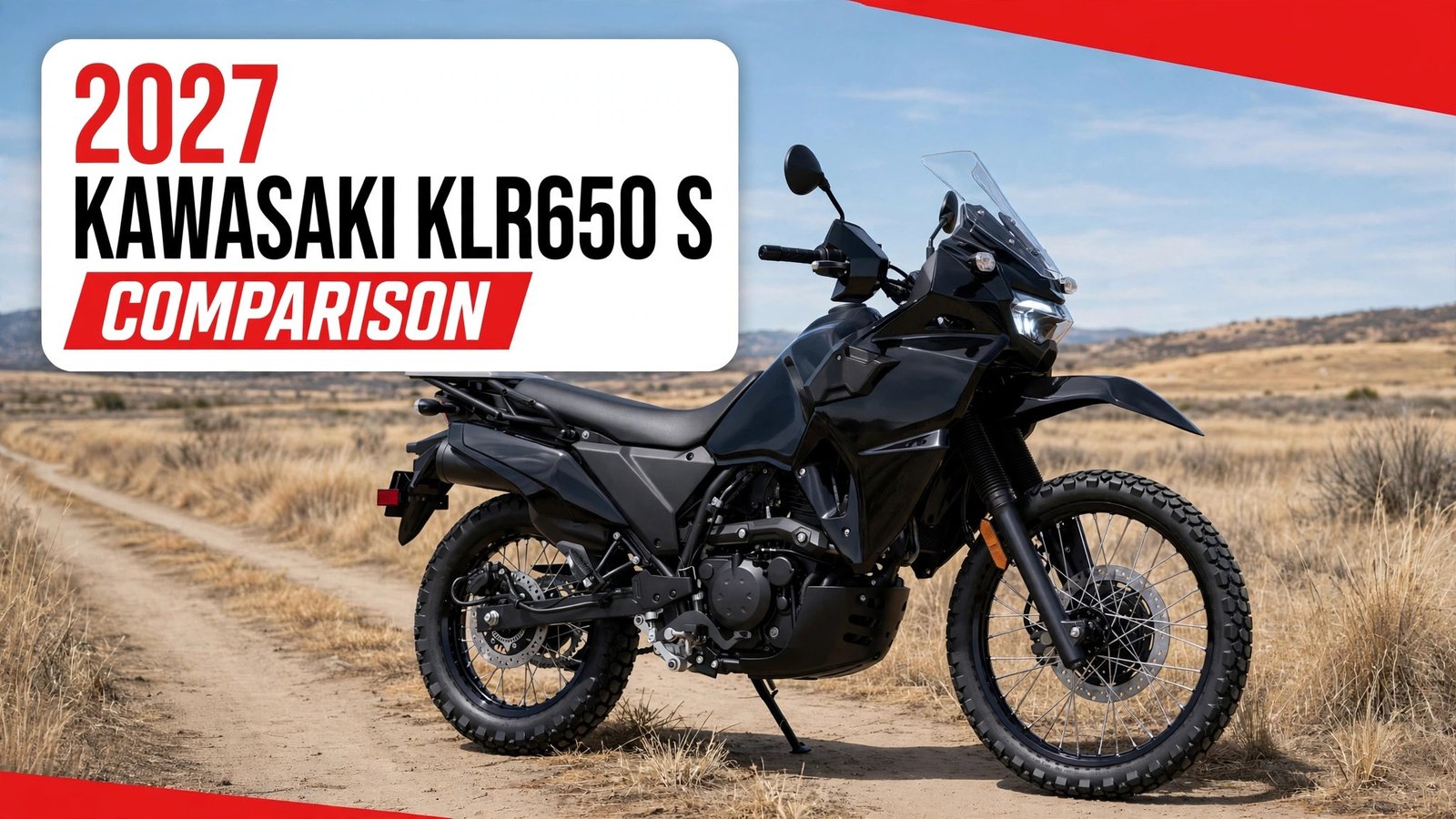
The 2027 Kawasaki KLR650 S costs $7,684 delivered, and that number is the whole story of this Kawasaki KLR650 S review: the factory-lowered dual-sport costs exactly the same as the standard KLR650, year after year, while dropping the seat to 32.1 inches. The S fixes the KLR650’s one real barrier for shorter riders, and charges nothing for the fix.
This Kawasaki KLR650 S review covers the lowered trim in full: how Kawasaki lowered it, what the lower seat costs in clearance and comfort, the S’s own dyno run, flat-foot tests at two inseams, and every model-year price from the 2023 launch to the 2027 bike. The S is a trim of the gen-3 KLR650, not a separate model, so the engine, tank and frame are the same machine that has run since 2022.
Kawasaki KLR650 S Overview and Model-Year Updates
The KLR650 S arrived for 2023 as Kawasaki’s answer to the gen-3 KLR650’s most common complaint: the 34.3-inch seat is too tall for a large share of riders, and this Kawasaki KLR650 S review starts with what changed and what did not.

Factory Low Seat, Zero Price Premium
The S exists because the standard KLR650’s seat height shuts out shorter riders. At 34.3 inches, the standard bike leaves a 5-foot-4 rider on tiptoes, and the Adventure trim at the same height is worse. The S drops the seat to 32.1 inches, and the price stays put: $6,999 for the non-ABS bike and $7,299 with ABS in 2027, the same as the standard trim in every model year. This Kawasaki KLR650 S review treats that parity as the headline.
Model-year updates are light. The 2023 launch bike came in Candy Lime Green for the non-ABS trim and Pearl Storm Gray for both. The 2024 colours were Firecracker Red and Pearl Crystal White, the 2025 bike wore Metallic Matte Old School Green or Pearl Crystal White, the 2026 bike came in Pearl Solar Yellow or Metallic Spark Black, and the 2027 bike comes in Metallic Spark Black only, with early-December availability.
Lowered by Travel and Linkage, Not Links
Kawasaki lowered the S the honest way, by changing the suspension and the seat, not by bolting on lowering links. The fork loses 1.2 inches of travel and the rear shock loses an inch. The tie-rod is 4 mm longer, the spring rates and valving are S-specific, and the seat is 35 mm thinner with reworked urethane. The side stand is 30 mm shorter, and the shifter-to-footpeg distance is increased so a booted foot still fits.
Kawasaki KLR650 S Engine and Specifications
The S runs the same 652cc liquid-cooled single as every gen-3 KLR650: 40 hp at 6,000 rpm and 39.1 lb-ft at 4,500 rpm on Kawasaki’s spec sheet, with an ISO 4106 footnote on the power figure. Nothing about the lowering touches the engine, so the S’s performance story is the KLR650’s performance story, except that the S has its own dyno run, the best number in the family.
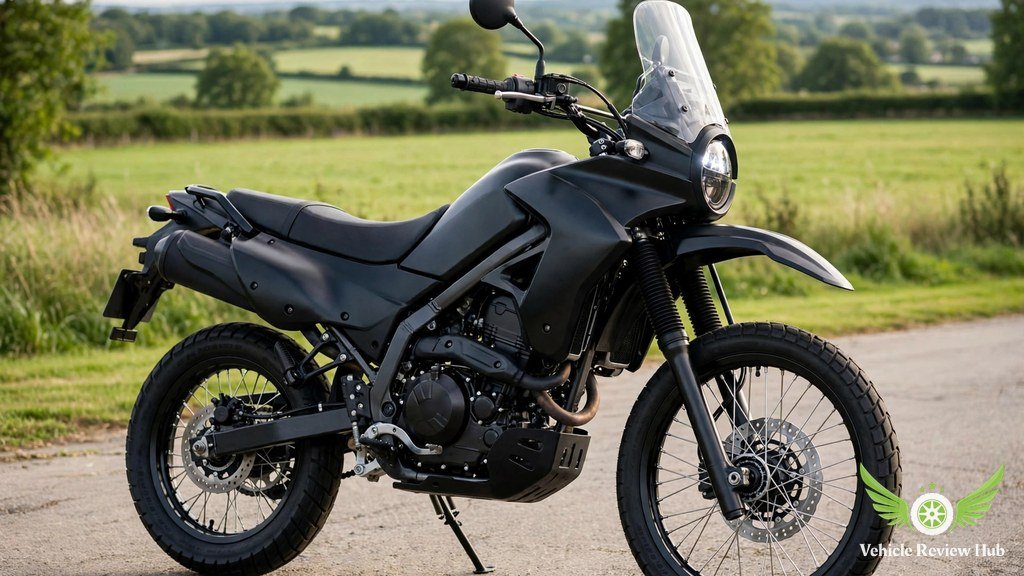
Seat 32.1 Inches, Clearance 7.3
The seat height is 32.1 inches against the standard bike’s 34.3 inches. The drop works out to 2.2 inches by the spec-sheet arithmetic, and this Kawasaki KLR650 S review names both figures because Kawasaki’s own press material rounds the same drop to 2.3 inches. Ground clearance is 7.3 inches, one inch lower than the standard bike’s 8.3 inches, and the wheelbase is 59.6 inches, one inch shorter. The front fork is a 41 mm telescopic unit with 6.7 inches of travel, and the rear Uni-Trak shock gives 7.0 inches. The wheels are 21 inches in front and 17 inches at the rear, wire-spoked.
One figure in this Kawasaki KLR650 S review needs a label rather than a single number. The standard bike’s rear travel is 8.0 inches on Kawasaki’s current spec sheet, but Kawasaki’s own 2022 launch material printed 7.3 inches, so the S’s 7.0-inch rear travel is either a full inch or three-tenths shorter than the standard.
Weight Identical to the Standard
The identical weight is also why the S keeps the standard bike’s handling character. A 456-pound bike is still a heavy dual-sport, and the lower seat does not make it lighter, but it does make it easier to hold up at a stop. Our standard KLR650 review covers the platform in full.
| Specification | KLR650 S | Standard KLR650 |
|---|---|---|
| Engine | 652cc liquid-cooled single, EFI, 5-speed | Same |
| Claimed power | 40 hp @ 6,000 rpm (ISO 4106) | Same |
| Torque | 39.1 lb-ft @ 4,500 rpm | Same |
| Seat height | 32.1 in | 34.3 in |
| Ground clearance | 7.3 in | 8.3 in |
| Front / rear travel | 6.7 in / 7.0 in | 7.9 in / 8.0 in |
| Wheelbase | 59.6 in | 60.6 in |
| Curb weight | 456.2 lb / 460.6 lb ABS | Same |
| Fuel tank | 6.1 gal | Same |
| Wheels | 21-in front / 17-in rear, wire-spoked | Same |
| Warranty | 12 months limited | Same |
Notes for this Kawasaki KLR650 S review specification table: all figures are Kawasaki’s US spec-sheet figures for the 2027 model year unless labelled otherwise. The 40 hp claim carries Kawasaki’s ISO 4106 footnote. The standard bike’s rear travel is 8.0 inches on the current spec sheet, while Kawasaki’s 2022 launch material printed 7.3 inches. Cycle World’s scale weight of 464 pounds for the 2023 S is their own measured figure.
Kawasaki KLR650 S Price and Market Availability
Price is where the S makes its case, and this Kawasaki KLR650 S review puts the numbers first: the 2027 S is $6,999 without ABS and $7,299 with it, plus $685 destination, or $7,684 and $7,984 delivered — the same numbers as the standard KLR650 in the same year.
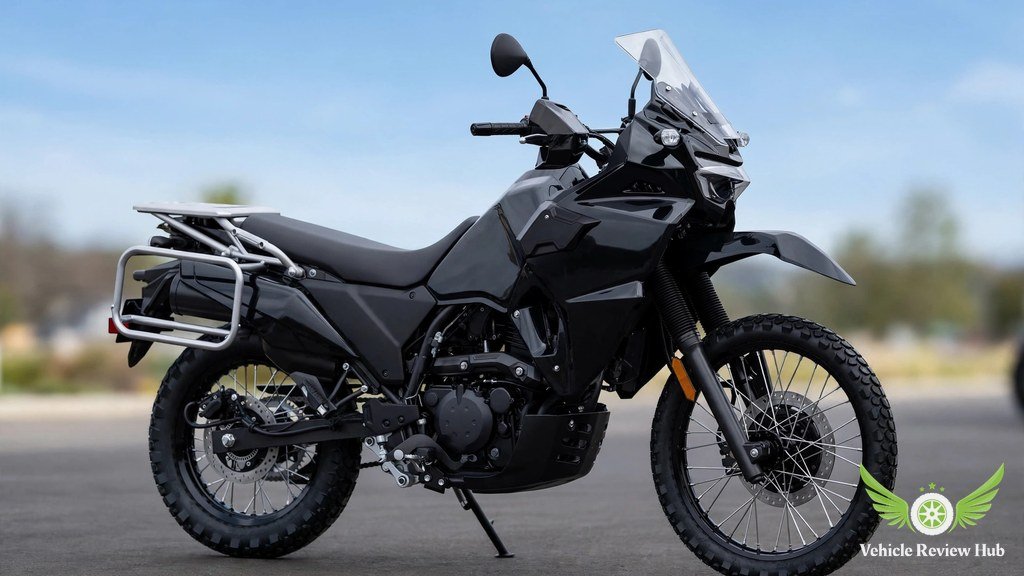
Kawasaki KLR650 S Price in the USA: $6,999
The $6,999 headline is the 2027 non-ABS MSRP, and the ABS bike is $7,299, a $300 option that buys the only rider aid on the bike. ABS is non-switchable on every KLR650 trim, which matters off-road. This Kawasaki KLR650 S review uses delivered prices throughout, because the destination charge is part of what a buyer actually pays: $435 in 2023, $450 in 2024, $665 in 2025, and $685 in 2026 and 2027.
Real advertised discounts exist for patient buyers. Capital Powersports in Wake Forest, North Carolina, advertised a 2026 S at $6,999 with $750 in savings, or $6,348 after offers, in November 2026. Rocky Mountain Cycle Plaza in Monument, Colorado, listed a 2026 S on sale at $6,249 before fees, and Langston Motorsports in Perris, California, advertised 2025 S bikes from $5,395 to $6,149 on Cycle Trader in November 2026. Discounts are local and temporary, so this Kawasaki KLR650 S review treats the delivered MSRP as the comparison price.
Parity With the Standard Every Year
The S has cost exactly what the standard KLR650 costs in every model year since launch. The 2023 S was $6,899 and $7,199 with ABS, delivered at $7,334 and $7,634. The 2024 bike held the same MSRPs and delivered at $7,349 and $7,649. The 2025 bike split by colour, and the S-specific listings say green at $6,949 and white at $6,899, with ABS at $7,249 and $7,199. That split runs the other way from the C52 lump, so this Kawasaki KLR650 S review follows the S-specific listings and names the conflict.
Parity is the point. Lowering a bike usually costs money, whether through the factory or through aftermarket parts and labour, and Kawasaki charges nothing for it here. A rider who buys the standard bike and lowers it later pays for links, a seat and a stand, and ends up with a bike that is not quite factory. Our KLR650 performance guide covers the shared engine in depth, and the S gives up none of it.
| Model year | S MSRP | S ABS MSRP | Destination | Delivered S | Delivered S ABS |
|---|---|---|---|---|---|
| 2023 | $6,899 | $7,199 | $435 | $7,334 | $7,634 |
| 2024 | $6,899 | $7,199 | $450 | $7,349 | $7,649 |
| 2025 green | $6,949 | $7,249 | $665 | $7,614 | $7,914 |
| 2025 white | $6,899 | $7,199 | $665 | $7,564 | $7,864 |
| 2026 | $6,999 | $7,299 | $685 | $7,684 | $7,984 |
| 2027 | $6,999 | $7,299 | $685 | $7,684 | $7,984 |
Notes for this Kawasaki KLR650 S review price table: all figures are US delivered prices before tax, title and dealer fees. The 2025 colour split follows S-specific Langston Motorsports listings, which put green $50 above white; the C52 lump had the split the other way, and the conflict is named in the text above. The 2027 bike comes in Metallic Spark Black only, with early-December availability. Destination charges are verified per model year.
Kawasaki KLR650 S Design, Features and Technology
The S looks like a standard KLR650 sat down a notch, because that is what it is. This Kawasaki KLR650 S review covers the factory details that separate a real S from a lowered standard.

Seat Is 35mm Thinner and Slimmer
The seat is the single biggest change and the single biggest compromise. Kawasaki shaved 35 mm from the seat and reworked the urethane to keep it supportive, and the result is a narrower, slimmer perch that lets a rider’s legs reach straight down instead of splaying around a wide saddle. The thinner seat is what makes the 32.1-inch height work in practice.
The cost is comfort, and this Kawasaki KLR650 S review does not hide it. RevZilla’s Jen Dunstan called the low-profile seat undeniably less plush compared to the KLR Adventure’s seat, and Cycle World’s Jeff Allen noticed the extra padding of the standard seat immediately when he rode the two back to back. The S seat is fine for a day ride, but a rider who tours long distances should budget for an aftermarket seat. The rubber-dampened seat and rubber-mounted bars and pegs are unchanged.
Side Stand Is 30mm Shorter
The side stand is 30 mm shorter, and it is the detail that proves the S is a factory job. A DIY-lowered bike keeps the standard stand, which leaves the bike standing too upright and easy to tip, and the usual fix is to cut the stand down crudely. The S stand is the right length from the factory, so the lean angle is correct. This Kawasaki KLR650 S review flags the stand because it is the easiest tell on a used bike.
The rest of the design is gen-3 KLR650, unchanged. The LED headlight, the all-digital instrumentation with its fuel gauge, the tall two-position adjustable windshield and the large aluminium rear carrier are all standard. There is no tachometer, no ride modes, no traction control, no TFT display and no ride-by-wire, and ABS is the only rider aid. There is no top box as standard and no centre stand on any KLR650 trim. The 26-amp generator leaves 80 watts for accessories. Kawasaki’s own KLR650 spec sheet lists the full equipment, and the S shares every line of it except the seat, the suspension, the tie-rod and the stand.
Kawasaki KLR650 S Riding Experience and Comfort
Riding the S is where the lowering pays off, and this Kawasaki KLR650 S review leans on the published flat-foot tests, because seat height is a claim best settled by riders of known height and inseam.

Flat Feet at a 28-Inch Inseam
Cycle World’s Jeff Allen is 5 feet 7 inches tall with a 28-inch inseam, and on the S he could firmly plant both feet on the ground. RevZilla’s Jen Dunstan is 5 feet 4 inches with a 31.5-inch inseam, and on the S she could balance on the balls of both feet, while the Adventure at 34.3 inches was a perilous teeter-totter she could not put both feet down on. Ultimate Motorcycling’s tester, with a 30-inch inseam, put both boots flat on the ground.
The flat-foot gain is the whole reason the S exists, and this Kawasaki KLR650 S review treats it as the buying decision. A rider who can put both feet down at a stop drops the bike less, rides more confidently in traffic and on loose ground, and stops dreading the places where the standard bike demands a tiptoe. The S does not make the bike lighter, but it makes the stop itself far less likely to go wrong.
Thinner Seat Is Less Plush, Said RevZilla
The comfort trade is real and it is the seat. RevZilla called the low-profile seat undeniably less plush compared to the KLR Adventure’s seat, and Cycle World found the standard seat’s extra padding noticeable the moment they swapped bikes. This Kawasaki KLR650 S review puts the trade plainly: the S buys reach with foam, and a rider who does long days will feel it. An aftermarket seat fixes it, but the factory seat is the price of the low height.
Everything else about the ride is the standard KLR650. The S’s own dyno run from Cycle World’s S dyno test made 36.86 hp at 6,080 rpm and 35.42 lb-ft at 4,590 rpm, the highest of the three published gen-3 runs, and the gap is dyno-to-dyno variance rather than a trim advantage, since the engine is identical. Cycle World recorded 43.94 mpg on the S with a 268-mile range. There is no instrumented top-speed figure for the S, and the only instrumented figure in the family is Cycle News at 88 to 90 mph, tested on the Adventure. The gearing is tall, with first gear winding out near 30 mph, and the suspension is stiffer and sportier than the standard bike’s. Vibration splits the testers: Cycle News notes buzz at highway speed, while Rider Magazine says there is very little.
Kawasaki KLR650 S Review: Pros, Cons and Verdict
The verdict in this Kawasaki KLR650 S review is simple: the S is the right KLR650 for any rider who cannot flat-foot the standard bike. It costs the same, weighs the same, and gives up only an inch of clearance and travel, plus some seat comfort.
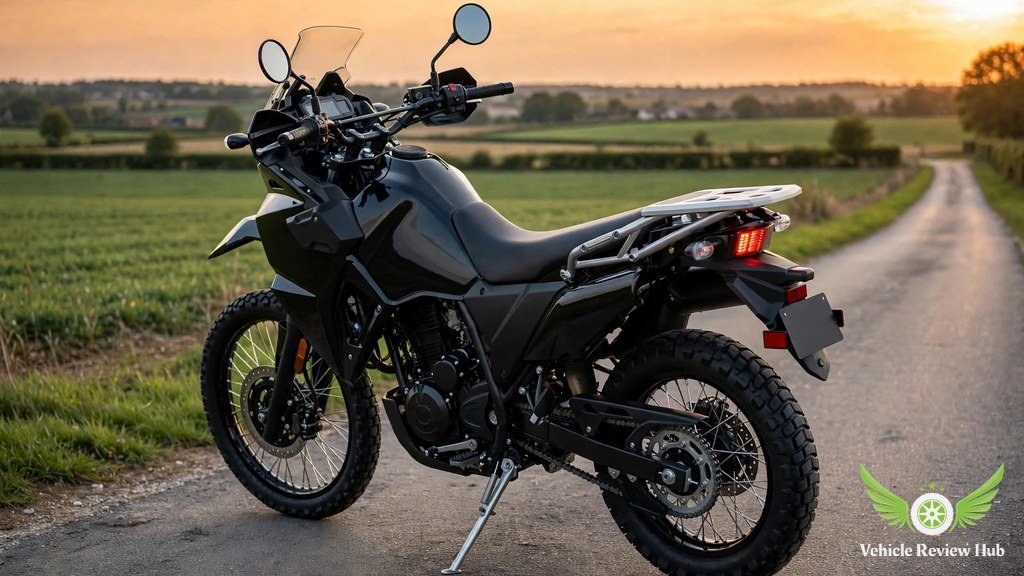
Main Advantages and Limitations of the Kawasaki KLR650 S
The advantages start with reach and end with price. A 32.1-inch seat that a 28-inch inseam can flat-foot, a factory lowering job done properly with suspension and a stand to match, the same 652cc single and 6.1-gallon tank as the standard bike, the same dyno figures, and zero price premium over the standard trim in any model year. The S also keeps the KLR650’s honest virtues: a huge dealer network, cheap parts, a record back to 1987, and a 268-mile range.
The limitations are the ones the lowering creates. The seat is thinner and less plush, and long days will tell. Ground clearance drops to 7.3 inches and suspension travel to 6.7 inches in front and 7.0 at the rear, so the S is the least off-road-capable KLR650, and pegs drag sooner on the lowered bike. The 12-month warranty is short, the bike has no tachometer and no modern rider aids beyond non-switchable ABS, and the 456-pound weight does not change with the seat height. A taller rider will find the S cramped. The DR650S review shows the lighter Suzuki alternative, and the Versys 650 review shows the road-biased twin, but neither matches the S on price.
| Pros | Cons |
|---|---|
| 32.1-in seat flat-foots a 28-in inseam | Thinner seat is less plush on long days |
| Zero price premium over the standard | Ground clearance down to 7.3 in |
| Factory lowering: suspension, seat, stand | Travel down to 6.7 in front / 7.0 in rear |
| Same 652cc single, 6.1-gal tank, 268-mi range | 456 lb weight unchanged; no lighter |
| Same dyno figures as the standard bike | No tach, no rider modes, ABS non-switchable |
| Huge dealer network, cheap parts, record since 1987 | 12-month warranty is short |
Notes for this Kawasaki KLR650 S review pros and cons table: the flat-foot claim rests on Cycle World’s test at a 28-inch inseam, with RevZilla at 31.5 inches and Ultimate Motorcycling at 30 inches as supporting tests. The 268-mile range is Cycle World’s 43.94 mpg times the 6.1-gallon tank.
12 Month Limited Warranty
The S carries Kawasaki’s 12-month limited warranty, the same as every KLR650 trim. Twelve months is short against rivals that offer two years or more, and this Kawasaki KLR650 S review counts it as the weakest part of the ownership story. The warranty covers the factory lowering package as factory equipment, which is a real advantage over a DIY-lowered standard bike, where the aftermarket links and seat carry no factory cover.
Buy the S if the standard KLR650 is too tall for you, if you ride mostly on road and light dirt, and if you want the lowering done by the factory at no extra cost. Buy the standard bike if you are tall enough to flat-foot 34.3 inches, if you ride technical trails where the extra inch of clearance matters, or if you want the plusher standard seat. The RevZilla S first ride found no fatal flaw in the lowered bike, and neither does this Kawasaki KLR650 S review.
Kawasaki KLR650 S Review: Frequently Asked Questions
Short answers to the questions this Kawasaki KLR650 S review raises most: price, seat height, the lowering package and performance.
How much does the 2027 KLR650 S cost?
The 2027 KLR650 S is $6,999 without ABS and $7,299 with ABS, plus $685 destination, or $7,684 and $7,984 delivered, in this Kawasaki KLR650 S review. The 2027 bike comes in Metallic Spark Black only, with early-December availability.
Is the KLR650 S the same price as the standard KLR650?
Yes. The S costs exactly what the standard KLR650 costs in every model year, in this Kawasaki KLR650 S review. The lowering package is free: the same MSRP, the same destination charge, and the same delivered price.
How much lower is the KLR650 S seat?
The S seat is 32.1 inches against the standard bike’s 34.3 inches, in this Kawasaki KLR650 S review. The drop is 2.2 inches by the spec-sheet arithmetic, while Kawasaki’s press material rounds it to 2.3 inches.
How did Kawasaki lower the KLR650 S?
Kawasaki lowered the S with a 35 mm thinner seat, shorter suspension with S-specific spring rates and valving, a tie-rod 4 mm longer, and a side stand 30 mm shorter, in this Kawasaki KLR650 S review. No lowering links are used.
Is the KLR650 S slower than the standard KLR650?
No. The S has the same 652cc single, and its own dyno run made 36.86 hp at 6,080 rpm and 35.42 lb-ft at 4,590 rpm, the highest of the three published gen-3 runs, in this Kawasaki KLR650 S review. The gap is dyno-to-dyno variance, since the engine is identical.
What is the top speed of the KLR650 S?
There is no instrumented top-speed figure for the S, and Kawasaki publishes no official top speed, in this Kawasaki KLR650 S review. The only instrumented figure in the family is Cycle News at 88 to 90 mph, tested on the Adventure. TopSpeed prints 89 mph for the S with no source.
What mileage does the KLR650 S get?
Cycle World recorded 43.94 mpg on the 2023 S, a 268-mile range from the 6.1-gallon tank, in this Kawasaki KLR650 S review. Other tested figures on the platform run from 35.2 mpg on a hard freeway blast to 49 mpg measured by Cycle News.
Can a rider with a 28-inch inseam flat-foot the KLR650 S?
Yes. Cycle World’s tester, at 5 feet 7 inches with a 28-inch inseam, could firmly plant both feet on the ground on the S, in this Kawasaki KLR650 S review. RevZilla’s tester, at 5 feet 4 inches with a 31.5-inch inseam, balanced on the balls of both feet.
Is the KLR650 S seat comfortable?
The S seat is less plush than the standard seat, because it is 35 mm thinner, in this Kawasaki KLR650 S review. RevZilla called it undeniably less plush compared to the KLR Adventure’s seat, and Cycle World noticed the standard seat’s extra padding immediately.
Does the KLR650 S have ABS?
ABS is a $300 option on the S, the same as on the standard bike, in this Kawasaki KLR650 S review. It is the only rider aid on the bike, and it is non-switchable, which matters off-road.
What colours does the KLR650 S come in?
The 2027 S comes in Metallic Spark Black only, in this Kawasaki KLR650 S review. Earlier years: Candy Lime Green and Pearl Storm Gray in 2023, Firecracker Red and Pearl Crystal White in 2024, Metallic Matte Old School Green and Pearl Crystal White in 2025, and Pearl Solar Yellow and Metallic Spark Black in 2026.
Is the KLR650 S good for beginners?
The S is one of the better beginner dual-sports for a shorter rider, in this Kawasaki KLR650 S review. The low seat, the forgiving single, the 6.1-gallon tank and the huge dealer network all help, and the 12-month warranty is the weak spot. The 456-pound weight is still heavy for a new rider.