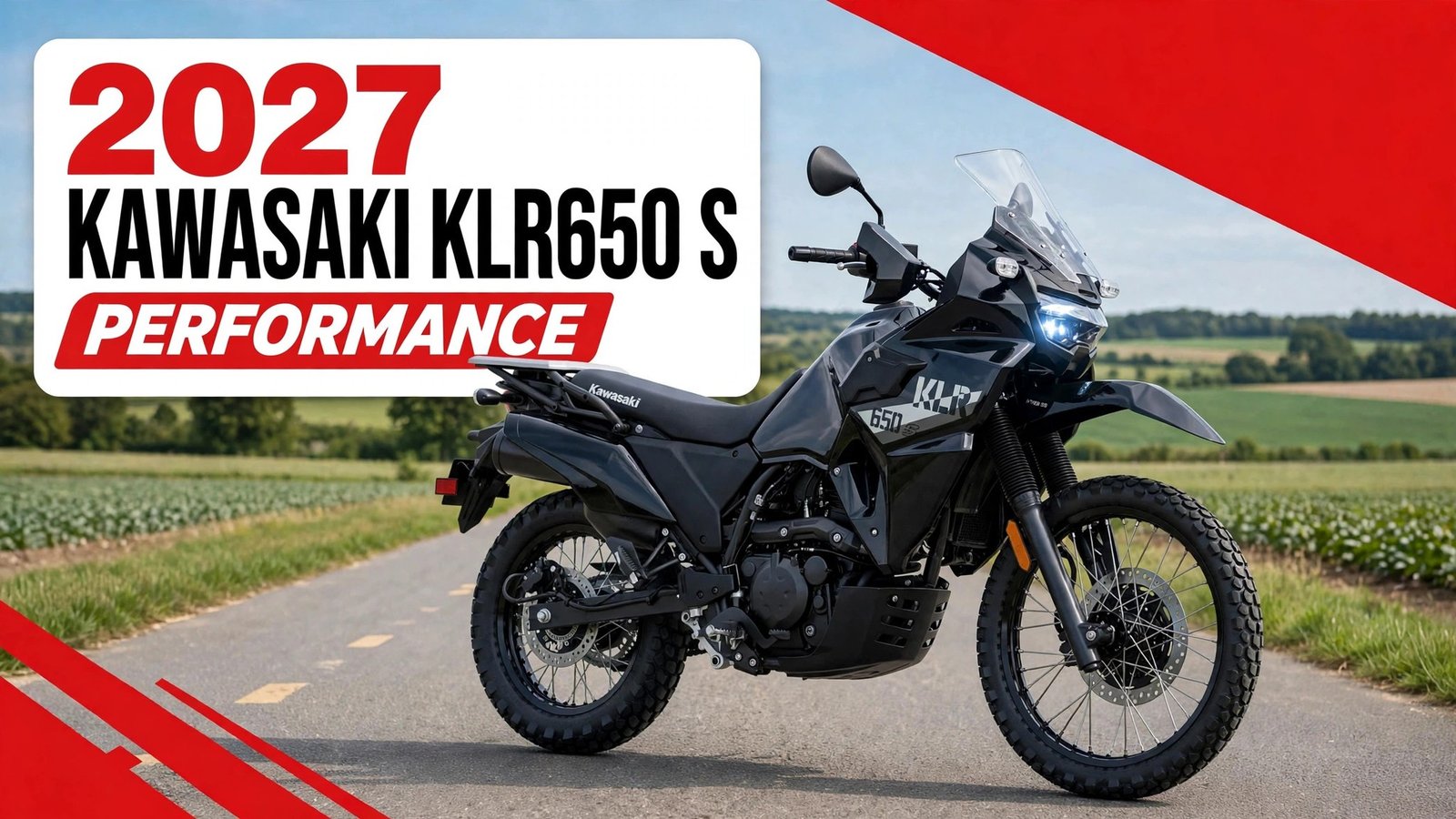
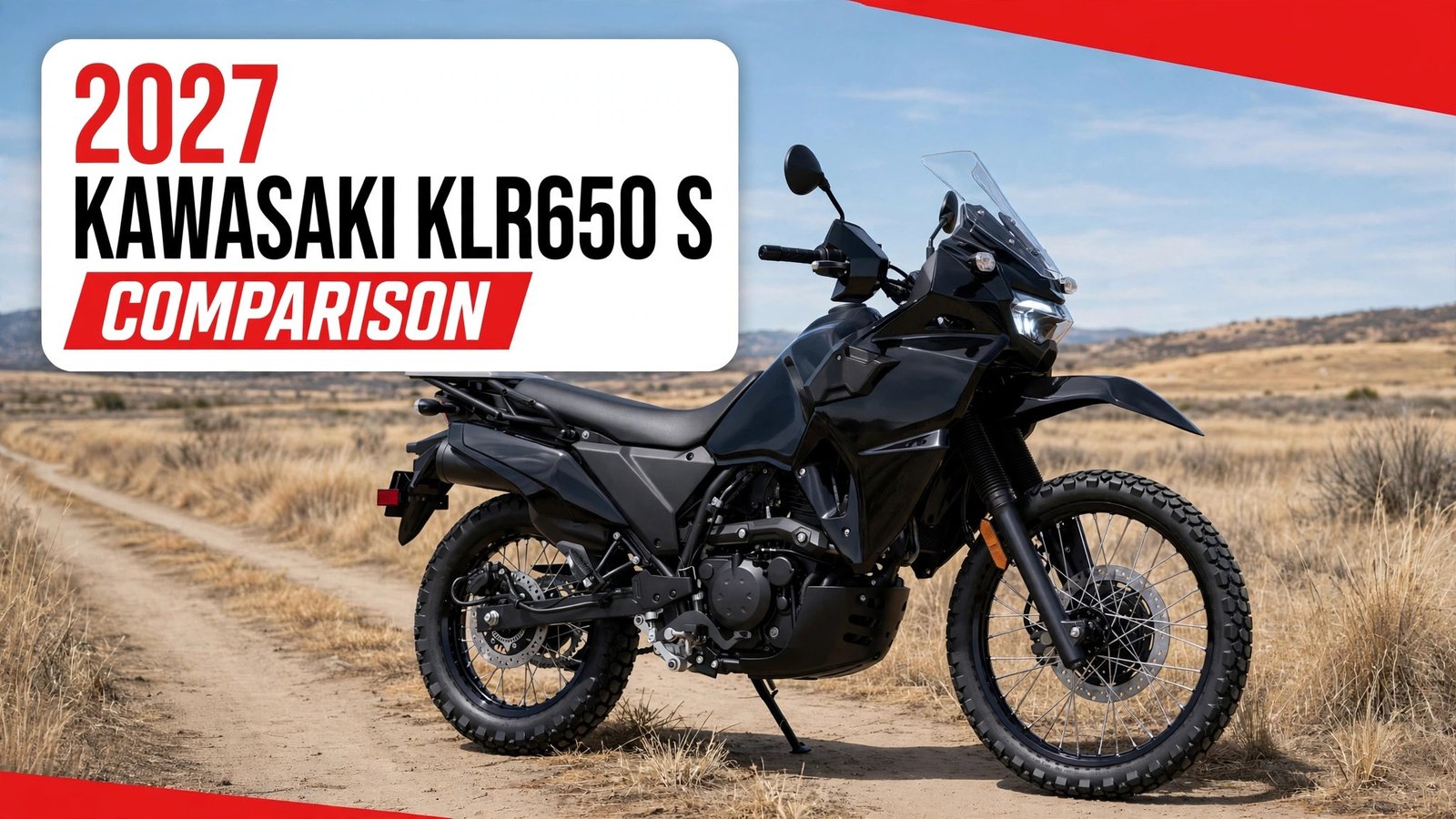
Kawasaki KLR650 is slow by modern standards: a claimed 40 hp at the crank, 34.6 to 36.9 hp at the rear wheel depending on the dyno, a tested top speed of 88 to 90 mph, and close to 300 miles from its 6.1-gallon tank. This Kawasaki KLR650 performance guide separates every tested figure from every claimed one, because the gap between the two is where most KLR650 arguments start.
Three dyno runs, two top-speed camps and four fuel-economy figures all come from named tests in this Kawasaki KLR650 performance guide. Cycle World put a 2022 Adventure on its Dynojet and recorded 34.61 hp; Rider Magazine put the same bike on a dyno and recorded 36.5 hp. Neither number is wrong, and understanding why they differ matters more than picking one.
Kawasaki KLR650 Engine Performance and Power Delivery
The engine is a 652cc liquid-cooled single with double overhead cams and four valves, and this Kawasaki KLR650 performance guide treats it as a known quantity: a big, understressed single tuned for low-rev torque rather than peak power. Kawasaki publishes 40 hp at 6,000 rpm and 39.1 lb-ft at 4,500 rpm, and the power figure carries an ISO 4106 footnote. Peak torque arrives at 4,500 rpm, which is why the bike pulls cleanly from low revs even though the headline number looks small.
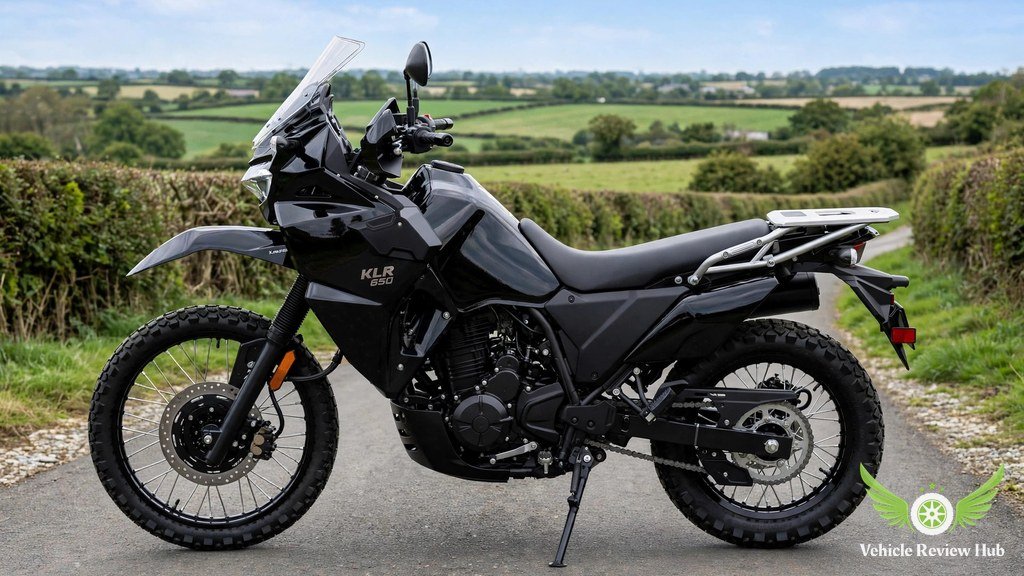
Crank Claim 40, Wheel Figure 34.6
Kawasaki’s 40 hp is a crank claim measured to the ISO 4106 standard, and the rear wheel always sees less. Cycle World’s 2022 dyno test put a 2022 KLR650 Adventure on its in-house Dynojet 250i dynamometer and recorded a peak 34.61 hp at 5,910 rpm and 33.52 lb-ft of torque at 4,700 rpm. That is the figure this Kawasaki KLR650 performance guide uses as its baseline, because it is the only Cycle World run on the Adventure trim and the test names its machine, its dyno and its date.
The film below is Cycle World’s dyno test of the 2022 Adventure. It is a dyno-run video, not a road test: the bike runs on the Dynojet rollers in a workshop, and there is no road riding footage in it. Watch it for the numbers and the sound of the single at full throttle, not for a riding impression.
The 5.4 hp gap between the 40 hp crank claim and the 34.61 hp wheel figure is normal drivetrain loss, so the useful comparison is wheel figure to wheel figure.
Five Gears and Highway Buzz, Tester-Verified
The five-speed gearbox is the most old-fashioned part of the bike, and the missing sixth gear is the standing complaint in every road test. First gear is tall enough that slow technical work needs clutch slip, while fifth gear puts the single at high revs for a 75 mph cruise.
Testers split on how much that matters. Cycle News notes buzz at highway speed, a vibration through the bars and pegs that grows as the speed climbs. Rider Magazine reports very little vibration and says the bike happily cruises at 75 mph. This Kawasaki KLR650 performance guide presents both camps because both are honest, and the only way to know which camp you fall into is a highway test ride.
Kawasaki KLR650 Top Speed and Acceleration
There is no official top speed for the KLR650, because Kawasaki publishes none, and there is only one instrumented figure in the world. This Kawasaki KLR650 performance guide uses that figure and labels everything else as estimate or fiction, because the internet is full of top-speed numbers for this bike and almost none of them come from a test.
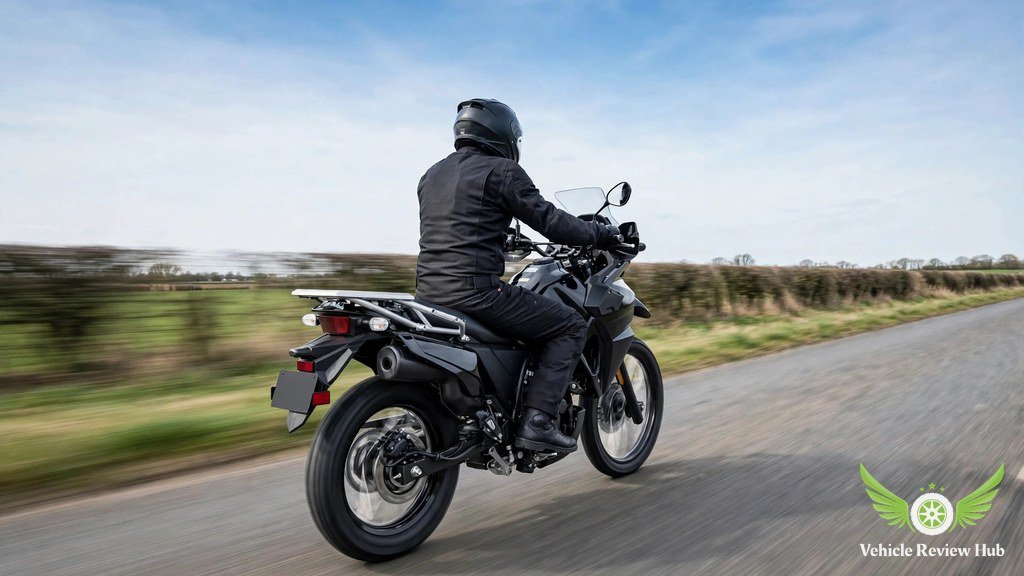
Tested Top Speed: 88 to 90 MPH
Cycle News tested the 2022 KLR650 in 2022, with Kit Palmer riding, and recorded 88 to 90 mph on level ground, in a full tuck, with no wind. That is the only instrumented top-speed figure for the third-generation bike, and this Kawasaki KLR650 performance guide prints it with its conditions attached: level ground, full tuck, no wind.
The same test found 74 mph a comfortable cruise, which is the more useful number for buyers. A bike that tops out near 90 mph spends its highway life at 70 to 75 mph, and at that speed the single is working hard in fifth gear. The 98 mph figure found on aggregator sites is invented: no test produced it, no magazine printed it, and it does not appear in this guide as a real number.
No Instrumented Quarter Mile Exists
No magazine has published an instrumented quarter-mile time for the third-generation KLR650, and no 0 to 60 mph time either. The only published quarter-mile figure for the model line is Motorcyclist’s 2008 test of the second-generation bike: 14.81 seconds at 85.97 mph, with 0 to 60 mph in 6.27 seconds. That is a gen-2 figure only and must never be quoted as a gen-3 result.
| Measurement | Figure | Source |
|---|---|---|
| Top speed | 88 to 90 mph | Cycle News 2022, level ground, full tuck, no wind |
| Comfortable cruise | 74 mph | Cycle News 2022 |
| Quarter mile (gen-3) | No instrumented figure exists | No test published |
| Quarter mile (gen-2) | 14.81 s @ 85.97 mph | Motorcyclist 2008, gen-2 only |
| 0 to 60 mph (gen-2) | 6.27 s | Motorcyclist 2008, gen-2 only |
| 0 to 60 mph (gen-3) | No instrumented figure exists | No test published |
Notes for this Kawasaki KLR650 performance speed table: the 88 to 90 mph figure is the only instrumented top speed for the third-generation bike, measured by Cycle News in 2022 on level ground in a full tuck with no wind. The 98 mph figure on aggregator sites is invented and is not printed here. The 2008 quarter-mile and 0 to 60 figures are second-generation only and must not be quoted as gen-3 results.
Kawasaki KLR650 Mileage and Fuel Economy
Fuel economy is the second half of the KLR650’s performance story, and it is the half the bike wins. The 6.1-gallon tank is the largest in its class, and the economical single stretches it further than any rival. This Kawasaki KLR650 performance guide uses only named tests and labelled owner data for its mileage figures.
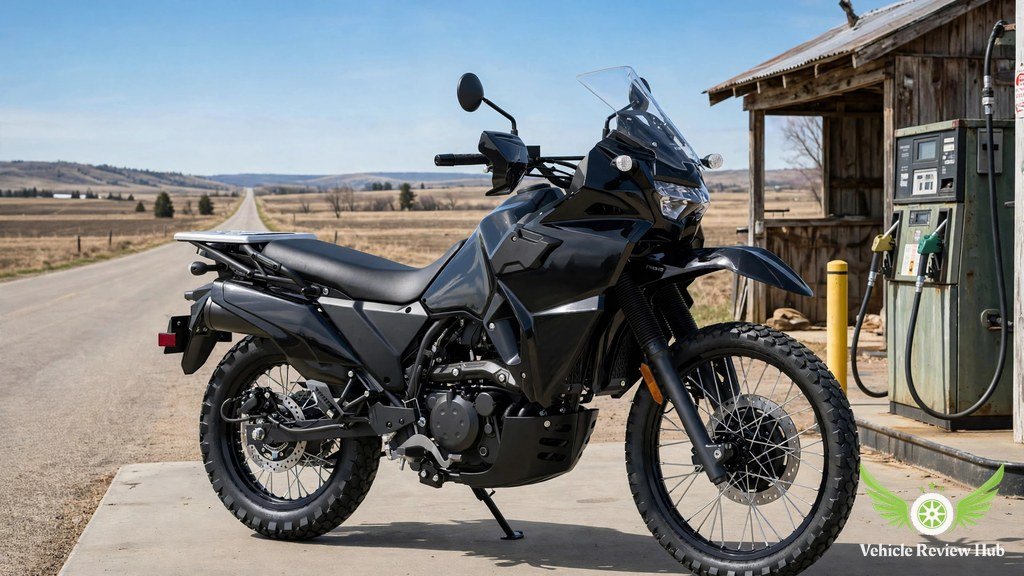
Cycle News Measured 49 MPG
Cycle News measured 49 mpg on a mostly paved ride home to California in 2022 and came close to 300 miles on a tank. That is a measured figure from a named test, and it sets the realistic ceiling for paved-road riding. At 49 mpg the 6.1-gallon tank carries the bike 299 miles, which is why the 300-mile range claim is honest on the road even though it is arithmetic as much as measurement.
Kawasaki publishes no official US MPG figure for the KLR650. The 49 mpg figure stands on its own as the best paved-road measurement available, and this Kawasaki KLR650 performance guide treats it as the reference number for highway and back-road riding.
Rider Estimated 287 Miles of Range
Rider Magazine recorded 47 mpg in its 2022 test and estimated 287 miles of range, with the test bike weighing 487 lb wet as tested. The 2 mpg gap between the two tests is normal variation, so expect close to 300 miles on paved roads, less when the going gets rough.
ADV Pulse ran a 2022 KLR650 dry in deep sand on the Bradshaw Trail and stopped at 239.6 miles, at 39.3 mpg, in deep sand. Fuelly owner data averages 48.56 mpg across owners, which works out to roughly 300 miles on the full tank — labelled here as owner-reported data, not a test. The gen-3 digital display finally includes a fuel gauge, which Rider called a welcome addition. Taken together, the four figures give this Kawasaki KLR650 performance guide a range band rather than a single number: about 300 miles on the road, about 240 miles in deep sand.
| Test | MPG | Range | Conditions |
|---|---|---|---|
| Cycle News 2022 | 49 mpg measured | Close to 300 miles | Mostly paved, ride home to California |
| Rider Magazine 2022 | 47 mpg | 287 miles estimated | Test bike 487 lb wet as tested |
| ADV Pulse range test | 39.3 mpg | 239.6 miles, ran dry | Deep sand, Bradshaw Trail |
| Fuelly owner data | 48.56 mpg average | About 300 miles | Owner-reported, not a test |
Notes for this Kawasaki KLR650 performance mileage table: Cycle News measured 49 mpg and Rider Magazine recorded 47 mpg, both on paved roads in 2022. The ADV Pulse figure comes from a deliberate run-dry test in deep sand. Fuelly’s 48.56 mpg is owner-reported data, not a magazine test. Kawasaki publishes no official US MPG figure for this bike.
Kawasaki KLR650 Real-World Riding Experience
On the road, the KLR650 feels exactly like its numbers suggest: steady, unhurried and hard to upset. This Kawasaki KLR650 performance guide looks at what the dyno sheets mean in practice, because three different rear-wheel figures for the same engine tell a story about testing as much as about the bike.

The Same Bike Dynoed 34.6 and 36.5
The same 2022 KLR650 Adventure produced two different rear-wheel figures on two different dynos. Cycle World recorded 34.61 hp at 5,910 rpm and 33.52 lb-ft at 4,700 rpm on its Dynojet 250i. Rider Magazine recorded 36.5 hp at 6,100 rpm and 35.2 lb-ft at 4,600 rpm on the same bike. The gap is 1.9 hp and 1.7 lb-ft on the identical motorcycle, which is a dyno-to-dyno difference, not a difference between two bikes.
That matters because an older claim says a second-generation KLR650 dynoed 36.5 hp, and the number has been used to argue that the old bike beat the new one. Rider’s own 2022 third-generation Adventure dynoed at exactly 36.5 hp, the same figure, so the alleged generational defeat disappears: the gap is between two dynos measuring the same generation, not between two generations. This Kawasaki KLR650 performance guide presents all three runs with their sources and does not frame the numbers as a generation beating another generation.
Adventure and S Trims Dyno Differently
Cycle World’s two runs show the same spread inside one magazine, and this Kawasaki KLR650 performance guide reads them as sample variance, not a trim difference. The 2022 Adventure made 34.61 hp at 5,910 rpm and 33.52 lb-ft at 4,700 rpm, while Cycle World’s 2023 S dyno test recorded 36.9 hp at 6,100 rpm and 35.4 lb-ft at 4,600 rpm on the same Dynojet 250i — a gap of 2.3 hp and 1.9 lb-ft. Cycle World weighed the S at 464 lb on its automotive scales, heavier than the Adventure’s quoted figures, so the S did not win on weight either.
The two trims share the same 652cc engine, the same fuelling and the same gearbox, so the difference is not a trim-caused difference. It is unexplained sample and year variance. This Kawasaki KLR650 performance guide does not claim the S is faster than the Adventure, and buyers should not pay more for an S expecting extra power. The S buys a lower seat, not a stronger engine.
| Source | Bike | Rear-wheel power | Rear-wheel torque |
|---|---|---|---|
| Cycle World 2022 | KLR650 Adventure | 34.61 hp @ 5,910 rpm | 33.52 lb-ft @ 4,700 rpm |
| Rider Magazine 2022 | KLR650 Adventure | 36.5 hp @ 6,100 rpm | 35.2 lb-ft @ 4,600 rpm |
| Cycle World 2023 | KLR650 S | 36.9 hp @ 6,100 rpm | 35.4 lb-ft @ 4,600 rpm |
Notes for this Kawasaki KLR650 performance dyno table: all three runs are rear-wheel figures from named tests. Cycle World’s 2022 and 2023 runs used the magazine’s in-house Dynojet 250i dynamometer. The 34.61 hp and 36.5 hp figures are the same 2022 Adventure on two different dynos, so the gap is dyno-to-dyno, not generation-to-generation. Their 2.3 hp gap is sample and year variance, not a trim difference.
Kawasaki KLR650 Handling, Braking and Stability
Handling is where the KLR650’s weight and its long-travel suspension pull in opposite directions: the same 456 lb that makes the bike stable on the highway makes it heavy on a trail.

Handling, Braking and Stability Off-Road
Off the pavement, the KLR650 is capable on dirt roads and gravel and limited on technical trails. The 21-inch front wheel, 8.3 inches of ground clearance and long-travel suspension handle fire roads well, and the 60.6-inch wheelbase keeps the bike stable at speed on loose surfaces. The single 300 mm front disc and 240 mm rear disc stop the bike adequately, though the ABS cannot be switched off from the dash — the only ways to disable it are pulling the fuse or fitting an aftermarket kill switch.
The limit is weight. At 456.2 lb without ABS and 460.6 lb with it, the KLR650 is heavy for a single-cylinder dual-sport, and that weight shows on slow, rocky work and in soft sand. On broad gravel roads the weight becomes stability instead, and the bike tracks straight where lighter bikes get knocked around. That trade is the heart of this Kawasaki KLR650 performance guide’s handling verdict: a road-biased dual-sport that handles dirt roads well and technical trails with effort.
Rear Travel: Kawasaki’s Sheets Conflict
The current Kawasaki spec sheet lists the Uni-Trak single shock at 8.0 inches of travel, with adjustable rebound and preload. Third-party listings still print 7.3 inches, which is the second-generation figure carried over by databases that never updated. This Kawasaki KLR650 performance guide prints 8.0 inches with the split labelled, because the current sheet is the authority and the 7.3-inch figure belongs to the old bike.
The front is not disputed: a 41 mm telescopic fork with 7.9 inches of travel. Together the two ends give the KLR650 genuine dual-sport travel, even if the damping is basic and the fork has no adjustment.
Kawasaki KLR650 Performance Compared With Other Dual-Sports
Against its rivals, the KLR650 wins on range and equipment and loses on weight. This Kawasaki KLR650 performance guide compares it with the Suzuki DR650S, the closest rival on price, because the two bikes are the last Japanese 650 singles and the comparison shows what the extra money and the extra weight actually buy.

Kawasaki KLR650 vs Suzuki DR650S
The two bikes make almost the same power at the rear wheel. Dirt Rider put a 2022 DR650S on its Dynojet 250i and measured 35.1 hp at 6,200 rpm and 32.2 lb-ft at 4,500 rpm, the only measured power figure for the Suzuki from a named outlet. Against the KLR650’s 34.61 hp and 33.52 lb-ft from Cycle World, the difference is half a horsepower and 1.3 lb-ft. The same Dirt Rider test measured the Honda XR650L at 34.1 hp and 31.4 lb-ft, so all three Japanese singles sit within a single horsepower of each other at the wheel. Our DR650S performance guide covers the Suzuki’s numbers in full.
What separates them is weight, tank and equipment. The DR650S weighs 366 lb dry against the KLR650’s 456.2 lb curb, a 90 lb gap, and the Suzuki feels quicker because the same power moves much less weight. The KLR650 answers with a 6.1-gallon tank against the Suzuki’s 3.4 gallons — close to 300 miles against roughly 170 — plus fuel injection where the Suzuki still runs a Mikuni BST40 carburettor, a digital dash with a fuel gauge and optional ABS, which the Suzuki does not offer at all. The KLR650 costs $6,999 plus $685 destination, $7,684 delivered, against the DR650S at $7,299 plus $600, $7,899 delivered — the KLR650 undercuts its rival by $215 and gives more equipment for it. The Versys 650 performance guide shows what the smaller Kawasaki twin does with the same money, and the Versys 1100 SE LT ABS performance guide shows what the big tourer adds.
| Figure | Kawasaki KLR650 | Suzuki DR650S |
|---|---|---|
| Engine | 652cc liquid-cooled single, EFI | 644cc air/oil-cooled single, carburettor |
| Rear-wheel power | 34.61 hp @ 5,910 rpm (Cycle World 2022) | 35.1 hp @ 6,200 rpm (Dirt Rider 2022) |
| Rear-wheel torque | 33.52 lb-ft @ 4,700 rpm | 32.2 lb-ft @ 4,500 rpm |
| Weight | 456.2 lb curb (non-ABS) | 366 lb dry (claimed) |
| Fuel tank | 6.1 gal, close to 300 miles | 3.4 gal, about 170 miles |
| Seat height | 34.3 in (32.1 in S) | 34.8 in (lowering kit to 33.2 in) |
| ABS | $300 option, standard on Adventure/DF | Not available |
| Delivered price (2027/2026) | $7,684 | $7,899 |
Notes for this Kawasaki KLR650 performance comparison table: both power figures are rear-wheel measurements from named tests, Cycle World 2022 for the KLR650 and Dirt Rider 2022 for the DR650S. The KLR650 weight is a curb figure and the DR650S weight is a dry claimed figure, so the 90 lb gap understates the real difference. The DR650S has no official top speed and no official MPG figure, because Suzuki publishes neither. The KLR650’s 300-mile range is a measured paved-road figure; the DR650S range is derived from its 3.4-gallon tank.
Is the Kawasaki KLR650 Suitable for Beginner Riders?
It can be, with a warning about height and weight. The power delivery is gentle, the controls are simple and the throttle is cable-operated, with ABS the only electronic aid. The 34.3-inch seat is tall for shorter riders, but the S trim drops it to 32.1 inches, and the 456 lb weight is the real challenge at parking speeds rather than on the move. A beginner who can flat-foot the S trim will find the bike forgiving; one who cannot reach the ground comfortably should sit on it first.
The Suzuki is 90 lb lighter, which helps at parking speeds, but it has no ABS at all and its 34.8-inch seat is taller still, though Suzuki’s factory lowering kit drops it to 33.2 inches. For a new rider who will see regular road use in traffic, the KLR650’s $300 ABS option is cheap insurance, and this Kawasaki KLR650 performance guide rates the ABS KLR650 as the safer first big single of the two. The Ninja 1100SX ABS performance guide shows how much faster the same money goes on a sports tourer, which puts 40 hp in context.
Kawasaki KLR650 Performance: Frequently Asked Questions
Direct answers to the Kawasaki KLR650 performance questions buyers ask.
How fast is the Kawasaki KLR650?
88 to 90 mph, tested by Cycle News in 2022 on level ground in a full tuck with no wind. This Kawasaki KLR650 performance guide does not print the 98 mph aggregator figure, because no test produced it.
How much horsepower does the KLR650 make?
Kawasaki claims 40 hp at the crank, and rear-wheel tests measured 34.61 hp (Cycle World 2022 Adventure), 36.5 hp (Rider 2022 Adventure) and 36.9 hp (Cycle World 2023 S). This Kawasaki KLR650 performance guide uses the wheel figures for comparisons.
What is the KLR650’s real-world MPG?
47 to 49 mpg on paved roads in named tests: Cycle News measured 49 mpg and Rider Magazine recorded 47 mpg. This Kawasaki KLR650 performance guide treats 49 mpg as the paved-road reference.
How far can the KLR650 go on a tank?
Close to 300 miles on paved roads, and 239.6 miles in deep sand, where ADV Pulse ran one dry at 39.3 mpg. This Kawasaki KLR650 performance guide gives a range band, not a single number.
Does the KLR650 have a sixth gear?
No, it has a five-speed gearbox with no overdrive, the standing complaint in road tests. This Kawasaki KLR650 performance guide notes fifth gear puts the single at high revs for a 75 mph cruise.
Is the KLR650 slow?
By modern standards, yes: 88 to 90 mph flat out and no instrumented quarter-mile time. This Kawasaki KLR650 performance guide treats the bike as steady and unhurried rather than quick.
Why do dyno figures differ between tests?
Because dynos differ: the same 2022 Adventure made 34.61 hp on Cycle World’s Dynojet and 36.5 hp on Rider’s dyno. This Kawasaki KLR650 performance guide calls the gap dyno-to-dyno, not generation-to-generation.
Does the Adventure make more power than the S?
No. The two trims share the same engine, and the 2.3 hp gap between Cycle World’s runs is sample and year variance. This Kawasaki KLR650 performance guide does not claim the S is faster.
Can the KLR650 cruise at 75 mph?
Rider Magazine says it happily cruises at 75 mph, while Cycle News notes buzz at highway speed. This Kawasaki KLR650 performance guide presents both camps, because riders notice the vibration differently.
Is the KLR650 good on the highway?
It is adequate rather than comfortable: a tall windscreen, a 74 mph comfortable cruise and no sixth gear. This Kawasaki KLR650 performance guide rates it as a back-road bike that tolerates highways.
How does the KLR650 compare with the DR650S on power?
Almost identically: 34.61 hp at the wheel against the DR650S’s 35.1 hp in Dirt Rider’s test. This Kawasaki KLR650 performance guide notes the real difference is weight, as the KLR650 carries 90 lb more.
Is the KLR650 good for beginners?
It can be, with the S trim’s 32.1-inch seat for shorter riders and the $300 ABS option for road use. This Kawasaki KLR650 performance guide rates the ABS KLR650 as the safer first big single over the DR650S.