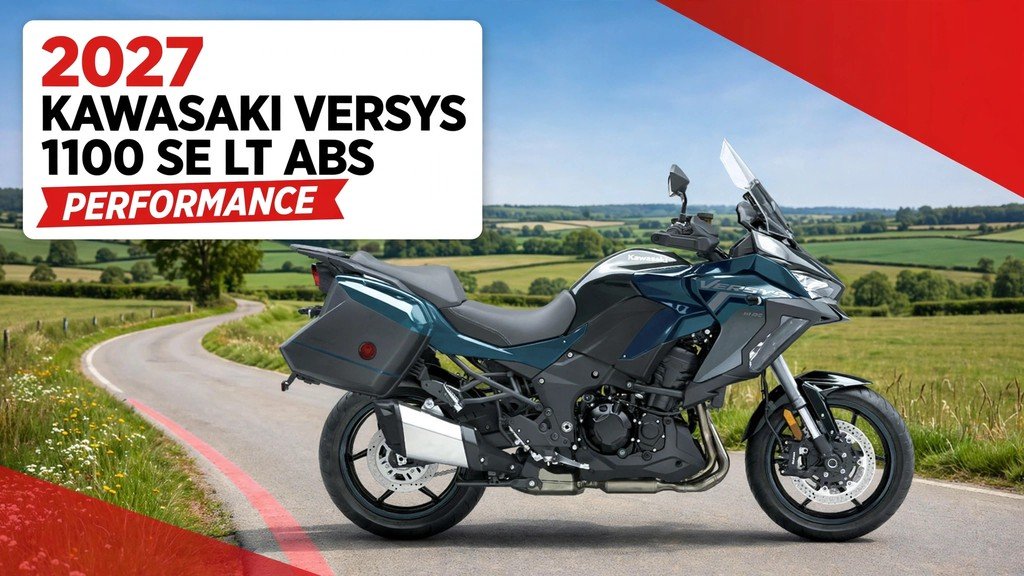
The short answer in this Kawasaki Versys 1100 SE LT ABS performance guide is that the bigger engine delivers exactly what Kawasaki promised in the midrange and almost nothing extra at the top. The 1,099cc four claims 133 hp and 82.5 lb-ft, the only independent dyno figure reads 119 bhp at the wheel, and there is no official top speed and no tested US fuel figure at all.
The dyno figure is British and secondhand, the 136 mph top speed belongs to a 2015 Versys 1000, and the 42 mpg figure is a conversion of a claim, not a test.
Kawasaki Versys 1100 SE LT ABS Engine Performance and Power Delivery
Power delivery is where this Kawasaki Versys 1100 SE LT ABS performance guide starts, because it is the one area where every launch tester tells the same story. The engine is smooth and strong in the middle, and the numbers behind it need care.
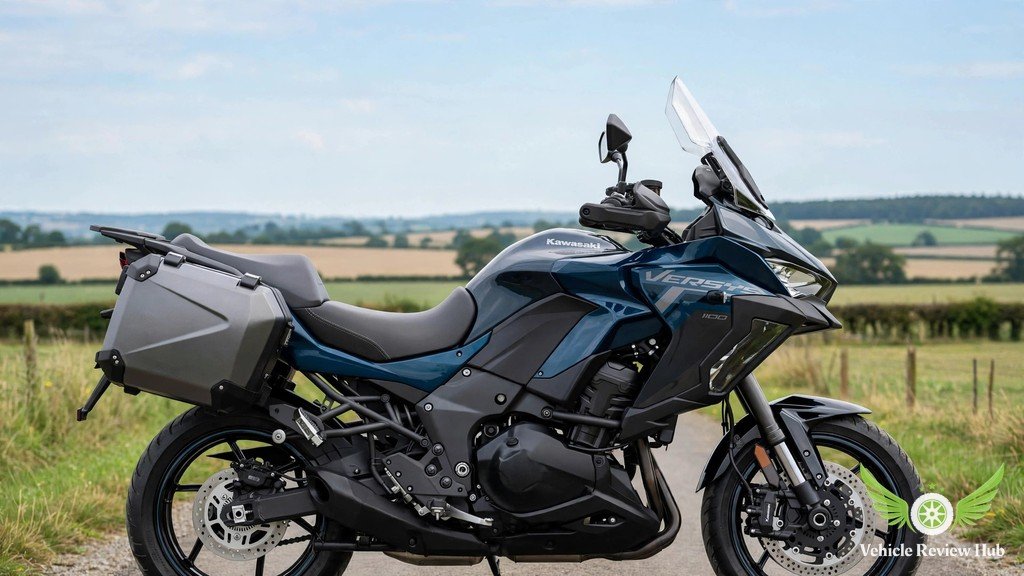
No US Dyno Run Exists Yet
No American magazine or independent shop has put a Versys 1100 SE LT ABS on a dyno and published the result, so this Kawasaki Versys 1100 SE LT ABS performance guide has no US wheel figure to quote. The press launch was a two-day road ride, and nobody in the launch group strapped the bike to a drum. Until a US dyno run appears, any American horsepower figure for this bike is either Kawasaki’s claim or somebody else’s dyno.
The claim itself is straightforward. Kawasaki prints 133 hp at 9,000 rpm and 82.5 lb-ft at 7,600 rpm for the 1,099cc four, measured to ISO 4106, and the spec sheet prints the same figure as 99.0 kW and 135 PS. Against the old Versys 1000 SE LT+, the claim is up 13 hp and 7.2 lb-ft, with the focus on low-to-mid torque rather than peak power.
The gearing backs the torque story up. First through fourth gears are shorter, fifth and sixth are longer, and the rear sprocket drops one tooth to 42T. RoadRUNNER measured a 7 percent drop in cruising rpm, RevZilla found 75 mph at about 5,000 rpm in top gear, with Cycle News putting 65 mph at about 4,000 rpm, and the quickshifter now works from 1,500 rpm instead of 2,500.
UK Wheel Figure: 119 BHP, Secondhand
The only dyno figure in the world for this bike comes from Bike magazine in the UK, and this Kawasaki Versys 1100 SE LT ABS performance guide has to label it carefully because it arrives secondhand. Bike dyno-tested the 1100 for its April 2025 issue and found only 1 bhp and 1 lb-ft separating the old and new models, putting the 1100 at 119 bhp and 74 lb-ft at the wheel. It is a secondhand wheel figure, never a crank figure and never a US figure.
That gap between claim and dyno is the honest story of this engine. Kawasaki claims 133 hp at the crank and the only independent run reads 119 bhp at the wheel, about 14 bhp lower, an ordinary gap between a crank claim and a wheel reading. The claimed jump from 118 hp to 133 hp is mostly paper, while the gain the rider feels is the midrange torque.
Motorcycle.com gave the bike an 84.0 percent editors score after the Baja launch, and its Highs list opens with the torque: smooth as buttuh. RevZilla’s first thought was disbelief that a four-cylinder could pull that hard down low. The low power mode cuts output to 75 percent of peak, while Full mode gives the whole 133 hp.
| Figure | Claimed (Kawasaki) | Measured / Reported |
|---|---|---|
| Peak power | 133 hp @ 9,000 rpm | 119 bhp at the wheel (Bike, UK) |
| Peak torque | 82.5 lb-ft @ 7,600 rpm | 74 lb-ft at the wheel (Bike, UK) |
| Gain over the 1000 | +13 hp / +7.2 lb-ft | +1 bhp / +1 lb-ft |
| Quickshifter | Works from 1,500 rpm | “So smooth it almost feels boring” (Cycle News) |
Notes for this Kawasaki Versys 1100 SE LT ABS performance table: the claimed figures are Kawasaki’s, measured to ISO 4106. The 119 bhp and 74 lb-ft figures are a UK wheel figure from Bike magazine, reported secondhand, and no US dyno run exists.
The video below is Kawasaki USA’s official product walk-around for the 2025 Versys 1100 SE LT ABS, two minutes and 45 seconds of studio footage. It is a music-led product film with no riding footage, so it shows the bike rather than proving anything about how it rides.
Kawasaki Versys 1100 SE LT ABS Top Speed and Acceleration
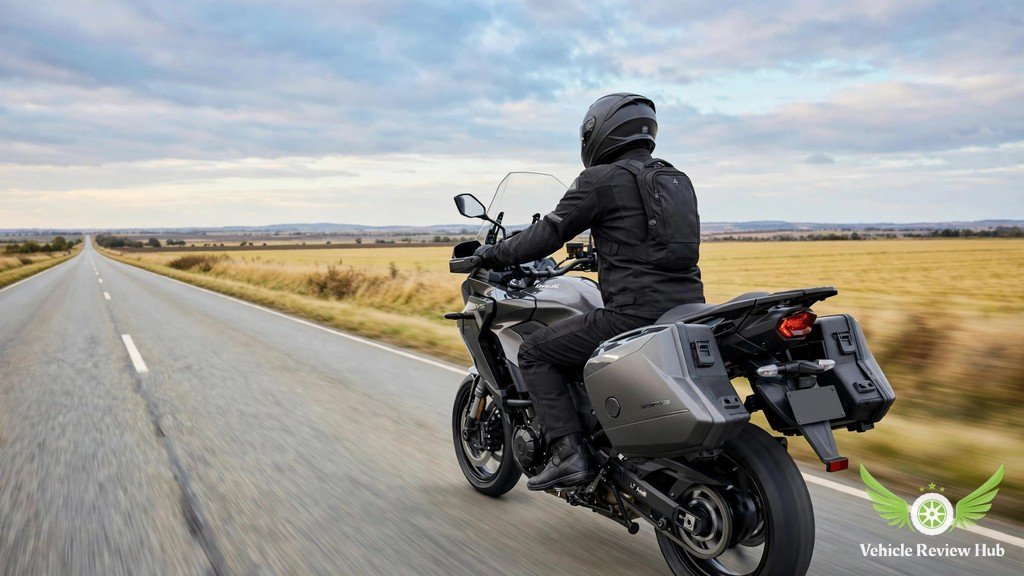
Top speed is the section of this Kawasaki Versys 1100 SE LT ABS performance guide where the honest answer is the shortest one: there is no figure. Kawasaki publishes no top speed and no American outlet has measured one.
No Instrumented US Figures Exist
No instrumented top speed, 0-60 mph time, or quarter-mile time exists for the Versys 1100 SE LT ABS, so this Kawasaki Versys 1100 SE LT ABS performance guide prints none of them. The press launch was a road ride, not a test day, and no instrumented US test has followed since.
The closest real measurement in the family belongs to the old bike. MCN ran a 2019 Versys 1000 SE at Bruntingthorpe and recorded 133.76 mph on GPS, with a speedometer reading of 139 mph, plus 0-60 mph in 3.93 seconds and 0-100 mph in 8.81 seconds. Those are genuine figures for a 2019 Versys 1000 SE, not for the 1100, so the old figures stay with the old bike.
136 MPH Belongs to the 2015 LT
The 136 mph figure printed for the Versys 1100 traces to a single source, and this Kawasaki Versys 1100 SE LT ABS performance guide can name it: motoplanete lists the 2015 Versys 1000 at approximately 220 km/h, which converts to 136.70 mph. That is an estimate, printed identically for every 2015-2018 Versys 1000 variant, not a measured top speed.
| Figure | Value | What It Really Is |
|---|---|---|
| 136 mph | ~220 km/h | motoplanete estimate for the 2015 Versys 1000 |
| 133.76 mph | GPS | MCN instrumented, 2019 Versys 1000 SE |
| 140 mph | Listed | MCN spec-table figure, not instrumented |
| 149 mph | Aggregator | AI-generated spec sites, no test behind it |
| 1100 top speed | None published | No official or instrumented US figure |
Notes for this Kawasaki Versys 1100 SE LT ABS performance table: none of these figures is the 1100’s measured top speed. The only instrumented figure in the family is MCN’s 133.76 mph GPS run on a 2019 Versys 1000 SE. The 140 mph figure is listed, not instrumented, and the 149 mph figure comes from aggregator sites with no test behind it.
Kawasaki Versys 1100 SE LT ABS Mileage and Fuel Economy
Fuel economy is where this Kawasaki Versys 1100 SE LT ABS performance guide has to untangle two different 42s. Kawasaki’s claim, converted to US gallons, reads 42 mpg. Bennetts’ worst observed figure also reads 42 mpg, imperial.
42 MPG Is a Kawasaki Claim, Not a Test
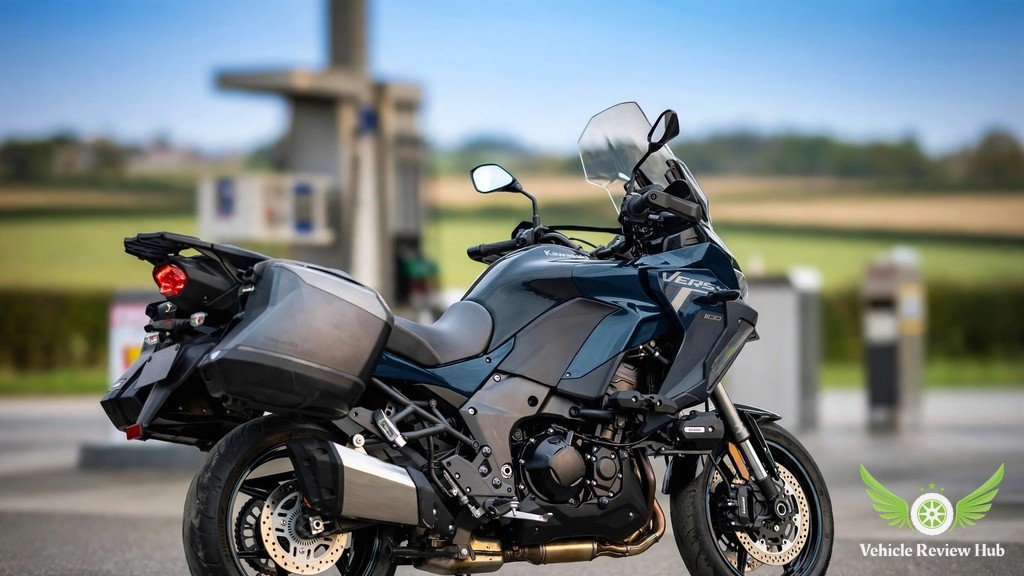
Kawasaki’s claimed average consumption is 50.4 mpg imperial, which converts to 5.6 litres per 100 km and 42 mpg in US gallons, and this Kawasaki Versys 1100 SE LT ABS performance guide stresses that the 42 is arithmetic, not a test. Nobody rode the bike through a measured fuel loop to produce it.
The other 42 is Bennetts’. The British magazine saw just over 50 mpg imperial over 700 miles and recorded a worst figure of 42 mpg imperial in hard use, about 35 mpg in US gallons. Keep the two apart: Kawasaki’s converted claim is 42 mpg US, Bennetts’ worst is 42 mpg imperial.
On the tank, the arithmetic is straightforward. The 1100 carries 5.5 US gallons (21 litres), so the claimed 42 mpg US points to a theoretical range of about 230 miles, and the published figures cluster around 220 to 233 miles. The fuel light comes on at roughly 160 to 170 miles, which is the number that matters on a real tour.
Kawasaki Publishes No Tested MPG Figure
Kawasaki publishes no tested or US fuel-economy figure for the Versys 1100 SE LT ABS, and no American outlet has published a measured consumption loop, so this Kawasaki Versys 1100 SE LT ABS performance guide has no US test figure to quote.
What does exist is European test data, and this Kawasaki Versys 1100 SE LT ABS performance guide quotes it because it is the only measured consumption on record. The 1000PS test in Slovenia, ridden hard, recorded 5.5 litres per 100 km, or 42.8 mpg US, while the Tracer 9GT+ took 4.4 L/100 km (53.5 mpg US) and the NT1100 took 4.9 L/100 km (48.0 mpg US). BikeReview in Australia tested a Versys 1100 S at 17.9 km per litre, or 42.1 mpg US, with a tested range of 380 km. None was measured in the United States.
| Figure | Value | Source / Status |
|---|---|---|
| Kawasaki claim | 50.4 mpg imperial = 42 mpg US | Claim, converted by arithmetic |
| 1000PS test | 5.5 L/100 km = 42.8 mpg US | Tested, Slovenia, sporty riding |
| BikeReview test | 17.9 km/L = 42.1 mpg US | Tested, Australia, Versys 1100 S |
| Bennetts worst | 42 mpg imperial | Observed, UK, not 42 mpg US |
| Theoretical range | ~220-233 mi | Tank x claim, not a measured run |
Notes for this Kawasaki Versys 1100 SE LT ABS performance table: the 42 mpg US figure is Kawasaki’s claimed consumption converted from imperial gallons, not a test result. Bennetts’ 42 mpg is imperial, a different figure in a different unit.
Kawasaki Versys 1100 SE LT ABS Real-World Riding Experience
The road is where this Kawasaki Versys 1100 SE LT ABS performance guide stops quoting spec sheets and starts quoting the people who rode the bike from Orange County to Baja California. Two things dominate every launch report: the torque and the vibration split.
Vibration Split: 6,000 vs 8,000 RPM
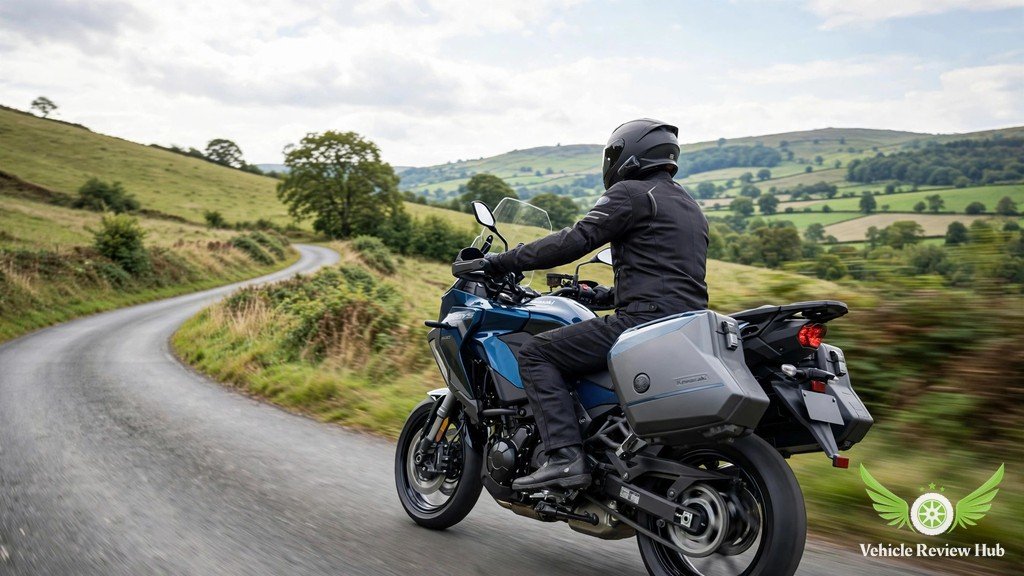
The vibration question is the one place the launch testers disagree, and this Kawasaki Versys 1100 SE LT ABS performance guide presents both camps with their names attached. Motorcycle.com reports that between 6,000 and 7,000 rpm the vibes make themselves known in a big way through the bars, footpegs and seat. RevZilla agrees: the engine becomes buzzy as revs approach 6,000 rpm, and the tester short-shifted to keep it under 6,000 rpm.
Cycle News disagrees. Its launch review says only when the revs reach north of 8,000 rpm do any noticeable niggles creep into the handlebars and feet, and by then the rider is either searching for the next gear or doing 130 mph in top gear. The two camps describe different sensitivity to the same engine, and a buyer should test ride the bike through 6,000 rpm before deciding.
Pulls Like a Tractor, Said Cycle News
If the vibration splits the testers, the torque unites them. Cycle News says the engine has acres of beefy torque from 2,000 to 7,000 rpm and pulls like a tractor, even allowing dead-stop fourth-gear rides away from stop signs in Baja California. Motorcycle.com’s Highs list opens with the same verdict, torque comes in smooth as buttuh.
The torque is also what makes the bike forgiving of lazy gear choices. The Motorcycle.com first ride notes the bump in torque is appreciable on the freeway or a back road, and the quickshifter, working from 1,500 rpm, means the rider rarely needs the clutch once rolling. The RevZilla first ride covers the same Baja launch and reaches the same verdict on the midrange.
Kawasaki Versys 1100 SE LT ABS Handling, Braking and Stability
Handling is where this Kawasaki Versys 1100 SE LT ABS performance guide has to hold two opposite verdicts at once, because the same chassis earns praise at touring pace and criticism when it is hustled.
Handling, Braking and Stability on Tour
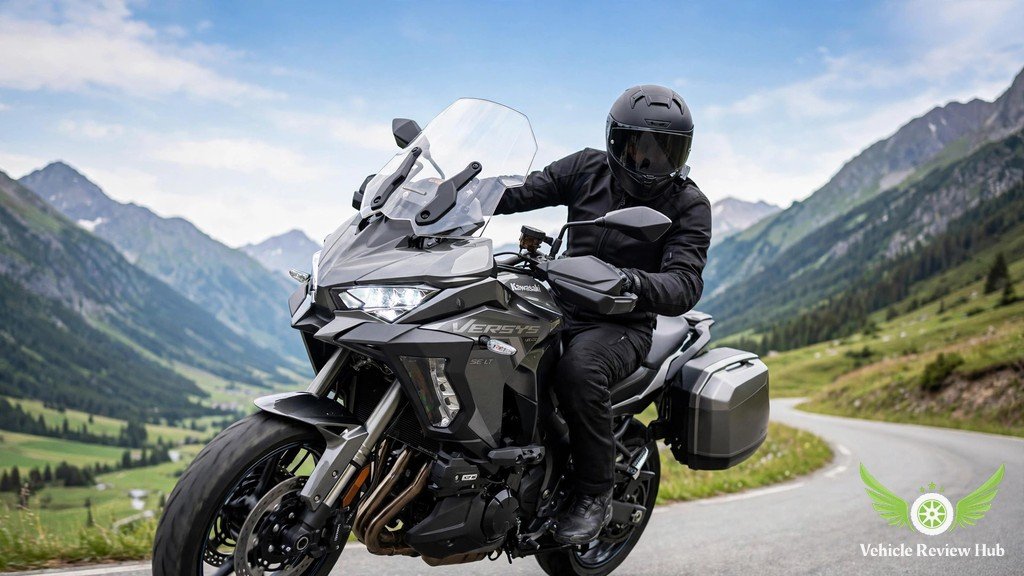
At touring pace the verdicts are consistent. MCN says it is hard to fault the handling in tight corners or fast sweepers, and that the electronic suspension’s ride and composure are spot-on. The 1000PS test calls the bike neutral, stable and reliable even when leaned over, despite its considerable mass. The Skyhook system adjusts damping as the bike rides, and the Bosch six-axis IMU feeds cornering-aware ABS, traction control and four ride modes.
The brakes are dual 310 mm petal discs up front with radial-mount four-piston monobloc calipers and a single 260 mm petal disc at the rear, all running through KIBS, Kawasaki’s cornering-aware ABS. Kawasaki names no caliper brand, so this guide names none either. The weight frames the whole handling story in this Kawasaki Versys 1100 SE LT ABS performance guide: 571.1 lb at the curb before the panniers, about 591 lb with them fitted, and a 33.1-inch seat that asks every bit of a 30-inch inseam at a stop.
Chassis Overwhelmed When Hustled, Said MO
Push the bike and the verdict changes. Motorcycle.com’s Sighs list says the chassis can be overwhelmed when hustling, exhibiting flex that blows past just giving feedback straight to downright noodly, and combined with less than stellar braking performance, the rider is better suited to keeping things at a legal pace. That is the sharpest criticism in any launch review, and this Kawasaki Versys 1100 SE LT ABS performance guide prints it in full.
The windscreen is the other complaint, and every tester mentions it. The screen moves 40 mm on two knobs that need two hands, which RevZilla, Motorcycle.com and 1000PS all call outdated next to the NT1100’s one-hand screen. The Ultimate Motorcycling review lists the same standard kit and the same $19,499 launch price.
Kawasaki Versys 1100 SE LT ABS Performance Compared With Other Tourers
Comparison is where this Kawasaki Versys 1100 SE LT ABS performance guide answers the question every returning Versys owner asks: what does the extra 56cc actually buy? The short answer is torque in the midrange and almost nothing measurable anywhere else.
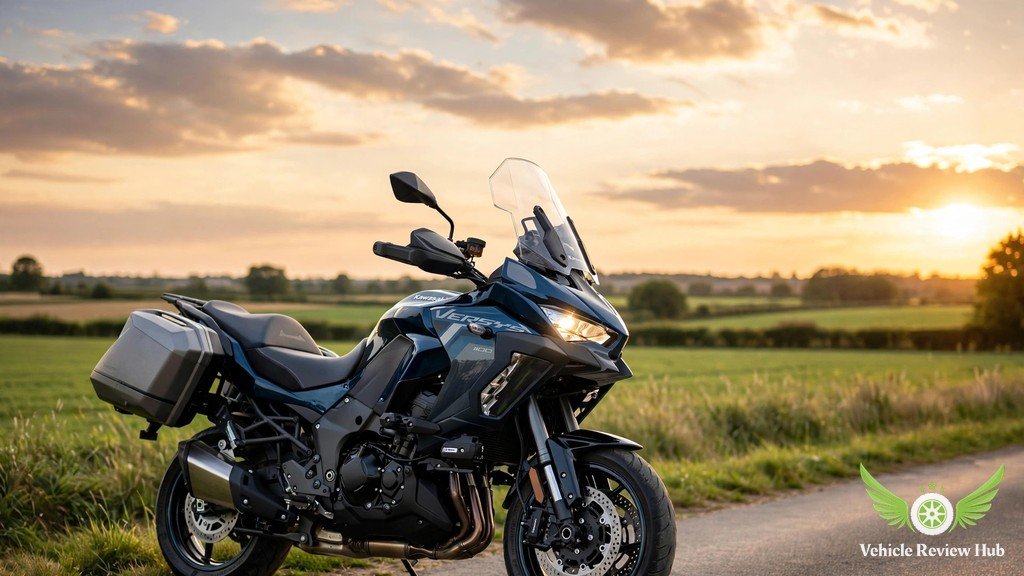
Kawasaki Versys 1100 SE LT ABS vs Versys 1000 SE LT+
Against the old Versys 1000 SE LT+, the 1100’s claimed gains are 13 hp and 7.2 lb-ft, but the only dyno run shows a gain of 1 bhp and 1 lb-ft at the wheel, so the honest comparison in this Kawasaki Versys 1100 SE LT ABS performance guide is not about peak figures at all. The 1100 pulls harder from 2,000 to 7,000 rpm, cruises at 7 percent fewer revs in the top gears, and shifts without a clutch from 1,500 rpm instead of 2,500. Our Versys 1000 S performance guide shows what the old four could already do.
The Ninja 1100SX shares the same basic 1,099cc engine and claims 134 hp and 83.2 lb-ft, and our Ninja 1100SX ABS performance guide covers that bike’s own numbers and dyno figure. The Versys 650 makes 66 hp from its 649cc twin and weighs 482.9 lb, and our Versys 650 performance guide shows why that lighter bike suits a rider who values agility over touring kit.
| Figure | Versys 1100 SE LT ABS | Versys 1000 SE LT+ |
|---|---|---|
| Engine | 1,099cc inline-four | 1,043cc inline-four |
| Claimed power | 133 hp @ 9,000 rpm | 120 PS / 118 hp @ 9,000 rpm |
| Claimed torque | 82.5 lb-ft @ 7,600 rpm | 75 lb-ft @ 7,500 rpm |
| Dyno (wheel) | 119 bhp / 74 lb-ft (Bike, UK) | 118 bhp / 73 lb-ft (Bike, UK) |
| Curb weight | 571.1 lb (bags excluded) | 566.7 lb (bags fitted) |
| Quickshifter | From 1,500 rpm | From 2,500 rpm |
| Delivered price | $20,639 (2027) | $19,359 (2023) |
Notes for this Kawasaki Versys 1100 SE LT ABS performance table: the claimed figures are Kawasaki’s, measured to ISO 4106. The dyno figures are UK wheel figures from Bike magazine, reported secondhand. The 1100’s weight excludes the panniers; the 1000’s includes them.
Is the Kawasaki Versys 1100 SE LT ABS Suitable for Beginner Riders?
No. At 571.1 lb with 133 hp and a 33.1-inch seat, this Kawasaki Versys 1100 SE LT ABS performance guide calls it a bike for experienced riders, full stop. No press verdict calls it beginner-suitable: the weight that steadies it on the highway works against a new rider at walking pace, the seat asks every bit of a 30-inch inseam, and the torque will catch a beginner out in first gear.
A new rider who likes the Versys idea should look at the smaller sibling first. The Versys 650 makes 66 hp, weighs 482.9 lb, and carries a 33.3-inch seat. The step up to the 1100 should come after real miles, not as a first bike.
Kawasaki Versys 1100 SE LT ABS Performance: Frequently Asked Questions
Direct answers to the Kawasaki Versys 1100 SE LT ABS performance questions buyers ask most.
How much power does the Versys 1100 SE LT ABS make?
Kawasaki claims 133 hp at 9,000 rpm and 82.5 lb-ft at 7,600 rpm, measured to ISO 4106. This Kawasaki Versys 1100 SE LT ABS performance guide notes the only dyno figure is a UK wheel figure of 119 bhp.
Is there a US dyno figure for the Versys 1100 SE LT ABS?
No. No American magazine or shop has published a dyno run for this bike, so this Kawasaki Versys 1100 SE LT ABS performance guide has no US wheel figure to quote, only Kawasaki’s claim and the UK figure.
What is the top speed of the Versys 1100 SE LT ABS?
There is no official or measured top speed for this bike. This Kawasaki Versys 1100 SE LT ABS performance guide lists the borrowed numbers: 136 mph is an estimate for the 2015 Versys 1000, and 140 mph is a listed figure, not a test.
What MPG does the Versys 1100 SE LT ABS get?
Kawasaki claims 50.4 mpg imperial, which converts to 42 mpg US by arithmetic, not by test. This Kawasaki Versys 1100 SE LT ABS performance guide also quotes the tested figures: 42.8 mpg US from 1000PS and 42.1 mpg US from BikeReview.
How far can the Versys 1100 SE LT ABS go on a tank?
The theoretical range is about 220 to 233 miles from the 5.5-gallon tank. This Kawasaki Versys 1100 SE LT ABS performance guide notes the fuel light comes on at roughly 160 to 170 miles.
Does the Versys 1100 SE LT ABS vibrate?
It depends on the revs. This Kawasaki Versys 1100 SE LT ABS performance guide presents both camps: Motorcycle.com and RevZilla report a buzz at 6,000 to 7,000 rpm, while Cycle News says the niggles arrive only north of 8,000 rpm.
How does the quickshifter work on the Versys 1100 SE LT ABS?
The bi-directional quickshifter works from 1,500 rpm, down from 2,500 rpm on the old bike. This Kawasaki Versys 1100 SE LT ABS performance guide notes the rider still has to close the throttle to downshift.
Is the Versys 1100 SE LT ABS fast?
It is quick in the midrange rather than fast at the top. This Kawasaki Versys 1100 SE LT ABS performance guide points to the torque from 2,000 to 7,000 rpm and the fact that no top speed has ever been measured for the 1100.
Is the Versys 1100 SE LT ABS good for long-distance touring?
Yes, with one reservation. This Kawasaki Versys 1100 SE LT ABS performance guide finds the engine, the Skyhook suspension and the standard panniers all built for long days, while the stiff seat is the one thing nearly every tester criticises.
How does the Versys 1100 SE LT ABS compare with the Versys 1000 SE LT+?
The claimed gain is 13 hp and 7.2 lb-ft, but the only dyno run shows a gain of 1 bhp and 1 lb-ft at the wheel. This Kawasaki Versys 1100 SE LT ABS performance guide calls the real gains the midrange torque and the longer top gears.
Is the Versys 1100 SE LT ABS suitable for beginners?
No. At 571.1 lb with 133 hp and a 33.1-inch seat, this Kawasaki Versys 1100 SE LT ABS performance guide calls it a bike for experienced riders, and no press verdict calls it beginner-suitable.
What is the fastest Versys 1100 SE LT ABS figure I should trust?
The only instrumented speed figure in the family is MCN’s 133.76 mph GPS run on a 2019 Versys 1000 SE, not the 1100. This Kawasaki Versys 1100 SE LT ABS performance guide says to trust no top speed figure printed for the 1100 itself.