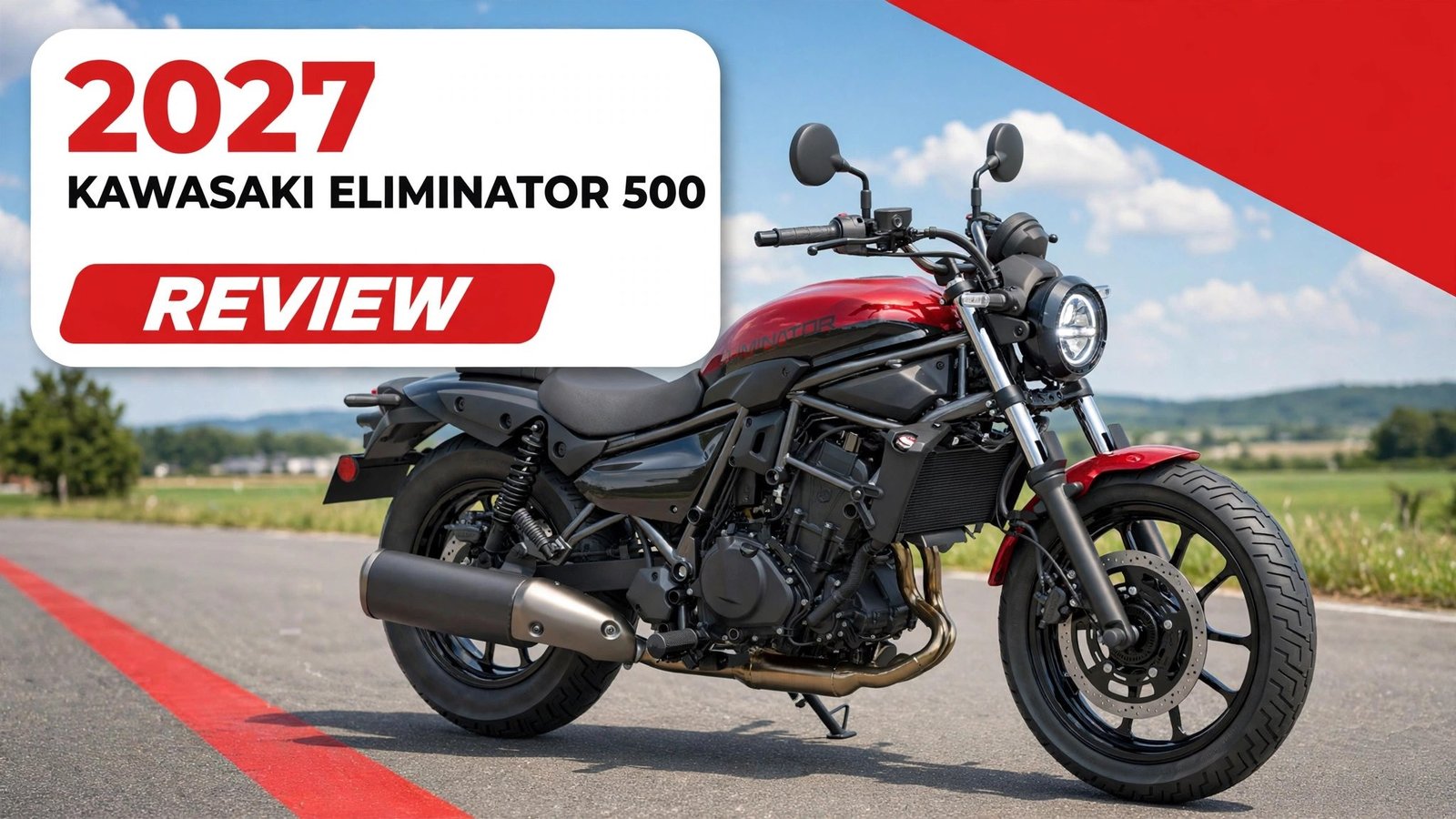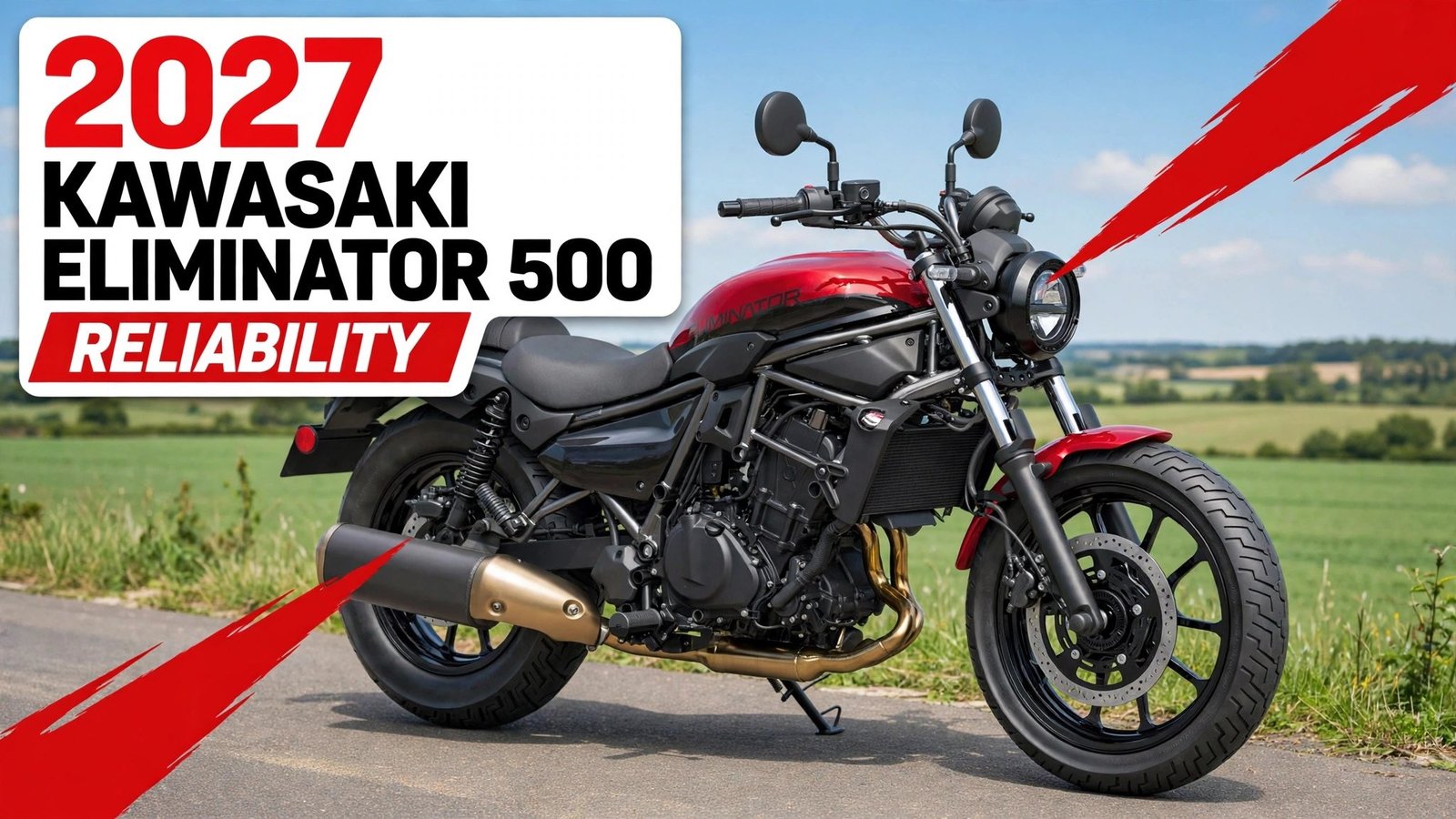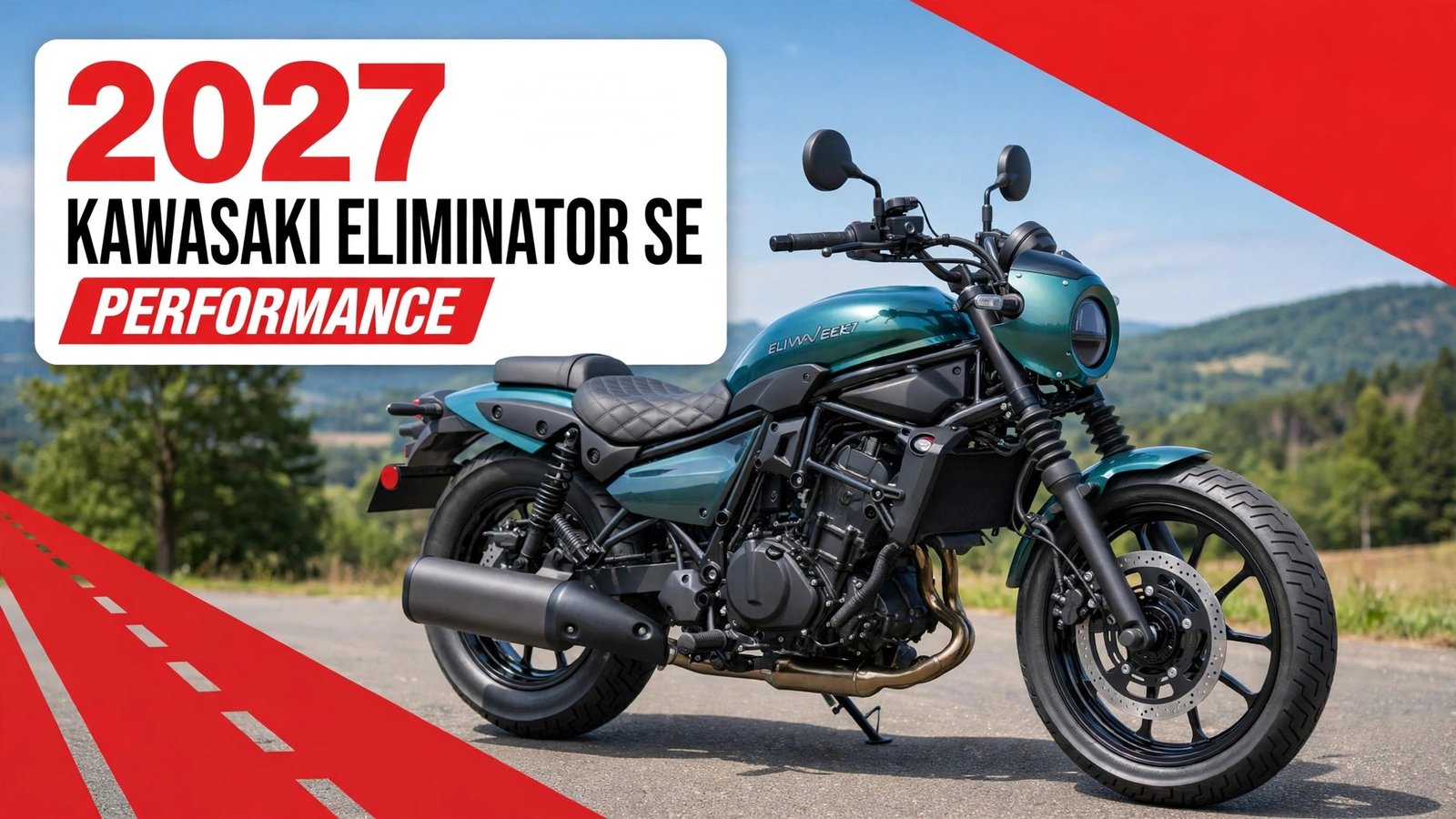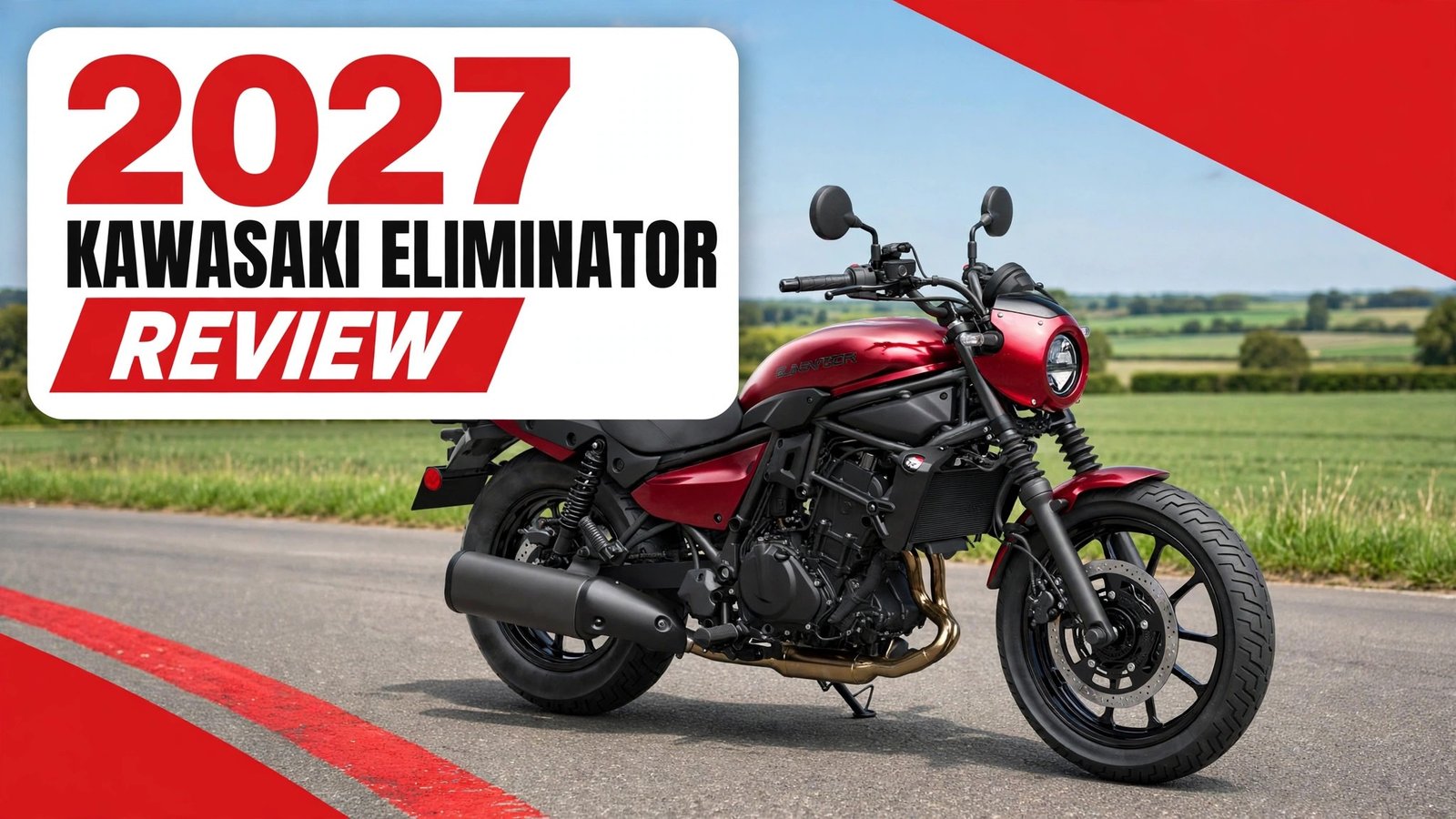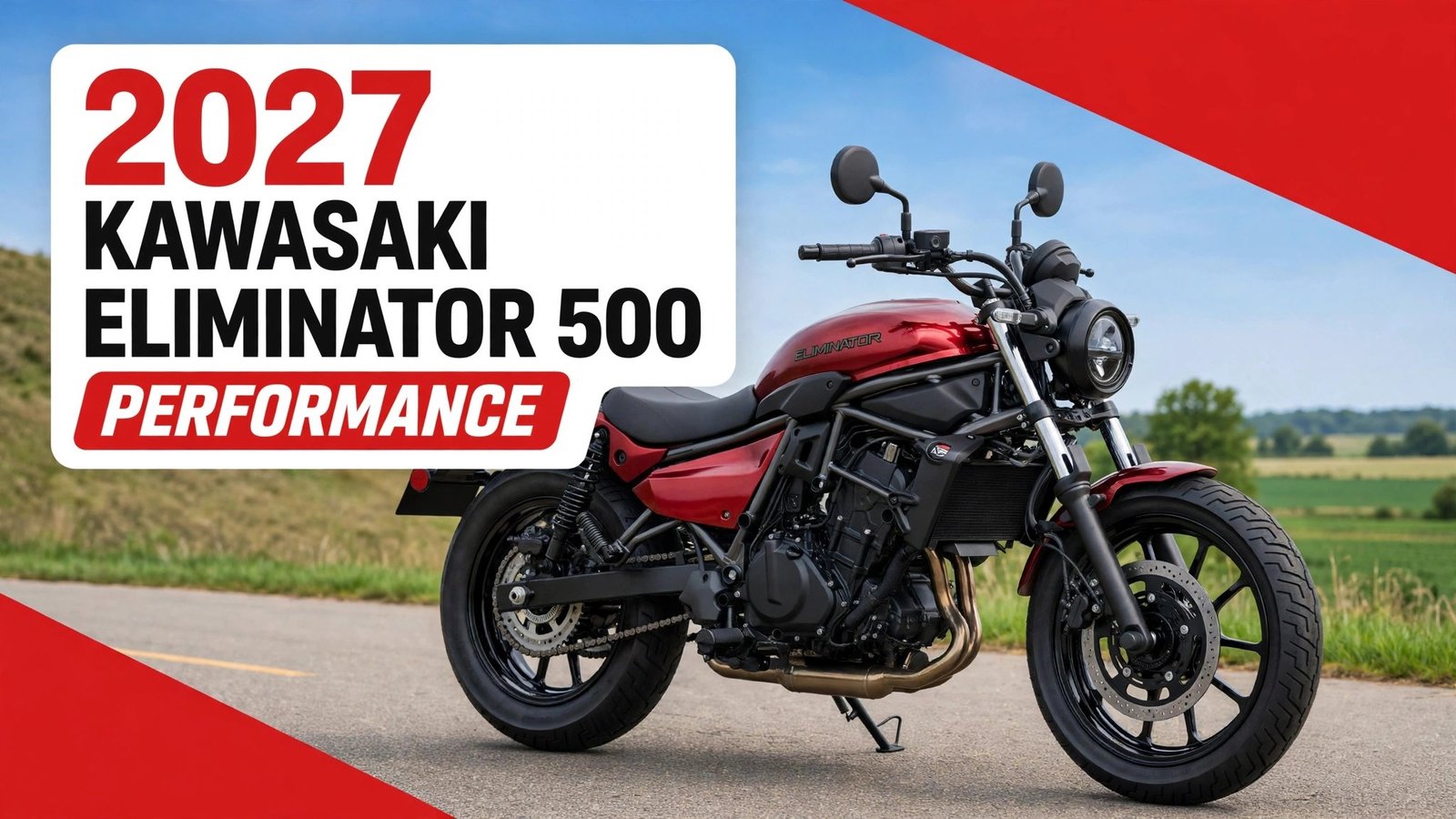
The 2027 Kawasaki Eliminator 500 is fast enough for its job and honest about its limits, and this Kawasaki Eliminator 500 performance guide starts with the fact that matters most: no outlet has tested a 2027 bike. Every measured figure in this guide — the dyno, the fuel economy, the riding impressions — comes from the 2024 bike, because the 2027 bike is the same motorcycle under a new name. The 451cc twin makes 51 hp at 10,000 rpm on the spec sheet and 47.22 hp at the rear wheel on Cycle World’s 2024 dyno, the strongest dyno figure in the small-cruiser class. There is no instrumented top speed, no quarter mile and no braking figure for any year, and this Kawasaki Eliminator 500 performance guide prints none of those as tested facts.
Kawasaki Eliminator 500 Engine Performance and Power Delivery

Power delivery is where this Kawasaki Eliminator 500 performance guide starts, because the engine is the one part of the bike that every tester agrees on. The 451cc parallel twin is a Ninja 400-derived unit with a long stroke, a 12,000 rpm redline and a rev-happy character that feels nothing like a traditional low-revving cruiser. It makes its peak power high in the rev range, which shapes everything about how the bike rides, and this Kawasaki Eliminator 500 performance guide keeps that character front and centre, because it is the reason the bike feels quicker than its 51 hp suggests.
No Outlet Has Tested a 2027 Bike
No magazine, website or YouTube channel has published a test of a 2027 Eliminator 500. Two search rounds at writing time found no 2027 dyno run, no 2027 fuel-economy figure, no 2027 top-speed run and no 2027 riding review anywhere. That is not a gap in this guide — it is the honest state of the record. The 2027 bike is mechanically identical to the 2024–2026 Eliminator, so the 2024 figures are the best available evidence, and this Kawasaki Eliminator 500 performance guide labels every one of them with its year rather than passing them off as 2027 tests. A buyer who wants a 2027-specific test will have to wait for one; until then, the 2024 numbers are what exist, and they are printed here with their labels attached.
2024 Dyno: 47.22 Horsepower, Labelled
Cycle World put a 2024 Eliminator SE ABS on the dyno on 2024-03-21 and measured 47.22 hp at 10,430 rpm and 29.03 lb-ft at 7,510 rpm at the rear wheel. That is the strongest dyno figure in the small-cruiser class, and it belongs to every trim, because the SE shares its drivetrain with the ABS trim — the same engine, the same gearbox, the same final drive. Against the 51 hp crank claim on Kawasaki’s US spec sheet, the dyno shows about 3.8 hp of drivetrain loss, which is normal for a chain-drive motorcycle. Three power figures exist and must never be blended: the spec sheet says 51 hp, the certificate of origin says 52 hp at 10,000 rpm with 32 lb-ft at 8,000 rpm, and the European version makes 45 hp at 9,000 rpm (33.4 kW, 45.4 PS) to fit the A2 licence class. The Cycle World dyno test measured the US bike, and its 47.22 hp is the figure this Kawasaki Eliminator 500 performance guide prints as the measured number.
| Item | Figure | Year and Source |
|---|---|---|
| Engine | 451cc parallel twin | 2024–2027, US spec sheet |
| Power (US spec sheet) | 51 hp @ 10,000 rpm | 2024–2027, ISO 4106 |
| Power (certificate of origin) | 52 hp @ 10,000 rpm | 2024–2027, RevZilla |
| Power (European version) | 45 hp @ 9,000 rpm | 2024–2027, 33.4 kW / 45.4 PS |
| Dyno power | 47.22 hp @ 10,430 rpm | 2024 SE ABS, Cycle World |
| Torque (US spec sheet) | 31.7 lb-ft @ 7,500 rpm | 2024–2027, US spec sheet |
| Torque (dyno) | 29.03 lb-ft @ 7,510 rpm | 2024 SE ABS, Cycle World |
| Redline | 12,000 rpm | 2024–2027, US spec sheet |
| Drivetrain loss | About 3.8 hp | Arithmetic, 51 hp vs 47.22 hp |
Notes: the figures in this Kawasaki Eliminator 500 performance table are the verified US spec-sheet figures and the Cycle World 2024 dyno result, each carrying its year label. The dyno bike was a 2024 SE ABS, and the figure belongs to every trim because the drivetrain is identical across the line.
The video below is Motorcycle.com’s press-launch first ride of the 2024 Eliminator — the bike on screen is a 2024 press-launch machine, not a 2027 Eliminator 500, and no 2027 test exists yet. It is included because it shows the engine and the riding position in motion, not because it measures anything.
Kawasaki Eliminator 500 Top Speed and Acceleration
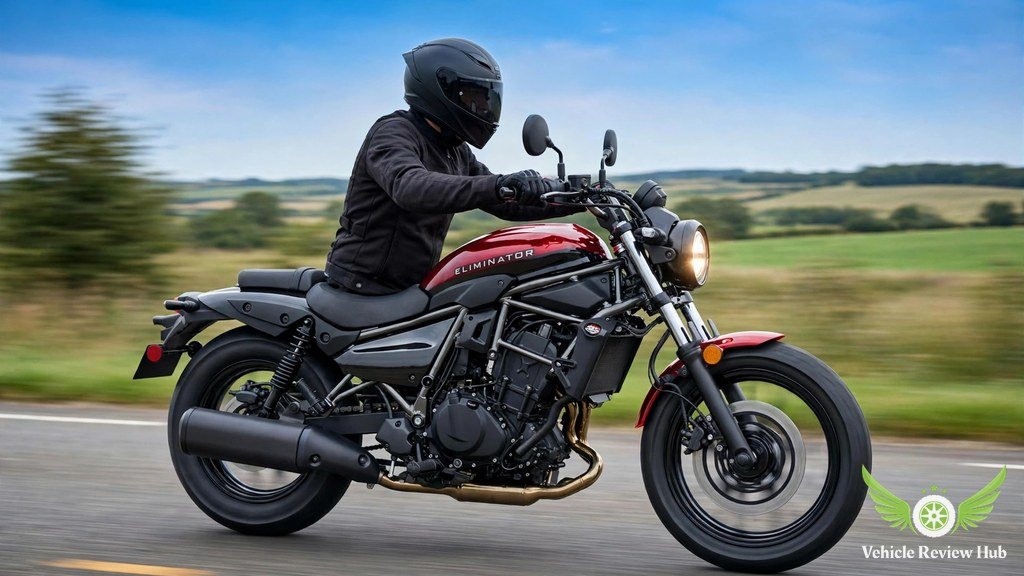
Top speed is the thinnest section of this Kawasaki Eliminator 500 performance guide, and that is honest rather than lazy: no instrumented top-speed figure exists for any Eliminator trim in any year. What exists is owner claims, one editorial figure traced to a night-time YouTube run, and the physics of a 51 hp bike weighing 388.1 lb. This section prints all three and labels each one.
No Instrumented Figures for Any Year
No magazine has published an instrumented top speed, quarter mile, 0–60 mph or braking distance for the Eliminator in any year. Cycle World, RevZilla, Motorcycle.com and Rider all tested the 2024 bike without recording a top speed, and no owner with a GPS has published a verified run either. Owner claims run 115–118 mph, and this Kawasaki Eliminator 500 performance guide prints them as owner claims only — unverified, uninstrumented, and not a test. A buyer who wants a measured top speed will not find one in this guide, because none exists to print.
102.5 MPH Traces to a YouTube Video
The 102.5 mph figure that circulates online traces to a single source: a MotoSnax night run in April 2024, in which a Kawasaki Eliminator reached 165 km/h (102.5 mph) on a public highway under the cover of darkness. SlashGear reported the run on 2024-08-30, and the video’s own description admits the rider was unable to check it with GPS at the time. That makes 102.5 mph an editorial figure derived from one uninstrumented night run, not a tested top speed, and this Kawasaki Eliminator 500 performance guide never prints it as one. It is the only number with any sourcing behind it, which is why it keeps appearing — but a single GPS-less run on a public road at night is not a test, and the number should be read as the ceiling of one rider’s claim, not as the bike’s measured capability.
Kawasaki Eliminator 500 Mileage and Fuel Economy

Fuel economy is the one area where this Kawasaki Eliminator 500 performance guide has a real-world number rather than a claim: RevZilla’s 45 mpg dash reading from its 2024 first ride. The 3.4-gallon tank and that 45 mpg figure give about 150 miles of range, and the arithmetic is labelled as arithmetic. One long-term owner reports 52.5 mpg over a year, which suggests the RevZilla figure is conservative — but a single owner’s average is not a test either, and this Kawasaki Eliminator 500 performance guide prints it as one owner’s figure.
45 MPG Is a 2024 Bike’s Figure
RevZilla’s 2024 first ride of the ABS trim recorded 45 mpg on the dash over 75 highway miles. That is a dash reading, not a measured fill-to-fill figure, and it comes from one ride on one bike — but it is the only published economy figure with a named source and a named method, and this Kawasaki Eliminator 500 performance guide treats it as the baseline. A single owner (ridereverie, August 2026) averaged 52.5 US mpg over a year of riding a 2024 bike on a 40% town / highway mix, which hints the RevZilla figure is on the low side. Neither number is a 2027 figure, because no 2027 bike has been tested; both are 2024-bike figures, and both carry their labels.
Range Estimate Not to Be Trusted
RevZilla’s own words about the range estimate are that it is “not to be trusted”. The dash range readout on the 2024 bike fluctuated enough that the testers warned readers against relying on it, and the 150-mile range figure in this guide is simple arithmetic — 45 mpg multiplied by the 3.4-gallon tank gives 153 miles, rounded down to about 150 — not a measured range. In practice, most owners will see the fuel light well before 150 miles, and a rider planning a long stretch between stations should fill up at 120 miles rather than testing the arithmetic. The tank is small, the bike is light, and the range is the one practical limit of an otherwise easy motorcycle.
| Item | Figure | Year and Source |
|---|---|---|
| Fuel tank | 3.4 gal | 2024–2027, US spec sheet |
| RevZilla dash MPG | 45 mpg | 2024 ABS, 75 highway miles |
| Range (arithmetic) | About 150 miles | 45 mpg × 3.4 gal = 153 miles |
| Owner average | 52.5 US mpg | One owner, one year, 2024 bike |
| Range estimate | “Not to be trusted” | RevZilla, verbatim, 2024 |
| 2027 MPG figure | None exists | No 2027 bike tested |
Notes: the figures in this Kawasaki Eliminator 500 performance table are the RevZilla 2024 dash reading and one owner’s 2024 average, with the range as labelled arithmetic. No 2027 fuel-economy figure exists, because no 2027 bike has been tested.
Kawasaki Eliminator 500 Real-World Riding Experience

The riding consensus on this Kawasaki Eliminator 500 performance guide’s subject comes from the 2024 tests, and it is unusually consistent: an easy, light, beginner-friendly cruiser with a one-finger clutch, an upright riding position and a rev-happy engine that rewards a rider who uses the gearbox. Nothing about that consensus changes for 2027, because nothing about the bike changed — and this Kawasaki Eliminator 500 performance guide carries the 2024 labels on every verdict below.
Consensus Carries 2024 Year Labels
MCN, MoreBikes, Motorcycle.com and Rider all praised the assist and slipper clutch in their 2024 tests, calling it light enough to work with one finger and forgiving enough for a new rider. The mid-mount footpegs and upright bars give the most beginner-friendly ergonomics in the class, and the 28.9-inch seat and 388.1-pound curb weight make the bike easy to manage at a standstill. The engine’s character divides opinion less than its numbers do: testers agree it likes to rev, pulls cleanly from low speed, and feels quicker than its 51 hp suggests because the bike is so light. The Cycle World first-ride review praised the light clutch and easy ergonomics in the same terms, and this Kawasaki Eliminator 500 performance guide finds no 2024 tester who disagreed.
Buzz and Budget Suspension, Noted
Two verdicts are split, and this Kawasaki Eliminator 500 performance guide prints the split rather than picking a side. Buzz at cruise is a genuine split: some 2024 testers noted vibration at highway speed and others did not, so a buyer should expect some buzz and decide for themselves whether it matters. The budget twin shocks drew only mild criticism, not a harsh verdict — testers called them basic rather than bad, and none of them called the suspension a reason not to buy the bike. The rear-shock preload is a genuine source conflict: most sources say the shocks are 5-way preload adjustable, while ZigWheels says preload is “Not Available”, so this guide prints both and settles neither.
Kawasaki Eliminator 500 Handling, Braking and Stability
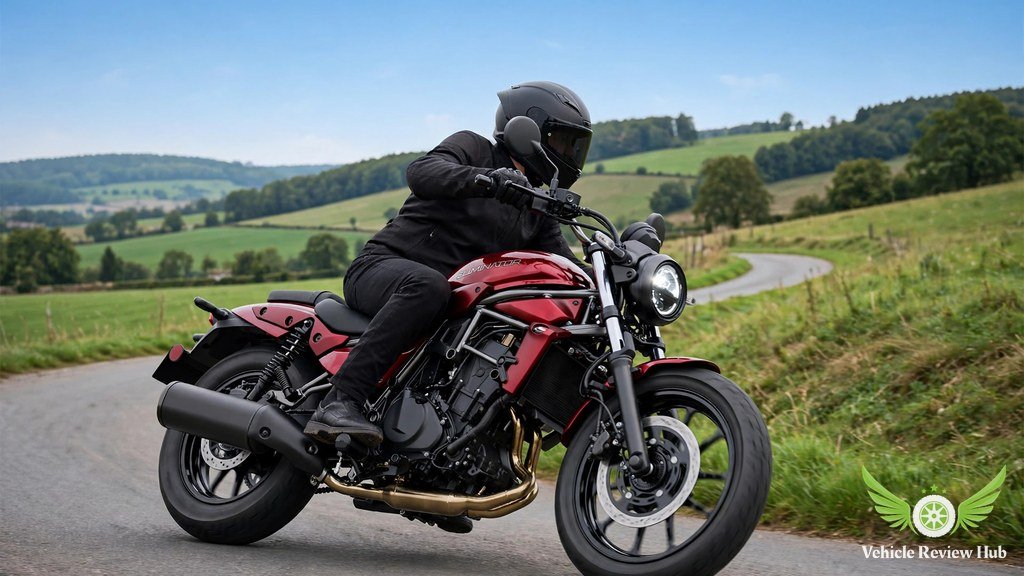
Handling is the quiet strength of this Kawasaki Eliminator 500 performance guide’s subject: a steel trellis frame, a 41 mm fork, a 59.8-inch wheelbase and 388.1 lb of curb weight add up to the lightest bike in its comparison set. The brakes are a single 310 mm front petal disc with a twin-piston calliper and a single 220 mm US rear disc with a single-piston calliper, both worked by a Nissin ABS unit. There is no instrumented braking distance for any trim, so this Kawasaki Eliminator 500 performance guide prints none — but the hardware and the weight tell most of the story.
Handling, Braking and Stability on the Road
On the road the Eliminator steers lightly, holds a line without fuss and changes direction more easily than any of its rivals, because it carries the least weight. The trellis frame gives the bike a planted feel that the spec sheet does not predict, and the 41 mm fork and twin shocks cope with ordinary roads without drama. The European bike gets a 240 mm rear disc with a two-piston calliper; the 220 mm figure in this guide is the US figure. At 388.1 lb the bike is more than 100 lb lighter than the Vulcan S ABS and more than 140 lb lighter than the Super Meteor 650, and that weight gap is felt every time the bike turns, stops or is pushed around a parking lot.
Rear Shock Preload: Sources Conflict
The rear-shock preload question is the one genuine source conflict in this Kawasaki Eliminator 500 performance guide. Most sources — Kawasaki’s own spec pages and the major reviews — describe the twin rear shocks as 5-way preload adjustable, with 3.5 inches of travel. ZigWheels, by contrast, lists preload as “Not Available” for the Eliminator. This guide prints both and settles neither, because no independent test has settled it either. In practice the adjustment, if present, is a spanner-and-notch job rather than a tool-free dial, and most owners will set it once for their weight and leave it alone.
Kawasaki Eliminator 500 Performance Compared With Other Cruisers
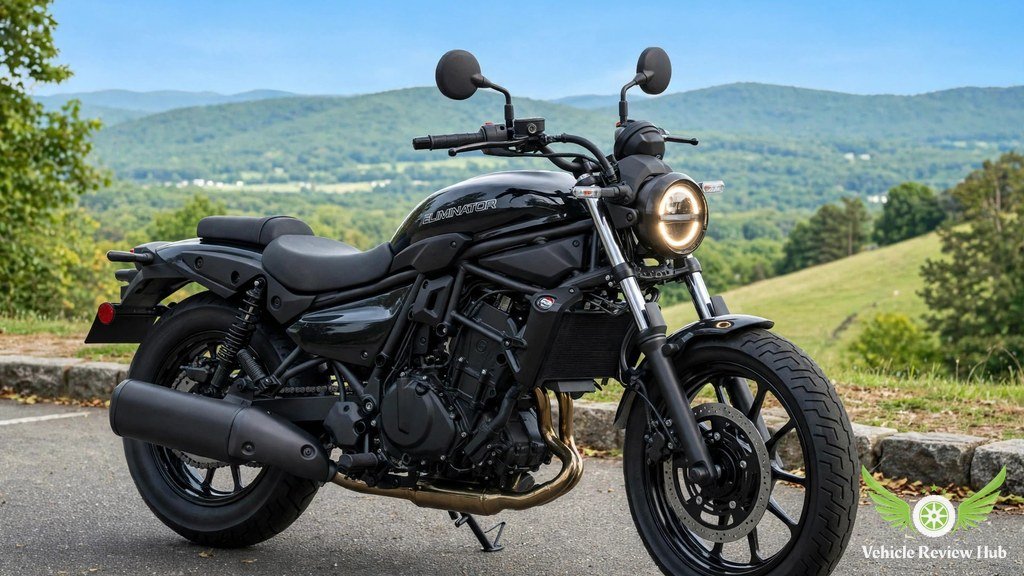
The comparison in this Kawasaki Eliminator 500 performance guide is the bike against its former self, because the doc asks for exactly that: the 2027 Eliminator 500 against the 2024–2026 Eliminator. The verdict is short. It is the same motorcycle, with a new name, a deleted base trim, standard ABS and a new colour list. The table below is the rename audit in one place, and this Kawasaki Eliminator 500 performance guide states the audit plainly so the rename is never mistaken for a redesign.
Kawasaki Eliminator 500 vs Kawasaki Eliminator
Side by side, the 2027 Eliminator 500 ABS and the 2026 Eliminator ABS are the same motorcycle: the same 451cc twin, the same 51 hp, the same 388.1 lb, the same 28.9-inch seat, the same 3.4-gallon tank, the same brakes and the same chassis. What changed is the name, the deleted $6,499 base trim, ABS becoming standard, and the ABS colours moving from Flat Spark Black and Urban City White to Ebony and Metallic Imperial Red. The ABS price did not move — $6,799 in 2025, 2026 and 2027 — so the rename added nothing to the price of the bike itself, even though the cheapest way into the line rose by $300 when the base trim disappeared. The former Eliminator earned the same verdict in 2024, and the SE review covers the styling trim.
| Item | 2027 Eliminator 500 ABS | 2026 Eliminator ABS |
|---|---|---|
| Engine | 451cc parallel twin | 451cc parallel twin |
| Power (US) | 51 hp @ 10,000 rpm | 51 hp @ 10,000 rpm |
| Curb weight | 388.1 lb | 388.1 lb |
| Seat height | 28.9 in | 28.9 in |
| Fuel tank | 3.4 gal | 3.4 gal |
| ABS | Standard | $300 option over base |
| ABS colours | Ebony / Metallic Imperial Red | Flat Spark Black / Urban City White |
| MSRP | $6,799 | $6,799 |
| Base trim | Deleted for 2027 | $6,499 |
Notes: the figures in this Kawasaki Eliminator 500 performance table are the verified US spec-sheet and price figures for the 2027 and 2026 ABS trims. Every mechanical figure is identical; only the name, the base trim, the ABS status and the colours changed.
Is the Kawasaki Eliminator 500 Suitable for Beginner Riders?
Yes. The 28.9-inch seat, 388.1-pound curb weight, standard ABS, light assist and slipper clutch and 51 hp with no riding modes to manage make it a sound first bike, and the NHTSA record is clean — zero recalls for the Eliminator family in 2024–2027 and zero under the “Eliminator 500” name for 2027. The same search returns one recall for the 2024 Ninja 500, so the zero is meaningful. The clutch recall 25V-146 that sometimes appears in searches is a platform watch item for the 2024 Ninja 500 and Z500 only, not an Eliminator recall. The Eliminator reliability guide covers the same record in detail, and the Eliminator 500 review covers the rename, the prices and the colours.
Kawasaki Eliminator 500 Performance FAQ
The questions below are the ones buyers actually ask after reading a Kawasaki Eliminator 500 performance guide, answered on the verified figures in this guide.
How much power does the Eliminator 500 make?
The US spec sheet says 51 hp at 10,000 rpm and 31.7 lb-ft at 7,500 rpm. The Cycle World dyno on a 2024 SE ABS measured 47.22 hp at 10,430 rpm at the rear wheel, and that is the figure this Kawasaki Eliminator 500 performance guide prints as the measured number.
Has any outlet tested a 2027 Eliminator 500?
No. Two search rounds at writing time found no 2027 test, dyno, MPG figure or top-speed run anywhere. Every instrumented figure in this Kawasaki Eliminator 500 performance guide is 2024-bike data, labelled with its year every time it appears.
What is the top speed of the Eliminator 500?
No instrumented top speed exists for the Eliminator 500 or for any Eliminator trim in any year. Owner claims run 115–118 mph and are labelled as owner claims only, and this Kawasaki Eliminator 500 performance guide prints no tested top speed, because none exists.
What is the 102.5 mph figure?
The 102.5 mph figure traces to a MotoSnax night run in April 2024, reported by SlashGear on 2024-08-30. The video’s own description admits the rider was unable to check it with GPS at the time, so 102.5 mph is an editorial figure from one uninstrumented run, not a tested top speed, says this Kawasaki Eliminator 500 performance guide.
How many miles per gallon does the Eliminator 500 get?
RevZilla’s 2024 first ride recorded 45 mpg on the dash over 75 highway miles on the ABS trim. One owner averaged 52.5 US mpg over a year of riding a 2024 bike, so the RevZilla figure may be conservative — but both are 2024-bike figures, and this Kawasaki Eliminator 500 performance guide labels them as such.
How far can the Eliminator 500 go on a tank?
About 150 miles by arithmetic: 45 mpg multiplied by the 3.4-gallon tank gives 153 miles, rounded down. RevZilla’s own words are that the dash range estimate is “not to be trusted”, so plan on filling up at 120 miles on a long stretch, says this Kawasaki Eliminator 500 performance guide.
Is the Eliminator 500 fast for a beginner bike?
Yes. The 51 hp twin is the revviest in the class, the 47.22 hp dyno figure is the strongest in the class, and the 388.1-pound curb weight makes the bike feel quicker than its numbers suggest. This Kawasaki Eliminator 500 performance guide calls it the quickest-feeling bike in its comparison set.
Does the Eliminator 500 vibrate at highway speed?
Verdicts are split. Some 2024 testers noted vibration at cruise and others did not, so a buyer should expect some buzz and decide for themselves whether it matters. This Kawasaki Eliminator 500 performance guide prints the split rather than picking a side.
What brakes does the Eliminator 500 have?
A single 310 mm front petal disc with a twin-piston calliper and a single 220 mm US rear disc with a single-piston calliper, both worked by a Nissin ABS unit that is standard on every 2027 bike. No instrumented braking distance exists for any trim, says this Kawasaki Eliminator 500 performance guide.
Is the rear shock preload adjustable?
Sources conflict. Most sources say the twin rear shocks are 5-way preload adjustable, while ZigWheels says preload is “Not Available”. This Kawasaki Eliminator 500 performance guide prints both and settles neither, because no independent test has settled it.
Is the Eliminator 500 lighter than the Rebel 500?
Yes. The Eliminator 500 ABS weighs 388.1 lb curb against the Rebel 500’s 414 lb, a gap of nearly 26 lb, and it is the lightest bike in its comparison set. That weight gap is the main reason this Kawasaki Eliminator 500 performance guide calls it the easiest bike in the class to manage at low speed.
Should I buy a leftover 2026 Eliminator instead?
A leftover 2026 ABS is the same motorcycle for the same $6,799, so a discounted 2026 is a good buy if the price is genuinely below MSRP. Check the VIN’s 10th character — T for 2026, V for 2027 — that is the advice of this Kawasaki Eliminator 500 performance guide.