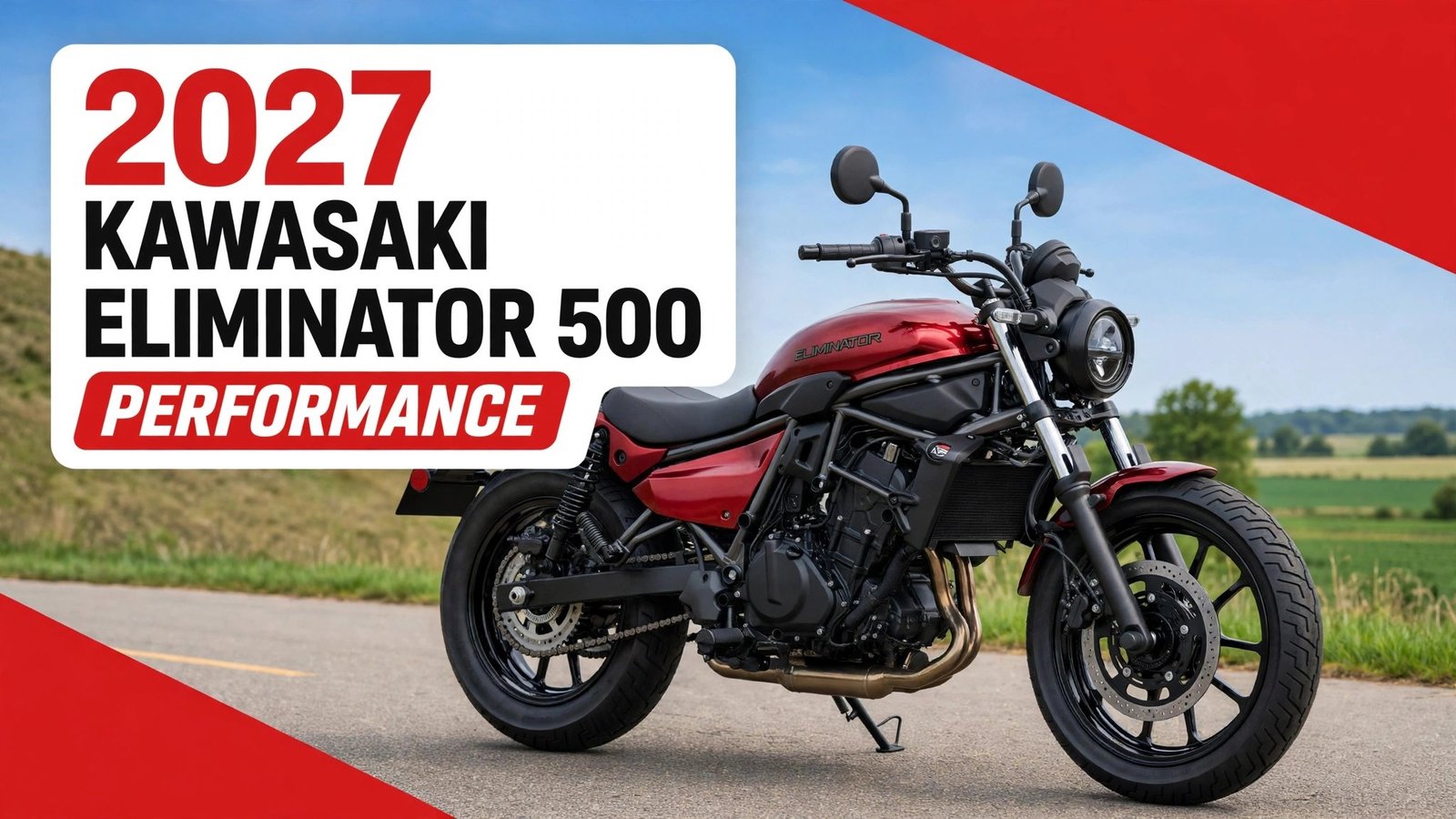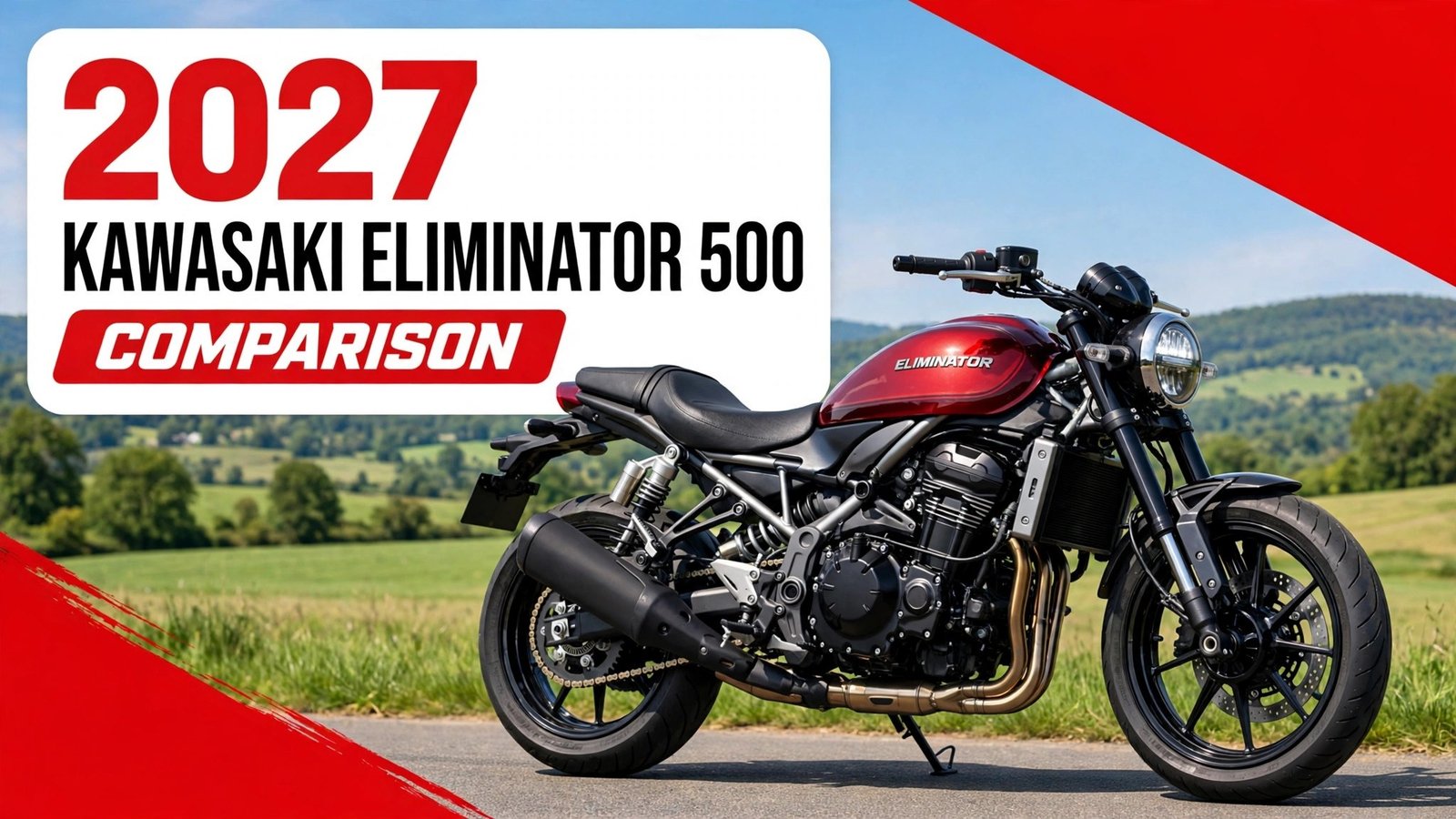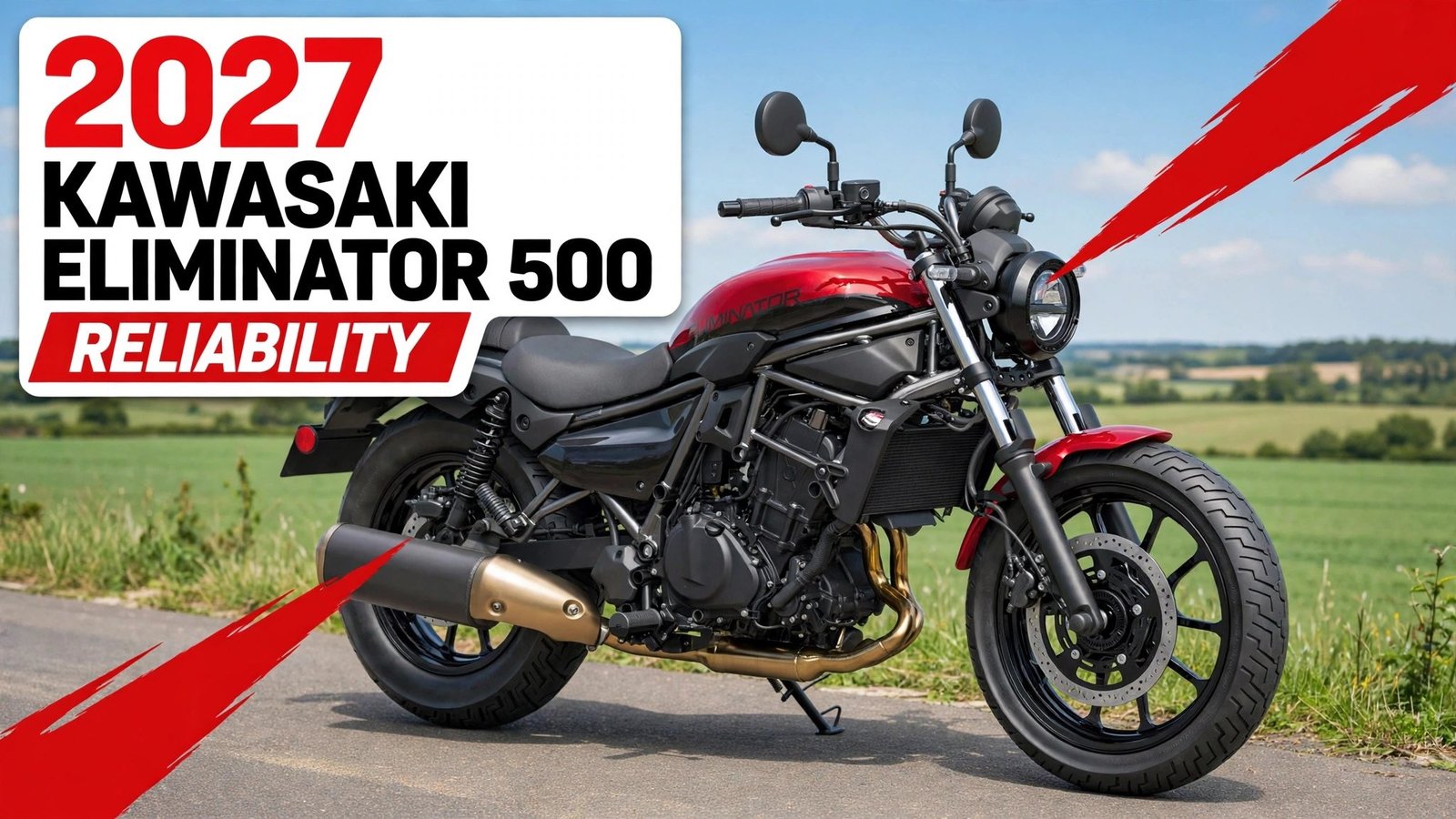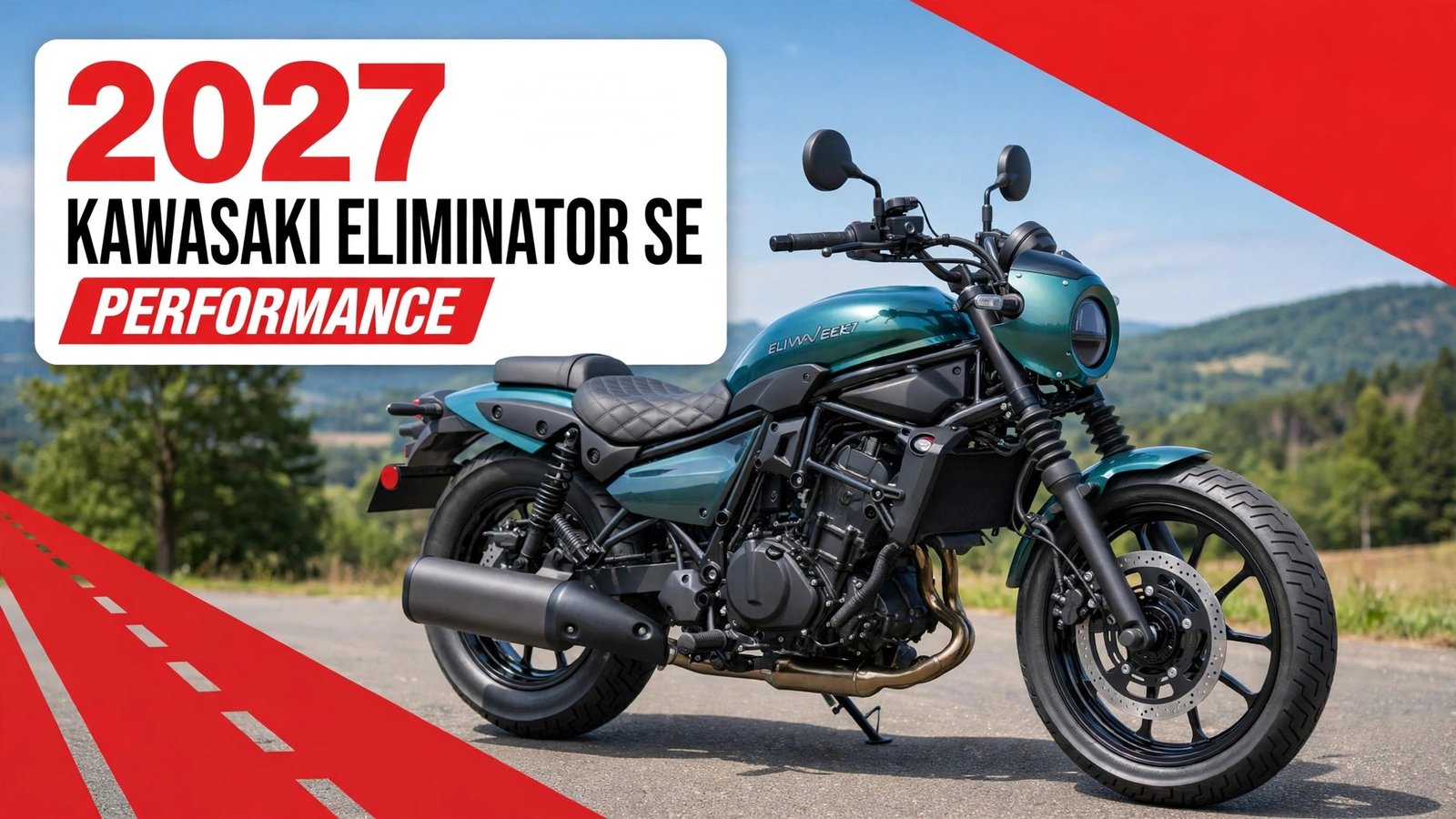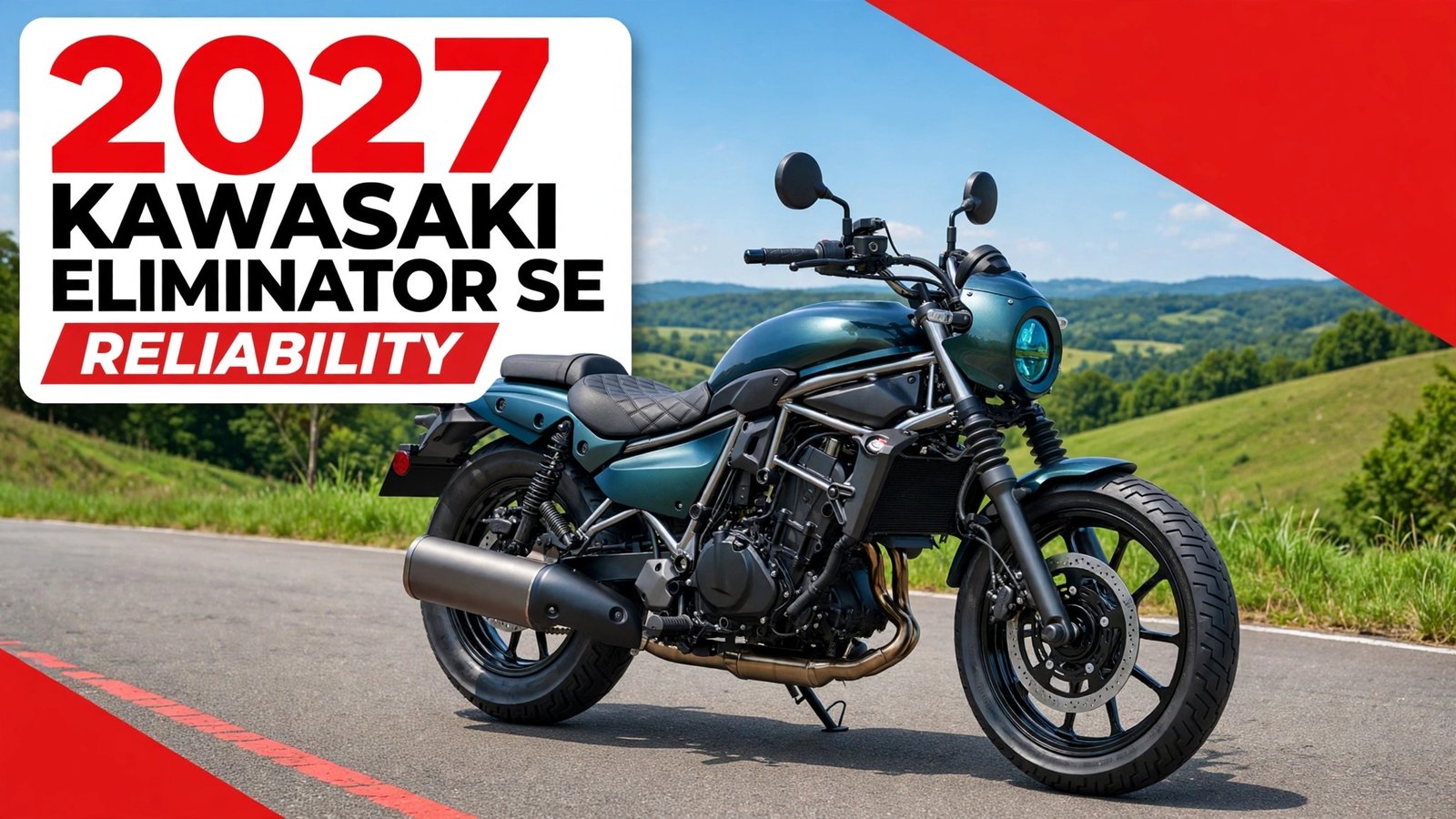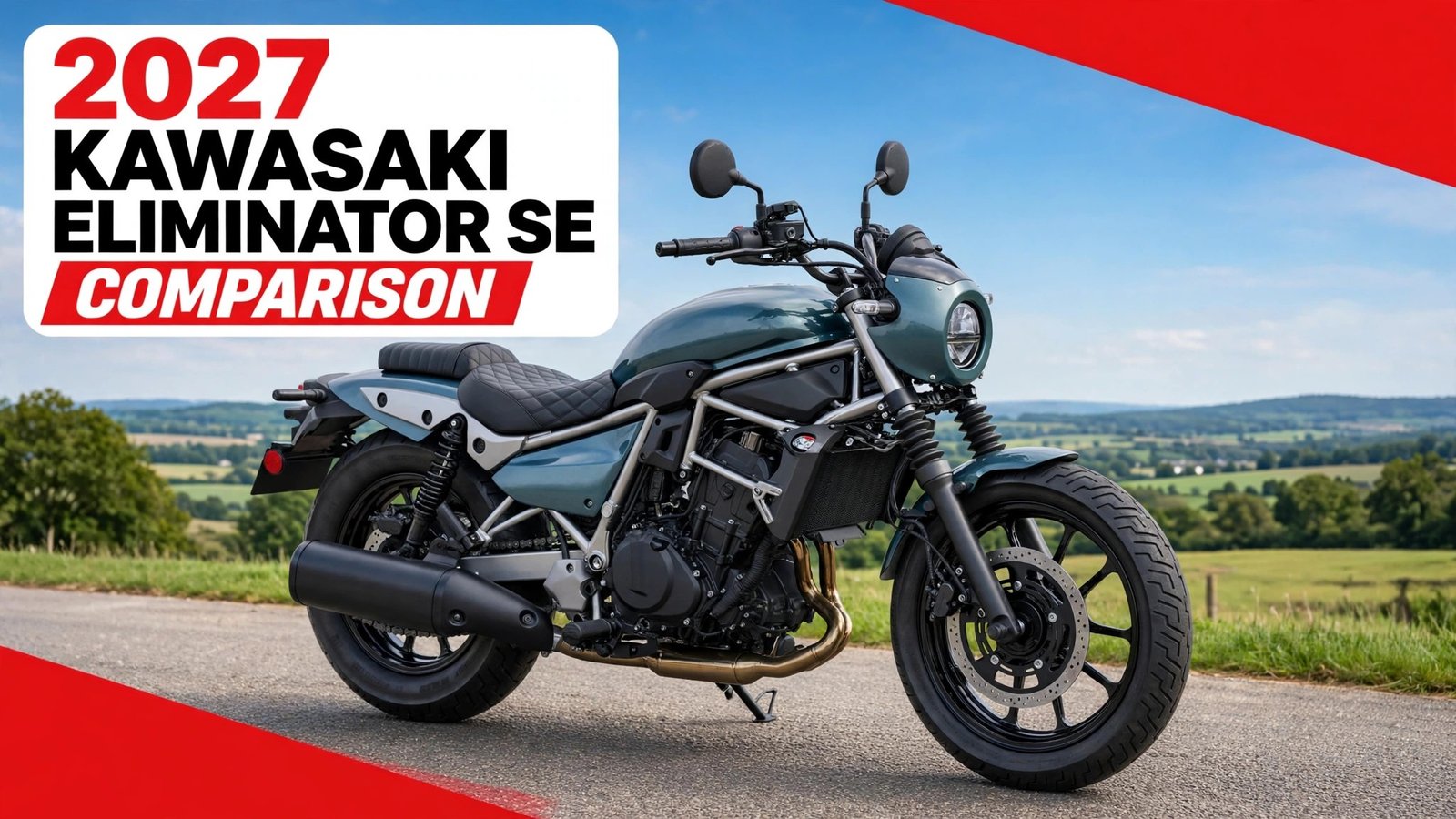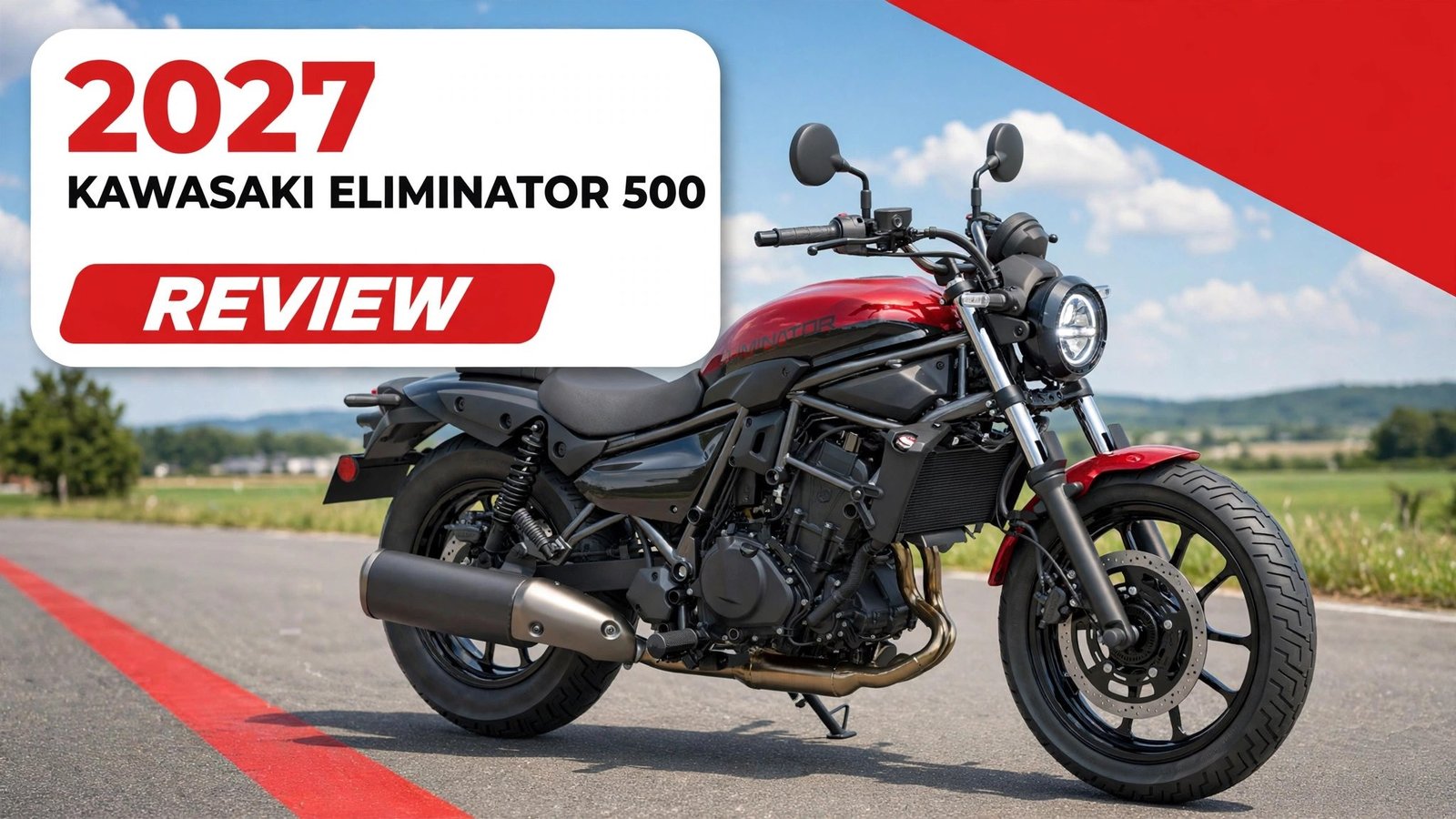
The 2027 Kawasaki Eliminator 500 is the same motorcycle Kawasaki has sold since 2024, under a new name. This Kawasaki Eliminator 500 review starts with the honest summary: the rename is real, the bike is not new. The 451cc parallel twin, the chassis, the brakes, the suspension, the seat and the tank are all carried over unchanged, and the only things that actually changed for 2027 are the name, the deleted base trim and the ABS colours. The ABS trim now starts at $6,799, ABS is standard kit, and the cheapest way into the bike is $300 more than the cheapest 2026 Eliminator was — because the $6,499 base trim is gone.
Kawasaki Eliminator 500 Overview and Model-Year Updates
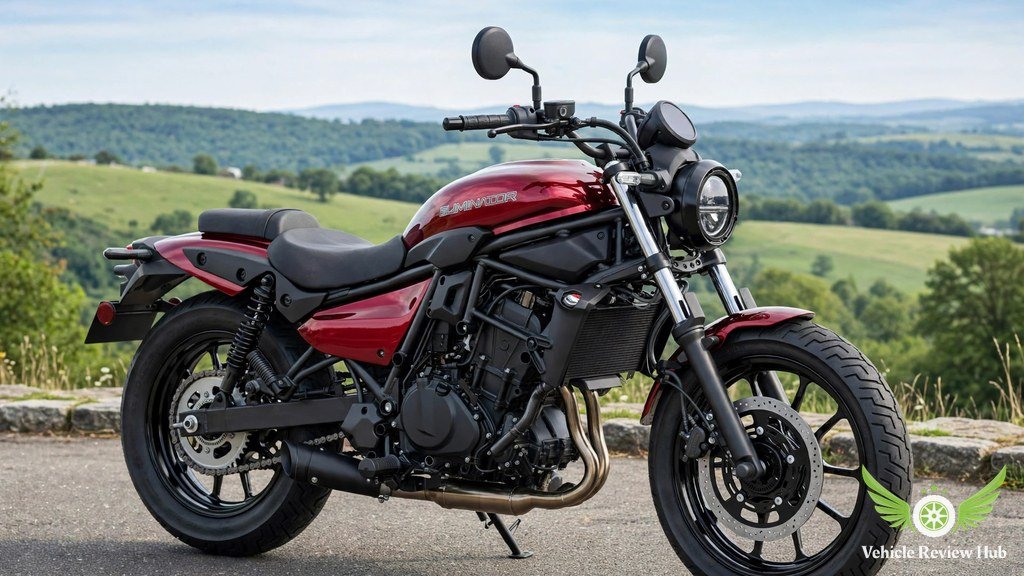
The headline of this Kawasaki Eliminator 500 review is the rename itself. Kawasaki took the Eliminator, added “500” to the name, deleted the non-ABS base trim, and put the ABS trim on the bottom rung. Everything mechanical is identical to the 2024–2026 bike, and the only visible change beyond the name is the ABS colour list.
Rename Only: Sheets Are Identical
On mechanical specs the rename really is only a rename. The 2027 Eliminator 500 ABS carries the same 451cc liquid-cooled parallel twin making 51 hp at 10,000 rpm and 31.7 lb-ft at 7,500 rpm, the same 310 mm front petal disc and 220 mm US rear disc, the same 41 mm fork and twin rear shocks, the same 130/70-18 front and 150/80-16 rear tyres, the same 28.9-inch seat, the same 3.4-gallon tank and the same 59.8-inch wheelbase as the 2024–2026 Eliminator. This Kawasaki Eliminator 500 review checked the 2027 spec sheet against the 2026 sheet line by line and found no mechanical difference at all. That said, “rename only” must not be overstated: the ABS colours did change for 2027, and the base trim is gone, so the 2027 line is not literally the 2026 line with a new badge. The colours are the one real change, covered in the price section below, and this Kawasaki Eliminator 500 review states them there rather than hiding them behind the rename.
No Base Trim for 2027
The base trim is gone. For 2024–2026 the Eliminator came in three trims — base, ABS and SE ABS — and the base trim was the cheapest way in, at $6,499 in 2025 and 2026. For 2027 there are two trims only: the Eliminator 500 ABS at $6,799 in Ebony and the Eliminator 500 SE ABS at $7,099 in Metallic Bluish Green. ABS is now standard on every Eliminator 500 sold in the US, which is a genuine improvement in what the buyer gets — but it also means the entry price rose by $300 against the deleted base trim, even though the ABS price itself did not move at all. This Kawasaki Eliminator 500 review calls that the honest version of the story: the bike did not get more expensive, the cheapest version of it stopped existing.
Kawasaki Eliminator 500 Engine and Specifications

The engine is the part of this Kawasaki Eliminator 500 review that needs the least updating, because nothing about it changed. It is the same Ninja 400-derived 451cc parallel twin that powered the 2024 Eliminator, with the same long stroke, the same 11.3:1 compression and the same 12,000 rpm redline.
Still 451cc, Despite the 500 Name
The “500” is marketing, not displacement, says this Kawasaki Eliminator 500 review. The engine displaces 451cc from a 70.0 mm bore and a 58.6 mm stroke. It makes 51 hp at 10,000 rpm and 31.7 lb-ft at 7,500 rpm on Kawasaki’s US spec sheet, and those are the figures this Kawasaki Eliminator 500 review prints as the headline numbers. Three power figures exist and must never be blended: the spec sheet says 51 hp, the certificate of origin says 52 hp at 10,000 rpm with 32 lb-ft at 8,000 rpm, and the European version makes 45 hp at 9,000 rpm (33.4 kW, 45.4 PS) to fit the A2 licence class. The Cycle World dyno test on a 2024 SE ABS measured 47.22 hp at 10,430 rpm and 29.03 lb-ft at 7,510 rpm at the rear wheel, and that figure belongs to every trim. No outlet has tested a 2027 bike, so every instrumented figure in this Kawasaki Eliminator 500 review carries its 2024 label.
Code Stays EL450, VIN Stays ML5
The model code and the VIN both stayed put through the rename. The 2027 ABS trim carries the code EL450AVFNL on multiple dealer listings, and the SE carries EL450BVFNL. One split is worth stating once and then leaving alone: Kawasaki’s own accessories shop uses the slug “el450avfal” for the 2027 ABS, and one dealer listing prints “EL450AVFAN” — the same dealer-system typo pattern that produced the SE’s “NN” endings in earlier years, where a second brochure printed the correct “NL” against a real VIN. This Kawasaki Eliminator 500 review prints EL450AVFNL as the dealer-listed code and notes the shop slug as a split, without asserting one as settled. The VINs still start with ML5, the bike is still built in Thailand, and the 10th character of the VIN still carries the model year: R for 2024, S for 2025, T for 2026 and V for 2027. That year code settles which year you are buying, because the two bikes look nearly identical.
| Item | 2027 Eliminator 500 ABS | 2026 Eliminator ABS | 2024 Eliminator ABS |
|---|---|---|---|
| Engine | 451cc parallel twin | 451cc parallel twin | 451cc parallel twin |
| Power (US) | 51 hp @ 10,000 | 51 hp @ 10,000 | 51 hp @ 10,000 |
| Torque | 31.7 lb-ft @ 7,500 | 31.7 lb-ft @ 7,500 | 31.7 lb-ft @ 7,500 |
| Curb weight | 388.1 lb | 388.1 lb | 388.1 lb |
| Seat height | 28.9 in | 28.9 in | 28.9 in |
| Fuel tank | 3.4 gal | 3.4 gal | 3.4 gal |
| Brakes | 310 mm / 220 mm | 310 mm / 220 mm | 310 mm / 220 mm |
| Wheelbase | 59.8 in | 59.8 in | 59.8 in |
| Warranty | 12 months | 12 months | 12 months |
Notes: the figures in this Kawasaki Eliminator 500 review table are the verified US spec-sheet figures, and they are identical across all three model years — that is the point of the table. The 220 mm rear disc is the US figure; the 240 mm rear disc is the European spec and does not apply to the US bike.
Kawasaki Eliminator 500 Price and Market Availability
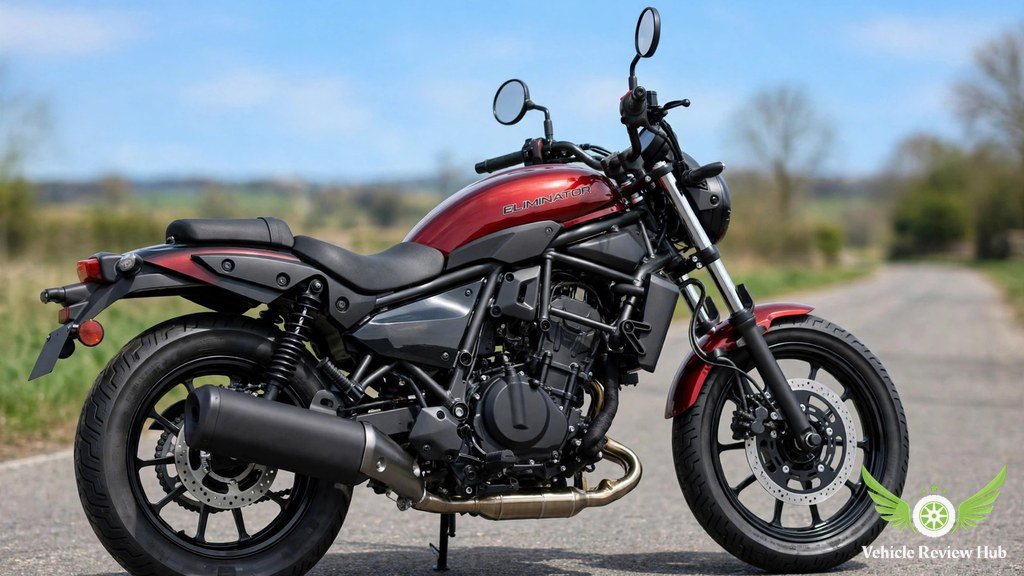
Price is where this Kawasaki Eliminator 500 review finds the only numbers that actually moved. The ABS price did not move at all — $6,799 in 2025, $6,799 in 2026, $6,799 in 2027 — but the cheapest bike in the line did, because the base trim that used to sit $300 below it is gone.
Kawasaki Eliminator 500 Price in the USA: $6,799
The 2027 Eliminator 500 ABS starts at $6,799 in Ebony, plus a $650 destination charge, for $7,449 delivered. The SE ABS is $7,099 plus $650, $7,749 delivered — the same $300 premium the SE has carried since 2024. Kawasaki USA’s 2027 ABS page confirms the $6,799 price and the $650 destination charge. The ABS trim has cost $6,799 for three model years running, which is the most useful price fact in the whole line: the rename added nothing to the price of the bike itself. One trap to avoid: a dealer listing shows a 2026 SE ABS at $6,799, and that is a dealer discount, not the $7,099 MSRP — a single dealer listing is never the price, and this Kawasaki Eliminator 500 review never cites one as if it were.
Red Costs $200 More Than Ebony
Metallic Imperial Red costs $200 more than Ebony on the 2027 ABS trim: $6,999 against $6,799, or $7,649 against $7,449 delivered with the same $650 destination. The colour itself is the story. In 2026 the ABS trim came in Metallic Flat Spark Black and Urban City White, and Metallic Imperial Red was an SE-only colour. For 2027 the ABS colours are Ebony and Metallic Imperial Red, so the red that used to mark the SE now marks a $200 option on the base ABS bike. That is the one real change in the 2027 line besides the name and the deleted base trim, and this Kawasaki Eliminator 500 review states it plainly so the “rename only” heading is not read as “nothing changed at all”.
| Year | Trim | MSRP | Destination | Delivered |
|---|---|---|---|---|
| 2027 | Eliminator 500 ABS (Ebony) | $6,799 | $650 | $7,449 |
| 2027 | Eliminator 500 ABS (Metallic Imperial Red) | $6,999 | $650 | $7,649 |
| 2027 | Eliminator 500 SE ABS (Metallic Bluish Green) | $7,099 | $650 | $7,749 |
| 2026 | Eliminator ABS | $6,799 | $650 | $7,449 |
| 2026 | Eliminator base (deleted for 2027) | $6,499 | $650 | $7,149 |
| 2026 | Eliminator SE ABS | $7,099 | $650 | $7,749 |
| 2024 | Eliminator ABS | $6,949 | $450 | $7,399 |
| 2024 | Eliminator SE ABS | $7,249 | $450 | $7,699 |
Notes: the prices in this Kawasaki Eliminator 500 review table are the verified US MSRP and destination figures, with delivered prices as simple arithmetic. The 2027 ABS price is unchanged from 2025 and 2026; the entry price rose only because the $6,499 base trim was deleted.
Kawasaki Eliminator 500 Design, Features and Technology

The design is where the rename shows up least and where the ABS upgrade shows up most. The bike still looks like the 2024 Eliminator — long, low, thin tank, trellis frame on show, twin shocks at the back — and the only thing that changed in the equipment list is that ABS, once a $300 option over the base trim, is now fitted to every bike.
ABS Is Now Standard Kit
ABS is standard on every 2027 Eliminator 500. The system is a Nissin unit working on a single 310 mm front petal disc with a twin-piston calliper and a single 220 mm US rear disc with a single-piston calliper. The European bike gets a 240 mm rear disc with a two-piston calliper; the 220 mm figure in this Kawasaki Eliminator 500 review is the US figure. The base trim’s deletion removed the only non-ABS Eliminator from the US line, and the $300 that used to buy ABS is now built into the $6,799 starting price. There is no instrumented braking distance for any Eliminator trim in any year, so this Kawasaki Eliminator 500 review prints none.
On-Bike 500 Badging Unverified
No on-bike “500” badging has been confirmed. That is the honest position, and this Kawasaki Eliminator 500 review states it plainly rather than assuming the new name appears on the bike. The 2024–2026 tanks read “ELIMINATOR” with no “500”, Kawasaki USA’s 2027 page carries no badging evidence in its page text, and a search of 2027 dealer photos and press coverage at writing time found no photo showing a “500” badge on the tank or anywhere else on the bike. The model name is “Eliminator 500” in every listing, but whether the number appears on the motorcycle itself is unverified. The rest of the design is unchanged from the 2024 bike: the round LCD dash (not a TFT) with RIDEOLOGY THE APP connectivity, the mid-mount footpegs rather than forward controls, the steel trellis frame, the 10-spoke cast wheels and the IRC GS-23 tyres at 29 psi front and 32 psi rear.
Kawasaki Eliminator 500 Riding Experience and Comfort

The riding experience is the 2024 bike’s riding experience, because the bike is the 2024 bike. No outlet has tested a 2027 Eliminator 500, so everything here carries its 2024 label. That consensus, as this Kawasaki Eliminator 500 review reads it, is consistent: an easy, light, beginner-friendly cruiser.
Seat 28.9 Inches, Weight 388.1 Pounds
The numbers that matter most to a new rider are unchanged: a 28.9-inch seat and 388.1 pounds curb for the ABS trim. That is the lightest bike in its comparison set and one of the lowest seats in the class, and it is why the Eliminator keeps showing up on beginner shortlists. The one-finger assist and slipper clutch and the mid-mount footpegs make the riding position the most beginner-friendly in the class. Two verdicts are split. Buzz at cruise is a genuine split: some 2024 testers noted vibration at highway speed and others did not, so the body prints the split and picks no side. The budget twin shocks drew only mild criticism, not a harsh verdict, and the rear-shock preload is a genuine source conflict — most sources say the shocks are 5-way preload adjustable, while ZigWheels says preload is “Not Available” — so this Kawasaki Eliminator 500 review prints both and settles neither. The 3.4-gallon tank and the 2024 RevZilla 45 mpg dash reading give about 150 miles of range, and RevZilla’s own words are that the range estimate is “not to be trusted”.
SE Goes Single Colour for 2027
The SE goes single colour for 2027: Metallic Bluish Green only, at $7,099 plus $650 destination, $7,749 delivered. The SE is the same motorcycle as the ABS trim with five factory-fitted items — the headlight cowl, the fork boots, the two-pattern seat cover, the waterproof USB-C outlet and the exclusive colour — and nothing mechanical changed. The 2026 SE came in Metallic Imperial Red and Ebony; for 2027 the red moved down to the ABS trim, the SE took the Bluish Green, and the SE’s own colour count dropped from two to one. The $300 premium over the ABS trim is unchanged, and so is the 2.2-pound weight gap: the SE carries 390.3 pounds curb against the ABS trim’s 388.1. Buy the SE for the look and the colour, not for any performance difference, because there is none.
Kawasaki Eliminator 500 Review: Pros, Cons and Verdict
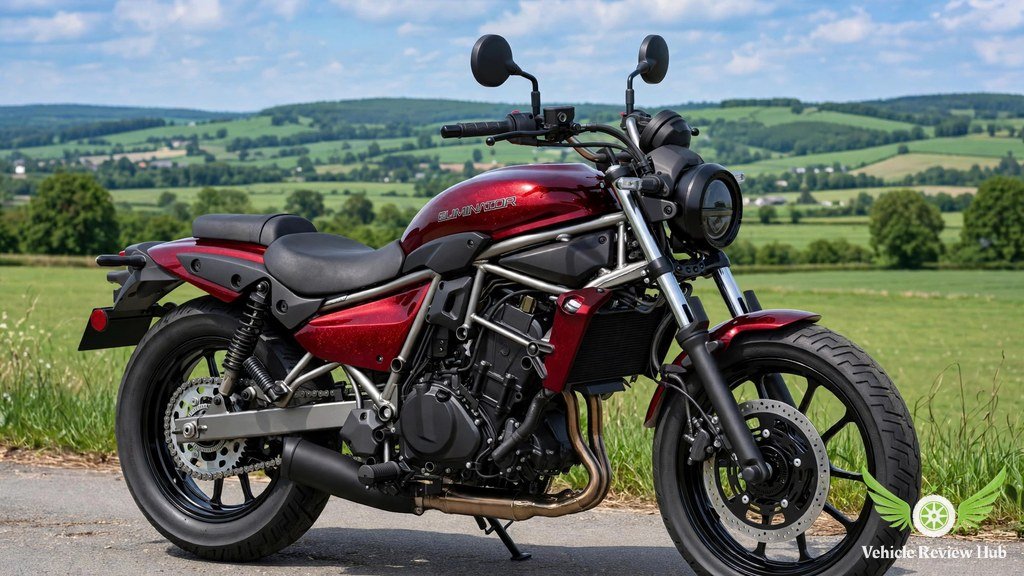
The verdict in this Kawasaki Eliminator 500 review is short, because the bike gives the reviewer almost nothing new to judge. It is the 2024 Eliminator with a new name, standard ABS and a new colour list. The video below is the 2024 Rider Magazine review — the test bike on screen is the 2024 ABS trim, not a 2027 Eliminator 500, and no 2027 test exists yet.
Main Advantages and Limitations of the Kawasaki Eliminator 500
The 28.9-inch seat and 388.1-pound curb weight make it the lightest and one of the lowest bikes in the class, and ABS is now standard rather than a $300 option. The 51 hp twin is the revviest in the class, the Cycle World’s first-ride review praised the light clutch and easy ergonomics, and the 2024 dyno figure of 47.22 hp at 10,430 rpm is the strongest in the class. There is no instrumented top speed, quarter mile, 0–60 or braking figure for any trim in any year, so a buyer who wants measured performance numbers will not find them here — owner claims run 115–118 mph and are labelled as owner claims only, and the 102.5 mph figure that circulates online is an editorial figure traced to a YouTube night run, not a test. The NHTSA record is clean — zero recalls for the Eliminator family in 2024–2027 and zero under the “Eliminator 500” name for 2027 — but the owner record spans three model years only, so no long-term reliability pattern exists yet. The clutch recall 25V-146 that sometimes appears in searches is a platform watch item for the 2024 Ninja 500 and Z500 only, not an Eliminator recall, and this Kawasaki Eliminator 500 review says so every time the recall comes up. The former Eliminator earned the same verdict in 2024, and the SE review covers the styling trim.
12 Month Limited Warranty
The warranty is 12 months limited, the same as every Eliminator since 2024 and the same as the Honda Rebel 500’s. It is the one figure in this Kawasaki Eliminator 500 review that invites a comparison the bike loses: the Royal Enfield Super Meteor 650 carries a 36-month warranty, three times as long, and that is worth real money over three years of ownership. A buyer who values a long warranty should weigh the Super Meteor’s 36 months against the Eliminator 500’s lighter weight and lower price — $6,799 against $7,899 — and decide which matters more. For the buyer who wants the lightest, lowest, easiest cruiser with standard ABS at the lowest price in the class, the verdict of this Kawasaki Eliminator 500 review is simple: the rename changed nothing that matters, and the bike was already the right answer.
Kawasaki Eliminator 500 Review FAQ
The questions below are the ones buyers actually ask after reading a Kawasaki Eliminator 500 review, answered on the verified figures in this guide.
Is the Eliminator 500 a new bike?
No. The 2027 Eliminator 500 is the 2024–2026 Eliminator renamed, with the same 451cc engine, chassis, brakes, suspension, seat and tank. The changes are the name, the deleted base trim and the ABS colours, says this Kawasaki Eliminator 500 review.
How much does the 2027 Eliminator 500 cost?
The ABS trim is $6,799 in Ebony and $6,999 in Metallic Imperial Red, plus a $650 destination charge — $7,449 and $7,649 delivered. The SE ABS is $7,099 plus $650, $7,749 delivered, says this Kawasaki Eliminator 500 review.
Why is there no non-ABS Eliminator 500?
Kawasaki deleted the base trim for 2027, so ABS is now standard on every Eliminator 500 sold in the US. The base trim cost $6,499 in 2025 and 2026, and its deletion raised the entry price by $300 even though the ABS price did not move, says this Kawasaki Eliminator 500 review.
Is the engine really 451cc, not 500cc?
Yes. The engine displaces 451cc from a 70.0 mm bore and a 58.6 mm stroke. The “500” in the name is marketing, not displacement, and this Kawasaki Eliminator 500 review prints the 451cc figure as the real one.
How much power does the Eliminator 500 make?
The US spec sheet says 51 hp at 10,000 rpm and 31.7 lb-ft at 7,500 rpm. The Cycle World dyno on a 2024 SE ABS measured 47.22 hp at 10,430 rpm at the rear wheel. The European version makes 45 hp, and that figure is not the US figure — that is the position of this Kawasaki Eliminator 500 review.
Does the Eliminator 500 have ABS?
Yes. ABS is standard on every 2027 Eliminator 500, on the ABS trim and on the SE ABS. The system is a Nissin unit on a 310 mm front disc and a 220 mm US rear disc, says this Kawasaki Eliminator 500 review.
What colours does the 2027 Eliminator 500 come in?
The ABS trim comes in Ebony and Metallic Imperial Red, which costs $200 more. The SE ABS comes in Metallic Bluish Green only. Red was an SE-only colour in 2026 and moved to the ABS trim for 2027, says this Kawasaki Eliminator 500 review.
Does the bike have a “500” badge on it?
No on-bike “500” badging has been confirmed. The 2024–2026 tanks read “ELIMINATOR” with no “500”, and no 2027 photo shows a “500” badge, so this Kawasaki Eliminator 500 review does not assert that one exists.
What is the top speed of the Eliminator 500?
No instrumented top speed exists for the Eliminator 500 or for any Eliminator trim in any year. Owner claims run 115–118 mph and are labelled as owner claims only, and the 102.5 mph figure online is an editorial figure from a YouTube night run, not a test, says this Kawasaki Eliminator 500 review.
Are there any recalls on the Eliminator 500?
No. The NHTSA search returns zero recalls for the Eliminator family in 2024–2027 and zero under the “Eliminator 500” name for 2027. The same search returns one recall for the 2024 Ninja 500, so the zero is meaningful. The clutch recall 25V-146 covers the Ninja 500 and Z500 only, not the Eliminator — that is the finding of this Kawasaki Eliminator 500 review. The Eliminator reliability guide covers the same record in detail.
Is the Eliminator 500 a good beginner bike?
Yes. It has a 28.9-inch seat, a 388.1-pound curb weight, ABS as standard, a light assist and slipper clutch, and 51 hp with no riding modes to manage. With zero recalls in any trim, this Kawasaki Eliminator 500 review calls it a sound first bike.
Should I buy a leftover 2026 Eliminator instead?
A leftover 2026 ABS is the same motorcycle for the same $6,799, so a discounted 2026 is a good buy if the price is genuinely below MSRP. Check the VIN’s 10th character — T for 2026, V for 2027 — that is the advice of this Kawasaki Eliminator 500 review.