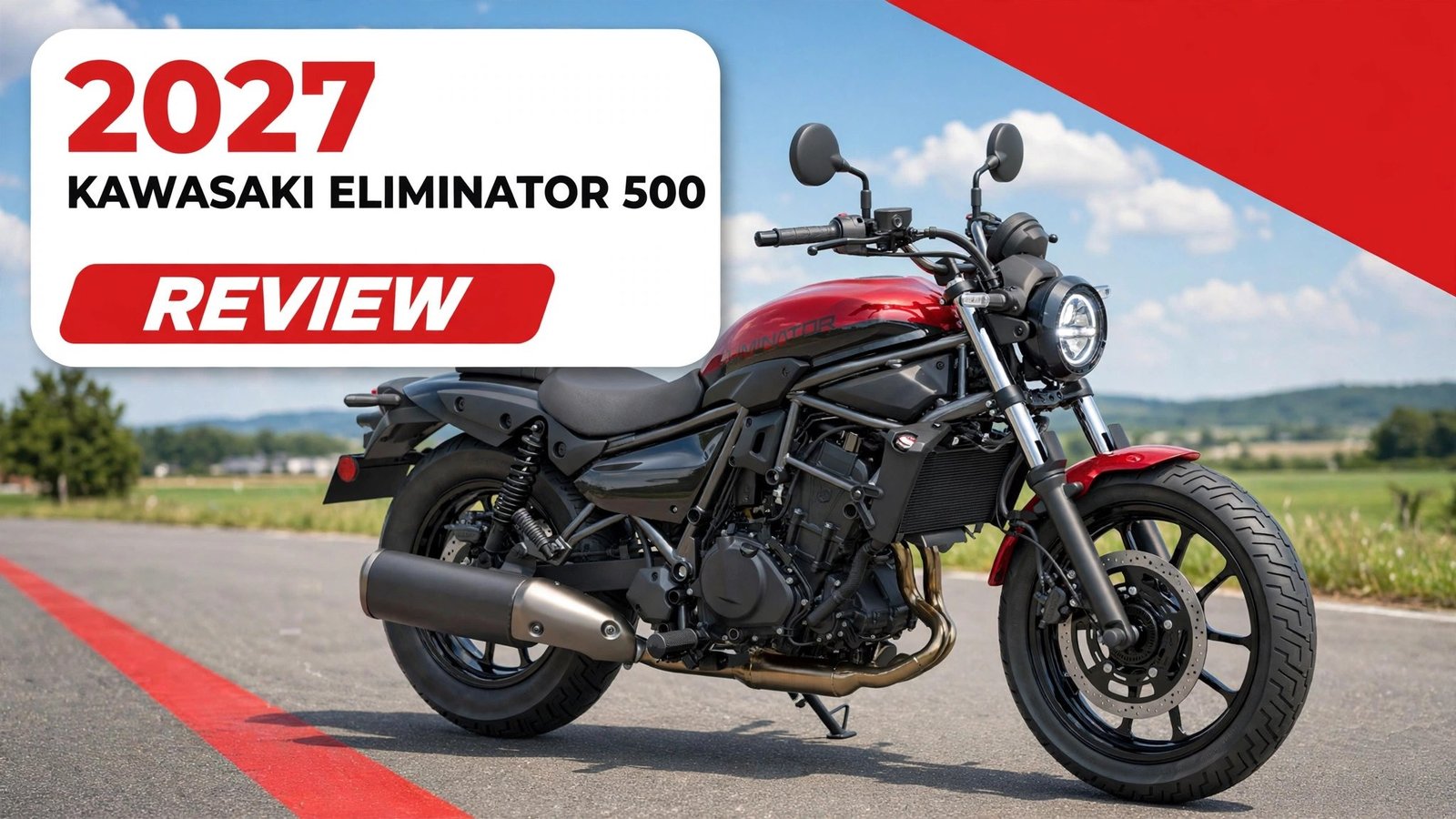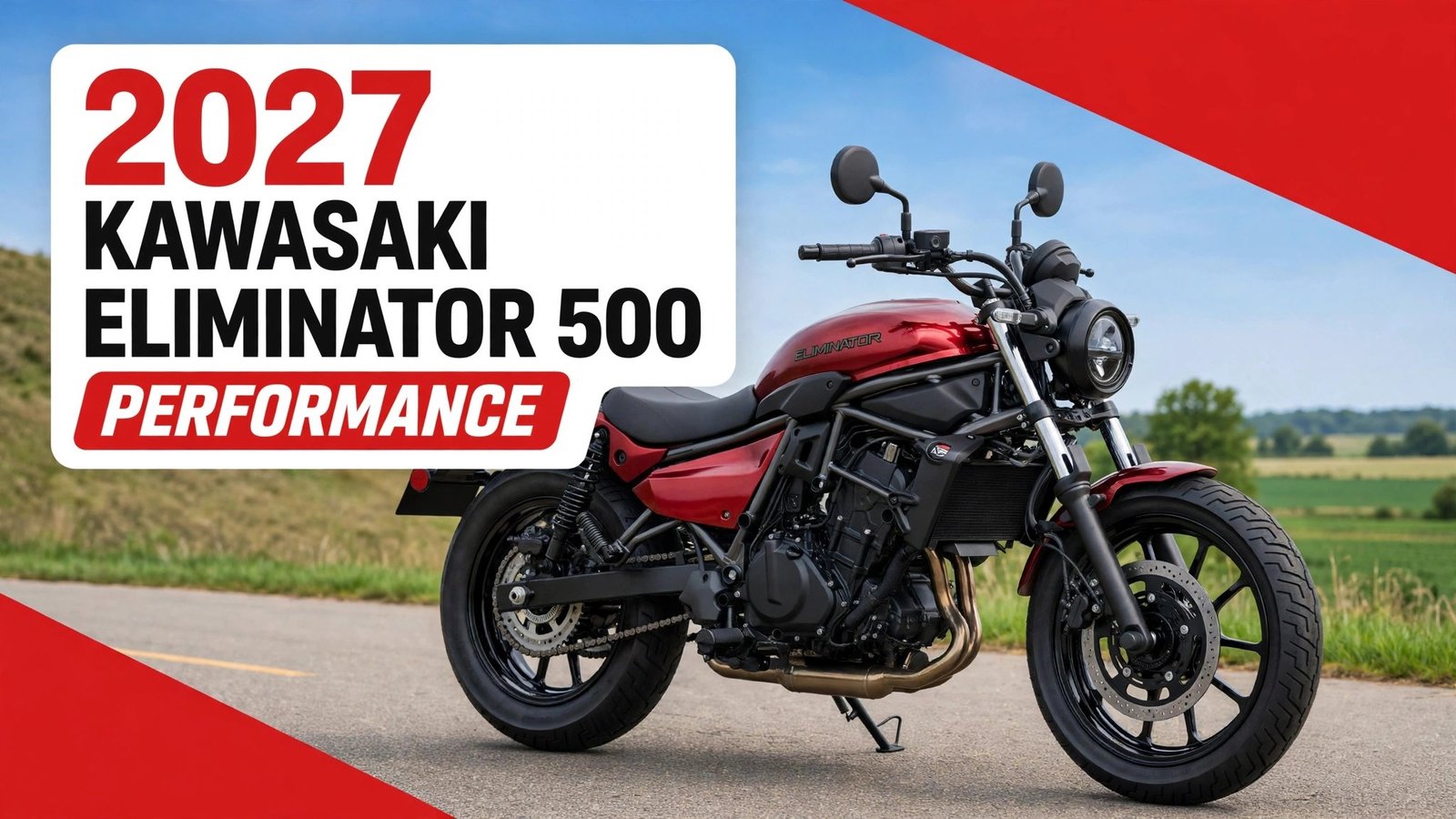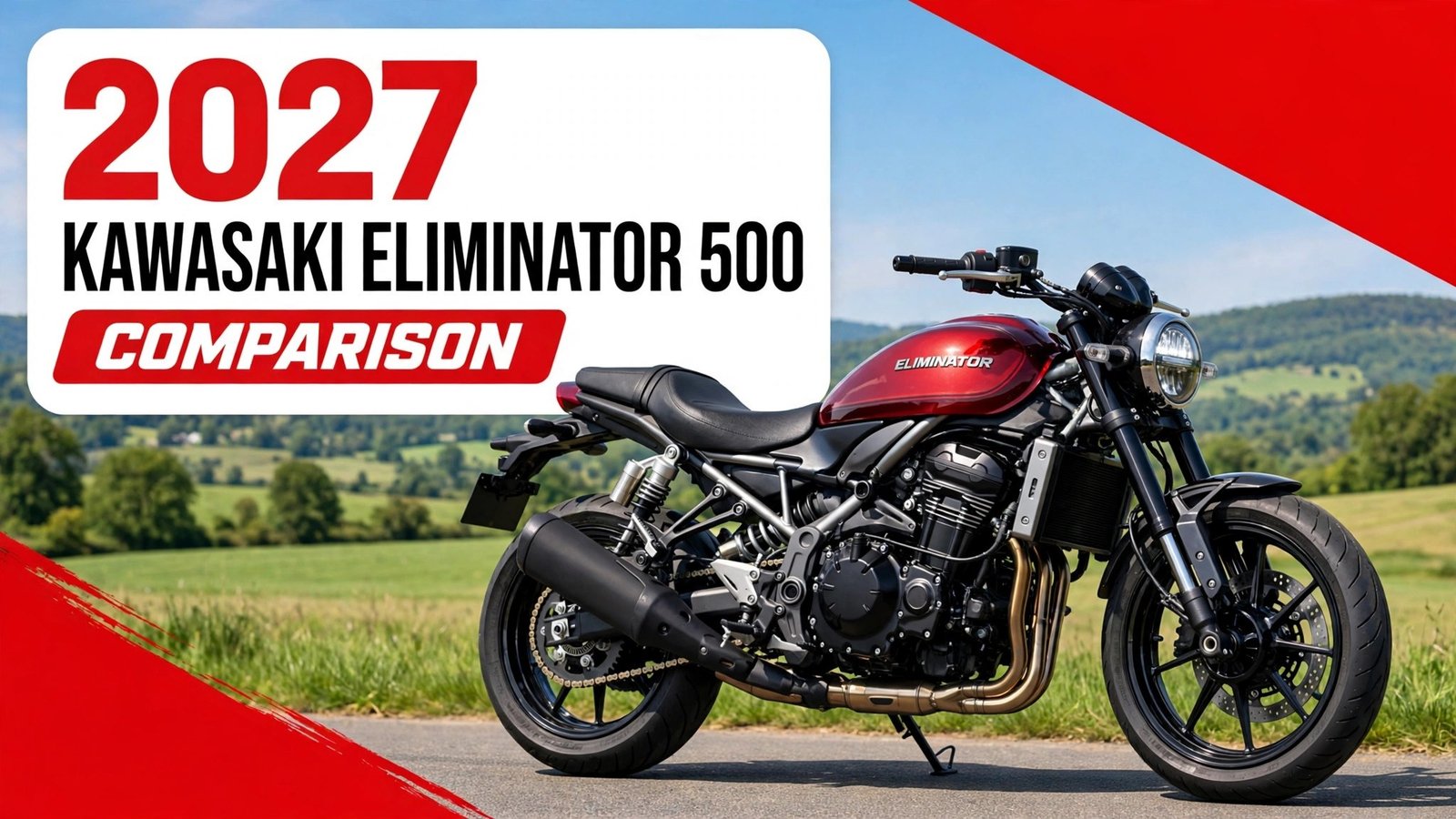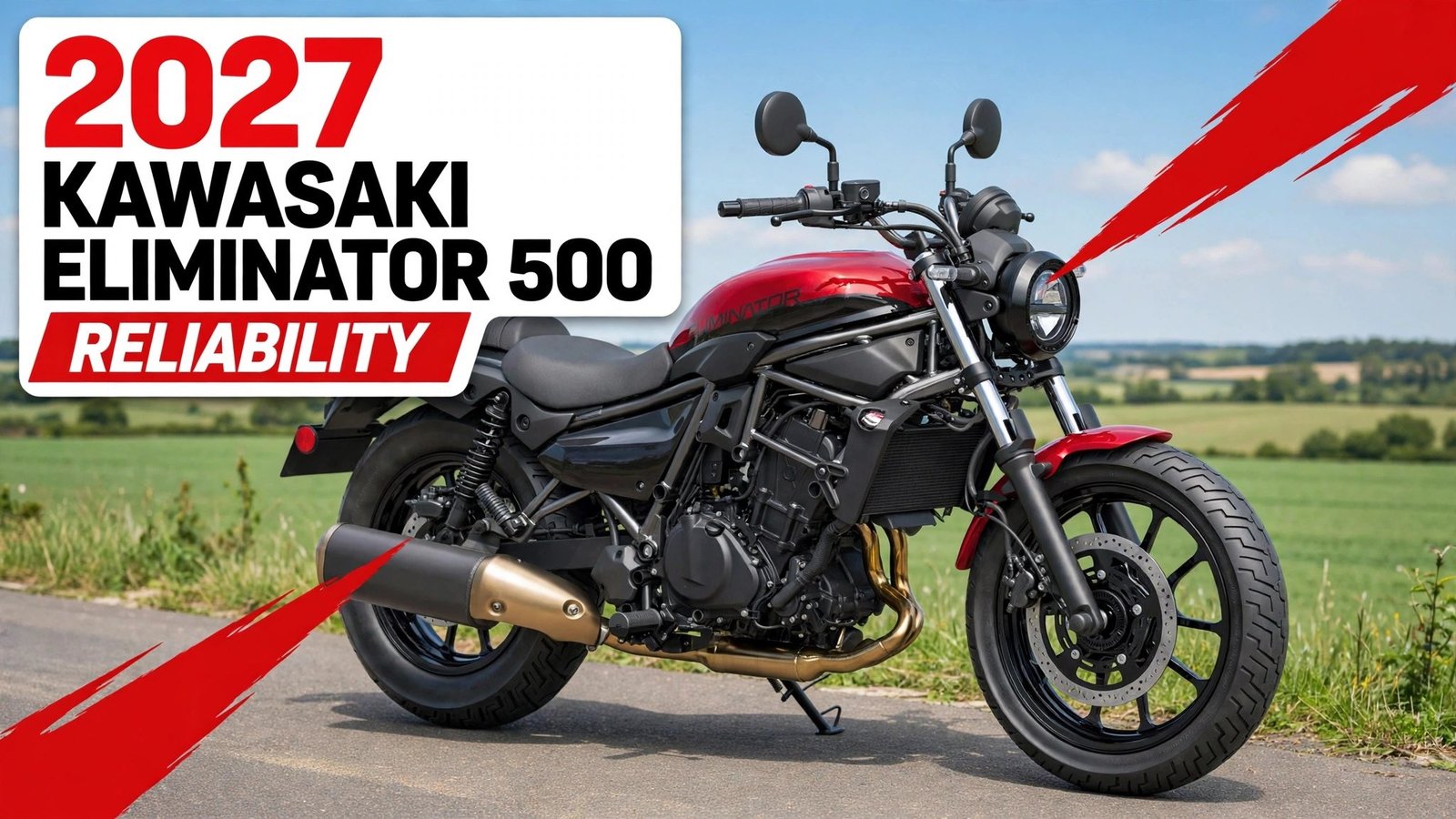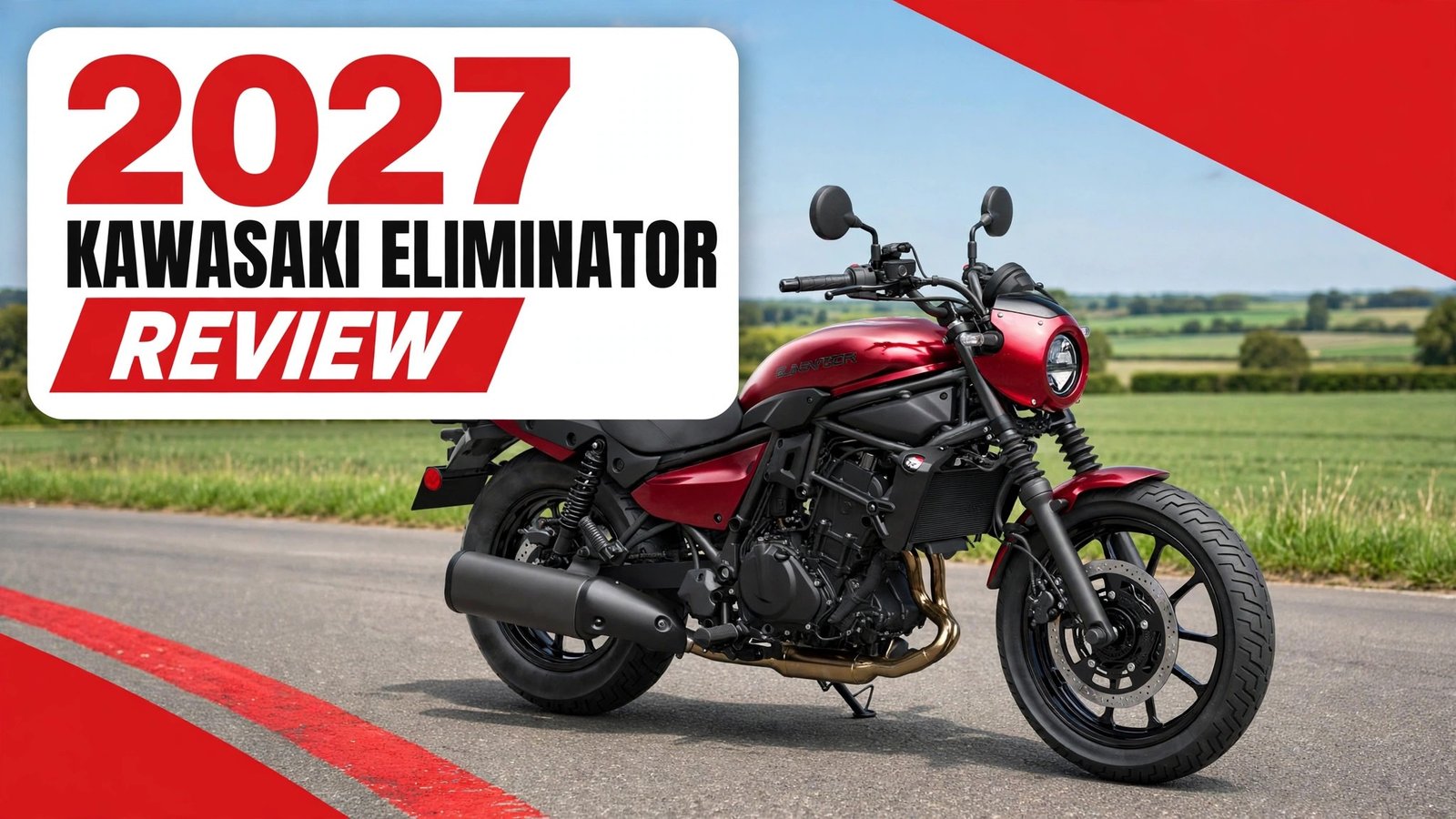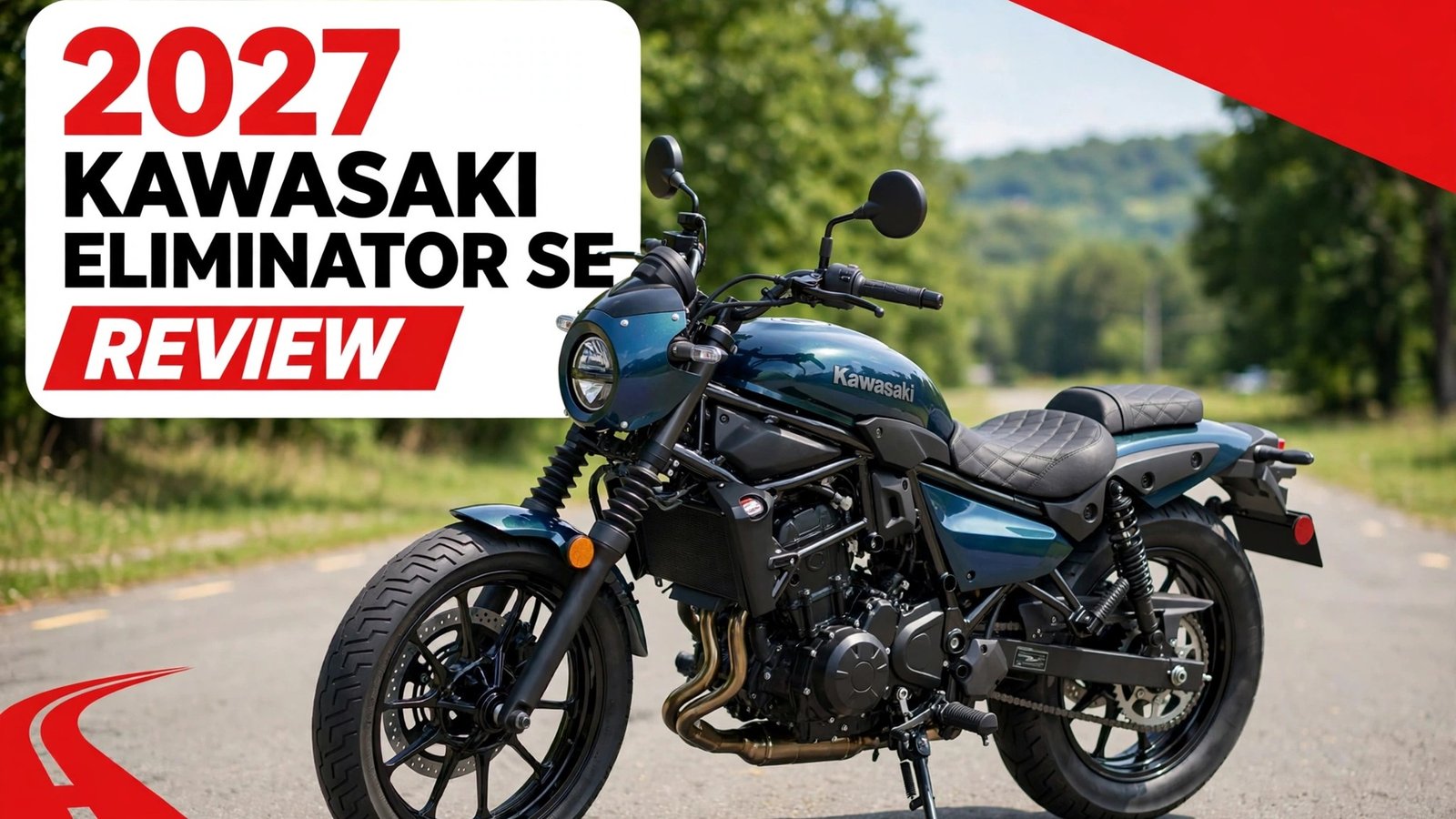
The Kawasaki Eliminator SE is the styling trim of Kawasaki’s lightest cruiser, and this Kawasaki Eliminator SE review answers the only question that matters about it: is $300 worth paying for a headlight cowl, fork boots, a two-pattern seat, a USB-C outlet and an exclusive colour? The short answer is that the SE changes nothing about how the bike rides. Same 451cc parallel twin, same 51 hp, same chassis, and a curb weight only 2.2 lb heavier than the ABS trim. It built a better-dressed one, and the $300 premium has stayed the same in every model year from 2024 to 2027. This Kawasaki Eliminator SE review works through the five SE items one by one, the price history, the specs, and what the SE is like to ride, so a buyer can decide whether the look is worth $300 or whether the ABS trim at $7,449 delivered is the smarter buy.
Kawasaki Eliminator SE Overview and Model-Year Updates
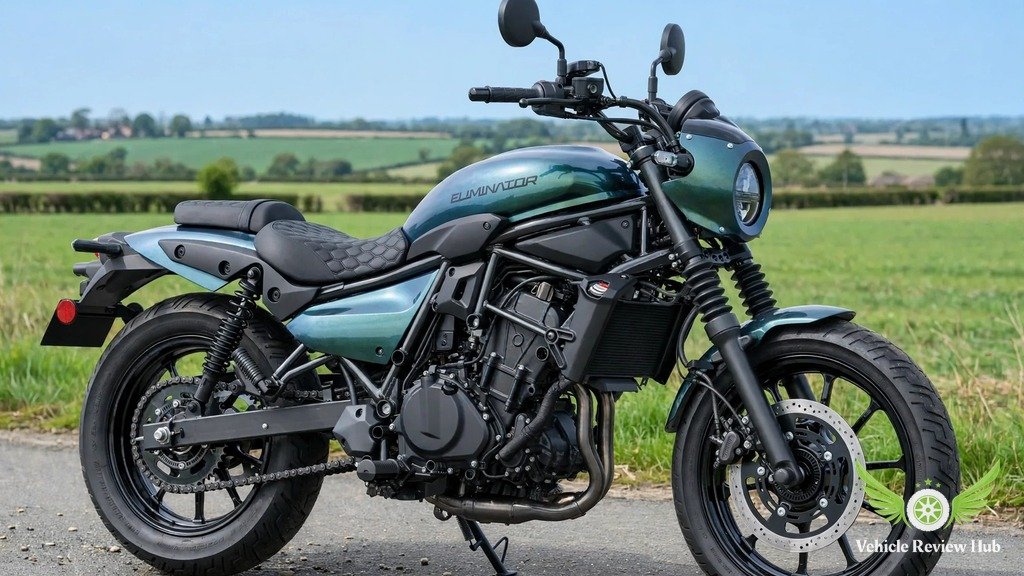
For 2027 the whole family was renamed Eliminator 500, the base trim ended, and ABS became standard on both remaining trims — but the SE’s job never changed. This Kawasaki Eliminator SE review treats it as what it is: the same motorcycle as the ABS trim, wearing $300 of factory accessories. LIVE TO RIDE rode the Australian SE and liked what it is for, and the video below is worth watching with one fact in mind: the bike on screen is the EU-spec SE, so it makes 45 hp, not the US 51 hp.
Premium Is $300 in Every Year
The SE premium is $300 over the ABS trim in every single model year, and that consistency is the most useful fact in this Kawasaki Eliminator SE review. In 2024 the SE listed at $7,249 against $6,949 for the ABS trim. In 2025, 2026 and 2027 the SE lists at $7,099 against $6,799 for the ABS trim. The $300 gap never moved, even when the base prices moved. The ABS trim itself costs $300 over the base trim in every year it existed, so the Eliminator family is really three $300 steps: base, ABS, SE.
Five Items, Nothing Mechanical
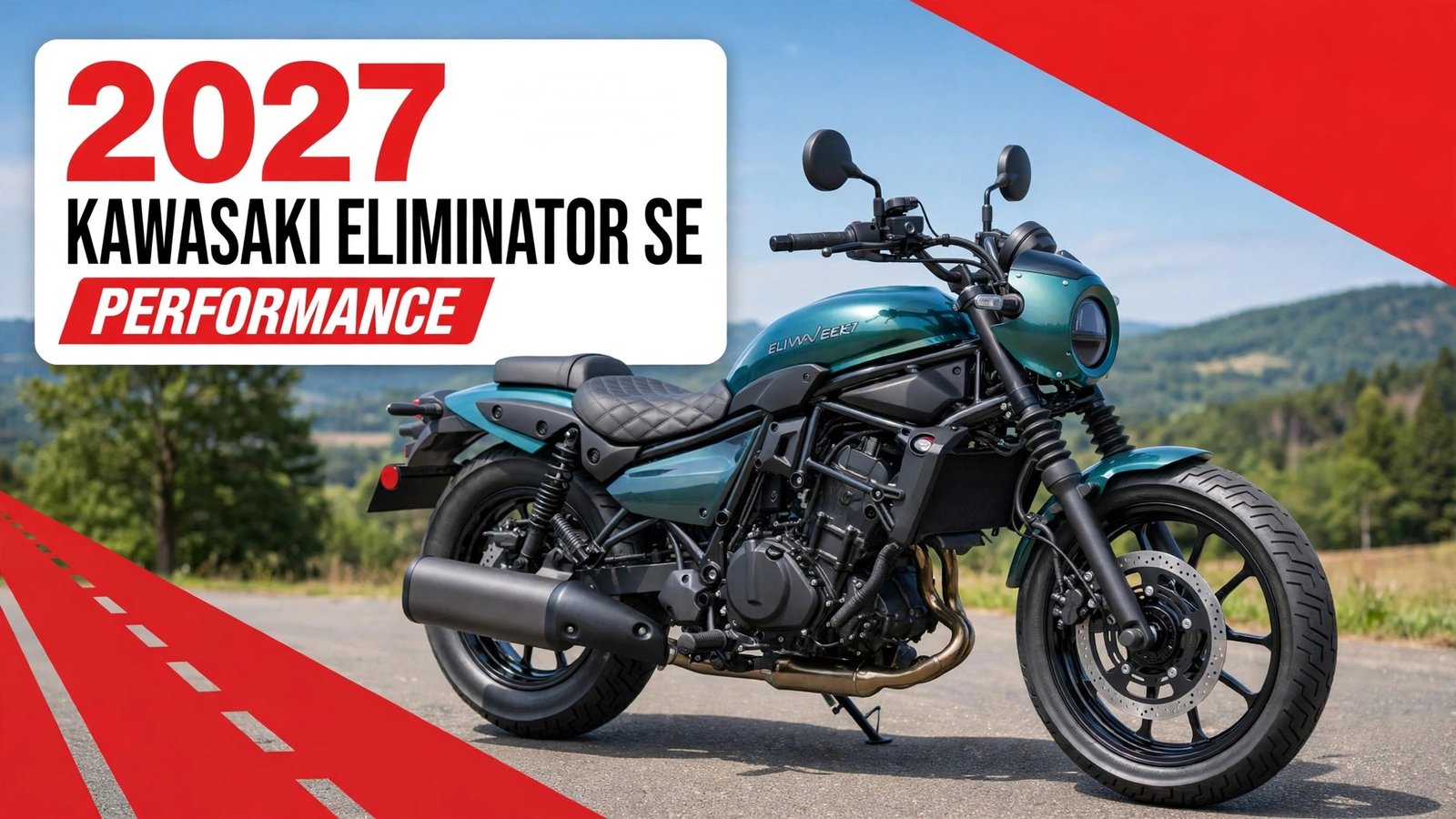
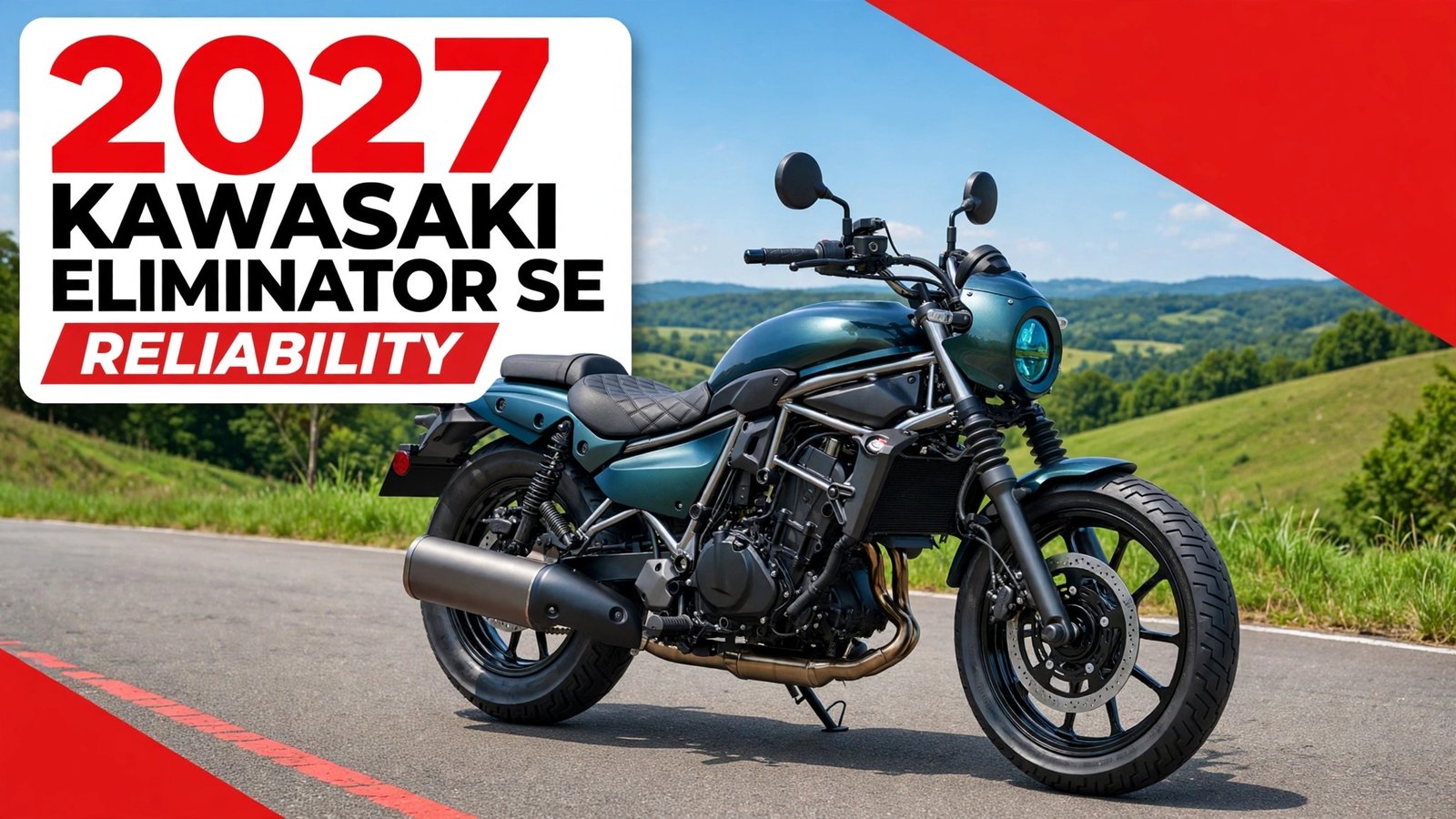
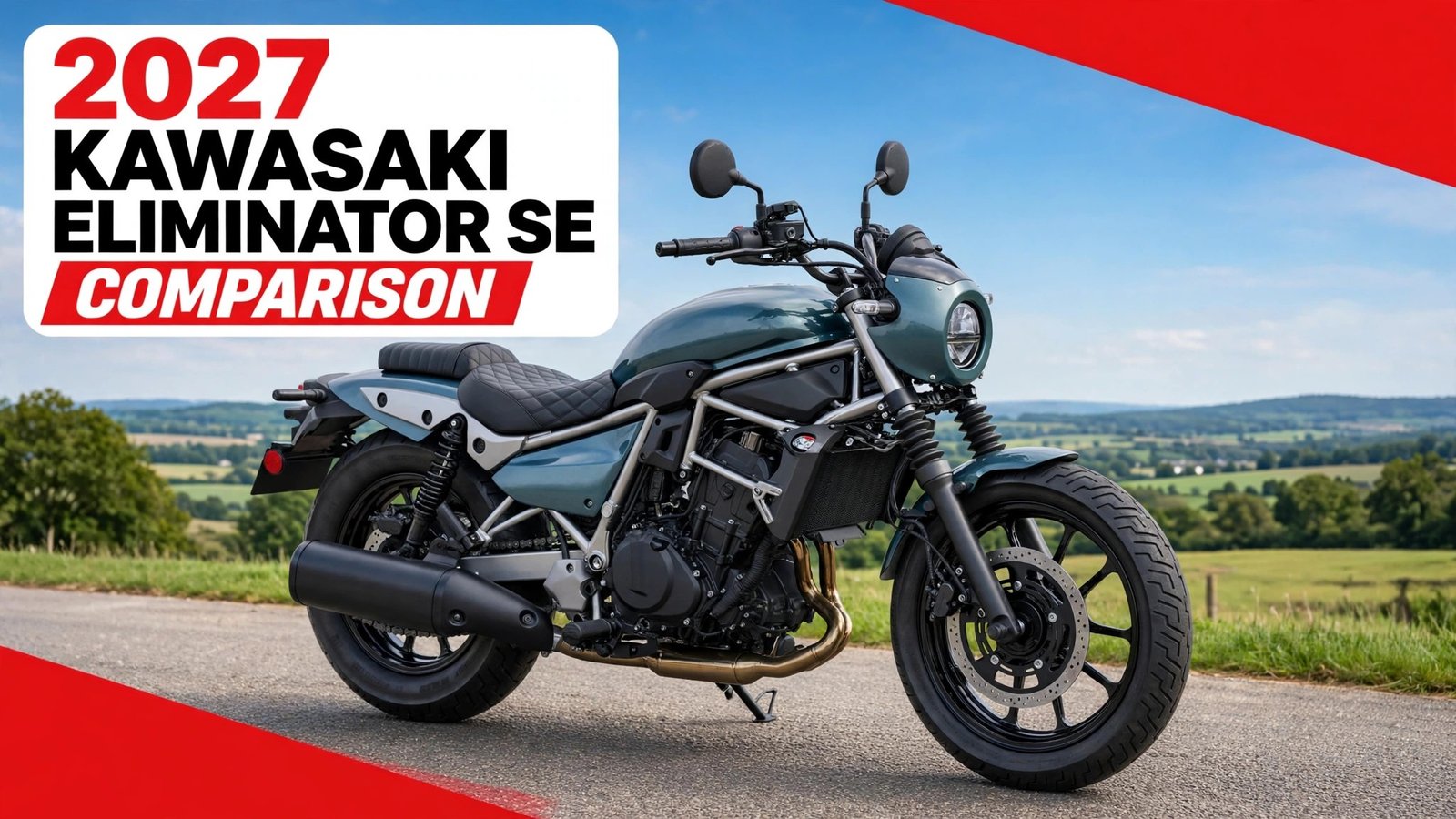
The SE adds five things and changes nothing mechanical, and this Kawasaki Eliminator SE review keeps that distinction front and centre because it is the whole story of the trim. The five items are a small colour-matched headlight cowl over the round LED headlight, black rubber fork boots on the fork legs, a two-pattern seat, a waterproof USB-C outlet on the right handlebar, and exclusive colours with SE graphics. None of them touches the engine, the chassis, the brakes, the suspension, the wheels, the tyres, the tank, the seat height or the wheelbase. A rider who buys it because the cowl and fork boots make the Eliminator look finished has understood it exactly.
Kawasaki Eliminator SE Engine and Specifications
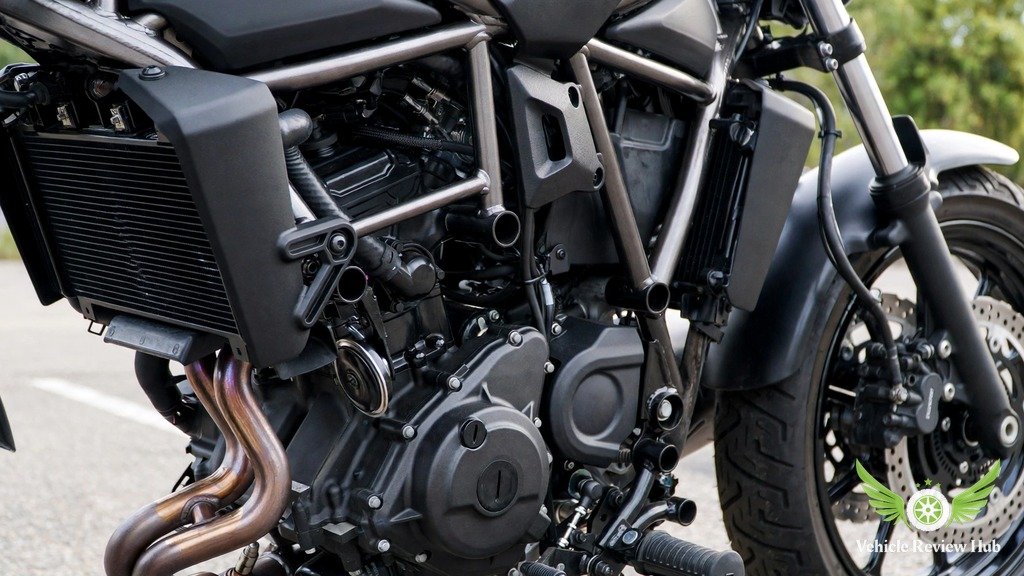
The SE’s engine is the ABS trim’s engine, and the spec sheet proves it line by line. The 451cc liquid-cooled parallel twin is the Ninja 400’s 399cc engine with the stroke lengthened 6.8 mm, from 51.8 to 58.6 mm, and it makes the same 51 hp at 10,000 rpm and 31.7 lb-ft at 7,500 rpm in every Eliminator trim. The spec table in this Kawasaki Eliminator SE review is the full 2027 Eliminator 500 SE spec sheet, and every figure in it matches the ABS trim except the curb weight. The dyno figure in the table is the SE’s own — Cycle World’s test bike was a 2024 SE ABS, so the wheel horsepower below belongs to this trim, not to a sibling. Our Kawasaki Eliminator performance guide works through that dyno run in full.
| Figure | 2027 Eliminator 500 SE ABS |
|---|---|
| Engine | 451cc liquid-cooled parallel twin, DOHC, 8 valves |
| Bore x stroke | 70.0 x 58.6 mm |
| Claimed power | 51 hp @ 10,000 rpm |
| Claimed torque | 31.7 lb-ft @ 7,500 rpm |
| Wheel dyno | 47.22 hp @ 10,430 rpm (Cycle World, 2024 SE ABS) |
| Transmission | 6-speed, assist and slipper clutch, Positive Neutral Finder |
| Drive | Sealed chain |
| Front brake | Single 310 mm petal disc, twin-piston calliper, ABS |
| Rear brake | Single 220 mm disc, single-piston calliper, ABS |
| Wheels / tyres | 10-spoke cast, 18-in front / 16-in rear; 130/70-18 front, 150/80-16 rear |
| Seat height | 28.9 in |
| Curb weight | 390.3 lb |
| Fuel tank | 3.4 gal |
| Wheelbase | 59.8 in |
| Warranty | 12-month limited |
Notes: the figures in this Kawasaki Eliminator SE review table are the verified 2027 US figures for the SE ABS trim from Kawasaki’s own spec sheet. The dyno figure is Cycle World’s 2024 SE ABS test, the only published wheel dyno for this bike.
Same 451cc Twin as the ABS Trim
There is no SE engine, and this Kawasaki Eliminator SE review says so plainly because the trim’s whole pitch depends on the buyer knowing it. Kawasaki’s US spec sheet claims 51 hp at 10,000 rpm. The certificate of origin that RevZilla quoted lists 52 hp at 10,000 rpm and 32 lb-ft at 8,000 rpm. The EU version makes 45 hp at 9,000 rpm. Those are three measurements of the same engine under three different rules, not three different engines, and this Kawasaki Eliminator SE review prints the US figure and presents the other two once, never blended. The Cycle World dyno test is the only instrumented record, and it was run on an SE: 47.22 hp at 10,430 rpm and 29.03 lb-ft at 7,510 rpm at the rear wheel, about 3.8 hp lost to the drivetrain.
Only Difference: 2.2 Pounds
The only measured difference between the SE and the ABS trim is 2.2 lb, and it is all five SE items. The SE ABS weighs 390.3 lb ready to ride. The cowl, the fork boots, the seat cover, the USB-C outlet and the exclusive paint add up to 2.2 lb, and nothing else on the bike changes to explain it. The honest way to read the 2.2 lb is as proof of the trim’s nature: Kawasaki added five visible items and nothing else, and the scale confirms it.
Kawasaki Eliminator SE Price and Market Availability
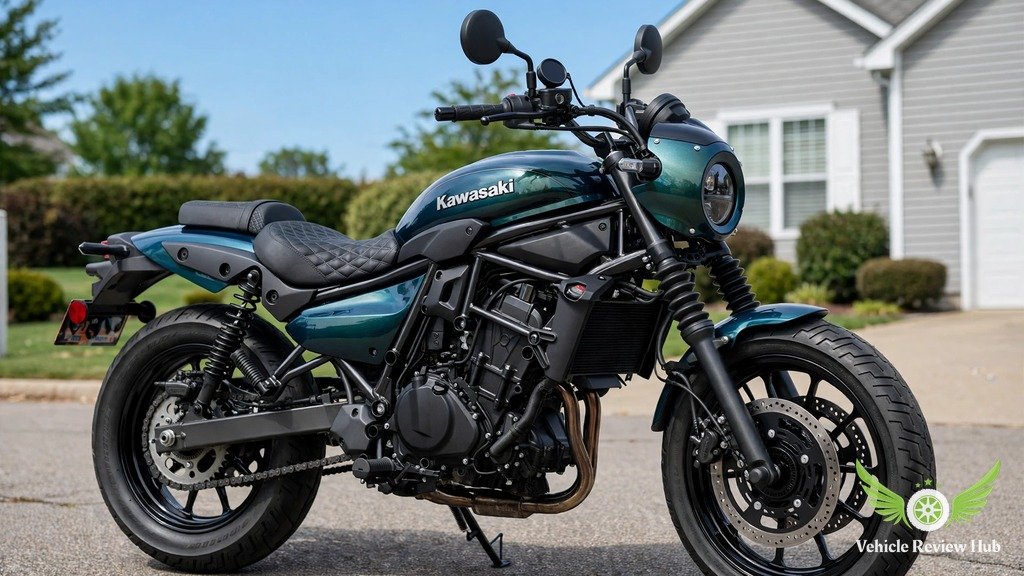
It has always cost $300 more than the ABS trim, and it has always been available in the US alongside the rest of the Eliminator family. Kawasaki’s own 2027 Eliminator 500 page lists the current trims, and the 2027 SE is the only SE colour left. The 2025 SE colour is worth one sentence here because the brief could not verify it: dealer listings from Athens Sport Cycles and Plano Kawasaki Suzuki both list the 2025 SE ABS in Phantom Blue/Ebony at $7,099, with SE VINs starting ML5ELFB, so that colour is now verified from two independent dealer listings.
| Model year | Base MSRP | ABS MSRP | SE ABS MSRP | Destination | SE delivered |
|---|---|---|---|---|---|
| 2024 | $6,649 | $6,949 | $7,249 | $450 | $7,699 |
| 2025 | $6,499 | $6,799 | $7,099 | $650 | $7,749 |
| 2026 | $6,499 | $6,799 | $7,099 | $650 | $7,749 |
| 2027 (Eliminator 500) | — (base ends) | $6,799 | $7,099 | $650 | $7,749 |
Notes: the figures in this Kawasaki Eliminator SE review table are the verified US MSRP and destination charges per model year. The SE premium is $300 over the ABS trim in every year, and the ABS gap is $300 over the base trim in every year it existed.
Kawasaki Eliminator SE Price in the USA: $7,099
The current US price of the Eliminator SE is $7,099, and it has been $7,099 since the 2025 model year. That is $300 more than the 2027 ABS trim at $7,449 delivered, and $300 is the whole premium, every year, without exception. The 2027 bike is called the Eliminator 500 SE, it comes only in Metallic Bluish Green, and it is the only SE colour for the year. Kawasaki’s own 2027 Eliminator 500 page lists the ABS trim at $6,799, and the SE sits $300 above it exactly as it always has. The $7,099 figure is the number to judge the bike against, and this Kawasaki Eliminator SE review uses it everywhere the current price is named.
2024 Cost $7,249, Press Release Governs
The 2024 SE cost $7,249, and the press release governs that figure. Kawasaki’s June 6, 2023 press release set the 2024 SE MSRP at $7,249, and every first-ride outlet at launch — RevZilla, Ultimate Motorcycling, Motorcycle.com, Rider, Cycle World — printed the same $7,249. Some dealer listings now show leftover 2024 SE stock at $7,099, which is a dealer discount on old stock, not the manufacturer’s price. The delivered price in 2024 was $7,699, because the destination charge that year was $450, not the $650 it became from 2025 onward.
Kawasaki Eliminator SE Design, Features and Technology
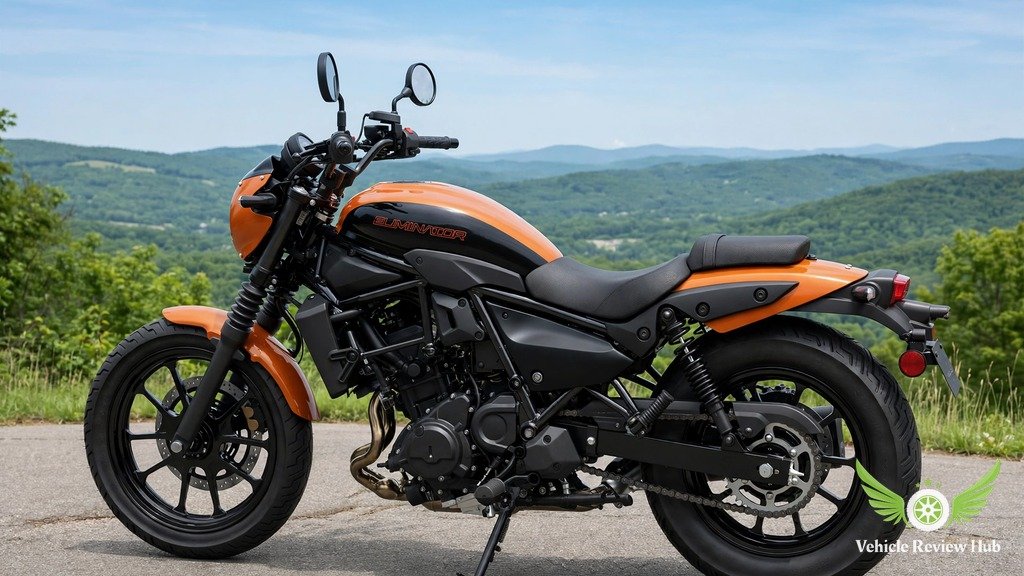
The SE’s design is the standard Eliminator’s design with the finishing touches fitted at the factory. The steel trellis frame is still visible, the round LED headlight is still round, and the round LCD dash is still a small pod, not a TFT. The cowl, the fork boots, the seat cover, the USB-C outlet and the exclusive paint are the SE’s whole visual identity, and this Kawasaki Eliminator SE review uses them as the checklist for spotting a real SE.
Cowl, Fork Boots and USB-C Port
The headlight cowl is the SE’s single most visible tell. It is a small colour-matched fly screen fitted over the round LED headlight, and it changes the front of the bike from plain to finished without adding a tall windscreen. The fork boots are the second tell in this Kawasaki Eliminator SE review: black rubber gaiters covering the fork legs, the classic cruiser touch that the base and ABS trims do not have. The USB-C outlet is the only SE item with a practical job. It is a waterproof outlet mounted on the right handlebar, made for charging a phone or running a navigation device, and it is the one SE feature a rider will actually use on the road. The part numbers are confirmed in Kawasaki’s parts diagrams — USB outlet type-C 99994-1906, connector cord 59221-0022, accessory relay 99994-1727, cover 14093-1458 — but no verified price for the kit as an accessory was found, so this Kawasaki Eliminator SE review prints no dollar figure for it.
Seat Is a Cover, Same Shape
The SE’s seat is a cover over the same seat shape, and that is a fact worth stating plainly because it stops a buyer expecting a different saddle. Rider magazine put it exactly: the SE’s seat keeps the same overall shape as the standard Eliminator, with two-pattern leather and stitching along the top edge. What changes is the look, as this Kawasaki Eliminator SE review notes: two patterns, two tones, stitching that makes the seat read as a finished piece rather than a plain one. The pillion section is the same slim pad, and the SE is no more a two-up bike than the ABS trim is. The two-pattern finish is also the easiest SE item to check on a used bike — if the seat is a plain single-pattern saddle, the bike is not an SE, whatever the seller says.
Kawasaki Eliminator SE Riding Experience and Comfort
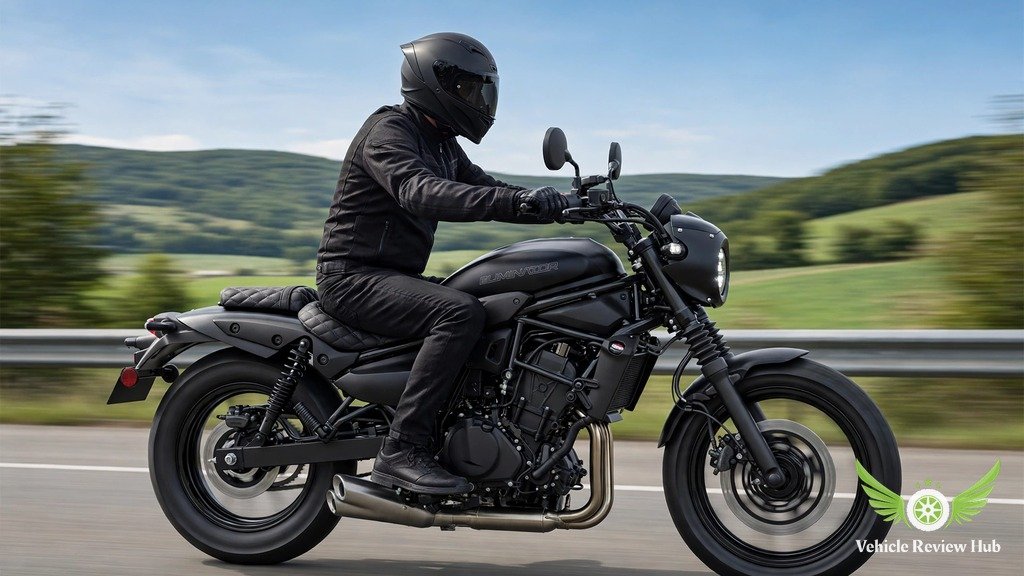
Riding the SE is riding the Eliminator, and every riding impression in this section applies to the whole family. The 28.9-inch seat puts most riders flat-footed at a stop. A rider coming from the ABS trim will notice nothing different except the view over the tank: the cowl’s top edge and the two-pattern seat are the only reminders that this is the SE. Motorcycle.com’s press-launch first ride covers the family’s riding character in full, and this Kawasaki Eliminator SE review leans on it because its impressions match the SE exactly — the bikes are mechanically identical.
2027: One Colour, Bluish Green
For 2027 the SE comes in one colour only: Metallic Bluish Green. The ABS trim for 2027 comes in Ebony at $6,799, with Metallic Imperial Red at $6,999, but the SE is Bluish Green and nothing else, at $7,099, model code EL450BVFNL. The 2024 SE was Candy Steel Furnace Orange/Ebony. The 2025 SE was Phantom Blue/Ebony, verified from two independent dealer listings. The 2026 SE in the US was Metallic Imperial Red/Ebony — and buyers should know that Metallic Matte Carbon Gray was the UK, EU and Australian 2026 SE colour, not the American one, so a Carbon Gray bike in a US listing is either an import or a mislabelled colour. The 2027 Bluish Green is the fourth SE colour in four years, and each one was exclusive to the SE in its year.
Model Code EL450B, VIN ML5ELFB
The SE’s identity is written into its model code and its VIN, and both are useful to a used buyer. The SE model code is EL450B, against EL450A for the ABS trim and EL450C for the base trim, and the full codes by year are EL450BRSNL for 2024, EL450BSFNL for 2025, EL450BTFNL for 2026 and EL450BVFNL for 2027. SE VINs start ML5ELFB, and real examples confirm it: ML5ELFB19RDA01009 on a 2024 SE, ML5ELFB12SDA26260 on a 2025 SE, ML5ELFB17TDA28314 on a 2026 SE. The base trim’s VINs start ML5ELFC instead — a 2026 base bike carries ML5ELFC10TDA26953 — so the fourth character of the VIN, B against C, marks the SE. A buyer checking a used SE should look for three things together, and this Kawasaki Eliminator SE review puts them in one place: the ML5ELFB VIN, the EL450B model code on the paperwork, and all five SE items on the bike itself. All three checks take a minute, and together they settle the question.
Kawasaki Eliminator SE Review: Pros, Cons and Verdict
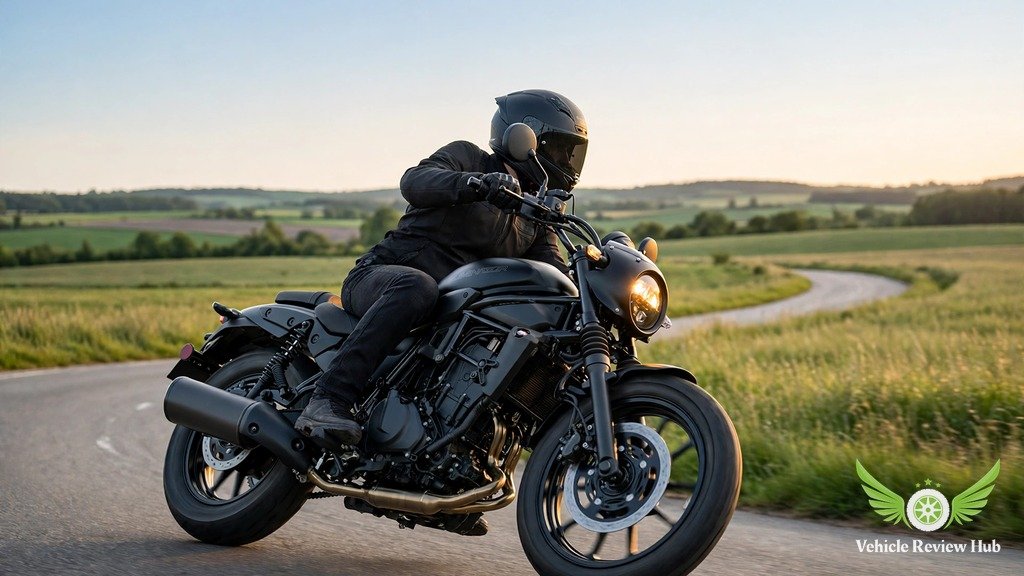
The verdict in this Kawasaki Eliminator SE review is simple because the bike is simple. The SE is the best-dressed Eliminator, not the best Eliminator, because there is no best Eliminator — the three trims are the same motorcycle with different equipment. The buyer is choosing a look, not a bike, and this Kawasaki Eliminator SE review calls the $300 premium the price of that look.
Main Advantages and Limitations of the Kawasaki Eliminator SE
The SE’s advantages in this Kawasaki Eliminator SE review start with the obvious one: it looks finished from the showroom floor, with the cowl, fork boots and two-pattern seat giving the Eliminator a complete cruiser look that the base and ABS trims do not have. The NHTSA record is clean — a search of the recalls database returns zero recalls for the Eliminator in every model year from 2024 to 2027, including the SE trim, and that zero is meaningful because the same search returns one recall for the 2024 Ninja 500, the clutch recall 25V-146, which names the Ninja 500 and Z500 only and does not list any Eliminator. The limitations are the trim’s own honesty, and this Kawasaki Eliminator SE review lists them plainly. Nothing about the SE is faster, sharper or better equipped than the ABS trim. The cowl gives no real wind protection. The seat is the same shape underneath the cover. A buyer stepping up from the ABS trim should also look at the Kawasaki Vulcan S review before deciding, because the Vulcan S costs more but brings a bigger engine and a belt drive, and that is a different decision from the SE’s $300.
12 Month Limited Warranty
The Eliminator SE carries a 12-month limited warranty, the same as every Eliminator trim and the same as most of Kawasaki’s range. Twelve months is short by modern standards — Royal Enfield gives the Super Meteor 650 three years with unlimited mileage, and that gap is real money if something fails in year two. Kawasaki’s warranty covers defects in materials and workmanship for a year from the purchase date, and the SE’s five items are covered as factory-fitted equipment, not as accessories. The short warranty is the one genuine weakness in the SE’s ownership case, and it is worth weighing against the $300 premium. That said, the platform’s record so far gives little to worry about, and this Kawasaki Eliminator SE review notes zero recalls across the family, no SE-specific failure pattern found, and the same 451cc twin that has served in the Ninja 400 and Ninja 500 without a recall on this platform.
Kawasaki Eliminator SE Review FAQ
The questions below are the ones buyers actually ask after reading a Kawasaki Eliminator SE review, answered on the verified US figures in this guide.
What is the Kawasaki Eliminator SE?
The Eliminator SE is the styling trim of Kawasaki’s lightweight cruiser. It is the ABS trim plus five factory-fitted items: a headlight cowl, fork boots, a two-pattern seat, a waterproof USB-C outlet and exclusive colours. This Kawasaki Eliminator SE review stresses the key point: nothing mechanical changes, so the SE rides exactly like the ABS trim.
How much does the Eliminator SE cost?
The SE costs $7,099 in the US for 2025, 2026 and 2027, plus a $650 destination charge, which is $7,749 delivered. The 2024 SE cost $7,249 plus a $450 destination charge, which was $7,699 delivered. The premium over the ABS trim is $300 in every year, as this Kawasaki Eliminator SE review shows in the price table.
Is the SE faster than the ABS Eliminator?
No. The SE has the same 451cc parallel twin making the same 51 hp at 10,000 rpm, and it is 2.2 lb heavier. The Cycle World dyno figure of 47.22 hp at 10,430 rpm was measured on an SE, so it is the SE’s own figure — and the ABS trim would measure the same. This Kawasaki Eliminator SE review is clear: the premium buys a look, not speed.
What are the five SE items?
A small colour-matched headlight cowl, black rubber fork boots, a two-pattern seat cover over the same seat shape, a waterproof USB-C outlet on the right handlebar, and exclusive colours with SE graphics. The cowl and the fork boots are the two items to check first on a used bike, says this Kawasaki Eliminator SE review, because both are visible from across a parking lot.
What colours does the SE come in?
Candy Steel Furnace Orange/Ebony for 2024, Phantom Blue/Ebony for 2025, Metallic Imperial Red/Ebony for the US 2026 bike, and Metallic Bluish Green only for 2027, the full list in this Kawasaki Eliminator SE review. Metallic Matte Carbon Gray was the UK, EU and Australian 2026 SE colour, not the American one.
Does the SE have ABS?
Yes. The SE is ABS-only in every model year, with a Nissin ABS unit, a single 310 mm front disc and a single 220 mm rear disc. From 2027 ABS is standard on every Eliminator, because the base trim ends, and this Kawasaki Eliminator SE review notes the SE was ABS-only from the start.
How can I tell a real SE from a dressed-up ABS bike?
Check three things together, as this Kawasaki Eliminator SE review explains in the model-code section: the VIN starts ML5ELFB, the model code on the paperwork is EL450B, and all five SE items are on the bike itself.
Does the Eliminator SE have any recalls?
No. A search of the NHTSA recalls database returns zero recalls for the Eliminator in every model year from 2024 to 2027, including the SE trim. The clutch recall 25V-146 names the 2024 Ninja 500 and Z500 only and does not list any Eliminator, so this Kawasaki Eliminator SE review calls it a platform watch item, not an SE recall.
What is the SE’s fuel economy?
No SE-specific fuel economy test exists. The family figure is RevZilla’s 45 mpg dash reading over 75 highway miles on the press-launch ABS bike, which works out to about 150 miles on the 3.4-gallon tank. This Kawasaki Eliminator SE review labels that as family data, not SE data, because no magazine has tested the SE’s economy separately.
Is the Eliminator SE good for a beginner?
Yes. It has a 28.9-inch seat, a 390.3 lb curb weight, ABS as standard, a light assist and slipper clutch, and 51 hp with no riding modes to manage. A beginner should buy the ABS trim if the $300 matters, and the SE if the finished look matters more — the same advice this Kawasaki Eliminator SE review gives in the verdict.
Should I buy the SE or save $300 on the ABS trim?
Buy the SE if you want the cowl, the fork boots, the two-pattern seat, the USB-C outlet and the exclusive colour fitted at the factory. Save the $300 if you do not care about them, because the bikes ride identically. This Kawasaki Eliminator SE review’s verdict is that both choices are right — they are the same motorcycle either way.
What is the Eliminator SE warranty?
A 12-month limited warranty, the same as every Eliminator trim. It covers defects in materials and workmanship for a year from purchase, and the SE’s five items are covered as factory-fitted equipment. Royal Enfield’s three-year warranty on the Super Meteor 650 is longer, and that is the one genuine ownership weakness in this Kawasaki Eliminator SE review.