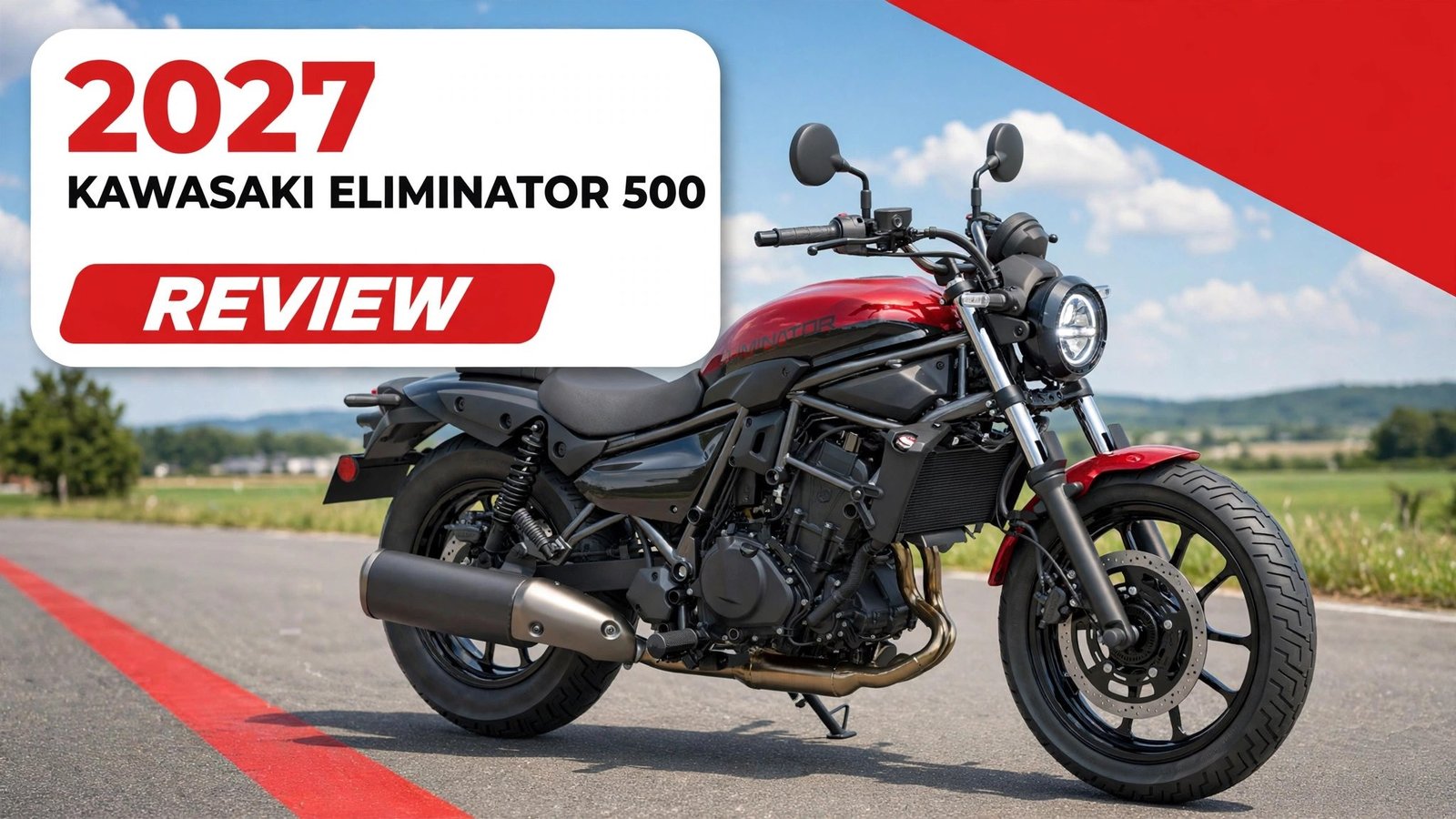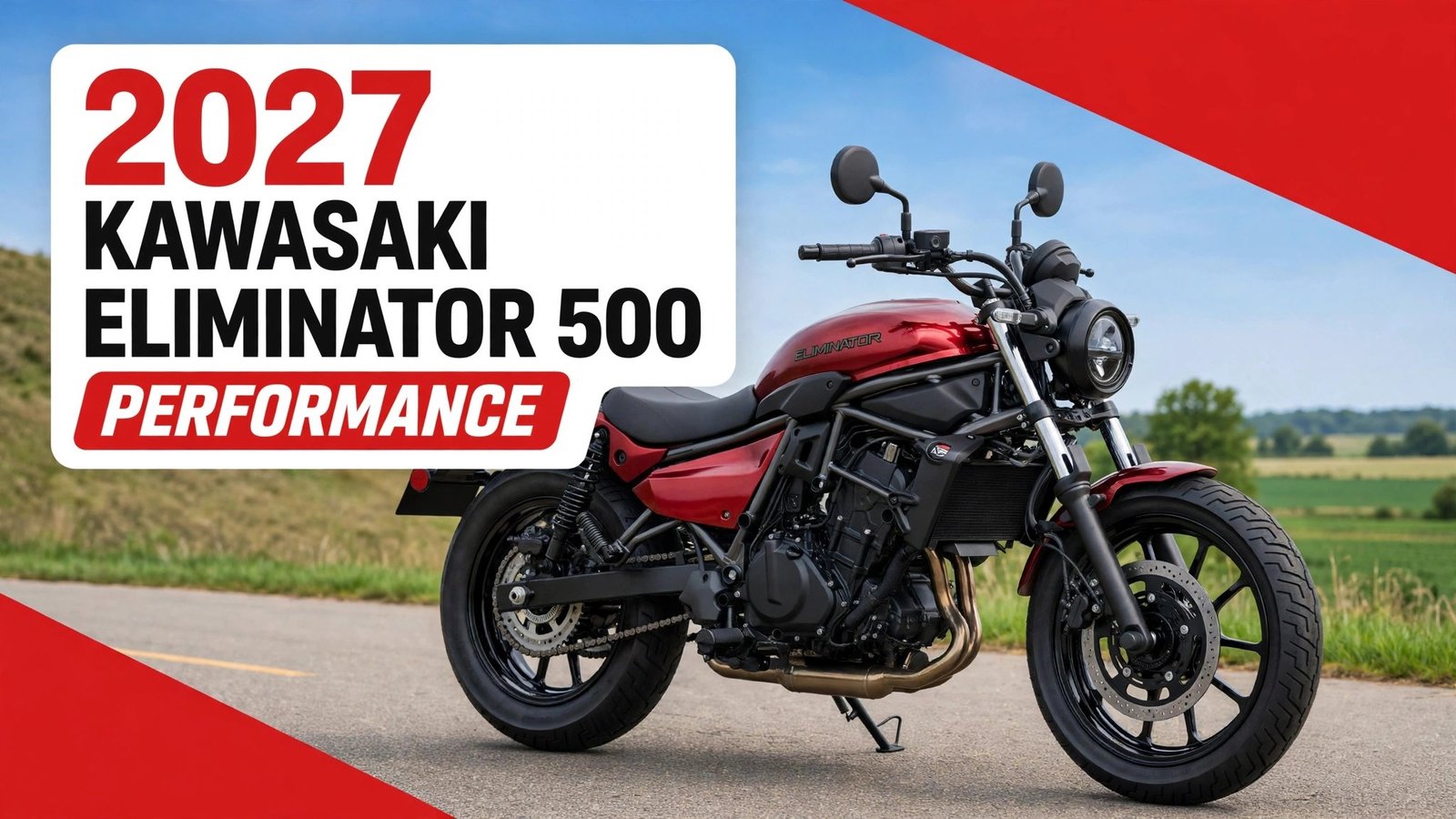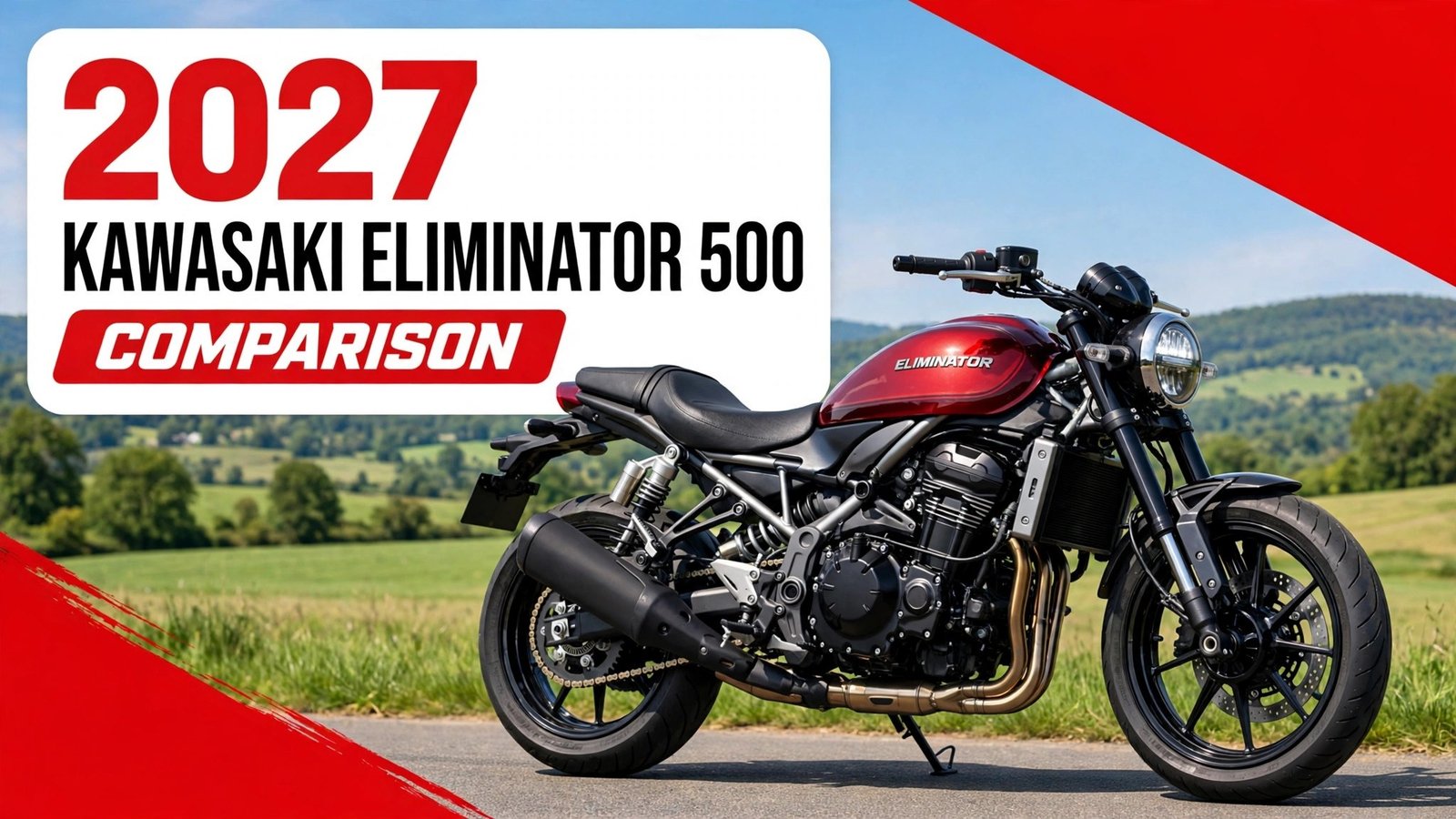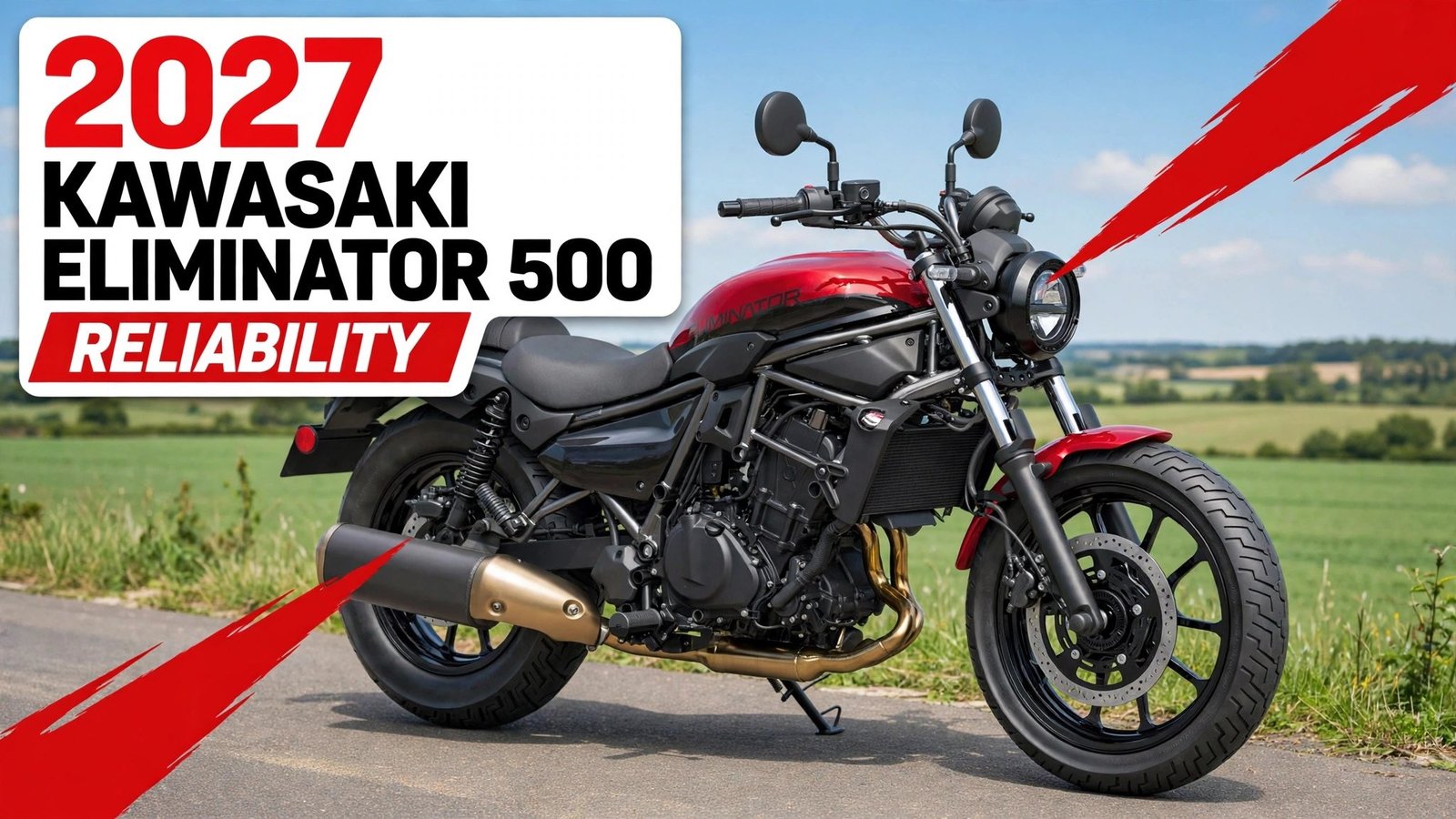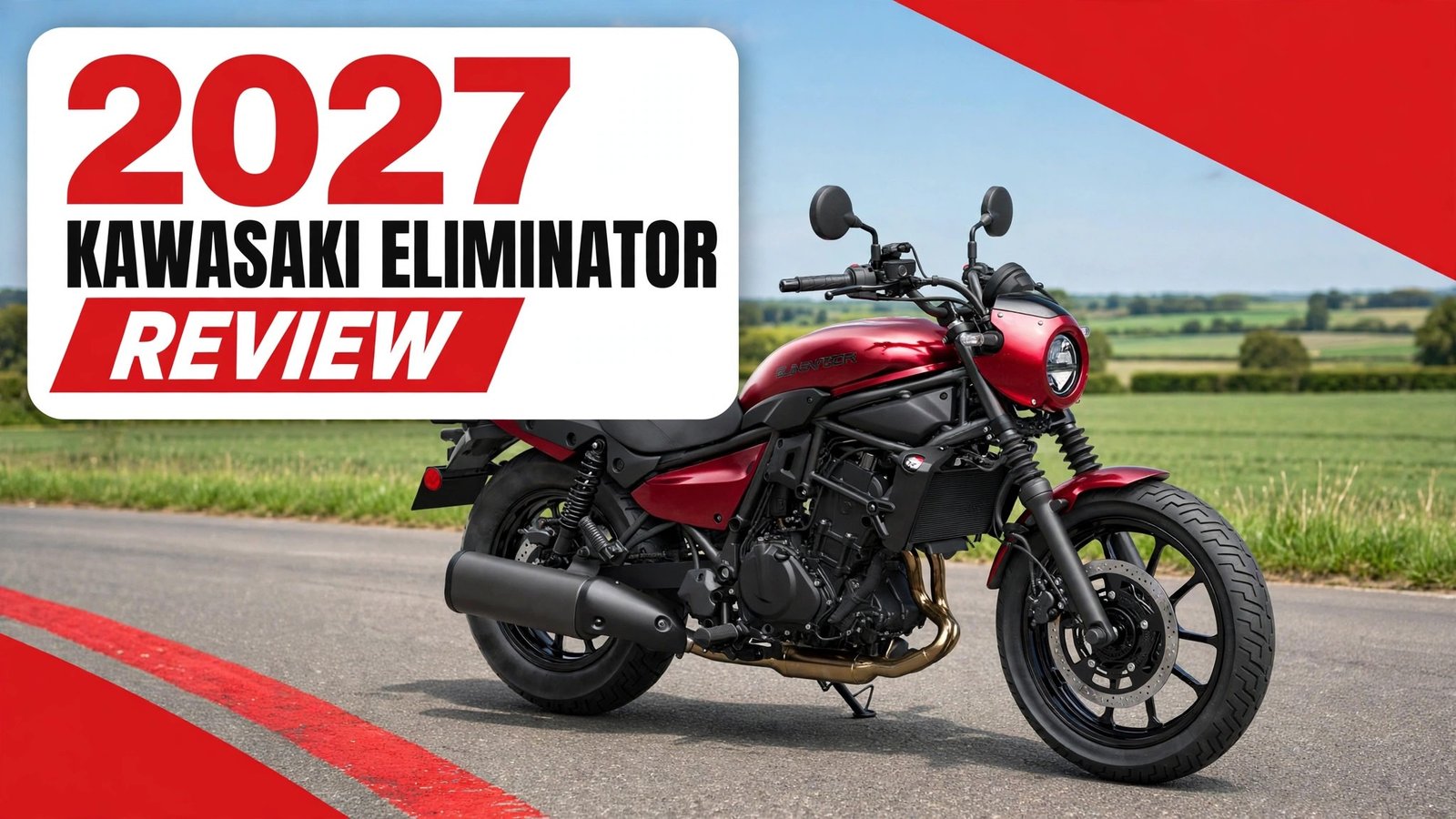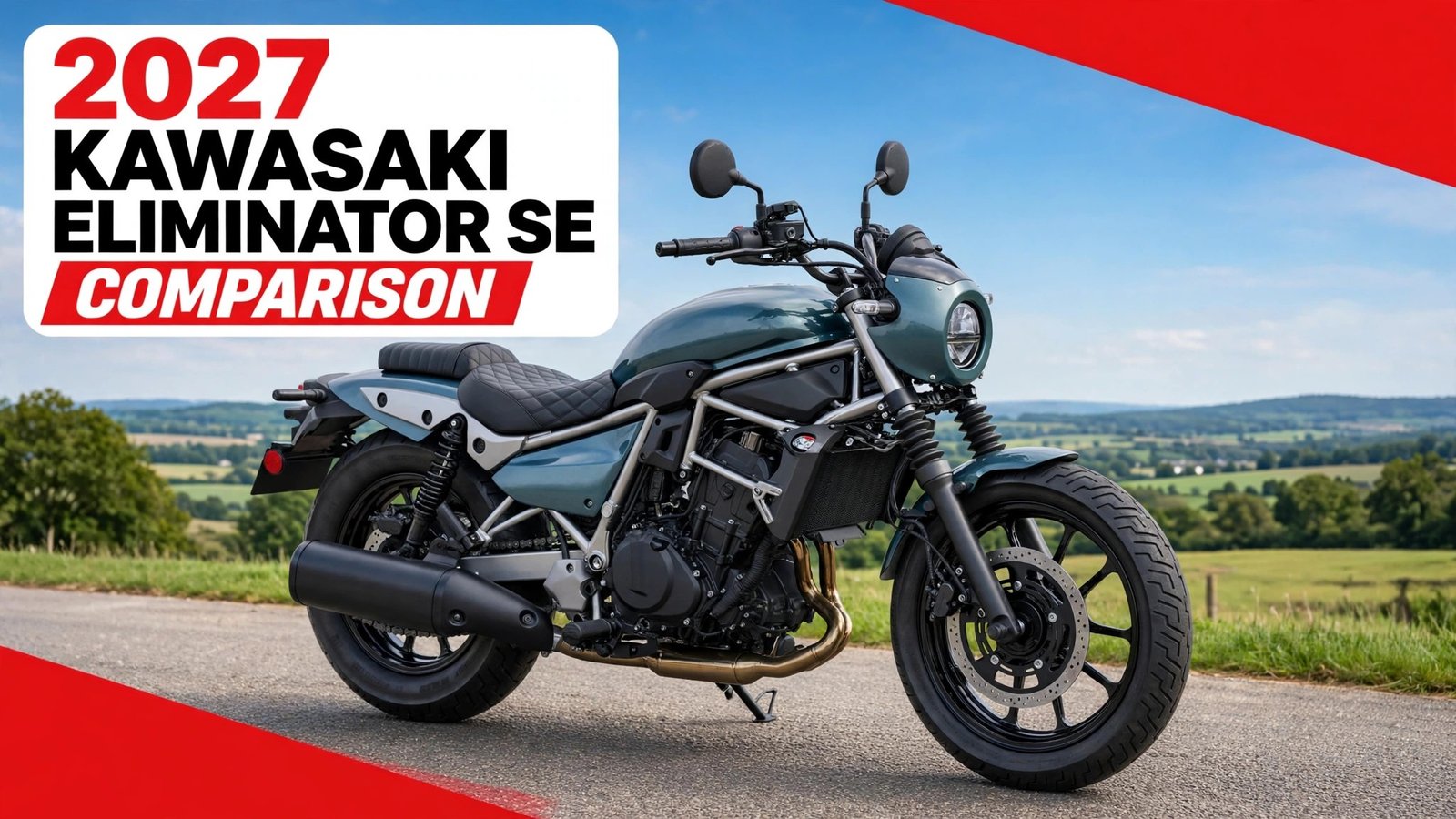
The Kawasaki Eliminator SE is the styling trim of Kawasaki’s lightest cruiser, and this Kawasaki Eliminator SE comparison starts with the honest summary: the SE is the ABS trim with five factory-fitted items and nothing mechanical changed. This Kawasaki Eliminator SE comparison puts all three rivals side by side on price, weight and value for US riders, with the Vulcan S ABS as the step-up alternative.
Kawasaki Eliminator SE Overview and Its Closest Rivals

The SE’s rivals are a short list, and this Kawasaki Eliminator SE comparison keeps it short on purpose: the bike’s own ABS trim, the Honda Rebel 500 and the Royal Enfield Super Meteor 650. Those three cover the whole lightweight-cruiser decision — same bike without the styling, the best-selling rival, and the bigger twin that costs more.
The First Rival Is Its Own ABS Trim
The SE and the ABS share the same 451cc parallel twin, the same chassis, the same brakes, the same suspension, the same wheels and tyres, the same tank and the same seat. The only differences are the five SE items — headlight cowl, fork boots, two-pattern seat, USB-C outlet and the exclusive colour — and 2.2 pounds (390.3 lb curb for the SE against 388.1 lb for the ABS). Nothing mechanical changed, so a rider who buys the SE is buying the look, and a rider who buys the ABS is buying the same motorcycle for $300 less. This Kawasaki Eliminator SE comparison treats that as the baseline every other rival is measured against.
How the Four Bikes Differ at a Glance
At a glance the four bikes split into two pairs: the two Eliminators and the Rebel are lightweights within 26 pounds of each other, while the Super Meteor is a different class at 531.3 pounds wet. The SE has the highest-revving engine of the four at 51 hp, the Rebel has the lowest seat at 27.2 inches, and the Super Meteor has the most torque and the longest warranty.
| Item | Eliminator SE 2027 | Eliminator ABS 2027 | Rebel 500 2026 | Super Meteor 650 2026 |
|---|---|---|---|---|
| Engine | 451cc parallel twin | 451cc parallel twin | 471cc parallel twin | 648cc parallel twin |
| Power (US) | 51 hp @ 10,000 | 51 hp @ 10,000 | ~46 hp (test estimate) | 47 hp @ 7,250 |
| Torque | 31.7 lb-ft @ 7,500 | 31.7 lb-ft @ 7,500 | Not published | 38.6 lb-ft |
| Weight | 390.3 lb curb | 388.1 lb curb | 414 lb curb | 531.3 lb wet |
| Seat height | 28.9 in | 28.9 in | 27.2 in | 29.1 in |
| Fuel tank | 3.4 gal | 3.4 gal | 3.0 gal | 4.2 gal |
| Brakes | 310 mm / 220 mm | 310 mm / 220 mm | 296 mm / 240 mm | 320 mm / 300 mm |
| Warranty | 12 months | 12 months | 12 months | 36 months |
| Delivered | $7,749 | $7,449 | $7,399 (2026) | $8,444 (2026) |
Notes: the figures in this Kawasaki Eliminator SE comparison table are the verified US figures for each bike. The Rebel power figure is an independent-test estimate because Honda publishes no US horsepower figure, and the Rebel delivered price is a 2026 figure because no 2027 US price has been announced.
The video below is a list ranking, not a head-to-head ride comparison — and this Kawasaki Eliminator SE comparison says so plainly before you press play. It ranks the Eliminator third, the Rebel 500 second and the Rebel 300 E-Clutch first among lightweight cruisers, and its own description discloses that it uses AI-generated images alongside real footage. Its Eliminator figures — $6,799 and 388 pounds — are the ABS trim, not the SE. Watch it for the ranking, not for a ride test.
Kawasaki Eliminator SE vs Kawasaki Eliminator ABS

The SE against the ABS is the shortest comparison in this Kawasaki Eliminator SE comparison, because there is almost nothing to compare. Same engine, same chassis, same brakes, same suspension, same wheels, same tyres, same tank, same seat — the two bikes are one motorcycle with two equipment lists.
Engine, Specs and Performance Side by Side
Side by side on engine and specs, the SE and the ABS are identical: the same 451cc liquid-cooled parallel twin making 51 hp at 10,000 rpm and 31.7 lb-ft at 7,500 rpm, the same 310 mm front petal disc and 220 mm US rear disc, the same 41 mm fork and twin rear shocks, the same 130/70-18 front and 150/80-16 rear tyres. The Cycle World dyno bike was an SE — 47.22 hp at 10,430 rpm and 29.03 lb-ft at 7,510 rpm — and that figure belongs to both trims, because the drivetrain is the same. The only spec difference is weight: the SE carries 390.3 pounds curb against the ABS at 388.1 pounds, a 2.2-pound gap that is the five SE items themselves. This Kawasaki Eliminator SE comparison calls the performance verdict a tie, because the bikes are mechanically the same motorcycle.
Price, Equipment and Which Suits Which Rider
On price the gap is exactly $300: the 2027 SE is $7,099 plus $650 destination, $7,749 delivered, against the 2027 ABS at $6,799 plus $650, $7,449 delivered. What the $300 buys is five factory-fitted items plus the exclusive colour: the headlight cowl, the fork boots, the two-pattern seat cover, the waterproof USB-C outlet and, for 2027, Metallic Bluish Green, the only SE colour. No verified price exists for any of those five items bought separately — three search rounds found part numbers only — so the premium maths cannot be judged item by item, and this Kawasaki Eliminator SE comparison says so plainly. The SE suits the buyer who wants the finished look from the factory and the exclusive colour; the ABS suits the buyer who would rather keep $300 and add nothing, or add only the items they want.
Kawasaki Eliminator SE vs Honda Rebel 500

The Rebel 500 is the best-selling lightweight cruiser in the class, and this Kawasaki Eliminator SE comparison treats it as the real rival — the bike a buyer cross-shops before deciding. The two are close on price and weight, but they ride differently: the SE is the revvier, sportier twin, the Rebel is the lower, more relaxed one.
Engine, Specs and Performance Side by Side
On engine and specs the SE and the Rebel are near-twins with different characters. The SE’s 451cc parallel twin makes 51 hp at 10,000 rpm and 31.7 lb-ft at 7,500 rpm, and the Cycle World dyno figure is 47.22 hp at 10,430 rpm on the SE itself. The Rebel’s 471cc parallel twin has no published US horsepower figure from Honda — the ~46 hp figure is an independent-test estimate, and no torque figure exists at all, so this Kawasaki Eliminator SE comparison prints neither as a factory number. The Rebel is the heavier bike at 414 pounds curb against the SE’s 390.3, a 23.7-pound gap, and the lower one at 27.2 inches of seat against the SE’s 28.9. The Rebel’s tank is smaller at 3.0 gallons against the SE’s 3.4, and its brakes are a 296 mm front disc and 240 mm rear disc against the SE’s 310 mm front and 220 mm US rear.
Price, Equipment and Which Suits Which Rider
On price the SE costs more, and this Kawasaki Eliminator SE comparison labels the years every time the gap appears. The 2027 SE is $7,099 plus $650 destination, $7,749 delivered; the 2026 Rebel is $6,799 plus $600, $7,399 delivered — a $350 gap on delivered prices, with the MSRPs $300 apart and the extra $50 from destination. The Rebel figure is 2026 because no 2027 US price has been announced — Honda Powersports still shows 2026 prices with “Prior Model Year Shown”. On equipment the 2026 Rebel 500 SE is $6,999, $7,599 delivered, $200 over the base Rebel — Honda charges $200 for its SE cosmetics while Kawasaki charges $300 for the SE’s five items. The SE suits the rider who wants the sportier twin, the higher-revving engine and the factory styling; the Rebel suits the rider who wants the lowest seat in the class, the best-selling bike with the biggest dealer network, and the $350 saving.
Kawasaki Eliminator SE vs Royal Enfield Super Meteor 650
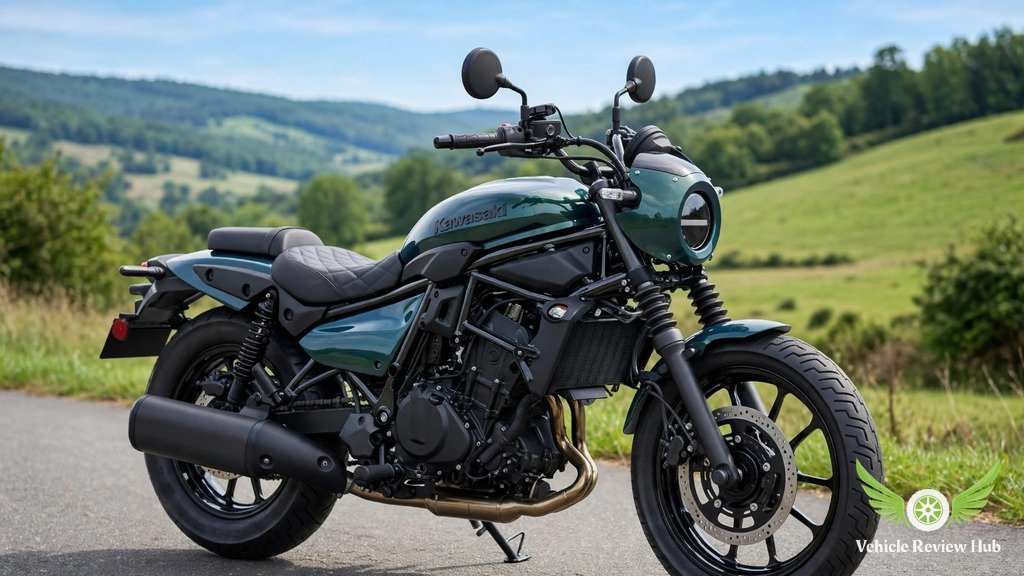
The Super Meteor 650 is the biggest bike in this Kawasaki Eliminator SE comparison and the only one that is not a lightweight: a 648cc twin, 531.3 pounds wet, and a 36-month warranty that is three times the SE’s. It costs more, weighs far more, and rides like a different class of cruiser.
Engine, Specs and Performance Side by Side
On engine and specs the Super Meteor is the bigger, heavier, torquier bike and the SE is the lighter, revvier one. The Super Meteor’s 648cc air-oil-cooled parallel twin makes 47 hp at 7,250 rpm and 38.6 lb-ft, against the SE’s 51 hp at 10,000 rpm and 31.7 lb-ft at 7,500 rpm — the SE has 4 hp more, the Super Meteor has 6.9 lb-ft more. The weight gap is the story: the Super Meteor is 531.3 pounds wet against the SE’s 390.3 pounds curb, 141 pounds heavier. The Super Meteor’s seat is nearly the same at 29.1 inches against the SE’s 28.9, its tank is bigger at 4.2 gallons against 3.4, and its brakes are bigger too — 320 mm front and 300 mm rear discs with dual-channel ABS standard, against the SE’s 310 mm front and 220 mm US rear. The Super Meteor suits the rider who wants the classic big-cruiser feel and the three-year warranty; the SE suits the rider who wants the lighter, quicker, easier bike. This Kawasaki Eliminator SE comparison calls it a class split, not a close fight: the two bikes answer different questions.
Price, Equipment and Which Suits Which Rider
The 2026 Super Meteor is $7,899 plus $545 destination, $8,444 delivered, against the 2027 SE at $7,749 delivered — a $695 gap, with the MSRPs $800 apart and the Super Meteor’s lower destination closing $105 of it. The $7,499 and $7,299 figures in some later articles are 2024 prices — the 2024 Celestial was $7,499 and the 2024 Interstellar was $7,299 — not a live price cut, and Royal Enfield USA’s own page confirms all 2026 trims at $7,899. The 2027 Super Meteor starts from $7,999 MSRP, with the destination charge unverified, so this Kawasaki Eliminator SE comparison prints MSRP only for 2027. On equipment the Super Meteor’s 36-month warranty is the standout — three times the SE’s 12 months — and it comes with a centre stand as standard. The SE suits the rider who wants the lighter bike and the lower price; the Super Meteor suits the rider who wants the bigger engine and the long warranty, and is willing to pay $695 more and carry 141 more pounds for them.
Kawasaki Eliminator SE Price and Value Compared

Price is where this Kawasaki Eliminator SE comparison turns into a buying decision, because the SE’s whole case is a price: $300 over its own ABS trim, $350 over the 2026 Rebel on delivered prices, and $695 under the 2026 Super Meteor delivered. The table below puts every delivered price in one place, with the year labels that keep the gaps honest.
SE Costs $350 More Than the Rebel
The SE costs $350 more than the Rebel on delivered prices, and this Kawasaki Eliminator SE comparison labels the years every time the figure appears: $7,749 for the 2027 SE delivered against $7,399 for the 2026 Rebel delivered. The Rebel figure is 2026 because no 2027 US price has been announced. The MSRPs are $300 apart ($7,099 against $6,799) and the extra $50 is destination ($650 against $600), so the $350 is $300 of bike and $50 of delivery. Against the Rebel SE the gap narrows to $150: the 2026 Rebel SE is $6,999 plus $600, $7,599 delivered — Honda charges $200 for its SE cosmetics while Kawasaki charges $300 for the SE’s five items.
Running Costs and Resale Value Compared
Running costs and resale are where this Kawasaki Eliminator SE comparison refuses to invent numbers: no verified SE resale figure and no verified SE running-cost figure exist, so none is printed here. What can be said honestly starts with the shared platform: the SE follows the same service chart as the base and ABS trims — first service at 600 miles, oil and plugs every 7,600 miles, valves every 15,200 miles — so its servicing costs the same as the ABS trim’s. The family fuel figure is RevZilla’s 45 mpg dash reading over 75 highway miles on the press-launch ABS bike, about 150 miles on the 3.4-gallon tank, and one single owner averaged 52.5 US mpg over a year. The Super Meteor’s 36-month warranty is the one honest running-cost contrast in the group — three times the SE’s and the Rebel’s 12 months. On resale, no verified figure was found for any of these bikes, and a buyer who wants one should check current used listings rather than trusting an aggregator’s percentage.
| Bike | MSRP | Destination | Delivered |
|---|---|---|---|
| Eliminator SE ABS 2027 | $7,099 | $650 | $7,749 |
| Eliminator ABS 2027 | $6,799 | $650 | $7,449 |
| Honda Rebel 500 2026 | $6,799 | $600 | $7,399 |
| Honda Rebel 500 SE 2026 | $6,999 | $600 | $7,599 |
| Super Meteor 650 2026 | $7,899 | $545 | $8,444 |
| Super Meteor 650 2027 | from $7,999 | Not verified | MSRP only |
| Kawasaki Vulcan S ABS 2027 | $8,099 | $685 | $8,784 |
| Honda Rebel 300 E-Clutch 2026 | $5,349 | $600 | $5,949 |
Notes: the prices in this Kawasaki Eliminator SE comparison table are the verified US figures. The Rebel prices are 2026 because no 2027 US price has been announced, the Super Meteor $7,499 and $7,299 figures in some articles are 2024 prices, and the 2027 Super Meteor destination charge is unverified, so only its MSRP is printed.
Kawasaki Eliminator SE Comparison Verdict and US Alternatives

The verdict in this Kawasaki Eliminator SE comparison is short: the SE is the ABS trim with $300 of factory styling and nothing mechanical changed, so the whole decision is whether the look is worth $300. Against the Rebel the SE costs $350 more delivered and against the Super Meteor it saves $695 delivered and 141 pounds.
Verdict: Buy the Look, or Save $300
Buy the look, or save $300 — that is the verdict, and this Kawasaki Eliminator SE comparison stands by it because there is no mechanical argument either way. Buy the SE if the headlight cowl, the fork boots, the two-pattern seat, the USB-C outlet and the exclusive colour matter to you: for 2027 that colour is Metallic Bluish Green, the only SE colour. Save $300 if they do not: the ABS is the same motorcycle — same 451cc twin, same 51 hp, same chassis, same brakes, same suspension, same 28.9-inch seat — for $7,449 delivered instead of $7,749. Against the Rebel, the SE is the sportier, revvier, lighter bike at $350 more delivered; a rider who wants the lowest seat and the biggest dealer network should take the Rebel and keep the $350. Against the Super Meteor, the SE is the lighter, cheaper, quicker bike; a rider who wants the big-twin feel and the 36-month warranty should pay the $695 more and carry the 141 extra pounds.
Vulcan S ABS Alternative
The Vulcan S ABS is the step-up alternative, not a doc rival, and this Kawasaki Eliminator SE comparison keeps it in that place. The 2027 Vulcan S ABS is $8,099 plus $685 destination, $8,784 delivered — $1,035 more delivered than the SE — for a 649cc twin making 60 hp at 7,500 rpm and 46.5 lb-ft at 6,600 rpm. That is 9 hp more and 108 pounds heavier than the SE, a bigger, roomier middleweight cruiser with Ergo-Fit adjustability. A buyer choosing between the SE and the Vulcan S is really choosing between a light 451 and a roomy 649, and the $1,035 gap is the price of the step up.
Kawasaki Eliminator SE Comparison FAQ
The questions below are the ones buyers actually ask after reading a Kawasaki Eliminator SE comparison, answered on the verified figures in this guide.
Is the SE faster than the ABS trim?
No. The SE and the ABS share the same 451cc parallel twin, the same 51 hp at 10,000 rpm and the same chassis, so their performance is identical — the Cycle World dyno figure of 47.22 hp at 10,430 rpm was measured on an SE and belongs to both trims. This Kawasaki Eliminator SE comparison calls it a tie, because the SE is 2.2 pounds heavier and nothing else changed.
How much more does the SE cost than the ABS?
The SE costs $300 more than the ABS: $7,099 against $6,799 for 2027, or $7,749 against $7,449 delivered with the $650 destination charge on both. The $300 buys the five factory-fitted items — headlight cowl, fork boots, two-pattern seat, USB-C outlet and the exclusive colour — and nothing mechanical, says this Kawasaki Eliminator SE comparison.
Is the SE worth $350 more than the Rebel 500?
It depends on what the rider values. The $350 gap is $7,749 for the 2027 SE delivered against $7,399 for the 2026 Rebel delivered, with a year-mismatch label because no 2027 Rebel US price has been announced. This Kawasaki Eliminator SE comparison says the $350 is fair for the SE’s look and revs, and fair to keep if the Rebel’s seat and price matter more.
Is the Super Meteor 650 cheaper than the SE?
No. The 2026 Super Meteor is $7,899 plus $545 destination, $8,444 delivered, which is $695 more than the SE’s $7,749 delivered. The $7,499 figure in some articles is the 2024 Celestial price, not a live cut, and the 2027 Super Meteor starts from $7,999 MSRP with the destination charge unverified, says this Kawasaki Eliminator SE comparison.
Which bike is lightest?
The SE is the lightest bike in this comparison at 390.3 pounds curb, 2.2 pounds over its own ABS trim at 388.1 pounds. The Rebel 500 is 414 pounds curb, the Vulcan S ABS is 498.3 pounds, and the Super Meteor is 531.3 pounds wet — 141 pounds heavier than the SE, says this Kawasaki Eliminator SE comparison.
Which bike has the lowest seat?
The Rebel 500 has the lowest seat at 27.2 inches, against the SE’s 28.9 inches, the Super Meteor’s 29.1 inches and the Vulcan S ABS at 27.8 inches. The Rebel is the easiest bike in this Kawasaki Eliminator SE comparison to flat-foot, which matters most to shorter riders and beginners.
Does the SE have ABS?
Yes. ABS is standard on the SE in every model year, and on the ABS trim too — the SE is an ABS-only trim. The Rebel 500 also has ABS standard on all trims, and the Super Meteor has dual-channel ABS standard, says this Kawasaki Eliminator SE comparison.
What is the SE’s top speed?
No instrumented top speed exists for the SE or for any Eliminator trim, so this Kawasaki Eliminator SE comparison prints none. Owner claims run from 115 to 118 mph and are labelled as owner claims only, and the one published GPS run behind the 102.5 mph editorial figure was a single owner’s night run, not an instrumented test.
How much does the USB kit cost as an accessory?
No verified price was found for the USB kit or for any of the five SE items after three search rounds — the parts diagrams confirm the part numbers only, with no prices. This Kawasaki Eliminator SE comparison prints the part numbers and no dollar figure, and a buyer should ask the dealer for a fitted quote.
Which bike has the best warranty?
The Super Meteor has the best warranty at 36 months, three times the SE’s, the Rebel’s and the Vulcan S’s 12 months. That is the one honest running-cost contrast in this Kawasaki Eliminator SE comparison, and it is worth real money over three years of ownership.
Is the SE a good beginner bike?
Yes. The SE has a 28.9-inch seat, a 390.3-pound curb weight, ABS as standard, a light assist and slipper clutch, and 51 hp with no riding modes to manage. With zero recalls in any trim and no failure pattern found, this Kawasaki Eliminator SE comparison calls the SE a sound first bike — checked on the five SE items before buying.
Should I buy the SE or the Vulcan S ABS?
Buy the SE if you want the light, revvy 451 at $7,749 delivered; buy the Vulcan S ABS if you want the roomier 649 with 9 hp more for $8,784 delivered, $1,035 more. The Vulcan is the step-up alternative in this Kawasaki Eliminator SE comparison, not a like-for-like rival — the two bikes sit in different size classes.