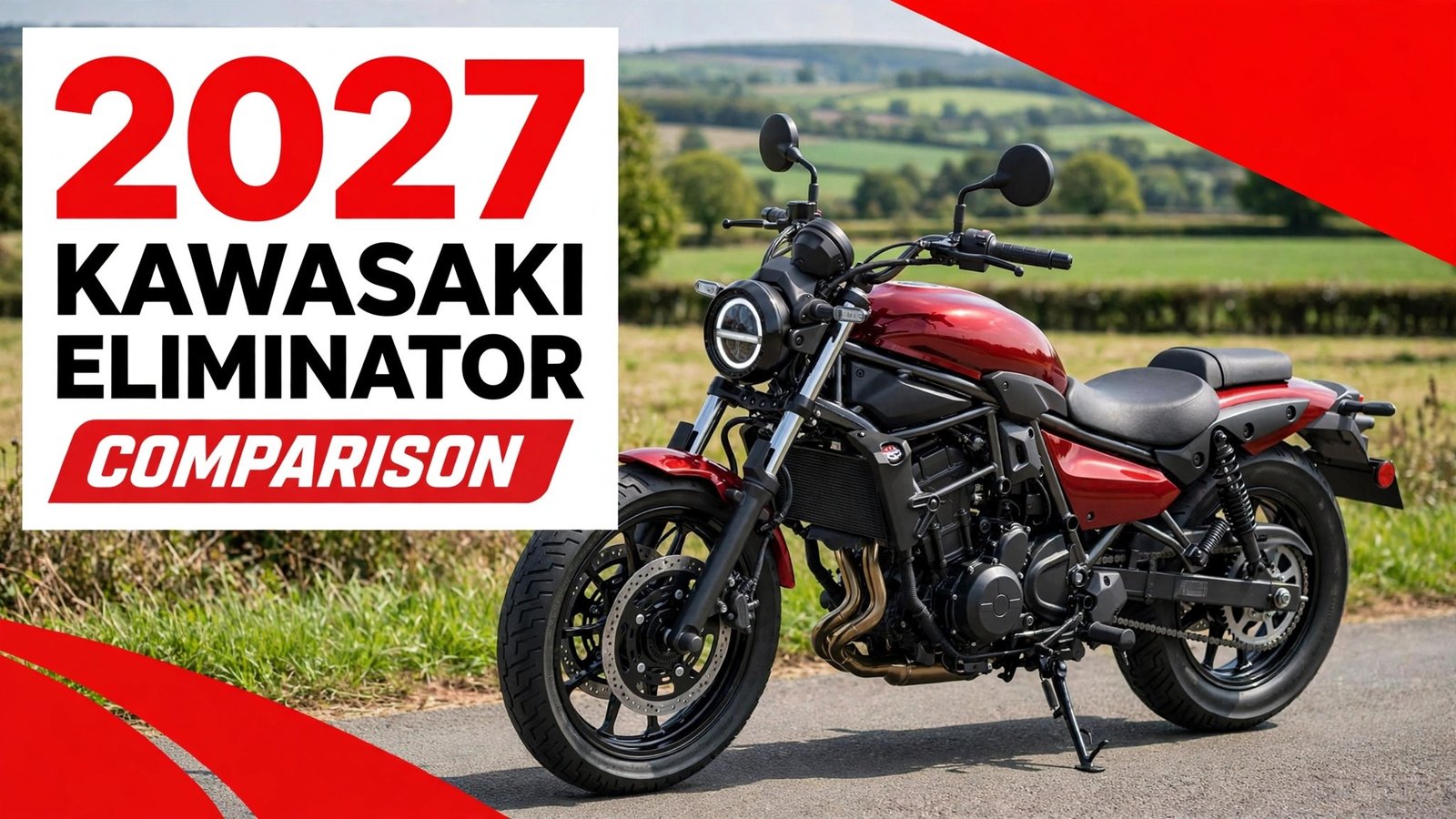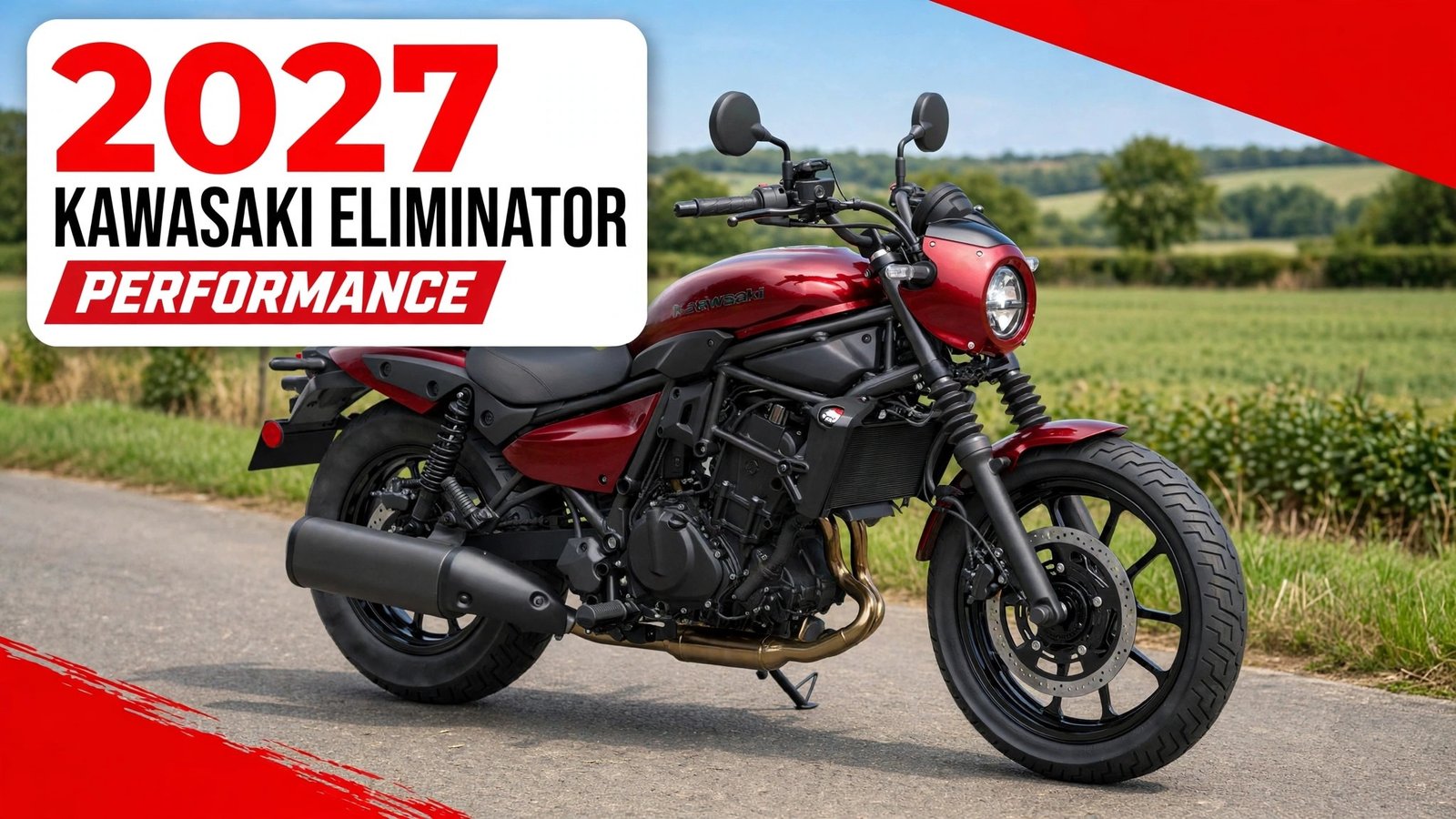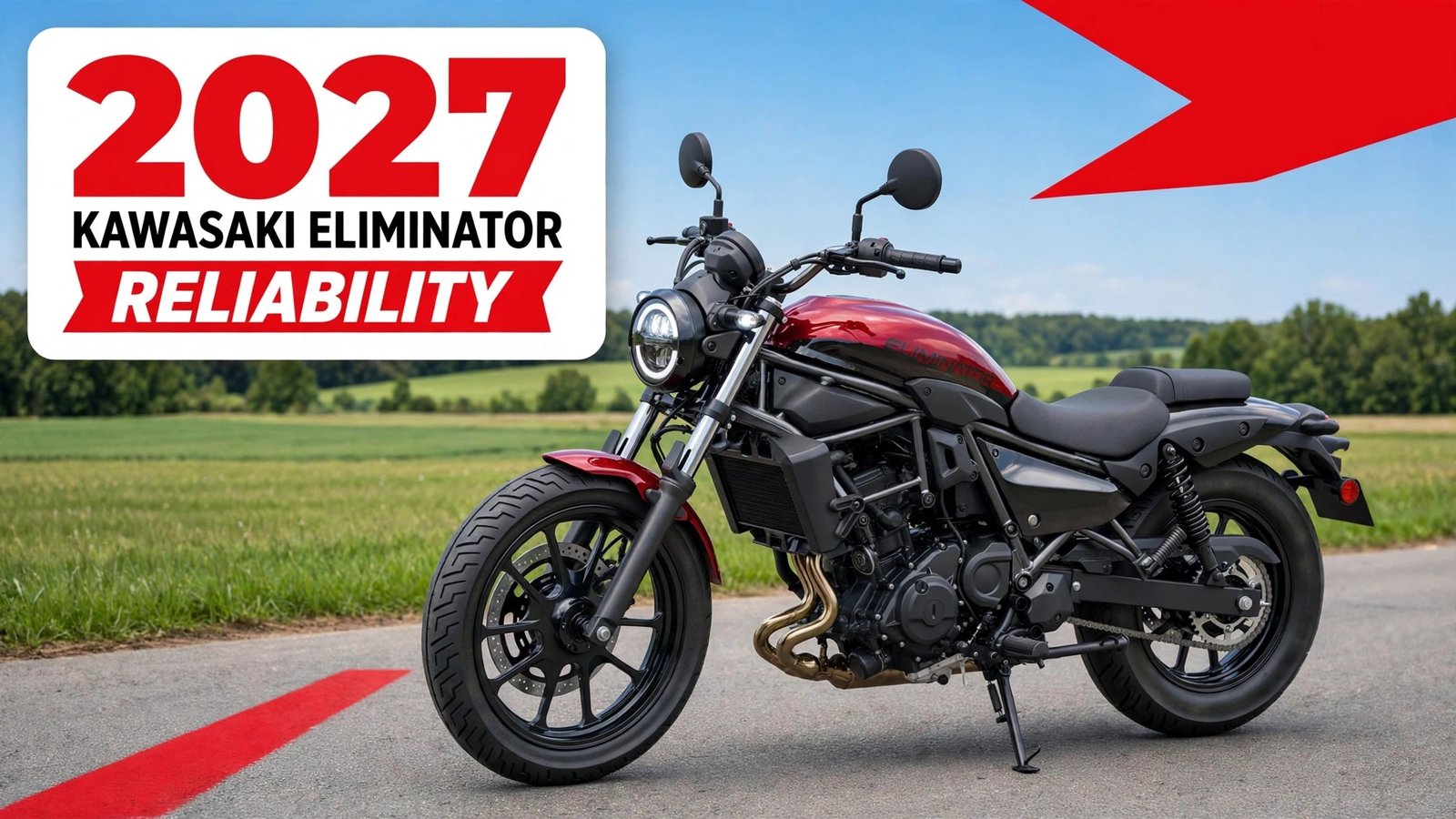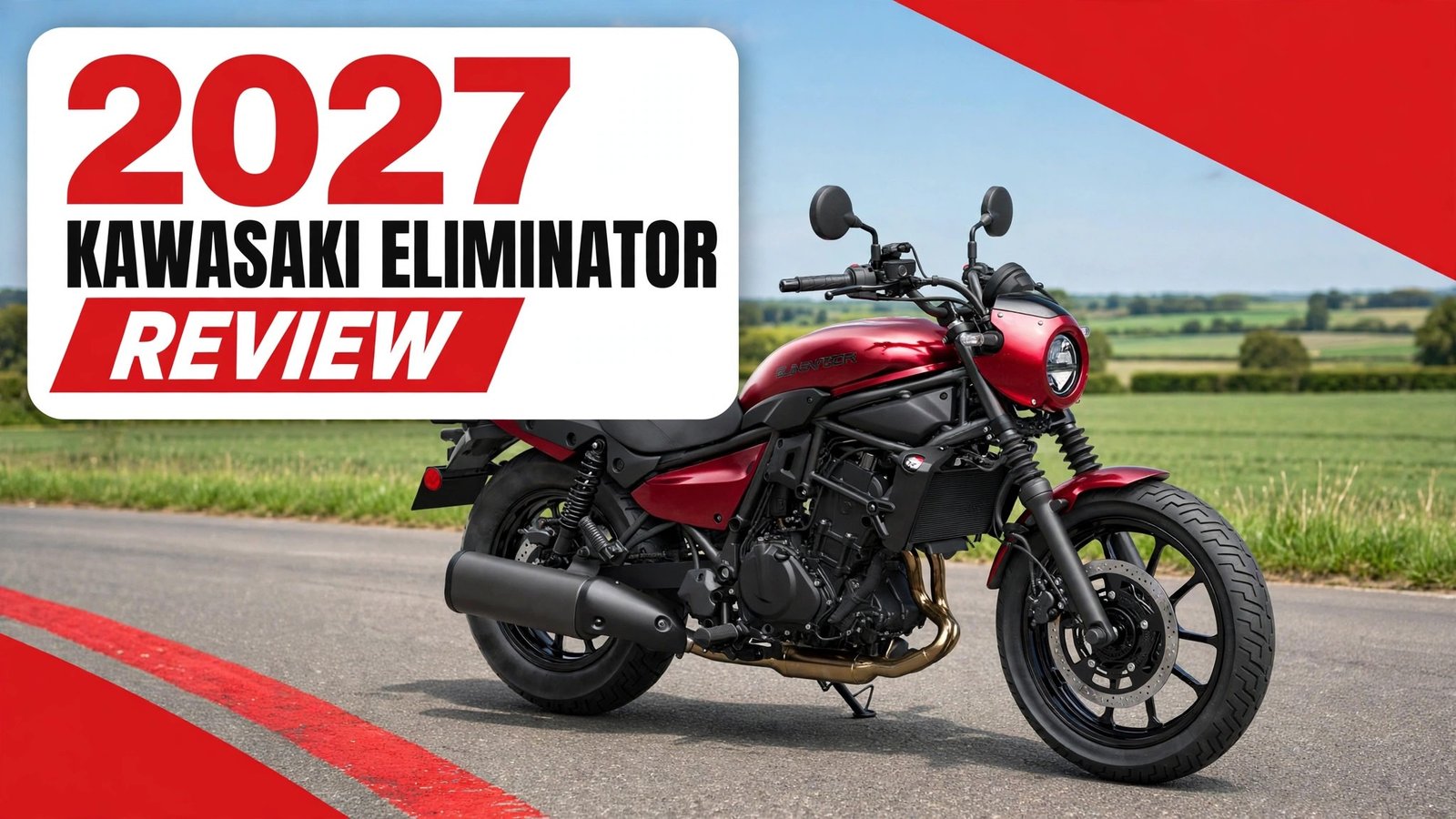
The Kawasaki Eliminator review starts with a simple fact: this is the lightest, cheapest way into Kawasaki’s cruiser range, and for 2027 it gets a new name. The 451cc parallel-twin cruiser that arrived for 2024 as the Eliminator is now the Eliminator 500, and the non-ABS base trim is gone, so every 2027 bike comes with ABS as standard. The Kawasaki Eliminator review below covers the full story: the Ninja 400-derived engine, the 51 hp claim, the $6,499 base price for 2025 and 2026, the $200 Metallic Imperial Red premium for 2027, and what it is actually like to ride at 385.9 pounds with a 28.9-inch seat.
This Kawasaki Eliminator review is written for a buyer comparing it with the Honda Rebel 500 and the Kawasaki Vulcan S. The short version is that the Eliminator is the light, revvy, affordable one of the three. It makes its power high in the rev range, it weighs about 110 pounds less than the Vulcan S, and its delivered price sits within $50 of the Rebel 500 with ABS included.
Kawasaki Eliminator Overview and Model-Year Updates
The Kawasaki Eliminator review has to start with the name change, because it confuses buyers. The bike launched for model year 2024 as the Eliminator, in three trims: base at $6,649, ABS at $6,949, and SE ABS at $7,249. For 2027 Kawasaki renamed it the Eliminator 500, dropped the base trim entirely, and made ABS standard on the two remaining trims.
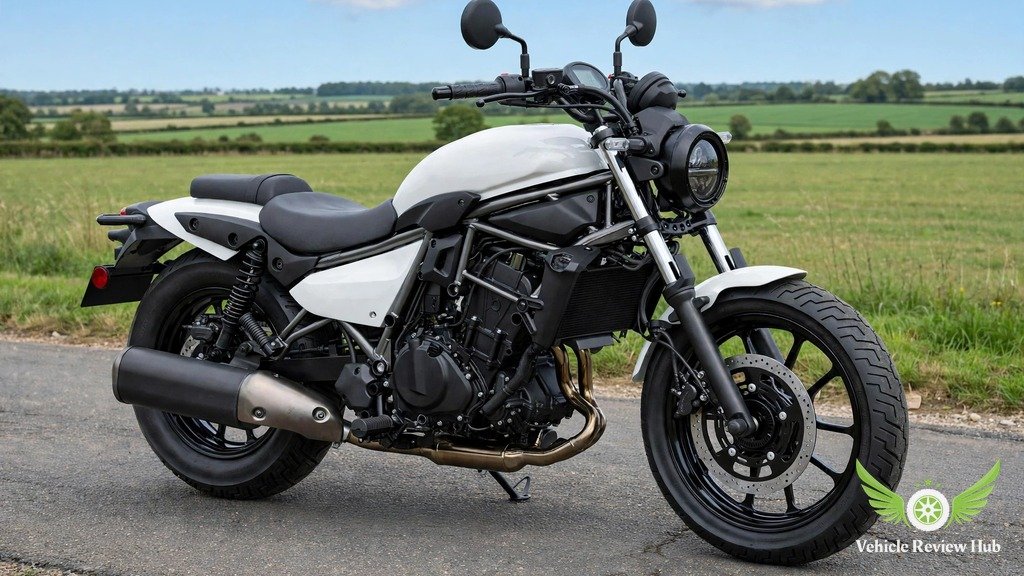
Renamed Eliminator 500 for 2027
The 2027 bike is listed on Kawasaki USA as the Eliminator 500 and the Eliminator 500 SE ABS, and the 2027 model codes carry the same EL450 prefix as before, so this is a rename, not a new model. The “500” in the new name matches the Ninja 500 and Z500, which share the same 451cc platform, and it lines the cruiser up with the rest of Kawasaki’s 500 family. The SE ABS keeps its extras for 2027: the headlight cowl, the fork boots, the two-pattern seat, the waterproof USB-C outlet, and its exclusive Metallic Bluish Green colour.
Base Trim Ends After 2026
The base trim, the one without ABS, ends after 2026. Kawasaki’s own price list separates “BASE MSRP NON-ABS” from “BASE MSRP ABS” for the 2024 to 2026 bikes, and the 2027 pages list only the ABS at $6,799 and the SE ABS at $7,099. The $300 gap between base and ABS held steady across the whole run: $6,649 against $6,949 in 2024, and $6,499 against $6,799 in 2025 and 2026.
Kawasaki Eliminator Engine and Specifications
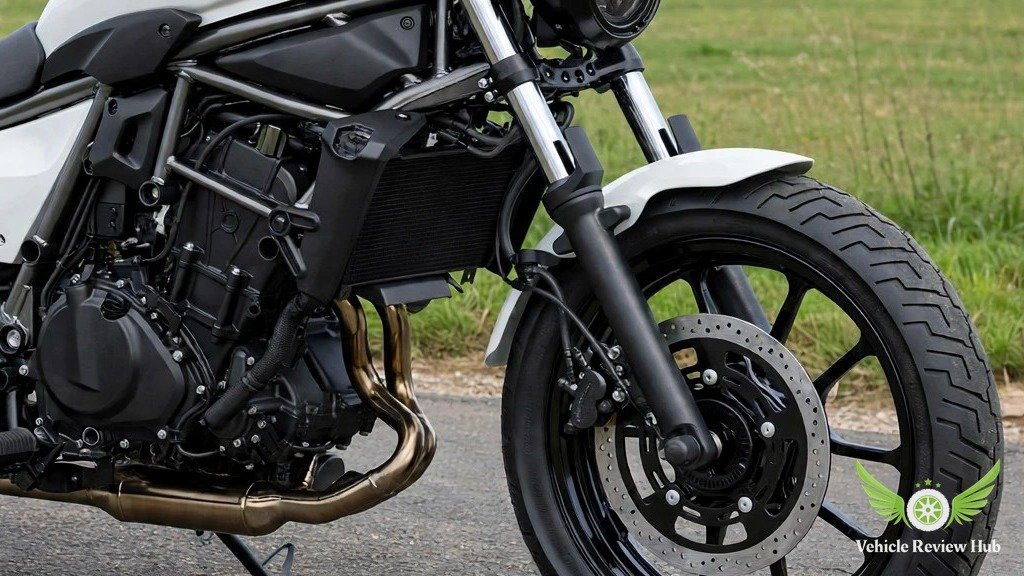
The Kawasaki Eliminator review centres on the engine, because the engine is what makes this bike different from every other small cruiser. It is a 451cc liquid-cooled parallel twin, and it comes from the Ninja 400’s 399cc engine with the stroke lengthened 6.8 mm, from 51.8 mm to 58.6 mm, while the 70.0 mm bore stays the same. That is the same platform as the Ninja 500 and Z500, and it gives the Eliminator a claimed 51 hp at 10,000 rpm with 31.7 lb-ft at 7,500 rpm.
| Specification | Kawasaki Eliminator (2026 / 2027) |
|---|---|
| Engine | 451cc liquid-cooled DOHC parallel twin, 8 valves |
| Bore x stroke | 70.0 x 58.6 mm |
| Compression ratio | 11.3:1 |
| Claimed power | 51 hp @ 10,000 rpm (ISO 4106) |
| Claimed torque | 31.7 lb-ft @ 7,500 rpm |
| Redline | 12,000 rpm |
| Transmission | 6-speed, assist and slipper clutch, Positive Neutral Finder |
| Final drive | Sealed chain |
| Frame | High-tensile steel trellis |
| Front suspension | 41 mm telescopic fork, 4.7 in travel |
| Rear suspension | Twin shocks, 5-way preload, 3.5 in travel |
| Front tyre / wheel | 130/70-18, 10-spoke cast wheel |
| Rear tyre / wheel | 150/80-16, 10-spoke cast wheel |
| Front brake | Single 310 mm petal disc, twin-piston caliper |
| Rear brake | Single 220 mm petal disc, single-piston caliper |
| Seat height | 28.9 in |
| Curb weight | 385.9 lb non-ABS / 388.1 lb ABS / 390.3 lb SE ABS |
| Fuel capacity | 3.4 gal |
| Wheelbase | 59.8 in |
| Warranty | 12-month limited |
Notes: the figures in this Kawasaki Eliminator review spec table are the US figures from Kawasaki’s own spec sheet. The 51 hp figure is the US spec-sheet claim under ISO 4106; the certificate of origin reads 52 hp, and the European bike is rated 45 hp, and both are explained in the engine section below. The rear brake is the US 220 mm single-piston disc, not the 240 mm figure that appears in some tables, and the fuel tank is 3.4 gallons, not the 3.7 gallons copied from the Ninja 500 in some listings.
451cc Twin, 51 Horsepower Claimed
The headline figure is 51 hp at 10,000 rpm, and it is worth saying exactly where that number comes from, because three different numbers circulate for this engine. Kawasaki USA’s spec sheet claims 51 hp at 10,000 rpm and 31.7 lb-ft at 7,500 rpm under ISO 4106, and that is the figure this Kawasaki Eliminator review prints as the headline. RevZilla’s first ride reports that the bike’s own certificate of origin read 52 hp at 10,000 rpm and 32 lb-ft at 8,000 rpm, which is the paperwork figure, not the spec-sheet figure. The European and Indian bike is rated 45 hp at 9,000 rpm, which is 33.4 kW or 45.4 PS, and that is a different market tune, not the US bike. The honest summary is that the US bike is a 51 hp machine on Kawasaki’s own sheet, and the wheel figure from Cycle World’s dyno test of a 2024 SE ABS was 47.22 hp at 10,430 rpm with 29.03 lb-ft at 7,510 rpm, which is a normal drivetrain loss of about 3.8 hp from the claim.
Rear Tyre Is 150/80-16, Not 160/60-17
The rear tyre is 150/80-16 on a 16-inch cast wheel, with a 130/70-18 front on an 18-inch wheel, and the 160/60-17 figure that shows up in some listings is wrong for this bike. The 18-inch front and 16-inch rear combination is one of the Eliminator’s tells: it gives the bike its long, low cruiser stance while keeping the steering light, and the 10-spoke cast wheels are standard on every trim. The stock tyres are IRC GS-23s, with 29 psi in the front and 32 psi in the rear when cold. Some tables print a 240 mm rear disc with a two-piston caliper, but that is the European rear disc mixed into a US table, and TotalMotorcycle’s “dual-piston rear caliper” is wrong too. The ABS unit on ABS trims is a Nissin unit, and the base trim has no ABS at all, which the design section covers next.
Kawasaki Eliminator Price and Market Availability
The Kawasaki Eliminator review price story is a short one with a pleasant surprise: the base price went down, not up. The bike launched for 2024 at $6,649 for the base trim, then the base price fell to $6,499 for 2025 and stayed at $6,499 for 2026, a $150 drop. The ABS trim stayed $300 above the base in every year, and the SE ABS stayed $300 above the ABS trim. For 2027 the base trim ends, so the cheapest new Eliminator is the ABS at $6,799, with the SE ABS at $7,099, and the destination charge is $650.
| Model year | Base (non-ABS) | ABS | SE ABS |
|---|---|---|---|
| 2024 | $6,649 | $6,949 | $7,249 |
| 2025 | $6,499 | $6,799 | $7,099 |
| 2026 | $6,499 | $6,799 | $7,099 |
| 2027 (Eliminator 500) | Trim ended | $6,799 | $7,099 |
Notes: all prices in this Kawasaki Eliminator review price table are US MSRP before destination. The destination charge was $450 in 2024 and $650 in 2025, 2026, and 2027, so the delivered prices are $7,099 / $7,399 / $7,699 for 2024, $7,149 / $7,449 / $7,749 for 2025 and 2026, and $7,449 / $7,749 for 2027. The 2027 Metallic Imperial Red ABS costs $6,999 before destination, which is $200 over the Ebony ABS, and the delivered figure is $7,649. One listing error to avoid: a guide that prints $6,649 as the 2026 base price is wrong, because $6,649 was the 2024 base price, and Kawasaki USA’s own 2026 page lists $6,499.
Kawasaki Eliminator Price in the USA: $6,499
The $6,499 figure is the 2025 and 2026 base MSRP, and it is the number a buyer should carry into a dealership. Kawasaki USA’s own 2026 page lists “BASE MSRP NON-ABS $6,499” with a $650 destination charge, giving a delivered base price of $7,149, and the ABS at $6,799 plus $650 gives $7,449 delivered. The 2024 bike cost more at launch, $6,649 base with a $450 destination charge, so the delivered 2024 base was $7,099. The Kawasaki Eliminator review value case is still strong: at $6,499 the base undercuts the Honda Rebel 500’s $6,799 MSRP by $300, and the ABS trim at $6,799 matches the Rebel 500’s MSRP exactly, with the $50 delivered gap between them coming entirely from the destination charge.
Metallic Imperial Red Adds $200 (2027)
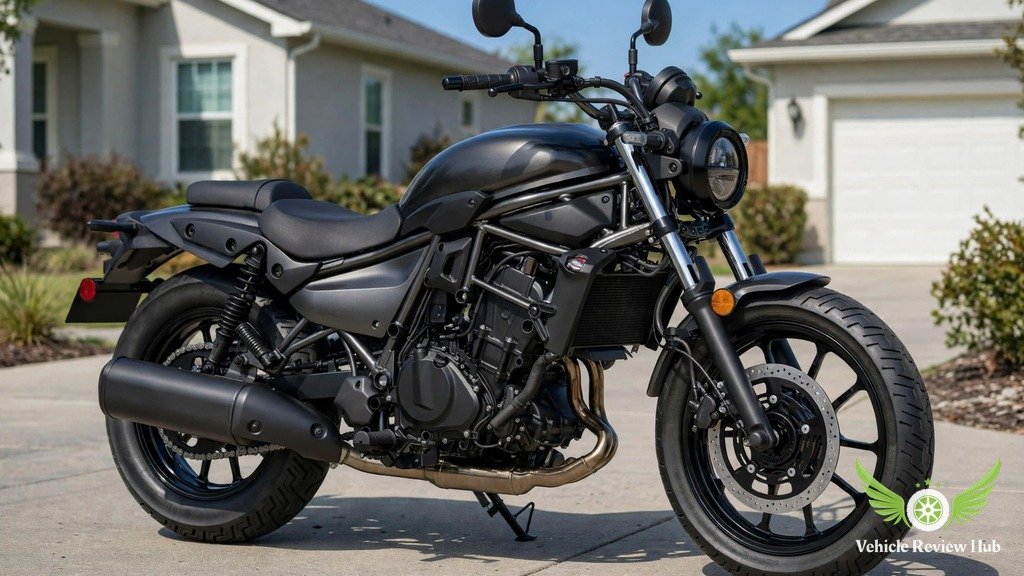
For 2027 the ABS trim in Metallic Imperial Red costs $6,999, which is $200 over the Ebony ABS at $6,799, and the delivered figure is $7,649 with the $650 destination charge. Multiple dealer listings using Kawasaki’s dealer-network data agree on the $6,999 figure for the red bike, model code EL450AVFAL, against $6,799 for the Ebony bike, model code EL450AVFNL, and the 2027 Eliminator 500 ABS page on Kawasaki USA is live. The SE ABS for 2027 costs $7,099 in its exclusive Metallic Bluish Green, so the red ABS sits exactly between the Ebony ABS and the SE ABS on price. This Kawasaki Eliminator review notes the premium plainly so a buyer is not surprised by it at the dealership, and a used buyer should know the colour premium only applies to new 2027 ABS bikes.
Kawasaki Eliminator Design, Features and Technology
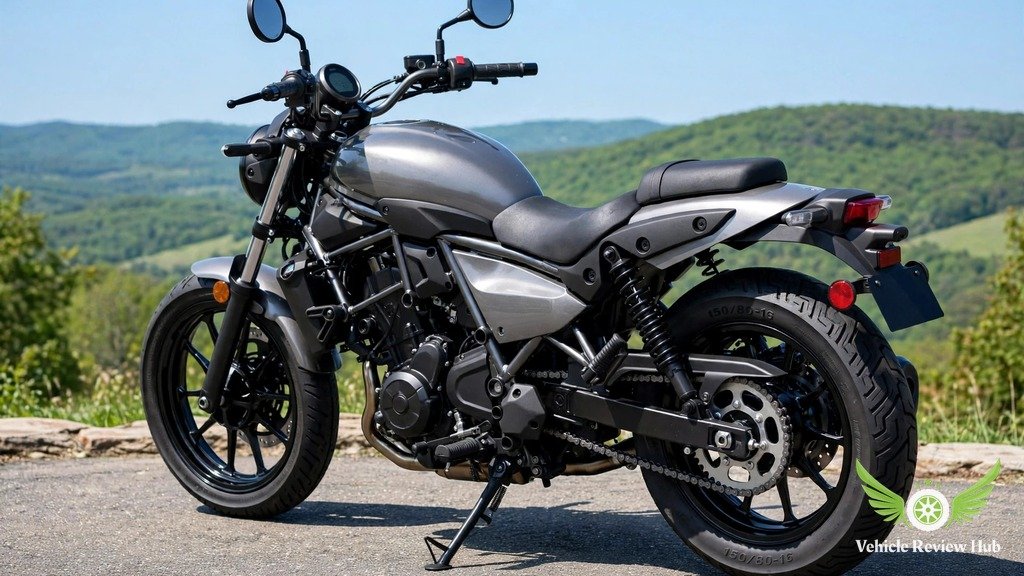
The Kawasaki Eliminator review design section is where the bike’s split personality shows: it looks like a classic long, low cruiser, but the details are modern and practical. There is no windscreen, no floorboards, and no saddlebags as standard, and the footpegs sit in the middle of the bike, not forward, which gives the rider more control than the forward pegs on the bigger Kawasaki Vulcan S review bike. The 2027 Eliminator 500 ABS page on Kawasaki USA lists the same equipment for the renamed bike, and this Kawasaki Eliminator review treats the design as honest and uncluttered rather than stripped down.
Base Has No ABS, and Says So
The base trim has no ABS in any year, and Kawasaki says so plainly on its own price list, which separates “BASE MSRP NON-ABS” from “BASE MSRP ABS” rather than hiding the difference in a footnote. A buyer looking at a used 2024, 2025, or 2026 base bike should check for the ABS sensor ring on the front disc, because the base bike does not have one and the ABS bike does. For 2027 the question goes away on a new bike, because the base trim ends and ABS is standard on both the ABS and the SE ABS. This Kawasaki Eliminator review recommends the ABS trim for any new rider, and the $300 gap is small money for the safety net it buys, especially on a first bike that will see wet roads and panic stops.
LCD Dash, Not TFT
The dash is a round LCD, not a TFT, and that is a deliberate cost choice rather than an oversight. The small round pod carries a bar-style tachometer, a gear position indicator, a clock, an odometer, dual trip meters, a fuel gauge, a remaining-range display, current and average fuel consumption, coolant temperature, and a maintenance reminder, and it connects to a phone through RIDEOLOGY THE APP for a maintenance log, ride recording, and call and mail notices. Motorcycle.com’s first ride put it plainly: the LCD cluster “is on the small side and not nearly as attractive as a TFT display, but it packs all the information you’d expect”. The remaining-range figure deserves a warning that the reliability blog covers in detail: RevZilla’s first ride said the estimated range display is “not to be trusted”, so a rider should watch the fuel gauge and the trip meter instead.
Kawasaki Eliminator Riding Experience and Comfort
The Kawasaki Eliminator review riding notes start with the seat, because that is where this bike wins its buyers. At 28.9 inches the seat is low enough for a five-foot-one rider to feel stable, and at 385.9 pounds the bike is light enough to manage at parking speeds without a struggle. This Kawasaki Eliminator review finds the bike easy in town, willing on a twisty road, and comfortable at freeway speeds, with the honest limits that there is no wind protection and the engine buzzes at sustained high revs according to some testers.
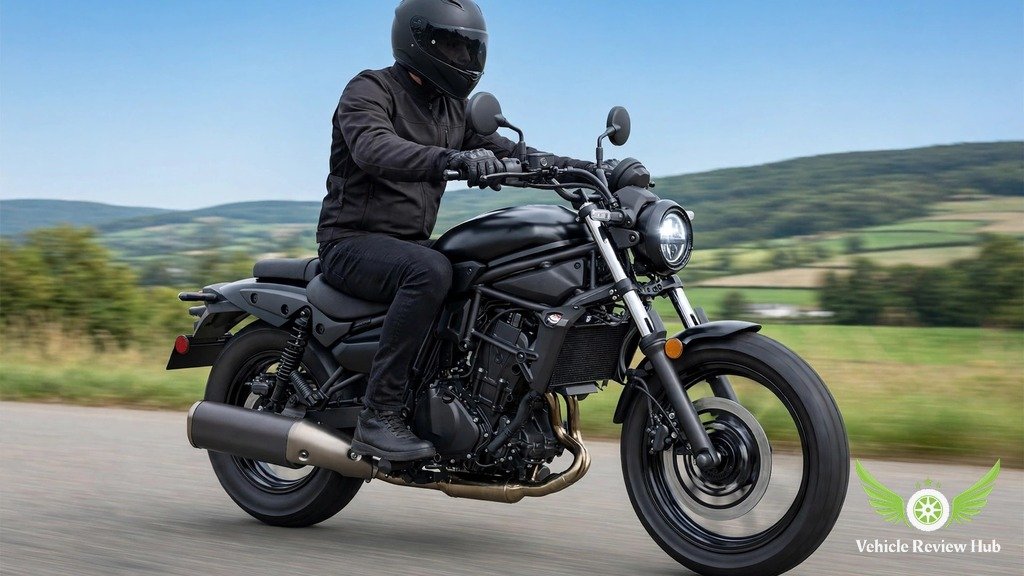
RevZilla’s Daily Rider review of the 2024 Eliminator, ridden by Zack Courts, covers the bike in the city, on the freeway, and through an urban manners test, and it is the video this Kawasaki Eliminator review recommends watching before buying. The bike on screen is the 2024 ABS trim, and the review runs about 37 minutes in spoken English.
Seat 28.9 Inches, Weight 385.9 Pounds
The 28.9-inch seat and 385.9-pound curb weight are the two numbers that define this bike for a new or shorter rider. RevZilla’s first ride noted that the shortest rider at the press launch, at five feet one inch, could put both feet on the ground and manage the bike confidently, while a five-foot-eleven rider still fit well over a 150-mile day. The seat itself is slim with a small pillion section, and one video reviewer found it too soft with soreness after two and a half to three hours, so a rider planning long days should budget for the optional ERGO-FIT low seat, which drops the height by an inch, or the high seat, which adds an inch. This Kawasaki Eliminator review rates the low weight as the bike’s biggest real-world advantage, because it makes every low-speed moment, from a U-turn to a gravel driveway, easier than on the 110-pounds-heavier Vulcan S.
Built in Thailand, VIN Prefix ML5
The Eliminator is built in Thailand, at Kawasaki’s plant in Pluakdaeng, Rayong, and the VIN prefix is ML5, which a buyer can check on the steering head before signing anything.
Kawasaki Eliminator Review: Pros, Cons and Verdict
The Kawasaki Eliminator review verdict is that this is the lightest, cheapest, and most approachable cruiser Kawasaki sells, and the 2027 rename changes none of that. This Kawasaki Eliminator review recommends the ABS trim for any buyer who can stretch to $6,799, because ABS is standard on every 2027 bike anyway, and the base trim is gone.
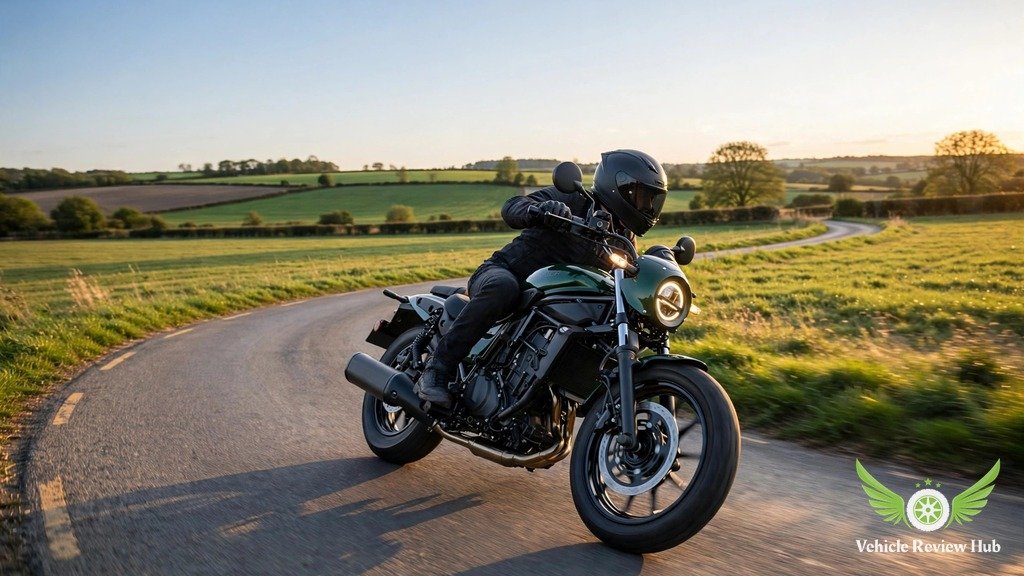
Main Advantages and Limitations of the Kawasaki Eliminator
The advantages start with weight and price: 385.9 pounds is about 110 pounds less than the Vulcan S and 28 pounds less than the Rebel 500, and $6,499 undercuts the Rebel 500’s MSRP by $300. The 51 hp claim is the strongest in the lightweight cruiser set on paper, the Cycle World dyno figure of 47.22 hp at the wheel backs it up, and the assist and slipper clutch is praised by every tester who tried it.
12 Month Limited Warranty
The warranty is a 12-month limited warranty, the same as the rest of Kawasaki’s street range, and Kawasaki Protection Plus extended cover is available in 12, 24, 36, and 48-month terms for a buyer who wants longer peace of mind. Twelve months is short next to some rivals, and it is the thinnest part of the ownership case, but the bike’s record so far gives little reason to worry: the NHTSA recalls database names no Eliminator for any year from 2024 to 2027, and the platform clutch recall that covers the Ninja 500 and Z500 does not list the Eliminator. The first service falls at 600 miles, oil and plugs every 7,600 miles, and the valve check every 15,200 miles, which the reliability blog in this cluster covers in full. This Kawasaki Eliminator review treats the short warranty as a known limitation, not a reason to walk away, because the purchase price leaves room in the budget for the extended cover if a buyer wants it.
Frequently Asked Questions
The questions below answer the things buyers ask most about the Eliminator, using the same verified figures as the rest of this Kawasaki Eliminator review.
How much does the Kawasaki Eliminator cost in the USA?
In this Kawasaki Eliminator review, the US prices are $6,499 for the 2025 and 2026 base, $6,799 for the ABS, and $7,099 for the SE ABS, with a $650 destination charge. For 2027 the base trim ends, so the ABS at $6,799 is the cheapest new Eliminator, and Metallic Imperial Red adds $200.
What engine does the Kawasaki Eliminator have?
The Kawasaki Eliminator review engine is a 451cc liquid-cooled DOHC parallel twin, derived from the Ninja 400’s 399cc engine with the stroke lengthened from 51.8 mm to 58.6 mm. It is not a V-twin, and it shares its platform with the Ninja 500 and Z500.
How much horsepower does the Kawasaki Eliminator make?
Kawasaki’s US spec sheet claims 51 hp at 10,000 rpm, and Cycle World’s dyno test of a 2024 SE ABS measured 47.22 hp at the wheel. The certificate of origin reads 52 hp, and the European bike is rated 45 hp, so the 51 hp figure in this Kawasaki Eliminator review is the US spec-sheet claim.
Is the Kawasaki Eliminator a good beginner bike?
Yes, and this Kawasaki Eliminator review rates it as one of the best beginner cruisers on sale: a 28.9-inch seat, 385.9 pounds, a one-finger clutch, and a predictable engine. A beginner should buy the ABS trim, because the base trim has no ABS.
Does the Kawasaki Eliminator have ABS?
ABS is standard on the ABS and SE ABS trims, and on every 2027 bike, because the base trim ends after 2026. The 2024 to 2026 base trim has no ABS, and this Kawasaki Eliminator review recommends checking for the ABS sensor ring on any used base bike.
What is the seat height of the Kawasaki Eliminator?
The seat height is 28.9 inches on every trim. An optional ERGO-FIT low seat drops it by an inch to 27.9 inches, and a high seat adds an inch, so this Kawasaki Eliminator review notes that shorter riders have a factory option.
How much does the Kawasaki Eliminator weigh?
The curb weight is 385.9 pounds for the non-ABS base, 388.1 pounds for the ABS, and 390.3 pounds for the SE ABS. That makes the Eliminator about 110 pounds lighter than the Vulcan S, which is the weight advantage this Kawasaki Eliminator review keeps coming back to.
What is the fuel tank size and range?
The tank holds 3.4 gallons, not the 3.7 gallons some listings copy from the Ninja 500. RevZilla’s first ride showed 45 mpg on the dash after highway miles, which gives about 150 miles of range, and this Kawasaki Eliminator review notes the dash range estimate itself is not to be trusted.
Is the Kawasaki Eliminator a V-twin?
No. The Eliminator uses a parallel twin with two cylinders side by side across the frame, and this Kawasaki Eliminator review stresses the point because cruiser buyers often assume a V-twin like the Vulcan 900 Custom. The 180-degree crank gives it a high-revving character unlike a traditional cruiser twin.
Where is the Kawasaki Eliminator built?
The Eliminator is built in Thailand at Kawasaki’s plant in Pluakdaeng, Rayong, and the VIN prefix is ML5. The build quality matches Kawasaki’s “Japan Quality (Made in Thailand)” claim, and this Kawasaki Eliminator review found no pattern of assembly complaints in the first two years.
What is the difference between the Eliminator and the Eliminator 500?
They are the same bike under two names. Kawasaki renamed the Eliminator as the Eliminator 500 for 2027, dropped the base trim, and made ABS standard, and this Kawasaki Eliminator review confirms the engine, chassis, seat, and weight are unchanged by the rename.
Should I buy the Eliminator or the Rebel 500?
Buy the Eliminator if you want the lighter, more powerful, revvier bike, and buy the Rebel 500 if you want the lower 27.2-inch seat and ABS standard on every trim for $50 less delivered. This Kawasaki Eliminator review gives the weight and power case to the Eliminator and the value and seat-height case to the Rebel.