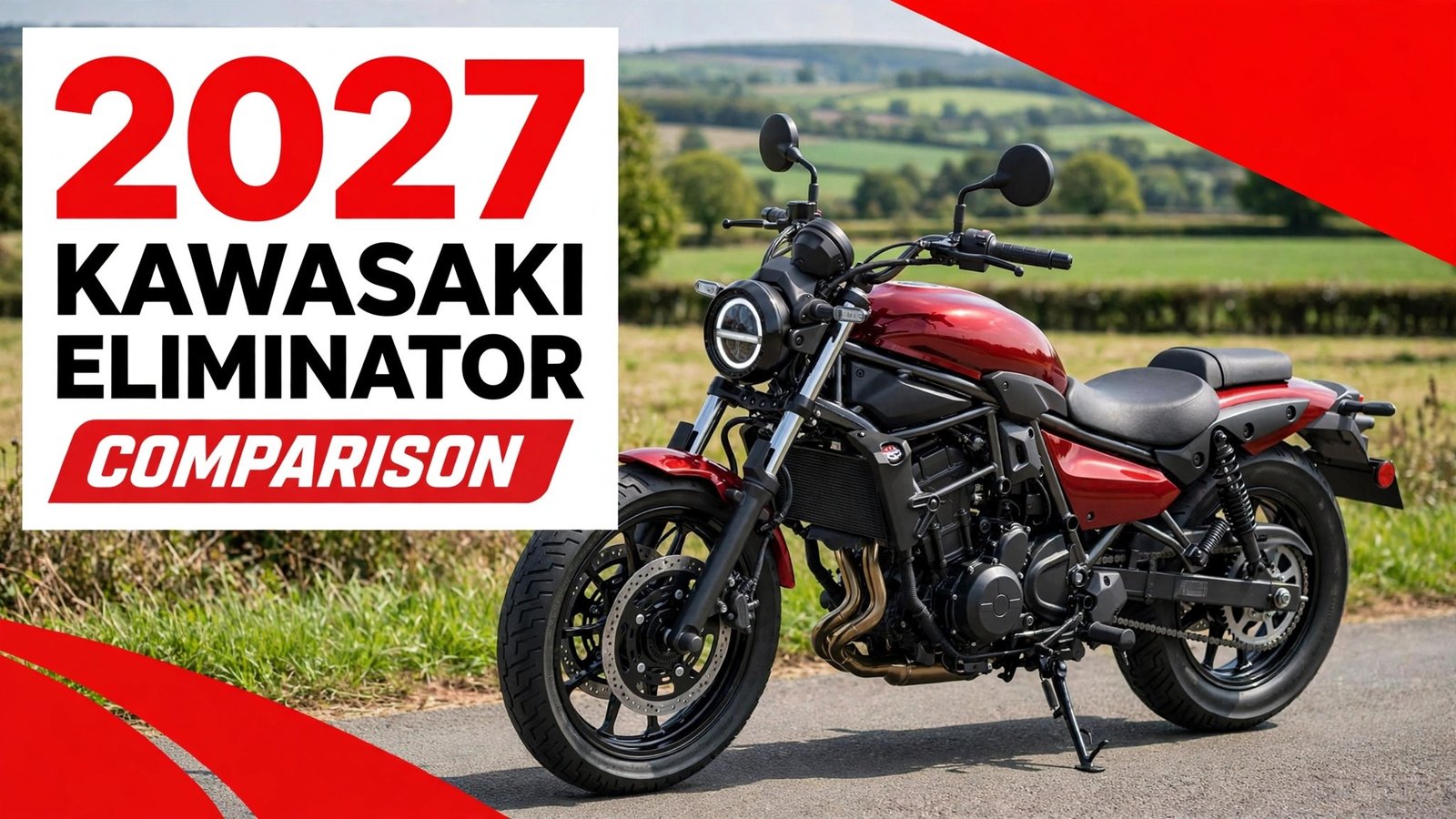
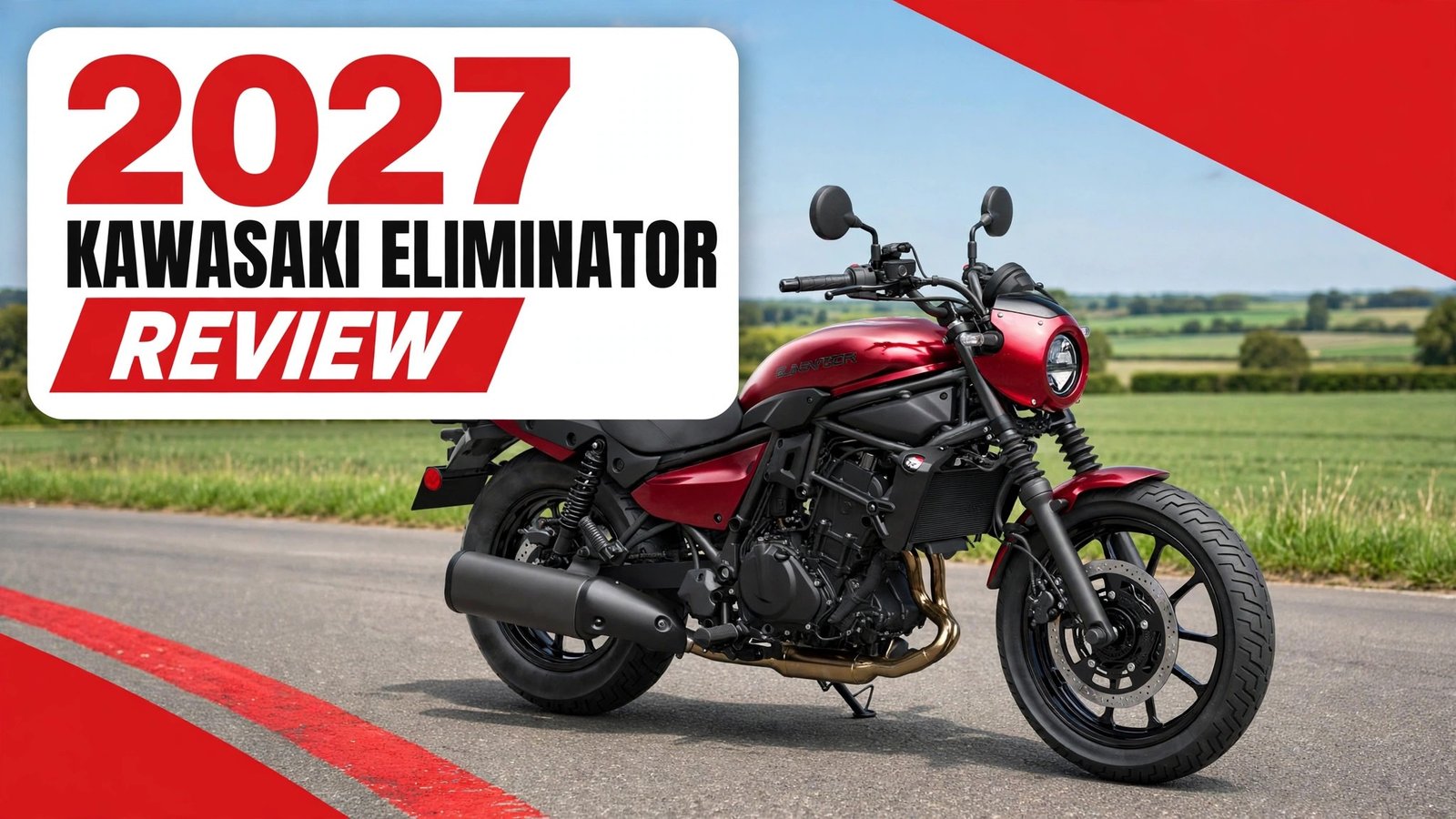
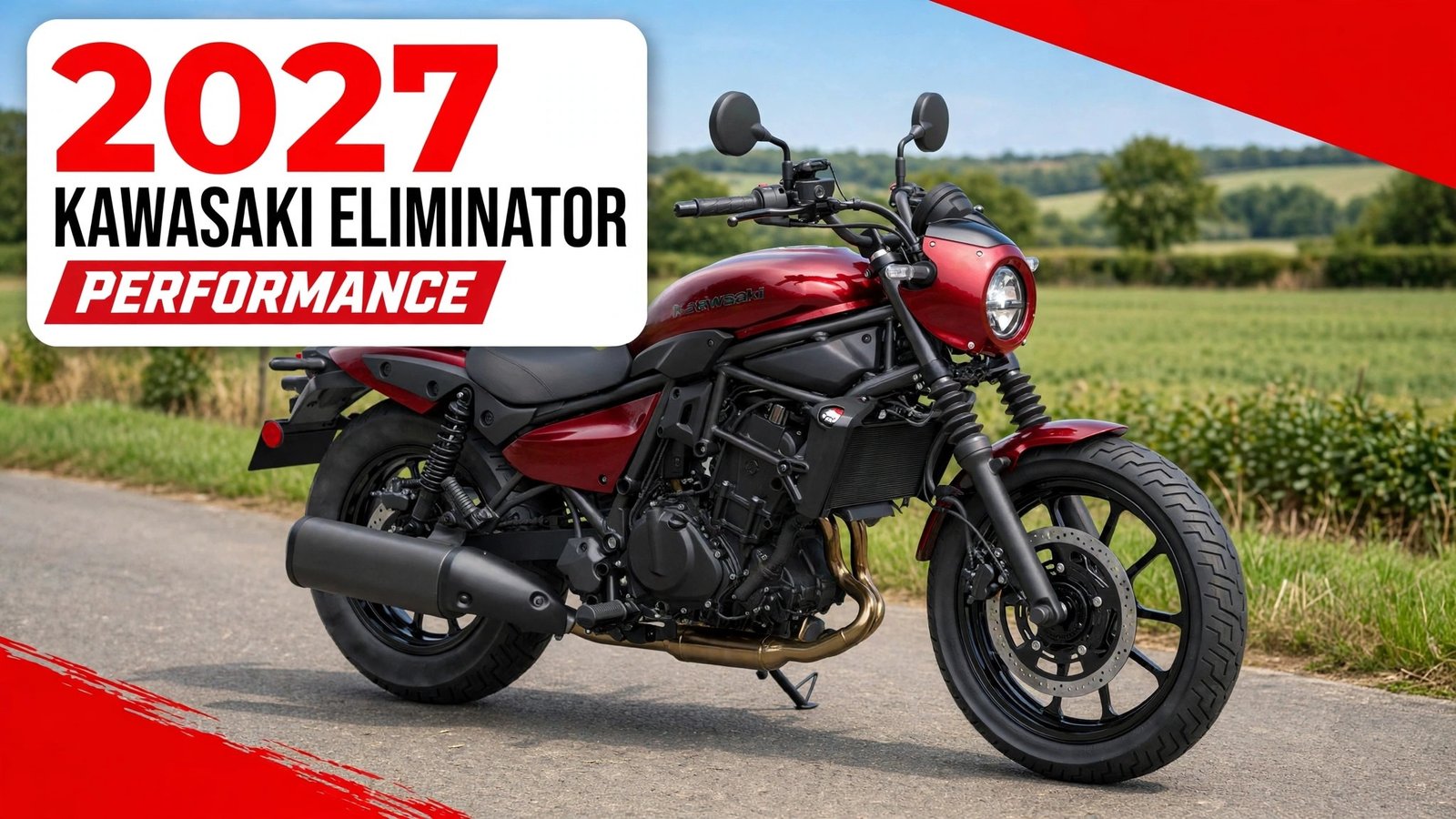
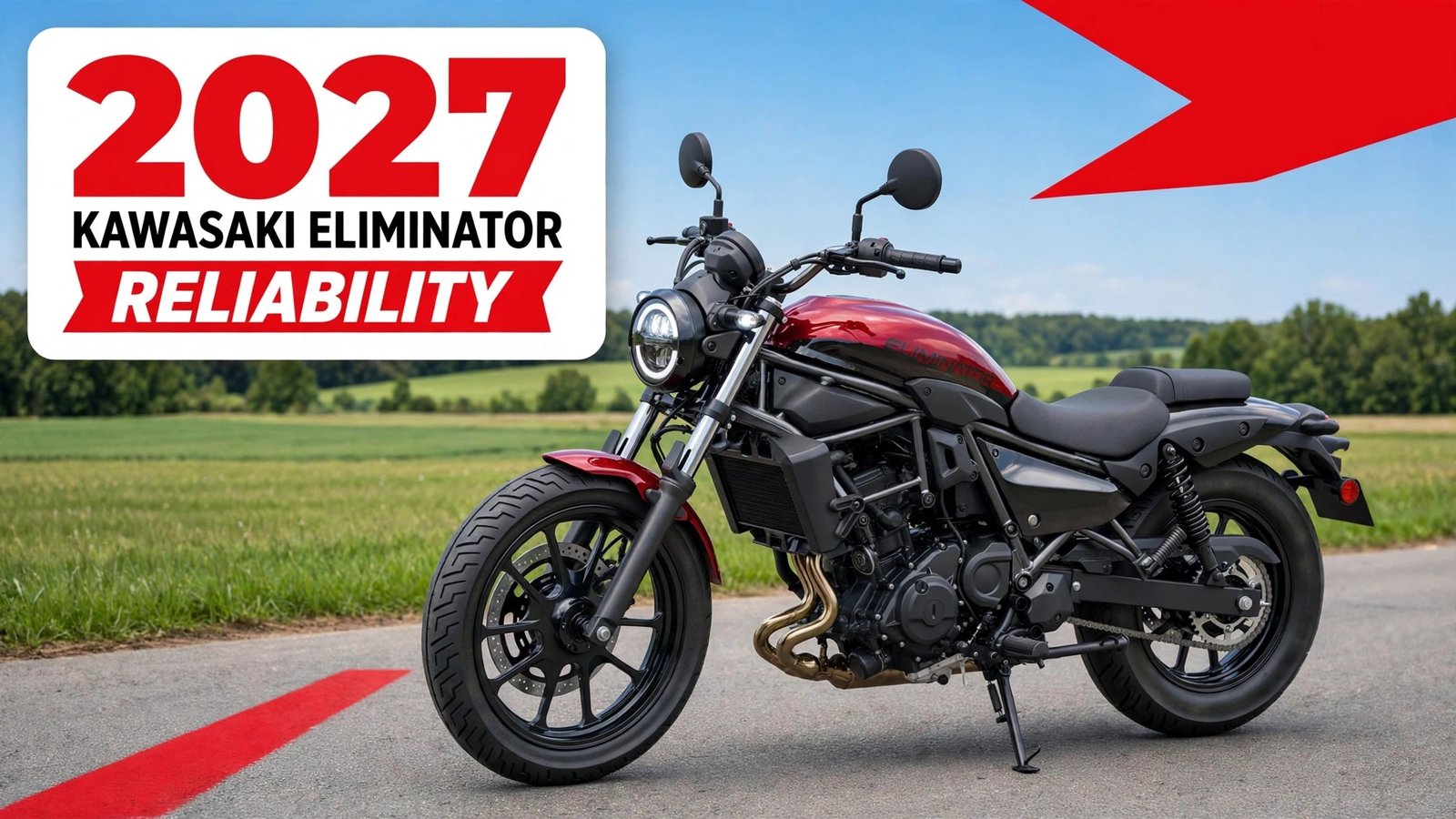
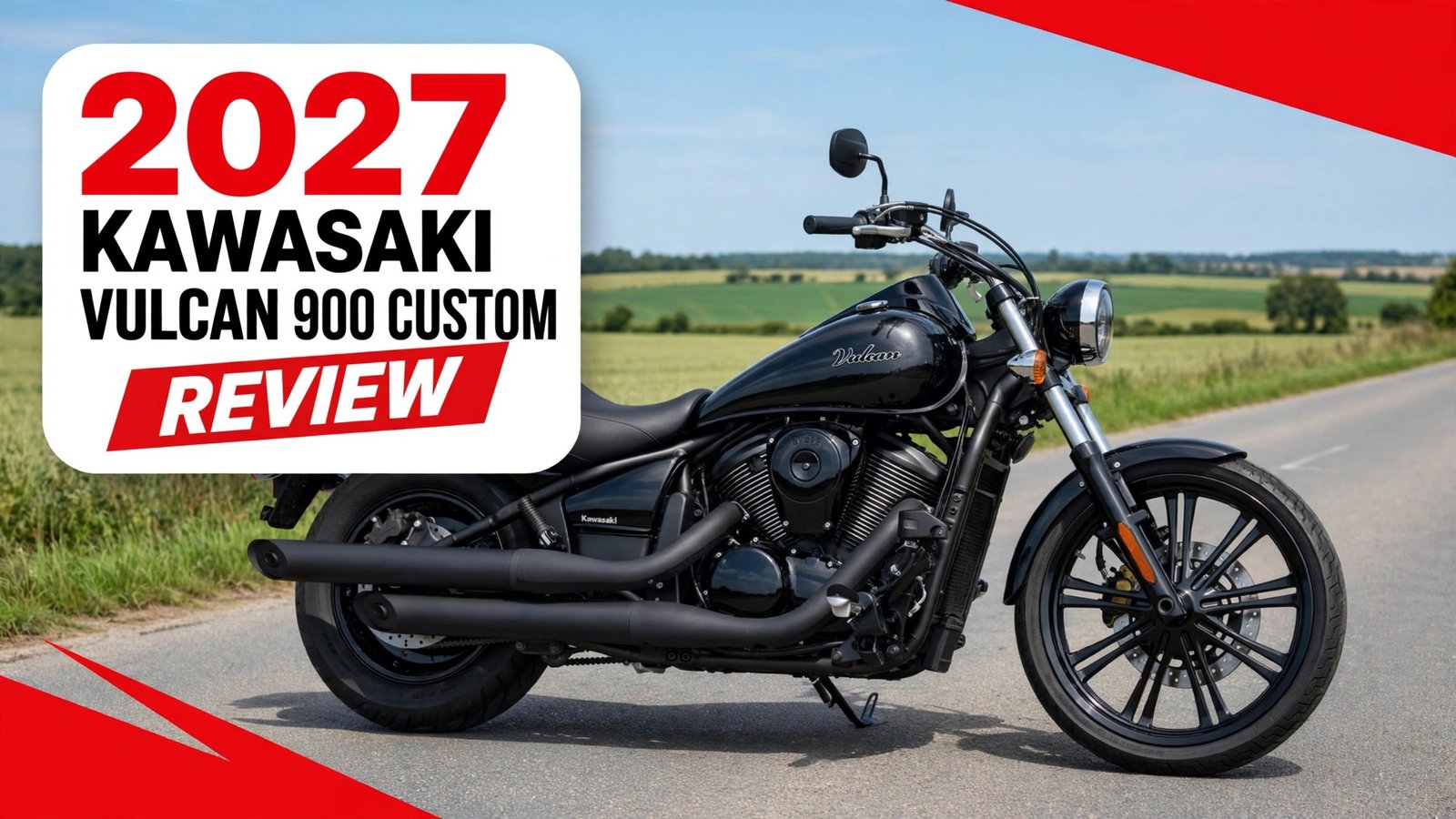
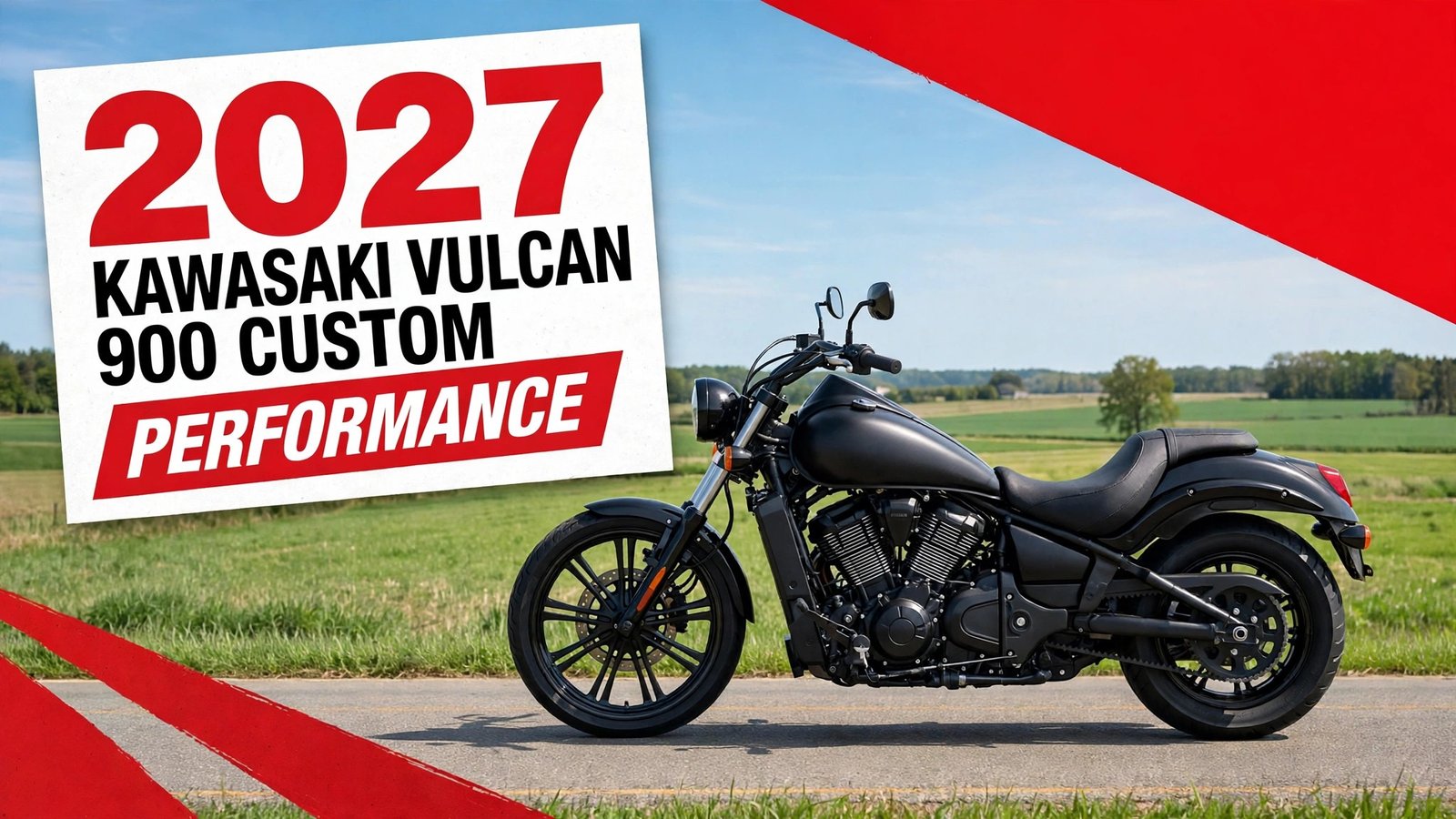
The Kawasaki Vulcan 900 Custom costs more than every rival in this Kawasaki Vulcan 900 Custom comparison, and it is still the one to buy if presence matters most. The 2027 Custom lists at $10,099 plus an $840 destination charge, $10,939 delivered, against $9,299 for the Suzuki Boulevard C50, $9,299 delivered for the Honda Shadow Phantom and $9,624 delivered for the Yamaha Bolt R-Spec. This Kawasaki Vulcan 900 Custom comparison puts the four side by side on price, drive and presence, and says plainly where each rival wins.
Kawasaki Vulcan 900 Custom Overview and Its Closest Rivals
The four bikes in this Kawasaki Vulcan 900 Custom comparison are the last of a class that has almost disappeared.
Why These Three Rivals: Shaft, Shaft, Belt
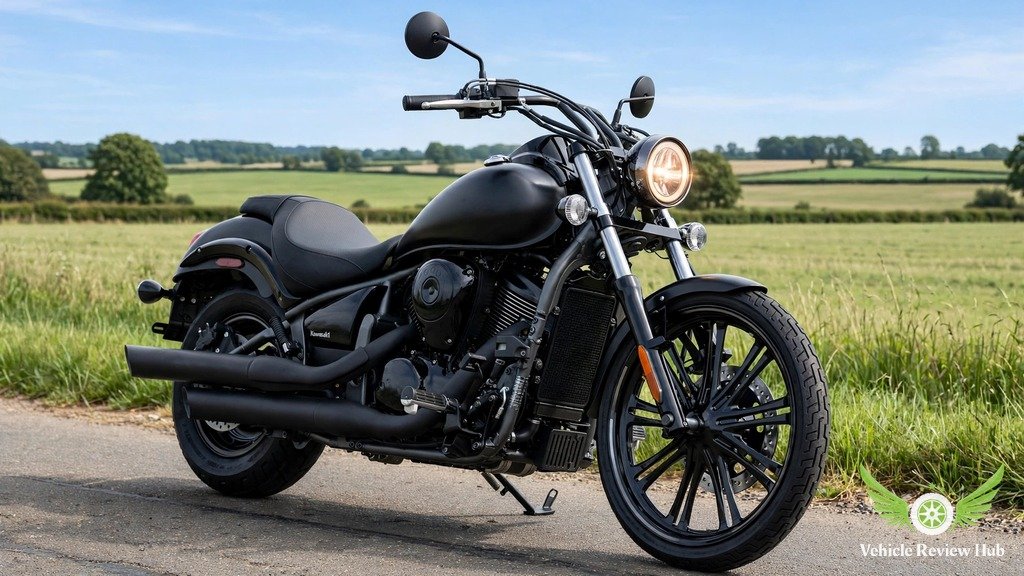
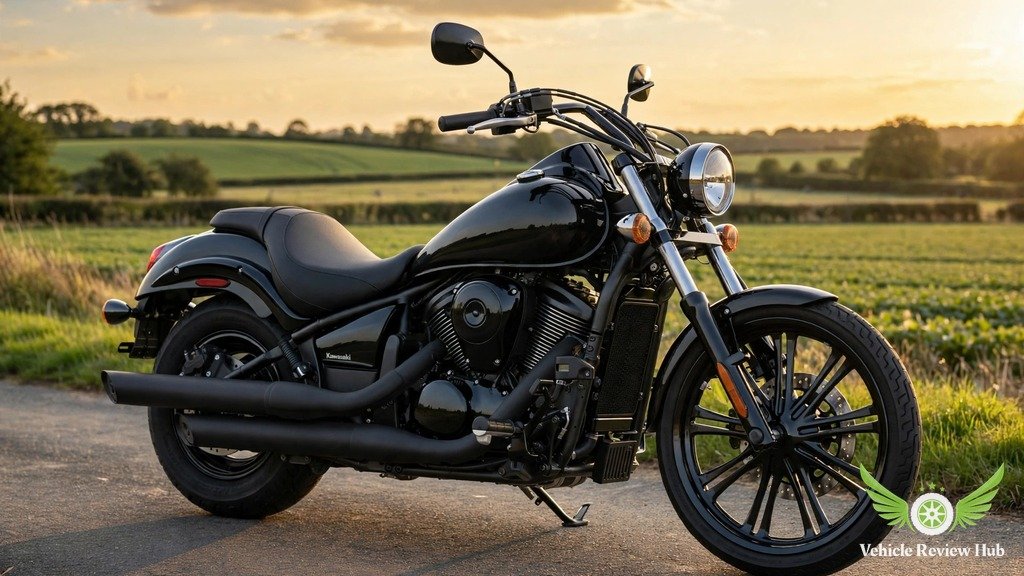
The three rivals were picked for one reason: final drive. The Boulevard C50 and the Shadow Phantom both drive the rear wheel with a shaft, and the Bolt R-Spec drives it with a belt, like the Custom. That split is the organising idea of this Kawasaki Vulcan 900 Custom comparison, because the drive type decides what the owner actually lives with — a belt is inspected every 3,750 miles and replaced when it wears, a shaft is sealed and mostly forgotten, and neither needs the chain cleaning a chain-drive bike demands. The Kawasaki Vulcan 900 Custom review sets out the Custom itself: a 903cc liquid-cooled 55-degree V-twin making 51 hp at 5,500 rpm and 58.3 lb-ft at 3,500 rpm, a five-speed gearbox, a Kevlar-reinforced belt, a 27.0-inch seat and a 610.8-pound curb weight, with no ABS in any year.
How the Four Bikes Differ at a Glance
The table below is the whole Kawasaki Vulcan 900 Custom comparison in one place, with two cautions.
| Item | Vulcan 900 Custom (2027) | Boulevard C50 (2025) | Shadow Phantom (2025) | Bolt R-Spec (2025) |
|---|---|---|---|---|
| MSRP | $10,099 | $9,299 | $8,699 | $8,999 |
| Delivered | $10,939 | Not published | $9,299 | $9,624 |
| Engine | 903cc V-twin, liquid-cooled | 805cc V-twin, liquid-cooled | 745cc V-twin, liquid-cooled | 942cc V-twin, air-cooled |
| Claimed power | 51 hp @ 5,500 rpm | Not published | Not published | Not published |
| Drive | Belt | Shaft | Shaft | Belt |
| Gears | 5 | 5 | 5 | 5 |
| Seat height | 27.0 in | 27.6 in | 25.6 in | 27.2 in |
| Curb / wet weight | 610.8 lb | 611 lb | 553 lb (ABS) | 542 lb wet |
| Fuel tank | 5.3 gal | 4.1 gal | 3.9 gal | 3.4 gal |
| ABS | No | No | Yes, standard | Yes |
Notes for this Kawasaki Vulcan 900 Custom comparison table: the Custom is the only bike here with a maker-published horsepower figure, so rival power is shown as not published rather than filled from aggregators. The C50 has no published destination charge, so no delivered total can be asserted for it. The Phantom’s $9,299 is its delivered total ($8,699 MSRP plus a $600 destination charge), not its MSRP. The Bolt’s tank is 3.4 gallons (13 litres), not the 3.2 gallons some listings print.
Kawasaki Vulcan 900 Custom vs Suzuki Boulevard C50
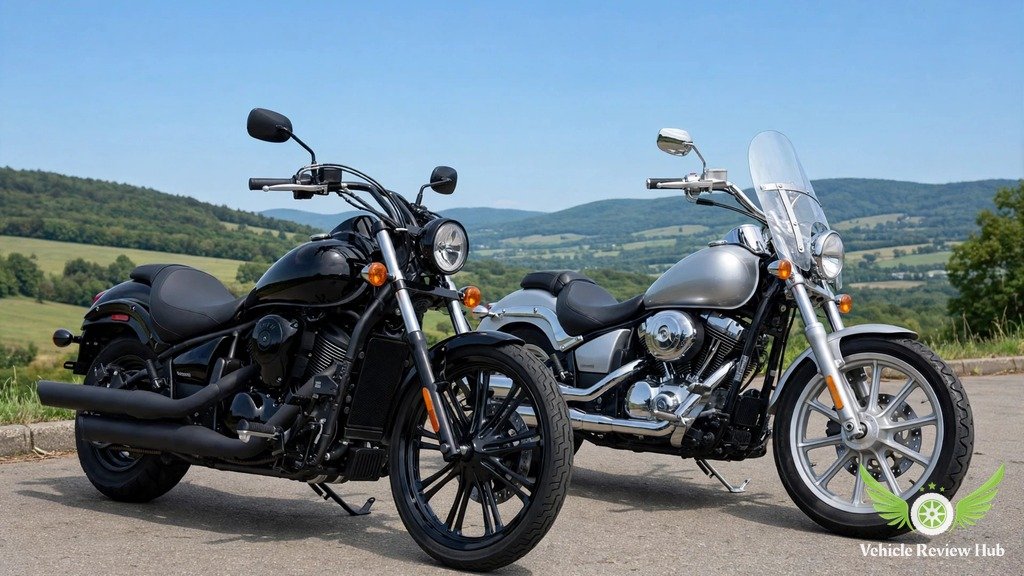
The Boulevard C50 is the closest rival in this Kawasaki Vulcan 900 Custom comparison, and the contest is decided by two numbers that are effectively identical: the C50 weighs 611 pounds and the Custom weighs 610.8 pounds, and their MSRPs sit $800 apart.
Engine, Specs and Performance Side by Side
Suzuki publishes no horsepower figure for the C50, so there is no honest like-for-like power number to print — the Custom’s 51 hp at 5,500 rpm stands alone in this Kawasaki Vulcan 900 Custom comparison, and the C50’s 98cc shortfall is the only engine fact the buyer can weigh. Neither bike has a dyno figure of its own in this pairing — no outlet has dyno tested the Custom, and the only Vulcan 900 dyno numbers anywhere belong to the Classic LT sibling, 42.7 hp on Motorcycle.com’s 2016 test, labelled as a sibling figure in the Kawasaki Vulcan 900 Custom performance guide. The C50’s brakes tell the same old-school story as the Custom’s: a single front disc, and a drum brake at the rear where the Custom runs a 270 mm rear disc. Its 4.1-gallon tank sits second to the Custom’s 5.3 gallons here, ahead of the Phantom’s 3.9 and the Bolt’s 3.4.
Price, Equipment and Which Suits Which Rider
The C50 lists at $9,299 for 2025 on Suzuki’s 2025 C50 page, $800 under the Custom’s $10,099, but that gap is not the whole story. Suzuki never published a 2025 destination charge for the C50, so no delivered total can be asserted for it, while the Custom’s $10,939 delivered price is exact — $10,099 plus the $840 destination charge on Kawasaki’s own 2027 Custom page. The C50 wears spoke-style chrome wheels, buckhorn handlebars, forward floorboards and a 16-inch front tyre, and its instrument cluster carries a gear-position indicator, a fuel meter and a clock. The Suzuki Boulevard C50 review covers the C50 in full, and the dressed C50T Special at $9,779 is the same bike with a windscreen and saddlebags, compared in the Boulevard C50T comparison.
Kawasaki Vulcan 900 Custom vs Honda Shadow Phantom
The Shadow Phantom is the odd one out in this Kawasaki Vulcan 900 Custom comparison: the lightest bike here, the lowest seat, the smallest engine, and the only one with ABS as standard.

Engine, Specs and Performance Side by Side
What the spec sheet does show is a bike built around being small and low: a 25.6-inch seat, the lowest in this Kawasaki Vulcan 900 Custom comparison by a full 1.4 inches, and a 553-pound curb weight with ABS, nearly 58 pounds lighter than the Custom’s 610.8. The Phantom’s brakes are the better set on paper: front and rear discs with ABS as standard, where the Custom runs a single 300 mm front disc and a 270 mm rear disc with no ABS in any year, openly so in Kawasaki’s own words. No instrumented top speed, quarter-mile time or braking distance was found for either bike, so this Kawasaki Vulcan 900 Custom comparison makes no performance claim beyond the figures the makers publish.
Price, Equipment and Which Suits Which Rider
The Phantom is the cheapest bike in this Kawasaki Vulcan 900 Custom comparison to put on the road: $8,699 MSRP plus a $600 destination charge, $9,299 delivered. That is $1,640 less than the Custom’s $10,939 delivered, and it is worth saying plainly that $9,299 is the Phantom’s delivered total — some listings print it as the MSRP, which it is not. The Phantom’s latest verified year is 2025, shown on Honda’s own Shadow Phantom page, and no 2026 or 2027 Phantom price was verified, so the same 2025-or-earlier caveat applies as with the C50. The Phantom has been the rival in the Vulcan S line too, covered in the Vulcan S Cafe review and the Vulcan S ABS review, where the same trade — ABS and a low seat against size and presence — decided it the same way.
Kawasaki Vulcan 900 Custom vs Yamaha Bolt R-Spec
The Bolt R-Spec is the only rival in this Kawasaki Vulcan 900 Custom comparison that meets the Custom on its own ground: belt drive against belt drive, bobber styling against custom styling, and the cheapest price in the set.
Engine, Specs and Performance Side by Side
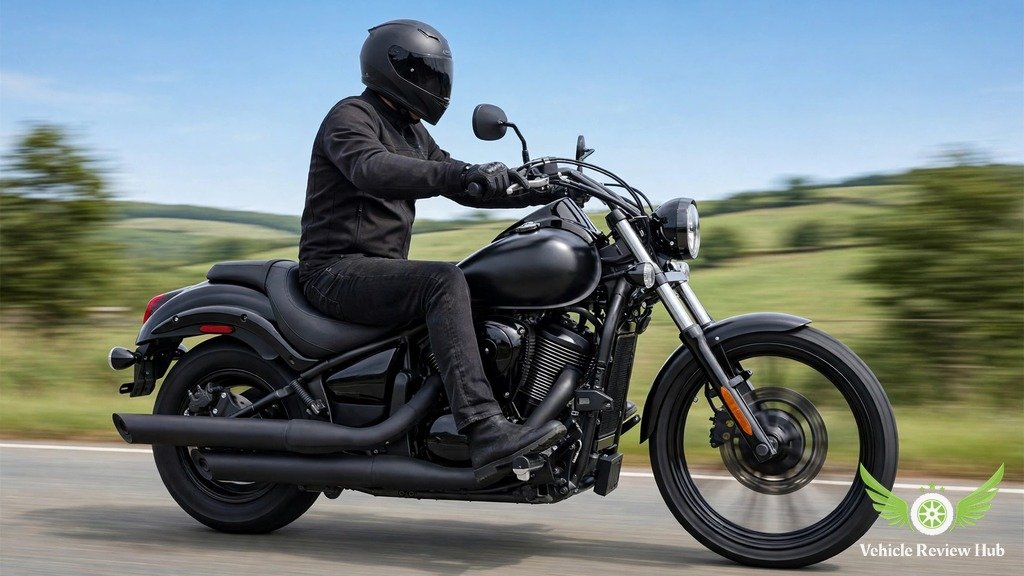
The Bolt runs a 942cc air-cooled 60-degree V-twin against the Custom’s 903cc liquid-cooled 55-degree V-twin — the largest engine in this Kawasaki Vulcan 900 Custom comparison, and the only air-cooled one. Yamaha publishes torque rather than horsepower for the Bolt, 59.3 lb-ft at 3,000 rpm, a touch more than the Custom’s 58.3 lb-ft at 3,500 rpm, and again no honest horsepower comparison can be printed because Yamaha publishes none. What differs is size and weight: the Bolt is the lightest bike in the set at 542 pounds wet, nearly 69 pounds under the Custom’s 610.8-pound curb weight, with a 27.2-inch seat that sits a fraction above the Custom’s 27.0. Its tank is the smallest here at 3.4 gallons against the Custom’s 5.3, and Yamaha’s own combined fuel-economy estimate of 51 mpg gives it about 173 miles of arithmetic range — arithmetic, not a test — against the Custom’s 219 miles at the tested 41.3 mpg figure from Motorcycle.com’s 2016 comparison test of the sibling Classic LT, or 239 miles at Kawasaki’s 45 mpg estimate.
Price, Equipment and Which Suits Which Rider
The Bolt R-Spec lists at $8,999 for 2025 plus a $625 destination charge, $9,624 delivered — $1,315 less than the Custom’s $10,939 delivered, and the cheapest of the four bikes in this Kawasaki Vulcan 900 Custom comparison. Its latest verified US year is 2025, shown in TotalMotorcycle’s 2025 Bolt R-Spec specifications, and Yamaha’s 2027 Sport Heritage lineup page lists no Bolt at all, so no 2026 or 2027 Bolt price was verified and the R-Spec’s future as a new bike is an open question. One caution belongs in this Kawasaki Vulcan 900 Custom comparison: some listings print the Bolt’s tank as 3.2 gallons and one dealer listing prints its engine as 889cc. Both are wrong — the tank is 13 litres, 3.4 US gallons, and the engine is 942cc, per Yamaha’s own specifications as reproduced by TotalMotorcycle and the dealer spec sheets.
Kawasaki Vulcan 900 Custom Price and Value Compared
On price alone the Custom loses this Kawasaki Vulcan 900 Custom comparison: it is the most expensive bike here by $1,315 over the Bolt and $1,640 over the Phantom delivered.
| Bike | MSRP | Destination | Delivered | Gap to the Custom |
|---|---|---|---|---|
| Vulcan 900 Custom (2027) | $10,099 | $840 | $10,939 | — |
| Boulevard C50 (2025) | $9,299 | Not published | Not published | $800 under on MSRP |
| Shadow Phantom (2025) | $8,699 | $600 | $9,299 | $1,640 under delivered |
| Bolt R-Spec (2025) | $8,999 | $625 | $9,624 | $1,315 under delivered |
Notes for this Kawasaki Vulcan 900 Custom comparison table: the Custom’s delivered price is exact — $10,099 plus the $840 destination charge on Kawasaki’s live 2027 page. The Phantom’s $9,299 is its delivered total, not its MSRP. Suzuki never published a 2025 destination charge for the C50, so no delivered total can be asserted for it. One listing to ignore: Motorcycle.com wrongly lists the 2027 Custom at $10,999 — Kawasaki USA’s $10,099 is authoritative.
The Class Died Around It
The mid-size Japanese V-twin cruiser class has thinned to almost nothing around the Custom. The Yamaha V Star 950 is gone, its last model year 2017. The Honda Shadow Aero is gone, its last year 2024. The Star brand itself is gone, wound up in 2016. What survives in 2025 to 2027 is this Kawasaki Vulcan 900 Custom comparison’s four bikes — and only the Custom is still sold new for 2027 on its original formula, mechanically unchanged since its 2009 exhaust update, with colours and paint the only changes across twenty years on sale. The Kawasaki Vulcan 900 Custom reliability guide sets out why that twenty-year run matters for ownership too: the same 903cc engine, the same five-speed gearbox and the same belt have been in production since 2007, so parts, know-how and owner experience are all deep.
Running Costs and Resale Value Compared
The Custom’s routine is short: oil and filter every 7,500 miles with the oil screen cleaned, plugs and air filter at the same interval, valve clearances at 15,000 miles, and the belt inspected every 3,750 miles with no fixed replacement interval — an inspect-only item, not a scheduled bill. Fuel is where the Custom’s 5.3-gallon tank pays back: about 219 miles at the tested 41.3 mpg figure from Motorcycle.com’s 2016 test of the sibling Classic LT, or 239 miles at Kawasaki’s 45 mpg estimate — both arithmetic, not tests, and the only fuel figures this Kawasaki Vulcan 900 Custom comparison can print honestly, since no tested mileage figure exists for the C50 or the Phantom and the Bolt’s 51 mpg is Yamaha’s combined estimate, not a test. On resale, no verified resale-value study exists for this set, and this Kawasaki Vulcan 900 Custom comparison prints no resale percentage it cannot source. The one bill that can surprise a Custom owner is the belt: no verified OEM list price for the genuine belt was located, so budget it from a dealer quote at the time, not from a printed number.
| Item | Vulcan 900 Custom | Boulevard C50 | Shadow Phantom | Bolt R-Spec |
|---|---|---|---|---|
| Routine service headline | Oil + filter + plugs every 7,500 mi; valves 15,000 mi | Per owner’s manual | Per owner’s manual | Per owner’s manual |
| Drive upkeep | Belt inspected every 3,750 mi, no fixed interval | Shaft, sealed | Shaft, sealed | Belt, inspect per manual |
| Fuel range | About 219 mi at 41.3 mpg tested (LT); 239 mi at 45 mpg estimate | 4.1 gal, no tested MPG verified | 3.9 gal, no tested MPG verified | About 173 mi at 51 mpg estimate (arithmetic) |
| Known weak point | Stator — test over 70 V AC per leg at 4,000 rpm | No pattern documented in the sources checked | No pattern documented in the sources checked | No pattern documented in the sources checked |
Notes for this Kawasaki Vulcan 900 Custom comparison table: the Custom’s range figures are arithmetic from a tested sibling figure and an estimate, not tests of the Custom itself. The Bolt’s range is arithmetic from Yamaha’s combined estimate. No tested mileage figure was verified for the C50 or the Phantom. No resale percentage is printed for any bike, because no verified resale study exists for this set.
Kawasaki Vulcan 900 Custom Comparison Verdict and US Alternatives
The verdict in this Kawasaki Vulcan 900 Custom comparison is the blog’s own, labelled as such: no outlet has published a verdict on the Custom against these three rivals. On the evidence in the tables above, the Custom wins on presence and on being new, and loses on price and on ABS.
Verdict: Presence and Belt Keep It Alive
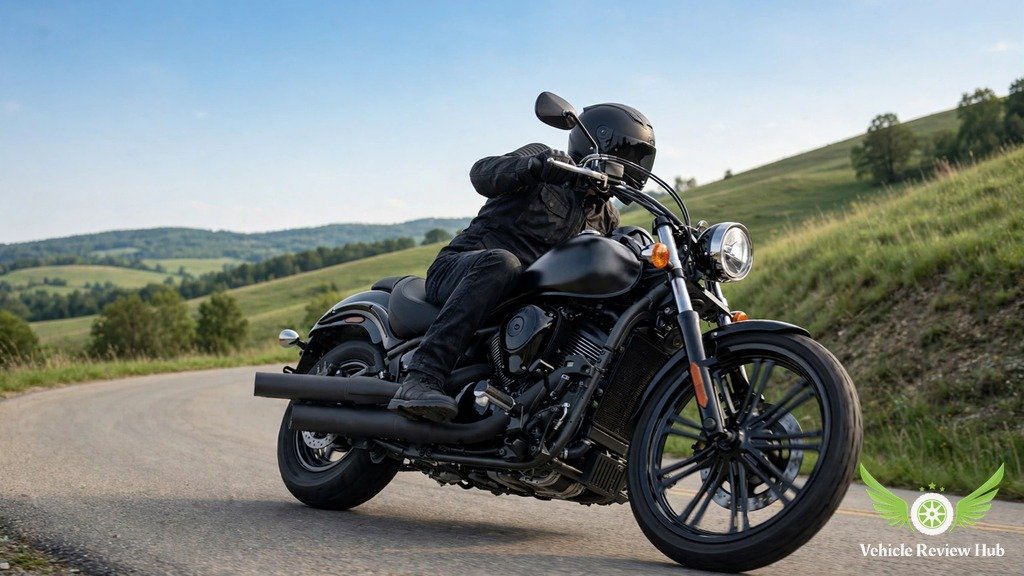
The Custom is the biggest bike here — 94.7 inches long, a 64.8-inch wheelbase, a 21-inch front wheel — and it is the only one of the four still sold new for 2027 with its 2007 formula intact. Against that, it costs $1,315 more delivered than the Bolt and $1,640 more than the Phantom, and it is the only bike here without ABS. Buy the Custom if presence, the belt and a brand-new 2027 bike matter most. Buy the Phantom if ABS, the lowest seat and the lowest delivered price matter most. Buy the Bolt if the lowest price and the lightest bike matter most. Buy the C50 if shaft drive and the traditional look matter most. The film below shows why the presence argument is real, even though its rival is not one of this Kawasaki Vulcan 900 Custom comparison’s three: two brothers swap bikes for a day, a Harley Electra Glide Ultra Classic against a Vulcan 900, and the Vulcan 900 is the bike that looks at home on the road. The bike on screen is a Classic-style Vulcan 900, not a Custom, and the Harley is much larger and costs roughly two and a half times as much — one commenter calls it “apples with oranges” — so the film is a ride, not a verdict, and the prices in this Kawasaki Vulcan 900 Custom comparison come from the tables, not from the video.
Super Meteor 650 Alternative
The Royal Enfield Super Meteor 650 is the value alternative to all four bikes in this Kawasaki Vulcan 900 Custom comparison: $7,899 per November 2026 dealer listings, about $3,000 less than the Custom delivered, with a 648cc parallel twin, a six-speed gearbox and modern features the Custom does not offer. The trim split and the destination charge for that $7,899 figure are unverified, so treat it as a dealer-listing price, not a delivered total. What the Super Meteor gives up is the V-twin — it is a parallel twin — and the belt, since it drives the rear wheel with a chain, and its 648cc engine is the smallest here by a wide margin. The Super Meteor was covered as the same value alternative in the Vulcan S Cafe comparison. Two more alternatives, one line each: the Honda Rebel 1100 at $9,699 for 2025 plus a $775 destination charge, $10,474 delivered — the modern alternative, more power and more tech with a DCT option, but a parallel twin, not a V-twin. The Harley-Davidson Nightster at $9,999 for 2025 — the American alternative, a 975cc Revolution Max V-twin making 91 hp and 72 lb-ft, at the same price as the 2026 Custom.
Kawasaki Vulcan 900 Custom Comparison FAQs
The questions below cover what buyers ask most when they compare the Custom with its rivals — answered from the same verified figures as this Kawasaki Vulcan 900 Custom comparison.
Which is the best value: the Vulcan 900 Custom or the Boulevard C50?
It depends on what value means to the buyer. This Kawasaki Vulcan 900 Custom comparison calls the C50 the better value on upkeep, with its shaft drive and $800-lower MSRP, and the Custom the better value on presence and newness, since it is the only one of the two still sold new for 2027.
Is the Vulcan 900 Custom cheaper than the Shadow Phantom?
No. This Kawasaki Vulcan 900 Custom comparison puts the Phantom at $9,299 delivered against the Custom’s $10,939 delivered, a $1,640 gap in the Phantom’s favour, and the Phantom adds ABS as standard on top of the lower price.
Is the Yamaha Bolt R-Spec cheaper than the Vulcan 900 Custom?
Yes, by $1,315 delivered. This Kawasaki Vulcan 900 Custom comparison puts the Bolt R-Spec at $9,624 delivered against the Custom’s $10,939, and the Bolt is also the lightest bike here at 542 pounds wet.
Does the Vulcan 900 Custom have ABS?
No. This Kawasaki Vulcan 900 Custom comparison notes that the Custom has no ABS in any year, openly so in Kawasaki’s own words, while the Shadow Phantom and the Bolt R-Spec both have ABS and the Boulevard C50 does not.
Which is better, belt drive or shaft drive?
Neither is better outright. This Kawasaki Vulcan 900 Custom comparison puts it this way: a belt is inspected every 3,750 miles and replaced when it wears, while a shaft is sealed and mostly forgotten, and both beat a chain for routine upkeep.
Is the Vulcan 900 Custom faster than the Boulevard C50?
No honest answer can be printed. This Kawasaki Vulcan 900 Custom comparison notes that the Custom claims 51 hp and Suzuki publishes no horsepower figure for the C50, and no instrumented top speed or quarter-mile time exists for either bike.
Which of the four bikes is the lightest?
The Yamaha Bolt R-Spec, at 542 pounds wet. This Kawasaki Vulcan 900 Custom comparison puts the Shadow Phantom next at 553 pounds, then the Custom at 610.8 pounds and the Boulevard C50 at 611 pounds — the two heaviest are effectively identical.
Which bike has the longest range?
The Custom, on arithmetic. This Kawasaki Vulcan 900 Custom comparison gives it about 219 miles at the tested 41.3 mpg figure from the sibling Classic LT, or 239 miles at Kawasaki’s 45 mpg estimate, against about 173 miles for the Bolt at Yamaha’s 51 mpg estimate.
Is the Vulcan 900 Custom still sold new in 2027?
Yes. This Kawasaki Vulcan 900 Custom comparison confirms the 2027 Custom is live on Kawasaki USA at $10,099 plus an $840 destination charge, $10,939 delivered, in Metallic Spark Black only, and it is the only one of the four still sold new for 2027.
Which rival is closest to the Custom on price?
The Boulevard C50 on MSRP, at $9,299 against the Custom’s $10,099. This Kawasaki Vulcan 900 Custom comparison notes the gap is $800 on MSRP, but Suzuki published no 2025 destination charge, so no delivered gap can be asserted.
Is the Super Meteor 650 a good alternative to the Custom?
Yes, on price. This Kawasaki Vulcan 900 Custom comparison puts the Super Meteor 650 at $7,899 per November 2026 dealer listings, about $3,000 less than the Custom delivered, with a six-speed gearbox — but a smaller 648cc parallel-twin engine and a chain drive.
Should I buy a used Vulcan 900 Custom or a new rival?
Buy the used Custom if presence and the belt matter most, and check two things first. This Kawasaki Vulcan 900 Custom comparison says to test the stator at over 70 volts AC per leg at 4,000 rpm and to run a VIN check for the two 2008 recalls, 08V-114 and 08V-473, before paying, and to ask the dealer whether 10V-507 applies to the bike’s VIN, since that possible third recall is unverified.