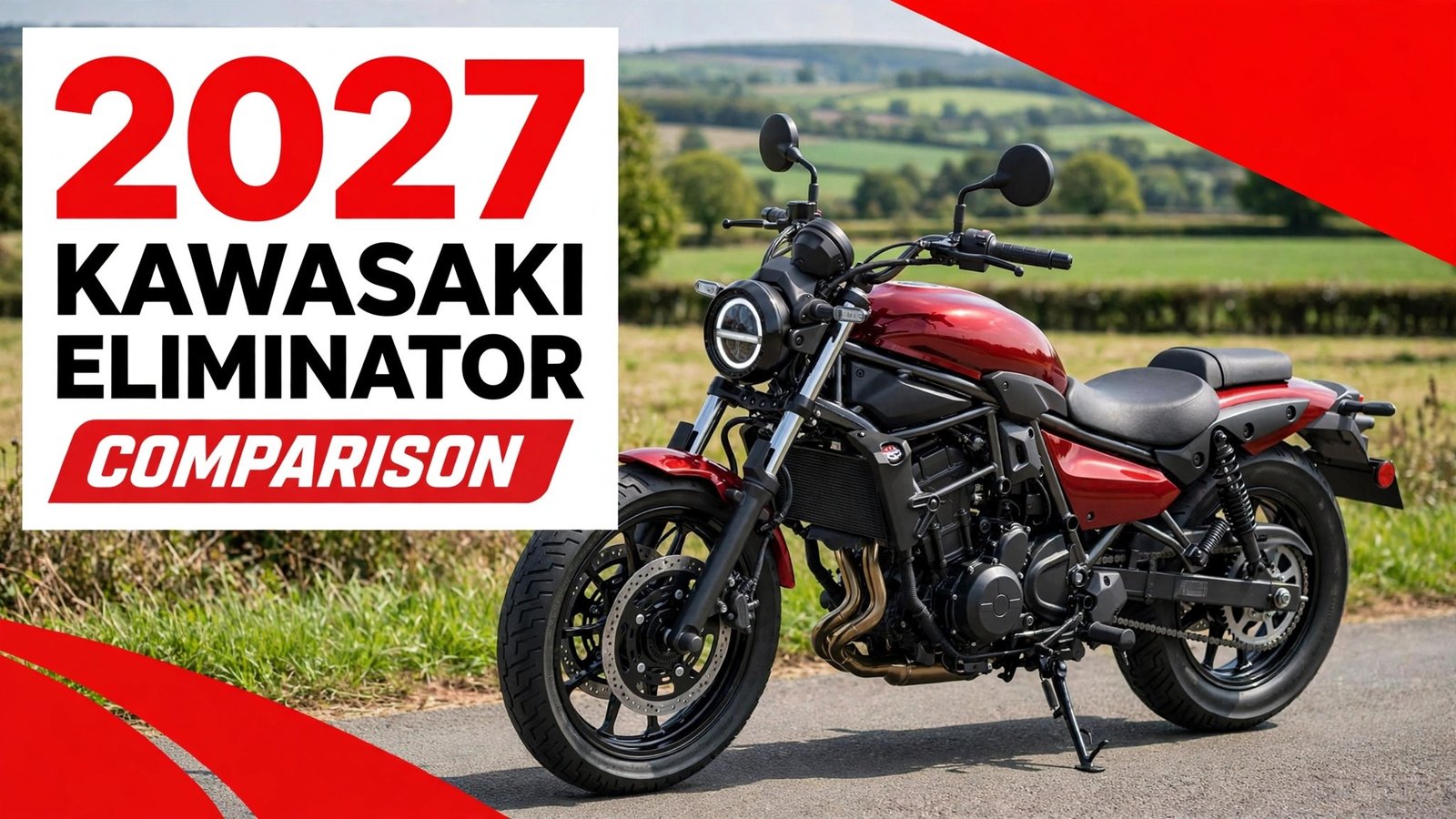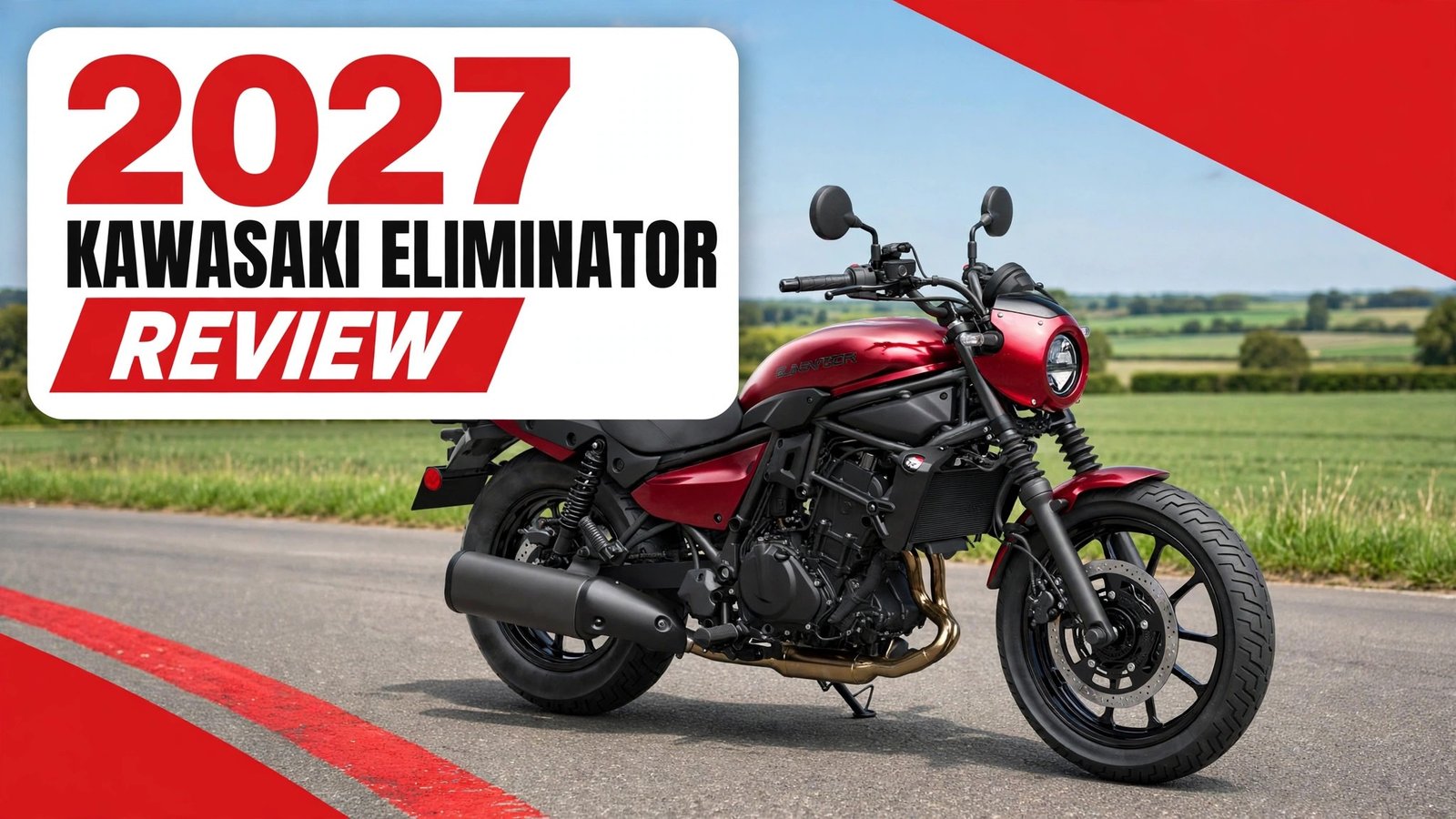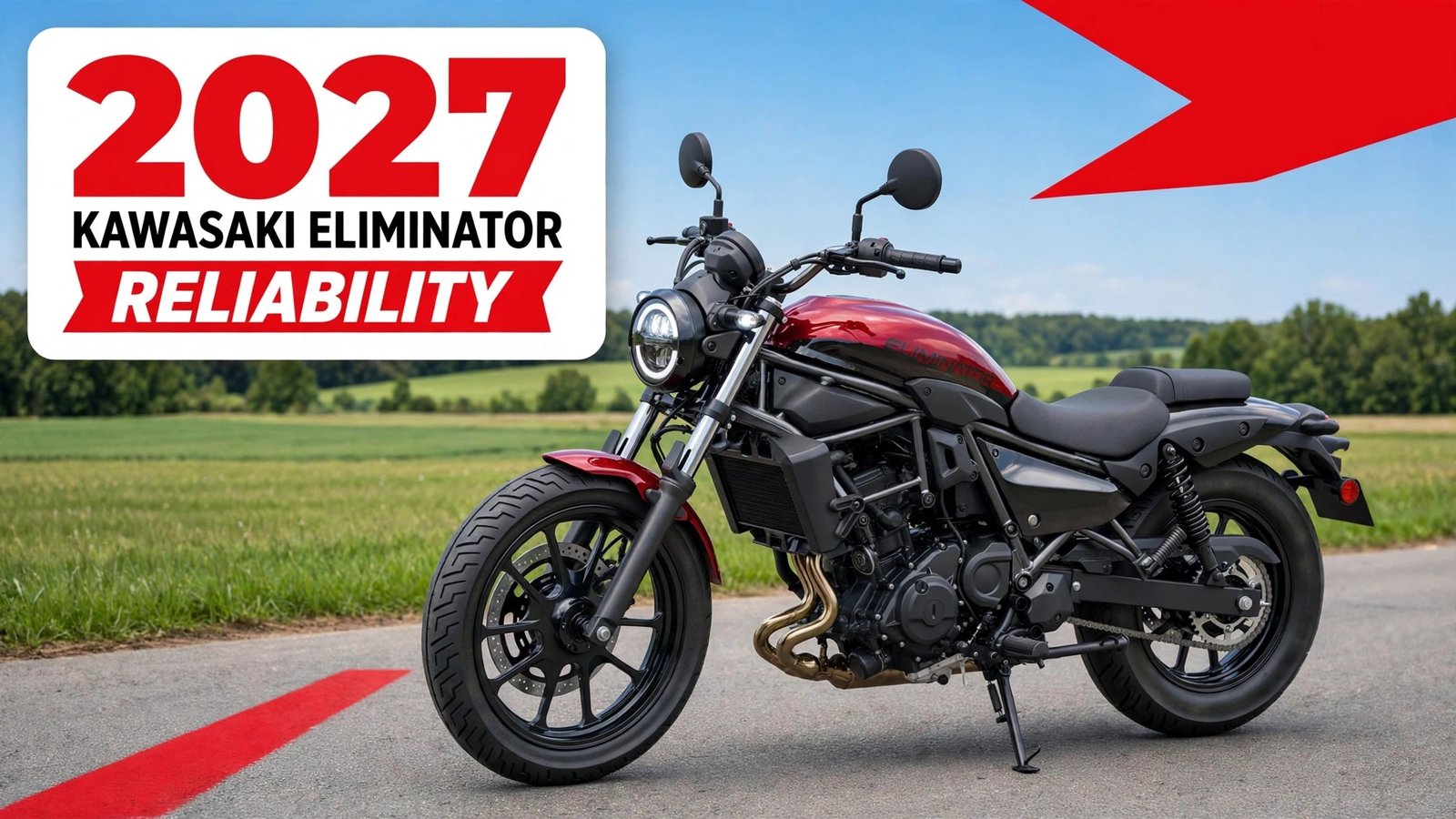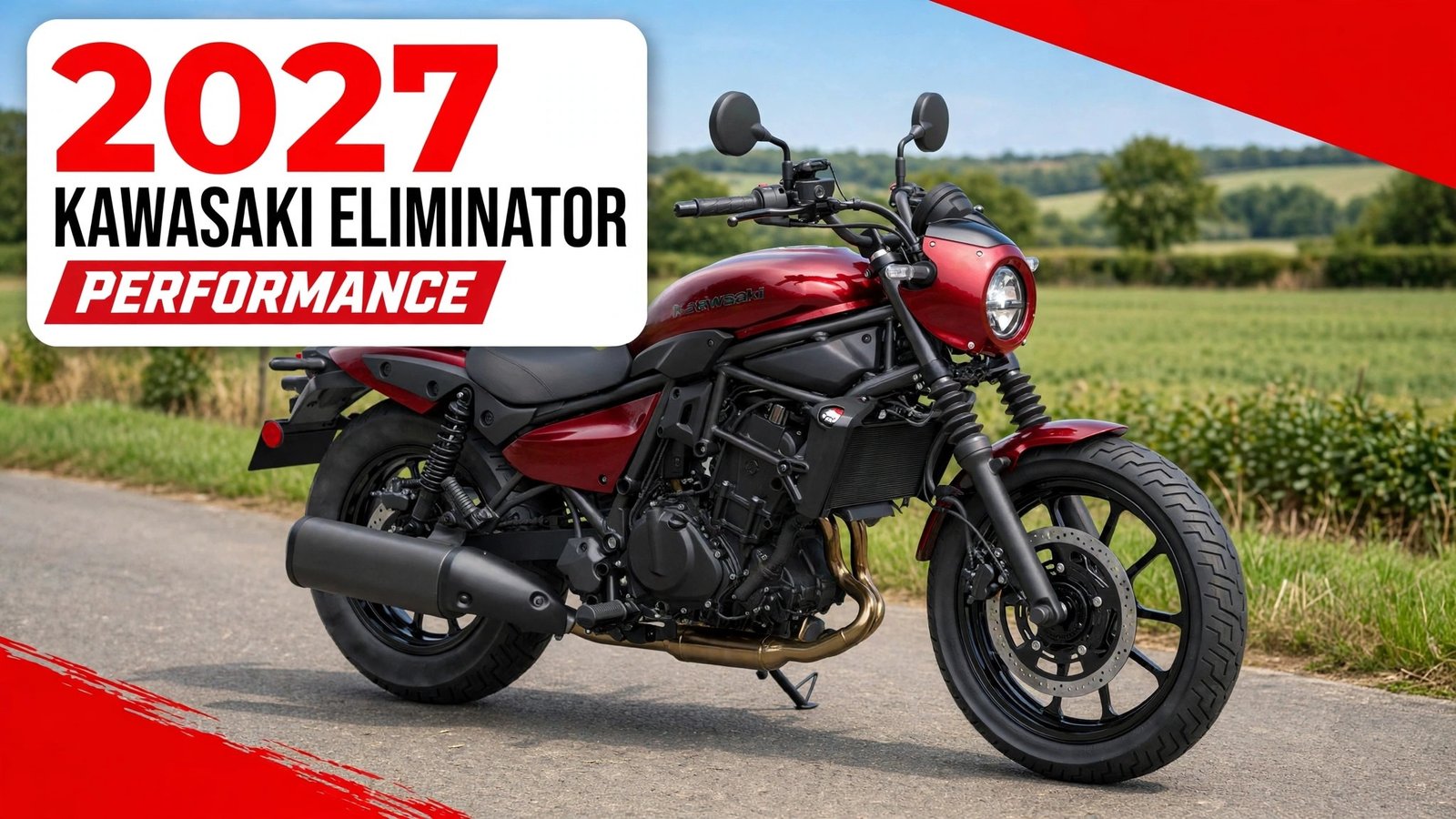
The Kawasaki Eliminator performance story is a simple one: this is the strongest dyno figure in the lightweight cruiser class, from the smallest engine in the set. Cycle World’s Dynojet run of a 2024 Eliminator SE ABS measured 47.22 horsepower at the rear wheel, which is more than any rival in its price range has put down on the same kind of dyno. The claimed figure is 51 hp at 10,000 rpm, and the gap between the claim and the wheel figure is the normal drivetrain loss you expect from a chain-drive bike.
This Kawasaki Eliminator performance guide covers the dyno result in full, the top speed and acceleration record (or rather, the lack of one), the tested fuel economy, and how the bike actually feels on the road. The Eliminator review covers prices, trims and specs in full.
Kawasaki Eliminator Engine Performance and Power Delivery
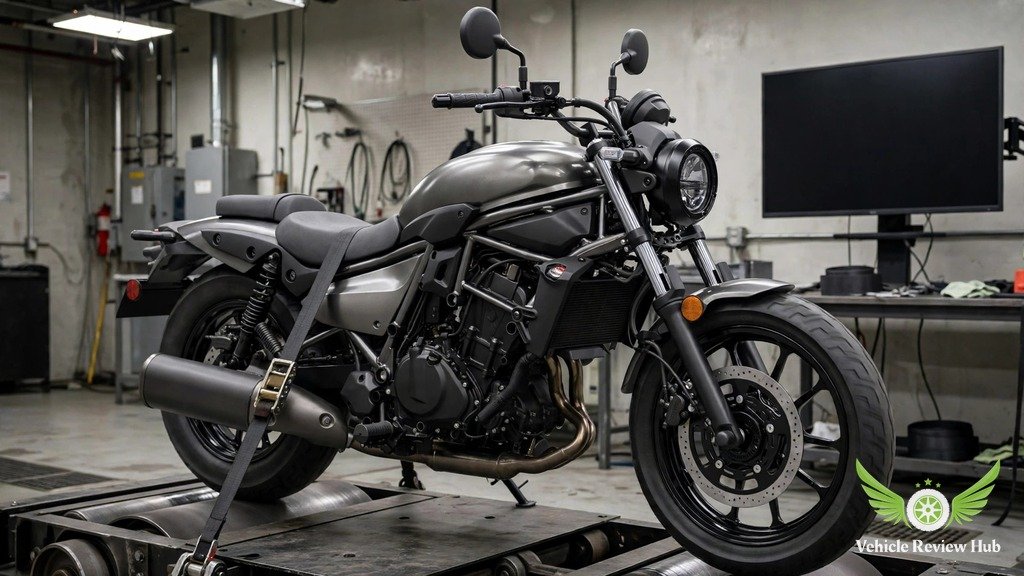
The engine is the heart of this Kawasaki Eliminator performance story, and it is not a cruiser engine in the traditional sense. It is a 451cc liquid-cooled DOHC parallel twin with an 180-degree crank, derived from the Ninja 400’s 399cc engine by lengthening the stroke from 51.8 mm to 58.6 mm while keeping the same 70.0 mm bore. It revs to a 12,000 rpm redline, makes its claimed peak power at 10,000 rpm, and shares its platform with the Ninja 500 and Z500.
Cycle World Dyno: 47.22 Horsepower
Cycle World put a 2024 Eliminator SE ABS on a Dynojet 250i and measured 47.22 hp at 10,430 rpm and 29.03 lb-ft of torque at 7,510 rpm. It is the only dyno test of the Eliminator any outlet has published, and it is the strongest wheel figure in the lightweight cruiser class. The claimed figures from Kawasaki’s own spec sheet are 51 hp at 10,000 rpm and 31.7 lb-ft at 7,500 rpm, so the drivetrain loss is about 3.8 hp and about 2.7 lb-ft — a normal figure for a chain-drive motorcycle, and a sign that the claimed numbers are honest rather than inflated.
The shape of the power curve matters as much as the peak. The twin makes its torque high for a cruiser, with the peak arriving at 7,510 rpm on the dyno, and it keeps pulling past 10,000 rpm to the redline. That is why testers describe the Eliminator as revvy rather than torquey: it rewards a rider who holds a gear and lets the engine spin, and it feels flat if you short-shift it like a big V-twin.
Cycle World’s own dyno run is on video, and it is the same test the table below is taken from, so what you see in the video is the exact run behind these figures.
| Measure | Kawasaki claim (spec sheet) | Cycle World measured (rear wheel) |
|---|---|---|
| Peak horsepower | 51 hp @ 10,000 rpm | 47.22 hp @ 10,430 rpm |
| Peak torque | 31.7 lb-ft @ 7,500 rpm | 29.03 lb-ft @ 7,510 rpm |
| Test bike | — | 2024 Eliminator SE ABS ($7,249) |
| Dyno | — | Dynojet 250i |
| Weighed | 385.9 lb curb (base) | 395 lb (CW automotive scales) |
Notes: the figures in this Kawasaki Eliminator performance dyno table are the only published dyno figures for this bike. The claimed figures are Kawasaki’s US spec-sheet claims under ISO 4106; the certificate of origin reads 52 hp at 10,000 rpm, and the European bike is rated 45 hp, so the 51 hp figure is the US claim and the 47.22 hp figure is what the wheel actually produced. The weighed figure of 395 lb is Cycle World’s own scale reading of the SE ABS test bike, not the 390.3 lb curb weight on Kawasaki’s spec sheet.
Tested Bike Was the SE ABS Trim
The dyno bike was the 2024 Eliminator SE ABS, the top trim, priced at $7,249 when new — and that matters for anyone reading the figures. The SE adds a headlight cowl, fork boots, a two-pattern seat, a waterproof USB-C outlet and exclusive colours over the standard ABS trim, but it changes nothing mechanical: the engine, gearbox, chain and exhaust are identical across all three trims. So the 47.22 hp figure in this Kawasaki Eliminator performance guide applies to the base and ABS bikes too, not just the SE. No outlet has dyno’d a base-trim bike separately, and there is no reason to expect a different result, because the drivetrain is the same part-for-part.
Kawasaki Eliminator Top Speed and Acceleration
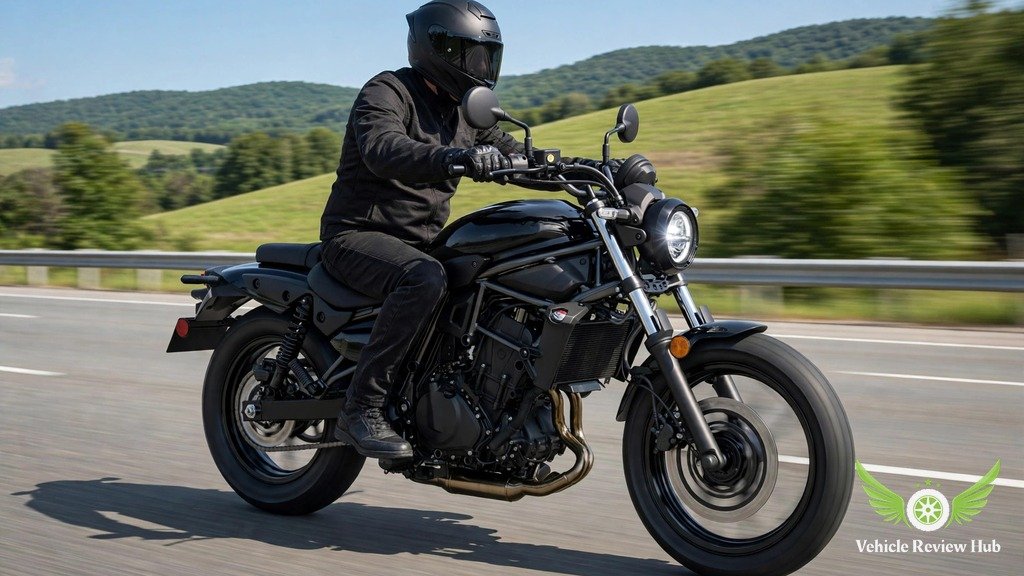
The top speed and acceleration section of this Kawasaki Eliminator performance guide is short, because the honest answer is that no outlet has measured either figure. RevZilla rode the freeway at 80 mph and reported speed to spare, but never recorded a top speed. No magazine has published a quarter-mile time.
No Instrumented Quarter Mile Exists
There is no instrumented quarter-mile figure for the Eliminator anywhere — not from a magazine, not from a test outlet, and not even from an aggregator with a named source. The same goes for 0–60 mph: no outlet has timed it. The only numbers that exist are owner claims, and they must be labelled as such. One owner test ride lists a top speed of 115–118 mph and a 0–60 time of 4.5–5.5 seconds, and owner reviews from India claim around 160 km/h, which is about 100 mph. None of those figures was measured with timing equipment, and this Kawasaki Eliminator performance guide does not print any of them as a tested result. What can be said with confidence is that the bike holds 80 mph on the freeway with speed in reserve, and that one owner says it will reach 100 mph without too much effort.
1980s ZL Figures Are a Different Bike
Anyone searching for Eliminator performance figures will trip over the 1980s ZL900, and the two bikes must not be confused. The ZL900 Eliminator of 1985–86 was a 908cc liquid-cooled inline-four derived from the GPZ900R Ninja, making 105 hp at 9,500 rpm and 63 lb-ft at 8,000 rpm, with a 0–60 time under 3 seconds, a quarter mile in the upper 11s, a top speed around 130–134 mph, and a wet weight of 567 lb. It sold in the US for $4,499. The 2024 bike shares only the name and the long, low stance. The old bike was a muscle cruiser built around a superbike four; the new bike is a 451cc parallel twin built around approachability. If a listing quotes 105 hp or a sub-3-second 0–60 for an Eliminator, it is quoting the 1980s machine, and this Kawasaki Eliminator performance guide treats those figures as history, not as anything the current bike will do.
Kawasaki Eliminator Mileage and Fuel Economy
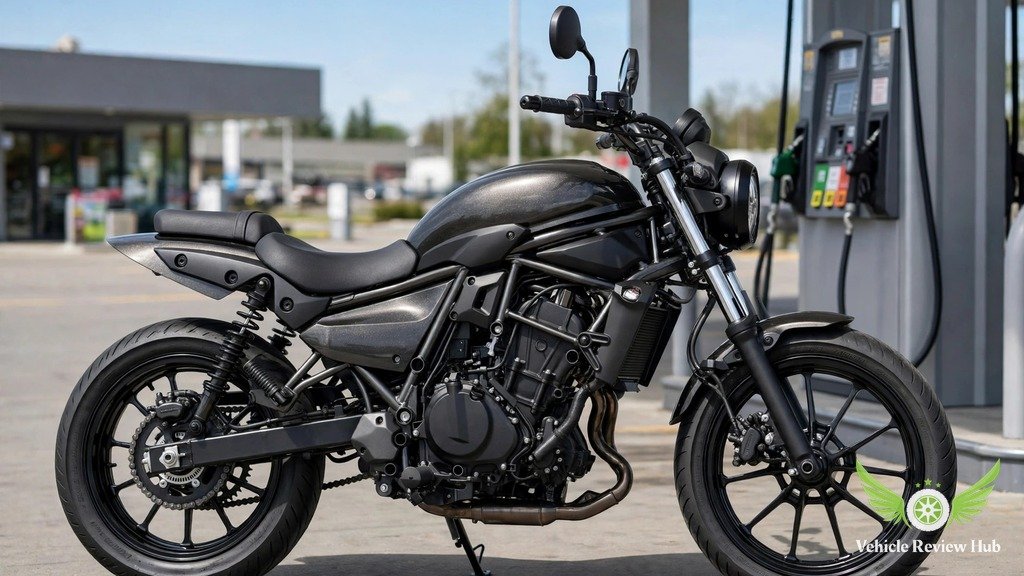
Fuel economy is the most practical part of this Kawasaki Eliminator performance guide, and it is also the part with the best-tested figures. The bike is frugal: a small twin pulling a light bike returns real-world economy in the mid-40s to low-50s, and the 3.4-gallon tank turns that into a usable range of about 150 miles. Kawasaki publishes no fuel-economy figure of its own, and no EPA rating was found, so everything here comes from a tested ride or a labelled owner figure.
RevZilla Tested 45 MPG on the Highway
RevZilla’s first ride showed 45 mpg on the dash after 75 highway miles at 70–85 mph, with the motor in its sweet spot between 6,000 and 7,500 rpm. That is a dash reading from a real ride, not a laboratory measurement, and this guide says so plainly — but it is also the best-tested economy figure the bike has, taken at genuine freeway speeds rather than a gentle cruise. One owner averaged 52.5 US mpg in mixed riding with about 40 percent town traffic, which is a single owner’s figure and is labelled as one, not as a test — but it points the same way, that the Eliminator sips fuel in everyday use.
Range About 150 Miles per Tank
RevZilla’s own arithmetic gives the range: about 45 mpg for a total range of about 150 miles. The tank holds 3.4 gallons, not the 3.7 gallons some listings copy from the Ninja 500, so the maths is 45 mpg times 3.4 gallons, which is 153 miles — right in line with RevZilla’s estimate. The honest working figure is about 150 miles between fill-ups, with a reserve to find a station. One warning belongs here: the dash’s estimated-range display is not to be trusted, in RevZilla’s own words, so a rider should watch the fuel gauge and the trip meter rather than the range estimate. The remaining-range figure reads optimistic, and the 45 mpg average-economy reading and the tank arithmetic are the reliable guides.
| Figure | Source | Value |
|---|---|---|
| Highway economy | RevZilla dash reading, 75 highway miles at 70–85 mph | 45 mpg |
| Mixed riding economy | One owner average, about 40% town traffic | 52.5 mpg |
| Fuel tank | Kawasaki spec sheet | 3.4 gallons |
| Range | Arithmetic: 45 mpg × 3.4 gal = 153 mi | About 150 miles |
Notes: the figures in this Kawasaki Eliminator performance fuel table come from a tested ride and a labelled owner figure, not from a manufacturer claim — Kawasaki publishes no mpg figure and no EPA rating was found. The 45 mpg figure is a dash reading after highway miles, and the range is arithmetic from the 3.4-gallon tank, which is the Kawasaki spec-sheet capacity, not the 3.7 gallons copied from the Ninja 500 in some listings. The dash range estimate itself is not to be trusted.
Kawasaki Eliminator Real-World Riding Experience
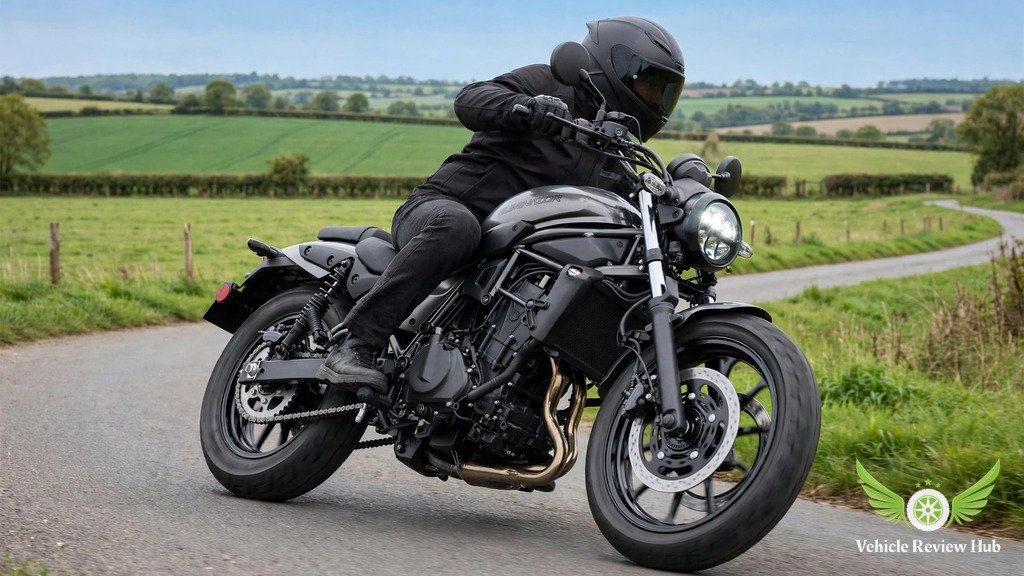
The numbers only tell half of this Kawasaki Eliminator performance story, because the bike’s real strength is how easy it is to ride fast enough. The light clutch, the low seat and the predictable engine make it a bike a new rider can manage and an experienced rider can still enjoy, and the riding experience is where the Eliminator earns the praise it gets.
One-Finger Clutch, Praised Everywhere
The clutch is the single most praised part of the Eliminator, and the praise is unanimous across every outlet that rode it. MCN says the clutch does not need much more than a single finger to operate. MoreBikes says you could pull it with one finger if you so desire. Motorcycle.com calls the pull incredibly light, and Rider calls it very light and helpful for reducing fatigue. The reason is the assist and slipper clutch, which is standard on every trim: it lightens the lever effort and keeps downshifts smooth, and it works with the Positive Neutral Finder to make finding neutral at a stop easy. For an experienced rider, it means the gearbox is always an invitation rather than a chore, which matters on a bike that wants to be revved.
Buzz at Cruise, Noted by Testers
The vibration question is the one place where testers disagree, and this Kawasaki Eliminator performance guide presents both sides rather than picking one. Chase on Two Wheels, in a video review, notes that sustained high revs produce noticeable vibration, describing a numb feeling after long stretches and a seat that grows sore after two and a half to three hours. The riding notes on maintenanceschedule.com describe high-frequency vibrations in the lower half of the tachometer. But an owner test ride on ridereverie says the opposite: you feel some vibration through the frame side rail at low speeds, but once you are higher in the rev range, they disappear almost completely. The mechanical reason testers cite is the 180-degree crank, which most modern parallel twins have moved away from in favour of a 270-degree crank — Motorcycle.com lists the 180-degree crank in its “Sighs” for the bike. The honest summary is that some riders notice a buzz at cruise and some do not, and a buyer who plans long highway days should take a proper test ride at freeway speed before deciding.
Kawasaki Eliminator Handling, Braking and Stability
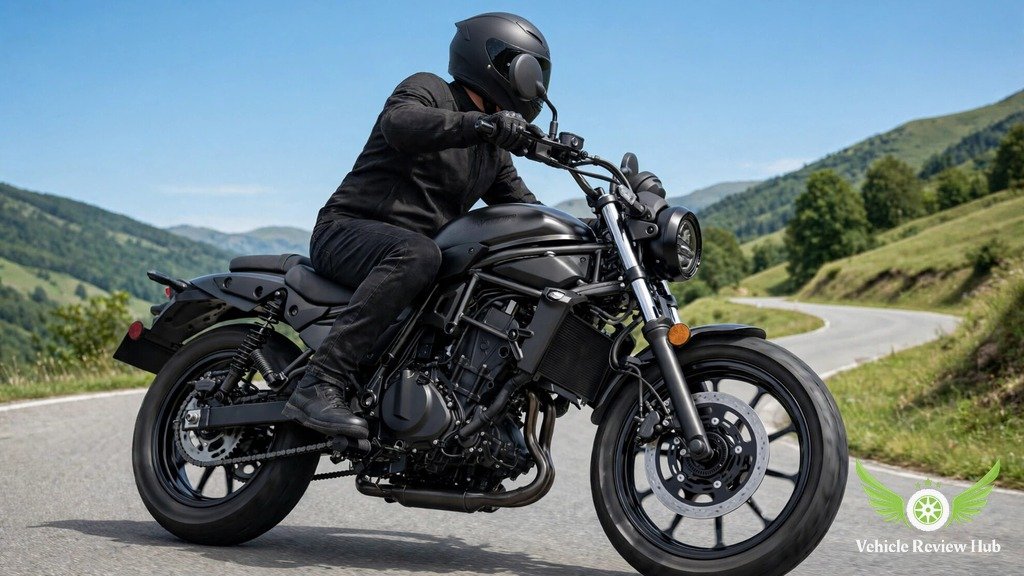
Handling is where the Eliminator’s light weight pays off, and this Kawasaki Eliminator performance section is about what the chassis does with the power it has. The bike weighs 385.9 lb at the curb in base trim and 388.1 lb as an ABS, with a 59.8-inch wheelbase that is two inches shorter than the Vulcan S, a 30-degree rake and 4.8 inches of trail. Motorcycle.com put the weight in perspective: the Eliminator weighs as much as a Versys-X 300 and a whopping 110 pounds less than the Vulcan S.
Handling, Braking and Stability on the Road
The chassis is neutral and forgiving, which is what a 59.8-inch wheelbase and a low centre of gravity buy you. The mid-mount footpegs give better control than the Vulcan S’s forward pegs, according to Motorcycle.com, because the rider’s feet are under the body rather than stretched ahead of it — and that matters when the road turns, because the rider can weight the pegs and move with the bike. The 41 mm fork carries 4.7 inches of travel and is non-adjustable, and the twin rear shocks carry 3.5 inches with five-way preload. Braking comes from a single 310 mm petal disc up front with a twin-piston caliper, which Kawasaki calls the largest front brake in its class, and a single 220 mm petal disc at the rear with a single-piston caliper on US bikes. Motorcycle.com called the braking commendable. No outlet has published an instrumented 60–0 stopping distance, so this Kawasaki Eliminator performance guide prints no braking figure — the honest statement is that the front disc is class-leading in size and the testers found the brakes strong, and that ABS is a Nissin unit, standard on the ABS and SE ABS trims.
Budget Twin Shocks Take the Criticism
If the chassis has a weak point, it is the rear suspension — but the criticism is mild, and this Kawasaki Eliminator performance guide says so rather than inventing a stronger slam. The twin shocks offer only 3.5 inches of travel with five-way spring preload and no damping adjustment, and an owner test ride notes the rear does not offer a ton of travel and recommends increasing the preload to just under the maximum for optimal ride quality. That is the whole of the complaint: short travel, and a preload setting that needs attention. Motorcycle.com scored the suspension 12 out of 15 and did not put the shocks in its “Sighs” at all — those were the 180-degree crank and the small instrument cluster. It is the chassis’ weakest link by a small margin, not a flaw that changes the verdict, and a buyer should treat the preload setting as part of the setup rather than leaving it at the factory position.
Kawasaki Eliminator Performance Compared With Other Cruisers
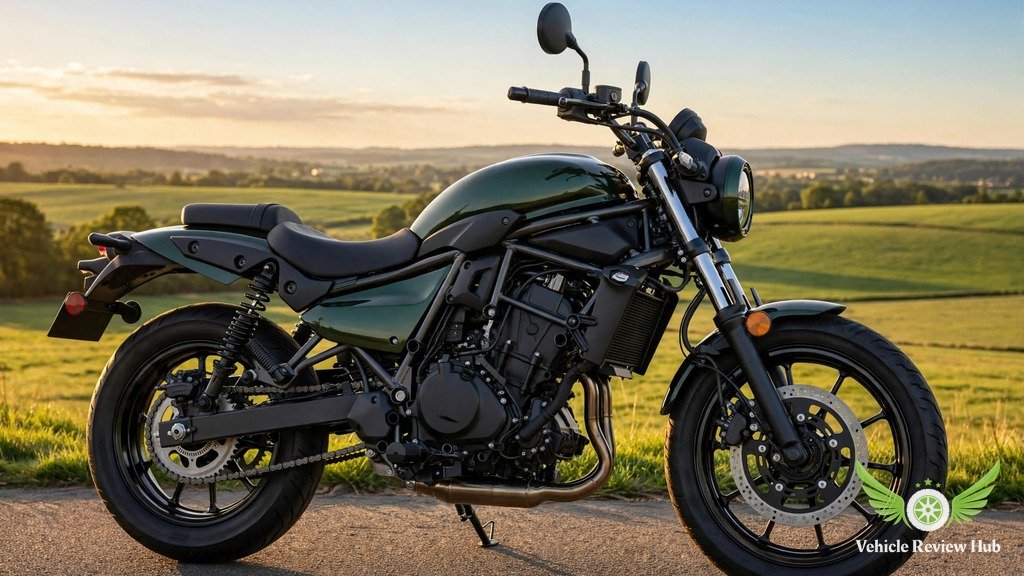
The fairest comparison for this Kawasaki Eliminator performance guide is the bike that shares its engine, because it shows exactly what the cruiser format costs and what it buys. The Ninja 500 is the same 451cc twin in a sportbike frame, and the differences between the two are all chassis and ergonomics, not power.
Kawasaki Eliminator vs Kawasaki Ninja 500
The two bikes share the same engine, the same claimed 51 hp at 10,000 rpm and 31.7 lb-ft at 7,500 rpm, the same bore and stroke, and the same assist and slipper clutch. What changes is everything around it. The 2026 Ninja 500 ABS costs $5,799 plus a $650 destination charge, which is $6,449 delivered — exactly $1,000 less than the 2026 Eliminator ABS at $7,449 delivered. The Ninja carries 370–377 lb of claimed curb weight against the Eliminator’s 388.1 lb, so the cruiser is about 15 lb heavier. The Ninja’s seat is 30.9 inches against the Eliminator’s 28.9 inches, so the cruiser is the easier bike to flat-foot. In this Kawasaki Eliminator performance comparison, the $1,000 buys comfort and confidence, not speed — and for a rider choosing between the two, that is the whole decision.
| Figure | Eliminator ABS (2026) | Ninja 500 ABS (2026) |
|---|---|---|
| Engine | 451cc parallel twin | 451cc parallel twin |
| Claimed power | 51 hp @ 10,000 rpm | 51 hp @ 10,000 rpm |
| Claimed torque | 31.7 lb-ft @ 7,500 rpm | 31.7 lb-ft @ 7,500 rpm |
| Curb weight | 388.1 lb | 370–377 lb (claimed) |
| Seat height | 28.9 in | 30.9 in |
| Delivered price | $7,449 | $6,449 |
Notes: the figures in this Kawasaki Eliminator performance comparison table are the 2026 US figures for both bikes, and the two share the same engine, so the differences are chassis, weight, seat height and price. The Ninja 500 curb weight is a claimed range, and the delivered prices are MSRP plus the $650 destination charge on both bikes.
Is the Kawasaki Eliminator Suitable for Beginner Riders?
Yes, and this Kawasaki Eliminator performance guide rates it as one of the best beginner cruisers on sale — with one condition. The case for it is the 28.9-inch seat, the lowest of Kawasaki’s 250–500cc on-road models, the 385.9 lb curb weight, the one-finger clutch, the Positive Neutral Finder and the predictable low-end torque. Motorcycle.com calls it a great choice for beginner motorcyclists that will also entertain intermediate riders and even an experienced sportbike rider, and Rider calls it an approachable machine that will grow with a new rider. The condition is the trim: the base bike has no ABS, and a beginner should buy the ABS trim for $300 more, because ABS is the single most useful safety feature a new rider can have. None of those is a reason to walk away, and the Kawasaki Eliminator performance verdict for a beginner is the same as for everyone else: light, revvy, affordable, and honest about what it is.
Frequently Asked Questions
The questions below answer the things buyers ask most about the Eliminator’s speed, economy and ride, using the same verified figures as the rest of this Kawasaki Eliminator performance guide.
How much horsepower does the Kawasaki Eliminator make?
Kawasaki claims 51 hp at 10,000 rpm, and Cycle World’s dyno measured 47.22 hp at the wheel on a 2024 SE ABS, which is the figure this Kawasaki Eliminator performance guide treats as the real one.
What is the top speed of the Kawasaki Eliminator?
No outlet has measured it, so this Kawasaki Eliminator performance guide prints no top speed. Owner claims run 115–118 mph, but none was timed with instruments.
How fast is the Kawasaki Eliminator 0–60?
No outlet has timed it either. One owner lists 4.5–5.5 seconds, which is a claim, not a test, and this Kawasaki Eliminator performance guide does not print it as a result.
What MPG does the Kawasaki Eliminator get?
RevZilla’s first ride showed 45 mpg on the dash after 75 highway miles, and one owner averaged 52.5 mpg in mixed riding, so this Kawasaki Eliminator performance guide uses 45 mpg as the tested figure.
How far can the Kawasaki Eliminator go on a tank?
About 150 miles. The tank holds 3.4 gallons, and 45 mpg times 3.4 gallons is 153 miles, which is the arithmetic this Kawasaki Eliminator performance guide stands behind.
How is the Kawasaki Eliminator performance on the highway?
It holds 80 mph with speed to spare, and this Kawasaki Eliminator performance guide calls it a capable highway bike with one warning: above 60 mph you feel the wind, because there is no windscreen.
Does the Kawasaki Eliminator have a slipper clutch?
Yes. An assist and slipper clutch is standard on every trim, and this Kawasaki Eliminator performance guide counts it as the bike’s best-loved feature, praised by every tester.
How does the Kawasaki Eliminator performance compare with the Ninja 500?
The two share the same 451cc engine and the same 51 hp claim, so this Kawasaki Eliminator performance guide finds no power difference — the Ninja is about 15 lb lighter and $1,000 cheaper delivered.
Is the Eliminator faster than the Rebel 500?
On paper, yes: the Eliminator claims 51 hp against an estimated 46 hp for the Rebel 500, but no instrumented head-to-head exists, and this Kawasaki Eliminator performance guide does not claim a tested win.
Does the Eliminator vibrate at highway speed?
Some testers say yes and some say no, so this Kawasaki Eliminator performance guide reports the split: Chase on Two Wheels notes a buzz at cruise, while one owner says it fades at higher revs.
How much does the Kawasaki Eliminator weigh?
The curb weight is 385.9 lb for the base, 388.1 lb for the ABS and 390.3 lb for the SE ABS, which is the lightness this Kawasaki Eliminator performance guide keeps coming back to.
Is the Eliminator a good beginner bike?
Yes, with one condition: buy the ABS trim. This Kawasaki Eliminator performance guide rates it as one of the best beginner cruisers on sale, thanks to the 28.9-inch seat and the one-finger clutch.