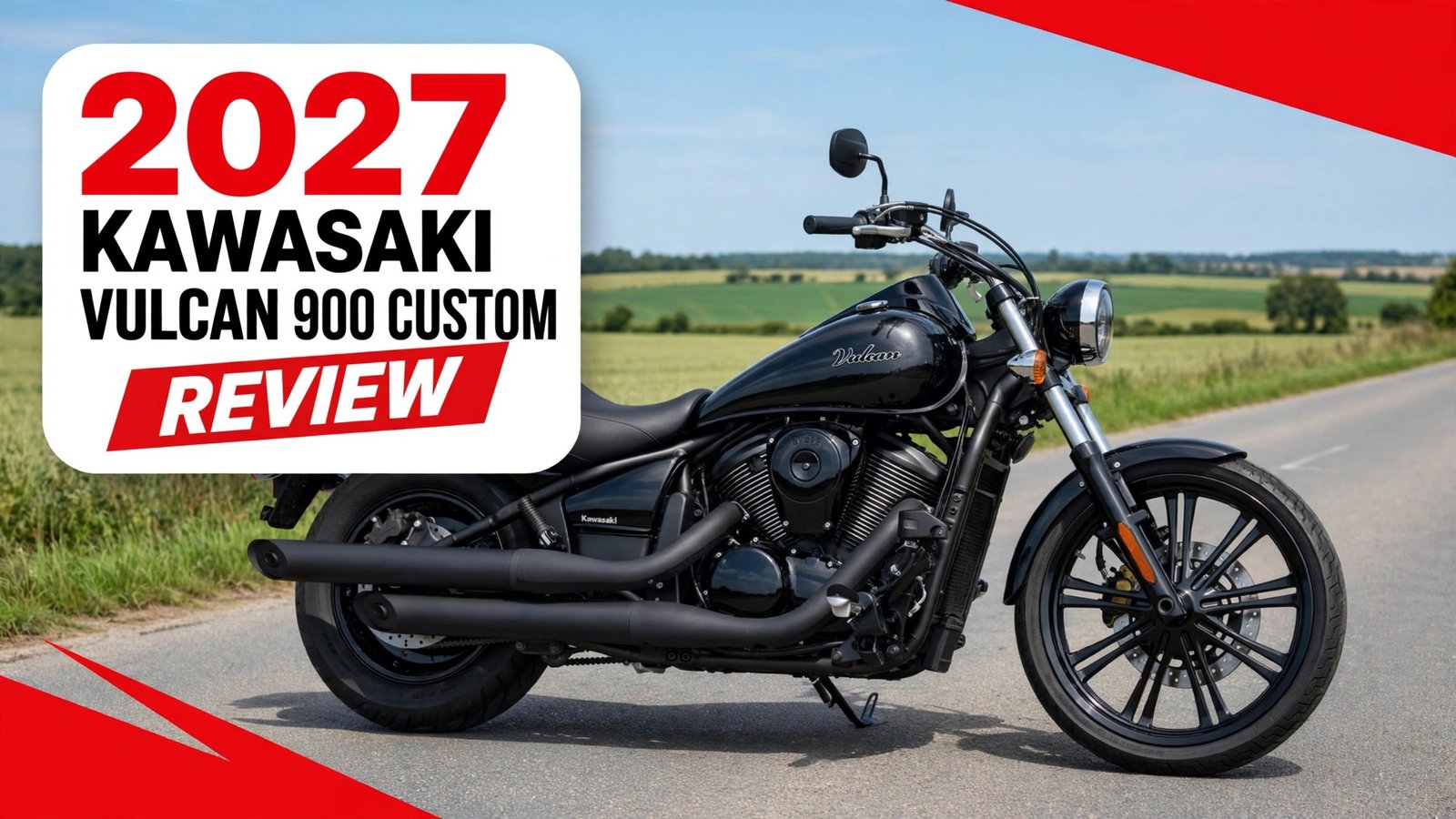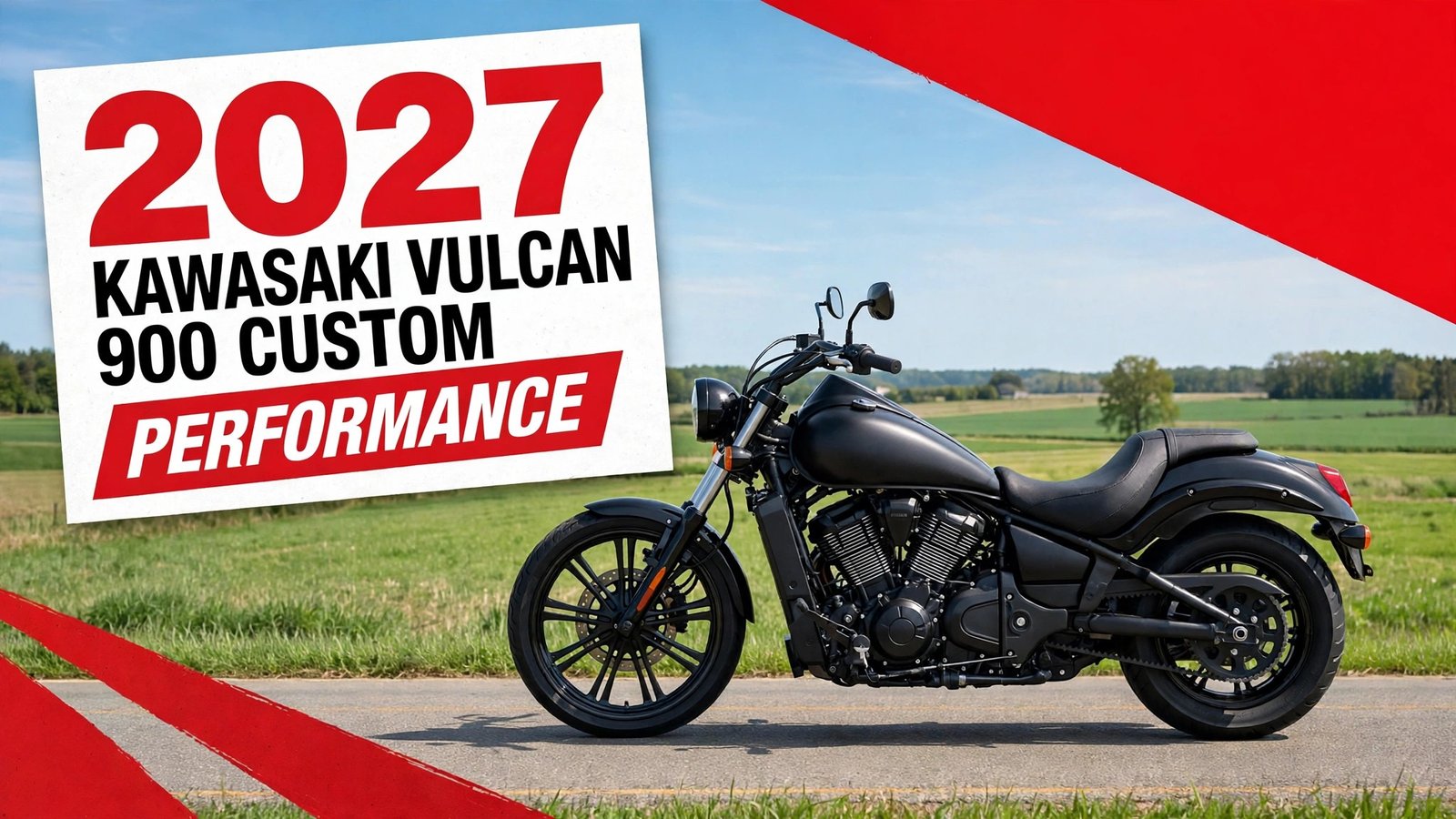
The Kawasaki Vulcan 900 Custom makes 51 horsepower and 58.3 lb-ft of torque on Kawasaki’s own figures, and that is almost everything that can be said about its performance. No magazine has ever put the Custom itself on a dynamometer, and no outlet has published an instrumented top speed or quarter-mile run for it. This Kawasaki Vulcan 900 Custom performance guide works only with what is actually verified: the factory claim, the three labelled sibling dyno runs, the one tested mileage figure, and the honest conflicts in rider reports. The short version: a relaxed, torque-first cruiser — quick off the line, comfortable below 75 mph, buzzy above it, stopped by a single front disc with no ABS. This Kawasaki Vulcan 900 Custom performance guide is the honest place to start.
Kawasaki Vulcan 900 Custom Engine Performance and Power Delivery
The engine is the same 903cc liquid-cooled 55-degree V-twin Kawasaki has sold since 2007, its claimed output unchanged in twenty years. This section of the Kawasaki Vulcan 900 Custom performance guide starts with the factory claim, then explains why the dyno numbers online do not belong to this bike.
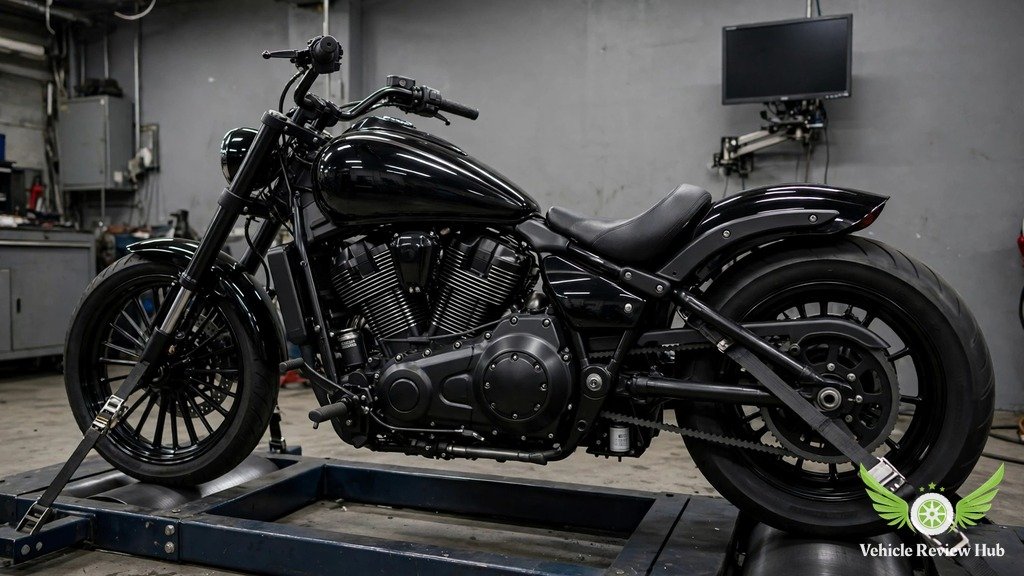
No Dyno of the Custom Exists
That is not a gap in this Kawasaki Vulcan 900 Custom performance guide — it is the central fact. Kawasaki claims 51 horsepower at 5,500 rpm and 58.3 lb-ft of torque at 3,500 rpm, both to the ISO 4106 standard. On power, the American figure is 51 horsepower at 5,500 rpm, while the European version is rated 50 horsepower at 5,700 rpm. A factory claim is measured at the crankshaft and a dyno run at the rear wheel, so any rear-wheel horsepower figure printed for the Custom is invented, and this Kawasaki Vulcan 900 Custom performance guide will not print one.
Sibling Figure: 42.7 Horsepower, Classic LT
Three dyno runs of the Custom’s siblings do exist, and they must stay labelled as sibling figures. The most-cited one comes from Motorcycle.com’s 2016 comparison test, where the Classic LT put down 42.7 horsepower and 50.9 lb-ft of torque, against 47.3 horsepower and 54.5 lb-ft for the Yamaha V Star 950 Tourer. Rider’s Jett Tuning dyno runs tell a different story: the 2014 Classic LT made 46.0 horsepower at 5,600 rpm and 52.0 lb-ft at 3,400 rpm; the 2013 Classic made 48.1 horsepower at 5,700 rpm and 54.3 lb-ft at 3,800 rpm. Those three figures — 42.7, 46.0 and 48.1 horsepower — disagree by more than five horsepower, and that spread is the story of this Kawasaki Vulcan 900 Custom performance guide: the same engine on different dynos gives different answers.
| Figure | Horsepower | Torque | Bike tested |
|---|---|---|---|
| Kawasaki claim (ISO 4106) | 51 hp @ 5,500 rpm | 58.3 lb-ft @ 3,500 rpm | Custom (factory claim) |
| Motorcycle.com 2016 comparo | 42.7 hp | 50.9 lb-ft | Classic LT (sibling) |
| Rider 2014, Jett Tuning dyno | 46.0 hp @ 5,600 rpm | 52.0 lb-ft @ 3,400 rpm | Classic LT (sibling) |
| Rider 2013, Jett Tuning dyno | 48.1 hp @ 5,700 rpm | 54.3 lb-ft @ 3,800 rpm | Classic (sibling) |
Notes for this Kawasaki Vulcan 900 Custom performance table: the factory claim is a crankshaft figure to ISO 4106, while the three sibling figures are rear-wheel dyno figures. Every dyno figure in the table belongs to a Classic or Classic LT. Torque is 58.3 lb-ft on Kawasaki’s live 2027 page; some outlets print 58.2 lb-ft.
Kawasaki Vulcan 900 Custom Top Speed and Acceleration
This is the section where most Vulcan 900 Custom performance guides invent a number. This one does not. No magazine has published an instrumented or GPS top speed for the Custom, and no outlet has published an instrumented quarter-mile run for it either, so this section of the Kawasaki Vulcan 900 Custom performance guide reports what is actually known: the claims in circulation and what the one honest freeway film shows.

No Instrumented Figures From Any Outlet
Nobody has measured this bike’s top speed. The claims in circulation are all labelled; none is instrumented. The aggregator motoryk lists 175 km/h — about 109 mph — as an estimate, and bigbikereviews gives an aggregator range of 99.4 to 115 mph. Both are estimates, not tests, and this Kawasaki Vulcan 900 Custom performance guide prints them only as claims. One source is not cited at all: carinterior, an AI-farm buying guide, claims 165 km/h, but the same pages call the engine air-cooled and claim the Classic LT offers optional ABS. The closest real road observation comes from Cycle World’s 2010 comparison test: both bikes “uncannily smooth up to around 80 mph” before both “begin to tingle through the bars and floorboards”.
The film below is a rider’s point-of-view freeway run on a Vulcan 900 Custom with a loud aftermarket exhaust — worth saying plainly what it is and is not. There is no spoken narration at all: the soundtrack is engine and exhaust noise and wind, with only an occasional GPS voice naming street names. The bike on screen shows the Custom’s tells — a bright green tank, wide flat chrome drag handlebars with bar-end mirrors, and a large round tank-mounted speedometer, with no floorboards in sight — but the front wheel is never shown in a full side view, so the 21-inch wheel is supported by the point-of-view framing, not shown directly. Most of the film is multi-lane freeway riding with the speedometer needle around 60 to 70 mph, and the loud V-twin exhaust dominates the audio. The answer is demonstrated visually, not narrated, so the figures in this Kawasaki Vulcan 900 Custom performance guide come from the tables.
Aggregator 14.3 Seconds Has No Source
The only quarter-mile number attached to the Custom comes from zeroto60times, an aggregator, which lists the 2012 Custom at 0–60 mph in 6.0 seconds and the quarter mile in 14.3 seconds — with no named test source behind either figure. This Kawasaki Vulcan 900 Custom performance guide prints it only as an unsourced aggregator number. No outlet has published an instrumented acceleration run for the Custom.
Kawasaki Vulcan 900 Custom Mileage and Fuel Economy
Mileage is the one area where a tested figure exists — but it belongs to the sibling, not to the Custom. This section of the Kawasaki Vulcan 900 Custom performance guide keeps that label in place, separating the tested figure from the factory estimate.
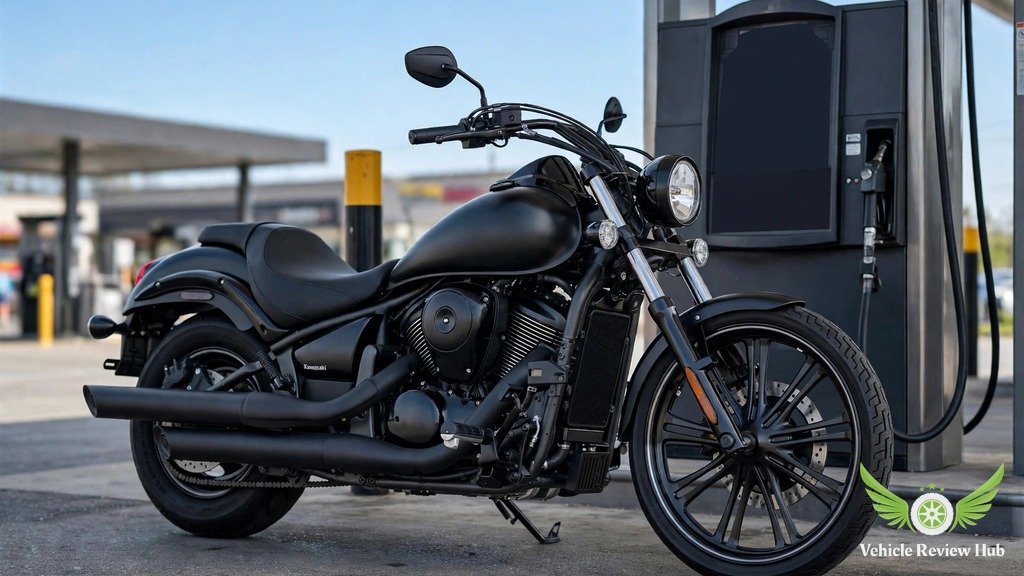
Classic LT Tested 41.3 MPG, Labelled
The one tested mileage figure in the Vulcan 900 record comes from Motorcycle.com’s 2016 comparison test, which measured 41.3 mpg for the Classic LT against 43.6 mpg for the V Star 950 Tourer. It is a sibling figure: the Classic LT is heavier than the Custom, carries a windscreen and saddlebags, and runs the smaller 270 mm front disc, so its fuel use is not the Custom’s — but it is the closest tested number. Other measured sibling figures: Rider’s 2014 Classic LT test recorded 44.6, 47.7 and 49.6 mpg, and Rider’s 2013 Classic test recorded 48.7, 44.5 and 41.5 mpg. One owner figure exists for the Custom itself — a Cycle Insider owner with a 2010 Custom and 45,000 miles reported 50 to 52 mpg on the highway — but that is an owner report, not a test, and this Kawasaki Vulcan 900 Custom performance guide labels it as one.
45 MPG Was an Estimate, Not a Test
The 45 mpg figure most often quoted for the Vulcan 900 is not a test result. It comes from Rider’s 2009 Custom test, where the tester wrote plainly: “I didn’t have a chance to measure fuel mileage, but Kawasaki estimates 45 mpg. Coupled with the 5.3-gallon tank, that easily produces a range above 200 miles.” That sentence is the entire source of the 45 mpg figure. This Kawasaki Vulcan 900 Custom performance guide prints it as an estimate, not a test, and the same care applies to the range numbers: 41.3 mpg times the 5.3-gallon tank is about 219 miles, and the 45 mpg estimate is about 239 miles. Both are arithmetic, not tests. Kawasaki publishes no mileage figure, and no EPA rating exists. TopSpeed’s June 2025 claim of 55 mpg and a range above 290 miles is unverified, not a test.
| Source | Mileage | Bike | Status |
|---|---|---|---|
| Motorcycle.com 2016 comparo | 41.3 mpg | Classic LT | Tested |
| Rider 2014 Classic LT | 44.6 / 47.7 / 49.6 mpg | Classic LT | Tested, 253 mi range |
| Rider 2008 comparo | 43.7 mpg | Classic LT | Tested |
| Rider 2006 Classic LT | 44.6 mpg avg | Classic LT | Tested, ~236 mi range |
| Rider 2013 Classic | 48.7 / 44.5 / 41.5 mpg | Classic | Tested, 231 mi range |
| Rider 2009, Kawasaki estimate | 45 mpg | Custom | Estimate, not a test |
| Cycle Insider owner, 2010 Custom | 50–52 mpg highway | Custom | Owner report |
Notes for this Kawasaki Vulcan 900 Custom performance table: every tested figure belongs to a Classic or Classic LT sibling, not to the Custom. The 45 mpg figure is Kawasaki’s estimate, repeated in Rider’s 2009 test, not a measured result. Range figures of about 219 and 239 miles are arithmetic, not tests.
Kawasaki Vulcan 900 Custom Real-World Riding Experience
Road tests and owner reports agree on what the Custom feels like at town speeds — and disagree about the freeway. This section of the Kawasaki Vulcan 900 Custom performance guide reports both sides, dated and sourced.
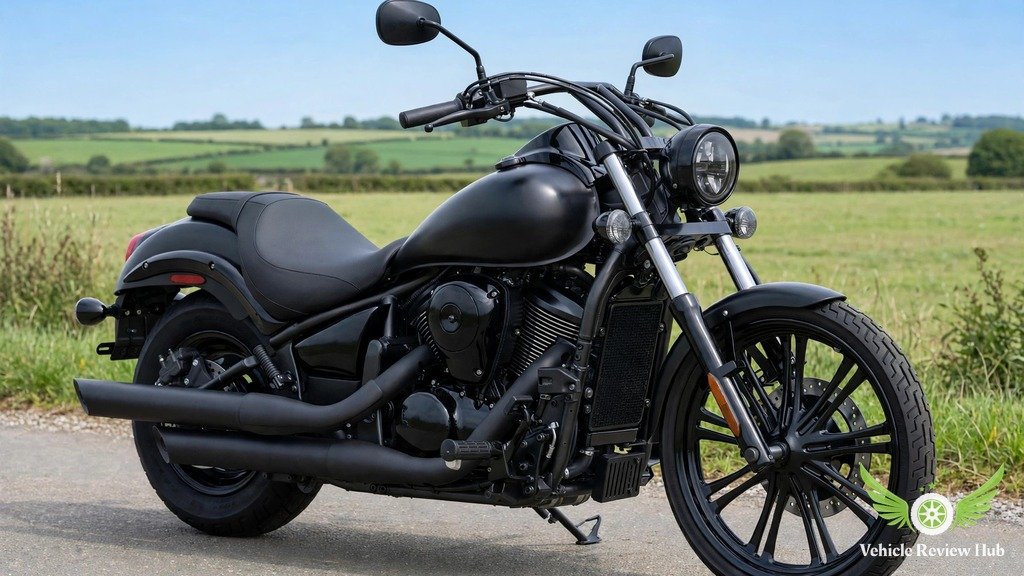
Vibration Verdicts Conflict by Outlet
The vibration question has no single answer, because the sources genuinely disagree. Rider’s 2009 Custom test is the kindest: the gear-driven balancer and rubber engine mounts “keep the worst vibes away”, and the rest are “too muted to become tiresome”. Owners tell a different story at freeway speed: “Vibration over 70 mph is terrible”, wrote one, and another reported “slight vibration in the handle bars when getting above 60 mph”. HotCars, in October 2026, reported a “noticeable buzz through the handlebars and foot pegs” at 70 mph, linked to the missing sixth gear. TopSpeed, in August 2026, wrote that the engine “can get quite buzzy on the highway because of the high revs it requires at speeds of over 70 MPH”. This Kawasaki Vulcan 900 Custom performance guide reports the conflict.
Front Brake Woefully Underpowered, Said Rider
Rider Magazine’s January 2015 “Touring Twins” comparison: “The front brake, which provides the majority of stopping power, felt spongy on the Suzuki and woefully underpowered on the Kawasaki.” The caveat: the bike Rider tested was the Classic LT, which runs the smaller 270 mm front disc, while the Custom runs a 300 mm front disc. The quote is therefore about the LT’s smaller brake, not a test of the Custom’s 300 mm brake, and this Kawasaki Vulcan 900 Custom performance guide will not present it as one. The Custom’s own brake is a single 300 mm front disc and a single 270 mm rear disc, with no ABS in any year. TopSpeed, writing about the 2026 Custom in August 2026, judged that “the stock brakes are simply not enough when measured against the products of today, and there is no ABS available even as an option”.
Kawasaki Vulcan 900 Custom Handling, Braking and Stability
A 64.8-inch wheelbase and a 33-degree rake make the Custom stable in a straight line and slow to turn — exactly what a cruiser is supposed to be. This section of the Kawasaki Vulcan 900 Custom performance guide covers how that geometry behaves on the road, and what one front disc must stop.
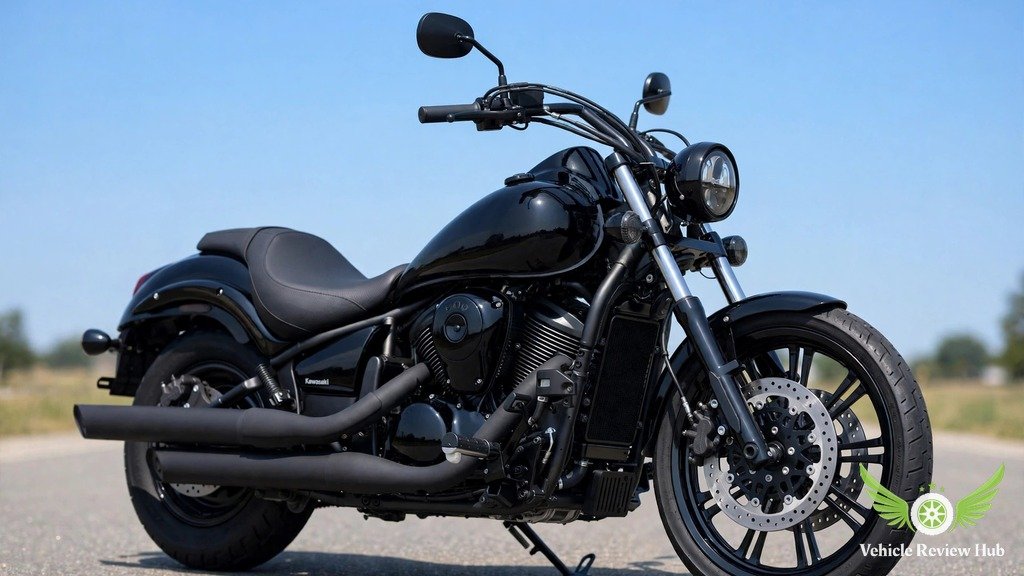
Handling, Braking and Stability on the Road
At 94.7 inches long with a 64.8-inch wheelbase, 33 degrees of rake and 7.2 inches of trail, it is a long, low motorcycle that holds a line at speed and resists quick direction changes — stable on the freeway and deliberate in the corners. The suspension is simple: a 41 mm Showa fork with 5.9 inches of travel up front, and a Uni-Trak swingarm with 4.1 inches of travel and seven-way adjustable preload at the rear. The low 27.0-inch seat and low centre of gravity keep the 610.8-pound curb weight manageable once the bike is moving. Every figure is on the Kawasaki 2027 Custom spec sheet.
One Front Disc Against 611 Pounds
The heading’s 611 pounds is the rounded figure — Rider’s 2009 test claimed a wet weight of 611 lb, while Kawasaki’s live 2027 page lists the exact curb weight as 610.8 lb, and this Kawasaki Vulcan 900 Custom performance guide prints the exact figure. Against that weight, the Custom has one 300 mm front disc and one 270 mm rear disc — a single-disc front end on a 611-pound motorcycle, which is the entire point of the heading. 51 claimed horsepower against 610.8 pounds is about 12 pounds per horsepower; Cycle World’s 2010 comparison noted about 12.4 pounds per pony for the class. The closest rival on the scales is the Suzuki Boulevard C50 review at 611 pounds — effectively identical weight.
Kawasaki Vulcan 900 Custom Performance Compared With Other Cruisers
The honest comparison for this bike is against its own sibling, not a rival brand. This section of the Kawasaki Vulcan 900 Custom performance guide sets the Custom against the Classic LT, then the smaller Vulcan S. The 2027 Custom costs $10,099 plus $840 destination — $10,939 delivered — against $7,349 at launch in 2007.
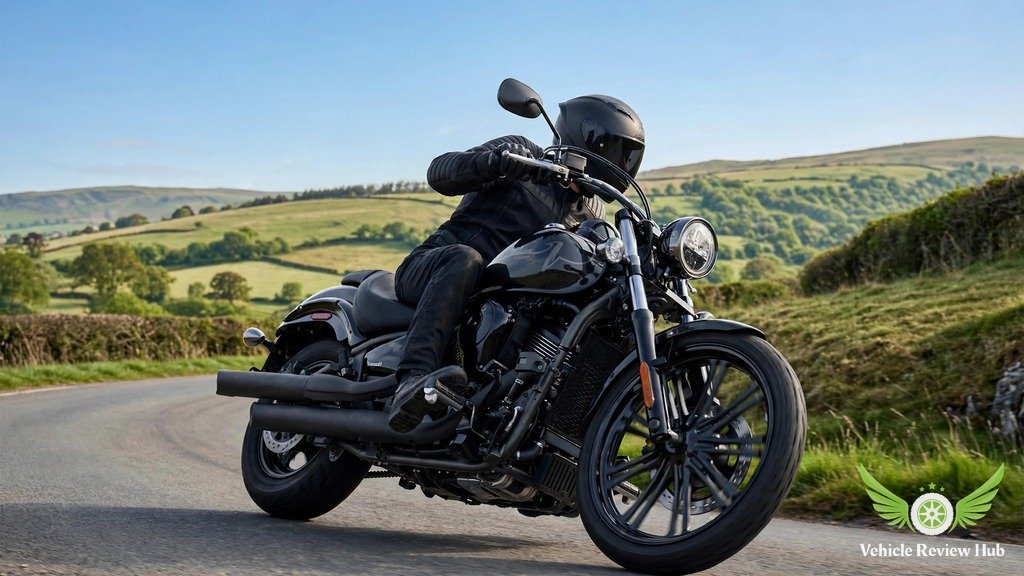
Kawasaki Vulcan 900 Custom vs Vulcan 900 Classic LT
The Custom and the Classic LT are the same motorcycle underneath: the same 903cc liquid-cooled 55-degree V-twin, the same chassis, the same five-speed gearbox, and the same Kevlar-reinforced belt drive. That shared hardware is why every dyno and mileage figure in this Kawasaki Vulcan 900 Custom performance guide is a Classic or Classic LT figure — the closest available evidence, labelled as sibling figures. The Custom has a 21-inch cast front wheel with an 80/90-21 tyre, drag handlebars, forward controls and a 300 mm front disc; the Classic LT has 16-inch spoked wheels, pullback handlebars, floorboards, a 270 mm front disc, and a windscreen and saddlebags as standard. The Custom’s 300 mm front disc is the one genuine performance advantage over the LT’s 270 mm — which is why Rider’s “woefully underpowered” verdict must never be read as a verdict on the Custom’s brake. Outside the family, the smaller Kawasaki Vulcan S Cafe review records a measured 53.5 horsepower at the rear wheel, against the Custom’s 51-horsepower crankshaft claim. The full rival comparison is in the Kawasaki Vulcan 900 Custom comparison.
| Item | Vulcan 900 Custom | Vulcan 900 Classic LT |
|---|---|---|
| Engine | 903cc 55° V-twin, 51 hp @ 5,500 rpm | Same 903cc engine, same claim |
| Front wheel | 21-in cast, 80/90-21 tyre | 16-in spoked |
| Handlebars | Drag bars | Pullback bars |
| Controls | Forward controls | Floorboards |
| Front disc | Single 300 mm | Single 270 mm |
| Weight | 610.8 lb curb | About 660 lb wet (Rider 2008) |
| Windscreen / bags | Neither as standard | Both as standard |
| Dyno figure | None exists | 42.7 hp (Motorcycle.com 2016) |
| Tested mileage | None exists | 41.3 mpg (Motorcycle.com 2016) |
Notes for this Kawasaki Vulcan 900 Custom performance table: the two bikes share the same engine, chassis, five-speed gearbox and belt drive, so the Classic LT’s figures are the closest available evidence, labelled as sibling figures. The Custom’s front disc is 300 mm against the LT’s 270 mm, so LT brake verdicts do not transfer.
Is the Kawasaki Vulcan 900 Custom Suitable for Beginner Riders?
Beginners ask this question more than any other about the Custom, and the honest answer depends on the beginner. On the side of yes: the 27.0-inch seat lets most riders flat-foot the bike, the 51 horsepower is not intimidating, the belt drive needs almost no attention, and the torque is predictable rather than peaky. On the side of no: 610.8 pounds is heavy at walking speed, there is no ABS, the five-speed gearbox buzzes at highway speed, and the forward controls sit far from the ground. SlashGear, in November 2025, quoted reviewer Salty Old Biker saying the bike has “plenty of power […] but for first-time riders, it’s not enough to get you in trouble”. The fairest summary in this Kawasaki Vulcan 900 Custom performance guide: the Custom suits a careful beginner who respects its weight and its lack of ABS — not a beginner who wants electronic safety nets. The smaller Kawasaki Vulcan S ABS review shows the alternative: a lighter bike with ABS as standard.
Kawasaki Vulcan 900 Custom Performance FAQs
The questions below cover what buyers ask most about the Custom’s performance — answered from the same verified figures as this Kawasaki Vulcan 900 Custom performance guide.
How much horsepower does the Kawasaki Vulcan 900 Custom make?
Kawasaki claims 51 horsepower at 5,500 rpm and 58.3 lb-ft of torque at 3,500 rpm, both to the ISO 4106 standard. This Kawasaki Vulcan 900 Custom performance guide prints the factory claim because no dyno run of the Custom itself exists — the only dyno figures in circulation, 42.7 to 48.1 horsepower, belong to the Classic and Classic LT siblings.
Has the Vulcan 900 Custom ever been dyno tested?
No. No outlet has published a dynamometer run of the Custom trim, and this Kawasaki Vulcan 900 Custom performance guide says so plainly. The closest evidence is three labelled sibling runs: Motorcycle.com’s 2016 Classic LT at 42.7 horsepower, Rider’s 2014 Classic LT at 46.0 and Rider’s 2013 Classic at 48.1 horsepower, all at the rear wheel.
What is the top speed of the Kawasaki Vulcan 900 Custom?
There is no instrumented top speed for the Custom — no magazine has measured one. This Kawasaki Vulcan 900 Custom performance guide reports only the claims in circulation: motoryk estimates 175 km/h (about 109 mph), and bigbikereviews gives an aggregator range of 99.4 to 115 mph.
What is the quarter-mile time of the Vulcan 900 Custom?
There is no instrumented quarter-mile time for the Custom. This Kawasaki Vulcan 900 Custom performance guide prints the only number in circulation — 14.3 seconds, with 0–60 mph in 6.0 seconds — only as an unsourced aggregator figure from zeroto60times. It should not be quoted as a test result.
What mileage does the Vulcan 900 Custom get?
No outlet has measured the Custom’s mileage. This Kawasaki Vulcan 900 Custom performance guide reports the tested sibling figure — 41.3 mpg for the Classic LT in Motorcycle.com’s 2016 comparison — and the factory estimate of 45 mpg from Rider’s 2009 test, alongside one owner report of 50 to 52 mpg on the highway.
How far can the Vulcan 900 Custom go on a tank?
Kawasaki publishes no range figure for the Custom. This Kawasaki Vulcan 900 Custom performance guide gives only labelled arithmetic: 41.3 mpg times the 5.3-gallon tank gives about 219 miles, and the 45 mpg estimate gives about 239 miles. Neither is a verified range.
Does the Vulcan 900 Custom vibrate at highway speed?
The verdicts conflict, and this Kawasaki Vulcan 900 Custom performance guide reports both sides. Rider’s 2009 test said the vibes are “too muted to become tiresome”, while owners report terrible vibration over 70 mph, and HotCars and TopSpeed both reported a noticeable buzz at 70 mph and above. The consistent pattern is smooth below 70 mph and buzzy above it, where the five-speed gearbox holds high revs with no sixth gear to drop into.
Are the brakes on the Vulcan 900 Custom good?
Adequate for the bike’s pace and era, modest by 2027 standards. This Kawasaki Vulcan 900 Custom performance guide notes the hardware — a single 300 mm front disc and a single 270 mm rear disc — and the absence of ABS in every year. Rider’s “woefully underpowered” verdict was about the Classic LT’s smaller 270 mm front disc, not the Custom’s 300 mm brake.
Does the Vulcan 900 Custom have a sixth gear?
No. The Custom has a five-speed gearbox with Positive Neutral Finder, and this Kawasaki Vulcan 900 Custom performance guide counts the missing sixth gear as the bike’s most-reported freeway complaint — high revs and a handlebar buzz above 70 mph.
Can the Vulcan 900 Custom keep up on the freeway?
Yes. This Kawasaki Vulcan 900 Custom performance guide points to the freeway film above, where a Custom holds 60 to 70 mph in multi-lane traffic, and to the owner consensus that steady cruising under 75 mph is the comfortable band. Passing needs planning rather than a downshift and a surge, but the bike holds freeway speed without strain.
Is the Vulcan 900 Custom fast?
Not by any modern measure. This Kawasaki Vulcan 900 Custom performance guide puts the arithmetic plainly: 51 claimed horsepower against 610.8 pounds is about 12 pounds per horsepower. It is quick enough off the line thanks to torque peaking at 3,500 rpm, but it is a relaxed cruiser, not a fast motorcycle.
Is the Vulcan 900 Custom good for beginners?
It can be, with reservations. This Kawasaki Vulcan 900 Custom performance guide weighs the 27.0-inch seat and the unintimidating 51 horsepower against the 610.8-pound weight, the absence of ABS and the five-speed freeway buzz. No authority calls it a beginner bike outright, and a beginner who wants electronic safety nets should look at a lighter bike with ABS instead.