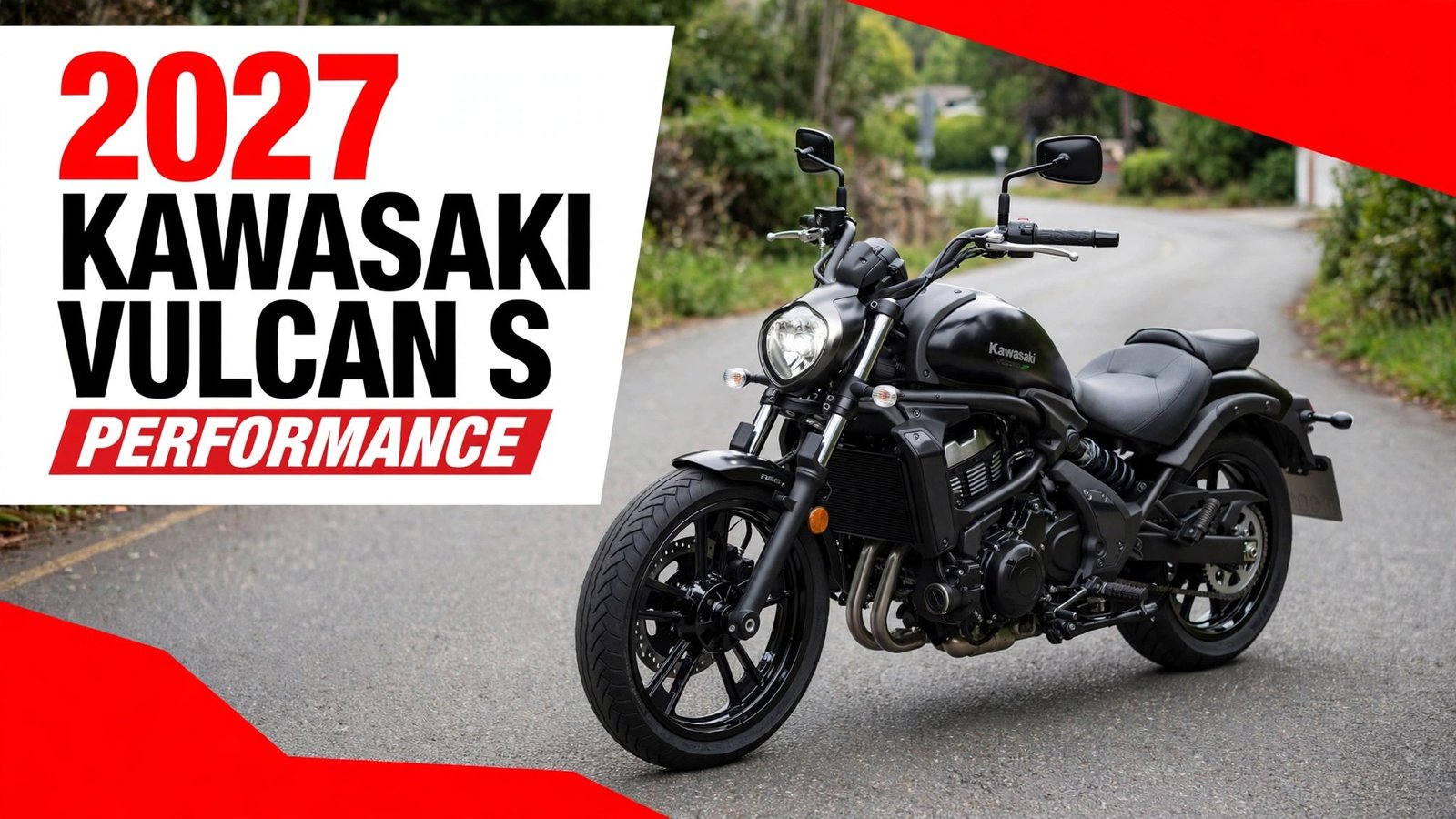
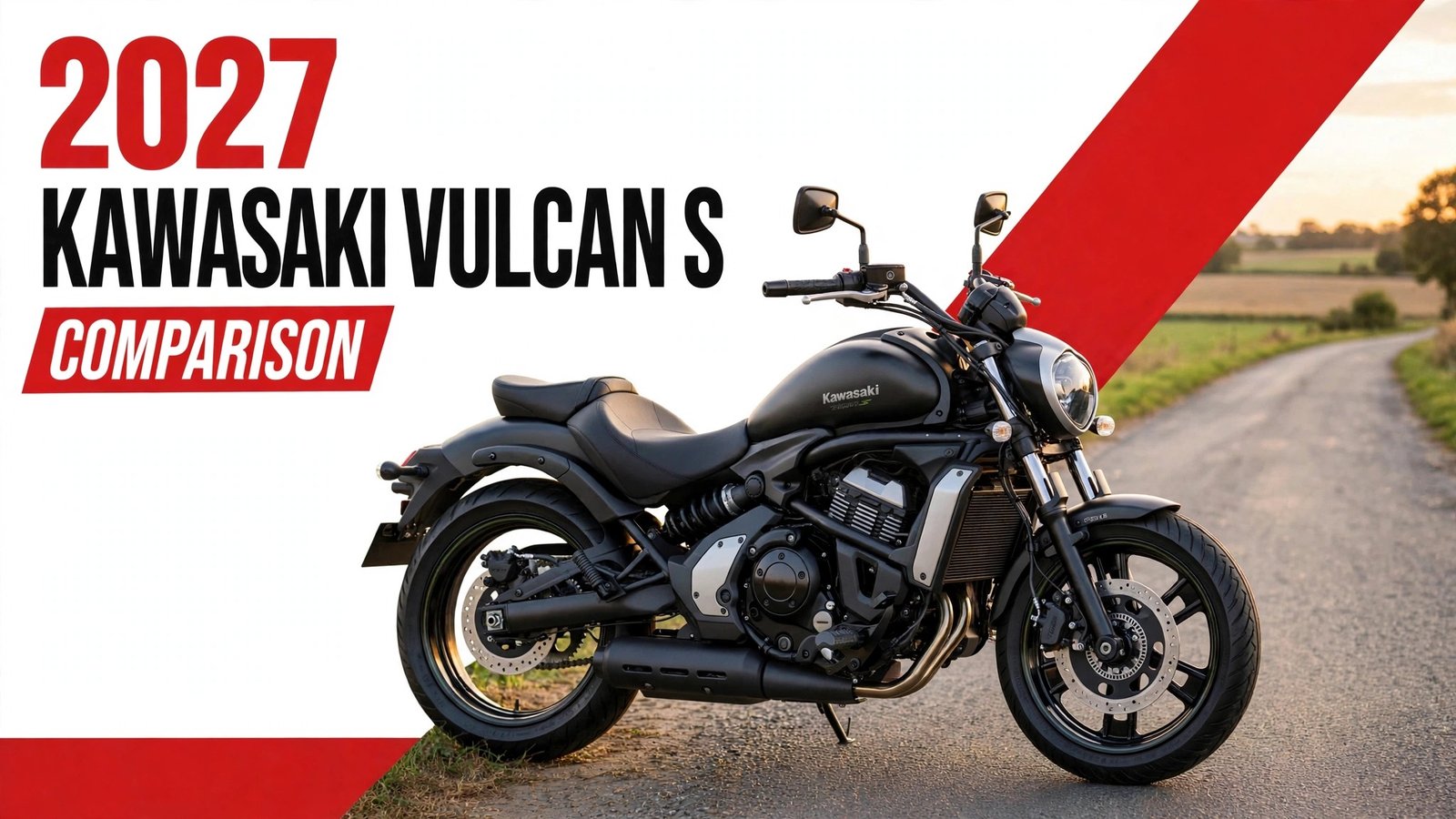
The short answer: the Kawasaki Vulcan S is the same honest sport cruiser Kawasaki launched in 2015, and that is the whole point of this Kawasaki Vulcan S review. The 2027 bike makes the same 60 hp from the same 649cc parallel twin, sits at the same 27.8-inch seat height and carries the same 3.7-gallon tank. What changed is the buying picture: 2027 is ABS-only, and the base ABS price actually fell $50 from 2026, to $8,099.
This Kawasaki Vulcan S review covers the 2027 price and full price history, the retuned Ninja-derived engine, the Ergo-Fit system that fits riders from under 5 feet 6 inches to over 6 feet 1 inch, and what a decade of unchanged hardware means for a 2026 buyer.
Kawasaki Vulcan S Overview and Model-Year Updates
The Vulcan S is Kawasaki’s sport cruiser, the same motorcycle since it arrived for 2015. That is unusual where most bikes get a refresh every few years, and it is the first thing a buyer needs to understand about this Kawasaki Vulcan S review: you are not buying a new generation, you are buying a proven one.

ABS Only From 2027, Same Bike Since 2015
For 2027 the Vulcan S is sold in the United States with ABS only. The non-ABS trim, which ran from the 2015 launch through 2026, is gone. The 2027 ABS bike costs $8,099 plus $685 destination, or $8,784 delivered, and is mechanically identical to the 2015 bike. Kawasaki’s own 2027 spec sheet agrees with the 2015 launch spec box on every figure that matters — 60 hp, 46.5 lb-ft, a 27.8-inch seat, a 3.7-gallon tank, a 62.0-inch wheelbase and 498.3 pounds at the curb with ABS. Only colours, trims and ABS availability changed across twelve model years, which is why this Kawasaki Vulcan S review treats every model year as the same bike. No mechanical update reached the United States in that time, and the European Euro5 update of 2021 did not change the American power figures.
The film below is a 2015 review of the Vulcan S from Australia, where the bike was sold as a learner-approved LAMS model restricted to 35 kW. The bike on screen is the same machine and chassis, but the United States bike is the full-power 60 hp version.
Cafe Arrived in 2016, Not 2017
The Cafe trim arrived for 2016, a year after the standard bike, though some aggregators still list it as a 2017 model. The American record this Kawasaki Vulcan S review follows is clear: Cycle World’s February 2016 dyno page is titled “2016 Kawasaki Vulcan S Cafe”, and its April 2016 comparison tests the 2016 Cafe at $7,999, noting the stubby fork-mount fly screen is “the sole premise for its Café name”. The Cafe adds that small fly screen and clubman-style bars to the standard bike, nothing else mechanical. The 2017 date in some listings is a market designation difference. For 2027 the Cafe returns as the Cafe ABS at $8,899 plus $685 destination — $9,584 delivered.
Kawasaki Vulcan S Engine and Specifications
The engine is the heart of this Kawasaki Vulcan S review, and it is a familiar one: the 649cc liquid-cooled parallel twin comes from the Ninja 650 and the Versys 650, retuned for a cruiser’s job — less peak power, more low and mid-range pull, and a character that suits a low, long chassis.

649cc Twin Retuned From the Ninja
The Vulcan S tune uses revised cam profiles, a modified intake tract, a retuned ECU and a different exhaust, plus added crankcase mass — Bike-urious reports a flywheel 28 percent heavier than the Ninja’s — and the result is a motor Cycle News called “ultra user-friendly” at launch, with “sufficient bottom-end for smooth take-offs and impressive midrange and top-end performance”. Cycle News also noted the bike is “nearly impossible to stall while launching”, which matters for shorter and newer riders. The rev limit is 9,900 rpm. The same 649cc motor in our Versys 650 review makes 66.0 hp at 8,500 rpm; the Vulcan tune trades six horsepower at the top for torque where a cruiser rider uses it.
Kawasaki Publishes 60 Horsepower
Kawasaki publishes 60 hp at 7,500 rpm and 46.5 lb-ft at 6,600 rpm for the Vulcan S, with an ISO 4106 footnote. That is the United States figure this Kawasaki Vulcan S review prints, and it has not changed since 2015. Readers will also see a 61 figure in European and Indian listings, but that is 61 PS, the metric horsepower unit — the same engine in different units, not a more powerful version. The European figure is 44.7 kW, which converts to the same 60 hp. No United States model year ever carried a 61-horsepower version.
| Specification | 2027 Vulcan S ABS |
|---|---|
| Engine | 649cc liquid-cooled DOHC parallel twin, 4 valves per cylinder |
| Bore x stroke | 83.0 x 60.0 mm, 10.8:1 compression |
| Power | 60 hp @ 7,500 rpm (ISO 4106) |
| Torque | 46.5 lb-ft @ 6,600 rpm (63.0 Nm) |
| Transmission | 6-speed, Positive Neutral Finder, sealed chain final drive |
| Front suspension | 41 mm telescopic fork, 5.1 in travel |
| Rear suspension | Lay-down offset shock, preload-adjustable, 3.2 in travel |
| Brakes | Front single 300 mm disc, 2-piston caliper; rear single 250 mm disc, single-piston caliper; ABS |
| Wheels and tyres | Cast five-spoke, 18-in front / 17-in rear; 120/70-18 front, 160/60-17 rear |
| Seat height | 27.8 in |
| Wheelbase | 62.0 in |
| Fuel capacity | 3.7 gal |
| Curb weight | 498.3 lb (ABS); 491.7 lb (non-ABS) |
| Rake / trail | 31 degrees / 4.7 in |
| Ground clearance | 5.1 in |
Notes for this Kawasaki Vulcan S review specification table: figures are from Kawasaki USA’s 2027 Vulcan S ABS page, live in November 2026, and match the 2015 launch spec box on every figure. The power figure in this Kawasaki Vulcan S review carries Kawasaki’s ISO 4106 footnote. Cycle World’s Cafe spec box prints slightly different figures — dry 486 lb, a 62.2-inch wheelbase and a 28.0-inch seat — those are Cycle World’s figures, not Kawasaki’s.
Kawasaki Vulcan S Price and Market Availability
Price is where this Kawasaki Vulcan S review gets interesting, because the Vulcan S is one of the few motorcycles whose price went down. The 2027 ABS bike costs $8,099 before destination, $50 less than the 2026 ABS bike, and the thirteen-year history shows a bike that stayed affordable.
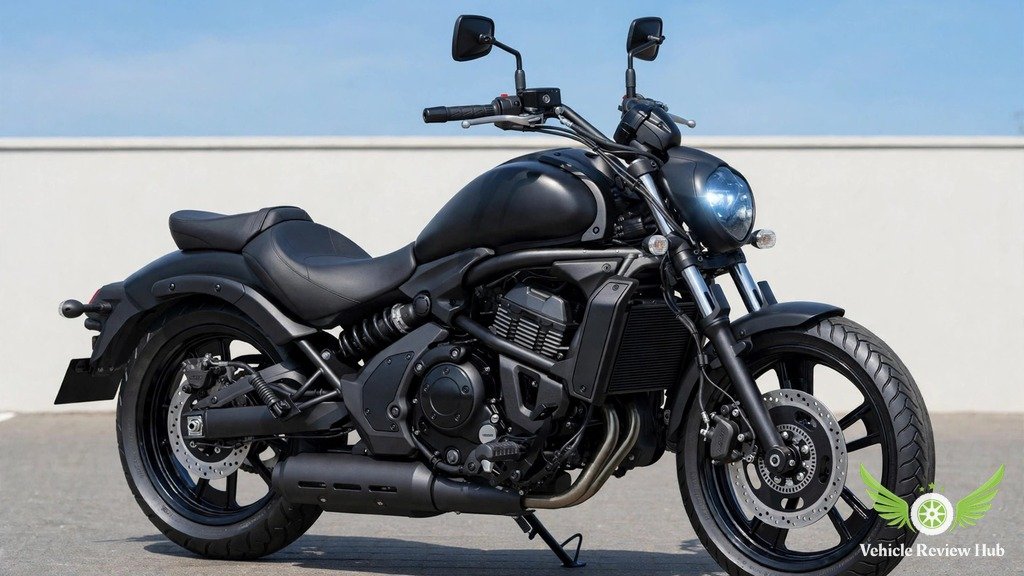
Kawasaki Vulcan S Price in the USA: $8,099
The 2027 Vulcan S ABS lists at $8,099, and with the $685 destination charge the delivered price is $8,784. The 2026 ABS bike listed at $8,149 and delivered at $8,834. A two-tone 2027 bike in Metallic Carbon Gray and Metallic Bluish Green costs $8,299 plus $685, or $8,984 delivered; the 2027 Cafe ABS costs $8,899 plus $685, or $9,584 delivered. The base colour for 2027 is Metallic Flat Spark Black. The full ABS price history in this Kawasaki Vulcan S review, with the destination charge verified separately for every model year, is in the table below.
| Year | ABS MSRP | Destination | Delivered ABS |
|---|---|---|---|
| 2015 | $7,399 | $345 | $7,744 |
| 2016 | $7,399 | $345 | $7,744 |
| 2017 | $7,499 | $360 | $7,859 |
| 2018 | $7,499 | $370 | $7,869 |
| 2019 | $7,499 | $370 | $7,869 |
| 2020 | $7,499 | $410 | $7,909 |
| 2021 | $7,599 | $410 | $8,009 |
| 2022 | $7,849 | $435 | $8,284 |
| 2023 | $7,899 | $435 | $8,334 |
| 2024 | $7,899 | $450 | $8,349 |
| 2025 | $7,899 | $665 | $8,564 |
| 2026 | $8,149 | $685 | $8,834 |
| 2027 | $8,099 | $685 | $8,784 |
Notes for this Kawasaki Vulcan S review ABS price table: delivered prices are MSRP plus the destination charge for that model year, verified separately for each year. The 2015–2025 figures come from Motorcycle.com’s specification database; the 2026 and 2027 destination charge of $685 is cross-checked on Kawasaki USA and dealer listings.
Non-ABS Ended After 2026
The non-ABS Vulcan S launched at $6,999 in 2015 and 2016, and the last one, the 2026 bike, listed at $7,649 plus $685 destination, or $8,334 delivered. The verified non-ABS prices are $6,999 for 2015 and 2016, $7,199 for 2021 and 2022, $7,349 for 2023 and 2024, $7,399 for 2025 and $7,649 for 2026. The 2017–2020 non-ABS prices are not verified anywhere reliable, and this Kawasaki Vulcan S review does not print them: the ABS-to-non-ABS gap varies from $400 to $650 by year, so any interpolated figure would be a guess. The ABS premium was $400 in 2015 and 2016, $500 in 2021, 2023, 2025 and 2026, $550 in 2024 and $650 in 2022. For 2027 there is no non-ABS trim at all, so every new Vulcan S carries ABS, and the cheapest way into a new one is the $8,784 delivered ABS bike. Used buyers reading this Kawasaki Vulcan S review should note the same gap: a clean used non-ABS bike from the verified years is the budget route into the model.
Kawasaki Vulcan S Design, Features and Technology
The Vulcan S looks like a cruiser and rides like a sport bike, and that split personality is the design this Kawasaki Vulcan S review keeps coming back to. The long, low chassis and forward controls give it the cruiser stance, while the liquid-cooled twin and the 62.0-inch wheelbase give it handling no V-twin cruiser in this price range can match.
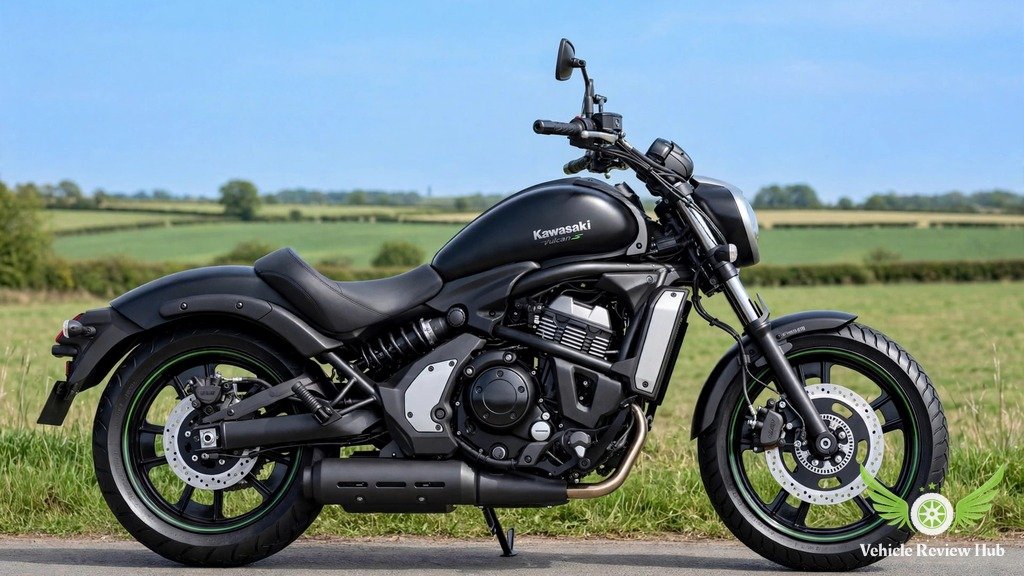
Ergo-Fit: 18 Fit Configurations
Ergo-Fit is the Vulcan S’s defining feature and the reason the bike fits so many riders, which is why this Kawasaki Vulcan S review leads with it. The system offers three seats, two handlebars and three footpeg positions, combining into 18 different riding configurations. At launch the three reaches were defined by rider height: Reduced Reach for 5 feet 6 inches and under, Mid Reach for 5 feet 7 inches to 6 feet 1 inch, Extended Reach for over 6 feet 1 inch. The two handlebars are the standard bar and a Reduced Reach bar sitting one inch closer to the rider. The footpegs move one inch forward or back; moving them forward needs a longer shift rod. The dash pairs a compact analog tachometer with a digital display showing speed, fuel, clock, trips, range and economy, plus the Economical Riding Indicator. There is no gear indicator as standard — Cycle News noted at launch that one costs more than $200. The rider aids are ABS and the Economical Riding Indicator only: no traction control, no riding modes, no ride-by-wire and no TFT display.
Free Fitting Is Still Offered at Purchase
The free Ergo-Fit fitting is not a launch-era promotion that ended years ago. Kawasaki’s own current dealer copy for the 2026 and 2027 Vulcan S still promises that after you buy a Vulcan S motorcycle, you will have the option to get fitted at no additional cost. The offer started at launch in January 2015, when Cycle News reported that Ergo-Fit Center dealers “will custom-fit the bike to the rider at no extra charge”, and a 2023–2025 promotion also offered a free Ergo-Fit kit. What costs money is changing the fit later: the seats, bars and peg parts for a later change are paid accessories, and this Kawasaki Vulcan S review does not print prices for them because no verified priced parts list was found. Buyers reading this Kawasaki Vulcan S review should get the fitting done at purchase, while it is free.
Kawasaki Vulcan S Riding Experience and Comfort
On the road the Vulcan S feels light and neutral for a cruiser, and that Ninja blood is the first thing this Kawasaki Vulcan S review noticed in the test reports. Cycle News called the steering “light and neutral” at launch and the bike “nimble and agile through the twisties”, with decent footpeg-to-ground clearance for the class. The front Nissin brake is, in Cycle News’s words, “superb — super strong yet not grabby”, and the ABS “works well”. The rear shock is the weak point: with a 175-pound tester aboard, Cycle News found it “fairly stiff out of the crate” and reported being “blown out of the seat when hitting medium-sized bumps at speed”. Owners report the same thing: the 3.2 inches of rear travel is short, and the angled shock transfers harsh bumps. It is a design characteristic, not a failure; the fix is preload adjustment or an aftermarket shock.

Seat 27.8 Inches, Tank Just 3.7 Gallons
The 27.8-inch seat is the lowest in its class and the reason so many shorter riders end up on a Vulcan S. At that height almost any adult can flat-foot the bike, and the Reduced Reach seat and pegs lower the fit further still. The trade is the fuel tank: 3.7 gallons is small for a bike built to tour. Rider Magazine’s 2015 road test measured 38.8 mpg at its worst, 48.3 mpg on average and 56.1 mpg at its best, for an estimated range of 179 miles — 3.7 gallons times 48.3 mpg is 178.7 miles. At the worst economy the range falls to about 144 miles, and at the best it stretches past 200. Cycle World measured 47 mpg on the Cafe, or about 174 miles. The low-fuel light comes on with 0.8 gallon left, so the practical range is closer to 150 miles. Anyone planning multi-day trips on the bike in this Kawasaki Vulcan S review needs to plan fuel stops the way a bigger-tanked cruiser rider never does.
Built in Thailand, Not Japan
The Vulcan S is built in Thailand, not Japan, a fact Cycle News stated plainly at the 2015 launch. That surprises some buyers, but Kawasaki builds the Ninja 650 family in Thailand as well, and the Vulcan S shares that line and that engine. Build quality at launch drew no complaints from the press, and a decade of owner reports checked for this Kawasaki Vulcan S review has produced no pattern of assembly-related defects. The Thailand origin is also why the bike’s price stayed low — the 2015 launch price of $6,999 for the non-ABS bike undercut every rival cruiser with a comparable engine, and the 2027 bike at $8,099 is still cheaper than the Honda Shadow Phantom and most middleweight V-twins.
Kawasaki Vulcan S Review: Pros, Cons and Verdict
The verdict in this Kawasaki Vulcan S review is that the bike’s age is its strength and its weakness at the same time. Twelve model years without a mechanical change means every flaw is known, every fix is documented, and the price is honest — but the bike lacks the electronics and range newer rivals offer, and no update is coming to fix that.
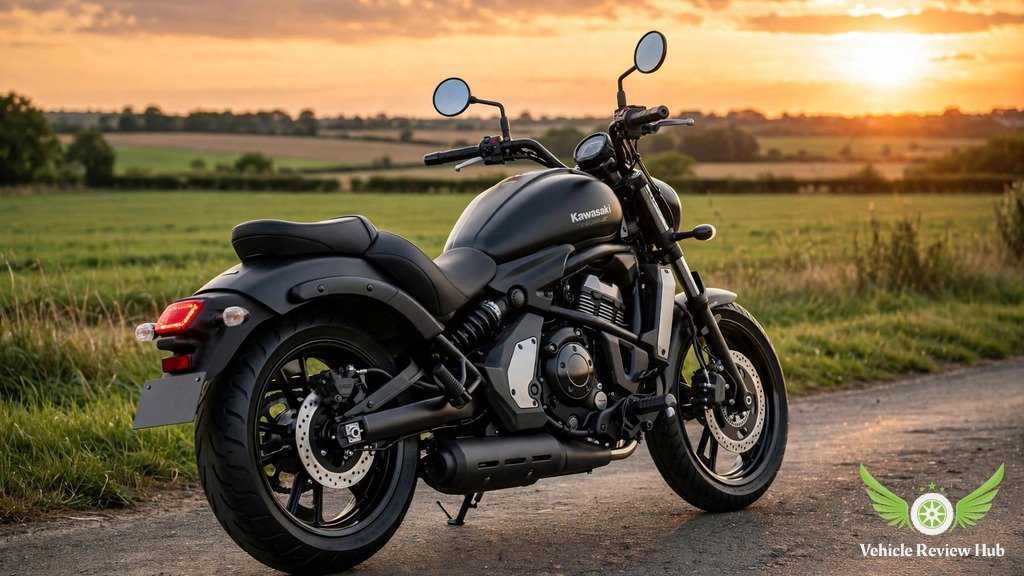
Main Advantages and Limitations of the Kawasaki Vulcan S
The advantages start with fit: no other cruiser under $9,000 fits riders from under 5 feet 6 inches to over 6 feet 1 inch, with fitting free at purchase. The engine is the second advantage: a liquid-cooled twin with 60 hp and real midrange, where most rivals make less power from bigger, heavier V-twins. Cycle World’s trio test put it plainly — the Vulcan S has “sporting spirit” and “a horsepower endowment to make it capable of running with bigger steeds in the middleweight-cruiser category” — and its testers praised “the lightest steering feel of our trio” and “more cornering clearance”. The price is the third advantage: $8,784 delivered for 2027, $50 less than 2026, with no documented defect pattern across twelve model years. The limitations this Kawasaki Vulcan S review found are equally plain. The 3.7-gallon tank caps the range near 179 miles. The rear shock is stiff and short on travel. There is no traction control, no riding mode, no gear indicator and no TFT display. The bike weighs 498.3 pounds with ABS, heavy for a 649cc machine, and the styling — Cycle World called it “bland Starbucks styling” in the trio test — will not turn heads like a V-twin. For the full performance picture, our Versys 650 comparison shows what the same 649cc engine does in an adventure-touring chassis.
12 Month Limited Warranty
Every Vulcan S in this Kawasaki Vulcan S review carries a 12-month limited warranty, and that has been true for every model year from 2015 to 2027. Twelve months is short by modern standards, but it matches the bike’s honest positioning: a simple motorcycle with few systems to fail, and the warranty reflects that simplicity rather than hiding it. Buyers who want longer cover should price an extended plan at purchase. The warranty is the last thing to check before signing, not the first reason to buy the bike.
Kawasaki Vulcan S Review: Frequently Asked Questions
Short answers to the questions this Kawasaki Vulcan S review raises most.
How much does a 2027 Kawasaki Vulcan S cost?
The 2027 Vulcan S ABS in this Kawasaki Vulcan S review costs $8,099 plus $685 destination, or $8,784 delivered. The two-tone version costs $8,984 delivered, and the 2027 Cafe ABS costs $9,584 delivered.
How much horsepower does the Vulcan S make?
Kawasaki publishes 60 hp at 7,500 rpm and 46.5 lb-ft at 6,600 rpm, with an ISO 4106 footnote. The 61 figure readers of this Kawasaki Vulcan S review will also see in European and Indian listings is 61 PS, the metric unit — the same engine, not a more powerful version.
Is the Vulcan S the same bike as the 2015 model?
Mechanically, yes. In this Kawasaki Vulcan S review the 2027 spec sheet was checked against the 2015 launch spec box, and every figure agrees: 60 hp, 46.5 lb-ft, a 27.8-inch seat, a 3.7-gallon tank, a 62.0-inch wheelbase and 498.3 pounds at the curb with ABS.
What is Ergo-Fit on the Vulcan S?
Ergo-Fit, the system this Kawasaki Vulcan S review calls the bike’s defining feature, is Kawasaki’s adjustable-ergonomics system: three seats, two handlebars and three footpeg positions combine into 18 riding configurations, covering riders from under 5 feet 6 inches to over 6 feet 1 inch. The fitting is free at purchase at Ergo-Fit Center dealerships, and that is a current offer, not a launch-era promotion.
Is the Vulcan S a good beginner bike?
For a shorter beginner, this Kawasaki Vulcan S review says mostly yes. The 27.8-inch seat, the light steering, the forgiving clutch and the near-impossible-to-stall engine all help, and ABS is standard. The catches are the 498.3-pound curb weight, the revvy twin and the lack of traction control, and at least one outlet calls it too powerful for truly green beginners.
How far can a Vulcan S go on a tank?
About 179 miles on average, by the test figures this Kawasaki Vulcan S review uses. Rider Magazine measured 48.3 mpg on average in its 2015 road test, and 3.7 gallons times 48.3 mpg is 178.7 miles. At the worst measured economy the range falls to about 144 miles, and at the best it passes 200.
Does the Vulcan S have ABS?
Yes, and for 2027 it is the only version sold, as this Kawasaki Vulcan S review records. ABS was a $400 to $650 option over the non-ABS bike depending on the year. The 2027 bike is ABS-only at $8,099.
Is the Vulcan S built in Japan?
No. The Vulcan S in this Kawasaki Vulcan S review is built in Thailand, as Cycle News stated at the 2015 launch. It shares its production line and engine family with the Ninja 650, and a decade of owner reports shows no pattern of assembly-related defects.
When did the Vulcan S Cafe arrive?
For 2016, not 2017 — the dating this Kawasaki Vulcan S review uses. Cycle World’s February 2016 dyno page is titled “2016 Kawasaki Vulcan S Cafe”, and its April 2016 comparison tests the 2016 Cafe at $7,999. Some aggregators list the Cafe as a 2017 model, a market designation difference.
What is the Vulcan S warranty?
A 12-month limited warranty, as this Kawasaki Vulcan S review records, unchanged for every model year from 2015 to 2027. That is short by modern standards.
Does the Vulcan S have a centre stand?
No. The Vulcan S has a side stand only, and no centre stand was ever offered as standard equipment. Chain maintenance is done on the side stand or a paddock stand, and the chain needs lubrication every 400 miles.
Is the Vulcan S reliable?
The record says yes. In this Kawasaki Vulcan S review the NHTSA search shows no recall naming the Vulcan S in any model year from 2015 to 2027, and no documented defect pattern exists. The known niggles are a stiff rear shock and cosmetic corrosion on the under-slung exhaust, both low severity. The regulator failures some riders associate with the Vulcan name belong to the old Vulcan 900 V-twin, not to this bike.