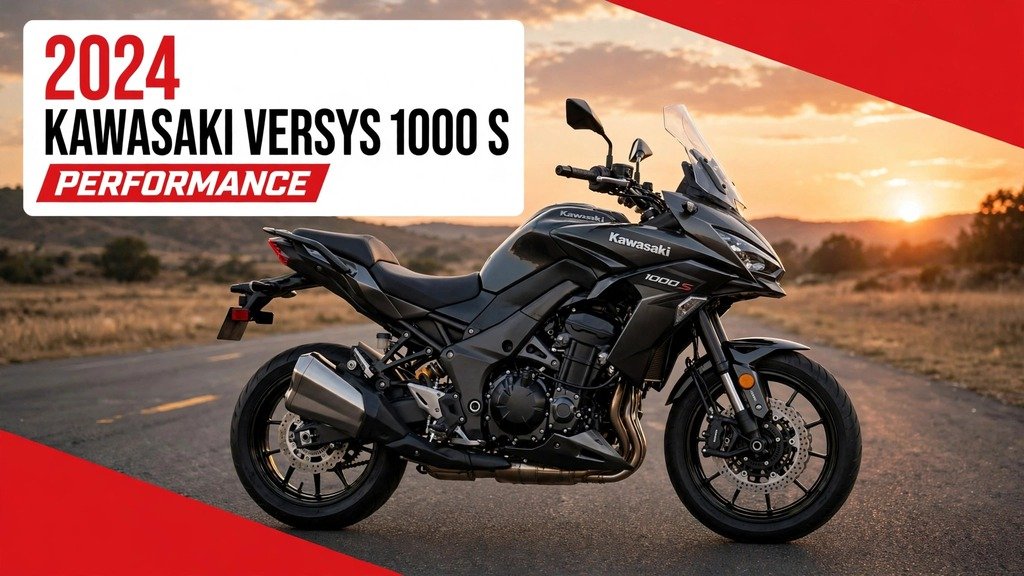
The short answer in this Kawasaki Versys 1000 S performance guide is that the S is quick enough for any touring job, and honest about what it cannot prove. It makes 120 PS, which is 118 hp, from a 1,043cc four, and the only instrumented top speed anywhere is 133.76 mph on GPS, measured on the SE. Kawasaki publishes no official top speed, no US dyno figure, and no US fuel-economy figure.
The UK tests are named, the numbers are labelled by market, and the US figures are kept separate from the European ones. The S was never sold in the United States, so every figure here says which bike it belongs to and where it was measured.
Kawasaki Versys 1000 S Engine Performance and Power Delivery
The engine is the least controversial part of this Kawasaki Versys 1000 S performance guide. It is a 1,043cc liquid-cooled inline-four, detuned from the Ninja 1000 and Z1000 family for midrange smoothness.
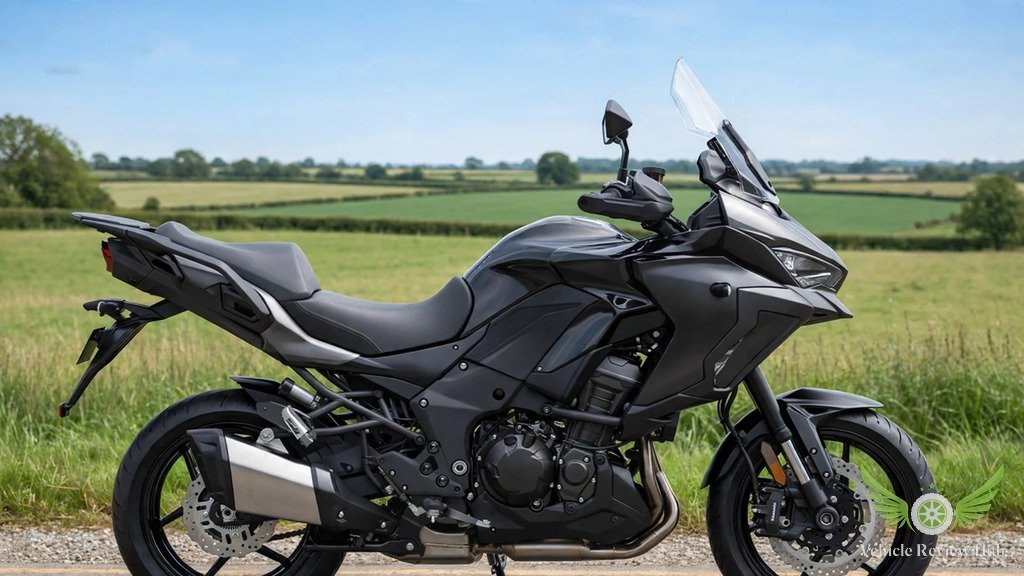
120 PS Claimed, Never Dynoed in the US
Kawasaki claims 120 PS at 9,000 rpm, which is 88 kW, which is 118 hp — three numbers for the same figure — 120 PS is not 120 hp. Torque is 102 Nm at 7,500 rpm, or 75 lb-ft — the midrange this Kawasaki Versys 1000 S performance guide keeps coming back to. Bore is 77.0 mm, stroke 56.0 mm, compression 10.3:1. The first-generation Versys 1000, 2012 to 2014, made 116 bhp — that figure belongs to the old bike, not the S.
No named US dyno test of the Versys 1000 exists, and this Kawasaki Versys 1000 S performance guide will not invent one. No Cycle World, Motorcycle.com, or RevZilla dyno run was found. The nearest dyno evidence belongs to the successor: Bike magazine dynoed the Versys 1100 and found 119 bhp and 74 lb-ft, only 1 bhp and 1 lb-ft more than the old 1000, against a claimed 135 PS.
| Model | Engine | Claimed power | Claimed torque |
|---|---|---|---|
| Versys 1000 S (2021, UK) | 1,043cc inline-four | 120 PS / 118 hp @ 9,000 rpm | 102 Nm / 75 lb-ft @ 7,500 rpm |
| Versys 1000 SE LT+ (2023, US) | 1,043cc inline-four | 120 PS / 118 hp @ 9,000 rpm | 102 Nm / 75 lb-ft @ 7,500 rpm |
| Versys 1000 (gen 1, 2012–2014) | 1,043cc inline-four | 116 bhp | 75 lb-ft |
| Versys 1100 SE LT (2025, US) | 1,099cc inline-four | 133 hp @ 9,000 rpm (135 PS claimed) | 82.5 lb-ft @ 7,600 rpm |
Notes for this Kawasaki Versys 1000 S performance table: the S and the SE LT+ share the same engine and claimed figures. The gen-1 figure is the old bike’s, the 1100 figure the successor’s — neither belongs to the S. No rear-wheel dyno figure exists for the Versys 1000 from a named US test.
Midrange Smoothness Is the Four’s Character
The four earns its keep between 4,000 and 5,000 rpm at motorway speeds, with little vibration through the bars or pegs, according to MCN’s long-term test. Under hard acceleration there is induction roar and a muted exhaust, but the delivery stays smooth — the character this Kawasaki Versys 1000 S performance guide describes as the four’s signature. That is the point of the detune: the Ninja 1000 and Z1000 units chase the top end, while this one is tuned for the middle.
The gearbox is a six-speed with a bi-directional quickshifter, assist and slipper clutch, and a sealed chain. The quickshifter’s manners at low revs get their own heading later in this Kawasaki Versys 1000 S performance guide.
Kawasaki Versys 1000 S Top Speed and Acceleration
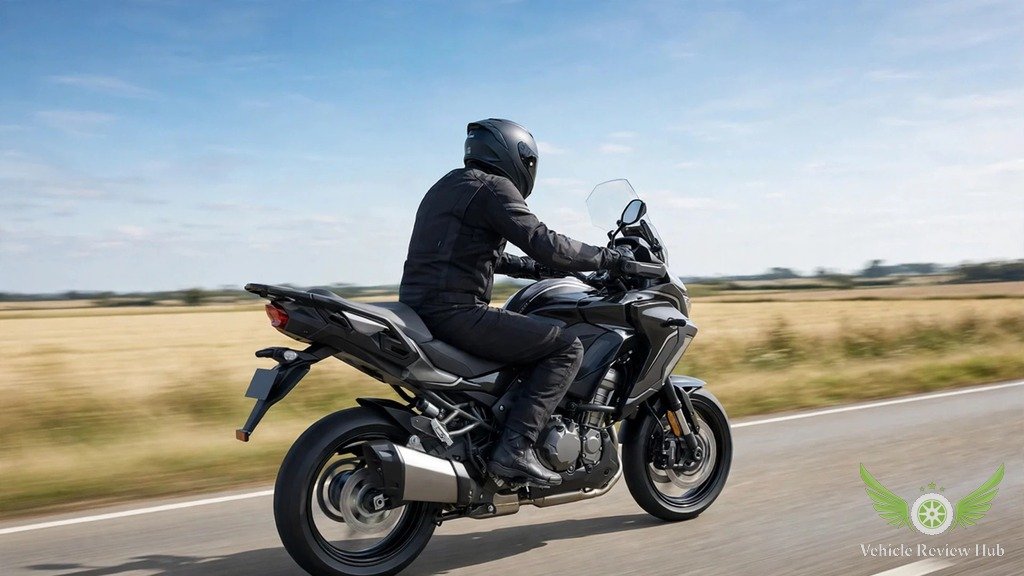
Top speed is where this Kawasaki Versys 1000 S performance guide has to be at its most careful, because the internet is full of numbers for this bike and almost none were measured. There is one instrumented test — one man, one runway, one GPS logger — and everything else is an estimate, a listing, or an invention.
No Official Top Speed Anywhere
Kawasaki publishes no official top speed for the Versys 1000 anywhere — not in the UK, not in the US, not in any market. Any website that prints a round number as the factory figure is filling the gap itself, and this Kawasaki Versys 1000 S performance guide prints no official figure because there is none.
The video below is Kawasaki’s own 2015 launch film, “Change Your View”, a music-led promo for the second-generation bike — not the S, and not a test. The performance numbers here come from MCN’s written Bruntingthorpe test, not this video.
133.8 MPH Measured on the SE, No US Test
The only instrumented top-speed figure anywhere comes from MCN’s Bruce Dunn at Bruntingthorpe in December 2019. He rode a 2019 SE stripped of its luggage, screen on its lowest setting, and logged 133.76 mph on GPS, while the speedometer read 139 mph. The run took 37.16 seconds, and the final 3.76 mph took 9.06 seconds and 535 metres.
The same test logged 0–60 mph in 3.93 seconds and 0–100 mph in 8.81 seconds, both GPS-logged, with 130 mph reached in 28.10 seconds. Those are the only acceleration figures in this Kawasaki Versys 1000 S performance guide that were measured rather than listed, and they belong to the SE, not the S.
What about 136 mph? It traces to motoplanete’s “~220 km/h (136.70 mph)” estimate, printed identically for every Versys 1000 variant. It is an aggregator estimate, not a measurement. Bennetts lists 145 mph, labelled “(EST)”, and MCN’s gen-1 table lists 140 mph, also a listing, not an instrumented run. The 240 km/h (149 mph) figure on sbkmotor and kooloader, with a claimed 3.1-second 0–100 km/h, is invented — no named test supports it, and this Kawasaki Versys 1000 S performance guide prints it only to warn against it.
| Measure | Figure | How it was measured |
|---|---|---|
| Top speed | 133.76 mph GPS (speedo 139 mph) | MCN, Bruntingthorpe, Dec 2019, 2019 SE |
| 0–60 mph | 3.93 seconds | GPS-logged |
| 0–100 mph | 8.81 seconds | GPS-logged |
| 130 mph reached in | 28.10 seconds | GPS-logged |
| Time to top speed | 37.16 seconds | GPS-logged |
Notes for this Kawasaki Versys 1000 S performance table: every figure here is MCN’s instrumented Bruntingthorpe test on a 2019 SE, stripped of luggage, screen on its lowest setting. No US instrumented top-speed, quarter-mile, or dyno figure exists. The 136 mph figure is motoplanete’s estimate, and the 240 km/h figure is invented.
Kawasaki Versys 1000 S Mileage and Fuel Economy
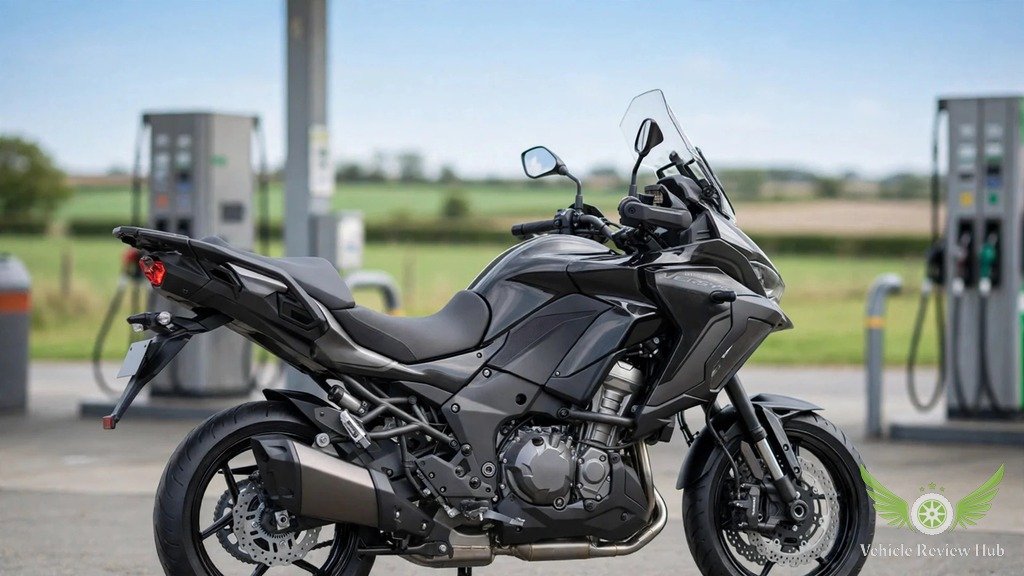
Fuel economy is the one area where this Kawasaki Versys 1000 S performance guide can give a rider a usable number — but only in imperial gallons, from named UK tests. The tank holds 5.5 US gallons, or 21 litres, and the tests agree on roughly 200 miles between fill-ups.
UK Test Saw 50 MPG Imperial
Bennetts saw just over 50 mpg imperial over 700 miles on the 2021 Grand Tourer test, with the fuel light at around 160 to 170 miles and 200 miles between fill-ups. MCN’s long-term SE averaged 51.3 mpg imperial over 16,000 miles, also with 200-plus miles between fill-ups. A 2015–2018 owner in MCN’s files averaged 46 mpg imperial. Three separate UK figures, all imperial, agreeing within a few miles per gallon.
By arithmetic only, 50 mpg imperial is about 41.6 mpg US, and 5.5 US gallons at roughly 42 mpg US gives about 230 miles. That is arithmetic, not a test result, and this Kawasaki Versys 1000 S performance guide labels it as such. No one has ridden an S across the American west and logged the figure.
Kawasaki Publishes No US MPG Figure
Kawasaki publishes no US MPG figure for the Versys 1000, and no EPA rating exists either. Any website that prints an American number is converting a UK figure without saying so, or inventing one. A US reader comparing the S with the Versys 650 performance bike should note the 650’s named-test figures are US-market tests, while the 1000’s are all British.
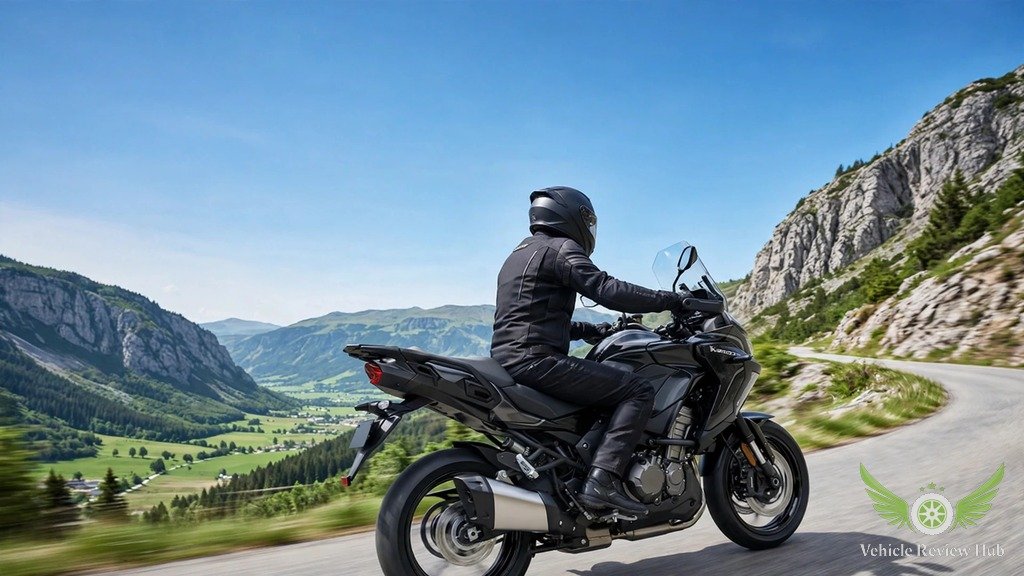
Kawasaki Versys 1000 S Real-World Riding Experience
On the road, this Kawasaki Versys 1000 S performance guide keeps coming back to the same two findings from the same Bennetts test: the bike is brilliantly comfortable, and it is heavy with brakes that ask too much of the rider.
US LT Figures Kept Separate, Labelled
The US figures in this guide belong to the LT and the SE LT+, labelled every time. The 2015–2018 base LT was the only Versys 1000 America got at first, at $12,799 in 2015 and $12,999 in 2016; from 2019 the only US trim was the SE LT+, at $19,359 delivered in 2023. The S shares the SE LT+’s engine and chassis, so the UK instrumented figures are the closest evidence for the S — but this Kawasaki Versys 1000 S performance guide never presents them as US tests.
The riding position is upright and roomy, the seat about 33 inches, the adjustable screen moving without tools. MCN’s long-term bike sat between 4,000 and 5,000 rpm at motorway speeds with little vibration, and Bennetts completed 170 miles in one stint and called a 500-mile-plus day easy. That comfort verdict is the most consistent finding in this Kawasaki Versys 1000 S performance guide, from the same test that names the brakes as the weakness.
Quickshifter Poor at Low Revs, Said 1000PS
The quickshifter works both ways and is standard on the S, but its manners depend on the revs. Bennetts found upshifts smooth and backshifts less smooth at slow speeds and low revs; 1000PS agrees, calling the quickshifter poor at low revs. Two sources, same finding: a character trait rather than a fault — the shift is clean when the four is working, and clumsy when it is not.
That is different from the one documented quickshifter failure, which belongs to the reliability guide: MCN’s long-term SE refused third and fifth above 6,000 rpm in August 2019 and spent about a month at Kawasaki, no official cause confirmed. One bike, one case, no pattern.
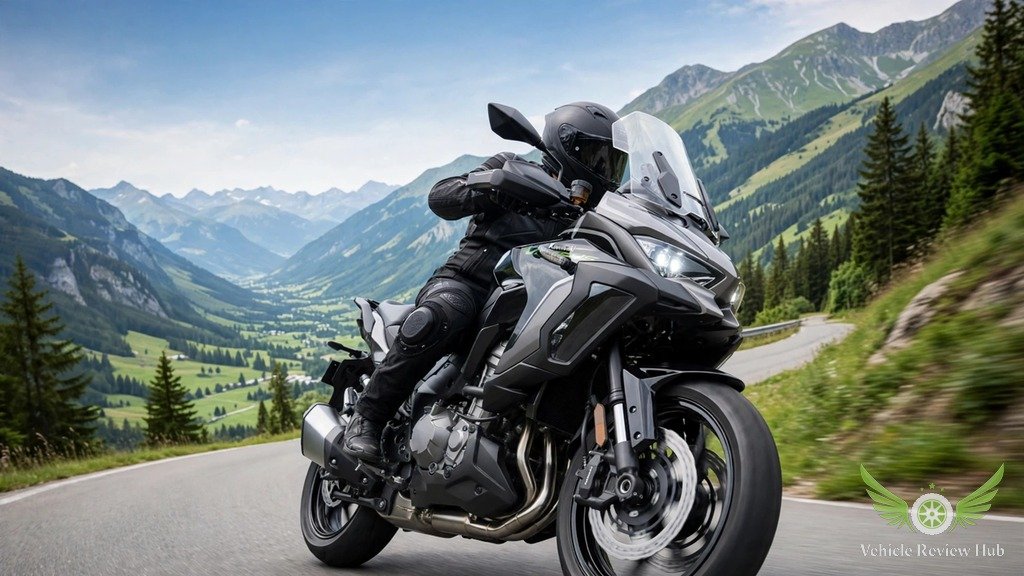
Kawasaki Versys 1000 S Handling, Braking and Stability
Handling is where the S’s manual suspension becomes the story. This Kawasaki Versys 1000 S performance guide compares the S with the SE on specification and separate test impressions, because no back-to-back S-versus-SE ride comparison was found anywhere.
Handling, Braking and Stability on Tour
The chassis is an aluminium twin-spar frame with a 59.8-inch wheelbase and 5.9 inches of ground clearance, and the weight is the consistent complaint: 253 kg by 1000PS, 255 kg by Bennetts, the SE LT+ at 566.7 lb with its bags. The rider feels that weight at parking speeds and in slow turns; at touring speeds it is stable and calm.
The brakes are dual 310 mm petal discs at the front with four-piston calipers, and a single 250 mm petal disc at the rear, under cornering ABS that cannot be switched off. On paper they are respectable; in the testers’ hands they are the most consistent criticism in this Kawasaki Versys 1000 S performance guide. Bennetts said they need all four fingers — the complaint is about feel and power, not failure. Tyres are 120/70ZR17 front and 180/55ZR17 rear, Bridgestone Battlax rubber at 36 psi front and 42 psi rear.
Manual Showa vs Skyhook Ride Quality
The S gets a 43 mm inverted Showa fork with manual preload and rebound, and a horizontal back-link rear shock with rebound and a remote preload adjuster. Travel is 150 mm at both ends. The SE’s KECS Skyhook samples the suspension 100 times a second and adjusts compression, rebound, and preload on the move — it works, and it is SE-only.
What the S gives up in electronics it gains in the long term: no semi-active parts to fail, no dealer-only Skyhook servicing. That is the S’s honest advantage, and this Kawasaki Versys 1000 S performance guide treats the manual suspension as a selling point rather than a cut corner — the £1,900 saved against the SE at launch is the price of Skyhook.
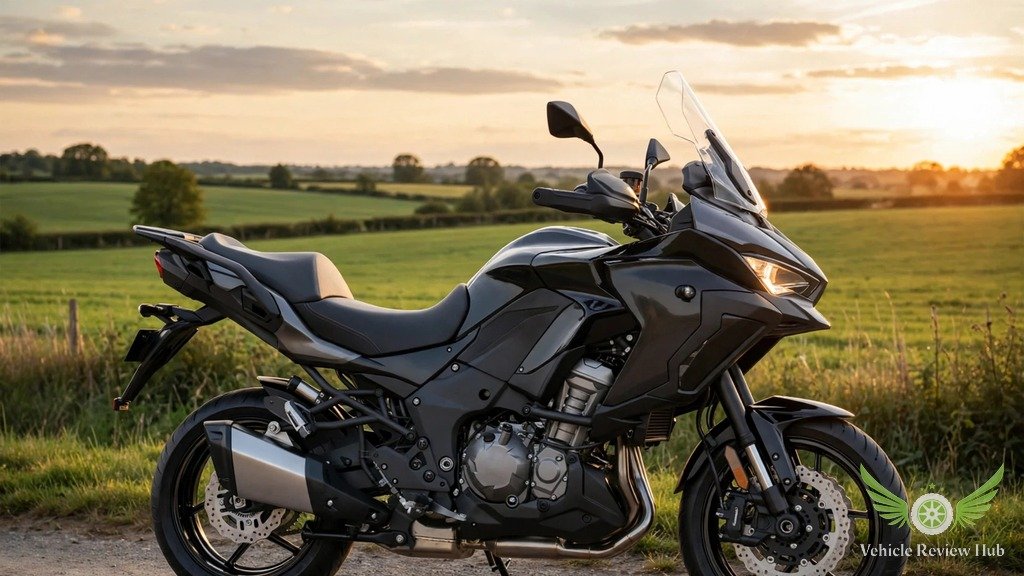
Kawasaki Versys 1000 S Performance Compared With Other Tourers
On paper, the S sits in the middle of the touring pack: more power than the twin, less than the successor, the same smooth four throughout. This Kawasaki Versys 1000 S performance guide compares claimed figures only — no named test has run these bikes against each other on the same day.
Kawasaki Versys 1000 S vs Versys 1000 SE LT+
Against its own twin, the S is the same bike minus the electronics and the luggage. The SE LT+ shares the 1,043cc four, the 118 hp and 75 lb-ft, the IMU, the TFT dash, the cruise control, and the quickshifter, and adds Skyhook and 28-litre panniers. The last US SE LT+ cost $19,359 delivered in 2023, against the S at £12,999 in the UK in 2021 — different currencies, different years.
The successor changes the maths. The Versys 1100 SE LT ABS arrived in the US for 2025 at $19,499 before destination, with a 1,099cc engine making 133 hp at 9,000 rpm and 82.5 lb-ft at 7,600 rpm, and the 2027 model is $19,799 plus $840 destination, or $20,639 delivered. Its Kawasaki USA spec sheet confirms the figures. But Bike magazine’s dyno of the 1100 found only 119 bhp and 74 lb-ft in reality — 1 bhp and 1 lb-ft more than the old 1000 — so the claimed 135 PS jump is mostly paper.
| Bike | Engine | Claimed power | Claimed torque | Delivered price |
|---|---|---|---|---|
| Versys 1000 S (2021, UK) | 1,043cc inline-four | 120 PS / 118 hp @ 9,000 rpm | 102 Nm / 75 lb-ft @ 7,500 rpm | £12,999 (UK, no US price) |
| Versys 1000 SE LT+ (2023, US) | 1,043cc inline-four | 120 PS / 118 hp @ 9,000 rpm | 102 Nm / 75 lb-ft @ 7,500 rpm | $19,359 delivered |
| Versys 1100 SE LT (2027, US) | 1,099cc inline-four | 133 hp @ 9,000 rpm | 82.5 lb-ft @ 7,600 rpm | $20,639 delivered |
| Suzuki V-Strom 1050 (2026, US) | 1,037cc V-twin | 107 hp @ 8,500 rpm | 100 Nm / 74 lb-ft | $16,199 delivered |
| Yamaha Tracer 9 (2026, US) | 890cc triple | 117 hp @ 10,000 rpm | 68.6 lb-ft @ 7,000 rpm | $13,299 delivered |
Notes for this Kawasaki Versys 1000 S performance table: all power and torque figures are claimed, not dyno-measured — no named US dyno test exists for the Versys 1000. The S has no US price because it was never sold in the United States. The V-Strom and Tracer 9 prices are 2026 delivered; the SE LT+ price is 2023, the 1100 price 2027.
Is the Kawasaki Versys 1000 S Suitable for Beginner Riders? No
No. A 1,043cc four making 118 hp, weighing 253 to 255 kg, with a seat at about 33 inches, is not a beginner’s bike. The rider aids are safety nets, not training wheels, and the weight makes slow-speed mistakes expensive. A new rider is better served by the Versys 650 performance bike, the 649cc twin at 482.9 lb — lighter, slower, and far more forgiving.
The verdict of this Kawasaki Versys 1000 S performance guide is that the S is a fast-enough, smooth, comfortable tourer whose numbers are honest precisely because so few of them exist. The engine is proven, the top speed is measured once and labelled, the fuel economy is named-test only, and the gaps are stated rather than filled. For a US rider, the same brief lives on in the SE LT+ and the Versys 1100 SE LT.
Kawasaki Versys 1000 S Performance: Frequently Asked Questions
Direct answers to the Kawasaki Versys 1000 S performance questions buyers ask most, including the ones American readers ask first.
What is the top speed of the Versys 1000 S?
The best measured figure is 133.76 mph on GPS, logged by MCN at Bruntingthorpe in December 2019 on a 2019 SE, speedometer reading 139 mph. The 136 mph figure is motoplanete’s estimate, not a measurement, and the 240 km/h figure on some aggregator sites is invented. This Kawasaki Versys 1000 S performance guide uses the MCN figure because it is the only one that was instrumented.
How fast does the Versys 1000 S accelerate to 60 mph?
MCN logged 0–60 mph in 3.93 seconds and 0–100 mph in 8.81 seconds, both GPS-logged on the same Bruntingthorpe test. There is no US instrumented acceleration test, and no verified quarter-mile time beyond MCN’s listed 11 seconds for the gen-1 bike — a listing, not a measured run, as this Kawasaki Versys 1000 S performance guide notes.
How much power does the Versys 1000 S make?
Kawasaki claims 120 PS at 9,000 rpm, which is 118 hp, with 102 Nm or 75 lb-ft of torque at 7,500 rpm. It is a detuned Ninja 1000 and Z1000 unit, tuned for midrange. This Kawasaki Versys 1000 S performance guide stresses the point because 120 PS is not 120 hp.
Has the Versys 1000 S been dyno tested?
Not in the United States, and not by any named test anywhere. No Cycle World, Motorcycle.com, or RevZilla dyno run of the Versys 1000 was found. The closest dyno evidence is Bike magazine’s test of the successor Versys 1100, which made 119 bhp and 74 lb-ft, only 1 bhp and 1 lb-ft more than the old 1000, as this Kawasaki Versys 1000 S performance guide notes.
What is the real-world fuel economy of the Versys 1000 S?
Bennetts saw just over 50 mpg imperial over 700 miles on the 2021 Grand Tourer test, and MCN’s long-term SE averaged 51.3 mpg imperial over 16,000 miles, as this Kawasaki Versys 1000 S performance guide reports. Those are UK imperial figures; Kawasaki publishes no US MPG figure. By arithmetic, 50 mpg imperial is about 41.6 mpg US.
How far can the Versys 1000 S go on a tank?
About 200 miles between fill-ups on the named tests, fuel light at around 160 to 170 miles — that is the range figure this Kawasaki Versys 1000 S performance guide stands behind. The tank holds 5.5 US gallons, or 21 litres. MCN’s 2021 Versys 1000 review covers the same gen-3 bike; its long-term test confirms the 200-plus-mile figure.
Does the Versys 1000 S have a quickshifter?
Yes. The KQS bi-directional quickshifter is standard on the S, with assist and slipper clutch and a six-speed gearbox. Upshifts are smooth, but backshifts are not smooth at slow speeds and low revs — Bennetts and 1000PS agree, and this Kawasaki Versys 1000 S performance guide treats it as a character trait, not a fault.
Is the Versys 1000 S comfortable on long rides?
Yes. Bennetts called it brilliantly comfortable after a 700-mile test, completing 170 miles in one stint and describing a 500-mile-plus day as easy — the comfort verdict this Kawasaki Versys 1000 S performance guide keeps coming back to. The engine sits between 4,000 and 5,000 rpm at motorway speeds with little vibration, and the upright position, wide seat, and adjustable screen help. Bennetts’ 2021 Grand Tourer review is the source for the comfort verdict and the brake criticism.
How does the Versys 1000 S handle?
It is stable and calm at touring speeds, with an aluminium twin-spar frame, a 59.8-inch wheelbase, and a 43 mm inverted Showa fork with manual preload and rebound. The weight — 253 to 255 kg — is felt at parking speeds and in slow turns. The brakes are the weak point: dual 310 mm petal discs that need all four fingers, according to Bennetts. This Kawasaki Versys 1000 S performance guide rates the handling as honest touring competence.
Is the manual suspension worse than Skyhook?
It depends on what the rider values. Skyhook samples the suspension 100 times a second and adjusts on the move, and it works — but it is SE-only, dealer-only to service, and £1,900 at launch. The S’s manual Showa suspension has nothing electronic to fail. For a long-term owner, the manual setup is the S’s honest advantage, as this Kawasaki Versys 1000 S performance guide argues.
Is the Versys 1000 S faster than the V-Strom 1050?
On claimed figures, yes — the S makes 118 hp against the V-Strom 1050’s 107 hp at 8,500 rpm, and 75 lb-ft against 74 lb-ft, as this Kawasaki Versys 1000 S performance guide compares them. But no named test has run the two against each other on the same day, and the V-Strom costs $16,199 delivered for 2026, against the last US Versys 1000 at $19,359 delivered in 2023. The Ninja 1100SX ABS performance bike shows the same 1,099cc engine family in sports-touring form.
Is the Versys 1000 S suitable for beginner riders?
No. A 1,043cc four making 118 hp, weighing 253 to 255 kg, with a seat at about 33 inches, is not a beginner’s bike. The rider aids are safety nets, not training wheels. A new rider should start on the smaller twin — and a US rider should look at the SE LT+ or the Versys 1100 SE LT instead, since the S was never sold in the United States, as this Kawasaki Versys 1000 S performance guide opened with.