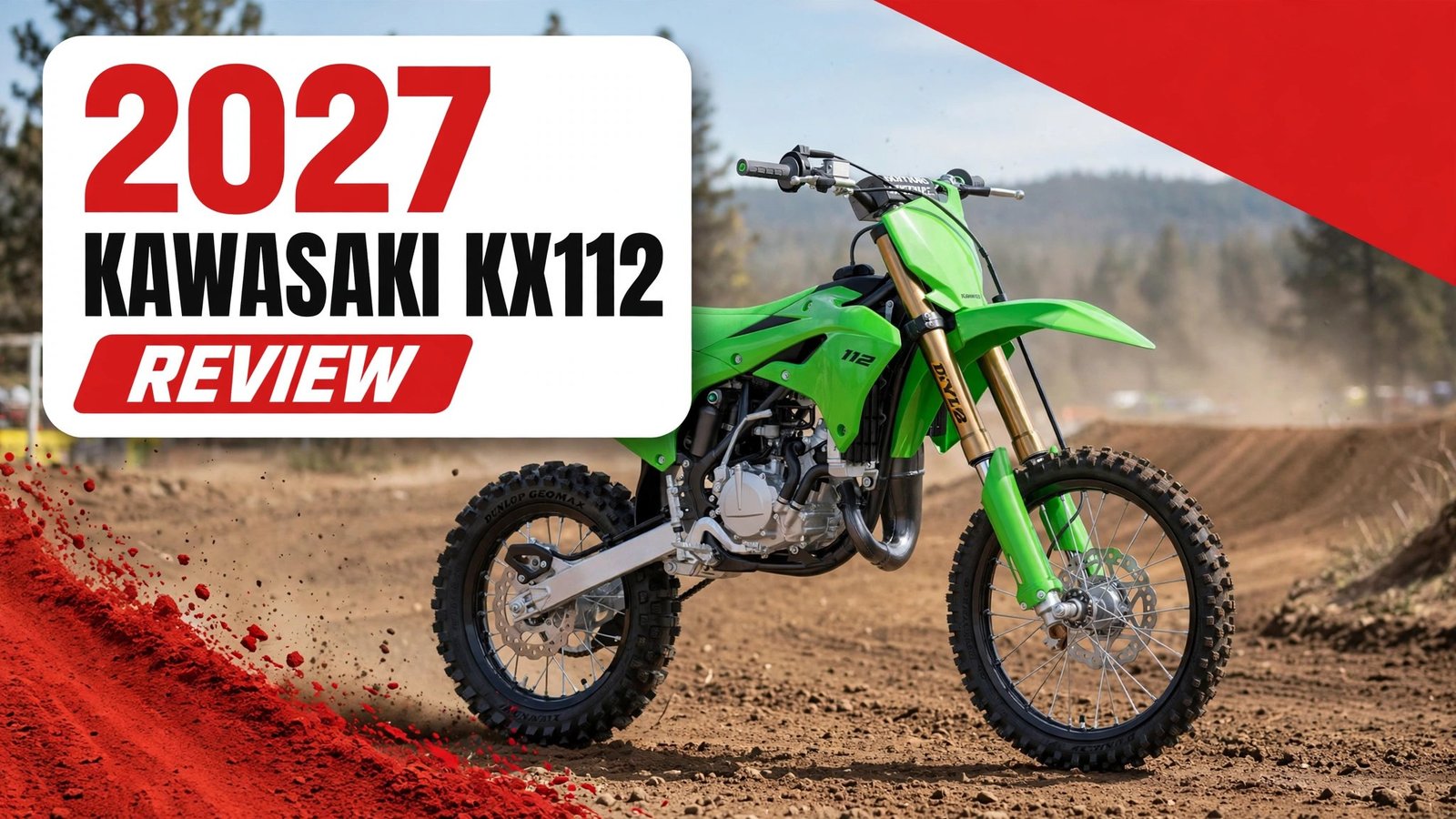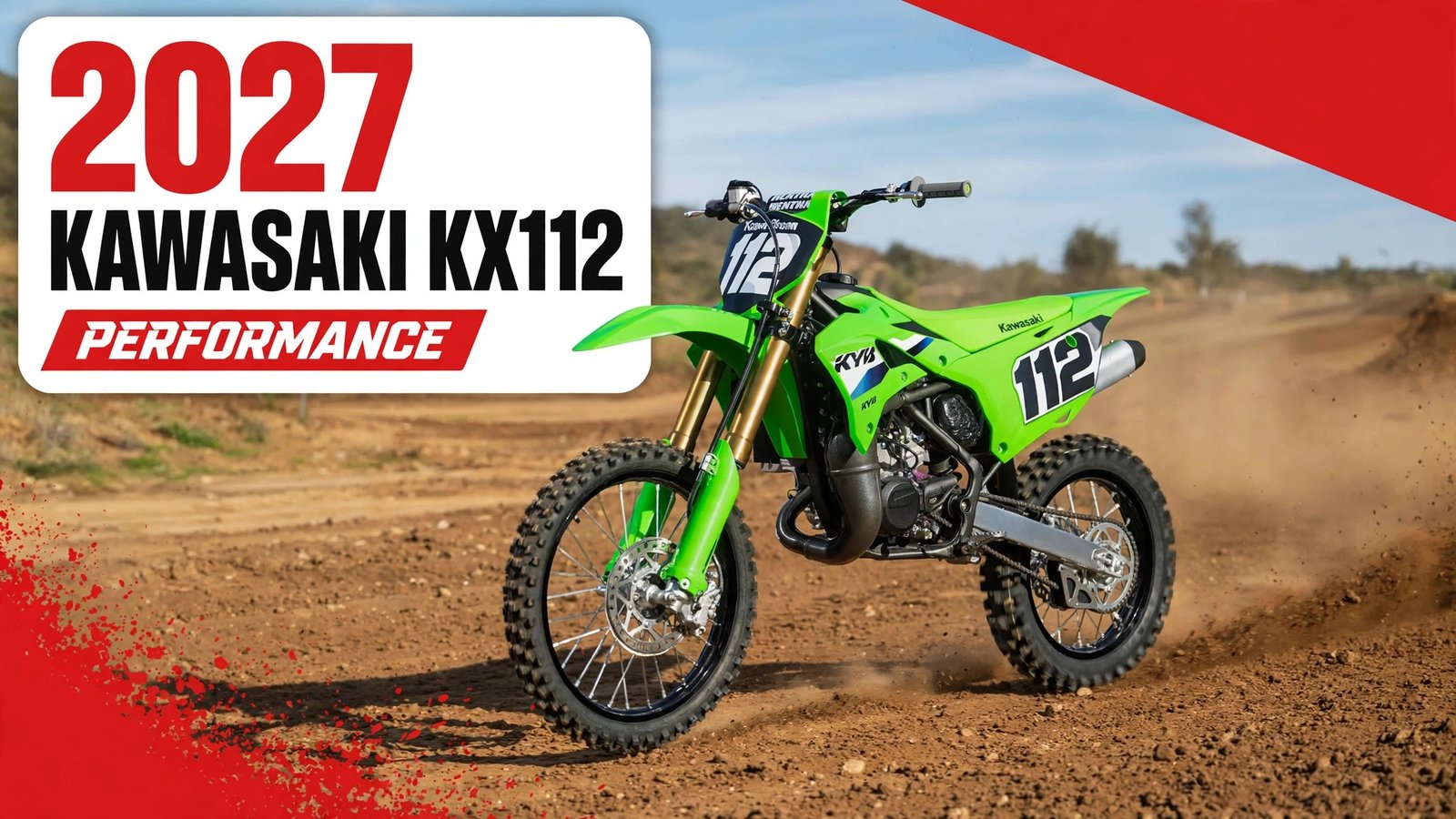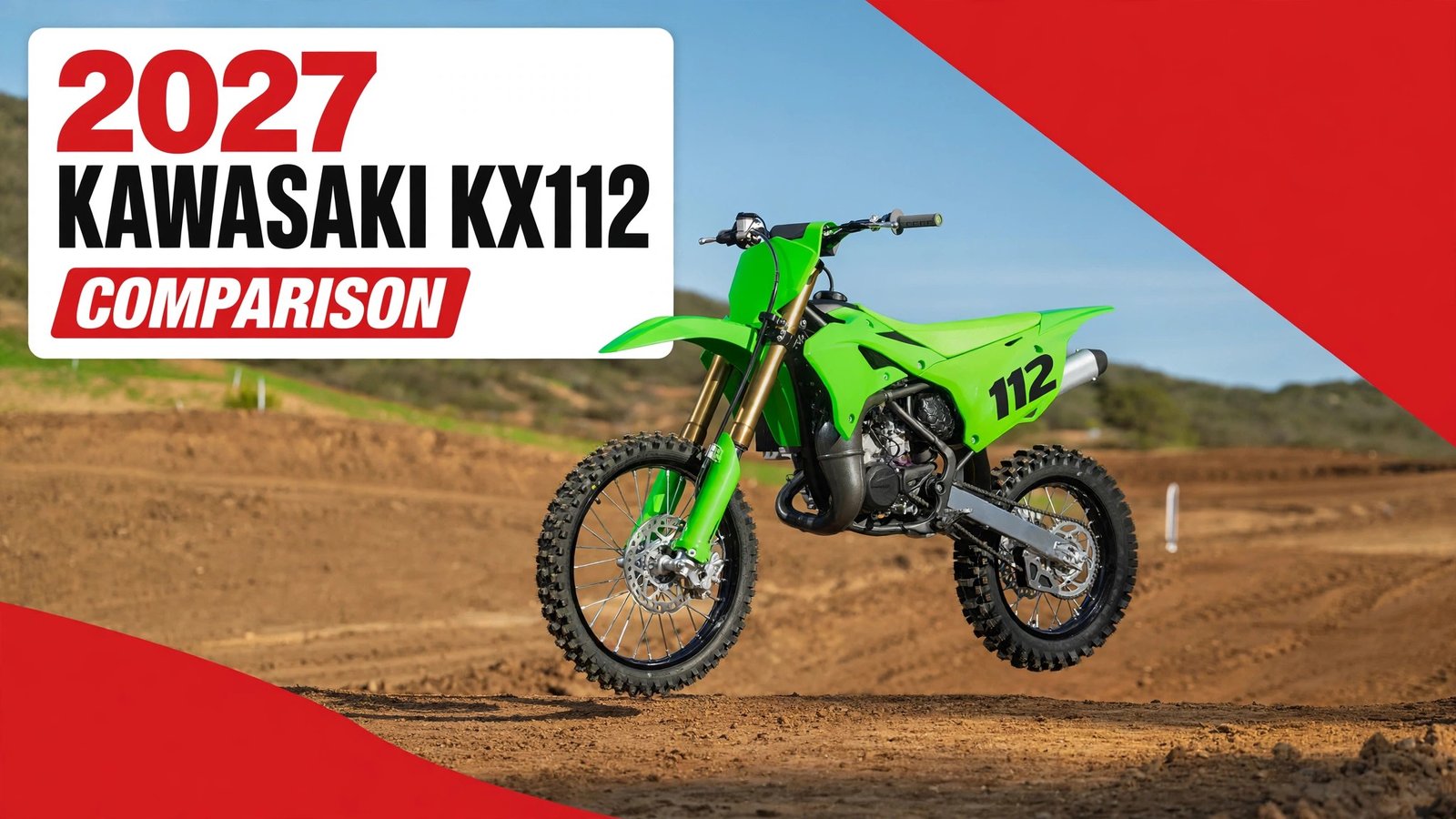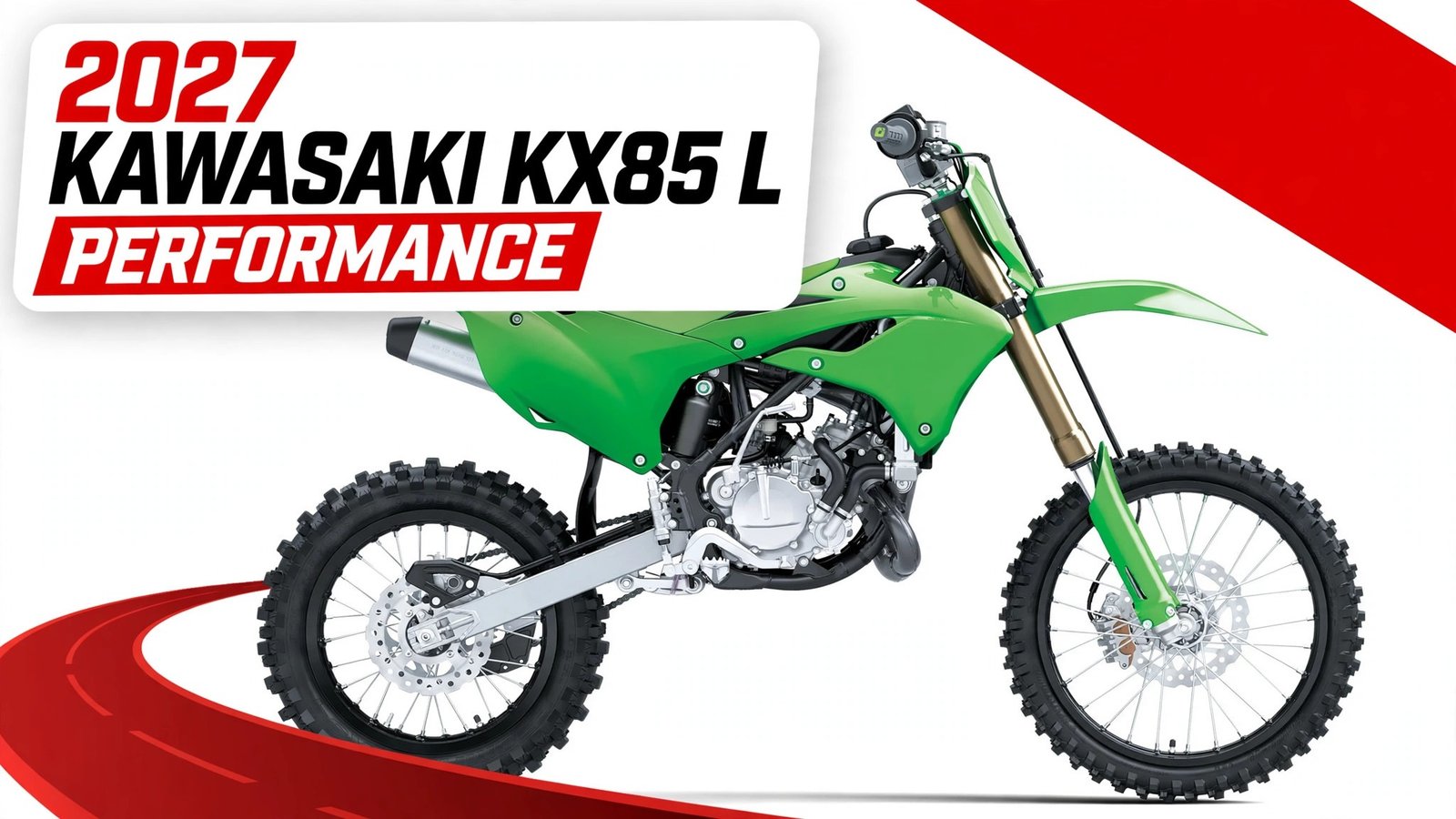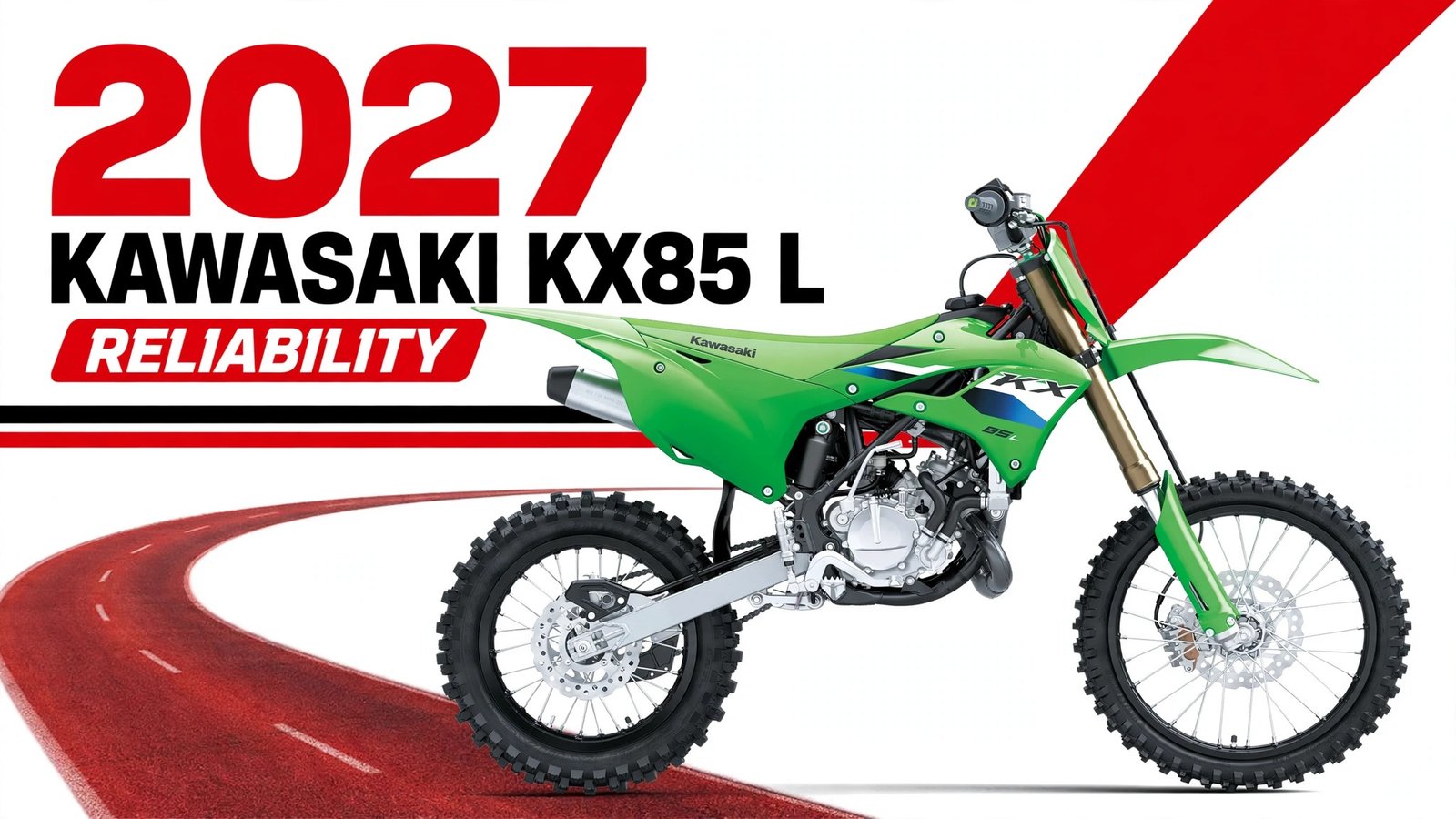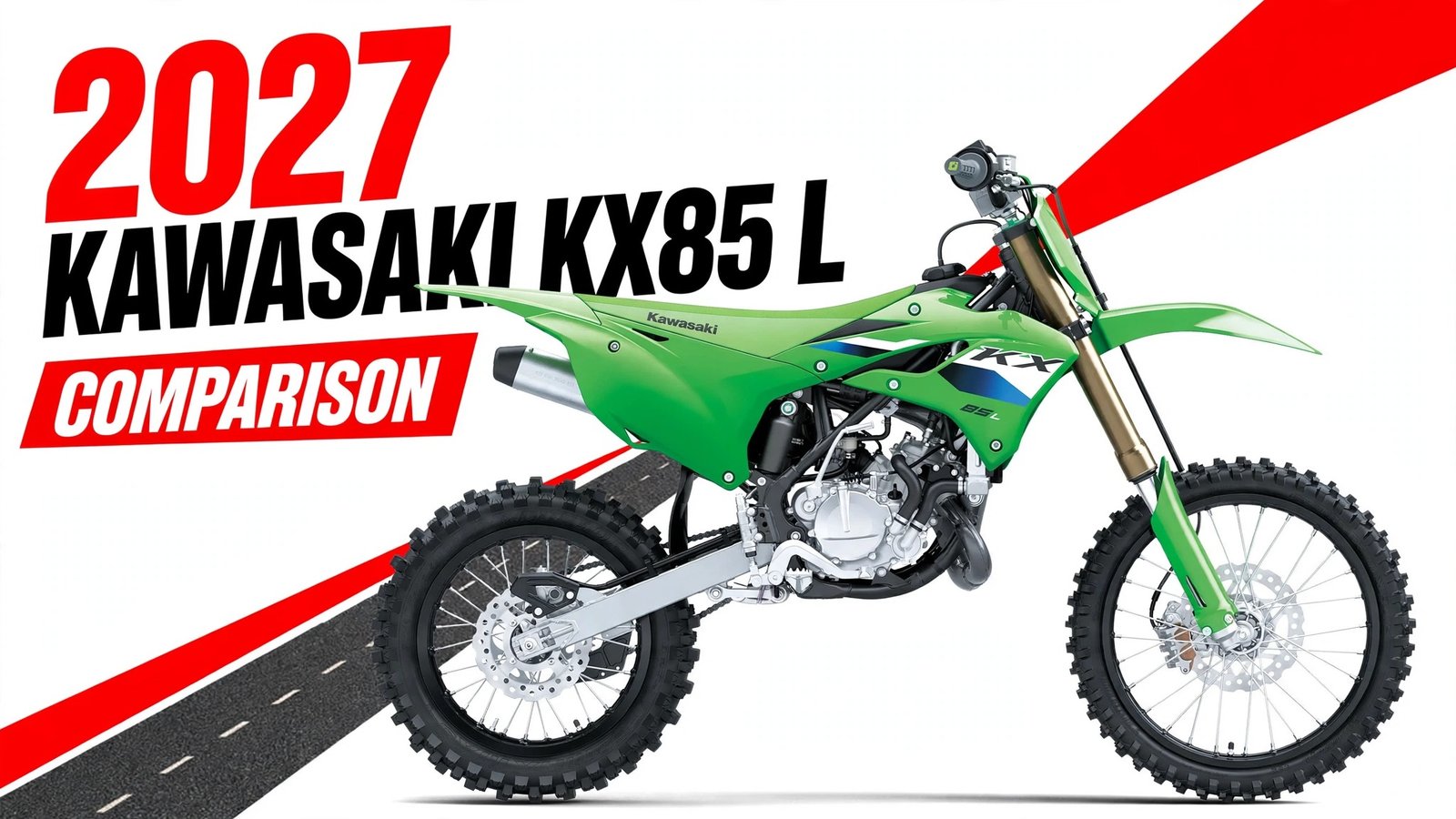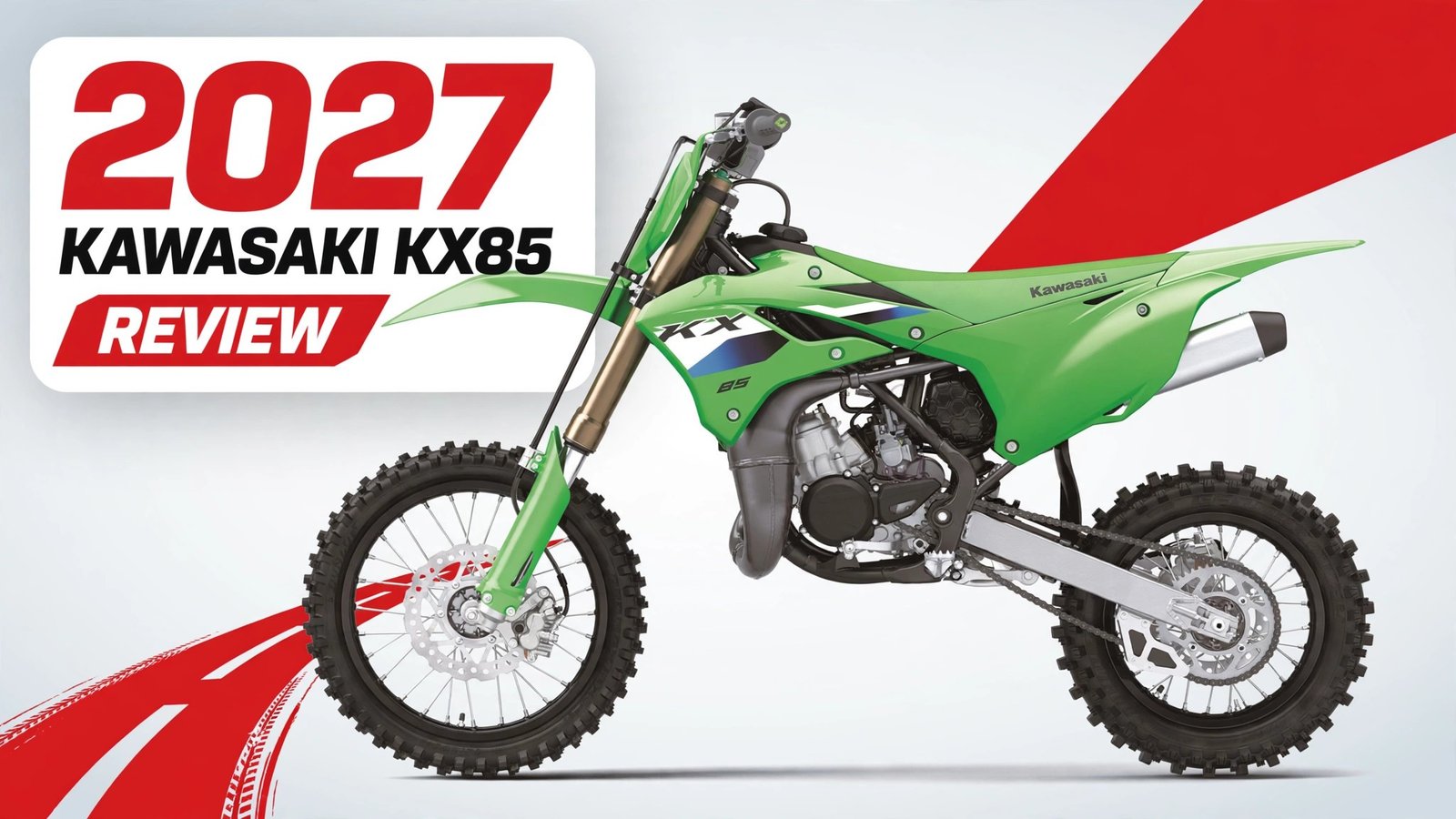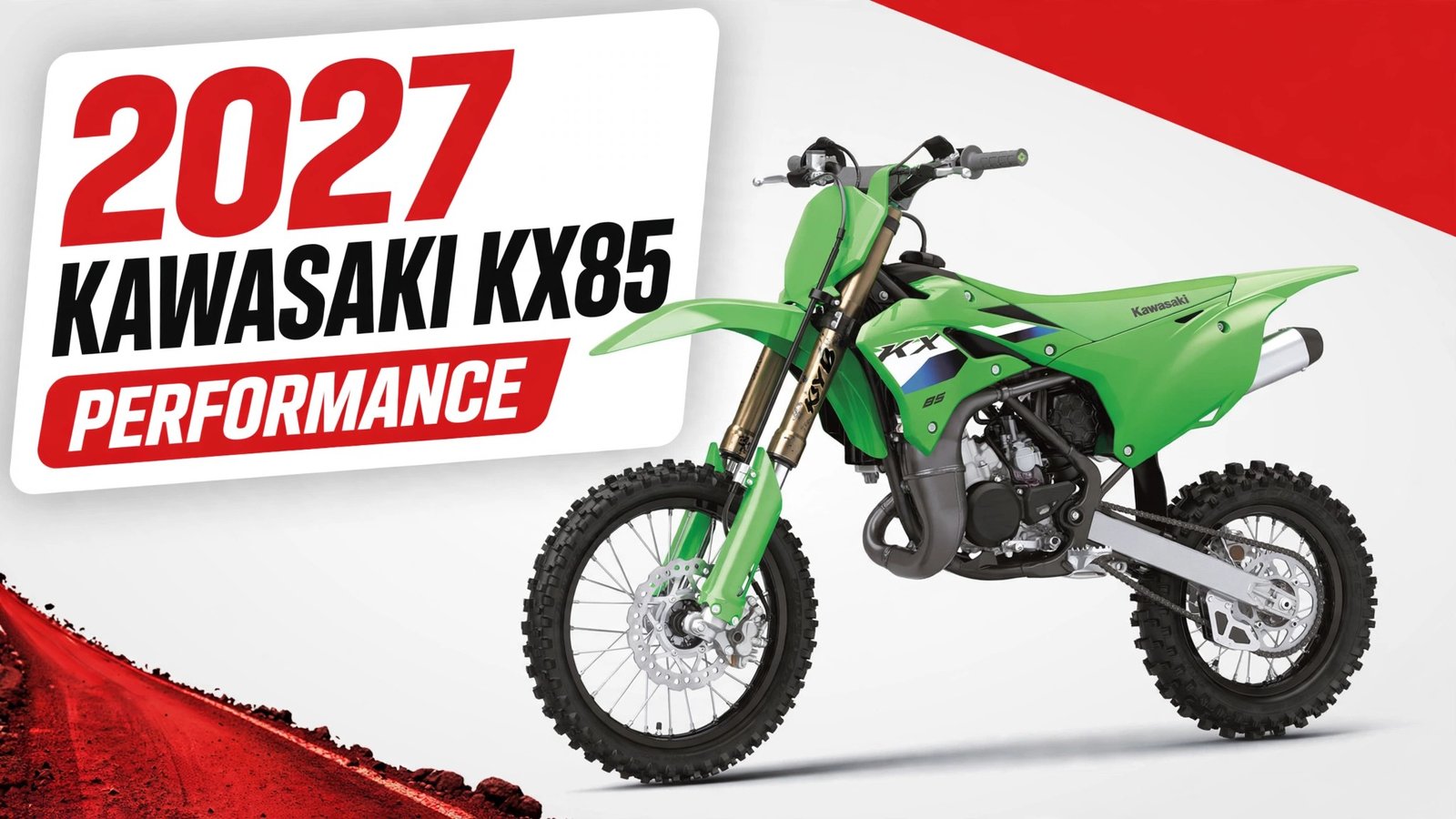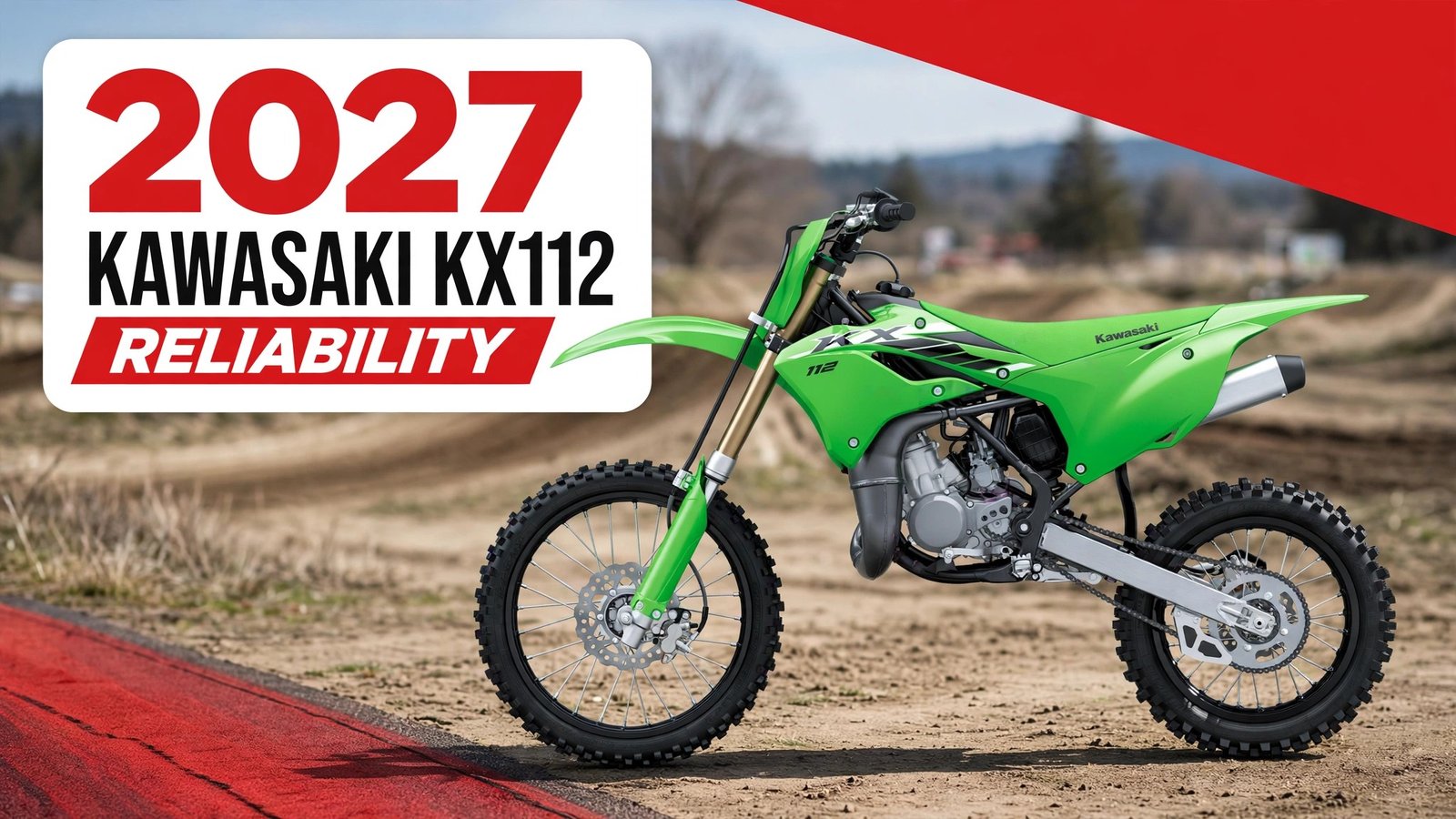
The 2027 Kawasaki KX112 is a race bike first, and reliable exactly because it is a race bike with a short, honest service schedule. Nothing in this Kawasaki KX112 reliability guide is guesswork: the piston comes out at 12.5 hours, the KIPS power valve is cleaned after every race, and no recall has ever named the model. The catch — and the reason this Kawasaki KX112 reliability guide labels every interval as family data — is that the schedule comes from the KX85/KX100 family manuals, not a KX112-specific book, because Kawasaki has never published one for the 112.
That split — verified intervals, family source — is the thread through this Kawasaki KX112 reliability guide: what the chart says, what the parts cost, what wears out, and what a buyer should check before paying $5,799 for a bike sold as-is with no warranty.
Kawasaki KX112 Reliability Overview
Kawasaki KX112 reliability is not about lasting 20,000 miles without a spanner. It is about a small, simple engine rebuilt on a clock — pistons, rings and valves on a schedule measured in races, not years. That clock is the measure of Kawasaki KX112 reliability. This Kawasaki KX112 reliability guide starts from that clock, because a buyer who accepts it gets a bike with no known recall, no reported mechanical failure in any ride test, and parts shared with the KX85 L. The same engine the KX112 review covers has been in service since 2022, and the 2026 revamp changed the chassis around it, not the engine itself.
No Recall Names the KX112
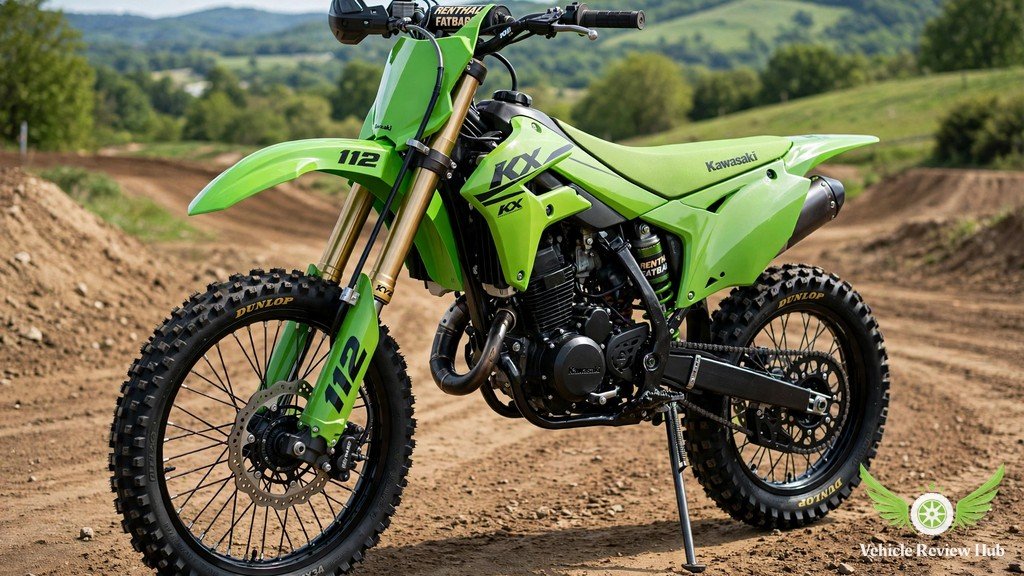
No recall has ever named the Kawasaki KX112 — not in any year since. A search of the US Consumer Product Safety Commission’s records returns only one Kawasaki motocross recall, the 2001 campaign 01-065, which predates the 112 by 21 years. The CPSC is the authority for this bike, because competition motorcycles sit outside the road-vehicle recall system, and this Kawasaki KX112 reliability guide never treats the road-vehicle database as evidence either way. The honest statement is the CPSC one — nothing on file. The full 2001 campaign is covered in the final section below, with the CPSC’s own 2001 recall notice as the source.
How Mileage, Storage and Previous Care Affect Reliability
There is no 112-specific used-bike reliability data anywhere — no verified failure rate, no long-term test, no owner survey. Used 2022 and 2023 bikes exist, since the 112 has been on sale since 2022, but no source measures how they hold up. So a buyer judges a used 112 by hours and care, not miles: the bike has no odometer, and its service clock runs in races, at about 2.5 hours each. Ask for the race and hour log, and receipts showing pistons at 12.5 hours and KIPS cleaning after every race. Check the displacement, not just the wheels — the KX85 L shares the 112’s chassis, 19/16-inch wheels and 124-link chain, so a bike that looks right can still be an 84cc L unless the engine reads 112cc. For storage, the honest guidance is general two-stroke practice, not 112-measured data: drain the fuel, fog the engine, clean the filter.
Kawasaki KX112 Common Problems and Wear Items
The evidence for 112-specific problems is thin, and this Kawasaki KX112 reliability guide says so instead of inventing a failure list. No owner problem threads, no long-term durability test and no mechanical failure reported in any ride test were found. What exists is one named-source item — factory jetting — plus wear items the family chart schedules and feel notes from the ride tests. That is the whole list for Kawasaki KX112 reliability, and it is a short one for a race bike.
Pistons Replaced at 12.5 Hours
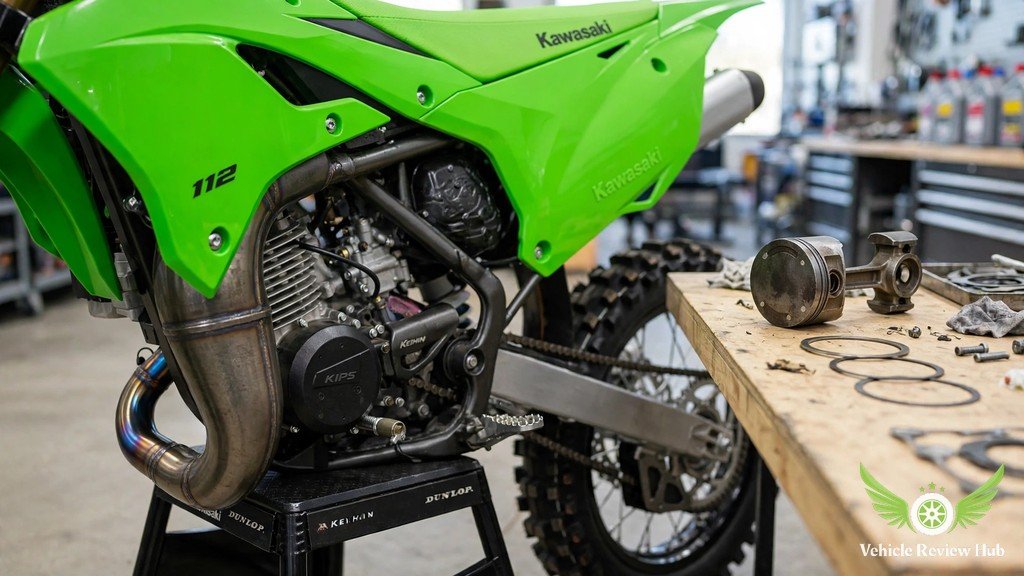
The piston is the 112’s defining wear item. The family chart says clean and check the piston and rings every 3 races, 7.5 hours, and replace them every 5 races, 12.5 hours — replaced, not just checked. A raced 112cc two-stroke eats pistons fast, and the interval is the price of its performance: the same engine that dyno’d at 24.96 hp in Motocross Action Magazine’s 2022 test does it on a piston that is a consumable. That clock is the centre of Kawasaki KX112 reliability. The 112’s piston is its own part, 13001-0833, from Kawasaki’s own 2026 diagram — not the KX85’s and not the KX100’s. It also costs roughly double the KX85’s piston at its last-seen price, which is why the ownership-costs section below prices the job before a buyer commits to the clock. The ring goes with the piston on the same 12.5-hour interval; the small-end bearing and coolant follow at 25 hours.
KIPS Checked Every Race
The KIPS power-valve system is checked and cleaned after every race, about 2.5 hours — the shortest interval on the whole chart, and the one owners skip most. Carbon builds up fast on the exhaust valves of a premix two-stroke, and a neglected KIPS sticks: the family manual says poor low-speed performance points to a valve stuck open, seized or carbon-fouled, while poor high-speed performance points to valves stuck closed or clogged ports. Either way the bike goes flat, and the fix is a clean. This Kawasaki KX112 reliability guide treats the KIPS clean as the single cheapest reliability habit on the bike — a race-day job that costs nothing but time, and the first neglect to show on the track. Nothing KIPS-related is scheduled at 25 hours; those jobs are the small-end bearing and the coolant.
Kawasaki KX112 Maintenance Schedule and Servicing
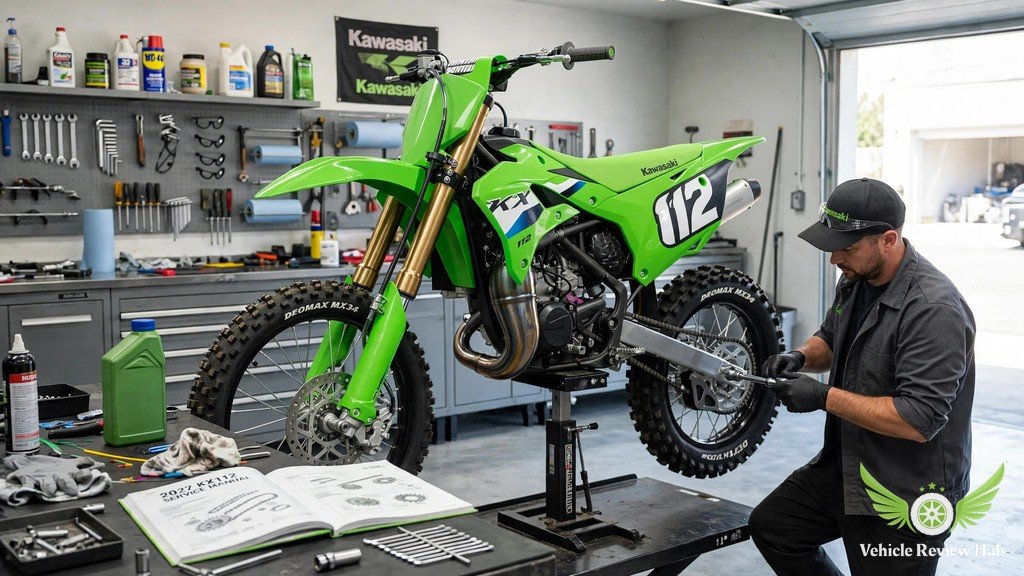
The schedule below is the backbone of Kawasaki KX112 reliability — family data, labelled as such. No KX112-specific owner’s manual has been found on Kawasaki’s site or anywhere else — Kawasaki’s shop lists only a 2005 KX85/KX100 book — so the chart comes from the two 2013 manuals that agree exactly, the KX85/KX100 Owner’s Manual and the KX85/KX85-II/KX100 Service Manual. It applies because the 2013 manual covers the KX100F, the 112’s parent engine: same 52.5 mm bore, stroked from 45.8 to 51.6 mm. A race is about 2.5 hours. This Kawasaki KX112 reliability guide prints the chart as inherited practice, not as 112-published figures.
| Job | Interval | Detail |
|---|---|---|
| Piston + piston ring — clean / check | Every 3 races (7.5 h) | Wear check |
| Piston + piston ring — REPLACE | Every 5 races (12.5 h) | Part 13001-0833 |
| KIPS exhaust valves — clean / check | After EACH race (2.5 h) | Carbon sticks valves |
| Transmission oil — change | Every 3 races (7.5 h) | SAE 10W-40, 0.7 L |
| Spark plug — clean / regap; REPLACE | Clean each race; replace at 7.5 h | NGK R6252K-105, gap 0.7–0.8 mm |
| Clutch / friction plates — check; REPLACE | Check 7.5 h; replace 12.5 h | Lever free play 8–13 mm |
| Con-rod small-end bearing — REPLACE | Every 10 races (25 h) | Shared with KX85 L |
| Coolant — REPLACE | Every 10 races (25 h) | 50/50 mix, 0.57 L |
| Drive chain — adjust + lubricate; wear check | After each race; wear check 12.5 h | 124 links |
| Front fork oil — change | After 2 races, then every 5 races (12.5 h) | 2026 amount unverified |
| Rear shock oil — change | After 2 races, then every 5 races (12.5 h) | As fork |
| Brake pads — wear check | Every 5 races (12.5 h) | Replace under 1 mm |
| Brake fluid — level check; fluid change | Level 7.5 h; change every 2 years | Front DOT3 or DOT4, rear DOT4 |
| Steering-stem bearings — grease | Every 5 races (12.5 h) | Wheel bearings at 25 h |
| Silencer wool — change | Every 3 races (7.5 h) | Cleaned after each race |
Note: All intervals are family data from the 2013 KX85/KX100 manuals, labelled as such in this Kawasaki KX112 reliability guide — no KX112-specific manual exists. A race is about 2.5 hours. Chassis intervals are family data, not 2026-published figures; the fork-oil amount for the 2026 43 mm fork is unverified.
Check at 7.5, Replace at 12.5
The 7.5-hour check and the 12.5-hour replacement are the two beats of KX112 ownership. At 7.5 hours the piston and rings come out for a clean and inspection, the oil is changed, the plug is replaced, the clutch plates are checked and the silencer wool is changed. At 12.5 hours the piston and rings are replaced outright, the clutch plates are replaced, the fork and shock oil are changed and the stem bearings are greased. A two-stroke piston does not fail politely: it loses compression gradually, then scores the bore. This Kawasaki KX112 reliability guide treats the 12.5-hour replacement as a fixed cost of ownership, not a judgment call — the same way a buyer budgets tyres.
Fork Oil From Race Two
Fork oil is the interval owners most often get wrong — amount and interval are different questions. The interval is verified family data: first change after 2 races, then every 5 races, 12.5 hours, for fork and shock alike. The amount is not verified for the 2026 bike. The family manual’s 295 to 325 mL per leg is specified for the old 36 mm fork, and the 2026 bike carries a new fully adjustable 43 mm KYB inverted fork with Kashima-coated outer tubes — no 2026 fork-oil amount was found, so this Kawasaki KX112 reliability guide prints none. The family manual specifies Kawasaki KHL15-10 fork oil, but the fill amount for the new fork must come from a dealer or a 2026 manual. For Kawasaki KX112 reliability, the interval is certain: change it after race two, then every five races.
Kawasaki KX112 Tires, Brakes and Suspension Maintenance
The 2026 revamp changed the hardware this section maintains: 43 mm KYB fork, new rear shock, 240/220 mm brakes, Dunlop MX34 tyres. The checks still follow the family chart — pad wear, fluid, fork and shock oil, wheel bearings — and the sizes come from Kawasaki’s own 2026 parts diagrams. This Kawasaki KX112 reliability guide keeps the years separate: what fits the 2026 and 2027 bikes is not what fitted the 2022 to 2025 bikes.
OEM Piston Price
The piston’s price needs care, because the figure printed in the doc’s outline could not be verified against any parts listing — no checked source supports it, so this Kawasaki KX112 reliability guide does not print it. The only price found for the 112’s own piston, part number 13001-0833 from Kawasaki’s own 2026 diagram, is $194.62 at Partzilla — last seen December 2025, so re-check before ordering. That is roughly double the KX85’s piston at $101.65 — the 112 is the expensive piston in the family. The piston ring, part number 13003-0762, has no verified price: the Partzilla page returned an error when checked, and no retailer price turned up in search. The drive chain, DID420DS3X124L part number 92057-0847, was last seen at $112.71 in October 2025 — also stale. The one fresh price below is the air filter element, $30.23, seen in November 2026.
| Part | Part number | Last-seen price |
|---|---|---|
| Piston, engine | 13001-0833 | $194.62 — Partzilla, Dec 2025 |
| Piston ring, top | 13003-0762 | Unverified — no price found |
| Drive chain, DID420DS3X124L, 124 links | 92057-0847 | $112.71 — Partzilla, Oct 2025 |
| Air filter element | 11013-0736 | $30.23 — Nov 2026, fresh |
| Clutch friction plate (x6) | 13088-1016 | Price not obtained |
| Spark plug, NGK R6252K-105 | — | US price not verified |
Note: Prices above are last-seen retailer crawls, not current quotes — the piston and chain figures are stale. Because the ring price is unknown, no complete piston-change basket can be totalled honestly in this Kawasaki KX112 reliability guide.
Tire, Brake and Suspension Checks That Matter
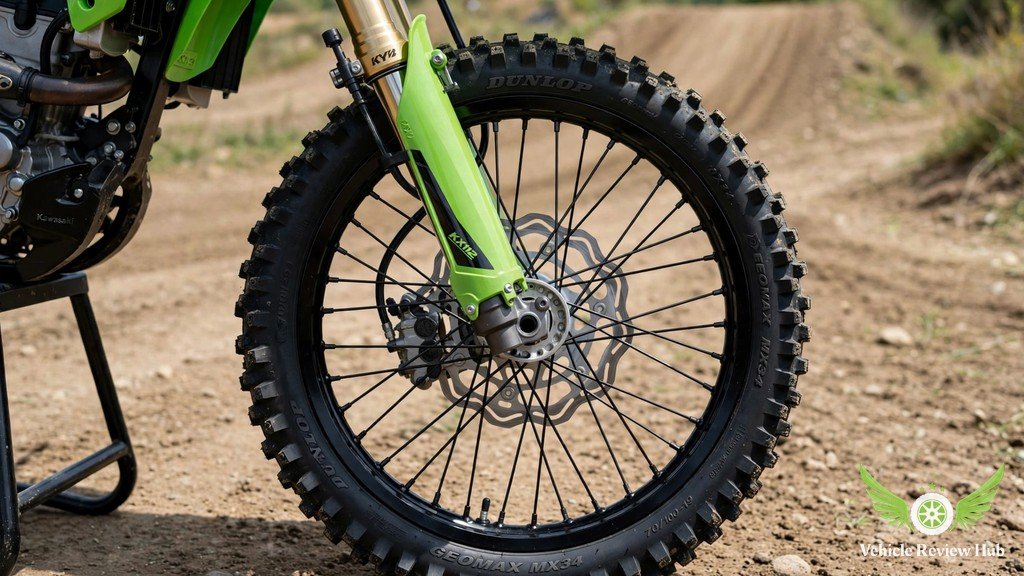
For Kawasaki KX112 reliability, tyres come first: the 2026 and 2027 bikes run Dunlop Geomax MX34, 70/100-19 front and 90/100-16 rear, verified on Kawasaki’s own 2026 wheels and tyres diagram. The MX33 was the 2022 launch fitment, so a used bike on MX33s is either a pre-2026 bike or a bike on old rubber. A set costs $148.98 at BTO Sports retail or $177.90 at MSRP — $19 to $21 more than the standard KX85’s set, and identical to the KX85 L’s set, since the sizes are the same. The 2026 bikes carry a 240 mm petal front disc with a dual-piston caliper and a 220 mm petal rear disc with a single-piston caliper; pre-2026 bikes had 220 mm front and 184 mm rear — do not mix the years when ordering pads. The family chart says check pad wear every 5 races, replace any pad under 1 mm, check fluid level every 3 races and change the fluid every 2 years. Fork and shock oil run from race two, then every 5 races, with the wheel bearings checked every 10 races, 25 hours. Cycle News’s 2026 testers still stiffened the suspension during their day for a 118 lb rider — shock preload and fork compression — a reminder that the stock settings are a starting point, not a verdict.
Kawasaki KX112 Maintenance and Ownership Costs
The KX112 is sold as-is, with no warranty — the KX-line position, though the 2026/2027 wording is unverified — so every repair is owner-paid and every cost here lands on the buyer. That is the honest frame for this Kawasaki KX112 reliability guide: $5,799 plus a $315 destination charge that is single-source, for a computed $6,114 delivered, and then pistons, oil, tyres and chains on a race clock. There is no warranty cost to budget and no resale figure to offset it, because no verified resale data exists for the 112.
Fuel, Routine Servicing, Tires and Replacement Parts
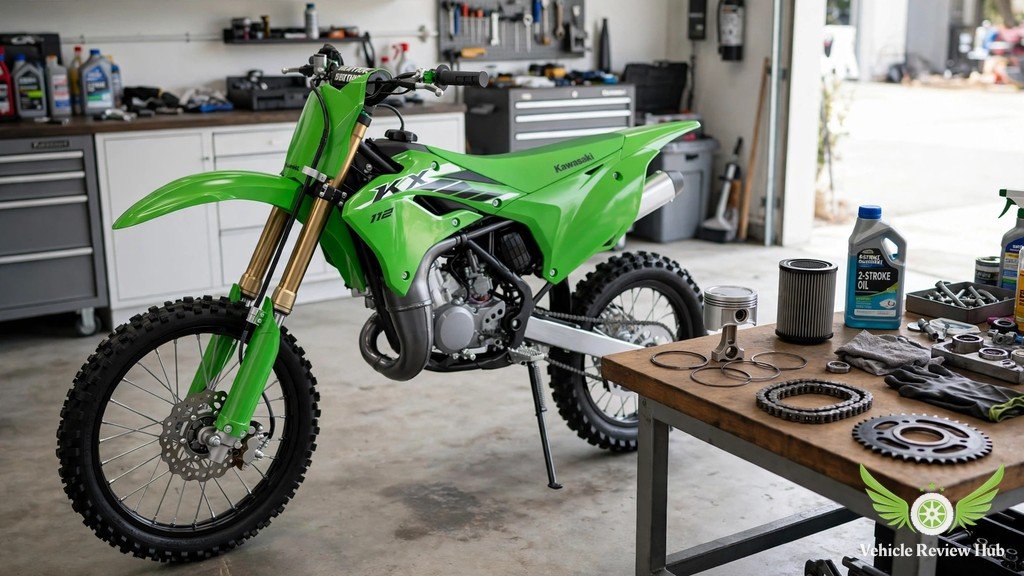
Fuel is the cheapest line: a 1.32-gallon tank on a 32:1 premix takes 5.28 fluid ounces of oil per full tank, and there is no MPG figure to budget against — Kawasaki publishes none and no test has measured one, so this Kawasaki KX112 reliability guide prints no economy number. Routine servicing, the core of Kawasaki KX112 reliability, follows the chart: oil and a plug every 7.5 hours, a piston and rings every 12.5 hours, a KIPS clean and chain care after every race, fork and shock oil from race two, and the small-end bearing and coolant every 25 hours. Tyres run a set a season for most racers: $148.98 at BTO retail or $177.90 at MSRP for the MX34 pair. Replacement parts run on last-seen prices: piston $194.62, chain $112.71, air filter $30.23, ring price unknown — so a partial piston-change basket is $224.85 before rings, oil and a plug, and no complete total can be published honestly. On the buying side, Kawasaki’s offers run up to $700 in factory-to-dealer incentive plus up to $200 in holiday cash through December 31, 2026, both dealer-dependent. The KX112 performance guide covers what the bike does with that money; this guide covers what it costs to keep doing it.
Wiseco Kit Cross-Fits KX100
The aftermarket offers a genuine saving on the piston job — Wiseco’s Pro-Lite kit PK1908 — piston 880M05250, 52.50 mm standard bore, with rings, pin and circlips — is listed for the 2014 to 2021 KX100 and the 2022 to 2025 KX112 at $173.08 from goturbo.net, a retailer price. The full kit costs less than the OEM piston alone at its last-seen $194.62. It cross-fits because the bore is identical: the KX100 is 52.5 by 45.8 mm and the 112 is 52.5 by 51.6 mm, and the extra 13cc comes from the stroke — a new crankshaft and a longer 99 mm rod — not the piston. The OEM pistons are model-specific and do not cross-fit: the KX100’s is 13001-0759 and the 112’s is 13001-0833, with a revised profile Kawasaki introduced at launch for durability and ring bedding-in. Two caveats belong with the saving, and both matter for Kawasaki KX112 reliability. First, the fitment evidence is retailer fitment tables, not a Wiseco-published catalogue page, so confirm fitment with the seller. Second, the table covers 2022 to 2025 KX112s, and 2026/2027 fitment is inferred from the unchanged engine, not separately listed. Do not confuse this kit with the older Wiseco KX100 kit 651M05250, a different part for the 1995 to 1997 KX100.
How to Keep a Kawasaki KX112 Reliable
Kawasaki KX112 reliability is not a mystery and not a gamble. It is the schedule, kept on time, with a log that proves it. The bike has no known recall and no reported mechanical failure in any ride test — the failure mode is neglect, and the schedule is the defence. This Kawasaki KX112 reliability guide closes with the habits that keep a bike racing all season instead of going flat mid-moto.
Preventive Maintenance, Records and Regular Inspections
Follow the chart and write it down. Keep an hour and race log — every piston at 12.5 hours, every KIPS clean after every race, every oil change at 7.5 hours — because the log proves the bike’s history to the next buyer, and a used 112 without records leaves its piston age a guess. Pre-ride checks: chain adjusted and lubricated, air filter clean, coolant and brake fluid levels right, tyres checked. Between race days, drain the fuel, fog the engine, clean the filter, keep it dry. The family manual’s break-in procedure is a separate low-speed routine for the first hour, with a hotter plug option and a ring change after break-in — and no saved manual text states a different fuel and oil ratio for break-in, so this Kawasaki KX112 reliability guide prints the 32-to-1 running ratio only. The one habit that pays for itself is the KIPS clean: it costs nothing but time, and skipping it is the fastest way to a flat powerband.
2001 Recall Is Not This Bike
The 2001 recall is family history, not a KX112 defect, and the dates prove it. CPSC campaign 01-065 was announced on January 11, 2001, covering about 18,000 motorcycles across all 2001 KX models — KX65, KX85, KX100, KX125, KX250 and KX500 — because the rear brakes could fail and cause a loss of control. There were zero injuries and zero failure reports at announcement; owners got a free repair kit by mail, fitted themselves or free at a dealer. The KX112 was first introduced for model year 2022, so the recall predates it by 21 years and its model list contains no KX112. The later CPSC campaign 25-238, a 2025 KX450 crankshaft-gear recall, covers only the 2025 KX450, KX450SR and KX450X — not the 112 either. A seller or a listing that ties either recall to a KX112 is wrong, and this Kawasaki KX112 reliability guide states the record plainly, so a buyer is never talked into a discount — or out of a purchase — by a recall that was never this bike’s.
Kawasaki KX112 Reliability FAQs
The questions US buyers ask about the 2027 Kawasaki KX112’s reliability, answered from the verified figures in this Kawasaki KX112 reliability guide.
Has the Kawasaki KX112 been recalled?
No — and that is the headline of Kawasaki KX112 reliability. A search of the Consumer Product Safety Commission’s recall records finds no recall naming the KX112 in any year. The only Kawasaki motocross recall it returns is the 2001 campaign 01-065, which predates the 112 by 21 years and names only 2001 KX models.
Is there an owner’s manual for the KX112?
No manual naming the KX112 has been found on Kawasaki’s site or elsewhere. The schedule in this Kawasaki KX112 reliability guide comes from the 2013 KX85/KX100 family manuals, which cover the KX100F — the 112’s parent engine — and is labelled as family data, not as 112-published figures.
How often does the KX112 need a new piston?
Replace the piston and rings every 12.5 hours (5 races), and check and clean them every 7.5 hours (3 races). The 12.5-hour replacement is the fixed cost of owning a raced 112cc two-stroke — this Kawasaki KX112 reliability guide treats it as a schedule, not a judgment call.
How much does a KX112 piston cost?
The only price found for the 112’s own piston, part number 13001-0833, is $194.62 at Partzilla — last seen December 2025, so re-check before ordering. The ring, part number 13003-0762, has no verified price, and the Wiseco Pro-Lite kit PK1908 at $173.08 is a full kit for less than the OEM piston alone. That single price is the hardest number in Kawasaki KX112 reliability to pin down.
Will a standard KX85 chain fit the KX112?
No — and the chain is one of the small details Kawasaki KX112 reliability turns on. The KX112 uses a 124-link DID420DS3X124L chain, part number 92057-0847 — the same chain as the KX85 L, on the same 51.6-inch wheelbase. The standard KX85’s 120-link chain is four links too short for the 112.
What are the common problems on a KX112?
No mechanical failure was reported in any ride test. The named items in this Kawasaki KX112 reliability guide are factory lean jetting — a lean bog noted in Dirt Bike Magazine’s 2026 test — KIPS carbon build-up if the after-every-race clean is skipped, fast piston wear on the 12.5-hour clock, and the cable clutch’s on-off feel and extra vibration from Cycle News’s 2026 review.