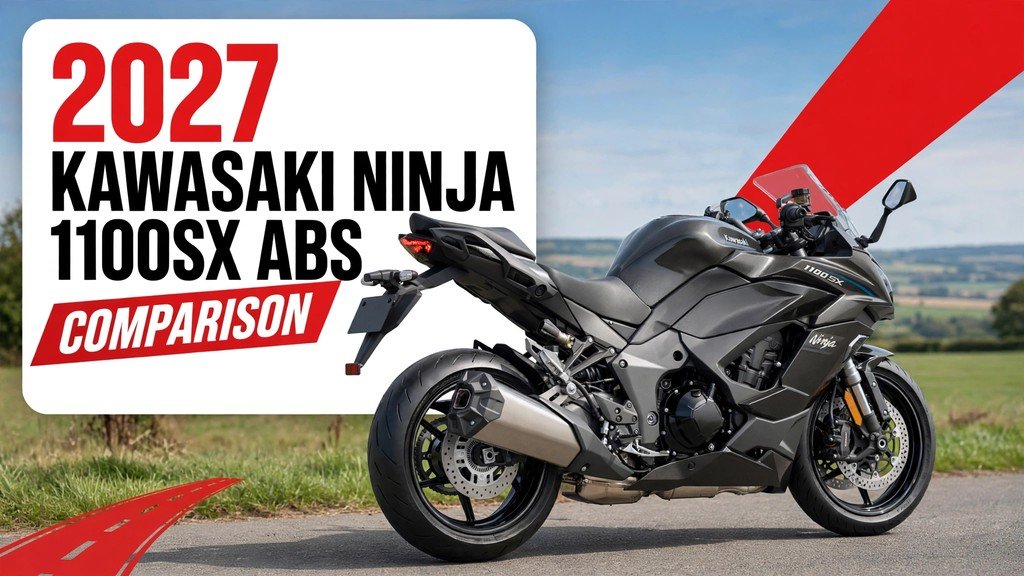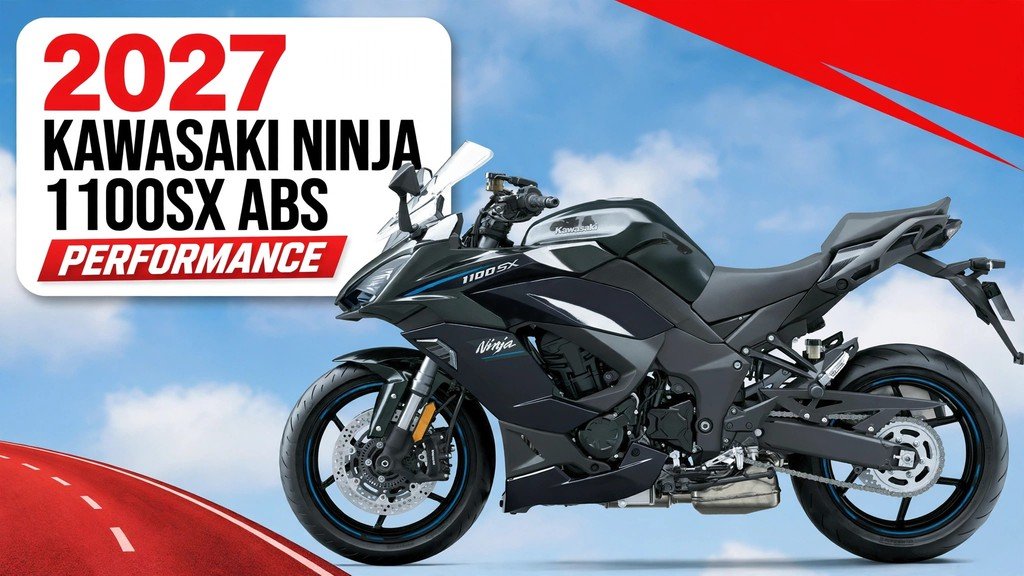
The Kawasaki Ninja 1100SX ABS makes 134 hp at 9,000 rpm and 83.2 lb-ft at 7,600 rpm from a stroked 1,099cc inline-four, and the only dyno run in existence, an SE’s, shows 124.6 hp at the rear wheel. No measured top speed exists, and the 154 mph figure in aggregator tables belongs to the old Ninja 1000SX. This Kawasaki Ninja 1100SX ABS performance guide covers the dyno, the gearing, the tester MPG figures and the GT+ comparison.
The trade is deliberate: peak power fell 6 hp from the 1000SX’s 140 hp, but MCN’s long-term dyno found 6 to 8 bhp more between 4,000 and 7,000 rpm, which is where a sport-tourer spends its life. SE testers saw 38.5 to over 40 mpg, the quickshifter now works from 1,500 rpm, and 70 mph arrives at 4,200 rpm in sixth gear. This Kawasaki Ninja 1100SX ABS performance guide explains why the trade works.
Kawasaki Ninja 1100SX ABS Engine Performance and Power Delivery
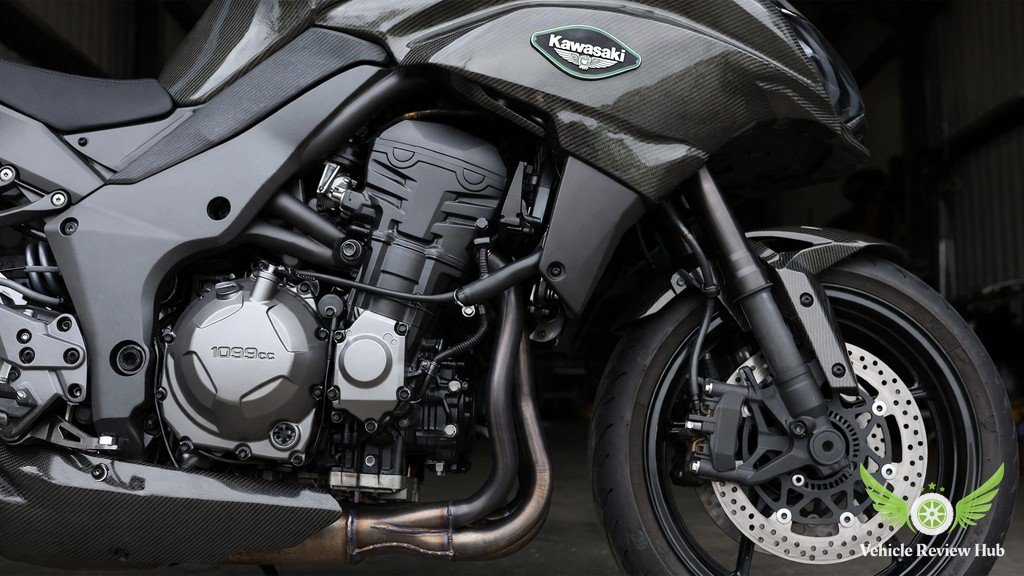
The engine is where this Kawasaki Ninja 1100SX ABS performance story starts: Kawasaki stroked the 1000SX’s 1,043cc inline-four to 1,099cc and tuned it for midrange rather than peak power. The changes are a 3.0 mm stroke increase, milder cams, a heavier flywheel and a rev limit 500 rpm lower than the old bike’s.
Midrange Is Where the Gains Live
The midrange gain of 6 to 8 bhp between 4,000 and 7,000 rpm is where Kawasaki Ninja 1100SX ABS performance lives, and it comes from the longer stroke, not a bigger bore. The stroke increase is 3.0 mm, not 3.3 mm: 59.0 minus 56.0 is 3.0, and two sources that print 3.3 mm are wrong. The engine pulls harder from low revs and runs out of breath sooner at the top. The old bike is only ahead past 7,000 rpm, and almost nobody tours there. Kawasaki USA claims 134 hp at 9,000 rpm and 83.2 lb-ft at 7,600 rpm, with the horsepower figure measured to the ISO 4106 standard, which Kawasaki’s footnote says may read higher than an SAE figure. The global claim is 136 PS, or 100.0 kW, with 113 Nm of torque. This Kawasaki Ninja 1100SX ABS performance trade is the right one for the class.
The Only Dyno Run Is an SE’s
Motorcycle.com’s test of a 2025 SE is the only dyno run in existence: 124.6 hp at 9,200 rpm and 77.4 lb-ft at 7,600 rpm at the rear wheel, and this Kawasaki Ninja 1100SX ABS performance guide labels that run SE-only everywhere it appears, because no standard-bike dyno exists. The SE shares the standard bike’s engine and claims, so its rear-wheel figures are the best available guide, but they are still an SE’s figures. The 9.4 hp gap between the 134 hp crank claim and the 124.6 hp rear-wheel figure is the normal loss through the gearbox, chain and rear wheel. The Motorcycle.com SE review carries the dyno chart.
| Item | Claimed (Kawasaki USA) | Dyno (Motorcycle.com, SE) |
|---|---|---|
| Power | 134 hp @ 9,000 rpm (ISO 4106) | 124.6 hp @ 9,200 rpm, rear wheel |
| Torque | 83.2 lb-ft @ 7,600 rpm | 77.4 lb-ft @ 7,600 rpm, rear wheel |
| Displacement | 1,099cc | Same engine, 1,099cc |
| Bore x stroke | 77.0 x 59.0 mm | Same engine, 77.0 x 59.0 mm |
| Compression ratio | 11.8:1 | Same engine, 11.8:1 |
| Midrange gain vs 1000SX | Not claimed | +6 to 8 bhp, 4,000 to 7,000 rpm (MCN) |
Notes for this Kawasaki Ninja 1100SX ABS performance table: the 134 hp claim is an ISO 4106 figure, and the dyno figure of 124.6 hp is SE-only, since no standard-bike dyno exists.
The video below is Kawasaki’s own performance film for the 1100SX, with riding footage of the bike. It is a manufacturer showcase, not an independent test: the numbers in this Kawasaki Ninja 1100SX ABS performance guide come from Motorcycle.com’s dyno and RevZilla’s road test.
Kawasaki Ninja 1100SX ABS Top Speed and Acceleration
Top speed is the one question this Kawasaki Ninja 1100SX ABS performance guide cannot answer with a number. The bike launched for 2025, and no road test so far has put a GPS on it at full throttle. The honest answer is to say so, and to explain where the 154 mph figure really comes from.

No Measured Top Speed Exists Yet
No measured top speed exists for the 1100SX, and this Kawasaki Ninja 1100SX ABS performance guide prints no top-speed figure, because none has been measured. The aggregator figures are invented: one site prints around 155 mph, another 249 km/h, a third 150 mph, and a fourth 250 km/h, and none cites a test. There is also no instrumented 0 to 60 mph time and no quarter-mile time, so the acceleration story has to be told from the dyno and the gearing instead of a stopwatch. The 1000SX’s verified 10.5-second quarter-mile must not be carried over, because the new bike has different gearing and a lower rev limit.
154 MPH Belongs to the Old 1000SX
The 154 mph figure belongs to the old Ninja 1000SX, and this Kawasaki Ninja 1100SX ABS performance guide does not carry it over to the new bike. RevZilla recorded 152 mph on GPS and 154 mph indicated on the 1000SX, on the old bike’s gearing and rev limit. The 1100SX has taller gearing and a lower rev limit, so the number would have to be measured on the new bike before it could be printed. The 1000SX performance guide records the old bike’s figures.
Kawasaki Ninja 1100SX ABS Mileage and Fuel Economy
Fuel economy is where this Kawasaki Ninja 1100SX ABS performance guide gets specific: three testers measured it on SE bikes, and Kawasaki published its own claim beside them. Every tester figure below is labelled SE, because all three test bikes were SEs. The 5.0-gallon tank turns those figures into a real touring range.
SE Testers Saw 38.5 MPG, Labelled SE
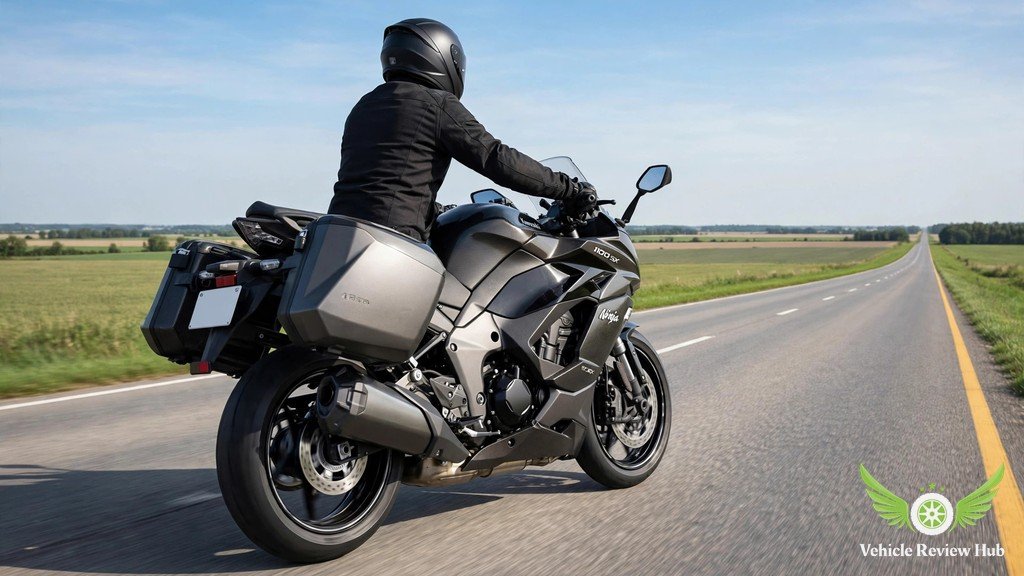
SE testers saw 38.5 mpg from RevZilla over three tanks in two weeks with more city riding, 39 mpg from Ultimate Motorcycling, and over 40 mpg from Motorcycle.com on long hauls, with high 30s when ridden hard, and this Kawasaki Ninja 1100SX ABS performance guide labels every MPG figure SE-only, because no standard-bike test exists. Motorcycle.com recorded more than 170 miles per 5.0-gallon tank, and MCN’s long-term bike covered 180 to 205 miles before the fuel light. Kawasaki claims 50 mpg, with a UK figure of 50.4 mpg and a theoretical range of 209 to 211 miles, but that is a claim, not a test result. The honest range for a touring rider is 170-plus miles per tank on tester figures.
Suzuki Publishes No MPG Figure
Suzuki publishes no MPG figure for the GSX-S1000GT+, so this Kawasaki Ninja 1100SX ABS performance comparison uses tester figures on the Kawasaki side and no figure at all on the Suzuki side. That matters, because a buyer comparing the two bikes on fuel economy has nothing official from Suzuki to compare with, and any MPG claim for the GT+ in an aggregator table is not a Suzuki figure. The GSX-S1000GT review covers the Suzuki’s engine and touring kit, and its fuel economy has to be judged from owner reports. The Kawasaki side is better documented: three testers, three figures, all labelled SE.
| Source | Bike tested | MPG | Notes |
|---|---|---|---|
| RevZilla | 2025 SE | 38.5 | 3 tanks, 2 weeks, more city riding |
| Ultimate Motorcycling | 2025 SE | 39 | Tester figure |
| Motorcycle.com | 2025 SE | 40+ | Long hauls; high 30s when ridden hard |
| MCN long-term | SE | Not published | 180 to 205 miles before the fuel light |
| Kawasaki claim | 1100SX | 50 | Manufacturer claim, not a test result |
| Suzuki (GT+) | GSX-S1000GT+ | No figure | Suzuki publishes no MPG figure |
Notes for this Kawasaki Ninja 1100SX ABS performance table: every tester MPG figure is SE-only, and the 50 mpg figure is Kawasaki’s claim, not a test result.
Kawasaki Ninja 1100SX ABS Real-World Riding Experience
On the road, this Kawasaki Ninja 1100SX ABS performance package is about relaxed revs and a quickshifter that works from low speed, not about chasing the redline. The taller gearing keeps the engine quiet on the highway, the midrange does the overtaking, and the two complaints carried over from the 1000SX are the windscreen and the mirrors.
70 MPH at 4,200 RPM on Taller Gears
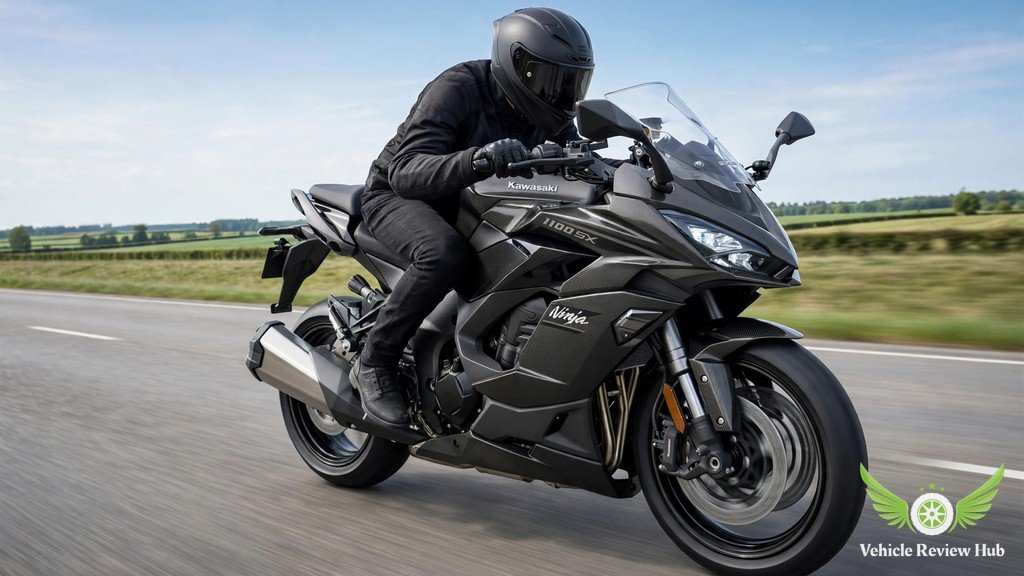
Taller gearing puts the bike at 70 mph at 4,200 rpm in sixth gear, about 300 rpm lower than the 2020 1000SX, and this Kawasaki Ninja 1100SX ABS performance guide treats the taller gearing as the single biggest real-world change, because it is the change a rider feels on every highway mile. A taller primary ratio, a shorter final drive and taller fifth and sixth gears give a calmer cruise with the same midrange underneath. Cycle News recorded about 4,500 rpm at 60 mph in sixth. The quickshifter works from 1,500 rpm, down from 2,500 rpm, so clutchless shifts work from town speeds. The RevZilla first look recorded the 70 mph figure from the TFT tach, and the taller gearing is one reason SE testers saw 38.5 to over 40 mpg despite the bigger engine.
Windscreen Still Criticized by Testers
The windscreen still divides testers, and this Kawasaki Ninja 1100SX ABS performance guide records both sides rather than picking one. RevZilla calls the stock screen style over function, and adds that the small windscreen, the too-small and too-far mirrors, and the intrusive ABS were called out on the old bike and are still present. Motorcycle.com takes the other side: the multi-position screen gives good wind deflection at pace without helmet buffeting. BikeReview found decent deflection but a loud ride, with the adjuster jamming in the lowest position, and MCN’s long-term bike offered impressive protection with minimal buffeting, even in heavy rain. The screen is multi-position adjustable; the number is not printed here, because Cycle News says three and RevZilla says four. A taller aftermarket screen is the fix RevZilla suggests.
Kawasaki Ninja 1100SX ABS Handling, Braking and Stability
Handling is where this Kawasaki Ninja 1100SX ABS performance package leans on its electronics, because the chassis is a carry-over and the IMU is the new part of the story. The bike weighs 518.2 lb ready to ride, rides on a 56.7-inch wheelbase, and carries a Bosch six-axis IMU that the Suzuki GT+ does not have at all. The suspension is fully adjustable at the front and rebound-adjustable at the rear, and the SE swaps the rear shock for an Öhlins S46.
Handling, Braking and Stability on Tour
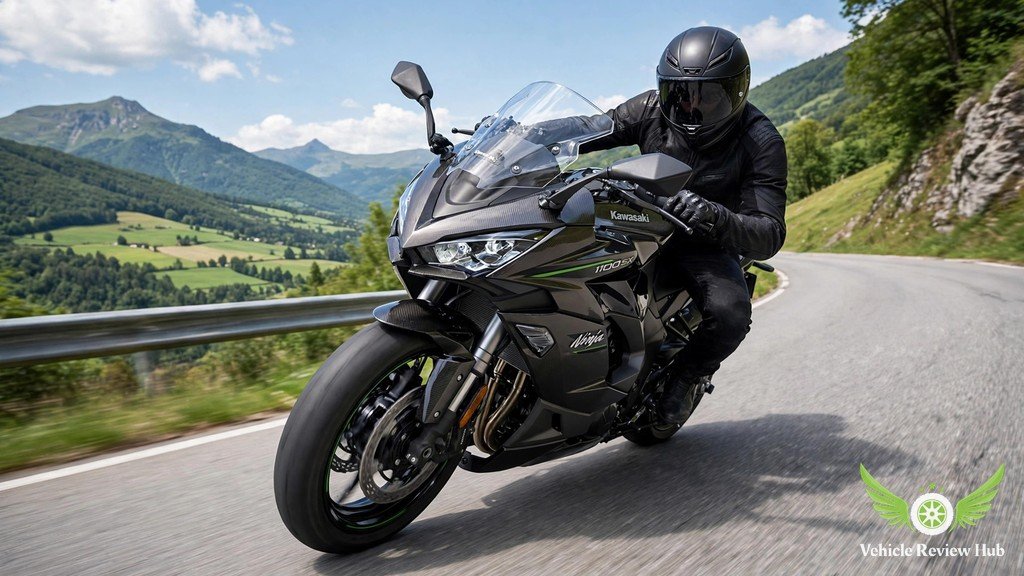
The front is a 41 mm inverted Showa fork with compression, rebound and preload adjustment and 4.7 inches of travel, and the rear shock has rebound and remote preload with 5.6 inches of travel, not the 5.4 inches one spec table still prints. The front brakes are dual 300 mm discs with radial-mount four-piston monobloc calipers and cornering ABS, and the rear is a 260 mm round disc, not the 250 mm petal disc the same wrong table prints. The SE adds Brembo M4.32 calipers, a Brembo master cylinder, Brembo discs and steel-braided lines, but the feel is still filtered by the ABS unit: RevZilla pulled the ABS fuse and called the bike a totally different beast, and Cycle News found the SE feel a little diluted through the master cylinder and the ABS unit. The standard bike’s caliper brand is not printed here: one source says Tokico, another says Nissin. This Kawasaki Ninja 1100SX ABS performance guide counts the IMU electronics as the standard bike’s strongest card on tour, because cornering ABS, lean-sensitive traction control and cornering management all come standard, and the GT+ has none of them. MCN’s verdict was that the Suzuki is decidedly more vibey and raw while the Kawasaki is ultra-smooth, and the GT’s ABS and traction control are not angle-responsive.
Quickshifter Now Works From 1,500 RPM
The quickshifter now works from 1,500 rpm, down from 2,500 rpm on the old bike, and this Kawasaki Ninja 1100SX ABS performance guide counts the quickshifter as the most-used electronic aid on the bike, because it works in town as well as on the highway. The system shifts up and down without the clutch, and the lower threshold means a rider can use it from the first gear change out of a junction. Electronic cruise control is standard, with four ride modes and two power modes, where Low gives 75 percent throttle for wet roads. The 4.3-inch TFT display, Rideology app connection and USB Type-C outlet are standard on both trims. There is no electronic suspension on either trim, no keyless ignition and no centre stand, and no 1100SX cruise-control speed limit was found: the 85 mph figure belongs to the old 1000SX.
Kawasaki Ninja 1100SX ABS Performance Compared With Other Sport-Tourers
Against its rivals, this Kawasaki Ninja 1100SX ABS performance package trades peak power for torque and electronics, and the trade looks different against each rival. The Suzuki makes more power, the Yamaha makes less, and the Kawasaki stands alone on cornering electronics. The prices below are 2026 delivered figures, with the pannier cost shown separately, because the Suzuki includes its bags and the Kawasaki does not.
Kawasaki Ninja 1100SX ABS vs Suzuki GSX-S1000GT+
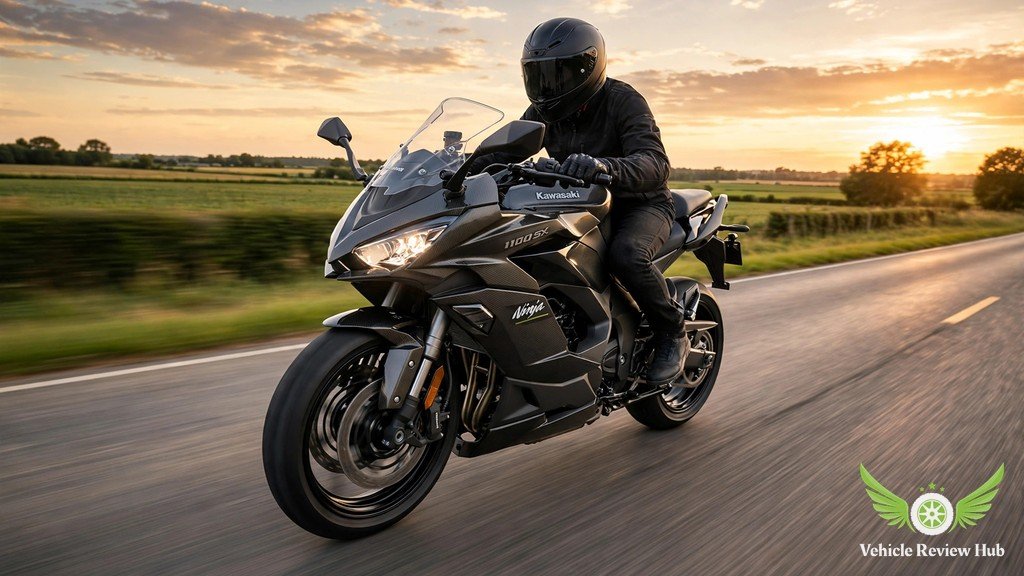
The Suzuki GSX-S1000GT+ makes 150 hp at 11,000 rpm and 79.6 lb-ft at 9,250 rpm from its 999cc four, against the Kawasaki’s 134 hp at 9,000 rpm and 83.2 lb-ft at 7,600 rpm, so the Suzuki leads on peak power by 16 hp and the Kawasaki leads on torque by 3.6 lb-ft, lower down the rev range. The Suzuki weighs 498 lb, 20.2 lb less than the Kawasaki’s 518.2 lb, and its seat is 31.9 inches, 0.4 inches lower than the Kawasaki’s 32.3 inches. The Suzuki costs $15,099 delivered for 2026 with panniers included, while the Kawasaki costs $14,839 delivered with panniers at $1,128.96 extra, so the Kawasaki with bags fitted costs $15,967.96, $868.96 more than the Suzuki. The Yamaha Tracer 9 sits below both with 117 hp from its 890cc triple, and it costs $13,299 delivered for 2026 as the base bike only, with no factory panniers at that price. The gap that matters most is the electronics: the Suzuki has no IMU, no cornering ABS and no cornering traction control, while the Kawasaki has all three as standard, and this Kawasaki Ninja 1100SX ABS performance comparison puts the Suzuki ahead on peak power and the Kawasaki ahead everywhere else. MCN named the Ninja 1100SX SE its Sports Tourer of the Year for 2025, and its verdict on the pair was that sports-touring perfection is just about what the new Kawasaki achieves for two grand less in SE Tourer spec. The Kawasaki USA 2025 spec sheet carries the 134 hp claim and the 518.2 lb curb weight, and the 1100SX review covers the prices year by year.
| Bike | Engine | Power | Torque | Curb weight | 2026 delivered |
|---|---|---|---|---|---|
| Kawasaki Ninja 1100SX ABS | 1,099cc four | 134 hp @ 9,000 rpm | 83.2 lb-ft @ 7,600 rpm | 518.2 lb | $14,839 |
| Suzuki GSX-S1000GT+ | 999cc four | 150 hp @ 11,000 rpm | 79.6 lb-ft @ 9,250 rpm | 498 lb | $15,099 |
| Yamaha Tracer 9 | 890cc triple | 117 hp @ 10,000 rpm | 68.6 lb-ft @ 7,000 rpm | 483 lb | $13,299 |
| Kawasaki Ninja 1100SX SE | 1,099cc four | 134 hp @ 9,000 rpm | 83.2 lb-ft @ 7,600 rpm | 516.0 lb | $16,639 |
Notes for this Kawasaki Ninja 1100SX ABS performance table: the GT+ price includes its panniers, while the 1100SX panniers cost $1,128.96 extra, so the Kawasaki with bags fitted costs $15,967.96 against the Suzuki’s $15,099.
Is the Kawasaki Ninja 1100SX ABS Suitable for Beginner Riders? No
No. It makes 134 hp, weighs 518.2 lb and is a litre-class sport-tourer, and no part of that suits a new rider, and this Kawasaki Ninja 1100SX ABS performance guide points beginners toward a smaller bike first. A new rider needs a bike that forgives mistakes, and a 134 hp machine does the opposite. The succession fact closes this guide: the 1100SX is the current new bike, and the 1000SX is now a used buy.
Kawasaki Ninja 1100SX ABS Performance: Frequently Asked Questions
Direct answers to the Kawasaki Ninja 1100SX ABS performance questions buyers ask most.
How much power does the Kawasaki Ninja 1100SX ABS make?
Kawasaki claims 134 hp at 9,000 rpm and 83.2 lb-ft at 7,600 rpm, measured to the ISO 4106 standard, and this Kawasaki Ninja 1100SX ABS performance guide footnotes the ISO 4106 standard, because the figure may read higher than an SAE figure. The only dyno run found is Motorcycle.com’s test of an SE, which made 124.6 hp at the rear wheel.
What is the top speed of the Kawasaki Ninja 1100SX ABS?
No measured top speed exists for this bike. The 154 mph figure found in aggregator tables belongs to the old Ninja 1000SX, and this Kawasaki Ninja 1100SX ABS performance guide prints no top-speed figure, because the new bike has different gearing and a lower rev limit.
What MPG does the Kawasaki Ninja 1100SX ABS get?
SE testers saw 38.5 mpg (RevZilla), 39 mpg (Ultimate Motorcycling) and over 40 mpg (Motorcycle.com) on long hauls, and this Kawasaki Ninja 1100SX ABS performance guide labels every MPG figure SE-only, because no standard-bike test exists. Kawasaki claims 50 mpg, but that is the manufacturer’s claim, not a test result.
Has the Kawasaki Ninja 1100SX ABS been dyno tested?
Yes, once, and only an SE. Motorcycle.com’s test of a 2025 SE made 124.6 hp at 9,200 rpm and 77.4 lb-ft at 7,600 rpm at the rear wheel, and this Kawasaki Ninja 1100SX ABS performance guide labels that run SE-only, because no standard-bike dyno exists.
How fast is the Kawasaki Ninja 1100SX ABS from 0 to 60 mph?
No instrumented 0 to 60 mph time exists for this bike, so this Kawasaki Ninja 1100SX ABS performance guide prints no 0 to 60 time. The 1000SX’s verified 10.5-second quarter-mile must not be carried over, because the new bike has different gearing and a lower rev limit.
Is the Kawasaki Ninja 1100SX ABS faster than the Ninja 1000SX?
It depends where you measure it. The new bike makes 134 hp against the old bike’s 140 hp, so the old bike has more peak power, but the new bike makes 6 to 8 bhp more between 4,000 and 7,000 rpm, and this Kawasaki Ninja 1100SX ABS performance guide treats the two as a choice between peak power and midrange.
What is the fuel range of the Kawasaki Ninja 1100SX ABS?
More than 170 miles per 5.0-gallon tank on SE tester figures, and this Kawasaki Ninja 1100SX ABS performance guide rates that range on tester figures alone. MCN’s long-term bike covered 180 to 205 miles before the fuel light, and Kawasaki’s UK figure of 50.4 mpg converts to a theoretical 209 to 211 miles on the 5.0-gallon tank, but that is a claim, not a test.
Does the Kawasaki Ninja 1100SX ABS have a quickshifter?
Yes. The up and down quickshifter works from 1,500 rpm on both trims, down from 2,500 rpm on the old bike, and this Kawasaki Ninja 1100SX ABS performance guide counts it as standard, alongside cruise control and the 4.3-inch TFT display.
How does the Kawasaki Ninja 1100SX ABS compare with the Suzuki GSX-S1000GT+ for performance?
The Suzuki makes more peak power at 150 hp against the Kawasaki’s 134 hp, and this Kawasaki Ninja 1100SX ABS performance comparison gives the Kawasaki the torque and electronics edge: 83.2 lb-ft against 79.6 lb-ft, plus a six-axis IMU with cornering ABS and traction control that the Suzuki does not have.
Is the Kawasaki Ninja 1100SX ABS good for highway touring?
Yes. Taller gearing puts the bike at 70 mph at 4,200 rpm in sixth, and the 5.0-gallon tank gives more than 170 miles per fill on SE tester figures, and this Kawasaki Ninja 1100SX ABS performance guide rates it a genuine tourer, with the windscreen the one part testers still argue about.
Does the SE trim make more power than the standard bike?
No. Both trims share the same 1,099cc engine and 134 hp claim, and this Kawasaki Ninja 1100SX ABS performance guide treats the SE as a chassis and brakes upgrade, not a power upgrade: Brembo brakes, an Öhlins rear shock and heated grips, with the SE 2.2 lb lighter at 516.0 lb.
Is the Kawasaki Ninja 1100SX ABS suitable for beginner riders?
No. It makes 134 hp, weighs 518.2 lb and is a litre-class sport-tourer, and no part of that suits a new rider, and this Kawasaki Ninja 1100SX ABS performance guide points beginners toward a smaller bike first.