The short answer is yes, so far. This Kawasaki Ninja 1100SX ABS reliability picture is the cleanest a first-year bike can have: zero recalls and zero complaints on the NHTSA record for 2025, 2026 and 2027, and the only long-term press bike, an MCN SE with nearly 5,000 miles, came back mechanically solid. The limits start here. The bike launched as a 2025 model, so no owner has lived with one for years yet, and Kawasaki has not published a US service chart for the 1100SX itself. The intervals in this guide are the 1000SX platform figures, labelled as carry-over, and the valve interval is an open conflict. This Kawasaki Ninja 1100SX ABS reliability guide gives you the verified record, the platform figures, MCN’s two niggles and the checks that matter before you buy.
Kawasaki Ninja 1100SX ABS Reliability Overview
Reliability on a first-year bike is a question with a short verified record and a long list of unknowns. This Kawasaki Ninja 1100SX ABS reliability overview starts with what the record actually says: the US safety database is empty for all three model years, the only long-term press bike ran nearly 5,000 miles without a mechanical failure, and the stroked 1,099cc four makes 134 hp at 9,000 rpm and 83.2 lb-ft at 7,600 rpm, with a 32.3-inch seat and a 518.2 lb curb weight. None of that is a promise.
| Model year | NHTSA recalls | NHTSA complaints | Checked |
|---|---|---|---|
| 2025 | 0 | 0 | 2026-11-17 |
| 2026 | 0 | 0 | 2026-11-17 |
| 2027 | 0 | 0 | 2026-11-17 |
Notes for this Kawasaki Ninja 1100SX ABS reliability table: NHTSA database counts for the Ninja 1100SX by model year, checked 2026-11-17.
Zero Recalls, Zero Complaints So Far
NHTSA lists zero recalls and zero complaints for the 2025, 2026 and 2027 Ninja 1100SX. That is a clean sheet. It means no owner has filed a safety complaint and no safety campaign has opened in two years of sales. It does not mean nothing has ever gone wrong; small faults that never reach NHTSA do not appear here. This Kawasaki Ninja 1100SX ABS reliability record is still young — the bike has only been on sale since 2025 — but a clean NHTSA sheet across three model years is the strongest public signal a new bike can carry. The NHTSA recalls database is where to check the record yourself before you buy.
How Mileage, Storage and Previous Care Affect Reliability
A first-year bike’s reliability is decided as much by its owner as by the factory. Low mileage is not a guarantee: a 2025 bike that sat unridden for a year can have a flat-spotted rear tyre, a dead battery and stale fuel, while a bike with 5,000 careful miles and a stamped service book is the better buy. Garaged, on a trickle charger, with fresh fuel beats a bike left outside. Verify previous care: ask for the 600-mile first service record, check the chain, look for crash damage on the bar ends and pannier mounts, and confirm the TFT and quickshifter. This Kawasaki Ninja 1100SX ABS reliability check costs nothing and catches the problems a clean NHTSA sheet cannot.
Kawasaki Ninja 1100SX ABS Common Problems and Wear Items
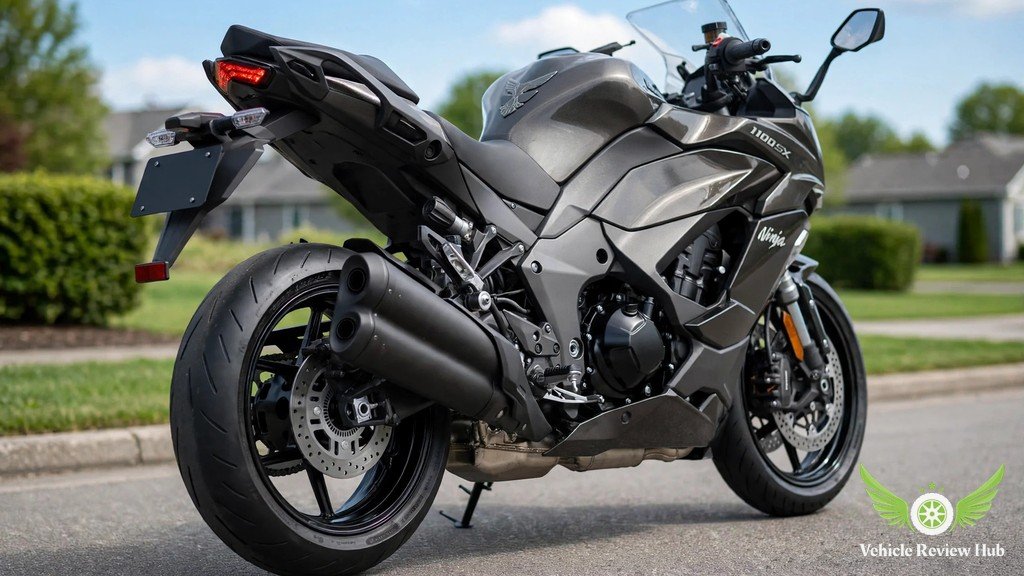
The honest answer to the common-problems question is that there is not one. This Kawasaki Ninja 1100SX ABS reliability guide refuses to invent a pattern failure for a bike with no recall, no bulletin and no forum pattern. What exists instead is a thin owner record, two small niggles from MCN’s long-term bike, and dash and app quirks from Kawasaki’s shared platform.
Owner Record Too Thin for Patterns Yet
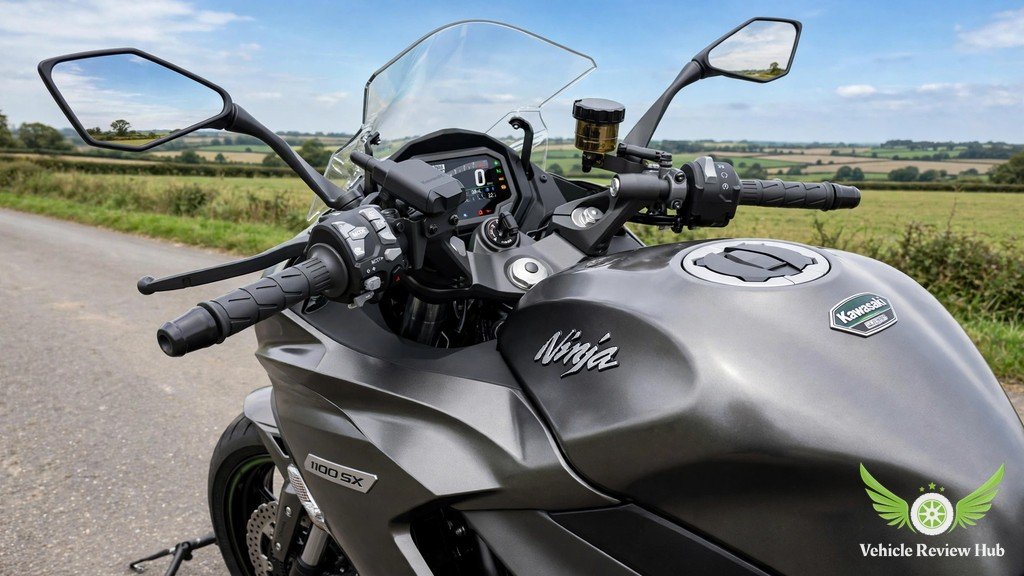
No pattern failure exists for the 1100SX yet, and this guide says so plainly. The bike launched as a 2025 model, and no forum thread, service bulletin or recall describes a repeated fault. The only long-term evidence is MCN’s fleet bike, a 2025 SE with nearly 5,000 miles, described as mechanically solid. Its two niggles were small: a sticky throttle when the bike was strapped down in a van or when bar-end accessories such as a lever guard were fitted, caused by pressure on the bar-end weight, and an isolated heated-grip control issue. Corrosion resistance was excellent after months of winter riding on salted roads, with no visible rust. MCN’s owners’ reliability rating stands at 3.5 out of 5, but that is a small-sample site rating, not a survey. That thin record is the central fact of this Kawasaki Ninja 1100SX ABS reliability picture: nothing has broken in a pattern yet. The MCN Ninja 1100SX review carries those long-term updates.
Dash and App Quirks Are Platform Reports
The quirks owners report are platform reports, not 1100SX defects, and this Kawasaki Ninja 1100SX ABS reliability guide labels them that way. Motorcycle.com calls the TFT panel deceptively confusing across all Team Green machines using this dash. Cycle News notes the Rideology app takes time to learn, and voice command and navigation need a paid licence. RevZilla carries over two 1000SX complaints: mirrors too small and too far away, and ABS that cuts in early. None of these stops the bike or strands a rider — annoyances an owner lives with or fixes with an aftermarket screen and mirror extenders.
Kawasaki Ninja 1100SX ABS Maintenance Schedule and Servicing
The service schedule is the one place this guide cannot give you the 1100SX’s own numbers: no US owner’s-manual chart for this bike could be found. This Kawasaki Ninja 1100SX ABS reliability guide uses the 1000SX platform chart instead, and labels every figure as a carry-over. The engine is a stroked 1000SX unit and the chassis is shared, so the platform intervals are the best available guide — not the bike’s own published schedule.

Valve Figures Conflict: 15,000 vs 26,250
The valve interval is an open conflict, and this section presents it as the document frames it, without picking a winner. The 15,000-mile figure is the platform figure from the 1000SX owner’s manual, 24,000 km — the only valve interval with a sourced origin. The 26,250-mile figure is 42,000 km converted, but no 1100SX-specific source for it could be verified — it may come from a European schedule or a different model. So this Kawasaki Ninja 1100SX ABS reliability guide prints neither figure as the official US interval. If you own the bike, follow your own owner’s manual. If you are buying used, ask which interval the bike was serviced to and look for the valve-check stamp — a bike serviced to the shorter interval is the safer buy.
Oil and Plugs From the Platform Chart
Oil and filter and spark plugs every 7,600 miles, first service at 600 miles, chain cleaned and lubricated about every 400 miles. Those are the platform figures from the 1000SX chart — carried over, not printed from an 1100SX manual — and this Kawasaki Ninja 1100SX ABS reliability guide repeats the label because it matters. The oil is 10W-40, 3.2 litres with a filter change. The first service also clears the running-in rev warning on the dash. Coolant, brake fluid and air filter are periodic items on the platform chart, with no interval printed here without the manual in hand. Book the service and keep the receipts; on a first-year bike, a full service history is the evidence a buyer can check. The 1000SX reliability guide covers the platform chart these figures come from.
| Service item | Platform interval | Label |
|---|---|---|
| First service | 600 miles | Platform figure |
| Engine oil and filter | Every 7,600 miles | Platform figure; 10W-40, 3.2 litres |
| Spark plugs | Every 7,600 miles | Platform figure |
| Valve clearance inspection | 15,000 miles | Platform figure — see conflict note |
| Chain clean and lube | About every 400 miles | Platform figure |
| Coolant, brake fluid, air filter | Periodic | No interval printed without the manual |
Notes for this Kawasaki Ninja 1100SX ABS reliability table: every interval is the 1000SX platform figure, carried over and labelled; the 1100SX’s own US chart was not found, and the valve interval is unresolved.
Kawasaki Ninja 1100SX ABS Tires, Brakes and Suspension Maintenance
Tyres, brakes and suspension are where the 1100SX differs most from the 1000SX. This Kawasaki Ninja 1100SX ABS reliability section covers the round brake discs, the S23 tyres, the chain and suspension, and the checks that catch wear before it becomes a bill.

Chain, Sprockets and Tire Care
The 1100SX drives its rear wheel through a sealed chain, cleaned and lubricated about every 400 miles on the platform schedule, with slack and sprocket wear checked at services. No chain size was published for this bike, so this guide prints none. The tyres are Bridgestone Battlax S23s, 120/70-17 front and 190/50-17 rear. Check pressures weekly, watch the rear for squaring off after long highway miles, and check the date code on any used bike: a tyre that has sat two years needs a close look regardless of tread depth. This Kawasaki Ninja 1100SX ABS reliability routine is unglamorous and cheap, and it keeps a chain and a set of tyres from becoming a roadside problem.
Tire, Brake and Suspension Checks That Matter
Check the brakes by part number, not by habit. The front discs are dual 300 mm round discs, not the petal discs the 1000SX used, and the rear is a 260 mm round disc, up from 250 mm — a seller quoting petal discs or a 250 mm rear is describing the old bike. KIBS cornering ABS is standard. The suspension is a 41 mm inverted Showa fork, compression, rebound and preload, 4.7 inches of travel, and a rear shock with rebound and remote preload, 5.6 inches; the SE swaps the rear shock for an Öhlins S46. Check the fork seals for weeping, set sag and preload for your weight and load, and get a mechanic to look at any used bike with unknown suspension history — no fork-oil interval was found for this bike. Those checks are the core of this Kawasaki Ninja 1100SX ABS reliability routine for the running gear. The Motorcycle.com SE review covers the brakes and suspension in road-test detail, including the only dyno run found for this engine, an SE making 124.6 hp at the rear wheel.
Kawasaki Ninja 1100SX ABS Maintenance and Ownership Costs
Ownership costs for a first-year bike are mostly fuel and tyres. This Kawasaki Ninja 1100SX ABS reliability guide puts the honest numbers first: real-world fuel economy from SE testers, the one servicing price anywhere, and the accessory prices Kawasaki publishes. There is no US dealer service price for this bike, and this guide does not invent one.
Fuel, Routine Servicing, Tires and Replacement Parts
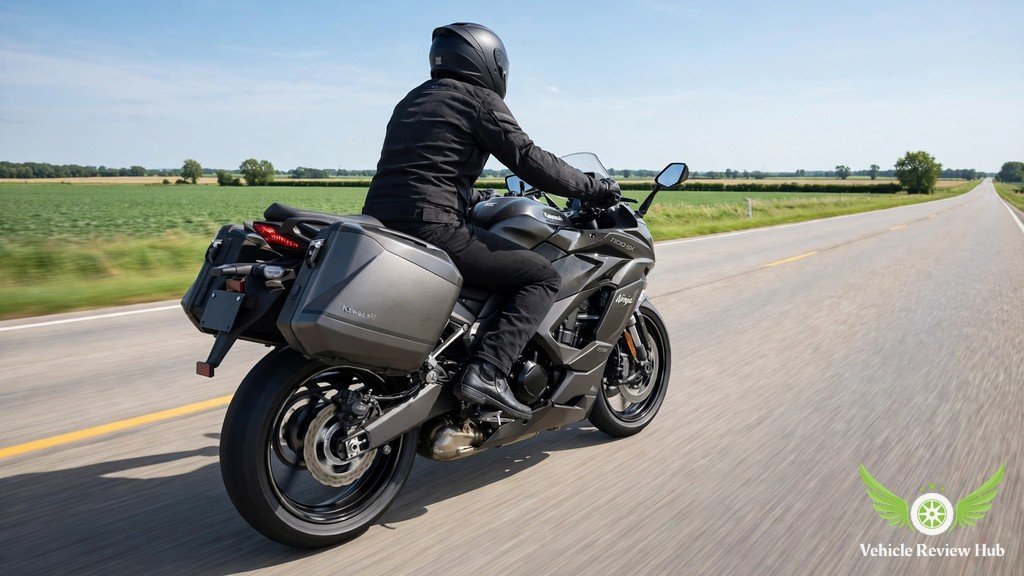
Fuel is the biggest running cost, and the numbers are SE tester figures: RevZilla 38.5 mpg over three tanks, Ultimate Motorcycling 39 mpg, Motorcycle.com over 40 mpg on long hauls — roughly 190 to 200 miles from the 5.0-gallon tank. Kawasaki claims 50 mpg, but that is the manufacturer’s claim, not a test result. Routine servicing has no US dealer price published; the only servicing price found anywhere is MCN’s UK figure of £250 a year — not a US price, quoted only to show the gap in the record. Tyres are the next bill: a set of S23s is a hypersport purchase, and no 1100SX-specific tyre life figure exists, so budget on wear. Parts with published prices are the panniers at $1,128.96 a pair, and the 12-month limited warranty covers the first year. Heated grips are a paid accessory on the base bike and no price was found — the 1000SX’s 2020 price of $298.95 is not this bike’s price. That is the verified picture of this Kawasaki Ninja 1100SX ABS reliability cost base: fuel you can measure, servicing you cannot price yet, and parts priced only where Kawasaki publishes them. The RevZilla first look records the 38.5 mpg figure, and the 1100SX performance guide covers the fuel economy in full.
ZX-10R Campaigns Do Not Cover It
A recall for the ZX-10R does not cover this bike, and the point matters because aggregators have attached superbike campaigns to sport-tourers before. The ZX-10R is a different motorcycle — a 200-horsepower superbike with winglets and no luggage. The 1100SX’s own NHTSA record is Count:0 for recalls, and no ZX-10R campaign number was verified, so this guide keeps the point generic. When a seller mentions a recall on an 1100SX, ask for the campaign number and check it against the NHTSA recalls database for the Ninja 1100SX by model year. If the number belongs to a ZX-10R, it does not apply to the bike in front of you. That is why this Kawasaki Ninja 1100SX ABS reliability guide checks the record by model year rather than by family name.
How to Keep a Kawasaki Ninja 1100SX ABS Reliable
Keeping this bike reliable is mostly about doing the ordinary things on time. This Kawasaki Ninja 1100SX ABS reliability section is a short checklist, not a workshop manual: service to the platform intervals, keep the records, inspect the wear items, and verify the trim before paying SE money for a base bike.
Preventive Maintenance, Records and Regular Inspections
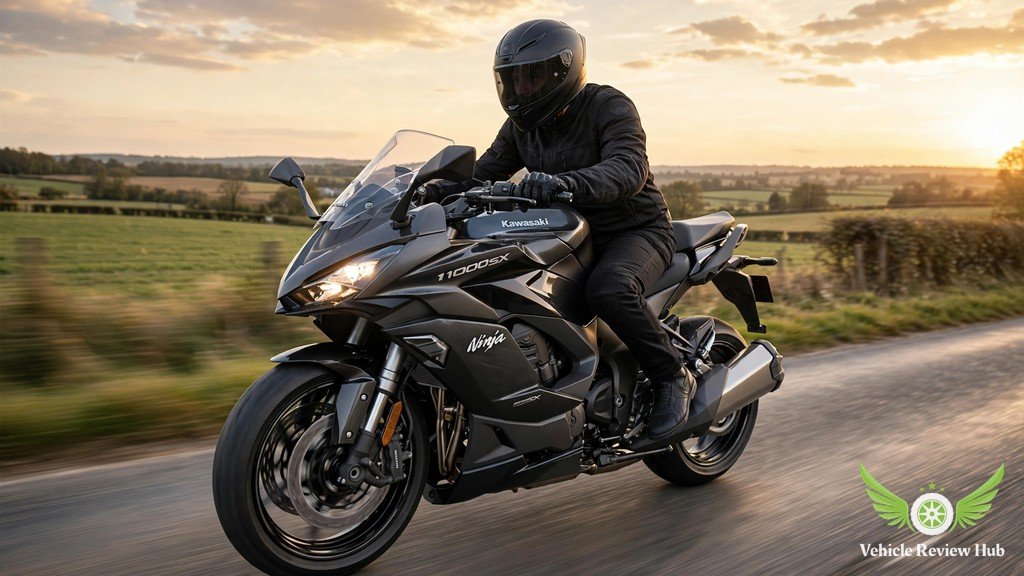
Preventive maintenance means the platform schedule, the owner’s manual and a file of receipts. Service the oil and filter and the plugs every 7,600 miles, the chain every 400 miles, and the valves to your manual’s interval; if your manual and a forum disagree, the manual wins. Inspect the bike regularly: chain slack and sprocket teeth, tyre pressures and date codes, fork seals, brake pads and fluid, the TFT for the running-in warning after the first service, and the bar-end weights if you fit accessories — pressure there caused MCN’s sticky-throttle niggle. Keep every receipt and stamp: on a first-year bike the service book is the reliability record, and a buyer will pay for a complete one. This Kawasaki Ninja 1100SX ABS reliability habit costs little and is worth more than any extended warranty claim.
Check Sellers Are Not Passing Off an SE
The SE costs $1,700 more than the base for 2025 — $15,399 against $13,699 — and $1,800 more for 2026. Delivered, the 2025 base is $14,514 and the SE $16,214; for 2026 the figures are $14,839 and $16,639; for 2027, $15,039 and $16,839. That gap gives a seller a reason to pass a base bike off as an SE. Check the tell-tales before you pay. The SE has Brembo M4.32 front calipers with Brembo cast on them, steel-braided brake lines and a Brembo master cylinder; the base has none of those. The SE has an Öhlins S46 rear shock with a yellow spring and a remote preload adjuster; the base has a Showa shock. The SE has heated grips; the base does not. The SE colours are Emerald Blazed Green for 2025, Metallic Deep Blue for 2026 and Plasma Lime Green for 2027, against the base’s Metallic Carbon Gray. The model codes settle it: 2025 base ZX1100HSFNL, 2025 SE ZX1100JSFAL, on the VIN plate and the documents. That five-minute check is the most valuable page in this Kawasaki Ninja 1100SX ABS reliability guide for a used buyer. The Kawasaki USA 2025 SE spec sheet lists the SE equipment and the Kawasaki USA 2025 base spec sheet lists the standard bike’s — compare the two before you hand over SE money. The 1100SX review prices the SE differences out year by year.
| Feature | Standard bike | SE |
|---|---|---|
| Front calipers | Radial-mount four-piston monobloc | Brembo M4.32 |
| Master cylinder | Standard | Brembo |
| Brake lines | Standard lines | Steel-braided lines |
| Rear shock | Showa, rebound and remote preload | Öhlins S46, yellow spring |
| Heated grips | Paid accessory | Standard |
| 2025 colour | Metallic Carbon Gray | Emerald Blazed Green |
| 2025 MSRP | $13,699 | $15,399 |
| Curb weight | 518.2 lb | 516.0 lb |
Notes for this Kawasaki Ninja 1100SX ABS reliability table: the SE costs $1,700 more than the base for 2025 and $1,800 more for 2026; the engine, power and electronics are identical on both trims.
Kawasaki Ninja 1100SX ABS Reliability: Frequently Asked Questions
Direct answers to the Kawasaki Ninja 1100SX ABS reliability questions buyers ask most.
Is the Kawasaki Ninja 1100SX ABS reliable?
So far, yes. This Kawasaki Ninja 1100SX ABS reliability record shows zero recalls and zero complaints for 2025, 2026 and 2027, and MCN’s long-term SE covered nearly 5,000 miles, mechanically solid. The record is young — a strong start, not a long-term verdict.
Has the Kawasaki Ninja 1100SX ABS had any recalls?
No. NHTSA lists zero recalls for 2025, 2026 and 2027, and this Kawasaki Ninja 1100SX ABS reliability record is the cleanest signal the bike carries. Check the NHTSA recalls database by model year before you buy.
What is the valve clearance interval for the Kawasaki Ninja 1100SX ABS?
It is unresolved. The platform figure is 15,000 miles from the 1000SX chart, and a 26,250-mile figure circulates with no verifiable 1100SX source. This Kawasaki Ninja 1100SX ABS reliability guide prints neither as the bike’s official US interval — follow your owner’s manual.
How often does the Kawasaki Ninja 1100SX ABS need an oil change?
Every 7,600 miles with a new filter, first service at 600 miles — platform figures. The oil is 10W-40, 3.2 litres with a filter change. This Kawasaki Ninja 1100SX ABS reliability schedule is the platform chart, labelled as carry-over, until Kawasaki publishes the 1100SX’s own.
What are the common problems with the Kawasaki Ninja 1100SX ABS?
None has emerged yet. No pattern failure, recall or bulletin exists after two years on sale. MCN’s long-term bike had two small niggles — a sticky throttle from bar-end pressure and an isolated heated-grip control issue — and was otherwise solid. That thin record is the whole story of this Kawasaki Ninja 1100SX ABS reliability picture so far.
How long is the Kawasaki Ninja 1100SX ABS warranty?
Twelve months, limited, in the USA. It covers the first year of ownership on both trims.
How much does it cost to service a Kawasaki Ninja 1100SX ABS?
No US dealer service price has been published for this bike, and this Kawasaki Ninja 1100SX ABS reliability guide does not invent one. The only servicing price found anywhere is MCN’s UK figure of £250 a year — not a US price.
What tyres does the Kawasaki Ninja 1100SX ABS use?
Bridgestone Battlax S23s: 120/70-17 front and 190/50-17 rear. Check pressures weekly, the date code on any used bike, and the rear for squaring off after long highway miles. Tyre care is a small part of this Kawasaki Ninja 1100SX ABS reliability routine, but it is the part that meets the road.
Does the Kawasaki Ninja 1100SX ABS have a chain or shaft drive?
A sealed chain final drive, cleaned and lubricated about every 400 miles on the platform schedule. No chain size was published for this bike, so this guide prints none. Chain care is the most frequent job in this Kawasaki Ninja 1100SX ABS reliability routine.
Is the SE trim more reliable than the standard bike?
There is no evidence either way, and this Kawasaki Ninja 1100SX ABS reliability guide treats the two trims as the same bike mechanically: same engine, electronics and platform service figures. The SE buys Brembo brakes, an Öhlins shock and heated grips, not extra reliability.
How do I tell a real SE from a standard bike?
Check the Brembo M4.32 calipers, the Öhlins S46 rear shock with its yellow spring, the heated-grip switch and the SE colours, then the model code: 2025 base ZX1100HSFNL, 2025 SE ZX1100JSFAL. Those five checks settle the question, and this Kawasaki Ninja 1100SX ABS reliability guide recommends them before any SE-priced purchase.
Is a used Kawasaki Ninja 1100SX ABS a safe buy?
Yes, with the usual checks. Verify the 600-mile first service, the NHTSA record, the SE tell-tales, and the chain, tyres and fork seals. A used 2025 base with 3,226 miles was listed at $10,899 asking — a single listing, not a market price — and new 2025 bikes have been advertised discounted at $12,499–$12,508 against the $13,699 MSRP, so price any used bike on condition and history, not on one advert. That is the honest answer this Kawasaki Ninja 1100SX ABS reliability guide can give on a first-year bike.