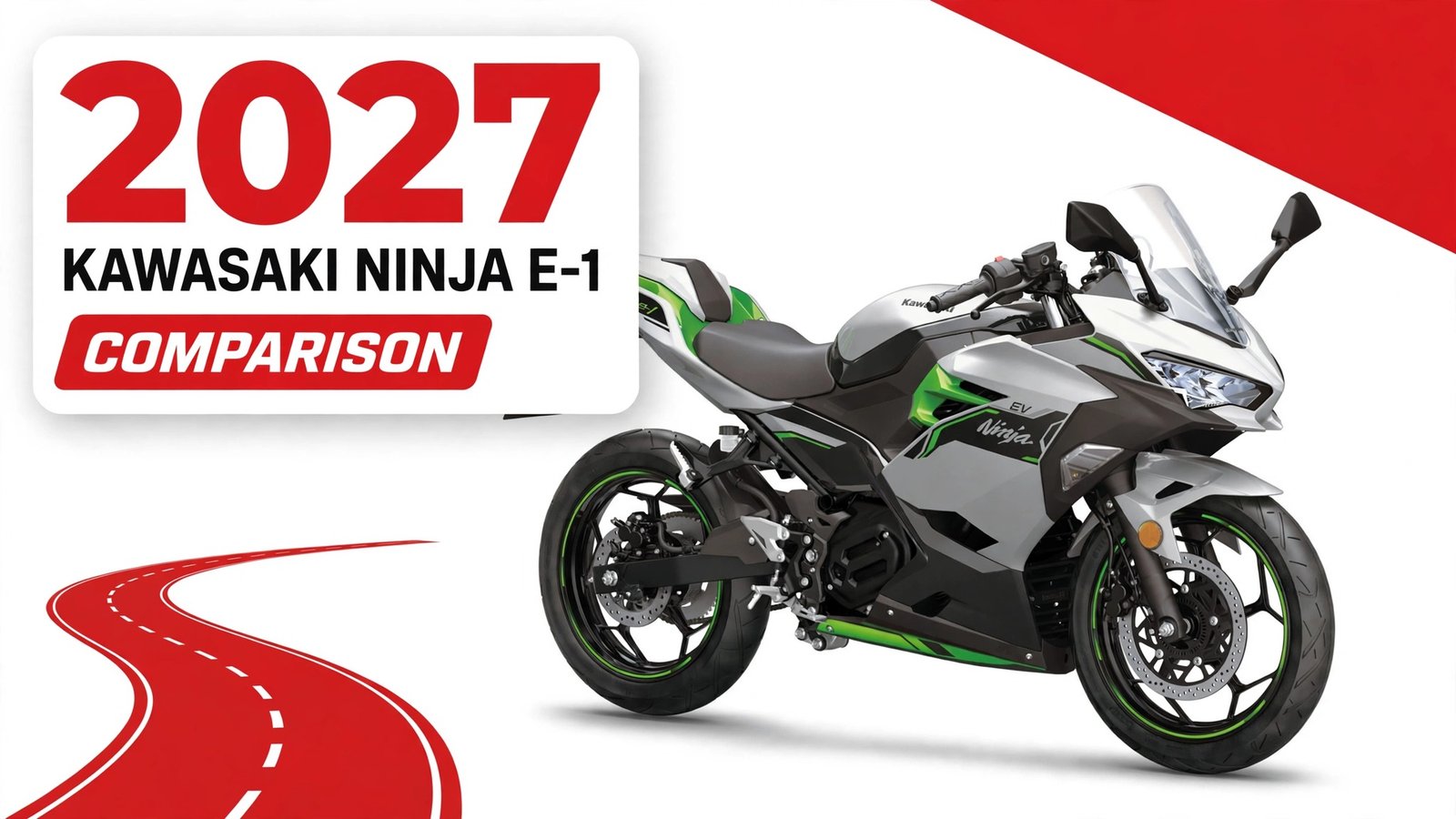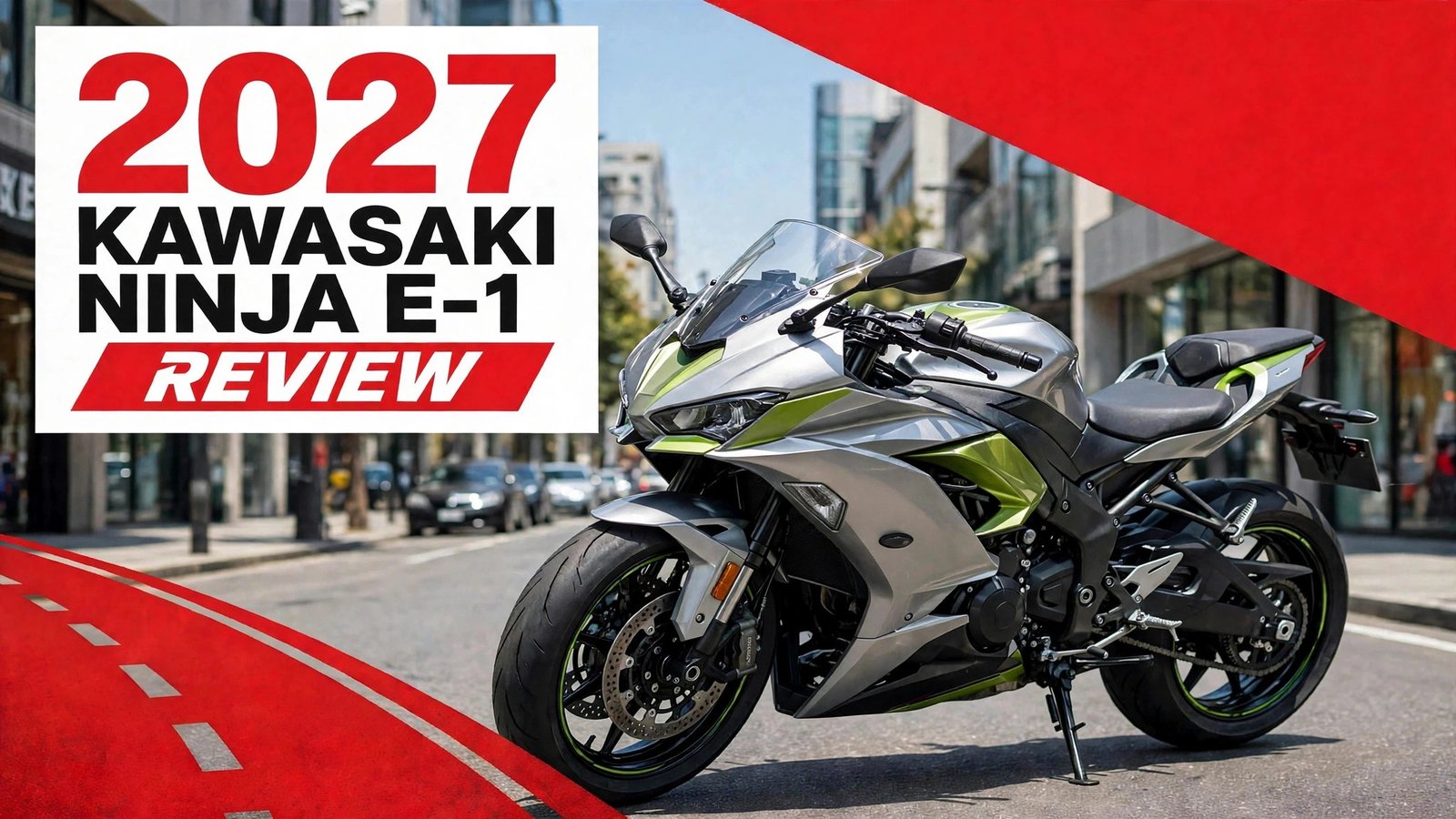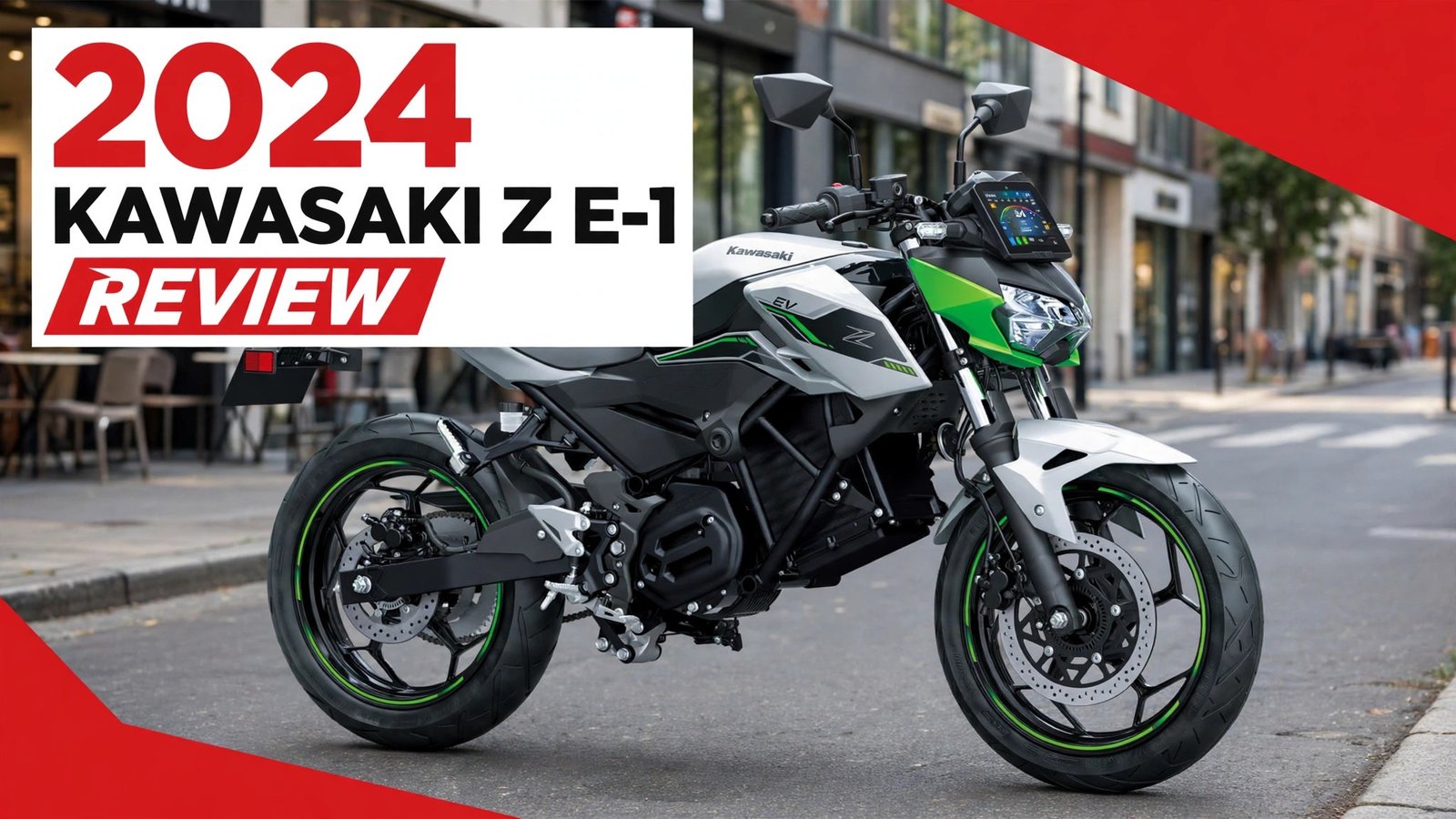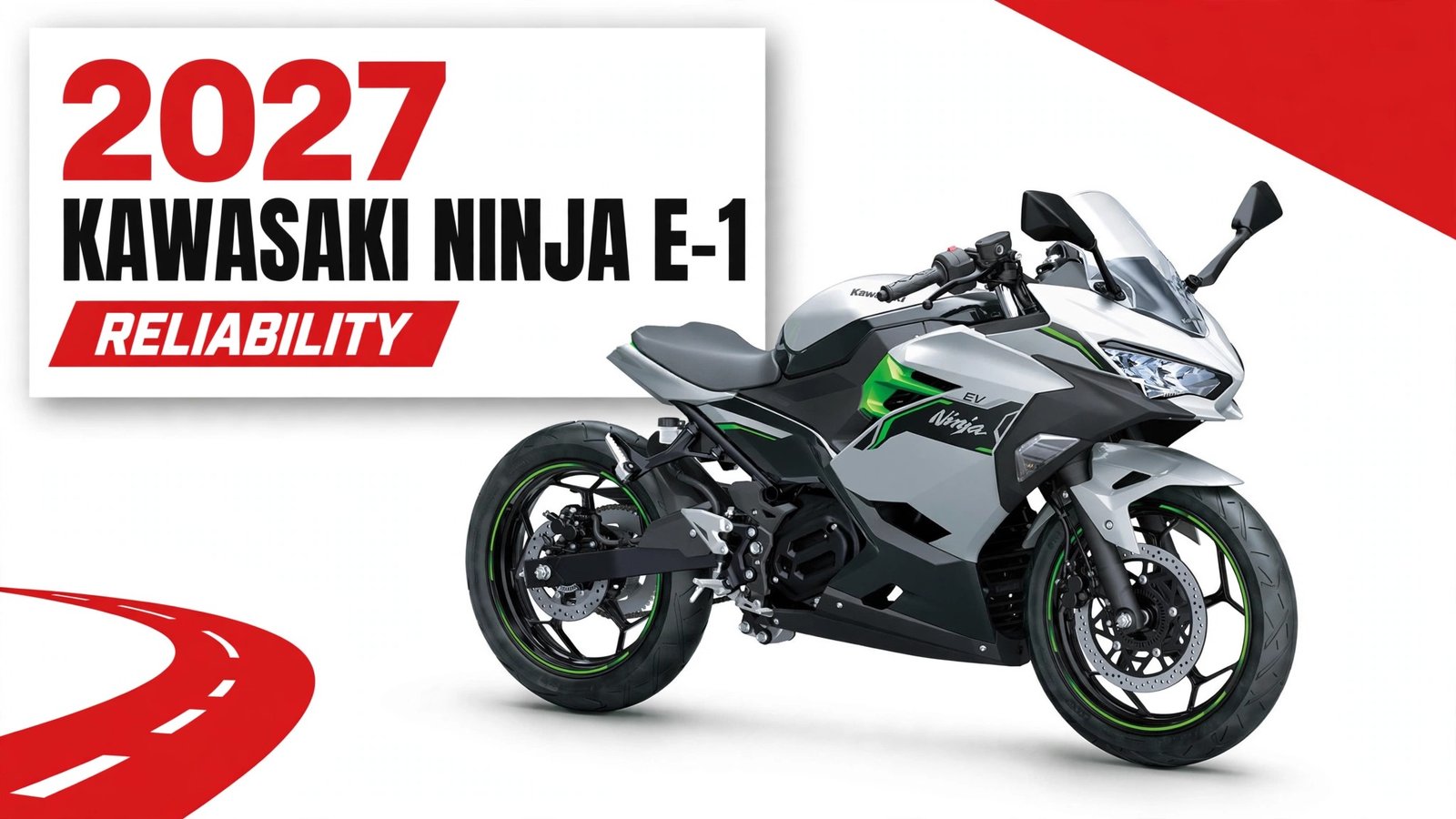
The Kawasaki Ninja e-1 reliability story is short and mostly good news: the only documented fault on this bike is a single recall, and the bike has no engine, no oil, no coolant, no valves and no spark plugs to fail. This Kawasaki Ninja e-1 reliability guide checks the recall, the wear items, the maintenance the bike actually needs, and the ownership costs — and it says plainly where no figure exists.
Kawasaki Ninja e-1 Reliability Overview
On paper the Ninja e-1 should be a reliable motorcycle: it is a 125cc-class electric commuter with a 5.0 kW rated motor, two removable battery packs, and a parts list far shorter than any petrol Ninja. This Kawasaki Ninja e-1 reliability guide starts with the one black mark on the record — the battery-anchor recall that covers every 2024 bike sold in the US — and then works through what a buyer should check before paying for one. For the full model story, the Kawasaki Ninja e-1 review covers the price, the spec sheet and the riding experience.
112 US Bikes Recalled
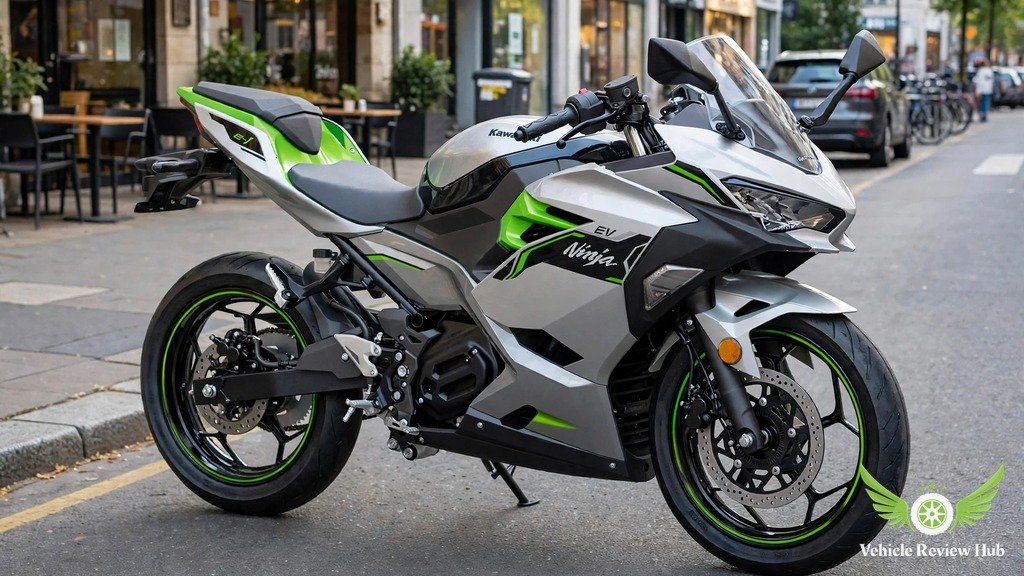
NHTSA recall 25V-118 covers 112 Ninja e-1s — the entire 2024 US production run, built between July 3 and October 19, 2023. Kawasaki’s campaign number is MC25-03, filed February 24, 2025, and the defect is a missing battery anchor: the anchor was omitted from the pack, and a pack with a missing anchor could be installed in the bike. NHTSA told owners not to ride until the remedy was applied, and owner notification letters went out on March 6, 2025. The remedy is a free inspection or replacement that takes under 10 minutes, and this Kawasaki Ninja e-1 reliability guide treats a VIN check as the first thing any buyer of a 2024 bike should do — before a test ride, before a deposit, before anything else.
| Recall fact | Detail |
|---|---|
| NHTSA campaign | 25V-118 (25V118000), Kawasaki MC25-03, filed February 24, 2025 |
| Ninja e-1s covered | 112 — the entire 2024 US production run |
| Production window | July 3 – October 19, 2023; model code NX011ARFNN |
| Defect | Battery anchor omitted from the pack; the connection between pack and bike may fail |
| Owner instruction | Do not ride until the remedy is applied; letters mailed March 6, 2025 |
| Remedy | Free inspection or replacement, under 10 minutes, at a Kawasaki dealer |
Note: The 216-unit total in the NHTSA Part 573 report covers both e-1 twins — 104 Z e-1s and 112 Ninja e-1s. The Kawasaki Ninja e-1 reliability record has exactly one recall campaign, and this guide prints no second one: no other NHTSA campaign was found for this bike.
How Mileage, Storage and Previous Care Affect Reliability
No published data exists on how mileage or storage affects the Ninja e-1’s battery, so this Kawasaki Ninja e-1 reliability guide will not invent a degradation percentage, a cycle count, or a capacity-retention figure — none is published for this bike. Lithium-ion packs wear down with heat and long storage at full charge, so a leftover bike that has sat for two years deserves a battery-health check before the money changes hands. This Kawasaki Ninja e-1 reliability guide says a buyer should ask for three things with any 2024 bike: the recall remedy record, the charger, and both battery packs. A bike missing a pack is not a bargain at any price — with one pack installed the bike runs in Eco mode only, with no e-boost, and the second pack is the expensive part of the bike to replace. Previous care matters most at the terminals: the recall defect is a terminal and anchor issue, so this Kawasaki Ninja e-1 reliability guide values clean, tight terminals and a remedy record over a low odometer reading.
Kawasaki Ninja e-1 Common Problems and Wear Items
Beyond the recall, no published problem list exists for the Ninja e-1 — and this Kawasaki Ninja e-1 reliability guide will not invent one from petrol-bike problems. The naked Z e-1, which shares the Ninja’s motor, battery, chassis and brakes and has two years of market history behind it, has only the same recall anchor in print as a fault. The wear items in this Kawasaki Ninja e-1 reliability guide are the honest list: the chain, the tyres, the brake pads, the battery terminals, and the packs themselves.
Battery Anchor Was Missing
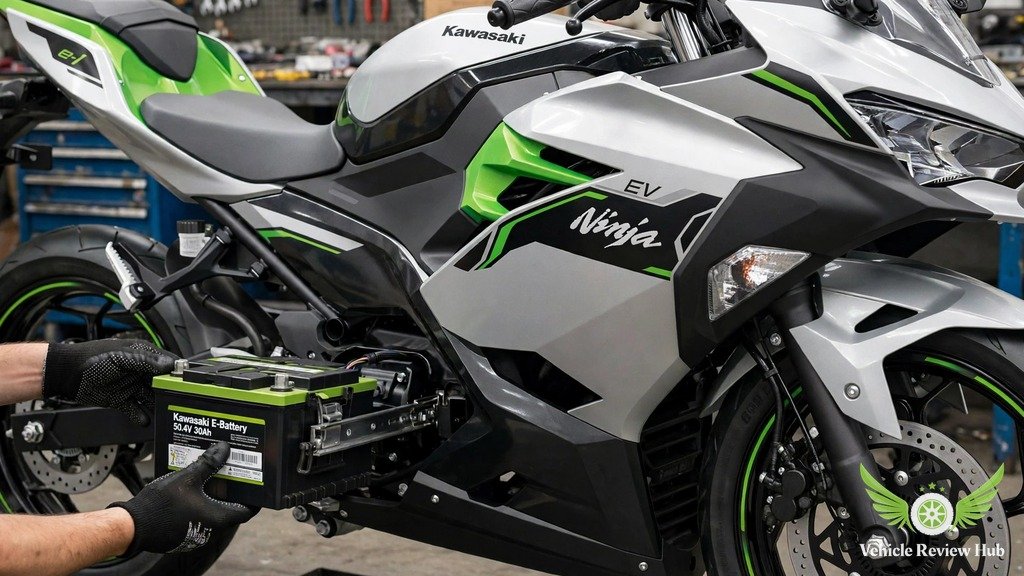
The anchor is the only documented problem on this bike, and it is worth understanding properly because it is a parts problem, not a design failure of the bike itself. The battery pack is a service part installed at the dealer, and the anchor — the fitting that secures the connection between the pack and the motorcycle — was omitted from some packs. If the connection fails, the bike loses power. This Kawasaki Ninja e-1 reliability guide notes Kawasaki’s fix is inspection or replacement of the pack, free, in under 10 minutes, and the supplier’s terminal-inspection process was corrected in June 2024, after the 2024 production window had closed. This Kawasaki Ninja e-1 reliability guide still says to check the VIN on any bike you buy — a 2027 bike was built with the corrected process, but a VIN check costs nothing and a paper trail is worth having.
Fake 2025 Checklist Exists
One problem the Ninja e-1 does have is not on the bike at all — it is in the search results. There was no 2025 Ninja e-1 in the US, yet motosport.com publishes a “Pre-Ride Checklist for a 2025 Kawasaki Ninja e-1 Motorcycle” that tells owners to check the coolant sight level, the clutch lever free play, and the belt or shaft variant — none of which exists on this bike. The same templated-guide problem shows up elsewhere: one battery article claims the pack is 48 V and 20 Ah and gives three different weights on a single page, all of them wrong — the real figures are 50.4 V, 30 Ah and 25.3 lb per pack — and a maintenance guide from the same site tells owners to change the engine oil every 3,000 miles on a bike with no engine. This Kawasaki Ninja e-1 reliability guide names these guides only as examples to avoid, never as sources, and never prints their figures: a buyer who follows a petrol-bike checklist on an electric bike will check parts that do not exist and miss the parts that do — the chain, the terminals, and the packs.
Kawasaki Ninja e-1 Maintenance Schedule and Servicing
There is no published service schedule for the Ninja e-1 in the sources this Kawasaki Ninja e-1 reliability guide could reach, and the guide says so plainly rather than inventing one. The owner’s manual was not locatable, and the manual number that circulates online belongs to a petrol bike. What follows is checks, not intervals: what to look at, and what to ask a dealer, without a mileage number attached to any of it. Buy from a dealer that can service the bike — the same Kawasaki dealers that sell the Ninja 500 and the Ninja 650.
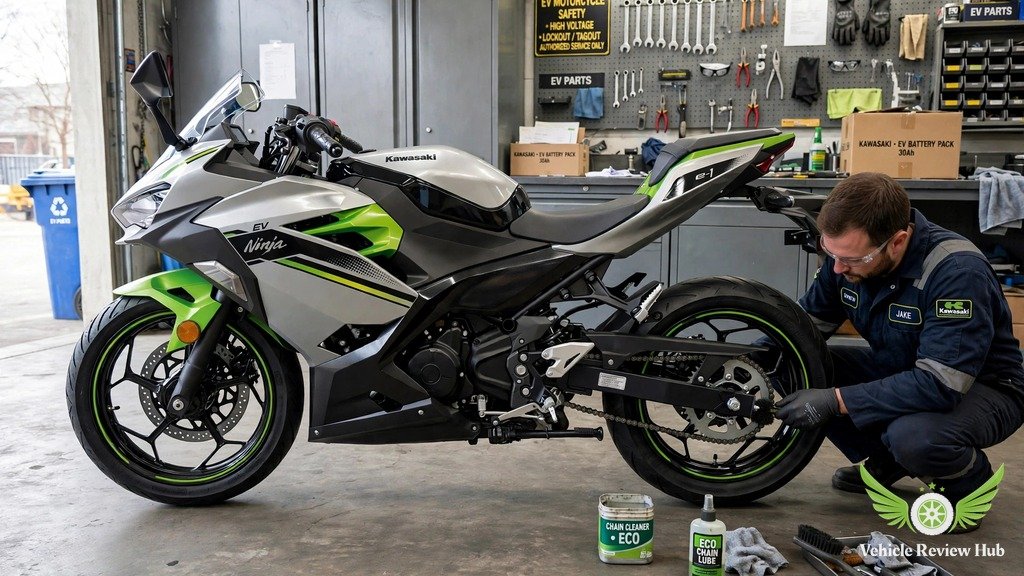
25V118: 2024 Bikes Only
The recall covers 2024-model-year bikes only, and the reason is in the dates. The 2024 production window ran from July 3 to October 19, 2023, and the supplier’s terminal-inspection process was corrected in June 2024 — after every 2024 bike had already been built. Every one of the 112 US bikes needs the remedy before it is ridden. An unsold 2024 leftover sitting on a showroom floor still needs the remedy applied before it is ridden, and this Kawasaki Ninja e-1 reliability guide says a buyer should confirm that on paper rather than taking a salesman’s word for it. This Kawasaki Ninja e-1 reliability guide repeats the point because it is the single most expensive mistake a buyer of this bike can make: a 2024 bike without a remedy record is a bike you cannot ride home.
2027 Bikes Outside Scope
The 2027 Ninja e-1 is outside the recall’s scope because it was built after the fix — the corrected terminal-inspection process dates from June 2024, and the 2027 bike is a new production run, announced August 18, 2026, with reservations that ran through October 23, 2026. No recall is listed for the 2027 bike, and this Kawasaki Ninja e-1 reliability guide does not imply one is coming. But “outside the scope” is not “automatically clear”: a 2027 bike was built with the corrected process, and a VIN check is still the cheap, sensible thing to do on any used or leftover bike. A buyer of a 2027 bike should still confirm both packs are present and healthy and that the charger is included — this Kawasaki Ninja e-1 reliability guide says those checks have nothing to do with the recall, and everything to do with getting the bike you paid for.
Kawasaki Ninja e-1 Tires, Brakes and Suspension Maintenance
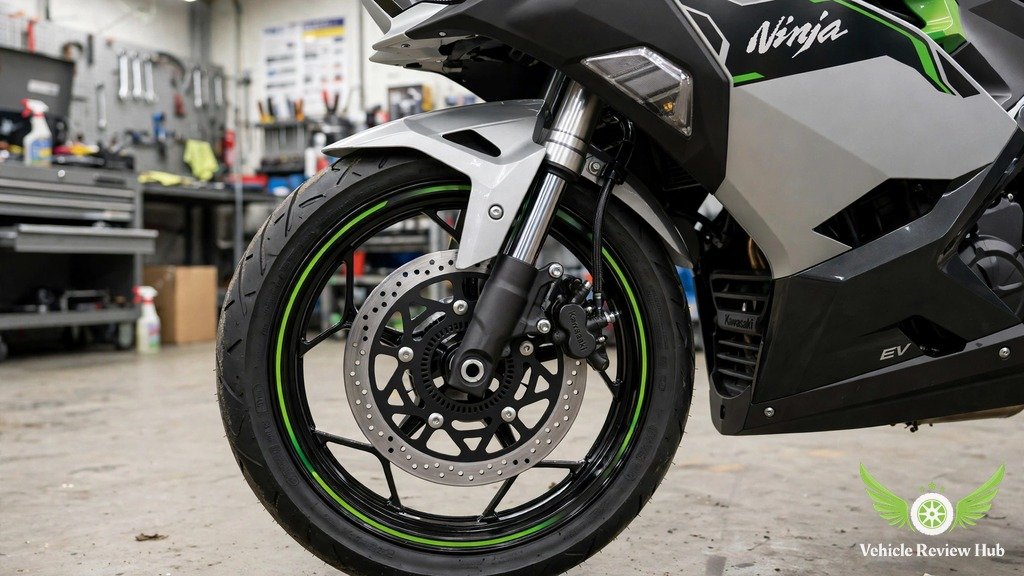
The Ninja e-1’s chassis, as the Kawasaki spec sheet prints it, is a conventional motorcycle chassis — a modified Ninja and Z 400 trellis frame, a 41 mm fork, a preload-adjustable Uni-Trak rear shock, and the same 100/80-17 front and 130/70-17 rear tyres as the naked Z e-1 — the running-gear facts this Kawasaki Ninja e-1 reliability guide checks first. This Kawasaki Ninja e-1 reliability guide treats the running gear as the familiar part of the bike: the parts that wear are the parts every motorcycle owner already knows, and the parts that do not exist are the ones that usually cost the money.
Zero Oil Changes, Says Kawasaki
Kawasaki’s own line for this bike is “zero oil changes” — and the full version is “zero oil changes, zero emissions, zero fuel”. There is no engine oil, no coolant, no valves, no spark plugs, no air filter, no fuel filter, and no exhaust. The service items in this Kawasaki Ninja e-1 reliability guide are the chain, the brakes, the tyres, the battery terminals, and the packs themselves. This Kawasaki Ninja e-1 reliability guide keeps that list short on purpose: the whole point of the bike’s maintenance story is what is missing from it.
| Item | On the Ninja e-1 |
|---|---|
| Engine oil | None — no engine, no oil changes |
| Coolant | None — air-cooled motor |
| Valves and spark plugs | None — no combustion engine |
| Air and fuel filters | None — no intake, no fuel system |
| Exhaust | None — no exhaust pipe at all |
| Chain | Yes — the only drivetrain wear item; keep lubed and tensioned |
| Brakes | Yes — single 290 mm front disc, single 220 mm rear disc, Nissin ABS |
| Tyres | Yes — 100/80-17 front, 130/70-17 rear |
| Battery terminals and packs | Yes — keep terminals clean and tight; packs are the unique consumable |
Note: Chain size and link count are unverified for this bike, so this Kawasaki Ninja e-1 reliability guide prints neither — and no chain-slack value, tyre pressure, or brake-fluid interval appears anywhere in this guide, because none is published for this bike.
Tire, Brake and Suspension Checks That Matter
The checks that matter are visual and simple, and this Kawasaki Ninja e-1 reliability guide frames them as checks rather than intervals because Kawasaki publishes no mileage-based service interval for this bike. Look at the tread on both tyres and check for cuts or embedded debris; look at the discs for scoring and the pads for thickness — the single-disc setup with dual-piston calipers is shared with the Z e-1, and it is standard Nissin ABS. Look at the fork seals for weeping and the rear shock for leaks, and check that the preload adjuster moves. Look at the battery terminals for tightness and corrosion, because the recall defect is a terminal issue and a loose terminal is the one electrical fault this bike is known for. And look at the packs themselves, as this Kawasaki Ninja e-1 reliability guide stresses: both should be present, both should charge, and neither should show damage. Those five checks — tyres, brakes, suspension, terminals, packs — cover everything this bike can actually wear out.
Kawasaki Ninja e-1 Maintenance and Ownership Costs
The Ninja e-1’s running costs are low in the places where a petrol bike’s are high — no fuel, no oil, no valve services — and uncertain in exactly one place: the price of a replacement battery pack. This Kawasaki Ninja e-1 reliability guide puts the verified numbers in the table below and leaves the unverified one blank on purpose, because a made-up pack price would be worse than an honest gap.
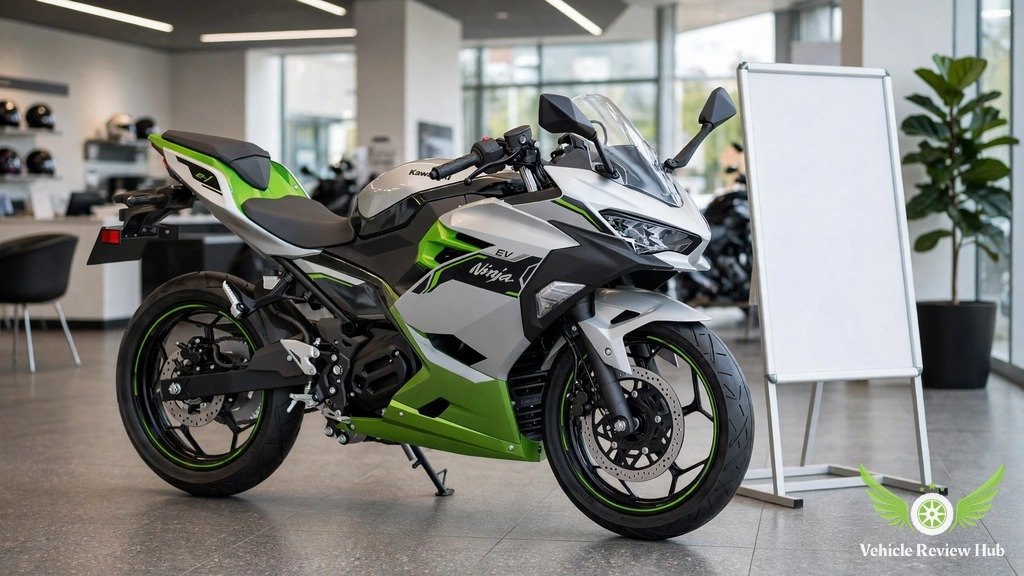
Electricity, Routine Servicing, Tires and Replacement Parts
Electricity is the fuel, and no per-mile or per-charge cost figure exists for this bike — this Kawasaki Ninja e-1 reliability guide prints no dollars-per-mile number, because none is published. Routine servicing is the chain, the brakes, the tyres, and the battery terminals — lube and tension, pad and disc checks, tread checks, and clean, tight terminals. Replacement parts are the packs, the charger, and the dock — and the prices below are the only ones this Kawasaki Ninja e-1 reliability guide could verify from a published source.
| Item | Figure | Source |
|---|---|---|
| Charger (included with the bike) | $210.56 if bought separately; P/N 99994-1966 | Kawasaki bulletin ST 23-02, dealer price |
| Standalone charging dock | $211.32; P/N 99994-1960; separate accessory | Kawasaki bulletin ST 23-02, dealer price |
| Replacement battery pack | No confirmed price — get a dealer quote; P/N 26105-0009 | No dealer or parts listing found at writing |
| Electricity cost per mile | No figure published | No $/mile or $/charge figure exists for this bike |
| Market average, 2024 bike | $4,540 | 1000PS market data, November 2026 |
| Leftover, Monroe WA | $3,999 (new 2024) | Dealer listing, November 2026 |
| Leftover, Jacksonville FL | $4,500 headline; $6,079 total before tax | Dealer brochure, November 18, 2026: $640 freight + $540 prep + $399 doc fee |
| Used, Santa Maria CA | $5,045 total (104 miles) | Dealer listing, November 2026 |
Note: The Jacksonville fee stack is part of the honest price story — a $4,500 headline becomes $6,079 before tax once $1,579 of fees is added. This Kawasaki Ninja e-1 reliability guide prints the headline and the fee stack together, never the headline alone. The charger is included with the bike; the dock is a separate accessory, and this Kawasaki Ninja e-1 reliability guide does not claim the dock charges both packs at the same time — that was not verified.
One Pack, No Confirmed Price
The replacement pack is the one cost this Kawasaki Ninja e-1 reliability guide cannot put a number on. The pack part number is verified — PACK-ASSY-BATTERY, P/N 26105-0009, from the NHTSA Part 573 report — but no dealer or parts listing found at writing publishes a price for it. Five targeted searches and checks of the major parts sites turned up nothing: the parts sites block automated lookups, and no dealer lists the pack for sale with a price. A buyer who needs a pack should get a dealer quote before buying — and should know a single pack may cost a large fraction of a leftover bike’s $4,540 market average. That is the honest warning, and it is also the reason the pre-purchase checks in the next section matter so much: a bike with both packs present and healthy is a different purchase from a bike with one pack missing.
How to Keep a Kawasaki Ninja e-1 Reliable
Keeping a Ninja e-1 reliable means doing the few things this bike actually needs, every time. This Kawasaki Ninja e-1 reliability guide boils it down to three habits: keep the chain and the terminals looked after, keep the packs charged and stored properly, and keep the paperwork — above all the recall remedy record — with the bike.
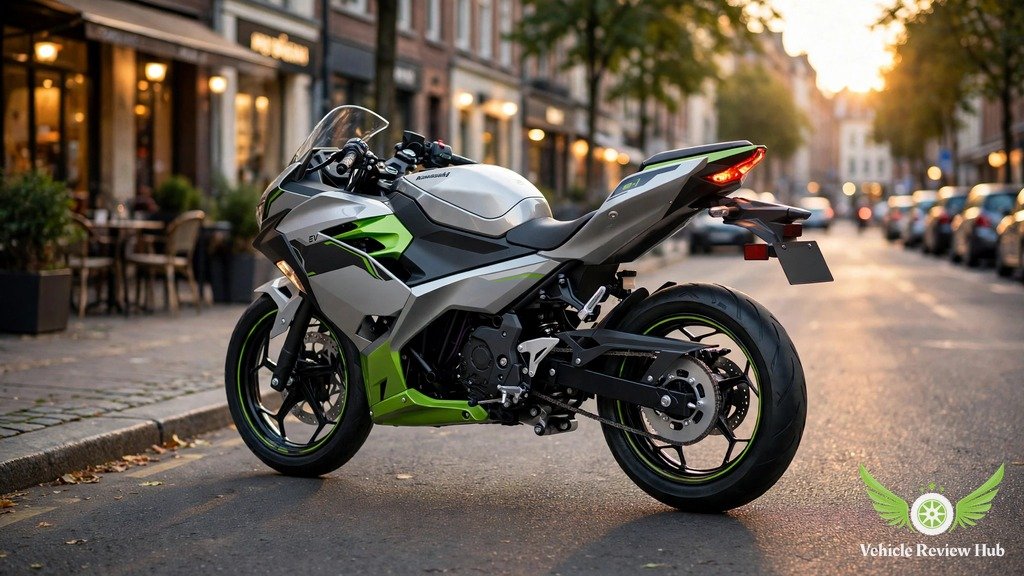
Preventive Maintenance, Records and Regular Inspections
Preventive maintenance on this bike is a short list, and that is the point: keep the chain lubed and tensioned, because it is the only drivetrain wear item; keep the tyres checked for tread and damage; keep the battery terminals clean and tight, because the anchor defect is a terminal issue; keep the packs charged and stored in a cool, dry place if the bike will sit — the packs lift out, and that is the point of the removable design. Keep the records too — the remedy record, the charger, and both packs travel with the bike. And inspect regularly, not on a mileage schedule nobody publishes, but on a habit — before every ride, walk around the bike and look at the tyres, the brakes, the chain, and the terminals. This Kawasaki Ninja e-1 reliability guide gives checks rather than intervals, because Kawasaki publishes no mileage-based service interval for this bike in the sources available, and a guide that invented one would be guessing with the reader’s money.
| Before buying — check | What to look for | Why it matters |
|---|---|---|
| Recall remedy record | VIN checked against NHTSA 25V-118; remedy applied on 2024 bikes | A 2024 bike without the remedy cannot be ridden |
| Both battery packs present | Two packs, both charging, no damage | One pack means Eco mode only, no e-boost |
| Charger included | Single charger, P/N 99994-1966, charges one pack at a time | A missing charger costs $210.56 to replace |
| Battery terminals | Clean, tight, anchor fitted | The recall defect is a terminal and anchor issue |
| Chain | Lubed, tensioned, no stiff links | The only drivetrain wear item on the bike |
| Tyres and brakes | Tread and discs in good shape; pads have thickness left | Standard wear items on a 308.7 lb bike |
| Storage history | Ask how the bike and packs were stored | Heat and long storage at full charge wear lithium-ion packs |
Note: A 2027 bike needs the same checks minus the recall — 2027 bikes are outside the recall’s scope. This Kawasaki Ninja e-1 reliability guide still says to check the VIN on any bike you buy: the check is free, and the paper trail is worth having.
One Pack Means ECO Only
With one pack installed, the bike runs in Eco mode only, with no e-boost — and that is a fact to plan around, not a footnote. The two packs work in parallel, and if one pack is fully discharged or needs to be isolated, the bike continues in Eco mode on the remaining pack, capped at 40 mph with no boost available. Never ride with one pack expecting full performance: the bike caps itself, and the 55 mph Road cap and the 65 mph boost are both gone. TopSpeed confirms the behaviour: with one pack fully discharged or isolated, the bike can continue operating in Eco mode. This Kawasaki Ninja e-1 reliability guide states it plainly because it changes the buying decision — a bike sold with one pack is a bike sold at half its performance, and the missing pack is the most expensive part of the bike to replace. Both packs present, both healthy, both charging: that is the whole test, and it takes five minutes.
Kawasaki Ninja e-1 Reliability: Frequently Asked Questions
Buyers ask the same six questions about this bike, and the answers below give the verified figures — the recall, the remedy, the maintenance, the pack price, and the charging. This Kawasaki Ninja e-1 reliability guide stands behind each answer below.
Is the Kawasaki Ninja e-1 reliable?
The only documented fault is the battery-anchor recall (25V-118) on the 2024 bikes. Beyond that, no published problem list exists for the Ninja e-1. It has no engine, no oil, no coolant, no valves and no spark plugs — the service items are the chain, brakes, tyres, battery terminals and the packs themselves.
Was the Ninja e-1 recalled?
Yes. NHTSA recall 25V-118 (Kawasaki MC25-03, February 24, 2025) covers 112 Ninja e-1s — the entire 2024 US production run. The battery anchor was omitted from the pack, and owners were told not to ride until the free remedy was applied. 2027 bikes are outside the recall’s scope.
How do I check if a Ninja e-1 has had the recall fixed?
Check the VIN against NHTSA’s recall database or ask a Kawasaki dealer. The remedy is a free inspection/replacement that takes under 10 minutes. Any unsold 2024 leftover still needs the remedy applied before it is ridden.
What maintenance does the Ninja e-1 need?
No oil changes, no coolant, no valves, no spark plugs — Kawasaki’s own line is “zero oil changes.” The service items are the chain, brakes, tyres and battery terminals. Kawasaki publishes no mileage-based service interval for this bike in the sources available, so the guide gives checks rather than intervals.
How much does a replacement battery pack cost?
No replacement-pack price was confirmed from a published source for this guide — a buyer should get a dealer quote before buying. The pack part number is 26105-0009.
How long does it take to charge the Ninja e-1?
3.7 hours per pack on a 120 V outlet, or about 7.5 hours for both packs on the single included charger. A partial charge from 20% to 85% takes about 1.6 hours per pack. There is no Level 2 or DC fast charging.