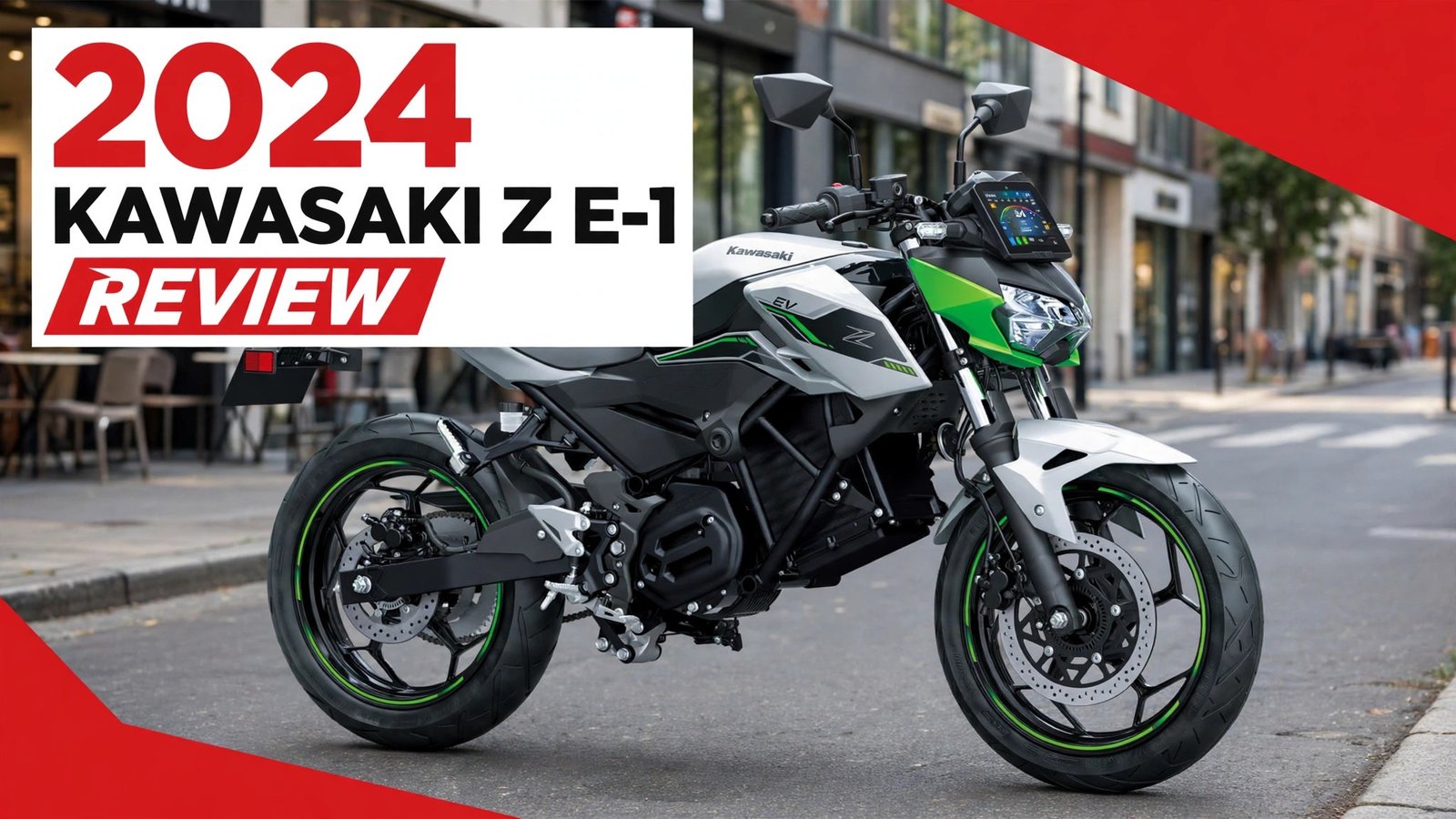
The Kawasaki Z e-1 reliability story is short and strange: the most serious thing that ever happened to this bike is a recall that covers every single US example, and after that recall there is almost nothing left to go wrong — because there is no engine to break. The 2024-only electric naked has no oil to change, no coolant to leak and no valves to adjust. That simplicity is the whole case: one universal recall, one free fix, and a machine with almost nothing to wear out. This Kawasaki Z e-1 reliability guide tests that answer against the one documented failure, the maintenance the bike actually needs and the costs a used buyer faces in 2027.
Kawasaki Z e-1 Reliability Overview
Kawasaki Z e-1 reliability is a different question from petrol-bike reliability, and the answer starts with a number: 104. Every Z e-1 sold in the United States was recalled in February 2025 over a missing battery terminal anchor, and the recall population covers the bike’s entire production run. It is a DO NOT RIDE recall — but also the bike’s only documented failure, and the fix is free and takes ten minutes. The Kawasaki Z e-1 reliability picture is therefore two-sided: a universal recall on one side, and a machine with almost nothing to wear out on the other. The bike itself is covered in full in the Z e-1 review, and its speed and range figures are settled in the Z e-1 performance guide.
Every US Bike Recalled
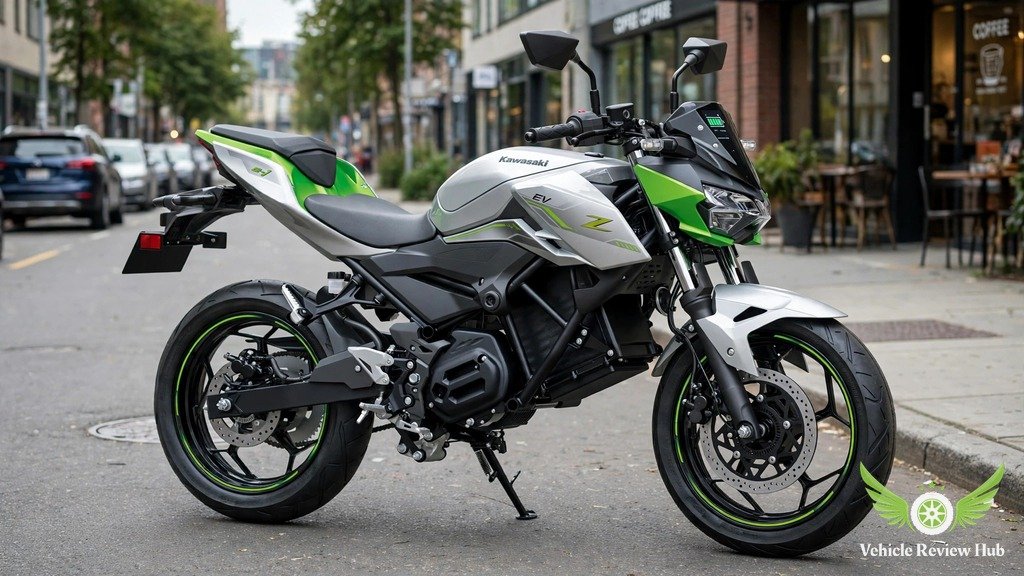
NHTSA campaign 25V-118, filed on February 24, 2025, covers 104 Z e-1s and 112 Ninja e-1s — 216 bikes in total — and the recall population is every bike built between July 3 and October 19, 2023, which is the entire production run. The defect is a missing battery terminal anchor: repeated attachment and detachment of the drive battery can cave in the connector terminal, breaking the battery connection and cutting drive power without warning. NHTSA flagged the campaign DO NOT RIDE, and owner letters went out on March 6, 2025. The remedy is an inspection of the battery terminals and a free battery replacement if the anchor is missing, a job Kawasaki says takes up to ten minutes. The recall is the headline of the Kawasaki Z e-1 reliability story, and the verdict on it is simple: get the fix done, keep the paperwork, and the bike’s one known failure is behind it. The full campaign detail is in the maintenance schedule section below.
How Mileage, Storage and Previous Care Affect Reliability
With no engine, mileage matters less on the Z e-1 than storage and previous care. The wear items are the chain, the brakes and the tyres, and the expensive question is the health of the two lithium-ion packs. A bike that sat for months on a flat or fully charged battery has had a harder life than one ridden regularly and charged normally — lithium-ion packs degrade when stored at either extreme for long periods, (no Kawasaki storage figure exists for the e-1). What a used buyer can check is concrete: the recall remedy (a VIN check settles it), the charger, the tyre age and the chain. Storage and previous care decide Kawasaki Z e-1 reliability more than mileage does, and the odometer is the least important number on the bike.
Kawasaki Z e-1 Common Problems and Wear Items
Beyond the recall, the Kawasaki Z e-1 reliability file has no documented failure pattern — no second NHTSA campaign, no service-bulletin pattern and no owner-forum failure thread this guide could find. That is partly the bike’s simplicity and partly its rarity: with only 104 US Z e-1s recalled, few bikes exist to generate failure reports. The Kawasaki Z e-1 reliability record therefore rests on one defect, a handful of ride-quality complaints and a warning about bad advice online.
Battery Anchor Was Missing
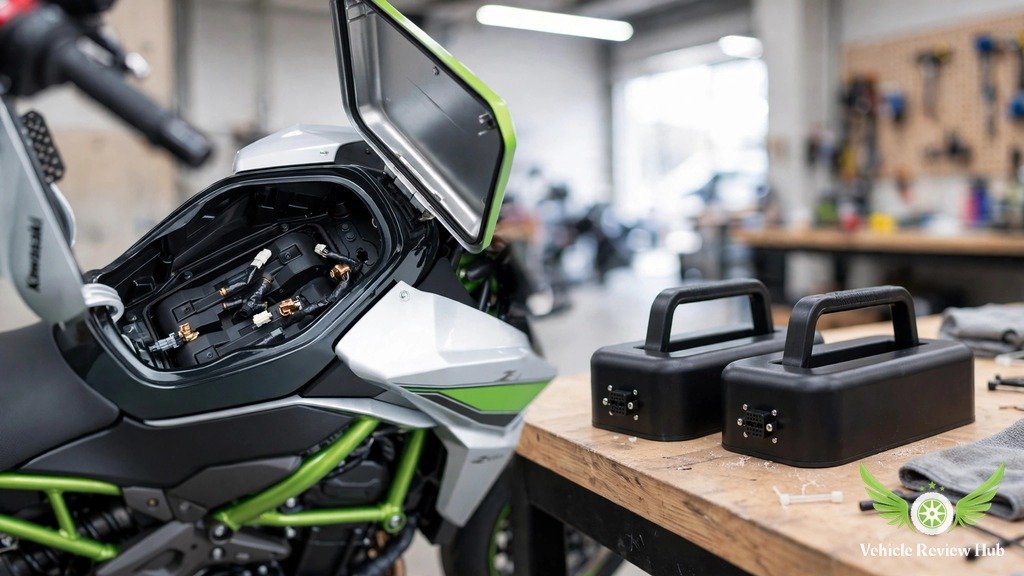
For Kawasaki Z e-1 reliability, the anchor defect is a manufacturing story, not a design flaw. The battery packs were built by Forsee Power Japan GK, and some packs shipped without the battery terminal anchor — test components that were mistakenly included in the production supply, according to the Part 573 report. Without the anchor, repeated removal and refitting of a pack can cave the terminal in and break the battery connection. Kawasaki traced the first stall to the missing anchor in spring 2024 and decided the recall on February 19, 2025. The component is PACK-ASSY-BATTERY, part number 26105-0009. The fix is final: inspect the terminals, and fit a new battery if the anchor is missing — free, in up to ten minutes. That is the full Kawasaki Z e-1 reliability battery story: one defect, one fix, no repeat, and no second battery failure documented anywhere.
Fake Maintenance Guides Exist
A used buyer searching for Z e-1 maintenance advice will meet guides that describe a different motorcycle. One widely circulated example, motorbikeinsider.com’s “Kawasaki Z E1 Maintenance” guide, tells owners to check “oil levels” and change engine oil “every 3,000 miles”, to maintain “coolant”, and to test the battery with a multimeter — “If it reads below 12.4 volts, it needs a boost!” Every one of those instructions is wrong: no engine oil, no coolant, and 50.4-volt lithium-ion packs — not 12-volt lead-acid batteries — so a 12.4-volt test means nothing. Whether the e-1 even has a separate 12-volt auxiliary battery is unverified, so no 12-volt claim is printed here. Any guide that gets the basics wrong cannot be trusted on Kawasaki Z e-1 reliability, and the advice that matters is the opposite of that page’s: ignore any maintenance instruction that mentions oil, coolant, spark plugs or valves, and check the bike against Kawasaki’s own documents instead.
Kawasaki Z e-1 Maintenance Schedule and Servicing
The Kawasaki Z e-1 reliability maintenance schedule is the shortest in Kawasaki’s range, because most of the schedule is empty. One gap in this guide’s knowledge matters: Kawasaki’s published e-1 maintenance chart was not available in a citable copy, so no service intervals are quoted anywhere in this blog. The items below are what the bike’s design requires, not a quoted schedule — and the Kawasaki Z e-1 reliability maintenance question is answered honestly about what it does not know, and precisely about what it does.
25V118: Do Not Ride Letters
The recall letters are the most important document in Kawasaki Z e-1 reliability history. On February 24, 2025, NHTSA published campaign 25V-118, Kawasaki campaign MC25-03, with a DO NOT RIDE flag — the strongest warning NHTSA issues — and owner notification letters were mailed on March 6, 2025. The letters tell owners to stop riding and bring the bike to a dealer, where the terminals are inspected and the battery replaced if the anchor is missing, free of charge. A bike with no recall paperwork needs a VIN check before money changes hands — run the VIN on NHTSA.gov or ask a Kawasaki dealer. The same campaign covers the faired Ninja e-1, and the Ninja e-1 reliability guide covers its twin’s story. The letters are the Kawasaki Z e-1 reliability paperwork that matters most, and the full campaign is documented in NHTSA’s Part 573 report.
| Item | Detail |
|---|---|
| Campaign | NHTSA 25V-118 (Kawasaki MC25-03) |
| Filed / letters | February 24, 2025; owner letters mailed March 6, 2025 |
| Status | DO NOT RIDE |
| Population | 216 units — 104 Z e-1 + 112 Ninja e-1 |
| Production window | July 3 – October 19, 2023 (entire run) |
| Defect | Missing battery terminal anchor |
| Supplier | Forsee Power Japan GK |
| Component | PACK-ASSY-BATTERY, P/N 26105-0009 |
| Remedy | Inspect terminals; replace battery if anchor missing — free, up to 10 minutes |
Note: The Kawasaki Z e-1 reliability recall is the only NHTSA campaign ever filed for this bike — no second campaign exists. The Part 573 report is the source for every figure in this table.
Only 104 US Bikes Exist
The heading above is a claim this guide cannot prove — and says so plainly. The number 104 is the recall population: 104 US Z e-1s were recalled under 25V-118. The Part 573 report states no production or sales total, so 104 is not a proven production total. What can be printed is narrower and just as striking: 104 US Z e-1s were recalled, and the recall population is the entire production run as defined by the recall, July 3 to October 19, 2023. Whether the true total is 104 or somewhat more, the US Z e-1 is a genuinely rare bike — one model year and a 216-unit combined recall population — and that rarity cuts both ways: few bikes means few reported failures, and few bikes means thin parts and service experience at dealers. That is why the Kawasaki Z e-1 reliability record is so thin. A buyer who wants a common bike with a deep service history should look at the Ninja 500 reliability guide instead — the Kawasaki Z e-1 reliability story is a rare-bike story.
Kawasaki Z e-1 Tires, Brakes and Suspension Maintenance
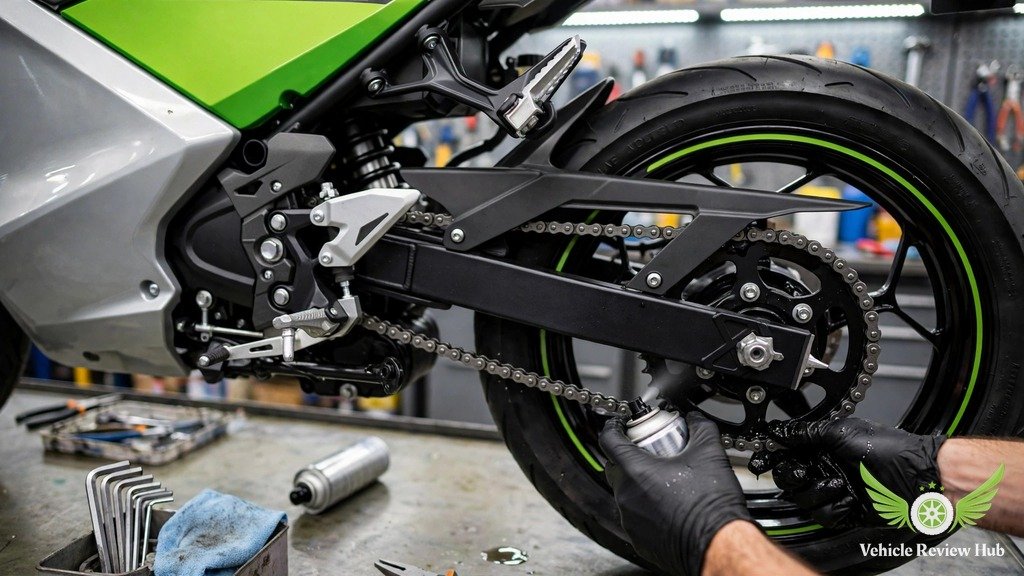
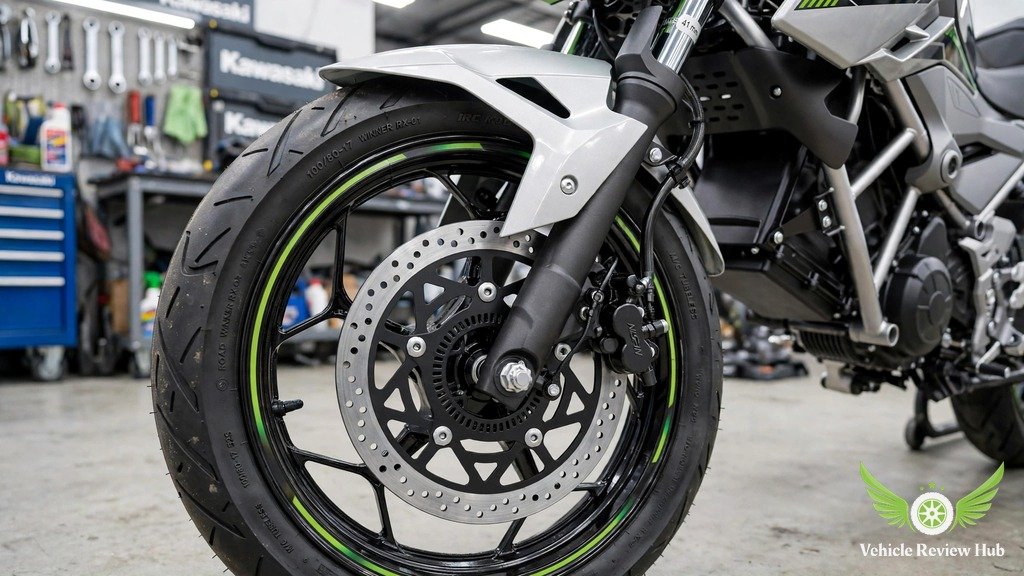
Tyres, brakes and suspension are where Kawasaki Z e-1 reliability maintenance actually lives — the chain, the pads, the discs and the rubber are the only parts that wear. The sizes are known from the spec sheet and the intervals are not published, so this section names what to check and says plainly where no interval exists. The Kawasaki Z e-1 reliability work on these parts is inspection, not replacement on a schedule.
No Oil, Coolant or Valves
This is the shortest maintenance list in motorcycling, and it is worth stating in full. There is no engine oil: Kawasaki’s own product page says the bike “requires zero oil changes”. There is no coolant, because the motor is air-cooled, and no valves, spark plugs, air filter or fuel system, because there is no internal-combustion engine at all. That absence is the Kawasaki Z e-1 reliability advantage in one line. That Kawasaki Z e-1 reliability advantage is real, but it is narrow: it covers the engine that does not exist, not the chain, brakes and tyres that do.
Tire, Brake and Suspension Checks That Matter
Start with the tyres: narrow 100/80-17 front and 130/70-17 rear road tyres, which testers found low on feel: MCN called them short on confidence, and TopSpeed agreed. On a used bike, check tread depth and age above all: 2024 rubber is three years old by 2027. Tyre pressures are not printed in this guide — they were not verified from the e-1’s own manual, and the spec sheet gives sizes only. Next the brakes: a single 290 mm front disc and a single 220 mm rear disc, both with dual-piston calipers and Nissin ABS. MCN found them vague, with “a lack of any real bite, both front and rear” — test them with a firm stop from city speed. Check pad thickness, disc condition, fluid level and lines — and note that the brake-fluid change interval was not verified from the e-1 manual, so this guide prints none. Finally the suspension: a 41 mm fork (4.7 in travel) and a preload-adjustable Uni-Trak rear shock (5.2 in). MCN found the rear “reasonably stiff over big bumps and potholes” — check the fork seals and the preload adjuster. The Kawasaki Z e-1 reliability inspection list is short: tyres, brakes, suspension, chain, terminals — and a bike that passes it is a bike with nothing left to hide.
| Service item | What the Z e-1 needs |
|---|---|
| Engine oil | None — no engine, no sump, no filter |
| Coolant | None — air-cooled motor, no radiator |
| Valves / spark plugs / air filter / fuel system | None — no internal-combustion engine |
| Drive chain | Lubricate + adjust (interval unverified — never printed) |
| Brakes | Pads, discs, fluid level, lines (fluid interval unverified) |
| Tyres | Tread, age, pressures (pressures unverified — sizes 100/80-17 / 130/70-17) |
| Battery terminals | Inspect — the recall remedy is a terminal inspection |
| Battery health | TFT shows each pack’s charge + range; no published degradation figure |
Note: No service interval is quoted anywhere in this table. Kawasaki’s published e-1 maintenance chart was not available to this guide, and the manual circulating as “99987-1499” is a petrol bike’s manual — not the e-1’s — so it is never cited. The Kawasaki Z e-1 reliability tables in this guide print only what the bike’s design and Kawasaki’s own documents verify.
Kawasaki Z e-1 Maintenance and Ownership Costs
Ownership costs on the Z e-1 are a study in contrasts: almost nothing to service, and one unknown that could dwarf everything else. The running costs are minimal — no fuel, no oil, about 3 kWh per charge from a household outlet — but no dollar figure for electricity, servicing or a replacement pack was verified, so this section prints published prices and labels the rest unknown. The Kawasaki Z e-1 reliability cost case is honest about both sides.
Electricity, Routine Servicing, Tires and Replacement Parts
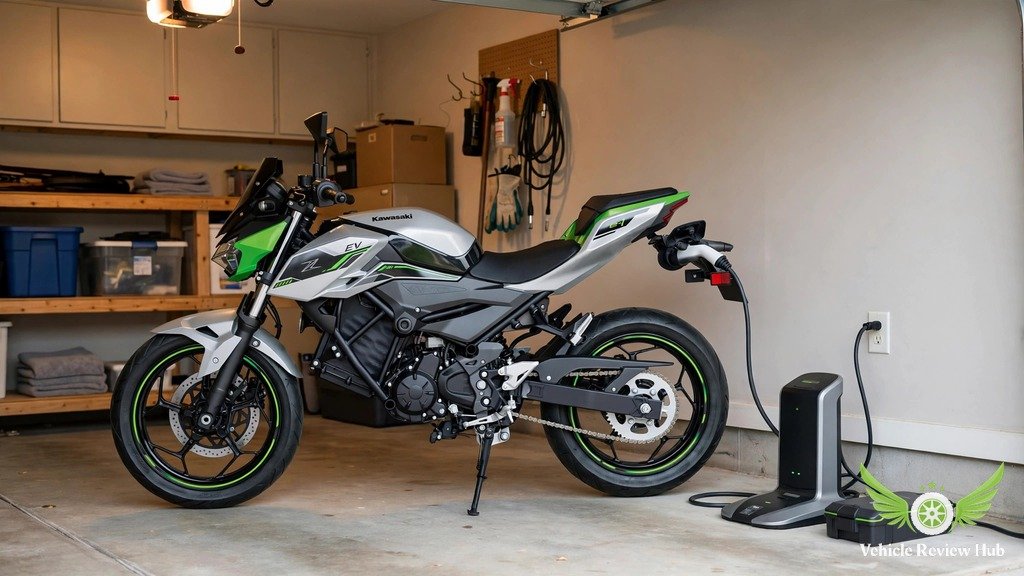
Electricity is the cheapest line on the bill and the least quotable: a full charge is about 3.0 kWh, and the cost is whatever the rider’s tariff charges for 3 kWh — no dollar figure was verified. Routine servicing is minimal for the same reason the maintenance list is short: no oil, no filters, no plugs, no valves and no coolant means the service bill is chain, brakes, tyres and inspections, and no dollar figure for any service was verified. The charger and the standalone dock have published dealer prices, but the battery packs — the most expensive part on the bike — do not. The Kawasaki Z e-1 reliability ownership question is therefore two questions: what it costs to run, and what it costs if the pack fails.
Pack Price Still Unknown
No replacement battery-pack price is published by Kawasaki — not in the spec sheet, not in the service bulletin and not in any dealer listing this guide found — and that gap is the biggest Kawasaki Z e-1 reliability unknown. The 24-month warranty covers the packs for two years; after that, a pack failure is the owner’s cost at an unknown price. The only published battery-adjacent prices are the charger at $210.56 and the standalone charging dock at $211.32, both dealer prices from Kawasaki service bulletin ST 23-02. Those two numbers tell a used buyer what a missing charger costs to replace — about $211, a small number that matters. The pack price, by contrast, is a dealer quote only, and this guide’s advice is blunt: get the quote before you buy, not after the pack fails. Until Kawasaki publishes a pack price, Kawasaki Z e-1 reliability will carry this asterisk.
| Item | Price / status |
|---|---|
| List MSRP (2024) | $7,599 |
| Destination / delivered | $650 / $8,249 |
| Leftover, Columbia Powersports (Nov 2026) | $3,995 after offers (47% off) |
| Leftover, Motorsports International (Nov 2026) | $5,249 after offers (31% off) |
| Charger (P/N 99994-1966) | $210.56 dealer (ST 23-02) |
| Standalone dock (P/N 99994-1960) | $211.32 dealer (ST 23-02) |
| Replacement battery pack | Unknown — no published price |
| Electricity per full charge | No verified dollar figure (~3.0 kWh) |
| Warranty | 24-month limited, whole bike incl. packs |
Note: Leftover prices are November 2026 dealer listings and change — re-check before buying. The Kawasaki Z e-1 reliability cost table prints only published prices; the pack price is unknown, and any guide that quotes one is inventing it.
How to Keep a Kawasaki Z e-1 Reliable
Keeping a Z e-1 reliable is mostly a matter of doing the few things it needs, on time, and keeping the paperwork that proves it. The Kawasaki Z e-1 reliability routine below is short enough to fit on a card, and a buyer who follows it has covered everything the bike asks for.
Preventive Maintenance, Records and Regular Inspections
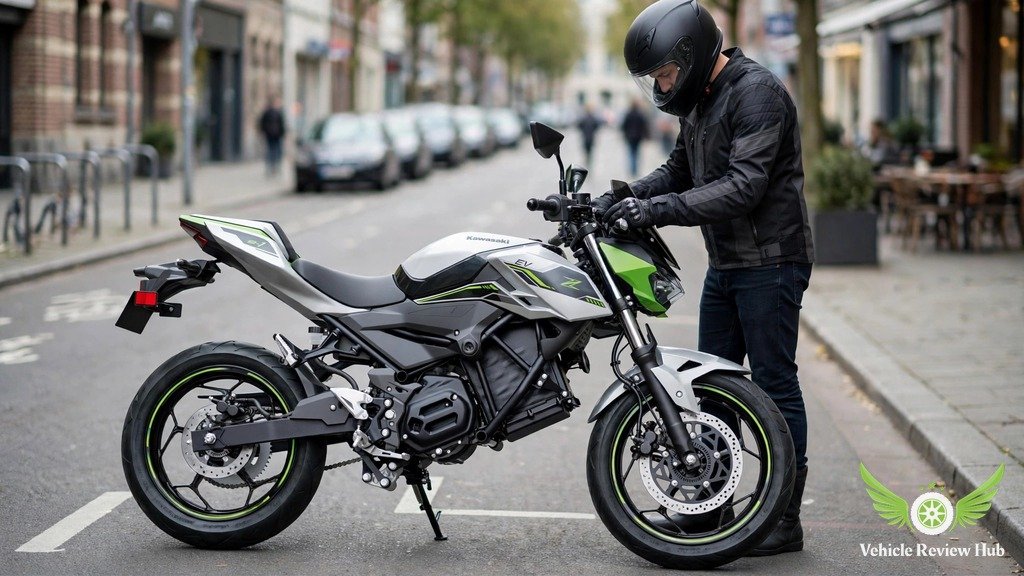
The routine is simple: keep the chain clean, lubricated and adjusted; check the brakes and tyres before every ride; watch the TFT for each pack’s charge and range, and treat a tortoise light at high charge as a battery-health question for a dealer. Keep the recall paperwork — the 25V-118 remedy record is the single most valuable document with the bike, and a buyer should ask for it by name. Keep service records too: a stamped record of chain and brake work is the next owner’s best evidence the bike was cared for. Store the bike with the packs at a healthy charge, out of extreme heat or cold, and never sitting flat for months. Regular inspections matter more than mileage on this bike — that is the Kawasaki Z e-1 reliability rule — because the wear items are few and visible: a chain, two discs, two tyres and two packs. The Kawasaki Z e-1 reliability routine costs little and catches everything the bike can hide, and a bike that passes it is a bike with nothing left to hide.
Charger and Dock Both Matter
The charger is essential and the dock is the off-bike accessory — and both matter at buying time. The bike charges from a standard 120 V outlet through the included charger — tail port with the packs installed, or standalone dock with the packs removed — 3.7 hours per pack, about 7.5 hours for both. Before buying, confirm the charger is included: a missing charger is a $210.56 dealer replacement (part number 99994-1966, Kawasaki bulletin ST 23-02), and if the seller claims a dock, confirm it is the Kawasaki standalone dock (part number 99994-1960, $211.32), not a generic charger. The bulletin does not say whether the dock charges both packs at once, so this guide does not claim it. The Kawasaki Z e-1 reliability checklist at buying time is three items: recall paperwork, charger, dock — ask about all three before you pay, not after.
Kawasaki Z e-1 reliability, judged on the evidence, is good. The verdict is the same one this guide has carried from the first paragraph: the Z e-1 is a reliable bike with one serious recall behind it and almost nothing left to break. The recall is universal, free to fix and fully documented; the maintenance is a chain, brakes, tyres and terminal inspections. At a leftover price near $4,000, with the recall remedy done and the charger in the box, the Z e-1 is a sound buy for an urban commuter who charges at home — and the full price comparison is in the Z e-1 comparison guide. On reliability alone, this Kawasaki Z e-1 reliability guide’s answer is yes: the bike is reliable, provided the recall is done and the buyer checks the chain, the brakes, the tyres and the charger before paying.
Kawasaki Z e-1 Reliability: Frequently Asked Questions
Buyers ask the same questions about this bike, and most of them have the same answer: the recall, the battery and the chain. The Kawasaki Z e-1 reliability answers below give the verified figures, and say plainly where no figure exists.
Is the Kawasaki Z e-1 reliable?
No failure pattern is documented beyond its one recall. Reliability on this bike is about the recall remedy, the battery packs and the chain — not about engine breakdowns, because there is no engine.
Was the Z e-1 recalled?
Yes — every US bike. NHTSA campaign 25V-118 (February 2025) covers 104 Z e-1s and 112 Ninja e-1s over a missing battery terminal anchor that can cause a loss of drive power. It is a DO NOT RIDE recall; the fix (inspect the terminals, replace the battery if the anchor is missing) is free and takes up to 10 minutes.
How do I check whether the recall fix was done on a used Z e-1?
Run the VIN on NHTSA.gov or ask a Kawasaki dealer. The recall population is the entire production run (July 3 – October 19, 2023), so every US Z e-1 is in it.
What maintenance does the Z e-1 need?
No oil changes, no coolant and no valves — there is no engine. What it needs is chain lubrication and adjustment, brake and tyre checks, and battery-terminal inspection. Kawasaki’s published e-1 maintenance chart was not available to this guide, so no service intervals are quoted here.
How much does a replacement battery pack cost?
Unknown. Kawasaki publishes no replacement-pack price for the e-1. The charger costs about $211 at dealer prices and the standalone charging dock about $211 — but a pack price is a dealer quote only, and a used buyer should get one before buying.
How long does it take to charge the Z e-1?
3.7 hours per battery pack on a standard 120 V household outlet — about 7.5 hours for both packs on the single included charger. A partial charge from 20% to 85% takes about 1.6 hours per pack. With one pack installed the bike runs Eco mode only, with no e-boost.